

When and how should multiple imputation be used for handling missing data in randomised clinical trials – a practical guide with flowcharts
Open accessThe DOI matches its Crossref record; 29 of the 29 references it cites were found in a registry or an index.
Abstract
BACKGROUND: Missing data may seriously compromise inferences from randomised clinical trials, especially if missing data are not handled appropriately. The potential bias due to missing data depends on the mechanism causing the data to be missing, and the analytical methods applied to amend the missingness. Therefore, the analysis of trial data with missing values requires careful planning and attention. METHODS: The authors had several meetings and discussions considering optimal ways of handling missing data to minimise the bias potential. We also searched PubMed (key words: missing data; randomi*; statistical analysis) and reference lists of known studies for papers (theoretical papers; empirical studies; simulation studies; etc.) on how to deal with missing data when analysing randomised clinical trials. RESULTS: Handling missing data is an important, yet difficult and complex task when analysing results of randomised clinical trials. We consider how to optimise the handling of missing data during the planning stage of a randomised clinical trial and recommend analytical approaches which may prevent bias caused by unavoidable missing data. We consider the strengths and limitations of using of best-worst and worst-best sensitivity analyses, multiple imputation, and full information maximum likelihood. We also present practical flowcharts on how to deal with missing data and an overview of the steps that always need to be considered during the analysis stage of a trial. CONCLUSIONS: We present a practical guide and flowcharts describing when and how multiple imputation should be used to handle missing data in randomised clinical.
Overview
The claims and statistics of this paper haven’t been checked yet.
Free: it reads the open-access text and checks the first 5 claims that cite a source we can check. Create a free account to check every claim.
Integrity signals
Registry
Cites
Statistics
Figures
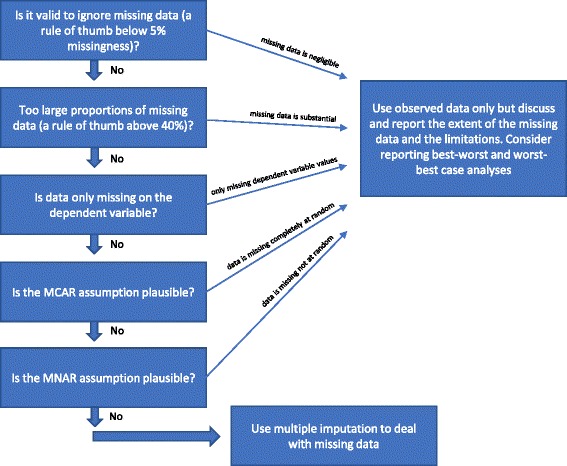
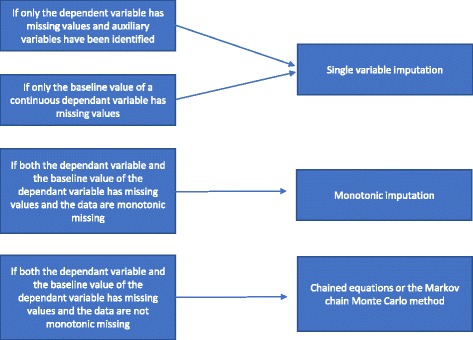
Verification
Claims the paper makes
The claims and statistics of this paper haven’t been checked yet.
Free: it reads the open-access text and checks the first 5 claims that cite a source we can check. Create a free account to check every claim.
Claims other papers make about this one
Each is checked against this paper’s own text: does it say what the citing paper says it does?
The source backs part of the claim, not all of it — or backs it for a different population, condition or comparison.
In the citing paper
“Data analyses were performed using an intent-to-treat approach.”
From Impact of acceptance and commitment therapy on physical and psychological symptoms in advanced gastrointestinal cancer patients and caregivers: Secondary results of a pilot randomized trial (2023) · cites this paper as Jakobsen et al., 2017
Experimental — accuracy not yet measuredThe source backs part of the claim, not all of it — or backs it for a different population, condition or comparison.
In the citing paper
“As for the management of missing data, if the missing data represents less than 5% of the study’s total data collected, it will be ignored. If the missing data represents more than 5% but less than 40% of the total data collected and is assumed to be randomly missing, then multiple imputation (restricted maximum likelihood estimation) will be performed using Stata 15. However, if the missing data”
From Study protocol on the efficacy of exergames-acceptance and commitment therapy program for the treatment of major depressive disorder: Comparison with acceptance and commitment therapy alone and treatment-as-usual in a multicentre randomised controlled trial (2024) · cites this paper as [47]
Experimental — accuracy not yet measuredThe source backs part of the claim, not all of it — or backs it for a different population, condition or comparison.
In the citing paper
“In the handling of missing data, if only 5% to the total data collected is missing, then this missing data will be ignored. If the missing data is around 5% to 40% and if it is assumed to be randomly missing, then multiple imputation with restricted maximum likelihood estimation will be utilized (using Stata 15).”
From Research protocol of the efficacy of probiotics for the treatment of alcohol use disorder among adult males: A comparison with placebo and acceptance and commitment therapy in a randomized controlled trial (2023) · cites this paper as [54]
Experimental — accuracy not yet measuredThe source backs part of the claim, not all of it — or backs it for a different population, condition or comparison.
In the citing paper
“To handle any missing data, if the missing data represent less than 5% of the study’s total collected data, they will be ignored. If the missing data represent more than 5% but less than 40% of the total collected and are assumed to be randomly missing, then multiple imputation (restricted maximum likelihood estimation) will be performed using Stata 15. However, if the missing data represent more”
From Acceptance and commitment therapy versus mindfulness-based stress reduction for newly diagnosed head and neck cancer patients: A randomized controlled trial assessing efficacy for positive psychology, depression, anxiety, and quality of life (2022) · cites this paper as [68]
Experimental — accuracy not yet measuredThe source backs part of the claim, not all of it — or backs it for a different population, condition or comparison.
In the citing paper
“Based on published guidelines, 33 data from participants lost to all follow‐up (n = 3) were not imputed because all missing were in the supportive therapy arm which suggests the complete case is biased toward the null”
From Retraining and control therapy for pediatric psychogenic non-epileptic seizures (2020) · cites this paper as [33]
Experimental — accuracy not yet measured
7 more claims about this paper
Create a free account to see every claim other papers make about this one.
Self-check
Percentages, sums and reported differences re-computed from the paper’s own numbers.
The self-check needs the paper’s full text.
Citations
Cites
Sterne, J. A. C., White, I. R., Carlin, J. B., Spratt, M., Royston, P., Kenward, M. G., Wood, A. M., & Carpenter, J. R. (2009) · BMJ · doi:10.1136/bmj.b2393 · Cited by 7,299 · cited 17×
“Missing data may seriously compromise inferences from randomised clinical trials, especially if missingness is not at random and if missing data are not handled appropriately [3, 4].”
BackgroundMethodInfluentialIntravenous Fluids and Acute Kidney Injury
Ding, X., Cheng, Z., & Qian, Q. (2017) · Blood Purification · doi:10.1159/000452702 · Cited by 6,827
The prevention and treatment of missing data in clinical trials
Little, R. J., D'Agostino, R., Cohen, M. L., Dickersin, K., Emerson, S. S., Farrar, J. T., Frangakis, C., Hogan, J. W., Molenberghs, G., Murphy, S. A., et al. (2012) · New England Journal of Medicine · doi:10.1056/nejmsr1203730 · Cited by 1,884 · cited 4×
“Sensitivity analyses may show how assumptions, different from those made in the primary analysis influence the results obtained [3, 6].”
BackgroundInfluentialHydroxyethyl Starch 130/0.42 versus Ringer's Acetate in Severe Sepsis
Perner, A., Haase, N., Guttormsen, A. B., Tenhunen, J., Klemenzson, G., Åneman, A., Madsen, K. R., Møller, M. H., Elkjær, J. M., Poulsen, L. M., et al. (2012) · New England Journal of Medicine · doi:10.1056/nejmoa1204242 · Cited by 1,813 · cited 1×
“Best-worst and worst-best case sensitivity analyses [24, 25] may be used if in doubt: first a ‘best-worst-case’ scenario dataset is generated where it is assumed that all participants lost to follow-up in one group (referred to as group 1) have had a beneficial outcome (for example, had no serious adverse event); and…”
MethodSelf-citationIndustry sponsorship and research outcome
Lundh, A., Lexchin, J., Mintzes, B., Schroll, J. B., & Bero, L. (2017) · Cochrane Database of Systematic Reviews · doi:10.1002/14651858.mr000033.pub3 · Cited by 1,697
Jakobsen, J. C., Wetterslev, J., Winkel, P., Lange, T., & Gluud, C. (2014) · BMC Medical Research Methodology · doi:10.1186/1471-2288-14-120 · Cited by 704 · cited 5×
“Then a ‘worst-best-case’ scenario dataset is generated where it is assumed that all participants lost to follow-up in group 1 have had a harmful outcome; and that all those lost to follow-up in group 2 have had a beneficial outcome [23, 24].”
BackgroundMethodInfluentialSelf-citationHorton, N. J., & Lipsitz, S. R. (2001) · The American Statistician · doi:10.1198/000313001317098266 · Cited by 600 · cited 1×
“Five imputed datasets have traditionally been suggested to be sufficient on theoretical grounds, but 50 datasets (or more) seem preferable to reduce sampling variability from the imputation process [4, 21, 22].”
BackgroundHróbjartsson, A., Thomsen, A. S. S., Emanuelsson, F., Tendal, B., Hilden, J., Boutron, I., Ravaud, P., & Brorson, S. (2013) · Canadian Medical Association Journal · doi:10.1503/cmaj.120744 · Cited by 527
Hrobjartsson, A., Thomsen, A. S. S., Emanuelsson, F., Tendal, B., Hilden, J., Boutron, I., Ravaud, P., & Brorson, S. (2012) · BMJ · doi:10.1136/bmj.e1119 · Cited by 483
Hróbjartsson, A., Emanuelsson, F., Skou Thomsen, A. S., Hilden, J., & Brorson, S. (2014) · International Journal of Epidemiology · doi:10.1093/ije/dyu115 · Cited by 462
Research works printed but not linked: 2
- 22. StataCorp. Stata: release 14. Statistical software. College Station, TX: StataCorp LP; 2015.
- 28. Allison PD. Handling missing data by maximum likelihood, statistical horizons. In: SAS global forum 2012 statistics and data analysis; 2012.
Cited by
Items 701–800 of 814
on behalf of the PARITY Investigators, Schneider, P., Heels‐Ansdell, D., Thabane, L., & Ghert, M. A. (2021) · Trials · doi:10.1186/s13063-021-05147-2 · Cited by 14
Malloy, E., & Kavussanu, M. (2021) · Psychology of sport and exercise · doi:10.1016/j.psychsport.2021.101957 · Cited by 15
Lavelle, J., Dunne, N., Mulcahy, H. E., & McHugh, L. (2022) · The Psychological Record · doi:10.1007/s40732-021-00478-7 · Cited by 12
“This procedure was enacted for the AAQ-II, CFQ-7, and PANAS providing 70% of items had been completed by the participant (Sterne et al., 2009; Jakobsen et al., 2017).”
MethodDanasegaran, M., Pal, G. K., Sahoo, J., Pal, P., Nanda, N., & Renugasundari, M. (2021) · The Journal of Alternative and Complementary Medicine · doi:10.1089/acm.2020.0489 · Cited by 16
Anderson, P., Kokole, D., & Jané‐Llopis, E. (2021) · Drug and Alcohol Review · doi:10.1111/dar.13408 · Cited by 14
Karbownik, M. S., Kręczyńska, J., Wiktorowska‐Owczarek, A., Kwarta, P., Cybula, M., Stilinović, N., Pietras, T., & Kowalczyk, E. (2022) · Frontiers in Endocrinology · doi:10.3389/fendo.2021.800023 · Cited by 15
“The missing 5-HT data was assumed missing completely at random as the 5-HT ELISA analyses had been performed in the order of participant codes, which were drawn randomly (54).”
MethodMourad, G., Eriksson‐Liebon, M., Karlström, P., & Johansson, P. (2022) · Journal of Medical Internet Research · doi:10.2196/31674 · Cited by 18
“Multiple imputation was based on the consideration of data being missing at random (the Little missing completely at random test; P =.99) [47].”
MethodBom, W. J., Scheijmans, J. C. G., Ubels, S., van Geloven, A. A. W., Gans, S. L., Tytgat, K. M. A. J., van Rossem, C. C., Koens, L., Stoker, J., Bemelman, W. A., et al. (2022) · BMJ Open · doi:10.1136/bmjopen-2021-054304 · Cited by 15
Carli, V., Petros, N. G., Hadlaczky, G., Vitcheva, T., Berchialla, P., Bianchi, S., Carletto, S., Christinaki, E., Citi, L., Dinis, S., et al. (2022) · EClinicalMedicine · doi:10.1016/j.eclinm.2022.101423 · Cited by 15
Nunzio, G. D., Conte, L., Lupo, R., Vitale, E., Calabrò, A., Ercolani, M., Carvello, M., Arigliani, M., Toraldo, D. M., & Benedetto, L. D. (2022) · Frontiers in Medicine · doi:10.3389/fmed.2022.866822 · Cited by 18
“A relevant reason was that the responses to the questionnaires unfortunately had a certain number of missing answers and out-of-the-box XGBoost deals quite satisfactorily with missing data thanks to the algorithm called “sparsity-aware split finding”: therefore no explicit imputation mechanism (14) had to be implement…”
BackgroundA methodology for preprocessing structured big data in the behavioral sciences
Brown, P. A., & Anderson, R. (2022) · Behavior Research Methods · doi:10.3758/s13428-022-01895-4 · Cited by 14
“In fact, MNAR data is particularly problematic (Donders et al., 2006; Jakobsen et al., 2017; Sainani, 2015).”
Richard, L., Nisenbaum, R. A., Liu, M., McGeer, A., Mishra, S., Gingras, A., Gommerman, J. L., Sniderman, R., Pedersen, C., Spandier, O., et al. (2022) · BMJ Open · doi:10.1136/bmjopen-2022-063234 · Cited by 14
McNamara, L., Scott, K. M., Boyd, R. N., Farmer, E. S., Webb, A., Bosanquet, M., Nguyen, K., & Novak, I. (2022) · BMJ Open · doi:10.1136/bmjopen-2022-063558 · Cited by 14
Liu, M., Pridham, K. F., Jenkinson, J., Nisenbaum, R. A., Richard, L., Pedersen, C., Brown, R., Virani, S., Ellerington, F., Ranieri, A., et al. (2022) · BMJ Open · doi:10.1136/bmjopen-2022-065688 · Cited by 14
How missing value imputation is confounded with batch effects and what you can do about it
Goh, W. W. B., Hui, H. W. H., & Wong, L. (2023) · Drug Discovery Today · doi:10.1016/j.drudis.2023.103661 · Cited by 14
“There has also been advice that, when imputing on 10% missingness, bias should be of concern and that, at 40% missingness, the imputed data should be viewed only as hypothesis generating.(42)”
BackgroundLiu, M., Vu, T., van Atteveldt, N., & Meeter, M. (2023) · Journal of Intelligence · doi:10.3390/jintelligence11070133 · Cited by 34
Abdurrab, I., Mahmood, T., Sheikh, S. S., Aijaz, S., Kashif, M., Memon, A., Ali, I., Peerwani, G., Pathan, A. Z., Alkhodre, A. B., et al. (2024) · Healthcare · doi:10.3390/healthcare12020249 · Cited by 17
“…other variables as a reference. is less than the benchmark of 5% and hence can be safely For example, the data for BMI was fi lled with calculated BMI using weight and height parameters. removed [46] without Similarly, the variable BPsystolic was imputed by the dichotomous variable of hypertension .”
MethodRiberholt, C. G., Lindschou, J., Gluud, C. N., Mehlsen, J., & Møller, K. (2018) · Trials · doi:10.1186/s13063-018-3004-x · Cited by 14
Self-citationPels, A., Jakobsen, J. C., Ganzevoort, W., Naaktgeboren, C. A., Onland, W., Leemhuis, A. G., & Gluud, C. N. (2019) · Trials · doi:10.1186/s13063-018-3136-z · Cited by 15
Self-citationKahale, L. A., Guyatt, G. H., Agoritsas, T., Briel, M., Busse, J. W., Carrasco‐Labra, A., Khamis, A. M., Zhang, Y., Hooft, L., Scholten, R. J. P. M., et al. (2019) · Journal of Clinical Epidemiology · doi:10.1016/j.jclinepi.2019.07.003 · Cited by 13
Stentzel, U., van den Berg, N., Moon, K., Schulze, L. N., Schulte, J., Langosch, J. M., Hoffmann, W. U., & Grabe, H. J. (2021) · BMC Psychiatry · doi:10.1186/s12888-021-03318-8 · Cited by 17
“For randomized clinical trials with missing data the multiple imputation procedure is a valid method to handle missing data [27] and to minimize possible biases [28].”
MethodStróżyk, A., Horvath, A., Muir, J. G., & Szajewska, H. (2021) · Nutrition Journal · doi:10.1186/s12937-020-00656-3 · Cited by 14
de Carvalho, M. C. R., de Menezes, M. C., Toral, N., & Lopes, A. C. S. (2021) · Appetite · doi:10.1016/j.appet.2021.105159 · Cited by 15
Spousal Care and Pain Among the Population Aged 65 Years and Older: A European Analysis
Barbosa, F., Matos, A. D., Voss, G., & Costa, P. (2021) · Frontiers in Medicine · doi:10.3389/fmed.2021.602276 · Cited by 13
“We found missing values higher than 5% in the economic and health variables and therefore used SHARE multiple imputations to maximize the number of observations (42).”
MethodCai, Y., Sawada, K., & Hirota, M. (2022) · SSRN Electronic Journal · doi:10.2139/ssrn.4182816 · Cited by 13
Ayata, C., Bath, P. M., Planas, A. M., Allan, S. M., Boltze, J., Cabeen, R. P., Gibson, C. L., Cipolla, M. J., Diniz, M. A., Fumagalli, S., et al. (2025) · Stroke · doi:10.1161/strokeaha.125.052056 · Cited by 15
“Moreover, multiple imputation assumes that missingness is random, which may not be true in a preclinical study [84].”
Matteucci, M., Ronco, D., Ravaux, J. M., Massimi, G., Mauro, M. D., Houterman, S., Maessen, J. G., Beghi, C., Severgnini, P., & Lorusso, R. (2021) · Annals of Cardiothoracic Surgery · doi:10.21037/acs-2021-ami-10 · Cited by 12
“Only variables with less than 40% of data missing were included in the analysis (8).”
MethodChung, K. Y., Gebretekle, G. B., Howard, A., Pullenayegum, E., Eshete, M. A., Forrest, C. R., & Sander, B. (2022) · JAMA Network Open · doi:10.1001/jamanetworkopen.2022.20900 · Cited by 12
Ryan, J. L., Zhou, C., Levac, D. E., Fehlings, D. L., Beal, D. S., Hung, R., & Wright, F. V. (2022) · Developmental Medicine & Child Neurology · doi:10.1111/dmcn.15471 · Cited by 12
Maltarić, M., Ruščić, P., Kolak, M., Bender, D. V., Kolarić, B., Ćorić, T., Hoejskov, P. S., Bošnir, J., & Kljusurić, J. G. (2023) · International Journal of Environmental Research and Public Health · doi:10.3390/ijerph20064893 · Cited by 15
“Therefore, the procedure of a study [31] applied in this paper as well, and it suggests multiple imputation of missing values to increase the number of observations.”
MethodTsantila, F., Coppens, E., Witte, H. D., Arensman, E., Amann, B. L., Pashoja, A. C., Corcoran, P. E., Cresswell‐Smith, J., Cully, G., Tóth, M. D., et al. (2023) · International Archives of Occupational and Environmental Health · doi:10.1007/s00420-023-01996-3 · Cited by 17
“In complete case analyses, only participants with a complete set of outcome data are included in the statistical analyses (Jakobsen et al. 2017; Clark and Altman 2003).”
BackgroundChard, I., Zalk, N. V., & Picinali, L. (2023) · Frontiers in Virtual Reality · doi:10.3389/frvir.2023.1159549 · Cited by 12
McCollum, D. C., Teeters, J. B., Moskal, K. R., & Woodward, M. J. (2023) · Substance Use & Misuse · doi:10.1080/10826084.2023.2269570 · Cited by 18
“Prior studies indicate that complete case analysis without estimation of missing values is appropriate when less than 5% of the data is missing, as techniques such as multiple imputation offer little value (Hughes et al., 2019; Jakobsen et al., 2017; Schafer,1999).”
MethodProphylactic Oropharyngeal Surfactant for Preterm Newborns at Birth
Murphy, M., Miletín, J., Klingenberg, C., Guthe, H. J. T., Rigo, V., Plavka, R., Bohlin, K., Pereira, A. B., Juren, T., Alih, E., et al. (2023) · Archives of Pediatrics and Adolescent Medicine · doi:10.1001/jamapediatrics.2023.5082 · Cited by 12
Haar, K., El‐Khani, A., Narotama, N., Hussain, A., Fitri, E., Badrujaman, A., Wahyuni, E., Naheeaan, S. M., Yassine, A., & Maalouf, W. E. (2023) · International Journal of Mental Health Systems · doi:10.1186/s13033-023-00602-w · Cited by 15
“We did not impute data for the outcome variables of the three scales, as it was considered valid to ignore missing data [60].”
MethodThe Influence of Childhood Trauma on Multiple Unhealthy Lifestyle Behaviors in Adulthood
Tong, L., Kuzminskaite, E., Hovens, J. G. F. M., Jeuring, H. W., Krause-Utz, A., Vinkers, C. H., & Penninx, B. W. J. H. (2024) · Journal of Aggression Maltreatment & Trauma · doi:10.1080/10926771.2024.2307380 · Cited by 14
“Since the majority of missing data in the current sample was below 5%, we used the complete-case analysis as the main analysis (Jakobsen et al., 2017).”
MethodPeterson, N. E., Thomas, M., Hunsaker, S., Stewart, T., & Collett, C. J. (2024) · JMIR Nursing · doi:10.2196/54561 · Cited by 16
Rubia, K., Johansson, L. C., Carter, B., Stringer, D., Santosh, P., Mehta, M. A., Conti, A. A., Bozhilova, N. S., Eraydin, I. E., & Cortese, S. (2024) · BMC Psychiatry · doi:10.1186/s12888-024-05650-1 · Cited by 14
“If we do observe missing data, we are following an approach set out to handle missing data by Jakobsen [39].”
Methodde Andrade, D., Davidson, L., Robertson, C., Williams, P. L., Leung, J., Walter, Z. C., Allan, J., & Hides, L. M. (2024) · Journal of Clinical Psychology · doi:10.1002/jclp.23725 · Cited by 15
Shifting norms, static behaviour: effects of dynamic norms on meat consumption
Aldoh, A., SPARKS, P. B., & Harris, P. R. (2024) · Royal Society Open Science · doi:10.1098/rsos.240407 · Cited by 18
Wu, Y.-C., Shen, S.-F., Chen, L., & Tung, H. (2024) · Journal of Medical Internet Research · doi:10.2196/53450 · Cited by 17
“We conducted intention-to-treat analyses on all participants (N=63), and missing data for all outcome measures were addressed through multiple imputations at the item level to minimize potential bias, following instructions reported previously [67,68].”
Schnoor, B., Morris, K., Kottana, R. K., Muldoon, R., Barron, J., & Papa, A. (2024) · Advanced Healthcare Materials · doi:10.1002/adhm.202304374 · Cited by 14
Razaghizad, A., Ni, J., Marques, P. S., Mavrakanas, T. A., Tsoukas, M. A., Possik, E., Huynh, T. T., Edwards, J. D., Liu, P. P., Swardfager, W., et al. (2024) · Diabetes Obesity and Metabolism · doi:10.1111/dom.15768 · Cited by 12
A 1-Year Weight Management Program for Difficult-to-Treat Asthma With Obesity
Sharma, V., Ricketts, H. C., McCombie, L., Brosnahan, N., Crawford, L., Slaughter, L., Goodfellow, A., Steffensen, F., Chaudhuri, R., Lean, M. E. J., et al. (2024) · CHEST Journal · doi:10.1016/j.chest.2024.09.042 · Cited by 13
Schrieks, T., Botzen, W. J. W., Haer, T., & Aerts, J. C. J. H. (2024) · Ecological Economics · doi:10.1016/j.ecolecon.2024.108425 · Cited by 13
Assessing polyomic risk to predict Alzheimer's disease using a machine learning model
Ngai, T., Willett, J., Waqas, M., Fishbein, L., Choi, Y., Hahn, G., Mullin, K., Lange, C., Hecker, J., Tanzi, R. E., et al. (2024) · Alzheimer s & Dementia · doi:10.1002/alz.14319 · Cited by 12
Asante, E., Carter, G., McAneney, H., Bam, V. B., Sarfo‐Kantanka, O., & Prue, G. (2024) · The Science of Diabetes Self-Management and Care · doi:10.1177/26350106241293113 · Cited by 14
Stonehouse, W., Benassi-Evans, B., Bednarz, J., & Vincent, A. D. (2025) · American Journal of Clinical Nutrition · doi:10.1016/j.ajcnut.2025.01.022 · Cited by 15
Jeppesen, U. N., Vernal, D. L., Due, A. S., Mariegaard, L. S., Pinkham, A. E., Austin, S. F., Vos, M., Christensen, M. J., Hansen, N. S., Smith, L. C., et al. (2025) · Nature Medicine · doi:10.1038/s41591-025-03880-8 · Cited by 14
Sharma, R. K., Chen, S., Grisel, J. J., & Golub, J. S. (2018) · Otology & Neurotology · doi:10.1097/mao.0000000000001907 · Cited by 12
“Using our larger, imputed dataset (12), we next answered a clinical question.”
BackgroundHansen, M. L., Pellicer, A., Gluud, C. N., Dempsey, E. M., Mintzer, J. P., Hyttel-Sørensen, S., Heuchan, A. M., Hagmann, C. F., Dimitriou, G., Pichler, G., et al. (2019) · Trials · doi:10.1186/s13063-019-3756-y · Cited by 16
Self-citationAberrant Frequency Related Change-Detection Activity in Chronic Tinnitus
Asadpour, A., Jahed, M., & Mahmoudian, S. (2020) · Frontiers in Neuroscience · doi:10.3389/fnins.2020.543134 · Cited by 13
“Therefore, in order to utilize the data of all the participants for mixed ANOVA, this study implemented an imputation on the data and replaced the missing values with imputed values (Jakobsen et al., 2017; Kanemura et al., 2018).”
Chartrand, H., Tefft, B. M., Sareen, J., Hiebert‐Murphy, D., Katz, L. Y., Klonsky, E. D., Wang, Y., Kim, H., & Bolton, J. M. (2020) · Archives of Suicide Research · doi:10.1080/13811118.2020.1856259 · Cited by 13
Mboya, I. B., Mahande, M. J., Obure, J., & Mwambi, H. G. (2021) · PLoS ONE · doi:10.1371/journal.pone.0249411 · Cited by 13
“A random seed of 5000 was specified for replication of imputation results each time a multiple imputation analysis is performed [51].”
BackgroundMethodInfluentialPsoriasis Severity and Cardiometabolic Risk Factors in a Representative US National Study
Lin, I.-C., Heck, J. E., Chen, L., & Feldman, S. R. (2021) · American Journal of Clinical Dermatology · doi:10.1007/s40257-021-00600-z · Cited by 13
“Because of potential biases caused by missing data, we used multiple imputation for missing values, assuming that missing is at random [23].”
MethodBresnihan, N., Bray, A., Fisher, L., Strong, G., Millwood, R., & Tangney, B. (2021) · ACM Transactions on Computing Education · doi:10.1145/3440890 · Cited by 14
“Missing values were addressed through a process of multiple imputation [32] and no participants were eliminated from the study at this point.”
MethodConfronting Missing Ecological Data in the Age of Pandemic Lockdown
Hossie, T. J., Gobin, J., & Murray, D. L. (2021) · Frontiers in Ecology and Evolution · doi:10.3389/fevo.2021.669477 · Cited by 12
Bendelin, N., Gerdle, B., Blom, M., Södermark, M., & Andersson, G. (2021) · Journal of Clinical Medicine · doi:10.3390/jcm10245872 · Cited by 12
“small sample, mixed models were found less optimal as the data were not considered robust enough [53].”
BackgroundDegroote, S., Vandekerckhove, L., Vogelaers, D., & Bulcke, C. V. (2022) · PLoS ONE · doi:10.1371/journal.pone.0262533 · Cited by 14
“Because of the relatively large amount of missing data, which were considered to be ‘missing not at random’ (MNAR), sensitivity analyses were performed [44].”
MethodEarly discharge after colorectal cancer resection: trends and impact on patient outcomes
Moon, J., Pang, A., Ghitulescu, G. A., Faria, J., Morin, N. A., Vasilevsky, C., & Boutros, M. (2022) · Surgical Endoscopy · doi:10.1007/s00464-021-08923-y · Cited by 12
“We performed a complete case analysis, excluding cases with missing data, as proportions of missing data for exposure and covariates of interest were < 5% [15].”
MethodBarbosa, F., Matos, A. D., Voss, G., & Eiras, A. (2022) · Health & Social Care in the Community · doi:10.1111/hsc.13754 · Cited by 12
Bhullar, M. K., Gilson, T. P., & Singer, M. E. (2022) · Drug and Alcohol Dependence Reports · doi:10.1016/j.dadr.2022.100069 · Cited by 13
Épaulard, O., Abgrall, S., Lefebvre, M., Faucher, J., Michon, J., Frentiu, E., Blanchi, S., Janssen, C., Charbonnier, G., Fresse, A., et al. (2022) · Clinical Microbiology and Infection · doi:10.1016/j.cmi.2022.06.019 · Cited by 16
“In addition, to manage Missing data Not At Random (MNAR), multivariate analysis was initially performed only on the dataset with complete cases, after which the model was applied to the full dataset [8].”
Incidence, risk and protective factors of symptoms after colonoscopy
Collatuzzo, G., Boffetta, P., Radaelli, F., Cadoni, S., Hassan, C., Frazzoni, L., Anderloni, A. A., Laterza, L., Marca, M. L., Rogai, F., et al. (2022) · Digestive and Liver Disease · doi:10.1016/j.dld.2022.08.025 · Cited by 13
Nielsen, J., Kjær, M. S., Rasmussen, A., Chiranth, D., Willemoe, G. L., Henriksen, B. M., Borgwardt, L., Grand, M. K., Borgwardt, L., & Christensen, V. B. (2022) · Diagnostics · doi:10.3390/diagnostics12112785 · Cited by 13
“Pediatric studies involving multiple modalities, extensive planning and dependence on cooperation of the child, are susceptible to missing data which might bias estimated effects [47].”
BackgroundSalmani, B., & Prapavessis, H. (2023) · Journal of Health Psychology · doi:10.1177/13591053221144977 · Cited by 14
“Through data analysis patterns of missing values our missing data was shown as “missing at random,” with 42.24% of all values collected containing missing data, negating the decision to use “single imputation” or “complete case analysis” strategies (Jakobsen et al., 2017).”
MethodInfluentialRacial/Ethnic Disparities in Mental Healthcare in Youth With Incarcerated Parents
Ryan, J. E., McCabe, S. E., DiDonato, S., Boyd, C. J., Voepel‐Lewis, T., Ploutz-Snyder, R. J., & Veliz, P. T. (2023) · American Journal of Preventive Medicine · doi:10.1016/j.amepre.2023.03.008 · Cited by 15
Wang, Y., Wang, M., Yu, K., Xu, S., Qiu, P., Lyu, Z., Cui, M., Zhang, Q., & Xu, Y. (2023) · Cancer Biology and Medicine · doi:10.20892/j.issn.2095-3941.2022.0513 · Cited by 13
Vesterlund, G. K., Thorsen‐Meyer, H., Møller, M. H., Brunak, S., Strøm, T., Perner, A., & Kaas‐Hansen, B. S. (2023) · Acta Anaesthesiologica Scandinavica · doi:10.1111/aas.14247 · Cited by 13
“We excluded postoperative planned ICU patients, patients with a length of ICU stay <24 h, patients transferred from ICUs not part of the database and patients without serum measurements of neither magnesium, phosphate, or zinc during ICU stay, and patients with missing observations on other baseline variables (<5% of…”
MethodHu, Y., Zhang, L., Xiao, Y., Lu, T., Guo, Q., Lin, S., Liu, L., Chen, Y., Huang, Z., Liu, Y., et al. (2023) · iScience · doi:10.1016/j.isci.2023.106932 · Cited by 12
Wang, X., Jia, X., Li, Z., & Zhou, Q. (2023) · European Journal of Anaesthesiology · doi:10.1097/eja.0000000000001872 · Cited by 12
The usage and utility of body‐worn camera footage in courts: A survey analysis of state prosecutors
Petersen, K., Papy, D. M., Mouro, A., & Ariel, B. (2023) · Journal of Empirical Legal Studies · doi:10.1111/jels.12358 · Cited by 14
Heesen, P., Ranft, A., Bhadri, V. A., Brichard, B., Collaud, S., Cyprová, S., Eich, H. T., Ek, T., Gelderblom, H. A. J., Hardes, J., et al. (2023) · European Journal of Cancer · doi:10.1016/j.ejca.2023.113260 · Cited by 12
Watkins, S. C., Chowdhury, F. J., Norman, C., Brett, S. J., Couper, K., Goodwin, L. D., Gould, D. W., Harrison, D. A., Hossain, M. A., Lall, R., et al. (2023) · Resuscitation Plus · doi:10.1016/j.resplu.2023.100430 · Cited by 12
“32,33 A decision-analytical model will be constructed to explore the long-term cost-effectiveness of SGA.”
Bakidou, A., Caragounis, E.-C., Hagiwara, M. A., Jönsson, A., Sjöqvist, B. A., & Candefjord, S. (2023) · BMC Medical Informatics and Decision Making · doi:10.1186/s12911-023-02290-5 · Cited by 12
“In dataset D, MI was used as it is recommended in the case of MAR [21, 60] and has shown added value in analysis for both prehospital and in-hospital trauma data [59, 61, 62].”
MethodBaghirzada, L., Walker, A., Yu, H. C., & Endersby, R. V. W. (2023) · Anaesthesia · doi:10.1111/anae.16173 · Cited by 15
Ge, X., Liu, H., Wu, Y. R., Liu, W., Qi, W., Ye, L., Cao, Q., Lian, H., Bai, R., & Zhou, W. (2024) · American Journal of Clinical Nutrition · doi:10.1016/j.ajcnut.2023.12.022 · Cited by 13
Verropoulou, G., Serafetinidou, E., & Tsimbos, C. (2019) · Ageing and Society · doi:10.1017/s0144686x19000977 · Cited by 13
“As the percentage of missing cases is around 5 per cent, application of imputation techniques was deemed unnecessary (Jakobsen et al., 2017).”
MethodNam, P. T., Thanh, T. P., Dung, N. H., An, D. H., Anh, B. D. T., Diep, Q. B., Giang, K. B., Giang, D. H., Ngo, H. T. T., Hung, P. N., et al. (2020) · Health Psychology Open · doi:10.1177/2055102920967244 · Cited by 16
“Before conducting multivariable analysis, we used the multiple imputations in Stata (mi chained – the sequential imputation using chained equations without statistical interactions) to impute the missing data (Jakobsen et al., 2017; Sterne et al., 2009).”
MethodSiddiqui, F., Barbateskovic, M., Juul, S., Katakam, K. K., Munkholm, K., Gluud, C. N., & Jakobsen, J. C. (2021) · Systematic Reviews · doi:10.1186/s13643-021-01722-5 · Cited by 12
“This data imputation with 2 SDs will provide a possible range of influence that missing data might have on the results [87].”
MethodSelf-citationClarke, P., Bibby-Jones, A.-M., & Hayward, M. (2021) · The Cognitive Behaviour Therapist · doi:10.1017/s1754470x21000143 · Cited by 14
“However, the resulting sample included missing data for CHOICE-SF scores, which was assumed to be missing at random (MAR; Jakobsen et al., 2017; Sterne et al., 2009) and multiple imputation using chained equations (MICE) was applied (White et al.”
MethodSocioeconomic inequalities in birth outcomes: An 11-year analysis in Colombia
Guarnizo-Herreño, C. C., Torres, G. F., & Buitrago, G. (2021) · PLoS ONE · doi:10.1371/journal.pone.0255150 · Cited by 13
Polos, J., Koning, S. M., & McDade, T. W. (2021) · Social Science & Medicine · doi:10.1016/j.socscimed.2021.114424 · Cited by 13
Rodrigues, D. L. G., Belber, G. S., Padilha, F. V. D. Q., Spinel, L. F., Moreira, F. R., Maeyama, M. A., de Pinho, A. P. N. M., & Júnior, Á. A. (2020) · JMIR Research Protocols · doi:10.2196/23679 · Cited by 20
Kókai, L. L., Ceallaigh, D. O., Wijtzes, A. I., van Lennep, J. E. R., Duvekot, J. J., Hagger, M. S., Cawley, J., Burdorf, A., Rohde, K. I. M., & van Kippersluis, H. (2025) · JAMA Network Open · doi:10.1001/jamanetworkopen.2025.2656 · Cited by 14
A guided digital intervention to reduce cannabis use: The ICan randomized controlled trial
Olthof, M. I. A., Goudriaan, A. E., van Laar, M., & Blankers, M. (2023) · Addiction · doi:10.1111/add.16217 · Cited by 17
ProJect: a powerful mixed-model missing value imputation method
Kong, W., Wong, B. J. H., Hui, H. W. H., Lim, K. P., Wang, Y., Wong, L., & Goh, W. W. B. (2023) · Briefings in Bioinformatics · doi:10.1093/bib/bbad233 · Cited by 13
Chu, K., Kuang, X., Cheung, P. W. H., Li, S., Zhang, T. G., & Cheung, J. P. Y. (2023) · Global Spine Journal · doi:10.1177/21925682231211273 · Cited by 11
Lytras, D., Iakovidis, P., Sykaras, Ε., Kottaras, A., Kasimis, K., Myrogiannis, I. S., Barouxakis, A., & Tarfali, G. (2023) · Aging Clinical and Experimental Research · doi:10.1007/s40520-023-02604-7 · Cited by 18
“For each dropout during the intervention period, the missing values were replaced with the value of each variable from the previous time point [43].”
Beumer, W. Y., Roseboom, T. J., Koot, M. H., Vrijkotte, T. G. M., & van Ditzhuijzen, J. (2023) · Women s Health · doi:10.1177/17455057231213737 · Cited by 15
“…the dropout rate might have led to an underestimation of the associations between unintended pregnancy and maternal psychological distress, 71 and possibly the disappearance of the association between aspects of unintended pregnancy and psychological distress around 12 years postpartum.”
BackgroundLong-term outcome of traumatic brain injury patients with initial GCS of 3–5
Zuniga, R. D. D. R., Vieira, R. D. C. A., Solla, D. J. F., Godoy, D. A., Kolias, A. G., de Amorim, R. L. O., de Andrade, A. F., Teixeira, M. J., & Paiva, W. S. (2024) · World Neurosurgery X · doi:10.1016/j.wnsx.2024.100361 · Cited by 16
“We were according to literature recommendations 14 to impute only missing independent variables, i.e., not functional outcomes.”
Kim, T., Jeon, Y. J., Lee, H., Kim, T. H., Park, S. Y., Kang, D., Hong, Y. S., Lee, G., Lee, J., Shin, S., et al. (2024) · Scientific Reports · doi:10.1038/s41598-024-56593-2 · Cited by 16
Li, M., Qiu, Y., Xia, Y., Li, D., Ma, G., Ma, S., Zhang, J., & Wang, X. (2024) · Journal of Youth and Adolescence · doi:10.1007/s10964-024-01976-x · Cited by 11
“The desired analysis is conducted separately in each generated dataset and obtained results are fi nally pooled into one single result (Jakobsen et al., 2017).”
Post-COVID-19 syndrome, inflammation and insulin resistance: a retrospective cohort study
Fierro, P., MARTÍN, D., Rodrigo, E., Pini, S. F., Basterrechea, H., Tobalina, M., Petitta, B., Bianconi, C., Díaz-Salazar, S., Bonome, M., et al. (2024) · Minerva Endocrinology · doi:10.23736/s2724-6507.23.04108-8 · Cited by 14
Fogarty, A., Brown, S., Gartland, D., McMahon, G., FitzPatrick, K. M., Seymour, M., Kimber, M., MacMillan, H. L., & Giallo, R. (2024) · Child Abuse & Neglect · doi:10.1016/j.chiabu.2024.106814 · Cited by 12
Hopkins, T., & Popovic, G. C. (2024) · Current Issues in Criminal Justice · doi:10.1080/10345329.2024.2326709 · Cited by 17
“According to Jakobsen et al., the rate of missingness in this study’s data set (up to 38 per cent) is amenable to multiple imputation (Jakobsen et al., 2017).”
Ajakwe, S. O., Deji-Oloruntoba, O. O., Olatunbosun, S. O., Duorinaah, F. X., & Bayode, I. A. (2024) · Advances in systems analysis, software engineering, and high performance computing book series · doi:10.4018/979-8-3693-3609-0.ch002 · Cited by 11
Zuccolo, P. F., Brunoni, A. R., Borja, T., Matijasevich, A., Polanczyk, G. V., & Fatori, D. (2024) · Psychotherapy and Psychosomatics · doi:10.1159/000541311 · Cited by 11
Song, W., Shari, N. I., Song, J., Zhang, R., Mansor, N. S., Leong Bin Abdullah, M. F. I., & Zhang, Z. (2024) · PLoS ONE · doi:10.1371/journal.pone.0312669 · Cited by 9
Clair, V., Musau, A., Mutiso, V., Tele, A., Atkinson, K., Rossa-Roccor, V., Bosire, E., Ndetei, D., & Frank, E. (2022) · International Journal of Mental Health and Addiction · doi:10.1007/s11469-022-00841-x · Cited by 7
“1 3 To investigate the effect of loss to follow-up, complete cases and imputed analysis were compared in a sensitivity analysis (Jakobsen et al., 2017).”
Metadata
- Authors
- Jakobsen, J. C., Gluud, C., Wetterslev, J., & Winkel, P.
- Affiliations
- Copenhagen University Hospital (DK)
- Corresponding author
- Jakobsen, Janus Christian
- Venue
- BMC Medical Research Methodology
- Published
- 2017-12
- Volume
- 17
- Issue
- 1
- Pages
- 162-162
- ISSN
- 1471-2288 (ISSN-L)
- PMC
- PMC5717805
- OpenAlex
- W2772803673
- Semantic Scholar
- 601b9d1445292bcdfd372c11b5a2eb752d7cf39e
- Cited by
- 2,747
- References
- 29
- Citations by year
- 2026: 287 · 2025: 433 · 2024: 455 · 2023: 443 · 2022: 468 · 2021: 361 · 2020: 205 · 2019: 78 · 2018: 15 · 2017: 1
- FWCI
- 56.41
- Type
- journal article
- Language
- en
- Open access
- gold
- doi.org
- Licence
- cc-by
- Locations
- BMC Medical Research Methodology (publishedVersion, cc-by)
- Europe PMC (PubMed Central) (publishedVersion, cc-by)
- PubMed Central (publishedVersion, cc-by)
- PubMed (publishedVersion)
- DOAJ (DOAJ: Directory of Open Access Journals) (submittedVersion, cc-by-sa)
- Funders
- Copenhagen Trial Unit, Centre for Clinical Intervention Research
- Topics
- Physical Sciences › Mathematics › Statistics and Probability › Statistical Methods and Bayesian Inference
- Physical Sciences › Mathematics › Statistics and Probability › Statistical Methods in Clinical Trials
- Social Sciences › Decision Sciences › Statistics, Probability and Uncertainty › Meta-analysis and systematic reviews
- Keywords
- missing data, multiple imputation, randomized controlled trials, full information maximum likelihood, missing data mechanisms
- MeSH terms
- Data Accuracy, Data Interpretation, Statistical, Humans, Models, Statistical, Randomized Controlled Trials as Topic
About these checks
Registry, retraction, Cites and statistics results are computed, not judged, with one exception: a printed reference that no index lists is read once by a model before it counts as a citation error. Claims are extracted by a model and kept only when their quote appears verbatim in the text; each cited source is then checked, with a model’s help, for whether it says what the claim relies on. Those verdicts can be wrong — read the claim’s quote and the cited source before relying on one.
Statistics and arithmetic are recomputed, not judged.
Confidence bands are shown only for fields calibrated on our annotated test set. None is calibrated yet, so no band is shown.
What counts as a claim ›How we measure confidence ›How we check this ›
Are you an author, or do you see a problem with this page? Request a review
Data sources
Bibliographic data: Semantic Scholar, OpenAlex, Crossref.
Contains information from the Semantic Scholar Academic Graph Datasets, made available under the ODC Attribution License (ODC-BY 1.0).
Semantic Scholar’s data is described in: Kinney, R., et al. (2023). The Semantic Scholar Open Data Platform. arXiv:2301.10140.
