

When and how should multiple imputation be used for handling missing data in randomised clinical trials – a practical guide with flowcharts
Open accessThe DOI matches its Crossref record; 29 of the 29 references it cites were found in a registry or an index.
Abstract
BACKGROUND: Missing data may seriously compromise inferences from randomised clinical trials, especially if missing data are not handled appropriately. The potential bias due to missing data depends on the mechanism causing the data to be missing, and the analytical methods applied to amend the missingness. Therefore, the analysis of trial data with missing values requires careful planning and attention. METHODS: The authors had several meetings and discussions considering optimal ways of handling missing data to minimise the bias potential. We also searched PubMed (key words: missing data; randomi*; statistical analysis) and reference lists of known studies for papers (theoretical papers; empirical studies; simulation studies; etc.) on how to deal with missing data when analysing randomised clinical trials. RESULTS: Handling missing data is an important, yet difficult and complex task when analysing results of randomised clinical trials. We consider how to optimise the handling of missing data during the planning stage of a randomised clinical trial and recommend analytical approaches which may prevent bias caused by unavoidable missing data. We consider the strengths and limitations of using of best-worst and worst-best sensitivity analyses, multiple imputation, and full information maximum likelihood. We also present practical flowcharts on how to deal with missing data and an overview of the steps that always need to be considered during the analysis stage of a trial. CONCLUSIONS: We present a practical guide and flowcharts describing when and how multiple imputation should be used to handle missing data in randomised clinical.
Overview
The claims and statistics of this paper haven’t been checked yet.
Free: it reads the open-access text and checks the first 5 claims that cite a source we can check. Create a free account to check every claim.
Integrity signals
Registry
Cites
Statistics
Figures
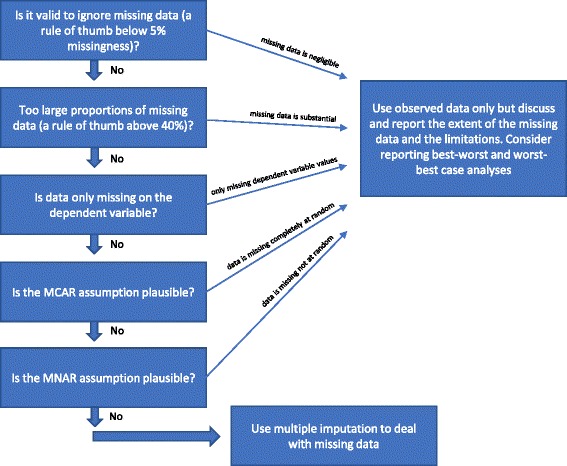
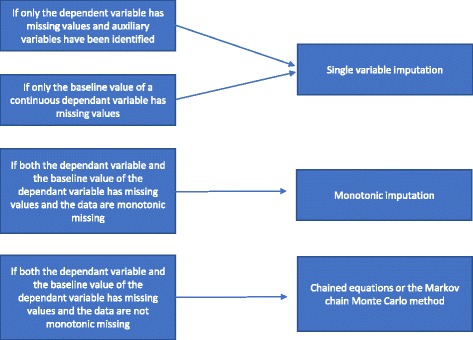
Verification
Claims the paper makes
The claims and statistics of this paper haven’t been checked yet.
Free: it reads the open-access text and checks the first 5 claims that cite a source we can check. Create a free account to check every claim.
Claims other papers make about this one
Each is checked against this paper’s own text: does it say what the citing paper says it does?
The source backs part of the claim, not all of it — or backs it for a different population, condition or comparison.
In the citing paper
“Data analyses were performed using an intent-to-treat approach.”
From Impact of acceptance and commitment therapy on physical and psychological symptoms in advanced gastrointestinal cancer patients and caregivers: Secondary results of a pilot randomized trial (2023) · cites this paper as Jakobsen et al., 2017
Experimental — accuracy not yet measuredThe source backs part of the claim, not all of it — or backs it for a different population, condition or comparison.
In the citing paper
“As for the management of missing data, if the missing data represents less than 5% of the study’s total data collected, it will be ignored. If the missing data represents more than 5% but less than 40% of the total data collected and is assumed to be randomly missing, then multiple imputation (restricted maximum likelihood estimation) will be performed using Stata 15. However, if the missing data”
From Study protocol on the efficacy of exergames-acceptance and commitment therapy program for the treatment of major depressive disorder: Comparison with acceptance and commitment therapy alone and treatment-as-usual in a multicentre randomised controlled trial (2024) · cites this paper as [47]
Experimental — accuracy not yet measuredThe source backs part of the claim, not all of it — or backs it for a different population, condition or comparison.
In the citing paper
“In the handling of missing data, if only 5% to the total data collected is missing, then this missing data will be ignored. If the missing data is around 5% to 40% and if it is assumed to be randomly missing, then multiple imputation with restricted maximum likelihood estimation will be utilized (using Stata 15).”
From Research protocol of the efficacy of probiotics for the treatment of alcohol use disorder among adult males: A comparison with placebo and acceptance and commitment therapy in a randomized controlled trial (2023) · cites this paper as [54]
Experimental — accuracy not yet measuredThe source backs part of the claim, not all of it — or backs it for a different population, condition or comparison.
In the citing paper
“To handle any missing data, if the missing data represent less than 5% of the study’s total collected data, they will be ignored. If the missing data represent more than 5% but less than 40% of the total collected and are assumed to be randomly missing, then multiple imputation (restricted maximum likelihood estimation) will be performed using Stata 15. However, if the missing data represent more”
From Acceptance and commitment therapy versus mindfulness-based stress reduction for newly diagnosed head and neck cancer patients: A randomized controlled trial assessing efficacy for positive psychology, depression, anxiety, and quality of life (2022) · cites this paper as [68]
Experimental — accuracy not yet measuredThe source backs part of the claim, not all of it — or backs it for a different population, condition or comparison.
In the citing paper
“Based on published guidelines, 33 data from participants lost to all follow‐up (n = 3) were not imputed because all missing were in the supportive therapy arm which suggests the complete case is biased toward the null”
From Retraining and control therapy for pediatric psychogenic non-epileptic seizures (2020) · cites this paper as [33]
Experimental — accuracy not yet measured
7 more claims about this paper
Create a free account to see every claim other papers make about this one.
Self-check
Percentages, sums and reported differences re-computed from the paper’s own numbers.
The self-check needs the paper’s full text.
Citations
Cites
Sterne, J. A. C., White, I. R., Carlin, J. B., Spratt, M., Royston, P., Kenward, M. G., Wood, A. M., & Carpenter, J. R. (2009) · BMJ · doi:10.1136/bmj.b2393 · Cited by 7,299 · cited 17×
“Missing data may seriously compromise inferences from randomised clinical trials, especially if missingness is not at random and if missing data are not handled appropriately [3, 4].”
BackgroundMethodInfluentialIntravenous Fluids and Acute Kidney Injury
Ding, X., Cheng, Z., & Qian, Q. (2017) · Blood Purification · doi:10.1159/000452702 · Cited by 6,827
The prevention and treatment of missing data in clinical trials
Little, R. J., D'Agostino, R., Cohen, M. L., Dickersin, K., Emerson, S. S., Farrar, J. T., Frangakis, C., Hogan, J. W., Molenberghs, G., Murphy, S. A., et al. (2012) · New England Journal of Medicine · doi:10.1056/nejmsr1203730 · Cited by 1,884 · cited 4×
“Sensitivity analyses may show how assumptions, different from those made in the primary analysis influence the results obtained [3, 6].”
BackgroundInfluentialHydroxyethyl Starch 130/0.42 versus Ringer's Acetate in Severe Sepsis
Perner, A., Haase, N., Guttormsen, A. B., Tenhunen, J., Klemenzson, G., Åneman, A., Madsen, K. R., Møller, M. H., Elkjær, J. M., Poulsen, L. M., et al. (2012) · New England Journal of Medicine · doi:10.1056/nejmoa1204242 · Cited by 1,813 · cited 1×
“Best-worst and worst-best case sensitivity analyses [24, 25] may be used if in doubt: first a ‘best-worst-case’ scenario dataset is generated where it is assumed that all participants lost to follow-up in one group (referred to as group 1) have had a beneficial outcome (for example, had no serious adverse event); and…”
MethodSelf-citationIndustry sponsorship and research outcome
Lundh, A., Lexchin, J., Mintzes, B., Schroll, J. B., & Bero, L. (2017) · Cochrane Database of Systematic Reviews · doi:10.1002/14651858.mr000033.pub3 · Cited by 1,697
Jakobsen, J. C., Wetterslev, J., Winkel, P., Lange, T., & Gluud, C. (2014) · BMC Medical Research Methodology · doi:10.1186/1471-2288-14-120 · Cited by 704 · cited 5×
“Then a ‘worst-best-case’ scenario dataset is generated where it is assumed that all participants lost to follow-up in group 1 have had a harmful outcome; and that all those lost to follow-up in group 2 have had a beneficial outcome [23, 24].”
BackgroundMethodInfluentialSelf-citationHorton, N. J., & Lipsitz, S. R. (2001) · The American Statistician · doi:10.1198/000313001317098266 · Cited by 600 · cited 1×
“Five imputed datasets have traditionally been suggested to be sufficient on theoretical grounds, but 50 datasets (or more) seem preferable to reduce sampling variability from the imputation process [4, 21, 22].”
BackgroundHróbjartsson, A., Thomsen, A. S. S., Emanuelsson, F., Tendal, B., Hilden, J., Boutron, I., Ravaud, P., & Brorson, S. (2013) · Canadian Medical Association Journal · doi:10.1503/cmaj.120744 · Cited by 527
Hrobjartsson, A., Thomsen, A. S. S., Emanuelsson, F., Tendal, B., Hilden, J., Boutron, I., Ravaud, P., & Brorson, S. (2012) · BMJ · doi:10.1136/bmj.e1119 · Cited by 483
Hróbjartsson, A., Emanuelsson, F., Skou Thomsen, A. S., Hilden, J., & Brorson, S. (2014) · International Journal of Epidemiology · doi:10.1093/ije/dyu115 · Cited by 462
Research works printed but not linked: 2
- 22. StataCorp. Stata: release 14. Statistical software. College Station, TX: StataCorp LP; 2015.
- 28. Allison PD. Handling missing data by maximum likelihood, statistical horizons. In: SAS global forum 2012 statistics and data analysis; 2012.
Cited by
Items 401–500 of 814
Woolard, A. J., Stratton, E., Demetriou, E. A., Boulton, K., Pellicano, E., Glozier, N., Gibbs, V., Rogerson, N., Quinn, P., Hickie, I. B., et al. (2021) · Autism · doi:10.1177/13623613211013664 · Cited by 27
“In order to account for the missing data in those measures, we have performed worst–best sensitivity analysis as recommended by Jakobsen et al. (2017) (see Supplementary Tables 8 and 9).”
MethodMcCashin, D., Coyle, D., & O’Reilly, G. (2021) · Internet Interventions · doi:10.1016/j.invent.2021.100489 · Cited by 23
“Moreover, there is poor evidence for long-term positive outcomes (James et al., 2013).”
BackgroundA Machine Learning Model for Predicting Mortality within 90 Days of Dialysis Initiation
Rankin, S. K., Han, L., Scherzer, R., Tenney, S., Keating, M., Genberg, K., Rahn, M., Wilkins, K. J., Shlipak, M. G., & Estrella, M. M. (2022) · Kidney360 · doi:10.34067/kid.0007012021 · Cited by 26
“The clinical and laboratory variables in the dataset were multiply imputed for each subset and included as predictors for the dataset used in the XGBoost imputed model (25).”
MethodShin, E.-K., Smith, C. L., Devine, D., Day, K. L., & Dunsmore, J. C. (2022) · Early Childhood Research Quarterly · doi:10.1016/j.ecresq.2022.07.011 · Cited by 31
“Given that the potential impact of missing data is negligible if the proportions of missing data are below 5%, ( Jakobsen, Gluud, Wetterslev, & Winkel, 2017 ), it was acceptable to ignore missing data in the analyses.”
BackgroundMetcalfe, R. E., Muentner, L., Reino, C., Schweer‐Collins, M. L., Kjellstrand, J., & Eddy, J. M. (2022) · Journal of Child & Adolescent Trauma · doi:10.1007/s40653-022-00490-1 · Cited by 24
Depression among middle-aged adults in Japan: The role of the built environment design
Koohsari, M. J., Yasunaga, A., McCormack, G. R., Shibata, A., Ishii, K., Nakaya, T., Hanibuchi, T., Nagai, Y., & Oka, K. (2022) · Landscape and Urban Planning · doi:10.1016/j.landurbplan.2022.104651 · Cited by 23
Alactic base excess is an independent predictor of death in sepsis: A propensity score analysis
Cantos, J., Huespe, I. A., Sinner, J., Prado, E., Román, E. S., Rolón, N. C., & Musso, C. G. (2023) · Journal of Critical Care · doi:10.1016/j.jcrc.2022.154248 · Cited by 25
Neurophenotypes of COVID-19: Risk factors and recovery outcomes
Prabhakaran, D., Day, G. S., Munipalli, B., Rush, B. K., Pudalov, L. R., Niazi, S. K., Brennan, E., Powers, H. R., Durvasula, R., Athreya, A., et al. (2023) · Brain Behavior & Immunity - Health · doi:10.1016/j.bbih.2023.100648 · Cited by 26
“…with predictive mean matching for five imputations and 50 iterations (van Buuren and Groothuis-Oudshoorn, 2011) was used to complete missing data from the post-acute neurocognitive assessment and neuropsychiatric symptom inventories, with a 15% missingness threshold (Jakobsen et al., 2017).”
Bravo, L., Simoes, J. F. F., Cardoso, V. R., Adisa, A., Aguilera, M. L., Arnaud, A. P., Biccard, B. M., Calvache, J. A., Chernbumroong, S., Elhadi, M., et al. (2024) · The Lancet Digital Health · doi:10.1016/s2589-7500(24)00065-7 · Cited by 30
“20 If both assumptions were not met, we planned to impute missing predictor variable data using multiple imputation by chained equations.”
Solberg, R. B., Fretheim, A., Elgersma, I. H., Fagernes, M., Iversen, B. G., Hemkens, L. G., Rose, C. J., & Elstrøm, P. (2024) · BMJ · doi:10.1136/bmj-2023-078918 · Cited by 25
“15 We imputed and analysed 50 completed datasets and combined the estimates using Rubin’s rules.”
Alcohol and drug problems among Australian homicide offenders
Eriksson, L., Bryant, S., McPhedran, S., Mazerolle, P., & Wortley, R. (2020) · Addiction · doi:10.1111/add.15169 · Cited by 29
“Missing data were not imputed as they were generally not missing at random and sensitivity analyses using ‘best-worst-case’ scenarios (40) suggested the impact of the missing data were negligible.”
MethodNational Trends and Variation of Functional Status Deterioration in the Medically Critically Ill*
Ingraham, N. E., Vakayil, V. R., Pendleton, K. M., Robbins, A. J., FREESE, R. L., Northrop, E. F., Brunsvold, M. E., Charles, A. G., Chipman, J. G., & Tignanelli, C. J. (2020) · Critical Care Medicine · doi:10.1097/ccm.0000000000004524 · Cited by 24
Henshaw, H., Heinrich, A., Tittle, A., & Ferguson, M. (2021) · Ear and Hearing · doi:10.1097/aud.0000000000001096 · Cited by 25
van Helden, E. V., Kranendonk, J., Vermulst, A. A., de Boer, A., de Reuver, P., Rosman, C., de Wilt, J. H. W., van Laarhoven, C. J. H. M., Scheffer, G. J., Keijzer, C., et al. (2024) · Regional Anesthesia & Pain Medicine · doi:10.1136/rapm-2024-105277 · Cited by 21
Spagnolo, J., Champagne, F., Leduc, N., Rivard, M., Melki, W., Piat, M., Laporta, M., Guesmi, I., Bram, N., & Charfi, F. (2020) · Health Policy and Planning · doi:10.1093/heapol/czz138 · Cited by 21
Rider Perceptions of an On-Demand Microtransit Service in Salt Lake County, Utah
Macfarlane, G. S., Hunter, C., Martinez, A. A., & Smith, E. (2021) · Smart Cities · doi:10.3390/smartcities4020036 · Cited by 21
“An attempt to use multiply-imputed datasets following the methodology of van Buuren and Groothuis-Oudshoorn [19] and Licht [20] was abandoned due to the missingness in the data, and the likelihood that the data were not missing at random [21].”
MethodWallace, A. N., Gibson, D. P., Asif, K. S., Sahlein, D. H., Warach, S. J., Malisch, T., & Lamonte, M. P. (2022) · Journal of the American Heart Association · doi:10.1161/jaha.121.021865 · Cited by 21
Getu, M. A., Wang, P., Addissie, A., Seife, E., Chen, C., & Kantelhardt, E. J. (2023) · International Journal of Cancer · doi:10.1002/ijc.34452 · Cited by 25
“Multiple imputation can be used if the data are not missing completely at random (MCAR) and if the missing not at random (MNAR) assumption is not plausible (if the missing is at random).(40)”
MethodHosang, G. M., Manoli, A., Shakoor, S., Fisher, H. L., & Parker, C. H. (2023) · Psychiatry Research · doi:10.1016/j.psychres.2023.115105 · Cited by 22
“A minority of participants had missing items from the scales used in this study, for those that completed 60% of the target questionnaire or subscale, simple mean imputation was implemented (Jakobsen et al., 2017).”
MethodTay, M. L., Bolam, S. M., Maxwell, A. J., Hooper, G. J., Monk, A. P., & Young, S. W. (2023) · Journal of Bone and Joint Surgery · doi:10.2106/jbjs.22.00686 · Cited by 21
Bartenschlager, C. C., Grieger, M., Erber, J., Neidel, T., Borgmann, S., Vehreschild, J. J., Steinbrecher, M., Rieg, S., Stecher, M., Dhillon, C., et al. (2023) · Health Care Management Science · doi:10.1007/s10729-023-09647-2 · Cited by 24
Cénat, J. M., Farahi, S. M. M. M., Rousseau, C., Bukaka, J., Darius, W. P., Dérivois, D., Dalexis, R. D., & Luyeye, N. (2023) · Journal of Adolescent Health · doi:10.1016/j.jadohealth.2023.07.023 · Cited by 24
Cheng, X., Hong, L., Churilov, L. P., Lin, L., Ling, Y., Zhang, J., Yang, J., Geng, Y., Wu, D., Liu, X., et al. (2024) · Stroke and Vascular Neurology · doi:10.1136/svn-2023-002820 · Cited by 21
Wang, T., Liu, H., Zhou, X., & Wang, C. (2024) · BMC Public Health · doi:10.1186/s12889-024-18649-w · Cited by 25
“%) and when the dependent variables have missing values [48].”
BackgroundLittle, P. S., Vennik, J. L., Rumsby, K., Stuart, B. L., Becque, T., Moore, M. V., Francis, N. A., Hay, A. D., Verheij, T. J., Bradbury, K. J., et al. (2024) · The Lancet Respiratory Medicine · doi:10.1016/s2213-2600(24)00140-1 · Cited by 27
Fruehwirth, J. C., Huang, L., Tompson, C. E., & Perreira, K. M. (2024) · Journal of Adolescent Health · doi:10.1016/j.jadohealth.2024.09.026 · Cited by 25
Shankar, P. R., Davenport, M. S., Woolen, S. A., Carlos, R. C., & Maturen, K. E. (2018) · Academic Radiology · doi:10.1016/j.acra.2018.02.003 · Cited by 28
An ecological momentary episodic future thinking intervention on mother’s weekly food purchases.
Hollis‐Hansen, K., Seidman, J. S., O’Donnell, S. E., Wedderburn, A., Stanar, S., Brande, S. J., & Epstein, L. H. (2020) · Health Psychology · doi:10.1037/hea0000817 · Cited by 25
Aspvall, K., Lenhard, F., Melin, K., Krebs, G., Norlin, L., Näsström, K., Jassi, A. D., Turner, C. M., Knoetze, E., Serlachius, E., et al. (2020) · Internet Interventions · doi:10.1016/j.invent.2020.100308 · Cited by 24
Xia, W., Li, W. H. C., Cai, W., Song, P., Zhou, X., Lam, K. K. W., Ho, L. L. K., Cheung, A. T., Luo, Y., Zeng, C., et al. (2020) · PLoS Medicine · doi:10.1371/journal.pmed.1003355 · Cited by 27
COVID-19 health behaviors in a sexual minority sample: The impact of internalized stigma.
Solomon, D. T., Morey, K. E., Williams, C. J., Grist, C. L., & Malesky, L. A. (2021) · Psychology of Sexual Orientation and Gender Diversity · doi:10.1037/sgd0000466 · Cited by 25
Moradi, A., Piltan, M., Choobin, M. H., Azadfallah, P., Watson, P., Dalgleish, T., & Hitchcock, C. (2021) · Clinical Psychological Science · doi:10.1177/2167702620982576 · Cited by 22
Ning, Y.-L., Li, W.-J., Xiang, L., Zhang, Y., Zhang, J., & Zhou, J. (2024) · BMC Infectious Diseases · doi:10.1186/s12879-024-10004-z · Cited by 21
“…on these outcomes, we aimed to provide a comprehensive assessment of the impact of TWA-HR on patient survival across different time points and clinical environments. were excluded from the model as covariates for analysis, in accordance with the recommendations outlined by Jakobsen et al. [6].”
MethodPringels, L., Capelleman, R., den Abeele, A. V., Burssens, A., Planckaert, G., Wezenbeek, E., & Bossche, L. V. (2025) · British Journal of Sports Medicine · doi:10.1136/bjsports-2024-109138 · Cited by 27
Liu, C., Shi, J., Wang, F., Li, D., Luo, Y., Yang, B., Zhao, Y., Zhang, L., Yang, D., Jin, H., et al. (2025) · EClinicalMedicine · doi:10.1016/j.eclinm.2025.103438 · Cited by 29
“28 A total of 22 features were selected, including sex, age, height, weight, body mass index (BMI), CK, serum creatinine (SCr), blood urea nitrogen (BUN), alanine amino-transferase (ALT), alkaline phosphatase (ALP), aspartate aminotransferase (AST), total bilirubin (TBil), lactate dehydrogenase…”
Hu, J., Shang, C., Huang, Y., Sun, C., & Zhang, J. (2025) · Cardiovascular Diabetology · doi:10.1186/s12933-025-02961-9 · Cited by 24
“Most of the covariates had missing rates below 5% (Table S1), which is generally considered acceptable for multiple imputation procedures [43].”
Tran, A., Walsh, C. J., Batt, J. A. E., dos Santos, C. C., & Hu, P. (2020) · Journal of Translational Medicine · doi:10.1186/s12967-020-02630-3 · Cited by 23
Jaun, F., Boesing, M., Lüthi-Corridori, G., Abig, K., Makhdoomi, A., Bloch, N., Lins, C., Raess, A., Grillmayr, V., Haas, P., et al. (2022) · Trials · doi:10.1186/s13063-022-06016-2 · Cited by 23
“If none of the valid reasons to ignore missing data as cited in Jakobsen ’ s practical guide [33] is fulfilled, multiple imputation by chained equations will be performed using the R package “ mice ” [34].”
MethodAssander, S., Bergström, A., Olt, H., Guidetti, S. G. E., & Boström, A. (2022) · BMC Health Services Research · doi:10.1186/s12913-022-08699-4 · Cited by 42
“The strength of using MI is that it is considered a more valid and robust procedure where values are randomly replaced by plausible values [68] and account for uncertainties associated with the imputed value [69].”
BackgroundRationale and design of a randomised trial of trientine in patients with hypertrophic cardiomyopathy
Farrant, J., Dodd, S. R., Vaughan, C., Reid, A. B., Schmitt, M., Garratt, C. J., Akhtar, M. M., Mahmod, M., Neubauer, S., Cooper, R. M., et al. (2023) · Heart · doi:10.1136/heartjnl-2022-322271 · Cited by 22
Mol, I., Hu, Y., LeBlanc, T. W., Cappelleri, J. C., Chu, H., Nador, G., Aydin, D., Schepart, A., & Hlavacek, P. (2024) · Leukemia & lymphoma/Leukemia and lymphoma · doi:10.1080/10428194.2024.2313628 · Cited by 24
“This method has the benefit of preserving the data distribution, imputing only values observed within the dataset, and avoiding bias through the assumption of missing completely at random [32].”
MethodZalewski, B., & Szajewska, H. (2019) · The Journal of Pediatrics · doi:10.1016/j.jpeds.2019.03.044 · Cited by 26
Hider, S., Müller, S., Helliwell, T., Prior, J. A., Scott, I. C., Lawton, S., Zwierska, I., van Schaardenburg, D., Mil, A. H. M. V. D. H., Raza, K., et al. (2019) · Rheumatology · doi:10.1093/rheumatology/kez184 · Cited by 20
Comparison of Botulinum Toxin A, Corticosteroid, and Anesthetic Injection for Plantar Fasciitis
Elizondo-Rodríguez, J., Simental-Mendía, M. A., Peña‐Martínez, V. M., Vílchez‐Cavazos, F., Tamez-Mata, Y. A., & Acosta‐Olivo, C. (2020) · Foot & Ankle International · doi:10.1177/1071100720961093 · Cited by 20
Socio-economic-demographic determinants of depression in Indonesia: A hospital-based study
Mumang, A. A., Liaury, K., Syamsuddin, S., Maria, I. L., Tanra, A. J., Ishida, T., Shimizu-Furusawa, H., Yusuf, I., & Furusawa, T. (2020) · PLoS ONE · doi:10.1371/journal.pone.0244108 · Cited by 26
“Several statistical approaches have been proposed to counteract this [38].”
BackgroundMethodStrauss, C., Dunkeld, C., & Cavanagh, K. (2021) · Internet Interventions · doi:10.1016/j.invent.2021.100413 · Cited by 19
“Multiple imputation was carried out for outcomes with more than 5% missing data under the assumption that the data were missing at random (Jakobsen et al., 2017; Sterne et al., 2009) with 30 datasets imputed and results pooled.”
MethodAddressing immortal time bias in precision medicine: Practical guidance and methods development
Weymann, D., Krebs, E., & Regier, D. A. (2024) · Health Services Research · doi:10.1111/1475-6773.14376 · Cited by 25
Piatkowski, T. M., de Andrade, D., Neumann, D. L., Tisdale, C., & Dunn, M. (2024) · International Journal of Drug Policy · doi:10.1016/j.drugpo.2024.104636 · Cited by 19
Mayen, S., Reinhardt, A., & Wilhelm, C. (2025) · Computers & Education · doi:10.1016/j.compedu.2025.105411 · Cited by 25
Prosocial television and prosocial toddlers: A multi-method, longitudinal investigation
McHarg, G., & Hughes, C. H. (2021) · Infant Behavior and Development · doi:10.1016/j.infbeh.2021.101526 · Cited by 23
Hinze, V., Ford, T. J., Crane, C., Haslbeck, J. M. B., Hawton, K. E., Gjelsvik, B., Allwood, M., Aukland, L., Casey, T., Wilde, K. D., et al. (2021) · Journal of Affective Disorders · doi:10.1016/j.jad.2021.05.100 · Cited by 19
“As the extent of missing data was low for all variables (<10% for anxiety, <4% for gender and ethnicity and <1% for all other variables; Table 1), we performed complete-case analyses, which is consistent with recommended procedures (Jakobsen et al., 2017).”
MethodCancer health self‐efficacy improvement in a randomized controlled trial
Leach, C. R., Hudson, S. V., Diefenbach, M. A., Wiseman, K. P., Sanders, A., Coa, K. I., Chantaprasopsuk, S., Stephens, R. L., & Alfano, C. M. (2021) · Cancer · doi:10.1002/cncr.33947 · Cited by 22
Dimenäs, S. L., Jönsson, B., Andersson, J. S., Lundgren, J., Petzold, M., Abrahamsson, I., & Abrahamsson, K. H. (2022) · Journal Of Clinical Periodontology · doi:10.1111/jcpe.13601 · Cited by 25
“…how the primary outcome (MBI) was affected if drop-outs were included in the analysis, missing values at 6 months were replaced by using the multiple imputation method (Jakobsen et al., 2017) and the result from the multiple imputation was applied in a sensitivity analysis (De Souza et al., 2016).”
MethodGavrielatou, E., Xourgia, E., Xixi, N. A., Mantelou, A. G., Ischaki, E., Kanavou, A., Zervakis, D., Routsi, C., Kotanidou, Α., & Siempos, I. Ι. (2022) · Frontiers in Medicine · doi:10.3389/fmed.2022.814587 · Cited by 19
A novel model to optimize multiple imputation algorithm for missing data using evolution methods
Mohammed, Y. S., Abdelkader, H. M., Pławiak, P., & Hammad, M. A. (2022) · Biomedical Signal Processing and Control · doi:10.1016/j.bspc.2022.103661 · Cited by 20
Accurate long‐term prediction of death for patients with cirrhosis
Goldberg, D. S., Mantero, A. M. A., Kaplan, D. E., Delgado, C., John, B. V., Nuchovich, N., Emanuel, E., & Reese, P. P. (2022) · Hepatology · doi:10.1002/hep.32457 · Cited by 20
Early Life Adversity Is Associated With Diminished Social Trust in Adults
Mell, H., Safra, L., Demange, P., Algan, Y., Baumard, N., & Chevallier, C. (2021) · Political Psychology · doi:10.1111/pops.12756 · Cited by 22
van Mastrigt, G. A. P. G., Heugten, C. M. V., Visser‐Meily, A., Bremmers, L. G. M., & Evers, S. (2022) · International Journal of Environmental Research and Public Health · doi:10.3390/ijerph191711110 · Cited by 21
“Multiple imputations were applied to replace missing cost and QoL data using the following predictors: gender; marital status; age; treatment location; severity of stroke (National Institutes of Health Stroke Scale (NIHSS) rating) [32,33].”
MethodCastillo, L. I. R., Tran, V., & Hadjistavropoulos, T. (2023) · Aging & Mental Health · doi:10.1080/13607863.2023.2177832 · Cited by 24
“Multiple imputations were used to account for missing responses using predictive mean matching (Jakobsen et al., 2017; Kleinke, 2017; McCoy, 2017).”
MethodLaurie, C., El‐Zein, M., Botting‐Provost, S., Tota, J. E., Tellier, P., Coutlée, F., Burchell, A. N., & Franco, E. L. (2023) · EClinicalMedicine · doi:10.1016/j.eclinm.2023.102038 · Cited by 22
Tuerk, P. W., Mcguire, J. F., & Piacentini, J. C. (2023) · Behavior Therapy · doi:10.1016/j.beth.2023.07.005 · Cited by 20
King, G. A., Kingsnorth, S., McPherson, A. C., & Tajik‐Parvinchi, D. (2023) · Disability and Rehabilitation · doi:10.1080/09638288.2023.2243222 · Cited by 19
“If data are MCAR, multiple imputations of the missing data can provide unbiased results [40].”
BackgroundLiu, K. Y., Whitsel, E. A., HEISS, G. M., Palta, P., Reeves, S., Lin, F. V., Mather, M., Roiser, J. P., & Howard, R. J. (2023) · Brain Communications · doi:10.1093/braincomms/fcad269 · Cited by 24
“However, the cross-sectional relationship between Visit 5 RMSSD and NPI subscale agitation was no longer statistically significant after missing Visit 5 HRV data were replaced with mean logHRV + 2 SD or − 2 SD.”
MethodInfluentialPelicioni, P. H. S., Lord, S. R., Menant, J. C., Chaplin, C., Canning, C., Brodie, M. A. D., Sturnieks, D. L., & Okubo, Y. (2023) · Neurorehabilitation and neural repair · doi:10.1177/15459683231206743 · Cited by 23
Modified dietary fat intake for treatment of gallstone disease in people of any age
Madden, A. M., Smeeton, N., Culkin, A., & Trivedi, D. P. (2024) · Cochrane Database of Systematic Reviews · doi:10.1002/14651858.cd012608.pub3 · Cited by 25
Coletta, G., Noguchi, K. S., Beaudoin, K., McQuarrie, A. M., Tang, A., Griffin, M., Ganann, R., & Phillips, S. M. (2024) · PLoS ONE · doi:10.1371/journal.pone.0312992 · Cited by 24
“Missing data were deemed missing completely at random and addressed by multiple imputations [43].”
McLeod, K. A., Jones, M. D., Thom, J. M., & Parmenter, B. J. (2021) · International Journal of Sports Medicine · doi:10.1055/a-1560-6183 · Cited by 28
“For cross over trials, individual participant data was used for the first intervention period only and complete case analysis was followed to handle missing data [33].”
MethodYang, S. S., Kharusi, L. A., Gosselin, A., Chirico, A., Baradari, P. G., & Cameron, M. J. (2021) · Canadian Journal of Anesthesia/Journal canadien d anesthésie · doi:10.1007/s12630-021-02113-z · Cited by 19
Haar, K., El‐Khani, A., Mostashari, G., Hafezi, M., Malek, A., & Maalouf, W. E. (2021) · International Journal of Environmental Research and Public Health · doi:10.3390/ijerph182111137 · Cited by 23
“We did not impute data for the outcome variables of the three scales, as it was considered valid to ignore missing data [74].”
MethodFunctional Status Following Pulmonary Rehabilitation: Responders and Non-Responders
Souto‐Miranda, S., Mendes, M. A., Cravo, J. P. A., Andrade, L., Spruit, M. A., & Marques, A. S. P. D. D. (2022) · Journal of Clinical Medicine · doi:10.3390/jcm11030518 · Cited by 19
“A complete case analysis was performed, with only variables with less than 5% missing data considered for the analysis [18].”
MethodPagsberg, A. K., Uhre, C. F., Uhre, V., Pretzmann, L., Christensen, S. H., Thoustrup, C. L., Clemmesen, I. T., Gudmandsen, A. A., Korsbjerg, N. L. J., Mora‐Jensen, A. C., et al. (2022) · BMC Psychiatry · doi:10.1186/s12888-021-03669-2 · Cited by 19
“Randomised clinical trials with psychiatric patients are prone to drop-outs and missing data [48].”
BackgroundSelf-citationПарфенова, М. А., Côté, A., Cumyn, A., Pesant, M.-H., Champagne, M., Roy‐Lacroix, M., Malick, M., & Sauvé, N. (2020) · Journal of Obstetrics and Gynaecology Canada · doi:10.1016/j.jogc.2020.07.008 · Cited by 24
Reps, J., Rijnbeek, P. R., Cuthbert, A. R., Ryan, P. B., Pratt, N. L., & Schuemie, M. J. (2021) · BMC Medical Informatics and Decision Making · doi:10.1186/s12911-021-01408-x · Cited by 18
Jassi, F. J., Antonio, T. D. D., Azevedo, B. O., Moraes, R., George, S., & Chaves, T. C. (2021) · Archives of Physical Medicine and Rehabilitation · doi:10.1016/j.apmr.2021.03.007 · Cited by 18
Gupta, R. D., Tamanna, R. J., Akonde, M., Biswas, T., Chakraborty, P. A., & Hossain, M. B. (2021) · Diabetes Epidemiology and Management · doi:10.1016/j.deman.2021.100037 · Cited by 18
Malhotra, C., Bundoc, F. G., Chaudhry, I., Teo, I., Özdemir, S., Finkelstein, E. A., on behalf of COMPASS study group, Dent, R. A., Kumarakulasinghe, N. B., Cheung, Y. B., et al. (2022) · BMC Palliative Care · doi:10.1186/s12904-022-00970-z · Cited by 21
“Therefore, as suggested in the literature [56], we first performed a complete case analysis using data from patients with complete information for all aggressive interventions.”
MethodDale, A. P., Theodosiou, A. A., Gbesemete, D. F., Guy, J. M., Jones, E. F., Hill, A. R., Ibrahim, M., de Graaf, H., Ahmed, M., Faust, S. N., et al. (2022) · The Lancet Microbe · doi:10.1016/s2666-5247(22)00283-x · Cited by 19
“In line with guidance 17 , we utilised complete case analysis.”
Wilson, M., Dolor, R. J., Lewis, D. F., Regan, S. L., Meulen, M. B. V., & Winhusen, T. M. (2022) · Pain · doi:10.1097/j.pain.0000000000002785 · Cited by 19
“As a rule of thumb, an analysis can be completed with observed data, without imputation, if the missing data are #5%.(23) For the primary and MED outcomes, 98.”
MethodMaeir, T., Makranz, C., Peretz, T., Odem, E., Tsabari, S., Nahum, M., & Gilboa, Y. (2023) · Supportive Care in Cancer · doi:10.1007/s00520-023-07611-y · Cited by 27
“Due to a large proportion of missing data (> 40%) and different drop-out rates between groups [46], missing data was not completed and only data from participants completing both assessments and adhering to treatment protocol was analyzed in the primary analysis.”
BackgroundTian, J., Yan, J., Han, G., Du, Y., Hu, X., He, Z., Han, Q., & Zhang, Y. (2023) · Health and Quality of Life Outcomes · doi:10.1186/s12955-023-02109-x · Cited by 19
“The variables that missing more than 30% were deleted [12, 13].”
Backgroundvan Ouwerkerk, L., Verschueren, P., Boers, M., Emery, P., de Jong, P. H. P., Landewé, R., Lems, W. F., Smolen, J. S., Huizinga, T. W. J., Allaart, C. F., et al. (2023) · Annals of the Rheumatic Diseases · doi:10.1136/ard-2023-224270 · Cited by 18
Chew, J. L., Chia, J. Q., Kyaw, K. K., Fu, K. J., Lim, C. Z. Q., Chua, S., & Tan, H. N. (2023) · Annals of Geriatric Medicine and Research · doi:10.4235/agmr.23.0124 · Cited by 18
Bai, A. D., Wilkinson, A., Almufleh, A. S., Rai, M., Razak, F. A., Verma, A. A., & Srivastava, S. (2023) · JAMA Network Open · doi:10.1001/jamanetworkopen.2023.39893 · Cited by 19
High adherence to Western dietary pattern increases breast cancer risk (an EPIC-Spain study)
Castelló, A., Rodríguez‐Barranco, M., Lope, V., Guevara, M., Colorado-Yohar, S. M., Dorronsoro, A., Quirós, J. R., Castro‐Espín, C., Sayón-Orea, C., Santiuste, C., et al. (2023) · Maturitas · doi:10.1016/j.maturitas.2023.107868 · Cited by 20
Song, K., Lee, M., & Kim, J. (2023) · Social Science & Medicine · doi:10.1016/j.socscimed.2023.116501 · Cited by 20
Predictors of functional outcome after stroke: Sex differences in older individuals
Mavridis, A., Reinholdsson, M., Sunnerhagen, K. S., & Abzhandadze, T. (2024) · Journal of the American Geriatrics Society · doi:10.1111/jgs.18963 · Cited by 22
O’Sullivan, T., Mandarino, F. V., Gauci, J. L., Whitfield, A., Kerrison, C. J., Elhindi, J., do Nascimento, C. N., Gupta, S., Cronin, O., Sakiris, A. S., et al. (2024) · Gut · doi:10.1136/gutjnl-2024-332907 · Cited by 18
Onnekink, A. M., Gorris, M., Bekkali, N. L. H., Bos, P. R., Didden, P., Domínguez‐Muñoz, J. E., Friederich, P., van Halsema, E. E., Hazen, W. L., van Huijgevoort, N. C. M., et al. (2024) · Gut · doi:10.1136/gutjnl-2024-332695 · Cited by 22
Artificial intelligence in clinical trials of lung cancer: Current and future prospects
Zhang, Y., You, P., Liu, R., Lu, Y., Li, J., Lei, Y., Wu, S., & Zhou, H. (2024) · Intelligent Oncology · doi:10.1016/j.intonc.2024.11.003 · Cited by 19
Noetel, M., Ciarrochi, J., Sahdra, B. K., & Lonsdale, C. (2019) · Psychology of sport and exercise · doi:10.1016/j.psychsport.2019.101545 · Cited by 21
Question prompts to empower cancer patients: results of a randomized controlled trial
Zetzl, T., Mann, D., Gruner, S., Schüler, M., Jentschke, E., Neuderth, S., Roch, C., & van Oorschot, B. (2019) · Supportive Care in Cancer · doi:10.1007/s00520-019-05036-0 · Cited by 20
Aunger, J. A., Greaves, C. J., Davis, E. T., Asamane, E. A., Phillips, A. C., & Greig, C. A. (2020) · Aging Clinical and Experimental Research · doi:10.1007/s40520-020-01475-6 · Cited by 25
Holt, J. M., Cusatis, R. N., Winn, A. N., Asan, O., Spanbauer, C., Williams, J. S., Flynn, K. E., Somai, M. M., Talsma, A., Laud, P. W., et al. (2021) · Journal of General Internal Medicine · doi:10.1007/s11606-020-06583-7 · Cited by 22
O’Sullivan, J. L., Lech, S., Gellert, P. R., Grittner, U., Voigt‐Antons, J., Möller, S., Kuhlmey, A., & Nordheim, J. (2021) · International Psychogeriatrics · doi:10.1017/s1041610221000818 · Cited by 21
Juul, S., Siddiqui, F., Barbateskovic, M., Kamp, C. B., Hengartner, M. P., Kirsch, I., Gluud, C. N., & Jakobsen, J. C. (2021) · Systematic Reviews · doi:10.1186/s13643-021-01705-6 · Cited by 20
Self-citationBush, R., Russell, A. M. T., Staiger, P. K., Waling, A., & Dowling, N. A. (2021) · BMC Psychology · doi:10.1186/s40359-021-00597-4 · Cited by 20
Kamp, C. B., Juul, S., Siddiqui, F., Barbateskovic, M., Munkholm, K., Hengartner, M. P., Kirsch, I., Gluud, C. N., & Jakobsen, J. C. (2021) · Systematic Reviews · doi:10.1186/s13643-021-01789-0 · Cited by 21
“Dealing with missing data We will use intention-to-treat data if provided by the trialists [43].”
MethodSelf-citationAdams, C., Gringart, E., Strobel, N., & Masterman, P. W. (2021) · Australian Journal of Psychology · doi:10.1080/00049530.2021.1952850 · Cited by 24
“differences between the missing data and observed DASS-21 data are unlikely (Jakobsen et al., 2017; Sterne et al., 2009).”
BackgroundToovey, R. A. M., Harvey, A. R., McGinley, J. L., Lee, K. J., Shih, S. T. F., & Spittle, A. J. (2021) · Developmental Medicine & Child Neurology · doi:10.1111/dmcn.15029 · Cited by 21
“Although we used multiple imputation to account for missing data – a well-documented means of improving precision where data are missing – there is mixed evidence whether it is appropriate to use where more than 40% of data are missing such as for the physical-activity-related outcomes in this study.(40) Further, when…”
MethodPatafio, B., Skvarc, D., Miller, P. G., & Hyder, S. (2021) · Journal of Youth and Adolescence · doi:10.1007/s10964-021-01513-0 · Cited by 20
Metadata
- Authors
- Jakobsen, J. C., Gluud, C., Wetterslev, J., & Winkel, P.
- Affiliations
- Copenhagen University Hospital (DK)
- Corresponding author
- Jakobsen, Janus Christian
- Venue
- BMC Medical Research Methodology
- Published
- 2017-12
- Volume
- 17
- Issue
- 1
- Pages
- 162-162
- ISSN
- 1471-2288 (ISSN-L)
- PMC
- PMC5717805
- OpenAlex
- W2772803673
- Semantic Scholar
- 601b9d1445292bcdfd372c11b5a2eb752d7cf39e
- Cited by
- 2,747
- References
- 29
- Citations by year
- 2026: 287 · 2025: 433 · 2024: 455 · 2023: 443 · 2022: 468 · 2021: 361 · 2020: 205 · 2019: 78 · 2018: 15 · 2017: 1
- FWCI
- 56.41
- Type
- journal article
- Language
- en
- Open access
- gold
- doi.org
- Licence
- cc-by
- Locations
- BMC Medical Research Methodology (publishedVersion, cc-by)
- Europe PMC (PubMed Central) (publishedVersion, cc-by)
- PubMed Central (publishedVersion, cc-by)
- PubMed (publishedVersion)
- DOAJ (DOAJ: Directory of Open Access Journals) (submittedVersion, cc-by-sa)
- Funders
- Copenhagen Trial Unit, Centre for Clinical Intervention Research
- Topics
- Physical Sciences › Mathematics › Statistics and Probability › Statistical Methods and Bayesian Inference
- Physical Sciences › Mathematics › Statistics and Probability › Statistical Methods in Clinical Trials
- Social Sciences › Decision Sciences › Statistics, Probability and Uncertainty › Meta-analysis and systematic reviews
- Keywords
- missing data, multiple imputation, randomized controlled trials, full information maximum likelihood, missing data mechanisms
- MeSH terms
- Data Accuracy, Data Interpretation, Statistical, Humans, Models, Statistical, Randomized Controlled Trials as Topic
About these checks
Registry, retraction, Cites and statistics results are computed, not judged, with one exception: a printed reference that no index lists is read once by a model before it counts as a citation error. Claims are extracted by a model and kept only when their quote appears verbatim in the text; each cited source is then checked, with a model’s help, for whether it says what the claim relies on. Those verdicts can be wrong — read the claim’s quote and the cited source before relying on one.
Statistics and arithmetic are recomputed, not judged.
Confidence bands are shown only for fields calibrated on our annotated test set. None is calibrated yet, so no band is shown.
What counts as a claim ›How we measure confidence ›How we check this ›
Are you an author, or do you see a problem with this page? Request a review
Data sources
Bibliographic data: Semantic Scholar, OpenAlex, Crossref.
Contains information from the Semantic Scholar Academic Graph Datasets, made available under the ODC Attribution License (ODC-BY 1.0).
Semantic Scholar’s data is described in: Kinney, R., et al. (2023). The Semantic Scholar Open Data Platform. arXiv:2301.10140.
