

When and how should multiple imputation be used for handling missing data in randomised clinical trials – a practical guide with flowcharts
Open accessThe DOI matches its Crossref record; 29 of the 29 references it cites were found in a registry or an index.
Abstract
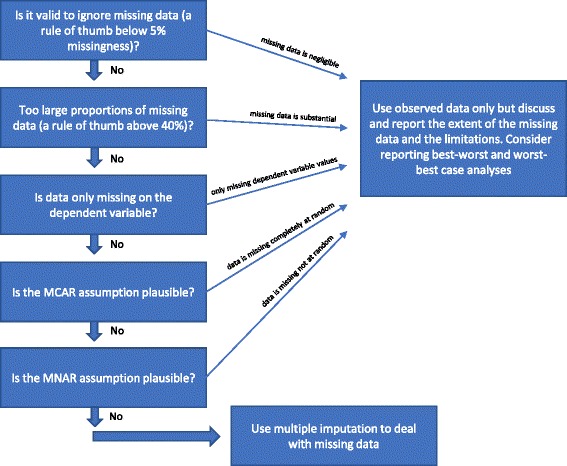
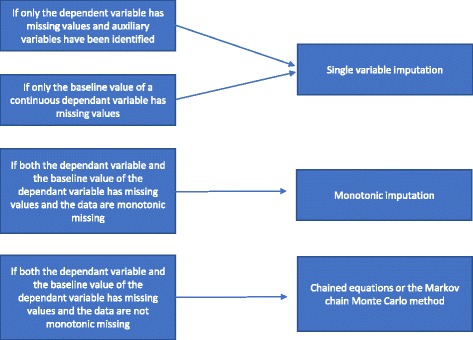
BACKGROUND: Missing data may seriously compromise inferences from randomised clinical trials, especially if missing data are not handled appropriately. The potential bias due to missing data depends on the mechanism causing the data to be missing, and the analytical methods applied to amend the missingness. Therefore, the analysis of trial data with missing values requires careful planning and attention. METHODS: The authors had several meetings and discussions considering optimal ways of handling missing data to minimise the bias potential. We also searched PubMed (key words: missing data; randomi*; statistical analysis) and reference lists of known studies for papers (theoretical papers; empirical studies; simulation studies; etc.) on how to deal with missing data when analysing randomised clinical trials. RESULTS: Handling missing data is an important, yet difficult and complex task when analysing results of randomised clinical trials. We consider how to optimise the handling of missing data during the planning stage of a randomised clinical trial and recommend analytical approaches which may prevent bias caused by unavoidable missing data. We consider the strengths and limitations of using of best-worst and worst-best sensitivity analyses, multiple imputation, and full information maximum likelihood. We also present practical flowcharts on how to deal with missing data and an overview of the steps that always need to be considered during the analysis stage of a trial. CONCLUSIONS: We present a practical guide and flowcharts describing when and how multiple imputation should be used to handle missing data in randomised clinical.
Overview
The claims and statistics of this paper haven’t been checked yet.
Free: it reads the open-access text and checks the first 5 claims that cite a source we can check. Create a free account to check every claim.
Integrity signals
Registry
Cites
Statistics
Figures
Verification
Claims the paper makes
The claims and statistics of this paper haven’t been checked yet.
Free: it reads the open-access text and checks the first 5 claims that cite a source we can check. Create a free account to check every claim.
Claims other papers make about this one
Each is checked against this paper’s own text: does it say what the citing paper says it does?
The source backs part of the claim, not all of it — or backs it for a different population, condition or comparison.
In the citing paper
“Data analyses were performed using an intent-to-treat approach.”
From Impact of acceptance and commitment therapy on physical and psychological symptoms in advanced gastrointestinal cancer patients and caregivers: Secondary results of a pilot randomized trial (2023) · cites this paper as Jakobsen et al., 2017
Experimental — accuracy not yet measuredThe source backs part of the claim, not all of it — or backs it for a different population, condition or comparison.
In the citing paper
“As for the management of missing data, if the missing data represents less than 5% of the study’s total data collected, it will be ignored. If the missing data represents more than 5% but less than 40% of the total data collected and is assumed to be randomly missing, then multiple imputation (restricted maximum likelihood estimation) will be performed using Stata 15. However, if the missing data”
From Study protocol on the efficacy of exergames-acceptance and commitment therapy program for the treatment of major depressive disorder: Comparison with acceptance and commitment therapy alone and treatment-as-usual in a multicentre randomised controlled trial (2024) · cites this paper as [47]
Experimental — accuracy not yet measuredThe source backs part of the claim, not all of it — or backs it for a different population, condition or comparison.
In the citing paper
“In the handling of missing data, if only 5% to the total data collected is missing, then this missing data will be ignored. If the missing data is around 5% to 40% and if it is assumed to be randomly missing, then multiple imputation with restricted maximum likelihood estimation will be utilized (using Stata 15).”
From Research protocol of the efficacy of probiotics for the treatment of alcohol use disorder among adult males: A comparison with placebo and acceptance and commitment therapy in a randomized controlled trial (2023) · cites this paper as [54]
Experimental — accuracy not yet measuredThe source backs part of the claim, not all of it — or backs it for a different population, condition or comparison.
In the citing paper
“To handle any missing data, if the missing data represent less than 5% of the study’s total collected data, they will be ignored. If the missing data represent more than 5% but less than 40% of the total collected and are assumed to be randomly missing, then multiple imputation (restricted maximum likelihood estimation) will be performed using Stata 15. However, if the missing data represent more”
From Acceptance and commitment therapy versus mindfulness-based stress reduction for newly diagnosed head and neck cancer patients: A randomized controlled trial assessing efficacy for positive psychology, depression, anxiety, and quality of life (2022) · cites this paper as [68]
Experimental — accuracy not yet measuredThe source backs part of the claim, not all of it — or backs it for a different population, condition or comparison.
In the citing paper
“Based on published guidelines, 33 data from participants lost to all follow‐up (n = 3) were not imputed because all missing were in the supportive therapy arm which suggests the complete case is biased toward the null”
From Retraining and control therapy for pediatric psychogenic non-epileptic seizures (2020) · cites this paper as [33]
Experimental — accuracy not yet measured
7 more claims about this paper
Create a free account to see every claim other papers make about this one.
Self-check
Percentages, sums and reported differences re-computed from the paper’s own numbers.
The self-check needs the paper’s full text.
Citations
Cites
Sterne, J. A. C., White, I. R., Carlin, J. B., Spratt, M., Royston, P., Kenward, M. G., Wood, A. M., & Carpenter, J. R. (2009) · BMJ · doi:10.1136/bmj.b2393 · Cited by 7,299 · cited 17×
“Missing data may seriously compromise inferences from randomised clinical trials, especially if missingness is not at random and if missing data are not handled appropriately [3, 4].”
BackgroundMethodInfluentialIntravenous Fluids and Acute Kidney Injury
Ding, X., Cheng, Z., & Qian, Q. (2017) · Blood Purification · doi:10.1159/000452702 · Cited by 6,827
The prevention and treatment of missing data in clinical trials
Little, R. J., D'Agostino, R., Cohen, M. L., Dickersin, K., Emerson, S. S., Farrar, J. T., Frangakis, C., Hogan, J. W., Molenberghs, G., Murphy, S. A., et al. (2012) · New England Journal of Medicine · doi:10.1056/nejmsr1203730 · Cited by 1,884 · cited 4×
“Sensitivity analyses may show how assumptions, different from those made in the primary analysis influence the results obtained [3, 6].”
BackgroundInfluentialHydroxyethyl Starch 130/0.42 versus Ringer's Acetate in Severe Sepsis
Perner, A., Haase, N., Guttormsen, A. B., Tenhunen, J., Klemenzson, G., Åneman, A., Madsen, K. R., Møller, M. H., Elkjær, J. M., Poulsen, L. M., et al. (2012) · New England Journal of Medicine · doi:10.1056/nejmoa1204242 · Cited by 1,813 · cited 1×
“Best-worst and worst-best case sensitivity analyses [24, 25] may be used if in doubt: first a ‘best-worst-case’ scenario dataset is generated where it is assumed that all participants lost to follow-up in one group (referred to as group 1) have had a beneficial outcome (for example, had no serious adverse event); and…”
MethodSelf-citationIndustry sponsorship and research outcome
Lundh, A., Lexchin, J., Mintzes, B., Schroll, J. B., & Bero, L. (2017) · Cochrane Database of Systematic Reviews · doi:10.1002/14651858.mr000033.pub3 · Cited by 1,697
Jakobsen, J. C., Wetterslev, J., Winkel, P., Lange, T., & Gluud, C. (2014) · BMC Medical Research Methodology · doi:10.1186/1471-2288-14-120 · Cited by 704 · cited 5×
“Then a ‘worst-best-case’ scenario dataset is generated where it is assumed that all participants lost to follow-up in group 1 have had a harmful outcome; and that all those lost to follow-up in group 2 have had a beneficial outcome [23, 24].”
BackgroundMethodInfluentialSelf-citationHorton, N. J., & Lipsitz, S. R. (2001) · The American Statistician · doi:10.1198/000313001317098266 · Cited by 600 · cited 1×
“Five imputed datasets have traditionally been suggested to be sufficient on theoretical grounds, but 50 datasets (or more) seem preferable to reduce sampling variability from the imputation process [4, 21, 22].”
BackgroundHróbjartsson, A., Thomsen, A. S. S., Emanuelsson, F., Tendal, B., Hilden, J., Boutron, I., Ravaud, P., & Brorson, S. (2013) · Canadian Medical Association Journal · doi:10.1503/cmaj.120744 · Cited by 527
Hrobjartsson, A., Thomsen, A. S. S., Emanuelsson, F., Tendal, B., Hilden, J., Boutron, I., Ravaud, P., & Brorson, S. (2012) · BMJ · doi:10.1136/bmj.e1119 · Cited by 483
Hróbjartsson, A., Emanuelsson, F., Skou Thomsen, A. S., Hilden, J., & Brorson, S. (2014) · International Journal of Epidemiology · doi:10.1093/ije/dyu115 · Cited by 462
Research works printed but not linked: 2
- 22. StataCorp. Stata: release 14. Statistical software. College Station, TX: StataCorp LP; 2015.
- 28. Allison PD. Handling missing data by maximum likelihood, statistical horizons. In: SAS global forum 2012 statistics and data analysis; 2012.
Cited by
Items 201–300 of 814
External Validation of the International IgA Nephropathy Prediction Tool
Zhang, J., Huang, B., Liu, Z., Wang, X., Xie, M., Guo, R., Wang, Y., Yu, D., Wang, P., Zhu, Y., et al. (2020) · Clinical Journal of the American Society of Nephrology · doi:10.2215/cjn.16021219 · Cited by 44
Riishede, M., Lassen, A. T., Baatrup, G., Pietersen, P. I., Jacobsen, N., Jeschke, K. N., & Laursen, C. B. (2021) · Scandinavian Journal of Trauma Resuscitation and Emergency Medicine · doi:10.1186/s13049-021-00872-8 · Cited by 39
“Categorical endpoints were summarized by numbers and percentages with 95% confidence intervals [23].”
MethodSerrat, M., Albajes, K., Navarrete, J., Almirall, M., Girbés, E. L., Neblett, R., Luciano, J. V., Queraltó, J. M., & Feliu‐Soler, A. (2022) · Behaviour Research and Therapy · doi:10.1016/j.brat.2022.104188 · Cited by 53
Imputation of partial pressures of arterial oxygen using oximetry and its impact on sepsis diagnosis
Gadrey, S. M., Lau, C., Clay, R., Rhodes, G. T., Lake, D. E., Moore, C. C., Voss, J. D., & Moorman, J. R. (2019) · Physiological Measurement · doi:10.1088/1361-6579/ab5154 · Cited by 43
“The investigators addressed this problem with multiple imputation (Seymour et al 2016), which can be unreliable when large proportions of data are missing (Jakobsen et al 2017).”
BackgroundJansen, M. H. E., Kessels, J. P. H. M., Merks, I., Nelemans, P. J., Kelleners-Smeets, N. W. J., Mosterd, K., & Essers, B. A. B. (2020) · British Journal of Dermatology · doi:10.1111/bjd.18884 · Cited by 40
Lane, G. I., Smith, A. L., Stambakio, H., Lin, G. G.-H., Alawamlh, O. A. H., Anger, J. T., Brandes, E. R., Carmel, M. E., Chung, D. E., Cox, L., et al. (2020) · Neurourology and Urodynamics · doi:10.1002/nau.24507 · Cited by 38
“Additionally, we performed a subgroup complete case analysis, excluding women without recurrence data.(6) Sensitivity analysis was planned based on the definition stricture recurrence.”
MethodShergill, Y., Rice, D. B., Khoo, E., Jarvis, V., Zhang, T., Taljaard, M., Wilson, K. G., Romanow, H. C., Glynn, B. A., Small, R., et al. (2022) · Pain Research and Management · doi:10.1155/2022/4020550 · Cited by 50
Sun, R., Méndez, D., & Warner, K. E. (2023) · JAMA Network Open · doi:10.1001/jamanetworkopen.2023.4885 · Cited by 40
Cruwys, T., Haslam, C., Rathbone, J. A., Williams, E., & Haslam, S. A. (2021) · Journal of Affective Disorders · doi:10.1016/j.jad.2021.08.029 · Cited by 37
El Baou, C., Bell, G., Saunders, R., Buckman, J. E. J., Mandy, W., Dagnan, D., O'Nions, E., Pender, R., Clements, H., Pilling, S., et al. (2023) · The Lancet Psychiatry · doi:10.1016/s2215-0366(23)00291-2 · Cited by 37
“20 Records were also excluded when recording errors were detected.”
Polonsky, H. M., Bauer, K. W., Fisher, J. O., Davey, A., Sherman, S., Abel, M. L., Hanlon, A. L., Ruth, K. J., Dale, L. C., & Foster, G. D. (2019) · Archives of Pediatrics and Adolescent Medicine · doi:10.1001/jamapediatrics.2018.5531 · Cited by 46
Wongchareon, K., Thompson, H. J., Mitchell, P. H., Barber, J. K., & Temkin, N. R. (2020) · Injury Prevention · doi:10.1136/injuryprev-2019-043466 · Cited by 42
Examining the relationship between student attitude and academic cheating
Yu, H., Glanzer, P. L., & Johnson, B. R. (2020) · Ethics & Behavior · doi:10.1080/10508422.2020.1817746 · Cited by 45
Prediction of HIV status based on socio-behavioural characteristics in East and Southern Africa
Orel, E., Esra, R. T., Estill, J. A. M., Thiabaud, A., Marchand‐Maillet, S., Merzouki, A., & Keiser, O. (2022) · PLoS ONE · doi:10.1371/journal.pone.0264429 · Cited by 42
Evaluating a telehealth single-session consultation service for clients on psychotherapy wait-lists.
Sung, J. Y., Bugatti, M., Vivian, D., & Schleider, J. L. (2023) · Practice Innovations · doi:10.1037/pri0000207 · Cited by 46
Koufaki, M.-I., Fragoulakis, V., Díaz-Villamarín, X., Karamperis, K., Vozikis, A., Swen, J. J., Dávila-Fajardo, C. L., Vasileiou, K., Patrinos, G. P., & Mitropoulou, C. (2023) · Human Genomics · doi:10.1186/s40246-023-00495-3 · Cited by 36
Hypothermia vs Normothermia in Patients With Cardiac Arrest and Nonshockable Rhythm: A Meta-Analysis
Taccone, F. S., Dankiewicz, J., Cariou, A., Lilja, G., Asfar, P., Bělohlávek, J., Boulain, T., Colin, G., Cronberg, T., Frat, J., et al. (2023) · JAMA Neurology · doi:10.1001/jamaneurol.2023.4820 · Cited by 43
Self-citationPierce, D. R., Merone, L., Lewis, C., Rahman, T. M., Croese, J., Loukas, A. C., McDonald, M., Giacomin, P., & McDermott, R. A. (2019) · BMC Endocrine Disorders · doi:10.1186/s12902-019-0461-5 · Cited by 40
Yu, C. H. Y., Choi, D., Bruno, B. A., Thorpe, K. E., Straus, S. E., Cantarutti, P., Chu, K., Frydrych, P., Hoang‐Kim, A., Ivers, N. M., et al. (2020) · Journal of Medical Internet Research · doi:10.2196/16984 · Cited by 45
“To account for missing data, we conducted a fully adjusted mixed effect model using repeated measurements [40-42].”
MethodRethorn, Z. D., Covington, J. K., Cook, C. E., & Bezner, J. R. (2020) · Journal of Geriatric Physical Therapy · doi:10.1519/jpt.0000000000000289 · Cited by 39
Figueiredo, D. M., Nijssen, R., Krop, E. J. M., Buijtenhuijs, D., Gooijer, Y., Lageschaar, L., Duyzer, J. H., Huss, A., Mol, H. G. J., & Vermeulen, R. C. H. (2022) · Environmental Pollution · doi:10.1016/j.envpol.2022.119024 · Cited by 41
Comparative assessment and novel strategy on methods for imputing proteomics data
Shen, M., Chang, Y.-T., Wu, C.-T., Parker, S. J., Saylor, G., Wang, Y., Yu, G., Eyk, J. E. V., Clarke, R. C., Herrington, D. M., et al. (2022) · Scientific Reports · doi:10.1038/s41598-022-04938-0 · Cited by 47
Herrera, C., DuBois, D. L., Heubach, J., & Grossman, J. B. (2023) · Children and Youth Services Review · doi:10.1016/j.childyouth.2022.106742 · Cited by 35
“These advantages include complete case analyses being less complex to implement (Deke & Puma, 2013) as well as the potential for multiple imputation to reduce statistical power due to variability in results across imputed datasets (Sullivan et al., 2018; Jakobsen et al., 2017).”
BackgroundType A aortic dissection: optimal annual case volume for surgery
Kawczynski, M. J., van Kuijk, S. M. J., Olsthoorn, J. R., Maessen, J. G., Kats, S., Bidar, E., & Heuts, S. (2023) · European Heart Journal · doi:10.1093/eurheartj/ehad551 · Cited by 39
“30 However, unfortunately, multiple parameters with missing values which could be adjusted for had 60% case completion (see Supplementary data online, Material S3 ).”
BackgroundTolk, J. J., Janssen, R. P. A., Haanstra, T. M., van der Steen, M. C., Zeinstra, S. B., & Reijman, M. (2019) · The Journal of Knee Surgery · doi:10.1055/s-0039-1692632 · Cited by 39
Lilja, G., Nielsen, N., Ullén, S., Nordström, E., Dankiewicz, J., Friberg, H., Heimburg, K., Jakobsen, J. C., Levin, H., Callaway, C. W., et al. (2020) · Resuscitation · doi:10.1016/j.resuscitation.2020.03.004 · Cited by 35
Self-citationDavis, R. E., Trickey, A. W., Abrahamse, P. H., Kato, I., Ward, K. C., & Morris, A. M. (2021) · JAMA Network Open · doi:10.1001/jamanetworkopen.2021.13533 · Cited by 35
Östbring, M. J., Eriksson, T., Petersson, G., & Hellström, L. (2021) · BMC Cardiovascular Disorders · doi:10.1186/s12872-021-02178-0 · Cited by 44
Beta-blockers in patients without heart failure after myocardial infarction
Safi, S., Sethi, N. J., Korang, S. K., Nielsen, E. E., Feinberg, J. B., Gluud, C. N., & Jakobsen, J. C. (2021) · Cochrane Database of Systematic Reviews · doi:10.1002/14651858.cd012565.pub2 · Cited by 50
Self-citationHill, N. T. M., Bailey, E., Benson, R., Cully, G., Kirtley, O. J., Purcell, R., Rice, S., Robinson, J., & Walton, C. C. (2022) · BMC Psychology · doi:10.1186/s40359-022-00728-5 · Cited by 45
“For this reason the results of the present study should be interpreted in the context of generating hypotheses for future research [60].”
BackgroundResultArtin, H., Bentley, S., Mehaffey, E., Liu, F. X., Sojourner, K., Bismark, A. W., Printz, D., Lee, E., Martis, B., Peralta, S. D., et al. (2022) · EClinicalMedicine · doi:10.1016/j.eclinm.2022.101439 · Cited by 41
Wang, Y. P., Ray, J. G., Pudwell, J., Gaudet, L., Peng, Y., & Vélez, M. P. (2022) · Fertility and Sterility · doi:10.1016/j.fertnstert.2022.07.028 · Cited by 40
Mosher, C. E., Secinti, E., Wu, W., Kashy, D. A., Kroenke, K., Bricker, J. B., Helft, P. R., Turk, A. A., Loehrer, P. J., Sehdev, A., et al. (2022) · Palliative Medicine · doi:10.1177/02692163221099610 · Cited by 34
“27 Male 10 (50) 8 (40) 3 (15) 7 (35) Female 10 (50) 12 (60) 17 (85) 13 (65) Age 0.”
Meta-analyzing the multiverse: A peek under the hood of selective reporting.
Olsson-Collentine, A., van Aert, R. C. M., Bakker, M., & Wicherts, J. M. (2025) · Psychological Methods · doi:10.1037/met0000559 · Cited by 52
Tolk, J. J., Waarsing, J. H., Janssen, R. P. A., van Steenbergen, L. N., Bierma‐Zeinstra, S., & Reijman, M. (2019) · The Journal of Arthroplasty · doi:10.1016/j.arth.2019.10.010 · Cited by 37
Collet, M. O., Egerod, I., Thomsen, T., Wetterslev, J., Lange, T., Ebdrup, B. H., & Perner, A. (2020) · Acta Anaesthesiologica Scandinavica · doi:10.1111/aas.13692 · Cited by 36
“Delirium, n (%) 54 (23) 25 (24) 29 (22) 0.”
Self-citationMcKenna, C. F., Salvador, A. F., Hughes, R., Scaroni, S. E., Alamilla, R. A., Askow, A. T., Paluska, S. A., Dilger, A. C., Holscher, H. D., Lisio, M. D., et al. (2021) · American Journal of Physiology-Endocrinology and Metabolism · doi:10.1152/ajpendo.00574.2020 · Cited by 43
“Missing data was handled without ad hoc imputation (44, 45).”
MethodBiliūnaitė, I., Kazlauskas, E., Sanderman, R., Truskauskaitė‐Kunevičienė, I., Dumarkaitė, A., & Andersson, G. (2021) · Journal of Medical Internet Research · doi:10.2196/21466 · Cited by 43
“In our study MAR was considered, as no clear patterns in the missing data regarding pretreatment scores or demographic variables were identified.”
MethodParra-Soto, S. L., Malcomson, F. C., Ho, F. K., Pell, J. P., Sharp, L., Mathers, J. C., & Celis-Morales, C. (2022) · Cancer Epidemiology Biomarkers & Prevention · doi:10.1158/1055-9965.epi-21-0591 · Cited by 40
“However, since none of the covariates that we included have more than 5% of missingness, it does not seem that using other handling methods could affect our conclusions (38).”
BackgroundZysset, A. E., Volken, T., Amendola, S., von Wyl, A., & Dratva, J. (2022) · Frontiers in Public Health · doi:10.3389/fpubh.2022.854350 · Cited by 38
“For this reason and the low number of incomplete cases, we did not imputemissing data (37) and included complete cases throughout all analyses.”
BackgroundHowell, C. A., Kemppinen, A., Allgar, V. L., Dodd, M., Knowles, C. H., McLaughlin, J. T., Pandya, P., Whorwell, P. J., Markaryan, E., & Yiannakou, Y. (2022) · Gut · doi:10.1136/gutjnl-2022-327293 · Cited by 38
“Although this method has been widely adopted to handle missing data 35 it can introduce bias, but it is reassuring that the resulting ORs were comparable to the observed data.”
Hagan, M. J., Sastry, R. A., Feler, J. R., Abdulrazeq, H., Sullivan, P. Z., Abinader, J. F., Camara-Quintana, J. Q., Niu, T., Fridley, J., Oyelese, A. A., et al. (2022) · North American Spine Society Journal (NASSJ) · doi:10.1016/j.xnsj.2022.100187 · Cited by 36
Wearable Sensors as a Preoperative Assessment Tool: A Review
Syversen, A., Dosis, A., Jayne, D. G., & Zhang, Z. (2024) · Sensors · doi:10.3390/s24020482 · Cited by 37
“Depending on the category of missing data that is assumed for the data, different methods may be better suited for minimising the potential bias that may be introduced [125].”
MethodGudmundsdottir, H. L., Raja, A. A., Rossing, K., Rasmusen, H. K., Snoer, M., Andersen, L. J., Gottlieb, R., Christensen, A. H., Bundgaard, H., Gustafsson, F., et al. (2024) · Circulation · doi:10.1161/circulationaha.124.070064 · Cited by 39
Györfi, A., Filla, T., Polzin, A., Taşçılar, K., Buch, M. H., Tröbs, M., Matei, A., Airó, P., Balbir‐Gurman, A., Kuwert, F., et al. (2025) · Journal of the American Heart Association · doi:10.1161/jaha.124.036730 · Cited by 33
“31 Hereby, the set of potential risk factors was chosen as a tradeoff between the amount of missing data and the relevance of each variable.”
Missing data: current practice in football research and recommendations for improvement
Borg, D. N., Nguyen, R., & Tierney, N. J. (2021) · Science and Medicine in Football · doi:10.1080/24733938.2021.1922739 · Cited by 35
“Missing values in the outcome can be dealt with specially for Randomised Control Trials (Wood et al. 2004; European Medicines Agency 2010; Jakobsen et al. 2017).”
BackgroundMissing repeated measures data in clinical trials
Pugh, S. L., Brown, P. D., & Enserro, D. M. (2021) · Neuro-Oncology Practice · doi:10.1093/nop/npab043 · Cited by 39
Kappos, E. A., Schulz, A., Regan, M. M., Moffa, G., Harder, Y., Ribi, K., Potter, S., Pusic, A. L., Fehr, M. K., Hemkens, L. G., et al. (2021) · BMJ Open · doi:10.1136/bmjopen-2020-045239 · Cited by 36
Rossetto, A., Vulliamy, P., Lee, K. M., Brohi, K., & Davenport, R. (2021) · Anesthesiology · doi:10.1097/aln.0000000000004036 · Cited by 33
“Severe head/neck injury 60 (27) 34 (37) 5 (33) 26 (62)†”
Prognostic models of diabetic microvascular complications: a systematic review and meta-analysis
Saputro, S. A., Pattanaprateep, O., Pattanateepapon, A., Karmacharya, S., & Thakkinstian, A. (2021) · Systematic Reviews · doi:10.1186/s13643-021-01841-z · Cited by 34
“biassed results and lost power in generalisations [98].”
BackgroundSun, J., Ma, Y., Liu, H., Qu, Q., Chen, C., Kong, X., Huang, W., & Sun, W. (2022) · Journal of Clinical Hypertension · doi:10.1111/jch.14446 · Cited by 39
Karthiga, K., Pal, G. K., Dasari, P., Nanda, N., Velkumary, S., Chinnakali, P., Renugasundari, M., & Harichandrakumar, K. (2022) · Scientific Reports · doi:10.1038/s41598-022-15216-4 · Cited by 33
Assisted Reproductive Technology and Risk of Childhood Cancers
Weng, S., Huang, Y., Huang, Y.-T., Li, Y.-P., & Chien, L. (2022) · JAMA Network Open · doi:10.1001/jamanetworkopen.2022.30157 · Cited by 37
Miles, L. F., Pac Soo, V., Braat, S., Bade-Boon, J., Heritier, S., Klein, A. A., Myles, P. S., Richards, T., Symons, J., Burbury, K. L., et al. (2022) · The Lancet Haematology · doi:10.1016/s2352-3026(22)00142-9 · Cited by 32
Cavicchioli, M., Ramella, P., Vassena, G., Simone, G., Prudenziati, F., Sirtori, F., Movalli, M., & Maffei, C. (2020) · The American Journal of Drug and Alcohol Abuse · doi:10.1080/00952990.2020.1712411 · Cited by 43
“Finally, intention-to-treat analysis (ITT) was based on multiple imputation method (116).”
MethodBuilt environment correlates of objectively-measured sedentary behaviours in densely-populated areas
Koohsari, M. J., Shibata, A., Ishii, K., Kurosawa, S., Yasunaga, A., Hanibuchi, T., Nakaya, T., Mavoa, S., McCormack, G. R., & Oka, K. (2020) · Health & Place · doi:10.1016/j.healthplace.2020.102447 · Cited by 36
Reproductive Coercion among Intimate Partner Violence Survivors in Nairobi
Wood, S. N., Kennedy, S. R., Akumu, I., Tallam, C., Asira, B., Hameeduddin, Z., McGready, J., Zimmerman, L. A., Kennedy, C. E., Glass, N. E., et al. (2020) · Studies in Family Planning · doi:10.1111/sifp.12141 · Cited by 34
Home-based pulmonary rehabilitation in people with bronchiectasis: a randomised controlled trial
José, A., Holland, A. E., Selman, J. P. R., de Camargo, C. O., Fonseca, D. S., Athanazio, R. A., Rached, S. Z., Cukier, A., Stelmach, R., & Corso, S. D. (2021) · ERJ Open Research · doi:10.1183/23120541.00021-2021 · Cited by 34
Deep infection after hip hemiarthroplasty: risk factors for infection and outcome of treatments
Craxford, S., Marson, B. A., Nightingale, J., Ikram, A., Agrawal, Y., Deakin, D. E., & Ollivere, B. J. (2021) · Bone & Joint Open · doi:10.1302/2633-1462.211.bjo-2021-0128.r1 · Cited by 32
Mohammed, M., Mboya, I. B., Mwambi, H. G., Elbashir, M. K., & Omolo, B. (2021) · PLoS ONE · doi:10.1371/journal.pone.0261625 · Cited by 40
Bruce, M. D., McFayden, T. C., Ollendick, T. H., & Bell, M. A. (2022) · Developmental Psychobiology · doi:10.1002/dev.22287 · Cited by 43
“…certain circumstances (i.e., when the proportion of missingness is greater than 5% or the data are notmissing completely at random[MCAR]),multiple imputation iswellsuited to handling missing data when the proportion of missingness is moderate (i.e., 10%–25%; Jakobsen et al., 2017; Widaman, 2006).”
BackgroundHu, Y., Wu, R.-Y., Lin, Y.-C., & Lin, T.-Y. (2024) · BMC Medical Research Methodology · doi:10.1186/s12874-024-02392-2 · Cited by 38
“These challenges can have broad implications, influencing clinical decision-making processes and ultimately affecting the quality of patient care [10, 13].”
BackgroundDoctors are seen as Godlike: Moral typecasting in medicine
Goranson, A., Sheeran, P., Katz, J., & Gray, K. J. (2020) · Social Science & Medicine · doi:10.1016/j.socscimed.2020.113008 · Cited by 34
One Year of Netarsudil and Latanoprost Fixed-Dose Combination for Elevated Intraocular Pressure
Brubaker, J. W., Teymoorian, S., Lewis, R. A., Usner, D. W., McKee, H. J., Ramirez, N., Kopczynski, C., & Heah, T. (2020) · Ophthalmology Glaucoma · doi:10.1016/j.ogla.2020.05.008 · Cited by 31
Crotti, M., Rudd, J. R., Roberts, S. J., Boddy, L. M., Davies, K. F., O’Callaghan, L., Utesch, T., & Foweather, L. (2021) · Children · doi:10.3390/children8010049 · Cited by 43
“Based on published guidelines about dealing with missing data in randomized trials, we imputed missing data using the Multiple Imputation method [88,89].”
MethodVargas, J. I., Jensen, D., Martínez, F. T., Sarmiento, V., Peirano, F., Acuña, P., Provoste, F., Bustos, V., Cornejo, F., Fuster, A., et al. (2021) · JAMA Network Open · doi:10.1001/jamanetworkopen.2021.20929 · Cited by 31
Cohen, K. A., Dobias, M., Morris, R. R., & Schleider, J. L. (2022) · PsyArXiv (OSF Preprints) · doi:10.1016/j.jbct.2022.12.001 · Cited by 38
Juul, S., Jakobsen, J. C., Hestbaek, E., Jørgensen, C. K., Olsen, M. H., Rishede, M., Frandsen, F. W., Bo, S., Lunn, S., Poulsen, S., et al. (2023) · Psychotherapy and Psychosomatics · doi:10.1159/000534289 · Cited by 30
“We used a fi ve-step procedure [24] to assess if the thresholds for statistical and clinical signi fi cance were crossed, and we handled missing data according to the procedure suggested by Jakobsen et al. [25].”
BackgroundMethodSelf-citationGago, C. M., Aftosmes‐Tobio, A., Beckerman-Hsu, J. P., Oddleifson, C., Garcia, E. A., Lansburg, K., Figueroa, R., Yu, X., Kitos, N. R., Torrico, M., et al. (2023) · International Journal of Behavioral Nutrition and Physical Activity · doi:10.1186/s12966-022-01400-2 · Cited by 34
Gavrilova, L., & Zawadzki, M. J. (2023) · Mindfulness · doi:10.1007/s12671-023-02214-4 · Cited by 32
“Second, the study had considerable attrition rates between Week 0 and Week 8 assessment (30.63% mindfulness mechanisms data missing), which is likely to produce unreliable estimates through imputation (Jakobsen et al., 2017).”
BackgroundInfluentialChildhood maltreatment and adulthood victimization: An evidence-based model
Fereidooni, F., Daniels, J. K., Krause-Utz, A., Hagenaars, M. A., Smeets, T., Heins, J., Dorahy, M. J., van Emmerik, A., de Jong, P. J., Hoekstra, S., et al. (2023) · Journal of Psychiatric Research · doi:10.1016/j.jpsychires.2023.10.007 · Cited by 40
Dieter, V., Janßen, P., & Krauß, I. (2024) · JMIR mhealth and uhealth · doi:10.2196/54356 · Cited by 37
“According to Jakobsen et al [71], a complete case analysis can be applied up to a threshold of approximately 5% missing values.”
Amour, J., Cholley, B., Ouattara, A., Longrois, D., Leprince, P. N., Fellahi, J.-L., Riou, B., Hariri, S., Latrémouille, C., Rémy, A., et al. (2019) · Intensive Care Medicine · doi:10.1007/s00134-018-5497-x · Cited by 30
Lagas, I. F., van der Vlist, A. C., van Oosterom, R. F., van Veldhoven, P. L. J., Reijman, M., Verhaar, J. A. N., & de Vos, R. (2021) · Journal of Orthopaedic and Sports Physical Therapy · doi:10.2519/jospt.2021.10040 · Cited by 37
Caldas, A. P. S., Rocha, D. M. U. P., Dionísio, A. P., Hermsdorff, H. H. M., & Bressan, J. (2022) · British Journal Of Nutrition · doi:10.1017/s000711452100475x · Cited by 34
“missing data "missing not at random (MNAR)", the use of the multiple imputation method is not recommended [56] .”
MethodMönninghoff, A., Fuchs, K., Wu, J., Albert, J. L., & Mayer, S. (2022) · Journal of Medical Internet Research · doi:10.2196/32487 · Cited by 37
“Sensitivity analysis was conducted for demographic variables and primary outcomes to test for randomness of missing data and attrition bias [69,70].”
Gao, R., Guo, H., Liu, Y., Pang, Y., Zhang, X., Lian, X., Yu, T., Zhu, L., & Li, F. (2023) · International Journal of Nursing Studies · doi:10.1016/j.ijnurstu.2023.104491 · Cited by 34
Munda, A., Mlinarič, Z., Jakin, P. A., Lunder, M., & Barlovič, D. P. (2023) · Acta Diabetologica · doi:10.1007/s00592-023-02099-8 · Cited by 32
“0%) of missing values for complete case analysis [16].”
BackgroundLi, Y., Xiao, N., Liu, M., Liu, Y., He, A., Wang, L., Luo, H., Yao, Y., & Sun, H. (2023) · Environmental Pollution · doi:10.1016/j.envpol.2023.121730 · Cited by 32
Urs, R. C., Evans, D. J., Bradshaw, T., Gibbons, J. T. D., Smith, E. F., Foong, R. E., Wilson, A. C., & Simpson, S. J. (2023) · The Lancet Child & Adolescent Health · doi:10.1016/s2352-4642(23)00128-1 · Cited by 32
Effect of experimental hookworm infection on insulin resistance in people at risk of type 2 diabetes
Pierce, D. R., McDonald, M., Merone, L., Becker, L., Thompson, F., Lewis, C., Ryan, R. Y. M., Hii, S. F., Zendejas-Heredia, P. A., Traub, R. J., et al. (2023) · Nature Communications · doi:10.1038/s41467-023-40263-4 · Cited by 31
Valsamis, E. M., Pinedo‐Villanueva, R., Sayers, A. E., Collins, P. G. S., & Rees, J. L. (2023) · BMC Medicine · doi:10.1186/s12916-023-03112-1 · Cited by 31
“These records were excluded, and a complete case analysis was undertaken (see Additional file 1 for data flow-chart and for baseline characteristics and outcomes of observations with missing data) [19, 20].”
MethodHigh-Dose Glucocorticoids for the Treatment of Sudden Hearing Loss
Plontke, S. K., Girndt, M., Meisner, C., Fischer, I. U., Böselt, I., Löhler, J., Ludwig‐Kraus, B., Richter, M., Steighardt, J., Reuter, B., et al. (2023) · NEJM Evidence · doi:10.1056/evidoa2300172 · Cited by 42
Dejgaard, T. F., Frandsen, C. S., Kielgast, U., Størling, J., Overgaard, A. J., Svane, M. S., Olsen, M. H., Thorsteinsson, B., Andersen, H. U., Krarup, T., et al. (2024) · Diabetes, Obesity and Metabolism · doi:10.1111/dom.15889 · Cited by 29
“24 To account for the influence of missingness, for outcomes collected at multiple visits, a mixed-effects linear regression model was used, where the outcome of interest at all visits was included as an outcome, and allocation and week were included as fixed effects, while participants were…”
To Vaccinate or Not to Vaccinate—This Is the Question among Swiss University Students
Dratva, J., Wagner, A., Zysset, A. E., & Volken, T. (2021) · International Journal of Environmental Research and Public Health · doi:10.3390/ijerph18179210 · Cited by 31
“For the above reasons, we did not impute missing data [14] and included 1297 complete cases throughout all analyses.”
Jeon, B. M., & Kim, S. H. (2022) · BMC Public Health · doi:10.1186/s12889-022-14599-3 · Cited by 38
“Missing values were replaced with a random sample of plausible value imputations via single-value regression analysis [23].”
MethodBias in Reinforcement Learning: A Review in Healthcare Applications
Smith, B., Khojandi, A., & Vasudevan, R. K. (2023) · ACM Computing Surveys · doi:10.1145/3609502 · Cited by 42
“Most imputation methods estimate values based on the assumption that the values are missing randomly; however, sometimes features are MNAR and are instead caused by external non-computable factor(s) [38].”
BackgroundResultInfluentialArmbruster, C., Walzer, S., Witek, S., Ziegler, S., & Farin‐Glattacker, E. (2023) · BMC Nursing · doi:10.1186/s12912-023-01611-3 · Cited by 39
“To counteract biased estimation (i.e. only CCA) [52], noise-related strain in ICUs was additionally considered using a linear mixed model (LMM) (i.e. considering all the observations, regardless of how often they participated in the surveys and with adjustment for the variable "general noise…”
MethodOei, C. W., Chan, Y. M., Zhang, X., Leo, K. H., Yong, E., Chong, L. R. C., Hong, Q., Zhang, L., Pan, Y., Tan, G. W. L., et al. (2024) · Journal of Diabetes Science and Technology · doi:10.1177/19322968241228606 · Cited by 33
Addressing missing outcome data in randomised controlled trials: A methodological scoping review
Medcalf, E., Turner, R. M., Espinoza, D., He, V., & Bell, K. (2024) · Contemporary Clinical Trials · doi:10.1016/j.cct.2024.107602 · Cited by 30
Salehi, F., González, L. I. L., Bayat, S., Kleyer, A., Zanca, D., Brost, A., Schett, G. A., & Eskofier, B. M. (2024) · Journal of Clinical Medicine · doi:10.3390/jcm13133890 · Cited by 35
“It creates multiple imputations for missing values by modeling each variable with missing data based on other variables in the dataset [27,28].”
MethodDitch, K. L., Flahive, J., West, A., Osgood, M. L., & Muehlschlegel, S. (2020) · Neurocritical Care · doi:10.1007/s12028-020-00928-0 · Cited by 31
Pettersson, B., Lundin‐Olsson, L., Skelton, D. A., Liv, P., Zingmark, M., Rosendahl, E., & Sandlund, M. (2020) · BMJ Open · doi:10.1136/bmjopen-2019-036194 · Cited by 33
“47 In addition, analysis on original unimputed data will be presented as supplement.”
Sunde, S., Hesseberg, K., Skelton, D. A., Ranhoff, A. H., Pripp, A. H., Aarønæs, M., & Brovold, T. (2020) · BMC Geriatrics · doi:10.1186/s12877-020-01829-9 · Cited by 37
Rani, P., Kumar, R., & Jain, A. (2021) · Lecture notes on data engineering and communications technologies · doi:10.1007/978-981-15-9651-3_53 · Cited by 29
Nakafero, G., Grainge, M. J., Valdes, A. M., Townsend, N. P., Mallen, C. D., Zhang, W., Doherty, M., Mamas, M. A., & Abhishek, A. (2021) · Rheumatology · doi:10.1093/rheumatology/keab234 · Cited by 29
Krishnan, S., O’Connor, L. E., Wang, Y., Gertz, E., Campbell, W. W., & Bennett, B. J. (2021) · British Journal Of Nutrition · doi:10.1017/s0007114521004694 · Cited by 35
Granholm, A., Kjær, M. N., Munch, M. W., Myatra, S. N., Vijayaraghavan, B. K. T., Cronhjort, M., Wahlin, R. R., Jakob, S. M., Cioccari, L., Vesterlund, G. K., et al. (2022) · Intensive Care Medicine · doi:10.1007/s00134-022-06677-2 · Cited by 36
Self-citationSubramanian, A., Lee, S. I., Phillips, K. W., Toulis, K. A., Kempegowda, P., O’Reilly, M., Adderley, N. J., Thangaratinam, S., Arlt, W., & Nirantharakumar, K. (2022) · BMC Medicine · doi:10.1186/s12916-022-02473-3 · Cited by 39
Effects of emotionally oriented parental interventions: a systematic review and meta-analysis
Zahl‐Olsen, R., Severinsen, L., Stiegler, J. R., Fernee, C. R., Simhan, I., Rekdal, S. S., & Bertelsen, T. B. (2023) · Frontiers in Psychology · doi:10.3389/fpsyg.2023.1159892 · Cited by 34
“When missingness exceeds 5%, full information maximum likelihood (FIML) is suggested; however, multiple imputation is generally preferred (Jakobsen et al., 2017).”
Background
Metadata
- Authors
- Jakobsen, J. C., Gluud, C., Wetterslev, J., & Winkel, P.
- Affiliations
- Copenhagen University Hospital (DK)
- Corresponding author
- Jakobsen, Janus Christian
- Venue
- BMC Medical Research Methodology
- Published
- 2017-12
- Volume
- 17
- Issue
- 1
- Pages
- 162-162
- ISSN
- 1471-2288 (ISSN-L)
- PMC
- PMC5717805
- OpenAlex
- W2772803673
- Semantic Scholar
- 601b9d1445292bcdfd372c11b5a2eb752d7cf39e
- Cited by
- 2,747
- References
- 29
- Citations by year
- 2026: 287 · 2025: 433 · 2024: 455 · 2023: 443 · 2022: 468 · 2021: 361 · 2020: 205 · 2019: 78 · 2018: 15 · 2017: 1
- FWCI
- 56.41
- Type
- journal article
- Language
- en
- Open access
- gold
- doi.org
- Licence
- cc-by
- Locations
- BMC Medical Research Methodology (publishedVersion, cc-by)
- Europe PMC (PubMed Central) (publishedVersion, cc-by)
- PubMed Central (publishedVersion, cc-by)
- PubMed (publishedVersion)
- DOAJ (DOAJ: Directory of Open Access Journals) (submittedVersion, cc-by-sa)
- Funders
- Copenhagen Trial Unit, Centre for Clinical Intervention Research
- Topics
- Physical Sciences › Mathematics › Statistics and Probability › Statistical Methods and Bayesian Inference
- Physical Sciences › Mathematics › Statistics and Probability › Statistical Methods in Clinical Trials
- Social Sciences › Decision Sciences › Statistics, Probability and Uncertainty › Meta-analysis and systematic reviews
- Keywords
- missing data, multiple imputation, randomized controlled trials, full information maximum likelihood, missing data mechanisms
- MeSH terms
- Data Accuracy, Data Interpretation, Statistical, Humans, Models, Statistical, Randomized Controlled Trials as Topic
About these checks
Registry, retraction, Cites and statistics results are computed, not judged, with one exception: a printed reference that no index lists is read once by a model before it counts as a citation error. Claims are extracted by a model and kept only when their quote appears verbatim in the text; each cited source is then checked, with a model’s help, for whether it says what the claim relies on. Those verdicts can be wrong — read the claim’s quote and the cited source before relying on one.
Statistics and arithmetic are recomputed, not judged.
Confidence bands are shown only for fields calibrated on our annotated test set. None is calibrated yet, so no band is shown.
What counts as a claim ›How we measure confidence ›How we check this ›
Are you an author, or do you see a problem with this page? Request a review
Data sources
Bibliographic data: Semantic Scholar, OpenAlex, Crossref.
Contains information from the Semantic Scholar Academic Graph Datasets, made available under the ODC Attribution License (ODC-BY 1.0).
Semantic Scholar’s data is described in: Kinney, R., et al. (2023). The Semantic Scholar Open Data Platform. arXiv:2301.10140.
