

When and how should multiple imputation be used for handling missing data in randomised clinical trials – a practical guide with flowcharts
Open accessThe DOI matches its Crossref record; 29 of the 29 references it cites were found in a registry or an index.
Abstract
BACKGROUND: Missing data may seriously compromise inferences from randomised clinical trials, especially if missing data are not handled appropriately. The potential bias due to missing data depends on the mechanism causing the data to be missing, and the analytical methods applied to amend the missingness. Therefore, the analysis of trial data with missing values requires careful planning and attention. METHODS: The authors had several meetings and discussions considering optimal ways of handling missing data to minimise the bias potential. We also searched PubMed (key words: missing data; randomi*; statistical analysis) and reference lists of known studies for papers (theoretical papers; empirical studies; simulation studies; etc.) on how to deal with missing data when analysing randomised clinical trials. RESULTS: Handling missing data is an important, yet difficult and complex task when analysing results of randomised clinical trials. We consider how to optimise the handling of missing data during the planning stage of a randomised clinical trial and recommend analytical approaches which may prevent bias caused by unavoidable missing data. We consider the strengths and limitations of using of best-worst and worst-best sensitivity analyses, multiple imputation, and full information maximum likelihood. We also present practical flowcharts on how to deal with missing data and an overview of the steps that always need to be considered during the analysis stage of a trial. CONCLUSIONS: We present a practical guide and flowcharts describing when and how multiple imputation should be used to handle missing data in randomised clinical.
Overview
The claims and statistics of this paper haven’t been checked yet.
Free: it reads the open-access text and checks the first 5 claims that cite a source we can check. Create a free account to check every claim.
Integrity signals
Registry
Cites
Statistics
Figures
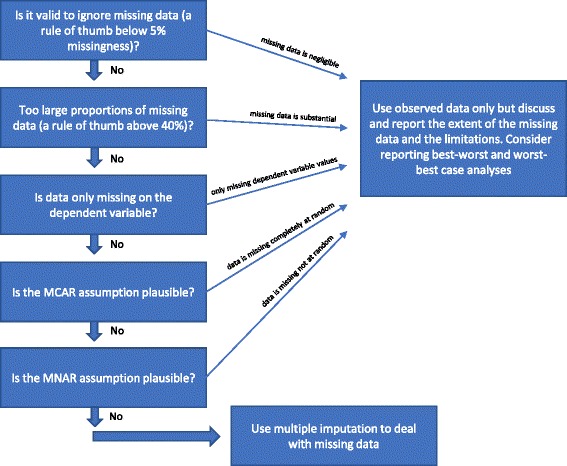
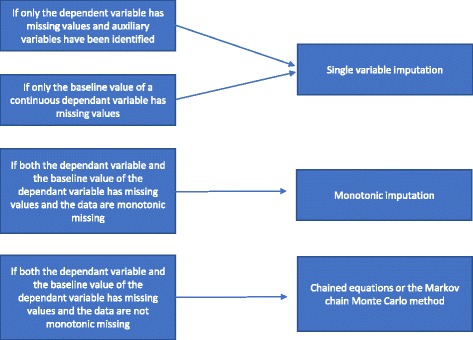
Verification
Claims the paper makes
The claims and statistics of this paper haven’t been checked yet.
Free: it reads the open-access text and checks the first 5 claims that cite a source we can check. Create a free account to check every claim.
Claims other papers make about this one
Each is checked against this paper’s own text: does it say what the citing paper says it does?
The source backs part of the claim, not all of it — or backs it for a different population, condition or comparison.
In the citing paper
“Data analyses were performed using an intent-to-treat approach.”
From Impact of acceptance and commitment therapy on physical and psychological symptoms in advanced gastrointestinal cancer patients and caregivers: Secondary results of a pilot randomized trial (2023) · cites this paper as Jakobsen et al., 2017
Experimental — accuracy not yet measuredThe source backs part of the claim, not all of it — or backs it for a different population, condition or comparison.
In the citing paper
“As for the management of missing data, if the missing data represents less than 5% of the study’s total data collected, it will be ignored. If the missing data represents more than 5% but less than 40% of the total data collected and is assumed to be randomly missing, then multiple imputation (restricted maximum likelihood estimation) will be performed using Stata 15. However, if the missing data”
From Study protocol on the efficacy of exergames-acceptance and commitment therapy program for the treatment of major depressive disorder: Comparison with acceptance and commitment therapy alone and treatment-as-usual in a multicentre randomised controlled trial (2024) · cites this paper as [47]
Experimental — accuracy not yet measuredThe source backs part of the claim, not all of it — or backs it for a different population, condition or comparison.
In the citing paper
“In the handling of missing data, if only 5% to the total data collected is missing, then this missing data will be ignored. If the missing data is around 5% to 40% and if it is assumed to be randomly missing, then multiple imputation with restricted maximum likelihood estimation will be utilized (using Stata 15).”
From Research protocol of the efficacy of probiotics for the treatment of alcohol use disorder among adult males: A comparison with placebo and acceptance and commitment therapy in a randomized controlled trial (2023) · cites this paper as [54]
Experimental — accuracy not yet measuredThe source backs part of the claim, not all of it — or backs it for a different population, condition or comparison.
In the citing paper
“To handle any missing data, if the missing data represent less than 5% of the study’s total collected data, they will be ignored. If the missing data represent more than 5% but less than 40% of the total collected and are assumed to be randomly missing, then multiple imputation (restricted maximum likelihood estimation) will be performed using Stata 15. However, if the missing data represent more”
From Acceptance and commitment therapy versus mindfulness-based stress reduction for newly diagnosed head and neck cancer patients: A randomized controlled trial assessing efficacy for positive psychology, depression, anxiety, and quality of life (2022) · cites this paper as [68]
Experimental — accuracy not yet measuredThe source backs part of the claim, not all of it — or backs it for a different population, condition or comparison.
In the citing paper
“Based on published guidelines, 33 data from participants lost to all follow‐up (n = 3) were not imputed because all missing were in the supportive therapy arm which suggests the complete case is biased toward the null”
From Retraining and control therapy for pediatric psychogenic non-epileptic seizures (2020) · cites this paper as [33]
Experimental — accuracy not yet measured
7 more claims about this paper
Create a free account to see every claim other papers make about this one.
Self-check
Percentages, sums and reported differences re-computed from the paper’s own numbers.
The self-check needs the paper’s full text.
Citations
Cites
Sterne, J. A. C., White, I. R., Carlin, J. B., Spratt, M., Royston, P., Kenward, M. G., Wood, A. M., & Carpenter, J. R. (2009) · BMJ · doi:10.1136/bmj.b2393 · Cited by 7,299 · cited 17×
“Missing data may seriously compromise inferences from randomised clinical trials, especially if missingness is not at random and if missing data are not handled appropriately [3, 4].”
BackgroundMethodInfluentialIntravenous Fluids and Acute Kidney Injury
Ding, X., Cheng, Z., & Qian, Q. (2017) · Blood Purification · doi:10.1159/000452702 · Cited by 6,827
The prevention and treatment of missing data in clinical trials
Little, R. J., D'Agostino, R., Cohen, M. L., Dickersin, K., Emerson, S. S., Farrar, J. T., Frangakis, C., Hogan, J. W., Molenberghs, G., Murphy, S. A., et al. (2012) · New England Journal of Medicine · doi:10.1056/nejmsr1203730 · Cited by 1,884 · cited 4×
“Sensitivity analyses may show how assumptions, different from those made in the primary analysis influence the results obtained [3, 6].”
BackgroundInfluentialHydroxyethyl Starch 130/0.42 versus Ringer's Acetate in Severe Sepsis
Perner, A., Haase, N., Guttormsen, A. B., Tenhunen, J., Klemenzson, G., Åneman, A., Madsen, K. R., Møller, M. H., Elkjær, J. M., Poulsen, L. M., et al. (2012) · New England Journal of Medicine · doi:10.1056/nejmoa1204242 · Cited by 1,813 · cited 1×
“Best-worst and worst-best case sensitivity analyses [24, 25] may be used if in doubt: first a ‘best-worst-case’ scenario dataset is generated where it is assumed that all participants lost to follow-up in one group (referred to as group 1) have had a beneficial outcome (for example, had no serious adverse event); and…”
MethodSelf-citationIndustry sponsorship and research outcome
Lundh, A., Lexchin, J., Mintzes, B., Schroll, J. B., & Bero, L. (2017) · Cochrane Database of Systematic Reviews · doi:10.1002/14651858.mr000033.pub3 · Cited by 1,697
Jakobsen, J. C., Wetterslev, J., Winkel, P., Lange, T., & Gluud, C. (2014) · BMC Medical Research Methodology · doi:10.1186/1471-2288-14-120 · Cited by 704 · cited 5×
“Then a ‘worst-best-case’ scenario dataset is generated where it is assumed that all participants lost to follow-up in group 1 have had a harmful outcome; and that all those lost to follow-up in group 2 have had a beneficial outcome [23, 24].”
BackgroundMethodInfluentialSelf-citationHorton, N. J., & Lipsitz, S. R. (2001) · The American Statistician · doi:10.1198/000313001317098266 · Cited by 600 · cited 1×
“Five imputed datasets have traditionally been suggested to be sufficient on theoretical grounds, but 50 datasets (or more) seem preferable to reduce sampling variability from the imputation process [4, 21, 22].”
BackgroundHróbjartsson, A., Thomsen, A. S. S., Emanuelsson, F., Tendal, B., Hilden, J., Boutron, I., Ravaud, P., & Brorson, S. (2013) · Canadian Medical Association Journal · doi:10.1503/cmaj.120744 · Cited by 527
Hrobjartsson, A., Thomsen, A. S. S., Emanuelsson, F., Tendal, B., Hilden, J., Boutron, I., Ravaud, P., & Brorson, S. (2012) · BMJ · doi:10.1136/bmj.e1119 · Cited by 483
Hróbjartsson, A., Emanuelsson, F., Skou Thomsen, A. S., Hilden, J., & Brorson, S. (2014) · International Journal of Epidemiology · doi:10.1093/ije/dyu115 · Cited by 462
Research works printed but not linked: 2
- 22. StataCorp. Stata: release 14. Statistical software. College Station, TX: StataCorp LP; 2015.
- 28. Allison PD. Handling missing data by maximum likelihood, statistical horizons. In: SAS global forum 2012 statistics and data analysis; 2012.
Cited by
Items 501–600 of 814
Cella, S., Cipriano, A., Aprea, C., & Cotrufo, P. (2021) · Appetite · doi:10.1016/j.appet.2021.105825 · Cited by 20
Barrios, M. A. O., García-Constantino, M., Nugent, C., & Sarmiento, I. A. (2022) · International Journal of Environmental Research and Public Health · doi:10.3390/ijerph19031133 · Cited by 19
Lepage, M., Bowie, C. R., Montreuil, T., Baer, L., Percie du Sert, O., Lecomte, T., Joober, R., Abdel-Baki, A., Jarvis, G. E., Margolese, H. C., et al. (2023) · Psychological Medicine · doi:10.1017/s0033291721005328 · Cited by 16
“As multiple imputations are not recommended if a large proportion of data are missing (Jakobsen, Gluud, Wetterslev, & Winkel, 2017), we used the maximum-likelihood method to handle missing data which prevented listwise deletion due to such missing data.”
Tsapekos, D., Strawbridge, R., Cella, M., Wykes, T., & Young, A. H. (2022) · Behaviour Research and Therapy · doi:10.1016/j.brat.2022.104054 · Cited by 18
Llera, A., Brammer, M. J., Oakley, B. F. M., Tillmann, J., Zabihi, M., Amelink, J. S., Mei, T., Charman, T., Ecker, C., Dell’Acqua, F., et al. (2022) · BMC Medical Research Methodology · doi:10.1186/s12874-022-01656-z · Cited by 22
“Although there exist tools to get insights into whether data is MCAR or MAR [26, 27], it has been shown that in both cases unbiased estimations can be obtained using iterative imputation schemes [28].”
MethodZhang, E., Ruth, K. J., Buyyounouski, M. K., Price, R., Uzzo, R. G., Sobczak, M. L., Pollack, A. S., Wong, J. K., Chen, D. Y. T., Hallman, M. A., et al. (2022) · International Journal of Radiation Oncology*Biology*Physics · doi:10.1016/j.ijrobp.2022.12.008 · Cited by 18
Hyland, K., Hammarberg, A., Hedman‐Lagerlöf, E., Johansson, M., Lindner, P., & Andréasson, S. (2023) · Addiction · doi:10.1111/add.16157 · Cited by 22
Barnaby, D. P., Chertoff, A., Restivo, A. J., Campbell, C. M., Pearlman, S., White, D. J., Bijur, P. E., & Gallagher, E. J. (2018) · Annals of Emergency Medicine · doi:10.1016/j.annemergmed.2018.06.019 · Cited by 18
“Because we were missing primary endpoints for 14 patients, we performed a sensitivity analysis using a “best-worst and worst-best” case approach, as described by Jakobsen et al.(38) Our primary results and conclusions were unaffected by the missing data.”
MethodEMPOWER: A Multi-Site Pilot Trial to Reduce Distress in Surrogate Decision-Makers in the ICU
Lichtenthal, W. G., Lief, L., Rogers, M., Russell, D., Viola, M., Winoker, H., Kakarala, S., Traube, C., Coats, T., Fadalla, C., et al. (2024) · Journal of Pain and Symptom Management · doi:10.1016/j.jpainsymman.2024.03.002 · Cited by 17
Longitudinal effects of a scenario-based learning intervention on preservice teacher self-efficacy
Rushby, J. V., Klassen, R. M., Durksen, T. L., Pfaffel, A., & Bardach, L. (2024) · Teaching and Teacher Education · doi:10.1016/j.tate.2024.104859 · Cited by 22
Welch, V. A., Ghogomu, E. A. T., Hossain, A., Riddle, A. Y., Gaffey, M. F., Arora, P., Dewidar, O., Salam, R. A., Cousens, S., Black, R. E., et al. (2019) · Campbell Systematic Reviews · doi:10.1002/cl2.1058 · Cited by 21
Valente, J. Y., Cogo‐Moreira, H., & Sanchez, Z. M. (2019) · Drug and Alcohol Dependence · doi:10.1016/j.drugalcdep.2019.107718 · Cited by 24
Davis, R. C., Reich, W. A., Rempel, M., & Labriola, M. (2021) · Criminal Justice Policy Review · doi:10.1177/08874034211000403 · Cited by 19
“While we considered imputation to address missing data, we were guided by Jakobsen et al. (2017) who argue that, with large quantities of missing data, the best approach is to “report the results of the complete case analysis and then clearly discuss the resulting interpretative limitations of the…”
BackgroundMethodBarrio‐Martínez, S., González‐Blanch, C., Priede, A., Muñoz‐Navarro, R., Medrano, L. A., Moriana, J. A., Carpallo-González, M., Ventura, L., Ruiz‐Rodríguez, P., & Vindel, A. C. (2022) · Behavior Therapy · doi:10.1016/j.beth.2022.01.007 · Cited by 20
Santamaría-Bonfil, G., Santoyo, E., Díaz‐González, L., & Figueroa, G. (2022) · Geothermics · doi:10.1016/j.geothermics.2022.102440 · Cited by 17
Sinha, B., Sommerfelt, H., Ashorn, P., Mazumder, S., Taneja, S., Bahl, R., & Bhandari, N. (2022) · Maternal and Child Nutrition · doi:10.1111/mcn.13419 · Cited by 23
Pang, J. C. Y., Fu, S. N., Lam, K. H. S., Peng, B., & Fu, A. C. L. (2022) · PLoS ONE · doi:10.1371/journal.pone.0274990 · Cited by 19
“Missing data may compromise the inferences from RCTs if such data are handled inappropriately [61].”
Béraud, G., Bouetard, L., Čivljak, R., Michon, J., Tülek, N., Lejeune, S., Millot, R., Garchet-Beaudron, A., Lefebvre, M., Velikov, P., et al. (2022) · Clinical Microbiology and Infection · doi:10.1016/j.cmi.2022.12.020 · Cited by 19
“Tomanagemissing data not at random, multivariate analysis was initially performed only on the dataset with complete cases, after which the model was applied to the full dataset [9].”
Social media and disordered eating among middle-aged women: Not just an adolescent concern.
Thompson, K. A., Miller, A., Walsh, E. C., & Bardone-Cone, A. M. (2023) · Eating Behaviors · doi:10.1016/j.eatbeh.2023.101748 · Cited by 16
Xiao, C. S., Scales, J., Chavda, J., Dove, R. E., Tsocheva, I., Wood, H. E., Kalsi, H. S., Sartori, L., Colligan, G., Moon, J., et al. (2024) · International Journal of Behavioral Nutrition and Physical Activity · doi:10.1186/s12966-024-01621-7 · Cited by 19
“This analysis was initially designed to measure changes in active travel behaviour across four years, however this aim was truncated due to Covid-19 restrictions to a more limited consideration of the data collected in the years pre-and post-implementation of the ULEZ.”
Meyer, B., Betz, L. T., Jacob, G. A., Krause, N., Riemann-Lorenz, K., Gold, S. M., Pöttgen, J., & Heesen, C. (2024) · BMC Neurology · doi:10.1186/s12883-024-03843-5 · Cited by 21
“In addition, a conservative sensitivity analysis based on reference-based multiple imputation (J2R imputation) and a complete-case analysis were calculated [39, 40].”
MethodGuilabert, L., Cárdenas‐Jaén, K., Vaillo-Rocamora, A., de Paredes, A. G. G., Chhoda, A., Sheth, S. G., López-Valero, C., Zapater, P., Navarrete‐Muñoz, E. M., Maisonneuve, P., et al. (2024) · Trials · doi:10.1186/s13063-024-08539-2 · Cited by 19
“We will use the Multivariate Imputation by Chained Equations (MICE) using creating multiple datasets for ten times and results will be combined using Rubin’s rules [33].”
MethodMurta, S. G., Vinha, L. G. D. A., Nobre-Sandoval, L. D. A., Rocha, V. P. S., Duailibe, K. D., Gomes, M. D. S. M., Farias, D. A., & Foxcroft, D. (2020) · Drugs Education Prevention and Policy · doi:10.1080/09687637.2020.1769030 · Cited by 22
“interpretative limitations of the results (Jakobsen et al., 2017).”
MethodKunze, K. N., Burnett, R. A., Lee, E. K., Rasio, J. P., & Nho, S. J. (2020) · Arthroscopy Sports Medicine and Rehabilitation · doi:10.1016/j.asmr.2020.07.007 · Cited by 18
Momplaisir, F. M., Hussein, M., Kacanek, D., Brady, K. T., Agwu, A. L., Scott, G. B., TUOMALA, R. E., & Bennett, D. S. (2021) · Clinical Infectious Diseases · doi:10.1093/cid/ciab416 · Cited by 17
Juul, S., Simonsen, S., Poulsen, S., Lunn, S., Sørensen, P. S., BATEMAN, A. W., & Jakobsen, J. C. (2021) · Trials · doi:10.1186/s13063-021-05450-y · Cited by 19
Self-citationLau, K. Y.-Y., Ng, D. K. S., Kwok, K., Tsia, K. K., Sin, C., Lam, C.-W., & Vardhanabhuti, V. (2022) · Frontiers in Medicine · doi:10.3389/fmed.2021.764934 · Cited by 20
“Patients with more than 40% missing variables and inconsistent data were excluded (13).”
BackgroundOn Bayesian modeling of censored data in JAGS
Qi, X., Zhou, S., & Plummer, M. (2022) · BMC Bioinformatics · doi:10.1186/s12859-021-04496-8 · Cited by 22
“Compared with the multiple imputation, Bayesian modeling is robust in statistical inference even when a large proportion of missing data is present [8, 9].”
MethodDesigning clinically useful psychopharmacological trials: challenges and ways forward
Chevance, A., Ravaud, P., Cornelius, V. R., Mayo‐Wilson, E., & Furukawa, T. A. (2022) · The Lancet Psychiatry · doi:10.1016/s2215-0366(22)00041-4 · Cited by 24
Bartoszko, J. M., Martinez-Perez, S., Callum, J., Karkouti, K., Farouh, M. E., Scales, D. C., Heddle, N. M., Crowther, M. A., Rao, V., Hucke, H.-P., et al. (2022) · British Journal of Anaesthesia · doi:10.1016/j.bja.2022.05.012 · Cited by 17
Tsvetanov, K. A., Spindler, L. R. B., Stamatakis, E. A., Newcombe, V., Lupson, V. C., Chatfield, D. A., Manktelow, A. E., Outtrim, J. G., Elmer, A., Kingston, N., et al. (2022) · NeuroImage Clinical · doi:10.1016/j.nicl.2022.103253 · Cited by 21
“We are limited (i) by the relatively small sample size with incomplete data across modalities and patients (Jakobsen et al., 2017), (ii) by sensitivity to domain-specific cognitive impairment (Coen et al., 2016) and (iii) by the absence of longitudinal imaging data in patients and physiological…”
Kauhanen, H., Einhaus, S., & Walkden, G. (2023) · Journal of Language Evolution · doi:10.1093/jole/lzad005 · Cited by 35
Kwan, R. Y. C., Ng, F., LAM, L. C. W., Yung, R. C., Sin, O. S. K., & Chan, S. W. (2023) · Trials · doi:10.1186/s13063-023-07592-7 · Cited by 22
Gerö, D., Tzafos, S., Milos, G. F., Gerber, P. A., Vetter, D., & Bueter, M. (2019) · Obesity Surgery · doi:10.1007/s11695-018-3596-y · Cited by 18
Paulik, G., Hayward, M., Bibby-Jones, A.-M., & Badcock, J. C. (2019) · Clinical Psychology & Psychotherapy · doi:10.1002/cpp.2395 · Cited by 21
The Role of Place in Disparities Affecting Black Men Receiving Hemodialysis
Golestaneh, L., Karaboyas, A., Cavanaugh, K. L., Umeukeje, E. M., Johns, T. S., Thorpe, R. J., Bruce, M. A., Griffith, D. M., Melamed, M. L., & Norris, K. C. (2020) · Kidney International Reports · doi:10.1016/j.ekir.2020.10.014 · Cited by 18
“We used a multiple imputation technique with chained predictive analytics (10 imputations) to account for randomly occurring missing data.(31) The models were built using this imputed database.”
MethodGärtner, L., Klötzer, K., Lenarz, T., & Scheper, V. (2021) · Life · doi:10.3390/life11030203 · Cited by 16
“Those missing values were either very conservatively replaced by single imputation of the worst possible value 0 (analysis A), or excluded from analysis (analysis B) [23].”
Rønsbo, T. N., Laigaard, J., Pedersen, C., Mathiesen, O., & Karlsen, A. P. H. (2021) · Trials · doi:10.1186/s13063-021-05233-5 · Cited by 16
“Therefore, trials should ideally state how missing data were handled [30].”
BackgroundVidal‐Almela, S., Way, K. L., Terada, T., Tulloch, H. E., Keast, M.-L., Pipe, A., Chirico, D., & Reed, J. L. (2021) · Applied Physiology, Nutrition, and Metabolism · doi:10.1139/apnm-2021-0265 · Cited by 17
The impact of functional dependence and related surgical complications on postoperative mortality
Clifton, J. C., Engoren, M., Shotwell, M. S., Martin, B. J., Clemens, E. M., Guillamondegui, O. D., & Freundlich, R. E. (2022) · Journal of Medical Systems · doi:10.1007/s10916-021-01779-8 · Cited by 16
Wade, R. G., Bourke, G., Wormald, J. C. R., Totty, J. P., Stanley, G. H. M., Lewandowski, A., Rakhra, S. S., Gardiner, M. D., Collaborative, T. C., Bindra, R. R., et al. (2021) · BJS Open · doi:10.1093/bjsopen/zrab117 · Cited by 17
Caba, A. E., Rathus, T., Burson, E., Chan, P. A., Eaton, L. A., & Watson, R. J. (2022) · AIDS and Behavior · doi:10.1007/s10461-022-03684-8 · Cited by 17
Anderson, P., O'Donnell, A. J., Jané‐Llopis, E., & Kaner, E. (2022) · Journal of Public Health · doi:10.1093/pubmed/fdac052 · Cited by 16
Cavigioli, F., Viaroli, F., Daniele, I., Paroli, M., Guglielmetti, L., Esposito, E., Cerritelli, F., Zuccotti, G., & Lista, G. (2022) · Antibiotics · doi:10.3390/antibiotics11081089 · Cited by 16
“The search for and verification of missing data were performed using a variety of techniques [49].”
MethodEyck, B. M., Gao, X., Yang, Y., van der Wilk, B. J., Wong, Y., Wijnhoven, B. P. L., Liu, J., Lagarde, S. M., Ka-On, L., Hulshof, M. C. C. M., et al. (2022) · British journal of surgery · doi:10.1093/bjs/znac314 · Cited by 16
A Randomized Controlled Trial Evaluating the Effect of Tai Chi on the Drug Craving in Women
Wang, M., Chen, Y., Xu, Y., Zhang, X., Sun, T., Li, H., Yuan, C., Li, J., Ding, Z., Ma, Z., et al. (2022) · International Journal of Mental Health and Addiction · doi:10.1007/s11469-022-00917-8 · Cited by 20
“This study used intention-to-treat analysis and utilized multiple imputations to fill the missing data, caused by dropouts (Ibrahim et al., 2012; Jakobsen et al., 2017).”
Palomba, M. L., Ghione, P., Patel, A. R., Nahas, M. R., Beygi, S., Hatswell, A. J., Kanters, S., Limbrick‐Oldfield, E. H., Wade, S. W., Ray, M. D., et al. (2023) · Expert Review of Anticancer Therapy · doi:10.1080/14737140.2023.2171994 · Cited by 16
“Multiple imputations were applied for variables with <40% missing data in either dataset [19].”
MethodFatnic, E., Blanco, N. L., Cobiletchi, R., Goldberger, E., Tevet, A., Galante, O., Sviri, S., Bdolah‐Abram, T., Batzofin, B., Pizov, R., et al. (2023) · The Lancet Respiratory Medicine · doi:10.1016/s2213-2600(22)00491-x · Cited by 18
Erevik, E. K., Vedaa, Ø., Pallesen, S., Hysing, M., & Sivertsen, B. (2023) · Personality and Individual Differences · doi:10.1016/j.paid.2023.112115 · Cited by 21
Minetama, M., Kawakami, M., Teraguchi, M., Enyo, Y., Nakagawa, M., Yamamoto, Y., Sakon, N., Matsuo, S., Nakatani, T., Nakagawa, R., et al. (2023) · The Spine Journal · doi:10.1016/j.spinee.2023.03.007 · Cited by 18
Lee, Y. Q., Chia, A., Whitton, C., Cameron‐Smith, D., Sim, X., van Dam, R. M., & Chong, M. F. (2023) · Journal of Nutrition · doi:10.1016/j.tjnut.2023.03.024 · Cited by 17
Chen, J., Harris, W. B., Wu, K. J., Phillips, H. W., Tseng, C., Weil, A. G., & Fallah, A. (2023) · Neurology · doi:10.1212/wnl.0000000000207425 · Cited by 20
“Multiple imputation was performed only when <40% of the aforementioned data variables were missing.(22) The HOPS score is a validatedmetric that uses clinical attributes with prognostic value to estimate seizure freedom likelihood in patients undergoing hemispherectomy.”
MethodShoman, Y., Ranjbar, S., Strippoli, M. F., von Känel, R., Preisig, M., & Canu, I. G. (2023) · International Journal of Public Health · doi:10.3389/ijph.2023.1606160 · Cited by 23
“Multiple imputation provides negligible bene fi t in this case [57, 58], we thus decided to perform a list-wise exclusion and complete case analysis.”
MethodJeong, H. N., Chang, S. J., & Kim, S. (2023) · Geriatric Nursing · doi:10.1016/j.gerinurse.2023.11.013 · Cited by 16
Wagijo, M.-A. R., Crone, M. R., Zwicht, B. B., Lith, J. M. M. V., Billings, D. L., & Rijnders, M. E. B. (2024) · Journal of Midwifery & Women s Health · doi:10.1111/jmwh.13582 · Cited by 16
Juul, S., Faltermeier, P., Petersen, J. J., Olsen, M. H., Andersen, R. K., Kamp, C. B., Siddiqui, F., Simonsen, S., Mbuagbaw, L. C. E., Thabane, L., et al. (2024) · BMC Psychiatry · doi:10.1186/s12888-024-06263-4 · Cited by 16
Self-citationHydroxyapatite-Fluoride Toothpastes on Caries Activity: A Triple-Blind Randomized Clinical Trial
Cocco, F., Salerno, C., Wierichs, R. J., Wolf, T. G., Arghittu, A., Cagetti, M. G., & Campus, G. (2025) · International Dental Journal · doi:10.1016/j.identj.2024.09.037 · Cited by 23
“26,27 In the pres-ent trial, an ITT analysis using multiple imputations was performed confirming the results more pronounced in the HAF group than in the NaMFP group.”
Naro, A., Pignolo, L., Sorbera, C., Latella, D., Billeri, L., Manuli, A., Portaro, S., Bruschetta, D., & Calabrò, R. S. (2020) · Frontiers in Neurology · doi:10.3389/fneur.2020.00794 · Cited by 24
Liem, A., Garabiles, M. R., Pakingan, K. A., Chen, W. L., Lam, A. I. F., Burchert, S., & Hall, B. J. (2020) · Implementation Science Communications · doi:10.1186/s43058-020-00072-y · Cited by 18
“Multiple imputation will be used to handle missing data as its validity in handling missing data in RCT and is available for most types of data [66].”
MethodInfrastructure performance prediction under Climate-Induced Disasters using data analytics
Haggag, M., Yosri, A., El-Dakhakhni, W. W., & Hassini, E. (2021) · International Journal of Disaster Risk Reduction · doi:10.1016/j.ijdrr.2021.102121 · Cited by 22
Berry, A., Burke, T., & Carr, A. (2021) · International Journal of Clinical Practice · doi:10.1111/ijcp.14941 · Cited by 16
Identifying Risk Factors for Blindness From Glaucoma at First Presentation to a Tertiary Clinic
Shi, A., Berchuck, S. I., Jammal, A. A., Singh, G., Hunt, S., Roche, K. E., Mukherjee, S., & Medeiros, F. A. (2023) · American Journal of Ophthalmology · doi:10.1016/j.ajo.2023.02.006 · Cited by 16
Léger, M., Pessiot-Royer, S., Perrault, T., Parot‐Schinkel, E., Costerousse, F., Rineau, E., & Lasocki, S. (2021) · Trials · doi:10.1186/s13063-021-05829-x · Cited by 22
“For continuous outcomes, the beneficial outcome will be the group mean plus one standard deviation of the group mean, and the harmful outcome will be the group mean minus one standard deviation of the group mean [31].”
BackgroundHospital Variation in Management and Outcomes of Acute Respiratory Distress Syndrome Due to COVID-19
Johnson, S. W., Garcia, M. A., Sisson, E., Sheldrick, R. C., Kumar, V. K., Boman, K., Bolesta, S., Bansal, V., Lal, A., Graces, J. P. D., et al. (2022) · Critical Care Explorations · doi:10.1097/cce.0000000000000638 · Cited by 16
“For missing covariate data due to the lack of entry by participating sites, as opposed to pending outcomes data of patients still hospitalized, complete case analysis was used to minimize introduction of “incomplete outcome data bias” (25).”
Methoddel Canto, I., Santas, E., Cardells, I., Miñana, G., Palau, P., Llàcer, P., Fácila, L., López‐Vilella, R., Almenar, L., Bodí, V., et al. (2022) · Journal of the American Heart Association · doi:10.1161/jaha.121.022214 · Cited by 16
Magboo, V. P. C., & Magboo, M. S. A. (2021) · Artificial Intelligence and Cloud Computing Conference (AICCC) · doi:10.1145/3508259.3508288 · Cited by 16
Wang, Q., Hunter, S., Lee, R., Wang, X., & Chan, S. W. (2022) · Trials · doi:10.1186/s13063-022-06269-x · Cited by 16
“No imputation will be conducted if the proportion of missing data is less than 5% as the GEE can naturally integrate the missing data; otherwise, multiple imputations may be conducted [77].”
MethodWeb-based physical activity promotion in young people with CF: a randomised controlled trial
Cox, N. S., Eldridge, B. J., Rawlings, S. L., Dreger, J., Corda, J., Hauser, J., Button, B., Bishop, J., Nichols, A., Middleton, A., et al. (2022) · Thorax · doi:10.1136/thorax-2022-218702 · Cited by 18
Murphy, C. E., Coralic, Z., Wang, R. C., Montoy, J. C. C., Ramirez, B., & Raven, M. C. (2022) · Annals of Emergency Medicine · doi:10.1016/j.annemergmed.2022.08.453 · Cited by 18
Weil, A. G., Dimentberg, E., Lewis, E. C., Ibrahim, G. M., Kola, O., Tseng, C., Chen, J., Lin, K., Cai, L., Liu, Q., et al. (2023) · Epilepsia · doi:10.1111/epi.17689 · Cited by 16
Erba, L., Furlan, L., Monti, A., Marsala, E., Cernuschi, G., Solbiati, M., Bracco, C., Bandini, G., Meli, M. P., Casazza, G., et al. (2020) · Internal and Emergency Medicine · doi:10.1007/s11739-020-02401-4 · Cited by 20
Koyuncu, A., Simuyandi, M., Bosomprah, S., & Chilengi, R. (2020) · PLoS ONE · doi:10.1371/journal.pone.0240258 · Cited by 18
“Finally, our use of multiple imputation in the overall study population and complete case analysis in the subset of participants with available data on EED may have biased our estimates if socioeconomic status was not missing at random in our study population [20].”
MethodFactors associated with psychological distress among Australian women during pregnancy
McDonald, H. M., Sherman, K. A., & Kasparian, N. A. (2020) · Personality and Individual Differences · doi:10.1016/j.paid.2020.110577 · Cited by 18
Davis, H. E., Stieglitz, J., Kaplan, H. S., Tayo, A. M., & Gurven, M. (2020) · PsyArXiv (OSF Preprints) · doi:10.31234/osf.io/d3sgq · Cited by 34
Repetitive transcranial magnetic stimulation for post-traumatic stress disorder in adults
Brown, R. E., Cherian, K. N., Jones, K. L., Wickham, R. E., Gomez, R. G., & Sahlem, G. L. (2024) · Cochrane Database of Systematic Reviews · doi:10.1002/14651858.cd015040.pub2 · Cited by 29
Rinaudo, C. N., Schubert, M. C., Cremer, P. D., Figtree, W. V. C., Todd, C. J., & Migliaccio, A. A. (2021) · Neurology Report · doi:10.1097/npt.0000000000000369 · Cited by 16
Work stress related cardiovascular diseases among construction professionals
Kamardeen, I. (2021) · Built Environment Project and Asset Management · doi:10.1108/bepam-06-2021-0081 · Cited by 19
Cullington, H. E., Kitterick, P. T., Darnton, P., Finch, T. L., Greenwell, K., Riggs, C., Weal, M. J., Walker, D., & Sibley, A. (2021) · JMIR Research Protocols · doi:10.2196/27207 · Cited by 16
Obesity prevention practices in early care and education settings: an adaptive implementation trial
Swindle, T., Rutledge, J. M., Selig, J. P., Painter, J. T., Zhang, D., Martin, J., Johnson, S. L., Whiteside-Mansell, L., Almirall, D., McElwee, T. M. B., et al. (2022) · Implementation Science · doi:10.1186/s13012-021-01185-1 · Cited by 20
“If the missing values percentage exceeds 5% [90], we will use an appropriate method for using all available data such as multiple imputation or full information maximum likelihood (FIML) estimation for analyses.”
MethodMcKay, E., Kirk, H., Coxon, J. P., Courtney, D., Bellgrove, M. A., Arnatkevičiūtė, A., & Cornish, K. M. (2022) · BMJ Open · doi:10.1136/bmjopen-2022-061626 · Cited by 15
Scanavino, M. D. T., Guirado, A. G., Marques, J. M., do Amaral, M. L. S., Messina, B., dos Reis, S. C., Barros, V. B., Abdo, C. H. N., Tavares, H., & Parsons, J. T. (2023) · Journal of Behavioral Addictions · doi:10.1556/2006.2023.00004 · Cited by 17
Shining a Light on Forensic Black-Box Studies
Khan, K., & Carriquiry, A. L. (2023) · Statistics and Public Policy · doi:10.1080/2330443x.2023.2216748 · Cited by 17
“Unfortunately, the missingness in real-world data of human subjects is rarely MCAR (see e.g., Jakobsen et al., 2017; Mislevy and Wu, 1996).”
BackgroundVedechkina, M., Bennett, M., & Holmes, J. (2023) · Development and Psychopathology · doi:10.1017/s0954579423000524 · Cited by 20
“The impact of removing cases was therefore negligible and multiple imputation was not needed (Jakobsen et al., 2017).”
BackgroundStratifying quality of life outcome in subthalamic stimulation for Parkinson’s disease
Gronostay, A., Jost, S. T., Silverdale, M., Rizos, A., Loehrer, P. A., Evans, J., Sauerbier, A., Indi, D., Leta, V., Reker, P., et al. (2023) · Journal of Neurology Neurosurgery & Psychiatry · doi:10.1136/jnnp-2023-332272 · Cited by 15
Édouard, P., Dandrieux, P., Blanco, D., Tondut, J., Chapon, J., Navarro, L., Junge, A., & Hollander, K. (2024) · Scandinavian Journal of Medicine and Science in Sports · doi:10.1111/sms.14589 · Cited by 18
“17,18 However, in sports injury epidemiology, the mechanisms that may cause missing data are rarely presented and little information is reported on how these missing data are managed.”
BackgroundMethodMental healthcare access among resettled Syrian refugees in Leipzig, Germany
Schoenberger, S. F., Schönenberg, K., Fuhr, D. C., Nesterko, Y., Glaesmer, H., Sondorp, E., Woodward, A., Sijbrandij, M., Cuijpers, P. J., Massazza, A., et al. (2024) · Cambridge Prisms Global Mental Health · doi:10.1017/gmh.2024.16 · Cited by 19
“The use of single imputation in the regression analysis reduces statistical variance in the analysis, but missing data were low (Jakobsen et al., 2017).”
MethodDicken, S. J., Makaronidis, J., van Tulleken, C., Jassil, F. C., Hall, K. D., Brown, A. C., Wheeler‐Kingshott, C. A. M. G., Fisher, A., & Batterham, R. L. (2024) · BMJ Open · doi:10.1136/bmjopen-2023-079027 · Cited by 18
“90 The 4-week washout period between diets will minimise any carryover effects, 88 with any residual effect assessed between arms.”
BackgroundEspinosa, V., Valiente, R. M., García-Escalera, J., Chorot, P., Arnáez, S., Schmitt, J. C., & Sandín, B. (2024) · Behaviour Research and Therapy · doi:10.1016/j.brat.2024.104560 · Cited by 17
Man, S., Bruckman, D., Uchino, K., Schold, J. D., & Dalton, J. E. (2024) · Neurology Clinical Practice · doi:10.1212/cpj.0000000000200329 · Cited by 18
Pourzinal, D., Lawson, R. A., Yarnall, A. J., Williams‐Gray, C. H., Barker, R. A., Yang, J., McMahon, K. L., O’Sullivan, J. D., Byrne, G. J., & Dissanayaka, N. N. (2024) · Alzheimer s & Dementia Diagnosis Assessment & Disease Monitoring · doi:10.1002/dad2.12625 · Cited by 17
Wang, J., Goodfellow, H., Walker, S., BLANDFORD, A. E., Pfeffer, P., Hurst, J. R., Sunkersing, D., Bradbury, K. J., Robson, C., Henley, W., et al. (2024) · BMJ Open · doi:10.1136/bmjopen-2024-088538 · Cited by 15
Sun, J.-Y., Su, Z., Shen, H., Yang, H., Sun, W., & Kong, X. (2024) · Nutrition Journal · doi:10.1186/s12937-024-01058-5 · Cited by 19
“We employed the multivariate multiple imputation method for handling missing covariates, enhancing the statistical power and reducing selection bias [40, 41].”
Mayen, S., Reinhardt, A., & Wilhelm, C. (2025) · Journal of Children and Media · doi:10.1080/17482798.2024.2443662 · Cited by 21
“Due to missing data exceeding the 5% threshold (Jakobsen et al., 2017), we excluded participants with fewer than three ESM responses and applied multiple imputation using the 2-level predictive mean matching method via the “mice” R package (Buuren & Groothuis-Oudshoorn, 2011; Enders, 2023).”
Weng, S., Lee, Y., & Chien, L. (2020) · Journal of Clinical Nursing · doi:10.1111/jocn.15388 · Cited by 15
Discordant Cardiopulmonary Resuscitation and Code Status at Death
Robbins, A. J., Ingraham, N. E., Sheka, A. C., Pendleton, K. M., Morris, R., Rix, A., Vakayil, V. R., Chipman, J. G., Charles, A. G., & Tignanelli, C. J. (2020) · Journal of Pain and Symptom Management · doi:10.1016/j.jpainsymman.2020.09.015 · Cited by 15
Williamson, G., Osa, M. L., Budd, E. L., & Kelly, N. R. (2021) · Body Image · doi:10.1016/j.bodyim.2021.03.010 · Cited by 19
King, L. K., Waugh, E. J., Jones, C. A., Bohm, É., Dunbar, M., Woodhouse, L. J., NOSEWORTHY, T. W., Marshall, D. A., & HAWKER, G. A. (2021) · BMJ Open · doi:10.1136/bmjopen-2020-047061 · Cited by 16
Thrombotic superior vena cava syndrome: a national emergency department database study
Mir, T., Uddin, M., Shafi, O., Qureshi, W., Kaur, J., Zghouzi, M., Lohia, P., Soubani, A. O., Burket, M. W., Sheikh, M. A., et al. (2021) · Journal of Thrombosis and Thrombolysis · doi:10.1007/s11239-021-02548-7 · Cited by 15
Perceived workplace layout design and work-related physical activity and sitting time
Koohsari, M. J., McCormack, G. R., Nakaya, T., Shibata, A., Ishii, K., Lin, C., Hanibuchi, T., Yasunaga, A., & Oka, K. (2021) · Building and Environment · doi:10.1016/j.buildenv.2021.108739 · Cited by 17
Kang, E., Chaboyer, W. P., Tobiano, G., & Gillespie, B. M. (2022) · BMJ Open · doi:10.1136/bmjopen-2021-054038 · Cited by 19
Metadata
- Authors
- Jakobsen, J. C., Gluud, C., Wetterslev, J., & Winkel, P.
- Affiliations
- Copenhagen University Hospital (DK)
- Corresponding author
- Jakobsen, Janus Christian
- Venue
- BMC Medical Research Methodology
- Published
- 2017-12
- Volume
- 17
- Issue
- 1
- Pages
- 162-162
- ISSN
- 1471-2288 (ISSN-L)
- PMC
- PMC5717805
- OpenAlex
- W2772803673
- Semantic Scholar
- 601b9d1445292bcdfd372c11b5a2eb752d7cf39e
- Cited by
- 2,747
- References
- 29
- Citations by year
- 2026: 287 · 2025: 433 · 2024: 455 · 2023: 443 · 2022: 468 · 2021: 361 · 2020: 205 · 2019: 78 · 2018: 15 · 2017: 1
- FWCI
- 56.41
- Type
- journal article
- Language
- en
- Open access
- gold
- doi.org
- Licence
- cc-by
- Locations
- BMC Medical Research Methodology (publishedVersion, cc-by)
- Europe PMC (PubMed Central) (publishedVersion, cc-by)
- PubMed Central (publishedVersion, cc-by)
- PubMed (publishedVersion)
- DOAJ (DOAJ: Directory of Open Access Journals) (submittedVersion, cc-by-sa)
- Funders
- Copenhagen Trial Unit, Centre for Clinical Intervention Research
- Topics
- Physical Sciences › Mathematics › Statistics and Probability › Statistical Methods and Bayesian Inference
- Physical Sciences › Mathematics › Statistics and Probability › Statistical Methods in Clinical Trials
- Social Sciences › Decision Sciences › Statistics, Probability and Uncertainty › Meta-analysis and systematic reviews
- Keywords
- missing data, multiple imputation, randomized controlled trials, full information maximum likelihood, missing data mechanisms
- MeSH terms
- Data Accuracy, Data Interpretation, Statistical, Humans, Models, Statistical, Randomized Controlled Trials as Topic
About these checks
Registry, retraction, Cites and statistics results are computed, not judged, with one exception: a printed reference that no index lists is read once by a model before it counts as a citation error. Claims are extracted by a model and kept only when their quote appears verbatim in the text; each cited source is then checked, with a model’s help, for whether it says what the claim relies on. Those verdicts can be wrong — read the claim’s quote and the cited source before relying on one.
Statistics and arithmetic are recomputed, not judged.
Confidence bands are shown only for fields calibrated on our annotated test set. None is calibrated yet, so no band is shown.
What counts as a claim ›How we measure confidence ›How we check this ›
Are you an author, or do you see a problem with this page? Request a review
Data sources
Bibliographic data: Semantic Scholar, OpenAlex, Crossref.
Contains information from the Semantic Scholar Academic Graph Datasets, made available under the ODC Attribution License (ODC-BY 1.0).
Semantic Scholar’s data is described in: Kinney, R., et al. (2023). The Semantic Scholar Open Data Platform. arXiv:2301.10140.
