

When and how should multiple imputation be used for handling missing data in randomised clinical trials – a practical guide with flowcharts
Open accessThe DOI matches its Crossref record; 29 of the 29 references it cites were found in a registry or an index.
Abstract
BACKGROUND: Missing data may seriously compromise inferences from randomised clinical trials, especially if missing data are not handled appropriately. The potential bias due to missing data depends on the mechanism causing the data to be missing, and the analytical methods applied to amend the missingness. Therefore, the analysis of trial data with missing values requires careful planning and attention. METHODS: The authors had several meetings and discussions considering optimal ways of handling missing data to minimise the bias potential. We also searched PubMed (key words: missing data; randomi*; statistical analysis) and reference lists of known studies for papers (theoretical papers; empirical studies; simulation studies; etc.) on how to deal with missing data when analysing randomised clinical trials. RESULTS: Handling missing data is an important, yet difficult and complex task when analysing results of randomised clinical trials. We consider how to optimise the handling of missing data during the planning stage of a randomised clinical trial and recommend analytical approaches which may prevent bias caused by unavoidable missing data. We consider the strengths and limitations of using of best-worst and worst-best sensitivity analyses, multiple imputation, and full information maximum likelihood. We also present practical flowcharts on how to deal with missing data and an overview of the steps that always need to be considered during the analysis stage of a trial. CONCLUSIONS: We present a practical guide and flowcharts describing when and how multiple imputation should be used to handle missing data in randomised clinical.
Overview
The claims and statistics of this paper haven’t been checked yet.
Free: it reads the open-access text and checks the first 5 claims that cite a source we can check. Create a free account to check every claim.
Integrity signals
Registry
Cites
Statistics
Figures
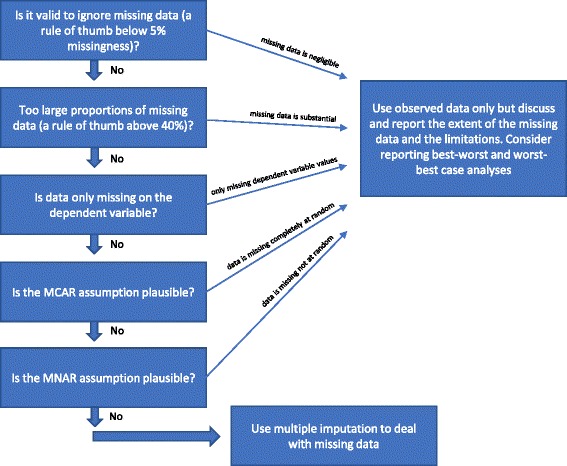
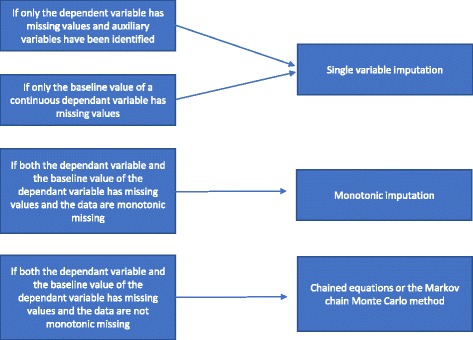
Verification
Claims the paper makes
The claims and statistics of this paper haven’t been checked yet.
Free: it reads the open-access text and checks the first 5 claims that cite a source we can check. Create a free account to check every claim.
Claims other papers make about this one
Each is checked against this paper’s own text: does it say what the citing paper says it does?
The source backs part of the claim, not all of it — or backs it for a different population, condition or comparison.
In the citing paper
“Data analyses were performed using an intent-to-treat approach.”
From Impact of acceptance and commitment therapy on physical and psychological symptoms in advanced gastrointestinal cancer patients and caregivers: Secondary results of a pilot randomized trial (2023) · cites this paper as Jakobsen et al., 2017
Experimental — accuracy not yet measuredThe source backs part of the claim, not all of it — or backs it for a different population, condition or comparison.
In the citing paper
“As for the management of missing data, if the missing data represents less than 5% of the study’s total data collected, it will be ignored. If the missing data represents more than 5% but less than 40% of the total data collected and is assumed to be randomly missing, then multiple imputation (restricted maximum likelihood estimation) will be performed using Stata 15. However, if the missing data”
From Study protocol on the efficacy of exergames-acceptance and commitment therapy program for the treatment of major depressive disorder: Comparison with acceptance and commitment therapy alone and treatment-as-usual in a multicentre randomised controlled trial (2024) · cites this paper as [47]
Experimental — accuracy not yet measuredThe source backs part of the claim, not all of it — or backs it for a different population, condition or comparison.
In the citing paper
“In the handling of missing data, if only 5% to the total data collected is missing, then this missing data will be ignored. If the missing data is around 5% to 40% and if it is assumed to be randomly missing, then multiple imputation with restricted maximum likelihood estimation will be utilized (using Stata 15).”
From Research protocol of the efficacy of probiotics for the treatment of alcohol use disorder among adult males: A comparison with placebo and acceptance and commitment therapy in a randomized controlled trial (2023) · cites this paper as [54]
Experimental — accuracy not yet measuredThe source backs part of the claim, not all of it — or backs it for a different population, condition or comparison.
In the citing paper
“To handle any missing data, if the missing data represent less than 5% of the study’s total collected data, they will be ignored. If the missing data represent more than 5% but less than 40% of the total collected and are assumed to be randomly missing, then multiple imputation (restricted maximum likelihood estimation) will be performed using Stata 15. However, if the missing data represent more”
From Acceptance and commitment therapy versus mindfulness-based stress reduction for newly diagnosed head and neck cancer patients: A randomized controlled trial assessing efficacy for positive psychology, depression, anxiety, and quality of life (2022) · cites this paper as [68]
Experimental — accuracy not yet measuredThe source backs part of the claim, not all of it — or backs it for a different population, condition or comparison.
In the citing paper
“Based on published guidelines, 33 data from participants lost to all follow‐up (n = 3) were not imputed because all missing were in the supportive therapy arm which suggests the complete case is biased toward the null”
From Retraining and control therapy for pediatric psychogenic non-epileptic seizures (2020) · cites this paper as [33]
Experimental — accuracy not yet measured
7 more claims about this paper
Create a free account to see every claim other papers make about this one.
Self-check
Percentages, sums and reported differences re-computed from the paper’s own numbers.
The self-check needs the paper’s full text.
Citations
Cites
Sterne, J. A. C., White, I. R., Carlin, J. B., Spratt, M., Royston, P., Kenward, M. G., Wood, A. M., & Carpenter, J. R. (2009) · BMJ · doi:10.1136/bmj.b2393 · Cited by 7,299 · cited 17×
“Missing data may seriously compromise inferences from randomised clinical trials, especially if missingness is not at random and if missing data are not handled appropriately [3, 4].”
BackgroundMethodInfluentialIntravenous Fluids and Acute Kidney Injury
Ding, X., Cheng, Z., & Qian, Q. (2017) · Blood Purification · doi:10.1159/000452702 · Cited by 6,827
The prevention and treatment of missing data in clinical trials
Little, R. J., D'Agostino, R., Cohen, M. L., Dickersin, K., Emerson, S. S., Farrar, J. T., Frangakis, C., Hogan, J. W., Molenberghs, G., Murphy, S. A., et al. (2012) · New England Journal of Medicine · doi:10.1056/nejmsr1203730 · Cited by 1,884 · cited 4×
“Sensitivity analyses may show how assumptions, different from those made in the primary analysis influence the results obtained [3, 6].”
BackgroundInfluentialHydroxyethyl Starch 130/0.42 versus Ringer's Acetate in Severe Sepsis
Perner, A., Haase, N., Guttormsen, A. B., Tenhunen, J., Klemenzson, G., Åneman, A., Madsen, K. R., Møller, M. H., Elkjær, J. M., Poulsen, L. M., et al. (2012) · New England Journal of Medicine · doi:10.1056/nejmoa1204242 · Cited by 1,813 · cited 1×
“Best-worst and worst-best case sensitivity analyses [24, 25] may be used if in doubt: first a ‘best-worst-case’ scenario dataset is generated where it is assumed that all participants lost to follow-up in one group (referred to as group 1) have had a beneficial outcome (for example, had no serious adverse event); and…”
MethodSelf-citationIndustry sponsorship and research outcome
Lundh, A., Lexchin, J., Mintzes, B., Schroll, J. B., & Bero, L. (2017) · Cochrane Database of Systematic Reviews · doi:10.1002/14651858.mr000033.pub3 · Cited by 1,697
Jakobsen, J. C., Wetterslev, J., Winkel, P., Lange, T., & Gluud, C. (2014) · BMC Medical Research Methodology · doi:10.1186/1471-2288-14-120 · Cited by 704 · cited 5×
“Then a ‘worst-best-case’ scenario dataset is generated where it is assumed that all participants lost to follow-up in group 1 have had a harmful outcome; and that all those lost to follow-up in group 2 have had a beneficial outcome [23, 24].”
BackgroundMethodInfluentialSelf-citationHorton, N. J., & Lipsitz, S. R. (2001) · The American Statistician · doi:10.1198/000313001317098266 · Cited by 600 · cited 1×
“Five imputed datasets have traditionally been suggested to be sufficient on theoretical grounds, but 50 datasets (or more) seem preferable to reduce sampling variability from the imputation process [4, 21, 22].”
BackgroundHróbjartsson, A., Thomsen, A. S. S., Emanuelsson, F., Tendal, B., Hilden, J., Boutron, I., Ravaud, P., & Brorson, S. (2013) · Canadian Medical Association Journal · doi:10.1503/cmaj.120744 · Cited by 527
Hrobjartsson, A., Thomsen, A. S. S., Emanuelsson, F., Tendal, B., Hilden, J., Boutron, I., Ravaud, P., & Brorson, S. (2012) · BMJ · doi:10.1136/bmj.e1119 · Cited by 483
Hróbjartsson, A., Emanuelsson, F., Skou Thomsen, A. S., Hilden, J., & Brorson, S. (2014) · International Journal of Epidemiology · doi:10.1093/ije/dyu115 · Cited by 462
Research works printed but not linked: 2
- 22. StataCorp. Stata: release 14. Statistical software. College Station, TX: StataCorp LP; 2015.
- 28. Allison PD. Handling missing data by maximum likelihood, statistical horizons. In: SAS global forum 2012 statistics and data analysis; 2012.
Cited by
Items 601–700 of 814
Gavrielatou, E., Vaporidi, K., Tsolaki, V., Tserlikakis, N., Zakynthinos, G. Ε., Papoutsi, E., Maragkuti, A., Mantelou, A. G., Karayiannis, D., Mastora, Z., et al. (2022) · Respiratory Research · doi:10.1186/s12931-022-02015-8 · Cited by 15
“Missing data on outcomes were below 2% and completely at random according to Little’s MCAR test [18] and, therefore, a complete case analysis was performed.”
MethodHospital Costs and Fatality Rates of Traumatic Assaults by Mechanism in the US, 2016-2018
Barry, L. E., Crealey, G., Nguyen, N. T. Q., Weiser, T. G., Spitzer, S. A., & O’Neill, C. (2022) · JAMA Network Open · doi:10.1001/jamanetworkopen.2022.18496 · Cited by 16
Externally validated models for first diagnosis and risk of progression of knee osteoarthritis
McCabe, P. G., Lisboa, P. J. G., Baltzopoulos, B., & Olier, I. (2022) · PLoS ONE · doi:10.1371/journal.pone.0270652 · Cited by 18
“This approach has some good points for univariate analysis but poses problems if considering this approach within multivariate analysis [44].”
BackgroundMirzadeh, S. I., Arefeen, A., Ardo, J. C., Fallahzadeh, R., Minor, B., Lee, J., Hildebrand, J. A., Cook, D. J., Ghasemzadeh, H. G., & Evangelista, L. S. (2022) · Smart Health · doi:10.1016/j.smhl.2022.100328 · Cited by 19
Shiri, R., Väänänen, A., Mattila‐Holappa, P., Kauppi, K., & Borg, P. T. (2022) · International Journal of Environmental Research and Public Health · doi:10.3390/ijerph192013206 · Cited by 18
“Meta-analyses of randomized controlled trials have found that exercise [8] and dietary improvements [9] have beneficial effects on depression.”
BackgroundHu, Y., Lu, T., Guo, Q., Zhang, L., Xiao, Y., Lin, S., Zhou, H., Zheng, D., Ding, S., Liu, L., et al. (2022) · Radiotherapy and Oncology · doi:10.1016/j.radonc.2022.11.025 · Cited by 16
Prevalence of Diastolic Dysfunction in Adult Survivors of Childhood Cancer
Palmer, C., Mazur, W. M., Truong, V. T., Nagueh, S. F., Fowler, J. A., Shelton, K., Joshi, V. M., Ness, K. K., Srivastava, D. K., Robison, L. L., et al. (2023) · JACC CardioOncology · doi:10.1016/j.jaccao.2022.12.010 · Cited by 16
“Furthermore, complete case analysis among the 1,435 survivors with at least 2 echocardiography visits was performed as a sensitivity analysis to assess the robustness of results given that not all survivors had follow-up echocardiography.(23) Statistical analyses were performed using R software, version 4.”
MethodResultPakenham, K. I., & Landi, G. (2023) · Sclerosis · doi:10.3390/sclerosis1010005 · Cited by 19
“In addition, if missing data exceeds 40%, as in the present study, ITT analyses are likely to be unreliable [55].”
MethodBogaerts, A., Claes, L., Buelens, T., Gandhi, A., Kiekens, G., Bastiaens, T., & Luyckx, K. (2021) · European Journal of Psychological Assessment · doi:10.1027/1015-5759/a000623 · Cited by 18
Ibrahim, A. N. H., & Borhan, M. N. (2021) · International Journal of Integrated Engineering · doi:10.30880/ijie.2021.13.03.027 · Cited by 15
Identifiable Generative Models for Missing Not at Random Data ImputationPreprint
Ma, C., & Zhang, C. (2021) · arXiv (Cornell University) · doi:10.48550/arxiv.2110.14708 · Cited by 56
“However, both MCAR and MAR do not hold in many real-world applications, such as recommender systems [8, 14], healthcare [13], and surveys [51].”
BackgroundBurns, M. F., Secinti, E., Johns, S. A., Wu, W., Helft, P. R., Turk, A. A., Loehrer, P. J., Sehdev, A., Al-Hader, A. A., & Mosher, C. E. (2023) · Journal of Contextual Behavioral Science · doi:10.1016/j.jcbs.2023.01.001 · Cited by 14
Au, N. H., Ratzki-Leewing, A., Zou, G., Ryan, B. L., Webster-Bogaert, S., Reichert, S. M., Brown, J. B., & Harris, S. B. (2022) · Canadian Journal of Diabetes · doi:10.1016/j.jcjd.2021.09.004 · Cited by 14
Leadbitter, K., Langhorne, S., Smallman, R. P., Chu, P., Ellis, C., Harrison, L., Hutton, T., Butter, C., Goldie, C., James, K., et al. (2025) · The Lancet Psychiatry · doi:10.1016/s2215-0366(25)00036-7 · Cited by 21
Alvarez, T. L., Scheiman, M. M., Hajebrahimi, F., Noble, M., Gohel, S., Baro, R., Bachman, J. A., Master, C. L., & Goodman, A. M. (2025) · British Journal of Sports Medicine · doi:10.1136/bjsports-2025-109807 · Cited by 15
Hovhannisyan, K., Rasmussen, M., Adami, J., Wikström, M., & Tønnesen, H. (2020) · Alcoholism Clinical and Experimental Research · doi:10.1111/acer.14364 · Cited by 17
“In contrast, the randomized CHANGE trial (Jakobsen et al., 2017a) from Denmark between 2011 and 2014 has assessed the long-term effects of a lifestyle coaching intervention on cardiovascular risk among 428 obese people with schizophrenia spectrum disorders.”
BackgroundMethodResultPássaro, A. L., Olegário, I. C., Laux, C. M., Oliveira, R. D. C., Tedesco, T. K., & Raggio, D. P. (2021) · Australian Dental Journal · doi:10.1111/adj.12894 · Cited by 24
Physiological stress reactivity and recovery: Some laboratory results transfer to daily life
Bamert, M., & Inauen, J. (2022) · Frontiers in Psychology · doi:10.3389/fpsyg.2022.943065 · Cited by 19
“Moreover, missingness exceeded 40%, meaning that data imputation was not recommended (Jakobsen et al., 2017).”
BackgroundHuang, M., Rogers, M. W., Pizac, D. A., Gruber‐Baldini, A. L., Orwig, D., Hochberg, M. C., Beamer, B. A., Creath, R. A., Savin, D. N., Conroy, V. M., et al. (2022) · Archives of Physical Medicine and Rehabilitation · doi:10.1016/j.apmr.2022.08.974 · Cited by 14
Training of Non-expert Users Using Remotely Delivered, Point-of-Care Tele-Ultrasound
Grubic, N., Belliveau, D. J., Herr, J. E., Nihal, S., Wong, S. W. S., Lam, J., Gauthier, S. R., Montague, S. J., Durbin, J., Mulvagh, S. L., et al. (2022) · Ultrasound Quarterly · doi:10.1097/ruq.0000000000000622 · Cited by 14
Macario-González, L., Cohuo, S., Hoelzmann, P., Pérez, L., Elías‐Gutiérrez, M., Caballero, M., Oliva, A., Palmieri, M., Álvarez, M. R., & Schwalb, A. (2022) · Biogeosciences · doi:10.5194/bg-19-5167-2022 · Cited by 16
Kwan, R. Y. C., Ng, F., Lai, M., Wong, D., & Chan, S. W. (2023) · Trials · doi:10.1186/s13063-023-07130-5 · Cited by 17
“To manage missing data caused by unavoidable reasons (e.g. drop-out), the missing data will be replaced by multiple imputations following Jakobsen’s algorithm [49].”
MethodChan, H. C.-Y., & Lo, H. H. M. (2023) · Current Psychology · doi:10.1007/s12144-023-04536-x · Cited by 16
“Any missing values of the participants were imputed by the multiple imputation method, a simulationbased statistical technique for handling missing data (Jakobsen et al., 2017; Skoog et al., 2015).”
Comparative Study of Missing Value Imputation Techniques on E-Commerce Product Ratings
Chehal, D., Gupta, P., Gulati, P., & Gupta, T. (2023) · Informatica · doi:10.31449/inf.v47i3.4156 · Cited by 14
Huang, Y., Huang, Z., Yang, Q., Jin, H., Xu, T., Fu, Y., Zhu, Y., Zhang, X., & Chen, C. (2023) · Frontiers in Aging Neuroscience · doi:10.3389/fnagi.2023.1283243 · Cited by 18
Mol, I., Hu, Y., LeBlanc, T. W., Cappelleri, J. C., Chu, H., Nador, G., Aydin, D., Schepart, A., & Hlavacek, P. (2023) · Current Medical Research and Opinion · doi:10.1080/03007995.2023.2277850 · Cited by 15
“We also conducted a sensitivity analysis using imputation via a random sample of observations, which allowed for the preservation of data distribution, only imputed values included in the dataset, and avoided bias via the assumption of missing completely at random 32 .”
MethodHoang, P. D., Sturnieks, D. L., Butler, A., Chaplin, C., Hicks, C., Lo, J. C. M., Ratanapongleka, M., Robinson, S., Smith, N., Turner, J., et al. (2024) · Multiple Sclerosis Journal · doi:10.1177/13524585241229360 · Cited by 14
Hrebinko, K. A., Anto, V. P., Reitz, K. M., Gamboa, A. C., Regenbogen, S. E., Hawkins, A. T., Hopkins, M. B., Ejaz, A. M., Bauer, P. S., Wise, P. E., et al. (2024) · International Journal of Colorectal Disease · doi:10.1007/s00384-024-04600-3 · Cited by 17
Liebano, R. E., Sluka, K. A., Roy, J., Savinelli, M., Dailey, D. L., & Riley, S. P. (2024) · Trials · doi:10.1186/s13063-024-08089-7 · Cited by 14
“The intention-to-treat analysis will be used, and the missing data will be handled appropriately following established guidelines [35].”
MethodHow Southeast Asian Students Develop Their Science Self-Efficacy During the First Year of College
Nhien, C. (2024) · The Journal of Higher Education · doi:10.1080/00221546.2024.2339173 · Cited by 16
“Further, Little’s MCAR determined that data was not missing at random, thus the monotone method of imputation was used in SPSS (Jakobsen et al., 2017).”
Bosch‐Barceló, P., Climent‐Sanz, C., Martínez-Navarro, O., Masbernat, M. A., Pakarinen, A., Ghosh, P. K., & Fernández‐Lago, H. (2024) · PLoS ONE · doi:10.1371/journal.pone.0307304 · Cited by 15
Ariss, A.-B., Kijpaisalratana, N., Ahmed, S., Yuan, J., Coleska, A., Marshall, A., Luo, A. D., & He, S. (2024) · The American Journal of Emergency Medicine · doi:10.1016/j.ajem.2024.07.040 · Cited by 14
Abebe, Z., Wassie, M. M., Nguyen, D. P., Reynolds, A. C., & Melaku, Y. A. (2024) · European Journal of Nutrition · doi:10.1007/s00394-024-03513-9 · Cited by 18
“All other covariates were missing less than 1% data and were excluded from the multiple imputation process [79].”
Pyatak, E. A., Lee, P.-J., NNOLI, N. D., Mo, Y., Khurana, A., Ali, A., Fox, D. S., Sideris, J. H., Díaz, J., Granados, G., et al. (2025) · Diabetes Research and Clinical Practice · doi:10.1016/j.diabres.2025.112005 · Cited by 15
Daguman, E. I., Taylor, A., Flowers, M., Lakeman, R., & Hutchinson, M. (2025) · Journal of Clinical Nursing · doi:10.1111/jocn.17727 · Cited by 16
“%) indicated the application of another established guideline that recommends against multiple imputations on datasets with more than 40% missingness (Jakobsen et al. 2017).”
Zahid, J. A., Isbrand, A. B., Kleif, J., Schou‐Pedersen, A. M. V., Lykkesfeldt, J., Madsen, M. T., & Gögenür, I. (2019) · Journal of Pineal Research · doi:10.1111/jpi.12600 · Cited by 14
Holtdirk, F., Mehnert-Theuerkauf, A., Weiss, M., Meyer, B., & Watzl, C. (2020) · Trials · doi:10.1186/s13063-019-3987-y · Cited by 18
“For PP analyses, missing data will also be replaced using multiple imputation, in line with recommendations [79].”
MethodCarli, V., Wasserman, D., Hadlaczky, G., Petros, N. G., Carletto, S., Citi, L., Dinis, S., Gentili, C., González-Martínez, S., Leonibus, A. D., et al. (2020) · BMC Psychiatry · doi:10.1186/s12888-020-02494-3 · Cited by 18
“Loss to follow-up will be handled through multiple imputations [37] if the missingness is below the recommended rate of missingness and the data structure allows for it as recommended by Jakobsen and colleagues [37].”
MethodHarzand, A., Vakili, A. A., Alrohaibani, A., Abdelhamid, S., Gordon, N. F., Thiel, J., Benarroch‐Gampel, J., Teodorescu, V. J., Minton, K., WENGER, N. K., et al. (2020) · Clinical Cardiology · doi:10.1002/clc.23362 · Cited by 15
Kristensen, M. B., Wessel, I., Beck, A. M., Dieperink, K. B., Mikkelsen, T. B., Møller, J. K., & Zwisler, A. (2020) · Nutrients · doi:10.3390/nu12072117 · Cited by 14
“In the intention-to-treat analysis of intervention effect on primary outcome, multiple imputations (m = 20) were used to account for missing data under a missing-at-random assumption [51].”
MethodProtocol for a mechanistic study of mindfulness based cognitive therapy during pregnancy.
Seghete, K. L. M., Graham, A. M., Lapidus, J., Jackson, E. L. A., Doyle, O. J., Feryn, A. B., Moore, L. A., Goodman, S. H., & Dimidjian, S. (2020) · Health Psychology · doi:10.1037/hea0000870 · Cited by 14
Lachal, J., Moro, M. R., Carretier, É., Simon, A., Barry, C., Falissard, B., & Rouquette, A. (2020) · International Journal of Methods in Psychiatric Research · doi:10.1002/mpr.1847 · Cited by 16
Racial Residential Segregation and Colorectal Cancer Mortality in the Mississippi Delta Region
Kruse‐Diehr, A. J., McDaniel, J. T., Lewis‐Thames, M. W., James, A. S., & Yahaya, M. (2021) · Preventing Chronic Disease · doi:10.5888/pcd18.200483 · Cited by 16
“Manser and Bauerfeind’s (24) systematic review indicated that CRC mortality was strongly associated with socioeconomic factors, such as low income, low levels of education, and overcrowding.”
BackgroundExploratory Analyses for Missing Data in Meta-Analyses and Meta-Regression: A Tutorial
Schauer, J. M., Diaz, K. G., Pigott, T., & Lee, J. (2020) · Alcohol and Alcoholism · doi:10.1093/alcalc/agaa144 · Cited by 15
“Statistical guidance regarding the effectiveness of procedures such as MI or FIML suggests that they are appropriate when missingness is less than 40% (Dong & Peng, 2013; Jakobsen et al., 2017).”
MethodAnjorin, S., & Yaya, S. (2021) · Maternal and Child Nutrition · doi:10.1111/mcn.13226 · Cited by 14
“Nevertheless, this type of missing data, missing at random (MAR), allows the prediction of missing values from respondents with complete values (Jakobsen et al., 2017).”
BackgroundMamprin, M., Lopes, R. R., Zelis, J. M., Tonino, P. A. L., van Mourik, M. S., Vis, M. M., Zinger, S., de Mol, B. A. J. M., & de With, P. H. N. (2021) · Journal of Cardiovascular Development and Disease · doi:10.3390/jcdd8060065 · Cited by 18
“…only the replacement of categorical instances with numerical values, and also for CatBoost since it has internal and dedicated pre-processing for categorical data. class weighting (as ClassWeight), ) Random oversampling of the minority class (as RandomOvers), ) SMOTE-NC for the minority class.”
BackgroundCentral data monitoring in the multicentre randomised SafeBoosC-III trial – a pragmatic approach
Olsen, M. H., Hansen, M. L., Safi, S., Jakobsen, J. C., Greisen, G. O., Gluud, C. N., The SafeBoosC-III Trial Group, Pellicer, A., Bargiel, A., Hopper, A. O., et al. (2021) · BMC Medical Research Methodology · doi:10.1186/s12874-021-01344-4 · Cited by 16
Self-citationHunsu, N. J., Oje, A. V., Jackson, A., & Olaogun, O. P. (2021) · Frontiers in Psychology · doi:10.3389/fpsyg.2021.628004 · Cited by 14
Rognli, E. B., Aas, E. M., Drake, R. E., Marsden, J., Anders, P., Bond, G. R., Lystad, J. U., Rème, S. E., & Arnevik, E. A. (2021) · Trials · doi:10.1186/s13063-021-05673-z · Cited by 17
“We will look at the pattern and proportion of missing data on these outcomes and handle the missing data according to recommendations for randomized controlled trials, preferably by means of multiple imputations [37, 38].”
MethodMichel, K. G., Ocampo, J. M. F., Spence, A. B., Wang, C., Kikkisetti, A., Doyle, A., Merenstein, D. J., Goparaju, L., & Kassaye, S. G. (2021) · AIDS Patient Care and STDs · doi:10.1089/apc.2021.0110 · Cited by 14
Factors associated with COVID-19 vaccination intentions among adults in the deep South
Daniel, C. L., Williams, J., Legg, R., McGowen, C. L., & Stutzman, J. (2022) · Vaccine · doi:10.1016/j.vaccine.2021.12.059 · Cited by 18
“The desire to be protected from giving influenza to others illustrates a civic duty among this sample of Alabama residents that could be stressed by both the media and healthcare workers to increase receipt of the COVID-19 vaccine [52].”
Bhuwania, P., & Heymann, J. S. (2022) · SSM - Population Health · doi:10.1016/j.ssmph.2022.101046 · Cited by 16
“Analysis of complete cases is often recommended when missing data are below 5% as multiple imputation offers little advantage in this case (Jakobsen et al., 2017; Lee et al., 2016).”
BackgroundEhrmann, D., Eichinger, V., Vesper, I., Kober, J., Kraus, M., Schäfer, V., Hermanns, N., Kulzer, B., & Silbermann, S. (2022) · Trials · doi:10.1186/s13063-022-06248-2 · Cited by 18
Use of protective behavioral strategies and blackout experience among mandated college students
Carey, K. B., Tempchin, J., DiBello, A. M., & Mastroleo, N. R. (2022) · Addictive Behaviors · doi:10.1016/j.addbeh.2022.107340 · Cited by 17
Mood Lifters: evaluation of a novel peer-led mental wellness program
Votta, C. M., & Deldin, P. J. (2022) · Mental Health Review Journal · doi:10.1108/mhrj-11-2021-0084 · Cited by 14
Åkesson, K. S., Sundén, A., Stigmar, K., Fagerström, C., Pawlikowska, T. R. B., & Hansson, E. E. (2022) · BMC Musculoskeletal Disorders · doi:10.1186/s12891-022-05457-9 · Cited by 17
“No imputation was made for missing values [33].”
BackgroundBösch, V. D., & Inauen, J. (2022) · Applied Psychology Health and Well-Being · doi:10.1111/aphw.12384 · Cited by 15
“In the main analyses, we handled missing data using listwise deletion, because multiple imputation is not recommended when missing data exceeds 40% (Jakobsen et al., 2017).”
MethodWu, Y., Song, J., Li, Y., Jin, X., Liang, Y., Qin, W., Yi, W., Pan, R., Yan, S., Sun, X., et al. (2022) · Environmental Research · doi:10.1016/j.envres.2022.113962 · Cited by 15
Szczepański, M., Pawlicki, M., Kozik, R., & Choraś, M. (2022) · Vietnam Journal of Computer Science · doi:10.1142/s2196888822500257 · Cited by 17
Dreyer, J., Bergmann, J. M., Köhler, K., Hochgraeber, I., Pinkert, C., Roes, M., Thyrian, J. R., Wiegelmann, H., & Holle, B. (2022) · BMC Geriatrics · doi:10.1186/s12877-022-03310-1 · Cited by 15
“We judged the missing data as not missing at random and therefore avoided the imputation of missing data and decided to include complete cases only [30].”
MethodFatori, D., Suen, P. J. C., Bacchi, P. S., Afonso, L., Klein, I., Cavendish, B. A., Lee, Y. A., Liu, Z., Bauermeister, J. R., Moreno, M., et al. (2022) · Social Psychiatry and Psychiatric Epidemiology · doi:10.1007/s00127-022-02365-0 · Cited by 19
“Data were assumed to be missing at random [49].”
Lirette, M.-P., Kuppermann, N., Finkelstein, Y., Zemek, R. L., Plint, A. C., Florin, T. A., Babl, F. E., Dalziel, S. R., Freedman, S. B., Roland, D., et al. (2022) · BMJ Open · doi:10.1136/bmjopen-2021-059784 · Cited by 14
Glycaemic control and sepsis risk in adults with type 1 diabetes
Balintescu, A., Lind, M., Andersson, M., Oldner, A., Cronhjort, M., Eliasson, B., Svensén, C., & Mårtensson, J. (2023) · Diabetes Obesity and Metabolism · doi:10.1111/dom.15060 · Cited by 15
“For this approach, missing data were replaced with probable value estimates obtained by regression imputation from available data.(15) Tests were two-tailed and conducted at a significance level of 0.”
MethodThe effect of unpredictability on the perception of pain: a systematic review and meta-analysis
Pavy, F., Zaman, J., Noortgate, W. V. D., Scarpa, A., von Leupoldt, A., & Torta, D. M. E. (2024) · Pain · doi:10.1097/j.pain.0000000000003199 · Cited by 18
Oser, M. L., Wallace, M. L., Solano, F. X., & Szigethy, E. (2019) · JMIR Mental Health · doi:10.2196/11981 · Cited by 15
“Consequently, we did not perform imputation as per published recommendations [24].”
MethodMarsden, M. E. R., Rossetto, A., Duffield, C. A. B., Woolley, T., Buxton, W. P., Steynberg, S., Bagga, R., & Tai, N. R. M. (2019) · Emergency Medicine Journal · doi:10.1136/emermed-2018-208118 · Cited by 14
Falasinnu, T., Chaichian, Y., LI, J., Chung, S., Waitzfelder, B. E., Fortmann, S. P., Palaniappan, L. P., & Simard, J. F. (2019) · Lupus · doi:10.1177/0961203319884646 · Cited by 15
Johnsson, J., Wahlström, J., Dankiewicz, J., Annborn, M., Agarwal, S., Dupont, A. G., Forsberg, S., Friberg, H., Hand, R., Hirsch, K. G., et al. (2019) · Resuscitation · doi:10.1016/j.resuscitation.2019.10.020 · Cited by 14
Assessment of loss‐of‐control eating in healthy youth by interview and questionnaire
Altman, D. R., Tanofsky‐Kraff, M., Shank, L. M., Swanson, T. N., Ramirez, E., Moore, N. A., Rubin, A., Byrne, M. E., LeMay‐Russell, S., Schvey, N. A., et al. (2020) · International Journal of Eating Disorders · doi:10.1002/eat.23262 · Cited by 18
Murray, J., Kimbrough, E. O., Krupka, E. L., Ramalingam, A., Kumar, R., Power, J. M., Sánchez-Franco, S., Sarmiento, O. L., Kee, F., & Hunter, R. F. (2020) · Scientific Reports · doi:10.1038/s41598-020-72784-z · Cited by 17
Schubin, K., Seinsche, L., Pfaff, H., & Zeike, S. (2023) · Frontiers in Psychology · doi:10.3389/fpsyg.2023.994959 · Cited by 13
“For further quantitative analyses, we decided against using or imputing data of drop-outs due to the large proportion of missing data on outcome variables (>40% for t1 and t2) (Jakobsen et al., 2017).”
MethodBottigliengo, D., Lorenzoni, G., Ocagli, H., Martinato, M., Berchialla, P., & Gregori, D. (2021) · International Journal of Environmental Research and Public Health · doi:10.3390/ijerph18136694 · Cited by 13
“Moreover, if more than 10% of the missingness arises, bias is likely to occur when observations with missingness are discarded [34].”
BackgroundMehdizadeh, M., Fereshtehnejad, S., Landers, M. R., Sharabiani, P. T. A., Shati, M., Mortazavi, S. S., Habibi, S. A. H., Mansoori, K., Meimandi, M., Nodehi, Z., et al. (2025) · Scientific Reports · doi:10.1038/s41598-025-08463-8 · Cited by 16
“This method is considered appropriate under such conditions and minimizes the risk of bias in outcome estimation 44 .”
Mathiesen, A. S., Zoffmann, V., Skytte, T. B., Jakobsen, J. C., Gluud, C. N., Lindschou, J., Rasmussen, B., Marqvorsen, E. H. S., Thomsen, T., & Rothmann, M. J. (2021) · BMJ Open · doi:10.1136/bmjopen-2020-047037 · Cited by 13
Self-citationProfiles of subjective health among people living alone: a latent class analysis
Pasanen, T., Tamminen, N., Martelin, T. P., Mankinen, K., & Solin, P. (2021) · BMC Public Health · doi:10.1186/s12889-021-11396-2 · Cited by 13
“The proportion of missing data were below the rule-of-thumb of 5% that can be considered negligible [44] (Table 1; 0–18, that is, 0–2%, missing responses per covariate), and hence missing values were excluded pairwise in each comparison.”
BackgroundKiamanesh, O., Prosperi‐Porta, G., Harper, L., Solverson, K., Boiteau, P. J. E., Helmersen, D., Ferland, A., Fine, N. M., & Weatherald, J. C. (2022) · The International Journal of Cardiovascular Imaging · doi:10.1007/s10554-022-02677-x · Cited by 13
“Although we found that RV-PA coupling parameters were independent of Bova score, CTPA RV/LV and subjective RVD, incomplete data limited the strength of these analyses and it was not possible to perform a statistically robust multiple imputation model for multivariable analyses[31].”
MethodGreenwood, S. A., Beckley‐Hoelscher, N., Asgari, E., Ayis, S. A., Baker, L. A., Banerjee, D., Bhandari, S., Bramham, K., Chilcot, J., Burton, J. O., et al. (2022) · BMC Nephrology · doi:10.1186/s12882-022-02896-3 · Cited by 14
“If missingness is below 5%, and missingness is not thought to be isolated to a particular clinically relevant subgroup, then a complete-case analysis (CCA) will be performed [35].”
BackgroundYous, M., Ploeg, J., Kaasalainen, S., McAiney, C. A., & Fisher, K. (2022) · BMC Geriatrics · doi:10.1186/s12877-022-03483-9 · Cited by 15
“Due to the small sample size, the multiple imputation analyses were regarded as exploratory [74].”
BackgroundMethodInfluentialMartín‐Payo, R., Martínez-Urquijo, A., Zabaleta‐del‐Olmo, E., & Fernández-Álvarez, M. D. M. (2022) · Cancer Causes & Control · doi:10.1007/s10552-022-01647-x · Cited by 19
“1%), it was considered more appropriate not to apply the intention-to-treat principle and a per protocol analysis was carried out [21].”
MethodChen, J., Ji, Y., Su, T., Jin, M., Yuan, Z., Peng, Y., Zhou, S., Bao, H., Luo, S., Wang, H., et al. (2022) · Healthcare · doi:10.3390/healthcare10112307 · Cited by 14
“Based on common missing data handling approaches, predictor variables (except for those having high p values) whose missingness was greater than 10% were excluded in the modeling because if such missingness was kept, the analysis was likely to be biased [21].”
MethodActivating Relatives to Get Involved in Care After Surgery: Protocol for a Prospective Cohort Study
Musters, S. C. W., Kreca, S., van Dieren, S., van der Wal‐Huisman, H., Romijn, J. A., Chaboyer, W. P., van Dijkum, E. J. M. N., & Eskes, A. M. (2023) · JMIR Research Protocols · doi:10.2196/38028 · Cited by 14
“If >40% of the data are missing, we will use the observed data and report the extent of the missing data [59].”
Hedetoft, M., Madsen, M. B., & Hyldegaard, O. (2023) · BMJ Open · doi:10.1136/bmjopen-2022-066117 · Cited by 13
García‐Tornel, Á., Flores, A., Terceño, M., Cardona, P., Amaro, S., Gomis, M., Zaragoza, J., Krupiński, J., Gómez-Choco, M. J., Mas, N., et al. (2023) · Stroke · doi:10.1161/strokeaha.122.041013 · Cited by 13
Turcotte, K., Oelke, N. D., Whitaker, G. M., Holtzman, S., O’Connor, B. P., Pearson, N., & Teo, M. (2023) · Rheumatology International · doi:10.1007/s00296-023-05403-5 · Cited by 15
“Following recently published guidelines no data was imputed and complete case analysis was conducted [27].”
MethodGaetz, S., Bonakdar, A., Ecker, J., MacDonald, C., Ilyniak, S., Ward, A. K., Kimura, L., Vijayaratnam, A., & Banchani, E. (2023) · JMIR Research Protocols · doi:10.2196/46690 · Cited by 15
“With respect to missing data, 3 common mechanisms can be observed: missing completely at random, missing at random, and missing not at random [61,62].”
Hayes, A., Dempsey, M., Kells, M., & Murphy, M. F. (2023) · Borderline Personality Disorder and Emotion Dysregulation · doi:10.1186/s40479-023-00237-w · Cited by 20
“Multiple imputation was employed to manage the remaining missing data, which exceeded 5% missingness [73].”
Data Imputation of Soil Pressure on Shield Tunnel Lining Based on Random Forest Model
Wang, M., Ye, X., Ying, X.-H., Jia, J.-D., Ding, Y., Zhang, D., & Sun, F. (2024) · Sensors · doi:10.3390/s24051560 · Cited by 13
“Additionally, it requires careful consideration of feature interdependencies and assumptions about the missing data mechanism [29,30].”
BackgroundMorillo, D., León‐Jiménez, A., Guerrero‐Chanivet, M., Jiménez‐Gómez, G., Hidalgo‐Molina, A., & Campos‐Caro, A. (2024) · Bioengineering & Translational Medicine · doi:10.1002/btm2.10694 · Cited by 14
“39 In addition, feature selection was used to reduce the dimensionality of the data set by identifying the biomarkers with the highest discriminating capacity.”
Weaver, M., Goodin, D. A., Miller, H. A., Karmali, D., Agarwal, A., Frieboes, H. B., & Suliman, S. A. (2024) · Scientific Reports · doi:10.1038/s41598-024-81980-0 · Cited by 16
INCEPT : The Intensive Care Platform Trial—Design and protocol
Granholm, A., Møller, M. H., Kaas‐Hansen, B. S., Jensen, A. K. G., Munch, M. W., Kjær, M. N., Andersen, L. W., Schjørring, O. L., Rasmussen, B. S., Meyhoff, T. S., et al. (2025) · Acta Anaesthesiologica Scandinavica · doi:10.1111/aas.70023 · Cited by 13
“Supplementary best-worst/ worst-best case sensitivity analyses 64 may be used, as defined in the domain-specific appendices.”
Kamp, C. B., Dankiewicz, J., Olsen, M. H., Holgersson, J., Saxena, M. K., Young, P. J., Niemelä, V. H., Hästbacka, J., Levin, H., Lilja, G., et al. (2025) · Acta Anaesthesiologica Scandinavica · doi:10.1111/aas.70033 · Cited by 16
“22 We will perform sensitivity analyses assuming that all participants with missing data were either all alive or dead.”
InfluentialSelf-citationAdmiraal, W. (2025) · Teaching and Teacher Education · doi:10.1016/j.tate.2025.105070 · Cited by 20
A comprehensive survey of imputation methods in medical missing data analysis
Benhamza, K., Benselim, R., Naidja, H., & Séridi, H. (2025) · Applied Intelligence · doi:10.1007/s10489-025-06602-2 · Cited by 14
Boissiere-O’Neill, T., Lazarevic, N., Sly, P. D., Ponsonby, A., Chen, A., Azad, M. B., Braun, J. M., Brook, J. R., Burgner, D. P., Lanphear, B. P., et al. (2025) · Journal of Exposure Science & Environmental Epidemiology · doi:10.1038/s41370-025-00790-2 · Cited by 18
Signorell, A., van Heerden, A. C., Ayakaka, I., Jacobs, B. K., Antillón, M., Tediosi, F., Verjans, A., Brugger, C., Harkare, H. V., Labhardt, N. D., et al. (2025) · BMJ Open · doi:10.1136/bmjopen-2024-093989 · Cited by 13
Jenson, J. M., Veeh, C. A., Anyon, Y., Mary, J. S., Calhoun, M., Tejada, J., & Lechuga-Peña, S. (2018) · Children and Youth Services Review · doi:10.1016/j.childyouth.2018.03.014 · Cited by 26
Kashani, H. H., Lodewyks, C. L., Kavosh, M., Jeyaraman, M. M., Neilson, C. J., Okoli, G. N., Rabbani, R., Abou-Setta, A. M., Zarychanski, R., & Grocott, H. P. (2020) · Canadian Journal of Anesthesia/Journal canadien d anesthésie · doi:10.1007/s12630-020-01592-w · Cited by 13
Mahoney, A., Karatzias, T., Halliday, K., & Dougall, N. J. (2020) · Clinical Psychology & Psychotherapy · doi:10.1002/cpp.2447 · Cited by 15
Do European co‐residential caregivers aged 50+ have an increased risk of frailty?
Barbosa, F., Voss, G., & Matos, A. D. (2020) · Health & Social Care in the Community · doi:10.1111/hsc.13064 · Cited by 14
Weise, A., Lühnen, J., Bühn, S., Steffen, F., Zacher, S., Lauberger, J., Ates, D. M., Böhmer, A. B., Rosenau, H., Steckelberg, A., et al. (2021) · Pilot and Feasibility Studies · doi:10.1186/s40814-021-00843-x · Cited by 13
“In addition to this primary analysis, we will perform a bestcase/worst-case analysis to assess the robustness of results depending on missing data [48].”
Method
Metadata
- Authors
- Jakobsen, J. C., Gluud, C., Wetterslev, J., & Winkel, P.
- Affiliations
- Copenhagen University Hospital (DK)
- Corresponding author
- Jakobsen, Janus Christian
- Venue
- BMC Medical Research Methodology
- Published
- 2017-12
- Volume
- 17
- Issue
- 1
- Pages
- 162-162
- ISSN
- 1471-2288 (ISSN-L)
- PMC
- PMC5717805
- OpenAlex
- W2772803673
- Semantic Scholar
- 601b9d1445292bcdfd372c11b5a2eb752d7cf39e
- Cited by
- 2,747
- References
- 29
- Citations by year
- 2026: 287 · 2025: 433 · 2024: 455 · 2023: 443 · 2022: 468 · 2021: 361 · 2020: 205 · 2019: 78 · 2018: 15 · 2017: 1
- FWCI
- 56.41
- Type
- journal article
- Language
- en
- Open access
- gold
- doi.org
- Licence
- cc-by
- Locations
- BMC Medical Research Methodology (publishedVersion, cc-by)
- Europe PMC (PubMed Central) (publishedVersion, cc-by)
- PubMed Central (publishedVersion, cc-by)
- PubMed (publishedVersion)
- DOAJ (DOAJ: Directory of Open Access Journals) (submittedVersion, cc-by-sa)
- Funders
- Copenhagen Trial Unit, Centre for Clinical Intervention Research
- Topics
- Physical Sciences › Mathematics › Statistics and Probability › Statistical Methods and Bayesian Inference
- Physical Sciences › Mathematics › Statistics and Probability › Statistical Methods in Clinical Trials
- Social Sciences › Decision Sciences › Statistics, Probability and Uncertainty › Meta-analysis and systematic reviews
- Keywords
- missing data, multiple imputation, randomized controlled trials, full information maximum likelihood, missing data mechanisms
- MeSH terms
- Data Accuracy, Data Interpretation, Statistical, Humans, Models, Statistical, Randomized Controlled Trials as Topic
About these checks
Registry, retraction, Cites and statistics results are computed, not judged, with one exception: a printed reference that no index lists is read once by a model before it counts as a citation error. Claims are extracted by a model and kept only when their quote appears verbatim in the text; each cited source is then checked, with a model’s help, for whether it says what the claim relies on. Those verdicts can be wrong — read the claim’s quote and the cited source before relying on one.
Statistics and arithmetic are recomputed, not judged.
Confidence bands are shown only for fields calibrated on our annotated test set. None is calibrated yet, so no band is shown.
What counts as a claim ›How we measure confidence ›How we check this ›
Are you an author, or do you see a problem with this page? Request a review
Data sources
Bibliographic data: Semantic Scholar, OpenAlex, Crossref.
Contains information from the Semantic Scholar Academic Graph Datasets, made available under the ODC Attribution License (ODC-BY 1.0).
Semantic Scholar’s data is described in: Kinney, R., et al. (2023). The Semantic Scholar Open Data Platform. arXiv:2301.10140.
