

Men’s grief following pregnancy loss and neonatal loss: a systematic review and emerging theoretical model
Open accessPublished version of a preprint
The DOI matches its Crossref record; 124 of the 124 references it cites were found in a registry or an index; 66 of the 659 sources its claims cite were checked for support.
Abstract
Background: Emotional distress following pregnancy loss and neonatal loss is common, with enduring grief occurring for many parents. However, little is known about men’s grief, since the majority of existing literature and subsequent bereavement care guidelines have focused on women. To develop a comprehensive understanding of men’s grief, this systematic review sought to summarise and appraise the literature focusing on men’s grief following pregnancy loss and neonatal loss. Methods: A systematic review was undertaken with searches completed across four databases (PubMed, PsycINFO, Embase, and CINAHL). These were guided by two research questions: 1) what are men’s experiences of grief following pregnancy/neonatal loss; and 2) what are the predictors of men’s grief following pregnancy/neonatal loss? Eligible articles were qualitative, quantitative or mixed methods empirical studies including primary data on men’s grief, published between 1998 and October 2018. Eligibility for loss type included miscarriage or stillbirth (by any definition), termination of pregnancy for nonviable foetal anomaly, and neonatal death up to 28 days after a live birth. Results: A final sample of 46 articles were identified, including 26 qualitative, 19 quantitative, and one mixed methods paper. Findings indicate that men’s grief experiences are highly varied, and current grief measures may not capture all of the complexities of grief for men. Qualitative studies identified that in comparison to women, men may face different challenges including expectations to support female partners, and a lack of social recognition for their grief and subsequent needs. Men may face double-disenfranchised grief in relation to the pregnancy/neonatal loss experience. Conclusion: There is a need to increase the accessibility of support services for men following pregnancy/neonatal loss, and to provide recognition and validation of their experiences of grief. Cohort studies are required among varied groups of bereaved men to confirm grief-predictor relationships, and to refine an emerging socio-ecological model of men’s grief. Trials registration: PROSPERO registration number: CRD42018103981
Overview
CoChat Summary
TL;DR
This systematic review synthesized 46 studies on men’s grief after pregnancy loss and neonatal loss and found that men’s grief is highly varied, often under-captured by existing grief measures, and shaped by individual, interpersonal, community, and policy-level factors. The authors propose an emerging socio-ecological model and argue that support for men needs to be more accessible, validating, and multi-level.
Key findings
- The review included 46 articles: 26 qualitative, 19 quantitative, and 1 mixed methods paper; all studies were from high-income countries.
- Across 12 quantitative studies reporting raw grief scores, men’s mean total PGS scores ranged from 36 to 133.19; most were between 73 and 83, and the review notes that scores above 91 indicate a high degree of grief.
- In 9 of 10 studies comparing men and women, men’s grief scores were significantly lower or less intense than women’s, though the authors caution that current measures may not validly capture men’s grief styles.
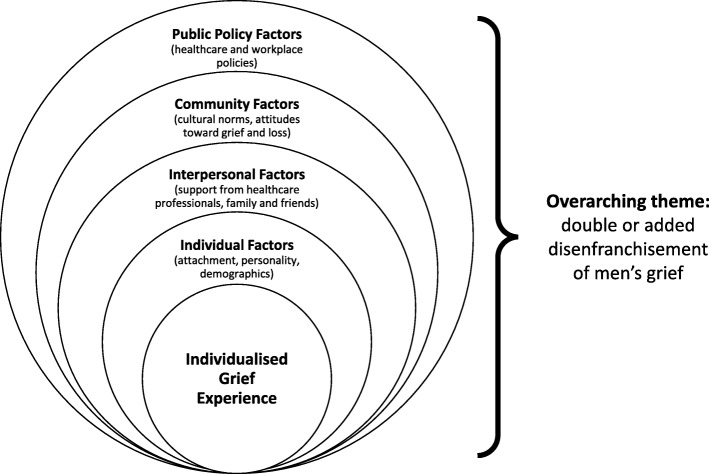
- Key qualitative themes included men’s roles as supporters of partners, lack of social recognition, expectations to “be strong,” woman-focused care/services, and the importance of attachment to the baby; the authors describe men’s grief as potentially “double-disenfranchised.”
Methods
- Systematic review following PRISMA, searching PubMed, PsycINFO, Embase, and CINAHL in October 2018; registered in PROSPERO (CRD42018103981).
- Included empirical studies published 1998 to October 2018 with primary data on men’s grief and/or predictors after miscarriage, stillbirth, termination for nonviable fetal anomaly, or neonatal death up to 28 days.
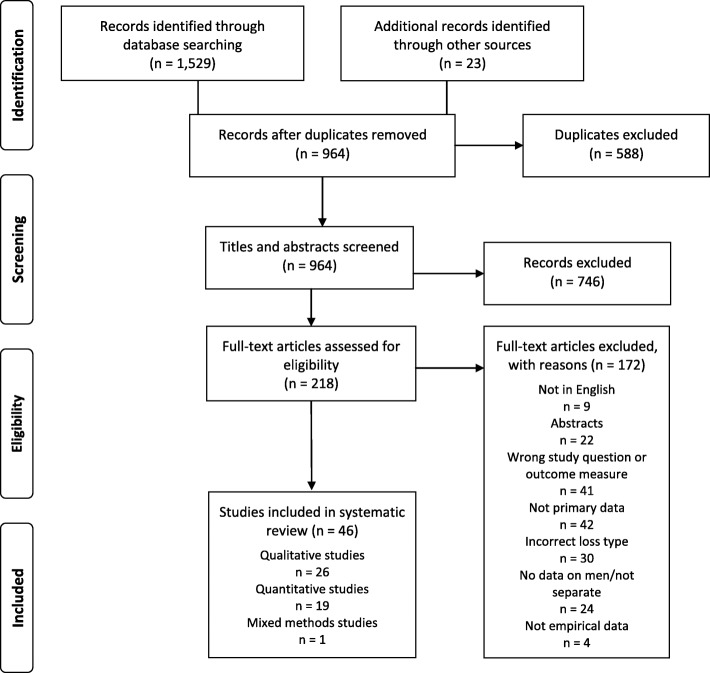
- Study yield: 1552 articles identified, 46 included; qualitative quality was appraised with CASP, and quantitative studies used standard analyses such as correlations, regressions, and group comparisons.
Limitations
- The paper states that most studies used convenience, purposive, or snowball sampling, so findings may not represent all bereaved men.
- The authors state that included participants were predominantly Caucasian, heterosexual men from high-income countries, and call for research in more diverse groups; this limits generalizability.
- The text makes evident that neonatal loss was under-studied: no paper focused exclusively on neonatal death, and the authors note a need for updated research on this group.
Model-written summary. Check it against the paper before relying on it.
Integrity signals
Registry
Cites
Statistics
Figures
Verification
Claims the paper makes
52 Valid · 4 Not valid · 91 Not checked · 40 Own results and interpretations
Some cited sources support this claim and some don’t — read each source’s verdict below.
In the paper
“However, some men in qualitative studies also expressed less extreme reactions to the loss, indicating representation of a range of experiences [56, 61, 69, 71–75, 78, 79].”
§ Men’s grief following pregnancy loss and neonatal loss: a systematic review and emerging theoretical model > Discussion > Limitations and future research
What the sources say
- Not matchedcites [56] Brierly LE. Couples' experiences grieving late-term pregnancy loss in the digital era. Dissertation Abstracts International: Section B: The Sciences and Engineering. 2018;79(8-B(E)).
Its entry has no title and year that we can search by.
- Not matchedcites [61] Obst KL Australian men’s experiences of support following pregnancy loss 2017 Adelaide University of Adelaide 30529832
We searched by its title and found no matching paper.
- Not checked — no full text of the sourcecites [69] Hamama-Raz Y Hemmendinger S Buchbinder E The unifying difference: dyadic coping with spontaneous abortion among religious Jewish couples Qual Health Res 2010 20 2 251 261 10.1177/1049732309357054 20065308 source
- Not checked — no full text of the sourcecites [71] Abboud L Liamputtong P Pregnancy loss: what it means to women who miscarry and their partners Soc Work Health Care 2003 36 3 37 62 10.1300/J010v36n03_03 12564651 source
- Not checked — no full text of the sourcecites [72] Abboud L Liamputtong P When pregnancy fails: coping strategies, support networks and experiences with health care of ethnic women and their partners J Reprod Infant Psychol 2005 23 1 3 18 10.1080/02646830512331330974 source
- Not checked — no full text of the sourcecites [73] Armstrong D Exploring fathers' experiences of pregnancy after a prior perinatal loss MCN Am J Matern Child Nurs 2001 26 3 147 153 10.1097/00005721-200105000-00012 11372213 source
- Disputedcites [74] Campbell-Jackson L, Bezance J, Horsch A. "A renewed sense of purpose": Mothers' and fathers' experience of having a child following a recent stillbirth. BMC Pregnancy Childbirth. 2014;14(1):423. PMC4279693 25522655 sourceExperimental — accuracy not yet measured
The Background (page unavailable) says fathers report fewer grief and anxiety symptoms, but explicitly cautions that their grief may be qualitatively different rather than less intense. The Discussion likewise describes different expressions of grief and difficulty finding space to grieve, not men expressing less extreme reactions to the loss. (LLM, conf=0.86)
Checked by a reasoning model — may be wrong.
- Not checked yetcites [75] Fisher KA Miscarriage: A phenomenological approach to the father's experience. Dissertation Abstracts International: Section B The Sciences and Engineering 2002 5032
- Partly supportedcites [78] Meaney S Corcoran P Spillane N O'Donoghue K BMJ Open 2017 7 3 e011382 10.1136/bmjopen-2016-011382 28348180 PMC5372116 sourceExperimental — accuracy not yet measured
The Discussion (page unavailable) says the men were less likely to discuss the miscarriage openly, supporting a difference in how they expressed their experiences. It cautions that this may reflect differences in expressing grief rather than less intense emotional reactions; the Findings also say the men were emotionally affected and grieved. The paper therefore does not establish that some men had less extreme reactions to the loss. (LLM, conf=0.83)
- Not checked — no full text of the sourcecites [79] Murphy F The experience of early miscarriage from a male perspective J Clin Nurs 1998 7 4 325 332 10.1046/j.1365-2702.1998.00153.x 9830973 source
hedged- Asserted: passes — The authors put it forward as true.
- Checkable: passes — It can be checked against evidence.
- Load-bearing: unclear — It is unclear whether the paper’s conclusions depend on it.
- Based: passes — The paper gives a reason why it holds.
- Not matched
The sources with a verdict support this claim; the rest weren’t checked yet, have no full text we could read, or their verdicts aren’t rated yet.
In the paper
“Although 13 studies used the Perinatal Grief Scale (PGS) as a primary measure of grief”
- Also stated in: § Findings relating to the grief experience · plain
“Thirteen quantitative studies used the PGS as the primary measure of grief [24, 25, 67, 84, 87–93, 95, 96].”
§ Men’s grief following pregnancy loss and neonatal loss: a systematic review and emerging theoretical model > Results > Quality of included studies
What the sources say
- Not matchedcites [24] Franche RL Psychologic and obstetric predictors of couples' grief during pregnancy after miscarriage or perinatal death Obstet Gynecol 2001 97 4 597 602 11275034
Its entry has no title and year that we can search by.
- Not checked — no full text of the sourcecites [25] Puddifoot J Johnson M Active grief, despair, and difficulty coping: some measured characteristics of male response following their partner's miscarriage J Reprod Infant Psychol 1999 17 1 89 93 10.1080/02646839908404587 source
- Supportedcites [67] Cope H Garrett ME Gregory S Ashley-Koch A Pregnancy continuation and organizational religious activity following prenatal diagnosis of a lethal fetal defect are associated with improved psychological outcome Prenat Diagn 2015 35 8 761 768 10.1002/pd.4603 25872901 PMC4968036 source
The Methods > Measures section identifies the PGS as the instrument this study used to measure grief, and the Results > Psychological outcome section reports PGS grief scores. This supports citing the paper as one of the studies using the PGS; the total of 13 is the citing document’s count of included studies, not a count attributed to this individual paper. Page numbers are unavailable in our copy. (LLM, conf=0.88)
- Not checked — no full text of the sourcecites [84] Franche RL Bulow C The impact of a subsequent pregnancy on grief and emotional adjustment following a perinatal loss Infant Ment Health J 1999 20 2 175 187 10.1002/(SICI)1097-0355(199922)20:2<175::AID-IMHJ5>3.0.CO;2-Q doi:10.1002/(sici)1097-0355(199922)20:2
- Not checked — no full text of the sourcecites [87] Johnson MP Puddifoot JE Miscarriage: is vividness of visual imagery a factor in the grief reaction of the partner? Br J Health Psychol 1998 3 137 146 10.1111/j.2044-8287.1998.tb00562.x source
- Not checked — no full text of the sourcecites [88] Barr P Guilt- and shame-proneness and the grief of perinatal bereavement Psychol Psychother Theory Res Pract 2004 77 4 493 510 10.1348/1476083042555442 15588457 source
- Not checked — no full text of the sourcecites [89] Barr P Relation between grief and subsequent pregnancy status 13 months after perinatal bereavement J Perinat Med 2006 34 3 207 211 10.1515/JPM.2006.036 16602840 source
- Not checked — no full text of the sourcecites [90] Barr P Negative self-conscious emotion and grief: an actor-partner analysis in couples bereaved by stillbirth or neonatal death Psychol Psychother 2012 85 3 310 326 10.1111/j.2044-8341.2011.02034.x 22903921 source
- Not checked — no full text of the sourcecites [91] Serrano F Lima ML Recurrent miscarriage: psychological and relational consequences for couples Psychol Psychother Theory Res Pract 2006 79 4 585 594 10.1348/147608306X96992 17312873 source
- Not checked — no full text of the sourcecites [92] Wilson PA Boyle FM Ware RS Holding a stillborn baby: the view from a specialist perinatal bereavement service Aus N Z J Obstet Gynaecol 2015 55 4 337 343 10.1111/ajo.12327 26129981 source
plain- Asserted: passes — The authors put it forward as true.
- Checkable: passes — It can be checked against evidence.
- Load-bearing: unclear — It is unclear whether the paper’s conclusions depend on it.
- Based: passes — The paper gives a reason why it holds.
- Also stated in: § Findings relating to the grief experience · plain
The sources with a verdict support this claim; the rest weren’t checked yet, have no full text we could read, or their verdicts aren’t rated yet.
In the paper
“Finally, 17 studies also grouped together different types of loss as part of the investigation of grief (e.g., miscarriage and stillbirth, stillbirth and neonatal death, or all three types together) [24, 46, 57–61, 73, 77, 80, 83, 84, 86, 88–90, 93].”
§ Men’s grief following pregnancy loss and neonatal loss: a systematic review and emerging theoretical model > Results > Quality of included studies
What the sources say
- Not matchedcites [24] Franche RL Psychologic and obstetric predictors of couples' grief during pregnancy after miscarriage or perinatal death Obstet Gynecol 2001 97 4 597 602 11275034
Its entry has no title and year that we can search by.
- Not checked — no full text of the sourcecites [46] McCreight BS A grief ignored: narratives of pregnancy loss from a male perspective Sociol Health Illn 2004 26 3 326 350 10.1111/j.1467-9566.2004.00393.x 15043602 source
- Not matchedcites [57] Cholette ME Exploring the meaning of the paternal experience of perinatal loss: a phenomenological study: University of Arizona 2012
We searched by its title and found no matching paper.
- Not matchedcites [58] Colon EJ Paternal experiences after a perinatal loss. Dissertation Abstracts International: Section B The Sciences and Engineering 2009 4084
We searched by its title and found no matching paper.
- Not matchedcites [59] Jones-Peeples AE Understanding paternal experience of perinatal loss and maternal expectations. Dissertation Abstracts International: Section B The Sciences and Engineering 2014
We searched by its title and found no matching paper.
- Not matchedcites [60] Lukas ML Paternal grief, mourning, and adaptation following perinatal loss. Dissertation Abstracts International: Section B The Sciences and Engineering 1999 5169
We searched by its title and found no matching paper.
- Not matchedcites [61] Obst KL Australian men’s experiences of support following pregnancy loss 2017 Adelaide University of Adelaide 30529832
We searched by its title and found no matching paper.
- Not checked — no full text of the sourcecites [73] Armstrong D Exploring fathers' experiences of pregnancy after a prior perinatal loss MCN Am J Matern Child Nurs 2001 26 3 147 153 10.1097/00005721-200105000-00012 11372213 source
- Supportedcites [77] Kavanaugh K Hershberger P Perinatal loss in low-income African American parents J Obstet Gynecol Neonatal Nurs 2005 34 5 595 605 10.1177/0884217505280000 16227515 PMC1388191 source
The Participants section states that this study included families who experienced stillbirth and families who experienced neonatal death. It therefore supports citing this paper as one of the studies that grouped different types of loss; the count of 17 studies is the citing paper’s aggregate, not a count attributed to this source. (LLM, conf=0.92)
- Not checked — no full text of the sourcecites [80] O'Leary J Thorwick C Fathers' perspectives during pregnancy, postperinatal loss J Obstet Gynecol Neonatal Nurs 2006 35 1 78 86 10.1111/j.1552-6909.2006.00017.x 16466355 source
plain- Asserted: passes — The authors put it forward as true.
- Checkable: passes — It can be checked against evidence.
- Load-bearing: passes — The paper’s conclusions depend on it.
- Based: passes — The paper gives a reason why it holds.
- Not matched
The cited sources support only part of this claim — read each source’s verdict below.
In the paper
“With the exception of one study which employed author-developed measures of grief and support service satisfaction [70] the remaining quantitative studies employed standardised and validated measures for both predictors and grief [23–25, 67, 76, 84, 86–96].”
§ Men’s grief following pregnancy loss and neonatal loss: a systematic review and emerging theoretical model > Results > Quality of included studies
What the sources say
- Not matchedcites [70] Khan RA Drudy L Sheehan J Harrison RF Geary M Early pregnancy loss: how do men feel? Ir Med J 2004 97 7 217 218 15491001
Its entry has no title and year that we can search by.
- Not checked — no full text of the sourcecites [23] Huffman CS Schwartz TA Swanson KM Couples and miscarriage: the influence of gender and reproductive factors on the impact of miscarriage Womens Health Issues 2015 25 5 570 578 10.1016/j.whi.2015.04.005 26082277 source
- Not matchedcites [24] Franche RL Psychologic and obstetric predictors of couples' grief during pregnancy after miscarriage or perinatal death Obstet Gynecol 2001 97 4 597 602 11275034
Its entry has no title and year that we can search by.
- Not checked — no full text of the sourcecites [25] Puddifoot J Johnson M Active grief, despair, and difficulty coping: some measured characteristics of male response following their partner's miscarriage J Reprod Infant Psychol 1999 17 1 89 93 10.1080/02646839908404587 source
- Partly supportedcites [67] Cope H Garrett ME Gregory S Ashley-Koch A Pregnancy continuation and organizational religious activity following prenatal diagnosis of a lethal fetal defect are associated with improved psychological outcome Prenat Diagn 2015 35 8 761 768 10.1002/pd.4603 25872901 PMC4968036 sourceExperimental — accuracy not yet measured
The Methods > Measures section says participants completed standardized instruments, including the Perinatal Grief Scale, and used items from the Duke University Religion Index to assess religious activity. But pregnancy management choices were collected with the Pregnancy History and Choices Questionnaires, which the authors say were developed specifically for this project; the claim that predictors were uniformly measured with standardized, validated instruments is therefore not supported for this study. (LLM, conf=0.88)
- Not checked — no full text of the sourcecites [76] Jansson C Volgsten H Huffman C Skoog Svanberg A Swanson KM Stavreus-Evers A Validation of the revised impact of miscarriage scale for Swedish conditions and comparison between Swedish and American couples' experiences after miscarriage Eur J Contracept Reprod Health Care 2017 22 6 412 417 10.1080/13625187.2017.1409346 29250992 source
- Not checked — no full text of the sourcecites [84] Franche RL Bulow C The impact of a subsequent pregnancy on grief and emotional adjustment following a perinatal loss Infant Ment Health J 1999 20 2 175 187 10.1002/(SICI)1097-0355(199922)20:2<175::AID-IMHJ5>3.0.CO;2-Q doi:10.1002/(sici)1097-0355(199922)20:2
- Partly supportedcites [86] Michon B Balkou S Hivon R Cyr C Death of a child: parental perception of grief intensity - end-of-life and bereavement care Paediatr Child Health 2003 8 6 363 366 10.1093/pch/8.6.363 20052330 PMC2795457 sourceExperimental — accuracy not yet measured
Materials and Methods (page not specified) describes a study-specific 1–10 grief rating, and Results (page not specified) reports whether parents found follow-up bereavement care helpful. But the study also measured grief with the TRIG-F, which Materials and Methods explicitly calls a standardized, reliable and valid instrument. The citation therefore overlooks a principal validated grief measure; the paper does not establish a formal author-developed support-service satisfaction scale. (LLM, conf=0.87)
- Not checked — no full text of the sourcecites [87] Johnson MP Puddifoot JE Miscarriage: is vividness of visual imagery a factor in the grief reaction of the partner? Br J Health Psychol 1998 3 137 146 10.1111/j.2044-8287.1998.tb00562.x source
- Not checked — no full text of the sourcecites [88] Barr P Guilt- and shame-proneness and the grief of perinatal bereavement Psychol Psychother Theory Res Pract 2004 77 4 493 510 10.1348/1476083042555442 15588457 source
plain- Asserted: passes — The authors put it forward as true.
- Checkable: passes — It can be checked against evidence.
- Load-bearing: unclear — It is unclear whether the paper’s conclusions depend on it.
- Based: passes — The paper gives a reason why it holds.
- Not matched
The sources with a verdict support this claim; the rest weren’t checked yet, have no full text we could read, or their verdicts aren’t rated yet.
In the paper
“With the exception of 12 studies, [25, 55, 68, 81, 86, 88–90, 92, 94–96], almost all studies used convenience, purposive or snowball sampling to recruit participants.”
§ Men’s grief following pregnancy loss and neonatal loss: a systematic review and emerging theoretical model > Results > Quality of included studies
What the sources say
- Not checked — no full text of the sourcecites [25] Puddifoot J Johnson M Active grief, despair, and difficulty coping: some measured characteristics of male response following their partner's miscarriage J Reprod Infant Psychol 1999 17 1 89 93 10.1080/02646839908404587 source
- Not checked — no full text of the sourcecites [55] Avelin P Rådestad I Säflund K Wredling R Erlandsson K Parental grief and relationships after the loss of a stillborn baby Midwifery. 2013 29 6 668 673 10.1016/j.midw.2012.06.007 22863238 source
- Not checked — no full text of the sourcecites [68] Ekelin M Crang-Svalenius E Nordström B Dykes AK Parents' experiences, reactions and needs regarding a nonviable fetus diagnosed at a second trimester routine ultrasound J Obstet Gynecol Neonatal Nurs 2008 37 4 446 454 10.1111/j.1552-6909.2008.00258.x 18754982 source
- Not checked — no full text of the sourcecites [81] Samuelsson M Rådestad I Segesten K A waste of life: fathers' experience of losing a child before birth Birth 2001 28 2 124 130 10.1046/j.1523-536X.2001.00124.x 11380384 source
- Supportedcites [86] Michon B Balkou S Hivon R Cyr C Death of a child: parental perception of grief intensity - end-of-life and bereavement care Paediatr Child Health 2003 8 6 363 366 10.1093/pch/8.6.363 20052330 PMC2795457 source
The citation identifies this paper as one of the exceptions, not as evidence for the sampling methods used by all the other studies. In Materials and Methods (Sample and procedures; page unavailable), the paper says it sought to include all families who lost a child in a defined region and period, subject to a stated exclusion, rather than recruiting by convenience, purposive or snowball sampling. (LLM, conf=0.89)
- Not checked — no full text of the sourcecites [88] Barr P Guilt- and shame-proneness and the grief of perinatal bereavement Psychol Psychother Theory Res Pract 2004 77 4 493 510 10.1348/1476083042555442 15588457 source
- Not checked — no full text of the sourcecites [89] Barr P Relation between grief and subsequent pregnancy status 13 months after perinatal bereavement J Perinat Med 2006 34 3 207 211 10.1515/JPM.2006.036 16602840 source
- Not checked — no full text of the sourcecites [90] Barr P Negative self-conscious emotion and grief: an actor-partner analysis in couples bereaved by stillbirth or neonatal death Psychol Psychother 2012 85 3 310 326 10.1111/j.2044-8341.2011.02034.x 22903921 source
- Not checked — no full text of the sourcecites [92] Wilson PA Boyle FM Ware RS Holding a stillborn baby: the view from a specialist perinatal bereavement service Aus N Z J Obstet Gynaecol 2015 55 4 337 343 10.1111/ajo.12327 26129981 source
- Not checked — no full text of the sourcecites [94] Alderman L Chisholm J Denmark F Salbod S Bereavement and stress of a miscarriage: as it affects the couple Omega: Journal of Death and Dying 1998 37 4 317 327 10.2190/DQNQ-PFAM-7V00-52F3 source
plain- Asserted: passes — The authors put it forward as true.
- Checkable: passes — It can be checked against evidence.
- Load-bearing: passes — The paper’s conclusions depend on it.
- Based: passes — The paper gives a reason why it holds.
106 more claims · 32 with their cited sources checked
Create a free account to see all 187 claims and to verify the 53 references still open.
- It may state two separate claims as one. 58
- Probably not a substantial claim. 21
- The quote only partly states this claim. 2
Claims other papers make about this one
Each is checked against this paper’s own text: does it say what the citing paper says it does?
The source backs part of the claim, not all of it — or backs it for a different population, condition or comparison.
In the citing paper
“At the individual level, factors contributing to men’s grief include demographic elements (e.g., age, religion, ethnicity), pregnancy loss/neonatal death history and number of living children.”
From Factors contributing to men’s grief following pregnancy loss and neonatal death: further development of an emerging model in an Australian sample (2021) · cites this paper as [36]
Experimental — accuracy not yet measuredThe source backs part of the claim, not all of it — or backs it for a different population, condition or comparison.
In the citing paper
“As many men have reported returning to work soon after pregnancy loss or neonatal death, bereavement leave policies may play a role in grief outcomes [36].”
From Factors contributing to men’s grief following pregnancy loss and neonatal death: further development of an emerging model in an Australian sample (2021) · cites this paper as [36]
Experimental — accuracy not yet measuredThe source backs part of the claim, not all of it — or backs it for a different population, condition or comparison.
In the citing paper
“Notably, most researchers have focused primarily on parents' emotions and their grief process (Obst et al., 2020; Payne et al., 2025).”
From Nurses' and midwives' experiences of supporting parents following perinatal bereavement: A qualitative systematic review (2026) · cites this paper as Obst et al., 2020
Experimental — accuracy not yet measuredThe source backs part of the claim, not all of it — or backs it for a different population, condition or comparison.
In the citing paper
“The few studies investigating men’s reactions after SB suggest that paternal and maternal reactions might differ [10, 59].”
From Depression, anxiety, PTSD, and OCD after stillbirth: a systematic review (2021) · cites this paper as [59]
Experimental — accuracy not yet measuredThe cited source says what the claim attributes to it.
In the citing paper
“Although this measure of ‘toughness’ did not emerge as a significant predictor in any of the models in the current study, it may still be an important factor to consider, as a low alpha value may indicate that this measure did not adequately capture men’s experiences of needing to be ‘strong’ or ‘tough’ as reported in previous qualitative studies [10, 12, 13, 31, 36].”
From Factors contributing to men’s grief following pregnancy loss and neonatal death: further development of an emerging model in an Australian sample (2021) · cites this paper as [36]
4 more claims about this paper
Create a free account to see every claim other papers make about this one.
Citations
Cites
Preferred Reporting Items for Systematic Reviews and Meta-Analyses: the PRISMA statement
Moher, D., Liberati, A., Tetzlaff, J., Altman, D. G., & for the PRISMA Group (2009) · BMJ · doi:10.1136/bmj.b2535 · Cited by 83,823
Preferred reporting items for systematic reviews and meta-analyses: the PRISMA Statement.
(2009) · PubMed Central · Cited by 44,859
Preferred reporting items for systematic reviews and meta-analyses: The PRISMA statement
Moher, D., Liberati, A., Tetzlaff, J., Altman, D. G., & the PRISMA Group* (2009) · Annals of Internal Medicine · doi:10.7326/0003-4819-151-4-200908180-00135 · Cited by 37,554
The Ecology of Human Development: Experiments by Nature and Design
Bronfenbrenner, U. (1979) · Harvard University Press eBooks · doi:10.4159/9780674028845 · Cited by 26,084
The ecology of human development : experiments by nature and design
Bronfenbrenner, U. (1979) · Cited by 12,580
The cochrane database of systematic reviews
Geddes, J. (1996) · Journal of Psychosomatic Research · doi:10.1016/s0022-3999(96)90063-x · Cited by 5,989
Kübler-Ross, E. (1975) · PubMed · Cited by 4,935
Men, masculinity, and the contexts of help seeking
Addis, M. E., & Mahalik, J. R. (2003) · American Psychologist · doi:10.1037/0003-066x.58.1.5 · Cited by 2,761
THE DUAL PROCESS MODEL OF COPING WITH BEREAVEMENT: RATIONALE AND DESCRIPTION
Schut, M. S. (1999) · Death Studies · doi:10.1080/074811899201046 · Cited by 2,560
International Journal of Nursing Studies
(2000) · Nursing Older People · doi:10.7748/nop.11.10.26.s15 · Cited by 1,932
Research works printed but not linked: 10
- Australian Bureau of Statistics Causes of Death, Australia, 2016 2017 Canberra Commonwealth of Australia
- Canada S Data quality, concepts and methodology: definitions 2012 Ontario Government of Canada
- Bowlby J Attachment and loss: sadness and depression London: Hogarth press 1980
- Brierly LE. Couples' experiences grieving late-term pregnancy loss in the digital era. Dissertation Abstracts International: Section B: The Sciences and Engineering. 2018;79(8-B(E)).
- Colon EJ Paternal experiences after a perinatal loss. Dissertation Abstracts International: Section B The Sciences and Engineering 2009 4084
- Jones-Peeples AE Understanding paternal experience of perinatal loss and maternal expectations. Dissertation Abstracts International: Section B The Sciences and Engineering 2014
- Lukas ML Paternal grief, mourning, and adaptation following perinatal loss. Dissertation Abstracts International: Section B The Sciences and Engineering 1999 5169
- Tennenbaum EA A qualitative investigation of the psychological effects of recurrent miscarriage on male partners. Dissertation Abstracts International: Section B The Sciences and Engineering 2008 1348
- Fisher KA Miscarriage: A phenomenological approach to the father's experience. Dissertation Abstracts International: Section B The Sciences and Engineering 2002 5032
- Doka KJ Martin T Grieving styles: Gender and grief Grief Matters: The Australian Journal of Grief and Bereavement 2011 14 2 42 45
Cited by
Items 101–200 of 211
Grief experiences of fathers who have lost a child: A systematic review
Akkaya, G., Nevruz, H., Usta, E., & İnözü, M. (2025) · Death Studies · doi:10.1080/07481187.2025.2591324 · Cited by 4
Grief after fetal death: a voiceless mourning
de Oliveira, H. T. L., Fonseca, L. F., Estancione, L. M. B., Corrêa, M. C. S. M., Oliveira, N. D. R., & Dias, V. D. V. V. A. (2022) · Revista Bioética · doi:10.1590/1983-80422022303558en · Cited by 2
Allan-Wiseman, S., Yazdani, N., & Modanloo, S. (2024) · Journal of Social Work in End-of-Life & Palliative Care · doi:10.1080/15524256.2024.2364588 · Cited by 2
“A systematic review of 46 articles focusing on men’s grief following pregnancy or newborn loss showed that fathers might experience different challenges than mothers, such as a lack of recognition for their grief and expectations to be the family supporter (Obst et al., 2020).”
Experiences of pregnancy loss in fathers of existing children: A qualitative study
Gershfeld-Litvin, A., Ressler, I., & Avidan, O. S. (2024) · Death Studies · doi:10.1080/07481187.2024.2390894 · Cited by 6
“This finding is in line with previously published studies in the field (Gershfeld-Litvin et al., 2024; Obst et al., 2020).”
InfluentialIs pregnancy loss (that) disenfranchised? Evidence from a vignette study
Büyükcan-Tetik, A., Topal, M. A., Ergun, T. D., Bağci, S. Ç., Kizilirmak, K., & Boelen, P. A. (2024) · European Journal of Psychotraumatology · doi:10.1080/20008066.2024.2398354 · Cited by 3
“Disregarding fathers’ experience after pregnancy loss, as shown in the literature (e.g. Obst et al., 2020), may be rooted in the fact that the baby physically develops within the mother’s body, and the father’s attachment is socially perceived to increase at a slower pace (McCreight, 2004;…”
InfluentialPerinatal loss: attachment, grief symptoms and women’s quality of life
Vismara, L., Ahmad, M., Enrica, S., & Sechi, C. (2024) · Journal of Reproductive and Infant Psychology · doi:10.1080/02646838.2024.2419374 · Cited by 5
“Indeed, men perceive their primary role as being a supporter to their partners but received limited support themselves and their experiences should be included in future research (Nguyen et al., 2019; Obst et al., 2020).”
“I know she’s there” meanings of continuing bonds for bereaved Costa Rican men: a qualitative study
Esquivel, D. M., & Hernández, A. M. G. (2025) · Death Studies · doi:10.1080/07481187.2025.2454504 · Cited by 5
“However, emerging research suggests that bereaved men exhibit a diverse range of mascu-linities and coping styles (Obst et al., 2020).”
Cyberthanathology: death and beyond in the digital age / trans. from Engl. A. V. Antipov
Антипов, А. В. (2025) · Omsk Scientific Bulletin Series Society History Modernity · doi:10.25206/2542-0488-2025-10-1-80-94 · Cited by 1
Perceived Ostracism and Fathers’ Experiences of Grief and Trauma After Miscarriage
Wesselmann, E. D., Arellanes, J. A., & Parris, L. N. (2025) · Family Transitions · doi:10.1080/28375300.2025.2499336 · Cited by 3
F, K. H., S, F. E., T, Z. M., Poh, D. C. S. C., Wen, P. Y., Parveena, S., & Siong, T. J. (2021) · International Journal of Clinical Obstetrics and Gynaecology · doi:10.33545/gynae.2021.v5.i6a.1053 · Cited by 2
Choosing Abortion for a Serious Fetal Health Issue: From Medical Information to Values
Kimport, K. (2022) · Emerald Group Publishing Limited eBooks · doi:10.1108/s1530-353520220000019006 · Cited by 4
“The Dark Farewell to the Light of Life”: A Qualitative Study About Prenatal Loss
Öztürk, G. K., & Elmas, S. (2022) · OMEGA - Journal of Death and Dying · doi:10.1177/00302228221131599 · Cited by 3
“Worldwide, approximately one in four pregnancies end in miscarriage, and 2.6 million babies are stillborn annually (Obst et al., 2020).”
BackgroundInfluentialSamman, S. K., Frick, H., & Olufowote, R. A. D. (2022) · International Journal of Systemic Therapy · doi:10.1080/2692398x.2022.2128623 · Cited by 3
“However, recent research has demonstrated that each partner in the couple system experiences grief and loss when faced with complications to these processes (e.g., Hiefner, 2020; Kersting & Wagner, 2012; Obst et al., 2020).”
BackgroundGao, H., Iwunze, C. J., An, X., Zhou, T., & Curtin, M. (2026) · International Journal of Nursing Studies Advances · doi:10.1016/j.ijnsa.2026.100538 · Cited by 2
“Notably, most researchers have focused primarily on parents' emotions and their grief process (Obst et al., 2020; Payne et al., 2025).”
Alivio del Sufrimiento Psicológico en Pacientes que Sufrieron Aborto Espontáneo y sus familiares
Rivas, P. F., & Yáñez, J. A. P. (2022) · Revista Salud y Cuidado · doi:10.36677/saludycuidado.v1i4.19335 · Cited by 1
Psychotherapy for Pregnancy Loss: Applying Relationship Science to Clinical Practice
Markin, R. D. (2023) · doi:10.1093/oso/9780197693353.001.0001 · Cited by 2
The Intersect of Miscarriage and Work: Concealment, Minimization and Discriminatory Practice
Schnitzler, K. (2024) · Emerald Group Publishing Limited eBooks · doi:10.1108/978-1-80382-219-820241007 · Cited by 2
Perinatal loss in Tanzania: Perspectives of maternal-child healthcare providers
Rent, S. M., Gaffur, R., Nkini, G., Sengoka, E. G., Mlay, P. S., Moyer, C. A., Lemmon, M. E., Docherty, S. L., Mmbaga, B. T., Staton, C. A., et al. (2024) · PLOS Global Public Health · doi:10.1371/journal.pgph.0003227 · Cited by 4
Luto perinatal e o impacto na saúde mental parental: uma revisão narrativa
Freire, M. M. N. D. O., Ribeiro, J. D. A. M., Gomes, I. E. V. E. M., Rückl, S., Nunes, M. A., Ribeiro, C. C., da Silva, A. G., & Rennó, J. (2024) · Debates em Psiquiatria · doi:10.25118/2763-9037.2024.v14.1350 · Cited by 8
Koert, E., Villadsen, S. F., Mackel, R., Cagara, H., Hartwig, T. S., Nielsen, H. S., & Schmidt, L. (2025) · BMC Public Health · doi:10.1186/s12889-025-22163-y · Cited by 1
“PL can have a negative psychological impact on women and their partners in the short-and long-term [3–5].”
Meanings of Continuing Bonds in Bereaved Costa Rican Men: A Mixed-Methods Study
Esquivel, D. M., Muñoz-Rojas, D., & Hernández, A. M. G. (2025) · Journal of Loss and Trauma · doi:10.1080/15325024.2025.2522697 · Cited by 1
“Recognizing, validating, and destigmatizing men’s grief is crucial for promoting their overall well-being (Obst et al., 2020).”
A womb and a tomb: mothers’ experiences of single fetal loss in a twin pregnancy
Gershfeld-Litvin, A., & Nur, N. Y. (2025) · BMC Pregnancy and Childbirth · doi:10.1186/s12884-025-07922-4 · Cited by 3
“Theoretical frameworks and models have also recognized commonalities in grief processes, among women and men [25].”
InfluentialFrom loss to closer bonds: Pregnancy loss and the emotional bonds with children in later life
Cohn‐Schwartz, E. (2025) · Journal of Social and Personal Relationships · doi:10.1177/02654075251369854 · Cited by 1
“…are more likely to report psychological symptoms and parenting stress compared to fathers after stillbirth (Faleschini et al., 2021), fathers also often suffer from grief, reduced well-being and adverse psychological effects (Badenhorst et al., 2009; Holman & Horstman, 2019; Obst et al., 2020).”
Fathers’ Perspectives of Bereavement Support
Denhup, C. (2025) · OMEGA - Journal of Death and Dying · doi:10.1177/00302228251371767 · Cited by 2
Brinkmann, C., Westergaard, D., Nielsen, H. S., & Hartwig, T. S. (2025) · International Journal of Recurrent Pregnancy Loss · doi:10.5005/ijrpl-11032-0003 · Cited by 1
Facebook and Perinatal Loss: Facebook Groups Use Among Parents from the U.S., France and Italy.
Sani, L., Labouihi, M., Cacciatore, J., & Bacque, M. (2025) · OMEGA - Journal of Death and Dying · doi:10.1177/00302228251376897 · Cited by 2
Wang, Y., Wang, W., Lei, S., Liu, Y., Meng, L., Ru, P., Su, X., Yang, X., Li, Y., Ni, X., et al. (2025) · BMC Pregnancy and Childbirth · doi:10.1186/s12884-025-08060-7 · Cited by 3
“Pregnancy loss encompasses miscarriages, stillbirths, elective abortion, and genetic terminations [1, 2].”
Perinatal fetal loss grief counselling experience for expectant fathers: a qualitative study
Gao, Q., Zhu, L., Guo, H., Zhu, Z., Zhang, F., Wang, Y., & Hou, B. (2025) · Frontiers in Psychiatry · doi:10.3389/fpsyt.2025.1685109 · Cited by 2
Reardon, D. C. (2025) · Journal of Psychosomatic Obstetrics & Gynecology · doi:10.1080/0167482x.2025.2503286 · Cited by 2
Ribeiro, M., Carvalho, P. S., Torres, A., & Ferreira, D. (2026) · European Journal of Investigation in Health Psychology and Education · doi:10.3390/ejihpe16010010 · Cited by 1
“Specifically, regarding their partner, men tend to exhibit different forms of emotional expression after experiencing perinatal loss (Obst et al., 2020).”
Siepmann, J., Bauernfeind, L., Nuber-Fischer, D., Rester, C., Gensheimer, K., & Sterr, F. (2026) · BMC Public Health · doi:10.1186/s12889-026-27687-5 · Cited by 2
“Affected parents grieve in different ways and have different tasks during this process [13].”
Losing a child: A grounded theory of failed infant adoptions among gay men
Johnson, M. K. (2022) · Sexual and Gender Diversity in Social Services · doi:10.1080/10538720.2022.2072435 · Cited by 1
“This disenfranchized grief results in difficulty coping and barriers to finding support services (Obst & Due, 2019; Obst et al., 2020).”
BackgroundInfluential“No One Sends You Flowers”: Social Norms and Patients’ Emotional Journey Within Fertility Treatment
Böcker, J., & Jakoby, N. R. (2025) · Social Inclusion · doi:10.17645/si.10421 · Cited by 2
“At the same time, men face other challenges, such as gendered role expectations to show no feelings or weaknesses or a lack of social recognition for their grief after pregnancy loss (Obst et al., 2020).”
Testing the acceptability of stillbirth awareness messages in an SMS program for fathers
Fletcher, R. J., Symonds, I., StGeorge, J. M., Warland, J., & Stark, M. J. (2022) · Health Promotion Journal of Australia · doi:10.1002/hpja.686
“The shattered expectation of celebrating the birth and the lack of social recognition of the significance of the loss contribute to the reported incidence of depression and posttraumatic stress symptoms among mothers and fathers.(2,3) The considerable costs, both tangible and intangible, are usually met by families al…”
Backgrounddu Fossé, N. A., Lashley, E. E. L. O., Treurniet, T. T., van Lith, J., le Cessie, S., Boosman, H., & van der Hoorn, M. (2021) · Research Square · doi:10.21203/rs.3.rs-150723/v1
“[5, 21] Multiple studies showed that a signi cant part of men affected by pregnancy loss experienced little support from their social network and a reluctance to share their loss and feelings with them; their family and friends tend to direct their acknowledgement and support largely toward the female partner.[5, 24,…”
BackgroundCurrent Resources for Evidence-Based Practice, March 2021
Bovbjerg, M. L. (2021) · Journal of Obstetric, Gynecologic & Neonatal Nursing · doi:10.1016/j.jogn.2021.02.001 · Cited by 1
Special Considerations: Grief and Loss
Richardson, E., & Schiller, C. E. (2021) · Springer eBooks · doi:10.1007/978-3-030-71497-0_9 · Cited by 2
Cleaver, H., & Rose, W. (2021) · Cambridge University Press eBooks · doi:10.1017/9781911623793.034
Family Bereavement Implications for Military Personnel: A Policy Proposal
Urbieta, D. (2021) · Digital USD (University of San Diego) · doi:10.22371/07.2021.028
Importancia de la Psicología en la atención y cuidados perinatales. Una revisión sistemática
Baró, S. (2022) · RihumSo Revista de investigación del Departamento de Humanidades y Ciencias Sociales · doi:10.54789/rihumso.22.11.21.2 · Cited by 4
Perinatal Kayıp Sürecinde Babaların Deneyimleri: Sistematik Derleme
Evgin, H., & Şahin, N. H. (2022) · Ankara sağlık bilimleri dergisi · doi:10.46971/ausbid.1027039 · Cited by 1
Pesar por la muerte fetal: duelo sin voz
de Oliveira, H. T. L., Fonseca, L. F., Estancione, L. M. B., Corrêa, M. C. S. M., Oliveira, N. D. R., & Dias, V. D. V. V. A. (2022) · Revista Bioética · doi:10.1590/1983-80422022303558es · Cited by 1
Experience of fathers who have lost a child and the support that they desire from nurses
Yoshida, S., & Kayo, S. A. T. O. (2022) · Journal of Japan Academy of Midwifery · doi:10.3418/jjam.jjam-2021-0044
Culturally and Linguistically Diverse Men’s Grief Experiences Following Perinatal Death in Australia
Pearson, T., Due, C., & Obst, K. L. (2023) · OMEGA - Journal of Death and Dying · doi:10.1177/00302228231153545 · Cited by 1
Self-citationLagro‐Janssen, T. (2021) · Bohn Stafleu van Loghum eBooks · doi:10.1007/978-90-368-2707-2_26
Facão, R., & Madeira, L. (2023) · Psychopathology · doi:10.1159/000533323 · Cited by 3
Markin, R. D. (2023) · Oxford University Press eBooks · doi:10.1093/oso/9780197693353.003.0004
Managing Countertransference in Psychotherapy for Pregnancy Loss
Markin, R. D. (2023) · Oxford University Press eBooks · doi:10.1093/oso/9780197693353.003.0007
Markin, R. D. (2023) · Oxford University Press eBooks · doi:10.1093/oso/9780197693353.003.0001
Markin, R. D. (2023) · Oxford University Press eBooks · doi:10.1093/oso/9780197693353.003.0009
Emotion in Psychotherapy for Pregnancy Loss: Mourning as an Affective-Relational Process
Markin, R. D. (2023) · Oxford University Press eBooks · doi:10.1093/oso/9780197693353.003.0005
Markin, R. D. (2023) · Oxford University Press eBooks · doi:10.1093/oso/9780197693353.002.0006
The Alliance in Individual and Couples Therapy for Pregnancy Loss
Markin, R. D. (2023) · Oxford University Press eBooks · doi:10.1093/oso/9780197693353.003.0003
Alliance Rupture and Repair Episodes in Psychotherapy for Pregnancy Loss: An Attachment Perspective
Markin, R. D. (2023) · Oxford University Press eBooks · doi:10.1093/oso/9780197693353.003.0006
Markin, R. D. (2023) · Oxford University Press eBooks · doi:10.1093/oso/9780197693353.003.0002
Markin, R. D. (2023) · Oxford University Press eBooks · doi:10.1093/oso/9780197693353.003.0008
Markin, R. D. (2023) · Oxford University Press eBooks · doi:10.1093/oso/9780197693353.003.0010
Markin, R. D. (2023) · Oxford University Press eBooks · doi:10.1093/oso/9780197693353.002.0003
İnal, S., & Öksüz, S. K. (2024) · doi:10.5152/8809
Yenidoğanlarda Solunum Sistemi Sorunları
İnal, S. (2024) · doi:10.5152/8801
Yenidoğanda Görülen Metabolizma Hastalıkları
Erdim, L. (2024) · doi:10.5152/8806
Bozkurt, G., İnal, S., & BAROL, Z. (2024) · doi:10.5152/8814
Ebeler İçin Yenidoğan ve Çocuk Sağlığı II
Dolgun, G., İnal, S., Bozkurt, G., Erdim, L., Karaahmet, A. Y., Şimşek, A., Bilgiç, F. Ş., Temel, M., Güdücü, N., Boyacıoğlu, N. E., et al. (2024) · doi:10.5152/0088
Oksijen ve Aspirasyon Uygulamaları
Erdim, L., & Aktürk, S. O. (2024) · doi:10.5152/8813
Yenidoğanın Enteral ve Parenteral Beslenmesi
Dolgun, G., & NURALIYEVA, Z. (2024) · doi:10.5152/8812
Yenidoğanlarda Kardiyopulmoner Resüstasyon
Dolgun, G., & Bilgiç, F. Ş. (2024) · doi:10.5152/8804
Yenidoğanda Görülen Endokrin Sistem Hastalıkları
Erdim, L., ŞIMŞEK, A., & Güdücü, N. (2024) · doi:10.5152/8805
Bebeğini/Çocuğunu Kaybeden Ebeveynlere Yaklaşım
Temel, M., & Boyacıoğlu, N. E. (2024) · doi:10.5152/8808
Yenidoğanda Görülen Gastrointestinal Sistem Hastalıkları
Erdim, L., & Kızılkaya, T. (2024) · doi:10.5152/8802
Yenidoğanda Nörolojik Hastalıklar
BOZKURT, G. (2024) · doi:10.5152/8807
Factors associated with depressive symptoms among 1,502 couples in the immediate puerperium
Hernández-Santillán, G., Gurpegui, M., Pertejo, M. A., Lahera, G., & Bravo‐Ortiz, M. F. (2024) · International Journal of Social Psychiatry · doi:10.1177/00207640241296047
“These reflections reinforce the rationale that men need to be considered more thoroughly in clinical work and in the development of new questionnaires and research methods relating to perinatal bereavement (Alexopoulos et al., 2024; Obst et al., 2020).”
Men’s mourning experiences for the death of a loved one: An integrative review
Esquivel, D. M., Araya-Solís, M., & Hernández, A. M. G. (2024) · Enfermería Clínica (English Edition) · doi:10.1016/j.enfcle.2024.11.006 · Cited by 4
“9 The synthesis of the conclusions is presented in Table 2.”
Talking with Patients about Pregnancy Loss
Atik, R. B., & Hepworth-Jones, B. (2025) · Cambridge University Press eBooks · doi:10.1017/9781009532549.017
Male partner’s experience after a pregnancy loss
Holness, N. A., & Barfield, L. C. (2025) · Evidence-Based Nursing · doi:10.1136/ebnurs-2024-104194
MacGregor, B., Leach, H., Court, R. A., Grove, A., Heazell, A. E. P., Hillman, S., & Staniszewska, S. H. (2025) · BMJ Open · doi:10.1136/bmjopen-2024-093581
Grief and Psychological Symptoms of Women and Men at 1–12 months After Pregnancy Loss
Tarhan, N., Çimete, G., & Südütemiz, B. (2025) · OMEGA - Journal of Death and Dying · doi:10.1177/00302228251397864
Robinson, K., Due, C., Briley, A. L., & Loughnan, S. A. (2025) · BJOG An International Journal of Obstetrics & Gynaecology · doi:10.1111/1471-0528.70112 · Cited by 2
Self-citationMota, C., Sánchez, C., Carreño-Meléndez, J., & Jímenez-García, C. Y. (2025) · Women · doi:10.3390/women5040050 · Cited by 4
“Although there are studies that describe the symptomatology of complicated grief [7–9] and its psychosocial repercussions [10–12], there is still a lack of consensus regarding the specific psychosocial factors that predispose women to develop complicated perinatal grief.”
Enduring hope and loss: qualitative evidence synthesis of LGBTQ+ experiences of perinatal loss
Darwin, Z. J., Bainbridge, A., Bekiropoulou, A., & Greenfield, M. (2026) · Frontiers in Psychiatry · doi:10.3389/fpsyt.2025.1732197
Stavisky, J., Scroggie, N., Collinson, A., et al. (2026) · Veterinary Record · doi:10.1002/vetr.70339
“Importantly, Obst et al. 58 also identi-fied that men typically adopt a supporting role for their female partner during baby loss.”
Depressão na perda gestacional: identificação de fatores de risco e de proteção
Melo, C. D. F., Luna, L. E. P., Borges, G. H., & Vieira, L. F. R. (2026) · CES Psicología · doi:10.21615/cesp.7851
Dartey, A. F., Sagbo, F. M., Nyakpo, R. A., Issifu, A., & Dede, D. (2026) · BMC Pregnancy and Childbirth · doi:10.1186/s12884-026-08938-0
“Male participants also reported sob-bing, challenging societal expectations of stoicism [21, 22].”
Récits de deuils périnataux paternels : Une analyse qualitative intégrant les tâches familiales
Debrot, A., Mabire, X., & Luna, A. L. (2026) · Etudes sur la mort/Études sur la mort · doi:10.3917/eslm.163.0159
Le deuil invisible des pères : une analyse des métaphores du deuil périnatal
Marinato, L. (2026) · Etudes sur la mort/Études sur la mort · doi:10.3917/eslm.163.0181
Éditorial. Deuils des hommes : entre invisibilité et spécificités
Cherblanc, J., Berthod, M.-A., Clavandier, G., & Zech, E. (2026) · Etudes sur la mort/Études sur la mort · doi:10.3917/eslm.163.0005
de Montigny, F., Lalande, D., Hamel-Hilaréguy, P., Verdon, C., Meunier, S., Noël, R., Zeghiche, S., & René, C. (2026) · Etudes sur la mort/Études sur la mort · doi:10.3917/eslm.163.0233 · Cited by 1
Denhup, C. (2026) · Archives of Psychiatric Nursing · doi:10.1016/j.apnu.2026.152103
Psychological Aspects of Infertility, Assisted Conception and Perinatal Loss
Healy, S., Vaillancourt, K., & Rosan, C. (2026) · Cambridge University Press eBooks · doi:10.1017/9781911623496.011
Boakye, P. N., Prendergast, N., Desta, F., Obewu, O. A. T., & Mugambi, D. (2026) · Canadian Journal of Nursing Research · doi:10.1177/08445621251409460
“Research shows that although men experienced a wide range of mental health issues, including symptoms of depression, anxiety, and PTSD in the aftermath of perinatal loss, access to support remains very limited within the healthcare system (Due et al., 2017; Obst et al., 2020; Williams et al., 2020).”
InfluentialSilent grief: A qualitative study on the emotional and social impact of early gestational loss
González-Vicente, A., Moriconi, V., González-Pascual, M., Salvador-Olea, L., Jiménez-Gómez, B., & González-Pascual, J. L. (2026) · Midwifery · doi:10.1016/j.midw.2026.104820
Nitulescu, E. D., & Dima, V. (2026) · Romanian Journal of Psychiatry & Psychotherapy · doi:10.37897/rjpp.2026.1.1
“Fathers more commonly exhibit avoidant and compensatory behaviors, including increased alcohol consumption, intensified focus on work, and social withdrawal [15,18].”
“ I expected to be called ‘mother’ : exploring mental health needs of bereaved mothers in Tanzania
Rent, S. M., Bassett, E., Nkini, G., Sengoka, E. G., Moyer, C. A., Lemmon, M. E., Matthews, N., Keating, E. M., Mmbaga, B. T., Staton, C. A., et al. (2026) · Journal of Reproductive and Infant Psychology · doi:10.1080/02646838.2026.2675713
dos Santos, G. G., Dionízio, L. D. A., de Oliveira, C., dos Santos, C. M. P., Viana, L. H. F., Rocha, G. S. T., & Nascimento, M. V. F. (2026) · Saúde Coletiva (Barueri) · doi:10.36489/saudecoletiva.2026v17i108p20132-20143
Stage-based bereavement support for parents after stillbirth: an umbrella review
Chen, L.-L., Tsai, C.-H., & Yang, C. (2026) · Journal of Reproductive and Infant Psychology · doi:10.1080/02646838.2026.2675706
Grief reactions the first year after termination of pregnancy due to fetal anomaly
Eklund, M. V., O’Connor, M., Hammer, A., Prinds, C., Möller, S., & Hvidtjørn, D. (2026) · Death Studies · doi:10.1080/07481187.2026.2676995
Fertility care and family building for LGBTQ+ individuals: a committee opinion
Gracia, C. R., Flyckt, R. L., Hansen, K., Hill, M., Jain, T., Kalra, S., Pier, B., Sakkas, D., Steiner, A. Z., Tanrikut, C., et al. (2026) · Fertility and Sterility · doi:10.1016/j.fertnstert.2026.05.005 · Cited by 1
Portnoy, M., Bluvstein, I., & Melnikov, S. (2026) · Midwifery · doi:10.1016/j.midw.2026.104895
Wu, P., Usman, M., Bailey, J., Knight, M., Chew-Graham, C. A., & Jordan, K. P. (2026) · The Lancet Primary Care · doi:10.1016/j.lanprc.2026.100165
Tarmey, L., Iles, J. E., & Poole, L. (2026) · Frontiers in Psychiatry · doi:10.3389/fpsyt.2026.1867729
“…expectations surrounding fathers ’ role as a ‘ strong supporter ’ during pregnancy and following loss may contribute to dif fi culties expressing painful emotions and a greater reliance on more internalised or avoidant forms of coping, a pattern described as “ double disenfranchised ” grief (24).”
InfluentialNalugo, B., Tondo, B., & Kizito, S. (2026) · Frontiers in Public Health · doi:10.3389/fpubh.2026.1845108 · Cited by 1
“(22, 23) number of individuals, especially those in a cohabiting relationship (63).”
Metadata
- Authors
- Obst, K. L., Due, C., Oxlad, M., & Middleton, P.
- Affiliations
- The University of Adelaide (AU)
- South Australian Health and Medical Research Institute (AU)
- Corresponding author
- Obst, Kate Louise
- Venue
- BMC Pregnancy and Childbirth
- Published
- 2020-01-10
- Volume
- 20
- Issue
- 1
- Pages
- 11-11
- ISSN
- 1471-2393 (ISSN-L)
- PMC
- PMC6953275
- OpenAlex
- W2999117352
- Semantic Scholar
- f38d4887c3534699601d0e8e6a26a9af1e7674eb
- Cited by
- 222
- References
- 120
- Citations by year
- 2026: 36 · 2025: 30 · 2024: 41 · 2023: 40 · 2022: 39 · 2021: 32 · 2020: 4
- FWCI
- 2.27
- Type
- journal article
- Language
- en
- Open access
- gold
- doi.org
- Licence
- cc-by
- creativecommons.org/licenses/by/4.0/ (tdm)
- creativecommons.org/licenses/by/4.0/ (vor)
- Locations
- BMC Pregnancy and Childbirth (publishedVersion, cc-by)
- Research Square (acceptedVersion, cc-by)
- PubMed Central (publishedVersion, cc-by)
- PubMed (publishedVersion)
- Adelaide Research & Scholarship (AR&S) (University of Adelaide) (submittedVersion, cc-by)
- DOAJ (DOAJ: Directory of Open Access Journals) (submittedVersion)
- Funders
- Australian Government Research Training Program Scholarship (N/A)
- Westpac Bicentennial Foundation (2018 Westpac Future Leaders Scholarship)
- Topics
- Social Sciences › Psychology › Clinical Psychology › Grief, Bereavement, and Mental Health
- Health Sciences › Medicine › Pediatrics, Perinatology and Child Health › Maternal and Neonatal Healthcare
- Social Sciences › Anthropology › Death, Funerary Practices, and Mourning
- Keywords
- men's grief, miscarriage, neonatal loss, stillbirth, abortion, neonatal death, bereavement, bereavement support
- MeSH terms
- Abortion, Spontaneous, Adult, Fathers, Female, Grief, Humans, Infant, Newborn, Male, Models, Theoretical, Pregnancy, Perinatal Death
About these checks
Registry, retraction, Cites and statistics results are computed, not judged, with one exception: a printed reference that no index lists is read once by a model before it counts as a citation error. Claims are extracted by a model and kept only when their quote appears verbatim in the text; each cited source is then checked, with a model’s help, for whether it says what the claim relies on. Those verdicts can be wrong — read the claim’s quote and the cited source before relying on one.
The claim verdicts this report counts are experimental: their accuracy is not yet measured.
A language model drew the claims from the paper on 2026-10-09, under version 3 of the claim definition (model deepseek-v4.1-flash, prompt extract-v3).
A second model labelled each claim on 2026-10-09 (model jev-1.13-20260917, definition revision gold-guideline-v0.2).
Cited sources are checked with a language model’s help (gpt-6-sol).
Statistics and arithmetic are recomputed, not judged.
Confidence bands are shown only for fields calibrated on our annotated test set. None is calibrated yet, so no band is shown.
What counts as a claim ›How we measure confidence ›How we check this ›
Are you an author, or do you see a problem with this page? Request a review
Data sources
Bibliographic data: Semantic Scholar, OpenAlex, Crossref.
Contains information from the Semantic Scholar Academic Graph Datasets, made available under the ODC Attribution License (ODC-BY 1.0).
Semantic Scholar’s data is described in: Kinney, R., et al. (2023). The Semantic Scholar Open Data Platform. arXiv:2301.10140.
