

Acceptability of healthcare interventions: an overview of reviews and development of a theoretical framework
Open accessThe DOI matches its Crossref record; 74 of the 78 references it cites were found in a registry or an index.
Abstract
BACKGROUND: It is increasingly acknowledged that 'acceptability' should be considered when designing, evaluating and implementing healthcare interventions. However, the published literature offers little guidance on how to define or assess acceptability. The purpose of this study was to develop a multi-construct theoretical framework of acceptability of healthcare interventions that can be applied to assess prospective (i.e. anticipated) and retrospective (i.e. experienced) acceptability from the perspective of intervention delivers and recipients. METHODS: Two methods were used to select the component constructs of acceptability. 1) An overview of reviews was conducted to identify systematic reviews that claim to define, theorise or measure acceptability of healthcare interventions. 2) Principles of inductive and deductive reasoning were applied to theorise the concept of acceptability and develop a theoretical framework. Steps included (1) defining acceptability; (2) describing its properties and scope and (3) identifying component constructs and empirical indicators. RESULTS: From the 43 reviews included in the overview, none explicitly theorised or defined acceptability. Measures used to assess acceptability focused on behaviour (e.g. dropout rates) (23 reviews), affect (i.e. feelings) (5 reviews), cognition (i.e. perceptions) (7 reviews) or a combination of these (8 reviews). From the methods described above we propose a definition: Acceptability is a multi-faceted construct that reflects the extent to which people delivering or receiving a healthcare intervention consider it to be appropriate, based on anticipated or experienced cognitive and emotional responses to the intervention. The theoretical framework of acceptability (TFA) consists of seven component constructs: affective attitude, burden, perceived effectiveness, ethicality, intervention coherence, opportunity costs, and self-efficacy. CONCLUSION: Despite frequent claims that healthcare interventions have assessed acceptability, it is evident that acceptability research could be more robust. The proposed definition of acceptability and the TFA can inform assessment tools and evaluations of the acceptability of new or existing interventions.
Overview
The claims and statistics of this paper haven’t been checked yet.
Free: it reads the open-access text and checks the first 5 claims that cite a source we can check. Create a free account to check every claim.
Integrity signals
Registry
Cites
Statistics
Figures
Verification
Claims the paper makes
The claims and statistics of this paper haven’t been checked yet.
Free: it reads the open-access text and checks the first 5 claims that cite a source we can check. Create a free account to check every claim.
Claims other papers make about this one
Each is checked against this paper’s own text: does it say what the citing paper says it does?
The source backs part of the claim, not all of it — or backs it for a different population, condition or comparison.
In the citing paper
“Sekhon and colleagues [16] identified 7 component constructs of acceptability, but studies are generally designed to address only some of these components and vary by the components chosen.”
From Acceptability of Digital Mental Health Interventions for Depression and Anxiety: Systematic Review (2024) · cites this paper as [16]
Experimental — accuracy not yet measuredThe source backs part of the claim, not all of it — or backs it for a different population, condition or comparison.
In the citing paper
“Interviews followed a semi-structured schedule, taking into consideration elements of the TDF [24], and TFA [23]. Once drafted, interview schedules were reviewed by the EQUITy Lived Experience Advisory Panel (LEAP).”
From 'I didn't know what to expect': Exploring patient perspectives to identify targets for change to improve telephone-delivered psychological interventions (2020) · cites this paper as [23]
Experimental — accuracy not yet measuredThe source backs part of the claim, not all of it — or backs it for a different population, condition or comparison.
In the citing paper
“It has been increasingly acknowledged that consideration of patient acceptability using theories of behaviour change are key to effective evaluation, design and implementation of healthcare interventions [23–25] .”
From 'I didn't know what to expect': Exploring patient perspectives to identify targets for change to improve telephone-delivered psychological interventions (2020) · cites this paper as [23]
Experimental — accuracy not yet measuredThe cited source says what the claim attributes to it.
In the citing paper
“Overall, relating to the acceptability model by Sekhon et al. (2017), the main problems regarding acceptability centred around the dimensions burden, opportunity cost and self-efficacy, since participants found the intervention overly demanding when suffering from mental health symptoms and that they required more support to from a therapist to make use of the treatment material.”
From Investigating the potential of a novel internet-based cognitive behavioural intervention for Dari and Farsi speaking refugee youth: A feasibility study (2022) · cites this paper as Sekhon et al. (2017)
The cited source says what the claim attributes to it.
In the citing paper
“The TFA provided a structured theory around which to explore patient acceptability of specific elements of telephone-delivered treatment, without presuming acceptability based on patients’ behaviour [23].”
From 'I didn't know what to expect': Exploring patient perspectives to identify targets for change to improve telephone-delivered psychological interventions (2020) · cites this paper as [23]
2 more claims about this paper
Create a free account to see every claim other papers make about this one.
Self-check
Percentages, sums and reported differences re-computed from the paper’s own numbers.
The self-check needs the paper’s full text.
Citations
Cites
Using thematic analysis in psychology
Braun, V., & Clarke, V. (2006) · Qualitative Research in Psychology · doi:10.1191/1478088706qp063oa · Cited by 194,414 · cited 1×
“All extracted data were analysed by applying the thematic synthesis approach [30].”
MethodThe theory of planned behavior
Ajzen, I. (1991) · Organizational Behavior and Human Decision Processes · doi:10.1016/0749-5978(91)90020-t · Cited by 134,657
Preferred Reporting Items for Systematic Reviews and Meta-Analyses: the PRISMA statement
Moher, D., Liberati, A., Tetzlaff, J., Altman, D. G., & for the PRISMA Group (2009) · BMJ · doi:10.1136/bmj.b2535 · Cited by 83,823
Preferred reporting items for systematic reviews and meta-analyses: the PRISMA Statement.
(2009) · PubMed Central · Cited by 44,859
Self-efficacy: Toward a unifying theory of behavioral change
Bandura, A. (1977) · Psychological Review · doi:10.1037/0033-295x.84.2.191 · Cited by 43,925
Cochrane Handbook for Systematic Reviews of Interventions: Cochrane Book Series
(2008) · doi:10.1002/9780470712184 · Cited by 25,048 · cited 1×
“The Cochrane Tool of Quality Assessment was applied most frequently [39] (18 reviews: 62%).”
MethodAssessing the quality of reports of randomized clinical trials: Is blinding necessary?
Jadad, A. R., Moore, R. A., Carroll, D., Jenkinson, C., Reynolds, D. J. M., Gavaghan, D. J., & McQuay, H. J. (1996) · Controlled Clinical Trials · doi:10.1016/0197-2456(95)00134-4 · Cited by 17,582 · cited 2×
“Other assessments tools applied included the Jadad Scale [40] (three reviews: 10%), the”
MethodStructural Equations with Latent Variables.
Clogg, C. C., & Bollen, K. A. (1991) · Contemporary Sociology · doi:10.2307/2072165 · Cited by 17,442
Structural Equations with Latent Variables
Bollen, K. A. (1989) · Wiley series in probability and statistics · doi:10.1002/9781118619179 · Cited by 17,277 · cited 1×
“The inconsistency in defining concepts can impede the development of valid assessment instruments [20].”
BackgroundHealth Behavior and Health Education: Theory, Research, and Practice
(1992) · Annals of Internal Medicine · doi:10.7326/0003-4819-116-4-350_1 · Cited by 13,207
Research works printed but not linked: 1
- Hox JJ From theoretical concept to survey question. 1997): Survey Measurement and Process Quality 1997 New York ua Wiley 45 69
Cited by
Items 101–200 of 1,015
Alegría, M., Frontera, W., Cruz-Gonzalez, M., Markle, S. L., Trinh-Shevrin, C., Wang, Y., Herrera, L., Ishikawa, R. Z., Velazquez, E., Fuentes, L., et al. (2019) · The American Journal of Geriatric Psychiatry · doi:10.1016/j.jagp.2019.08.008 · Cited by 47
Brusco, N. K., Atkinson, V., Woods, J., Myles, P. S., Hodge, A., Jones, C. H., Lloyd, D., Rovtar, V., Clifford, A. M., & Morris, M. E. (2022) · Journal of Patient-Reported Outcomes · doi:10.1186/s41687-022-00483-6 · Cited by 52
“In addition there was ethicality: the surveys “fit” with individual value systems; intervention coherence: extent to which the patient understands the survey; opportunity costs: extent to which benefits or values of the patient must be given up to engage in the survey; and self-efficacy: patients confidence that they…”
BackgroundMethodInfluentialFurukawa, Y., Nagaoka, D., Sato, S., Toyomoto, R., Takashina, H. N., Kobayashi, K., Sakata, M., Nakajima, S., Ito, M., Yamamoto, R., et al. (2024) · Journal of Affective Disorders · doi:10.1016/j.jad.2024.09.017 · Cited by 59
Murphy, A. L., & Gardner, D. M. (2019) · AIMS Public Health · doi:10.3934/publichealth.2019.2.195 · Cited by 47
“Theoretical Framework of Acceptability [27] illustrative quotes from pharmacists’ interviews in the Headstrong program.”
BackgroundMethodInfluentialKrishnaratne, S., Bond, V. A., Stangl, A. L., Pliakas, T., Mathema, H., Lilleston, P. S., Hoddinott, G., Bock, P., Ayles, H., Fidler, S. J., et al. (2020) · AIDS Patient Care and STDs · doi:10.1089/apc.2019.0131 · Cited by 55
“Acceptability is the belief or consideration from those involved in the health care intervention that the intervention is appropriate, or good, based on their anticipated or experienced responses or reactions to the intervention.(39) Understanding health workers within this intervention using a framework such as this…”
BackgroundJones, S. E., Campbell, P. K., Kimp, A. J., Bennell, K. L., Foster, N. E., Russell, T. G., & Hinman, R. S. (2021) · Journal of Medical Internet Research · doi:10.2196/25872 · Cited by 55
“Questions were loosely aligned with the theoretical framework of acceptability [47], focusing on the framework’s five most relevant constructs to the e-learning program (affective attitude, burden, perceived effectiveness, intervention coherence, and self-efficacy).”
Barriers and Enablers to Food Waste Recycling: A Mixed Methods Study amongst UK Citizens
Allison, A. L., Lorencatto, F., Michie, S., & Miodownik, M. A. (2022) · International Journal of Environmental Research and Public Health · doi:10.3390/ijerph19052729 · Cited by 67
“It is also increasingly acknowledged that “acceptability” should be considered when designing, evaluating and implementing interventions [23].”
BackgroundWilson, M., Finlay, M., Orr, M., Barbosa-Leiker, C., Sherazi, N., Roberts, M. L. A., Layton, M., & Roll, J. M. (2018) · Addictive Behaviors · doi:10.1016/j.addbeh.2018.04.019 · Cited by 46
Adams, R., Ohlsen, S., & Wood, E. (2020) · European Journal of Psychotraumatology · doi:10.1080/20008198.2019.1711349 · Cited by 63
“Interpreting the number of dropouts as an indicator of acceptability may be misleading, as someone may think the intervention is entirely acceptable and terminated treatment prematurely simply because their symptoms resolved; or for unrelated reasons such as getting a new job making it difficult to get to appointments…”
BackgroundCompetency development for pharmacy: Adopting and adapting the Global Competency Framework
Al‐Haqan, A., Smith, F. J., Bader, L. R., & Bates, I. P. (2020) · Research in Social and Administrative Pharmacy · doi:10.1016/j.sapharm.2020.06.023 · Cited by 46
Creswell, C., Taylor, L., Giles, S., Howitt, S., Radley, L., Whitaker, E., Brooks, E., Knight, F., Raymont, V., Hill, C., et al. (2024) · The Lancet Psychiatry · doi:10.1016/s2215-0366(23)00429-7 · Cited by 45
Wambiya, E. O. A., Atela, M., Eboreime, E., & Ibisomi, L. (2018) · BMJ Open · doi:10.1136/bmjopen-2018-024286 · Cited by 50
“Yet, it is widely recognised that healthcare providers are the front-line people delivering healthcare interventions and their acceptability is key to successful implementation and effectiveness of healthcare interventions.(16) 17 This study responded to this gap through an in-depth analysis of the factors influencing…”
Alsulami, G., Rice, A. M., & Kidd, L. (2019) · BMJ Open · doi:10.1136/bmjopen-2019-029957 · Cited by 58
Changing Behavior Using Self-Determination Theory
Hagger, M. S., Hankonen, N. E., Chatzisarantis, N. L. D., & Ryan, R. M. (2020) · Cambridge University Press eBooks · doi:10.1017/9781108677318.008 · Cited by 87
Novel electronic adherence monitoring devices in children with asthma: a mixed-methods study
Makhecha, S., Chan, A. H. Y., Pearce, C. J., Jamalzadeh, A., & Fleming, L. (2020) · BMJ Open Respiratory Research · doi:10.1136/bmjresp-2020-000589 · Cited by 47
“The feasibility of these platforms in terms of usability, acceptability, 21 and accuracy of the EMDs to children, their families and healthcare professionals has not been explored.”
Orden, K. A. V., & Heffner, K. L. (2022) · The Gerontologist · doi:10.1093/geront/gnac032 · Cited by 48
Ortblad, K. F., Sekhon, M., Wang, L., Roth, S., van der Straten, A., Simoni, J. M., & Velloza, J. (2022) · AIDS and Behavior · doi:10.1007/s10461-022-03796-1 · Cited by 47
“We also compared the operational definitions of acceptability captured in our review with the TFA constructs to identify definitions that more closely align with those of other implementation constructs (e.g., appropriateness, usability, satisfaction) or that could be considered correlates of (i.e., factors associated…”
BackgroundMethodSelf-citationSTOTZ, S. A., Nugent, N. B., Ridberg, R. A., Shanks, C. B., Her, K., Yaroch, A. L., & Seligman, H. K. (2022) · Preventive Medicine Reports · doi:10.1016/j.pmedr.2022.101951 · Cited by 50
Paynter, C., McDonald, C. E., Story, D., & Francis, J. (2023) · British Journal of Health Psychology · doi:10.1111/bjhp.12677 · Cited by 44
Self-citationAntal, A., Bjekić, J., Ganho-Ávila, A., Alekseichuk, I., Assecondi, S., Bergmann, T. O., Bikson, M., Brunelin, J., Brunoni, A. R., Charvet, L. E., et al. (2025) · Clinical Neurophysiology · doi:10.1016/j.clinph.2025.2111436 · Cited by 72
Preventing pressure ulcers in nursing homes using a care bundle: A feasibility study
Lavallée, J. F., Gray, T. A., Dumville, J. C., & Cullum, N. A. (2019) · Health & Social Care in the Community · doi:10.1111/hsc.12742 · Cited by 44
Kesten, J. M., Dias, K., Burns, F. M., Crook, P., Howarth, A., Mercer, C. H., Rodger, A. J., Simms, I., Oliver, I., Hickman, M., et al. (2019) · BMC Public Health · doi:10.1186/s12889-019-7558-7 · Cited by 44
Steare, T., O’Hanlon, P., Eskinazi, M., Osborn, D., Lloyd-Evans, B., Jones, R., Rostill, H., Amani, S., & Johnson, S. (2020) · BMJ Open · doi:10.1136/bmjopen-2019-034927 · Cited by 42
A concept analysis of creative activities as intervention in occupational therapy
Hansen, B. W., Erlandsson, L., & Leufstadius, C. (2020) · Scandinavian Journal of Occupational Therapy · doi:10.1080/11038128.2020.1775884 · Cited by 62
Sulaiman, N. D., Rishmawy, Y., Hussein, A., Saber-Ayad, M. M., Alzubaidi, H., Kawas, S. A., Hasan, H. A., & Guraya, S. Y. (2021) · BMC Medical Education · doi:10.1186/s12909-021-02645-4 · Cited by 54
“Key issues were identified and categorized for each focus group using deductive and inductive coding and the codes were grouped into themes and subthemes [33].”
MethodAl-Sawafi, A., Lovell, K., Renwick, L., & Husain, N. (2020) · BMC Psychiatry · doi:10.1186/s12888-020-02816-5 · Cited by 42
Rouleau, G., Gagnon, M., Côté, J., Richard, L., Chicoine, G., & Pelletier, J. (2022) · BMC Nursing · doi:10.1186/s12912-021-00740-x · Cited by 49
“Acceptability is defined as “a multi-faceted construct that reflects the extent to which people delivering or receiving a healthcare intervention consider it to be appropriate, based on anticipated or experienced cognitive and emotional responses to the intervention” [21].”
BackgroundWilliams, E., Glew, S., Newman, H., Kapka, A., Shaughnessy, N., Herbert, R., Walduck, J., Foster, A., Cooke, P. A., Pethybridge, R., et al. (2023) · Journal of Child Psychology and Psychiatry · doi:10.1111/jcpp.13900 · Cited by 58
Cyr, M., Dumoulin, C. L., Bessette, P., Pina, A. O. S., Gotlieb, W. H., Lapointe-Milot, K., Mayrand, M., & Morin, M. (2020) · Gynecologic Oncology · doi:10.1016/j.ygyno.2020.09.001 · Cited by 57
Acceptability of Tele-mental Health Services Among Users: A Systematic Review and Meta-analysis
Abuyadek, R. M., Hammouda, E. A., Elrewany, E. M. A., el Malawany, D. H., Ashmawy, R., Zeina, S., Gebreal, A., & Ghazy, R. M. (2024) · BMC Public Health · doi:10.1186/s12889-024-18436-7 · Cited by 61
“• Acceptance of healthcare interventions , which is “a multi-faceted construct that reflects the extent to which people delivering or receiving a healthcare intervention consider it to be appropriate, based on anticipated or experienced cognitive and emotional responses to the intervention” [19].”
BackgroundBrowne, S., Kechadi, T., O’Donnell, S., Dow, M., Tully, L., Doyle, G., & O’Malley, G. (2020) · JMIR mhealth and uhealth · doi:10.2196/16925 · Cited by 51
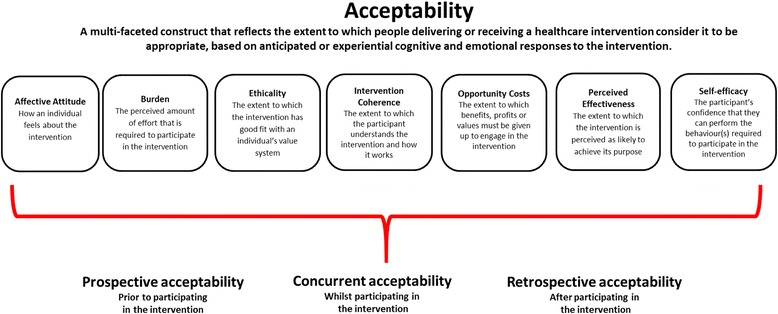
“Sekhon et al [38] proposed acceptability as multifaceted to include the following 7 component constructs: affective attitude, burden, perceived effectiveness, ethicality, intervention coherence, opportunity costs, and self-efficacy.”
BackgroundStudents’ perspectives on interventions to reduce stress in medical school: A qualitative study
Dederichs, M., Weber, J., Muth, T., Angerer, P., & Loerbroks, A. (2020) · PLoS ONE · doi:10.1371/journal.pone.0240587 · Cited by 56
“The acceptance of a healthcare intervention is an important prerequisite for its utilization and effectiveness [25, 26].”
BackgroundHolmes, J. A., Logan, P., Morris, R. P. G., & Radford, K. (2020) · Systematic Reviews · doi:10.1186/s13643-020-01508-1 · Cited by 44
Chotiyarnwong, P., McCloskey, E. V., Harvey, N. C., Lorentzon, M., Prieto‐Alhambra, D., Abrahamsen, B., Adachi, J. D., Borgström, F., Bruyère, O., CAREY, J. J., et al. (2022) · Archives of Osteoporosis · doi:10.1007/s11657-022-01117-6 · Cited by 48
Kinnafick, F.-E., Thøgersen-Ntoumani, C., Shepherd, S. O., Wilson, O. J., Wagenmakers, A. J. M., & Shaw, C. S. (2018) · Journal of Sport and Exercise Psychology · doi:10.1123/jsep.2017-0306 · Cited by 40
Somefun, O. D., Casale, M., Ronnie, G. H., Desmond, C., Cluver, L. D., & Sherr, L. (2021) · BMJ Open · doi:10.1136/bmjopen-2021-055160 · Cited by 46
Wang, X., Smith, C., Ashley, L., & Hyland, M. E. (2019) · Frontiers in Psychology · doi:10.3389/fpsyg.2019.00391 · Cited by 40
“Although a larger study, preferably a controlled trial, is needed to ascertain benefit beyond using any DVD, comments from participants provided preliminary evidence of the perceived effectiveness of using these techniques- another element of acceptability (Sekhon et al., 2017).”
BackgroundRenko, E., Knittle, K. P., Palsola, M., Lintunen, T., & Hankonen, N. E. (2020) · BMC Public Health · doi:10.1186/s12889-020-09653-x · Cited by 57
“As acceptability of an intervention is a necessary precursor for implementation [16], this study also investigates the relationship between acceptability and later implementation in practice and explores which acceptability dimensions best predict intentions for implementation.”
BackgroundInfluentialSagar-Ouriaghli, I., Godfrey, E. L., Graham, S., & Brown, J. S. L. (2020) · International Journal of Environmental Research and Public Health · doi:10.3390/ijerph17144965 · Cited by 63
Bukenya, D., Hout, M. C. V., Shayo, E. H., Kitabye, I., Musenze, J. B., Kasidi, J. R., Birungi, J., Jaffar, S. S., & Seeley, J. (2022) · PLOS Global Public Health · doi:10.1371/journal.pgph.0000084 · Cited by 45
Warner, M. M., Tong, A., Campbell, K. L., & Kelly, J. T. (2019) · Journal of the Academy of Nutrition and Dietetics · doi:10.1016/j.jand.2019.01.023 · Cited by 39
Rietdijk, R., Power, E., Attard, M., & Togher, L. (2020) · Journal of Telemedicine and Telecare · doi:10.1177/1357633x20923824 · Cited by 46
“8).(14) Measuring acceptability can involve semistructured interviews regarding participants’ experiences or data on participant behaviour, such as drop-out rates or attendance.”
BackgroundPlanning and Implementation Intention Interventions
Rhodes, R. E., Grant, S. J., & de Bruijn, G. (2020) · Cambridge University Press eBooks · doi:10.1017/9781108677318.039 · Cited by 49
Attitudes and Persuasive Communication Interventions
Hamilton, K., & Johnson, B. T. (2020) · Cambridge University Press eBooks · doi:10.1017/9781108677318.031 · Cited by 61
Changing Behavior Using Habit Theory
Orbell, S., & Verplanken, B. (2020) · Cambridge University Press eBooks · doi:10.1017/9781108677318.013 · Cited by 66
Pavlova, N. T., Teychenne, M. J., & Olander, E. K. (2020) · International Journal of Environmental Research and Public Health · doi:10.3390/ijerph17145027 · Cited by 52
“A qualitative exploratory design was used for assessing the acceptability of a postnatal walking group based on the seven constructs of the TFA [8].”
BackgroundMethodInfluentialSteare, T., Giorgalli, M., Free, K., Harju‐Seppänen, J., Akther, S. F., Eskinazi, M., O’Hanlon, P., Rostill, H., Amani, S., Lloyd‐Evans, B., et al. (2021) · BMC Psychiatry · doi:10.1186/s12888-021-03317-9 · Cited by 43
““I’ve used the pill tracker to start off with, as an alarm to remind me of the medication which I Table 1 Codebook adapted from the Acceptability of Healthcare Interventions framework [19]”
BackgroundMethodInfluentialSmit, A. K., Sharman, A. R., Espinoza, D., Wallingford, C. K., Young, M., Dunlop, K. L. A., Tiller, J. M., Newson, A. J., Meiser, B., Cust, A. E., et al. (2021) · Clinical Genetics · doi:10.1111/cge.14025 · Cited by 40
Griffiths, R., Dawber, A., McDougall, T., Midgley, S., & Baker, J. A. (2021) · International Journal of Mental Health Nursing · doi:10.1111/inm.12940 · Cited by 45
“While the focus of this review has been on the effectiveness of non-restrictive interventions for children who self-harm, future research should also aim to establish the acceptability of interventions designed for this population (Sekhon et al. 2017).”
Understanding and Preventing Health Concerns About Emerging Mobile Health Technologies
Materia, F. T., Faasse, K., & Smyth, J. M. (2020) · JMIR mHealth and uHealth · doi:10.2196/14375 · Cited by 38
“It can also be measured at different timepoints, including prior to use, to predict adherence with a new technology (eg, hypothetical, a priori, or prospective acceptability) and after (eg, actual, experienced, or retrospective acceptability) the technology has been introduced to the user [85,86].”
BackgroundRennick‐Egglestone, S., Elliott, R. A., Smuk, M., Robinson, C., Bailey, S., Smith, R., Keppens, J., Hussain, H., Pollock, K., Cuijpers, P. J., et al. (2020) · Trials · doi:10.1186/s13063-020-04428-6 · Cited by 42
“This will utilise existing frameworks [118] to structure transcript fragments.”
MethodChanging Behavior: A Theory- and Evidence-Based Approach
Hagger, M. S., Cameron, L. D., Hamilton, K., Hankonen, N. E., & Lintunen, T. (2020) · Cambridge University Press eBooks · doi:10.1017/9781108677318.001 · Cited by 63
Watkins, J. A., Ross, J. D. C., Thandi, S., Brittain, C., Kai, J., & Griffiths, F. E. (2019) · PLoS ONE · doi:10.1371/journal.pone.0224964 · Cited by 37
Edge, C., George, J., Black, G. B., Gallagher, M., Ala, A., Patel, S., Edwards, S., & Hayward, A. C. (2020) · BMJ Open · doi:10.1136/bmjopen-2019-035837 · Cited by 45
Ortblad, K. F., Mogere, P., Omollo, V., Kuo, A. P., Asewe, M., Gakuo, S., Roche, S., Mugambi, M., Mugambi, M. L., Stergachis, A., et al. (2023) · Journal of the International AIDS Society · doi:10.1002/jia2.26131 · Cited by 38
Adhikary, P., Srivastava, A., Kumar, S., Singh, S. M., Manuja, P., Gopinath, J. K., Krishnan, V., Gupta, S., Deb, K. S., & Chakraborty, T. (2024) · JMIR Mental Health · doi:10.2196/57306 · Cited by 48
“Explanation of the experts’evaluation metrics based on the evaluation framework postulated by Sekhon et al [69].”
BackgroundMethodInfluentialTarrant, M., Haslam, C., Carter, M., Calitri, R., & Haslam, S. A. (2020) · Cambridge University Press eBooks · doi:10.1017/9781108677318.044 · Cited by 43
Watts, K., O’Connor, M., Johnson, C. E., Breen, L. J., Kane, R. T., Choules, K., Doyle, C., Buchanan, G., & Yuen, K. (2021) · Journal of Palliative Medicine · doi:10.1089/jpm.2020.0358 · Cited by 44
“However, we did not specify a threshold criterion, 71 for example, defining the proportion of participants needed to complete at least five sessions for the intervention to be considered acceptable.”
Mantzari, E., Reynolds, J. P., Jebb, S. A., Hollands, G. J., Pilling, M. A., & Marteau, T. M. (2022) · Social Science & Medicine · doi:10.1016/j.socscimed.2022.114726 · Cited by 43
Gumley, A. I., Bradstreet, S., Ainsworth, J. D., Allan, S., Álvarez‐Jiménez, M., Birchwood, M. J., Briggs, A. H., Bucci, S., Cotton, S., Engel, L., et al. (2022) · Health Technology Assessment · doi:10.3310/hlze0479 · Cited by 44
Rushton, K., Ardern, K., Hopkin, E., Welsh, C., Gellatly, J., Faija, C., Armitage, C. J., Lidbetter, N., Lovell, K., Bower, P., et al. (2020) · BMC Psychiatry · doi:10.1186/s12888-020-02564-6 · Cited by 36
A natural meditation setting improves compliance with mindfulness training
Lymeus, F., Lindberg, P., & Hartig, T. (2019) · Journal of Environmental Psychology · doi:10.1016/j.jenvp.2019.05.008 · Cited by 36
Ezzat, A. M., Bell, E. C., Kemp, J. L., O’Halloran, P., Russell, T. G., Wallis, J. A., & Barton, C. J. (2022) · Osteoarthritis and Cartilage Open · doi:10.1016/j.ocarto.2022.100271 · Cited by 41
“Acceptability was considered to be a multifaceted construct that reflects the extent to which people receiving a healthcare intervention consider it to be appropriate, based on anticipated or experienced responses to the intervention [15].”
BackgroundDaly, M. P., White, J., Sanders, J., & Kipping, R. (2022) · BMC Pregnancy and Childbirth · doi:10.1186/s12884-022-05058-3 · Cited by 54
“We identify here acceptable delivery methods for interventions targeting these factors; future research should explore conditions that might further affect the acceptability of these methods, as this may increase the likelihood of intervention effectiveness [52] and stakeholder buy-in [53].”
MethodMou, H., Lam, S. K. K., & Chien, W. T. (2022) · BMC Nursing · doi:10.1186/s12912-022-01145-0 · Cited by 47
“Acceptability Acceptability can be regarded as a multi-facet construct that assesses the extent to which people receiving (or delivering) intervention perceive the intervention to be appropriate based on their anticipated or experienced responses to the intervention [23].”
BackgroundBiagianti, B., Foti, G., Liberto, A. D., Bressi, C., & Brambilla, P. (2023) · Journal of Affective Disorders · doi:10.1016/j.jad.2023.01.057 · Cited by 45
Western, M. J., Welsh, T. J., Keen, K., Bishop, V., & Perkin, O. J. (2023) · BMC Geriatrics · doi:10.1186/s12877-023-04169-6 · Cited by 43
“…to be multidimensional, covering elements such as whether a user finds a given intervention to be enjoyable, aligned to their values and identity, easy to understand; not burdensome or displacing of other positive aspects of their life; perceptively effective; and self-efficacy endorsing [26, 27].”
BackgroundSotirova, M. B., McCaughan, E. M., Ramsey, L., Flannagan, C., Kerr, D. P., O’Connor, S. R., Blackburn, N. E., & Wilson, I. M. (2021) · Journal of Cancer Survivorship · doi:10.1007/s11764-020-00931-6 · Cited by 36
A systematic review of factors that influence the acceptability of vaccines among Canadians
Gates, A., Gates, M., Rahman, S., Guitard, S., MacGregor, T., Pillay, J., Ismail, S. J., Tunis, M. C., Young, K., Hardy, K., et al. (2020) · Vaccine · doi:10.1016/j.vaccine.2020.10.038 · Cited by 43
Dunlop, K. L. A., Rankin, N. M., Smit, A. K., Salgado, Z., Newson, A. J., Keogh, L. A., & Cust, A. E. (2021) · Health Expectations · doi:10.1111/hex.13267 · Cited by 35
Lafferty, L., Cochrane, A., Sheehan, Y., Treloar, C., Grebely, J., & Lloyd, A. R. (2021) · International Journal of Drug Policy · doi:10.1016/j.drugpo.2021.103456 · Cited by 36
Iwuagwu, A. O., Poon, A. W. C., & Fernandez, E. (2024) · BMC Geriatrics · doi:10.1186/s12877-024-05373-8 · Cited by 39
“Across health and social care research, acceptability has been increasingly acknowledged as a crucial element for developing and accessing care interventions [74].”
BackgroundLasebikan, V. O., Ayinde, O. O., Odunleye, M., Adeyefa, B. S., Adepoju, S., & Fakunle, S. (2018) · BMC Public Health · doi:10.1186/s12889-018-5344-6 · Cited by 47
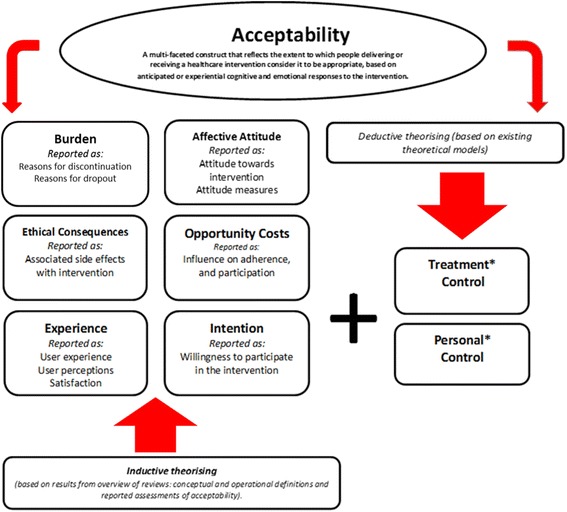
“We assessed “acceptability” using six component constructs: attitude towards the contents of the instruments, a dropout from the study, willingness to participate, satisfaction with participation in the study, perceived consequences of being part of the research and adherence to research protocols [21], of which the a…”
MethodSystematic Techniques to Enhance rEtention in Randomised controlled trials: the STEER study protocol
Gillies, K., Bower, P., Elliott, J., MacLennan, G., Newlands, R. S. N., Ogden, M., Treweek, S. P., Wells, M., Witham, M. D., Young, B., et al. (2018) · Trials · doi:10.1186/s13063-018-2572-0 · Cited by 36
“For the purposes of this study, acceptability is defined as ‘the extent to which people delivering or receiving a retention intervention consider it to be appropriate, based on anticipated or experiential cognitive and emotional responses to the intervention’ (adapted from Sekhon et al. 2017) [31].”
Self-citationSood, A., Singh, A., Mahajan, R., Midha, V., Mehta, V., Gupta, Y. K., Narang, V., & Kaur, K. (2019) · Journal of Gastroenterology and Hepatology · doi:10.1111/jgh.14829 · Cited by 39
Gilissen, J., Pivodic, L., Dael, A. W.-V., Gastmans, C., Stichele, R. V., Humbeeck, L. V., Deliëns, L., & den Block, L. V. (2019) · PLoS ONE · doi:10.1371/journal.pone.0223586 · Cited by 43
“We conducted an evaluation of the perceived feasibility (‘the extent to which the intervention can be delivered as intended’ [27]) and acceptability (‘the extent to which people delivering or receiving the intervention consider it to be appropriate’ [44]) of the intervention activities, the materials and the program’s…”
MethodChakrapani, V., Shunmugam, M., Rawat, S. M., Baruah, D., Nelson, R., & Newman, P. A. (2020) · AIDS Patient Care and STDs · doi:10.1089/apc.2019.0237 · Cited by 40
“A recent systematic review proposed a model of acceptability of health interventions, the Theoretical Framework of Acceptability (TFA).(16) We chose TFA to guide exploration of PrEP acceptability among TGW as it can readily incorporate community-level influences on attitudes and behavior, in contrast to more individua…”
Nalugya, R., Tanton, C., Hytti, L., Kansiime, C., Nakuya, K., Namirembe, P., Nakalema, S., Neema, S., Alezuyo, C., Musoke, S. N., et al. (2020) · Pilot and Feasibility Studies · doi:10.1186/s40814-020-00585-2 · Cited by 46
“Secondly, acceptability was one component of process evaluation for this study, and the literature offers little guidance on how to define or assess acceptability [19].”
MethodPalsola, M., Renko, E., Kostamo, K., Lorencatto, F., & Hankonen, N. E. (2020) · British Journal of Health Psychology · doi:10.1111/bjhp.12433 · Cited by 38
“They are both multi-component constructs relevant at the intervention designer, provider, and recipient levels (Bellg et al., 2004; Sekhon et al., 2017), and thus intertwined.”
BackgroundMethodInfluentialChanging Behavior Using Integrated Theories
Hagger, M. S., & Hamilton, K. (2020) · Cambridge University Press eBooks · doi:10.1017/9781108677318.015 · Cited by 51
Menstrual product choice and uptake among young women in Zimbabwe: a pilot study
Tembo, M., Renju, J., Weiss, H. A., Dauya, E., Bandason, T., Chikwari, C. D., Redzo, N., Mavodza, C., Losi, T., Ferrand, R. A., et al. (2020) · Pilot and Feasibility Studies · doi:10.1186/s40814-020-00728-5 · Cited by 42
“Importantly, as reflected in our findings, intervention acceptability has to be considered and addressed from the perspective of both the participants and the service providers [25].”
BackgroundSekhon, M., Cartwright, M., Lawes-Wickwar, S., McBain, H. B., Ezra, D. G., Newman, S. P., & Francis, J. (2021) · Contemporary Clinical Trials Communications · doi:10.1016/j.conctc.2021.100698 · Cited by 47
“The review authors concluded that poorer intervention acceptability may explain low participation rates and high dropout rates in these trials, but no studies have tested this proposal empirically [17].”
BackgroundMethodInfluentialSelf-citationWoodham, R. D., Rimmer, R. M., Young, A. H., & Fu, C. H. Y. (2022) · Journal of Psychiatric Research · doi:10.1016/j.jpsychires.2022.07.026 · Cited by 36
Bellagamba, D., Vionnet, L., Margot‐Cattin, I., & Vaucher, P. (2020) · PLoS ONE · doi:10.1371/journal.pone.0233125 · Cited by 45
“The latter represents the users’ perspective on the relevance of the content and context of the test [35].”
BackgroundZou, C., Harvard, A., Qian, J., & Fox, B. I. (2023) · DIGITAL HEALTH · doi:10.1177/20552076231191050 · Cited by 34
“Acceptability and satisfaction were evaluated through humanistic outcomes.(37) Quality assessment The bias of RCT studies was assessed using Version 2 of the Cochrane Risk-of-Bias Tool for randomized trials (RoB 2).”
MethodGriesel, S., Schwerdtle, P. N., Quitmann, C., Danquah, I., & Herrmann, A. (2023) · European Journal of General Practice · doi:10.1080/13814788.2023.2284261 · Cited by 38
“We reviewed acceptability frameworks to evaluate their usefulness for data analysing [22]. however, we decided to take an inductive approach to the data analysis because the interviews revealed that cshc was not delivered as a well-defined intervention that patients could rate along the lines of…”
MethodBest, S., Fehlberg, Z., Richards, C., Quinn, M. C. J., Lunke, S., Spurdle, A. B., Kassahn, K. S., Patel, C., Vears, D. F., Goranitis, I., et al. (2024) · European Journal of Human Genetics · doi:10.1038/s41431-024-01633-8 · Cited by 39
on behalf of the StopDia study group, Pihlajamäki, J., Männikkö, R., Tilles‐Tirkkonen, T., Karhunen, L. J., Kolehmainen, M., Schwab, U., Lintu, N., Paananen, J., Järvenpää, R., et al. (2019) · BMC Public Health · doi:10.1186/s12889-019-6574-y · Cited by 51
Faulkner, S., Dijk, D., Drake, R., & Bee, P. (2020) · Sleep Health · doi:10.1016/j.sleh.2020.01.014 · Cited by 37
Ndejjo, R., Musinguzi, G., Nuwaha, F., Wanyenze, R. K., & Bastiaens, H. (2020) · BMC Public Health · doi:10.1186/s12889-020-8188-9 · Cited by 35
“Prior to the intervention, we explored the acceptability of the programme among CHWs and potential service recipients using the Theoretical Framework of Acceptability [21] to inform its adaptation.”
BackgroundMethodInfluentialGautier, L., Karambé, Y., Dossou, J., & Samb, O. M. (2020) · Global Public Health · doi:10.1080/17441692.2020.1858134 · Cited by 40
“In this last section, we suggest ways through which decolonial thinking could help (a) design global health interventions while accounting for prospective social acceptability (Sekhon et al., 2017), and (b) deliver such interventions while being mindful of the contexts and structures at play.”
BackgroundEvans, R. P., Bryant, L. D., Russell, G., & Absolom, K. L. (2024) · International Journal of Medical Informatics · doi:10.1016/j.ijmedinf.2024.105342 · Cited by 41
Alcorn, A. M., McGeown, S. P., Mandy, W., Aitken, D., & Fletcher‐Watson, S. (2024) · Neurodiversity · doi:10.1177/27546330241272186 · Cited by 42
“Here we report on a feasibility study in schools, capturing elements of acceptability (Sekhon et al., 2017) and preliminary indicators of potential effectiveness.”
Mukunya, D., Haaland, M. E. S., Tumwine, J. K., Ndeezi, G., Namugga, O., Tumuhamye, J., Sommerfelt, H., Rujumba, J., Tylleskär, T., Moland, K. M., et al. (2018) · BMC Pregnancy and Childbirth · doi:10.1186/s12884-018-2116-3 · Cited by 35
Mitchell-Gillespie, B., Hashim, H. H., Griffin, M., & AlHeresh, R. A. (2020) · Globalization and Health · doi:10.1186/s12992-020-00614-y · Cited by 34
“Acceptability encompasses the extent to which CBR workers consider the telehealth system to be appropriate, based on anticipated or experienced value of the intervention [12].”
BackgroundBogart, L. M., Barreras, J. L., González, A. V., Klein, D. J., Marsh, T., Agniel, D. M., & Pantalone, D. W. (2020) · AIDS and Behavior · doi:10.1007/s10461-020-03081-z · Cited by 38
Enguita‐Fernàndez, C., Alonso, Y., Lusengi, W., Mayembe, A., Manun’Ebo, M. F., Ranaivontiavina, S., Rasoamananjaranahary, A. M., Mucavele, E., Macete, E., Nwankwo, O., et al. (2020) · Global Public Health · doi:10.1080/17441692.2020.1851742 · Cited by 36
“Firstly, drawing from a recent review of studies measuring the acceptability of healthcare interventions (Sekhon et al., 2017), the present study design was guided by the definition of this concept as ‘a multifaceted construct that reflects the extent to which people delivering or receiving a healthcare intervention c…”
MethodKrentel, A., Basker, N., de Rochars, M. B., Bogus, J., Dilliott, D., Direny, A. N., Dubray, C. L., Fischer, P., Ga, A. L., Goss, C. W., et al. (2021) · PLoS neglected tropical diseases · doi:10.1371/journal.pntd.0009002 · Cited by 33
“Acceptability has been defined by Sekhon, Cartwright, & Francis (2017) as “a multi-faceted construct that reflects the extent to which people delivering or receiving a healthcare intervention consider it to be appropriate, based on anticipated or experienced cognitive and emotional responses to the intervention” [16].”
BackgroundMateria, F. T., & Smyth, J. M. (2021) · JMIR mhealth and uhealth · doi:10.2196/23303 · Cited by 34
“Acceptability information informs design decisions that may enhance participant motivation to meaningfully engage with the technology and may positively impact their likelihood of adopting effective behavioral change [2,23].”
BackgroundBartlett, Y. K., Kenning, C., Crosland, J., Newhouse, N., Miles, L. M., Williams, V., McSharry, J., Locock, L., Farmer, A. A., & French, D. (2021) · BMC Health Services Research · doi:10.1186/s12913-021-06663-2 · Cited by 39
“1 Diagram representing the definition of acceptability [2] * Appropriateness in this case refers to how appropriate either those who receive”
BackgroundMethodInfluential
Metadata
- Authors
- Sekhon, M., Cartwright, M., & Francis, J. J.
- Affiliations
- City, University of London (GB)
- Corresponding author
- Sekhon, Mandeep
- Venue
- BMC Health Services Research
- Published
- 2017-01-26
- Volume
- 17
- Issue
- 1
- Pages
- 88-88
- ISSN
- 1472-6963 (ISSN-L)
- PMC
- PMC5267473
- OpenAlex
- W2582406074
- Semantic Scholar
- f75ddad2e8aacf728c62bc750ceb8bc085f6094d
- Cited by
- 3,938
- References
- 78
- Citations by year
- 2026: 620 · 2025: 701 · 2024: 683 · 2023: 518 · 2022: 535 · 2021: 349 · 2020: 349 · 2019: 118 · 2018: 56 · 2017: 6
- FWCI
- 234.94
- Type
- journal article
- Language
- en
- Open access
- gold
- doi.org
- Licence
- cc-by
- Locations
- BMC Health Services Research (publishedVersion, cc-by)
- Europe PMC (PubMed Central) (publishedVersion, cc-by)
- PubMed Central (publishedVersion, cc-by)
- PubMed (publishedVersion)
- Research Repository (Kingston University London) (acceptedVersion)
- City Research Online (City University London) (acceptedVersion)
- St George's Online Research Archive (St George's University of London) (acceptedVersion)
- Minerva Access (University of Melbourne) (submittedVersion, cc-by)
- Research Portal (King's College London) (submittedVersion, cc-by)
- Topics
- Health Sciences › Health Professions › General Health Professions › Health Policy Implementation Science
- Social Sciences › Economics, Econometrics and Finance › Economics and Econometrics › Health Systems, Economic Evaluations, Quality of Life
- Health Sciences › Nursing › Research and Theory › Health Education and Validation
- Keywords
- theoretical framework, affective attitudes, perceived burden, perceived effectiveness, ethicality, intervention coherence, opportunity cost, self-efficacy, dropout rates
- MeSH terms
- Humans, Models, Theoretical, Patient Acceptance of Health Care, Prospective Studies, Retrospective Studies, Review Literature as Topic, Consensus
About these checks
Registry, retraction, Cites and statistics results are computed, not judged, with one exception: a printed reference that no index lists is read once by a model before it counts as a citation error. Claims are extracted by a model and kept only when their quote appears verbatim in the text; each cited source is then checked, with a model’s help, for whether it says what the claim relies on. Those verdicts can be wrong — read the claim’s quote and the cited source before relying on one.
Statistics and arithmetic are recomputed, not judged.
Confidence bands are shown only for fields calibrated on our annotated test set. None is calibrated yet, so no band is shown.
What counts as a claim ›How we measure confidence ›How we check this ›
Are you an author, or do you see a problem with this page? Request a review
Data sources
Bibliographic data: Semantic Scholar, OpenAlex, Crossref.
Contains information from the Semantic Scholar Academic Graph Datasets, made available under the ODC Attribution License (ODC-BY 1.0).
Semantic Scholar’s data is described in: Kinney, R., et al. (2023). The Semantic Scholar Open Data Platform. arXiv:2301.10140.
