

Acceptability of healthcare interventions: an overview of reviews and development of a theoretical framework
Open accessThe DOI matches its Crossref record; 74 of the 78 references it cites were found in a registry or an index.
Abstract
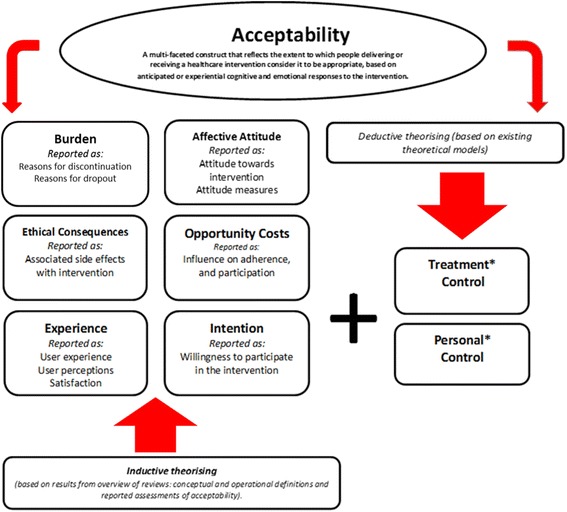
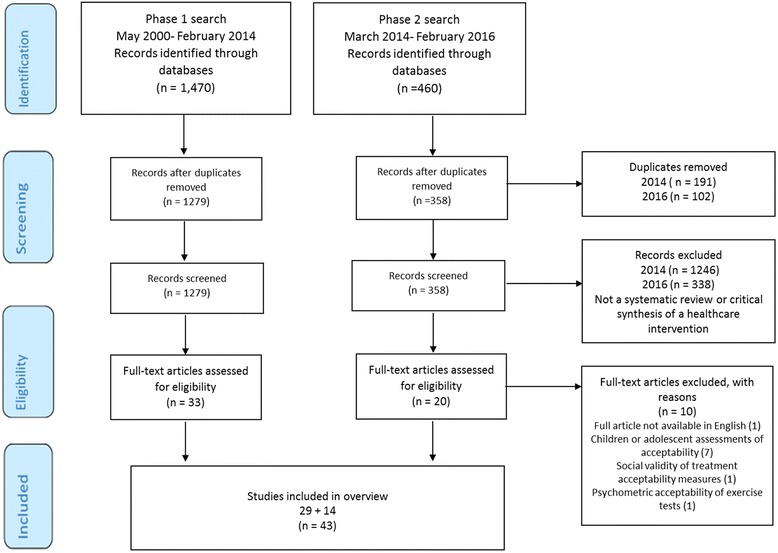
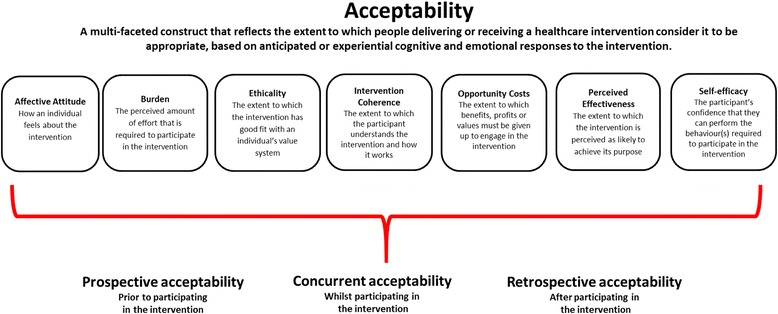
BACKGROUND: It is increasingly acknowledged that 'acceptability' should be considered when designing, evaluating and implementing healthcare interventions. However, the published literature offers little guidance on how to define or assess acceptability. The purpose of this study was to develop a multi-construct theoretical framework of acceptability of healthcare interventions that can be applied to assess prospective (i.e. anticipated) and retrospective (i.e. experienced) acceptability from the perspective of intervention delivers and recipients. METHODS: Two methods were used to select the component constructs of acceptability. 1) An overview of reviews was conducted to identify systematic reviews that claim to define, theorise or measure acceptability of healthcare interventions. 2) Principles of inductive and deductive reasoning were applied to theorise the concept of acceptability and develop a theoretical framework. Steps included (1) defining acceptability; (2) describing its properties and scope and (3) identifying component constructs and empirical indicators. RESULTS: From the 43 reviews included in the overview, none explicitly theorised or defined acceptability. Measures used to assess acceptability focused on behaviour (e.g. dropout rates) (23 reviews), affect (i.e. feelings) (5 reviews), cognition (i.e. perceptions) (7 reviews) or a combination of these (8 reviews). From the methods described above we propose a definition: Acceptability is a multi-faceted construct that reflects the extent to which people delivering or receiving a healthcare intervention consider it to be appropriate, based on anticipated or experienced cognitive and emotional responses to the intervention. The theoretical framework of acceptability (TFA) consists of seven component constructs: affective attitude, burden, perceived effectiveness, ethicality, intervention coherence, opportunity costs, and self-efficacy. CONCLUSION: Despite frequent claims that healthcare interventions have assessed acceptability, it is evident that acceptability research could be more robust. The proposed definition of acceptability and the TFA can inform assessment tools and evaluations of the acceptability of new or existing interventions.
Overview
The claims and statistics of this paper haven’t been checked yet.
Free: it reads the open-access text and checks the first 5 claims that cite a source we can check. Create a free account to check every claim.
Integrity signals
Registry
Cites
Statistics
Figures
Verification
Claims the paper makes
The claims and statistics of this paper haven’t been checked yet.
Free: it reads the open-access text and checks the first 5 claims that cite a source we can check. Create a free account to check every claim.
Claims other papers make about this one
Each is checked against this paper’s own text: does it say what the citing paper says it does?
The source backs part of the claim, not all of it — or backs it for a different population, condition or comparison.
In the citing paper
“Sekhon and colleagues [16] identified 7 component constructs of acceptability, but studies are generally designed to address only some of these components and vary by the components chosen.”
From Acceptability of Digital Mental Health Interventions for Depression and Anxiety: Systematic Review (2024) · cites this paper as [16]
Experimental — accuracy not yet measuredThe source backs part of the claim, not all of it — or backs it for a different population, condition or comparison.
In the citing paper
“Interviews followed a semi-structured schedule, taking into consideration elements of the TDF [24], and TFA [23]. Once drafted, interview schedules were reviewed by the EQUITy Lived Experience Advisory Panel (LEAP).”
From 'I didn't know what to expect': Exploring patient perspectives to identify targets for change to improve telephone-delivered psychological interventions (2020) · cites this paper as [23]
Experimental — accuracy not yet measuredThe source backs part of the claim, not all of it — or backs it for a different population, condition or comparison.
In the citing paper
“It has been increasingly acknowledged that consideration of patient acceptability using theories of behaviour change are key to effective evaluation, design and implementation of healthcare interventions [23–25] .”
From 'I didn't know what to expect': Exploring patient perspectives to identify targets for change to improve telephone-delivered psychological interventions (2020) · cites this paper as [23]
Experimental — accuracy not yet measuredThe cited source says what the claim attributes to it.
In the citing paper
“Overall, relating to the acceptability model by Sekhon et al. (2017), the main problems regarding acceptability centred around the dimensions burden, opportunity cost and self-efficacy, since participants found the intervention overly demanding when suffering from mental health symptoms and that they required more support to from a therapist to make use of the treatment material.”
From Investigating the potential of a novel internet-based cognitive behavioural intervention for Dari and Farsi speaking refugee youth: A feasibility study (2022) · cites this paper as Sekhon et al. (2017)
The cited source says what the claim attributes to it.
In the citing paper
“The TFA provided a structured theory around which to explore patient acceptability of specific elements of telephone-delivered treatment, without presuming acceptability based on patients’ behaviour [23].”
From 'I didn't know what to expect': Exploring patient perspectives to identify targets for change to improve telephone-delivered psychological interventions (2020) · cites this paper as [23]
2 more claims about this paper
Create a free account to see every claim other papers make about this one.
Self-check
Percentages, sums and reported differences re-computed from the paper’s own numbers.
The self-check needs the paper’s full text.
Citations
Cites
Using thematic analysis in psychology
Braun, V., & Clarke, V. (2006) · Qualitative Research in Psychology · doi:10.1191/1478088706qp063oa · Cited by 194,414 · cited 1×
“All extracted data were analysed by applying the thematic synthesis approach [30].”
MethodThe theory of planned behavior
Ajzen, I. (1991) · Organizational Behavior and Human Decision Processes · doi:10.1016/0749-5978(91)90020-t · Cited by 134,657
Preferred Reporting Items for Systematic Reviews and Meta-Analyses: the PRISMA statement
Moher, D., Liberati, A., Tetzlaff, J., Altman, D. G., & for the PRISMA Group (2009) · BMJ · doi:10.1136/bmj.b2535 · Cited by 83,823
Preferred reporting items for systematic reviews and meta-analyses: the PRISMA Statement.
(2009) · PubMed Central · Cited by 44,859
Self-efficacy: Toward a unifying theory of behavioral change
Bandura, A. (1977) · Psychological Review · doi:10.1037/0033-295x.84.2.191 · Cited by 43,925
Cochrane Handbook for Systematic Reviews of Interventions: Cochrane Book Series
(2008) · doi:10.1002/9780470712184 · Cited by 25,048 · cited 1×
“The Cochrane Tool of Quality Assessment was applied most frequently [39] (18 reviews: 62%).”
MethodAssessing the quality of reports of randomized clinical trials: Is blinding necessary?
Jadad, A. R., Moore, R. A., Carroll, D., Jenkinson, C., Reynolds, D. J. M., Gavaghan, D. J., & McQuay, H. J. (1996) · Controlled Clinical Trials · doi:10.1016/0197-2456(95)00134-4 · Cited by 17,582 · cited 2×
“Other assessments tools applied included the Jadad Scale [40] (three reviews: 10%), the”
MethodStructural Equations with Latent Variables.
Clogg, C. C., & Bollen, K. A. (1991) · Contemporary Sociology · doi:10.2307/2072165 · Cited by 17,442
Structural Equations with Latent Variables
Bollen, K. A. (1989) · Wiley series in probability and statistics · doi:10.1002/9781118619179 · Cited by 17,277 · cited 1×
“The inconsistency in defining concepts can impede the development of valid assessment instruments [20].”
BackgroundHealth Behavior and Health Education: Theory, Research, and Practice
(1992) · Annals of Internal Medicine · doi:10.7326/0003-4819-116-4-350_1 · Cited by 13,207
Research works printed but not linked: 1
- Hox JJ From theoretical concept to survey question. 1997): Survey Measurement and Process Quality 1997 New York ua Wiley 45 69
Cited by
Items 601–700 of 1,015
Cosgrave, E., Blake, M., Murphy, E., Sheridan, A., Doyle, F., & Kavanagh, P. M. (2023) · Tobacco Control · doi:10.1136/tc-2023-057958 · Cited by 14
Varley, D., Wright, B., Cooper, C. L., Marshall, D. C., Biggs, K., Ali, S., Chater, T., Coates, E. J., Gilbody, S. M., de la Cuesta, G. G., et al. (2019) · BMJ Open · doi:10.1136/bmjopen-2019-030471 · Cited by 24
“This is based around the Theoretical Framework of Acceptability.27 Qualitative analysis A purposive sample of 20% of the interventionists (n=12) across school types (primary/secondary and sociodemographic variables) postintervention will be interviewed to gather their feedback on delivering LEGO-based therapy and perc…”
MethodKällander, K., Ward, C., Smith, H. J. J., Bhattarai, R., Ashish, K. C., Timsina, D., Lamichhane, B., Maurel, A., Shrestha, P. R., Baral, S., et al. (2019) · Acta Paediatrica · doi:10.1111/apa.15108 · Cited by 15
O’Brennan, L. M., Suldo, S. M., Shaunessy‐Dedrick, E., Dedrick, R. F., Parker, J. S., Lee, J. S., Ferron, J. M., & Hanks, C. E. (2019) · Gifted Child Quarterly · doi:10.1177/0016986219886933 · Cited by 23
“Item development was guided by the theoretical framework of Sekhon, Cartwright, and Francis (2017), with many of the items adapted from existing instruments, such as the Usage Rating Profile-Intervention (Chafouleas, Briesch, Riley-Tillman, & McCoach, 2009), Treatment Evaluation Inventory (Kazdin,…”
MethodParker, B., Achilles, M. R., Subotic-Kerry, M., & O’Dea, B. (2020) · BMC Family Practice · doi:10.1186/s12875-019-1071-z · Cited by 19
“Specifically, this study assessed the uptake, need, and operational feasibility of delivering the service, the acceptability and perceived effectiveness among GPs and practice staff, and the barriers and facilitators to its implementation in general practice (34-36).”
BackgroundBartlett, Y. K., Newhouse, N., Long, H. A., Farmer, A., & French, D. (2019) · Patient Preference and Adherence · doi:10.2147/ppa.s217843 · Cited by 14
“For these participants, perceived relevance seemed to be key, and this relevance guided how participants reacted to the system.(17) This suggests that if too many messages that are Dovepress Bartlett et al”
BackgroundFatkin, T., Moore, S. K., Okst, K., Creedon, T. B., Samawi, F., Fredericksen, A. K., Roll, D., Oxnard, A., Lê Cook, B., & Schuman-Olivier, Z. (2021) · Journal of Substance Abuse Treatment · doi:10.1016/j.jsat.2021.108415 · Cited by 14
Subotic-Kerry, M., King, C., O'Moore, K., Achilles, M., & O'Dea, B. (2018) · JMIR Human Factors · doi:10.2196/humanfactors.8913 · Cited by 14
“Acceptability research in health services aims to understand the extent to which people delivering or receiving an intervention consider it to be appropriate and suited to their needs, based on either anticipated or experimentation responses [31].”
Sathananthan, N., Morris, E., Gillanders, D., das Nair, R., Knox, L., & Wong, D. (2025) · Neuropsychological Rehabilitation · doi:10.1080/09602011.2024.2359992 · Cited by 14
“Exploration of participant acceptability also did not cover all components of the acceptability framework (Sekhon et al., 2017).”
A Social Robot in Home Care: Acceptability and Utility Among Community-Dwelling Older Adults
Zhao, I. Y., Leung, A. Y. M., Huang, Y., & Liu, Y. (2025) · Innovation in Aging · doi:10.1093/geroni/igaf019 · Cited by 17
“According to the theoretical framework of acceptability (TFA; Sekhon et al., 2017), seven component constructs (affective attitude, burden, perceived effectiveness, ethicality, intervention coherence, opportunity costs, and self-efficacy) can systematically be used to assess and address the various…”
InfluentialVersitano, S., Tesson, S., Lee, C.-W., Linnell, S., & Perkes, I. E. (2025) · Australian & New Zealand Journal of Psychiatry · doi:10.1177/00048674251361731 · Cited by 47
“…(Braito et al., 2022; Cohen-Yatziv and Regev, 2019; Moula, 2020) despite this being a key consideration in the design, evaluation and implementation of healthcare interventions (Sekhon et al., 2017), further enhancing the value of this review and of art therapy intervention for young people.”
How should electronic health records be designed? A cross-sectional study in patients with psoriasis
Janke, T. M., Augustin, M., & Otten, M. (2019) · BMC Medical Informatics and Decision Making · doi:10.1186/s12911-019-0926-5 · Cited by 14
Hwang, Y., Shin, D.-H., Eun, J., Suh, B., & Lee, J. (2021) · Journal of Medical Internet Research · doi:10.2196/22099 · Cited by 17
“To build up themes from the data, we referred to the seven-element constructs of the Theoretical Framework for Acceptability developed by Sekhon et al [28].”
Egerton, T., Bolton, J., Short, C. E., & Bennell, K. L. (2021) · BMC Musculoskeletal Disorders · doi:10.1186/s12891-021-04751-2 · Cited by 14
Cleland, J., Crampin, L., Campbell, L., & Dokovova, M. (2022) · Pilot and Feasibility Studies · doi:10.1186/s40814-022-01051-x · Cited by 14
“Sekhon M, Cartwright M, Francis JJ. Acceptability of healthcare interventions: an overview of reviews and development of a theoretical framework.”
BackgroundMethodLeadbitter, K., Smallman, R. P., James, K., Shields, G., Ellis, C., Langhorne, S., Harrison, L., Hackett, L., Dunkerley, A., Kroll, L., et al. (2022) · Trials · doi:10.1186/s13063-022-06524-1 · Cited by 20
“Nested qualitative process evaluation This will draw on recognised theoretical frameworks to analyse intervention acceptability (Theoretical Framework of Acceptability; [42]) and inform intervention development, implementation, and sustainability (Normalisation Process Theory; [43]).”
MethodNarayanasamy, M. J., Bishop, S., Sahota, O., Paskins, Z., Gittoes, N. J. L., & Langley, T. E. (2022) · Age and Ageing · doi:10.1093/ageing/afac255 · Cited by 16
Jafar, T. H., Tavajoh, S., de Silva, H. A., Naheed, A., Jehan, I., de Silva, C. K., Chakma, N., Huda, M., Legido‐Quigley, H., & on behalf of COBRA-BPS Study Group (2023) · PLoS ONE · doi:10.1371/journal.pone.0280455 · Cited by 17
Reilly, C. C., Maddocks, M. M., Chalder, T., Bristowe, K., & Higginson, I. J. (2023) · ERJ Open Research · doi:10.1183/23120541.00508-2022 · Cited by 15
Faessler, L., Kofler, S., Wenke‐Zobler, J., Brunner, C., Schäfer‐Keller, P., Geest, S. D., Schubert, M., Regez, K., Schüetz, P., Müeller, B., et al. (2023) · Nursing Open · doi:10.1002/nop2.1637 · Cited by 14
“Further, patients are more likely to adhere to treatment recommendations and to benefit from improved clinical outcomes (Sekhon et al., 2017).”
BackgroundGide, D. N., El‐Den, S., Lee, Y. L. E., Gisev, N., Ou, K., & O’Reilly, C. L. (2023) · International Journal of Clinical Pharmacy · doi:10.1007/s11096-023-01581-1 · Cited by 15
Louart, S., Hedible, K. G. B., & Ridde, V. (2023) · BMC Health Services Research · doi:10.1186/s12913-023-09897-4 · Cited by 21
“Other authors, such as Sekhon et al. [21], incorporate a three-stage temporality into their model: prospective, concurrent and retrospective.”
BackgroundMethodInfluentialMukora, R., Ahumah, B., Maraba, N., Orrell, C., Jennings, L., Naidoo, P., Fielding, K., Velen, K., Charalambous, S., & Chetty-Makkan, C. M. (2023) · PLOS Global Public Health · doi:10.1371/journal.pgph.0001885 · Cited by 15
“Using the Theoretical Framework for Acceptability (TFA) [13] shown in Fig 1 below, we explored prospective, concurrent, and retrospective acceptability (before, during, and after the intervention) across the sample attributes.”
MethodGhazi-Noori, A.-R., Woodham, R. D., Rezaei, H., Sharif, M. S., Bramon, E., Ritter, P. S., Bauer, M., Young, A. H., & Fu, C. H. Y. (2024) · International Journal of Bipolar Disorders · doi:10.1186/s40345-024-00352-9 · Cited by 16
“We developed an acceptability questionnaire based on Sekhon et al. (2017) framework model (Woodham et al., 2022) The acceptability questionnaire consisted of five questions were centred on acceptability sub-facets: (1) overall acceptability: ‘How acceptable did you find the tDCS session and how do…”
MethodBoness, C. L., Hebden, H. M., Lardier, D. T., Spurgeon, L., Timmons, A., Simms, L. J., Venner, K. L., & Witkiewitz, K. A. (2025) · Clinical Psychological Science · doi:10.1177/21677026241304339 · Cited by 19
“The research team can also measure behavior-based outcomes, such as completion rates or uptake of the measure by clinicians or researchers, to ascertain acceptability (Sekhon et al., 2017).”
Liu, J. Q., Mak, Y. W., Tang, A. L., Kwan, C., Zoubi, F. A., Wong, T. K. T., Tsang, G. S. H., Kwong, H. C., Lai, S. W. T., Sze, S. P. S., et al. (2025) · Journal of Pain · doi:10.1016/j.jpain.2025.105350 · Cited by 21
Chikalipo, M. (2018) · Malawi Medical Journal · doi:10.4314/mmj.v30i3.3 · Cited by 14
The Role of Treatment Perceptions in Intervention Evaluation: A Review
Sidani, S., & Fox, M. T. (2020) · Science of Nursing and Health Practices · doi:10.31770/2561-7516.1079 · Cited by 20
“Some researchers have used these terms interchangeably (e.g. Sekhon et al., 2017; 2018).”
BackgroundAlhassan, Y. N., Twimukye, A., Malaba, T. R., Orrell, C., Myer, L., Waitt, C. J., Lamorde, M., Kambugu, A. D., Reynolds, H. E., Khoo, S., et al. (2020) · BMC Public Health · doi:10.1186/s12889-020-09991-w · Cited by 14
“framework of acceptability [32] and the WHO 2018 ART guidelines [2], and included knowledge and awareness, perceived benefits and risks, barriers to uptake of and attitudes towards dolutegravir-based treatment.”
MethodParticipating in a vaccine trial for COVID-19 in Senegal: trust and information
Ridde, V., Ba, M. F., Gaye, I., Diallo, A., Bonnet, E., & Faye, A. (2021) · Human Vaccines & Immunotherapeutics · doi:10.1080/21645515.2021.1951097 · Cited by 15
“The variables in our study were based on acceptability models.(25,26) They included socio-demographic characteristics (age, gender, education, region of residence, wealth tercile, chronic medical conditions), vaccination history, attitude toward the COVID-19 vaccine measured by five items in the form of a five-point L…”
MethodMontgomery, P., Knerr, W., Ross, D. A., & Patterson, J. V. (2021) · Journal of Adolescent Health · doi:10.1016/j.jadohealth.2021.08.010 · Cited by 17
Public Attitudes to Digital Health Research Repositories: Cross-sectional International Survey
Vilaza, G. N., Coyle, D., & Bardram, J. E. (2021) · Journal of Medical Internet Research · doi:10.2196/31294 · Cited by 16
“…questions also asked participants about their current attitude toward digital health research repositories (positive, negative, or indifferent) [43,56] after being provided with the following short description of the concept: A research data repository is an online database containing data…”
BackgroundResultMatheson, E. L., Smith, H. G., Amaral, A. C. S., Meireles, J. F. F., Almeida, M. C., Mora, G., Leon, C., Gertner, G., Ferrario, N., Battan, L. S., et al. (2021) · BMC Public Health · doi:10.1186/s12889-021-12129-1 · Cited by 19
“Acceptability and adherence measures were informed by existing reviews [52, 53], with remaining measures validated for use among adolescents.”
Bhatti, A., Wray, F., Eskytė, I., Gray‐Burrows, K. A., Owen, J., Giles, E., Zoltie, T., Smith, V., Pavitt, S. H., West, R. M., et al. (2022) · BMC Family Practice · doi:10.1186/s12875-022-01659-1 · Cited by 13
Kawuma, R., Nabalwanyi, Z., Seeley, J., & Mayanja, Y. (2022) · African Journal of AIDS Research · doi:10.2989/16085906.2022.2039727 · Cited by 15
“The theoretical framework of acceptability (Adapted from Sekhon et al., 2017) Afr J AIDS Res.”
Backgroundvan Dalen, M., Pasmans, S. G. M. A., Aendekerk, E. W. C., Mathijssen, I. M. J., Koudstaal, M. J., Williamson, H., Hillegers, M. H. J., Utens, E. M. W. J., & Okkerse, J. M. E. (2022) · Body Image · doi:10.1016/j.bodyim.2022.03.003 · Cited by 15
Taylor, L. C., Ranaldi, H., Amirova, A., Zhang, L., Ahmed, A., & Dibb, B. (2022) · Cogent Psychology · doi:10.1080/23311908.2022.2069906 · Cited by 19
“…for future interventions to report data, such as number of dropouts, treatment discontinuation, and other measurable variables such as side effects, satisfaction, and uptake rates, as users are less likely to adhere to an intervention if it is not acceptable to them (Sekhon et al., 2017).”
BackgroundVasiliu, A., Tiendrebéogo, G., Awolu, M. M., Akatukwasa, C., Youngui, B. T., Ssekyanzi, B., Tchounga, B., Atwine, D., Casenghi, M., Bonnet, M., et al. (2022) · Pilot and Feasibility Studies · doi:10.1186/s40814-022-00996-3 · Cited by 15
“[40] combined with inductive theorizing can be used to propose a model which is specific for community TB investigation and TPT management, as illustrated in Fig.”
MethodSomohano, V. C., & Bowen, S. W. (2022) · Journal of Integrative and Complementary Medicine · doi:10.1089/jicm.2021.0306 · Cited by 16
“62 Homework compliance was measured by self-reported duration of formal (target of at least 70 min per week) and frequency of informal (target of 7 instances per week) mindfulness practice.”
Ramsden, R., Han, C. S. E., Mount, D., Loebach, J. E., Cox, A., Herrington, S., Bundy, A. C., Fyfe‐Johnson, A. L., Sandseter, E. B. H., Stone, M. R., et al. (2022) · JMIR Research Protocols · doi:10.2196/38365 · Cited by 19
“These interview guides were developed by theorizing the constructs of acceptability in our study [55], such as perceived change in children’s outdoor play because of the intervention, feasibility for broad implementation, and the cost-benefit of the intervention.”
McKeown, E., McGraw, C., Holder, P., Shand, J., & Hirani, S. P. (2022) · JMIR Formative Research · doi:10.2196/36517 · Cited by 17
“Deductive coding was guided by the study’s aim and used predefined codes derived from the MARS [33], Service User Technology Acceptability Questionnaire [37], and Treatment Acceptability Framework [38].”
MethodWang, X., Thiel, L., & de Graff, N. (2022) · Healthcare · doi:10.3390/healthcare10081409 · Cited by 18
“One element of acceptability comes from the participants’ comments providing preliminary evidence of the usefulness of these techniques [59].”
BackgroundKernebeck, S., Holle, D., Pogscheba, P., Jordan, F., Mertl, F., Huldtgren, A., Bader, S., Kirste, T., Teipel, S. J., Holle, B., et al. (2019) · JMIR Research Protocols · doi:10.2196/11630 · Cited by 15
von Wagner, C., Verstraete, W., Hirst, Y., Nicholson, B. D., Stoffel, S., & Laszlo, H. E. (2020) · BJGP Open · doi:10.3399/bjgpopen20x101007 · Cited by 14
“In addition to considering acceptability among relevant healthcare providers, it is also important to understand the attitudes of patients towards completing the test: only if users find the FIT process acceptable are they likely to complete it satisfactorily and follow the associated investigative pathway.(13,14) Pre…”
BackgroundJohnson, C. L., Hart, L., Rossetto, A., Morgan, A. J., & Jorm, A. F. (2020) · Health Education Research · doi:10.1093/her/cyaa050 · Cited by 17
Webb, T. L., & de Bruin, M. (2020) · Cambridge University Press eBooks · doi:10.1017/9781108677318.037 · Cited by 17
Ioannou, M., Szabó, Z., Widmark-Jensen, M., Vyrinis, G., Karlsson, C., & Steingrimsson, S. (2021) · Frontiers in Psychiatry · doi:10.3389/fpsyt.2021.705090 · Cited by 13
Amador, S., Rapaport, P., Lang, I., Sommerlad, A., Mukadam, N., Stringer, A., Hart, N., Nurock, S., & Livingston, G. (2021) · PLOS ONE · doi:10.1371/journal.pone.0250410 · Cited by 13
“To assess acceptability, post-intervention interviews with carers and staff were analysed using a previously developed model to consider views about START [6] and the Theoretical Framework of Acceptability [23] following steps outlined above.”
Damush, T. M., Penney, L., Miech, E. J., Rattray, N. A., Baird, S. A., Cheatham, A. J., Austin, C., Sexson, A. E., Myers, L. J., & Bravata, D. M. (2021) · BMC Health Services Research · doi:10.1186/s12913-021-06318-2 · Cited by 14
“Each transcript was independently coded by at least two project team members using a common codebook that included selected items related to TFA acceptability (e.g.,” acceptability;””
BackgroundMethodInfluentialColombani, F., Encrenaz, G., Sibé, M., Quintard, B., Ravaud, A., & Saillour-Glénisson, F. (2022) · Health Policy · doi:10.1016/j.healthpol.2022.01.003 · Cited by 20
Chew-Graham, C. A., Kitchen, C. E. W., Gascoyne, S., Littlewood, E., Coleman, E., Bailey, D., Crosland, S., Pearson, C., Ali, S., Badenhorst, J., et al. (2022) · Pilot and Feasibility Studies · doi:10.1186/s40814-022-00992-7 · Cited by 16
Yousfi, S. E., Innes, N., Leggett, H., Ainsworth, H. R., Chestnutt, I. G., Day, P. F., Robertson, M., Pavitt, S. H., Kellar, I., Dey, D., et al. (2022) · BMC Oral Health · doi:10.1186/s12903-022-02073-w · Cited by 16
“The topic guides for use with pupils and staff were developed from the literature using the TFA and its operationalisation [13, 15].”
BackgroundMethodInfluentialRankin, A., Gorman, A., Cole, J. A., Cadogan, C. A., Barry, H. E., Agus, A. M., Logan, D., McDowell, C., Molloy, G. J., Ryan, C. A., et al. (2022) · Pilot and Feasibility Studies · doi:10.1186/s40814-022-01161-6 · Cited by 14
“Coding of the feedback interviews adopted a deductive approach using the Theoretical Framework of Acceptability (TFA) constructs [31] (used to frame questions relating to the overall acceptability of the intervention in GP and practice staff interviews [20]) and an inductive approach, in which emerging themes were ide…”
MethodDeng, J., Huang, S., Wang, L., Deng, W., & Yang, T. (2022) · International Journal of Environmental Research and Public Health · doi:10.3390/ijerph192416742 · Cited by 23
“First, the perceptions of health workers can greatly influence the use of new technologies [39].”
BackgroundBooker, C., Murphy, A. L., Isenor, J. E., Ramsey, T., Smith, A. J., Bishop, A., Kelly, D. V., Woodill, L., Richard, G., & Wilby, K. J. (2023) · Canadian Pharmacists Journal / Revue des Pharmaciens du Canada · doi:10.1177/17151635231152218 · Cited by 13
“Questionnaire and discussion guide development The questionnaire was underpinned by the TFA.14 A literature review identified previous studies that assessed pharmacists’ perceptions of PrEP prescribing.”
BackgroundMethodInfluentialTurk, F., Kellett, S., & Waller, G. (2023) · Behavior Therapy · doi:10.1016/j.beth.2023.04.001 · Cited by 13
Enoch, J., Ghulakhszian, A., Sekhon, M., Crabb, D. P., Taylor, D. J., & Dinah, C. B. (2023) · Eye · doi:10.1038/s41433-023-02571-3 · Cited by 16
“This was an iterative, recursive process, and over time the team collaboratively developed a codebook (Appendix 2), establishing decision rules for coding the data into the seven TFA constructs.”
BackgroundMethodInfluentialSelf-citationHutchings, J., Grey, C., Brewer, K., & Aspden, T. (2023) · Research in Social and Administrative Pharmacy · doi:10.1016/j.sapharm.2023.05.014 · Cited by 14
Simon, N. A., Lewis, C., Smallman, K., Brookes‐Howell, L., Roberts, N. P., Kitchiner, N., Ariti, C. A., Nollett, C. L., McNamara, R. L., & Bisson, J. I. (2023) · European Journal of Psychotraumatology · doi:10.1080/20008066.2023.2212554 · Cited by 16
“There is wide variability in operationalising and reporting acceptability, across the healthcare literature (Sekhon et al., 2017), not limited to internet-based”
BackgroundInfluentialAllsopp, K., Varese, F., French, P., White, H., Chung, P., Hassan, A. A., Wright, S.-A., Young, E., Barrett, A., Bhutani, G., et al. (2023) · BMJ Open · doi:10.1136/bmjopen-2023-071826 · Cited by 15
Dewidar, O., Pardo, J. P., Welch, V. A., Hazlewood, G. S., Darzi, A., Barnabe, C. C. M., Pottie, K. C., Petkovic, J., Kuria, S., Sha, Z., et al. (2023) · Journal of Clinical Epidemiology · doi:10.1016/j.jclinepi.2023.10.001 · Cited by 14
Tadesse, A. W., Mganga, A., Dube, T., Alacapa, J., van Kalmthout, K., Letta, T., Mleoh, L., Garfin, A. M. C., Maraba, N., Charalambous, S., et al. (2024) · Frontiers in Public Health · doi:10.3389/fpubh.2024.1327971 · Cited by 21
“Healthcare interventions require actions from multiple sets of actors to implement successfully, and therefore feasibility and acceptability of the intervention have become key factors in the design, implementation and evaluation of interventions (7, 8), including DATs.”
BackgroundThe power and potential of Behavioural Design: practice, methodology, and ethics
Nielsen, C. K. E. B. B., Cash, P. J., & Daalhuizen, J. (2024) · Journal of Engineering Design · doi:10.1080/09544828.2024.2322897 · Cited by 15
“This highlights the need to continuously refine facilitators’ and users’ acceptance and adherence of the intervention (Nastasi et al. 2000; Sekhon et al. 2017).”
BackgroundHardeman, L. E. S., Geerse, D. J., Hoogendoorn, E. M., Nonnekes, J. H., & Roerdink, M. (2024) · Pilot and Feasibility Studies · doi:10.1186/s40814-024-01480-w · Cited by 20
“…the 6-week intervention period, (3) acceptability based on a previously used intervention evaluation Likert-scale questionnaire [40] (as specified in Additional file 4) at t2, and (4) a semi-structured evaluation interview (as described previously and specified in Additional file 5) at t2 [36, 37].”
BackgroundMethodBaker, C., Thomas, S., Tjokrowijoto, P., Ryan, B., Kneebone, I., & Stolwyk, R. J. (2024) · Healthcare · doi:10.3390/healthcare12070771 · Cited by 18
“This current study considered the retrospective (experienced) acceptability of ADaPT by examining patient perspectives as the participants of the intervention [19] as an additional qualitative analysis approach to the quantitative results report of the single-case series evaluation [18].”
BackgroundMethodPatient participation in surgical wound care in acute care settings: An integrative review
Liosatos, K., Tobiano, G., & Gillespie, B. M. (2024) · International Journal of Nursing Studies · doi:10.1016/j.ijnurstu.2024.104839 · Cited by 23
Marlow, L. A. V., Drysdale, H., & Waller, J. (2024) · Journal of Medical Screening · doi:10.1177/09691413241283356 · Cited by 17
“23 We had input from a stakeholder group including representatives from the NHS Cervical Screening Programme and a cervical cancer charity but did not pilot test the survey or carry out formal patient and public involvement work as part of its development.”
Li, N., Liu, C., Wang, N., Lin, S., Yuan, Y., Huang, F., & Zhu, P. (2024) · BMC Geriatrics · doi:10.1186/s12877-024-05523-y · Cited by 16
Quinn, L. M., Dias, R. P., Greenfield, S., Richter, A. G., Garstang, J. J., Shukla, D., Acharjee, A., Gkoutos, G. V., Oram, R. A., Faustini, S. E., et al. (2024) · Diabetic Medicine · doi:10.1111/dme.15490 · Cited by 19
Dunlay, S. M., Sangaralingham, L. R., Lampman, M. A., Ziegelbauer, L. L., Smith, J. A. L., Kall, M. M., Kinnucan, J. A. R., Farris, K. J., Mattson, J. L., Storino, C. B., et al. (2024) · Annals of Internal Medicine · doi:10.7326/annals-24-01711 · Cited by 16
“This process involved reviewing each comment and manually assigning codes aligned with the 7 constructs of the TFA (10, 11).”
InfluentialMurray, H. B., Guadagnoli, L. A., Kamp, K., Trindade, I. A., Powell, L. H., Simrén, M., Ljótsson, B., & Keefer, L. (2025) · Alimentary Pharmacology & Therapeutics · doi:10.1111/apt.18482 · Cited by 14
“• Acceptability by recipients and stakeholders, which can be affected by duration of sessions, structure of the intervention and skill of the therapist, among other factors [32].”
Tripathi, D., Handley, K., Holden, L., Abdali, Z., Jowett, S. M., Mathers, J. M., Poyner, C., Richardson, P., Ferguson, J., Rowe, I. A. C., et al. (2025) · Alimentary Pharmacology & Therapeutics · doi:10.1111/apt.70080 · Cited by 16
Rockliffe, L., Chorley, A. J., McBride, E., Waller, J., & Forster, A. S. (2018) · BMC Public Health · doi:10.1186/s12889-018-5278-z · Cited by 14
“Sekhon M, Cartwright M, Francis JJ. Acceptability of healthcare interventions: an overview of reviews and development of a theoretical framework.”
BackgroundInfluentialFox, M. T., Sidani, S., Butler, J. I., Skinner, M. W., & Alzghoul, M. M. (2019) · BMJ Open · doi:10.1136/bmjopen-2018-028050 · Cited by 16
“29 Adaptation involves modifying or revising aspects of an intervention (eg, delivery method) based on consumers’ and providers’ perspectives of the interventions.(29) The framework provides direction on systematically adapting interventions to align them with consumers’ needs in particular healthcare contexts,”
Joseph, L., Lekha, T. R., Boban, D., Jose, P., & Jeemon, P. (2019) · Wellcome Open Research · doi:10.12688/wellcomeopenres.15415.2 · Cited by 14
Deluca, P., Coulton, S., Alam, M. F., Boniface, S., Donoghue, K., Gilvarry, E. A., Kaner, E., Lynch, E. M., Maconochie, I. K., McArdle, P., et al. (2020) · Programme Grants for Applied Research · doi:10.3310/pgfar08020 · Cited by 18
Yousfi, S. E., Innes, N., Holmes, R. D., Freeman, R., Cunningham, K. B., McColl, E., Maguire, A., Douglas, G. V. A., Clarkson, J., & Marshman, Z. (2020) · BMC Oral Health · doi:10.1186/s12903-020-1060-6 · Cited by 13
“For successful implementation of an intervention, its clinicaland cost- effectiveness, as well as its acceptability, are important outcomes for both the healthcare professionals delivering the interventions and the patients receiving them [8].”
BackgroundMethodInfluentialLiptrott, S. J., Lovell, K., & Bee, P. (2020) · Clinical Nursing Research · doi:10.1177/1054773820940865 · Cited by 18
“ery and quality of care (Sekhon et al., 2017), thus under-”
BackgroundMethodInfluentialRoberts, S., Chaboyer, W. P., & Marshall, A. P. (2020) · Clinical Nutrition ESPEN · doi:10.1016/j.clnesp.2020.07.014 · Cited by 14
“A semi-structured interview guide was developed based on a theoretical framework for assessing acceptability of healthcare interventions (see Table 1) (21).”
MethodMahmood, S. S., Rasheed, S., Chowdhury, A. H., Hossain, A., Selim, M. A., Hoque, S., & Bhuiya, A. (2020) · International Journal for Equity in Health · doi:10.1186/s12939-020-01265-6 · Cited by 13
“A modified version of the theoretical framework proposed by Sekhon et al. 2017 was used to assess acceptability in four domains.”
BackgroundMethodPons, A., Forné, C., Vilaplana, J., Cruz-Esteve, I., Sánchez, I. P., Reñé-Reñé, M., Cazorla-Sánchez, C., Hernández-Andreu, M., Galindo‐Ortego, G., Llorens-Gabandé, M., et al. (2020) · BMJ Open · doi:10.1136/bmjopen-2020-044597 · Cited by 15
Brighton, L. J., Evans, C., Farquhar, M. C., Bristowe, K., Kata, A., Higman, J., Ogden, M., Nolan, C. M., Yi, D., Gao, W., et al. (2021) · ERJ Open Research · doi:10.1183/23120541.00717-2020 · Cited by 15
MacCarthy, S., Mendoza-Graf, A., Wagner, Z., Barreras, J. L., Kim, A., Giguere, R., Carballo‐Diéguez, A., & Linnemayr, S. (2021) · BMC Public Health · doi:10.1186/s12889-021-10335-5 · Cited by 17
An Evidence-Based Theory About PRO Use in Kidney Care: A Realist Synthesis
Schick‐Makaroff, K., Levay, A., Thompson, S., Flynn, R., Sawatzky, R. G., Thummapol, O., Klarenbach, S. W., Karimi-Dehkordi, M., & Greenhalgh, J. (2021) · Patient · doi:10.1007/s40271-021-00530-2 · Cited by 15
Frizelle, P., Mullane, E., O’Shea, A., Ceroni, A., Dahly, D. L., Horgan, A., Levickis, P. A., & McKean, C. (2021) · International Journal of Language & Communication Disorders · doi:10.1111/1460-6984.12648 · Cited by 15
Guidebook on Best Practices in Public Health
OECD (2022) · OECD eBooks · doi:10.1787/4f4913dd-en · Cited by 34
Matthews-Rensch, K. L., Young, A., Cutmore, C., Davis, A., Jeffrey, S., & Patterson, S. (2022) · Journal of Evaluation in Clinical Practice · doi:10.1111/jep.13718 · Cited by 17
Philbin, M. M., McCrimmon, T., Shaffer, V. A., Kerrigan, D. L., Pereyra, M. R., Cohen, M. H., Sosanya, O., Sheth, A. N., Adimora, A. A., Topper, E. F., et al. (2022) · JMIR Research Protocols · doi:10.2196/35646 · Cited by 13
“ARTs features/protocol [62] Acceptability and usability”
BackgroundChristensen, R. A. G., Haykowsky, M. J., Nadler, M. B., Prado, C. M. M., Small, S. D., Rickard, J. N., Pituskin, E., Paterson, D. I., Mackey, J. R., Thompson, R. B., et al. (2022) · British Journal Of Nutrition · doi:10.1017/s0007114522003816 · Cited by 14
“…intervention group only, acceptability of each component of the intervention will be assessed by the validated Diet Satisfaction Score tool (38) and acceptability questions related to each aspect of the intervention based on a theoretical framework of healthcare intervention acceptability (39) .”
Landy, R., Atkinson, D., Ogilvie, K., Denys, R. S., Lund, C., Worthington, C., & on behalf of the DRUM & SASH team (2022) · BMC Health Services Research · doi:10.1186/s12913-022-08763-z · Cited by 16
“The acceptability of a health care intervention to service users and providers is critical for successful implementation [23].”
BackgroundKorsah, K. A., Abdulai, E., Dzansi, G., & Gamor, N. (2023) · Nursing Open · doi:10.1002/nop2.1596 · Cited by 19
“Similarly, the consequence theory asserts that, when individuals expect an intervention to result in positive outcomes, they usually develop a positive perception and desire to adopt the said intervention (Sekhon et al., 2017).”
BackgroundHarris, K., Gooding, P. A., Awenat, Y. F., Haddock, G., Cook, L., Huggett, C., Jones, S. H., Lobban, F. A., Peeney, E., Pratt, D., et al. (2023) · Psychology and Psychotherapy Theory Research and Practice · doi:10.1111/papt.12456 · Cited by 12
“The acceptability concept has been poorly operationalised within the literature (Sekhon et al., 2017; Sidani et al., 2009; Staniszewska et al., 2010), leaving researchers without a common language or means of assessing treatment acceptability.”
BackgroundMethodInfluentialCameron, K. L., McGinley, J. L., Allison, K., Fini, N. A., Cheong, J. L. Y., & Spittle, A. J. (2020) · BMJ Open · doi:10.1136/bmjopen-2019-034256 · Cited by 19
Tollefsen, T. K., Darrow, S. M., Lohne, V., & Berg‐Nielsen, T. S. (2020) · International Journal of Qualitative Studies on Health and Well-Being · doi:10.1080/17482631.2020.1763741 · Cited by 13
“…and adaptable to the heterogenic context of primary mental healthcare Therefore, the implementation strategy was based on establishing acceptability and appropriateness, which are associated with the successful implementation of new interventions (Proctor et al., 2011; Sekhon et al., 2017).”
BackgroundO’Rourke, H. M., Sidani, S., Jeffery, N., Prestwich, J., & McLean, H. (2020) · International Journal of Nursing Studies Advances · doi:10.1016/j.ijnsa.2020.100009 · Cited by 12
“Assessing acceptability is a first step to develop an intervention that will be used by people with dementia and implemented with fidelity by caregivers in practice ( Sekhon et al., 2017 ).”
Evans, H. E. L., Forbes, C. C., Galvao, D. A., Vandelanotte, C., Newton, R. U., Wittert, G., Chambers, S. K., Vincent, A. D., Kichenadasse, G., Girard, D., et al. (2021) · JMIR Cancer · doi:10.2196/28370 · Cited by 15
“For the purpose of this study, 6 questions were used to determine participant perception of intervention acceptability using a 5-point Likert scale (from 1=strongly disagree to 5=strongly agree) [19,28].”
BackgroundMethodGan, T., Cheng, H., & Tse, M. Y. M. (2021) · Supportive Care in Cancer · doi:10.1007/s00520-021-06582-2 · Cited by 14
“Considering that acceptability is a valid predictor of intervention success [46], additional research is warranted to investigate the acceptability outcomes of behavior change interventions for improving multiple dietary behaviors among cancer survivors.”
BackgroundHoward, S., Houghton, C. M. G., White, R., Fallon, V., & Slade, P. (2023) · Psychology & Health · doi:10.1080/08870446.2021.2024190 · Cited by 22
“…and feasibility of the single-session ACT intervention for supporting women with FoC during a first pregnancy, were explored via the analysis of quantitative outcomes (NIHR, 2015) alongside qualitative information regarding women’s views, experiences and recommendations (Sekhon et al., 2017).”
MethodRoos, C. R., Kiluk, B., Carroll, K. M., Bricker, J. B., Mun, C. J., Sala, M., Kirouac, M., Stein, E., John, M., Palmer, R., et al. (2024) · Annals of Medicine · doi:10.1080/07853890.2024.2315228 · Cited by 12
“Drawing upon the theoretical framework of acceptability [68], we created quantitative assessment items to measure various additional dimensions of treatment acceptability, including usability, overall satisfaction, appeal of visual content, under-standability, desire to continue the program,…”
MethodBucyibaruta, J. B., Maidment, L., Heese, C., Peu, M. D., Bamford, L., van der Wath, A., Grobler, E., & Musekiwa, A. (2022) · Meta-Psychology · doi:10.15626/mp.2021.2923 · Cited by 13
Metadata
- Authors
- Sekhon, M., Cartwright, M., & Francis, J. J.
- Affiliations
- City, University of London (GB)
- Corresponding author
- Sekhon, Mandeep
- Venue
- BMC Health Services Research
- Published
- 2017-01-26
- Volume
- 17
- Issue
- 1
- Pages
- 88-88
- ISSN
- 1472-6963 (ISSN-L)
- PMC
- PMC5267473
- OpenAlex
- W2582406074
- Semantic Scholar
- f75ddad2e8aacf728c62bc750ceb8bc085f6094d
- Cited by
- 3,938
- References
- 78
- Citations by year
- 2026: 620 · 2025: 701 · 2024: 683 · 2023: 518 · 2022: 535 · 2021: 349 · 2020: 349 · 2019: 118 · 2018: 56 · 2017: 6
- FWCI
- 234.94
- Type
- journal article
- Language
- en
- Open access
- gold
- doi.org
- Licence
- cc-by
- Locations
- BMC Health Services Research (publishedVersion, cc-by)
- Europe PMC (PubMed Central) (publishedVersion, cc-by)
- PubMed Central (publishedVersion, cc-by)
- PubMed (publishedVersion)
- Research Repository (Kingston University London) (acceptedVersion)
- City Research Online (City University London) (acceptedVersion)
- St George's Online Research Archive (St George's University of London) (acceptedVersion)
- Minerva Access (University of Melbourne) (submittedVersion, cc-by)
- Research Portal (King's College London) (submittedVersion, cc-by)
- Topics
- Health Sciences › Health Professions › General Health Professions › Health Policy Implementation Science
- Social Sciences › Economics, Econometrics and Finance › Economics and Econometrics › Health Systems, Economic Evaluations, Quality of Life
- Health Sciences › Nursing › Research and Theory › Health Education and Validation
- Keywords
- theoretical framework, affective attitudes, perceived burden, perceived effectiveness, ethicality, intervention coherence, opportunity cost, self-efficacy, dropout rates
- MeSH terms
- Humans, Models, Theoretical, Patient Acceptance of Health Care, Prospective Studies, Retrospective Studies, Review Literature as Topic, Consensus
About these checks
Registry, retraction, Cites and statistics results are computed, not judged, with one exception: a printed reference that no index lists is read once by a model before it counts as a citation error. Claims are extracted by a model and kept only when their quote appears verbatim in the text; each cited source is then checked, with a model’s help, for whether it says what the claim relies on. Those verdicts can be wrong — read the claim’s quote and the cited source before relying on one.
Statistics and arithmetic are recomputed, not judged.
Confidence bands are shown only for fields calibrated on our annotated test set. None is calibrated yet, so no band is shown.
What counts as a claim ›How we measure confidence ›How we check this ›
Are you an author, or do you see a problem with this page? Request a review
Data sources
Bibliographic data: Semantic Scholar, OpenAlex, Crossref.
Contains information from the Semantic Scholar Academic Graph Datasets, made available under the ODC Attribution License (ODC-BY 1.0).
Semantic Scholar’s data is described in: Kinney, R., et al. (2023). The Semantic Scholar Open Data Platform. arXiv:2301.10140.
