

Acceptability of healthcare interventions: an overview of reviews and development of a theoretical framework
Open accessThe DOI matches its Crossref record; 76 of the 78 references it cites were found in a registry or an index.
Abstract
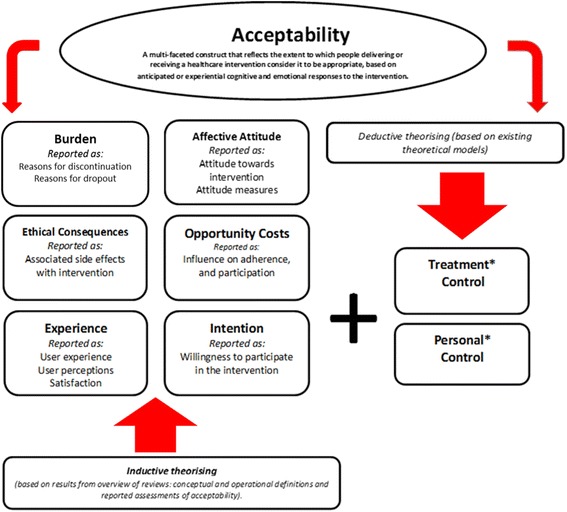
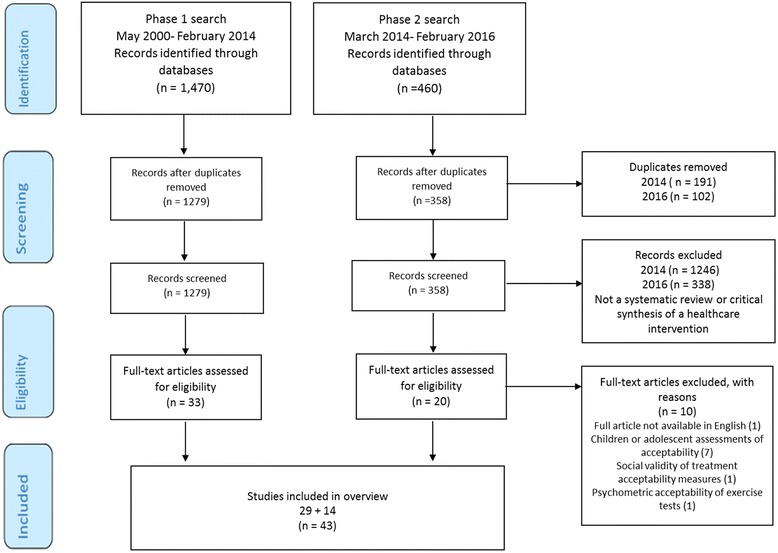
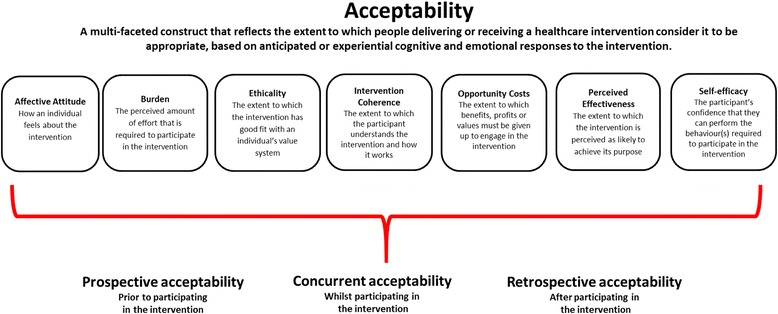
BACKGROUND: It is increasingly acknowledged that 'acceptability' should be considered when designing, evaluating and implementing healthcare interventions. However, the published literature offers little guidance on how to define or assess acceptability. The purpose of this study was to develop a multi-construct theoretical framework of acceptability of healthcare interventions that can be applied to assess prospective (i.e. anticipated) and retrospective (i.e. experienced) acceptability from the perspective of intervention delivers and recipients. METHODS: Two methods were used to select the component constructs of acceptability. 1) An overview of reviews was conducted to identify systematic reviews that claim to define, theorise or measure acceptability of healthcare interventions. 2) Principles of inductive and deductive reasoning were applied to theorise the concept of acceptability and develop a theoretical framework. Steps included (1) defining acceptability; (2) describing its properties and scope and (3) identifying component constructs and empirical indicators. RESULTS: From the 43 reviews included in the overview, none explicitly theorised or defined acceptability. Measures used to assess acceptability focused on behaviour (e.g. dropout rates) (23 reviews), affect (i.e. feelings) (5 reviews), cognition (i.e. perceptions) (7 reviews) or a combination of these (8 reviews). From the methods described above we propose a definition: Acceptability is a multi-faceted construct that reflects the extent to which people delivering or receiving a healthcare intervention consider it to be appropriate, based on anticipated or experienced cognitive and emotional responses to the intervention. The theoretical framework of acceptability (TFA) consists of seven component constructs: affective attitude, burden, perceived effectiveness, ethicality, intervention coherence, opportunity costs, and self-efficacy. CONCLUSION: Despite frequent claims that healthcare interventions have assessed acceptability, it is evident that acceptability research could be more robust. The proposed definition of acceptability and the TFA can inform assessment tools and evaluations of the acceptability of new or existing interventions.
Overview
The claims and statistics of this paper haven’t been checked yet.
Free: it reads the open-access text and checks the first 5 claims that cite a source we can check. Create a free account to check every claim.
Integrity signals
Registry
Cites
Statistics
Figures
Verification
Claims the paper makes
The claims and statistics of this paper haven’t been checked yet.
Free: it reads the open-access text and checks the first 5 claims that cite a source we can check. Create a free account to check every claim.
Claims other papers make about this one
Each is checked against this paper’s own text: does it say what the citing paper says it does?
The source backs part of the claim, not all of it — or backs it for a different population, condition or comparison.
In the citing paper
“Sekhon and colleagues [16] identified 7 component constructs of acceptability, but studies are generally designed to address only some of these components and vary by the components chosen.”
From Acceptability of Digital Mental Health Interventions for Depression and Anxiety: Systematic Review (2024) · cites this paper as [16]
Experimental — accuracy not yet measuredThe source backs part of the claim, not all of it — or backs it for a different population, condition or comparison.
In the citing paper
“Interviews followed a semi-structured schedule, taking into consideration elements of the TDF [24], and TFA [23]. Once drafted, interview schedules were reviewed by the EQUITy Lived Experience Advisory Panel (LEAP).”
From 'I didn't know what to expect': Exploring patient perspectives to identify targets for change to improve telephone-delivered psychological interventions (2020) · cites this paper as [23]
Experimental — accuracy not yet measuredThe source backs part of the claim, not all of it — or backs it for a different population, condition or comparison.
In the citing paper
“It has been increasingly acknowledged that consideration of patient acceptability using theories of behaviour change are key to effective evaluation, design and implementation of healthcare interventions [23–25] .”
From 'I didn't know what to expect': Exploring patient perspectives to identify targets for change to improve telephone-delivered psychological interventions (2020) · cites this paper as [23]
Experimental — accuracy not yet measuredThe cited source says what the claim attributes to it.
In the citing paper
“Overall, relating to the acceptability model by Sekhon et al. (2017), the main problems regarding acceptability centred around the dimensions burden, opportunity cost and self-efficacy, since participants found the intervention overly demanding when suffering from mental health symptoms and that they required more support to from a therapist to make use of the treatment material.”
From Investigating the potential of a novel internet-based cognitive behavioural intervention for Dari and Farsi speaking refugee youth: A feasibility study (2022) · cites this paper as Sekhon et al. (2017)
The cited source says what the claim attributes to it.
In the citing paper
“The TFA provided a structured theory around which to explore patient acceptability of specific elements of telephone-delivered treatment, without presuming acceptability based on patients’ behaviour [23].”
From 'I didn't know what to expect': Exploring patient perspectives to identify targets for change to improve telephone-delivered psychological interventions (2020) · cites this paper as [23]
2 more claims about this paper
Create a free account to see every claim other papers make about this one.
Self-check
Percentages, sums and reported differences re-computed from the paper’s own numbers.
The self-check needs the paper’s full text.
Citations
Cites
Using thematic analysis in psychology
Braun, V., & Clarke, V. (2006) · Qualitative Research in Psychology · doi:10.1191/1478088706qp063oa · Cited by 194,414 · cited 1×
“All extracted data were analysed by applying the thematic synthesis approach [30].”
MethodThe theory of planned behavior
Ajzen, I. (1991) · Organizational Behavior and Human Decision Processes · doi:10.1016/0749-5978(91)90020-t · Cited by 90,587
Preferred Reporting Items for Systematic Reviews and Meta-Analyses: the PRISMA statement
Moher, D., Liberati, A., Tetzlaff, J., Altman, D. G., & for the PRISMA Group (2009) · BMJ · doi:10.1136/bmj.b2535 · Cited by 83,823
Preferred reporting items for systematic reviews and meta-analyses: the PRISMA Statement.
(2009) · PubMed Central · Cited by 44,859
Self-efficacy: Toward a unifying theory of behavioral change
Bandura, A. (1977) · Psychological Review · doi:10.1037/0033-295x.84.2.191 · Cited by 43,925
Cochrane Handbook for Systematic Reviews of Interventions: Cochrane Book Series
(2008) · doi:10.1002/9780470712184 · Cited by 25,048 · cited 1×
“The Cochrane Tool of Quality Assessment was applied most frequently [39] (18 reviews: 62%).”
MethodAssessing the quality of reports of randomized clinical trials: Is blinding necessary?
Jadad, A. R., Moore, R. A., Carroll, D., Jenkinson, C., Reynolds, D. J. M., Gavaghan, D. J., & McQuay, H. J. (1996) · Controlled Clinical Trials · doi:10.1016/0197-2456(95)00134-4 · Cited by 17,582 · cited 2×
“Other assessments tools applied included the Jadad Scale [40] (three reviews: 10%), the”
MethodStructural Equations with Latent Variables.
Clogg, C. C., & Bollen, K. A. (1991) · Contemporary Sociology · doi:10.2307/2072165 · Cited by 17,442
Structural Equations with Latent Variables
Bollen, K. A. (1989) · Wiley series in probability and statistics · doi:10.1002/9781118619179 · Cited by 17,277 · cited 1×
“The inconsistency in defining concepts can impede the development of valid assessment instruments [20].”
BackgroundHealth Behavior and Health Education: Theory, Research, and Practice
(1992) · Annals of Internal Medicine · doi:10.7326/0003-4819-116-4-350_1 · Cited by 13,207
Research works printed but not linked: 1
- Hox JJ From theoretical concept to survey question. 1997): Survey Measurement and Process Quality 1997 New York ua Wiley 45 69
Cited by
Items 901–1,000 of 1,015
Soltan, F., Uphoff, E., Newson, R. B., Purgato, M., Taddese, H. B., Barbui, C., & Vanderbloemen, L. (2020) · Cochrane Database of Systematic Reviews · doi:10.1002/14651858.cd013657 · Cited by 9
The Science of Behavior Change: The Road Ahead
Hagger, M. S., Cameron, L. D., Hamilton, K., Hankonen, N. E., & Lintunen, T. (2020) · Cambridge University Press eBooks · doi:10.1017/9781108677318.046 · Cited by 16
Development and testing of Australian prehospital care quality indicators: study protocol
Pap, R., Lockwood, C. S., Stephenson, M., & Simpson, P. (2020) · BMJ Open · doi:10.1136/bmjopen-2020-038310 · Cited by 13
“…a social science theory perspective informed by reviews and frameworks of acceptability as a criterion for evaluating performance measures, 31–33 phase 3 will involve the successional collection of quantitative and qualitative data to facilitate integrated interpretations and conclusions…”
Brakema, E. A., van Gemert, F. A., Williams, S., Sooronbaev, T., Emilov, B., Mademilov, M., Tabyshova, A. K., An, P. L., Quỳnh, N. N., Le, H. H. T. C., et al. (2020) · npj Primary Care Respiratory Medicine · doi:10.1038/s41533-020-00201-z · Cited by 12
Hill, E., Němec, M., Marlow, L. A. V., Sherman, S. M., & Waller, J. (2020) · Journal of Medical Screening · doi:10.1177/0969141320970591 · Cited by 10
“For this trend to continue, uptake of screening is essential, and acceptability has an important part to play in this.(5) The findings of the research Table 4.”
BackgroundSwartz, A., Maughan‐Brown, B., Perera, S., Harrison, A. D., Kuo, C., Lurie, M. N., Smith, P. J., Bekker, L., & Galárraga, O. (2021) · AIDS and Behavior · doi:10.1007/s10461-021-03355-0 · Cited by 10
Aboaja, A. M., Atewogboye, O., Arslan, M., Parry-Newton, L., & Wilson, L. (2021) · Research Involvement and Engagement · doi:10.1186/s40900-021-00310-0 · Cited by 10
“The following instruments were used to obtain information from participants during the workshop: I. Acceptability Questionnaire (to determine the acceptability of Discovery Group to patients).”
BackgroundMethodInfluentialShuldiner, J., Schwartz, K. L., Langford, B. J., Ivers, N. M., Taljaard, M., Grimshaw, J., Lacroix, M., Tadrous, M., Leung, V., Brown, K. A., et al. (2022) · Implementation Science · doi:10.1186/s13012-022-01194-8 · Cited by 11
“Sekhon M, Cartwright M, Francis JJ. Acceptability of healthcare interventions: an overview of reviews and development of a theoretical framework.”
MethodSelf-citationGander‐Zaucker, S., Unwin, G., & Larkin, M. (2022) · Societies · doi:10.3390/soc12030093 · Cited by 11
Eshun‐Wilson, I., Akama, E., Adhiambo, H. F., Kwena, Z., Oketch, B., Obatsa, S., Iguna, S., Lewis-Kulzer, J., Nyanga, J., Nyandieka, E., et al. (2022) · Journal of the International AIDS Society · doi:10.1002/jia2.25979 · Cited by 12
“Routine quantitative measures of acceptability, tend however, to provide superficial assessments [14], while economic preference elicitation methods offer techniques, deeply rooted in consumer behaviour theory, that demonstrate which features make an implementation strategy more or less acceptable, through the quantif…”
BackgroundSmale, E. M., van Vlijmen, B., Colen, H. B. B., van den Heuvel, M. M., Desar, I. M. E., van den Bemt, B. J. F., & Bekker, C. L. (2023) · JCO Oncology Practice · doi:10.1200/op.22.00553 · Cited by 11
“The median duration until treatment discontinuation was 44 (22-87) days.”
BackgroundSweeney‐Magee, M., Moustaqim‐Barrette, A., Gotay, C. C., & Dummer, T. (2020) · Journal of Advanced Nursing · doi:10.1111/jan.14389 · Cited by 10
Xiang, X., Sun, Y., Smith, S. N., Lai, P. H. L., & Himle, J. A. (2020) · Research on Social Work Practice · doi:10.1177/1049731520927783 · Cited by 13
“Assessments of acceptability and satisfaction were based on participants’ ratings of agreement with 12 questions adapted from the modified version of the Treatment Evaluation Inventory (Landreville & Guérette, 1998) and acceptability measures from previous studies (Sekhon et al., 2017).”
MethodFurness, K., Huggins, C. E., Truby, H., Croagh, D. G., & Haines, T. P. (2021) · JMIR Formative Research · doi:10.2196/23979 · Cited by 11
“The data analysis framework was based on the 7 constructs of the Theoretical Framework of Acceptability: affective attitude, burden, intervention coherence, ethicality, opportunity costs, perceived effectiveness, and self-efficacy (Figure 1) [15].”
BackgroundMethodMirzadegan, I. A., Lewis, E. M., Cole, S. L., & Meyer, A. (2025) · Journal of Pediatric Psychology · doi:10.1093/jpepsy/jsae040 · Cited by 10
Morroni, D., Konstantinou, P., Gkleka, C., Kassianos, A. P., & Karekla, M. (2025) · European Child & Adolescent Psychiatry · doi:10.1007/s00787-024-02500-z · Cited by 9
“In healthcare, treatment acceptability includes a person’s level of commitment towards an intervention (e.g., adherence, dropout), as well as how a person per - ceived and experienced an intervention [ 42 , 43 ].”
Ditton, E., Knott, B., Hodyl, N., Horton, G., Walker, F. R., & Nilsson, M. (2023) · JMIR Formative Research · doi:10.2196/43263 · Cited by 9
“Responses were independently reviewed by 2 members of the research team (ED and BK) and coded thematically according to their relevance to usability, accessibility, external factors (eg, time), behavioral factors (eg, practice), or any of the TFA indicators (affective attitude, perceived effectiveness, intervention co…”
BackgroundMethodInfluentialOpstal, J. V., Zhao, A. T., Kaplan, S. J., Sung, A. D., & Schoemans, H. M. (2022) · Transplantation and Cellular Therapy · doi:10.1016/j.jtct.2022.05.016 · Cited by 10
Prehabilitation before elective coronary artery bypass grafting surgery: a scoping review
Olsen, D. B., Pedersen, P. U., & Nørgaard, M. W. (2023) · JBI Evidence Synthesis · doi:10.11124/jbies-22-00265 · Cited by 18
Tende, F. K., Nwameme, A. U., & Tabong, P. T. (2023) · PLOS Global Public Health · doi:10.1371/journal.pgph.0001870 · Cited by 10
Meyer, K., Gonzalez, A., & Benton, D. M. (2023) · JMIR Formative Research · doi:10.2196/42561 · Cited by 10
“While group-based sessions may increase participant burden in some cases given additional time constraints, this may be a worthwhile tradeoff to improve perceived intervention effectiveness within the TFA model [19].”
BackgroundMethodInfluentialSmith, T. O., Khoury, R., Hanson, S., Welsh, A., Grant, K., Clark, A., Ashford, P., Hopewell, S., Pfeiffer, K., Logan, P., et al. (2023) · BMJ Open · doi:10.1136/bmjopen-2023-073611 · Cited by 10
“26 All interviews were conducted by the same researcher (AW), an experienced postdoctoral, female, qualitative researcher.”
BackgroundHe, H., Li, J., Zhao, L., Lu, H. S., Lu, J., Quan, Y., & Xiu, Z. (2024) · Journal of Clinical Nursing · doi:10.1111/jocn.17057 · Cited by 9
Waks, S., Moses, K., & Wootton, B. M. (2024) · British Journal of Clinical Psychology · doi:10.1111/bjc.12462 · Cited by 11
Mahmoud, A., Goodwin, V. A., Morley, N., Whitney, J. C., Lamb, S. E., Lyndon, H., Creanor, S., & Frost, J. (2024) · BMJ Open · doi:10.1136/bmjopen-2023-081304 · Cited by 16
“The interviews lasted between 16 and 92 min (table 1).”
Ong, E. K., Tan, U.-T. E., Chiam, M., & Sim, W. S. (2024) · BMC Palliative Care · doi:10.1186/s12904-024-01414-6 · Cited by 16
“This questionnaire was designed in accordance with Sekhon et al’s acceptability framework, which centers on affective attitude, burden, perceived effectiveness, coherence, and self-efficacy (see Appendix II) [46].”
MethodZhang, X., Lewis, S. W., Xu, C., Zhou, J., Wang, X., & Bucci, S. (2024) · BMC Psychiatry · doi:10.1186/s12888-024-05687-2 · Cited by 12
“Therefore, an in-depth understanding of users expectations, views and experiences of using DHIs in both the development and the evaluation phases of DHIs is needed to maximise user engagement [40, 41].”
BackgroundMethodKinchin, I., Walsh, S., Dinh, R., Kapuwa, M., Kennelly, S., Miller, A.-M., Nolan, A., O’Dowd, S., O’Philbin, L., Timmons, S., et al. (2024) · The British Journal of Psychiatry · doi:10.1192/bjp.2024.24 · Cited by 10
Ibrahim, A. H., Beaumont, C. T., & Strohacker, K. A. (2024) · Applied Psychophysiology and Biofeedback · doi:10.1007/s10484-024-09645-2 · Cited by 15
“Building explicit expectations in this manner should support continued user engagement and strengthen perceptions that the behavioral strategy is acceptable and socially valid (Perski et al., 2017; Sekhon et al., 2017).”
Guest, E., Halliwell, E., Mathews, A., Alleva, J. M., & Harcourt, D. M. (2024) · Health Psychology and Behavioral Medicine · doi:10.1080/21642850.2024.2349004 · Cited by 12
“The questions assessed the mode of delivery (online format), affective attitudes towards the intervention (enjoyment, impact), and user experiences and perceptions in relation to the length of the intervention and number of writing exercises (Sekhon et al., 2017).”
Musiwa, A. S., Sinha, V., Hanley, J., Ruiz‐Casares, M., & Skovdal, M. (2024) · Women s Reproductive Health · doi:10.1080/23293691.2024.2345092 · Cited by 10
Chatio, S. T., Duah, E., Ababio, L. O., Lister, N., Egbujo, O. A., Marfo, K., Aborigo, R., Ansah, P. B., & Odame, I. (2024) · PLoS ONE · doi:10.1371/journal.pone.0303520 · Cited by 11
Johansen, T. E. B., Matre, M. E., Løvstad, M., Lund, A. D., Martinsen, A. C. T., Olsen, A., Becker, F., Brunborg, C., Ponsford, J. L., Spikman, J. M., et al. (2024) · Trials · doi:10.1186/s13063-024-08178-7 · Cited by 16
“An interview guide has been developed as recommended by Creswell [46], based on the acceptability framework developed by Sekhon and colleagues [47].”
MethodGoense, C. J. D., Evers, Y. J., van Loo, I. H. M., Heuts, R. J. M., Hoebe, C. J. P. A., Cannon, C. A., & Dukers–Muijrers, N. H. T. M. (2024) · Sexually Transmitted Diseases · doi:10.1097/olq.0000000000001969 · Cited by 9
“17 Determinants such as attitude and a person's self-efficacy aligned with willingness to use this method and overall to use home-based sampling in the future.”
Yuill, C., Sinesi, A., Meades, R., Williams, L., Delicate, A., Cheyne, H., Maxwell, M., Shakespeare, J., Alderdice, F. A., Leonard, R., et al. (2024) · British Journal of Health Psychology · doi:10.1111/bjhp.12740 · Cited by 11
The evaluation of health recommender systems: A scoping review
Ananthakrishnan, A., Milne‐Ives, M., Cong, C., Shankar, R., Lakey, B., Alexánder, J., Tapuria, A., Marchal, A., Joy, E., & Meinert, E. (2024) · International Journal of Medical Informatics · doi:10.1016/j.ijmedinf.2024.105697 · Cited by 10
Ally, D., Tobiasz-Veltz, L., Tu, K., Comeau, A., Bumpus, C., Blot, T., Rice, F. K., Orr, B., Rea, H. S., Sweezy, M., et al. (2025) · Frontiers in Psychiatry · doi:10.3389/fpsyt.2025.1544435 · Cited by 13
Prevent-PE (pre-eclampsia prevention by timed birth at term): Protocol for a randomised trial
Goadsby, J., Shetty, S. S., Syngelaki, A., Bori, M. S., Magee, L. A., von Dadelszen, P., Akolekar, R., Silverio, S. A., Sheen, K., Fox-Rushby, J. A., et al. (2025) · Pregnancy Hypertension · doi:10.1016/j.preghy.2025.101211 · Cited by 10
Sauer, C., Hoang, M.-A., Kroeun, H., Gupta, A. S., Ngik, R., Sokchea, M., Labonté, J. M., Chea, M., Klemm, R. D. W., Mishra, A., et al. (2025) · American Journal of Clinical Nutrition · doi:10.1016/j.ajcnut.2025.04.033 · Cited by 9
“Acceptability was assessed using a quantitative questionnaire based on a published framework for acceptability of health care interventions [11].”
Ngan, J., Kong, Y. W., Goad, J., Huang, M., Jenkins, A. J., Vogrin, S., Trawley, S. L., Manzoney, A., Nakano, M., Ekinci, E. I., et al. (2025) · BMJ Open · doi:10.1136/bmjopen-2024-098457 · Cited by 11
Herrmann, A., Krippl, N., Fischer, H., Nieder, J., Griesel, S., Bärnighausen, T., Schildmann, J., Mikolajczyk, R., Danquah, I., Mezger, N. C. S., et al. (2025) · The Lancet Planetary Health · doi:10.1016/s2542-5196(25)00110-x · Cited by 13
Dagenais, C., Degroote, S., del Barrio, M. O., Bermúdez‐Tamayo, C., & Ridde, V. (2018) · Infectious Diseases of Poverty · doi:10.1186/s40249-018-0463-y · Cited by 9
Behn, N., Marshall, J., Togher, L., & Cruice, M. N. (2019) · Disability and Rehabilitation · doi:10.1080/09638288.2019.1618929 · Cited by 10
Chinguwo, F., & Mipando, A. L. N. (2021) · Journal of the International Association of Providers of AIDS Care (JIAPAC) · doi:10.1177/2325958220981256 · Cited by 12
“Perceived effectiveness assessed how the mothers and health care workers perceived the intervention as likely to achieve its purpose and while remaining effective.(19)”
BackgroundMethodMental health first aid USA implementation: Trainee reported quality and impact of training
Troxel, M., Anthony, L. G., Robertson, H. A., & Anthony, B. J. (2021) · Journal of Community Psychology · doi:10.1002/jcop.22750 · Cited by 10
Feasibility of the Early Minds Program by Smiling Mind: a Pilot Cluster-Randomized-Controlled Trial
Sexton, E. T. S., Sheehan, J., Dam, N. T. V., Grobler, A. C., Phillips, L., Yaari, M., & Hiscock, H. (2022) · Mindfulness · doi:10.1007/s12671-021-01804-4 · Cited by 12
Renard, M., Gaboury, I., Michaud, F., & Tousignant, M. (2022) · Musculoskeletal Care · doi:10.1002/msc.1622 · Cited by 9
Littlewood, E., Chew-Graham, C. A., Coleman, E., Gascoyne, S., Sloan, C., Ali, S., Badenhorst, J., Bailey, D., Crosland, S., Kitchen, C. E. W., et al. (2022) · Public Health Research · doi:10.3310/ekze0617 · Cited by 9
Bilodeau, K., Gouin, M.-M., Lecours, A., Lederer, V., Durand, M., Kilpatrick, K., Lepage, D., Ladouceur-Deslauriers, L., & Dorta, T. (2022) · JMIR Research Protocols · doi:10.2196/37009 · Cited by 12
“The use of qualitative interviews is recommended during a feasibility study [59].”
MethodInfluentialBrown, J. V. E., Ajjan, R., Alderson, S. L., Boehnke, J. R., Carswell, C., Doherty, P., Double, K., Gilbody, S. M., Hadjiconstantinou, M., Hewitt, C. E., et al. (2022) · SSM - Mental Health · doi:10.1016/j.ssmmh.2022.100086 · Cited by 12
Watt, B., Witt, S. D., Susino, M., Anolak, H., van Wegen, R., Grocke, D. E., & Gordon, S. J. (2022) · Ageing and Society · doi:10.1017/s0144686x2200068x · Cited by 11
“One recent definition of acceptability defines it as appropriateness of a health-care intervention (Sekhon et al ., 2017).”
BackgroundNakamanya, S., Kawuma, R., Kibuuka, D., Kusemererwa, S., McCormack, S., Ruzagira, E., Seeley, J., & on behalf of the PrEPVacc Study Group (2022) · PLoS ONE · doi:10.1371/journal.pone.0271104 · Cited by 9
“According to the TFA, burden is the perceived amount of effort required to participate in the intervention.”
MethodResultInfluentialCampbell, J., Chaboyer, W. P., Tobiano, G., Harbeck, E., Nowicki, T. A., Moore, Z. E. H., Allen, G., Gillespie, B. M., Coyer, F. M., & Walker, R. (2022) · Journal of Tissue Viability · doi:10.1016/j.jtv.2022.07.008 · Cited by 10
O’Connor, A., Tai, A., Brinn, M. P., Hoang, A. N. T. H., Cataldi, D., & Carson‐Chahhoud, K. (2022) · JMIR Pediatrics and Parenting · doi:10.2196/40231 · Cited by 15
“Acceptability has since been defined as “multi-faceted construct that reflects the extent to which people delivering or receiving a healthcare intervention consider it to be appropriate, based on anticipated or experienced cognitive and emotional responses to the intervention” [34].”
BackgroundVersalovic, E., Klein, E. P., Goering, S., Ngo, Q., Gliske, K., Boulicault, M., Sullivan, L. S., Thomas, M. J., & Widge, A. S. (2023) · Journal of Addiction Medicine · doi:10.1097/adm.0000000000001150 · Cited by 10
Importancia del Estudio Piloto en un Proyecto de Intervención
Sánchez, H. F., Facundo, F. R. G., Herrera-Medina, D., & Sidani, S. (2020) · Index de Enfermería · doi:10.58807/indexenferm20233776 · Cited by 36
Chaudhary, S., Ray, R., & Glass, B. D. (2023) · Exploratory Research in Clinical and Social Pharmacy · doi:10.1016/j.rcsop.2023.100254 · Cited by 12
Misago, N., Habonimana, D., Ciza, R., Ndayizeye, J. P., & Kimaro, J. K. A. (2023) · PLOS Digital Health · doi:10.1371/journal.pdig.0000133 · Cited by 13
Nilsén, P., Seing, I., Sekhon, M., Kallemose, T., Tjørnhøj‐Thomsen, T., Stefánsdóttir, N. Þ., Vrangbæk, K., Andersen, O., & Kirk, J. W. (2023) · Frontiers in Public Health · doi:10.3389/fpubh.2023.988882 · Cited by 9
“, a social distancing measure) consider it to be appropriate, based on anticipated or experienced cognitive and emotional responses to the measure (8).”
BackgroundMethodInfluentialSelf-citationMandatory membership of community-based mutual health insurance in Senegal: A national survey
Ridde, V., Gaye, I., Ventelou, B., Paul, É., & Faye, A. (2023) · PLOS Global Public Health · doi:10.1371/journal.pgph.0001859 · Cited by 9
Evans, J., Tinch‐Taylor, R., Csipke, E., Cella, M., Pickles, A. R., McCrone, P., Stringer, D., Oliver, A., Reeder, C., Birchwood, M. J., et al. (2023) · Schizophrenia · doi:10.1038/s41537-023-00390-9 · Cited by 10
Stuart‐Röhm, K., Clark, I. N., & Baker, F. A. (2023) · Health Expectations · doi:10.1111/hex.13915 · Cited by 10
Lissouba, P., Rücker, S. C. M., Otieno, L. A., Akatukwasa, C., Xulu, S., Monjane, C., Akinyi, M., Okal, B., Lubega, A. V., Stewart, R., et al. (2023) · BMJ Open · doi:10.1136/bmjopen-2021-058805 · Cited by 8
Kilbride, C., Butcher, T., Warland, A., Ryan, J. M., Scott, D. J. M., Cassidy, E. E., Athanasiou, D. A., Singla–Buxarrais, G., Baker, K., & Norris, M. (2024) · BMJ Open · doi:10.1136/bmjopen-2023-075821 · Cited by 13
“36 Interest was also raised through a sense of challenge.”
BackgroundBukhari, T., Gichuhi, J., Mbare, O., Ochwal, V. A., Fillinger, U., & Herren, J. K. (2024) · Malaria Journal · doi:10.1186/s12936-024-04941-y · Cited by 9
“Community acceptance is a multifaceted construct that reflects the extent to which people delivering or receiving an intervention consider it appropriate, based on anticipated or experienced cognitive and emotional responses toward the intervention [16].”
BackgroundThe contribution of participant, treatment, and outcome factors to treatment satisfaction
Sidani, S., Epstein, D. R., Fox, M. T., & Collins, L. J. (2018) · Research in Nursing & Health · doi:10.1002/nur.21909 · Cited by 11
“Treatment satisfaction refers to the subjective evaluationof a treatment or therapy upon treatment completion (Sekhon et al., 2017).”
BackgroundMeyer, J., Beck, E., von Holdt, K., Gansefort, D., Brand, T., Zeeb, H., & Boll, S. (2018) · International Workshop on Multimedia for Personal Health and Health Care (MMHealth) · doi:10.1145/3264996.3264997 · Cited by 9
Kesten, J. M., Thomas, K. H., Scott, L. J., Bache, K., Hickman, M., Campbell, R. M., Pickering, A. E., & Redwood, S. (2019) · British Journal of General Practice · doi:10.3399/bjgp19x706097 · Cited by 10
Assistive technology self-management intervention for older Hispanics: a feasibility study
Orellano-Colón, E. M., Harrison-Cruz, S., López-Lugo, E., Ramos-Peraza, S., Meléndez-Ortiz, A., Ortiz-Torres, J., & Rodríguez-Marrero, J. (2019) · Disability and Rehabilitation Assistive Technology · doi:10.1080/17483107.2019.1621954 · Cited by 14
“Acceptability—Acceptability was gauged using the Participants’ Assessment of the Intervention’s Feasibility, an instrument developed by the researchers specifically for this study and based on the empirical indicators of acceptability propose by Sekhon, Cartwright and Francis [17].”
MethodInfluentialAutonomy-Supportive Interventions
Reeve, J., & Cheon, S. H. (2020) · Cambridge University Press eBooks · doi:10.1017/9781108677318.035 · Cited by 15
Ragea, G., Alemseged, F., Nigatu, M., & Dereje, D. (2021) · HIV/AIDS - Research and Palliative Care · doi:10.2147/hiv.s282928 · Cited by 9
“Among HIV positive women, the effect of disclosure to anyone, on ARV drug use and facility birth, remains large and significant.(33,34) Therefore, provision of ample drugs for six month period may expose clients to inadvertent exposure and associated stigma.”
BackgroundResultWhite, R., Bruggink, L., Hayes, C., Boyes, A., & Paul, C. L. (2021) · Translational Behavioral Medicine · doi:10.1093/tbm/ibab007 · Cited by 10
Bhatti, A., Gray‐Burrows, K. A., Giles, E., Rutter, L., Purdy, J., Zoltie, T., West, R. M., Pavitt, S. H., Marshman, Z., & Day, P. F. (2021) · BMC Oral Health · doi:10.1186/s12903-021-01444-z · Cited by 19
Should masks be worn outdoors?
Javid, B., Bassler, D., Bryant, M. B., Çevik, M., Tüfekçi, Z., & Baral, S. (2021) · BMJ · doi:10.1136/bmj.n1036 · Cited by 11
Gerbild, H. N., Josefsson, K. A., Larsen, C. M., & Laursen, B. S. (2021) · Sexual Medicine · doi:10.1016/j.esxm.2021.100369 · Cited by 12
“Acceptability has become a key consideration in the development phase of complex interventions in health care.(1,2) Complex interventions are defined as interventions with several interacting components(1,2) and has proven to be effective in developing person-centered care.”
BackgroundMethodInfluentialStratil, A.-S., Ward, C., Habte, T., Maurel, A., Antson, M., Naydenova, E., & Baker, K. S. (2021) · Journal of Tropical Pediatrics · doi:10.1093/tropej/fmab046 · Cited by 11
“The topic guides for assessment were developed using a comprehensive conceptual framework of acceptability of healthcare interventions [15].”
MethodRojas, G., Martínez, P., Guajardo, V., Campos, S., Herrera, P., Vöhringer, P. A., Gómez, V., Szabo, W., & Araya, R. (2021) · BMC Psychiatry · doi:10.1186/s12888-021-03380-2 · Cited by 10
Contreras, M., Van Hout, E., Farquhar, M., Gould, R. L., McCracken, L. M., Hornberger, M., Richmond, E., & Kishita, N. (2021) · The Cognitive Behaviour Therapist · doi:10.1017/s1754470x21000337 · Cited by 9
Rugwizangoga, B., Niyibizi, J. B., Ndayisaba, M. C., Musoni, E., Manirakiza, F., Uwineza, A., Tuyisenge, L., Nyundo, M., Hategekimana, T., & Ntakirutimana, G. (2021) · Journal of Multidisciplinary Healthcare · doi:10.2147/jmdh.s340428 · Cited by 9
Davies, B. S., Kinfe, M., Ali, O., Mengiste, A., Tesfaye, A., Tamiru, M., Davey, G., & Semrau, M. (2022) · PLoS neglected tropical diseases · doi:10.1371/journal.pntd.0010132 · Cited by 9
“6 acceptability, as pre-intervention prospective treatment acceptability [13]; and appropriateness, the 121 suitability of the project for the needs identified.”
BackgroundGeagea, D., Griffin, B. R., Kimble, R. M., Polito, V., Terhune, D. B., & Tyack, Z. F. (2022) · Pilot and Feasibility Studies · doi:10.1186/s40814-022-01017-z · Cited by 13
“the extent to which procedures are perceived as fit, satisfying, and appealing, based on experienced affective and cognitive reactions) [27], implementation (i.”
BackgroundMethodLange, S., & Mfaume, D. (2022) · Journal of Ethnobiology and Ethnomedicine · doi:10.1186/s13002-022-00533-9 · Cited by 8
“The concept of acceptability is multi-faceted, but is linked to the degree to which there is “’fit’ between the clients and the system” [13, 14], or in other words, whether people who receive a given form of healthcare “consider it to be appropriate” [14].”
BackgroundHall, S. B., Bartley, A. G., Wenk, J., Connor, A., Dugger, S. M., & Casazza, K. (2022) · Journal of Counseling & Development · doi:10.1002/jcad.12439 · Cited by 13
“These components are operationalized in various ways across the literature (Sekhon et al., 2017).”
BackgroundJordão, T. J., Magno, L., Pereira, M. E., Rossi, T. R. A., Silva, P. D. A., Figueiredo, M. A. A., Prado, N. M. D. B. L., dos Santos, A. M., Cangussú, M. C. T., & Dourado, I. C. (2022) · BMC Health Services Research · doi:10.1186/s12913-022-08091-2 · Cited by 10
“[47] proposed a definition of acceptability that involves a subjective evaluation of the health intervention by both the individual who delivers the intervention and the individual who receives it.”
BackgroundYamada, Y., Fujiwara, M., Shimazu, T., Etoh, T., Kodama, M., So, R., Matsushita, T., Yoshimura, Y., Horii, S., Fujimori, M., et al. (2022) · BMJ Open · doi:10.1136/bmjopen-2021-060621 · Cited by 9
Creger, T. N., Burgan, K. W., Turner, W. H., Tarrant, A., Parmar, J., Rana, A., Mugavero, M. J., & Elopre, L. E. (2022) · JAIDS Journal of Acquired Immune Deficiency Syndromes · doi:10.1097/qai.0000000000002976 · Cited by 11
Whaibeh, E. R., Vogt, E. L., & Mahmoud, H. (2022) · Current Psychiatry Reports · doi:10.1007/s11920-022-01352-1 · Cited by 12
Cox, S. R., Kadam, A. B., Atre, S. R., Gupte, A., Sohn, H., Gupte, N., Sawant, T., Mhadeshwar, V., Thompson, R. R., Kendall, E. A., et al. (2022) · Trials · doi:10.1186/s13063-022-06503-6 · Cited by 12
“Acceptability will be guided by the work of Sekhon et al. [67].”
Carlson, M. A., Fradgley, E. A., Yates, D., Morris, S., Tait, J., & Paul, C. L. (2022) · Neuro-Oncology Practice · doi:10.1093/nop/npac097 · Cited by 9
Barry, L. E., Kee, F., Woodside, J. V., Cawley, J., Doherty, E., Clarke, M. J., Crealey, G., Duggan, J., & O’Neill, C. (2023) · Nutrition Reviews · doi:10.1093/nutrit/nuad011 · Cited by 9
“policy highlights aspects that could be modified to increase acceptability.(37) The perspective adopted is that”
BackgroundRobb, K. A., Kotzur, M., Young, B., McCowan, C., Hollands, G. J., Irvine, A., Macdonald, S., McConnachie, A., O’Carroll, R. E., O’Connor, R. C., et al. (2023) · BMJ Open · doi:10.1136/bmjopen-2022-066136 · Cited by 11
“In a Scottish survey, 85% of people reported intending to complete the FIT, 9 yet participation is 65%.”
InfluentialThe feasibility of an online discussion group as a component of targeted youth work in Finland
Kivijärvi, A., Aaltonen, S., & Välimäki, V. (2019) · Children and Youth Services Review · doi:10.1016/j.childyouth.2019.104411 · Cited by 18
Implementation Science and Translation in Behavior Change
Łuszczyńska, A., Łobczowska, K., & Horodyska, K. (2020) · Cambridge University Press eBooks · doi:10.1017/9781108677318.023 · Cited by 15
Campbell, K. G., Batt, M. E., & Drummond, A. E. (2020) · Pilot and Feasibility Studies · doi:10.1186/s40814-020-00638-6 · Cited by 12
“assessed post intervention, and some have argued that this may not reflect whether a healthcare intervention is truly acceptable [43].”
BackgroundThree Alternatives for Graphing Behavioral Data: A Comparison of Usability and Acceptability
Kinney, C. E. L., Begeny, J. C., Stage, S. A., Patterson, S., & Johnson, A. (2020) · Behavior Modification · doi:10.1177/0145445520946321 · Cited by 10
“These definitions are consistent with many past discussions of usability and acceptability (e.g., Briesch et al., 2013; Sekhon et al., 2017; Witt & Martens, 1983) and they are particularly aligned with documentation from the U.S. Department of Education’s Institute of Education Sciences (e.g., see…”
ResultLutala, P., & Muula, A. (2022) · Pilot and Feasibility Studies · doi:10.1186/s40814-022-01032-0 · Cited by 8
“Transcripts were later translated into English before analysis using a theoretical framework approach [39].”
MethodWilding, S., O'Connor, D. B., & Conner, M. T. (2021) · British Journal of Health Psychology · doi:10.1111/bjhp.12570 · Cited by 8
Silva, L., Condon, L. A., Qureshi, N., Dutton, B., Weng, S. F., & Kai, J. (2022) · British Journal of General Practice · doi:10.3399/bjgp.2021.0558 · Cited by 8
“This should include assessment of intervention acceptability 37 and requirements for implementation 38 before its potential adoption in practice.”
Brown, J. V. E., Ajjan, R., Siddiqi, N., & Coventry, P. A. (2022) · Systematic Reviews · doi:10.1186/s13643-022-02126-9 · Cited by 10
“Any findings that do not fit the TFA will be analysed separately.”
MethodInfluentialMental Health Literacy Workshop for Youth Sport Coaches: A Mixed-Methods Pilot Study
Drew, B. J., Sutcliffe, J., Liddle, S. K., Bruner, M. W., McLaren, C. D., Swann, C., Schweickle, M. J., & Vella, S. A. (2022) · International Sport Coaching Journal · doi:10.1123/iscj.2021-0086 · Cited by 11
Metadata
- Authors
- Sekhon, M., Cartwright, M., & Francis, J. J.
- Affiliations
- City, University of London (GB)
- Corresponding author
- Sekhon, Mandeep
- Venue
- BMC Health Services Research
- Published
- 2017-01-26
- Volume
- 17
- Issue
- 1
- Pages
- 88-88
- ISSN
- 1472-6963 (ISSN-L)
- PMC
- PMC5267473
- OpenAlex
- W2582406074
- Cited by
- 3,938
- References
- 78
- Citations by year
- 2026: 620 · 2025: 701 · 2024: 683 · 2023: 518 · 2022: 535 · 2021: 349 · 2020: 349 · 2019: 118 · 2018: 56 · 2017: 6
- FWCI
- 234.94
- Type
- journal article
- Language
- en
- Open access
- gold
- doi.org
- Licence
- cc-by
- Locations
- BMC Health Services Research (publishedVersion, cc-by)
- Europe PMC (PubMed Central) (publishedVersion, cc-by)
- PubMed Central (publishedVersion, cc-by)
- PubMed (publishedVersion)
- Research Repository (Kingston University London) (acceptedVersion)
- City Research Online (City University London) (acceptedVersion)
- St George's Online Research Archive (St George's University of London) (acceptedVersion)
- Minerva Access (University of Melbourne) (submittedVersion, cc-by)
- Research Portal (King's College London) (submittedVersion, cc-by)
- Topics
- Health Sciences › Health Professions › General Health Professions › Health Policy Implementation Science
- Social Sciences › Economics, Econometrics and Finance › Economics and Econometrics › Health Systems, Economic Evaluations, Quality of Life
- Health Sciences › Nursing › Research and Theory › Health Education and Validation
- Keywords
- theoretical framework, affective attitudes, perceived burden, perceived effectiveness, ethicality, intervention coherence, opportunity cost, self-efficacy, dropout rates
- MeSH terms
- Humans, Models, Theoretical, Patient Acceptance of Health Care, Prospective Studies, Retrospective Studies, Review Literature as Topic, Consensus
About these checks
Registry, retraction, Cites and statistics results are computed, not judged, with one exception: a printed reference that no index lists is read once by a model before it counts as a citation error. Claims are extracted by a model and kept only when their quote appears verbatim in the text; each cited source is then checked, with a model’s help, for whether it says what the claim relies on. Those verdicts can be wrong — read the claim’s quote and the cited source before relying on one.
Statistics and arithmetic are recomputed, not judged.
Confidence bands are shown only for fields calibrated on our annotated test set. None is calibrated yet, so no band is shown.
What counts as a claim ›How we measure confidence ›How we check this ›
Are you an author, or do you see a problem with this page? Request a review
Data sources
Bibliographic data: Semantic Scholar, OpenAlex, Crossref.
Contains information from the Semantic Scholar Academic Graph Datasets, made available under the ODC Attribution License (ODC-BY 1.0).
Semantic Scholar’s data is described in: Kinney, R., et al. (2023). The Semantic Scholar Open Data Platform. arXiv:2301.10140.
