

Acceptability of healthcare interventions: an overview of reviews and development of a theoretical framework
Open accessThe DOI matches its Crossref record; 76 of the 78 references it cites were found in a registry or an index.
Abstract
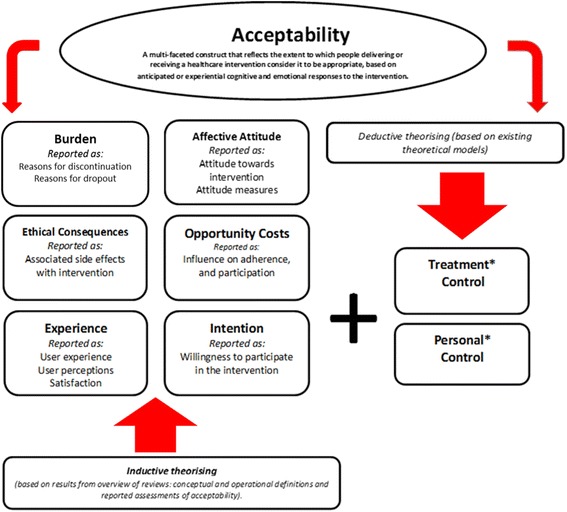
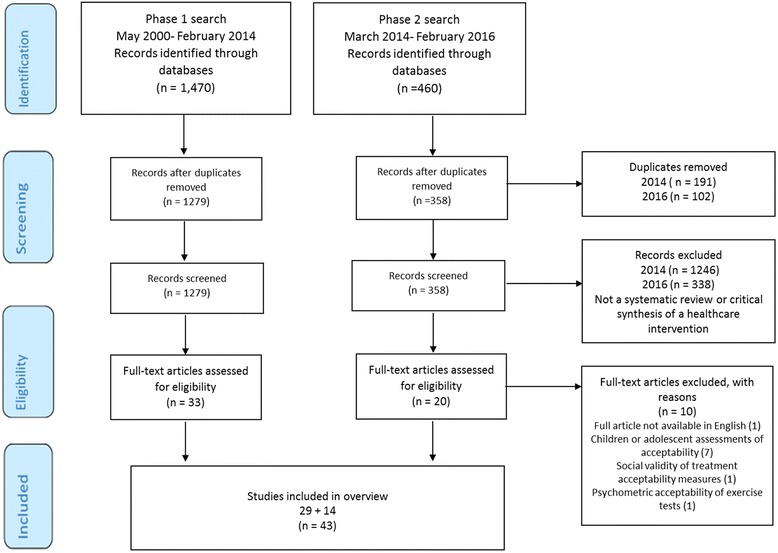
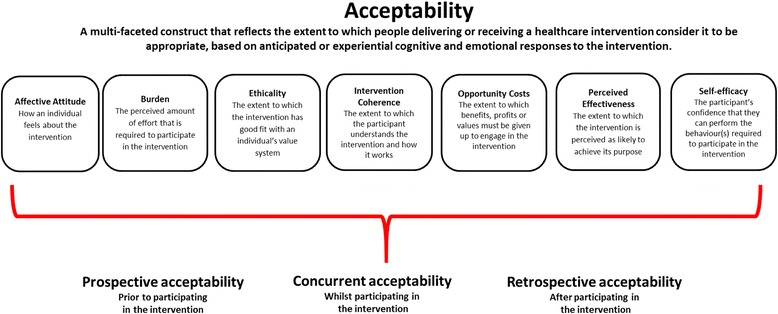
BACKGROUND: It is increasingly acknowledged that 'acceptability' should be considered when designing, evaluating and implementing healthcare interventions. However, the published literature offers little guidance on how to define or assess acceptability. The purpose of this study was to develop a multi-construct theoretical framework of acceptability of healthcare interventions that can be applied to assess prospective (i.e. anticipated) and retrospective (i.e. experienced) acceptability from the perspective of intervention delivers and recipients. METHODS: Two methods were used to select the component constructs of acceptability. 1) An overview of reviews was conducted to identify systematic reviews that claim to define, theorise or measure acceptability of healthcare interventions. 2) Principles of inductive and deductive reasoning were applied to theorise the concept of acceptability and develop a theoretical framework. Steps included (1) defining acceptability; (2) describing its properties and scope and (3) identifying component constructs and empirical indicators. RESULTS: From the 43 reviews included in the overview, none explicitly theorised or defined acceptability. Measures used to assess acceptability focused on behaviour (e.g. dropout rates) (23 reviews), affect (i.e. feelings) (5 reviews), cognition (i.e. perceptions) (7 reviews) or a combination of these (8 reviews). From the methods described above we propose a definition: Acceptability is a multi-faceted construct that reflects the extent to which people delivering or receiving a healthcare intervention consider it to be appropriate, based on anticipated or experienced cognitive and emotional responses to the intervention. The theoretical framework of acceptability (TFA) consists of seven component constructs: affective attitude, burden, perceived effectiveness, ethicality, intervention coherence, opportunity costs, and self-efficacy. CONCLUSION: Despite frequent claims that healthcare interventions have assessed acceptability, it is evident that acceptability research could be more robust. The proposed definition of acceptability and the TFA can inform assessment tools and evaluations of the acceptability of new or existing interventions.
Overview
The claims and statistics of this paper haven’t been checked yet.
Free: it reads the open-access text and checks the first 5 claims that cite a source we can check. Create a free account to check every claim.
Integrity signals
Registry
Cites
Statistics
Figures
Verification
Claims the paper makes
The claims and statistics of this paper haven’t been checked yet.
Free: it reads the open-access text and checks the first 5 claims that cite a source we can check. Create a free account to check every claim.
Claims other papers make about this one
Each is checked against this paper’s own text: does it say what the citing paper says it does?
The source backs part of the claim, not all of it — or backs it for a different population, condition or comparison.
In the citing paper
“Sekhon and colleagues [16] identified 7 component constructs of acceptability, but studies are generally designed to address only some of these components and vary by the components chosen.”
From Acceptability of Digital Mental Health Interventions for Depression and Anxiety: Systematic Review (2024) · cites this paper as [16]
Experimental — accuracy not yet measuredThe source backs part of the claim, not all of it — or backs it for a different population, condition or comparison.
In the citing paper
“Interviews followed a semi-structured schedule, taking into consideration elements of the TDF [24], and TFA [23]. Once drafted, interview schedules were reviewed by the EQUITy Lived Experience Advisory Panel (LEAP).”
From 'I didn't know what to expect': Exploring patient perspectives to identify targets for change to improve telephone-delivered psychological interventions (2020) · cites this paper as [23]
Experimental — accuracy not yet measuredThe source backs part of the claim, not all of it — or backs it for a different population, condition or comparison.
In the citing paper
“It has been increasingly acknowledged that consideration of patient acceptability using theories of behaviour change are key to effective evaluation, design and implementation of healthcare interventions [23–25] .”
From 'I didn't know what to expect': Exploring patient perspectives to identify targets for change to improve telephone-delivered psychological interventions (2020) · cites this paper as [23]
Experimental — accuracy not yet measuredThe cited source says what the claim attributes to it.
In the citing paper
“Overall, relating to the acceptability model by Sekhon et al. (2017), the main problems regarding acceptability centred around the dimensions burden, opportunity cost and self-efficacy, since participants found the intervention overly demanding when suffering from mental health symptoms and that they required more support to from a therapist to make use of the treatment material.”
From Investigating the potential of a novel internet-based cognitive behavioural intervention for Dari and Farsi speaking refugee youth: A feasibility study (2022) · cites this paper as Sekhon et al. (2017)
The cited source says what the claim attributes to it.
In the citing paper
“The TFA provided a structured theory around which to explore patient acceptability of specific elements of telephone-delivered treatment, without presuming acceptability based on patients’ behaviour [23].”
From 'I didn't know what to expect': Exploring patient perspectives to identify targets for change to improve telephone-delivered psychological interventions (2020) · cites this paper as [23]
2 more claims about this paper
Create a free account to see every claim other papers make about this one.
Self-check
Percentages, sums and reported differences re-computed from the paper’s own numbers.
The self-check needs the paper’s full text.
Citations
Cites
Using thematic analysis in psychology
Braun, V., & Clarke, V. (2006) · Qualitative Research in Psychology · doi:10.1191/1478088706qp063oa · Cited by 194,414 · cited 1×
“All extracted data were analysed by applying the thematic synthesis approach [30].”
MethodThe theory of planned behavior
Ajzen, I. (1991) · Organizational Behavior and Human Decision Processes · doi:10.1016/0749-5978(91)90020-t · Cited by 90,587
Preferred Reporting Items for Systematic Reviews and Meta-Analyses: the PRISMA statement
Moher, D., Liberati, A., Tetzlaff, J., Altman, D. G., & for the PRISMA Group (2009) · BMJ · doi:10.1136/bmj.b2535 · Cited by 83,823
Preferred reporting items for systematic reviews and meta-analyses: the PRISMA Statement.
(2009) · PubMed Central · Cited by 44,859
Self-efficacy: Toward a unifying theory of behavioral change
Bandura, A. (1977) · Psychological Review · doi:10.1037/0033-295x.84.2.191 · Cited by 43,925
Cochrane Handbook for Systematic Reviews of Interventions: Cochrane Book Series
(2008) · doi:10.1002/9780470712184 · Cited by 25,048 · cited 1×
“The Cochrane Tool of Quality Assessment was applied most frequently [39] (18 reviews: 62%).”
MethodAssessing the quality of reports of randomized clinical trials: Is blinding necessary?
Jadad, A. R., Moore, R. A., Carroll, D., Jenkinson, C., Reynolds, D. J. M., Gavaghan, D. J., & McQuay, H. J. (1996) · Controlled Clinical Trials · doi:10.1016/0197-2456(95)00134-4 · Cited by 17,582 · cited 2×
“Other assessments tools applied included the Jadad Scale [40] (three reviews: 10%), the”
MethodStructural Equations with Latent Variables.
Clogg, C. C., & Bollen, K. A. (1991) · Contemporary Sociology · doi:10.2307/2072165 · Cited by 17,442
Structural Equations with Latent Variables
Bollen, K. A. (1989) · Wiley series in probability and statistics · doi:10.1002/9781118619179 · Cited by 17,277 · cited 1×
“The inconsistency in defining concepts can impede the development of valid assessment instruments [20].”
BackgroundHealth Behavior and Health Education: Theory, Research, and Practice
(1992) · Annals of Internal Medicine · doi:10.7326/0003-4819-116-4-350_1 · Cited by 13,207
Research works printed but not linked: 1
- Hox JJ From theoretical concept to survey question. 1997): Survey Measurement and Process Quality 1997 New York ua Wiley 45 69
Cited by
Items 301–400 of 1,015
O’Dea, B., KING, C. A., Subotic-Kerry, M., Achilles, M. R., Cockayne, N. L., & Christensen, H. M. (2019) · Frontiers in Psychiatry · doi:10.3389/fpsyt.2019.00574 · Cited by 34
“Acceptability was determined by the extent to which students used the service, barriers to service use, and students’ perceptions of service satisfaction (42, 43).”
Backgroundvon Hammerstein, C., Khazaal, Y., Dupuis, M., Aubin, H.-J., Benyamina, A., Luquiens, A., & Romo, L. (2019) · BMJ Open · doi:10.1136/bmjopen-2018-026839 · Cited by 24
Girolamo, G., Barattieri di San Pietro, C., Bulgari, V., Dagani, J., Ferrari, C., Hotopf, M., Iannone, G., Macis, A., Matcham, F., Myin‐Germeys, I., et al. (2020) · Depression and Anxiety · doi:10.1002/da.23023 · Cited by 24
“In line with the definition of acceptability proposed by Sekhon et al. (2017), we were interested in the number of participants who dropped out from the study, and we also looked at possible correlates of dropping out. The overall dropout rate of individuals with a diagnosis of MDD during ESM/EMA monitoring was 3.6%.…”
BackgroundResultInfluentialSinabell, I., & Ammenwerth, E. (2022) · Universal Access in the Information Society · doi:10.1007/s10209-022-00949-w · Cited by 30
Sagar-Ouriaghli, I., Godfrey, E. L., Tailor, V., & Brown, J. S. L. (2023) · American Journal of Men s Health · doi:10.1177/15579883231163728 · Cited by 35
“The TFAQ contains nine items evaluating eight distinct domains that relate to acceptability including; general acceptability, affective attitude, burden, ethicality, intervention coherence, opportunity costs, perceived effectiveness, and self-efficacy (Sekhon et al., 2017).”
BackgroundPrice, O., Brooks, C. P., Johnston, I., McPherson, P., Goodman, H., Grundy, A. C., Cree, L., Motala, Z., Robinson, J., Doyle, M., et al. (2024) · Health Technology Assessment · doi:10.3310/fggw6874 · Cited by 35
McDermott, L., Hameed, I., & Lau‐Zhu, A. (2024) · Trauma Violence & Abuse · doi:10.1177/15248380241262262 · Cited by 35
White, S. W., Brewe, A. M., & Powell, N. P. (2025) · JMIR Formative Research · doi:10.2196/70137 · Cited by 24
“These metrics were chosen to reflect clients’, caregivers’, and providers’ beliefs about STEPS following the trial, as well as behavioral data on whether clients decided to complete STEPS [31].”
Kurniawati, A., Padmawati, R. S., & Mahendradhata, Y. (2019) · BMC Research Notes · doi:10.1186/s13104-019-4581-9 · Cited by 38
Cooper, S., Schmidt, B., Ryan, J., Leon, N., Mavundza, E. J., Burnett, R. J., Tanywe, A. C., & Wiysonge, C. S. (2019) · Cochrane Database of Systematic Reviews · doi:10.1002/14651858.cd013430 · Cited by 33
Dyadic Behavior Change Interventions
Scholz, U., Berli, C., Lüscher, J., & Knoll, N. (2020) · Cambridge University Press eBooks · doi:10.1017/9781108677318.043 · Cited by 29
Saner, R., & Yiu, L. S. (2020) · Cambridge University Press eBooks · doi:10.1017/9781108348607.008 · Cited by 25
Pollet, S., Denison‐Day, J., Bradbury, K. J., Essery, R., Grey, E., Western, M. J., Mowbray, F., Smith, K. A., Slodkowska‐Barabasz, J., Mutrie, N., et al. (2020) · Journal of Aging and Physical Activity · doi:10.1123/japa.2019-0484 · Cited by 26
George, M., Bruzzese, J., Sommers, M. S., Pantalon, M. V., Jia, H., Rhodes, J., Norful, A. A., Chung, A., Chittams, J. L., Coleman, D., et al. (2020) · Journal of Advanced Nursing · doi:10.1111/jan.14646 · Cited by 29
Context-acceptability theories: example of family planning interventions in five African countries
Webster, J., Krishnaratne, S., Hoyt, J., Demissie, S. D., Spilotros, N., Landegger, J., Kambanje, M., Pryor, S., Moseti, E., Marcus, S., et al. (2021) · Implementation Science · doi:10.1186/s13012-020-01074-z · Cited by 28
Asrat, B., Lund, C., Ambaw, F., & Schneider, M. (2021) · Pilot and Feasibility Studies · doi:10.1186/s40814-021-00889-x · Cited by 28
“The data were analysed using predefined themes using a framework approach [34, 35].”
MethodNiles-Robin, R. A., Thickstun, C., Cox, H., Dilliott, D., Burgert‐Brucker, C. R., Harding-Esch, E. M., Clementson, N., Sampson, A., Alexandre, J., Trejos, A. M., et al. (2021) · PLoS neglected tropical diseases · doi:10.1371/journal.pntd.0009596 · Cited by 24
“Treatment acceptability is the extent to which people consider an intervention to be appropriate, based on their cognitive or emotional responses to that intervention [24].”
BackgroundKeyworth, C., Quinlivan, L. M., Leather, J. Z., & Armitage, C. J. (2022) · BJPsych Open · doi:10.1192/bjo.2022.568 · Cited by 26
King, J., King, M., Edwards, N., Hair, S. A., Cheang, S., Pearson, A., & Coelho, S. G. (2018) · Global Health Action · doi:10.1080/16549716.2018.1538658 · Cited by 24
“is a key component of the development and implementation of health interventions [39].”
BackgroundDeveloping Behavior Change Interventions
Hankonen, N. E., & Hardeman, W. (2020) · Cambridge University Press eBooks · doi:10.1017/9781108677318.021 · Cited by 38
Contreras, M., Van Hout, E., Farquhar, M., McCracken, L. M., Gould, R. L., Hornberger, M., Richmond, E., & Kishita, N. (2022) · International Journal of Qualitative Studies on Health and Well-being · doi:10.1080/17482631.2022.2066255 · Cited by 24
“Following the theoretical framework of acceptability of interventions (TFA; Sekhon et al., 2017), individual interviews explored attitudes towards the intervention, and perceived effectiveness by addressing the following research questions: (a) What is perceived by family carers as helpful or…”
InfluentialPrigerson, H. G., Viola, M., Brewin, C. R., Cox, C., Ouyang, D., Rogers, M., Pan, C. X., Rabin, S., Xu, J., Vaughan, S., et al. (2019) · Trials · doi:10.1186/s13063-019-3515-0 · Cited by 23
Chen, Y.-C., Lee, S.-H., Sheu, H., Lin, S.-H., Hu, C.-C., Fu, S.-C., Yang, C.-P., & Lin, Y.-C. (2025) · BMC Medical Informatics and Decision Making · doi:10.1186/s12911-025-03024-5 · Cited by 23
“Review-ers evaluated whether the information provided was both sufficient and safe for patients, aligning with the core principle of patient well-being [30].”
Harding, K. E., Snowdon, D. A., Lewis, A. K., Leggat, S. G., Kent, B., Watts, J. J., & Taylor, N. F. (2019) · BMC Health Services Research · doi:10.1186/s12913-019-4123-0 · Cited by 23
The Acceptability and Effectiveness of Web-Based Developmental Surveillance Programs: Rapid Review
Baker, J. R., Kohlhoff, J. R., Onobrakpor, S.-I., Woolfenden, S. R., Smith, R., Knebel, C., & Eapen, V. (2020) · JMIR mhealth and uhealth · doi:10.2196/16085 · Cited by 30
“If a screening tool is considered usable by the health practitioner, it is more likely to be implemented as intended [27].”
BackgroundA peer-led intervention to promote sexual health in secondary schools: the STASH feasibility study
Mitchell, K. R., Purcell, C., Forsyth, R., Barry, S., Hunter, R. M., Simpson, S. A., McDaid, L. M., Elliot, L., McCann, M., Wetherall, K., et al. (2020) · Public Health Research · doi:10.3310/phr08150 · Cited by 33
“Vaginal sex ever Nobs (Nmiss) 1868 (119) 638 (42) 569 (42) 661 (35)”
on behalf of the ISACA guideline working group, D’Alò, G. L., Crescenzo, F. D., Minozzi, S., Morgano, G. P., Mitrova, Z., Scattoni, M. L., Amato, L., Davoli, M., & Schünemann, H. J. (2020) · Health and Quality of Life Outcomes · doi:10.1186/s12955-020-01354-8 · Cited by 23
“We chose to include discontinuation due to any cause as a proxy of acceptability, but reasons why patients withdraw their participation may or may not be associated with acceptability [60].”
MethodBaldwin, C. E., Parry, S. M., Norton, L., Williams, J. A., & Lewis, L. K. (2020) · Clinical Rehabilitation · doi:10.1177/0269215520932965 · Cited by 22
Moore, S. A., Dowdy, E. T., Hinton, T., DiStefano, C., & Greer, F. W. (2020) · Behavioral Disorders · doi:10.1177/0198742920982591 · Cited by 32
“…supported through a review and match of the newly constructed survey with previous definitions of social validity, and the specific constructs of acceptability and appropriateness, as noted by other researchers (e.g., Glover & Albers, 2007; Proctor et al., 2011; Sekhon et al., 2017; Wolf, 1978).”
BackgroundResultInfluentialOrr, N., Yeo, N. L., Dean, S. G., White, M. P., & Garside, R. (2021) · Geriatrics · doi:10.3390/geriatrics6010027 · Cited by 27
“In this first attempt to deliver the intervention, acceptability, defined as “ . . . a subjective evaluation made by individuals who experience . . . an intervention” (p. 10, [17]), was assessed during and after delivery.”
Morton, K., Dennison, L., Band, R. J., Stuart, B. L., Wilde, L., Cheetham‐Blake, T. J., Heber, E., Slodkowska‐Barabasz, J., Little, P. S., McManus, R. J., et al. (2021) · Implementation Science · doi:10.1186/s13012-021-01123-1 · Cited by 25
“It was hypothesised that the online training would increase practitioners’ self-efficacy and outcome expectancies regarding escalating medication, in line with SCT [4], and promote perceived acceptability of the intervention for patients [24].”
BackgroundMarbán-Castro, E., Pons‐Duran, C., García‐Otero, L., Chen, H., Herrera, L. B., Gil, M. M., Goncé, A., Perez, E., Rodríguez, M. Á., Toro, P., et al. (2021) · International Journal of Environmental Research and Public Health · doi:10.3390/ijerph182010717 · Cited by 23
“We have observed in this study that the context of the COVID-19 pandemic has had a profound effect on the emotional state of pregnant women, which has framed their overall reaction to participating in a COVID-19 clinical trial, thus, influencing their anticipated acceptability to participate [28].”
BackgroundMethodInfluentialAn integrative model of patients’ perceived value of healthcare service quality in North Cyprus
Sanıl, M., & Eminer, F. (2021) · Archives of Public Health · doi:10.1186/s13690-021-00738-6 · Cited by 41
“This outcome is supported by previous studies that predicted AP [36, 53, 54, 81].”
BackgroundResultEvans, R., Bell, S. L., Brockman, R., Campbell, R. M., Copeland, L., Fisher, H., Ford, T. J., Harding, S., Powell, J., Turner, N. L., et al. (2022) · Prevention Science · doi:10.1007/s11121-022-01351-x · Cited by 52
Istanboulian, L., Rose, L., Yunusova, Y., & Dale, C. (2022) · Journal of Advanced Nursing · doi:10.1111/jan.15212 · Cited by 30
“The TFA includes seven constructs, namely: affective attitude, burden, ethicality, intervention coherence, opportunity costs, perceived effectiveness and self- efficacy (Sekhon et al., 2017).”
BackgroundSignorelli, G. R., Monteiro-Guerra, F., Rivera-Romero, O., Núñez-Benjumea, F. J., & Fernández-Luque, L. (2022) · JMIR Formative Research · doi:10.2196/32354 · Cited by 26
“BC: breast cancer BCT: behavioral change theory mHealth: mobile health PA: physical activity QoL: quality of life TFA: theoretical framework of acceptability Edited by A Mavragani; submitted 23.07.21; peer-reviewed by A González-Santos, M Lopez Garzon, K Wendrich; comments to author 21.10.21; revised version received…”
BackgroundMethodInfluentialKhavandi, S., Lim, E., Higham, A., de Pennington, N., Bindra, M. S., Maling, S., Adams, M., & Mole, G. (2022) · Eye · doi:10.1038/s41433-022-02289-8 · Cited by 24
“The topic guide was developed based on the Theoretical Framework of Acceptability to assess patient acceptability before, during and after their Dora call [15].”
MethodFitzpatrick, O. M., Schleider, J. L., Mair, P., Carson, A., Harisinghani, A., & Weisz, J. R. (2023) · School Mental Health · doi:10.1007/s12310-023-09598-7 · Cited by 29
Bind, R. H., Sawyer, K. M., Hazelgrove, K. M., Rebecchini, L., Miller, C., Ahmed, S., Dazzan, P., Sevdalis, N., Bakolis, I., Davis, R. E., et al. (2023) · Pilot and Feasibility Studies · doi:10.1186/s40814-023-01360-9 · Cited by 23
“Another limitation to our study was that we did not collect data on the implementation effectiveness of our online M4M intervention or collect feasibility and acceptability data according to a data collection framework such as the Theoretical Framework of Acceptability [61] or the Reach, Effectiveness, Adoption, Imple…”
MethodPowell, R., Davies, A., Rowlinson‐Groves, K., French, D., Moore, J., & Merchant, Z. (2023) · BMC Cancer · doi:10.1186/s12885-023-10986-0 · Cited by 33
“The TFA proposes that ‘acceptability’ is multi-factorial, comprised of seven theoretical components including Affective Attitude, Burden, Perceived Effectiveness and Self-Efficacy [14].”
BackgroundMethodInfluentialPrakoso, D. A., Istiono, W., Mahendradhata, Y., & Arini, M. (2023) · BMC Public Health · doi:10.1186/s12889-023-16840-z · Cited by 35
“This study aims to explore and describe the acceptability and feasibility of TB-DM screening implementation using the theoretical framework of acceptability (TFA) and the feasibility assessment [29, 30].”
MethodFox, M. T., Sidani, S., Brooks, D., & McCague, H. (2018) · BMC Geriatrics · doi:10.1186/s12877-018-0722-6 · Cited by 27
“Yet, little is known about hospitalized older patients’ perceived acceptability of, and preferences for, early activity, which is essential to designing interventions to which patients will adhere [16, 40].”
BackgroundStorytelling to Support Disease Self-Management by Adults With Type 2 Diabetes
Gucciardi, E., Richardson, A., Aresta, S., Karam, G., Sidani, S., Beanlands, H. J., & Espin, S. (2018) · Canadian Journal of Diabetes · doi:10.1016/j.jcjd.2018.06.004 · Cited by 23
Kim, M., Lee, H., Kiang, P. N., & Allison, J. J. (2019) · Health Education Research · doi:10.1093/her/cyz022 · Cited by 23
“Acceptability is ‘a multifaceted construct that reflects the extent to which people delivering and receiving a healthcare intervention consider it to be appropriate, based on anticipated or experienced cognitive and emotional responses to the intervention’ [28].”
BackgroundRothman, A. J., Klein, W. M. P., & Sheeran, P. (2020) · Cambridge University Press eBooks · doi:10.1017/9781108677318.020 · Cited by 30
Jayasundara, D. M. C. S., Jayawardane, I. A., Weliange, S., Jayasingha, T. D. K. M., & Madugalle, T. M. S. S. B. (2024) · PLoS ONE · doi:10.1371/journal.pone.0298852 · Cited by 34
Torres, V. N., Williams, E. C., Ceballos, R. M., Donovan, D. M., & Ornelas, I. J. (2020) · American Journal of Men s Health · doi:10.1177/1557988320925652 · Cited by 22
“TFA and included satisfaction constructs (Platt et al., 2016) for each culturally adapted element of the brief intervention (Figure 1).”
BackgroundMethodInfluentialGroarke, J. M., Richmond, J. P., McSharry, J., Groarke, A., Harney, O., Kelly, M. G., & Walsh, J. C. (2021) · JMIR mhealth and uhealth · doi:10.2196/18288 · Cited by 28
“The results are consistent with constructs from the theoretical framework of acceptability of health care interventions [21], suggesting high acceptability of the intervention.”
InfluentialTelford, R. M., OLIVE, L. S., Keegan, R. J., Keegan, S., & Telford, R. D. (2020) · Physical Education and Sport Pedagogy · doi:10.1080/17408989.2020.1799965 · Cited by 31
Ilha, M. C., Feldens, C. A., Razera, J., Vivian, A. G., Coelho, E. M. R. D. B., & Kramer, P. F. (2020) · International Journal of Paediatric Dentistry · doi:10.1111/ipd.12751 · Cited by 22
Baker, K. S., Ward, C., Maurel, A., de Cola, M. A., Smith, H. J. J., Getachew, D., Habte, T., McWhorter, C., LaBarre, P., Karlström, J., et al. (2020) · Acta Paediatrica · doi:10.1111/apa.15682 · Cited by 23
Shannon, O. M., Lee, V. Y., Bundy, R., Gillings, R., Jennings, A., Stephan, B. C. M., Hornberger, M., Balanos, G. M., Paddick, S., Hanson, S., et al. (2021) · BMJ Open · doi:10.1136/bmjopen-2020-042823 · Cited by 24
“Acceptability is assessed at 24 weeks by a custom questionnaire, informed by the Theoretical Framework of Acceptability, 88 measures of mechanism of impact include intention and perceived control 89 in relation to eating a MedDiet and becoming more active, assessed in all groups at baseline and 24 weeks, using 5-point…”
Deja, E., Peters, M. J., Khan, I. U., Mouncey, P., Agbeko, R., Fenn, B., Watkins, J., Ramnarayan, P., Tibby, S. M., Thorburn, K., et al. (2021) · BMJ Open · doi:10.1136/bmjopen-2020-041952 · Cited by 24
Gomes, L. A., Gregório, M. J., Iakovleva, T. A., de Sousa, R. D., Bessant, J., Oliveira, P., Branco, J., Canhão, H. M., & Rodrigues, A. M. (2021) · Journal of Medical Internet Research · doi:10.2196/26871 · Cited by 26
“In addition, the study design was based on international frameworks for the design and implementation of complex and innovative interventions [27,28] and the assessment of acceptability constructs [37].”
Long, A., Cartwright, M., & Reilly, C. C. (2021) · ERJ Open Research · doi:10.1183/23120541.00211-2021 · Cited by 28
Self-citationBrown, J. S. L., Lisk, S. C., Carter, B., Stevelink, S. A. M., Lieshout, R. J. V., & Michelson, D. (2022) · International Journal of Environmental Research and Public Health · doi:10.3390/ijerph19052831 · Cited by 28
“Acceptability of the treatment/intervention is another key barrier [17].”
BackgroundInfluentialBarr, A., Coates, E. J., Kingsley, E. N., de la Cuesta, G. G., Biggs, K., Couteur, A. S. L., & Wright, B. (2022) · Autism Research · doi:10.1002/aur.2725 · Cited by 28
“This approach will also enable the comparison to studies with similar interventions that go on to use the TFA in the future.”
BackgroundMethodInfluentialAcceptability of government measures against COVID-19 pandemic in Senegal: A mixed methods study
Ridde, V., Kane, B., Gaye, I., Ba, M. F., Diallo, A. I., Bonnet, E., Traore, Z. I., & Faye, A. (2022) · PLOS Global Public Health · doi:10.1371/journal.pgph.0000041 · Cited by 25
“The variables in the quantitative questionnaire concerning the acceptability of government measures were defined on the basis of the theoretical framework of acceptability (TFA) [19].”
BackgroundMethodInfluentialSurratt, H. L., Yeager, H., Adu, A. K., González, E. A., Nelson, E. O., & Walker, T. (2022) · Frontiers in Psychiatry · doi:10.3389/fpsyt.2022.905314 · Cited by 23
Fajardo, E., Watson, V., Kumwenda, M., Usharidze, D., Gogochashvili, S., Kakhaberi, D., Giguashvili, A., Johnson, C., Jamil, M. S., Dacombe, R. J., et al. (2022) · BMC Infectious Diseases · doi:10.1186/s12879-022-07484-2 · Cited by 27
“or post-test acceptability if it was measured prior or after conducting self-testing [36].”
Elit, L. M., Ngalla, C., Afungchwi, G. M., Tum, E. M., Domgue, J. F., & Nouvet, É. (2022) · BMJ Open · doi:10.1136/bmjopen-2022-068212 · Cited by 29
Arije, O., Udoh, E. E., Ijadunola, K. T., Afolabi, O. T., Aransiola, J. O., Omoregie, G., Tomori-Adeleye, O., Ukeme-Edet, O., Fajemisin, O., Titus, R., et al. (2023) · PLoS ONE · doi:10.1371/journal.pone.0279077 · Cited by 22
“We viewed acceptability of the interventions as the extent to which our target population considered them appropriate, based on their cognitive and emotional responses to the interventions [30].”
MethodAdhia, D. B., Mani, R., Mathew, J., O’Leary, F., Smith, M. L., Vanneste, S., & Ridder, D. D. (2023) · Scientific Reports · doi:10.1038/s41598-023-28344-2 · Cited by 29
Casale, M., Somefun, O. D., Ronnie, G. H., Desmond, C., Sherr, L., & Cluver, L. D. (2023) · Social Science & Medicine · doi:10.1016/j.socscimed.2023.115899 · Cited by 30
“We first develop and propose a theoretical framework to guide acceptability research with young people, using Sekhon et al.‘s Theoretical Framework of Acceptability (TFA) as our starting point of reference (Sekhon et al., 2017).”
InfluentialSeeking maternal health care in rural Nigeria: through the lens of negofeminism
Udenigwe, O., Okonofua, F. E., Ntoimo, L. F. C., & Yaya, S. (2023) · Reproductive Health · doi:10.1186/s12978-023-01647-3 · Cited by 31
“Interventions should be developed with and led by community members to ensure their acceptability and longevity [51].”
BackgroundBrady, M., Godwin, J., Kelly, H., Enderby, P., Elders, A., & Campbell, P. (2018) · Clinical Rehabilitation · doi:10.1177/0269215518780487 · Cited by 24
Imagery, Visualization, and Mental Simulation Interventions
Hagger, M. S., & Conroy, D. (2020) · Cambridge University Press eBooks · doi:10.1017/9781108677318.033 · Cited by 25
Changing Behavior Using the Common-Sense Model of Self-Regulation
Cameron, L. D., Fleszar‐Pavlović, S. E., & Khachikian, T. (2020) · Cambridge University Press eBooks · doi:10.1017/9781108677318.005 · Cited by 32
Arnold, K. T., Pollack Porter, K. M., Frattaroli, S., Durham, R. E., Mmari, K., Clary, L. K., & Mendelson, T. (2020) · Prevention Science · doi:10.1007/s11121-020-01144-0 · Cited by 21
Gervinskaitė-Paulaitienė, L., Byrne, G., & Barkauskienė, R. (2023) · Children · doi:10.3390/children10061047 · Cited by 29
A Review of Creative Play Interventions to Improve Children’s Hospital Experience and Wellbeing
Signorelli, C., Robertson, E. G., Valentin, C., Alchin, J. E., & Treadgold, C. (2023) · Hospital Pediatrics · doi:10.1542/hpeds.2022-006994 · Cited by 26
Long, J. C., Winata, T., Debono, D. S., Phan‐Thien, K., Zhu, C., & Taylor, N. J. (2019) · BMC Health Services Research · doi:10.1186/s12913-019-3985-5 · Cited by 26
Passey, M. E., Adams, C., Paul, C. L., Atkins, L., & Longman, J. M. (2021) · Implementation Science Communications · doi:10.1186/s43058-021-00235-5 · Cited by 24
“The approach was based on the theoretical framework of acceptability [33].”
MethodGalatas, B., Nhantumbo, H., Soares, R., Djive, H., Murato, I., Simone, W., Macete, E., Rabinovich, N. R., Alonso, P. L., Candrinho, B. N., et al. (2021) · PLoS ONE · doi:10.1371/journal.pone.0249080 · Cited by 21
Faija, C., Gellatly, J. L., Barkham, M., Lovell, K., Rushton, K., Welsh, C., Brooks, H. L., Ardern, K., Bee, P., & Armitage, C. J. (2021) · Implementation Science · doi:10.1186/s13012-021-01122-2 · Cited by 28
“We have chosen to use the Behaviour Change Wheel [1] approach, in which the COM-B and the TDF [20] models are at the core of it, because compared to other viable frameworks [32, 35], this offers additional advantages.”
BackgroundMethodPaskins, Z., Bullock, L., Manning, F., Cottrell, E., Fleming, J., Leyland, S., Edwards, J., Clark, E., Thomas, S., Chapman, S., et al. (2021) · BMJ Open · doi:10.1136/bmjopen-2021-048811 · Cited by 28
“The TFA consists of seven constructs of acceptability of healthcare interventions (affective attitude, burden, intervention coherence, ethicality, perceived expectations, opportunity cost and self-efficacy).”
MethodInfluentialOlesen, L. K., la Cour, K., With, H., Mahoney, A., & Handberg, C. (2022) · BMC Health Services Research · doi:10.1186/s12913-022-07986-4 · Cited by 25
“Interviews were transcribed verbatim, then read and individually deductively coded according to the seven constructs in NVIVO12 by the first and fifth authors [27].”
BackgroundMethodResultInfluentialOjeahere, M. I., Kiburi, S. K., Agbo, P. E., Kumar, R., & Jaguga, F. (2022) · PLOS Digital Health · doi:10.1371/journal.pdig.0000125 · Cited by 28
“The highest number of included studies were from China and Brazil, and only two studies from Africa assessed telehealth interventions for SUDs.”
BackgroundInfluentialDumont, A., de Loenzien, M., Nhu, H. M. Q., Dugas, M., Kaboré, C., Lumbiganon, P., Torloni, M. R., Gialdini, C., Carroli, G., Hanson, C., et al. (2022) · PLOS Global Public Health · doi:10.1371/journal.pgph.0001264 · Cited by 28
“We used the theoretical framework of acceptability (TFA) to assess the prospective acceptability of the DAT booklet among women and providers [18].”
MethodGuillaume, D., Rosen, J. G., Mlunde, L. B., Njiro, B. J., Munishi, C. G., Mlay, D., Gerste, A. K., Holroyd, T. A., Giattas, M. R., Morgan, C., et al. (2023) · PLOS Global Public Health · doi:10.1371/journal.pgph.0001394 · Cited by 24
“, whether participants believe the intervention was effective) to evaluate acceptability of the HPV-Plus program among implementers and participants [27].”
BackgroundMethodSalazar, L. F., Schipani‐McLaughlin, A. M., Sebeh, Y., Nizam, Z., & Hayat, M. (2023) · Journal of Medical Internet Research · doi:10.2196/43740 · Cited by 25
“The acceptability of an intervention is necessary but perhaps not sufficient for effectiveness; however, if an intervention is considered acceptable, then the target audience is more likely to benefit from improved outcomes [65].”
Telemedicine-delivered treatment for substance use disorder: A scoping review
Pham, H., Lin, C., Zhu, Y., Clingan, S. E., Lin, L. A., Mooney, L. J., Murphy, S. M., Campbell, C. I., Liu, Y.-P., & Hser, Y. (2023) · Journal of Telemedicine and Telecare · doi:10.1177/1357633x231190945 · Cited by 30
“72,73 Additional research is needed to explore different treatment services delivered via TM, including TM-based individual versus group counseling, as acceptance and implementation of these services may improve with providers ’ and patients ’ familiarity with TM technology.”
InfluentialBurgon, C., Darby, J., Pollock, K., van der Wardt, V., Peach, T., Beck, L., Logan, P., & Harwood, R. (2019) · BMJ Open · doi:10.1136/bmjopen-2018-025702 · Cited by 23
“HCPs can offer additional insights into problems and potential solutions, the delivery and acceptability of interventions, and the practical constraints on clinical services.(25) HCPs also have a role in influencing patients’ opinions on falls and uptake of interventions.”
Fraser, C., Beasley, M., Macfarlane, G. J., & Lovell, K. (2019) · BMC Musculoskeletal Disorders · doi:10.1186/s12891-019-2584-2 · Cited by 25
Hudson, J. L., Bower, P., Kontopantelis, E., Bee, P., Archer, J., Clarke, R., Moriarty, A. S., Richards, D. A., Gilbody, S. M., Lovell, K., et al. (2019) · PLoS ONE · doi:10.1371/journal.pone.0217948 · Cited by 25
“Theoretical frameworks on acceptability and utility of treatment interventions may help to guide clinicians’ lines of Socratic questioning [56].”
BackgroundHemingway, C., Baja, E. S., Dalmacion, G. V., Medina, P. M. B., Guevara, E. G., Sy, T. R., Dacombe, R. J., Dormann, C., & Taegtmeyer, M. (2019) · JMIR Serious Games · doi:10.2196/13695 · Cited by 21
“…a general inductive approach, aligning emerging themes identified in the transcripts with the following predetermined constructs of health intervention acceptability: affective attitude, burden, ethicality, intervention coherence, opportunity costs, perceived effectiveness, and self-efficacy [28].”
BackgroundTierney, A. A., Haverfield, M. C., McGovern, M. P., & Zulman, D. M. (2019) · Journal of General Internal Medicine · doi:10.1007/s11606-019-05586-3 · Cited by 22
Barriers to dementia diagnosis and care in China
Quail, Z., Wei, A., Zhang, V. F., & Carter, M. M. (2020) · BMJ Case Reports · doi:10.1136/bcr-2019-232115 · Cited by 24
Kettlewell, J., Lindley, R., Radford, K., Patel, P., Bridger, K., Këllezi, B., Timmons, S., Andrews, I. R., Fallon, S., Lannin, N. A., et al. (2021) · International Journal of Environmental Research and Public Health · doi:10.3390/ijerph18189744 · Cited by 23
Pehlivan, M., Sherman, K. A., Wuthrich, V. M., Gandhi, E., Zagic, D., Kopp, E., & Perica, V. (2023) · Health Psychology Review · doi:10.1080/17437199.2023.2245020 · Cited by 24
“…behavioural and cognitive components (Cash & Fleming, 2002), incorporate longer duration follow-up assessments (e.g., 6 months), and assess user acceptability of interventions as this can in fl uence intervention success (Perski & Short, 2021; Sekhon et al., 2017) and uptake in real-world settings.”
BackgroundHe, L., Başar, E., Krahmer, E., Wiers, R. W. H. J., & Antheunis, M. L. (2024) · Journal of Medical Internet Research · doi:10.2196/53134 · Cited by 39
“The interview topics were guided by the theoretical framework of acceptability of health care interventions [61], which consists of several constructs (eg, affective attitude, burden, intervention coherence, and perceived effectiveness) that closely relate to user experience with health care…”
Technology acceptability, acceptance and adoption - definitions and measurement
Nadal, C., Sas, C., & Doherty, G. J. (2019) · Lancaster EPrints (Lancaster University) · doi:10.5281/zenodo.2593686 · Cited by 20
Engagement of Stakeholders in the Design, Evaluation, and Implementation of Complex Interventions
Hudson, J. L., Moon, Z., Hughes, L. D., & Moss-Morris, R. E. (2020) · Cambridge University Press eBooks · doi:10.1017/9781108677318.024 · Cited by 29
Cunningham, K. B., Rogowsky, R., Carstairs, S. A., Sullivan, F., & Özakinci, G. (2020) · Health & Social Care in the Community · doi:10.1111/hsc.13186 · Cited by 20
“…a greater focus on the effectiveness of such methods of connection in primary evaluations. population and the extent to which it meets the needs of that population and the organisational settings (Ayala & Elder, 2011) and is a necessary condition for effective interventions (Sekhon et al., 2017).”
BackgroundAbel, K. M., Bee, P., Gega, L., Gellatly, J. L., Kolade, A., Hunter, D., Callender, C., Carter, L., Meacock, R., Bower, P., et al. (2020) · Health Technology Assessment · doi:10.3310/hta24590 · Cited by 27
Amoah, S., Ennin, R., Sagoe, K., Steinbrecher, A., Pischon, T., Mockenhaupt, F. P., & Danquah, I. (2021) · International Journal of Environmental Research and Public Health · doi:10.3390/ijerph18020510 · Cited by 22
“We used a questionnaire that was based on the theoretical framework of acceptability, comprising seven component constructs [25]:”
MethodSTOTZ, S. A., Ricks, K. A. B., Eisenstat, S. A., Wexler, D. J., & Berkowitz, S. A. (2021) · The Science of Diabetes Self-Management and Care · doi:10.1177/0145721721996291 · Cited by 24
Engdahl, P., Svedberg, P., & Bejerholm, U. (2021) · BMC Psychiatry · doi:10.1186/s12888-021-03386-w · Cited by 21
“1) and can be used to understand how people consider a healthcare intervention to be appropriate, based on expected or experienced cognitive and emotional responses to an intervention [24].”
BackgroundInfluentialMurphy, J., McSharry, J., Hynes, L., & Molloy, G. J. (2021) · JMIR Formative Research · doi:10.2196/28784 · Cited by 24
Kalolo, A., Kapologwe, N., Samky, H., & Kibusi, S. M. (2021) · The International Journal of Health Planning and Management · doi:10.1002/hpm.3402 · Cited by 22
Metadata
- Authors
- Sekhon, M., Cartwright, M., & Francis, J. J.
- Affiliations
- City, University of London (GB)
- Corresponding author
- Sekhon, Mandeep
- Venue
- BMC Health Services Research
- Published
- 2017-01-26
- Volume
- 17
- Issue
- 1
- Pages
- 88-88
- ISSN
- 1472-6963 (ISSN-L)
- PMC
- PMC5267473
- OpenAlex
- W2582406074
- Cited by
- 3,938
- References
- 78
- Citations by year
- 2026: 620 · 2025: 701 · 2024: 683 · 2023: 518 · 2022: 535 · 2021: 349 · 2020: 349 · 2019: 118 · 2018: 56 · 2017: 6
- FWCI
- 234.94
- Type
- journal article
- Language
- en
- Open access
- gold
- doi.org
- Licence
- cc-by
- Locations
- BMC Health Services Research (publishedVersion, cc-by)
- Europe PMC (PubMed Central) (publishedVersion, cc-by)
- PubMed Central (publishedVersion, cc-by)
- PubMed (publishedVersion)
- Research Repository (Kingston University London) (acceptedVersion)
- City Research Online (City University London) (acceptedVersion)
- St George's Online Research Archive (St George's University of London) (acceptedVersion)
- Minerva Access (University of Melbourne) (submittedVersion, cc-by)
- Research Portal (King's College London) (submittedVersion, cc-by)
- Topics
- Health Sciences › Health Professions › General Health Professions › Health Policy Implementation Science
- Social Sciences › Economics, Econometrics and Finance › Economics and Econometrics › Health Systems, Economic Evaluations, Quality of Life
- Health Sciences › Nursing › Research and Theory › Health Education and Validation
- Keywords
- theoretical framework, affective attitudes, perceived burden, perceived effectiveness, ethicality, intervention coherence, opportunity cost, self-efficacy, dropout rates
- MeSH terms
- Humans, Models, Theoretical, Patient Acceptance of Health Care, Prospective Studies, Retrospective Studies, Review Literature as Topic, Consensus
About these checks
Registry, retraction, Cites and statistics results are computed, not judged, with one exception: a printed reference that no index lists is read once by a model before it counts as a citation error. Claims are extracted by a model and kept only when their quote appears verbatim in the text; each cited source is then checked, with a model’s help, for whether it says what the claim relies on. Those verdicts can be wrong — read the claim’s quote and the cited source before relying on one.
Statistics and arithmetic are recomputed, not judged.
Confidence bands are shown only for fields calibrated on our annotated test set. None is calibrated yet, so no band is shown.
What counts as a claim ›How we measure confidence ›How we check this ›
Are you an author, or do you see a problem with this page? Request a review
Data sources
Bibliographic data: Semantic Scholar, OpenAlex, Crossref.
Contains information from the Semantic Scholar Academic Graph Datasets, made available under the ODC Attribution License (ODC-BY 1.0).
Semantic Scholar’s data is described in: Kinney, R., et al. (2023). The Semantic Scholar Open Data Platform. arXiv:2301.10140.
