

Acceptability of healthcare interventions: an overview of reviews and development of a theoretical framework
Open accessThe DOI matches its Crossref record; 74 of the 78 references it cites were found in a registry or an index.
Abstract
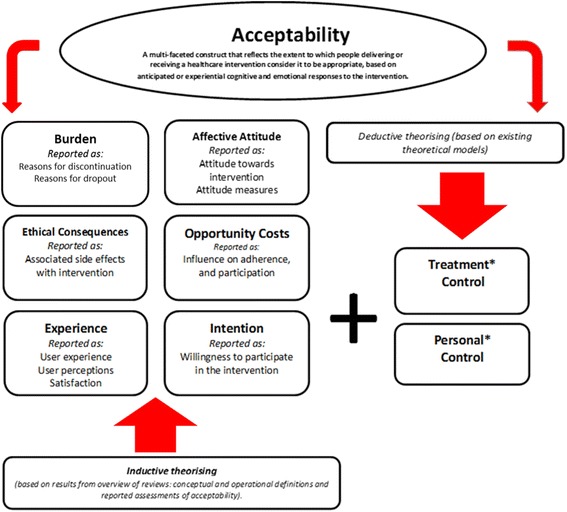
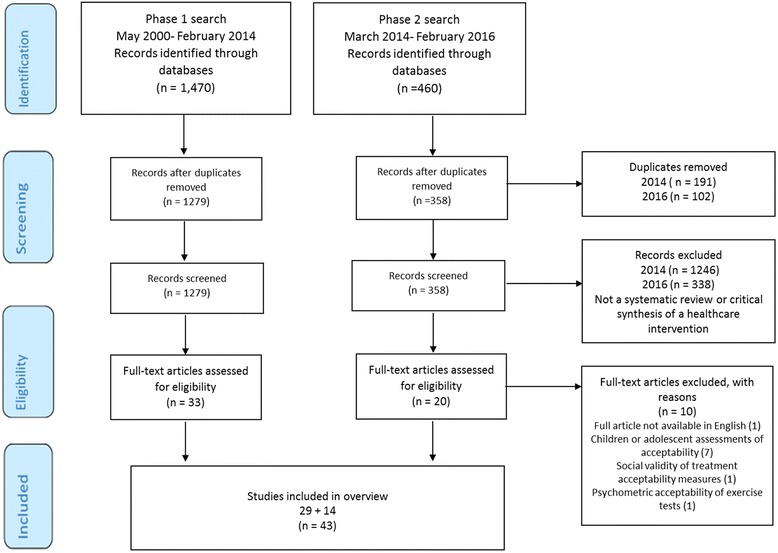
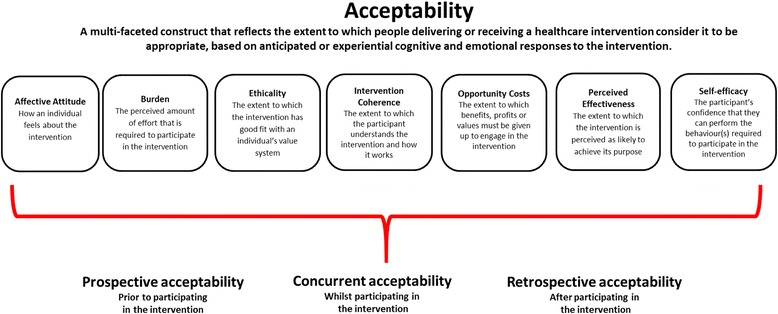
BACKGROUND: It is increasingly acknowledged that 'acceptability' should be considered when designing, evaluating and implementing healthcare interventions. However, the published literature offers little guidance on how to define or assess acceptability. The purpose of this study was to develop a multi-construct theoretical framework of acceptability of healthcare interventions that can be applied to assess prospective (i.e. anticipated) and retrospective (i.e. experienced) acceptability from the perspective of intervention delivers and recipients. METHODS: Two methods were used to select the component constructs of acceptability. 1) An overview of reviews was conducted to identify systematic reviews that claim to define, theorise or measure acceptability of healthcare interventions. 2) Principles of inductive and deductive reasoning were applied to theorise the concept of acceptability and develop a theoretical framework. Steps included (1) defining acceptability; (2) describing its properties and scope and (3) identifying component constructs and empirical indicators. RESULTS: From the 43 reviews included in the overview, none explicitly theorised or defined acceptability. Measures used to assess acceptability focused on behaviour (e.g. dropout rates) (23 reviews), affect (i.e. feelings) (5 reviews), cognition (i.e. perceptions) (7 reviews) or a combination of these (8 reviews). From the methods described above we propose a definition: Acceptability is a multi-faceted construct that reflects the extent to which people delivering or receiving a healthcare intervention consider it to be appropriate, based on anticipated or experienced cognitive and emotional responses to the intervention. The theoretical framework of acceptability (TFA) consists of seven component constructs: affective attitude, burden, perceived effectiveness, ethicality, intervention coherence, opportunity costs, and self-efficacy. CONCLUSION: Despite frequent claims that healthcare interventions have assessed acceptability, it is evident that acceptability research could be more robust. The proposed definition of acceptability and the TFA can inform assessment tools and evaluations of the acceptability of new or existing interventions.
Overview
The claims and statistics of this paper haven’t been checked yet.
Free: it reads the open-access text and checks the first 5 claims that cite a source we can check. Create a free account to check every claim.
Integrity signals
Registry
Cites
Statistics
Figures
Verification
Claims the paper makes
The claims and statistics of this paper haven’t been checked yet.
Free: it reads the open-access text and checks the first 5 claims that cite a source we can check. Create a free account to check every claim.
Claims other papers make about this one
Each is checked against this paper’s own text: does it say what the citing paper says it does?
The source backs part of the claim, not all of it — or backs it for a different population, condition or comparison.
In the citing paper
“Sekhon and colleagues [16] identified 7 component constructs of acceptability, but studies are generally designed to address only some of these components and vary by the components chosen.”
From Acceptability of Digital Mental Health Interventions for Depression and Anxiety: Systematic Review (2024) · cites this paper as [16]
Experimental — accuracy not yet measuredThe source backs part of the claim, not all of it — or backs it for a different population, condition or comparison.
In the citing paper
“Interviews followed a semi-structured schedule, taking into consideration elements of the TDF [24], and TFA [23]. Once drafted, interview schedules were reviewed by the EQUITy Lived Experience Advisory Panel (LEAP).”
From 'I didn't know what to expect': Exploring patient perspectives to identify targets for change to improve telephone-delivered psychological interventions (2020) · cites this paper as [23]
Experimental — accuracy not yet measuredThe source backs part of the claim, not all of it — or backs it for a different population, condition or comparison.
In the citing paper
“It has been increasingly acknowledged that consideration of patient acceptability using theories of behaviour change are key to effective evaluation, design and implementation of healthcare interventions [23–25] .”
From 'I didn't know what to expect': Exploring patient perspectives to identify targets for change to improve telephone-delivered psychological interventions (2020) · cites this paper as [23]
Experimental — accuracy not yet measuredThe cited source says what the claim attributes to it.
In the citing paper
“Overall, relating to the acceptability model by Sekhon et al. (2017), the main problems regarding acceptability centred around the dimensions burden, opportunity cost and self-efficacy, since participants found the intervention overly demanding when suffering from mental health symptoms and that they required more support to from a therapist to make use of the treatment material.”
From Investigating the potential of a novel internet-based cognitive behavioural intervention for Dari and Farsi speaking refugee youth: A feasibility study (2022) · cites this paper as Sekhon et al. (2017)
The cited source says what the claim attributes to it.
In the citing paper
“The TFA provided a structured theory around which to explore patient acceptability of specific elements of telephone-delivered treatment, without presuming acceptability based on patients’ behaviour [23].”
From 'I didn't know what to expect': Exploring patient perspectives to identify targets for change to improve telephone-delivered psychological interventions (2020) · cites this paper as [23]
2 more claims about this paper
Create a free account to see every claim other papers make about this one.
Self-check
Percentages, sums and reported differences re-computed from the paper’s own numbers.
The self-check needs the paper’s full text.
Citations
Cites
Using thematic analysis in psychology
Braun, V., & Clarke, V. (2006) · Qualitative Research in Psychology · doi:10.1191/1478088706qp063oa · Cited by 194,414 · cited 1×
“All extracted data were analysed by applying the thematic synthesis approach [30].”
MethodThe theory of planned behavior
Ajzen, I. (1991) · Organizational Behavior and Human Decision Processes · doi:10.1016/0749-5978(91)90020-t · Cited by 134,657
Preferred Reporting Items for Systematic Reviews and Meta-Analyses: the PRISMA statement
Moher, D., Liberati, A., Tetzlaff, J., Altman, D. G., & for the PRISMA Group (2009) · BMJ · doi:10.1136/bmj.b2535 · Cited by 83,823
Preferred reporting items for systematic reviews and meta-analyses: the PRISMA Statement.
(2009) · PubMed Central · Cited by 44,859
Self-efficacy: Toward a unifying theory of behavioral change
Bandura, A. (1977) · Psychological Review · doi:10.1037/0033-295x.84.2.191 · Cited by 43,925
Cochrane Handbook for Systematic Reviews of Interventions: Cochrane Book Series
(2008) · doi:10.1002/9780470712184 · Cited by 25,048 · cited 1×
“The Cochrane Tool of Quality Assessment was applied most frequently [39] (18 reviews: 62%).”
MethodAssessing the quality of reports of randomized clinical trials: Is blinding necessary?
Jadad, A. R., Moore, R. A., Carroll, D., Jenkinson, C., Reynolds, D. J. M., Gavaghan, D. J., & McQuay, H. J. (1996) · Controlled Clinical Trials · doi:10.1016/0197-2456(95)00134-4 · Cited by 17,582 · cited 2×
“Other assessments tools applied included the Jadad Scale [40] (three reviews: 10%), the”
MethodStructural Equations with Latent Variables.
Clogg, C. C., & Bollen, K. A. (1991) · Contemporary Sociology · doi:10.2307/2072165 · Cited by 17,442
Structural Equations with Latent Variables
Bollen, K. A. (1989) · Wiley series in probability and statistics · doi:10.1002/9781118619179 · Cited by 17,277 · cited 1×
“The inconsistency in defining concepts can impede the development of valid assessment instruments [20].”
BackgroundHealth Behavior and Health Education: Theory, Research, and Practice
(1992) · Annals of Internal Medicine · doi:10.7326/0003-4819-116-4-350_1 · Cited by 13,207
Research works printed but not linked: 1
- Hox JJ From theoretical concept to survey question. 1997): Survey Measurement and Process Quality 1997 New York ua Wiley 45 69
Cited by
Items 701–800 of 1,015
Empirical mode decomposition in clinical signal analysis: A systematic review
Yang, S., Wu, H., Liao, X., Lin, Y., & Chen, J.-J. (2025) · Computers in Biology and Medicine · doi:10.1016/j.compbiomed.2025.110566 · Cited by 12
Dunnett, J., Holkham, J., Trebacz, A., Baldasera, C., Francis, C., Dawson, L., Swiers, R., & Jong, F. C.-D. (2025) · Public Health · doi:10.1016/j.puhe.2025.105937 · Cited by 23
Amuasi, J., Agbogbatey, M., Sarfo, F. S., Beyuo, A., Duah, K., Agasiya, P., Arthur, A., Appiah, L. T., Nguah, S. B., Bockarie, A. S., et al. (2022) · Journal of the Neurological Sciences · doi:10.1016/j.jns.2022.120304 · Cited by 14
Kilbride, C., Warland, A., Stewart, V., Aweid, B., Samiyappan, A., Ryan, J. M., Butcher, T., Athanasiou, D. A., Baker, K., Singla–Buxarrais, G., et al. (2022) · BMJ Open · doi:10.1136/bmjopen-2021-058905 · Cited by 11
Copp, T., Dakin, T., Nickel, B., Albarqouni, L., Mannix, L., McCaffery, K. J., Barratt, A. L., & Moynihan, R. N. (2022) · BMJ Open · doi:10.1136/bmjopen-2022-062706 · Cited by 16
Kechichian, A., Desmeules, F., Girard, P., & Pinsault, N. (2022) · Family Medicine and Community Health · doi:10.1136/fmch-2022-001644 · Cited by 15
Vázquez-Paz, A. M., Nava, R. M. M., Delgado-Pérez, E. E., Lares-Michel, M., & Espinosa‐Curiel, I. E. (2022) · Journal of Medical Systems · doi:10.1007/s10916-022-01860-w · Cited by 14
“In the study, we conducted a post-intervention evaluation of acceptability [75]; therefore, we focused on the affective attitudes after using the app.”
MethodAlonso, Y., Lusengi, W., Manun’Ebo, M. F., Rasoamananjaranahary, A. M., Rivontsoa, N. M., Mucavele, E., Torres, N. F., Sacoor, C. N., Okebalama, H. N., Agbor, U. J., et al. (2022) · BMJ Global Health · doi:10.1136/bmjgh-2022-010079 · Cited by 14
Myers, M. A., Dunikoski, L., Brantner, R., Fletcher, D., Saltzberg, E. E., Urdaneta, A. E., Wedro, B. C., & Giwa, A. (2022) · Journal of Emergency Medicine · doi:10.1016/j.jemermed.2022.11.005 · Cited by 15
Mohideen, A., Bouvin, C., Judah, G., Picariello, F., & Gardner, B. (2023) · Health Psychology and Behavioral Medicine · doi:10.1080/21642850.2022.2162904 · Cited by 14
“…analyses to capture four dimensions of acceptability: affective attitudes towards the intervention (e.g. positive reflections on the intervention), participant burden (e.g. willingness to adhere to new scripts), ethicality (i.e. no harm caused), and perceived effectiveness (Sekhon et al., 2017).”
BackgroundChoi, Y. Y. C., Fineberg, M., & Kassavou, A. (2023) · Behavioral Sciences · doi:10.3390/bs13030246 · Cited by 18
“Moreover, these remote interventions received overall positive feedback and high acceptability rates, indicating a higher likelihood for patients to engage with the interventions, leading to increased chances of successful implementation and possibly to improved overall effectiveness of the intervention [46].”
BackgroundO’Connor, A., Tai, A., Brinn, M. P., Hoang, A. N. T. H., Cataldi, D., & Carson‐Chahhoud, K. (2023) · JMIR Pediatrics and Parenting · doi:10.2196/40219 · Cited by 19
“In brief, the Theoretical Framework of Acceptability is a validated framework for the assessment of the acceptability of health care interventions to aid the identification of any characteristics that may be improved [41,42].”
BackgroundMethodRuiz, F., Nunn, A. J., Gill, A. M., Clapham, D., Fotaki, N., Salunke, S., Cram, A., & O’Brien, F. (2023) · European Journal of Pharmaceutics and Biopharmaceutics · doi:10.1016/j.ejpb.2023.04.010 · Cited by 12
“Comparative acceptability The attributes determining acceptability of two or more dosage forms or interventions are ranked and may allow preference to be expressed [14]”
BackgroundAufa, B. A., Nurfikri, A., Mardiati, W., Sancoko, Yuliyanto, H., Nurmansyah, M. I., Arumsari, I., & Koire, I. I. (2023) · Digital Health · doi:10.1177/20552076231171236 · Cited by 20
“The usability of the system characterizes feasibility, whereas acceptability reflects the extent to which people receiving a healthcare intervention consider it appropriate.(36) Targeted articles’ dates were those ranging from 2010 to 2022, written in English language, and having no geographical limitations.”
BackgroundTöpfer, N. F., Wrede, N., Theurer, C., & Wilz, G. (2023) · Journal of Clinical Psychology · doi:10.1002/jclp.23538 · Cited by 13
Chaudhry, N., Sattar, R., Kiran, T., Wan, M. W., Husain, M., Hidayatullah, S., Ali, B., Shafique, N., Suhag, Z. H., Saeed, Q., et al. (2023) · Children · doi:10.3390/children10060913 · Cited by 18
“Acceptability operationalised as “the extent to which the participants receiving the intervention considered it to be appropriate” [46], was assessed through each participant’s “intervention attendance log”.”
BackgroundA scoping review of mobile apps for use with palliative patients in the context of home care
Cruz, S., Fernandes, C. S., & Magalhães, B. M. B. D. S. (2023) · International Journal of Medical Informatics · doi:10.1016/j.ijmedinf.2023.105166 · Cited by 15
Kouanda, S., Ouédraogo, A. M., Sogo, A. E., Bagaya, O., Sorgho, T. E. V., Hien, Y., Gbénou, D., Windsouri, S. R. S., Zoungrana, W., Dadjoari, M., et al. (2023) · Health Research Policy and Systems · doi:10.1186/s12961-023-01014-5 · Cited by 15
“…research, applying the Capability Opportunity Motiva-tion-Behaviour (COM-B) model for behaviour change to design co-interventions, and the theoretical framework of acceptability, to better understand what it will take to provide quality, integrated and person-centred ANC packages [20, 21].”
BackgroundMethodOkemuo, A. J., Gallagher, D., & Dairo, Y. M. (2023) · PLoS ONE · doi:10.1371/journal.pone.0292312 · Cited by 12
Hindmarch, S., Howell, S. J., Usher‐Smith, J. A., Gorman, L. S., Evans, D. G., & French, D. (2024) · BMJ Open · doi:10.1136/bmjopen-2023-078555 · Cited by 20
“28 We have previously conducted a qualitative study with women aged 30–39 years which suggested that undergoing breast cancer risk assessment was acceptable in principle.”
BackgroundDoren, N. V., Ng, H., Rawat, E. S., McKenna, K. R., & Blonigen, D. M. (2024) · Journal of Substance Use and Addiction Treatment · doi:10.1016/j.josat.2024.209315 · Cited by 17
Daly, M. P., Kipping, R., White, J., & Sanders, J. (2024) · Frontiers in Public Health · doi:10.3389/fpubh.2024.1303953 · Cited by 14
Co-design of an intervention to improve patient participation in discharge medication communication
Tobiano, G., Latimer, S. L., Manias, E., Marshall, A. P., Rattray, M., Jenkinson, K., Teasdale, T. L., Wren, K., & Chaboyer, W. P. (2024) · International Journal for Quality in Health Care · doi:10.1093/intqhc/mzae013 · Cited by 12
“After the interview, the eight-item Theoretical Framework of Acceptability (TFA) questionnaire was administered to end-users [18].”
MethodGalea, J. T., Vasquez, D. H., Rupani, N., Gordon, M. B., Tapia, M., Greene, K. Y., Kolevic, L., Franke, M. F., & Contreras, C. C. (2024) · JMIR Research Protocols · doi:10.2196/55559 · Cited by 20
“…of the proposed mental health chatbot for adolescents living with HIV using open-ended questions derived from 7 core intervention acceptability constructs: affective attitude, ethics, burden, coherence of intervention, opportunity costs, perceived effectiveness, and self-efficacy [31].”
BackgroundQuayle, E., Larkin, A., Schwannauer, M., Varese, F., Cartwright, K. L., Chitsabesan, P., Green, V., Radford, G., Richards, C., Shafi, S., et al. (2024) · BMC Psychiatry · doi:10.1186/s12888-024-05605-6 · Cited by 14
“Sekhon et al. provided an overview of the acceptability of DHIs and from this developed a theoretical framework [45].”
BackgroundUse of qualitative research in World Health Organisation guidelines: a document analysis
Taylor, M., Garner, P., Oliver, S. R., & Desmond, N. (2024) · Health Research Policy and Systems · doi:10.1186/s12961-024-01120-y · Cited by 28
“However, acceptability can include affective attitude, burden, ethicality, intervention coherence, opportunity costs, perceived effectiveness and self-efficacy [42].”
BackgroundRamboarina, S., Crucitti, T., Gill, K., Bekker, L., Harding-Esch, E. M., van de Wijgert, J. H. H. M., Huynh, B.-T., Fortas, C., Harimanana, A. N., Gamana, T. M., et al. (2024) · BMJ Open · doi:10.1136/bmjopen-2024-084918 · Cited by 14
“48 For the DCE, data will be analysed in STATA using the utility function modelled from two alternatives: a systematic (explainable) component and a random (unex-plainable) component.”
MethodBakare, A. A., Salako, J., King, C., Olojede, O. E., Bakare, D., Olasupo, O., Burgess, R. A., McCollum, E. D., Colbourn, T., Falade, A. G., et al. (2024) · BMJ Global Health · doi:10.1136/bmjgh-2023-014902 · Cited by 12
“…guided by maximum variation, and we aimed to include caregivers of children and neonates of different ethnic groups, levels of education and religions who had received oxygen, refused medical oxygen or had no indication of oxygen treatment but who received inpatient care at the time of the study.”
BackgroundGrant, V., & Litchfield, I. J. (2024) · Frontiers in Clinical Diabetes and Healthcare · doi:10.3389/fcdhc.2024.1306199 · Cited by 16
Smyth, E., Brennan, L. K., Enright, R. H., Sekhon, M., Dickson, J., Hussey, J. M., & Guinan, E. M. (2024) · Supportive Care in Cancer · doi:10.1007/s00520-024-08574-4 · Cited by 22
“Using a standardised definition and outcome measure, such as the Theoretical Framework of Acceptability (TFA), to examine acceptability will significantly enhance comprehension of this crucial area [11].”
BackgroundInfluentialSelf-citationLéger‐Goodes, T., Herba, C. M., Moula, Z., Mendrek, A., Hurtubise, K., Piché, J., Gilbert, M., Bernier, M., Simons, K. V., Bélanger, N., et al. (2024) · Frontiers in Child and Adolescent Psychiatry · doi:10.3389/frcha.2024.1322860 · Cited by 25
Chaplain interventions and outcomes in outpatient settings: a scoping review
Sprik, P. J., Vanderstelt, H., Valenti-Hein, C., Denton, J., & Ashton, D. (2024) · Journal of Health Care Chaplaincy · doi:10.1080/08854726.2024.2357042 · Cited by 14
“Satisfaction is the retrospective perception of acceptability based on one’s own participation in the treatment, service, practice, or innovation (Sekhon et al., 2017).”
Freeman-Sanderson, A. L., Brodsky, M. B., Dale, C., Gupta, A., Haines, K. J., Happ, M. B., Hart, N., Hemsley, B., Istanboulian, L., Spronk, P. E., et al. (2024) · Critical Care Medicine · doi:10.1097/ccm.0000000000006347 · Cited by 12
“…outcomes were condensed including “ability to use the provided communication aid,” “communication ease/effort,” and “satisfaction communication” into acceptability of the communication intervention as these concepts were considered under the broader construct of acceptability (Table 4) (40).”
BackgroundSkliarova, T., Pedersen, H., Holsbrekken, Å., Pedersen, S. A., Mandal, A., Cuevas, C. D. L., Havnen, A., Gråwe, R. W., & Lara‐Cabrera, M. L. (2024) · BMC Psychiatry · doi:10.1186/s12888-024-05908-8 · Cited by 16
Steinberg, J. S., Fitzpatrick, O. M., Khurana, S., Kim, M. Y., Mair, P., Schleider, J. L., Hatzenbuehler, M. L., & Weisz, J. R. (2024) · Journal of Clinical Child & Adolescent Psychology · doi:10.1080/15374416.2024.2384026 · Cited by 21
Lewis, S., Rinehart, N., Mantilla, A., Alvares, G. A., Hiscock, H., Marks, D., & Papadopoulos, N. V. (2024) · Sleep Medicine · doi:10.1016/j.sleep.2024.09.001 · Cited by 13
White, S. J., Bearne, L., Sweeney, A., & Mantovani, N. (2024) · Frontiers in Public Health · doi:10.3389/fpubh.2024.1450680 · Cited by 18
“…evaluation of an intervention’s content made by their recipients, is important because successful implementation depends on the acceptability of the intervention to recipients and needs to be considered in the development, evaluation and implementation phases of any healthcare interventions (115).”
BackgroundPonzano, M., Nash, M. S., Bilzon, J., Bochkezanian, V., Davis, G. M., Farkas, G. J., de Groot, S., Jin, J., Larsen, C. M., Laskin, J., et al. (2024) · Archives of Physical Medicine and Rehabilitation · doi:10.1016/j.apmr.2024.11.006 · Cited by 22
Palmer, C., Kane, J., Patterson, P. H., & Tuomainen, H. (2025) · Journal of Child and Family Studies · doi:10.1007/s10826-025-03007-0 · Cited by 17
“The current review most closely aligns to Sekhon et al. (2017), focusing on different stakeholders ’ perceptions of screening, incorporating affective attitudes alongside concerns and perceived costs of participation.”
InfluentialHua, D., Petrina, N., Sacks, A. J., Young, N., Cho, J., Smith, R. C., & Poon, S. K.-S. (2024) · JAMIA Open · doi:10.1093/jamiaopen/ooae151 · Cited by 12
Garrett, C., Smith, D. M., & Wittkowski, A. (2025) · Frontiers in Psychiatry · doi:10.3389/fpsyt.2025.1400962 · Cited by 15
“On the basis of a systematic review of reviews that claimed to de fi ne, theorise or measure the concept, and also consideration of potentially relevant theories from health psychology and behaviour change, Sekhorn et al. (68) generated the Theoretical Framework of Acceptability (TFA).”
Ahmed, A. S., Ho, C. W., Grant, Y., Archer, S., & Carrington, E. V. (2025) · BMJ Open · doi:10.1136/bmjopen-2024-086412 · Cited by 44
“27 The TFA encompasses seven key constructs: affective attitudes, burden, ethicality, intervention coherence, opportunity costs, perceived effectiveness and self-efficacy (online supplemental appendix 1, figure 1).”
Allen, M. J., Tulleners, R., Brain, D., O’Beirne, J. P., Powell, E. E., Barnett, A. G., Valery, P. C., Kularatna, S., & Hickman, I. J. (2025) · BMC Health Services Research · doi:10.1186/s12913-025-12580-5 · Cited by 16
“In addition, the theoretical framework of acceptability was used [15].”
Hezel, N., Buchner, T., Becker, C., Bauer, J. M., Sloot, L. H., Steib, S., & Werner, C. (2025) · European Review of Aging and Physical Activity · doi:10.1186/s11556-025-00375-w · Cited by 14
“…7 pt., highest acceptability = 35 pt.), covering one item for each of seven dimensions (affective attitude, burden, ethicality, intervention coherence, opportunity cost, perceived effectiveness, self-efficacy), rated on a 5-point Likert scale (1 = strongly disagree to 5 = strongly agree) [33, 49].”
A flexible framework for planning and evaluating early-stage health interventions: FRAME-IT
Gonot-Schoupinsky, F., & Garip, G. (2019) · Evaluation and Program Planning · doi:10.1016/j.evalprogplan.2019.101685 · Cited by 13
Obi‐Jeff, C., Rakhshani, N. S., Bello-Malabu, J. I., Nwangwu, C. W., Nwaononiwu, E., Eboreime, E., & Wonodi, C. B. (2020) · Vaccine · doi:10.1016/j.vaccine.2020.04.025 · Cited by 13
Carlin, E., Spry, E. P., Atkinson, D. N., & Marley, J. V. (2020) · PLoS ONE · doi:10.1371/journal.pone.0234346 · Cited by 15
“Key characteristics of culturally secure care include trusting relationships between Aboriginal people and their health professionals, Aboriginal people receiving accessible health information and having sufficient time with a health care provider to discuss their health [39].”
BackgroundInfluentialMeasuring patient experience of diagnostic care and acceptability of testing
Forster, A. S., Rubin, G. P., Emery, J. D., Thompson, M., Sutton, S. R., de Wit, N. J., Walter, F. M., & Lyratzopoulos, G. (2021) · Diagnosis · doi:10.1515/dx-2020-0112 · Cited by 15
“propose that acceptability of health care interventions is defined as ‘a reflection of the extent to which people receiving a healthcare intervention consider it to be appropriate, based on anticipated or experiential cognitive and emotional responses to the intervention’ [14].”
InfluentialSmits, F., de Kort, G. J., & Geuze, E. (2021) · BMC Psychiatry · doi:10.1186/s12888-021-03086-5 · Cited by 14
“Using the TFA in qualitative research can thus provide insights in the different aspects of acceptability and underlying reasons, and can be applied to assess the patient’s and the caregiver’s perspective in a similar way.”
BackgroundInfluentialAcceptability of nurse-led reviews for inflammatory rheumatological conditions: A qualitative study
Herron, D., Chew-Graham, C. A., Hider, S., Machin, A. R., Paskins, Z., Cooke, K., Desilva, E. E., & Jinks, C. (2021) · Journal of Multimorbidity and Comorbidity · doi:10.1177/26335565211002402 · Cited by 12
“Burden refers to ‘the perceived amount of effort that is required to participate in the intervention’.(15) Most participants did not report the review as being burdensome.”
BackgroundInfluentialEnoch, J., Ghulakhszian, A., Crabb, D. P., Dinah, C. B., & Taylor, D. J. (2021) · BMJ Open · doi:10.1136/bmjopen-2021-049495 · Cited by 13
Lafferty, L., Rance, J., Dore, G. J., Grebely, J., Lloyd, A. R., & Treloar, C. (2021) · International Journal of Drug Policy · doi:10.1016/j.drugpo.2021.103379 · Cited by 12
Husain, N., Lovell, K., Chew-Graham, C. A., Lunat, F., McPhillips, R., Atif, N., Aseem, S., Begum, J., Bee, P., Bhui, K. S., et al. (2021) · BJPsych Open · doi:10.1192/bjo.2021.1032 · Cited by 15
“47 Regular meetings between the three researchers (S.A., R.M. and J.B.) who are responsible for independently carrying out data coding, and their supervisors (C.A.C.G. and P.Bee.) will be organised to ascertain that the emerging codes remain grounded in the original data.”
Garbett, K. M., Craddock, N., Haywood, S., Nasution, K., White, P., Saraswati, L. A., Medise, B. E., Effect, G., Galactic, P., Diedrichs, P. C., et al. (2022) · JMIR Research Protocols · doi:10.2196/33596 · Cited by 12
Wallman, E. J., Segrave, R. A., Gordon, M. S., Fraser, M. J. O. B., Pavlou, C., & Melvin, G. A. (2022) · Journal of Affective Disorders · doi:10.1016/j.jad.2022.04.057 · Cited by 12
Morgan, C., Tonkin, E. L., Craddock, I. J., & Whone, A. L. (2022) · JMIR Human Factors · doi:10.2196/36370 · Cited by 13
“However, the acceptability (the extent to which the target population considers an intervention to be appropriate based on their cognitive and emotional responses to it [6]) of various types of passive technological sensors for free-living at home has not been widely explored in PD.”
BackgroundBooth, G., Zala, S., Mitchell, C., Zarnegar, R., Lucas, A., & Gilbert, A. W. (2022) · British Journal of Pain · doi:10.1177/20494637221106411 · Cited by 12
“Acceptability has been defined as ‘a multi-faceted construct that reflects the extent to which people delivering or receiving a healthcare intervention consider it to be appropriate, based on anticipated or experienced cognitive and emotional responses to the intervention’.(10) The role of remotely delivered pain mana…”
BackgroundExamining and Promoting Explainable Recommendations for Personal Sensing Technology Acceptance
Newn, J., Kelly, R., D’Alfonso, S., & Lederman, R. (2022) · Proceedings of the ACM on Interactive Mobile Wearable and Ubiquitous Technologies · doi:10.1145/3550297 · Cited by 16
“As acceptability is a ‘multi-faceted construct’ [84], we extend this body of work by first examining the barriers to the acceptability of recommendations based on personal sensing (RQ1), followed by the role explanations can play in influencing acceptance (RQ2).”
BackgroundMorris, J. H., Irvine, L. A., Tooman, T., Dombrowski, S. U., McCormack, B. G., van Wijck, F., & Lawrence, M. (2023) · Pilot and Feasibility Studies · doi:10.1186/s40814-022-01227-5 · Cited by 15
“Fieldnotes show these PWS engaged and progressed less than dyads whose perceptions of its coherence grew over time, coherence being the extent to which a participant understands We Walk and how it works, according to the theoretical framework of acceptability [35].”
BackgroundMethodInfluentialHeneka, N., Chambers, S. K., Schaefer, I., & Dunn, J. C. (2023) · Psycho-Oncology · doi:10.1002/pon.6101 · Cited by 15
“22 Hence, we applied the Theoretical Framework of Acceptability 22 to assess intervention acceptability and explore attitudes towards the intervention, intervention appropriateness, suitability, and convenience, and perceived effectiveness of the intervention.”
Godziuk, K., Prado, C. M. M., Quintanilha, M., & Forhan, M. A. (2023) · BMC Musculoskeletal Disorders · doi:10.1186/s12891-023-06238-8 · Cited by 14
“Outcomes Acceptability of a healthcare intervention is determined by whether it meets the needs, preferences and expectations of the patients who receive it [22, 23].”
BackgroundSnowdon, D. A., Srikanth, V. K., Beare, R. J., Noeske, K. E., Le, E., O’Bree, B., & Andrew, N. E. (2023) · Journal of Patient-Reported Outcomes · doi:10.1186/s41687-023-00617-4 · Cited by 12
“’s seven component constructs of acceptability for healthcare interventions (Table 2) [33, 34].”
BackgroundSowerby, C., & Taylor, D. (2017) · BMJ Open · doi:10.1136/bmjopen-2017-017183 · Cited by 12
“Currently, there is no definition of acceptability in healthcare, although Sekhon et al (2017) propose a theoretical yet to be validated framework.(20) We suggest that acceptability of shared-care clozapine is demonstrated by the active engagement of CSUs and Forensic HCPs in the process.”
BackgroundAlnasser, A., Kyle, J., Alkhalifah, A., & Marais, D. (2018) · JMIR Human Factors · doi:10.2196/humanfactors.9765 · Cited by 16
“To ensure the proper implementation of a complex intervention [10] involving a website or mobile app, usability —or how effectively, efficiently, and satisfactorily a user can interact with a user interface [11]—must be investigated.”
An Exploratory Examination of Client Perspectives on a Positive Memory Technique for PTSD
Caldas, S. V., Jin, L., Dolan, M., Dranger, P., & Contractor, A. A. (2020) · The Journal of Nervous and Mental Disease · doi:10.1097/nmd.0000000000001082 · Cited by 12
“Second, positive perspectives on the potential benefits of addressing positive memories in general and PTSD therapy may predict strong adherence, response rates, and recruitment rates (Sekhon et al., 2017).”
BackgroundCritical and Qualitative Approaches to Behavior Change
Chamberlain, K., & Lyons, A. C. (2020) · Cambridge University Press eBooks · doi:10.1017/9781108677318.030 · Cited by 16
Kourouma, K. R., Yaméogo, W. M. E., Doukouré, D., Agbré-Yacé, M. L., Tano-Kamelan, A., Coulibaly-Koné, S. A., Millogo, T., & Kouanda, S. (2020) · Pilot and Feasibility Studies · doi:10.1186/s40814-020-00691-1 · Cited by 15
“The analysis also takes into account the perceived anticipated conditions and strategies for its introduction and use within the healthcare system [13, 16].”
BackgroundOprandi, M. C., Bardoni, A., Corno, L., Guerrini, A. M., Molatore, L., Negri, L., Beretta, E., Locatelli, F., Strazzer, S., & Poggi, G. (2021) · International Journal of Telerehabilitation · doi:10.5195/ijt.2021.6423 · Cited by 12
Lara, B., Kottler, J., Olsen, A., Best, A., Conkright, J. M., & Larimer, K. A. (2022) · Applied Clinical Informatics · doi:10.1055/s-0042-1742370 · Cited by 13
Richardson, E., McEwen, A., Newton-John, T. R. O., Crook, A., & Jacobs, C. (2022) · European Journal of Human Genetics · doi:10.1038/s41431-022-01090-1 · Cited by 13
“Acceptability is a multi-faceted construct that reflects the extent to which people receiving a healthcare intervention consider it to be appropriate, and which encompasses both anticipated (prospective) and experienced (retrospective) aspects [35].”
BackgroundNulty, A. K., Chen, E. S., & Thompson, A. L. (2022) · Digital Health · doi:10.1177/20552076221084461 · Cited by 18
“Participants were scored as “low” physical activity level if they did not meet criteria for moderate or high physical activity.29 Ava bracelet and mobile application acceptability After all data had been collected, the acceptability of the Ava bracelet and mobile app to monitor reproductive health measures was assesse…”
MethodDevelopment of a Multicomponent Intervention to Decrease Racial Bias Among Healthcare Staff
Tajeu, G. S., Juarez, L., Williams, J. H., Halanych, J. H., Štěpáníková, I., Agne, A. A., Stone, J., & Cherrington, A. (2022) · Journal of General Internal Medicine · doi:10.1007/s11606-022-07464-x · Cited by 16
Wood, L., Williams, C., Pinfold, V., Nolan, F., Morrison, A. P., Morant, N., Lloyd-Evans, B., Lewis, G., Lay, B., Jones, R., et al. (2022) · Pilot and Feasibility Studies · doi:10.1186/s40814-022-01160-7 · Cited by 12
To Work or Not to Work? That is the Question
Hattery, A. (2001) · Sage eBooks · doi:10.4135/9781452233932.n5 · Cited by 12
Tsirmpas, C., Nikolakopoulou, M., Kaplow, S., Andrikopoulos, D., Fatouros, P., Kontoangelos, K., & Papageorgiou, C. (2023) · JMIR Formative Research · doi:10.2196/48362 · Cited by 11
“The acceptability of the program was assessed based on 3 different time points in relation to the intervention delivery period [58].”
MethodFisher, G., Smith, C. L., Pagano, L., Spanos, S., Zurynski, Y. A., & Braithwaite, J. (2025) · The Lancet Planetary Health · doi:10.1016/s2542-5196(25)00056-7 · Cited by 12
Maximizing User Engagement with Behavior Change Interventions
Yardley, L., Morrison, L. G., Müller, I., & Bradbury, K. J. (2020) · Cambridge University Press eBooks · doi:10.1017/9781108677318.025 · Cited by 13
Niknam, M., Omidvar, N., Amiri, P., Eini‐Zinab, H., & Kalantari, N. (2020) · Health Promotion International · doi:10.1093/heapro/daaa101 · Cited by 13
Siller, L., Edwards, K. M., Charge, L. L., Bordeaux, S., Charge, D. L., & Herrington, R. (2021) · Journal of Community Psychology · doi:10.1002/jcop.22632 · Cited by 11
Zeng, D., Yang, C., & Chien, W. T. (2021) · Australian Journal of Rural Health · doi:10.1111/ajr.12712 · Cited by 17
Krishnaratne, S., Hoyt, J., Hamon, J. K., Ariko, A. B., Atayo, C., Morukileng, J., Spilotros, N., & Webster, J. (2022) · BMJ Open · doi:10.1136/bmjopen-2021-054277 · Cited by 13
Ambagtsheer, R. C., Casey, M. G., Lawless, M., Archibald, M. M., Yu, S., Kitson, A. A., & Beilby, J. (2022) · BMC Family Practice · doi:10.1186/s12875-022-01778-9 · Cited by 12
“Our study focused on provider perceptions, which necessarily limited the scope of the feasibility components analysed [50], and our study analysed feasibility independently of accuracy.”
MethodMcIlroy, S., Vaughan, B., Crowe, H., & Bearne, L. (2022) · Musculoskeletal Care · doi:10.1002/msc.1672 · Cited by 15
Wallis, J. A., Gearon, E., Naylor, J., Young, K., Zayontz, S., Risbey, P., Harris, I. A., Buchbinder, R., & O’Connor, D. A. (2022) · PLoS ONE · doi:10.1371/journal.pone.0273405 · Cited by 13
“We used the term acceptability to reflect the extent to which people receiving a healthcare intervention consider it to be appropriate, based on anticipated or experienced cognitive and emotional responses to the intervention [22].”
MethodLaing, L., Salema, N.-E., Jeffries, M., Shamsuddin, A., Sheikh, A., Chuter, A., Waring, J. J., Avery, A. J., & Keers, R. N. (2022) · PLoS ONE · doi:10.1371/journal.pone.0275633 · Cited by 13
“Information taken from page 8 of 13, Sekhon, Cartwright & Francis (2017) [23]”
BackgroundMethodInfluentialSurendran, A., McSharry, J., Meade, O., Bligh, F., McNamara, J. G., Meredith, D., & O’Hora, D. P. (2023) · International Journal of Environmental Research and Public Health · doi:10.3390/ijerph20075394 · Cited by 16
“The adoption of an intervention depends on the perceived acceptability because it indicates how much the intervention was thought to be appropriate by the target population [66].”
BackgroundNamuddu, M. G., Kiguli, J., Nakibuuka, V., Nantale, R., & Mukunya, D. (2023) · International Breastfeeding Journal · doi:10.1186/s13006-023-00569-x · Cited by 11
“Acceptability of the use of donated breast milk as a dependent variable was measured using the Theoretical Framework of Acceptability (TFA) recommended by Sekhon et al., 2017 [25].”
BackgroundMethodInfluentialIhab, M., Abdelaziz, W. E., Hassan, W., & Tantawi, M. E. (2023) · BMC Oral Health · doi:10.1186/s12903-023-03351-x · Cited by 14
“The questions were based on the framework of acceptability (TFA), developed by Sekhon and colleagues [32] and included questions assessing mothers’ affective attitude, burden, perceived effectiveness, ethicality, intervention coherence, and opportunity costs (Appendix 4).”
MethodMcCann, N. C., McMahan, V., Smith, R. M., Majeski, A., Johns, S. L., Kosakowski, S., Wolfe, S., Brennan, S., Robinson, M. V., Coffin, P. O., et al. (2023) · Addictive Behaviors · doi:10.1016/j.addbeh.2023.107873 · Cited by 12
Humbert, A., Kohls, E., Baldofski, S., Epple, C., & Rummel‐Kluge, C. (2023) · Frontiers in Psychiatry · doi:10.3389/fpsyt.2023.1271702 · Cited by 13
“Acceptability is a necessary condition of an intervention to be successfully implemented (52).”
BackgroundDawson, R., Gilchrist, H., Pinheiro, M. B., Nelson, K., Bowes, N., Sherrington, C., & Haynes, A. S. (2023) · JMIR Aging · doi:10.2196/53010 · Cited by 16
“Implementation research explores the experience of a complex intervention such as telehealth and its relationship to other factors, such as intervention engagement and adherence, perceived effectiveness, acceptability, and self-efficacy, which can support implementation translation [15].”
BackgroundStakeholder perspectives of family interventions for schizophrenia in Indonesia: a qualitative study
Susanti, H., Brooks, H. L., Keliat, B. A., Bradshaw, T., Wulandari, D., Fadilah, R., Diorarta, R., Suherman, S., Bee, P., Lovell, K., et al. (2024) · BMC Psychiatry · doi:10.1186/s12888-024-05504-w · Cited by 22
“Illness perceptions and views about the utility and effectiveness of treatments have a role in determining the perceived need and acceptability of interventions for individuals in receipt of treatment but also among those who deliver it [22].”
BackgroundArmaou, M. (2024) · Social Sciences · doi:10.3390/socsci13020114 · Cited by 15
“Sekhon et al.’s (2017) define acceptability as “ a multi-faceted construct that reflects to the extent to which people delivering or receiving a healthcare intervention consider it to be appropriate, based on anticipated or experimental cognitive and emotional responses to the intervention ” and…”
Marwaa, M. N., Guidetti, S. G. E., Ytterberg, C., & Kristensen, H. K. (2024) · Annals of Medicine · doi:10.1080/07853890.2024.2302979 · Cited by 11
“…qualitative measures that capture the extent to which people delivering or receiving a healthcare intervention consider it appropriate to address their needs in a specific context [49], which impacts intervention implementation, uptake, adherence, intended outcomes, and overall effectiveness [50].”
BackgroundWolfenden, L., Hall, A. E., Bauman, A. E., Milat, A., Hodder, R. K., Webb, E., Mooney, K., Yoong, S., Sutherland, R., & McCrabb, S. (2024) · Health Research Policy and Systems · doi:10.1186/s12961-024-01144-4 · Cited by 14
Dupont, C., Smets, T., Monnet, F., Pivodic, L., Vleminck, A. D., Audenhove, C. V., & den Block, L. V. (2024) · Patient Education and Counseling · doi:10.1016/j.pec.2024.108357 · Cited by 12
Jones, A. S. K., Harding, S., Seaton, N., Hudson, J. L., Duff, A., Wroe, A. L., Singh, H., Norton, S., Picariello, F., & Moss-Morris, R. E. (2024) · Contemporary Clinical Trials · doi:10.1016/j.cct.2024.107658 · Cited by 12
Stopka, T. J., Rottapel, R. E., Friedmann, P. D., Pivovarova, E., & Evans, E. (2024) · Addiction Science & Clinical Practice · doi:10.1186/s13722-024-00486-2 · Cited by 13
“In addition, the multi-construct TFA framework allows for assessment of prospective (i.e., anticipated) and retrospective (i.e., experienced) intervention/treatment acceptability [35] among participants who have already received XR-Bup and those who have contemplated receiving such treatment.”
BackgroundMethodInfluentialInternational perspective on social cognition in schizophrenia: current stage and the next steps
Corbera, S., Kurtz, M. M., Achim, A. M., Agostoni, G., Amado, I., Assaf, M., Barlati, S., Bechi, M., Cavallaro, R., Ikezawa, S., et al. (2025) · European Psychiatry · doi:10.1192/j.eurpsy.2024.1776 · Cited by 14
“Barriers to effective clinical implementation could exist on several different levels: a practice may have, for different reasons, a poor acceptability profile for users and participants [161, 162].”
Stevens, A., Lafferty, L., Treloar, C., Cunningham, E. B., Dore, G. J., Grebely, J., & Marshall, A. D. (2025) · International Journal of Drug Policy · doi:10.1016/j.drugpo.2025.104720 · Cited by 11
Metadata
- Authors
- Sekhon, M., Cartwright, M., & Francis, J. J.
- Affiliations
- City, University of London (GB)
- Corresponding author
- Sekhon, Mandeep
- Venue
- BMC Health Services Research
- Published
- 2017-01-26
- Volume
- 17
- Issue
- 1
- Pages
- 88-88
- ISSN
- 1472-6963 (ISSN-L)
- PMC
- PMC5267473
- OpenAlex
- W2582406074
- Semantic Scholar
- f75ddad2e8aacf728c62bc750ceb8bc085f6094d
- Cited by
- 3,938
- References
- 78
- Citations by year
- 2026: 620 · 2025: 701 · 2024: 683 · 2023: 518 · 2022: 535 · 2021: 349 · 2020: 349 · 2019: 118 · 2018: 56 · 2017: 6
- FWCI
- 234.94
- Type
- journal article
- Language
- en
- Open access
- gold
- doi.org
- Licence
- cc-by
- Locations
- BMC Health Services Research (publishedVersion, cc-by)
- Europe PMC (PubMed Central) (publishedVersion, cc-by)
- PubMed Central (publishedVersion, cc-by)
- PubMed (publishedVersion)
- Research Repository (Kingston University London) (acceptedVersion)
- City Research Online (City University London) (acceptedVersion)
- St George's Online Research Archive (St George's University of London) (acceptedVersion)
- Minerva Access (University of Melbourne) (submittedVersion, cc-by)
- Research Portal (King's College London) (submittedVersion, cc-by)
- Topics
- Health Sciences › Health Professions › General Health Professions › Health Policy Implementation Science
- Social Sciences › Economics, Econometrics and Finance › Economics and Econometrics › Health Systems, Economic Evaluations, Quality of Life
- Health Sciences › Nursing › Research and Theory › Health Education and Validation
- Keywords
- theoretical framework, affective attitudes, perceived burden, perceived effectiveness, ethicality, intervention coherence, opportunity cost, self-efficacy, dropout rates
- MeSH terms
- Humans, Models, Theoretical, Patient Acceptance of Health Care, Prospective Studies, Retrospective Studies, Review Literature as Topic, Consensus
About these checks
Registry, retraction, Cites and statistics results are computed, not judged, with one exception: a printed reference that no index lists is read once by a model before it counts as a citation error. Claims are extracted by a model and kept only when their quote appears verbatim in the text; each cited source is then checked, with a model’s help, for whether it says what the claim relies on. Those verdicts can be wrong — read the claim’s quote and the cited source before relying on one.
Statistics and arithmetic are recomputed, not judged.
Confidence bands are shown only for fields calibrated on our annotated test set. None is calibrated yet, so no band is shown.
What counts as a claim ›How we measure confidence ›How we check this ›
Are you an author, or do you see a problem with this page? Request a review
Data sources
Bibliographic data: Semantic Scholar, OpenAlex, Crossref.
Contains information from the Semantic Scholar Academic Graph Datasets, made available under the ODC Attribution License (ODC-BY 1.0).
Semantic Scholar’s data is described in: Kinney, R., et al. (2023). The Semantic Scholar Open Data Platform. arXiv:2301.10140.
