

Acceptability of healthcare interventions: an overview of reviews and development of a theoretical framework
Open accessThe DOI matches its Crossref record; 74 of the 78 references it cites were found in a registry or an index.
Abstract
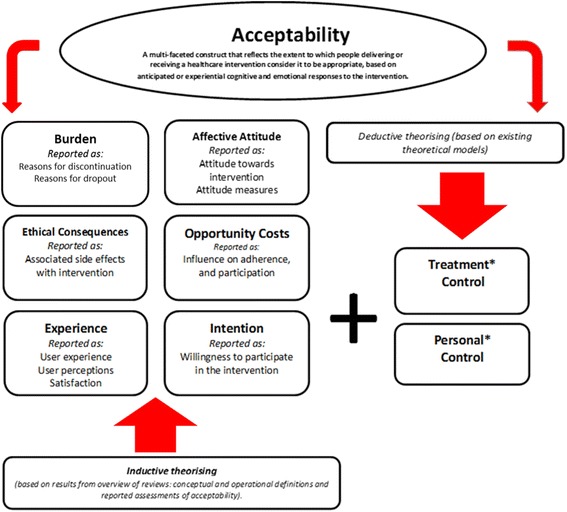
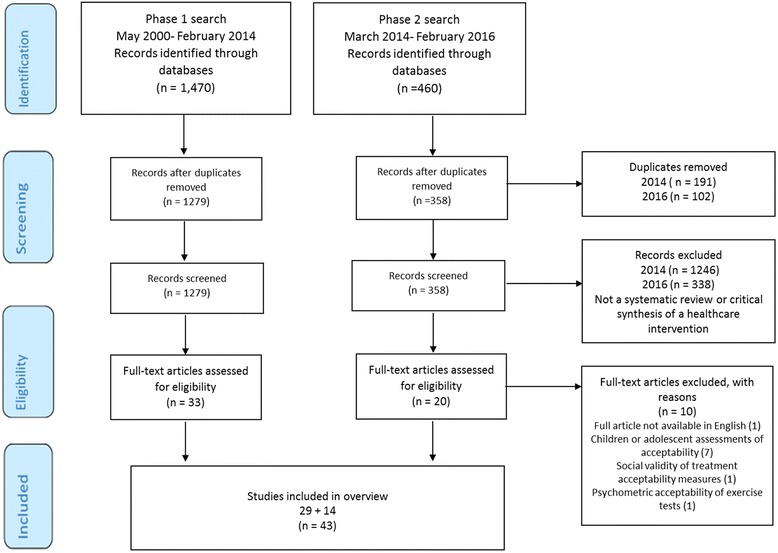
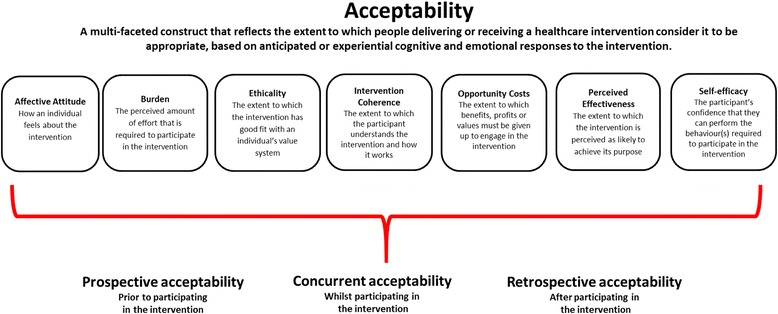
BACKGROUND: It is increasingly acknowledged that 'acceptability' should be considered when designing, evaluating and implementing healthcare interventions. However, the published literature offers little guidance on how to define or assess acceptability. The purpose of this study was to develop a multi-construct theoretical framework of acceptability of healthcare interventions that can be applied to assess prospective (i.e. anticipated) and retrospective (i.e. experienced) acceptability from the perspective of intervention delivers and recipients. METHODS: Two methods were used to select the component constructs of acceptability. 1) An overview of reviews was conducted to identify systematic reviews that claim to define, theorise or measure acceptability of healthcare interventions. 2) Principles of inductive and deductive reasoning were applied to theorise the concept of acceptability and develop a theoretical framework. Steps included (1) defining acceptability; (2) describing its properties and scope and (3) identifying component constructs and empirical indicators. RESULTS: From the 43 reviews included in the overview, none explicitly theorised or defined acceptability. Measures used to assess acceptability focused on behaviour (e.g. dropout rates) (23 reviews), affect (i.e. feelings) (5 reviews), cognition (i.e. perceptions) (7 reviews) or a combination of these (8 reviews). From the methods described above we propose a definition: Acceptability is a multi-faceted construct that reflects the extent to which people delivering or receiving a healthcare intervention consider it to be appropriate, based on anticipated or experienced cognitive and emotional responses to the intervention. The theoretical framework of acceptability (TFA) consists of seven component constructs: affective attitude, burden, perceived effectiveness, ethicality, intervention coherence, opportunity costs, and self-efficacy. CONCLUSION: Despite frequent claims that healthcare interventions have assessed acceptability, it is evident that acceptability research could be more robust. The proposed definition of acceptability and the TFA can inform assessment tools and evaluations of the acceptability of new or existing interventions.
Overview
The claims and statistics of this paper haven’t been checked yet.
Free: it reads the open-access text and checks the first 5 claims that cite a source we can check. Create a free account to check every claim.
Integrity signals
Registry
Cites
Statistics
Figures
Verification
Claims the paper makes
The claims and statistics of this paper haven’t been checked yet.
Free: it reads the open-access text and checks the first 5 claims that cite a source we can check. Create a free account to check every claim.
Claims other papers make about this one
Each is checked against this paper’s own text: does it say what the citing paper says it does?
The source backs part of the claim, not all of it — or backs it for a different population, condition or comparison.
In the citing paper
“Sekhon and colleagues [16] identified 7 component constructs of acceptability, but studies are generally designed to address only some of these components and vary by the components chosen.”
From Acceptability of Digital Mental Health Interventions for Depression and Anxiety: Systematic Review (2024) · cites this paper as [16]
Experimental — accuracy not yet measuredThe source backs part of the claim, not all of it — or backs it for a different population, condition or comparison.
In the citing paper
“Interviews followed a semi-structured schedule, taking into consideration elements of the TDF [24], and TFA [23]. Once drafted, interview schedules were reviewed by the EQUITy Lived Experience Advisory Panel (LEAP).”
From 'I didn't know what to expect': Exploring patient perspectives to identify targets for change to improve telephone-delivered psychological interventions (2020) · cites this paper as [23]
Experimental — accuracy not yet measuredThe source backs part of the claim, not all of it — or backs it for a different population, condition or comparison.
In the citing paper
“It has been increasingly acknowledged that consideration of patient acceptability using theories of behaviour change are key to effective evaluation, design and implementation of healthcare interventions [23–25] .”
From 'I didn't know what to expect': Exploring patient perspectives to identify targets for change to improve telephone-delivered psychological interventions (2020) · cites this paper as [23]
Experimental — accuracy not yet measuredThe cited source says what the claim attributes to it.
In the citing paper
“Overall, relating to the acceptability model by Sekhon et al. (2017), the main problems regarding acceptability centred around the dimensions burden, opportunity cost and self-efficacy, since participants found the intervention overly demanding when suffering from mental health symptoms and that they required more support to from a therapist to make use of the treatment material.”
From Investigating the potential of a novel internet-based cognitive behavioural intervention for Dari and Farsi speaking refugee youth: A feasibility study (2022) · cites this paper as Sekhon et al. (2017)
The cited source says what the claim attributes to it.
In the citing paper
“The TFA provided a structured theory around which to explore patient acceptability of specific elements of telephone-delivered treatment, without presuming acceptability based on patients’ behaviour [23].”
From 'I didn't know what to expect': Exploring patient perspectives to identify targets for change to improve telephone-delivered psychological interventions (2020) · cites this paper as [23]
2 more claims about this paper
Create a free account to see every claim other papers make about this one.
Self-check
Percentages, sums and reported differences re-computed from the paper’s own numbers.
The self-check needs the paper’s full text.
Citations
Cites
Using thematic analysis in psychology
Braun, V., & Clarke, V. (2006) · Qualitative Research in Psychology · doi:10.1191/1478088706qp063oa · Cited by 194,414 · cited 1×
“All extracted data were analysed by applying the thematic synthesis approach [30].”
MethodThe theory of planned behavior
Ajzen, I. (1991) · Organizational Behavior and Human Decision Processes · doi:10.1016/0749-5978(91)90020-t · Cited by 134,657
Preferred Reporting Items for Systematic Reviews and Meta-Analyses: the PRISMA statement
Moher, D., Liberati, A., Tetzlaff, J., Altman, D. G., & for the PRISMA Group (2009) · BMJ · doi:10.1136/bmj.b2535 · Cited by 83,823
Preferred reporting items for systematic reviews and meta-analyses: the PRISMA Statement.
(2009) · PubMed Central · Cited by 44,859
Self-efficacy: Toward a unifying theory of behavioral change
Bandura, A. (1977) · Psychological Review · doi:10.1037/0033-295x.84.2.191 · Cited by 43,925
Cochrane Handbook for Systematic Reviews of Interventions: Cochrane Book Series
(2008) · doi:10.1002/9780470712184 · Cited by 25,048 · cited 1×
“The Cochrane Tool of Quality Assessment was applied most frequently [39] (18 reviews: 62%).”
MethodAssessing the quality of reports of randomized clinical trials: Is blinding necessary?
Jadad, A. R., Moore, R. A., Carroll, D., Jenkinson, C., Reynolds, D. J. M., Gavaghan, D. J., & McQuay, H. J. (1996) · Controlled Clinical Trials · doi:10.1016/0197-2456(95)00134-4 · Cited by 17,582 · cited 2×
“Other assessments tools applied included the Jadad Scale [40] (three reviews: 10%), the”
MethodStructural Equations with Latent Variables.
Clogg, C. C., & Bollen, K. A. (1991) · Contemporary Sociology · doi:10.2307/2072165 · Cited by 17,442
Structural Equations with Latent Variables
Bollen, K. A. (1989) · Wiley series in probability and statistics · doi:10.1002/9781118619179 · Cited by 17,277 · cited 1×
“The inconsistency in defining concepts can impede the development of valid assessment instruments [20].”
BackgroundHealth Behavior and Health Education: Theory, Research, and Practice
(1992) · Annals of Internal Medicine · doi:10.7326/0003-4819-116-4-350_1 · Cited by 13,207
Research works printed but not linked: 1
- Hox JJ From theoretical concept to survey question. 1997): Survey Measurement and Process Quality 1997 New York ua Wiley 45 69
Cited by
Nadarzynski, T., Miles, O., Cowie, A., & Ridge, D. (2019) · DIGITAL HEALTH · doi:10.1177/2055207619871808 · Cited by 810
“The acceptability of a healthcare intervention is a multi-faceted construct based on a range of dimensions including burden, values, effectiveness, cognition, and emotional responses.(22) A study of 100 physicians in the US concluded that although the majority believed chatbots could assist with scheduling doctors’ ap…”
BackgroundSekhon, M., Cartwright, M., & Francis, J. J. (2022) · BMC Health Services Research · doi:10.1186/s12913-022-07577-3 · Cited by 541
“In a systematic overview of reviews, we found that 55% of included reviews used behavioural measures as indicators of acceptability [7], such as total trial dropout rate and reasons for discontinuation [8–10].”
BackgroundMethodSelf-citationPersonalized early detection and prevention of breast cancer: ENVISION consensus statement
Pashayan, N., Antoniou, A. C., Ivanus, U., Esserman, L. J., Easton, D. F., French, D., Sroczynski, G., Hall, P., Cuzick, J., Evans, D. G., et al. (2020) · Nature Reviews Clinical Oncology · doi:10.1038/s41571-020-0388-9 · Cited by 438
The Handbook of Behavior Change
(2020) · Cambridge University Press eBooks · doi:10.1017/9781108677318 · Cited by 407
Klaic, M., Kapp, S., Hudson, P., Chapman, W., Denehy, L., Story, D., & Francis, J. J. (2022) · Implementation Science · doi:10.1186/s13012-021-01171-7 · Cited by 394
“• Acceptability, fidelity and feasibility may influence scalability and sustainability of a healthcare intervention.”
MethodInfluentialSelf-citationTechnology Acceptance in Mobile Health: Scoping Review of Definitions, Models, and Measurement
Nadal, C., Sas, C., & Doherty, G. (2020) · Journal of Medical Internet Research · doi:10.2196/17256 · Cited by 320
“Such ambiguity is highlighted in a review [4] that showed the confusion around the concept of technology acceptability in the health care literature.”
Background(2019) · doi:10.2196/preprints.17256 · Cited by 320
Coombs, N. C., Campbell, D. G., & Caringi, J. (2022) · BMC Health Services Research · doi:10.1186/s12913-022-07829-2 · Cited by 296
“to be received (acceptability) and the fit between those services and the patient’s specific healthcare needs (appropriateness) can be more abstract [50, 51].”
BackgroundAcceptability of digital health interventions: embracing the complexity
Perski, O., & Short, C. E. (2021) · Translational Behavioral Medicine · doi:10.1093/tbm/ibab048 · Cited by 300
“, a smartphone app, an implant, a wearable device), potential users consider whether the intervention fits with their value system (“ethicality”), whether it appears effortful to use (“burden”) and/or whether it appears likely to achieve its purpose (“perceived effectiveness”) [5].”
BackgroundInfluentialChanging Behavior Using the Theory of Planned Behavior
Ajzen, I., & Schmidt, P. (2020) · The Handbook of Behavior Change · doi:10.1017/9781108677318.002 · Cited by 266
Acceptability of health care interventions: A theoretical framework and proposed research agenda
Sekhon, M., Cartwright, M., & Francis, J. J. (2018) · British Journal of Health Psychology · doi:10.1111/bjhp.12295 · Cited by 255
“We conclude this editorial by proposing a definition of acceptability and a theoretical framework to guide empirical investigation (Sekhon et al., 2017).”
BackgroundMethodSelf-citationPart II: a qualitative study of social risk screening acceptability in patients and caregivers
Byhoff, E., De Marchis, E. H., Hessler, D., Fichtenberg, C., Adler, N., Cohen, A. J., Doran, K. M., Ettinger de Cuba, S., Fleegler, E. W., Gavin, N., et al. (2019) · American Journal of Preventive Medicine · doi:10.1016/j.amepre.2019.07.016 · Cited by 255
A new integrated behavioural intervention for knee osteoarthritis: development and pilot study
Preece, S. J., Brookes, N., Williams, A. E., Jones, R. K., Starbuck, C., Jones, A., & Walsh, N. E. (2021) · BMC Musculoskeletal Disorders · doi:10.1186/s12891-021-04389-0 · Cited by 238
“Discussions were analysed using a framework developed to understand the acceptability of healthcare interventions [40] and the findings used to specify changeable determinants of behaviour.”
MethodAraújo-Soares, V., Hankonen, N., Presseau, J., Rodrigues, A., & Sniehotta, F. F. (2019) · European Psychologist · doi:10.1027/1016-9040/a000330 · Cited by 230
Germini, F., Noronha, N., Borg Debono, V., Abraham Philip, B., Pete, D., Navarro, T., Keepanasseril, A., Parpia, S., de Wit, K., & Iorio, A. (2022) · Journal of Medical Internet Research · doi:10.2196/30791 · Cited by 220
Matiz, A., Fabbro, F., Paschetto, A., Cantone, D., Paolone, A. R., & Crescentini, C. (2020) · International Journal of Environmental Research and Public Health · doi:10.3390/ijerph17186450 · Cited by 204
“Moreover, the questions about the evaluation of the MOM course were not taken from a validated instrument: in order to further explore how participants find and accept psychological/behavioral interventions, future studies could benefit from using instruments such as the theoretical framework of acceptability [110].”
MethodRuhle, S. A., Breitsohl, H., Aboagye, E., Baba, V., Biron, C., Correia Leal, C., Dietz, C., Ferreira, A. I., Gerich, J., Johns, G., et al. (2020) · European Journal of Work and Organizational Psychology · doi:10.1080/1359432x.2019.1704734 · Cited by 200
The compendium of self-enactable techniques to change and self-manage motivation and behaviour v.1.0
Knittle, K., Heino, M., Marques, M. M., Stenius, M., Beattie, M., Ehbrecht, F., Hagger, M. S., Hardeman, W., & Hankonen, N. (2020) · Nature Human Behaviour · doi:10.1038/s41562-019-0798-9 · Cited by 195
Part I: a quantitative study of social risk screening acceptability in patients and caregivers
De Marchis, E. H., Hessler, D., Fichtenberg, C., Adler, N., Byhoff, E., Cohen, A. J., Doran, K. M., Ettinger de Cuba, S., Fleegler, E. W., Lewis, C. C., et al. (2019) · American Journal of Preventive Medicine · doi:10.1016/j.amepre.2019.07.010 · Cited by 194
Thieme, A., Hanratty, M., Lyons, M., Palacios, J., Marques, R. F., Morrison, C., & Doherty, G. (2023) · ACM Transactions on Computer-Human Interaction · doi:10.1145/3564752 · Cited by 171
Exoskeletons for manual material handling – A review and implication for construction applications
Zhu, Z., Dutta, A., & Dai, F. (2021) · Automation in Construction · doi:10.1016/j.autcon.2020.103493 · Cited by 170
Using implementation science theories and frameworks in global health
Ridde, V., Pérez, D., & Robert, E. (2020) · BMJ Global Health · doi:10.1136/bmjgh-2019-002269 · Cited by 169
“28 Global health researchers, research funders and decision makers are increasingly interested in understanding why some interventions fail while other succeed in different contexts.”
White, M. P., Hartig, T., Martin, L., Pahl, S., van den Berg, A. E., Wells, N. M., Costongs, C., Dzhambov, A. M., Elliott, L. R., Godfrey, A., et al. (2023) · Environment International · doi:10.1016/j.envint.2023.108234 · Cited by 158
“…2000), cognitive behavioural therapy (Meichenbaum, 2017), and mindfulness training (Baer, 2003), hinge on motivating people to engage with demanding therapeutic procedures (cf. Sekhon et al., 2017) and, if nature can support this challenge, then it becomes an important part of the programme.”
BackgroundKerst, A., Zielasek, J., & Gäebel, W. (2019) · European Archives of Psychiatry and Clinical Neuroscience · doi:10.1007/s00406-018-0974-3 · Cited by 186
Grimshaw, J., Ivers, N., Linklater, S., Foy, R., Francis, J. J., Gude, W. T., & Hysong, S. J. (2019) · BMJ Quality & Safety · doi:10.1136/bmjqs-2018-008355 · Cited by 151
Self-citationReynolds, J. P., Archer, S., Pilling, M. A., Kenny, M., Hollands, G. J., & Marteau, T. M. (2019) · Social Science & Medicine · doi:10.1016/j.socscimed.2019.112395 · Cited by 180
“how individuals feel and think about the implementation or continued existence of policies (Sekhon et al., 2017) is increasingly recognised as playing a pivotal role in determining the extent to which evidence is implemented into policy (Cairney, 2009; Cullerton et al.”
BackgroundChanging Behavior Using the Model of Action Phases
Keller, L., Gollwitzer, P. M., & Sheeran, P. (2020) · The Handbook of Behavior Change · doi:10.1017/9781108677318.006 · Cited by 147
Magwood, O., Leki, V. Y., Kpadé, V., Saad, A., Alkhateeb, Q., Gebremeskel, A. T., Rehman, A., Hannigan, T., Pinto, N. M., Sun, A. H., et al. (2019) · PLoS ONE · doi:10.1371/journal.pone.0226306 · Cited by 177
“[17,26– 28] However, the acceptability of these interventions is necessary for effectiveness, without this participants may fail to adhere to recommendations or benefit from improved outcomes.[29]”
BackgroundBöhm, B., Karwiese, S. D., Böhm, H., & Oberhoffer, R. (2019) · JMIR mHealth and uHealth · doi:10.2196/mhealth.8298 · Cited by 137
“to control the intervention implementation as well as to examine the range of the program [85].”
BackgroundBentley, C. L., Powell, L., Potter, S., Parker, J., Mountain, G. A., Bartlett, Y. K., Farwer, J., O'Connor, C., Burns, J., Cresswell, R. L., et al. (2020) · JMIR mHealth and uHealth · doi:10.2196/16203 · Cited by 136
“…of acceptability included attitude toward the intervention; burden of the technology; perceived effectiveness of the intervention; how well the intervention fits with the participants’ perceived value system; intervention coherence; and self-efficacy in being able to use the intervention [31].”
BackgroundArundell, L.-L., Barnett, P., Buckman, J. E. J., Saunders, R., & Pilling, S. (2021) · Clinical Psychology Review · doi:10.1016/j.cpr.2021.102063 · Cited by 134
Incorporating feasibility protocols in intervention research
Gadke, D. L., Kratochwill, T. R., & Gettinger, M. (2021) · Journal of School Psychology · doi:10.1016/j.jsp.2020.11.004 · Cited by 132
Anderson, R. E., McKenny, M., Mitchell, A., Koku, L., & Stevenson, H. C. (2018) · Journal of Black Psychology · doi:10.1177/0095798417732930 · Cited by 130
Chatbots to Support Young Adults’ Mental Health: An Exploratory Study of Acceptability
Koulouri, T., Macredie, R. D., & Olakitan, D. (2022) · ACM Transactions on Interactive Intelligent Systems · doi:10.1145/3485874 · Cited by 127
Evaluating the Impact of Physical Activity Apps and Wearables: Interdisciplinary Review
McCallum, C., Rooksby, J., & Gray, C. M. (2018) · JMIR mhealth and uhealth · doi:10.2196/mhealth.9054 · Cited by 126
López, N., Garcés‐Sánchez, M., Panizo, M. B., de la Cueva, I. S., Artés, M. T., Ramos, B., & Cotarelo, M. (2020) · Public health reviews · doi:10.1186/s40985-020-00126-5 · Cited by 157
“While acceptability is a more complex multi-faceted construct that reflects the extent to which people delivering or receiving a healthcare intervention consider it to be appropriate, based on anticipated or experienced cognitive and emotional responses to the intervention [14].”
BackgroundThomas, R. J., O’Hare, G. M. P., & Coyle, D. (2023) · Technological Forecasting and Social Change · doi:10.1016/j.techfore.2023.122374 · Cited by 148
Changing Behavior Using the Health Action Process Approach
Schwarzer, R., & Hamilton, K. (2020) · The Handbook of Behavior Change · doi:10.1017/9781108677318.007 · Cited by 102
Hua, D., Petrina, N., Young, N., Cho, J., & Poon, S. K.-S. (2023) · Artificial Intelligence in Medicine · doi:10.1016/j.artmed.2023.102698 · Cited by 149
Kılıç, A., Hudson, J., McCracken, L. M., Ruparelia, R., Fawson, S., & Hughes, L. D. (2021) · Behavior Therapy · doi:10.1016/j.beth.2020.08.001 · Cited by 98
Kern, C., Fu, D. J., Kortuem, K., Huemer, J., Barker, D., Davis, A., Balaskas, K., Keane, P. A., McKinnon, T., & Sim, D. A. (2020) · British Journal of Ophthalmology · doi:10.1136/bjophthalmol-2019-314161 · Cited by 97
“28 Although this was not the scope of this study, we recognise that patient satisfaction is important and must be evaluated while upscaling telemedicine platforms within the NHS.”
Zhang, Z., Citardi, D., Wang, D., Genc, Y., Shan, J., & Fan, X. (2021) · Health Informatics Journal · doi:10.1177/14604582211011215 · Cited by 96
“34 While the passage of time is necessary for the health AI systems to be adopted and trusted, 55 our participants expressed the desire to see more explanations from AI to promote acceptance and foster trust.”
BackgroundMendoza, N. B., Yan, Z., & King, R. B. (2022) · Computers & Education · doi:10.1016/j.compedu.2022.104663 · Cited by 143
Creaser, A. V., Clemes, S. A., Costa, S., Hall, J., Ridgers, N. D., Barber, S., & Bingham, D. D. (2021) · International Journal of Environmental Research and Public Health · doi:10.3390/ijerph18126211 · Cited by 115
“Fitbit Charge Acceptability, feasibility, effec- tiveness One-arm pilot study.”
BackgroundInfluentialTekola, B., Girma, F., Kinfe, M., Abdurahman, R., Tesfaye, M., Yenus, Z., WHO CST Team, Salomone, E., Pacione, L., Fekadu, A., et al. (2020) · Autism · doi:10.1177/1362361319848532 · Cited by 93
Lorenzetti, L., Dinh, N., van der Straten, A., Fonner, V., Ridgeway, K., Rodolph, M., Schaefer, R., Schmidt, H. A., & Baggaley, R. (2023) · Journal of the International AIDS Society · doi:10.1002/jia2.26107 · Cited by 89
“We also coded references to relevant constructs from the Theoretical Framework of Acceptability (TFA; Table 2) [25].”
BackgroundMethodInfluentialRooksby, J., Morrison, A., & Murray-Rust, D. (2019) · Proceedings of the 2019 CHI Conference on Human Factors in Computing Systems · doi:10.1145/3290605.3300655 · Cited by 87
“Acceptability is an important consideration for health technologies and interventions [56, 71, 90].”
BackgroundMethodIDEAL-D Framework for Device Innovation: A Consensus Statement on the Preclinical Stage
Marcus, H. J., Bennett, A., Chari, A., Day, T., Hirst, A., Hughes‐Hallett, A., Kolias, A. G., Kwasnicki, R. M., Martin, J. E., Rovers, M. M., et al. (2021) · Annals of Surgery · doi:10.1097/sla.0000000000004907 · Cited by 111
“‘‘acceptability’’ continue to evolve.(13) Testing the views of potential patients on need and acceptability should be considered, using focus groups before progression to stage 1.”
BackgroundSimon, N., McGillivray, L., Roberts, N. P., Barawi, K., Lewis, C. E., & Bisson, J. I. (2019) · European Journal of Psychotraumatology · doi:10.1080/20008198.2019.1646092 · Cited by 84
“Though we report acceptability of i-CBT for PTSD, according to specific acceptability measures and suggestions for acceptability according to i-CBT programme usage, the lack of standardised measures of acceptability across the literature in general (Sekhon et al., 2017), is one limitation.”
BackgroundMethodInfluentialHealth chatbots acceptability moderated by perceived stigma and severity: A cross-sectional survey
Miles, O., West, R., & Nadarzynski, T. (2021) · DIGITAL HEALTH · doi:10.1177/20552076211063012 · Cited by 82
Archer, S., de Villiers, C. B., Scheibl, F., Carver, T. J., Hartley, S., Lee, A., Cunningham, A. P., Easton, D. F., McIntosh, J., Emery, J. D., et al. (2020) · PLoS ONE · doi:10.1371/journal.pone.0229999 · Cited by 85
“Qualitative data were subjected to thematic analysis and organised around Sekhon’s Theoretical Framework of Acceptability.”
BackgroundInfluentialGriffin, J., Ridgeway, K., Montgomery, E., Torjesen, K., Clark, R., Peterson, J., Baggaley, R. C., & van der Straten, A. (2019) · PLoS ONE · doi:10.1371/journal.pone.0224898 · Cited by 85
“We suggest development of generic, standardized acceptability measures mapped to the theoretical framework of acceptability constructs [21], using established methods to develop patient reported outcome instruments [111].”
BackgroundMethodInfluentialNadarzynski, T., Frost, M., Miller, D., Wheldon, C. W., Wiernik, B. M., Zou, H., Richardson, D., Marlow, L. A. V., Smith, H. E., Jones, C. J., et al. (2021) · Vaccine · doi:10.1016/j.vaccine.2021.05.013 · Cited by 88
“Although acceptability of health interventions has been conceptualised [12], there is no single construct of ‘vaccine acceptability’ and historically it has been most commonly operationalised as ‘agreement’, ‘ acceptance’, ‘willingness’, ‘perceived likelihood’ or ‘intention’ to be vaccinated.”
BackgroundResultGraham, H., King, C., Rahman, A. E., Kitutu, F. E., Greenslade, L., Aqeel, M., Baker, T., Brito, L. F. D. M., Campbell, H. J., L, K. C., et al. (2025) · The Lancet Global Health · doi:10.1016/s2214-109x(24)00496-0 · Cited by 106
Gee, B., Wilson, J., Clarke, T., Farthing, S., Carroll, B., Jackson, C., King, K., Murdoch, J., Fonagy, P., & Notley, C. (2021) · Child and Adolescent Mental Health · doi:10.1111/camh.12381 · Cited by 78
Cheng, H.-Y., McGuinness, L. A., Elbers, R. G., MacArthur, G. J., Taylor, A., McAleenan, A., Dawson, S., López-López, J. A., Higgins, J. P. T., Cowlishaw, S., et al. (2020) · BMJ · doi:10.1136/bmj.m3934 · Cited by 78
Gilbody, S. M., Littlewood, E., McMillan, D., Chew-Graham, C. A., Bailey, D., Gascoyne, S., Sloan, C., Burke, L., Coventry, P. A., Crosland, S., et al. (2021) · PLoS Medicine · doi:10.1371/journal.pmed.1003779 · Cited by 96
Can mixed reality enhance safety communication on construction sites? An industry perspective
Dai, F., Olorunfemi, A., Peng, W., Cao, D., & Luo, X. (2020) · Safety Science · doi:10.1016/j.ssci.2020.105009 · Cited by 84
Vita, A., Barlati, S., Ceraso, A., Deste, G., Nibbio, G., & Wykes, T. (2023) · Psychological Medicine · doi:10.1017/s0033291722000319 · Cited by 74
“In healthcare interventions acceptability can be estimated through patient feedback, or by treatment drop-out rates (Sekhon, Cartwright, & Francis, 2017).”
Loeckx, M., Rabinovich, R., Demeyer, H., Louvaris, Z., Tanner, R., Rubio, N., Frei, A. L., de Jong, C., Gimeno‐Santos, E., Rodrigues, F. M. M., et al. (2018) · JMIR mhealth and uhealth · doi:10.2196/mhealth.9774 · Cited by 82
“Patients rated the usefulness of the step counter (median [P25-P75]; 10 [8-10]) and the telephone contacts with the coach in case of problems (9 [7-10]) as the most crucial parts of the intervention (see Figure 3).”
BackgroundInfluentialGardner, B., Rebar, A. L., & Lally, P. J. (2020) · Cambridge University Press eBooks · doi:10.1017/9781108677318.041 · Cited by 82
Darwin, Z., Domoney, J., Iles, J., Bristow, F., Siew, J., & Sethna, V. (2021) · Frontiers in Psychiatry · doi:10.3389/fpsyt.2020.585479 · Cited by 66
“, the research study, practical considerations) (46).”
BackgroundInfluentialBonnet, E., Bodson, O., Marcis, F. L., Faye, A., Sambieni, N. E., Fournet, F., Boyer, F., Coulibaly, A., Kadio, K., Diongue, F. B., et al. (2021) · BMC Public Health · doi:10.1186/s12889-021-11529-7 · Cited by 82
Ski, C. F., Taylor, R. S., McGuigan, K., Long, L., Lambert, J. D., Richards, S. H., & Thompson, D. R. (2024) · Cochrane Database of Systematic Reviews · doi:10.1002/14651858.cd013508.pub3 · Cited by 131
Reynolds, J. P., Pilling, M. A., & Marteau, T. M. (2018) · Social Science & Medicine · doi:10.1016/j.socscimed.2018.09.037 · Cited by 83
The Cambridge Handbook of Psychology and Human Rights
Dudgeon, P., Carey, T. A., Hammond, S., Hirvonen, T., Kyrios, M., Roufeil, L., & Smith, P. (2020) · Cambridge University Press eBooks · doi:10.1017/9781108348607 · Cited by 73
Lloyd‐Evans, B., Frerichs, J., Stefanidou, T., Bone, J. K., Pinfold, V., Lewis, G., Billings, J., Barber, N., Chhapia, A., Chipp, B., et al. (2020) · PLoS ONE · doi:10.1371/journal.pone.0233535 · Cited by 67
“In an initial stage of analysis reported in this paper, a thematic analysis approach was used [29], with text coded into seven deductively-derived themes describing different domains of acceptability, based on an existing conceptual framework [30].”
MethodLimpanopparat, S., Gibson, E., & Harris, D. A. (2024) · Computers in Human Behavior: Artificial Humans · doi:10.1016/j.chbah.2024.100081 · Cited by 62
Meichsner, F., Theurer, C., & Wilz, G. (2019) · Journal of Clinical Psychology · doi:10.1002/jclp.22739 · Cited by 61
Changing Behavior Using Social Cognitive Theory
Łuszczyńska, A., & Schwarzer, R. (2020) · Cambridge University Press eBooks · doi:10.1017/9781108677318.003 · Cited by 105
Herdman, D., Norton, S., Murdin, L. J., Frost, K., Pavlou, M., & Moss-Morris, R. E. (2022) · Journal of Neurology · doi:10.1007/s00415-022-11107-w · Cited by 67
“Acceptability was evaluated at follow-up using an eight-item scale to assess the constructs in the theoretical framework of acceptability [33].”
MethodHawley-Hague, H., Tacconi, C., Mellone, S., Martinez, E., Ford, C., Chiari, L., Helbostad, J. L., & Todd, C. J. (2020) · JMIR mhealth and uhealth · doi:10.2196/15460 · Cited by 66
“Acceptability is a multifaceted construct that reflects the extent to which people delivering or receiving a health care intervention consider it appropriate [35].”
BackgroundBuchanan, D., Bogdanowicz, T., Khanna, N., Lockman-Dufour, G., Robaey, P., & D'Angiulli, A. (2021) · Brain Science · doi:10.3390/brainsci11020212 · Cited by 58
“That being said, recent research [8,47] has demonstrated that defining acceptability by rate of dropouts can be limited.”
BackgroundParents’ Knowledge and Attitude towards HPV and HPV Vaccination in Poland
Smolarczyk, K., Duszewska, A. M., Drozd, S., & Majewski, S. T. (2022) · Vaccines · doi:10.3390/vaccines10020228 · Cited by 76
Teychenne, M. J., Abbott, G., Stephens, L. D., Opie, R., Olander, E. K., Brennan, L., van der Pligt, P., Apostolopoulos, M., & Ball, K. (2020) · Midwifery · doi:10.1016/j.midw.2020.102898 · Cited by 63
Fernandes, L. G., Oliveira, R. F. F., Marinelli, P., Fagundes, F. R. C., Soares, R. J., & Saragiotto, B. T. (2022) · Brazilian Journal of Physical Therapy · doi:10.1016/j.bjpt.2022.100464 · Cited by 72
“etical framework developed by Sekhon et al.(30)”
InfluentialMaguire, A., Clarkson, J. E., Douglas, G. V., Ryan, V., Homer, T., Marshman, Z., McColl, E., Wilson, N., Vale, L., Robertson, M., et al. (2020) · Health Technology Assessment · doi:10.3310/hta24010 · Cited by 55
Latham, N. H., Pedrana, A. E., Doyle, J., Howell, J. A., Williams, B., Higgs, P., Thompson, A. J. V., & Hellard, M. E. (2019) · Journal of Viral Hepatitis · doi:10.1111/jvh.13087 · Cited by 54
Liang, I. J., Perkin, O. J., McGuigan, P. M., Thompson, D., & Western, M. J. (2021) · Journal of Aging and Physical Activity · doi:10.1123/japa.2020-0391 · Cited by 69
Knoerl, R., Mazzola, E., Woods, H., Buchbinder, E. I., Frazier, A. L., LaCasce, A. S., Li, B. T., Luskin, M. R., Phillips, C. S., Thornton, K. A., et al. (2021) · Journal of Pain and Symptom Management · doi:10.1016/j.jpainsymman.2021.11.013 · Cited by 65
Duby, Z., Bunce, B., Fowler, C., Jonas, K., Bergh, K., Govindasamy, D., Wagner, C., & Mathews, C. (2022) · AIDS and Behavior · doi:10.1007/s10461-022-03750-1 · Cited by 55
Timm, L., Annerstedt, K. S., Ahlgren, J. Á., Absetz, P., Alvesson, H. M., Forsberg, B. C., & Daivadanam, M. (2022) · PLoS ONE · doi:10.1371/journal.pone.0275576 · Cited by 68
Taylor, L. C., Hutchinson, A. M., Law, K., Shah, V., Usher‐Smith, J. A., & Dennison, R. A. (2023) · Health Expectations · doi:10.1111/hex.13739 · Cited by 58
“TheTFA was used as the coding frame for thematic analysis as it was developed specifically for use in healthcare interventions and enables prospective or anticipated assessment of the intervention where it has not yet been implemented, as in the case of risk stratification.(17,21,22) Additionally, it considers individ…”
BackgroundMethodWarner, L. M., & French, D. (2020) · Cambridge University Press eBooks · doi:10.1017/9781108677318.032 · Cited by 79
Odoi-Yorke, F. (2024) · Sustainable Energy Research · doi:10.1186/s40807-024-00119-x · Cited by 65
“Theoretical frameworks and models can provide motivational insights and guide the development of these interventions (Rosenkranz et al., 2023; Sekhon et al., 2017).”
BackgroundMacCarthy, S., Wagner, Z., Mendoza-Graf, A., Gutierrez, C. I., Samba, C., Birungi, J., Okoboi, S., & Linnemayr, S. (2020) · BMC Infectious Diseases · doi:10.1186/s12879-020-4896-0 · Cited by 55
Acceptability of Digital Mental Health Interventions for Depression and Anxiety: Systematic Review
Lau, C. K. Y., Saad, A., Camara, B., Rahman, D., & Bolea-Alamanac, B. (2024) · Journal of Medical Internet Research · doi:10.2196/52609 · Cited by 51
“We therefore took into account measures of satisfaction as relevant to our review, despite satisfaction not being a part of Sekhon and colleagues’ [16] theoretical framework.”
InfluentialAl-Aqeel, S., Abanmy, N. O., AlShaya, H., & Almeshari, A. (2018) · Systematic Reviews · doi:10.1186/s13643-018-0727-4 · Cited by 59
“For instance, frameworks have been proposed for assessing the acceptability of healthcare interventions during the development, piloting and feasibility, outcome and process evaluation, and implementation phases [55].”
Montero-Marin, J., Taylor, L., Crane, C., Greenberg, M. T., Ford, T. J., Williams, J. M. G., García-Campayo, J., Sonley, A., Lord, L., Dalgleish, T., et al. (2021) · Journal of Educational Psychology · doi:10.1037/edu0000542 · Cited by 49
“Nevertheless, as we have observed, MT suffers from substantial rates of attrition when applied to natural settings (Khoury et al., 2013; Nam & Toneatto, 2016), and failure to consolidate meditation practice undermines the effectiveness of the MT (Crane et al., 2014; Sekhon et al., 2017).”
BackgroundSmyth, J. M., Jones, D. R., Wen, C. K. F., Materia, F. T., Schneider, S., & Stone, A. A. (2021) · BMJ Open · doi:10.1136/bmjopen-2021-049154 · Cited by 64
Ridgeway, K., Montgomery, E., Smith, K. W., Torjesen, K., van der Straten, A., Achilles, S. L., & Griffin, J. (2021) · Contraception · doi:10.1016/j.contraception.2021.10.001 · Cited by 56
“We estimated the proportion of women nding the ring acceptable and examined related acceptability contructs such as ease of use, comfort, and ring expulsions [19] .”
BackgroundInfluentialKoss, M. P., Anderson, R. E., Peterson, Z. D., Littleton, H., Abbey, A., Kowalski, R. M., Thompson, M. P., Canan, S. N., White, J. W., McCauley, H. L., et al. (2024) · The Journal of Sex Research · doi:10.1080/00224499.2024.2358407 · Cited by 70
“Acceptability has been primarily examined in relation to interventions, and it encompasses whether individuals find a given approach appealing and appropriate as well as their other cognitive-emotional reactions to it (Sekhon et al., 2017).”
Changing Behavior Using Ecological Models
Salmon, J., Hesketh, K. D., Arundell, L., Downing, K. L., & Biddle, S. (2020) · Cambridge University Press eBooks · doi:10.1017/9781108677318.017 · Cited by 90
O’Donnell, S., Lohan, M., Oliffe, J. L., Grant, D., & Galway, K. (2021) · Arts & Health · doi:10.1080/17533015.2021.1894463 · Cited by 60
“Affective attitude is defined as how an individual feels about the intervention before and/or after participation (Sekhon et al., 2017).”
BackgroundMethodInfluentialNguyen, M. T., Garcia, F., Juarez, J., Zeng, B., Khoong, E. C., Nijagal, M. A., Sarkar, U., Su, G., & Lyles, C. R. (2022) · BMC Health Services Research · doi:10.1186/s12913-022-07547-9 · Cited by 56
Haynes, A. S., & Loblay, V. (2024) · Qualitative Health Research · doi:10.1177/10497323241230890 · Cited by 64
Holt, R. I. G., Hind, D., Gossage-Worrall, R., Bradburn, M. J., Saxon, D. H., McCrone, P., Morris, T., Etherington, A., Shiers, D., Barnard-Kelly, K. D., et al. (2018) · Health Technology Assessment · doi:10.3310/hta22650 · Cited by 56
Ndejjo, R., Wanyenze, R. K., Nuwaha, F., Bastiaens, H., & Musinguzi, G. (2020) · Implementation Science · doi:10.1186/s13012-020-01065-0 · Cited by 54
Lai, T.-J., Roxburgh, C. S. D., Boyd, K., & Bouttell, J. (2024) · BMJ Open · doi:10.1136/bmjopen-2023-076750 · Cited by 61
Advancing user-centric design and technology adoption for aging populations: a multifaceted approach
Stamate, A., Marzan, M.-D., Velciu, M. M., Paul, C., & Spiru, L. (2024) · Frontiers in Public Health · doi:10.3389/fpubh.2024.1469815 · Cited by 70
Metadata
- Authors
- Sekhon, M., Cartwright, M., & Francis, J. J.
- Affiliations
- City, University of London (GB)
- Corresponding author
- Sekhon, Mandeep
- Venue
- BMC Health Services Research
- Published
- 2017-01-26
- Volume
- 17
- Issue
- 1
- Pages
- 88-88
- ISSN
- 1472-6963 (ISSN-L)
- PMC
- PMC5267473
- OpenAlex
- W2582406074
- Semantic Scholar
- f75ddad2e8aacf728c62bc750ceb8bc085f6094d
- Cited by
- 3,938
- References
- 78
- Citations by year
- 2026: 620 · 2025: 701 · 2024: 683 · 2023: 518 · 2022: 535 · 2021: 349 · 2020: 349 · 2019: 118 · 2018: 56 · 2017: 6
- FWCI
- 234.94
- Type
- journal article
- Language
- en
- Open access
- gold
- doi.org
- Licence
- cc-by
- Locations
- BMC Health Services Research (publishedVersion, cc-by)
- Europe PMC (PubMed Central) (publishedVersion, cc-by)
- PubMed Central (publishedVersion, cc-by)
- PubMed (publishedVersion)
- Research Repository (Kingston University London) (acceptedVersion)
- City Research Online (City University London) (acceptedVersion)
- St George's Online Research Archive (St George's University of London) (acceptedVersion)
- Minerva Access (University of Melbourne) (submittedVersion, cc-by)
- Research Portal (King's College London) (submittedVersion, cc-by)
- Topics
- Health Sciences › Health Professions › General Health Professions › Health Policy Implementation Science
- Social Sciences › Economics, Econometrics and Finance › Economics and Econometrics › Health Systems, Economic Evaluations, Quality of Life
- Health Sciences › Nursing › Research and Theory › Health Education and Validation
- Keywords
- theoretical framework, affective attitudes, perceived burden, perceived effectiveness, ethicality, intervention coherence, opportunity cost, self-efficacy, dropout rates
- MeSH terms
- Humans, Models, Theoretical, Patient Acceptance of Health Care, Prospective Studies, Retrospective Studies, Review Literature as Topic, Consensus
About these checks
Registry, retraction, Cites and statistics results are computed, not judged, with one exception: a printed reference that no index lists is read once by a model before it counts as a citation error. Claims are extracted by a model and kept only when their quote appears verbatim in the text; each cited source is then checked, with a model’s help, for whether it says what the claim relies on. Those verdicts can be wrong — read the claim’s quote and the cited source before relying on one.
Statistics and arithmetic are recomputed, not judged.
Confidence bands are shown only for fields calibrated on our annotated test set. None is calibrated yet, so no band is shown.
What counts as a claim ›How we measure confidence ›How we check this ›
Are you an author, or do you see a problem with this page? Request a review
Data sources
Bibliographic data: Semantic Scholar, OpenAlex, Crossref.
Contains information from the Semantic Scholar Academic Graph Datasets, made available under the ODC Attribution License (ODC-BY 1.0).
Semantic Scholar’s data is described in: Kinney, R., et al. (2023). The Semantic Scholar Open Data Platform. arXiv:2301.10140.
