

Acceptability of healthcare interventions: an overview of reviews and development of a theoretical framework
Open accessThe DOI matches its Crossref record; 74 of the 78 references it cites were found in a registry or an index.
Abstract
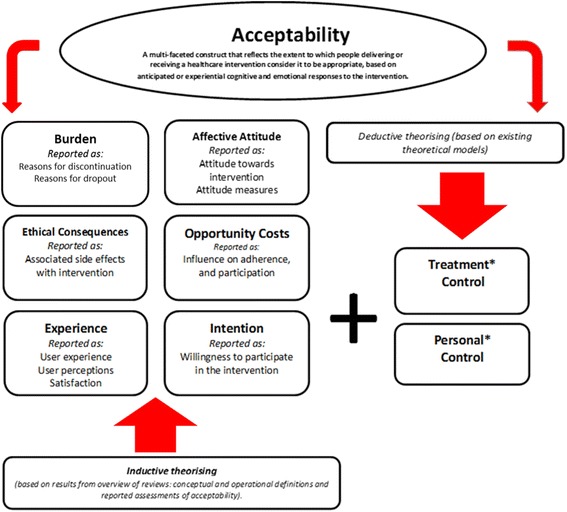
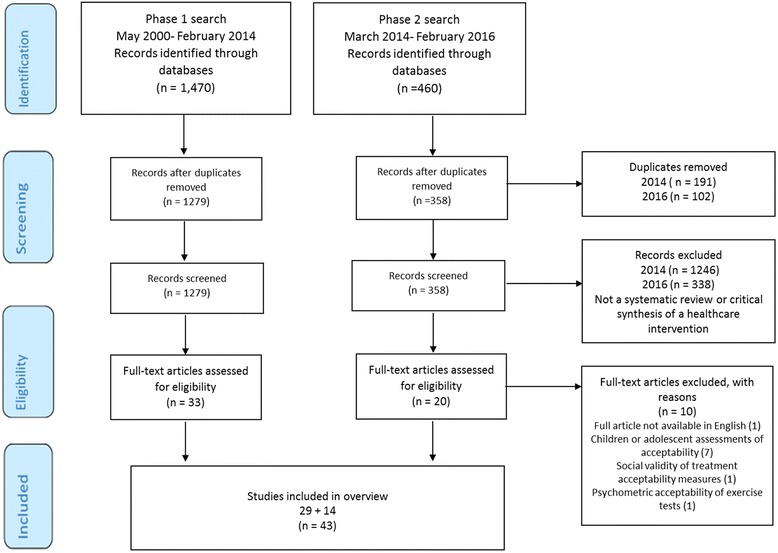
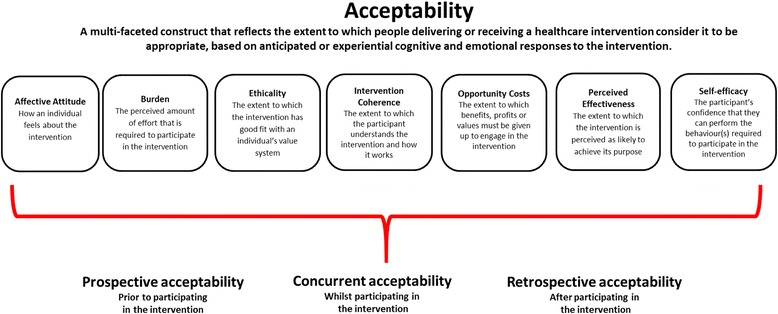
BACKGROUND: It is increasingly acknowledged that 'acceptability' should be considered when designing, evaluating and implementing healthcare interventions. However, the published literature offers little guidance on how to define or assess acceptability. The purpose of this study was to develop a multi-construct theoretical framework of acceptability of healthcare interventions that can be applied to assess prospective (i.e. anticipated) and retrospective (i.e. experienced) acceptability from the perspective of intervention delivers and recipients. METHODS: Two methods were used to select the component constructs of acceptability. 1) An overview of reviews was conducted to identify systematic reviews that claim to define, theorise or measure acceptability of healthcare interventions. 2) Principles of inductive and deductive reasoning were applied to theorise the concept of acceptability and develop a theoretical framework. Steps included (1) defining acceptability; (2) describing its properties and scope and (3) identifying component constructs and empirical indicators. RESULTS: From the 43 reviews included in the overview, none explicitly theorised or defined acceptability. Measures used to assess acceptability focused on behaviour (e.g. dropout rates) (23 reviews), affect (i.e. feelings) (5 reviews), cognition (i.e. perceptions) (7 reviews) or a combination of these (8 reviews). From the methods described above we propose a definition: Acceptability is a multi-faceted construct that reflects the extent to which people delivering or receiving a healthcare intervention consider it to be appropriate, based on anticipated or experienced cognitive and emotional responses to the intervention. The theoretical framework of acceptability (TFA) consists of seven component constructs: affective attitude, burden, perceived effectiveness, ethicality, intervention coherence, opportunity costs, and self-efficacy. CONCLUSION: Despite frequent claims that healthcare interventions have assessed acceptability, it is evident that acceptability research could be more robust. The proposed definition of acceptability and the TFA can inform assessment tools and evaluations of the acceptability of new or existing interventions.
Overview
The claims and statistics of this paper haven’t been checked yet.
Free: it reads the open-access text and checks the first 5 claims that cite a source we can check. Create a free account to check every claim.
Integrity signals
Registry
Cites
Statistics
Figures
Verification
Claims the paper makes
The claims and statistics of this paper haven’t been checked yet.
Free: it reads the open-access text and checks the first 5 claims that cite a source we can check. Create a free account to check every claim.
Claims other papers make about this one
Each is checked against this paper’s own text: does it say what the citing paper says it does?
The source backs part of the claim, not all of it — or backs it for a different population, condition or comparison.
In the citing paper
“Sekhon and colleagues [16] identified 7 component constructs of acceptability, but studies are generally designed to address only some of these components and vary by the components chosen.”
From Acceptability of Digital Mental Health Interventions for Depression and Anxiety: Systematic Review (2024) · cites this paper as [16]
Experimental — accuracy not yet measuredThe source backs part of the claim, not all of it — or backs it for a different population, condition or comparison.
In the citing paper
“Interviews followed a semi-structured schedule, taking into consideration elements of the TDF [24], and TFA [23]. Once drafted, interview schedules were reviewed by the EQUITy Lived Experience Advisory Panel (LEAP).”
From 'I didn't know what to expect': Exploring patient perspectives to identify targets for change to improve telephone-delivered psychological interventions (2020) · cites this paper as [23]
Experimental — accuracy not yet measuredThe source backs part of the claim, not all of it — or backs it for a different population, condition or comparison.
In the citing paper
“It has been increasingly acknowledged that consideration of patient acceptability using theories of behaviour change are key to effective evaluation, design and implementation of healthcare interventions [23–25] .”
From 'I didn't know what to expect': Exploring patient perspectives to identify targets for change to improve telephone-delivered psychological interventions (2020) · cites this paper as [23]
Experimental — accuracy not yet measuredThe cited source says what the claim attributes to it.
In the citing paper
“Overall, relating to the acceptability model by Sekhon et al. (2017), the main problems regarding acceptability centred around the dimensions burden, opportunity cost and self-efficacy, since participants found the intervention overly demanding when suffering from mental health symptoms and that they required more support to from a therapist to make use of the treatment material.”
From Investigating the potential of a novel internet-based cognitive behavioural intervention for Dari and Farsi speaking refugee youth: A feasibility study (2022) · cites this paper as Sekhon et al. (2017)
The cited source says what the claim attributes to it.
In the citing paper
“The TFA provided a structured theory around which to explore patient acceptability of specific elements of telephone-delivered treatment, without presuming acceptability based on patients’ behaviour [23].”
From 'I didn't know what to expect': Exploring patient perspectives to identify targets for change to improve telephone-delivered psychological interventions (2020) · cites this paper as [23]
2 more claims about this paper
Create a free account to see every claim other papers make about this one.
Self-check
Percentages, sums and reported differences re-computed from the paper’s own numbers.
The self-check needs the paper’s full text.
Citations
Cites
Using thematic analysis in psychology
Braun, V., & Clarke, V. (2006) · Qualitative Research in Psychology · doi:10.1191/1478088706qp063oa · Cited by 194,414 · cited 1×
“All extracted data were analysed by applying the thematic synthesis approach [30].”
MethodThe theory of planned behavior
Ajzen, I. (1991) · Organizational Behavior and Human Decision Processes · doi:10.1016/0749-5978(91)90020-t · Cited by 134,657
Preferred Reporting Items for Systematic Reviews and Meta-Analyses: the PRISMA statement
Moher, D., Liberati, A., Tetzlaff, J., Altman, D. G., & for the PRISMA Group (2009) · BMJ · doi:10.1136/bmj.b2535 · Cited by 83,823
Preferred reporting items for systematic reviews and meta-analyses: the PRISMA Statement.
(2009) · PubMed Central · Cited by 44,859
Self-efficacy: Toward a unifying theory of behavioral change
Bandura, A. (1977) · Psychological Review · doi:10.1037/0033-295x.84.2.191 · Cited by 43,925
Cochrane Handbook for Systematic Reviews of Interventions: Cochrane Book Series
(2008) · doi:10.1002/9780470712184 · Cited by 25,048 · cited 1×
“The Cochrane Tool of Quality Assessment was applied most frequently [39] (18 reviews: 62%).”
MethodAssessing the quality of reports of randomized clinical trials: Is blinding necessary?
Jadad, A. R., Moore, R. A., Carroll, D., Jenkinson, C., Reynolds, D. J. M., Gavaghan, D. J., & McQuay, H. J. (1996) · Controlled Clinical Trials · doi:10.1016/0197-2456(95)00134-4 · Cited by 17,582 · cited 2×
“Other assessments tools applied included the Jadad Scale [40] (three reviews: 10%), the”
MethodStructural Equations with Latent Variables.
Clogg, C. C., & Bollen, K. A. (1991) · Contemporary Sociology · doi:10.2307/2072165 · Cited by 17,442
Structural Equations with Latent Variables
Bollen, K. A. (1989) · Wiley series in probability and statistics · doi:10.1002/9781118619179 · Cited by 17,277 · cited 1×
“The inconsistency in defining concepts can impede the development of valid assessment instruments [20].”
BackgroundHealth Behavior and Health Education: Theory, Research, and Practice
(1992) · Annals of Internal Medicine · doi:10.7326/0003-4819-116-4-350_1 · Cited by 13,207
Research works printed but not linked: 1
- Hox JJ From theoretical concept to survey question. 1997): Survey Measurement and Process Quality 1997 New York ua Wiley 45 69
Cited by
Items 401–500 of 1,015
Dostie, R., Gaboury, I., Çınar, E., & Camden, C. (2022) · Physical & Occupational Therapy In Pediatrics · doi:10.1080/01942638.2022.2064203 · Cited by 27
“In health care services, patient acceptability is associated with lower risk of dropout and higher efficacy (Cranen et al., 2011; Ownsworth et al., 2020; Sekhon et al., 2017).”
BackgroundMethodInfluentialMathews, C., Duby, Z., Bunce, B., van Blydenstein, N., Bergh, K., Ambrose, A., Mpungu, F., & Jonas, K. (2022) · BMC Public Health · doi:10.1186/s12889-022-13445-w · Cited by 20
“The study of intervention feasibility involves determining whether an intervention, such as Safe Spaces, is appropriate for wider implementation [16] and includes a focus on acceptability [17, 18] and appropriateness, referring to the relevance of the intervention for the context, providers and target beneficiaries, a…”
BackgroundGerlis, C., Barradell, A. C., Gardiner, N., Chaplin, E., Goddard, A. C., Singh, S. J., & Daynes, E. (2022) · Chronic Respiratory Disease · doi:10.1177/14799731221114266 · Cited by 20
“In the context of healthcare interventions acceptability can be defined as a ‘multifaceted construct that reflects the extent to which people receiving a healthcare intervention consider it to be appropriate, based on anticipated or experienced cognitive and emotional responses to the intervention’.(9) Knowledge gaine…”
BackgroundMbengo, F., Adama, E. A., Towell‐Barnard, A., Bhana, A., & Zgambo, M. (2022) · BMC Infectious Diseases · doi:10.1186/s12879-022-07649-z · Cited by 29
Dasgupta, T., Hunter, S., Reid, S., Sandall, J., Shennan, A. H., Davies, S. M., & Walker, S. (2022) · Birth · doi:10.1111/birt.12685 · Cited by 20
Online HIV prophylaxis delivery: Protocol for the ePrEP Kenya pilot study
Kiptinness, C., Naik, P., Thuo, N. B., Malen, R. C., Dettinger, J. C., Pintye, J. C., Rafferty, M., Jomo, E., Nyamasyo, N., Wood, T., et al. (2023) · Frontiers in Public Health · doi:10.3389/fpubh.2023.1054559 · Cited by 19
“The IDIs will last ∼60min and will be guided by the Theoretical Framework of Acceptability (31) to help us better define the multi-dimensional construct of acceptability, as well as the Structured Assessment of Feasibility (32) and the Health Belief Model (33), to help us identify potential barriers and facilitators o…”
MethodMayhew, M., Balderson, B. H. K., Cook, A. J., Dickerson, J. F., Elder, C. R., Firemark, A. J., Haller, I. V., Justice, M., Keefe, F. J., McMullen, C. K., et al. (2023) · Trials · doi:10.1186/s13063-023-07165-8 · Cited by 21
“In addition to RE-AIM, the Theoretical Framework of Acceptability (TFA) will be used to explore various aspects of acceptability, from both participant and healthcare system perspectives [99].”
MethodEntangled Ethnography: Towards a collective future understanding
Murray-Rust, D., Gorkovenko, K., Burnett, D., & Richards, D. (2019) · Halfway to the Future Symposium · doi:10.1145/3363384.3363405 · Cited by 39
“Practically, a more concrete framework is useful, and the Theoretical Framework for Acceptability can be brought to bear [38].”
BackgroundGneezy, U., Kajackaite, A., & Meier, S. (2020) · Cambridge University Press eBooks · doi:10.1017/9781108677318.036 · Cited by 28
Lymeus, F., Ahrling, M., Apelman, J., Florin, C. D. M., Nilsson, C., Vincenti, J., Zetterberg, A., Lindberg, P., & Hartig, T. (2020) · Frontiers in Psychology · doi:10.3389/fpsyg.2020.01560 · Cited by 27
“Sekhon et al. (2017) describe compliance as a reflection of the acceptability of a psychological intervention.”
Geana, M. V., Anderson, S., Lipnicky, A., Wickliffe, J. L., & Ramaswamy, M. (2021) · Journal of Health Care for the Poor and Underserved · doi:10.1353/hpu.2021.0053 · Cited by 18
“In the post-intervention survey, the women were asked to rate the usability of the website (the questions adapted from previously published work 45 ) and the acceptability of the information on the website (adapted from previously published work 46 ) on a five-point Likert scale (Table 1).”
Development and validation of the Digital Health Acceptability Questionnaire
Haydon, H. M., Major, T., Kelly, J. T., Catapan, S. D. C., Caffery, L. J., Smith, A. C., Gallegos-Rejas, V. M., Thomas, E. E., Banbury, A., & Snoswell, C. L. (2023) · Journal of Telemedicine and Telecare · doi:10.1177/1357633x231202279 · Cited by 24
“2 In part, Sekhon, Cartwright and Francis (2017) 3 attempted a comprehensive de fi nition after conducting an umbrella review on the topic and subsequently developed the Theoretical Framework of Acceptability (TFA).”
BackgroundFehlberg, Z., Stark, Z., Klaic, M., & Best, S. (2024) · Implementation Science Communications · doi:10.1186/s43058-024-00675-9 · Cited by 22
“Acceptability is the most frequently assessed outcome of the three [2, 6] and has comprehensive frameworks and data collections tools, such as the Theoretical Framework of Acceptability (TFA) [5].”
Tan, N. Q. P., Nargund, R. S., Douglas, E. E., Lopez-Olivo, M. A., Resong, P. J., Ishizawa, S., Nofal, S., Krause, K. J., Volk, R. J., & Toumazis, I. (2025) · The Lancet Public Health · doi:10.1016/s2468-2667(24)00278-0 · Cited by 25
Sopezki, D., Andreoni, S., Montero‐Marín, J., Filho, E. D. D. C., Fortes, S., de Lima, G. G., Pizutti, L. T., Girão, Á. C., Silva, T. F., García‐Campayo, J., et al. (2020) · Mindfulness · doi:10.1007/s12671-020-01472-w · Cited by 21
Desveaux, L., Saragosa, M., Russell, K. K., McCleary, N., Presseau, J., Witteman, H. O., Schwalm, J., & Ivers, N. M. (2020) · BMJ Open · doi:10.1136/bmjopen-2019-036750 · Cited by 21
The Good Enough Parenting early intervention schema therapy based program: Participant experience
Louis, J. P., Ortiz, V., Barlas, J., Lee, J. S., Lockwood, G., Chong, W. F., Louis, K. M., & Sim, P. (2021) · PLoS ONE · doi:10.1371/journal.pone.0243508 · Cited by 45
Hawley, C. N., Huber, C. M., Best, L. G., Howard, B. V., Umans, J. G., Beresford, S. A. A., McKnight, B., Hager, A., O’Leary, M. A., Thorndike, A. N., et al. (2021) · BMC Public Health · doi:10.1186/s12889-021-10308-8 · Cited by 20
“Questions were developed using the theoretical framework of acceptability [29], and focus on affective attitude, burden, and perceived ef-”
MethodAntcliff, D., Keenan, A., Keeley, P., Woby, S. R., & McGowan, L. (2021) · Musculoskeletal Care · doi:10.1002/msc.1557 · Cited by 24
Jongdeepaisal, M., Ean, M., Heng, C., Buntau, T., Tripura, R., Callery, J. J., Peto, T. J., Conradis-Jansen, F., von Seidlein, L., Khonputsa, P., et al. (2021) · Malaria Journal · doi:10.1186/s12936-021-03983-w · Cited by 25
Marshall, S. M., Moore, A., Fleming, A., & Sahm, L. J. (2022) · Vaccines · doi:10.3390/vaccines10040562 · Cited by 25
“Acceptability has become a key consideration in the design, evaluation, and implementation of healthcare interventions and is a necessary condition for effectiveness [48].”
BackgroundConducting Randomized Controlled Trials of Complex Interventions in Prisons: A Sisyphean Task?
Lennox, C., Leonard, S., Senior, J., Stevenson, C., Rybczynska‐Bunt, S., Quinn, C., Byng, R., & Shaw, J. J. (2022) · Frontiers in Psychiatry · doi:10.3389/fpsyt.2022.839958 · Cited by 28
Pulpotomy for the Management of Irreversible Pulpitis in Mature Teeth (PIP): a feasibility study
Clarkson, J., Ramsay, C. R., Mannocci, F., Jarad, F. D., Albadri, S., Ricketts, D., Tait, C., Banerjee, A., Deery, C., Boyers, D., et al. (2022) · Pilot and Feasibility Studies · doi:10.1186/s40814-022-01029-9 · Cited by 26
Paskins, Z., Bullock, L., Manning, F., Bishop, S., Campbell, P., Cottrell, E., Partner, G. P., Jinks, C., Narayanasamy, M. J., Scott, I. C., et al. (2022) · BMC Musculoskeletal Disorders · doi:10.1186/s12891-022-05273-1 · Cited by 21
“Two studies (iFraP and BO) used NVivo to identify original data coded as relating to remote consultation experience, under one of the seven TFA domains.”
BackgroundMethodInfluentialNemec, M., Waller, J., Barnes, J., & Marlow, L. A. V. (2022) · BMJ Open · doi:10.1136/bmjopen-2021-058635 · Cited by 19
“LAVM is guarantor for the work.”
Henderson, V., Madrigal, J. M., Kendall, L., Parekh, P., Newsome, J., Chukwudozie, I. B., Comer-HaGans, D., Coffey, V., Grumbach, G., Spencer, S., et al. (2022) · BMC Health Services Research · doi:10.1186/s12913-022-08193-x · Cited by 22
Nguyen, N., Lane, B., Lee, S. W., Gorman, S. L., Wu, Y., Li, A., Lu, H. H., Elhadad, N., Yin, M. T., & Meyers, K. A. (2022) · PLoS ONE · doi:10.1371/journal.pone.0267766 · Cited by 23
Vásquez, C. L., Martínez‐Alonso, M., Forné, C., Vilaplana, J., Cruz-Esteve, I., Sánchez-López, I., Reñé-Reñé, M., Cazorla-Sánchez, C., Hernández-Andreu, M., Galindo‐Ortego, G., et al. (2022) · International Journal of Environmental Research and Public Health · doi:10.3390/ijerph191610426 · Cited by 22
“Satisfaction was assessed after one year of recruitment and was measured on a 5-point Likert scale from very unsatisfied (1) to very satisfied (5) [34].”
MethodPeer‐led interventions to reduce alcohol consumption in college students: A scoping review
Lavilla‐Gracia, M., Pueyo‐Garrigues, M., Pueyo‐Garrigues, S., Pardavila‐Belio, M. I., Canga, A., Esandi, N., Alfaro‐Díaz, C., & Canga‐Armayor, N. (2022) · Health & Social Care in the Community · doi:10.1111/hsc.13990 · Cited by 30
Halim, A. F. N. A., Ahmad, D., Ling, M. Y. J., Masdor, N. A., Ramly, N., Othman, R., Kandayah, T., Hassan, M. R., & Dapari, R. (2022) · International Journal of Environmental Research and Public Health · doi:10.3390/ijerph191912971 · Cited by 26
“Treatment acceptability refers to how likely people are to think an intervention is appropriate based on their cognitive or emotional responses to it [11].”
BackgroundLincoln, A. G., Benton, S. C., Piggott, C., North, B. V., Rigney, J., Young, C., Quirke, P., Sasieni, P. D., & Monahan, K. J. (2022) · BMC Cancer · doi:10.1186/s12885-022-10217-y · Cited by 19
“Objective 2 (secondary objective (a)) Secondary outcomes for secondary objective (a) are evaluated at Baseline (Y0) through the qualitative assessment of patient questionnaires which are adherent to a theoretical framework for the acceptability of novel or selfsampling healthcare interventions [12, 13].”
BackgroundBucyibaruta, J. B., Peu, M. D., Bamford, L., & van der Wath, A. (2022) · African Health Sciences · doi:10.4314/ahs.v22i3.75 · Cited by 26
“based on five essential features: (1) context, (2) basic the-”
BackgroundChen, A., Väyrynen, K., Leskelä, R., Torkki, P. M., Heinonen, S. T., Tekay, A., & Acharya, G. (2023) · Acta Obstetricia Et Gynecologica Scandinavica · doi:10.1111/aogs.14506 · Cited by 21
Materia, F. T., & Smyth, J. M. (2023) · Internet Interventions · doi:10.1016/j.invent.2023.100702 · Cited by 22
“Theory from implementation science (Bauer et al., 2015; Mummah et al., 2016; Sekhon et al., 2017), as well as previous literature focused on the effects of intervention marketing and worry (Faasse and Martin, 2018), also informed measure development.”
BackgroundMethodBent, C. A., Aulich, A., Constantine, C., Fidock, E., Dwyer, P. S. R., Green, C. C., Smith, J., Gurba, A. N., Harrington, L. T., Gore, K., et al. (2024) · Autism · doi:10.1177/13623613241262077 · Cited by 24
“Acceptable programmes will more likely be delivered as intended (i.e. with high fidelity), and sessions more likely attended and recommended strategies more likely adopted by end-users, thereby leading to improved outcomes (Proctor et al., 2009; Sekhon et al., 2017).”
Welch, C., Greig, C. A., Masud, T., Pinkney, T. D., & Jackson, T. (2020) · BMC Geriatrics · doi:10.1186/s12877-020-01626-4 · Cited by 21
Reicherzer, L., Kramer-Gmeiner, F., Labudek, S. E., Jansen, C.-P., Nerz, C., Nystrand, M. J., Becker, C., Clemson, L. M., & Schwenk, M. (2021) · BMC Geriatrics · doi:10.1186/s12877-020-01991-0 · Cited by 25
Condensed internet-delivered prolonged exposure provided soon after trauma: A randomised pilot trial
Bragesjö, M., Arnberg, F. K., Särnholm, J., Lauri, K. O., & Andersson, E. (2020) · Internet Interventions · doi:10.1016/j.invent.2020.100358 · Cited by 24
Hawley-Hague, H., Tacconi, C., Mellone, S., Martinez, E., Chiari, L., Helbostad, J. L., & Todd, C. J. (2021) · JMIR Rehabilitation and Assistive Technologies · doi:10.2196/19690 · Cited by 22
“Acceptability is a multifaceted construct that considers the extent to which people that deliver or receive a health care intervention consider it to be appropriate [23].”
BackgroundLiu, W., Wamuti, B., Owuor, M., Lagat, H., Kariithi, E., Obong’o, C. O., Mugambi, M., Sharma, M., Bosire, R. K., Masyuko, S. J., et al. (2022) · BMC Health Services Research · doi:10.1186/s12913-022-08024-z · Cited by 18
“Acceptability is one of the important components in feasibility studies and key considerations in program design and evaluation in implementation science [10, 11].”
BackgroundRondung, E., Leiler, A., Sarkadi, A., Bjärtå, A., Lampa, E., Löfving, S. G., Calam, R., Oppedal, B., Keeshin, B., & Warner, G. (2022) · Pilot and Feasibility Studies · doi:10.1186/s40814-022-00998-1 · Cited by 18
“As suggested in the theoretical framework of acceptability [45], there might be a reason to differentiate between prospective and retrospective acceptability.”
BackgroundJennings, A., Shannon, O. M., Gillings, R., Lee, V., Elsworthy, R. J., Bundy, R., Rao, G., Hanson, S., Hardeman, W., Paddick, S., et al. (2024) · BMC Medicine · doi:10.1186/s12916-024-03815-z · Cited by 24
Ciccone, N., Armstrong, E., Hersh, D., Adams, M., & McAllister, M. (2019) · International Journal of Speech-Language Pathology · doi:10.1080/17549507.2019.1595146 · Cited by 19
Chaudhry, N., Tofique, S., Husain, N., Couture, D., Glasgow, P., Husain, M., Kiran, T., Memon, R., Minhas, S., Qureshi, A., et al. (2020) · BJPsych Open · doi:10.1192/bjo.2020.49 · Cited by 21
Katz, I. T., Bogart, L. M., Fitzmaurice, G. M., Staggs, V. S., Gwadz, M. V., Bassett, I. V., Cross, A., Courtney, I., Tsolekile, L. P., Panda, R., et al. (2020) · AIDS and Behavior · doi:10.1007/s10461-020-03063-1 · Cited by 21
Acupuncture for chronic pain in adults with sickle cell disease: a mixed-methods pilot study
Li, H., Patil, C. L., Molokie, R. E., Njoku, F. U., Steffen, A. D., Doorenbos, A. Z., & Schlaeger, J. M. (2021) · Acupuncture in Medicine · doi:10.1177/09645284211017303 · Cited by 20
Implementation context for addressing social needs in a learning health system: a qualitative study
Theis, R. P., Blackburn, K., Lipori, G. P., Harle, C. A., Alvarado, M. M., Carek, P. J., Zemon, N., Howard, A., Salloum, R. G., Shenkman, E. A., et al. (2021) · Journal of Clinical and Translational Science · doi:10.1017/cts.2021.842 · Cited by 21
Holm, A., Nikolajsen, L., & Dreyer, P. (2021) · Australian Critical Care · doi:10.1016/j.aucc.2021.09.008 · Cited by 23
Zakumumpa, H., Kitutu, F. E., Ndagije, H. B., Kesi, D. N., Ssanyu, J. N., & Kiguba, R. (2021) · BMC Infectious Diseases · doi:10.1186/s12879-021-06933-8 · Cited by 18
Moukenet, A., Donovan, L., Honoré, B., Baker, K., Smith, H., Richardson, S., & Ward, C. (2022) · Global Health Science and Practice · doi:10.9745/ghsp-d-21-00161 · Cited by 19
Tembo, M., Renju, J., Weiss, H. A., Dauya, E., Gweshe, N., Ndlovu, P., Nzombe, P., Chikwari, C. D., Mavodza, C., Mackworth-Young, C. R. S., et al. (2022) · BMC Health Services Research · doi:10.1186/s12913-022-07818-5 · Cited by 22
Factors associated with the acceptability of government measures to address COVID-19 in Senegal
Diallo, A. I., Faye, A., Tine, J. A. D., Ba, M. F., Gaye, I., Bonnet, E., Traore, Z. I., & Ridde, V. (2022) · Revue d Épidémiologie et de Santé Publique · doi:10.1016/j.respe.2022.03.123 · Cited by 20
“Thus, the acceptability each of these 4 measures was constructed from the 7 dimensions evaluated with a 5-point Likert scale : 5=Strongly agree, 4=Agree, 3=Neither disagree or agree, 2=Disagree, 1=Disagree, and 0=Don't know [39].”
InfluentialZarska, A., Barnicot, K., Lavelle, M., Dorey, T., & McCabe, R. (2022) · Archives of Suicide Research · doi:10.1080/13811118.2022.2071660 · Cited by 20
Udenigwe, O., Okonofua, F. E., Ntoimo, L. F. C., & Yaya, S. (2022) · Frontiers in Global Women s Health · doi:10.3389/fgwh.2022.1002970 · Cited by 21
“Questions covered topics related to their general perceptions of the Text4Life program, motivations for use, barriers, and facilitators to using the intervention, and perceived quality of the intervention (39, 40).”
BackgroundDruart, L., Vauthrin, O., Pinsault, N., Locher, C., & Blease, C. (2022) · British Journal of Health Psychology · doi:10.1111/bjhp.12624 · Cited by 21
“…interventions in a pragmatic setting: participants actually experienced the intervention allowing them to give a retrospective (i.e. experienced) feedback on the placebo to which they were allocated and a prospective (i.e. anticipated) view about the other placebo modality (Sekhon et al., 2017).”
InfluentialScheidmeir, M., Kubiak, T., Łuszczyńska, A., Wendt, J., Scheller, D. A., Meshkovska, B., Mueller‐Stierlin, A. S., Forberger, S., Łobczowska, K., Neumann‐Podczaska, A., et al. (2022) · European Journal of Public Health · doi:10.1093/eurpub/ckac053 · Cited by 22
Loveys, K., Antoni, M. H., Donkin, L., Sagar, M. A., & Broadbent, E. (2023) · JMIR Formative Research · doi:10.2196/42390 · Cited by 23
“Acceptability is a multidimensional construct referring to the extent to which users perceive a health intervention or trial methodology as appropriate [48].”
BackgroundSkou, S. T., Brødsgaard, R. H., Nyberg, M., Dideriksen, M., Bødtger, U. C. S., Bricca, A., & Jäger, M. (2023) · Pilot and Feasibility Studies · doi:10.1186/s40814-023-01242-0 · Cited by 21
Drummen, S., Balogun, S. A., Lahham, A., Bennell, K. L., Hinman, R. S., Callisaya, M. L., Cai, G., Otáhal, P., Winzenberg, T. M., Wang, Z., et al. (2023) · Clinical Rheumatology · doi:10.1007/s10067-022-06477-5 · Cited by 21
“Third, the strategies to enhance participant satisfaction were a strength as this has shown to benefit retention and adherence [44].”
BackgroundNinsiima, M., Nyabigambo, A., & Kagaayi, J. (2023) · BMC Health Services Research · doi:10.1186/s12913-023-09326-6 · Cited by 18
“The Theoretical Framework of Acceptability was proposed as a multi-component framework and systematic approach to assess intervention acceptability across prospective, concurrent, and retrospective temporal perspectives [25].”
BackgroundGrinsztejn, B. G. J., Torres, T. S., Hoagland, B., Jalil, E. M., Moreira, R. I., O’Malley, G., Shade, S. B., Benedetti, M., Moreira, J., Simpson, K., et al. (2023) · JMIR Public Health and Surveillance · doi:10.2196/44961 · Cited by 21
“…drawn from the TFA (affective attitude, burden, ethicality, intervention coherence, opportunity cost or relative advantage, perceived effectiveness, and self-efficacy) [29], Reach, Effectiveness, Adoption, Implementation, and Maintenance (implementation) [30], and Proctor et al [31] (feasibility).”
Lindsay, S., Ragunathan, S., Kingsnorth, S., Zhou, C., Kakonge, L., Cermak, C. A., Hickling, A., & Wright, F. V. (2023) · Disability and Rehabilitation · doi:10.1080/09638288.2023.2221902 · Cited by 21
“The Acceptability of Healthcare Interventions Framework [25] was used as a foundation to ensure incorporation, as appropriate, of the key constructs of affective attitude, burden, perceived effectiveness, ethicality, intervention coherence, opportunity cost and self-efficacy in the process of…”
BackgroundMethodLiang, I. J., Francombe-Webb, J., McGuigan, P. M., Perkin, O. J., Thompson, D., & Western, M. J. (2023) · Frontiers in Aging · doi:10.3389/fragi.2023.1180939 · Cited by 23
“The interview schedule and deductive framework analysis was based on the seven components of the Theoretical Framework of Acceptability (TFA).”
BackgroundMethodInfluentialNadal, C., Earley, C., Enrique, Á., Sas, C., Richards, D., & Doherty, G. J. (2023) · ACM Transactions on Computer-Human Interaction · doi:10.1145/3617361 · Cited by 26
“This might risk exacerbating patients lack of adherence or drop-out from the digital therapy.”
BackgroundMethodBingham, S. L., Small, S., & Semple, C. J. (2023) · PLoS ONE · doi:10.1371/journal.pone.0277589 · Cited by 24
“A preliminary analytical framework was developed through team discussion (SJB and CJS), guided by the aforementioned theories (TFA and NPT), with four themes identified at this early stage (1.”
BackgroundMethodInfluentialDudeney, E., Coates, R., Ayers, S., & McCabe, R. (2024) · Frontiers in Psychiatry · doi:10.3389/fpsyt.2024.1359076 · Cited by 20
Strait, A., Velásquez, A., Handley, M. A., Leong, K., Najmabadi, A., Powe, N. R., & Tuot, D. S. (2017) · Clinical Kidney Journal · doi:10.1093/ckj/sfx141 · Cited by 18
“Additionally, behavioral interventions with high patient acceptability have been associated with better clinical outcomes than those that do not garner high patient satisfaction [18, 30, 31].”
BackgroundAdolescents’ Perspectives on a Mobile App for Relationships: Cross-Sectional Survey
O'Dea, B., Achilles, M. R., Werner-Seidler, A., Batterham, P. J., Calear, A. L., Perry, Y., Shand, F., & Christensen, H. (2018) · JMIR mHealth and uHealth · doi:10.2196/mhealth.8831 · Cited by 18
“As outlined by their review, Sekhon et al [31] argue that acceptability should be assessed before individuals engage in an intervention and should measure how a person feels about an intervention, the extent to which the participant understands the intervention content, the extent to which the…”
Murphy, A. L., & Gardner, D. M. (2019) · SAGE Open · doi:10.1177/2158244019885129 · Cited by 18
“Furthermore, they propose that “acceptability research needs a theoretical framework and associated methods for assessing the cognitive and affective components of acceptability independently of the behaviours it proposes to predict or explain” (Sekhon et al., 2017).”
BackgroundInfluentialLocke, H., Brooks, J. M., Arendsen, L. J., Jacob, N. K., Casson, A. J., Jones, A. K. P., & Sivan, M. (2020) · British Journal of Pain · doi:10.1177/2049463720908798 · Cited by 25
“The TFA defines acceptability as ‘a multi-faceted construct that reflects the extent to which people receiving a healthcare intervention consider it to be appropriate, based on anticipated or experienced cognitive and emotional responses to the intervention’.43 Table 2 shows our analysis template including all top-lev…”
BackgroundMethodInfluentialAdu, M. D., Malabu, U. H., Malau‐Aduli, A. E. O., Drovandi, A. D., & Malau‐Aduli, B. S. (2020) · International Journal of Environmental Research and Public Health · doi:10.3390/ijerph17072573 · Cited by 21
“The content and quality of mHealth technology have implications for its acceptability [34], which is an antecedent of users engagement and a key consideration for implementation into practice [35].”
BackgroundRuiter, R. A. C., Crutzen, R., de Leeuw, E., & Kok, G. (2020) · Cambridge University Press eBooks · doi:10.1017/9781108677318.018 · Cited by 22
Xu, T., Clemson, L. M., O’Loughlin, K., Lannin, N. A., Dean, C. M., & Koh, G. C. (2020) · British Journal of Occupational Therapy · doi:10.1177/0308022620946640 · Cited by 21
“To design, evaluate and implement a newly developed healthcare intervention in a multicultural society (Singapore), it is highly recommended that a smallscale study is conducted to test its acceptability and feasibility (Eldridge et al., 2016; Sekhon et al., 2017).”
BackgroundLawrence, S. O., Namusanya, D. M., Hamuza, A., Huwa, C., Chasweka, D., Kelley, M. C., Molyneux, S. C., Voskuijl, W. P., Denno, D. M., & Desmond, N. (2021) · PLoS ONE · doi:10.1371/journal.pone.0246369 · Cited by 18
Hypnotherapy for Procedural Pain and Distress in Children: A Scoping Review Protocol
Geagea, D., Tyack, Z. F., Kimble, R. M., Eriksson, L., Polito, V., & Griffin, B. R. (2021) · Pain Medicine · doi:10.1093/pm/pnab038 · Cited by 20
“In turn, children’s attitude may affect their compliance or willingness to undergo hypnotherapy and thereby the delivery of the intervention [33, 47, 56].”
BackgroundMcDonald, T. A. M., Lalani, S., Chen, I., Cotton, C. M., MacDonald, L. L., Boursoulian, L. J., Wang, J., & Malow, B. A. (2022) · Journal of Autism and Developmental Disorders · doi:10.1007/s10803-022-05598-9 · Cited by 21
“With this belief, participants are more likely to have favorable adherence and clinical/program outcomes, as well as a lower attrition rate (Sekhon et al., 2017).”
BackgroundAgostini, F., Neri, E., Genova, F., Trombini, E., Provera, A., Biasini, A., & Stella, M. (2022) · International Journal of Environmental Research and Public Health · doi:10.3390/ijerph19159478 · Cited by 17
“This early identification would enable the implementation of targeted specialist interventions for fathers both for reducing the symptomatology and for supporting their parenting role [48,58].”
BackgroundEffective—and Tolerable: Acceptance and Side Effects of Intensified Exposure for Anxiety Disorders
Heinig, I., Knappe, S., Hoyer, J., Wittchen, H.-U., Richter, J., Arolt, V., Deckert, J., Domschke, K., Hamm, A., Kircher, T., et al. (2023) · Behavior Therapy · doi:10.1016/j.beth.2022.11.001 · Cited by 18
Dy, M., Olazo, K., Lisker, S., Brown, E., Saha, A., Weinberg, J., & Sarkar, U. (2023) · Journal of Medical Internet Research · doi:10.2196/40044 · Cited by 17
“By gathering information on device usability, using user feedback can improve these tools to be appropriately and effectively designed for end users of the intervention [43].”
Ahmed, M. A. M., Namisi, C. P., Nakibuuka, V., Lwetabe, M. W., & Rujumba, J. (2024) · International Breastfeeding Journal · doi:10.1186/s13006-024-00615-2 · Cited by 17
“The analysis draws on a theoretical framework of acceptability of health care interventions [18].”
BackgroundMethodInfluentialTull, K., Gray‐Burrows, K. A., Bhatti, A., Owen, J., Rutter, L., Zoltie, T., Purdy, J., Giles, E., Paige, C., Patel, M., et al. (2019) · Pilot and Feasibility Studies · doi:10.1186/s40814-019-0483-9 · Cited by 19
Caeiro, C., Canhão, H. M., Guerra-Paiva, S., Gomes, L. A., Fernandes, R. S., Rodrigues, A. M., de Sousa, R. D., Pimentel-Santos, F. M., Branco, J., Fryxell, A. C., et al. (2019) · PLoS ONE · doi:10.1371/journal.pone.0225336 · Cited by 23
“Furthermore, it is important to assess acceptability and clinical outcomes from the perspective of patients with LBP, since it may offer a deep understanding of the adhesion to the interventions proposed [48,52].”
BackgroundMethodInfluentialPreliminary Results of Caregiver Speaks: A Storytelling Intervention for Bereaved Family Caregivers
Rolbiecki, A. J., Oliver, D. P., Washington, K. T., Benson, J. J., & Jorgensen, L. (2020) · Journal of Loss and Trauma · doi:10.1080/15325024.2019.1707985 · Cited by 19
“…members of the research team utilized a deductive, framework analysis approach (Gale, Heath, Cameron, Rashid, & Redwood, 2013) that was informed by Sekhon, Cartwright, and Francis (2017) framework for acceptability of healthcare interventions, which defines acceptability as the extent to which…”
MethodCulbert, G. J., Waluyo, A. D., & Earnshaw, V. A. (2020) · PLoS ONE · doi:10.1371/journal.pone.0234697 · Cited by 18
“Drawing on prior theoretical work [52], we defined acceptability as the extent to which PLHIV endorsed provider referral as an appropriate or potentially useful approach for notifying people with whom they had shared an exposure to the virus.”
Turner‐Bowker, D. M., Haack, K. A., Krohe, M., Yaworsky, A., Vivas, N., Tabata‐Kelly, M., Chatterjee, G., Chaston, E., Mann, E., & Reaney, M. D. (2020) · Journal of Patient-Reported Outcomes · doi:10.1186/s41687-020-00246-1 · Cited by 20
Mohamed, Y., Kupul, M., Gare, J., Badman, S. G., Silim, S., Vallely, A. J., Luchters, S. M. F., & Kelly‐Hanku, A. (2020) · BMJ Open · doi:10.1136/bmjopen-2020-043679 · Cited by 17
Sedentary Behaviour in Hospitalised Older People: A Scoping Review
Jasper, U. S., Yadav, L., Dollard, J., Jadczak, A. D., Yu, S., & Visvanathan, R. (2020) · International Journal of Environmental Research and Public Health · doi:10.3390/ijerph17249359 · Cited by 27
“With better understanding and integration of the perspectives of end-users and stakeholders, investigators can design SB interventions that are effective and acceptable to both groups [42].”
BackgroundReale, S., Turner, R. R., Sutton, E. J., Steed, L., Taylor, S. J., Morrissey, D., Doherty, P., Greenfield, D., Collinson, M., Hewison, J., et al. (2021) · Scientific Reports · doi:10.1038/s41598-021-91876-y · Cited by 18
Caute, A., Cruice, M. N., Devane, N., Patel, A. K., Roper, A., Talbot, R., Wilson, S., & Marshall, J. (2021) · Disability and Rehabilitation · doi:10.1080/09638288.2021.2011436 · Cited by 18
Testing key messages about extending cervical screening intervals
Marlow, L. A. V., Nemec, M., Barnes, J., & Waller, J. (2022) · Patient Education and Counseling · doi:10.1016/j.pec.2022.04.006 · Cited by 17
“Acceptability “reflects the extent to which people delivering or receiving a healthcare intervention consider it to be appropriate, based on anticipated or experienced cognitive and emotional responses” [9] and is an important consideration ahead of policy changes.”
BackgroundMethodInfluentialArcher, S., Fennell, N., Colvin, E., Laquindanum, R., Mills, M. A., Dennis, R., Donoso, F. S., Gold, R., Fan, A. C., Downes, K., et al. (2022) · Cancers · doi:10.3390/cancers14112716 · Cited by 17
“Qualitative data collected through semi-structured interviews with patients and staff will be analysed deductively using thematic analysis [43], drawing from Sekhon’s Theoretical Framework of Acceptability (TFA; [44]) and the Consolidated Framework for Implementation Research (CIFR; [45]).”
MethodDowling, N. A., Merkouris, S., Youssef, G. J., Lubman, D. I., Bagot, K. L., Hawker, C. O., Portogallo, H. J., Thomas, A. C., & Rodda, S. N. (2022) · JMIR Research Protocols · doi:10.2196/38958 · Cited by 24
Shannon, R., Baxter, R., Hardicre, N., Mills, T., Murray, J., Lawton, R., & O'Hara, J. K. (2022) · Health Expectations · doi:10.1111/hex.13560 · Cited by 18
Enablers and barriers to the acceptability of mHealth for maternal healthcare in rural Edo, Nigeria
Udenigwe, O., Okonofua, F. E., Ntoimo, L. F. C., & Yaya, S. (2022) · Dialogues in Health · doi:10.1016/j.dialog.2022.100067 · Cited by 25
“Following a review of previous studies on acceptability, Sekhon et al. [11] synthesized the aforementioned de fi nitions and others and proposed a theoretical framework of acceptability where acceptability is de fi ned as “ a multi-faceted construct that re fl ects the extent to which people…”
BackgroundMethodInfluentialBuilding consensus in defining and conceptualizing acceptability of healthcare: A Delphi study
Bucyibaruta, J. B., Peu, M. D., Bamford, L., van der Wath, A., Dyer, T. A., Murphy, A. L., Gatabazi, P., Anokwuru, R., Muhire, I., Coetzee, C. A., et al. (2022) · Public Health Nursing · doi:10.1111/phn.13153 · Cited by 20
Camara, H., Nosi, S., Munnull, G., Badman, S. G., Bolgna, J., Kuk, J., Mola, G., Guy, R., Vallely, A. J., & Kelly‐Hanku, A. (2022) · BMC Health Services Research · doi:10.1186/s12913-022-08842-1 · Cited by 21
Creagh, N. S., Boyd, L. A. P., Bavor, C., Zammit, C., Saunders, T., Oommen, A. M., Rankin, N. M., Brotherton, J. M. L., & Nightingale, C. E. (2023) · JCO Global Oncology · doi:10.1200/go.22.00297 · Cited by 17
Musanje, K., Camlin, C. S., Kamya, M. R., Vanderplasschen, W., Sinclair, D. L., Getahun, M., Kirabo, H., Nangendo, J., Kiweewa, J. M., White, R. G., et al. (2023) · PLOS Global Public Health · doi:10.1371/journal.pgph.0001605 · Cited by 24
“This is consistent with previous research that suggests that studying the acceptability of interventions should be extended beyond subjective elements such as satisfaction with the intervention to also include factors that represent barriers and facilitators to implementation [69].”
MethodPotočnik, T. V., Mihevc, M., Zavrnik, Č., Lukančič, M. M., Susič, A. P., & Klemenc–Ketiš, Z. (2023) · Slovenian Journal of Public Health · doi:10.2478/sjph-2023-0013 · Cited by 26
“This tool describes seven different domains of acceptability: affective attitude, burden, ethicality, intervention coherence, opportunity costs, perceived effectiveness and self-efficacy (31).”
MethodBayly, J., Ahmedzai, H. H., Blandini, M. G., Bressi, B., Caraceni, A. T., Vasconcelos, J. C., Costi, S., Fugazzaro, S., Guberti, M., Guldin, M., et al. (2023) · Palliative Care and Social Practice · doi:10.1177/26323524231179979 · Cited by 24
Metadata
- Authors
- Sekhon, M., Cartwright, M., & Francis, J. J.
- Affiliations
- City, University of London (GB)
- Corresponding author
- Sekhon, Mandeep
- Venue
- BMC Health Services Research
- Published
- 2017-01-26
- Volume
- 17
- Issue
- 1
- Pages
- 88-88
- ISSN
- 1472-6963 (ISSN-L)
- PMC
- PMC5267473
- OpenAlex
- W2582406074
- Semantic Scholar
- f75ddad2e8aacf728c62bc750ceb8bc085f6094d
- Cited by
- 3,938
- References
- 78
- Citations by year
- 2026: 620 · 2025: 701 · 2024: 683 · 2023: 518 · 2022: 535 · 2021: 349 · 2020: 349 · 2019: 118 · 2018: 56 · 2017: 6
- FWCI
- 234.94
- Type
- journal article
- Language
- en
- Open access
- gold
- doi.org
- Licence
- cc-by
- Locations
- BMC Health Services Research (publishedVersion, cc-by)
- Europe PMC (PubMed Central) (publishedVersion, cc-by)
- PubMed Central (publishedVersion, cc-by)
- PubMed (publishedVersion)
- Research Repository (Kingston University London) (acceptedVersion)
- City Research Online (City University London) (acceptedVersion)
- St George's Online Research Archive (St George's University of London) (acceptedVersion)
- Minerva Access (University of Melbourne) (submittedVersion, cc-by)
- Research Portal (King's College London) (submittedVersion, cc-by)
- Topics
- Health Sciences › Health Professions › General Health Professions › Health Policy Implementation Science
- Social Sciences › Economics, Econometrics and Finance › Economics and Econometrics › Health Systems, Economic Evaluations, Quality of Life
- Health Sciences › Nursing › Research and Theory › Health Education and Validation
- Keywords
- theoretical framework, affective attitudes, perceived burden, perceived effectiveness, ethicality, intervention coherence, opportunity cost, self-efficacy, dropout rates
- MeSH terms
- Humans, Models, Theoretical, Patient Acceptance of Health Care, Prospective Studies, Retrospective Studies, Review Literature as Topic, Consensus
About these checks
Registry, retraction, Cites and statistics results are computed, not judged, with one exception: a printed reference that no index lists is read once by a model before it counts as a citation error. Claims are extracted by a model and kept only when their quote appears verbatim in the text; each cited source is then checked, with a model’s help, for whether it says what the claim relies on. Those verdicts can be wrong — read the claim’s quote and the cited source before relying on one.
Statistics and arithmetic are recomputed, not judged.
Confidence bands are shown only for fields calibrated on our annotated test set. None is calibrated yet, so no band is shown.
What counts as a claim ›How we measure confidence ›How we check this ›
Are you an author, or do you see a problem with this page? Request a review
Data sources
Bibliographic data: Semantic Scholar, OpenAlex, Crossref.
Contains information from the Semantic Scholar Academic Graph Datasets, made available under the ODC Attribution License (ODC-BY 1.0).
Semantic Scholar’s data is described in: Kinney, R., et al. (2023). The Semantic Scholar Open Data Platform. arXiv:2301.10140.
