

Acceptability of healthcare interventions: an overview of reviews and development of a theoretical framework
Open accessThe DOI matches its Crossref record; 74 of the 78 references it cites were found in a registry or an index.
Abstract
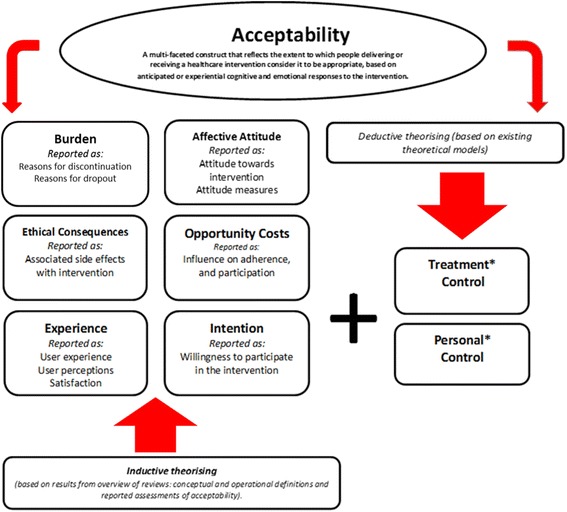
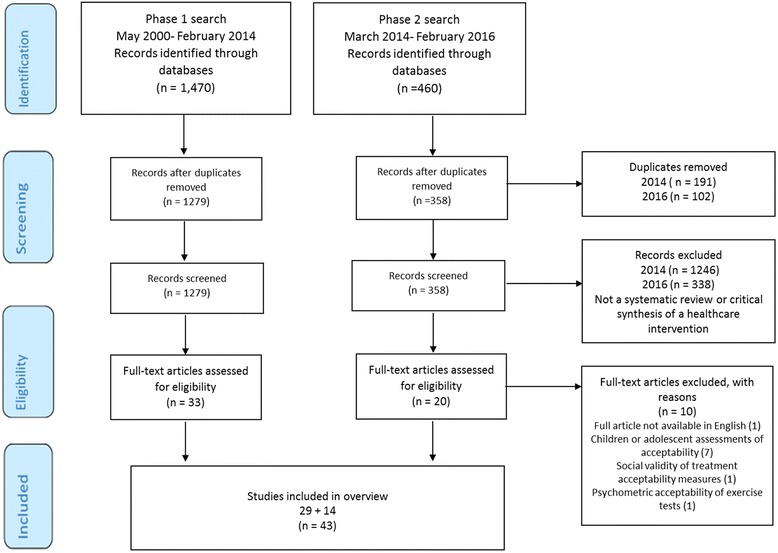
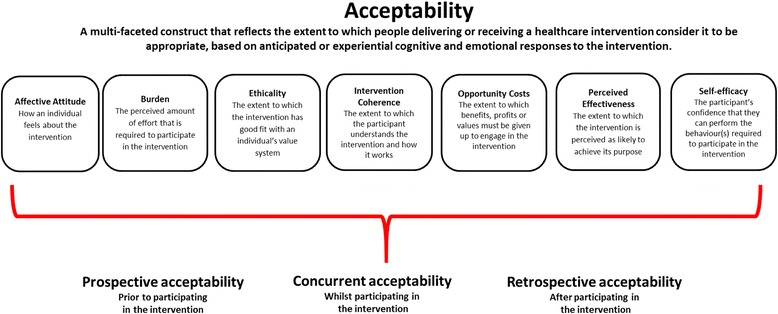
BACKGROUND: It is increasingly acknowledged that 'acceptability' should be considered when designing, evaluating and implementing healthcare interventions. However, the published literature offers little guidance on how to define or assess acceptability. The purpose of this study was to develop a multi-construct theoretical framework of acceptability of healthcare interventions that can be applied to assess prospective (i.e. anticipated) and retrospective (i.e. experienced) acceptability from the perspective of intervention delivers and recipients. METHODS: Two methods were used to select the component constructs of acceptability. 1) An overview of reviews was conducted to identify systematic reviews that claim to define, theorise or measure acceptability of healthcare interventions. 2) Principles of inductive and deductive reasoning were applied to theorise the concept of acceptability and develop a theoretical framework. Steps included (1) defining acceptability; (2) describing its properties and scope and (3) identifying component constructs and empirical indicators. RESULTS: From the 43 reviews included in the overview, none explicitly theorised or defined acceptability. Measures used to assess acceptability focused on behaviour (e.g. dropout rates) (23 reviews), affect (i.e. feelings) (5 reviews), cognition (i.e. perceptions) (7 reviews) or a combination of these (8 reviews). From the methods described above we propose a definition: Acceptability is a multi-faceted construct that reflects the extent to which people delivering or receiving a healthcare intervention consider it to be appropriate, based on anticipated or experienced cognitive and emotional responses to the intervention. The theoretical framework of acceptability (TFA) consists of seven component constructs: affective attitude, burden, perceived effectiveness, ethicality, intervention coherence, opportunity costs, and self-efficacy. CONCLUSION: Despite frequent claims that healthcare interventions have assessed acceptability, it is evident that acceptability research could be more robust. The proposed definition of acceptability and the TFA can inform assessment tools and evaluations of the acceptability of new or existing interventions.
Overview
The claims and statistics of this paper haven’t been checked yet.
Free: it reads the open-access text and checks the first 5 claims that cite a source we can check. Create a free account to check every claim.
Integrity signals
Registry
Cites
Statistics
Figures
Verification
Claims the paper makes
The claims and statistics of this paper haven’t been checked yet.
Free: it reads the open-access text and checks the first 5 claims that cite a source we can check. Create a free account to check every claim.
Claims other papers make about this one
Each is checked against this paper’s own text: does it say what the citing paper says it does?
The source backs part of the claim, not all of it — or backs it for a different population, condition or comparison.
In the citing paper
“Sekhon and colleagues [16] identified 7 component constructs of acceptability, but studies are generally designed to address only some of these components and vary by the components chosen.”
From Acceptability of Digital Mental Health Interventions for Depression and Anxiety: Systematic Review (2024) · cites this paper as [16]
Experimental — accuracy not yet measuredThe source backs part of the claim, not all of it — or backs it for a different population, condition or comparison.
In the citing paper
“Interviews followed a semi-structured schedule, taking into consideration elements of the TDF [24], and TFA [23]. Once drafted, interview schedules were reviewed by the EQUITy Lived Experience Advisory Panel (LEAP).”
From 'I didn't know what to expect': Exploring patient perspectives to identify targets for change to improve telephone-delivered psychological interventions (2020) · cites this paper as [23]
Experimental — accuracy not yet measuredThe source backs part of the claim, not all of it — or backs it for a different population, condition or comparison.
In the citing paper
“It has been increasingly acknowledged that consideration of patient acceptability using theories of behaviour change are key to effective evaluation, design and implementation of healthcare interventions [23–25] .”
From 'I didn't know what to expect': Exploring patient perspectives to identify targets for change to improve telephone-delivered psychological interventions (2020) · cites this paper as [23]
Experimental — accuracy not yet measuredThe cited source says what the claim attributes to it.
In the citing paper
“Overall, relating to the acceptability model by Sekhon et al. (2017), the main problems regarding acceptability centred around the dimensions burden, opportunity cost and self-efficacy, since participants found the intervention overly demanding when suffering from mental health symptoms and that they required more support to from a therapist to make use of the treatment material.”
From Investigating the potential of a novel internet-based cognitive behavioural intervention for Dari and Farsi speaking refugee youth: A feasibility study (2022) · cites this paper as Sekhon et al. (2017)
The cited source says what the claim attributes to it.
In the citing paper
“The TFA provided a structured theory around which to explore patient acceptability of specific elements of telephone-delivered treatment, without presuming acceptability based on patients’ behaviour [23].”
From 'I didn't know what to expect': Exploring patient perspectives to identify targets for change to improve telephone-delivered psychological interventions (2020) · cites this paper as [23]
2 more claims about this paper
Create a free account to see every claim other papers make about this one.
Self-check
Percentages, sums and reported differences re-computed from the paper’s own numbers.
The self-check needs the paper’s full text.
Citations
Cites
Using thematic analysis in psychology
Braun, V., & Clarke, V. (2006) · Qualitative Research in Psychology · doi:10.1191/1478088706qp063oa · Cited by 194,414 · cited 1×
“All extracted data were analysed by applying the thematic synthesis approach [30].”
MethodThe theory of planned behavior
Ajzen, I. (1991) · Organizational Behavior and Human Decision Processes · doi:10.1016/0749-5978(91)90020-t · Cited by 134,657
Preferred Reporting Items for Systematic Reviews and Meta-Analyses: the PRISMA statement
Moher, D., Liberati, A., Tetzlaff, J., Altman, D. G., & for the PRISMA Group (2009) · BMJ · doi:10.1136/bmj.b2535 · Cited by 83,823
Preferred reporting items for systematic reviews and meta-analyses: the PRISMA Statement.
(2009) · PubMed Central · Cited by 44,859
Self-efficacy: Toward a unifying theory of behavioral change
Bandura, A. (1977) · Psychological Review · doi:10.1037/0033-295x.84.2.191 · Cited by 43,925
Cochrane Handbook for Systematic Reviews of Interventions: Cochrane Book Series
(2008) · doi:10.1002/9780470712184 · Cited by 25,048 · cited 1×
“The Cochrane Tool of Quality Assessment was applied most frequently [39] (18 reviews: 62%).”
MethodAssessing the quality of reports of randomized clinical trials: Is blinding necessary?
Jadad, A. R., Moore, R. A., Carroll, D., Jenkinson, C., Reynolds, D. J. M., Gavaghan, D. J., & McQuay, H. J. (1996) · Controlled Clinical Trials · doi:10.1016/0197-2456(95)00134-4 · Cited by 17,582 · cited 2×
“Other assessments tools applied included the Jadad Scale [40] (three reviews: 10%), the”
MethodStructural Equations with Latent Variables.
Clogg, C. C., & Bollen, K. A. (1991) · Contemporary Sociology · doi:10.2307/2072165 · Cited by 17,442
Structural Equations with Latent Variables
Bollen, K. A. (1989) · Wiley series in probability and statistics · doi:10.1002/9781118619179 · Cited by 17,277 · cited 1×
“The inconsistency in defining concepts can impede the development of valid assessment instruments [20].”
BackgroundHealth Behavior and Health Education: Theory, Research, and Practice
(1992) · Annals of Internal Medicine · doi:10.7326/0003-4819-116-4-350_1 · Cited by 13,207
Research works printed but not linked: 1
- Hox JJ From theoretical concept to survey question. 1997): Survey Measurement and Process Quality 1997 New York ua Wiley 45 69
Cited by
Items 801–900 of 1,015
Gupta, A., Backholer, K., Huggins, C. E., Leung, G. K. W., Bennett, R., & Peeters, A. (2025) · Public Health Nutrition · doi:10.1017/s1368980025000515 · Cited by 14
“The theoretical framework of acceptability is widely applied in health research to assess the intervention acceptability from the perspectives of people receiving or delivering the interventions (31,32) .”
InfluentialPilot Trial of a Combined Oncologist-Patient-Caregiver Communication Intervention in Singapore
Malhotra, C., Rajasekaran, T., Kanesvaran, R., Yee, A., Bundoc, F. G., Singh, R., Tulsky, J. A., & Pollak, K. I. (2019) · JCO Oncology Practice · doi:10.1200/jop.19.00412 · Cited by 11
Pedley, R., Dean, L. E., Choy, E., Gaffney, K., Ijaz, T., Kay, L., Lovell, K., Molloy, C., Martin, K. R., Packham, J., et al. (2020) · Rheumatology Advances in Practice · doi:10.1093/rap/rkaa063 · Cited by 11
Herdman, D., Norton, S., Pavlou, M., Murdin, L. J., & Moss-Morris, R. E. (2021) · Pilot and Feasibility Studies · doi:10.1186/s40814-021-00896-y · Cited by 12
Breathnach, S., Llewellyn, C. H., Koutoukidis, D. A., van Rugge, C. R., Sutherland, A., & Lally, P. J. (2020) · Nutrients · doi:10.3390/nu12123878 · Cited by 11
“Acceptability is likely to be enhanced by varying the types of swap offered and limiting the frequency with which users are prompted.”
BackgroundMethodInfluentialDeja, E., Roper, L., Tume, L. N., Dorling, J. S., Gale, C., Arch, B. N., Latten, L., Pathan, N., Eccleson, H., Hickey, H., et al. (2021) · Pilot and Feasibility Studies · doi:10.1186/s40814-021-00784-5 · Cited by 11
Implementation of the PsoWell™ Model for the Management of People with Complex Psoriasis
Hewitt, R., Pattinson, R., Cordingley, L., Griffiths, C. E. M., Kleyn, C. E., McAteer, H., Schofield, J., & Bundy, C. (2021) · Acta Dermato Venereologica · doi:10.2340/00015555-3802 · Cited by 11
“Transcripts were deductively coded against constructs of the Theoretical Framework of Acceptability (TFA) to determine the retrospective (experienced) and prospective (perceived) acceptability (20) of the PsoWellTM approach.”
MethodWang, S., Cheung, D. S. K., Leung, A. Y. M., & Davidson, P. M. (2021) · Research in Nursing & Health · doi:10.1002/nur.22143 · Cited by 12
Marshall, S. K., Taki, S., Love, P., Laird, Y., Kearney, M., Tam, N., Baur, L. A., Rissel, C. E., & Wen, L. M. (2021) · BMC Public Health · doi:10.1186/s12889-021-11226-5 · Cited by 13
“This use of deductive and inductive coding, connecting TFA theory and the data, is consistent with pragmatic lens of abductive reasoning [47].”
MethodInfluentialStaff views of a hospital at home model implemented in a Scottish care setting
Karacaoglu, K., & Leask, C. F. (2021) · AIMS Public Health · doi:10.3934/publichealth.2021036 · Cited by 16
“Ascertaining staff perceptions can provide valuable insight to operational barriers and facilitators through their lived experience of service delivery [18].”
Learning from a multidisciplinary randomized controlled intervention in retirement village residents
Bloomfield, K., Wu, Z., Broad, J., Tatton, A., Calvert, C., Hikaka, J., Boyd, M. L., Peri, K., Bramley, D. M., Higgins, A., et al. (2021) · Journal of the American Geriatrics Society · doi:10.1111/jgs.17533 · Cited by 11
“The acceptability of subjects accessing a service is an important aspect of intervention feasibility testing.(35) This high rate of intervention delivery suggests this type of service is one which RV residents perceive as beneficial.”
BackgroundSousa, H., Ribeiro, Ó. M., Paúl, C., Costa, E. M., Frontini, R., Miranda, V. M. P., Oliveira, J., Ribeiro, F., & de Figueiredo, D. M. P. (2021) · Healthcare · doi:10.3390/healthcare9111585 · Cited by 16
“This method has been recommended to assess the acceptability of healthcare interventions, as the analysis may reveal aspects to modify before proceeding to a large-scale trial [45].”
BackgroundMethodNevin, S. M., Wakefield, C. E., Marne, F. A. L., Beavis, E., Macintosh, R., Sachdev, R., Bye, A., Palmer, E. E., & Nunn, K. P. (2022) · European Journal of Paediatric Neurology · doi:10.1016/j.ejpn.2022.01.022 · Cited by 12
Hornuvo, R., Addo-Lartey, A. A., Alangea, D. O., & Dako‐Gyeke, P. (2022) · PLOS Global Public Health · doi:10.1371/journal.pgph.0000269 · Cited by 16
“This reflects a more collectively shared judgement about the nature of the COMBAT intervention [23,24].”
BackgroundMethodSykes, M. J., O’Halloran, E., Mahon, L., McSharry, J., Allan, L. M., Thomson, R., Finch, T. L., & Kolehmainen, N. (2022) · Pilot and Feasibility Studies · doi:10.1186/s40814-022-01099-9 · Cited by 11
“Semi-structured interviews with intervention recipients explored components of the theoretical framework of acceptability [32].”
BackgroundAn, Y., Ntombela, N., Hoffmann, C. J., Fashina, T., Mabuto, T., & Owczarzak, J. (2022) · BMC Health Services Research · doi:10.1186/s12913-022-08469-2 · Cited by 11
“Acceptability is a critical construct to the implementation of healthcare interventions [26].”
BackgroundMethodInfluentialSmith, J. A., Braithwaite, J., O'Brien, T. A., Smith, S., Tyrrell, V. J., Mould, E. V. A., Long, J. C., & Rapport, F. (2022) · Qualitative Health Research · doi:10.1177/10497323221120501 · Cited by 13
“According to Sekhon et al. (2017), acceptability reflects the extent to which people delivering a healthcare intervention consider it appropriate, based on anticipated or experienced cognitive-affective responses to an intervention.”
BackgroundInfluentialPattison, E., Mantilla, A., Fuller‐Tyszkiewicz, M., Marks, D., Sciberras, E., McGillivray, J., Papadopoulos, N. V., & Rinehart, N. (2022) · Sleep Medicine · doi:10.1016/j.sleep.2022.09.010 · Cited by 14
Alighieri, C., Lierde, K. M. V., Cammu, H., Vanoost, L., & Bettens, K. (2022) · International Journal of Language & Communication Disorders · doi:10.1111/1460-6984.12788 · Cited by 10
Wright, B., Tindall, L., Scott, A. J., Lee, E. C., Biggs, K., Cooper, C. L., Bee, P., Wang, H., Gega, L., Hayward, E., et al. (2022) · Health Technology Assessment · doi:10.3310/ibct0609 · Cited by 13
Frazer, M. T., Seims, A., Tatterton, M. J., Lockyer, B., Bingham, D. D., Barber, S., Daly-Smith, A., & Hall, J. (2023) · BMJ Open · doi:10.1136/bmjopen-2022-069334 · Cited by 10
“► Exposure participants have to different elements of JU:MP ► Receipt of knowledge of physical activity and its benefits; and knowledge and understanding of the JU:MP intervention ► Responsiveness—the extent to which participants feel the various components of JU:MP are useful ► Engagement—the components they report s…”
Wright, B., Kingsley, E. N., Cooper, C. L., Biggs, K., Bursnall, M., Wang, H., Chater, T., Coates, E. J., Teare, M. D., McKendrick, K., et al. (2023) · Autism · doi:10.1177/13623613231159699 · Cited by 21
Holloway, E. E., Gray, S., Mihalopoulos, C., Versace, V. L., Gautier, R. L., Chatterton, M. L., Hagger, V. L., Halliday, J., Henshaw, K., Harrap, B., et al. (2023) · Trials · doi:10.1186/s13063-023-07338-5 · Cited by 12
“The interview schedule is informed by the Theoretical Framework of Acceptability (TFA) [43] and adapted from a published interview exploring the acceptability of brief PST [21].”
MethodMadi, D., Doumit, M. A. A., Hallal, M., & Moubarak, M. M. (2023) · BMC Nursing · doi:10.1186/s12912-023-01461-z · Cited by 13
“Taking into consideration that acceptability studies are imperative for the design, evaluation, and implementation of healthcare interventions [60] we aim to investigate the acceptability of a mobile health intervention for supportive pain management centered around social support within the…”
BackgroundSteare, T., O’Hanlon, P., Eskinazi, M., Osborn, D., Lloyd‐Evans, B., Jones, R., Rostill, H., Amani, S., & Johnson, S. (2019) · BMJ Open · doi:10.1136/bmjopen-2018-025823 · Cited by 15
“Qualitative analysis To assess the acceptability of My Journey 3 interview data with participants in the intervention group and supporting EIP service clinicians will be analysed based on The Theoretical Framework of Acceptability for healthcare system interventions.(41) Analyses will be conducted collaboratively by a…”
MethodWard, C., Baker, K. S., Smith, H. J. J., Maurel, A., Getachew, D., Habte, T., McWhorter, C., LaBarre, P., Karlström, J., Black, J., et al. (2019) · Acta Paediatrica · doi:10.1111/apa.15074 · Cited by 11
Baker, K. S., Maurel, A., Ward, C., Getachew, D., Habte, T., McWhorter, C., LaBarre, P., Karlström, J., Petzold, M., & Källander, K. (2019) · JMIR Research Protocols · doi:10.2196/14405 · Cited by 11
“Qualitative outcomes focused on acceptability were derived from the 7 facets of acceptability as presented in the work by Sekhon et al [21].”
MethodSTOTZ, S. A., Brega, A. G., Lockhart, S., Hebert, L. E., Henderson, J. N., Roubideaux, Y. D., & MOORE, K. R. (2020) · Public Health Nutrition · doi:10.1017/s1368980020001743 · Cited by 13
“Additionally, this work is guided by the Theoretical Framework of Acceptability, which supports the importance of exploring the attitudes and perceptions of key stakeholders, including members of the priority audience, to pre-emptively assess how healthcare interventions may (or may not) work within any given communit…”
InfluentialPhysical activity for adolescents with severe mental illness: a systematic scoping review
Anthony, J., Kinnafick, F., Papathomas, A., & Breen, K. C. (2020) · International Review of Sport and Exercise Psychology · doi:10.1080/1750984x.2020.1833360 · Cited by 15
“Within healthcare research, acceptability is de fi ned as ‘ a multifaceted construct re fl ecting the extent to which people receiving a healthcare intervention consider it to be appropriate ’ (Sekhon et al., 2017, p. 4).”
BackgroundAlfred, M. C., Cohen, T., Cohen, K. A., Kanji, F. F., Choi, E. K., Gaizo, J. D., Nemeth, L. S., Alekseyenko, A. V., Shouhed, D., Savage, S. J., et al. (2020) · JMIR Research Protocols · doi:10.2196/25284 · Cited by 11
“To gauge team members’ responses to the interventions, we will administer the concurrent acceptability [44] measure (7 items, 5-point Likert scale) to all involved staff after the first month and at the end of the last month of each intervention phase (estimate 30-50 staff per site per phase).”
MethodTaylor, L. M. W., Creswell, C., Pearcey, S., Brooks, E., Leigh, E., Stallard, P. N., Waite, P., Clark, D. M., Stephens, G., & Larkin, M. (2021) · Behavioural and Cognitive Psychotherapy · doi:10.1017/s1352465821000047 · Cited by 14
“It is important to understand how, why, for whom, and under what conditions, an intervention might be experienced as implementable and ‘ acceptable ’ (e.g. see Sekhon et al ., 2017).”
Hensel, D. J., von Hippel, C. D., Sandidge, R., Lapage, C. C., Zelin, N. S., & Perkins, R. H. (2021) · The Journal of Sex Research · doi:10.1080/00224499.2021.1912277 · Cited by 13
“Higher acceptability may increase participant adherence to the study protocol, which has important downstream implications for resource use fidelity as well as overall resource efficacy (Sekhon et al., 2017).”
BackgroundSensory Stimulation of the Foot and Ankle Early Post-stroke: A Pilot and Feasibility Study
Aries, A., Pomeroy, V. M., Sim, J., Read, S. M., & Hunter, S. M. (2021) · Frontiers in Neurology · doi:10.3389/fneur.2021.675106 · Cited by 15
Exploring patient perspectives on telemedicine monitoring within the operating room
Abraham, J., Meng, A., Holzer, K. J., Brawer, L., Casarella, A., Avidan, M. S., & Politi, M. C. (2021) · International Journal of Medical Informatics · doi:10.1016/j.ijmedinf.2021.104595 · Cited by 13
Smith, D., Cartwright, M., Dyson, J., Hartin, J., & Aitken, L. M. (2022) · BMC Health Services Research · doi:10.1186/s12913-022-08128-6 · Cited by 12
“Abbreviations ALF: Afferent Limb Failure; APEASE: Acceptability, Practicability, Effectiveness, Affordability, Side effects, Equity; BCT: Behaviour Change Technique; ICU: Intensive Care Unit; NEWS: National Early Warning Score; NGT: Nominal Group Technique; RRS: Rapid Response System; SAE: Serious Adverse Event; TDF:…”
BackgroundMethodInfluentialSelf-citationAn Open Trial of Skills for Psychological Recovery for Sudden Loss Survivors
Williams, J. L., Hardt, M. M., Henschel, A. V., Jamison, J. R., Brymer, M. J., & Rheingold, A. A. (2022) · Cognitive and Behavioral Practice · doi:10.1016/j.cbpra.2022.06.003 · Cited by 11
Powell, L. D., Vasiliou, V. S., & Thompson, A. R. (2023) · Body Image · doi:10.1016/j.bodyim.2023.101637 · Cited by 11
“To assess acceptability, we examined participants ’ perspectives on the intervention ’ s content, context, and quality, which are key parameters in acceptability (Sekhon, Cartwright, & Francis, 2017).”
Zero-Heat-Flux and Esophageal Temperature Monitoring in Orthopedic Surgery: An Observational Study
Munday, J., Higgins, N., Jones, L. V., Vagenas, D., van Zundert, A. A. J., & Keogh, S. J. (2021) · Journal of Multidisciplinary Healthcare · doi:10.2147/jmdh.s313310 · Cited by 10
Freytag, J., Chu, J., Hysong, S. J., Street, R. L., Markham, C. M., Giordano, T. P., Westbrook, R. A., Njue-Marendes, S., Johnson, S. R., & Dang, B. N. (2022) · BMC Medical Education · doi:10.1186/s12909-021-02976-2 · Cited by 17
Huynh, A.-T., Gaboury, I., Provencher, M. D., Norton, P. J., & Roberge, P. (2022) · Clinical Psychologist · doi:10.1080/13284207.2022.2041363 · Cited by 13
The role of community pharmacists in delivering interventions for osteoporosis: A systematic review
Manon, S., Phuong, J., Moles, R. J., Kelly, A., Luckie, K., White, C., & Carter, S. R. (2022) · Journal of the American Pharmacists Association · doi:10.1016/j.japh.2022.06.014 · Cited by 10
Onasanya, A. A., Bengtson, M., Agbana, T., Oladunni, O., van Engelen, J. M. L., Oladepo, O., & Diehl, J. C. (2023) · Tropical Medicine and Infectious Disease · doi:10.3390/tropicalmed8030176 · Cited by 11
“Successful implementation and scale-up of diagn stic device usage depend on the usability, user perception, and subsequent acceptability of the intervention to both healthcare managers, who are the decision-makers for medical device procurement, and end-users [24].”
BackgroundUnderstanding Attrition in Text-Based Health Promotion for Fathers: Survival Analysis
Fletcher, R. J., Regan, C., Dizon, J., & Leigh, L. (2023) · JMIR Formative Research · doi:10.2196/44924 · Cited by 12
“Approaches to improving measurement of attrition have included scales assessing engagement [11,39] and acceptability [40], and several systematic reviews have provided overviews [1,5,34].”
BackgroundHealthcare Workers’ Perceptions on the “SaferBirths Bundle of Care”: A Qualitative Study
Mdoe, P. F., Mduma, E. R., Lafontan, S. R., Ersdal, H. L., Massay, C. S., Daudi, V., Kayera, D., Mwashemela, S., Moshiro, R., & Kamala, B. A. (2023) · Healthcare · doi:10.3390/healthcare11111589 · Cited by 11
“Among the factors that influence users’ perceived acceptability of an intervention include the intervention’s appropriateness in addressing existing clinical problems [8], the content of the intervention, and the perceived or actual effectiveness of the intervention [9].”
BackgroundMapingure, M. P., Zech, J. M., Hirsch‐Moverman, Y., Msukwa, M., Howard, A. A., Makoni, T., Gwanzura, C., Apollo, T., Sandy, C., Musuka, G., et al. (2023) · Journal of the International AIDS Society · doi:10.1002/jia2.26105 · Cited by 10
“For this study, we defined acceptability as a multi-faceted construct that reflects the extent to which people receiving an intervention consider it to be appropriate and satisfactory, based on anticipated or experienced cognitive and emotional responses to the intervention [32].”
BackgroundLear, R., Ellis, S., Ollivierre-Harris, T., Long, S. J., & Mayer, E. K. (2023) · Journal of Medical Internet Research · doi:10.2196/46478 · Cited by 12
“Additional verbatim quotes for each theme are provided in Multimedia Appendix 6 [21,28-30,”
InfluentialDostie, R., Gaboury, I., Trottier, N., Hurtubise, K., & Camden, C. (2023) · Developmental Neurorehabilitation · doi:10.1080/17518423.2023.2233020 · Cited by 12
“the confidence the user has in his/her capacity to perform what is required to participate in the intervention).(39,40)”
BackgroundHezel, N., Sloot, L. H., Wanner, P., Becker, C., Bauer, J. M., Steib, S., & Werner, C. (2023) · BMJ Open · doi:10.1136/bmjopen-2023-073135 · Cited by 11
Joshi, B., Lima, Y. V. D., Massom, D. M., Kaing, S., Banga, M.-F., Kamara, E. T., Sesay, S., Borand, L., Taguebue, J.-V., Moh, R., et al. (2023) · PLOS Global Public Health · doi:10.1371/journal.pgph.0001525 · Cited by 16
Self-Guided Mental Health Apps Targeting Racial and Ethnic Minority Groups: Scoping Review
Saad, F., Eisenstadt, M., Liverpool, S., Carlsson, C., & Vainieri, I. (2023) · JMIR Mental Health · doi:10.2196/48991 · Cited by 13
“Acceptability was defined as “a multi-faceted construct that reflects the extent to which people delivering or receiving a health care intervention consider it to be appropriate, based on anticipated or experienced cognitive and emotional responses to the intervention” [51].”
BackgroundWagoner, C. W., Daun, J. T., Danyluk, J. M., Twomey, R., Murphy, L., Peterson, M., Gentleman, E., Capozzi, L., Francis, G. J., Chandarana, S. P., et al. (2023) · Supportive Care in Cancer · doi:10.1007/s00520-023-08164-w · Cited by 19
“The interview guide was informed by the theoretical framework of acceptability (TFA) [43], and the interview contains a series of open-ended questions and probes to encourage participants to provide more detail, elaborate, or clarify what they are saying.”
MethodLangballe, R., Svendsen, L., Jakobsen, E. H., Dalton, S. O., Karlsen, R. V., Iachina, M., Freund, K. M., LeClair, A. M., Jørgensen, L. B., Skou, S. T., et al. (2023) · Scientific Reports · doi:10.1038/s41598-023-50161-w · Cited by 12
“Interviews were transcribed verbatim and data extraction and condensation were done including familiarization with the interview, using deductive coding and summarizing data according to the seven constructs of TFA 25,44 .”
MethodHowell, K., Alvarado, G., Waymouth, M., Demirci, J. R., Rogers, R. C., Ray, K. N., & Uscher‐Pines, L. (2023) · Journal of Medical Internet Research · doi:10.2196/50191 · Cited by 10
“Acceptability consists of 7 constructs: affective attitude, burden, perceived effectiveness, ethicality, intervention coherence, opportunity costs, and self-efficacy [13].”
InfluentialGerontechnologies, ethics, and care phases: Secondary analysis of qualitative interviews
Martani, A., Tian, Y. J., Felber, N. A., & Wangmo, T. (2024) · Nursing Ethics · doi:10.1177/09697330241238340 · Cited by 13
Beynon, F., Langet, H., Bohle, L. F., Awasthi, S., Ndiaye, O. B., M’Imunya, J. M., Masanja, H., Horton, S., Ba, M., Cicconi, S., et al. (2024) · Global Health Action · doi:10.1080/16549716.2024.2326253 · Cited by 11
Acceptability and Effectiveness of a Dementia-Care Program Delivered by Community-Based Agency Staff
Gitlin, L. N., Cigliana, J., Krauss, M. J., Jacobsen, H. A., & Piersol, C. V. (2024) · The Gerontologist · doi:10.1093/geront/gnae045 · Cited by 11
Wathne, H. B., May, C. R., Morken, I. M., Storm, M., & Husebø, A. M. L. (2024) · International Journal of Nursing Studies Advances · doi:10.1016/j.ijnsa.2024.100229 · Cited by 18
“The normalisation process theory construct of reflexive monitoring seems to align well with the concept of retrospective acceptability (Sekhon et al., 2017).”
BackgroundInfluentialDudeney, E., Meades, R., Ayers, S., & McCabe, R. (2024) · Women and Birth · doi:10.1016/j.wombi.2024.101662 · Cited by 12
“Dudeney et al. [42] also assessed the acceptability and content validity of different suicide-related screening items with pregnant and postnatal women using the Theoretical Framework of Acceptability [43].”
McGowan, M., Wairimu, N., Reedy, A. M., Mogere, P., Culquichicon, C., Njeru, I., Malen, R. C., Jahn, A., Bärnighausen, T., Roche, S. D., et al. (2024) · Frontiers in Public Health · doi:10.3389/fpubh.2024.1428609 · Cited by 12
Dmello, B. S., Housseine, N., Kidanto, H. L., Maaløe, N., van Roosmalen, J., Meyrowitsch, D. W., van den Akker, T., Muniro, Z., Polin, E., Ambokile, N., et al. (2024) · Global Health Action · doi:10.1080/16549716.2024.2403972 · Cited by 11
“Sekhon et al. also distinguished between three phases of acceptability: prospective (before participation), concurrent (during participation), and retrospective (after participation) [42,43].”
BackgroundMethodInfluentialWhat are the public health benefits of community-based education in dentistry? A scoping review
Ayibuofu-Uwandi, V., & Dyer, T. A. (2024) · BDJ · doi:10.1038/s41415-024-7908-4 · Cited by 15
Saldarriaga, E. M., Chen, Y., Montaño, M. A., Thuo, N. B., Kiptinness, C., Terris‐Prestholt, F., Stergachis, A. S., Mugambi, M. L., Ngure, K., Ortblad, K. F., et al. (2024) · Journal of the International AIDS Society · doi:10.1002/jia2.26356 · Cited by 8
How to leverage implementation research for equity in global health
Alonge, O. (2024) · Global Health Research and Policy · doi:10.1186/s41256-024-00388-5 · Cited by 14
“O p e r a t i o n a ll y d e fi n e a n d m e a s u r e r e l e v a n t i m p l e m e n t a t i o n o u t c o m e s ( I O ) [ 75 , 76 ] e . g ., a cc e p t a b i l i t y a n d fi d e l i t y l i n k e d t o t h e a d a p t e d E S I a n d a n y s p e c i fi e d i m p l e m e n t a t i o n s t r a t…”
Meades, R., Moran, P. M., Hutton, U. M. Z., Khan, R., Maxwell, M., Cheyne, H., Delicate, A., Shakespeare, J., Hollins, K., Pisavadia, K., et al. (2024) · Frontiers in Public Health · doi:10.3389/fpubh.2024.1466150 · Cited by 10
da Silva, A. A., Merolli, M., Fini, N. A., Granger, C. L., Gustafson, O. D., & Parry, S. M. (2025) · Journal of the Intensive Care Society · doi:10.1177/17511437241311105 · Cited by 21
“74 Many studies do not look at the entire complexity of acceptability, and therefore this is a key weakness of many implementation studies.”
Hawker, C. O., Merkouris, S., Thomas, A. C., Rodda, S. N., Cowlishaw, S., & Dowling, N. A. (2025) · Journal of Gambling Studies · doi:10.1007/s10899-024-10373-9 · Cited by 12
“…which people delivering or receiving a healthcare intervention consider it to be appropriate, based on anticipated or experienced cognitive and emotional responses to the intervention” (p.1; Sekhon et al., 2017), thereby extending Schroder et al.’s (2015) definition as a purely cognitive construct.”
Patient perspectives on AI in radiology: Insights from the United Arab Emirates
El-Sayed, M. Z., Rawashdeh, M. A., Moossa, A., Atfah, M., Prajna, B., & Ali, M. A. (2025) · Clinical Imaging · doi:10.1016/j.clinimag.2025.110543 · Cited by 10
Bailey, S., Boivin, J., Cheong, Y. C., Bailey, C., Kitson-Reynolds, E., & Macklon, N. (2020) · Reproductive BioMedicine Online · doi:10.1016/j.rbmo.2020.01.022 · Cited by 11
Fox, M. T., Sidani, S., Butler, J. I., Skinner, M. W., Macdonald, M., Durocher, E., Hunter, K. F., Wagg, A., Weeks, L. E., MacLeod, A., et al. (2021) · Implementation Science Communications · doi:10.1186/s43058-021-00179-w · Cited by 12
“implementation, uptake, and effectiveness [45, 105].”
BackgroundInfluentialThe adaptation of the ‘Healthcare Complaints Analysis Tool’ for general practice
O’Dowd, E., Lydon, S., & O'Connor, P. E. (2021) · Family Practice · doi:10.1093/fampra/cmab040 · Cited by 14
“This is an important aspect of this study, as acceptance by stakeholders is vital for a tool or intervention to be successfully introduced (22).”
BackgroundBurke, J., Fitzhenry, M., Houghton, S., & Fortune, D. G. (2021) · Children and Youth Services Review · doi:10.1016/j.childyouth.2021.106223 · Cited by 17
Istanboulian, L., Rose, L., Yunusova, Y., & Dale, C. (2021) · BMJ Open · doi:10.1136/bmjopen-2021-050347 · Cited by 11
Tanzil, S., Suleman, Y., Akram, D., Baig, L. A., & Khalid, F. (2021) · Journal of Global Health · doi:10.7189/jogh.11.06004 · Cited by 10
Chimukuche, R. S., Ngwenya, N. B., Seeley, J., Nxumalo, P., Nxumalo, Z., Godongwana, M., Radebe, N., Myburgh, N., Adedini, S. A., & Cutland, C. (2022) · Vaccines · doi:10.3390/vaccines10030415 · Cited by 10
“For example, long waiting times at clinics may lead to dissatisfaction with the service which could lead to missed appointments [25].”
BackgroundWood, A., Emery, J. D., Jenkins, M. A., Chondros, P., Campbell, T., Wenkart, E., O’Reilly, C., Cowie, T., Dixon, I., Toner, J., et al. (2022) · Trials · doi:10.1186/s13063-021-05877-3 · Cited by 10
“acceptability [32] and Murray’s Normalisation Process Theory [33] to explore feasibility.”
BackgroundNewlands, R. S. N., Duncan, E., Treweek, S. P., Elliott, J., Presseau, J., Bower, P., MacLennan, G., Ogden, M., Wells, M., Witham, M. D., et al. (2022) · Trials · doi:10.1186/s13063-022-06218-8 · Cited by 11
“The topic guide was developed in collaboration with the Public Partners and was informed by the Theoretical Framework of Acceptability (TFA [19], see Supplementary Information Table 2).”
MethodRodda, S. N., Bagot, K. L., Merkouris, S., Youssef, G. J., Lubman, D. I., Thomas, A. C., & Dowling, N. A. (2022) · JMIR Research Protocols · doi:10.2196/38919 · Cited by 13
“Acceptability is operationalized as a multifaceted construct reflecting the degree to which participants consider Gambling Habit Hacker to be appropriate, based on their emotional and cognitive responses to the app [79].”
BackgroundReliability of the triangle completion test in the real-world and in virtual reality
McLaren, R., Chaudhary, S., Rashid, U., Ravindran, S., & Taylor, D. (2022) · Frontiers in Human Neuroscience · doi:10.3389/fnhum.2022.945953 · Cited by 12
“The semistructured interview started with open ended questions about participants opinions and experiences of the VR test, leading into targeted questions around physical issues, and ease of use (Hsieh and Shannon, 2005; Sekhon et al., 2017).”
BackgroundMethodCasale, M., Yates, R. E., Gittings, L., Ronnie, G. H., Somefun, O. D., & Desmond, C. (2022) · Psychology Health & Medicine · doi:10.1080/13548506.2022.2108078 · Cited by 11
“…intervention decisions, what may be driving the agendas among donors and other key actors, and how this may affect their attitudes to interventions, are key to understanding what shapes notions of ‘social acceptability’ or ‘political acceptability’ (Sekhon et al., 2017; Tabourdeau & Grange, 2020).”
BackgroundMethodInfluentialJacob, C. M., Inskip, H. M., Lawrence, W. T., McGrath, C., McAuliffe, F. M., Killeen, S. L., Divakar, H., & Hanson, M. A. (2022) · Nutrients · doi:10.3390/nu14173623 · Cited by 15
Fowokan, A., Afungchwi, G. M., Renner, L. A., Freccero, P., Gupta, S., & Denburg, A. (2022) · JCO Global Oncology · doi:10.1200/go.22.00151 · Cited by 12
Bogart, L. M., Musoke, W., Mayatsa, J., Marsh, T., Naigino, R., Banegura, A., Mukama, S. C., Allupo, S., Odiit, M., Kadama, H., et al. (2022) · Community Health Equity Research & Policy · doi:10.1177/0272684x221113608 · Cited by 10
“25,26 (Table 2).”
Terp, R., Lindhardt, T., & Kayser, L. (2022) · BMC Health Services Research · doi:10.1186/s12913-022-08679-8 · Cited by 12
“[46]: affective attitude (how the participants feel about the intervention program); perceived effectiveness (the extent to which the ENI is perceived to have achieved its intended purpose); self-efficacy (participants’ confidence in delivering the ENI); burden (the amount of effort required to deliver the ENI); and i…”
BackgroundWright, M. T., Smith, D., Baird, C., & Ibrahim, J. (2022) · Australian journal of advanced nursing · doi:10.37464/2020.394.762 · Cited by 12
Somefun, O. D., Constant, D., & Endler, M. (2023) · SSM - Qualitative Research in Health · doi:10.1016/j.ssmqr.2023.100241 · Cited by 10
O’Carroll, M. (2023) · Seminars in Respiratory and Critical Care Medicine · doi:10.1055/s-0042-1758731 · Cited by 12
Martínez, O., Fernandez, M. I., Yang, P., Wu, E., Valentin, O., & Johnson, M. O. (2023) · American Journal of Men s Health · doi:10.1177/15579883231167106 · Cited by 11
“Assessment of acceptability was guided by work by Sekhon and colleagues (Sekhon et al., 2017, 2022).”
MethodWootton, S. L., Dale, M., Alison, J. A., Brown, S., Rutherford, H., Chan, A. S. L., Varnfield, M., Yang, I. A., Cunich, M. M., Dennis, S. M., et al. (2023) · Physical Therapy · doi:10.1093/ptj/pzad044 · Cited by 12
“41”
Nickels, M., Erwin, K., McMurray, G., Talbot, R., Strong, M., Krishnan, A., van Haren, F. M. P., & Bissett, B. (2023) · Australian Critical Care · doi:10.1016/j.aucc.2023.04.008 · Cited by 10
Stoner, M. C. D., Hawley, I., Mathebula, F., Horne, E., Etima, J., Kemigisha, D., Mutero, P., Dandadzi, A., Seyama, L., Fabiano, Z., et al. (2023) · AIDS and Behavior · doi:10.1007/s10461-023-04125-w · Cited by 10
Montgomery, E., Hawley, I., Fairlie, L., Bunge, K., Mathebula, F., Etima, J., Mutero, P., Senyama, L., Mayo, A., Stoner, M. C. D., et al. (2023) · AIDS and Behavior · doi:10.1007/s10461-023-04203-z · Cited by 10
“1 [25].”
MethodTaylor, R., Crowther, A., Tinch‐Taylor, R., Lewin, C. D. C., Cali, C., Reeder, C., Cella, M., & Wykes, T. (2023) · Psychology and Psychotherapy Theory Research and Practice · doi:10.1111/papt.12510 · Cited by 12
Acceptability of workplace choice architecture modification for healthy behaviours
Rantala, E., Vanhatalo, S., Pérez-Cueto, F. J. A., Pihlajamäki, J., Poutanen, K. S., Karhunen, L. J., & Absetz, P. (2023) · BMC Public Health · doi:10.1186/s12889-023-17331-x · Cited by 11
Leung, C. L., Alacapa, J., Tasca, B. G., Villanueva, A., Masulit, S., Ignacio, M. L., Uy, K. N., Pell, C. L., van Kalmthout, K., Powers, R., et al. (2024) · JMIR Human Factors · doi:10.2196/54117 · Cited by 14
“By analyzing their responses, we can assess the acceptability of DAT as described by Sekhon et al [19].”
BackgroundMethodMihevc, M., Lukančič, M. M., Zavrnik, Č., Potočnik, T. V., Šter, M. P., Klemenc–Ketiš, Z., & Susič, A. P. (2024) · International Journal of Integrated Care · doi:10.5334/ijic.7621 · Cited by 14
Resistance training in women with myotonic dystrophy type 1: a multisystemic therapeutic avenue
Girard‐Côté, L., Gallais, B., Gagnon, C., Roussel, M., Morin, M., Hébert, L. J., Monckton, D. G., Leduc‐Gaudet, J., Gouspillou, G., Marcangeli, V., et al. (2024) · Neuromuscular Disorders · doi:10.1016/j.nmd.2024.05.009 · Cited by 14
“Secondly, the acceptability of the training program by all participants certainly had a positive impact on the adherence rate, as Sekhon et al. have already shown [39].”
Redley, B., Richardson, B., Peel, C., Ockerby, C. M., Rawson, H. A., Tomlinson, E., & Hutchinson, A. M. (2019) · Journal of Clinical Nursing · doi:10.1111/jocn.14874 · Cited by 9
Implementation of a neighbourhood care model in a Scottish integrated context—views from patients
Leask, C. F., 1 Aberdeen City Health & Social Care Partnership, A., & Gilmartin, A. (2019) · AIMS Public Health · doi:10.3934/publichealth.2019.2.143 · Cited by 15
“Highly acceptable interventions have been shown to increase adherence to treatment recommendations and improve clinical outcomes [5].”
BackgroundCaro, J., Espinar-Toledo, M., Villa‐Estrada, F., Lupiáñez‐Pérez, I., Kaknani‐Uttumchandani, S., García‐Mayor, S., Salas-Samper, F., & Morales‐Asencio, J. M. (2019) · Value in Health · doi:10.1016/j.jval.2019.04.1921 · Cited by 14
Lynch, E. M., McGovern, R., Zerbi, C. E., Breckons, M., Deluca, P., Drummond, C., Alam, M. F., Boniface, S., Coulton, S., Gilvarry, E. A., et al. (2019) · PLoS ONE · doi:10.1371/journal.pone.0217855 · Cited by 14
Metadata
- Authors
- Sekhon, M., Cartwright, M., & Francis, J. J.
- Affiliations
- City, University of London (GB)
- Corresponding author
- Sekhon, Mandeep
- Venue
- BMC Health Services Research
- Published
- 2017-01-26
- Volume
- 17
- Issue
- 1
- Pages
- 88-88
- ISSN
- 1472-6963 (ISSN-L)
- PMC
- PMC5267473
- OpenAlex
- W2582406074
- Semantic Scholar
- f75ddad2e8aacf728c62bc750ceb8bc085f6094d
- Cited by
- 3,938
- References
- 78
- Citations by year
- 2026: 620 · 2025: 701 · 2024: 683 · 2023: 518 · 2022: 535 · 2021: 349 · 2020: 349 · 2019: 118 · 2018: 56 · 2017: 6
- FWCI
- 234.94
- Type
- journal article
- Language
- en
- Open access
- gold
- doi.org
- Licence
- cc-by
- Locations
- BMC Health Services Research (publishedVersion, cc-by)
- Europe PMC (PubMed Central) (publishedVersion, cc-by)
- PubMed Central (publishedVersion, cc-by)
- PubMed (publishedVersion)
- Research Repository (Kingston University London) (acceptedVersion)
- City Research Online (City University London) (acceptedVersion)
- St George's Online Research Archive (St George's University of London) (acceptedVersion)
- Minerva Access (University of Melbourne) (submittedVersion, cc-by)
- Research Portal (King's College London) (submittedVersion, cc-by)
- Topics
- Health Sciences › Health Professions › General Health Professions › Health Policy Implementation Science
- Social Sciences › Economics, Econometrics and Finance › Economics and Econometrics › Health Systems, Economic Evaluations, Quality of Life
- Health Sciences › Nursing › Research and Theory › Health Education and Validation
- Keywords
- theoretical framework, affective attitudes, perceived burden, perceived effectiveness, ethicality, intervention coherence, opportunity cost, self-efficacy, dropout rates
- MeSH terms
- Humans, Models, Theoretical, Patient Acceptance of Health Care, Prospective Studies, Retrospective Studies, Review Literature as Topic, Consensus
About these checks
Registry, retraction, Cites and statistics results are computed, not judged, with one exception: a printed reference that no index lists is read once by a model before it counts as a citation error. Claims are extracted by a model and kept only when their quote appears verbatim in the text; each cited source is then checked, with a model’s help, for whether it says what the claim relies on. Those verdicts can be wrong — read the claim’s quote and the cited source before relying on one.
Statistics and arithmetic are recomputed, not judged.
Confidence bands are shown only for fields calibrated on our annotated test set. None is calibrated yet, so no band is shown.
What counts as a claim ›How we measure confidence ›How we check this ›
Are you an author, or do you see a problem with this page? Request a review
Data sources
Bibliographic data: Semantic Scholar, OpenAlex, Crossref.
Contains information from the Semantic Scholar Academic Graph Datasets, made available under the ODC Attribution License (ODC-BY 1.0).
Semantic Scholar’s data is described in: Kinney, R., et al. (2023). The Semantic Scholar Open Data Platform. arXiv:2301.10140.
