

Acceptability of healthcare interventions: an overview of reviews and development of a theoretical framework
Open accessThe DOI matches its Crossref record; 74 of the 78 references it cites were found in a registry or an index.
Abstract
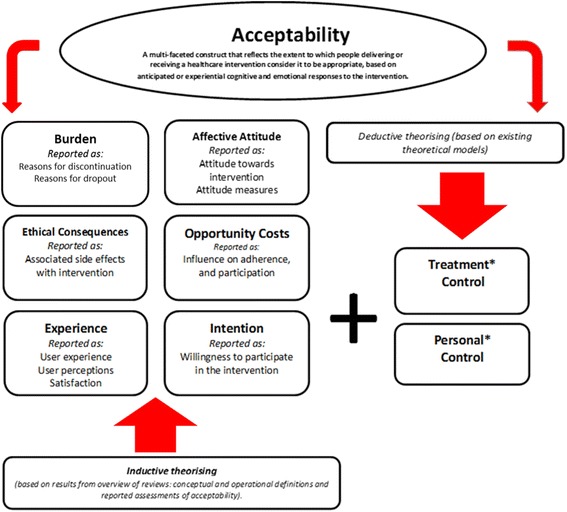
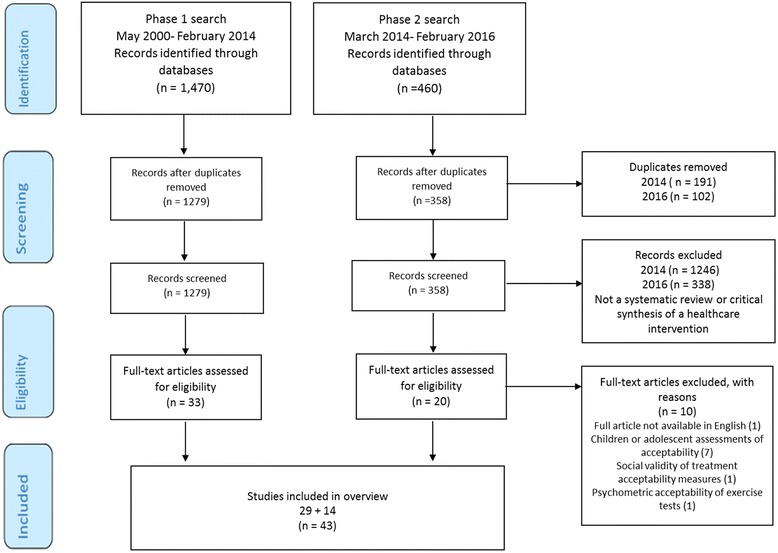
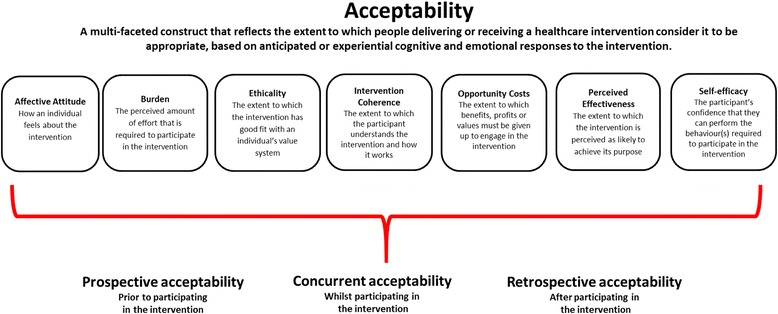
BACKGROUND: It is increasingly acknowledged that 'acceptability' should be considered when designing, evaluating and implementing healthcare interventions. However, the published literature offers little guidance on how to define or assess acceptability. The purpose of this study was to develop a multi-construct theoretical framework of acceptability of healthcare interventions that can be applied to assess prospective (i.e. anticipated) and retrospective (i.e. experienced) acceptability from the perspective of intervention delivers and recipients. METHODS: Two methods were used to select the component constructs of acceptability. 1) An overview of reviews was conducted to identify systematic reviews that claim to define, theorise or measure acceptability of healthcare interventions. 2) Principles of inductive and deductive reasoning were applied to theorise the concept of acceptability and develop a theoretical framework. Steps included (1) defining acceptability; (2) describing its properties and scope and (3) identifying component constructs and empirical indicators. RESULTS: From the 43 reviews included in the overview, none explicitly theorised or defined acceptability. Measures used to assess acceptability focused on behaviour (e.g. dropout rates) (23 reviews), affect (i.e. feelings) (5 reviews), cognition (i.e. perceptions) (7 reviews) or a combination of these (8 reviews). From the methods described above we propose a definition: Acceptability is a multi-faceted construct that reflects the extent to which people delivering or receiving a healthcare intervention consider it to be appropriate, based on anticipated or experienced cognitive and emotional responses to the intervention. The theoretical framework of acceptability (TFA) consists of seven component constructs: affective attitude, burden, perceived effectiveness, ethicality, intervention coherence, opportunity costs, and self-efficacy. CONCLUSION: Despite frequent claims that healthcare interventions have assessed acceptability, it is evident that acceptability research could be more robust. The proposed definition of acceptability and the TFA can inform assessment tools and evaluations of the acceptability of new or existing interventions.
Overview
The claims and statistics of this paper haven’t been checked yet.
Free: it reads the open-access text and checks the first 5 claims that cite a source we can check. Create a free account to check every claim.
Integrity signals
Registry
Cites
Statistics
Figures
Verification
Claims the paper makes
The claims and statistics of this paper haven’t been checked yet.
Free: it reads the open-access text and checks the first 5 claims that cite a source we can check. Create a free account to check every claim.
Claims other papers make about this one
Each is checked against this paper’s own text: does it say what the citing paper says it does?
The source backs part of the claim, not all of it — or backs it for a different population, condition or comparison.
In the citing paper
“Sekhon and colleagues [16] identified 7 component constructs of acceptability, but studies are generally designed to address only some of these components and vary by the components chosen.”
From Acceptability of Digital Mental Health Interventions for Depression and Anxiety: Systematic Review (2024) · cites this paper as [16]
Experimental — accuracy not yet measuredThe source backs part of the claim, not all of it — or backs it for a different population, condition or comparison.
In the citing paper
“Interviews followed a semi-structured schedule, taking into consideration elements of the TDF [24], and TFA [23]. Once drafted, interview schedules were reviewed by the EQUITy Lived Experience Advisory Panel (LEAP).”
From 'I didn't know what to expect': Exploring patient perspectives to identify targets for change to improve telephone-delivered psychological interventions (2020) · cites this paper as [23]
Experimental — accuracy not yet measuredThe source backs part of the claim, not all of it — or backs it for a different population, condition or comparison.
In the citing paper
“It has been increasingly acknowledged that consideration of patient acceptability using theories of behaviour change are key to effective evaluation, design and implementation of healthcare interventions [23–25] .”
From 'I didn't know what to expect': Exploring patient perspectives to identify targets for change to improve telephone-delivered psychological interventions (2020) · cites this paper as [23]
Experimental — accuracy not yet measuredThe cited source says what the claim attributes to it.
In the citing paper
“Overall, relating to the acceptability model by Sekhon et al. (2017), the main problems regarding acceptability centred around the dimensions burden, opportunity cost and self-efficacy, since participants found the intervention overly demanding when suffering from mental health symptoms and that they required more support to from a therapist to make use of the treatment material.”
From Investigating the potential of a novel internet-based cognitive behavioural intervention for Dari and Farsi speaking refugee youth: A feasibility study (2022) · cites this paper as Sekhon et al. (2017)
The cited source says what the claim attributes to it.
In the citing paper
“The TFA provided a structured theory around which to explore patient acceptability of specific elements of telephone-delivered treatment, without presuming acceptability based on patients’ behaviour [23].”
From 'I didn't know what to expect': Exploring patient perspectives to identify targets for change to improve telephone-delivered psychological interventions (2020) · cites this paper as [23]
2 more claims about this paper
Create a free account to see every claim other papers make about this one.
Self-check
Percentages, sums and reported differences re-computed from the paper’s own numbers.
The self-check needs the paper’s full text.
Citations
Cites
Using thematic analysis in psychology
Braun, V., & Clarke, V. (2006) · Qualitative Research in Psychology · doi:10.1191/1478088706qp063oa · Cited by 194,414 · cited 1×
“All extracted data were analysed by applying the thematic synthesis approach [30].”
MethodThe theory of planned behavior
Ajzen, I. (1991) · Organizational Behavior and Human Decision Processes · doi:10.1016/0749-5978(91)90020-t · Cited by 134,657
Preferred Reporting Items for Systematic Reviews and Meta-Analyses: the PRISMA statement
Moher, D., Liberati, A., Tetzlaff, J., Altman, D. G., & for the PRISMA Group (2009) · BMJ · doi:10.1136/bmj.b2535 · Cited by 83,823
Preferred reporting items for systematic reviews and meta-analyses: the PRISMA Statement.
(2009) · PubMed Central · Cited by 44,859
Self-efficacy: Toward a unifying theory of behavioral change
Bandura, A. (1977) · Psychological Review · doi:10.1037/0033-295x.84.2.191 · Cited by 43,925
Cochrane Handbook for Systematic Reviews of Interventions: Cochrane Book Series
(2008) · doi:10.1002/9780470712184 · Cited by 25,048 · cited 1×
“The Cochrane Tool of Quality Assessment was applied most frequently [39] (18 reviews: 62%).”
MethodAssessing the quality of reports of randomized clinical trials: Is blinding necessary?
Jadad, A. R., Moore, R. A., Carroll, D., Jenkinson, C., Reynolds, D. J. M., Gavaghan, D. J., & McQuay, H. J. (1996) · Controlled Clinical Trials · doi:10.1016/0197-2456(95)00134-4 · Cited by 17,582 · cited 2×
“Other assessments tools applied included the Jadad Scale [40] (three reviews: 10%), the”
MethodStructural Equations with Latent Variables.
Clogg, C. C., & Bollen, K. A. (1991) · Contemporary Sociology · doi:10.2307/2072165 · Cited by 17,442
Structural Equations with Latent Variables
Bollen, K. A. (1989) · Wiley series in probability and statistics · doi:10.1002/9781118619179 · Cited by 17,277 · cited 1×
“The inconsistency in defining concepts can impede the development of valid assessment instruments [20].”
BackgroundHealth Behavior and Health Education: Theory, Research, and Practice
(1992) · Annals of Internal Medicine · doi:10.7326/0003-4819-116-4-350_1 · Cited by 13,207
Research works printed but not linked: 1
- Hox JJ From theoretical concept to survey question. 1997): Survey Measurement and Process Quality 1997 New York ua Wiley 45 69
Cited by
Items 201–300 of 1,015
Sasaki, N., Obikane, E., Vedanthan, R., Imamura, K., Cuijpers, P. J., Shimazu, T., Kamada, M., Kawakami, N., & Nishi, D. (2021) · JMIR Formative Research · doi:10.2196/24332 · Cited by 31
Improving communication and teamwork during labor: A feasibility, acceptability, and safety study
Weiseth, A., Plough, A. C., Aggarwal, R., Galvin, G. E., Rucker, A., Henrich, N. J., Miller, K., Subramanian, L., Hawrusik, R., Berry, W., et al. (2022) · Birth · doi:10.1111/birt.12630 · Cited by 39
Farrall, A., Taylor, J., Ainsworth, B., & Alexander, J. (2023) · CHI Conference on Human Factors in Computing Systems · doi:10.1145/3544548.3581188 · Cited by 42
“pdf participants receiving the intervention consider it appropriate [101] and, Feasibility as the extent to which the intervention effects the outcome [92].”
BackgroundZamanillo‐Campos, R., Fiol-deRoque, M. A., Serrano-Ripoll, M. J., Mira-Martínez, S., & Ricci‐Cabello, I. (2023) · International Journal of Medical Informatics · doi:10.1016/j.ijmedinf.2023.105103 · Cited by 36
McKean, C., & Reilly, S. (2023) · International Journal of Language & Communication Disorders · doi:10.1111/1460-6984.12927 · Cited by 44
Greiver, M., Dahrouge, S., O’Brien, P. J., Manca, D. P., Lussier, M., Wang, J., Burge, F., Grandy, M., Singer, A. G., Twohig, M., et al. (2019) · Implementation Science · doi:10.1186/s13012-019-0904-4 · Cited by 39
Yadav, K., Stahmer, A. C., Mistry, R. D., & May, L. S. (2019) · Academic Emergency Medicine · doi:10.1111/acem.13873 · Cited by 34
Bartlett, Y. K., Farmer, A. A., Rea, R. D., & French, D. (2020) · Journal of Medical Internet Research · doi:10.2196/15989 · Cited by 34
“As conceptualized by Sekhon and colleagues [25], acceptability should be measured across development of an intervention to assess both anticipated and experienced acceptability.”
BackgroundLang, C., Voigt, K., Neumann, R., Bergmann, A., & Holthoff‐Detto, V. (2020) · Journal of Telemedicine and Telecare · doi:10.1177/1357633x20901400 · Cited by 38
Paskins, Z., Manning, F., Cottrell, E., Wright, J., Jinks, C., Bishop, S., Doyle, A., Ong, T. I. W., Gittoes, N. J. L., Leonardi‐Bee, J., et al. (2020) · BMJ Open · doi:10.1136/bmjopen-2020-040634 · Cited by 34
Atkinson, A. M., van de Ven, K., Cunningham, M., de Zeeuw, T. I., Hibbert, E., Forlini, C., Barkoukis, V., & Sumnall, H. R. (2021) · International Journal of Drug Policy · doi:10.1016/j.drugpo.2021.103141 · Cited by 42
Acceptability of childhood screening: a systematic narrative review
Carlton, J., Griffiths, H., Horwood, A. M., Mazzone, P., Walker, R., & Simonsz, H. J. (2021) · Public Health · doi:10.1016/j.puhe.2021.02.005 · Cited by 32
“We applied the framework outlined by Sekhon et al.(3) to establish which aspects of acceptability are most commonly evaluated and which research methodology is used.”
BackgroundMethodInfluentialCrombag, N. M. T. H., Sacco, A., Stocks, B., Vloo, P. D., van der Merwe, J., Gallagher, K., David, A. L., Marlow, N., & Deprest, J. A. (2021) · Prenatal Diagnosis · doi:10.1002/pd.5996 · Cited by 32
“Themes extracted from the interviews with parents opting for MFS are illustrated by F I GUR E 1 The framework of acceptability (adapted from the framework of acceptability by Sekhon et al.12) [Colour figure can be viewed at wileyonlinelibrary.com] F I GUR E 2 Identified themes of acceptability in temporal order, organ…”
BackgroundMethodInfluentialChanging Behavior Using the Transtheoretical Model
DiClemente, C. C., & Graydon, M. M. (2020) · Cambridge University Press eBooks · doi:10.1017/9781108677318.010 · Cited by 38
Diagnostic CT-Enabled Planning (DART): Results of a Randomized Trial in Palliative Radiation Therapy
O’Neil, M., Laba, J. M., Nguyen, T. K., Lock, M. I., Goodman, C. D., Huynh, E., Snir, J. A., Munro, V., Alce, J., Schrijver, L., et al. (2024) · International Journal of Radiation Oncology*Biology*Physics · doi:10.1016/j.ijrobp.2024.03.005 · Cited by 31
Fredericksen, R. J., Perkins, R., Brown, C., Cannon, C. A., Lopez, C., Cohee, A., Dombrowski, J. C., Cohen, S. E., Malinski, C., Powell, M., et al. (2024) · AIDS Patient Care and STDs · doi:10.1089/apc.2023.0289 · Cited by 33
“Using elements of a framework developed by Mensch et al. for understanding sexual health product acceptability, 11 as well as a theoretical framework of health intervention acc-eptability proposed by Sekhon et al., 12 we developed a semistructured interview guide.”
Toomey, E. C., Flannery, C., Matvienko‐Sikar, K., Olander, E. K., Hayes, C. B., Heffernan, T., Hennessy, M., McHugh, S., Queally, M., Kearney, P. M., et al. (2020) · Public Health Nutrition · doi:10.1017/s1368980020004954 · Cited by 41
“Prospective assessment of intervention acceptability is crucial to highlight factors which may influence the acceptability and overall success of an intervention and should be addressed during intervention development(32).”
BackgroundResultInfluentialLafferty, L., Smith, K. S., Causer, L. M., Andrewartha, K., Whiley, D. M., Badman, S. G., Donovan, B. J., Anderson, L., Tangey, A., Mak, D. B., et al. (2021) · Implementation Science Communications · doi:10.1186/s43058-021-00232-8 · Cited by 32
“Burden Burden, referring to “the perceived amount of effort that is required to participate in the intervention” [8, 33], was raised by some participants.”
BackgroundMethodInfluentialPrehabilitation in the lung cancer pathway: a scoping review
Wade-Mcbane, K., King, A., Urch, C., Jeyasingh‐Jacob, J., Milne, A., & Boutillier, C. L. (2023) · BMC Cancer · doi:10.1186/s12885-023-11254-x · Cited by 38
Lindegaard, T., Wasteson, E., Demetry, Y., Andersson, G., Richards, D., & Shahnavaz, S. (2022) · Internet Interventions · doi:10.1016/j.invent.2022.100533 · Cited by 30
“Further, to investigate the acceptability of the intervention, we used the Theoretical Framework of Acceptability (Sekhon et al., 2017), which includes seven dimensions of acceptability: Affective Attitude, Burden Ethicality, Intervention Coherence, Opportunity Cost, Perceived Effectiveness and Self-Efficacy.”
MethodAcceptability of Web-Based Mental Health Interventions in the Workplace: Systematic Review
Scheutzow, J., Attoe, C., & Harwood, J. (2022) · JMIR Mental Health · doi:10.2196/34655 · Cited by 30
“Sekhon et al [14] outlined studies assessing interventions’ acceptability by using operational definitions in line with measurable acceptability data (dropout rate and satisfaction rating) and qualitative studies focusing on in-depth user experiences.”
BackgroundDavey, E., Bennett, S., Bryant-Waugh, R., Micali, N., Takeda, A., Alexandrou, A., & Shafran, R. (2023) · Journal of Eating Disorders · doi:10.1186/s40337-023-00775-2 · Cited by 24
“and ultimately benefit from improved clinical outcomes if they consider an intervention to be acceptable [28].”
BackgroundNakmode, D. D., Singh, B., Abdella, S., Song, Y., & Garg, S. (2024) · Drug Delivery and Translational Research · doi:10.1007/s13346-024-01747-y · Cited by 48
“However, evaluating the acceptability can be performed at different time points such as pre-, throughout, and post-intervention [135, 136].”
Acceptability of mindfulness-based interventions for substance use disorder: A systematic review
Bautista, T. G., James, D. L., & Amaro, H. D. L. A. (2019) · Complementary Therapies in Clinical Practice · doi:10.1016/j.ctcp.2019.02.012 · Cited by 33
McCormick, S. A., Vatter, S., Carter, L., Smith, S. J., Orgeta, V., Poliakoff, E., Silverdale, M., Raw, J., Ahearn, D., Taylor, C., et al. (2019) · Journal of Neurology · doi:10.1007/s00415-019-09329-6 · Cited by 31
Bogart, L. M., Matovu, J. K. B., Wagner, G. J., Green, H. D., Storholm, E. D., Klein, D. J., Marsh, T., MacCarthy, S., & Kambugu, A. (2020) · AIDS and Behavior · doi:10.1007/s10461-020-02806-4 · Cited by 37
Acceptability, safety, and feasibility of in-bed cycling with critically ill patients
Nickels, M., Aitken, L. M., Barnett, A. G., Walsham, J., & McPhail, S. (2020) · Australian Critical Care · doi:10.1016/j.aucc.2020.02.007 · Cited by 36
Changing Behavior Using the Health Belief Model and Protection Motivation Theory
Orbell, S., Zahid, H., & Henderson, C. J. (2020) · Cambridge University Press eBooks · doi:10.1017/9781108677318.004 · Cited by 40
Killeen, S. L., Callaghan, S. L., Jacob, C. M., Hanson, M. A., & McAuliffe, F. M. (2020) · International Journal of Gynecology & Obstetrics · doi:10.1002/ijgo.13323 · Cited by 35
Gerards, M. H. G., Marcellis, R. G. J., Poeze, M., Lenssen, A. F., Meijer, K., & de Bie, R. A. (2021) · BMC Geriatrics · doi:10.1186/s12877-020-01944-7 · Cited by 43
Zucchi, E. M., Couto, M. T., Castellanos, M. E. P., Pena, É. D., Ferraz, D., Pinheiro, T. F., Grangeiro, A., da Silva, L. A. V., Dourado, I. C., Pedrana, L., et al. (2021) · PLoS ONE · doi:10.1371/journal.pone.0249293 · Cited by 40
“Recognizing social and structural barriers of access to healthcare, in particular discrimination, as key challenges to be overcome to deliver PrEP to most vulnerable adolescents The broader context where adolescents imagine PrEP delivery is the dimension most strongly related to the domain of ethicality (TFA).”
BackgroundMethodInfluentialQuality of life in patients with chronic respiratory failure on home mechanical ventilation
D'Cruz, R. F., Kaltsakas, G., Suh, E., & Hart, N. (2023) · European Respiratory Review · doi:10.1183/16000617.0237-2022 · Cited by 36
Linnemayr, S., MacCarthy, S., Kim, A., Giguere, R., Carballo‐Diéguez, A., & Barreras, J. L. (2018) · Trials · doi:10.1186/s13063-018-2867-1 · Cited by 32
Saracutu, M., Edwards, D. J., Davies, H., & Rance, J. (2018) · BMJ Open · doi:10.1136/bmjopen-2018-021866 · Cited by 29
“Acceptability will be divided into three categories: prospective acceptability (how an individual feels about the intervention prior to participating), intervention coherence and adherence (the extent to which a participant understands the intervention and how it works and also the engagement with the programme) and e…”
Positive behaviour support in frontotemporal dementia: a pilot study
O’Connor, C. M. C., Mioshi, E., Kaizik, C., Fisher, A., Hornberger, M., & Piguet, O. (2021) · Neuropsychological Rehabilitation · doi:10.1080/09602011.2019.1707099 · Cited by 29
Usability and Acceptability of Clinical Dashboards in Aged Care: Systematic Review
Siette, J., Dodds, L., Sharifi, F., Nguyen, A., Baysari, M. T., Seaman, K. L., Raban, M. Z., Wabe, N., & Westbrook, J. I. (2023) · JMIR Aging · doi:10.2196/42274 · Cited by 35
“Adopting the theoretical framework of acceptability [11], perceived user acceptability was explored for the overall dashboard as well as specific design features as described by the study (eg, bar charts).”
MethodAhn, J., Yang, Y., & Park, G. (2024) · Geriatric Nursing · doi:10.1016/j.gerinurse.2024.06.041 · Cited by 38
Alsubaie, M., Dickens, C. M., Dunn, B. D., Gibson, A., Ukoumunne, O. C., Evans, A., Vicary, R., Gandhi, M., & Kuyken, W. (2018) · Mindfulness · doi:10.1007/s12671-018-0999-8 · Cited by 33
“…acceptability refers to a ‘ multi-faceted construct that reflects the extent to which people delivering or receiving a healthcare intervention consider it to be appropriate, based on the anticipated or experiential cognitive and emotional responses to the intervention ’ (Sekhon et al. 2017, p. 5).”
BackgroundValido, E. M., Laksanawati, I. S., & Utarini, A. (2018) · BMC Research Notes · doi:10.1186/s13104-018-3766-y · Cited by 33
Montero‐Marín, J., Kuyken, W., Gasión, V., Barceló‐Soler, A., Rojas, L., Manrique, A., Esteban, R., & García‐Campayo, J. (2020) · International Journal of Environmental Research and Public Health · doi:10.3390/ijerph17051643 · Cited by 39
“In general, addressing more complex designs, ensuring intervention integrity [90], and promoting a more flexible training through other modes of delivery, including mobile applications or online platforms that could reinforce individual levels of practice, would be desirable [88,94].”
BackgroundRead, J., Jones, N. L., Fegan, C., Cudd, P., Simpson, E. L., Mazumdar, S., & Ciravegna, F. (2020) · British Journal of Occupational Therapy · doi:10.1177/0308022620921111 · Cited by 37
“Self-selecting staff and Public and Patient Involvement (PPI) group, PPI stakeholders were consulted to explore the prospective acceptability (Sekhon et al., 2017) of digital technology use to undertake remote occupational therapy home assessments.”
BackgroundMethodBrook, J., Aitken, L. M., MacLaren, J.-A., & Salmon, D. (2021) · BMC Nursing · doi:10.1186/s12912-020-00524-9 · Cited by 29
“Questionnaires based on the seven constructs of the Theoretical Framework of Acceptability of Healthcare Interventions [13] were developed (Fig.”
BackgroundMethodInfluentialDilgul, M., Hickling, L. M., Antonie, D., Priebe, S., & Bird, V. (2021) · Frontiers in Virtual Reality · doi:10.3389/frvir.2020.609545 · Cited by 42
Gerards, M. H. G., Sieben, J. M., Marcellis, R. G. J., de Bie, R. A., Meijer, K., & Lenssen, A. F. (2022) · BMJ Open · doi:10.1136/bmjopen-2021-056623 · Cited by 31
Soltan, F., Cristofalo, D., Marshall, D. C., Purgato, M., Taddese, H. B., Vanderbloemen, L., Barbui, C., & Uphoff, E. (2022) · Cochrane Database of Systematic Reviews · doi:10.1002/14651858.cd013657.pub2 · Cited by 41
Bell, I. H., Fielding-Smith, S. F., Hayward, M., Rossell, S. L., Lim, M. H., Farhall, J., & Thomas, N. (2018) · Trials · doi:10.1186/s13063-018-2607-6 · Cited by 28
“be evaluated at the feasibility and pilot phases of new interventions [66].”
BackgroundHoyt, J., Okello, G. R., Bange, T., Kariuki, S., Jalloh, M. F., Webster, J., & Hill, J. (2023) · BMC Public Health · doi:10.1186/s12889-023-17194-2 · Cited by 36
“…were used to explore 1) access [19] (constructs include accessibility, affordability, accommodation, availability, and attitude), 2) acceptability [20] (constructs include affective attitude, burden, ethicality, intervention coherence, opportunity costs, perceived effectiveness, and…”
Akinajo, O. R., Babah, O. A., Banke-Thomas, A. O., Beňová, L., Sam-Agudu, N. A., Balogun, M. R., Adaramoye, V. O., Galadanci, H. S., Quao, R. A., Afolabi, B. B., et al. (2024) · Reproductive Health · doi:10.1186/s12978-024-01743-y · Cited by 32
“Successful implementation of such intervention also depends on its acceptability to both those providing and receiving the intervention [18].”
BackgroundMethodAcceptability of delivering an adapted Buurtzorg model in the Scottish care context
Leask, C. F., Bell, J. S., & Murray, F. (2019) · Public Health · doi:10.1016/j.puhe.2019.10.011 · Cited by 28
Chow, P. I., Drago, F., Kennedy, E. M., & Cohn, W. F. (2019) · JMIR Cancer · doi:10.2196/15750 · Cited by 32
“We define acceptability similar to others [68] as a multifaceted construct that pertains to how much users of an intervention find it to be appropriate and the degree to which it meets their needs [68].”
BackgroundChanging Behavior by Changing Environments
Marteau, T. M., Fletcher, P. C., Hollands, G. J., & Munafo, M. R. (2020) · Cambridge University Press eBooks · doi:10.1017/9781108677318.014 · Cited by 35
Ngowi, K. M., Pima, F. M., Mmbaga, B. T., Aarnoutse, R. E., Reiss, P., Nieuwkerk, P. T., Sprangers, M. A. G., & Boer, M. S. (2021) · Patient Preference and Adherence · doi:10.2147/ppa.s290079 · Cited by 28
“Sekhon et al have developed a framework to guide the assessment of acceptability of innovative health interventions.(22) The Theoretical Framework of Acceptability (TFA) includes seven domains of acceptability of an intervention to be examined at three different stages.”
BackgroundKeyworth, C., O’Connor, R. C., Quinlivan, L. M., & Armitage, C. J. (2021) · Journal of Medical Internet Research · doi:10.2196/28349 · Cited by 35
Armstrong-Buisseret, L., Brittain, C., Kai, J., David, M. D., Watkins, J. A., Ozolins, M., Jackson, L., Abdali, Z., Hepburn, T., Griffiths, F., et al. (2022) · Health Technology Assessment · doi:10.3310/zzkh4176 · Cited by 30
Mitchell, S., Jaccard, E., Schmitz, F., von Känel, E., Collombet, P., Cornuz, J., Waeber, G., Guessous, I., & Guttormsen, S. (2022) · BMC Medical Education · doi:10.1186/s12909-022-03613-2 · Cited by 32
“Qualitative exploration of acceptability seeks to investigate focused questions on understanding of the specific topic [52].”
BackgroundBisby, M. A., Karin, E., Hathway, T., Scott, A. J., Heriseanu, A. I., Dudeney, J. E., Fisher, A. C., Gandy, M., Cross, S. P. M., Staples, L., et al. (2022) · Journal of Anxiety Disorders · doi:10.1016/j.janxdis.2022.102638 · Cited by 26
Gaskell, C., Power, N., Nováková, B., Simmonds‐Buckley, M., Reuber, M., Kellett, S., & Rawlings, G. H. (2023) · Epilepsia · doi:10.1111/epi.17626 · Cited by 33
Richardson, K. E., Petukhova, R., Hughes, S. D., Pitt, J., Yücel, M., & Segrave, R. A. (2024) · BMC Public Health · doi:10.1186/s12889-024-17683-y · Cited by 31
Meinert, E., Milne‐Ives, M., Lim, E., Higham, A., Boege, S., de Pennington, N., Bajre, M., Mole, G., Normando, E. M., & Xue, K. (2024) · EClinicalMedicine · doi:10.1016/j.eclinm.2024.102692 · Cited by 32
“21 Within this structure, codes were inductively generated from the transcripts by one author.”
MethodFeasibility of an Intervention to Support Hearing and Vision in Dementia: The SENSE‐Cog Field Trial
Hooper, E., Simkin, Z., Abrams, H. B., Camacho, E. M., Charalambous, A. P., Collin, F., Constantinidou, F., Dawes, P., Elliott, R. A., Falkingham, S., et al. (2019) · Journal of the American Geriatrics Society · doi:10.1111/jgs.15936 · Cited by 29
Patient decision‐making and regret in pilonidal sinus surgery: a mixed‐methods study
Strong, E. B., Callaghan, T., Beal, E. M., Moffatt, C. J., Wickramasekera, N., Brown, S. R., Lee, M. J., Winton, C., Hind, D., & PITSTOP Project Management Group, P. C. (2021) · Colorectal Disease · doi:10.1111/codi.15606 · Cited by 31
“Throughout, probing questions covered dimensions of Sekhon's acceptability framework [29] as well as intervention attributes, to inform a discrete choice experiment (to be published separately).”
BackgroundCorry, D. A. S., Doherty, J., Carter, G., Doyle, F., Fahey, T. P., O’Halloran, P. D., McGlade, K. J., Wallace, E., & Brazil, K. (2021) · PLoS ONE · doi:10.1371/journal.pone.0251978 · Cited by 30
“Acceptability reflects the extent to which patients receiving a healthcare intervention consider it to be appropriate [22].”
BackgroundSekhon, M., van der Straten, A., & on behalf of the MTN-041/MAMMA Study Team (2021) · PLoS ONE · doi:10.1371/journal.pone.0259779 · Cited by 36
“The TFA was developed by inductively synthesising the findings from an overview of reviews and applying deductive methods to theorise the concept of acceptability [30].”
BackgroundMethodSelf-citationMaroni, R., Barnes, J., Offman, J., Scheibl, F., Smith, S. G., Debiram–Beecham, I., Waller, J., Sasieni, P. D., Fitzgerald, R. C., Rubin, G. P., et al. (2022) · BMJ Open · doi:10.1136/bmjopen-2021-054258 · Cited by 29
Garnett, C. V., Oldham, M., Angus, C., Beard, E., Burton, R., Field, M., Greaves, F., Hickman, M., Kaner, E., Loebenberg, G., et al. (2020) · Addiction · doi:10.1111/add.15287 · Cited by 31
“This involves initially coding participant responses according to the Theoretical Framework of Acceptability construct they are judged to represent best, then grouping similar responses within each construct inductively to generate content themes representing how that construct contributes to reported acceptability.”
InfluentialWan Mohd Yunus, W. M. A., Matinolli, H.-M., Waris, O., Upadhyaya, S., Vuori, M., Korpilahti-Leino, T., Ristkari, T., Koffert, T., & Sourander, A. (2022) · Journal of Medical Internet Research · doi:10.2196/33337 · Cited by 26
“This suggests that intervention acceptability can be assessed at 3 time points: before, during, and after an intervention has been delivered [46].”
BackgroundMethodInfluentialVos, M., Deforche, B. I., Kerckhove, A. V., Michels, N., Geuens, M., & Lippevelde, W. V. (2022) · BMC Public Health · doi:10.1186/s12889-022-14817-y · Cited by 34
“Moreover, an effective implementation of an intervention strategy depends on its perceived acceptability [26].”
BackgroundFeeling safe in the context of digitalization in healthcare: a scoping review
Minartz, P., Aumann, C. M., Vondeberg, C., & Kuske, S. (2024) · Systematic Reviews · doi:10.1186/s13643-024-02465-9 · Cited by 37
“Higher acceptability increases patient adherence and leads to improved clinical outcomes for healthcare providers, which in turn influences the scope and use of new innovations [23].”
BackgroundInfluentialSchmeising-Barnes, N., Waller, J., & Marlow, L. A. V. (2024) · Social Science & Medicine · doi:10.1016/j.socscimed.2024.116762 · Cited by 29
Expanding a Behavioral View on Digital Health Access: Drivers and Strategies to Promote Equity
Kepper, M. M., Fowler, L. A., Kusters, I. S., Davis, J. W., Baqer, M., Henson, S. J. S., Xiao, Y., Tarfa, A., Yi, J. C., Gibson, B., et al. (2024) · Journal of Medical Internet Research · doi:10.2196/51355 · Cited by 40
“Examination of acceptability, for example, may provide insights into reasons for low use or effectiveness and implications for the fidelity of both delivery and receipt of the intervention [117].”
Patient involvement in questionnaire design: tackling response error and burden
Mes, M. A., Chan, A. H. Y., Wileman, V., Katzer, C. B., Goodbourn, M., Towndrow, S., Taylor, S. J., & Horne, R. (2019) · Journal of Pharmaceutical Policy and Practice · doi:10.1186/s40545-019-0175-0 · Cited by 26
Escobar-Viera, C. G., Zhou, Z., Morano, J. P., Lucero, R. J., Lieb, S., McIntosh, S., Clauson, K. A., & Cook, R. L. (2019) · JMIR mhealth and uhealth · doi:10.2196/14557 · Cited by 27
“At study day 30, participants who chose to try the app answered open-ended questions that assessed acceptability [45].”
BackgroundDesign, Implementation, and Evaluation of Behavior Change Interventions: A Ten-Task Guide
Abraham, C., & Denford, S. (2020) · Cambridge University Press eBooks · doi:10.1017/9781108677318.019 · Cited by 36
Changing Behavior Using the Reflective-Impulsive Model
Deutsch, R., & Strack, F. (2020) · Cambridge University Press eBooks · doi:10.1017/9781108677318.012 · Cited by 37
Akbarali, S., Rahi, J. S., Dick, A. D., Parkash, K., Etherton, K., Edelsten, C., Liu, X., & Solebo, A. L. (2020) · Arthritis & Rheumatology · doi:10.1002/art.41530 · Cited by 26
“The SUN cell grade runs from 0 (no cells seen within a central 1mm long beam) to +0·5 (1-5 cells seen), +1 (6-15), +2 (16-25), +3 (26-50), and ends at a highest level of inflammation of +4 (more than 51 cells seen by the clinician within the beam).”
BackgroundCliffe, M., Battista, E. D., & Bishop, S. (2020) · Health Expectations · doi:10.1111/hex.13148 · Cited by 30
deJonge, M. L., Jain, S., Faulkner, G., & Sabiston, C. M. (2021) · Mental health and physical activity · doi:10.1016/j.mhpa.2021.100391 · Cited by 37
Shu-li, W., Lim, S. H., & Aloweni, F. B. A. B. (2021) · Journal of Advanced Nursing · doi:10.1111/jan.15065 · Cited by 34
Butow, P. N., Shepherd, H. L., Cuddy, J., Harris, M., He, S., Masya, L. M., Faris, M. M., Rankin, N. M., Beale, P. J., Girgis, A., et al. (2021) · BMC Health Services Research · doi:10.1186/s12913-021-07252-z · Cited by 26
“Two key factors impacting CP sustainability are their acceptability and appropriateness [10].”
BackgroundTattan‐Birch, H., Kock, L. S., Brown, J., Beard, E., Bauld, L., West, R., & Shahab, L. (2022) · Nicotine & Tobacco Research · doi:10.1093/ntr/ntac149 · Cited by 31
“Routine or manual 27% (13) 32% (14) 29% (27)”
Brady, N., Dejaco, B., Lewis, J. S., McCreesh, K. M., & McVeigh, J. G. (2023) · PLoS ONE · doi:10.1371/journal.pone.0284445 · Cited by 34
Babington‐Ashaye, A., de Moerloose, P., Diop, S., & Geissbühler, A. (2023) · Haemophilia · doi:10.1111/hae.14815 · Cited by 46
Elliott, S. N. (2017) · Behavioral Disorders · doi:10.1177/0198742917739021 · Cited by 26
Rücker, S. C. M., Cossa, L., Harrison, R. E., Mpunga, J. A., Lobo, S., Kimupelenge, P. K., Kol’Ampwe, F. M., Quiles, I. A., Molfino, L., Szumilin, E., et al. (2019) · Global Health Action · doi:10.1080/16549716.2019.1672366 · Cited by 26
“We considered acceptability as the extent to which the LAM users considered the LAM test to be appropriate, based on their experiences and perceptions [11].”
MethodBeaussant, Y., Tarbi, E., Nigam, K., Miner, S., Sager, Z., Sanders, J. J., Ljuslin, M., Guérin, B., Thambi, P., Tulsky, J. A., et al. (2024) · Cancer · doi:10.1002/cncr.35024 · Cited by 25
“Questions were designed to elicit participants’ experience of and perspective on the different aspects of the study intervention, with attention to component constructs of the acceptability conceptual framework developed by Sekhon et al. 24 : affective attitude, burden, ethicality, intervention coherence, opportunity…”
BackgroundCurrent State of Minitablet Product Design: A Review
Meruva, S., Singaraju, A. B., Vinjamuri, B. P., Ternik, R. L., & Stagner, W. C. (2024) · Journal of Pharmaceutical Sciences · doi:10.1016/j.xphs.2024.02.016 · Cited by 30
Erguera, X. A., Koester, K. A., Tsuzuki, M. D., Dance, K. V., Flores, R. A., Kerman, J., McNulty, M., Colasanti, J. A., Collins, L. F., Montgomery, E., et al. (2024) · AIDS and Behavior · doi:10.1007/s10461-024-04315-0 · Cited by 29
“Qualitative methods are particularly effective for understanding the early response to innovations, weighing of pros and cons, and ascertaining affective attitudes [16, 17].”
BackgroundMethodArrazat, L., Cambriels, C., Noan, C. L., Nicklaus, S., & Marty, L. (2024) · International Journal of Behavioral Nutrition and Physical Activity · doi:10.1186/s12966-024-01624-4 · Cited by 34
“…framework for the acceptability of healthcare interventions comprising seven constructs: affective attitude, burden, perceived effectiveness, ethi-cality, intervention coherence, opportunity costs, and self-efficacy [32], highlighting that acceptability is a complex and multifactor concept.”
BackgroundJust-in-Time Adaptive Interventions: Where Are We Now and What Is Next?
Nahum-Shani, I. B., & Murphy, S. A. (2025) · Annual Review of Psychology · doi:10.1146/annurev-psych-121024-044244 · Cited by 58
Effective interventions to improve the health literacy of cancer patients
Gonzalez, L. F., & Bravo, P. (2019) · ecancermedicalscience · doi:10.3332/ecancer.2019.966 · Cited by 25
Shepherd, V., Wood, F., Griffith, R., Sheehan, M., & Hood, K. (2021) · BMC Medical Informatics and Decision Making · doi:10.1186/s12911-021-01390-4 · Cited by 23
Longtin, C., Décary, S., Cook, C. E., Martel, M. O., Lafrenaye, S., Carlesso, L. C., Naye, F., & Tousignant‐Laflamme, Y. (2021) · PLoS ONE · doi:10.1371/journal.pone.0245689 · Cited by 31
“Finally, acceptability is defined as a “multi-faceted construct that reflects the extent to which people delivering or receiving a healthcare intervention consider it to be appropriate” [17].”
BackgroundMunro, N., Baker, E., Masso, S., Carson, L., Lee, T., Wong, A. M.-Y., & Stokes, S. F. (2021) · Journal of Speech Language and Hearing Research · doi:10.1044/2021_jslhr-20-00680 · Cited by 26
Gunn, K. M., Skaczkowski, G., Dollman, J., Vincent, A. D., Short, C. E., Brumby, S., Barrett, A., Harrison, N., & Turnbull, D. (2022) · JMIR Human Factors · doi:10.2196/27631 · Cited by 25
“The star rating out of 5 was used as it allowed for the multifaceted nature of acceptability to be captured [46] and because of the familiarity and briefness of this approach [47].”
MethodPolonsky, J. A., Bhatia, S., Fraser, K., Hamlet, A., Skarp, J. E., Stopard, I. J., Hugonnet, S., Kaiser, L., Lengeler, C., Blanchet, K., et al. (2022) · Infectious Diseases of Poverty · doi:10.1186/s40249-022-00935-7 · Cited by 29
“We charted information related to the following key outcomes and their adapted definitions [29, 30]: (1) fea-sibility—the viability, practicability, or workability of the intervention.”
Saggu, R. K., Barlow, P. L., Butler, J., Ghaem‐Maghami, S., Hughes, C., Lagergren, P., McGregor, A. H., Shaw, C., & Wells, M. (2022) · BMC Women s Health · doi:10.1186/s12905-022-01882-z · Cited by 28
Jones, L., Lee, M., Castle, C. L., Heinze, N., & Gomes, R. S. M. (2022) · BMJ Open · doi:10.1136/bmjopen-2021-059985 · Cited by 26
Jessiman, P., Carlisle, V. R., Breheny, K., Campbell, R. M., Jago, R., Robinson, M., Strong, S., & Kidger, J. (2023) · BMC Public Health · doi:10.1186/s12889-023-15082-3 · Cited by 43
“We present the qualitative data relating to feasibility using Sekhon et al’s theoretical framework of acceptability [27].”
BackgroundMethodInfluentialEvaluation of a shared decision making educational program: The Ottawa Decision Support Tutorial
Boland, L., Légaré, F., Carley, M. E., Graham, I. D., O'Connor, A. M. C., Lawson, M. L., & Stacey, D. (2018) · Patient Education and Counseling · doi:10.1016/j.pec.2018.09.008 · Cited by 29
Robertson, E. G., Wakefield, C. E., Cohn, R. J., Battisti, R. A., Donoghoe, M. W., Ziegler, D. S., Fardell, J. E., Mitchell, R., & O'Brien, T. A. (2019) · Psycho-Oncology · doi:10.1002/pon.5109 · Cited by 30
“Q2: Acceptability and feasibility items were purpose designed based on the Ottawa acceptability scale(28) and addressed key domains of the theoretical framework of acceptability.(29) Q1 and Q2: We measured emotional safety via the Emotion Thermometers tool(30) and objective and subjective clinical trial knowledge via…”
Method
Metadata
- Authors
- Sekhon, M., Cartwright, M., & Francis, J. J.
- Affiliations
- City, University of London (GB)
- Corresponding author
- Sekhon, Mandeep
- Venue
- BMC Health Services Research
- Published
- 2017-01-26
- Volume
- 17
- Issue
- 1
- Pages
- 88-88
- ISSN
- 1472-6963 (ISSN-L)
- PMC
- PMC5267473
- OpenAlex
- W2582406074
- Semantic Scholar
- f75ddad2e8aacf728c62bc750ceb8bc085f6094d
- Cited by
- 3,938
- References
- 78
- Citations by year
- 2026: 620 · 2025: 701 · 2024: 683 · 2023: 518 · 2022: 535 · 2021: 349 · 2020: 349 · 2019: 118 · 2018: 56 · 2017: 6
- FWCI
- 234.94
- Type
- journal article
- Language
- en
- Open access
- gold
- doi.org
- Licence
- cc-by
- Locations
- BMC Health Services Research (publishedVersion, cc-by)
- Europe PMC (PubMed Central) (publishedVersion, cc-by)
- PubMed Central (publishedVersion, cc-by)
- PubMed (publishedVersion)
- Research Repository (Kingston University London) (acceptedVersion)
- City Research Online (City University London) (acceptedVersion)
- St George's Online Research Archive (St George's University of London) (acceptedVersion)
- Minerva Access (University of Melbourne) (submittedVersion, cc-by)
- Research Portal (King's College London) (submittedVersion, cc-by)
- Topics
- Health Sciences › Health Professions › General Health Professions › Health Policy Implementation Science
- Social Sciences › Economics, Econometrics and Finance › Economics and Econometrics › Health Systems, Economic Evaluations, Quality of Life
- Health Sciences › Nursing › Research and Theory › Health Education and Validation
- Keywords
- theoretical framework, affective attitudes, perceived burden, perceived effectiveness, ethicality, intervention coherence, opportunity cost, self-efficacy, dropout rates
- MeSH terms
- Humans, Models, Theoretical, Patient Acceptance of Health Care, Prospective Studies, Retrospective Studies, Review Literature as Topic, Consensus
About these checks
Registry, retraction, Cites and statistics results are computed, not judged, with one exception: a printed reference that no index lists is read once by a model before it counts as a citation error. Claims are extracted by a model and kept only when their quote appears verbatim in the text; each cited source is then checked, with a model’s help, for whether it says what the claim relies on. Those verdicts can be wrong — read the claim’s quote and the cited source before relying on one.
Statistics and arithmetic are recomputed, not judged.
Confidence bands are shown only for fields calibrated on our annotated test set. None is calibrated yet, so no band is shown.
What counts as a claim ›How we measure confidence ›How we check this ›
Are you an author, or do you see a problem with this page? Request a review
Data sources
Bibliographic data: Semantic Scholar, OpenAlex, Crossref.
Contains information from the Semantic Scholar Academic Graph Datasets, made available under the ODC Attribution License (ODC-BY 1.0).
Semantic Scholar’s data is described in: Kinney, R., et al. (2023). The Semantic Scholar Open Data Platform. arXiv:2301.10140.
