

Acceptability of healthcare interventions: an overview of reviews and development of a theoretical framework
Open accessThe DOI matches its Crossref record; 74 of the 78 references it cites were found in a registry or an index.
Abstract
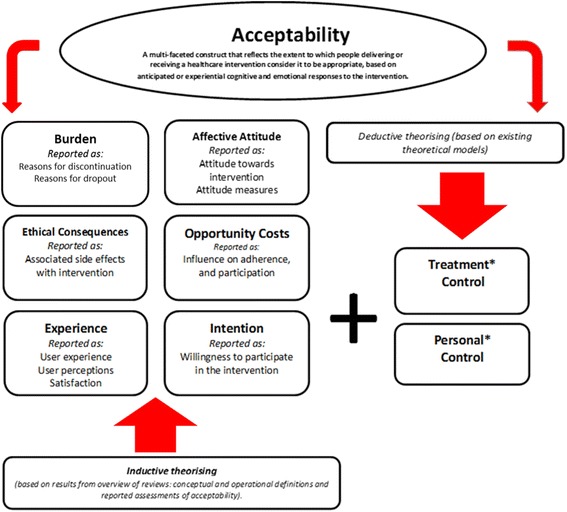
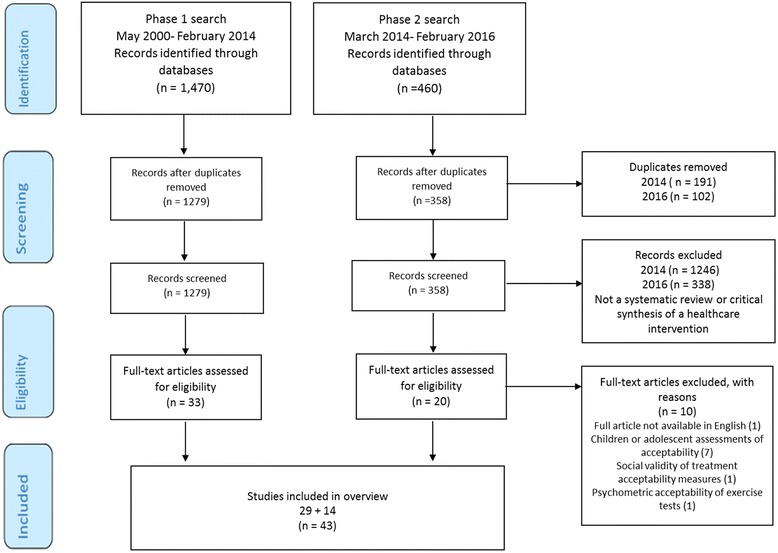
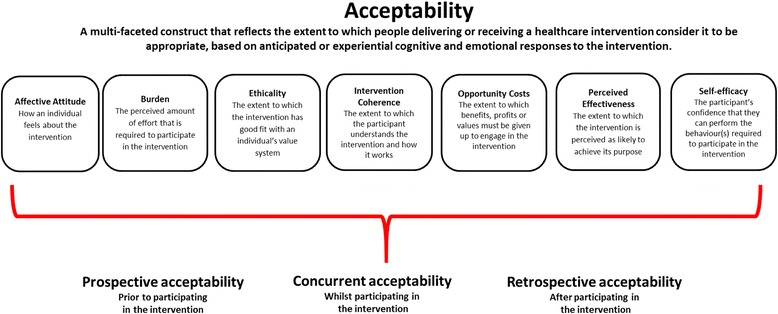
BACKGROUND: It is increasingly acknowledged that 'acceptability' should be considered when designing, evaluating and implementing healthcare interventions. However, the published literature offers little guidance on how to define or assess acceptability. The purpose of this study was to develop a multi-construct theoretical framework of acceptability of healthcare interventions that can be applied to assess prospective (i.e. anticipated) and retrospective (i.e. experienced) acceptability from the perspective of intervention delivers and recipients. METHODS: Two methods were used to select the component constructs of acceptability. 1) An overview of reviews was conducted to identify systematic reviews that claim to define, theorise or measure acceptability of healthcare interventions. 2) Principles of inductive and deductive reasoning were applied to theorise the concept of acceptability and develop a theoretical framework. Steps included (1) defining acceptability; (2) describing its properties and scope and (3) identifying component constructs and empirical indicators. RESULTS: From the 43 reviews included in the overview, none explicitly theorised or defined acceptability. Measures used to assess acceptability focused on behaviour (e.g. dropout rates) (23 reviews), affect (i.e. feelings) (5 reviews), cognition (i.e. perceptions) (7 reviews) or a combination of these (8 reviews). From the methods described above we propose a definition: Acceptability is a multi-faceted construct that reflects the extent to which people delivering or receiving a healthcare intervention consider it to be appropriate, based on anticipated or experienced cognitive and emotional responses to the intervention. The theoretical framework of acceptability (TFA) consists of seven component constructs: affective attitude, burden, perceived effectiveness, ethicality, intervention coherence, opportunity costs, and self-efficacy. CONCLUSION: Despite frequent claims that healthcare interventions have assessed acceptability, it is evident that acceptability research could be more robust. The proposed definition of acceptability and the TFA can inform assessment tools and evaluations of the acceptability of new or existing interventions.
Overview
The claims and statistics of this paper haven’t been checked yet.
Free: it reads the open-access text and checks the first 5 claims that cite a source we can check. Create a free account to check every claim.
Integrity signals
Registry
Cites
Statistics
Figures
Verification
Claims the paper makes
The claims and statistics of this paper haven’t been checked yet.
Free: it reads the open-access text and checks the first 5 claims that cite a source we can check. Create a free account to check every claim.
Claims other papers make about this one
Each is checked against this paper’s own text: does it say what the citing paper says it does?
The source backs part of the claim, not all of it — or backs it for a different population, condition or comparison.
In the citing paper
“Sekhon and colleagues [16] identified 7 component constructs of acceptability, but studies are generally designed to address only some of these components and vary by the components chosen.”
From Acceptability of Digital Mental Health Interventions for Depression and Anxiety: Systematic Review (2024) · cites this paper as [16]
Experimental — accuracy not yet measuredThe source backs part of the claim, not all of it — or backs it for a different population, condition or comparison.
In the citing paper
“Interviews followed a semi-structured schedule, taking into consideration elements of the TDF [24], and TFA [23]. Once drafted, interview schedules were reviewed by the EQUITy Lived Experience Advisory Panel (LEAP).”
From 'I didn't know what to expect': Exploring patient perspectives to identify targets for change to improve telephone-delivered psychological interventions (2020) · cites this paper as [23]
Experimental — accuracy not yet measuredThe source backs part of the claim, not all of it — or backs it for a different population, condition or comparison.
In the citing paper
“It has been increasingly acknowledged that consideration of patient acceptability using theories of behaviour change are key to effective evaluation, design and implementation of healthcare interventions [23–25] .”
From 'I didn't know what to expect': Exploring patient perspectives to identify targets for change to improve telephone-delivered psychological interventions (2020) · cites this paper as [23]
Experimental — accuracy not yet measuredThe cited source says what the claim attributes to it.
In the citing paper
“Overall, relating to the acceptability model by Sekhon et al. (2017), the main problems regarding acceptability centred around the dimensions burden, opportunity cost and self-efficacy, since participants found the intervention overly demanding when suffering from mental health symptoms and that they required more support to from a therapist to make use of the treatment material.”
From Investigating the potential of a novel internet-based cognitive behavioural intervention for Dari and Farsi speaking refugee youth: A feasibility study (2022) · cites this paper as Sekhon et al. (2017)
The cited source says what the claim attributes to it.
In the citing paper
“The TFA provided a structured theory around which to explore patient acceptability of specific elements of telephone-delivered treatment, without presuming acceptability based on patients’ behaviour [23].”
From 'I didn't know what to expect': Exploring patient perspectives to identify targets for change to improve telephone-delivered psychological interventions (2020) · cites this paper as [23]
2 more claims about this paper
Create a free account to see every claim other papers make about this one.
Self-check
Percentages, sums and reported differences re-computed from the paper’s own numbers.
The self-check needs the paper’s full text.
Citations
Cites
Using thematic analysis in psychology
Braun, V., & Clarke, V. (2006) · Qualitative Research in Psychology · doi:10.1191/1478088706qp063oa · Cited by 194,414 · cited 1×
“All extracted data were analysed by applying the thematic synthesis approach [30].”
MethodThe theory of planned behavior
Ajzen, I. (1991) · Organizational Behavior and Human Decision Processes · doi:10.1016/0749-5978(91)90020-t · Cited by 134,657
Preferred Reporting Items for Systematic Reviews and Meta-Analyses: the PRISMA statement
Moher, D., Liberati, A., Tetzlaff, J., Altman, D. G., & for the PRISMA Group (2009) · BMJ · doi:10.1136/bmj.b2535 · Cited by 83,823
Preferred reporting items for systematic reviews and meta-analyses: the PRISMA Statement.
(2009) · PubMed Central · Cited by 44,859
Self-efficacy: Toward a unifying theory of behavioral change
Bandura, A. (1977) · Psychological Review · doi:10.1037/0033-295x.84.2.191 · Cited by 43,925
Cochrane Handbook for Systematic Reviews of Interventions: Cochrane Book Series
(2008) · doi:10.1002/9780470712184 · Cited by 25,048 · cited 1×
“The Cochrane Tool of Quality Assessment was applied most frequently [39] (18 reviews: 62%).”
MethodAssessing the quality of reports of randomized clinical trials: Is blinding necessary?
Jadad, A. R., Moore, R. A., Carroll, D., Jenkinson, C., Reynolds, D. J. M., Gavaghan, D. J., & McQuay, H. J. (1996) · Controlled Clinical Trials · doi:10.1016/0197-2456(95)00134-4 · Cited by 17,582 · cited 2×
“Other assessments tools applied included the Jadad Scale [40] (three reviews: 10%), the”
MethodStructural Equations with Latent Variables.
Clogg, C. C., & Bollen, K. A. (1991) · Contemporary Sociology · doi:10.2307/2072165 · Cited by 17,442
Structural Equations with Latent Variables
Bollen, K. A. (1989) · Wiley series in probability and statistics · doi:10.1002/9781118619179 · Cited by 17,277 · cited 1×
“The inconsistency in defining concepts can impede the development of valid assessment instruments [20].”
BackgroundHealth Behavior and Health Education: Theory, Research, and Practice
(1992) · Annals of Internal Medicine · doi:10.7326/0003-4819-116-4-350_1 · Cited by 13,207
Research works printed but not linked: 1
- Hox JJ From theoretical concept to survey question. 1997): Survey Measurement and Process Quality 1997 New York ua Wiley 45 69
Cited by
Items 501–600 of 1,015
Hughes, T., O'Hara, J. P., Burton, A. M., London, N. J. M., & Emmonds, S. (2023) · PLoS ONE · doi:10.1371/journal.pone.0289065 · Cited by 24
Lopes, A. M. D. S., Colomer‐Lahiguera, S., Darnac, C., Giacomini, S., Bugeia, S., Gutknecht, G., Spurrier‐Bernard, G., Aedo-Lopez, V., Mederos, N., Latifyan, S., et al. (2023) · Supportive Care in Cancer · doi:10.1007/s00520-023-07934-w · Cited by 19
“A semi-structured patient interview guide to assess the acceptability of the model of care was created by the research team, using the definition of acceptability by Sekhon et al. [42].”
MethodAcceptability of HPV Vaccines: A Qualitative Systematic Review and Meta-Summary
María Teresa Urrutia, S., Araya, A.-X., Gajardo, M., Chepo, M., Torres, R., & Schilling, A. (2023) · Vaccines · doi:10.3390/vaccines11091486 · Cited by 23
“Grouping Findings: “To Group Findings That Appear to Be the Same Topic” [9] Using the deductive method, we organized the findings from each study according to the components of the theoretical framework of acceptability [7].”
BackgroundMethodInfluentialKusinski, L. C., Brown, J., Hughes, D. J., & Meek, C. L. (2023) · PLoS ONE · doi:10.1371/journal.pone.0292094 · Cited by 21
Ouédraogo, S., Degroote, S., Barro, S., Somé, P., Bonnet, E., & Ridde, V. (2019) · Revue d Épidémiologie et de Santé Publique · doi:10.1016/j.respe.2019.08.002 · Cited by 24
Zethof, S., Bakker, W., Nansongole, F., Kilowe, K., van Roosmalen, J., & van den Akker, T. (2020) · BMJ Open · doi:10.1136/bmjopen-2019-030665 · Cited by 20
Vito, A. N. D., Sawyer, R. J., LaRoche, A., Arredondo, B. C., Mizuki, B., & Knoop, C. (2020) · Gerontology and Geriatric Medicine · doi:10.1177/2333721420924988 · Cited by 15
“As suggested by Sekhon et al. (2017), it is important to assess multiple facets of acceptability (e.g., affective attitude, burden, effectiveness).”
BackgroundBuchanan, D., D'Angiulli, A., Samson, A., Maisonneuve, A. R., & Robaey, P. (2020) · Journal of Health Psychology · doi:10.1177/1359105320937059 · Cited by 18
“After analyzing the data through the lens of Grounded Theory it became clear that many of the themes which emerged also closely coincided with the Theoretical Framework of Acceptability (Sekhon et al., 2017).”
BackgroundMethodInfluentialBrook, J., Aitken, L. M., MacLaren, J.-A., & Salmon, D. (2020) · Nurse Education in Practice · doi:10.1016/j.nepr.2020.102861 · Cited by 21
Nadal, C., Earley, C., Enrique, Á., Viganò, N., Sas, C., Richards, D., & Doherty, G. J. (2021) · Contemporary Clinical Trials · doi:10.1016/j.cct.2021.106323 · Cited by 19
“The questions also provide coverage of the main constructs of the Theoretical Framework of Acceptability [27].”
BackgroundGarnett, C. V., Perski, O., Michie, S., West, R., Field, M., Kaner, E., Munafo, M. R., Greaves, F., Hickman, M., Burton, R., et al. (2021) · F1000Research · doi:10.12688/f1000research.51416.1 · Cited by 20
Lee, V., Roudbarani, F., Modica, P. T., Pouyandeh, A., & Weiss, J. A. (2021) · Evidence-Based Practice in Child and Adolescent Mental Health · doi:10.1080/23794925.2021.1941432 · Cited by 20
“Respondents rated questions that refer to aspects of the theoretical framework of acceptability (Sekhon et al., 2017), which includes one item each to reflect affective attitude (“I feel positively about this program”), burden (“The amount of effort required to do this program was acceptable”),…”
BackgroundMcCoy, S., Buzdugan, R., Grimball, R., Natoli, L. J., Mejia, C. M., Klausner, J., & McGrath, M. (2018) · mHealth · doi:10.21037/mhealth.2018.09.04 · Cited by 18
“Consistent with prior studies (60), acceptability was primarily based on behavior (i.”
BackgroundMartorella, G., Graven, L. J., Schluck, G., Berube, M., & Gélinas, C. (2018) · SAGE Open Nursing · doi:10.1177/2377960818806270 · Cited by 20
Gibby, C. L. K., Palacios, C. S., Campos, M., Graulau, R. E., & Banna, J. C. (2019) · BMC Pregnancy and Childbirth · doi:10.1186/s12884-019-2446-9 · Cited by 17
Hall, T., Kakuma, R., Palmer, L. R., Martins, J. S., Minas, H., & Kermode, M. (2019) · Health Policy and Planning · doi:10.1093/heapol/czz108 · Cited by 20
Gossage-Worrall, R., Hind, D., Barnard-Kelly, K. D., Shiers, D., Etherington, A., Swaby, L., & Holt, R. I. G. (2019) · BMC Psychiatry · doi:10.1186/s12888-019-2282-5 · Cited by 20
Dziano, J., Milanese, E., Bogomolova, S., & Dollman, J. (2021) · International Journal of Environmental Research and Public Health · doi:10.3390/ijerph18031308 · Cited by 16
“Data Collection Questionnaires The questionnaire, adapted from Sekhon, Cartwright, and Francis [18], asked participants to assess, on a Likert Scale, 10 domains of feasibility and acceptability.”
MethodGrosselli, L., Knappe, S., Baumgärtel, J., Lewitzka, U., & Hoyer, J. (2024) · BMC Public Health · doi:10.1186/s12889-023-17557-9 · Cited by 16
“A 7-item scale (range: 1 “not at all” to 5 “very”) to evaluate program acceptability was developed based on the theoretical framework by Sekhon, Cartwright and Francis [49].”
MethodAuerbach, J. D., Malone, S., & Forsyth, A. D. (2024) · Journal of the International AIDS Society · doi:10.1002/jia2.26341 · Cited by 23
Milner, S. C., Bourbeau, J., Ahmed, S., & Janaudis‐Ferreira, T. (2019) · Chronic Respiratory Disease · doi:10.1177/1479973119872517 · Cited by 17
Batte, C., Mukisa, J., Rykiel, N. A., Mukunya, D., Checkley, W., Knauf, F., Kalyesubula, R., & Siddharthan, T. (2021) · BMC Public Health · doi:10.1186/s12889-021-11411-6 · Cited by 24
Klein, T. M., Augustin, M., Kirsten, N., & Otten, M. (2020) · BMC Medical Informatics and Decision Making · doi:10.1186/s12911-020-01302-y · Cited by 16
“A precondition for usage of innovations is users’ acceptability [14].”
BackgroundRamirez-Hernandez, D., Stolwyk, R. J., Chapman, J. E., & Wong, D. K. (2021) · Neuropsychological Rehabilitation · doi:10.1080/09602011.2021.1879875 · Cited by 17
“All the identified themes appear to support most of the dimensions comprised within Sekhon and colleagues’ theoretical framework conceptualizing the acceptability of healthcare interventions (Sekhon et al., 2017), suggesting NEUROPSYCHOLOGICAL REHABILITATION 1277”
BackgroundInfluentialBursnall, M., Thomas, B., Berntsson, H., Strong, E. B., Brayne, M., & Hind, D. (2022) · Journal of Psychosocial Rehabilitation and Mental Health · doi:10.1007/s40737-022-00260-0 · Cited by 20
“A priori coding was to the Theoretical Domains Framework (TDF) [18] for therapist feedback on determinants of the implementation of online EMDR, and six out of seven constructs from Sekhon’s framework for client feedback on its acceptability [19].”
MethodFowler‐Davis, S., Young, R., Maden‐Wilkinson, T., Hameed, W., Dracas, E., Hurrell, E., Bahl, R., Kilcourse, E., Robinson, R., & Copeland, R. J. (2021) · International Journal of Environmental Research and Public Health · doi:10.3390/ijerph182413191 · Cited by 16
“Key domains of importance as a consideration of the acceptability in this case appear to be associated with (a) the identification of simple solutions and ‘small’ support that enabled local activity and (b) highlights the importance of being heard by a ‘trusted professional’ in the context of a clinical intervention […”
BackgroundWilliams, S. C., Horsfall, H. L., Funnell, J. P., HANRAHAN, J. G., Schaefer, A. T., Muirhead, W. R., & Marcus, H. J. (2022) · World Neurosurgery · doi:10.1016/j.wneu.2022.05.062 · Cited by 18
“These findings are key in the clinical translation of BCI technology; research has shown that clinician acceptability plays a significant role in the clinical impact of a technology and has wider implications for the direction of research.(44,45)”
BackgroundMathew, J., Adhia, D. B., Smith, M. L., Ridder, D. D., & Mani, R. (2022) · Frontiers in Neuroscience · doi:10.3389/fnins.2022.899772 · Cited by 19
“Acceptability and perceived levels of effectiveness of the intervention Acceptability and perceived levels of effectiveness are two important domains in the design, evaluation, and implementation of health care interventions (Sekhon et al., 2017; Suka et al., 2017).”
BackgroundInfluentialThe ‘Tasty School’ model is feasible for food education in primary schools
Laitinen, A. L., Antikainen, A., Mikkonen, S. J., Kähkönen, K., Talvia, S. S., Varjonen, S., Paavola, S., Karhunen, L. J., & Tilles‐Tirkkonen, T. (2022) · Journal of Human Nutrition and Dietetics · doi:10.1111/jhn.13071 · Cited by 27
“The theoretical framework of acceptability, comprising seven components (affective attitude, burden, perceived effectiveness, ethicality, intervention coherence, opportunity costs and self‐efficacy), was utilised.(23) In addition, implementation barriers and facilitators were evaluated with a query that included 16 st…”
MethodZakumumpa, H., Kiguba, R., Ndagije, H. B., Ategeka, G., Ssanyu, J. N., & Kitutu, F. E. (2022) · BMC Infectious Diseases · doi:10.1186/s12879-022-07673-z · Cited by 23
“[47] previously suggested that patients make considered positions or ‘settlements’ around the opportunity cost of participating in health care interventions.”
BackgroundHosking, R., O’Connor, S. Y., Wangdi, K., Kurscheid, J. M., & Lal, A. (2022) · PLoS neglected tropical diseases · doi:10.1371/journal.pntd.0010702 · Cited by 24
“” While acceptability assessments of healthcare interventions are increasingly common in clinical settings [15], their place in WASH has not yet been reviewed.”
BackgroundInfluentialHalladay, J., Woock, R., Xu, A., Boutros Salama, M., & Munn, C. (2024) · Journal of American College Health · doi:10.1080/07448481.2022.2115305 · Cited by 16
“57 Reporting follows the Strengthening the Reporting of Observational Studies in Epidemiology (STROBE) statement.”
O'Connor, S. R., Treanor, C., Ward, E., Wickens, R. A., O’Connell, A., Culliford, L. A., Rogers, C. A., Gidman, E., Pető, T., Knox, P. C., et al. (2022) · International Journal of Environmental Research and Public Health · doi:10.3390/ijerph192013714 · Cited by 17
“‘Acceptability’ reflects the extent to which patients consider HM appropriate and feasible, based on anticipated or experienced cognitive and emotional responses [21,22].”
BackgroundNyumwa, P., Bula, A. K., & Mipando, A. L. N. (2023) · BMC Pregnancy and Childbirth · doi:10.1186/s12884-023-05497-6 · Cited by 16
Machado, P., Pimenta, S., Garcia, A. L., Nogueira, T., Silva, S., Oliveiros, B., Martins, R. A., & Cruz, J. (2023) · Journal of Clinical Medicine · doi:10.3390/jcm12082971 · Cited by 22
“Acceptability: Assessed using a 13-item questionnaire developed by the research team, based on the theoretical framework proposed by Sekhon et al. (2017) [50].”
BackgroundMethodInfluentialSchneider, J., Matheson, E. L., Tinoco, A., Gentili, C., White, P., Boucher, C., Silva-Breen, H. L., Goorevich, A., Diedrichs, P. C., & LaVoi, N. M. (2023) · Journal of Applied Sport Psychology · doi:10.1080/10413200.2023.2212023 · Cited by 19
“Acceptability and adherence measures were assessed retrospectively and were informed by recent recommendations (Beatty & Binnion, 2016; Beintner et al., 2019; Eaton et al., 2011; Sekhon et al., 2017) and CONSORT EHEALTH guidelines (Eysenbach & CONSORT EHEALTH Group, 2011).”
BackgroundMethodBerre, M. L., Filiatrault, J., Reichetzer, B., & Dumoulin, C. L. (2023) · International Journal of Environmental Research and Public Health · doi:10.3390/ijerph20105791 · Cited by 21
“evaluation session (based on the Theoretical Framework of Acceptability) [58] (n = 14).”
MethodInfluentialBrooks, H. L., Irmansyah, I., Syarif, A. K., Pedley, R., Renwick, L., Rahayu, A. P., Manik, C. G., Prawira, B., Hann, M., Brierley, H., et al. (2023) · Child and Adolescent Psychiatry and Mental Health · doi:10.1186/s13034-023-00608-9 · Cited by 44
“There were areas of the Excel sheet where additional data that fell outside the TFA framework could also be captured.”
BackgroundMethodInfluentialUmutesi, G., Oluoch, L. M., Weiner, B. J., Bukusi, E. A., Onono, M. A., Njoroge, B., Mecca, L., Ngure, K., Mugo, N., & Barnabas, R. V. (2023) · Frontiers in Health Services · doi:10.3389/frhs.2023.1233923 · Cited by 16
Takei, K., Morita, S., & Watanabe, Y. (2023) · Games for Health Journal · doi:10.1089/g4h.2023.0009 · Cited by 16
“19 Burden, as a measure of perceived exertion, was assessed using the Borg RPE scale.”
InfluentialSeery, C., Leonard-Curtin, A., Naismith, L., King, N., Kilbride, K., Wrigley, M., Boyd, C., McHugh, L., & Bramham, J. (2023) · Journal of Contextual Behavioral Science · doi:10.1016/j.jcbs.2023.08.005 · Cited by 16
Ortblad, K. F., Kwach, B., Zhang, S., Asewe, M., Ongwen, P. A., Malen, R. C., Harkey, K., Odoyo, J., Gathii, P., Rota, G., et al. (2023) · Journal of the International AIDS Society · doi:10.1002/jia2.26177 · Cited by 18
Rimmer, R. M., Woodham, R. D., Cahill, S., & Fu, C. H. Y. (2024) · Mental Health Review Journal · doi:10.1108/mhrj-07-2022-0050 · Cited by 24
Wu, R. C., Calligan, M., Son, T., Rakhra, H., de Lara, E., Mariakakis, A. T., & Gershon, A. S. (2024) · COPD Journal of Chronic Obstructive Pulmonary Disease · doi:10.1080/15412555.2023.2277158 · Cited by 16
“We inter-viewed patients after they had used the intervention for an extended a period of time, in order to more accurately assess potential adherence [10].”
Forbes, G., Akter, S., Miller, S., Galadanci, H. S., Qureshi, Z. P., Al‐beity, F. M. A., Hofmeyr, G. J., Moran, N. F., Fawcus, S., Singata‐Madliki, M., et al. (2024) · Global Health Science and Practice · doi:10.9745/ghsp-d-23-00387 · Cited by 17
“” 34 The workshops were audio-recorded and analyzed to identify necessary refinements and delivery preferences for countries and cadres, which were made ahead of piloting.”
MethodGestiada, R. J., Tisoy, F. J., & Lasala, N. J. (2025) · Journal of Basic Education Research · doi:10.37251/jber.v6i1.1213 · Cited by 25
Pennington, L., Rauch, R., Smith, J., & Brittain, K. (2019) · Disability and Rehabilitation · doi:10.1080/09638288.2019.1577504 · Cited by 16
“Since the interviews were undertaken, Sekhon and colleagues have proposed that acceptability of healthcare interventions is a multi-factorial construct [39].”
InfluentialThomas, D. S. K., Daly, K., Nyanza, E. C., Ngallaba, S. E., & Bull, S. S. (2020) · Digital Health · doi:10.1177/2055207620905409 · Cited by 19
Putri, L. P., Mawarni, D., & Trisnantoro, L. (2020) · Journal of Primary Care & Community Health · doi:10.1177/2150132720924214 · Cited by 23
Changing Behavior Using Social Identity Processes
Reynolds, K. J., Branscombe, N. R., Subašić, E., & Willis, L. (2020) · Cambridge University Press eBooks · doi:10.1017/9781108677318.016 · Cited by 24
Lessard, I., Gaboury, S., Gagnon, C., Bouchard, K., Chapron, K., Lavoie, M., Lapointe, P., & Duchesne, É. (2020) · Journal of Neuromuscular Diseases · doi:10.3233/jnd-200570 · Cited by 19
“Sekhon et al. [22] defined this framework as “a multi-faceted construct that reflects the extent to which people receiving a healthcare intervention considers it to be appropriate, based on anticipated or experiential cognitive and emotional responses to the intervention”.”
Oo, W. H., Hoban, E., Gold, L. H., Than, K. K., La, T., Thi, A., & Fowkes, F. J. I. (2021) · Malaria Journal · doi:10.1186/s12936-020-03555-4 · Cited by 18
Roberts, K. W., Gueye, C. S., Baltzell, K., Ntuku, H., McCreesh, P., Maglior, A., Whittemore, B., Uusiku, P., Mumbengegwi, D. R., Kleinschmidt, I., et al. (2021) · Malaria Journal · doi:10.1186/s12936-021-03679-1 · Cited by 19
Hikaka, J., Jones, R., Hughes, C. M., Amende, H., Connolly, M. J., & Martini, N. D. (2021) · Exploratory Research in Clinical and Social Pharmacy · doi:10.1016/j.rcsop.2021.100010 · Cited by 16
“Acceptability is socially and culturally constructed, and subjective.(13) Acceptability influences all stages of engagement with an intervention from the willingness to take part, to the experience during the intervention, and the participant-perceived evaluation of outcomes.”
BackgroundMethodInfluentialUser experiences and perceptions of health wearables: an exploratory study in Cambodia
Liverani, M., Ir, P., Wiseman, V. L., & Perel, P. (2021) · Global Health Research and Policy · doi:10.1186/s41256-021-00221-3 · Cited by 21
“However, successful adoption of health technologies is not only dependent on their fixed technical properties—it also requires sustained and appropriate use by motivated people [7].”
BackgroundMcKean, C., Watson, R., Charlton, J., Roulstone, S., Holme, C., Gilroy, V., & Law, J. (2022) · Pilot and Feasibility Studies · doi:10.1186/s40814-022-00978-5 · Cited by 22
“The study applied the most recent guidance on best practice in intervention design and co-design [34, 35, 44, 45] and was informed by relevant theory with respect to early language development and disorders [22, 46], behaviour change [41], shared decision-making [53, 55], engagement [36], acceptability [41, 51] and im…”
BackgroundMethodInfluentialStructured evaluation of a virtual emergency department triage model of care: A study protocol
Sher, L. M., Semciw, A. I., Jessup, R. L., Carrodus, A., & Boyd, J. (2022) · Emergency Medicine Australasia · doi:10.1111/1742-6723.14010 · Cited by 16
“The data will be coded across seven theoretical themes using Sekhon, Cartwright and Francis’ evidence-based review of the acceptability of healthcare interventions.(18) The framework’s seven theoretical themes are: 1.”
MethodDavies, E., Lewin, J., & Field, M. (2022) · Psychology and Health · doi:10.1080/08870446.2022.2129055 · Cited by 17
“However, while it is important that any intervention is acceptable to its target audience, it is not necessarily related to how effective that intervention may be (Sekhon et al., 2017).”
BackgroundBucyibaruta, J. B., Eyles, J. D., Harris, B., Kabera, G. M., Oboirien, K., & Ngyende, B. (2018) · BMC Health Services Research · doi:10.1186/s12913-018-3625-5 · Cited by 18
Bogart, L. M., Galván, F. H., Leija, J., MacCarthy, S., Klein, D. J., & Pantalone, D. W. (2020) · Annals of LGBTQ Public and Population Health · doi:10.1891/lgbtq.2019-0003 · Cited by 24
Krishnaratne, S., Hamon, J. K., Hoyt, J., Chantler, T., Landegger, J., Spilotros, N., Demissie, S. D., Mohammed, S., & Webster, J. (2021) · BMC Public Health · doi:10.1186/s12889-020-10114-8 · Cited by 23
Brennan, M. C., Brown, J. A., Leslie, G. D., & Ntoumanis, N. (2022) · Canadian Journal of Diabetes · doi:10.1016/j.jcjd.2021.04.008 · Cited by 15
Kiirya, Y., Kitaka, S. B., Kalyango, J. N., Rujumba, J., Obeng-Amoako, G. O., Amollo, M., Nangendo, J., Karamagi, C., Musooke, P., & Katahoire, A. (2025) · BMC Infectious Diseases · doi:10.1186/s12879-025-10831-8 · Cited by 15
“Acceptability can be assessed at three levels: prospectively before intervention enrollment, concurrently while the intervention is being implemented, and retrospectively following the implementation of an intervention [34].”
InfluentialSanchez, S., Jindani, F., Shi, J. C., van der Maas, M., Hagopian, S., Murray, R., & Turner, N. E. (2019) · BMC Medical Informatics and Decision Making · doi:10.1186/s12911-019-1011-9 · Cited by 16
Zinszer, K., Caprara, A., Lima, A., Degroote, S., Zahreddine, M., Abreu, K., Carabalí, M., Charland, K., Dantas, M. A., Wellington, J., et al. (2020) · Trials · doi:10.1186/s13063-019-3714-8 · Cited by 16
Developing and validating a new scale to measure the acceptability of health apps among adolescents
Chen, E. S., Moracco, K. E., Kainz, K., Muessig, K. E., & Tate, D. F. (2022) · Digital Health · doi:10.1177/20552076211067660 · Cited by 19
“’s(11) theoretical framework of acceptability (TFA) we aimed to consider seven domains of acceptability pertaining to health-related interventions: affective attitude, burden, ethicality, intervention coherence, opportunity costs, perceived effectiveness, and self-efficacy.(11) The definitions provided by the authors…”
BackgroundMethodInfluentialMertens, E. C. A., van der Schalk, J., Siezenga, A. M., & van Gelder, J. (2022) · Internet Interventions · doi:10.1016/j.invent.2022.100509 · Cited by 17
A Pilot Study of a Co-parenting Intervention for Parents of Children with Autism Spectrum Disorder
Hock, R., Rovane, A. K., Feinberg, M. E., Jones, D. E., & Holbert, A. A. (2022) · Journal of Child and Family Studies · doi:10.1007/s10826-022-02278-1 · Cited by 21
“Exit interview findings Consistent with a formative evaluation approach, the purpose of the structured phone interviews was to obtain participant feedback about the acceptability of the adapted intervention for the target population (Sekhon et al., 2017).”
MethodInfluentialMcFarlane, C. M., Kelly, J. T., Conley, M. M., Johnson, D. W., & Campbell, K. L. (2022) · Journal of Renal Nutrition · doi:10.1053/j.jrn.2022.04.003 · Cited by 15
Yator, O., Khasakhala, L. I., Stewart, G. J., & Kumar, M. (2022) · BMC Women s Health · doi:10.1186/s12905-022-01807-w · Cited by 24
Externally validated models for first diagnosis and risk of progression of knee osteoarthritis
McCabe, P. G., Lisboa, P. J. G., Baltzopoulos, B., & Olier, I. (2022) · PLoS ONE · doi:10.1371/journal.pone.0270652 · Cited by 18
“In order for an intervention to work, there needs to be some level of subject acceptability, referring to the suitability of the intervention to both those delivering and receiving the care [22].”
BackgroundLymeus, F., White, M. P., Lindberg, P., & Hartig, T. (2022) · Frontiers in Psychology · doi:10.3389/fpsyg.2022.763650 · Cited by 18
Blasi, P. R., Scrol, A., Anderson, M. L., Gray, M. F., Tiffany, B., Fullerton, S. M., Ralston, J. D., Leppig, K. A., & Henrikson, N. B. (2022) · Pilot and Feasibility Studies · doi:10.1186/s40814-022-01142-9 · Cited by 15
“’s theoretical framework of acceptability [14, 15] and 5 items from Brehaut et al.”
BackgroundPhysical Activity Coaching via Telehealth for People With Parkinson Disease: A Cohort Study
Shih, H.-J. S., Macpherson, C. E., King, M., Delaney, E., Gu, Y., Long, K., Reid, J., Fineman, J., Yu, G., Rieger, J., et al. (2022) · Neurology Report · doi:10.1097/npt.0000000000000410 · Cited by 17
“93) sessions, with an average (range) session length of 60 (30-80) minutes.”
BackgroundMihevc, M., Zavrnik, Č., Lukančič, M. M., Potočnik, T. V., Rupel, V. P., Šter, M. P., Klemenc–Ketiš, Z., & Susič, A. P. (2022) · Slovenian Journal of Public Health · doi:10.2478/sjph-2022-0029 · Cited by 19
“The TFA describes acceptability as a construct with seven domains, including affective attitude, burden, ethicality, intervention coherence, opportunity costs, perceived effectiveness, and self-efficacy (28).”
BackgroundMethodO’Neil, M., Nguyen, T. K., Laba, J. M., Dinniwell, R. E., Warner, A., & Palma, D. A. (2022) · BMC Palliative Care · doi:10.1186/s12904-022-01115-y · Cited by 15
“Stakeholder acceptability Acceptability of the intervention will be evaluated by patients and clinicians using a Likert scale modeled on the Theoretical Framework of Acceptability (version 2) [22].”
MethodImplementing peer support in higher education: A feasibility study
Osborn, T. G., Town, R., Ellis, R., Buckman, J. E. J., Saunders, R., & Fonagy, P. (2022) · SSM - Mental Health · doi:10.1016/j.ssmmh.2022.100175 · Cited by 32
“Acceptability was de fi ned as the satisfaction with the peer support intervention and data collection processes (Sekhon et al., 2017).”
BackgroundBailey, D. P., Kilbride, C., Harper, J. H., Victor, C. R., Brierley, M. L., Hewson, D. J., & Chater, A. (2023) · Pilot and Feasibility Studies · doi:10.1186/s40814-022-01225-7 · Cited by 16
“Deductive coding will be used to evaluate the intervention in the context of the theoretical framework for acceptability of healthcare interventions [75].”
MethodSecukinumab for the Treatment of Psoriasis in Pediatrics: Patient Selection and Acceptability
Narbutt, J., Niedźwiedź, M., Lesiak, A., Ceryn, J., & Skibińska, M. (2023) · Patient Preference and Adherence · doi:10.2147/ppa.s350753 · Cited by 17
“Secukinumab Acceptability for Pediatric Patients The acceptability of health-care medication reflects the appropriation of the treatment based on anticipated or experienced responses to the intervention.(65) It consists of factors such as burden (which may be reason of treatment discontinuation), side effects, experie…”
BackgroundVesnaver, E., Butler‐Foster, T., Goldman, M., Gibson, E., Palumbo, A., Lapierre, D., Hill, N. E., MacDonagh, R., Rubini, K. A., Bridel, W., et al. (2023) · BMC Public Health · doi:10.1186/s12889-023-15424-1 · Cited by 17
“The TFA was developed to advance the development of the conceptualization of acceptability and in particular to address a demonstrated need for a shared understanding of the components of acceptability and how they can be measured.”
MethodInfluentialLeLaurin, J. H., Cruz, J. D. L., Theis, R. P., Thompson, L. A., Lee, J., Shenkman, E. A., & Salloum, R. G. (2023) · Academic Pediatrics · doi:10.1016/j.acap.2023.06.011 · Cited by 19
Strohacker, K. A., Sudeck, G., Keegan, R. J., Ibrahim, A. H., & Beaumont, C. T. (2023) · Health Psychology Review · doi:10.1080/17437199.2023.2233592 · Cited by 17
“Improving social validity of FNLP is a priority, given its positive relationship with intervention fi delity and successful implementation (Leko, 2014; Sekhon et al., 2017).”
BackgroundMethodWeemaes, A. T. R., Sieben, J. M., Beelen, M., Mulder, L. T. M. A., & Lenssen, A. F. (2023) · Journal of Cancer Survivorship · doi:10.1007/s11764-023-01455-5 · Cited by 18
“The TFA comprises seven domains (i.e. affective attitude, self-efficacy, perceived effectiveness, ethicality, intervention coherence, burden, and opportunity costs) [21].”
Colling, A. M., Creagh, N. S., Gogia, N., Wyatt, K., Zammit, C. M., Brotherton, J. M. L., & Nightingale, C. E. (2024) · Health Expectations · doi:10.1111/hex.13961 · Cited by 16
“Deductive thematic analysis using an a priori coding framework informed by the TFA was employed and analysed using NVIVO 12.”
MethodInfluentialE-health Dietary Interventions for Participants of SNAP and WIC: A Systematic Review
Crespo‐Bellido, M., Ong, J. F., Yaroch, A. L., & Shanks, C. B. (2024) · Current Developments in Nutrition · doi:10.1016/j.cdnut.2024.102099 · Cited by 17
“The current study de fi nes acceptability as the “ perception among implementation stakeholders (e.g., implementers, users) that a given treatment, service, practice, or innovation is agreeable, palatable, or satisfactory ” [23,24].”
BackgroundMilice, D. M., Macicame, I., & Peñalvo, J. L. (2024) · BMC Public Health · doi:10.1186/s12889-024-18256-9 · Cited by 17
“Acceptability is a multi-faceted construct that reflects the extent to which people delivering or receiving a healthcare intervention consider it to be appropriate, based on anticipated or experimental cognitive and emotional responses to the interventions [26].”
BackgroundHe, W., Chima, S., Emery, J. D., Manski-Nankervis, J.-A. E., Williams, I. R., Hunter, B., Nelson, C., & Martínez-Gutiérrez, J. (2024) · Patient Education and Counseling · doi:10.1016/j.pec.2024.108290 · Cited by 15
Gatting, L., Ahmed, S., Meccheri, P., Newlands, R. S. N., Kehagia, A. A., & Waller, J. (2024) · BMJ Public Health · doi:10.1136/bmjph-2024-000892 · Cited by 15
“The topic guide was informed by models of healthcare acceptability 12 and utilisation, 36 as well as findings from past AI public perceptions research 14 22–25 37 and supplemented with feedback from expert advisors.”
Goldstein, E., Topitzes, J., Birstler, J., & Brown, R. L. (2018) · General Hospital Psychiatry · doi:10.1016/j.genhosppsych.2018.10.007 · Cited by 17
“It is well established that alliance is strongly correlated with outcomes [63], and that higher indices of acceptability are more likely to produce better clinical outcomes [64].”
BackgroundMalik, F. S., Senturia, K., Lind, C. D., Chalmers, K. D., Yi‐Frazier, J. P., Shah, S. K., Pihoker, C., & Wright, D. R. (2020) · Pediatric Diabetes · doi:10.1111/pedi.12970 · Cited by 14
“As described by Sekhon et al, the potential intervention participants' concept of acceptability was assembled by weighing the perceived effectiveness and fit of the intervention with their value system.(27) Although our FG participants focused on Sekhon's constructs of perceived effectiveness and ethical acceptability…”
BackgroundDraper, B. L., Pedrana, A. E., Howell, J. A., Yee, W. L., Htay, H., Aung, K. S., Shilton, S., Kyi, K. P., Naing, W., & Hellard, M. E. (2020) · JMIR Research Protocols · doi:10.2196/16863 · Cited by 15
“Participant interview data will be analyzed using the theoretical framework for acceptability by Sekhon et al [26] and using inductive thematic analysis to identify any themes not captured by the framework analysis.”
Acceptability of a Prime Vendor System in Public Healthcare Facilities in Tanzania
Kuwawenaruwa, A., Tediosi, F., Metta, E. O., Obrist, B., Wiedenmayer, K., Msamba, V.-S., & Wyss, K. (2020) · International Journal of Health Policy and Management · doi:10.34172/ijhpm.2020.90 · Cited by 17
Hackett, S., Zubala, A., Doorn, K. A., Chadwick, T. J., Harrison, T. L., Bourne, J., Freeston, M. H., Jahoda, A. J., Taylor, J. L., Ariti, C. A., et al. (2020) · Pilot and Feasibility Studies · doi:10.1186/s40814-020-00703-0 · Cited by 18
Paul, É., Brown, G. W., Kalk, A., Damme, W. V., Ridde, V., & Sturmberg, J. P. (2020) · International Journal of Health Policy and Management · doi:10.34172/ijhpm.2020.240 · Cited by 18
Fagan, M. J., Glowacki, K., & Faulkner, G. (2021) · Mental health and physical activity · doi:10.1016/j.mhpa.2021.100424 · Cited by 19
Munguambe, K., Maixenchs, M., Anselmo, R., Blevins, J., Ordï, J., Mandomando, I., Breiman, R. F., Bassat, Q., & Menéndez, C. (2021) · PLoS ONE · doi:10.1371/journal.pone.0259621 · Cited by 16
“It is unclear whether the findings obtained from that approach, which captures intentions to accept an intervention, could be extrapolated to actual scenarios during the course of the real-life implementation of the procedure [27].”
BackgroundInfluentialZamanillo‐Campos, R., Serrano-Ripoll, M. J., Taltavull-Aparicio, J. M., Gervilla, E., Ripoll, J., Fiol-deRoque, M. A., Boylan, A. R., & Ricci‐Cabello, I. (2022) · International Journal of Environmental Research and Public Health · doi:10.3390/ijerph19031902 · Cited by 15
“A key driver of acceptability is the perceived relevance of the intervention [48].”
BackgroundMcDonald, C. E., Paynter, C., Francis, J., Rodda, D., Bajwa, S., Jackson, D., & Story, D. (2022) · Health Expectations · doi:10.1111/hex.13561 · Cited by 15
“Implementation success is also proposed to be linked to the perceived acceptability of those delivering the intervention.(13) The perspectives of stakeholders”
BackgroundMethodInfluentialSelf-citationHardy, M., Fanaki, C., Savoie, C., Dallaire, C., Wilchesky, M., Gallani, M. C. B. J., Gagnon, M., Laberge, M., Voyer, P., Côtéc, A., et al. (2022) · Geriatric Nursing · doi:10.1016/j.gerinurse.2022.09.006 · Cited by 19
“7 (53,8) 3 (23,1) Time since LTCH admission [Months: mean § SD (range)] 31,3 § 20,9 (7-87) Family caregivers (n = 13) Age (years) [mean § SD (range)] 59,6 § 10,3 (42-74) Gender Female [number.”
Chaudhary, S., Ray, R., & Glass, B. D. (2022) · Exploratory Research in Clinical and Social Pharmacy · doi:10.1016/j.rcsop.2022.100198 · Cited by 15
Metadata
- Authors
- Sekhon, M., Cartwright, M., & Francis, J. J.
- Affiliations
- City, University of London (GB)
- Corresponding author
- Sekhon, Mandeep
- Venue
- BMC Health Services Research
- Published
- 2017-01-26
- Volume
- 17
- Issue
- 1
- Pages
- 88-88
- ISSN
- 1472-6963 (ISSN-L)
- PMC
- PMC5267473
- OpenAlex
- W2582406074
- Semantic Scholar
- f75ddad2e8aacf728c62bc750ceb8bc085f6094d
- Cited by
- 3,938
- References
- 78
- Citations by year
- 2026: 620 · 2025: 701 · 2024: 683 · 2023: 518 · 2022: 535 · 2021: 349 · 2020: 349 · 2019: 118 · 2018: 56 · 2017: 6
- FWCI
- 234.94
- Type
- journal article
- Language
- en
- Open access
- gold
- doi.org
- Licence
- cc-by
- Locations
- BMC Health Services Research (publishedVersion, cc-by)
- Europe PMC (PubMed Central) (publishedVersion, cc-by)
- PubMed Central (publishedVersion, cc-by)
- PubMed (publishedVersion)
- Research Repository (Kingston University London) (acceptedVersion)
- City Research Online (City University London) (acceptedVersion)
- St George's Online Research Archive (St George's University of London) (acceptedVersion)
- Minerva Access (University of Melbourne) (submittedVersion, cc-by)
- Research Portal (King's College London) (submittedVersion, cc-by)
- Topics
- Health Sciences › Health Professions › General Health Professions › Health Policy Implementation Science
- Social Sciences › Economics, Econometrics and Finance › Economics and Econometrics › Health Systems, Economic Evaluations, Quality of Life
- Health Sciences › Nursing › Research and Theory › Health Education and Validation
- Keywords
- theoretical framework, affective attitudes, perceived burden, perceived effectiveness, ethicality, intervention coherence, opportunity cost, self-efficacy, dropout rates
- MeSH terms
- Humans, Models, Theoretical, Patient Acceptance of Health Care, Prospective Studies, Retrospective Studies, Review Literature as Topic, Consensus
About these checks
Registry, retraction, Cites and statistics results are computed, not judged, with one exception: a printed reference that no index lists is read once by a model before it counts as a citation error. Claims are extracted by a model and kept only when their quote appears verbatim in the text; each cited source is then checked, with a model’s help, for whether it says what the claim relies on. Those verdicts can be wrong — read the claim’s quote and the cited source before relying on one.
Statistics and arithmetic are recomputed, not judged.
Confidence bands are shown only for fields calibrated on our annotated test set. None is calibrated yet, so no band is shown.
What counts as a claim ›How we measure confidence ›How we check this ›
Are you an author, or do you see a problem with this page? Request a review
Data sources
Bibliographic data: Semantic Scholar, OpenAlex, Crossref.
Contains information from the Semantic Scholar Academic Graph Datasets, made available under the ODC Attribution License (ODC-BY 1.0).
Semantic Scholar’s data is described in: Kinney, R., et al. (2023). The Semantic Scholar Open Data Platform. arXiv:2301.10140.
