

Tumor-associated macrophages: an accomplice in solid tumor progression
Open accessThe DOI matches its Crossref record; 109 of the 109 references it cites were found in a registry or an index.
Abstract
In many solid tumor types, tumor-associated macrophages (TAMs) are important components of the tumor microenvironment (TME). Moreover, TAMs infiltration is strongly associated with poor survival in solid tumor patients. In this review, we describe the origins of TAMs and their polarization state dictated by the TME. We also specifically focus on the role of TAMs in promoting tumor growth, enhancing cancer cells resistance to chemotherapy and radiotherapy, promoting tumor angiogenesis, inducing tumor migration and invasion and metastasis, activating immunosuppression. In addition, we discuss TAMs can be used as therapeutic targets of solid tumor in clinics. The therapeutic strategies include clearing macrophages and inhibiting the activation of TAMs, promoting macrophage phagocytic activity, limiting monocyte recruitment and other targeted TAMs therapies.
Overview
The claims and statistics of this paper haven’t been checked yet.
Free: it reads the open-access text and checks the first 5 claims that cite a source we can check. Create a free account to check every claim.
Integrity signals
Registry
Cites
Statistics
Figures
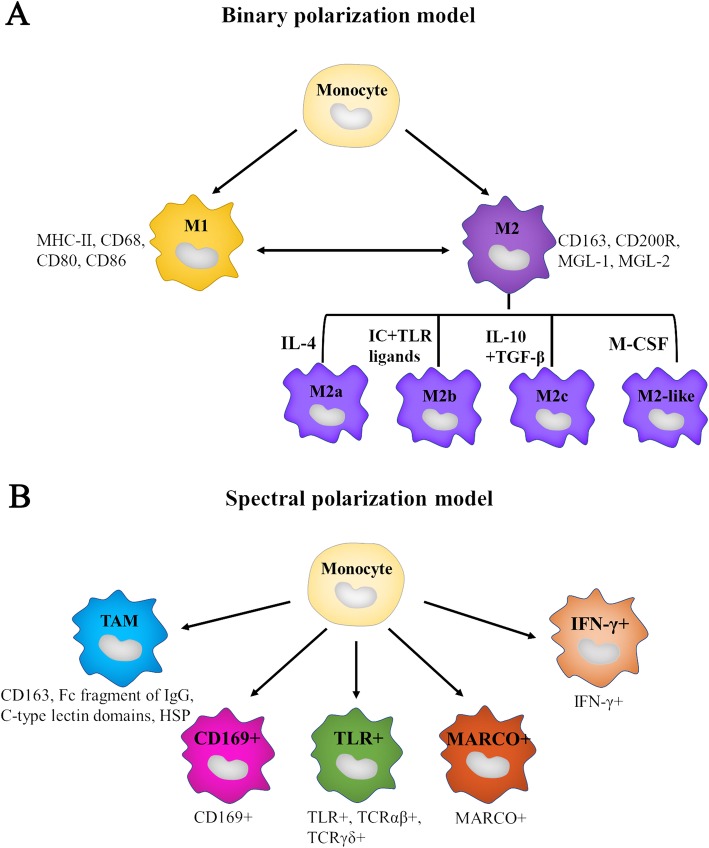
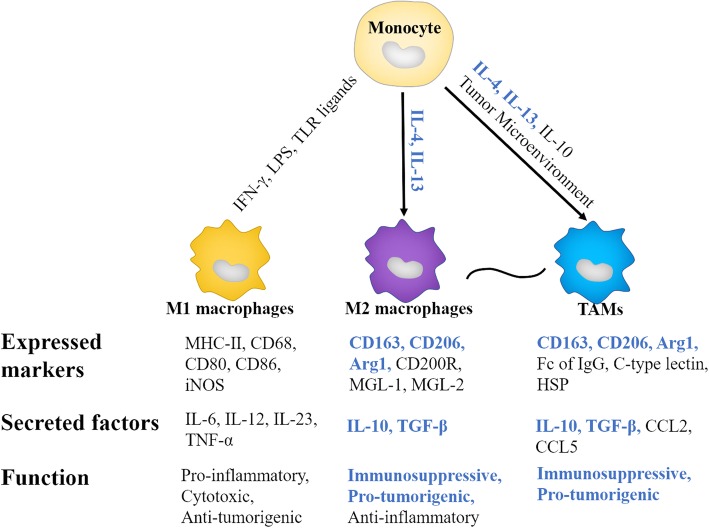
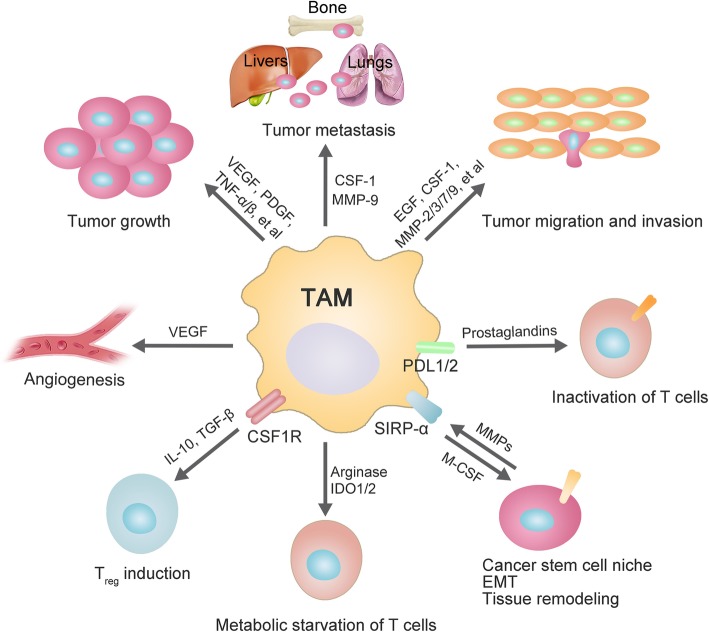
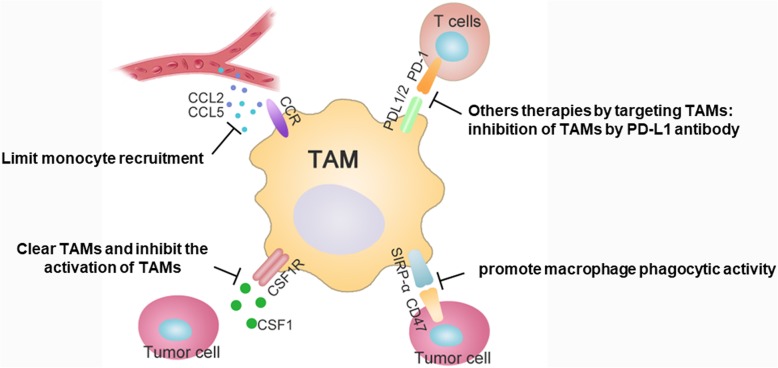
Verification
Claims the paper makes
The claims and statistics of this paper haven’t been checked yet.
Free: it reads the open-access text and checks the first 5 claims that cite a source we can check. Create a free account to check every claim.
Claims other papers make about this one
Each is checked against this paper’s own text: does it say what the citing paper says it does?
The source backs part of the claim, not all of it — or backs it for a different population, condition or comparison.
In the citing paper
“Moreover, other components of the TIME, such as TAMs, monocytes, and granulocytes, have also been reported to inhibit the antitumor activity of T cells and NK cells via various mechanisms, thereby leading to resistance to immunotherapy.244,257”
From Drug repurposing for cancer therapy (2024) · cites this paper as [257]
Experimental — accuracy not yet measuredThe source backs part of the claim, not all of it — or backs it for a different population, condition or comparison.
In the citing paper
“Additionally, TAMs–MPM crosstalk underlies the acquisition of the immunosuppressive and chemoresistant phenotype [32].”
From Chronic Inflammation, Oxidative Stress and Metabolic Plasticity: Three Players Driving the Pro-Tumorigenic Microenvironment in Malignant Mesothelioma (2023) · cites this paper as [32]
Experimental — accuracy not yet measuredThe check wasn’t confident either way, so it gives no verdict — never disputed.
In the citing paper
“However, the effectiveness of TMZ is dependent on silencing of the Methylguanine methyltransferase (MGMT) gene.”
From Revisiting the HIF switch in the tumor and its immune microenvironment. (2022) · cites this paper as [57]
Experimental — accuracy not yet measuredThe check wasn’t confident either way, so it gives no verdict — never disputed.
In the citing paper
“Over 50% of patients do not have silenced MGMT, thus do not respond to TMZ [57].”
From Revisiting the HIF switch in the tumor and its immune microenvironment. (2022) · cites this paper as [57]
Experimental — accuracy not yet measured
Self-check
Percentages, sums and reported differences re-computed from the paper’s own numbers.
The self-check needs the paper’s full text.
Citations
Cites
Microenvironmental regulation of tumor progression and metastasis
Quail, D. F., & Joyce, J. A. (2013) · Nature Medicine · doi:10.1038/nm.3394 · Cited by 7,994
Molecular Mechanisms of Stress-Responsive Changes in Collagen and Elastin Networks in Skin
Aziz, J., Shezali, H., Radzi, Z., Yahya, N. A., Abu Kassim, N. H., Czernuszka, J., & Rahman, M. T. (2016) · Skin Pharmacology and Physiology · doi:10.1159/000447017 · Cited by 7,323
Macrophage plasticity and polarization: in vivo veritas
Sica, A., & Mantovani, A. (2012) · Journal of Clinical Investigation · doi:10.1172/jci59643 · Cited by 6,335
Macrophage Diversity Enhances Tumor Progression and Metastasis
Qian, B.-Z., & Pollard, J. W. (2010) · Cell · doi:10.1016/j.cell.2010.03.014 · Cited by 5,188
Curiel, T. J., Coukos, G., Zou, L., Alvarez, X., Cheng, P., Mottram, P., Evdemon-Hogan, M., Conejo-Garcia, J. R., Zhang, L., Burow, M., et al. (2004) · Nature Medicine · doi:10.1038/nm1093 · Cited by 5,151
Tumor-Associated Macrophages: From Mechanisms to Therapy
Noy, R., & Pollard, J. W. (2014) · Immunity · doi:10.1016/j.immuni.2014.06.010 · Cited by 4,089
Tumour-associated macrophages as treatment targets in oncology
Mantovani, A., Marchesi, F., Malesci, A., Laghi, L., & Allavena, P. (2017) · Nature Reviews Clinical Oncology · doi:10.1038/nrclinonc.2016.217 · Cited by 4,033
Cancer and the chemokine network
Balkwill, F. (2004) · Nature Reviews Cancer · doi:10.1038/nrc1388 · Cited by 2,343
PD-1 expression by tumour-associated macrophages inhibits phagocytosis and tumour immunity
Gordon, S. R., Maute, R. L., Dulken, B. W., Hutter, G., George, B. M., McCracken, M. N., Gupta, R., Tsai, J. M., Sinha, R., Corey, D., et al. (2017) · Nature · doi:10.1038/nature22396 · Cited by 2,247 · cited 1×
“PD-L1 and PD-1 expression on TAMs can induce T cell exhaustion and potentially limit the efficacy of T cells associated immunotherapies in solid tumor [108].”
BackgroundWang, Q., Hu, B., Hu, X., Kim, H., Squatrito, M., Scarpace, L., deCarvalho, A. C., Lyu, S., Li, P., Li, Y., et al. (2017) · Cancer Cell · doi:10.1016/j.ccell.2017.06.003 · Cited by 1,995
Cited by
Items 601–700 of 1,000
Lin, Y., Wang, J. Z., Niu, Y., Zhu, L., Duke, R. K., Duke, C. C., Murray, M. T., & Zhou, F. (2025) · Phytotherapy Research · doi:10.1002/ptr.70029 · Cited by 11
“The progression of solid tumours is regulated by the microenvironment (Chen et al. 2019).”
Targeting the hypoxia signaling pathway with nanomedicine to reverse immunotherapy resistance
Cheng, X., Wang, P., Lyu, H., Lee, Y., Yoon, J., & Dong, H. (2025) · Cancer Drug Resistance · doi:10.20517/cdr.2025.132 · Cited by 17
Alradwan, I. A., Zhi, P., Zetrini, A., Wang, L.-T., He, C., Rezaeifarimani, M., Henderson, J. T., Rauth, A. M., & Wu, X. Y. (2025) · Materials Today Bio · doi:10.1016/j.mtbio.2025.102445 · Cited by 10
Nowinka, A., Krystek, G., Gontarek, Z., Góralczyk, M., Waligórska, A., Walenciak, M., & Formanowicz, D. (2026) · International Journal of Molecular Sciences · doi:10.3390/ijms27052291 · Cited by 11
“A comprehensive overview of TAM-mediated mechanisms across solid tumors is provided in several reviews [103,123].”
Ko, M.-W., Kaur, K., Safaei, T., Chen, W., Sutanto, C., Wong, P., & Jewett, A. (2022) · Cells · doi:10.3390/cells11040697 · Cited by 11
Wu, G., Chen, M., Ren, H., Sha, X., He, M., Ren, K., Qi, J., & Lin, F. (2022) · Frontiers in Cell and Developmental Biology · doi:10.3389/fcell.2022.930933 · Cited by 11
“M2-TAMs are able to participate in inflammatory regression and suppress the cytotoxicity of antitumor immune cells, thus allowing tumor cells to evade immune surveillance (Chen et al., 2019; Badmann et al., 2020).”
BackgroundXie, D., Mao, Y., Du, N., Ji, H., & Li, J. (2022) · Cytokine · doi:10.1016/j.cyto.2022.156021 · Cited by 10
Cell-cell interactions that drive tumorigenesis in Drosophila
Enomoto, M., & Igaki, T. (2022) · Fly · doi:10.1080/19336934.2022.2148828 · Cited by 10
“Macrophages penetrate tumour tissues and support tumour progression by regulating tumour growth, invasion, metastasis, angiogenesis, and immunosuppression [85].”
BackgroundLin, A., Zhu, L., Jiang, A., Mou, W., Zhang, J., & Luo, P. (2022) · Disease Markers · doi:10.1155/2022/8766448 · Cited by 10
“In general, M1 macrophages inhibit tumor growth, while M2 macrophages promote tumor progression by suppressing the immune response [51, 52].”
Mas‐Rosario, J. A., Medor, J. D., Jeffway, M. I., Martínez-Montes, J. M., & Farkas, M. E. (2023) · Frontiers in Oncology · doi:10.3389/fonc.2023.1151384 · Cited by 12
“TAMs have been shown to aid in multiple aspects of cancer, including tumor growth, angiogenesis, remodeling of the tumor microenvironment, invasion, and establishment and maintenance of metastases (19).”
BackgroundDifferent mechanisms of CD200-CD200R induce diverse outcomes in cancer treatment
Liao, K., Watt, K. D., & Protin, T. (2023) · Mathematical Biosciences · doi:10.1016/j.mbs.2023.109072 · Cited by 11
LncRNAs act as modulators of macrophages within the tumor microenvironment
Li, K., Xie, T., Li, Y., & Huang, X. (2024) · Carcinogenesis · doi:10.1093/carcin/bgae021 · Cited by 10
Park, J.-H., Lee, E., & Nam, J. (2024) · Journal of Functional Foods · doi:10.1016/j.jff.2024.106202 · Cited by 10
Mechanisms of Cancer Resistance to Various Therapies
Batool, A., Rashid, W., Fatima, K., & Khan, S. U. (2024) · Springer eBooks · doi:10.1007/978-981-97-1666-1_2 · Cited by 13
Chi, H., Lin, Y.-H., Wu, Y., Chang, C., Wu, C., Yeh, C., Hsieh, C., & Lin, K. (2024) · American Journal of Cancer Research · doi:10.62347/vctw6889 · Cited by 12
“Within the TME, M1 macrophages are characterized by low IL-10 expression, elevated levels of cytokines (IL-12, IL-1β, TNFα, IL-6), along with che - mokine interactions (CXCL9, CXCL10) that attract Th1 lymphocytes [11, 12].”
Lee, S.-Y., Lee, A., Lim, J., & Lim, J. (2022) · BMB Reports · doi:10.5483/bmbrep.2022.55.2.114 · Cited by 10
“TGF-β and MMP-9 expressed by TAMs are known to contribute to the immunosuppressive response and tumor metastasis (4).”
InfluentialpH-Responsive Nanoparticles for Multidimensional Combined Chemo-Immunotherapy of Cancer
Maravajjala, K. S., Swetha, K. L., & Roy, A. (2022) · Journal of Pharmaceutical Sciences · doi:10.1016/j.xphs.2022.05.008 · Cited by 10
Chen, Y., Yuan, X., Pei, C., Deng, Z., Du, X., Liang, J., He, L., & Hou, S. (2022) · Journal of Functional Foods · doi:10.1016/j.jff.2022.105190 · Cited by 10
Self-citationCirc_TNFRSF21 promotes cSCC metastasis and M2 macrophage polarization via miR-214-3p/CHI3L1
Ma, J., Huang, L., Gao, Y., Li, M., Chen, L., & Yang, L. (2023) · Journal of Dermatological Science · doi:10.1016/j.jdermsci.2023.06.001 · Cited by 11
Multi-omics immune regulatory mechanisms in lung adenocarcinoma metastasis and survival time
Liu, D., Yao, L., Ding, X., & Zhou, H. (2023) · Computers in Biology and Medicine · doi:10.1016/j.compbiomed.2023.107333 · Cited by 10
Wang, S. S. Y., Chng, W. J., Liu, H., & Mel, S. D. (2022) · Cancers · doi:10.3390/cancers14225654 · Cited by 10
Role of macrophages in cancer progression and targeted immunotherapies
Arora, L., Kalia, M., & Pal, D. (2022) · Advances in protein chemistry and structural biology · doi:10.1016/bs.apcsb.2022.11.010 · Cited by 10
Yeh, N.-T., Lin, T., Liu, I.-J., Hu, S., Hsu, T., Chin, H.-Y., Tzang, B., & Chiang, W. (2024) · International Journal of Biological Macromolecules · doi:10.1016/j.ijbiomac.2024.135271 · Cited by 9
Luo, J., Gao, Q., Wang, M., Liu, H., & Zhu, H. (2024) · Frontiers in Immunology · doi:10.3389/fimmu.2024.1430163 · Cited by 11
“M2 macrophages mainly promote tumor growth, invasion, metastasis and immune evasion (20, 21).”
Therapeutic targeting of tumour-associated macrophage receptors
Martins, R. G. A., Tekin, M. M., Cragg, M. S., & Roghanian, A. (2024) · Immunotherapy Advances · doi:10.1093/immadv/ltaf009 · Cited by 11
“Moreover, studies using conditioned medium from TAMs and TAM/cancer cell line co-cultures have shown that TAMs promote cell migration and invasion of various human tumour cell lines via an MMP9-dependent mechanism [58, 59].”
Wang, H., Jia, L., Yu, H., Tang, H. D., Chi, H., Zhang, W., & Chen, J. (2025) · Integrative Cancer Therapies · doi:10.1177/15347354251325806 · Cited by 9
Shi, Y., Xu, Z., Wang, H., Tang, B., Maihemuti, N., Jiang, X., Chen, X., Xiao, M., Jiang, S., Xu, Y. F., et al. (2025) · Advanced Science · doi:10.1002/advs.202416476 · Cited by 10
Ferroptosis in tumor associated immune cells: A double-edged sword against tumors
Hu, J., Cui, L., Hou, B., Ding, X., Liu, H., Sun, W., Mi, Y., Chen, Y., & Zou, Z. (2025) · Critical Reviews in Oncology/Hematology · doi:10.1016/j.critrevonc.2025.104818 · Cited by 10
Self-citationZhong, Y., Zhang, D., Ding, F., Zhang, H., Guo, Y., Huang, Q., Liu, G., Zhang, X., & Weng, S. (2025) · International Immunopharmacology · doi:10.1016/j.intimp.2025.115421 · Cited by 10
Wang, Y., Berg, T. J., Verona, A., & Morris, Z. S. (2026) · International Journal of Radiation Oncology*Biology*Physics · doi:10.1016/j.ijrobp.2026.01.013 · Cited by 10
Salmaninejad, A., Layeghi, S. M., Falakian, Z., Foroushani, P. S., Golestani, S., Pourghazi, F., Kobravi, S., & Yousefi, M. (2026) · Clinical and Experimental Medicine · doi:10.1007/s10238-026-02055-0 · Cited by 9
“In another words, Th1 cytokines such as IL-18 and IL-12 or activated TLRs promote macrophages to M1 polarization [ 30 ].”
InfluentialTargeting focal adhesion kinase: from molecular mechanisms to next-generation cancer therapeutics
Chen, J., Bu, Z., & Zhan, Q. (2026) · Science Bulletin · doi:10.1016/j.scib.2026.02.048 · Cited by 10
Zhao, H., Tian, H., Nuerbieke, T., Ma, K., Li, W., Niu, X., Li, J., Ashby, C. R., Chen, Z., Zhou, T., et al. (2026) · Cancer Letters · doi:10.1016/j.canlet.2026.218690 · Cited by 10
Complement and Fungal Dysbiosis as Prognostic Markers and Potential Targets in PDAC Treatment
Speth, C., Bellotti, R., Schäfer, G., Rambach, G., Texler, B., Thurner, G. C., Öfner, D., Lass‐Flörl, C., & Maglione, M. (2022) · Current Oncology · doi:10.3390/curroncol29120773 · Cited by 9
“The TAMs that reside within the tumor generally show characteristics of the M2 phenotype [33].”
BackgroundOsteoid cell-derived chemokines drive bone-metastatic prostate cancer
Johnson, C. S., & Cook, L. M. (2023) · Frontiers in Oncology · doi:10.3389/fonc.2023.1100585 · Cited by 10
Zhang, M., Li, Q., Zhang, W., Yang, Y., Gu, J., & Dong, Q. (2023) · Journal of Stomatology Oral and Maxillofacial Surgery · doi:10.1016/j.jormas.2023.101561 · Cited by 9
Ultrasound-stimulated microbubbles enhancement of fractionated radiation for tumor treatment
Sharma, D., McNabb, E., Law, N., Cumal, A., & Czarnota, G. J. (2023) · BMC Cancer · doi:10.1186/s12885-023-10981-5 · Cited by 9
“Specifically, vessel normalization can enhance the immune response as otherwise abnormal vasculature can encourage intratumoral immunosuppressive infiltrates, such as tumor-associated macrophages that promote cytokines and tumor growth [14].”
BackgroundLi, C., Wang, L., Li, Z., Li, Z., Zhang, K., Cao, L., Wang, Z., Shen, C., & Chen, L. (2023) · International Journal of Pharmaceutics · doi:10.1016/j.ijpharm.2023.123729 · Cited by 9
Prognostic value of mitochondrial CKMT2 in Pan-cancer and its tumor immune correlation analysis
Lin, W., Zhou, J., Ma, Y., Ge, L., Luo, Y., Wang, Y., & Zhou, S. (2024) · Scientific Reports · doi:10.1038/s41598-023-46468-3 · Cited by 9
“Compared with the former, tumor-infiltrating M2 macrophages are closely related to the poor clinical prognosis of many malignant tumors 37 .”
BackgroundRecombinant Human IL-32θ Induces Polarization Into M1-like Macrophage in Human Monocytic Cells
Park, H., Park, J., Kim, N., Kim, H., Kim, H.-G., Son, D. J., Hong, J. T., & Yoon, D. (2024) · Immune Network · doi:10.4110/in.2024.24.e27 · Cited by 9
“However, as cancer progresses, macrophages transform into TAMs owing to the formation of a TME (21).”
BackgroundInfluentialLi, X., Tang, B., Yujie, O., Xu, C. S., & Yuan, S. (2024) · Journal of Immunotherapy · doi:10.1097/cji.0000000000000539 · Cited by 9
“46,47 In the CAFS-high subgroup, we also noted a higher prevalence of M1 macrophages, recognized for their robust in fl ammatory response and antigen presentation pro fi ciency.”
Zhang, Z., Xiao, Y., Zhao, S., Liu, J., Zeng, J., Xiao, F., Liao, B., Shan, X., Zhu, H. Y., & Guo, H. (2024) · Journal of Translational Medicine · doi:10.1186/s12967-024-05641-6 · Cited by 9
“TAM infiltration is closely associated with poor prognosis in cancer patients, and targeting TAMs is a potentially attractive therapeutic strategy [35].”
BackgroundWang, T., Ye, L., Zhou, Y., Zhang, X., Li, R., Zhou, Y., Weng, J., Mo, Q., & Yu, Y. (2024) · Human Cell · doi:10.1007/s13577-024-01144-0 · Cited by 9
“TAMs are typically polarized to an M2-like phenotype, activated by T helper 2 (Th2) cytokines, and are linked to poor clinical outcomes [6, 7].”
Yuan, W., Zhang, J., Chen, H., Zhuang, Y.-P., Zhou, H., Li, W., Qiu, W., & Zhou, H. (2024) · Journal of Cancer Research and Clinical Oncology · doi:10.1007/s00432-024-06022-8 · Cited by 9
Inflammation in Penile Squamous Cell Carcinoma: A Comprehensive Review
Czajkowski, M., Wierzbicki, P., Dolny, M., Matuszewski, M., & Hakenberg, O. W. (2025) · International Journal of Molecular Sciences · doi:10.3390/ijms26062785 · Cited by 11
“The production of these factors contributes to tumor development through multiple mechanisms, highlighting the complex role of TAMs in the tumor microenvironment and their potential as targets for cancer therapy [52,53].”
Martin, S. D., Thornton, S., Chow, C., Milne, K., de Barros, J. S., Morris, K., Leung, S. C. Y., Jamieson, A., Nelson, B. H., Cochrane, D. R., et al. (2025) · The Journal of Pathology · doi:10.1002/path.6429 · Cited by 9
“CD68 + macrophages can either help activate CTL, by presenting antigens and co-stimulatory molecules, or inhibit CTL, by presenting antigens along with inhibitory ligands [15,16].”
Karakaş, D., Ashour, A. A., Mokhlis, H. A., Kahraman, N., Bayraktar, R., Dilmaç, S., Kabil, N. N., Erdoğan, M. A., Dere, E., Ulukaya, E., et al. (2025) · Cell Death and Disease · doi:10.1038/s41419-025-07803-w · Cited by 9
“Collectively, these fi ndings provide compelling evidence of the role of TAMs in promoting the aggressive nature of cancer cells, characterized by increased proliferation, invasion, migration, angiogenesis, and chemoresistance [77 – 79].”
Жукова, О. В., Kovaleva, T. F., Архипова, Е. В., Ryabov, S. A., & Mukhina, I. V. (2020) · Biomedical Reports · doi:10.3892/br.2020.1354 · Cited by 9
“M1 cells initiate cytokine produc‐ tion in the tumor microenvironment and facilitate cancer cell destruction by recruiting pro‐immunostimulatory leukocytes and phagocytizing tumor cells (46,47).”
BackgroundHuang, J., Wan, B.-B., Li, S., Liu, G., Pang, Q., Wu, J., Bao, E., Sun, C., Yan, Q., Wang, K., et al. (2021) · Aging · doi:10.18632/aging.202492 · Cited by 9
Jeong, M., Wang, Y., Choi, J., Lim, M. C., & Choi, J. (2021) · Cancers · doi:10.3390/cancers13112745 · Cited by 10
“TAMs are known to secrete numerous cytokines, inflammatory factors, and growth factors that are implicated in tumor metastasis [23].”
Background[Pattern of Recurrence and Metastasis after Radical Resection of Non-small Cell Lung Cancer].
Liu, X., Li, X., & Yang, F. (2022) · PubMed Central · doi:10.3779/j.issn.1009-3419.2021.102.50 · Cited by 10
Deferasirox shows inhibition activity against cervical cancer in vitro and in vivo
Zhou, N., Cui, Y. T., Zhu, R., Kuang, Y., Ma, W., Hou, J., Zhu, Y., Chen, S., Xu, X., Tan, K., et al. (2022) · Gynecologic Oncology · doi:10.1016/j.ygyno.2022.05.006 · Cited by 9
Del’haye, G. G., Nulmans, I., Bouteille, S. P., Sermon, K., Wellekens, B., Rombaut, M., Vanhaecke, T., Heyden, Y. V., & Kock, J. D. (2022) · Archives of Toxicology · doi:10.1007/s00204-022-03351-w · Cited by 10
Momenzadeh, N., Hajian, S., Shabankare, A., Ghavimi, R., Kabiri‐Samani, S., Kabiri, H., Hesamizadeh, K., Shabankareh, A. N. T., Nazaraghay, R., Nabipour, I., et al. (2022) · International Immunopharmacology · doi:10.1016/j.intimp.2022.109622 · Cited by 9
Kimura, Y., Fujimori, M., Rajagopalan, N. R., Poudel, K., Kim, K., Nagar, K. K., Vroomen, L. G. P. H., Reis, H., Al‐Ahmadie, H. A., Coleman, J., et al. (2023) · Frontiers in Immunology · doi:10.3389/fimmu.2023.1070196 · Cited by 9
Saadati, F., Jahanbakhshi, F., Mahdikia, H., Abbasvandi, F., Ghomi, H., Yazdani, N., Aghazadeh, K., Emmert, S., & Bekeschus, S. (2023) · Applied Sciences · doi:10.3390/app13116472 · Cited by 9
Garbin, A., Contarini, G., Damanti, C. C., Tosato, A., Bortoluzzi, S., Gaffo, E., Pizzi, M., Carraro, E., Nigro, L. L., Vinti, L., et al. (2023) · Biochemical Pharmacology · doi:10.1016/j.bcp.2023.115747 · Cited by 9
Cho, H., & Kim, K. (2024) · Expert Opinion on Drug Delivery · doi:10.1080/17425247.2024.2348656 · Cited by 11
“…immunosuppressive cytokines such as transforming growth factor-beta (TGF-β) promote the differentiation of regulatory T cell (Tregs), myeloid-derived suppressor cells (MDSCs), and tumor-associated macrophages (TAMs) while inhibit the proliferation of T cells and natural killer (NK) cells [22–24].”
BackgroundPeña, L. M.-P., Pérez-Santos, M., Camacho, I. H., Bandala, C., & Anaya-Ruíz, M. (2020) · Expert Opinion on Therapeutic Patents · doi:10.1080/13543776.2020.1732352 · Cited by 9
“role in promoting tumor progression [32].”
Emami, F., Banstola, A., Jeong, J., & Yook, S. (2021) · Journal of Industrial and Engineering Chemistry · doi:10.1016/j.jiec.2021.10.029 · Cited by 9
Wang, K., & Chen, X. (2021) · Journal of Thoracic Disease · doi:10.21037/jtd-21-1519 · Cited by 9
“The TME has been considered as a decisive factor in the development of tumors (6,21) and interestingly, TAMs, which are the largest cell component in the TME, have been reported to be closely related to poor survival and prognosis in patients with solid tumors (22).”
BackgroundAli, M. A. M., Harmsen, W. S., Morsy, K. H., Galal, G., Therneau, T. M., & Roberts, L. R. (2022) · BMC Cancer · doi:10.1186/s12885-021-09121-8 · Cited by 10
“A second role is mediated via infiltration of tumor-associated macrophages (TAMs) into the HCC matrix, which has been shown to enhance tumor cell proliferation, migration, and angiogenesis [32].”
BackgroundPerrone, M., Raimondi, E., Costa, M., Rasetto, G., Rizzati, R., Lanza, G., Gafà, R., Cavallesco, G., Tamburini, N., Maniscalco, P., et al. (2022) · Cancers · doi:10.3390/cancers14143335 · Cited by 9
“The tumor microenvironment (TME), where macrophages are a fundamental component [18], performs multiple functions and significantly modulates clinical outcome [19].”
BackgroundMakrophagen im Melanom – von molekularen Signalen zur therapeutischen Anwendung
Chatziioannou, E., Aydin, S. A., Forchhammer, S., Sinnberg, T. W., & Eigentler, T. (2022) · Die Dermatologie · doi:10.1007/s00105-022-05077-3 · Cited by 10
Chimeric antigen receptor–based cell therapy for treating urological tumors
Tang, H., Guo, L., Zhang, W., & Tang, D. (2025) · Current Urology · doi:10.1097/cu9.0000000000000305 · Cited by 8
Keremitçi, D., Tuna, Ö., Houdjedj, A., Kazan, H., & Kaymaz, Y. (2025) · The Journal of Immunology · doi:10.1093/jimmun/vkaf253 · Cited by 10
Role of macrophages reprogramming in pathogenesis of gestational diabetes mellitus
Milan, K. L., Shree, R. A., Nandana, N., Leela, R., & Ramkumar, K. M. (2025) · Cytokine · doi:10.1016/j.cyto.2025.157041 · Cited by 8
Hadrick, K., Kumar, P. P. P., & Kim, T. (2025) · Journal of Nanotheranostics · doi:10.3390/jnt6040028 · Cited by 9
“Unfortunately, tumors are also known to have highly metabolically active exteriors with anti-inflammatory tumor-associated macrophages preventing an appropriate pro-inflammatory response to abnormal tumor cells [96,97].”
Hang, S., Wang, N., & Sugimura, R. (2023) · Differentiation · doi:10.1016/j.diff.2023.01.001 · Cited by 9
Mechanisms Underlying Tumor-Associated Macrophages (TAMs)-Facilitated Metastasis
Aleebrahim‐Dehkordi, E., Deravi, N., Fallahi, M. S., & Rezaei, N. (2023) · Springer eBooks · doi:10.1007/978-3-030-80962-1_66-1 · Cited by 9
Scheurlen, K. M., Snook, D. L., Littlefield, A. B., George, J. B., Parks, M. A., Beal, R. J., Macleod, A., Riggs, D. W., Gaskins, J., Chariker, J. H., et al. (2023) · Cancer Medicine · doi:10.1002/cam4.6681 · Cited by 9
“26,27 All investigated subtypes of MMPs were upregulated in the M2 macrophage phenotype, which was confirmed in our primary colon cancer TAM data.”
BackgroundYao, M., Mao, X., Zhang, Z., Cui, F., Shao, S., & Mao, B. (2024) · Frontiers in Cell and Developmental Biology · doi:10.3389/fcell.2024.1289538 · Cited by 9
ALDH2 as an immunological and prognostic biomarker: Insights from pan-cancer analysis
Shen, X.-R., Yan, Z., Huang, Y., Zhu, Q., Zhang, G., Ci, H., Wu, Q., & Wu, L. (2024) · Medicine · doi:10.1097/md.0000000000037820 · Cited by 8
“[26] Regulatory T (Treg) cells, a sub-type of CD4 + T cells with immunosuppressive functions, can serve as biomarkers for colorectal cancer progression and treatment response.”
BackgroundRole of Cancer Stem Cells in Drug Resistance
Fatima, K., Jan, S., Malik, F. A., & Khan, S. U. (2024) · Springer eBooks · doi:10.1007/978-981-97-1666-1_3 · Cited by 9
Ouologuem, L., & Bartel, K. (2024) · Frontiers in Immunology · doi:10.3389/fimmu.2024.1389194 · Cited by 9
“TRPML1 and TRPML2 have been shown to be expressed in B cells (111).”
BackgroundIRX5’s influence on macrophage polarization and outcome in papillary thyroid cancer
Qin, L., Chen, C., Gui, Z., & Jiang, Y. (2024) · Frontiers in Oncology · doi:10.3389/fonc.2024.1399484 · Cited by 8
“Current studies have shown that TAMs are constantly switching between M1 and M2 types (23, 24).”
BackgroundRecent Advances in Nanoimmunotherapy by Modulating Tumor-Associated Macrophages for Cancer Therapy
Hao, J., Zhao, X., Wang, C., Cao, X., & Liu, Y. (2024) · Bioconjugate Chemistry · doi:10.1021/acs.bioconjchem.4c00242 · Cited by 10
Han, T., Tong, W., Xie, J., Guo, X., & Zhang, L. (2024) · International Immunopharmacology · doi:10.1016/j.intimp.2024.113422 · Cited by 8
Real-time imaging reveals a role for macrophage protrusive motility in melanoma invasion
Ramakrishnan, G., Miskolci, V., Hunter, M. V., Giese, M. A., Münch, D., Hou, Y., Eliceiri, K. W., Lasarev, M. R., White, R. M., & Huttenlocher, A. (2024) · The Journal of Cell Biology · doi:10.1083/jcb.202403096 · Cited by 8
“Both neutrophils and macrophages can promote tumor invasion (Giese et al., 2019; Chen et al., 2019).”
Gold nanoparticle-loaded macrophages enhance radiotherapy via immune remodeling in oral cancer
Chan, H., Shueng, P., Tsao, S. T.-M., Wu, C.-Y., & Chuang, H. (2025) · Materials Today Bio · doi:10.1016/j.mtbio.2025.102029 · Cited by 9
“…tumor tropism driven by TME-derived cytokines and chemokines secreted by the TME [30]; adaptive polarization in response to environmental cues, permitting immune modulation [31]; and inherent tropism for hypoxic regions, providing targeted re-sensitization of radioresistant hypoxic areas [32].”
Novel Insights into the Immunotherapy of Soft Tissue Sarcomas: Do We Need a Change of Perspective?
Ozaniak, A., Vachtenheim, J., Lischke, R., Bartůňková, J., & Strizova, Z. O. (2021) · Biomedicines · doi:10.3390/biomedicines9080935 · Cited by 8
“However, it is the TME and the tumor-derived signals that intensify TAM functions [100].”
BackgroundTargeting Tumor-Associated Macrophages for Imaging
Hu, J., Xu, X., & Du, Y. (2022) · Pharmaceutics · doi:10.3390/pharmaceutics15010144 · Cited by 8
“The infiltration of TAMs is closely related to the poor survival rate of patients with solid tumors [9].”
BackgroundCRISPR-Mediated Base Editing: Promises and Challenges for a Viable Oncotherapy Strategy
Huang, L., Yang, C., Chen, Y., Deng, H., Liao, Z., & Xiao, H. (2023) · Human Gene Therapy · doi:10.1089/hum.2023.045 · Cited by 9
“68,69 Ma et al. constructed an isocitrate dehydrogenase one mutation (IDH1R132H/WT) human glioma cell model by CBE, which resulted in the downregulation of 80% of immune response-related genes and signaling pathways, and was able to promote macrophage polarization toward M1 type and enhanced…”
Self-citationNano‐ablative immunotherapy for cancer treatment
Hoover, A. R., Liu, K., Valerio, T. I., Li, M., Mukherjee, P., & Chen, W. R. (2021) · Nanophotonics · doi:10.1515/nanoph-2021-0171 · Cited by 9
“For this reason, large numbers of TAMs with these properties residing within the TME lead to treatment resistance and poor patient prognosis [84, 88, 89].”
Park, H., Seo, E., Piao, L., Park, S.-T., Lee, M., Koh, S., Lee, S.-H., & Kim, S. (2021) · International Journal of Molecular Sciences · doi:10.3390/ijms22147478 · Cited by 8
“and play a pivotal role in tumour progression [4].”
BackgroundDossou, A. S., Mantsch, M. E., Sabnis, N. A., Berg, R. E., Fudala, R., & Lacko, A. G. (2023) · Frontiers in Drug Delivery · doi:10.3389/fddev.2023.1281066 · Cited by 9
Peng, X., Yu, S., Xu, L., Wang, Q., Yang, L., Su, Y., Xiong, Z., Shao, M., Geng, M., Zhang, A., et al. (2025) · Molecules · doi:10.3390/molecules30102088 · Cited by 7
Cesca, B. A., Martin, K., & Ibarra, L. E. (2026) · Pharmaceutics · doi:10.3390/pharmaceutics18010124 · Cited by 7
Li, Y.-R., DiBernardo, G., Chen, Y., Shen, X., Hon, R., Ruegg, L., Huang, J., Neal, A. S., Moatamed, N. A., Memarzadeh, S., et al. (2026) · Experimental Hematology and Oncology · doi:10.1186/s40164-026-00746-8 · Cited by 8
“The tumor microen-vironement (TME) poses another challenge as it contains several immunosuppressive cell populations such as regulatory T cells (Tregs), myeloid-derived suppressor cells (MDSCs), and tumor-associated macrophages (TAMs) [17–21].”
Self-citationKimura, Y., Aoki, H., Soyama, T., Sakuragi, A., Otsuka, Y., Nomoto, A., Yano, S., Nishie, H., Kataoka, H., & Aoyama, M. (2022) · Medical Oncology · doi:10.1007/s12032-022-01674-3 · Cited by 7
Al-Nasralla, A. S. H., Hussian, S. S., & Tektook, N. K. (2023) · Human Antibodies · doi:10.3233/hab-220018 · Cited by 7
Ouban, A., Raddaoui, E., & Bakir, M. A. (2023) · Cureus · doi:10.7759/cureus.36339 · Cited by 7
“Their functions also include promoting tumor cell invasion and metastasis to local and distant sites [7-11].”
BackgroundResultInfluentialInvestigating the immune mechanism of natural products in the treatment of lung cancer
Yang, L., Chen, Y., Liu, K., Chen, Y., Zhang, Y., Zhang, Z., & Li, H. (2024) · Frontiers in Pharmacology · doi:10.3389/fphar.2024.1289957 · Cited by 9
Self-citationImmune Evasion in Cancer Is Regulated by Tumor-Asociated Macrophages (TAMs): Targeting TAMs
Jung, M., & Bonavida, B. (2024) · Critical Reviews™ in Oncogenesis · doi:10.1615/critrevoncog.2024053096 · Cited by 7
Research progress of immunotherapy against anaplastic thyroid cancer
Chen, J., Xiao, Z., & Wu, H. (2024) · Frontiers in Oncology · doi:10.3389/fonc.2024.1365055 · Cited by 9
Zhong, F., Song, L., Li, H., Liu, J., Liu, C., Guo, Q., & Liu, W. (2024) · Frontiers in Genetics · doi:10.3389/fgene.2024.1425075 · Cited by 7
“Monocytes and macrophages are crucial constituents of the immune system, pivotal for tumor immune surveillance and eliciting anti-tumor immune responses (Chen et al., 2019).”
BackgroundVisualizing and quantifying dynamic cellular forces with photonic crystal hydrogels
Zhou, J., Zhang, Y., Fu, Y., Li, Q., Zhang, J., Liu, X., & Gu, Z. (2024) · Nanoscale · doi:10.1039/d4nr02834a · Cited by 7
Liu, X., Ye, J., Guo, W., & Wang, J. (2024) · Frontiers in Cell and Developmental Biology · doi:10.3389/fcell.2024.1473044 · Cited by 7
A Comprehensive Analysis of Epoxide Hydrolase 2 ( EPHX2 ) in Pan‐Cancer
Hu, W., Ding, X., Wu, X., Xi, X., Xu, J., Dai, S., Chen, J., Hu, S., Zhao, Q., & Chen, F. (2025) · Cancer Reports · doi:10.1002/cnr2.70188 · Cited by 8
S100A14 serum level and its correlation with prognostic factors in breast cancer
Al-Ashkar, N., & Zetoune, A. B. (2020) · Journal of the Egyptian National Cancer Institute · doi:10.1186/s43046-020-00048-y · Cited by 7
Metadata
- Authors
- Chen, Y., Song, Y., Du, W., Gong, L., Chang, H., & Zou, Z.
- Affiliations
- Zhengzhou University (CN)
- South China Normal University (CN)
- Corresponding author
- Chen, Yibing
- Zou, Zhengzhi
- Venue
- Journal of Biomedical Science
- Published
- 2019-10-20
- Volume
- 26
- Issue
- 1
- Pages
- 78-78
- ISSN
- 1021-7770 (ISSN-L)
- 1423-0127
- PMC
- PMC6800990
- OpenAlex
- W2980823965
- Semantic Scholar
- ce494fb6a90b18166f259a1af0bbdb64e186315e
- Cited by
- 1,096
- References
- 109
- Citations by year
- 2026: 88 · 2025: 145 · 2024: 215 · 2023: 199 · 2022: 208 · 2021: 167 · 2020: 73
- FWCI
- 9.76
- Type
- journal article
- Language
- en
- Open access
- diamond
- doi.org
- Licence
- cc-by
- creativecommons.org/licenses/by/4.0/ (tdm)
- creativecommons.org/licenses/by/4.0/ (vor)
- Locations
- Journal of Biomedical Science (publishedVersion, cc-by)
- PubMed Central (publishedVersion, cc-by)
- PubMed (publishedVersion)
- DOAJ (DOAJ: Directory of Open Access Journals) (submittedVersion)
- Funders
- National Natural Science Foundation of China (81772643, 81772803, 81402281, 81402187)
- Topics
- Life Sciences › Immunology and Microbiology › Immunology › Immune cells in cancer
- Life Sciences › Biochemistry, Genetics and Molecular Biology › Molecular Biology › Angiogenesis and VEGF in Cancer
- Life Sciences › Biochemistry, Genetics and Molecular Biology › Cancer Research › Cancer, Stress, Anesthesia, and Immune Response
- Keywords
- tumor-associated macrophages, tumor microenvironment, macrophage polarization, tumor progression, chemoresistance, radiotherapy resistance, tumor angiogenesis, metastasis, immunosuppression, TAM-targeted therapy, macrophage phagocytosis, monocyte recruitment
- MeSH terms
- Animals, Humans, Macrophages, Neoplasms, Neovascularization, Pathologic, Disease Progression, Mice, Tumor Microenvironment
About these checks
Registry, retraction, Cites and statistics results are computed, not judged, with one exception: a printed reference that no index lists is read once by a model before it counts as a citation error. Claims are extracted by a model and kept only when their quote appears verbatim in the text; each cited source is then checked, with a model’s help, for whether it says what the claim relies on. Those verdicts can be wrong — read the claim’s quote and the cited source before relying on one.
Statistics and arithmetic are recomputed, not judged.
Confidence bands are shown only for fields calibrated on our annotated test set. None is calibrated yet, so no band is shown.
What counts as a claim ›How we measure confidence ›How we check this ›
Are you an author, or do you see a problem with this page? Request a review
Data sources
Bibliographic data: Semantic Scholar, OpenAlex, Crossref.
Contains information from the Semantic Scholar Academic Graph Datasets, made available under the ODC Attribution License (ODC-BY 1.0).
Semantic Scholar’s data is described in: Kinney, R., et al. (2023). The Semantic Scholar Open Data Platform. arXiv:2301.10140.
