

Tumor-associated macrophages: an accomplice in solid tumor progression
Open accessThe DOI matches its Crossref record; 109 of the 109 references it cites were found in a registry or an index.
Abstract
In many solid tumor types, tumor-associated macrophages (TAMs) are important components of the tumor microenvironment (TME). Moreover, TAMs infiltration is strongly associated with poor survival in solid tumor patients. In this review, we describe the origins of TAMs and their polarization state dictated by the TME. We also specifically focus on the role of TAMs in promoting tumor growth, enhancing cancer cells resistance to chemotherapy and radiotherapy, promoting tumor angiogenesis, inducing tumor migration and invasion and metastasis, activating immunosuppression. In addition, we discuss TAMs can be used as therapeutic targets of solid tumor in clinics. The therapeutic strategies include clearing macrophages and inhibiting the activation of TAMs, promoting macrophage phagocytic activity, limiting monocyte recruitment and other targeted TAMs therapies.
Overview
The claims and statistics of this paper haven’t been checked yet.
Free: it reads the open-access text and checks the first 5 claims that cite a source we can check. Create a free account to check every claim.
Integrity signals
Registry
Cites
Statistics
Figures
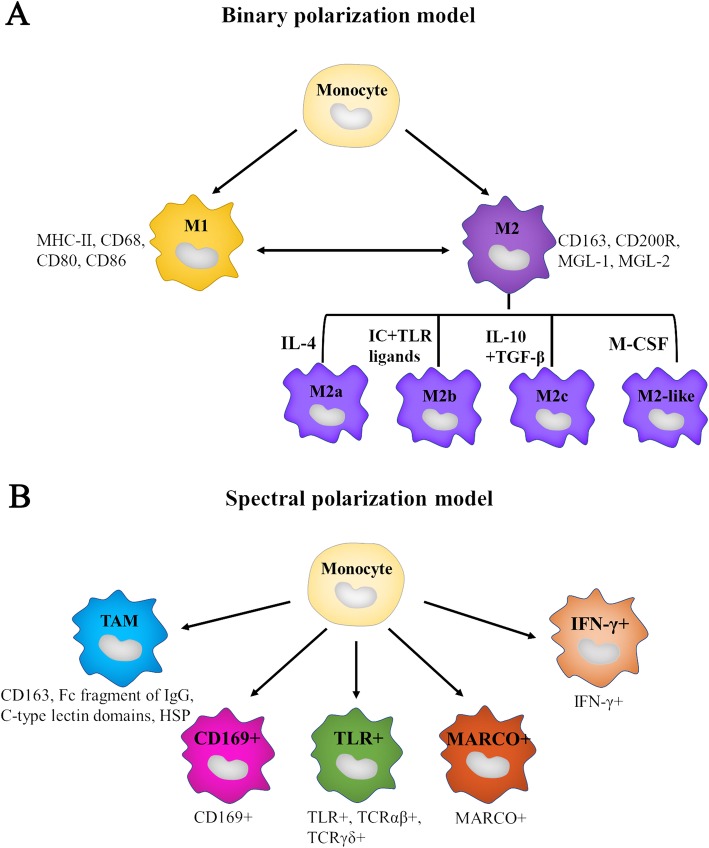
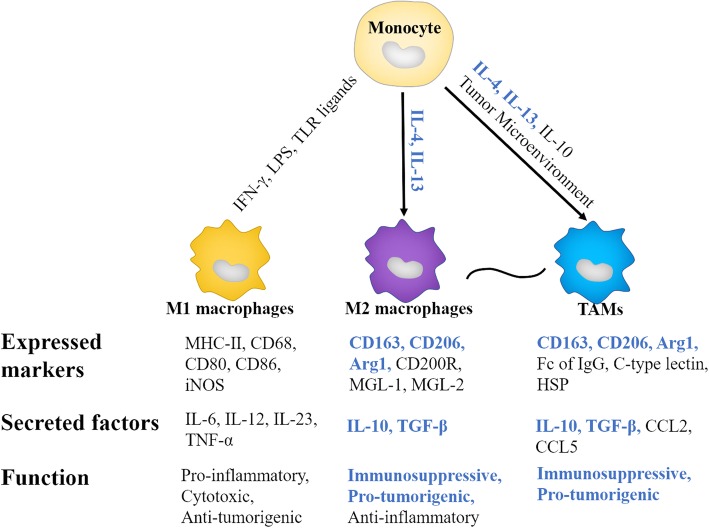
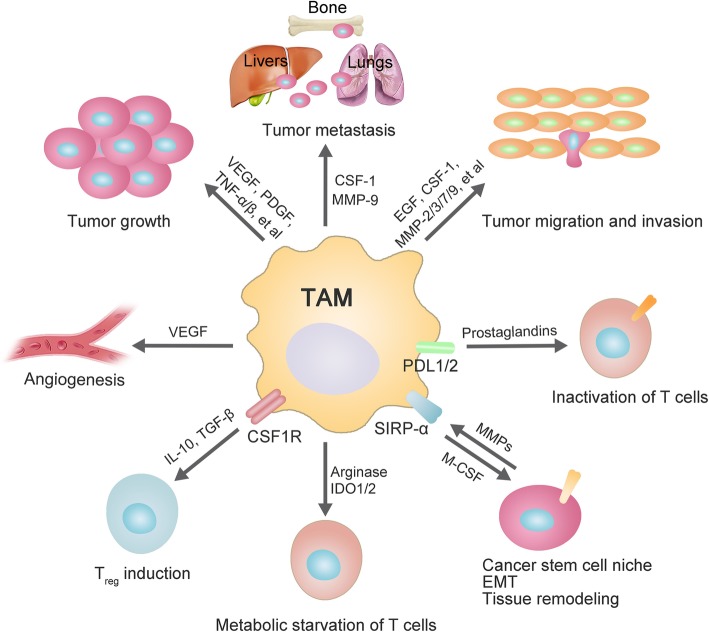
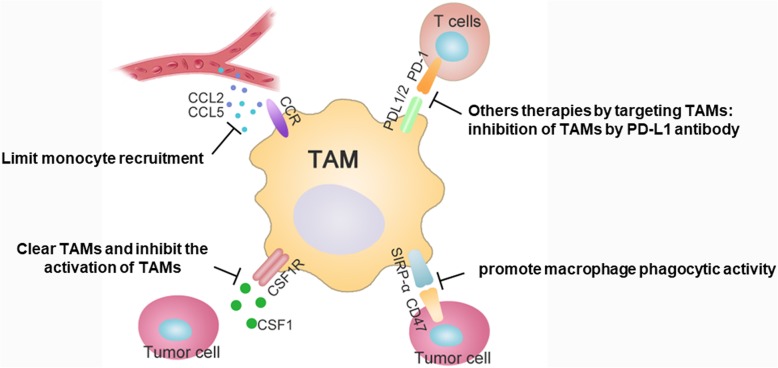
Verification
Claims the paper makes
The claims and statistics of this paper haven’t been checked yet.
Free: it reads the open-access text and checks the first 5 claims that cite a source we can check. Create a free account to check every claim.
Claims other papers make about this one
Each is checked against this paper’s own text: does it say what the citing paper says it does?
The source backs part of the claim, not all of it — or backs it for a different population, condition or comparison.
In the citing paper
“Moreover, other components of the TIME, such as TAMs, monocytes, and granulocytes, have also been reported to inhibit the antitumor activity of T cells and NK cells via various mechanisms, thereby leading to resistance to immunotherapy.244,257”
From Drug repurposing for cancer therapy (2024) · cites this paper as [257]
Experimental — accuracy not yet measuredThe source backs part of the claim, not all of it — or backs it for a different population, condition or comparison.
In the citing paper
“Additionally, TAMs–MPM crosstalk underlies the acquisition of the immunosuppressive and chemoresistant phenotype [32].”
From Chronic Inflammation, Oxidative Stress and Metabolic Plasticity: Three Players Driving the Pro-Tumorigenic Microenvironment in Malignant Mesothelioma (2023) · cites this paper as [32]
Experimental — accuracy not yet measuredThe check wasn’t confident either way, so it gives no verdict — never disputed.
In the citing paper
“However, the effectiveness of TMZ is dependent on silencing of the Methylguanine methyltransferase (MGMT) gene.”
From Revisiting the HIF switch in the tumor and its immune microenvironment. (2022) · cites this paper as [57]
Experimental — accuracy not yet measuredThe check wasn’t confident either way, so it gives no verdict — never disputed.
In the citing paper
“Over 50% of patients do not have silenced MGMT, thus do not respond to TMZ [57].”
From Revisiting the HIF switch in the tumor and its immune microenvironment. (2022) · cites this paper as [57]
Experimental — accuracy not yet measured
Self-check
Percentages, sums and reported differences re-computed from the paper’s own numbers.
The self-check needs the paper’s full text.
Citations
Cites
Microenvironmental regulation of tumor progression and metastasis
Quail, D. F., & Joyce, J. A. (2013) · Nature Medicine · doi:10.1038/nm.3394 · Cited by 7,994
Molecular Mechanisms of Stress-Responsive Changes in Collagen and Elastin Networks in Skin
Aziz, J., Shezali, H., Radzi, Z., Yahya, N. A., Abu Kassim, N. H., Czernuszka, J., & Rahman, M. T. (2016) · Skin Pharmacology and Physiology · doi:10.1159/000447017 · Cited by 7,323
Macrophage plasticity and polarization: in vivo veritas
Sica, A., & Mantovani, A. (2012) · Journal of Clinical Investigation · doi:10.1172/jci59643 · Cited by 6,335
Macrophage Diversity Enhances Tumor Progression and Metastasis
Qian, B.-Z., & Pollard, J. W. (2010) · Cell · doi:10.1016/j.cell.2010.03.014 · Cited by 5,188
Curiel, T. J., Coukos, G., Zou, L., Alvarez, X., Cheng, P., Mottram, P., Evdemon-Hogan, M., Conejo-Garcia, J. R., Zhang, L., Burow, M., et al. (2004) · Nature Medicine · doi:10.1038/nm1093 · Cited by 5,151
Tumor-Associated Macrophages: From Mechanisms to Therapy
Noy, R., & Pollard, J. W. (2014) · Immunity · doi:10.1016/j.immuni.2014.06.010 · Cited by 4,089
Tumour-associated macrophages as treatment targets in oncology
Mantovani, A., Marchesi, F., Malesci, A., Laghi, L., & Allavena, P. (2017) · Nature Reviews Clinical Oncology · doi:10.1038/nrclinonc.2016.217 · Cited by 4,033
Cancer and the chemokine network
Balkwill, F. (2004) · Nature Reviews Cancer · doi:10.1038/nrc1388 · Cited by 2,343
PD-1 expression by tumour-associated macrophages inhibits phagocytosis and tumour immunity
Gordon, S. R., Maute, R. L., Dulken, B. W., Hutter, G., George, B. M., McCracken, M. N., Gupta, R., Tsai, J. M., Sinha, R., Corey, D., et al. (2017) · Nature · doi:10.1038/nature22396 · Cited by 2,247 · cited 1×
“PD-L1 and PD-1 expression on TAMs can induce T cell exhaustion and potentially limit the efficacy of T cells associated immunotherapies in solid tumor [108].”
BackgroundWang, Q., Hu, B., Hu, X., Kim, H., Squatrito, M., Scarpace, L., deCarvalho, A. C., Lyu, S., Li, P., Li, Y., et al. (2017) · Cancer Cell · doi:10.1016/j.ccell.2017.06.003 · Cited by 1,995
Cited by
Items 101–200 of 1,000
Pe, K. C. S., Saetung, R., Yodsurang, V., Chaotham, C., Suppipat, K., Chanvorachote, P., & Tawinwung, S. (2022) · PLoS ONE · doi:10.1371/journal.pone.0273044 · Cited by 91
Human Adipose Mesenchymal Stem Cell-Derived Exosomes: A Key Player in Wound Healing
Heo, J. S., Kim, S., Yang, C. E., Choi, Y., Song, S. Y., & Kim, H. O. (2021) · Tissue Engineering and Regenerative Medicine · doi:10.1007/s13770-020-00316-x · Cited by 85
Targeting of the tumor microenvironment by curcumin
Fu, X., He, Y., Li, M., Huang, Z., & Najafi, M. (2021) · BioFactors · doi:10.1002/biof.1776 · Cited by 83
“, TGF-β) can attenuate the proliferation of cancer cells and tumor growth.(26) CD8+ T lymphocytes, NK cells, M1 macrophages, and CD4+ T lymphocytes are other cells in TME that fight against cancer cells and attenuate the activity of immunosuppressive cells.”
BackgroundRise of the natural red pigment ‘prodigiosin’ as an immunomodulator in cancer
Anwar, M. M., Albanese, C., Hamdy, N. Μ., & Sultan, A. S. (2022) · Cancer Cell International · doi:10.1186/s12935-022-02815-4 · Cited by 85
Liu, L., Wang, J., Wang, Y., Chen, L., Peng, L., Bin, Y., Ding, P., Zhang, R., Tong, F., & Dong, X. (2024) · Journal of Experimental & Clinical Cancer Research · doi:10.1186/s13046-024-03024-9 · Cited by 86
“Radiotherapy resistance may be attributed in part to the “pro-tumor” M2-like phenotype of macrophages following radiation [33, 34].”
BackgroundXu, T., Yu, S., Zhang, J., & Wu, S. (2021) · Journal of Hematology & Oncology · doi:10.1186/s13045-021-01198-9 · Cited by 77
Ceci, C., Atzori, M. G., Lacal, P. M., & Graziani, G. (2020) · Cancers · doi:10.3390/cancers12113401 · Cited by 86
“In particular, TAMs contribute to tumor initiation by secreting pro-tumorigenic signaling molecules, including TGF-β, TNF-α, ILs, M-CSF and CXCLs [14].”
BackgroundMoradi‐Chaleshtori, M., Bandehpour, M., Heidari, N., Mohammadi‐Yeganeh, S., & Hashemi, S. M. (2020) · International Immunopharmacology · doi:10.1016/j.intimp.2020.107198 · Cited by 83
Histamine in cancer immunology and immunotherapy. Current status and new perspectives
Sarasola, M. D. L. P., Delgado, M. A. T., Nicoud, M. B., & Medina, V. A. (2021) · Pharmacology Research & Perspectives · doi:10.1002/prp2.778 · Cited by 86
Multifaceted role of chemokines in solid tumors: From biology to therapy
Raza, S., Rajak, S., Tewari, A., Gupta, P., Chattopadhyay, N., Sinha, R. A., & Chakravarti, B. (2022) · Seminars in Cancer Biology · doi:10.1016/j.semcancer.2021.12.011 · Cited by 85
Tang, B., Wang, Y., Xu, W., Zhu, J., Weng, Q., Chen, W., Fang, S., Yang, Y., Qiu, R., Chen, M., et al. (2022) · Cancer Letters · doi:10.1016/j.canlet.2022.216021 · Cited by 82
The potential roles of exosomes in pancreatic cancer initiation and metastasis
Sun, W., Ren, Y., Lu, Z., & Zhao, X. (2020) · Molecular Cancer · doi:10.1186/s12943-020-01255-w · Cited by 81
Cheng, C., Wang, P., Yang, Y., Du, X., Xia, H., Liu, J., Lu, L., Wu, H., & Liu, Q. (2023) · Advanced Science · doi:10.1002/advs.202300953 · Cited by 85
Deciphering drug resistance in gastric cancer: Potential mechanisms and future perspectives
Liu, J., Yuan, Q., Guo, H., Guan, H., Hong, Z., & Shang, D. (2024) · Biomedicine & Pharmacotherapy · doi:10.1016/j.biopha.2024.116310 · Cited by 80
Ye, J., Lin, Y., Liao, Z., Gao, X., Lu, C., Lu, L., Huang, J., Huang, X., Huang, S., Yu, H., et al. (2024) · npj Precision Oncology · doi:10.1038/s41698-024-00752-1 · Cited by 55
“In general, classically activated M1-TAMs executives multiple antitumor functions 74,75 .”
Cancer-on-a-Chip: Models for Studying Metastasis
Zhang, X., Karim, M., Hasan, M. M., Hooper, J., Wahab, R., Roy, S., & Al-Hilal, T. A. (2022) · Cancers · doi:10.3390/cancers14030648 · Cited by 71
“TAM has the ability to enhance proliferation of tumor cells, promote metastasis and angiogenesis, and regulate T-cell functions that are linked with poor prognosis in cancer patients [43].”
BackgroundZhou, M., He, X., Mei, C., & Ou, C. (2023) · Biomarker Research · doi:10.1186/s40364-023-00538-w · Cited by 78
“TAMs secrete a variety of cytokines and inflammatory factors that facilitate crosstalk with other cell types in the TME [20], thereby promoting tumor metastasis, angiogenesis, and immune escape (Fig.”
BackgroundPeriodontitis and oral cancer - current concepts of the etiopathogenesis
Irani, S., Barati, I., & Badiei, M. (2020) · Oncology Reviews · doi:10.4081/oncol.2020.465 · Cited by 82
“Macrophages are classified into two groups: M1-type and M2-type.”
BackgroundMultifunctional peptides for tumor therapy
Li, K., Liu, C., & Zhang, X. (2020) · Advanced Drug Delivery Reviews · doi:10.1016/j.addr.2020.10.009 · Cited by 77
Targeting macrophages: a novel treatment strategy in solid tumors
Liu, M., Liu, L., Song, Y., Li, W., & Xu, L. (2022) · Journal of Translational Medicine · doi:10.1186/s12967-022-03813-w · Cited by 78
Self-citationCancer immune exclusion: breaking the barricade for a successful immunotherapy
Bruni, S., Mercogliano, M., Mauro, F., Russo, R. C., & Schillaci, R. (2023) · Frontiers in Oncology · doi:10.3389/fonc.2023.1135456 · Cited by 68
Wang, Q., Yang, X., Yuan, R., Shen, A., Wang, P., Li, H., Zhang, J., Tian, C., Jiang, Z., Li, W., et al. (2024) · Nature Communications · doi:10.1038/s41467-024-46130-0 · Cited by 79
“As a proofofconcept,wetargetedprogrammeddeath-ligand1(PD-L1),asit is expressed on both tumor cells and tumor-associated macrophages (TAMs), playing crucial roles in suppressing tumor-speci fi c T cell immunity 37 .”
Tumor-on-a-chip platform to interrogate the role of macrophages in tumor progression
Bi, Y., Shirure, V. S., Liu, R., Cunningham, C., Ding, L., Meacham, J. M., Goedegebuure, S. P., George, S. C., & Fields, R. C. (2020) · Integrative Biology · doi:10.1093/intbio/zyaa017 · Cited by 70
Macrophage reprogramming for therapy
Bart, V. M. T., Pickering, R. J., Taylor, P. R., & Ipseiz, N. (2021) · Immunology · doi:10.1111/imm.13300 · Cited by 78
Su, X., Liang, C., Chen, R., & Duan, S. (2024) · Molecular Cancer · doi:10.1186/s12943-023-01931-7 · Cited by 76
“TAMs, based on their phenotype and function, are subdivided into two major subtypes: M1 and M2 in long stretches [4].”
InfluentialFanelli, G. N., Grassini, D., Ortenzi, V., Pasqualetti, F., Montemurro, N., Perrini, P., Naccarato, A. G., & Scatena, C. (2021) · Genes · doi:10.3390/genes12030445 · Cited by 79
“Wang et al. have demonstrated how DCs exposed to GBM antigens improve the expression of Nrf2, known to correlate to an immunosuppressive state (with an increase in IL-10 and a reduction in CD80, CD86, and IL12).”
BackgroundInfluentialMoradi‐Chaleshtori, M., Shojaei, S., Mohammadi‐Yeganeh, S., & Hashemi, S. M. (2021) · Life Sciences · doi:10.1016/j.lfs.2021.119800 · Cited by 73
Recent Advances in AIEgen‐Based Photodynamic Therapy and Immunotherapy
Zha, M., Yang, G., Li, Y., Zhang, C., Li, B., & Li, K. (2021) · Advanced Healthcare Materials · doi:10.1002/adhm.202101066 · Cited by 72
The immunosuppressive and pro-tumor functions of CCL18 at the tumor microenvironment
Cardoso, A. P., Pinto, M. L., Castro, F., Costa, Â. M., Marques-Magalhães, Â., Canha‐Borges, A., Cruz, T., Velho, S., & Oliveira, M. J. (2021) · Cytokine & Growth Factor Reviews · doi:10.1016/j.cytogfr.2021.03.005 · Cited by 82
Parra, E. R., Ferrufino-Schmidt, M. C., Tamegnon, A., Zhang, J., Solis, L., Jiang, M., Ibarguen, H., Haymaker, C., Lee, J. J., Bernatchez, C., et al. (2021) · Scientific Reports · doi:10.1038/s41598-021-88156-0 · Cited by 65
The Tumor Microenvironment—A Metabolic Obstacle to NK Cells’ Activity
Domagała, J., Lachota, M., Kłopotowska, M., Graczyk‐Jarzynka, A., Domagała, A., Zhylko, A., Soroczyńska, K., & Winiarska, M. (2020) · Cancers · doi:10.3390/cancers12123542 · Cited by 74
Shao, S., Miao, H., & Ma, W. (2023) · Frontiers in Immunology · doi:10.3389/fimmu.2023.1295684 · Cited by 71
TGF-β and Cancer Immunotherapy
Maruyama, T., Chen, W., & Shibata, H. (2022) · Biological and Pharmaceutical Bulletin · doi:10.1248/bpb.b21-00966 · Cited by 73
Green nanotechnology of MGF-AuNPs for immunomodulatory intervention in prostate cancer therapy
Khoobchandani, M., Khan, A., Katti, K. K., Thipe, V. C., Al-Yasiri, A. Y., MohanDoss, D. K. D., Nicholl, M. B., Lugão, A. B., Hans, C. P., & Katti, K. V. (2021) · Scientific Reports · doi:10.1038/s41598-021-96224-8 · Cited by 65
Targeting the tumour microenvironment in platinum-resistant ovarian cancer
Cummings, M., Freer, C., & Orsi, N. M. (2021) · Seminars in Cancer Biology · doi:10.1016/j.semcancer.2021.02.007 · Cited by 71
Magnetism-mediated targeting hyperthermia-immunotherapy in “cold” tumor with CSF1R inhibitor
Fang, Y., He, Y., Wu, C., Zhang, M., Gu, Z., Zhang, J., Liu, E., Xu, Q., Asrorov, A. M., & Huang, Y. (2021) · Theranostics · doi:10.7150/thno.57511 · Cited by 68
“TAMs are abundant in the tumor microenvironment and characterized by CSF1R overexpression, and promote tumor growth and metastasis, as well as suppress cytotoxic T lymphocytes [19, 20].”
BackgroundTang, R., He, H., Lin, X., Wu, N., Wan, L., Chen, Q., Hu, Y., Chen, C., Cao, Y., Guo, X., et al. (2023) · Journal for ImmunoTherapy of Cancer · doi:10.1136/jitc-2022-006226 · Cited by 69
Immune cell membrane-based biomimetic nanomedicine for treating cancer metastasis
Zhu, L., Yu, X., Cao, T., Deng, H., Tang, X., Lin, Q., & Zhou, Q. (2023) · Acta Pharmaceutica Sinica B · doi:10.1016/j.apsb.2023.03.004 · Cited by 67
Exosome-based nanoparticles and cancer immunotherapy
Ye, J., Li, D., Jie, Y., Luo, H., Zhang, W., & Qiu, C. (2024) · Biomedicine & Pharmacotherapy · doi:10.1016/j.biopha.2024.117296 · Cited by 67
Sun, J., Corradini, S., Azab, F., Shokeen, M., Muz, B., Miari, K. E., Maksimos, M., Diedrich, C., Asare, O., Alhallak, K., et al. (2024) · Leukemia · doi:10.1038/s41375-024-02391-8 · Cited by 70
“Tumor-associated macrophages (TAMs) are prominent in the TME and support tumor pathogenesis in many types of cancers, such as breast cancer, hepatocellular carcinoma, glioma, and leukemia, and present similar properties as M2 macrophages [8 – 11].”
BackgroundSelf-citationOyarce, C., Vizcaino-Castro, A., Chen, S., Boerma, A., & Daemen, T. (2021) · OncoImmunology · doi:10.1080/2162402x.2021.1898753 · Cited by 68
“In many tumors, TAMs display pro-tumoral activity, yet a whole spectrum from pro- to anti-tumoral macrophages can be present.(3) TAMs have been classically categorized into a spectrum of functionally and phenotypically different subsets: in one extreme, macrophages with pro-inflammatory and antitumoral activity, which…”
BackgroundFunctionalized Nanoparticles Targeting Tumor-Associated Macrophages as Cancer Therapy
He, Y., Júnior, R. F. D. A., Cruz, L. J., & Eich, C. (2021) · Pharmaceutics · doi:10.3390/pharmaceutics13101670 · Cited by 70
“Mannose receptors, scavenger receptors (CD163) and CD200R are highly expressed on the surface of M2 macrophages, and thus represent potent targets for NP delivery to TAMs [47].”
BackgroundChen, J., Zhao, D., Zhang, L., Zhang, J., Xiao, Y., Wu, Q., Wang, Y., & Zhan, Q. (2022) · Cellular and Molecular Immunology · doi:10.1038/s41423-022-00903-z · Cited by 71
Duan, Z., Li, Z., Wang, Z., Chen, C., & Luo, Y. (2023) · Cancer Immunology Immunotherapy · doi:10.1007/s00262-023-03490-8 · Cited by 69
“In fact, tumor cells recruit monocytes from peripheral circulating blood into the TME by secreting chemokines such as CSF-1, VEGF and CCL2, and then domesticate them into TAMs that promote tumor growth [20].”
BackgroundHeterotypic tumor spheroids: a platform for nanomedicine evaluation
Vakhshiteh, F., Bagheri, Z., Soleimani, M., Ahvaraki, A., Pournemat, P., Alavi, S. E., & Madjd, Z. (2023) · Journal of Nanobiotechnology · doi:10.1186/s12951-023-02021-y · Cited by 75
“Macrophages have been identified as crucial players in the TME, regulating tumor initiation, progression, and metastasis [82].”
BackgroundAngarola, B. L., Sharma, S. M., Katiyar, N., Kang, H. G., Nehar-Belaid, D., Park, S., Gott, R., Eryilmaz, G. N., LaBarge, M. A., Palucka, K., et al. (2024) · Nature Aging · doi:10.1038/s43587-024-00751-8 · Cited by 73
Wang, D., Wan, Z., Yang, Q., Chen, J., Liu, Y., Lu, F., & Tang, J. (2022) · Drug Delivery · doi:10.1080/10717544.2022.2044937 · Cited by 64
“TAMs exhibit either an immunosuppressive M2-like phenotype, increasing production of antiinflammatory factors IL-10 and TGF-b, or an anti-tumor M1like phenotype, releasing pro-inflammatory cytokines IL-12, IL-1, IL-6, and TNF-a (Poh & Ernst, 2018; Chen et al., 2019; Pathria et al., 2019).”
BackgroundProteomic characterization of four subtypes of M2 macrophages derived from human THP-1 cells
Li, P., Ma, C., Li, J., You, S., Dang, L., Wu, J., Hao, Z., Li, J., Zhi, Y., Chen, L., et al. (2022) · Journal of Zhejiang University SCIENCE B · doi:10.1631/jzus.b2100930 · Cited by 70
“Previous studies have suggested that macrophages are a major component of various solid tumors (Chen et al., 2019; Zhao et al., 2021), compris‐ ing up to about 50% of the tumor mass in breast carcinomas (Lewis et al.”
BackgroundAdvances in nanoparticle-based radiotherapy for cancer treatment
He, M., Chen, S., Yu, H., Fan, X., Wu, H., Wang, Y., Wang, H., & Yin, X. (2024) · iScience · doi:10.1016/j.isci.2024.111602 · Cited by 71
Macrophage-derived CCL23 upregulates expression of T-cell exhaustion markers in ovarian cancer
Kamat, K., Krishnan, V., & Dorigo, O. (2022) · British Journal of Cancer · doi:10.1038/s41416-022-01887-3 · Cited by 70
“In addition, enzymes secreted by TAMs such as Arginase1 (ARG1) and matrix metalloproteinase (MMPs) inhibit T-cell effector cells [30].”
BackgroundInfluentialG‐CSF / GM‐CSF ‐induced hematopoietic dysregulation in the progression of solid tumors
He, K., Liu, X., Hoffman, R. D., Shi, R.-Z., Lv, G., & Gao, J. (2022) · FEBS Open Bio · doi:10.1002/2211-5463.13445 · Cited by 67
Tumor-associated Macrophages (TAMs) in Cancer Resistance; Modulation by Natural Products
Lafta, H. A., AbdulHussein, A. H., Al-Shalah, S. A. J., Alnassar, Y. S., Mohammed, N. M., Akram, S. M., Qasim, M. T., & Najafi, M. (2023) · Current Topics in Medicinal Chemistry · doi:10.2174/1568026623666230201145909 · Cited by 69
Tang, Y., Cui, G., Liu, H., Han, Y., Cai, C., Feng, Z., Shen, H., & Zeng, S. (2024) · 癌症:英文版 · doi:10.1002/cac2.12546 · Cited by 66
“TAMs and M2 macrophages have some similar characteristics, such as the expression of some “overlapping” marker molecules, such as CD206, CD163, and similar to M2 macrophages, TAMs can also secrete some immunosuppressive cytokines such as IL-10, TGF-β , etc. [19].”
BackgroundThe Anticancer Effects and Therapeutic Potential of Kaempferol in Triple-Negative Breast Cancer
Kaur, S., Mendonca, P., & Soliman, K. F. A. (2024) · Nutrients · doi:10.3390/nu16152392 · Cited by 69
“TAMs have two major populations of macrophages, M1 and M2, where M1 is called antitumor or good macrophages, while M2 is called tumor-promoting or bad macrophages [116].”
BackgroundEmami, F., Pathak, S., Nguyen, T. T., Shrestha, P. S., Maharjan, S., Kim, J. O., Jeong, J., & Yook, S. (2020) · Journal of Controlled Release · doi:10.1016/j.jconrel.2020.10.001 · Cited by 62
The p38/MKP-1 signaling axis in oral cancer: Impact of tumor-associated macrophages
Li, Z., Liu, F., & Kirkwood, K. L. (2020) · Oral Oncology · doi:10.1016/j.oraloncology.2020.104591 · Cited by 62
“The secretory products of M1 macrophages include: IL-1β, IL-6, TNFα, CCL5, CXCL9, CXCL10, IL-12, IL-23.”
BackgroundCheng, X. Y., Tan, X., Wang, W., Zhang, Z., Zhu, R., Wu, M., Li, M., Chen, Y., Liang, Z., Zhu, P., et al. (2022) · Cancer Research · doi:10.1158/0008-5472.can-22-2273 · Cited by 63
Self-citationLi, L., Zhang, L., Montgomery, K. C., Jiang, L., Lyon, C. J., & Hu, Y. (2022) · Materials Today Bio · doi:10.1016/j.mtbio.2022.100538 · Cited by 63
“Similarly, TDEs can induce macrophages to adopt an anti-inflammatory M2-like tumor associated macrophage (TAM) phenotype and produce chemokines, cytokines, and enzymes that inhibit T cell effector function [34].”
BackgroundZhao, J., Huang, H., Zhao, J., Xiong, X., Zheng, S., Wei, X., & Zhou, S. (2021) · Acta Pharmaceutica Sinica B · doi:10.1016/j.apsb.2021.10.019 · Cited by 59
The Immune Landscape of Breast Cancer: Strategies for Overcoming Immunotherapy Resistance
Retecki, K., Seweryn, M., Graczyk‐Jarzynka, A., & Bajor, M. (2021) · Cancers · doi:10.3390/cancers13236012 · Cited by 64
“Tumor-promoting TAMs, similarly to other TME cells, by the production of tumor-promoting factors, including VEGF, various cytokines (IL-10, CCL2, CCL17, CCL22, TGF-β), and matrix-degrading enzymes, facilitate the tumor invasion, angiogenesis, and spread [51].”
BackgroundPan-cancer analysis reveals tumor-associated macrophage communication in the tumor microenvironment
Wang, L., He, T., Liu, J., Tai, J., Wang, B., Chen, Z., & Quan, Z. (2021) · Experimental Hematology and Oncology · doi:10.1186/s40164-021-00226-1 · Cited by 61
“in solid tumor by secreting varieties of chemokines, cytokines and enzymes [6], it has been proved that the depletion of TAM restores tumor-infiltrating cytotoxic T cell responses and suppresses tumor growth [3], for an example, the ratio for head neck squamous cancer (HNSC) is 12.”
BackgroundMethodGharib, E., & Robichaud, G. A. (2024) · International Journal of Molecular Sciences · doi:10.3390/ijms25179463 · Cited by 65
Pasqualini, C., Rubino, J., Brard, C., Cassard, L., André, N., Rondof, W., Scoazec, J., Marchais, A., Nebchi, S., Boselli, L., et al. (2021) · European Journal of Cancer · doi:10.1016/j.ejca.2021.03.032 · Cited by 59
“Indeed, the impact of tumor-associated macrophages (TAMs) on cancer progression has been described, although the involved mechanisms have not been fully characterized yet (37,38).”
Brom, V. C., Burger, C., Wirtz, D. C., & Schildberg, F. A. (2022) · Frontiers in Immunology · doi:10.3389/fimmu.2022.837645 · Cited by 57
“On the contrary, M2 TAMs express CD163 and CD206 (27, 33) and secrete IL-10, TGF-b, CCL2, CCL5 (30, 31) and IL13 that maintain the immune-suppressive environment (5).”
BackgroundZhang, W., Yao, S., Huang, H., Zhou, H., Zhou, H., Wei, Q., Bian, T., Sun, H., Li, X., Zhang, J., et al. (2021) · OncoImmunology · doi:10.1080/2162402x.2021.1959977 · Cited by 59
Bisheshar, S. K., van der Kamp, M. F., de Ruiter, E. J., Ruiter, L. N., van der Vegt, B., Breimer, G. E., & Willems, S. M. (2022) · Oral Oncology · doi:10.1016/j.oraloncology.2022.106227 · Cited by 55
Wang, L., Gu, M., Zhang, X., Kong, T., Liao, J., Zhang, D., & Li, J. (2025) · Advanced Science · doi:10.1002/advs.202413367 · Cited by 59
Immune Microenvironment of Thyroid Cancer
Yin, H., Tang, Y., Guo, Y., & Wen, S. (2020) · Journal of Cancer · doi:10.7150/jca.44506 · Cited by 64
“They are categorized into two cell subgroups: the M1 classical type, mainly produces cytokines such as TNF-α and IL-1 which inhibit and kill tumor cells; the M2 alternate type produces factors such as IL-10 and IL-13 which promotes the occurrence and development of tumors [42].”
BackgroundSu, T., Zhang, P., Zhao, F., & Zhang, S. (2021) · Frontiers in Oncology · doi:10.3389/fonc.2021.631703 · Cited by 59
Histone deacetylase 10, a potential epigenetic target for therapy
Cheng, F., Zheng, B., Wang, J., Zhao, G., Yao, Z., Niu, Z., & He, W. (2021) · Bioscience Reports · doi:10.1042/bsr20210462 · Cited by 55
“may accelerate tumor progression by increasing tumor inflammation(30, 84).”
BackgroundWang, X., Huang, R., Lu, Z., Wang, Z., Chen, X., & Huang, D. (2022) · Cancer Science · doi:10.1111/cas.15268 · Cited by 54
Epigenetic remodeling of the immune landscape in cancer: therapeutic hurdles and opportunities
Tien, F., Lu, H., Lin, S., & Tsai, H.-C. (2023) · Journal of Biomedical Science · doi:10.1186/s12929-022-00893-0 · Cited by 55
“On the other hand, tumor-associated M2 macrophages predict worse outcomes as opposed to pro-inflammatory M1 macrophages [16, 17].”
BackgroundThe role of macrophages in the tumor microenvironment and tumor metabolism
Sadhukhan, P., & Seiwert, T. Y. (2023) · Seminars in Immunopathology · doi:10.1007/s00281-023-00988-2 · Cited by 54
Gondry, O., Xavier, C., Raes, L., Heemskerk, J., Devoogdt, N., Everaert, H., Breckpot, K., Lecocq, Q., Decoster, L., Fontaine, C., et al. (2023) · Journal of Nuclear Medicine · doi:10.2967/jnumed.122.264853 · Cited by 58
“Macrophages expressing CD206 play a regulatory role in the angiogenesis, invasion, and migration of cancer cells and are considered protumorigenic (6).”
BackgroundA review concerning the breast cancer-related tumour microenvironment
Rodríguez-Bejarano, O. H., Parra-López, C., & Patarroyo, M. A. (2024) · Critical Reviews in Oncology/Hematology · doi:10.1016/j.critrevonc.2024.104389 · Cited by 57
Verona, F., Bella, S. D., Schirano, R., Manfredi, C., Angeloro, F., Bozzari, G., Todaro, M., Giannini, G., Stassi, G., & Veschi, V. (2025) · Frontiers in Immunology · doi:10.3389/fimmu.2025.1529847 · Cited by 56
Tumor-Associated Neutrophils Drive B-cell Recruitment and Their Differentiation to Plasma Cells
Shaul, M. E., Zlotnik, A., Tidhar, E., Schwartz, A., Arpinati, L., Kaisar-Iluz, N., Mahroum, S., Mishalian, I., & Fridlender, Z. G. (2021) · Cancer Immunology Research · doi:10.1158/2326-6066.cir-20-0839 · Cited by 53
Tumor-Associated Macrophages: Key Players in Triple-Negative Breast Cancer
Qiu, X., Zhao, T., Luo, R., Qiu, R., & Li, Z. (2022) · Frontiers in Oncology · doi:10.3389/fonc.2022.772615 · Cited by 63
“Tumor angiogenesis is an essential part of TNBC proliferation and metastasis (14, 92, 93).”
BackgroundZheng, W., Qian, C., Tang, Y., Yang, C., Zhou, Y., Shen, P., Chen, W., Yu, S., Wei, Z., Wang, A., et al. (2022) · Frontiers in Immunology · doi:10.3389/fimmu.2022.1035323 · Cited by 53
Cao, J., Lv, G., & Wei, F. (2024) · Clinical and Translational Medicine · doi:10.1002/ctm2.1645 · Cited by 53
Tumor-Associated Macrophages: Combination of Therapies, the Approach to Improve Cancer Treatment
Moeini, P., & Niedźwiedzka‐Rystwej, P. (2021) · International Journal of Molecular Sciences · doi:10.3390/ijms22137239 · Cited by 54
Amplifying cancer treatment: advances in tumor immunotherapy and nanoparticle-based hyperthermia
Zhang, Y., Li, Z., Huang, Y., Zou, B., & Xu, Y. B. (2023) · Frontiers in Immunology · doi:10.3389/fimmu.2023.1258786 · Cited by 53
“Hyperthermia, on the other hand, suppresses VEGF-C/D secretion, differentiates monocytes into M1-type macrophages, and fosters in fl ammatory response factor formation, shaping a conducive environment for NK cells and cytotoxic T cells (48).”
BackgroundChen, W., Chen, M., Hong, L., Abudukeremu, X., Huang, M., Tang, N., Yang, X., She, F., & Chen, Y. (2024) · Experimental Hematology and Oncology · doi:10.1186/s40164-024-00550-2 · Cited by 53
“M2-like TAMs particularly promote tumor invasion, metastasis, epithelial-mesenchymal transition (EMT), and cancer stem cell (CSC) formation [6–8] by secreting cytokines that promote tumor growth [9, 10].”
BackgroundSelf-citationYang, C., Shi, S., Su, Y., Tong, J., & Li, L. (2020) · Journal of Cellular and Molecular Medicine · doi:10.1111/jcmm.15708 · Cited by 51
“Alternative activation is observed in M2 macrophages due to IL-4, IL-10 or IL-13, which express vascular endothelial growth factor (VEGF) and other factors for angiogenesis, as well as IL-6 and IL-10(12, 13).”
BackgroundKumar, A. A., Buckley, B. J., & Ranson, M. (2022) · Biomolecules · doi:10.3390/biom12020152 · Cited by 56
Obesity Programs Macrophages to Support Cancer Progression
Singh, A., Mayengbam, S. S., Yaduvanshi, H., Wani, M. R., & Bhat, M. K. (2022) · Cancer Research · doi:10.1158/0008-5472.can-22-1257 · Cited by 51
Single-cell image analysis reveals a protective role for microglia in glioblastoma
Woolf, Z., Swanson, M. E. V., Smyth, L. C. D., Mee, E. T., Schweder, P. M., Heppner, P. A., Kim, B. J. H., Turner, C. P., Oldfield, R. L., Curtis, M. A., et al. (2021) · Neuro-Oncology Advances · doi:10.1093/noajnl/vdab031 · Cited by 52
Impact of immune cells on the hallmarks of cancer: A literature review
Costa, A. C., Santos, J., da Costa, R. M. G., & Medeiros, R. (2021) · Critical Reviews in Oncology/Hematology · doi:10.1016/j.critrevonc.2021.103541 · Cited by 55
Human γδ T Cell Subsets and Their Clinical Applications for Cancer Immunotherapy
Lee, D., Rosenthal, C. J., Penn, N. E., Dunn, Z. S., Zhou, Y., & Yang, L. (2022) · Cancers · doi:10.3390/cancers14123005 · Cited by 55
“TAMs also inhibit immune cell antitumor activity by secreting immunosuppressive cytokines such as IL-10 and TGF-β and engaging inhibitory receptors on infiltrating lymphocytes [71].”
BackgroundPakravan, K., Mohammadi, M. M., Ghazimoradi, M. H., Cho, W. C. S., Sadeghizadeh, M., & Babashah, S. (2022) · Journal of Translational Medicine · doi:10.1186/s12967-022-03780-2 · Cited by 51
“Previous studies have shown that immunosuppressive cytokines and survival factors secreted by TAMs promote BC progression and metastasis [57].”
BackgroundReinventing the human tuberculosis (TB) granuloma: Learning from the cancer field
Ashenafi, S., & Brighenti, S. (2022) · Frontiers in Immunology · doi:10.3389/fimmu.2022.1059725 · Cited by 53
“In contrast, Th2 or antiinflammatory cytokines including IL-4, IL-10 and TGF-b, polarize alternatively activated M2 macrophages that express arginase-1 and have poor cytotoxic activities but are instead associated with wound healing processes (29, 30).”
BackgroundInterleukin-10: A double-edged sword in breast cancer
Chang, C., Lam, H. Y. P., Hsu, H., & Jiang, S. (2021) · Tzu Chi Medical Journal · doi:10.4103/tcmj.tcmj_162_20 · Cited by 53
“TAM has been found as the most abundant infiltrating leukocyte in most tumors and is thought to be correlated with a worse outcome in many tumors [59,60].”
BackgroundNanotechnology-enabled immunoengineering approaches to advance therapeutic applications
Chuang, S. T., Conklin, B., Stein, J. B., Pan, G., & Lee, K. (2022) · Nano Convergence · doi:10.1186/s40580-022-00310-0 · Cited by 51
M1 Macrophage-Derived Exosome-Mimetic Nanovesicles with an Enhanced Cancer Targeting Ability
Baek, S., Jeon, M., Jung, H. N., Lee, W., Hwang, J.-E., Lee, J. S., Choi, Y., & Im, H. (2022) · ACS Applied Bio Materials · doi:10.1021/acsabm.2c00246 · Cited by 48
Najafi, A., Keykhaee, M., Khorramdelazad, H., Karimi, M. Y., Samimi, L. N., Aghamohamadi, N., Karimi, M., Falak, R., & Khoobi, M. (2022) · Biomedicine & Pharmacotherapy · doi:10.1016/j.biopha.2022.113483 · Cited by 50
Liu, X., Zhou, J., Wu, H., Chen, S., Zhang, L., Tang, W., Duan, L., Wang, Y., McCabe, E., Hu, M., et al. (2022) · Molecular Therapy · doi:10.1016/j.ymthe.2022.09.012 · Cited by 48
Immunomodulatory role of metalloproteases in cancers: Current progress and future trends
Wang, Q., Wang, K., Tan, X., Li, Z., & Wang, H. (2022) · Frontiers in Immunology · doi:10.3389/fimmu.2022.1064033 · Cited by 49
Revisiting macrophages in ovarian cancer microenvironment: development, function and interaction
El‐Arabey, A. A., Alkhalil, S. S., Al‐Shouli, S. T., Awadalla, M., Alhamdi, H. W. S., Almanaa, T. N., Mohamed, S. S. E. M., & Abdalla, M. (2023) · Medical Oncology · doi:10.1007/s12032-023-01987-x · Cited by 50
HDAC10 Regulates Cancer Stem-Like Cell Properties in KRAS-Driven Lung Adenocarcinoma
Li, Y., Zhang, X., Zhu, S., Dejene, E. A., Peng, W., Sepulveda, A. R., & Seto, E. (2020) · Cancer Research · doi:10.1158/0008-5472.can-19-3613 · Cited by 50
Thrombin‐PAR1 signaling in pancreatic cancer promotes an immunosuppressive microenvironment
Schweickert, P. G., Yang, Y., White, E., Cresswell, G. M., Elzey, B. D., Ratliff, T. L., Arumugam, P. I., Antoniak, S., Mackman, N., Flick, M. J., et al. (2020) · Journal of Thrombosis and Haemostasis · doi:10.1111/jth.15115 · Cited by 49
Metadata
- Authors
- Chen, Y., Song, Y., Du, W., Gong, L., Chang, H., & Zou, Z.
- Affiliations
- Zhengzhou University (CN)
- South China Normal University (CN)
- Corresponding author
- Chen, Yibing
- Zou, Zhengzhi
- Venue
- Journal of Biomedical Science
- Published
- 2019-10-20
- Volume
- 26
- Issue
- 1
- Pages
- 78-78
- ISSN
- 1021-7770 (ISSN-L)
- 1423-0127
- PMC
- PMC6800990
- OpenAlex
- W2980823965
- Semantic Scholar
- ce494fb6a90b18166f259a1af0bbdb64e186315e
- Cited by
- 1,096
- References
- 109
- Citations by year
- 2026: 88 · 2025: 145 · 2024: 215 · 2023: 199 · 2022: 208 · 2021: 167 · 2020: 73
- FWCI
- 9.76
- Type
- journal article
- Language
- en
- Open access
- diamond
- doi.org
- Licence
- cc-by
- creativecommons.org/licenses/by/4.0/ (tdm)
- creativecommons.org/licenses/by/4.0/ (vor)
- Locations
- Journal of Biomedical Science (publishedVersion, cc-by)
- PubMed Central (publishedVersion, cc-by)
- PubMed (publishedVersion)
- DOAJ (DOAJ: Directory of Open Access Journals) (submittedVersion)
- Funders
- National Natural Science Foundation of China (81772643, 81772803, 81402281, 81402187)
- Topics
- Life Sciences › Immunology and Microbiology › Immunology › Immune cells in cancer
- Life Sciences › Biochemistry, Genetics and Molecular Biology › Molecular Biology › Angiogenesis and VEGF in Cancer
- Life Sciences › Biochemistry, Genetics and Molecular Biology › Cancer Research › Cancer, Stress, Anesthesia, and Immune Response
- Keywords
- tumor-associated macrophages, tumor microenvironment, macrophage polarization, tumor progression, chemoresistance, radiotherapy resistance, tumor angiogenesis, metastasis, immunosuppression, TAM-targeted therapy, macrophage phagocytosis, monocyte recruitment
- MeSH terms
- Animals, Humans, Macrophages, Neoplasms, Neovascularization, Pathologic, Disease Progression, Mice, Tumor Microenvironment
About these checks
Registry, retraction, Cites and statistics results are computed, not judged, with one exception: a printed reference that no index lists is read once by a model before it counts as a citation error. Claims are extracted by a model and kept only when their quote appears verbatim in the text; each cited source is then checked, with a model’s help, for whether it says what the claim relies on. Those verdicts can be wrong — read the claim’s quote and the cited source before relying on one.
Statistics and arithmetic are recomputed, not judged.
Confidence bands are shown only for fields calibrated on our annotated test set. None is calibrated yet, so no band is shown.
What counts as a claim ›How we measure confidence ›How we check this ›
Are you an author, or do you see a problem with this page? Request a review
Data sources
Bibliographic data: Semantic Scholar, OpenAlex, Crossref.
Contains information from the Semantic Scholar Academic Graph Datasets, made available under the ODC Attribution License (ODC-BY 1.0).
Semantic Scholar’s data is described in: Kinney, R., et al. (2023). The Semantic Scholar Open Data Platform. arXiv:2301.10140.
