

Extracellular matrix remodeling in tumor progression and immune escape: from mechanisms to treatments
Open accessThe DOI matches its Crossref record; 626 of the 626 references it cites were found in a registry or an index.
Abstract
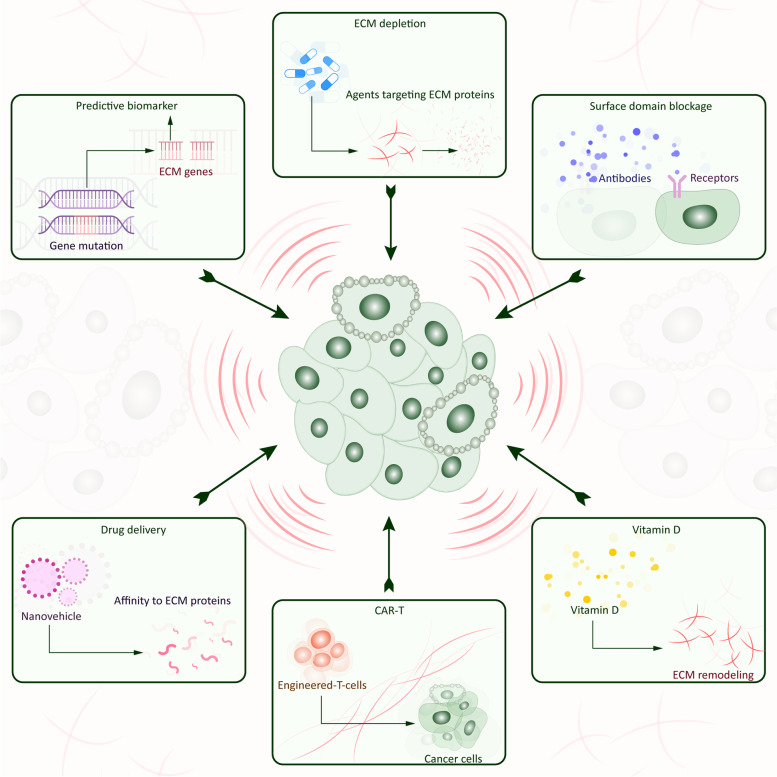
The malignant tumor is a multi-etiological, systemic and complex disease characterized by uncontrolled cell proliferation and distant metastasis. Anticancer treatments including adjuvant therapies and targeted therapies are effective in eliminating cancer cells but in a limited number of patients. Increasing evidence suggests that the extracellular matrix (ECM) plays an important role in tumor development through changes in macromolecule components, degradation enzymes and stiffness. These variations are under the control of cellular components in tumor tissue via the aberrant activation of signaling pathways, the interaction of the ECM components to multiple surface receptors, and mechanical impact. Additionally, the ECM shaped by cancer regulates immune cells which results in an immune suppressive microenvironment and hinders the efficacy of immunotherapies. Thus, the ECM acts as a barrier to protect cancer from treatments and supports tumor progression. Nevertheless, the profound regulatory network of the ECM remodeling hampers the design of individualized antitumor treatment. Here, we elaborate on the composition of the malignant ECM, and discuss the specific mechanisms of the ECM remodeling. Precisely, we highlight the impact of the ECM remodeling on tumor development, including proliferation, anoikis, metastasis, angiogenesis, lymphangiogenesis, and immune escape. Finally, we emphasize ECM "normalization" as a potential strategy for anti-malignant treatment.
Overview
The claims and statistics of this paper haven’t been checked yet.
Free: it reads the open-access text and checks the first 5 claims that cite a source we can check. Create a free account to check every claim.
Integrity signals
Registry
Cites
Statistics
Figures
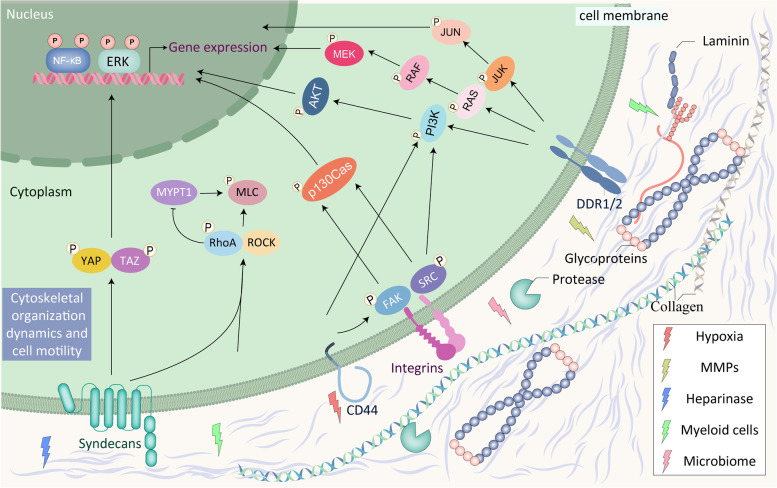
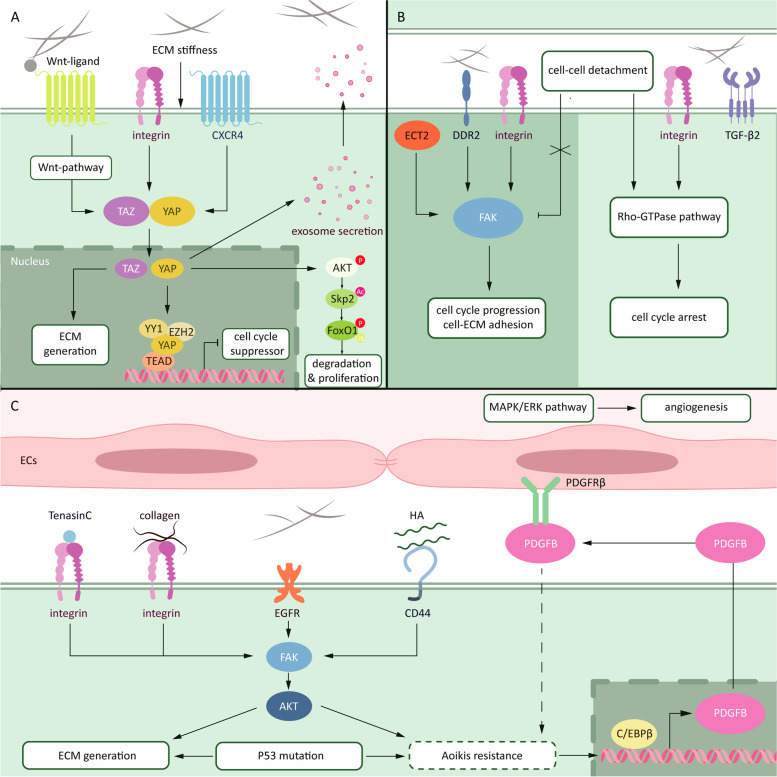
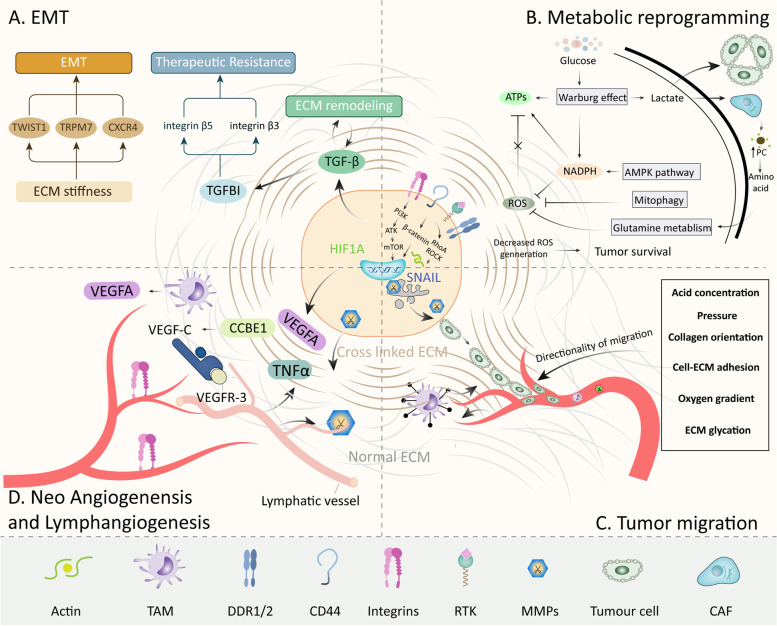
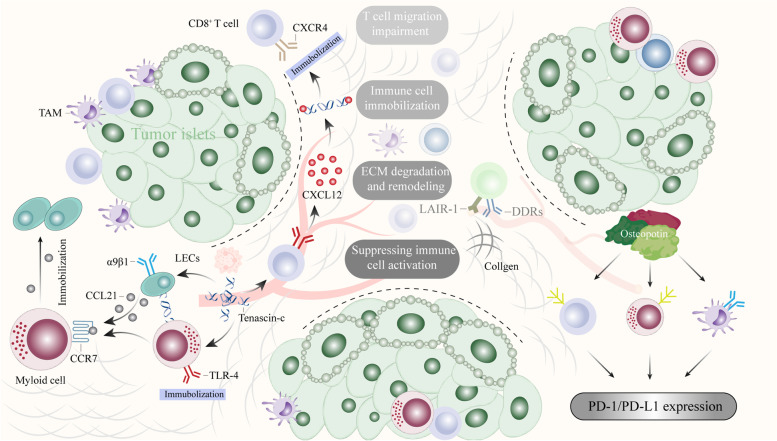
Verification
Claims the paper makes
The claims and statistics of this paper haven’t been checked yet.
Free: it reads the open-access text and checks the first 5 claims that cite a source we can check. Create a free account to check every claim.
Claims other papers make about this one
Each is checked against this paper’s own text: does it say what the citing paper says it does?
The cited source says what the claim attributes to it.
In the citing paper
“inhibiting lysyl oxidase (LOX) family enzymes, which are involved in the crosslinking of ECM proteins collagen and elastin, can reduce matrix stiffness and improve drug delivery to tumor cells [219].”
From Mechanisms and Strategies to Overcome Drug Resistance in Colorectal Cancer (2025) · cites this paper as [219]
Self-check
Percentages, sums and reported differences re-computed from the paper’s own numbers.
The self-check needs the paper’s full text.
Citations
Cites
2 retracted
NK cell heparanase controls tumor invasion and immune surveillance
Putz, E. M., Mayfosh, A. J., Kos, K., Barkauskas, D. S., Nakamura, K., Town, L., Goodall, K. J., Yee, D. Y., Poon, I. K. H., Baschuk, N., et al. (2017) · Journal of Clinical Investigation · doi:10.1172/jci92958 · Cited by 105
RetractedAndreuzzi, E., Colladel, R., Pellicani, R., Tarticchio, G., Cannizzaro, R., Spessotto, P., Bussolati, B., Brossa, A., Paoli, P. D., Canzonieri, V., et al. (2017) · Matrix Biology · doi:10.1016/j.matbio.2017.04.002 · Cited by 84 · cited 1×
“mediates MMRN2 degradation and enhances tumor angiogenesis [431].”
BackgroundRetractedSung, H., Ferlay, J., Siegel, R. L., Laversanne, M., Soerjomataram, I., Jemal, A., & Bray, F. (2021) · CA: A Cancer Journal for Clinicians · doi:10.3322/caac.21660 · Cited by 108,699 · cited 1×
“Anti‐cancer therapy targeting ECM Raising morbidity of cancer worldwide demonstrates the emergency of precise treatment strategy design and the discovery of novel therapeutic targets [541].”
BackgroundRole of YAP/TAZ in mechanotransduction
Dupont, S., Morsut, L., Aragona, M., Enzo, E., Giulitti, S., Cordenonsi, M., Zanconato, F., Le Digabel, J., Forcato, M., Bicciato, S., et al. (2011) · Nature · doi:10.1038/nature10137 · Cited by 5,979 · cited 1×
“Abnormal activation of Hippo core factors Yes1 associated transcriptional regulator (YAP) and WW domain containing transcription regulator (TAZ, or WWTR1) sustain cell proliferation and is prevalently detected in various cancers, implying the success adaption of cancer to crowed environment [137, 138].”
BackgroundMatrix Metalloproteinases: Regulators of the Tumor Microenvironment
Kessenbrock, K., Plaks, V., & Werb, Z. (2010) · Cell · doi:10.1016/j.cell.2010.03.015 · Cited by 5,151 · cited 1×
“Some enzymes process matrix components, such as collagen, resulting in the production and release of bioactive fragments [9, 10].”
BackgroundReactive oxygen species (ROS) homeostasis and redox regulation in cellular signaling
Ray, P. D., Huang, B.-W., & Tsuji, Y. (2012) · Cellular Signalling · doi:10.1016/j.cellsig.2012.01.008 · Cited by 4,373 · cited 1×
“When cancer cells are detached from ECM, increasing production of ROS is lethal for tumor cell survival [293].”
BackgroundHow Matrix Metalloproteinases Regulate Cell Behavior
Sternlicht, M. D., & Werb, Z. (2001) · Annual Review of Cell and Developmental Biology · doi:10.1146/annurev.cellbio.17.1.463 · Cited by 3,959 · cited 1×
“A big family contains more than 30 kinds of MMP have been identified since the MMPs’ role as collagen hydrolase was unveiled [42, 43].”
BackgroundThe extracellular matrix: A dynamic niche in cancer progression
Lu, P., Weaver, V. M., & Werb, Z. (2012) · Journal of Cell Biology · doi:10.1083/jcb.201102147 · Cited by 3,024 · cited 1×
“Meanwhile, cell-to-cell activity residing in the TME is constantly reshaping ECM, and these cells are affected by the signals provide by ECM itself [13].”
BackgroundEMT Transition States during Tumor Progression and Metastasis
Pastushenko, I., & Blanpain, C. (2019) · Trends in Cell Biology · doi:10.1016/j.tcb.2018.12.001 · Cited by 2,876 · cited 1×
“ECM‐induced EMT: ready for invasion For epithelial cells, EMT is a critical process for tumor progression and metastasis [237].”
BackgroundDistinct populations of inflammatory fibroblasts and myofibroblasts in pancreatic cancer
Öhlund, D., Handly-Santana, A., Biffi, G., Elyada, E., Almeida, A. S., Ponz-Sarvise, M., Corbo, V., Oni, T. E., Hearn, S. A., Lee, E. J., et al. (2017) · Journal of Experimental Medicine · doi:10.1084/jem.20162024 · Cited by 2,590
Cited by
Items 101–200 of 1,000
The biological essence of synthetic lethality: Bringing new opportunities for cancer therapy
Ge, M., Luo, J., Wu, Y., Shen, G., & Kuang, X. (2024) · MedComm – Oncology · doi:10.1002/mog2.70 · Cited by 39
Zhang, Z., Chen, X., Li, Y., Zhang, F., Quan, Z., Wang, Z., Yang, Y., Si, W., Xiong, Y., Ju, J., et al. (2024) · APOPTOSIS · doi:10.1007/s10495-024-01994-x · Cited by 33
Self-citationChen, E., Zeng, Z., & Zhou, W. (2024) · Biochimica et Biophysica Acta (BBA) - Reviews on Cancer · doi:10.1016/j.bbcan.2024.189198 · Cited by 37
Singer, M., Zhang, Z., Dayyani, F., Zhang, Z., Yaghmai, V., Choi, A., Valerin, J. B., Imagawa, D. K., & Abi‐Jaoudeh, N. (2024) · Cancers · doi:10.3390/cancers17010066 · Cited by 35
“This leads to the formation of a reactive stroma, thereby promoting tumor cell invasion, proliferation, and angiogenesis [53].”
Self-citationEpstein–Barr virus-mediated immune evasion in tumor promotion
Li, Y., Zhong, L., Krummenacher, C., Zhao, Q., & Zhang, X. (2025) · Trends in Immunology · doi:10.1016/j.it.2025.03.007 · Cited by 31
Self-citationYu, C., Chen, D., Zhu, D., Feng, L., Yang, L. W., Berdimurodov, E. T., Zang, P., Zhu, Y., Hu, Y., Sang, J., et al. (2025) · Advanced Materials · doi:10.1002/adma.202501642 · Cited by 38
Kotsifaki, A., Maroulaki, S., & Armakolas, A. (2024) · International Journal of Molecular Sciences · doi:10.3390/ijms25094832 · Cited by 29
“Recent studies emphasize that BC encompasses not only neo-plastic cells, but also the intricate tumor microenvironment (TME), comprising diverse cell types, including immune, stromal, and endothelial cells [12,13].”
BackgroundSPP1+ macrophages and FAP+ fibroblasts promote the progression of pMMR gastric cancer
Su, Z., He, Y., You, L., Chen, J., Zhang, G., & Liu, Z. (2024) · Scientific Reports · doi:10.1038/s41598-024-76298-w · Cited by 34
“Additionally, the formation of dense extracellular matrix and abnormal vascular structures in tumor tissues can trap T cells at the tumor periphery, limiting their migration and infiltration 45 .”
BackgroundUnveiling the role of osteosarcoma-derived secretome in premetastatic lung remodelling
Almeida, S. F. F., Santos, L., Sampaio-Ribeiro, G., Ferreira, H. R. S., Lima, N. R., Caetano, R., Abreu, M., Zuzarte, M., Ribeiro, A. S., Paiva, A. A., et al. (2023) · Journal of Experimental & Clinical Cancer Research · doi:10.1186/s13046-023-02886-9 · Cited by 33
Langerud, J., Eilertsen, I. A., Moosavi, S. H., Klokkerud, S. M. K., Reims, H. M., Backe, I. F., Hektoen, M., Sjo, O. H., Jeanmougin, M., Tejpar, S., et al. (2024) · Nature Communications · doi:10.1038/s41467-024-48706-2 · Cited by 32
“…associations were consistent with cCMS1 consisting primarily of an immune-active subset of iCMS3 tumors, and cCMS4 of iCMS3 tumors (but also a proportion of iCMS2) with active extracellular matrix remodeling, which can promote immune suppression and metastasis 15,26,31 (Supplementary Figs.”
Duhon, B. H., Thompson, K., Fisher, M., Kaul, V. F., Nguyen, H. T. N., Harris, M. S., Varadarajan, V. V., Adunka, O. F., Prevedello, D. M., Kolipaka, A., et al. (2024) · Scientific Reports · doi:10.1038/s41598-024-64597-1 · Cited by 30
“…and continuous remodeling of the tumor ECM could lead to increased deposition of misaligned collagen fibers, increased cross-linking between cells and matrix components, and increased hyaluronan synthesis that has been associated with mechanical changes and development of stiffness 13,23,34–36 .”
BackgroundGedefaw, G. A., Wu, L., Alemu, B. K., Lee, W. F., Fung, L. W. Y., Cheung, E. C. W., Zhang, T., & Wang, C. C. (2024) · Journal of Translational Medicine · doi:10.1186/s12967-024-05474-3 · Cited by 31
“…in cell migration, adhesion, and tissue remodelling through the modulation of matrix metalloproteinases that interact with various growth factors and proinflammatory cytokines, such as transforming growth factor-beta (TGF-β), interleukin-1 (IL-1), and tumor necrosis factor-alpha (TNF-α) [83–85].”
BackgroundInorganic Nanoparticle Functionalization Strategies in Immunotherapeutic Applications
Mao, W., & Yoo, H. S. (2024) · Biomaterials Research · doi:10.34133/bmr.0086 · Cited by 33
“These cells interact closely with cancer cells and play a significant role in tumor development [180,181].”
BackgroundDefining the extracellular matrix for targeted immunotherapy in adult and pediatric brain cancer
Day, Z. I., Roberts-Thomson, S. J., Nouri, Y., Dalton, N. S., Wang, S. S., Davenport, A. J., Ludlow, L. E. A., Hulett, M. D., Cross, R. S., & Jenkins, M. R. (2025) · npj Precision Oncology · doi:10.1038/s41698-025-00956-z · Cited by 31
“Beyond its architectural function, the ECM plays an active role in tumor biology 4,5 , regulating cellular invasion 5 , immune exclusion 6 , drug resistance, and tumor progression 4,7 .”
Li, X., Chen, T., Li, X., Zhang, H., Li, Y., Zhang, S., Luo, S., & Zheng, T. (2024) · Experimental Hematology and Oncology · doi:10.1186/s40164-024-00564-w · Cited by 33
“The ECM in the TME not only facilitates the growth, invasion, and metastasis of tumor cells but also promotes tumor angiogenesis and impedes drug diffusion [59].”
BackgroundSelf-citationXie, D., Hu, C., Zhu, Y., Yao, J., Li, J., Xia, J., Ye, L., Jin, Y., Jiang, S., Hu, T., et al. (2024) · Small · doi:10.1002/smll.202406639 · Cited by 27
Advancements in Clinical Utilization of Recombinant Human Collagen: An Extensive Review
Wong, I. K. J., Lee, K. W. A., Yoon, S. E., Song, J. K., Chan, L. K. W., Lee, C. H., Jeong, E., Kim, J., & Yi, K. (2025) · Life · doi:10.3390/life15040582 · Cited by 32
“This mechanism is consistent with emerging research demonstrating the complex role of DDR1 in cancer progression [50,51].”
Ke, Z., Chen, J., Xue, Y., Lin, B., Huang, Q., Huang, X., Chen, D., Chen, S., Ye, X., Zheng, Q., et al. (2025) · Cell Death and Disease · doi:10.1038/s41419-025-07736-4 · Cited by 35
Wu, S., Anand, N., Guo, Z., Li, M., Figueroa, M. S., Jung, L., Kelly, S., & Franses, J. W. (2025) · Cancers · doi:10.3390/cancers17111860 · Cited by 31
Sun, C., Shen, Y., Wang, F., Lu, T., & Zhang, J. (2025) · Journal of Translational Medicine · doi:10.1186/s12967-025-06657-2 · Cited by 32
Huang, W., Lai, H.-Z., Long, J., Dai, Z.-L., Ma, Q., Xiao, C., & You, F.-M. (2025) · Cell Communication and Signaling · doi:10.1186/s12964-025-02380-z · Cited by 34
“Recent research has revealed that the biomechanical properties of the ECM can directly or indirectly hinder immune cell migration and activation, promoting the establishment of an ITME that plays a critical role in the failure of immune checkpoint inhibitors (ICIs) [8, 9].”
Advances in screening hyperthermic nanomedicines in 3D tumor models
Soeiro, J. F., Sousa, F. L., Monteiro, M. V., Gaspar, V. M., Silva, N. J. O., & Mano, J. F. (2024) · Nanoscale Horizons · doi:10.1039/d3nh00305a · Cited by 30
Zheng, M., Zhang, H., Dai, M., Yu, H., Hu, Y., Cheng, L., Wang, H., Chen, Q., Tan, M., Guo, Y., et al. (2025) · Nano Letters · doi:10.1021/acs.nanolett.4c05625 · Cited by 26
Suwara, J., & Hartman, M. L. (2025) · Journal of Experimental & Clinical Cancer Research · doi:10.1186/s13046-025-03486-5 · Cited by 29
“…copper-dependent LOX family of proteins plays a crucial role in catalyzing the cross-linking of collagen and elastin, which enhances cell migration and facilitates tumor progression [91, 94–96], the ATOX1-ATP7A-LOX cascade is expected to contribute to ECM remodeling in the tumor microenvironment.”
Postwala, H., Shah, Y., Parekh, P. S., & Chorawala, M. R. (2023) · Medical Oncology · doi:10.1007/s12032-023-02201-8 · Cited by 26
“ECM components and their associated signaling pathways contribute to CRC progression and therapy response [166].”
BackgroundChatterjee, P., Bhowmik, D., & Roy, S. S. (2023) · Channels · doi:10.1080/19336950.2023.2273008 · Cited by 26
“KEGG enrichment analysis for SLC16A3 (Figure 5d) showed an association with leukocyte trans-endothelial migration, regulation of actin cytoskeleton and ECM receptor interaction, indicating its potential role in tissue invasion and metastasis [28,29].”
MethodCurrent advances in modulating tumor hypoxia for enhanced therapeutic efficacy
Liu, Z., Liu, X., Zhang, W., Gao, R., Wei, H., & Yu, C. (2024) · Acta Biomaterialia · doi:10.1016/j.actbio.2024.01.010 · Cited by 27
Wang, S., Jiao, W., Yan, B., Liu, X., Tang, Q., Zhang, Y., Liang, C., Wang, X., Lyu, Y., Fan, H., et al. (2024) · Nano Letters · doi:10.1021/acs.nanolett.4c00003 · Cited by 28
Self-citationAhuja, S., Sureka, N., & Zaheer, S. (2024) · Apmis · doi:10.1111/apm.13447 · Cited by 30
“Acellular components of TME includes ECM and soluble components (6, 18).”
Bioactive sphingolipids as emerging targets for signal transduction in cancer development
Jia, W., Yuan, J., Zhang, J., Li, S., Lin, W., & Cheng, B. (2024) · Biochimica et Biophysica Acta (BBA) - Reviews on Cancer · doi:10.1016/j.bbcan.2024.189176 · Cited by 27
Lu, X., Sun, W., Zheng, X., Yang, L., Feng, T., Deng, X., Zhou, F., Zhu, H., Ma, D., Li, B., et al. (2025) · Chemical Engineering Journal · doi:10.1016/j.cej.2025.161355 · Cited by 29
Drug Delivery Systems for Overcoming Physical Barriers in Cancer Therapy
Yi, X., Jin, X., Hu, Y., Shen, Z., Zheng, X., Luo, D., Xu, T., Yan, J., & Huang, P. C. (2025) · Molecular Pharmaceutics · doi:10.1021/acs.molpharmaceut.5c00474 · Cited by 27
Chigozie, V. U. (2026) · Clinical and Experimental Medicine · doi:10.1007/s10238-026-02092-9 · Cited by 27
“Acidic tumor microenvironments enhance the release of exosomal proteases, particularly MMP-2 and MMP-9, which are key mediators of extracellular matrix (ECM) remodeling [109].”
Design approaches for 3D cell culture and 3D bioprinting platforms
Sreepadmanabh, M., Arun, A. B., & Bhattacharjee, T. (2024) · Biophysics Reviews · doi:10.1063/5.0188268 · Cited by 23
Exploiting Matrix Stiffness to Overcome Drug Resistance
Aydın, H. B., Özçelikkale, A., & Acar, A. (2024) · ACS Biomaterials Science & Engineering · doi:10.1021/acsbiomaterials.4c00445 · Cited by 27
Organoids technology in cancer research: from basic applications to advanced ex vivo models
Varinelli, L., Illescas, O., Lorenc, E., Battistessa, D., Bella, M. D., Zanutto, S., & Gariboldi, M. (2025) · Frontiers in Cell and Developmental Biology · doi:10.3389/fcell.2025.1569337 · Cited by 24
Reprogramming the tumor microenvironment to overcome immunotherapy resistance in pancreatic cancer
Hui, X., Tian, X., Ding, S., Sun, A., Zhao, T., & Wang, H. (2025) · Frontiers in Immunology · doi:10.3389/fimmu.2025.1717062 · Cited by 32
Lee, S.-A., Cho, G.-J., Kim, D., & Kim, D. (2024) · Frontiers in Cell and Developmental Biology · doi:10.3389/fcell.2024.1335636 · Cited by 24
Venkataraman, A., Kordic, I., Li, J., Zhang, N. Y., Bharadwaj, N. S., Fang, Z., Das, S., & Coskun, A. F. (2024) · npj Aging · doi:10.1038/s41514-024-00178-w · Cited by 23
Axemaker, H., Plesselova, S., Calar, K., Jorgensen, M. M., Wollman, J. W., & de la Puente, P. (2024) · Biochimica et Biophysica Acta (BBA) - Molecular Cell Research · doi:10.1016/j.bbamcr.2024.119801 · Cited by 24
Choi, S.-W., Kim, J. H., Hong, J., & Kwon, M. (2025) · Frontiers in Immunology · doi:10.3389/fimmu.2025.1568590 · Cited by 25
A Comprehensive Oncological Biomarker Framework Guiding Precision Medicine
Mokhtari, R. B., Sambi, M., Shekari, F., Satari, K., Ghafoury, R., Ashayeri, N., Eversole, P., Baluch, N., Harless, W. W., Muscarella, L. A., et al. (2025) · Biomolecules · doi:10.3390/biom15091304 · Cited by 25
Solomonov, I., Kollet, Ó., & Sagi, I. (2025) · FEBS Journal · doi:10.1111/febs.70292 · Cited by 26
“It facilitates metastasis and immune cell infiltration by degrading structural barriers, though excessive softening may also reawaken dormant cells, paradoxically heightening metastatic risk [218,230,231].”
RNA-cleaving DNAzymes for accurate biosensing and gene therapy
Gao, X., Liu, Y., Huo, W., Song, Y., Chen, Y., Zhang, J., Yang, X., Jin, Y., & Liang, X. (2023) · Nanoscale · doi:10.1039/d3nr01482g · Cited by 22
From multi-omics to predictive biomarker: AI in tumor microenvironment
Hai, L., Jiang, Z., Zhang, H., & Sun, Y. (2024) · Frontiers in Immunology · doi:10.3389/fimmu.2024.1514977 · Cited by 25
Facilitation of Tumor Stroma-Targeted Therapy: Model Difficulty and Co-Culture Organoid Method
Feng, Q.-S., Shan, X., Yau, V., Cai, Z., & Xie, S. (2025) · Pharmaceuticals · doi:10.3390/ph18010062 · Cited by 24
“The bidirectionality of tumor stroma remodeling pronounces this essential dynamic process in stroma-targeted therapy development, which means it can accentuate malignant bio-behaviors, including tumor invasion [130], immune escape [131], angiogenesis [132], and treatment resistance [133].”
Li, Q., Yang, C., Li, J., Wang, R., Min, J., Song, Y., & Su, H. (2025) · Journal of Translational Medicine · doi:10.1186/s12967-025-06778-8 · Cited by 28
“In addition, Stiff matrices activate mechanotransduction via integrin-FAK-Src-YAP/TAZ signaling, inducing EMT and MMP expression for ECM degradation [105].”
Advances in tumor-associated macrophage-mediated chemotherapeutic resistance in glioma
Liu, X., & Yu, Q. (2025) · Frontiers in Cell and Developmental Biology · doi:10.3389/fcell.2025.1676338 · Cited by 26
Mechanotransduction in Shaping Immunity: Pathways, Crosstalk, and Pathophysiological Relevance
Yan, R., Li, Y., Chen, S., Zhu, L., Zhou, C., Chen, J., Zou, S., & Han, X. (2025) · Advanced Science · doi:10.1002/advs.202512164 · Cited by 31
Self-citationThe cross-talk between macrophages and tumor cells as a target for cancer treatment
Aizaz, M., Khan, A. U., Khan, F., Khan, M., Saleh, E. A. M., Nisar, M., & Baran, N. (2023) · Frontiers in Oncology · doi:10.3389/fonc.2023.1259034 · Cited by 25
Targeting the prostate tumor microenvironment by plant-derived natural products
Wu, J., Ji, H., Li, T., Guo, H., Xu, H., Zhu, J., Tian, J., Gao, M., Wang, X., & Zhang, A. (2023) · Cellular Signalling · doi:10.1016/j.cellsig.2023.111011 · Cited by 25
Self-citationXiao, C., Xie, N., Shu, Q., Liang, X., Wang, Z., Wu, J., Shi, N., Huang, X., Wei, Z., Gao, X., et al. (2024) · Small · doi:10.1002/smll.202309907 · Cited by 25
Shen, Z., Tao, L., Wang, Y., Zhu, Y., Pan, H., Li, Y., Shi, J., Zheng, J., Cai, J., Liu, Y., et al. (2024) · Advanced Science · doi:10.1002/advs.202403040 · Cited by 26
Self-citationSharma, U., Sahu, A., Shekhar, H., Sharma, B., Haque, S., Kaur, D., Tuli, H. S., Mishra, A., & Ahmad, F. (2025) · Discover Oncology · doi:10.1007/s12672-025-01829-4 · Cited by 28
Targeting tumor extracellular matrix with nanoparticles to circumvent therapeutic resistance
Ding, X., Liang, Y., Zhou, S., Wu, Y., Sałata, P., Mikolajczk-Martinez, A., Khosrawipour, V., & Zhang, Z. (2025) · Journal of Controlled Release · doi:10.1016/j.jconrel.2025.113786 · Cited by 20
Self-citationXia, J., Shi, Y., & Chen, X. (2024) · Scientific Reports · doi:10.1038/s41598-024-72020-y · Cited by 25
“Many ECM-associated receptor proteins, including integrin, discoidin domain receptors (DDRs), CD44, and receptor for hyaluronan-mediated motility (RHAMM), are highly upregulated in many solid tumors and correlate with malignancy and poor prognosis 74,75 .”
Effects of Hyaluronan on Breast Cancer Aggressiveness
Parnigoni, A., Moretto, P., Viola, M., Karousou, E. G., Passi, A. G., & Vigetti, D. (2023) · Cancers · doi:10.3390/cancers15153813 · Cited by 21
Metabolomics analysis reveals novel serum metabolite alterations in cancer cachexia
More, T. H., Hiller, K., Seifert, M., Illig, T., Schmidt, R., Gronauer, R., von Hahn, T., Weilert, H., & Stang, A. (2024) · Frontiers in Oncology · doi:10.3389/fonc.2024.1286896 · Cited by 22
“Recent drug developments emphasize ECM normalization and ß-glucuronidase inhibition as novel strategies in anti-cancer treatment (70, 87), which could also favorably affect the body´s glucuronic acid, toxin-conjugation, and detoxi fi cation metabolism.”
BackgroundYin, Y., Xiao-jie, Y., Cheng, Z., Wang, H., Lei, J., Wang, D., Wang, P., Li, B., Mi, J., & Yuan, Q. (2024) · Frontiers in Immunology · doi:10.3389/fimmu.2024.1371584 · Cited by 21
Singh, D. D., Haque, S., Kim, Y., Han, I., & Yadav, D. K. (2024) · Frontiers in Immunology · doi:10.3389/fimmu.2024.1455211 · Cited by 23
Current Research in Drug-Free Cancer Therapies
Andavar, A., Bhagavathi, V. R., Cousin, J., Parekh, N., Razavi, Z. S., & Tan, B. (2025) · Bioengineering · doi:10.3390/bioengineering12040341 · Cited by 22
Biomaterials‐Involved Construction of Extracellular Matrices for Tumor Blockade Therapy
Sun, J., Liu, Y., Sun, J., Ding, J., & Chen, X. (2025) · Exploration · doi:10.1002/exp.20240229 · Cited by 24
Hu, T., Hu, C., Ji, Y., Lu, N., Ye, L., Li, M., Xia, J., Xie, D., Jiang, S., Li, R., et al. (2025) · Advanced Materials · doi:10.1002/adma.202506363 · Cited by 22
Piwócka, O., Sterzyńska, K., Malińska, A., Suchorska, W. M., & Kulcenty, K. I. (2025) · Scientific Reports · doi:10.1038/s41598-025-12556-9 · Cited by 21
“The key genes involved in ECM remodeling are typically responsible for degrading or reorganizing components of the ECM, i.e., matrix metalloproteinases ( MMP2 , −9, −14), disintegrins 39 lysyl oxidases, and transglutaminases 40 .”
Meade, P. S., Whitehead, R., Rosenfeld, S., Schiapparelli, P. V., Κωνσταντόπουλος, Κ., & Quiñones‐Hinojosa, A. (2025) · Neuro-Oncology · doi:10.1093/neuonc/noaf205 · Cited by 25
Immunotherapy Approaches in Isocitrate-Dehydrogenase-Mutant Low-Grade Glioma
Gallus, M., Kwok, D. W., Lakshmanachetty, S., Yamamichi, A., & Okada, H. (2023) · Cancers · doi:10.3390/cancers15143726 · Cited by 22
Crawford, A. J., Gomez‐Cruz, C., Russo, G. C., Huang, W., Bhorkar, I., Roy, T., Muñoz‐Barrutia, A., Wirtz, D., & Garcia‐Gonzalez, D. (2023) · Acta Biomaterialia · doi:10.1016/j.actbio.2023.12.043 · Cited by 20
Li, J., Wu, J., Xie, Y., & Yu, X. (2024) · Frontiers in Oncology · doi:10.3389/fonc.2024.1360471 · Cited by 24
Self-citationBiophysical and biochemical aspects of immune cell–tumor microenvironment interactions
Benmelech, S., Le, T., McKay, M., Nam, J., Subramaniam, K. V., Tellez, D., Vlasak, G., & Mak, M. (2024) · APL Bioengineering · doi:10.1063/5.0195244 · Cited by 19
“38 Alterations in expression of ECM components — namely, collagen synthesis and deposition — results in heightened matrix density and serves as a physical barrier for tumor cells against immune destruction: recent work has found that in triple negative breast cancer, high Th1 (helper T cell)…”
BackgroundCarnevali, F., Forciniti, S., Onesto, V., Siciliano, A. C., Iuele, H., Grasso, G., da Cruz, A. F., Serra, I., Depalma, N., D’Ugo, S., et al. (2024) · Advanced Therapeutics · doi:10.1002/adtp.202400351 · Cited by 20
Pieniądz, P., Pięt, M., & Paduch, R. (2024) · Applied Sciences · doi:10.3390/app14072930 · Cited by 20
Tumor Microenvironment: A Complex Landscape of Cancer Development and Drug Resistance
Fatima, S. (2025) · Cureus · doi:10.7759/cureus.82090 · Cited by 47
The role of TLR-4 in chemoresistance of cancer
Li, Y., Tang, T., Sun, Y., Chen, G., Yuan, X., & Cai, D. (2025) · Discover Oncology · doi:10.1007/s12672-025-02509-z · Cited by 21
“It upregulates genes for cell survival (such as Bcl-xL) and proliferation (such as c-Myc) and may enhance drug-metabolism and efflux protein expression, reducing drug concentration in cells and causing chemoresistance [60].”
Self-citationZhang, T., Li, Y., Cheng, B., Zhao, X., Liu, M., Feng, J., Bai, Y., Yu, Y., Jiang, P., Geng, L., et al. (2025) · Advanced Science · doi:10.1002/advs.202501335 · Cited by 34
Self-citationKamal, K. M., Ghazali, A. R., Selvarajah, G. T., Mutalib, N. A., Abu, N., Chua, E. W., & Masre, S. F. (2026) · Molecular Biomedicine · doi:10.1186/s43556-026-00436-1 · Cited by 25
“Increased ECM stiffness, primarily arising from excessive collagen deposition and crosslinking, generates a bioactive microenvironment that further promotes tumour growth, immune evasion, and angiogenesis [162–165].”
Li, T., Li, Y., Wu, H., Peng, C., Wang, J., Chen, S., Zhao, T., Li, S., Qin, X., & Liu, Y. (2023) · Mechanobiology in Medicine · doi:10.1016/j.mbm.2023.100023 · Cited by 23
Self-citationWu, C., Weis, S. M., & Cheresh, D. A. (2023) · Journal of Cell Science · doi:10.1242/jcs.261483 · Cited by 19
Li, Y., Liang, Y., Zhang, S., Wang, X., Zhu, Y.-N., Liu, J., Ren, H., Jiang, W., Wang, J., Zhang, Z., et al. (2024) · Computers in Biology and Medicine · doi:10.1016/j.compbiomed.2024.108537 · Cited by 19
Self-citationLi, J., Zhang, W., Chen, L., Wang, X., Liu, J., Huang, Y., Qi, H., Chen, L., Wang, T., & Li, Q. (2024) · Biochimica et Biophysica Acta (BBA) - Reviews on Cancer · doi:10.1016/j.bbcan.2024.189225 · Cited by 20
Self-citationNanoparticle‐Based drug delivery strategies for targeted therapy to hypoxic solid tumors
Wu, Z., Chen, J., Wang, B., Wen, Q., & Fu, S. (2024) · Chemical Engineering Journal · doi:10.1016/j.cej.2024.158081 · Cited by 19
Liver Extracellular Matrix in Colorectal Liver Metastasis
Morabito, M., Thibodot, P., Gigandet, A., Compagnon, P., Toso, C., Berishvili, E., Lacotte, S., & Peloso, A. (2025) · Cancers · doi:10.3390/cancers17060953 · Cited by 19
“Key proteins such as fibronectin, collagen, and matrix metalloproteinases (MMPs) are frequently upregulated, enabling cancer cells to circumvent the constraints of normal growth regulation [48].”
Death-ision: the link between cellular resilience and cancer resistance to treatments
Baldassarre, G., de la Serna, I. L., & Vallette, F. M. (2025) · Molecular Cancer · doi:10.1186/s12943-025-02339-1 · Cited by 22
“ECM may restrict tumor cell dissemination by both creating physical barriers and disrupting signaling pathways that are crucial for tumor cell growth and survival [63].”
Zhang, Q., Dou, M., Su, X., Yu, Z., Wei, B., Zhu, L. F., Zhang, J., & Wang, H. (2025) · Collagen and Leather · doi:10.1186/s42825-025-00197-7 · Cited by 19
“Advancing our understanding of how the ECM regulates cellular behavior, particularly migration, could provide valuable insights into developing alternative strategies for effectively addressing various diseases [125, 133].”
Lin, A., Xiong, M., Tang, B., Jiang, A., Shen, J., Liu, Z., Cheng, Q., Zhang, J., & Luo, P. (2025) · Hepatology International · doi:10.1007/s12072-025-10838-y · Cited by 21
Jiang, Z., Xu, Y., Wang, Y., Dong, Z., Hu, W., Su, J., Wu, L., He, Y., Zhu, L., Jian, D., et al. (2025) · Journal of Advanced Research · doi:10.1016/j.jare.2025.10.041 · Cited by 22
“The cross-linking of ECM proteins and collagen deposits gives the ECM different stiffness and elasticity, which in turn creates differential physical stresses on tumors [13].”
Jolasun, Y., Song, K., Zheng, Y., Wang, J., Fonseca, G. J., Eidelman, D. H., & Ding, J. (2025) · Nature Communications · doi:10.1038/s41467-025-66162-4 · Cited by 20
“3f) 65 – 67 .”
Poljak, I., Chiappini, C., & Adriani, G. (2026) · Lab on a Chip · doi:10.1039/d5lc01060h · Cited by 17
Zheng, Y., Bu, F., Xu, C., Wu, T., Zhou, J., Shen, W., & Yin, T. (2024) · Journal of Controlled Release · doi:10.1016/j.jconrel.2024.06.020 · Cited by 17
Metabolic heterogeneity in tumor microenvironment – A novel landmark for immunotherapy
Chen, C., Han, P., & Qing, Y. (2024) · Autoimmunity Reviews · doi:10.1016/j.autrev.2024.103579 · Cited by 17
Zhou, T., Yan, H., Deng, Y., Zhu, Y., Xia, X., Wu, W., Zhang, W., Chen, H., Hu, J., Zhou, Z., et al. (2024) · Interdisciplinary medicine · doi:10.1002/inmd.20240018 · Cited by 19
Self-citationThe Hippo Pathway in Breast Cancer: The Extracellular Matrix and Hypoxia
Yang, H., Yang, J., Zheng, X., Chen, T., Zhang, R., Chen, R., Cao, T., Zeng, F., & Liu, Q. (2024) · International Journal of Molecular Sciences · doi:10.3390/ijms252312868 · Cited by 18
Mechanisms of breast cancer metastasis: the role of extracellular matrix
Chen, R., Zhang, R., Ke, F., Guo, X., Zeng, F., & Liu, Q. (2024) · Molecular and Cellular Biochemistry · doi:10.1007/s11010-024-05175-x · Cited by 21
Zhang, L., Ma, J., Zhang, J., Hu, M., Cheng, J., Hu, B., Zhou, J., Zhou, D., Bai, Y., Ma, X., et al. (2025) · Advanced Science · doi:10.1002/advs.202412574 · Cited by 23
Battlegrounds of treatment resistance: decoding the tumor microenvironment
Bayat, M., & Nahand, J. S. (2025) · Naunyn-Schmiedeberg s Archives of Pharmacology · doi:10.1007/s00210-025-04055-5 · Cited by 22
“In response to this intricate inter-play, researchers are actively exploring therapeutic modalities that directly target ECM components (Yuan et al. 2023).”
Signaling pathways and targeted interventions for precancers
Yang, J., Wang, S., Li, X., Xu, H. E., Sun, T., Hu, T., Luo, J., & Zhou, H. (2026) · Signal Transduction and Targeted Therapy · doi:10.1038/s41392-025-02342-4 · Cited by 20
“174 ECM remodeling dynamically modulates cellular signaling cascades, with fi broblast activation and phenotypic transition emerging as central mediators of stromal ECM deposition.”
Extracellular Vesicles in Cancer: Mechanistic Insights and Clinical Applications
Alhumaydhi, F., & Anwar, S. (2026) · Cancers · doi:10.3390/cancers18030537 · Cited by 17
“The design of customized anticancer treatment is hampered by the extensive regulatory network of the ECM remodeling [100].”
Oxidative Stress in the Tumor Immune Microenvironment: Mechanisms and Therapeutic Perspectives
Wang, Z., Li, B., Tang, P., Yan, F., Wang, S., Leng, G., Dawa, P., Chen, Y., Guo, Y., Yang, P., et al. (2026) · MedComm – Oncology · doi:10.1002/mog2.70068 · Cited by 19
Self-citationInflammation and tumor microenvironment.
Niu, T., & Zhou, F. (2023) · PubMed Central · doi:10.11817/j.issn.1672-7347.2023.230231 · Cited by 32
Bai, Y., Lyu, C., Li, X., Yang, L., Wang, J., Li, H., Xin, Z., Xu, X., Ren, C., & Yang, G. (2024) · Cancer Letters · doi:10.1016/j.canlet.2024.217022 · Cited by 18
Wang, H., Sun, H., Huang, J., Zhang, Z., Cai, G., Wang, C., Xiao, K., Xiong, X., Zhang, J., Liu, P., et al. (2024) · EMBO Molecular Medicine · doi:10.1038/s44321-024-00108-z · Cited by 19
“Dysregulation of ECM remodeling by cancer cells contributes to the creation of a microenvironment that promotes tumor growth and metastasis (Yuan et al, 2023).”
Self-citation
Metadata
- Authors
- Yuan, Z., Li, Y., Zhang, S., Wang, X., Dou, H., Yu, X., Zhang, Z., Yang, S., & Xiao, M.
- Affiliations
- Harbin Medical University (CN)
- Central South University (CN)
- Corresponding author
- Yang, Shanshan
- Xiao, Min
- Venue
- Molecular Cancer
- Published
- 2023-03-11
- Volume
- 22
- Issue
- 1
- Pages
- 48-48
- ISSN
- 1476-4598 (ISSN-L)
- PMC
- PMC10007858
- OpenAlex
- W4323971780
- Semantic Scholar
- c8a593008da53cc37814dab070956b1fd456d86e
- Cited by
- 977
- References
- 625
- Citations by year
- 2026: 304 · 2025: 385 · 2024: 242 · 2023: 45
- FWCI
- 32.03
- Type
- journal article
- Language
- en
- Open access
- gold
- doi.org
- Licence
- cc-by
- creativecommons.org/licenses/by/4.0 (tdm)
- creativecommons.org/licenses/by/4.0 (vor)
- Locations
- Molecular Cancer (publishedVersion, cc-by)
- PubMed Central (publishedVersion, cc-by)
- PubMed (publishedVersion)
- DOAJ (DOAJ: Directory of Open Access Journals) (submittedVersion, cc-by-sa)
- Funders
- Natural Science Foundation of Heilongjiang Province, China (LH2021H076)
- National Natural Science Foundation of China, China (81872460, 81872145)
- Topics
- Life Sciences › Biochemistry, Genetics and Molecular Biology › Cell Biology › Cellular Mechanics and Interactions
- Life Sciences › Biochemistry, Genetics and Molecular Biology › Cancer Research › Protease and Inhibitor Mechanisms
- Life Sciences › Biochemistry, Genetics and Molecular Biology › Molecular Biology › TGF-β signaling in diseases
- Keywords
- extracellular matrix remodeling, tumor progression, immune evasion, tumor microenvironment, extracellular matrix stiffness, anoikis, metastasis, angiogenesis, lymphangiogenesis, immunosuppression, immunotherapy resistance, cancer therapy
- MeSH terms
- Extracellular Matrix, Humans, Immunotherapy, Neoplasms, Tumor Microenvironment
About these checks
Registry, retraction, Cites and statistics results are computed, not judged, with one exception: a printed reference that no index lists is read once by a model before it counts as a citation error. Claims are extracted by a model and kept only when their quote appears verbatim in the text; each cited source is then checked, with a model’s help, for whether it says what the claim relies on. Those verdicts can be wrong — read the claim’s quote and the cited source before relying on one.
Statistics and arithmetic are recomputed, not judged.
Confidence bands are shown only for fields calibrated on our annotated test set. None is calibrated yet, so no band is shown.
What counts as a claim ›How we measure confidence ›How we check this ›
Are you an author, or do you see a problem with this page? Request a review
Data sources
Bibliographic data: Semantic Scholar, OpenAlex, Crossref.
Contains information from the Semantic Scholar Academic Graph Datasets, made available under the ODC Attribution License (ODC-BY 1.0).
Semantic Scholar’s data is described in: Kinney, R., et al. (2023). The Semantic Scholar Open Data Platform. arXiv:2301.10140.
