

Extracellular matrix remodeling in tumor progression and immune escape: from mechanisms to treatments
Open accessThe DOI matches its Crossref record; 626 of the 626 references it cites were found in a registry or an index.
Abstract
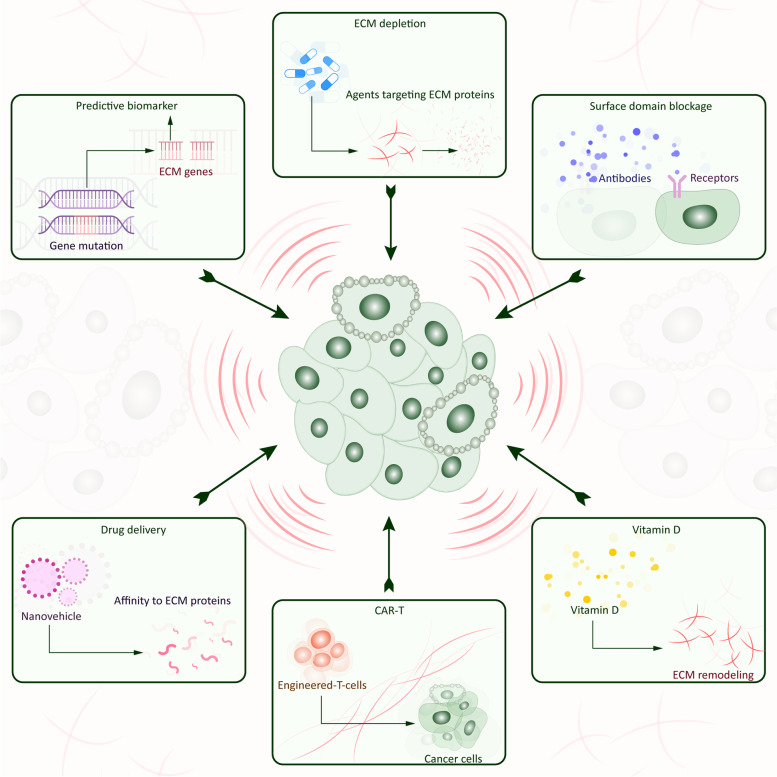
The malignant tumor is a multi-etiological, systemic and complex disease characterized by uncontrolled cell proliferation and distant metastasis. Anticancer treatments including adjuvant therapies and targeted therapies are effective in eliminating cancer cells but in a limited number of patients. Increasing evidence suggests that the extracellular matrix (ECM) plays an important role in tumor development through changes in macromolecule components, degradation enzymes and stiffness. These variations are under the control of cellular components in tumor tissue via the aberrant activation of signaling pathways, the interaction of the ECM components to multiple surface receptors, and mechanical impact. Additionally, the ECM shaped by cancer regulates immune cells which results in an immune suppressive microenvironment and hinders the efficacy of immunotherapies. Thus, the ECM acts as a barrier to protect cancer from treatments and supports tumor progression. Nevertheless, the profound regulatory network of the ECM remodeling hampers the design of individualized antitumor treatment. Here, we elaborate on the composition of the malignant ECM, and discuss the specific mechanisms of the ECM remodeling. Precisely, we highlight the impact of the ECM remodeling on tumor development, including proliferation, anoikis, metastasis, angiogenesis, lymphangiogenesis, and immune escape. Finally, we emphasize ECM "normalization" as a potential strategy for anti-malignant treatment.
Overview
The claims and statistics of this paper haven’t been checked yet.
Free: it reads the open-access text and checks the first 5 claims that cite a source we can check. Create a free account to check every claim.
Integrity signals
Registry
Cites
Statistics
Figures
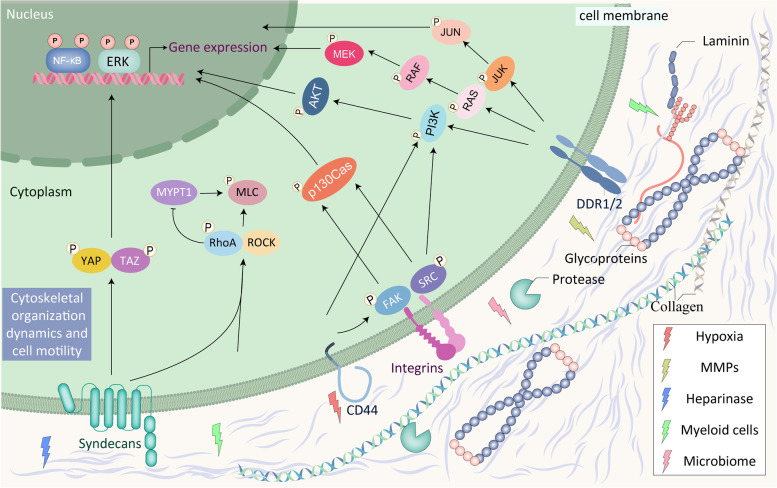
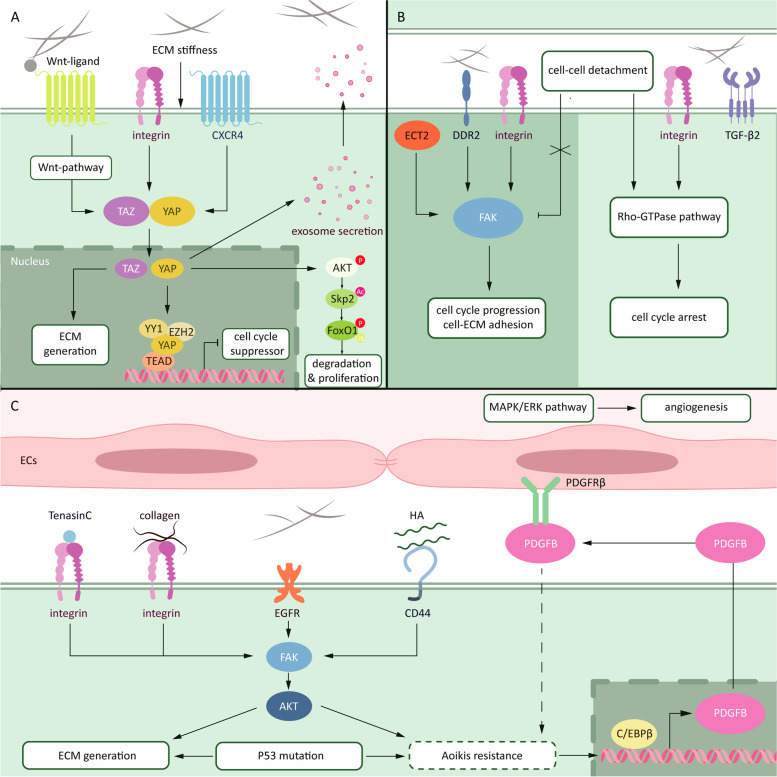
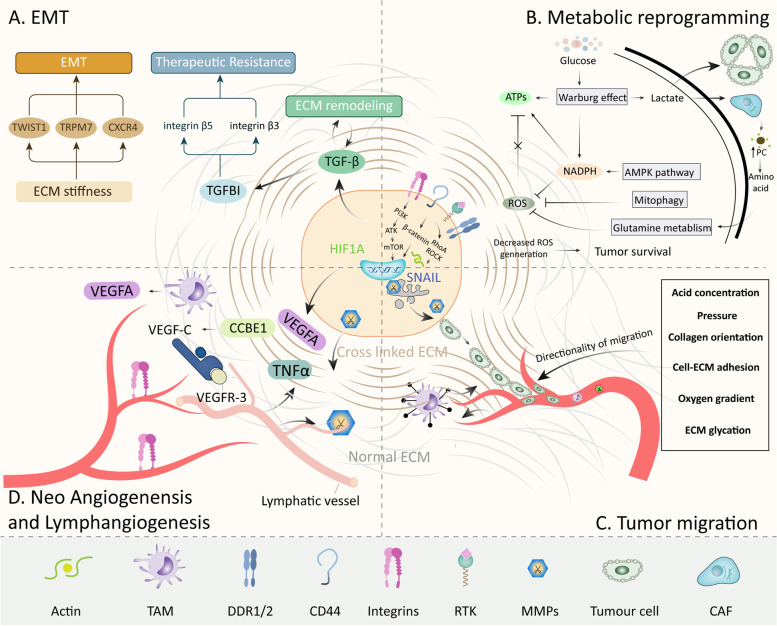
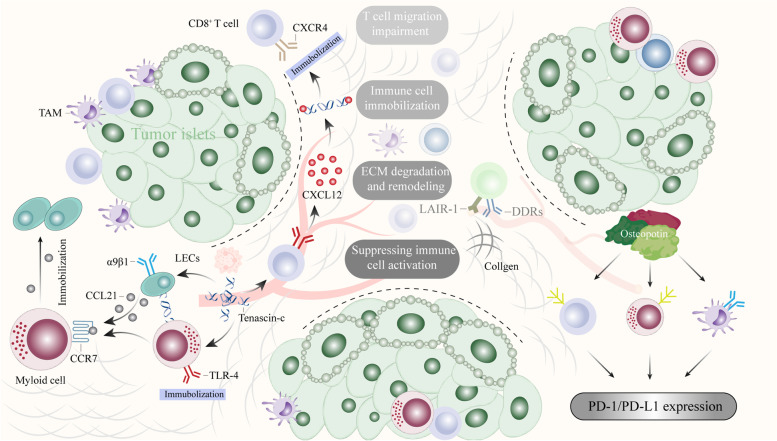
Verification
Claims the paper makes
The claims and statistics of this paper haven’t been checked yet.
Free: it reads the open-access text and checks the first 5 claims that cite a source we can check. Create a free account to check every claim.
Claims other papers make about this one
Each is checked against this paper’s own text: does it say what the citing paper says it does?
The cited source says what the claim attributes to it.
In the citing paper
“inhibiting lysyl oxidase (LOX) family enzymes, which are involved in the crosslinking of ECM proteins collagen and elastin, can reduce matrix stiffness and improve drug delivery to tumor cells [219].”
From Mechanisms and Strategies to Overcome Drug Resistance in Colorectal Cancer (2025) · cites this paper as [219]
Self-check
Percentages, sums and reported differences re-computed from the paper’s own numbers.
The self-check needs the paper’s full text.
Citations
Cites
2 retracted
NK cell heparanase controls tumor invasion and immune surveillance
Putz, E. M., Mayfosh, A. J., Kos, K., Barkauskas, D. S., Nakamura, K., Town, L., Goodall, K. J., Yee, D. Y., Poon, I. K. H., Baschuk, N., et al. (2017) · Journal of Clinical Investigation · doi:10.1172/jci92958 · Cited by 105
RetractedAndreuzzi, E., Colladel, R., Pellicani, R., Tarticchio, G., Cannizzaro, R., Spessotto, P., Bussolati, B., Brossa, A., Paoli, P. D., Canzonieri, V., et al. (2017) · Matrix Biology · doi:10.1016/j.matbio.2017.04.002 · Cited by 84 · cited 1×
“mediates MMRN2 degradation and enhances tumor angiogenesis [431].”
BackgroundRetractedSung, H., Ferlay, J., Siegel, R. L., Laversanne, M., Soerjomataram, I., Jemal, A., & Bray, F. (2021) · CA: A Cancer Journal for Clinicians · doi:10.3322/caac.21660 · Cited by 108,699 · cited 1×
“Anti‐cancer therapy targeting ECM Raising morbidity of cancer worldwide demonstrates the emergency of precise treatment strategy design and the discovery of novel therapeutic targets [541].”
BackgroundRole of YAP/TAZ in mechanotransduction
Dupont, S., Morsut, L., Aragona, M., Enzo, E., Giulitti, S., Cordenonsi, M., Zanconato, F., Le Digabel, J., Forcato, M., Bicciato, S., et al. (2011) · Nature · doi:10.1038/nature10137 · Cited by 5,979 · cited 1×
“Abnormal activation of Hippo core factors Yes1 associated transcriptional regulator (YAP) and WW domain containing transcription regulator (TAZ, or WWTR1) sustain cell proliferation and is prevalently detected in various cancers, implying the success adaption of cancer to crowed environment [137, 138].”
BackgroundMatrix Metalloproteinases: Regulators of the Tumor Microenvironment
Kessenbrock, K., Plaks, V., & Werb, Z. (2010) · Cell · doi:10.1016/j.cell.2010.03.015 · Cited by 5,151 · cited 1×
“Some enzymes process matrix components, such as collagen, resulting in the production and release of bioactive fragments [9, 10].”
BackgroundReactive oxygen species (ROS) homeostasis and redox regulation in cellular signaling
Ray, P. D., Huang, B.-W., & Tsuji, Y. (2012) · Cellular Signalling · doi:10.1016/j.cellsig.2012.01.008 · Cited by 4,373 · cited 1×
“When cancer cells are detached from ECM, increasing production of ROS is lethal for tumor cell survival [293].”
BackgroundHow Matrix Metalloproteinases Regulate Cell Behavior
Sternlicht, M. D., & Werb, Z. (2001) · Annual Review of Cell and Developmental Biology · doi:10.1146/annurev.cellbio.17.1.463 · Cited by 3,959 · cited 1×
“A big family contains more than 30 kinds of MMP have been identified since the MMPs’ role as collagen hydrolase was unveiled [42, 43].”
BackgroundThe extracellular matrix: A dynamic niche in cancer progression
Lu, P., Weaver, V. M., & Werb, Z. (2012) · Journal of Cell Biology · doi:10.1083/jcb.201102147 · Cited by 3,024 · cited 1×
“Meanwhile, cell-to-cell activity residing in the TME is constantly reshaping ECM, and these cells are affected by the signals provide by ECM itself [13].”
BackgroundEMT Transition States during Tumor Progression and Metastasis
Pastushenko, I., & Blanpain, C. (2019) · Trends in Cell Biology · doi:10.1016/j.tcb.2018.12.001 · Cited by 2,876 · cited 1×
“ECM‐induced EMT: ready for invasion For epithelial cells, EMT is a critical process for tumor progression and metastasis [237].”
BackgroundDistinct populations of inflammatory fibroblasts and myofibroblasts in pancreatic cancer
Öhlund, D., Handly-Santana, A., Biffi, G., Elyada, E., Almeida, A. S., Ponz-Sarvise, M., Corbo, V., Oni, T. E., Hearn, S. A., Lee, E. J., et al. (2017) · Journal of Experimental Medicine · doi:10.1084/jem.20162024 · Cited by 2,590
Cited by
Items 501–600 of 1,000
Zhang, B., Yu, C., Zhang, S., & Zhang, M. (2025) · Journal of Biochemical and Molecular Toxicology · doi:10.1002/jbt.70479 · Cited by 4
“These genes contribute to activities such as ECM organization, lipid metabolism, and inflammation, all of which are pivotal in cancer progression and response to treatment [59 – 61].”
Self-citationSeo, W. J., Kim, K. T., Jang, Y. J., Choi, Y. Y., & Kim, J. (2025) · Scientific Reports · doi:10.1038/s41598-025-19515-4 · Cited by 4
“Although its precise oncological role has not been thoroughly examined, ECM remodeling reportedly contributes to chemoresistance across various cancers 45 .”
Wu, L. H., She, P., Qiu, C., Sun, H.-T., Kong, F., Wang, H., Tian, Y., Yang, J., & Mao, Z. (2025) · Discover Oncology · doi:10.1007/s12672-025-03728-0 · Cited by 3
“…analysis highlighted key biological processes such as extracellular matrix organization, extracellular structure organization, and external encapsulating structure organization, aligning with previous findings that ECM remodeling is a hallmark of cancer progression and tissue inflammation [32–36].”
Su, N. Y., Lian, W., Zhang, B., Tian, Y., Li, L., Chen, Y., Zhi, X., Zeng, T., Wu, Q., Chen, L., et al. (2025) · Cell Reports Medicine · doi:10.1016/j.xcrm.2025.102420 · Cited by 4
Cancer-associated fibroblasts: The "Achilles' Heel" in thyroid tumor progression and therapy
Li, X., Han, H., Li, S., Yang, K., Yang, Z., Ma, L., & Zhao, Y. (2025) · Cellular Signalling · doi:10.1016/j.cellsig.2025.112213 · Cited by 4
Decellularized lymph node sections with preserved extracellular matrix for stromal cell culture
Esparza, E., Teles, L. N., Fedotova, A., deHaseth, N. H., Sayegh, M. H., Hernandez, A. V., Ho, L., Ziebarth, N., & Tomei, A. A. (2025) · Scientific Reports · doi:10.1038/s41598-025-28782-0 · Cited by 3
Zhou, Z., Chen, J., Lü, N., Wu, J., Li, Y., Shen, Y., Hu, X., Xu, L., Wang, S., Xu, Q., et al. (2025) · International Immunopharmacology · doi:10.1016/j.intimp.2025.115956 · Cited by 4
Self-citationTargeting high endothelial venules: potential strategies for cancer treatment
Yang, W., Zhu, G., Cai, S., Xing, H., Yang, A., & Ye, X. (2025) · Annals of Medicine · doi:10.1080/07853890.2025.2597587 · Cited by 3
“…LNs consist of immune cells, fibroblastic reticular cells (FRCs), endothelial cells, and other components, connected to the outside through a lymphatic network that rapidly transmits tissue-derived signals (e.g. soluble antigens, lipids, metabolites, extracellular vesicles, and leukocytes) [37].”
Wang, W., Lin, X., Zheng, C., Yao, P., Xie, D., Lin, Y., Wang, X., & Hong, W. (2025) · Frontiers in Immunology · doi:10.3389/fimmu.2025.1699079 · Cited by 4
Self-citationBeyond monoclonal antibodies: constraints and the case for alternative PD-1/PD-L1-targeting formats
Porozova, N. O., Petukhova, N. V., Gureev, M., Moiseev, I., Eliseev, I. E., Fedorova, L. V., & Porozov, Y. B. (2025) · Frontiers in Immunology · doi:10.3389/fimmu.2025.1729468 · Cited by 5
Wang, J., Xie, J., Liu, Y., Ding, R., Mu, S., Wang, D., & Li, J. (2025) · Materials Today Bio · doi:10.1016/j.mtbio.2025.102735 · Cited by 8
“This process alleviates oxidative stress by converting highly reactive oxygen species into less reactive ones [94,95].”
Cui, S., Chen, X., Qian, C., Wu, C., Wang, J., Zhang, Y., & Xiang, D. (2025) · Chemical Engineering Journal · doi:10.1016/j.cej.2025.172183 · Cited by 3
Borujeni, N. E., Armağan, H. S., & Demırcı, A. (2025) · International Journal of Biological Macromolecules · doi:10.1016/j.ijbiomac.2025.149963 · Cited by 4
Liu, T., Sun, J., Liao, X., Wang, Y., Zhang, S., Tao, Y., Wang, Z., Lu, Q., Liang, S., Tang, S., et al. (2026) · International Journal of Biological Macromolecules · doi:10.1016/j.ijbiomac.2026.150143 · Cited by 6
Self-citationHuang, S., Yan, J., Liu, W., & Li, B. (2026) · APOPTOSIS · doi:10.1007/s10495-025-02256-0 · Cited by 4
“Pro-tumor cNMF_1 was enriched in the adhesive plaque, PI3K-AKT, and ECM receptor interaction pathways (key genes: EPCAM, ITGA6, EGFR, HIF1A, and SPP1) [ 40–42]. temperature.”
Targeting urological cancers with CAR-T cell therapy: current landscape and future directions
Chen, K., Wang, Y., Zhang, P., He, Y., Wusiman, D., Yoo, K. H., Lin, L., Hu, Q., Wu, W., Wu, L., et al. (2026) · Journal of Translational Medicine · doi:10.1186/s12967-026-07737-7 · Cited by 3
“(2) Limited trafficking and infiltration: Extensive of ECM remodeling, driven by excessive matrix deposition, fibrous cross-linking, and cancer-associated fibroblasts (CAFs) activity, creates a dense physical barrier that restricts immune cell penetration and infiltration [273, 274].”
Fu, J., Zhao, D., Zang, Z., Wang, X., Zhang, H., & Fu, Q. (2026) · Molecular Biology Reports · doi:10.1007/s11033-026-11651-y · Cited by 3
Self-citationUrinary Peptidomic Signatures Predict Overall and Progression‐Free Survival in Bladder Cancer
Ahangar, M., Mischak, H., Moulavasilis, N., STRAVODIMOS, K. G., Mahjoubi, F., Jankowski, J., Frantzi, M., & Vlahou, A. (2026) · PROTEOMICS · doi:10.1002/pmic.70135 · Cited by 3
“Aberrant protease activity, dysregulated collagen turnover, and fibrosis-like matrix accumulation contribute to progression from NMIBC to muscle-invasive BC (MIBC) [ 16 ].”
Patient-Derived Organoid Modeling of Glypican-3 CAR-T Responses in Hepatocellular Carcinoma
Zhang, B., Deng, Y., Zhou, M., Chen, J., Wu, J., Lian, X., Zhou, M., Zhou, M., & Cao, J. (2026) · Cells · doi:10.3390/cells15090799 · Cited by 3
Mechanical regulation of microenvironment remodeling in brain tumors: from mechanism to therapy
Fan, H., Xu, C., He, S., Wang, J., Zhu, H., & Shu, K. (2026) · Journal of Neuroinflammation · doi:10.1186/s12974-026-03857-5 · Cited by 3
“Recently, increasing evidence indicates that the immunosuppressive state is shaped not only by genetic and biochemical factors, but also by mechanical cues, under-scoring the intimate coupling between the immune and mechanical microenvironments in tumors [4].”
Li, A., Wang, Y. Y., Bai, H., Xie, X., Xu, B., Wang, Y., Luo, S., Zhang, L., Zhao, Q., Duan, S., et al. (2026) · Nature Communications · doi:10.1038/s41467-026-73287-7 · Cited by 4
“TAMs can also upregulate the production of collagen by secretingTGF-β ,activatestromalcells,andpromotetheformationofa fi brotic environment 14 .”
Self-citationXie, Y., & Jiang, H. (2023) · Cancer Reports · doi:10.1002/cnr2.1914 · Cited by 3
“97,98 These factors may contribute to a poor outcome for patients in the high-risk category.”
BackgroundTargeting breast tumor extracellular matrix and stroma utilizing nanoparticles
Muhammad, F. A., Altalbawy, F. M. A., Mandaliya, V. B., Saraswat, S. K., Rekha, M. M., Aulakh, D., Chahar, M., Mahdi, M. S., Jaber, M., & Alhadrawi, M. (2024) · Clinical & Translational Oncology · doi:10.1007/s12094-024-03793-x · Cited by 3
“It facilitates the expansion and migration of tumor cells through structural support, expanding the angiogenesis, and dampening immune system reactions [16].”
Wu, Q., Lu, Y., Wu, Y., Zhao, M., Lu, J., Yu, Y., Niu, Y., Zhang, L., & Zuo, P. (2025) · Frontiers in Immunology · doi:10.3389/fimmu.2024.1524560 · Cited by 4
The Impact of Breast Cancer on Sustainable Development Goals (SDGs)
Bani, I. A., Hamad, E. M., & Elnour, A. A. M. (2025) · Springer eBooks · doi:10.1007/978-981-97-8518-6_6 · Cited by 5
Song, J., Shen, Y., Wu, Z., Huang, L., Deng, Y., Wei, Y., Wang, X., & Zhang, X. (2025) · Journal of Proteome Research · doi:10.1021/acs.jproteome.4c01002 · Cited by 3
Self-citationDiscoid Domain Receptors Signaling in Macrophages-Mediated Diseases
Ma, Y., Gong, H., Cheng, L., & Zhang, D. (2025) · International Journal of General Medicine · doi:10.2147/ijgm.s487093 · Cited by 5
Miolo, G., Canil, G., Polano, M., Bo, M. D., Mondello, A., Palumbo, A., Puglisi, F., & Corona, G. (2025) · International Journal of Molecular Sciences · doi:10.3390/ijms26052295 · Cited by 3
“Furthermore, collagen-integrin interactions within the ECM activate intracellular signaling pathways that drive β -catenin translocation into the nucleus, promoting the expression of cell cycle regulators, such as cyclin D1 [43,44].”
Shen, F., Liu, X., Ding, F., Yu, Z., Shi, X., Cheng, L., Zhang, X., Jing, C., Zhao, Z., Cao, H., et al. (2025) · Hereditas · doi:10.1186/s41065-025-00398-4 · Cited by 3
“Alterations in ECM composition and stiffness can impede the activation and migration of immune cells, creating an immunosuppressive TME [55, 63].”
RetractedLi, Q., Hasan, N., Zhao, F., Xue, Y., Zhu, S., Lv, Y., Jiang, L., YANG, K. Y., Li, W., Zhang, Y., et al. (2025) · Infectious Agents and Cancer · doi:10.1186/s13027-025-00667-x · Cited by 3
“MMP activation leads to the degradation of the tissue matrix, facilitating the migration of tumor cells, including lung cancer cells, across tissue barriers [45, 46].”
Lu, T., Guo, H., Gong, H., Ma, Y., Tian, Y., & Zhang, D. (2025) · Oncology Letters · doi:10.3892/ol.2025.15279 · Cited by 3
“CAFs exhibit consider‑ able heterogeneity and plasticity, and have a marked effect on the immune response and metabolic reprogramming within the TME, thereby influencing tumor progression (37).”
InfluentialLee, D. S., Kang, J. I., Jeong, M., Byun, S., & Park, K. M. (2023) · Journal of Industrial and Engineering Chemistry · doi:10.1016/j.jiec.2023.11.029 · Cited by 5
A novel anoikis-related gene signature identifies LYPD1 as a novel therapy target for bladder cancer
Song, Z., Gui, S., Xiao, S., Rao, X., Cong, N., Deng, H., Yu, Z., & Zeng, T. (2024) · Scientific Reports · doi:10.1038/s41598-024-53272-0 · Cited by 6
“Anoikis is a widely recognized form of programmed cell death that occurs when cells detach from the appropriate extracellular matrix, disrupting integrin ligation 5 .”
BackgroundENO2 promotes anoikis resistance in anaplastic thyroid cancer by maintaining redox homeostasis
Zhang, Y., Ji, X., & Wang, Y. (2024) · Gland Surgery · doi:10.21037/gs-24-44 · Cited by 3
“In the prevention of tumor metastasis, anoikis resistance represents a key factor contributing to treatment failure (35).”
Dasgupta, S. (2024) · International Conference on Computer, Electrical & Communication Engineering (ICCECE) · doi:10.1109/iccece58645.2024.10497218 · Cited by 3
“Interestingly, the finding of Yuan and his coworkers supports our observations as they suggested that remodeling of extracellular matrix assists in the invasion and metastasis of cancer cells [34].”
ResultTumor Microenvironment: Multiway Role in Drug Resistance
Hurrah, I. M., Mintoo, M. J., Fatima, K., Kousar, R., Mohiuddin, T., Wani, A., & Khan, S. U. (2024) · Springer eBooks · doi:10.1007/978-981-97-1666-1_5 · Cited by 3
Tim-1-mediated extracellular matrix promotes the development of hepatocellular carcinoma
Hua, R., Yu, P., Zheng, W., Wu, N., Yu, W., Kong, Q., He, J., & Qin, L. (2024) · Acta Biochimica et Biophysica Sinica · doi:10.3724/abbs.2024191 · Cited by 3
“Additionally, the ECM serves as the primary structural component of the tumor barrier, significantly hindering the efficacy of chemotherapy drugs against liver cancer cells [10,11].”
BackgroundWang, L., Li, W., Ji, W., Bing, D., Liu, M., Liu, K., Chen, B., Zhao, Z., Gu, Y., Li, X., et al. (2025) · Genes & Diseases · doi:10.1016/j.gendis.2025.101591 · Cited by 5
“40 Frequent communication signals were observed between CREB3L1 þ CB cells and fibroblasts.”
Matrix metalloproteinase 9 implication during colorectal carcinogenesis. Effect of doxycycline
Bounaama, A., & Djerdjouri, B. (2025) · Fundamental and Clinical Pharmacology · doi:10.1111/fcp.70012 · Cited by 3
“MMPs are zinc-and calcium-dependent proteases associated with the progression phase in many cancers [5].”
Segal, J. E., Cronk, J. C., Ball, B., Forbes, G. E., Jackett, K. N., Li, K. P., Osorno, A. M., Montalvan, E. S. A., Browne, A., Lake, J. A., et al. (2025) · Cold Spring Harbor Perspectives in Medicine · doi:10.1101/cshperspect.a041609 · Cited by 4
Sayan, M., Tuaç, Y., Akgül, M., Kucukcolak, S., Tjio, E., Akbulut, D., Chen, L. W., Yang, D. D., Moningi, S., Leeman, J. E., et al. (2024) · International Journal of Molecular Sciences · doi:10.3390/ijms25168913 · Cited by 2
López-Carrasco, A., Parra-Haro, K., Vieco-Martí, I., Granados-Aparici, S., Díaz‐Martín, J., Salguero‐Aranda, C., Acevedo-León, D., de Álava, E., Navarro, S., & Noguera, R. (2024) · Cancers · doi:10.3390/cancers16193347 · Cited by 2
“This results in clonal selection of the tumor cells best adapted to the niche [16–18].”
BackgroundNi, X., Pan, F., Lang, Y. K., & Zhang, W. (2024) · Discover Oncology · doi:10.1007/s12672-024-01688-5 · Cited by 2
Liu, Z., Yang, F., Hao, Y., Jiang, Q., Jiang, Y., Zhang, S., Zhang, Y., Zheng, Q.-X., Niu, Z., Zhu, H., et al. (2025) · European Journal of Surgical Oncology · doi:10.1016/j.ejso.2025.109708 · Cited by 2
Self-citationIdentification of Extra Cellular Matrix (ECM) Genes in Triple Negative Breast Cancer
Vora, H. H. (2025) · Asian Pacific Journal of Cancer Biology · doi:10.31557/apjcb.2025.10.2.301-307 · Cited by 2
Wang, Q., Zhang, X., Liu, S., Liu, X., Lv, X.-J., Zhang, L., & Lv, H. (2025) · Experimental Cell Research · doi:10.1016/j.yexcr.2025.114630 · Cited by 4
Lan, T.-H., Li, W., Xu, F., Meng, F.-L., Zhang, X., Ma, J., Yang, N., Zhao, Q.-W., & Zhao, Z. (2025) · Journal of Gastrointestinal Oncology · doi:10.21037/jgo-2024-878 · Cited by 3
“Furthermore, the ECM’s shielding diffusion barrier leads to hypoxia, which directly promotes immune evasion by elevating immunomodulatory factors and amplifying angiogenic signals (38).”
Zhu, Z., Gao, C., Li, Y., Xiao, L., Ye, Z., Tao, X., Ye, Y., Tian, Y., Bai, X., & Zhao, J. (2025) · Breast Care · doi:10.1159/000547029 · Cited by 2
“These pathways are known to be involved in tumor growth, metastasis, and cellular communication [45–47].”
Self-citationClonorchis sinensis infection remodels chromatin accessibility in hepatocellular carcinoma
Yang, W., Wei, C., Chen, J., Lin, Q., Qin, Y., Huang, T., Deng, X., Li, M. J., Tang, Z., & Fang, M. (2025) · Parasites & Vectors · doi:10.1186/s13071-025-06909-6 · Cited by 2
“Additionally, alterations in the ECM are closely associated with the invasion and metastasis of tumor cells [44], suggesting that C. sinensis infection may increase the aggressiveness of HCC.”
Hongdan, C. H. E. N., Zhang, L., & Li, C. (2025) · Journal of Zhejiang University (Medical Sciences) · doi:10.3724/zdxbyxb-2025-0090 · Cited by 5
Cui, Y., Dai, Y., Xia, Y., Yu, W., Jin, J., Wang, S., & Xie, H. (2025) · Journal of Cellular and Molecular Medicine · doi:10.1111/jcmm.70808 · Cited by 2
Liu, C., Zhang, H., Gong, J., Xiao, Y., Lin, Y., Peng, W., Pan, X., Li, Y., Jie, H., Qian, X., et al. (2025) · MedComm – Oncology · doi:10.1002/mog2.70037 · Cited by 2
Self-citationChaulagain, R. P., Shrestha, Y., Dinislam, K., & Jin, S. (2025) · International Journal of Hepatology · doi:10.1155/ijh/5532643 · Cited by 2
“…cirrhosis to halt or delay progression to HCC. ECM remodeling is essential in liver fi brosis, and the upregulation of actin cytoskeleton-associated genes (COCH and ACTB) denotes increased ECM deposition and cellular motility, which are characteristics of liver fi brosis and HCC progression [39, 40].”
Wu, X., Cai, L., Liu, Y., Wang, B., Xia, T., & Liu, Z. (2025) · PLoS ONE · doi:10.1371/journal.pone.0332988 · Cited by 3
“Therefore, targeting the properties and functions of the ECM as a potential strategy for anti-malignant treatment has a solid theoretical foundation [58].”
Bhola, N., Bhardwaj, S., Bareja, C., & Saluja, D. (2025) · Discover Oncology · doi:10.1007/s12672-025-03614-9 · Cited by 2
“These genes were particularly enriched in hallmarks such as angiogenesis, invasion, and immune modulation, emphasizing their relevance to colon cancer pathogenesis [41].”
Zhou, Q., Sun, F., & Wang, X. (2025) · Chinese Medical Journal - Pulmonary and Critical Care Medicine · doi:10.1016/j.pccm.2025.08.005 · Cited by 3
Self-citationMishra, J., Dickinson, J. D., & Maurya, S. K. (2025) · Frontiers in Aging Neuroscience · doi:10.3389/fnagi.2025.1666837 · Cited by 4
“Within the TME, CSCs stimulate the expansion of MDSCs, creating an immunosuppressive environment.”
InfluentialQiu, L., Chen, Y., Ketcherside, T., Wang, Z., DeWees, T. A., Williams, T. M., Amini, A., Sampath, S., Glaser, S., Chen, Y., et al. (2025) · Cancers · doi:10.3390/cancers17223648 · Cited by 2
Li, N., Liu, L., Wang, X., & Hao, S. (2025) · Pharmacology · doi:10.1159/000549133 · Cited by 2
“Through the HIF-1/CXCR4 axis, they penetrate the endothelium and enter the circulation [27, 28].”
Self-citationTargeting the NR4A3-RNF139-ATF6 pathway as a therapeutic and diagnostic strategy in bladder cancer
Cui, H., & Fan, X. (2025) · Pathology - Research and Practice · doi:10.1016/j.prp.2025.156301 · Cited by 2
Proteomics discovery of MTDH and SND1 interaction vulnerabilities in ovarian cancer
Esmaeili, P., Nasimian, A., Werner, L., Mosquim, S., Jakobsson, M. E., Gerdtsson, A. S., Kazi, J. U., & Levander, F. (2025) · Scientific Reports · doi:10.1038/s41598-025-26913-1 · Cited by 2
“Additionally, the alteration of collagen formation pathways could imply impacts on the extracellular matrix and tumor microenvironment, potentially affecting tumor stiffness and metastatic potential 34 .”
Ahmad, R., Eldosougi, S., & Stott, S. L. (2025) · Current Opinion in Biomedical Engineering · doi:10.1016/j.cobme.2025.100636 · Cited by 2
Dasatinib Inhibits Basal B Breast Cancer Through ETS1-Mediated Extracellular Matrix Remodeling
Guo, X., Sun, H., Feng, Y., Feng, Y., Guo, S., Lei, J. H., Miao, K., Ip, K. U., Li, L., Li, H., et al. (2025) · Biomedicines · doi:10.3390/biomedicines13122888 · Cited by 2
“ECM remodeling is generally associated with immune system involvement [53].”
Gerhardt, A., Nanakaliy, D., Shah, H. D., Sarfaraz, S., Madigan, C., Downing, M., Elliott, R. P., Dipto, R., Vrapciu, B., Noetzel, J. W., et al. (2025) · Current Issues in Molecular Biology · doi:10.3390/cimb47121003 · Cited by 3
“To this effect, fibronectin, collagens, and laminins appear to not only serve a structural purpose (e.g., fibrillogenesis, etc.), but interact directly with integrins and other proteins to regulate metastatic processes such as EMT [95–100] as well as immune evasion [96,97,101].”
Zambrano, Y., Mejía‐García, A., Ramírez-Mejía, J. M., Tsao, H. M., Morales-Suárez, P. D., Rey-Vargas, L., Ovalle, W. J. M., Huertas-Caro, C. A., López-Correa, P., Riaño-Moreno, J. C., et al. (2025) · Biology · doi:10.3390/biology14121706 · Cited by 2
“This is consistent with the existing evidence supporting the role of ECM as a dynamic microenvironment that regulates key cancer processes [47,48].”
Chen, M., Li, W., Hu, T., Chang, J., Chen, Y., Yang, Y., Liu, G. L., & Hu, W. (2025) · Journal of Nanobiotechnology · doi:10.1186/s12951-025-03828-7 · Cited by 2
“Such integrin-mediated interactions play pivotal roles in tumor progression [4, 5], embryonic development [6], tissue homeostasis [7], wound healing [8], and cell migration [9, 10].”
Zheng, B., Tang, J., Nie, C., Jiang, Y., Dimde, M., Li, W., & Haag, R. (2025) · International Journal of Biological Macromolecules · doi:10.1016/j.ijbiomac.2025.149716 · Cited by 3
Matera, I., Pistone, A., Morelli, M. A. C., Bisaccia, F., & Ostuni, A. (2025) · Biochemical Pharmacology · doi:10.1016/j.bcp.2025.117665 · Cited by 2
Tarım, B. S., Tamburacı, S., & Top, A. (2026) · Soft Matter · doi:10.1039/d5sm00890e · Cited by 2
Silli, E. K., Wang, K., Xiao, Z., Liu, T., Zhang, L., Zhu, J., Song, R., & Lv, H. (2026) · International Journal of Biological Macromolecules · doi:10.1016/j.ijbiomac.2026.150363 · Cited by 2
Wu, K., Ye, Y., Pei, B., Song, B., Zhang, Y., Li, T., Yang, Q., Jin, Y., Cheng, H., & Li, X. (2026) · Scientific Reports · doi:10.1038/s41598-026-36714-9 · Cited by 2
“Anoikis, a form of programmed cell death induced by ECM detachment 22 , promotes ECM degradation, EMT, tumor angiogenesis, and TME, thereby advancing GC metastatic progression 23,24 .”
Han, X., Caron, J. M., & Brooks, P. C. (2026) · American Journal Of Pathology · doi:10.1016/j.ajpath.2025.09.008 · Cited by 2
Júnior, L. T., Jesus-Ferreira, H. C., Sogayar, M. C., & Nishiyama, M. Y. (2026) · Biomedicines · doi:10.3390/biomedicines14020268 · Cited by 2
“…of LINC01133, by being associated with altered expression of these genes, can shift the balance toward a more organized matrix or a matrix permissive to invasion, favoring more aggressive cellular states without necessarily inducing a complete EMT, but rather highly adaptive hybrid states [55,56].”
Biophysical approaches to cancer diagnostics: Collagen biomarkers in colorectal cancer
Biswas, S., & Mahato, K. K. (2026) · Physics of Life Reviews · doi:10.1016/j.plrev.2026.01.009 · Cited by 2
Looking at endometriosis–diagnosis and disease mechanisms through a mechanical lens
Thomsen, T., Petite, E., Pierce, C. A., Ellis, T., Acharya, P., & Sohn, L. L. (2026) · Frontiers in Medicine · doi:10.3389/fmed.2026.1716836 · Cited by 2
“These cytokines and growth factors also promote ECM remodeling, a hallmark of chronic inflammation (44).”
Bioinformatic analysis and cellular functional assays uncover the role of NXPH4 in breast cancer
Yang, D. D., Xue, Z. K., Jia, S. Q., Liu, C. H., Yang, R., Chen, C. L., Huang, Y. Z., Zhao, X. C., Huang, G. L., & Hou, J. X. (2026) · Discover Oncology · doi:10.1007/s12672-026-04519-x · Cited by 2
Chan, M. K., Tang, P. C., Ji, Z. Z., Chung, J. Y., Zhang, A. Q., Xian, Y., Zhang, Q., Wong, C. K., To, K., Li, C., et al. (2026) · Phytomedicine · doi:10.1016/j.phymed.2026.157921 · Cited by 2
Radioactive Distribution Patterns of [68Ga]Ga-FAPI-04 in Primary Hepatocellular Carcinoma
Zhu, D., Zhu, Y., Zou, S., Song, S., Dong, Q., Kuang, D., & Zhu, X. (2026) · Clinical Nuclear Medicine · doi:10.1097/rlu.0000000000006345 · Cited by 2
Shi, J., Wang, X., Zhang, W., Gao, Z., Zhang, C., Tao, Z., Yang, Y., Xu, J., Hong, H., Ma, Y., et al. (2026) · Cancer Research · doi:10.1158/0008-5472.can-25-1718 · Cited by 2
Self-citationLiquid-liquid phase separation of EphB4 drives pulmonary hypertension via YAP activation
Liu, J.-Y., Chen, J., Chen, Q.-Y., Li, H., Gui, L., Zhou, J., & Lin, M. (2026) · Cell Reports · doi:10.1016/j.celrep.2026.116992 · Cited by 3
Huang, J.-L., Liu, Q., Wang, C., Lang, X., Zeng, Y.-X., & Zhou, D.-Q. (2026) · Insights into Imaging · doi:10.1186/s13244-026-02226-3 · Cited by 2
Li, H., Song, Y., Cong, Y., Wang, C., Chen, K., Liu, C., Zhou, M., Ju, Y., Chen, J., Chen, L., et al. (2026) · Oncogene · doi:10.1038/s41388-026-03696-x · Cited by 2
“Although YEATS2 and NR2C2 do not appear to directly interact, our results indicate that YEATS2 plays a crucial role in facilitating NR2C2 recruitment to the RAD50 promoter (Fig.”
Chen, X., Yu, W., & Lin, S. (2026) · Abdominal Radiology · doi:10.1007/s00261-026-05435-y · Cited by 2
“However, unlike CT-centric studies, our use of non-contrast ultrasound addresses gaps in early-stage to disease progression and reduced ICI efficacy by altering extracellular matrix (ECM) composition and immune cell infiltration [ 30, 31].”
The critical role of discoidin domain receptors in the regulation of anti‐tumor immune responses
Jiang, S., Qiu, Y., Wang, Q., Liu, X., Zhang, Y., Feng, H., Chen, Q., Jiang, Y., & Luo, X. (2026) · International Journal of Cancer · doi:10.1002/ijc.70398 · Cited by 2
“66,67 A real-time microscopy monitoring the trace of CD8 + T cells in human ovarian tumor tissue indicated that fewer CD8 + T cells were observed in dense collagen regions than loose collagen areas, 68 and similar results were also observed in human lung tumors, 69 PDAC, 70 and breast cancer, 71…”
The tumor microenvironment as a key regulator of radiotherapy response
Ma, X., & Zhang, N. (2026) · Frontiers in Immunology · doi:10.3389/fimmu.2026.1776636 · Cited by 3
“Importantly, integrin b 1 – FAK signaling also modulates ECM stiffness and organization through upregulation of fi bronectin and collagen deposition, thereby reinforcing a pro-fi brotic and therapy-resistant microenvironment (43, 44).”
Biswas, S., Kokkanti, R. R., Parida, N., Bajoria, A. A., & Patnaik, S. (2026) · Biochimica et Biophysica Acta (BBA) - Reviews on Cancer · doi:10.1016/j.bbcan.2026.189582 · Cited by 2
Pyroelectric nanomedicines for tumor catalytic therapy
He, Y., Fan, R., Fu, Y., Dong, Z., Zhang, X., Xue, W., Tu, W., & Gao, D. (2026) · Chinese Chemical Letters · doi:10.1016/j.cclet.2026.112739 · Cited by 2
Wang, N., Wang, K., Cao, Y., Su, G., Qian, J., Shen, J., Jiang, J., Chen, Z., Huang, X., Si, C., et al. (2026) · Journal of Nanobiotechnology · doi:10.1186/s12951-026-04458-3 · Cited by 2
Piezo1 in the central nervous system: decoding the mechanical signature of neuroinflammation
Shi, G., Tan, R., Cao, Y., Zheng, X., & Zhan, R. (2026) · Journal of Neuroinflammation · doi:10.1186/s12974-026-03843-x · Cited by 4
“Glioma progression occurs within a chronically distorted mechanical microenvironment characterized by solid stress, elevated interstitial pressure, extracellular matrix remodeling, and invasive front heterogeneity [172–177].”
Signaling Networks Regulating Metastatic Progression in Triple-Negative Breast Cancer
Senkowska, Z., Owczarek, K., Niewinna, K., & Lewandowska, U. (2026) · Cells · doi:10.3390/cells15090809 · Cited by 3
“Moreover, it modulates multiple signaling pathways that regulate cell survival, proliferation, and tissue morphogenesis [221–223].”
Targeting Tumor Stroma: Current Challenges and Future Directions
Wang, S., Hu, H., Zeng, W., Qin, L., Chen, X., Liao, Z., Liu, F., & Zhang, Z. (2026) · MedComm · doi:10.1002/mco2.70763 · Cited by 3
Self-citationCracking the shield: oncolytic viruses versus the tumor-immune fortress
El-Derby, A. M., Salem, N. T., Hesham, N., & Salem, T. Z. (2026) · Cancer Cell International · doi:10.1186/s12935-026-04331-1 · Cited by 2
“These tumors possess physical barriers, including a dense extracellular matrix (ECM), which restricts viral infiltration and replication within the tumor mass and thereby reduces the therapeutic effect [22].”
Fan, D., Wei, L., Han, M., Xu, T., Qiu, X., Chen, Y., Yang, C., & Chen, R. (2026) · IEEE Transactions on Medical Imaging · doi:10.1109/tmi.2026.3697015 · Cited by 2
“%) to a nonlesion region characterized by fibrotic stroma; owing to tumor-induced extracellular matrix (ECM) remodeling e ff ects and desmoplastic reactions, such regions frequently cooccur with tumor regions in training data [20].”
Enzyme-based nanomedicine for tumor microenvironment modulation in cancer therapy
Ta, Y. N., Wang, S.-N., & Chen, Y. (2026) · Journal of Controlled Release · doi:10.1016/j.jconrel.2026.115101 · Cited by 3
Bai, Y., Chen, R., & Lu, X. (2026) · International Journal of Molecular Sciences · doi:10.3390/ijms27136092 · Cited by 2
Shi, J., Abdel-Ghany, S. E., Abdelfattah, M. M., Hu, X., Wadan, A. S., & Sabit, H. (2026) · Signal Transduction and Targeted Therapy · doi:10.1038/s41392-026-02820-3 · Cited by 2
“369,370 This remodeling not only alters the physical architecture of the TME but also modulates biochemical signaling, further amplifying proinvasive cues.”
Spheroids of FAP-Positive Cell Lines as a Model for Screening Drugs That Affect FAP Expression
Pleshkan, V. V., Zinovyeva, M. V., Antonova, D. V., & Алексеенко, И. В. (2023) · Biomedicines · doi:10.3390/biomedicines11072017 · Cited by 2
“Changes in the ECM are the result of an organized cross-interaction between cancer and stroma cells.”
BackgroundInfluentialZhang, C., Huang, W., Niu, W., Yang, H., Zheng, Y., Gao, X., & Qiu, X. (2024) · Personalized Medicine · doi:10.2217/pme-2023-0103 · Cited by 3
Zhu, M., Chen, X., Chi, M., Wu, Y., Zhang, M., & Gao, S. (2024) · Talanta · doi:10.1016/j.talanta.2024.126297 · Cited by 2
Chauhan, P., Pandey, P., Ramniwas, S., Khan, F., & Maqsood, R. (2024) · Endocrine Metabolic & Immune Disorders - Drug Targets · doi:10.2174/0118715303301146240522095638 · Cited by 2
Metadata
- Authors
- Yuan, Z., Li, Y., Zhang, S., Wang, X., Dou, H., Yu, X., Zhang, Z., Yang, S., & Xiao, M.
- Affiliations
- Harbin Medical University (CN)
- Central South University (CN)
- Corresponding author
- Yang, Shanshan
- Xiao, Min
- Venue
- Molecular Cancer
- Published
- 2023-03-11
- Volume
- 22
- Issue
- 1
- Pages
- 48-48
- ISSN
- 1476-4598 (ISSN-L)
- PMC
- PMC10007858
- OpenAlex
- W4323971780
- Semantic Scholar
- c8a593008da53cc37814dab070956b1fd456d86e
- Cited by
- 977
- References
- 625
- Citations by year
- 2026: 304 · 2025: 385 · 2024: 242 · 2023: 45
- FWCI
- 32.03
- Type
- journal article
- Language
- en
- Open access
- gold
- doi.org
- Licence
- cc-by
- creativecommons.org/licenses/by/4.0 (tdm)
- creativecommons.org/licenses/by/4.0 (vor)
- Locations
- Molecular Cancer (publishedVersion, cc-by)
- PubMed Central (publishedVersion, cc-by)
- PubMed (publishedVersion)
- DOAJ (DOAJ: Directory of Open Access Journals) (submittedVersion, cc-by-sa)
- Funders
- Natural Science Foundation of Heilongjiang Province, China (LH2021H076)
- National Natural Science Foundation of China, China (81872460, 81872145)
- Topics
- Life Sciences › Biochemistry, Genetics and Molecular Biology › Cell Biology › Cellular Mechanics and Interactions
- Life Sciences › Biochemistry, Genetics and Molecular Biology › Cancer Research › Protease and Inhibitor Mechanisms
- Life Sciences › Biochemistry, Genetics and Molecular Biology › Molecular Biology › TGF-β signaling in diseases
- Keywords
- extracellular matrix remodeling, tumor progression, immune evasion, tumor microenvironment, extracellular matrix stiffness, anoikis, metastasis, angiogenesis, lymphangiogenesis, immunosuppression, immunotherapy resistance, cancer therapy
- MeSH terms
- Extracellular Matrix, Humans, Immunotherapy, Neoplasms, Tumor Microenvironment
About these checks
Registry, retraction, Cites and statistics results are computed, not judged, with one exception: a printed reference that no index lists is read once by a model before it counts as a citation error. Claims are extracted by a model and kept only when their quote appears verbatim in the text; each cited source is then checked, with a model’s help, for whether it says what the claim relies on. Those verdicts can be wrong — read the claim’s quote and the cited source before relying on one.
Statistics and arithmetic are recomputed, not judged.
Confidence bands are shown only for fields calibrated on our annotated test set. None is calibrated yet, so no band is shown.
What counts as a claim ›How we measure confidence ›How we check this ›
Are you an author, or do you see a problem with this page? Request a review
Data sources
Bibliographic data: Semantic Scholar, OpenAlex, Crossref.
Contains information from the Semantic Scholar Academic Graph Datasets, made available under the ODC Attribution License (ODC-BY 1.0).
Semantic Scholar’s data is described in: Kinney, R., et al. (2023). The Semantic Scholar Open Data Platform. arXiv:2301.10140.
