

Extracellular matrix remodeling in tumor progression and immune escape: from mechanisms to treatments
Open accessThe DOI matches its Crossref record; 626 of the 626 references it cites were found in a registry or an index.
Abstract
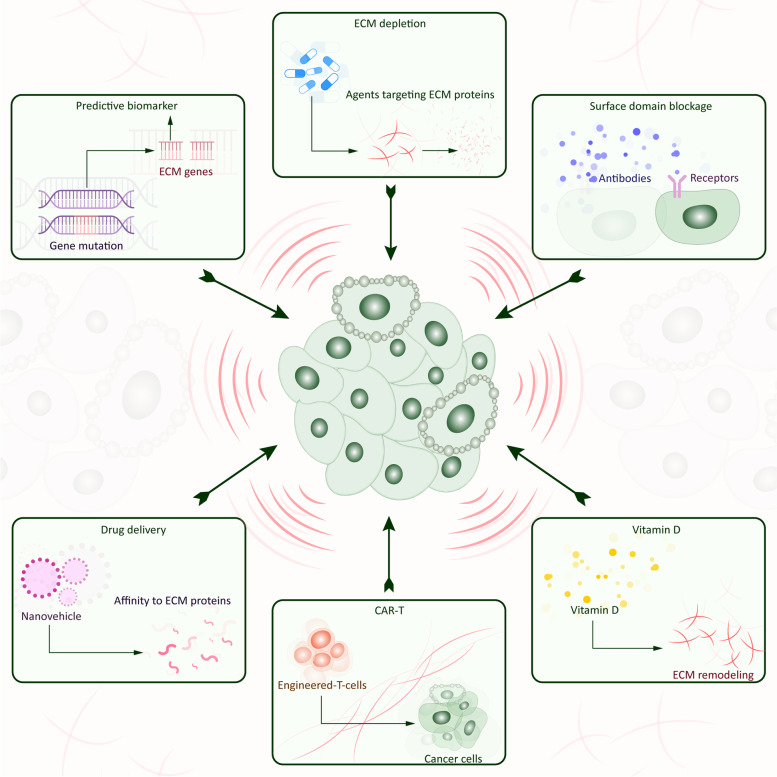
The malignant tumor is a multi-etiological, systemic and complex disease characterized by uncontrolled cell proliferation and distant metastasis. Anticancer treatments including adjuvant therapies and targeted therapies are effective in eliminating cancer cells but in a limited number of patients. Increasing evidence suggests that the extracellular matrix (ECM) plays an important role in tumor development through changes in macromolecule components, degradation enzymes and stiffness. These variations are under the control of cellular components in tumor tissue via the aberrant activation of signaling pathways, the interaction of the ECM components to multiple surface receptors, and mechanical impact. Additionally, the ECM shaped by cancer regulates immune cells which results in an immune suppressive microenvironment and hinders the efficacy of immunotherapies. Thus, the ECM acts as a barrier to protect cancer from treatments and supports tumor progression. Nevertheless, the profound regulatory network of the ECM remodeling hampers the design of individualized antitumor treatment. Here, we elaborate on the composition of the malignant ECM, and discuss the specific mechanisms of the ECM remodeling. Precisely, we highlight the impact of the ECM remodeling on tumor development, including proliferation, anoikis, metastasis, angiogenesis, lymphangiogenesis, and immune escape. Finally, we emphasize ECM "normalization" as a potential strategy for anti-malignant treatment.
Overview
The claims and statistics of this paper haven’t been checked yet.
Free: it reads the open-access text and checks the first 5 claims that cite a source we can check. Create a free account to check every claim.
Integrity signals
Registry
Cites
Statistics
Figures
Verification
Claims the paper makes
The claims and statistics of this paper haven’t been checked yet.
Free: it reads the open-access text and checks the first 5 claims that cite a source we can check. Create a free account to check every claim.
Claims other papers make about this one
Each is checked against this paper’s own text: does it say what the citing paper says it does?
The cited source says what the claim attributes to it.
In the citing paper
“inhibiting lysyl oxidase (LOX) family enzymes, which are involved in the crosslinking of ECM proteins collagen and elastin, can reduce matrix stiffness and improve drug delivery to tumor cells [219].”
From Mechanisms and Strategies to Overcome Drug Resistance in Colorectal Cancer (2025) · cites this paper as [219]
Self-check
Percentages, sums and reported differences re-computed from the paper’s own numbers.
The self-check needs the paper’s full text.
Citations
Cites
2 retracted
NK cell heparanase controls tumor invasion and immune surveillance
Putz, E. M., Mayfosh, A. J., Kos, K., Barkauskas, D. S., Nakamura, K., Town, L., Goodall, K. J., Yee, D. Y., Poon, I. K. H., Baschuk, N., et al. (2017) · Journal of Clinical Investigation · doi:10.1172/jci92958 · Cited by 105
RetractedAndreuzzi, E., Colladel, R., Pellicani, R., Tarticchio, G., Cannizzaro, R., Spessotto, P., Bussolati, B., Brossa, A., Paoli, P. D., Canzonieri, V., et al. (2017) · Matrix Biology · doi:10.1016/j.matbio.2017.04.002 · Cited by 84 · cited 1×
“mediates MMRN2 degradation and enhances tumor angiogenesis [431].”
BackgroundRetractedSung, H., Ferlay, J., Siegel, R. L., Laversanne, M., Soerjomataram, I., Jemal, A., & Bray, F. (2021) · CA: A Cancer Journal for Clinicians · doi:10.3322/caac.21660 · Cited by 108,699 · cited 1×
“Anti‐cancer therapy targeting ECM Raising morbidity of cancer worldwide demonstrates the emergency of precise treatment strategy design and the discovery of novel therapeutic targets [541].”
BackgroundRole of YAP/TAZ in mechanotransduction
Dupont, S., Morsut, L., Aragona, M., Enzo, E., Giulitti, S., Cordenonsi, M., Zanconato, F., Le Digabel, J., Forcato, M., Bicciato, S., et al. (2011) · Nature · doi:10.1038/nature10137 · Cited by 5,979 · cited 1×
“Abnormal activation of Hippo core factors Yes1 associated transcriptional regulator (YAP) and WW domain containing transcription regulator (TAZ, or WWTR1) sustain cell proliferation and is prevalently detected in various cancers, implying the success adaption of cancer to crowed environment [137, 138].”
BackgroundMatrix Metalloproteinases: Regulators of the Tumor Microenvironment
Kessenbrock, K., Plaks, V., & Werb, Z. (2010) · Cell · doi:10.1016/j.cell.2010.03.015 · Cited by 5,151 · cited 1×
“Some enzymes process matrix components, such as collagen, resulting in the production and release of bioactive fragments [9, 10].”
BackgroundReactive oxygen species (ROS) homeostasis and redox regulation in cellular signaling
Ray, P. D., Huang, B.-W., & Tsuji, Y. (2012) · Cellular Signalling · doi:10.1016/j.cellsig.2012.01.008 · Cited by 4,373 · cited 1×
“When cancer cells are detached from ECM, increasing production of ROS is lethal for tumor cell survival [293].”
BackgroundHow Matrix Metalloproteinases Regulate Cell Behavior
Sternlicht, M. D., & Werb, Z. (2001) · Annual Review of Cell and Developmental Biology · doi:10.1146/annurev.cellbio.17.1.463 · Cited by 3,959 · cited 1×
“A big family contains more than 30 kinds of MMP have been identified since the MMPs’ role as collagen hydrolase was unveiled [42, 43].”
BackgroundThe extracellular matrix: A dynamic niche in cancer progression
Lu, P., Weaver, V. M., & Werb, Z. (2012) · Journal of Cell Biology · doi:10.1083/jcb.201102147 · Cited by 3,024 · cited 1×
“Meanwhile, cell-to-cell activity residing in the TME is constantly reshaping ECM, and these cells are affected by the signals provide by ECM itself [13].”
BackgroundEMT Transition States during Tumor Progression and Metastasis
Pastushenko, I., & Blanpain, C. (2019) · Trends in Cell Biology · doi:10.1016/j.tcb.2018.12.001 · Cited by 2,876 · cited 1×
“ECM‐induced EMT: ready for invasion For epithelial cells, EMT is a critical process for tumor progression and metastasis [237].”
BackgroundDistinct populations of inflammatory fibroblasts and myofibroblasts in pancreatic cancer
Öhlund, D., Handly-Santana, A., Biffi, G., Elyada, E., Almeida, A. S., Ponz-Sarvise, M., Corbo, V., Oni, T. E., Hearn, S. A., Lee, E. J., et al. (2017) · Journal of Experimental Medicine · doi:10.1084/jem.20162024 · Cited by 2,590
Cited by
Items 601–700 of 1,000
Role of ZNF334 in cervical cancer: implications for EMT reversal and tumor suppression
Li, Q., Zhou, X., Xiao, J., Gong, Y., Gong, X., Shao, B., Wang, J., Zhao, L., Xiong, Q., Wu, Y., et al. (2024) · Medical Oncology · doi:10.1007/s12032-024-02433-2 · Cited by 2
Targeting the Molecules in EMT: A Potential Therapeutic Opportunity in Breast Cancer
Gampa, S. C., & Garimella, S. V. (2024) · Current Molecular Medicine · doi:10.2174/0115665240310780240805114133 · Cited by 2
Bioinformatics analysis and experimental validation of the oncogenic role of COL11A1 in pan-cancer
Wan, X., Deng, Q., Chen, A., Zhang, X., & Yang, W. (2024) · 3 Biotech · doi:10.1007/s13205-024-04133-0 · Cited by 2
“Abnormal activation of EMT signaling is believed to be the primary driver of CAF activation (Roma-Rodrigues et al. 2019; Yuan et al. 2023; Fiori et al. 2019; Ma et al. 2023).”
Rasouli, M., Safari, F., Roudi, R., & Sobhani, N. (2024) · Computational Biology and Chemistry · doi:10.1016/j.compbiolchem.2024.108331 · Cited by 2
Xu, Q., Wang, J., Wang, J., Zhang, O., Gao, Y., Cui, X., Zhao, C., Liu, F., & Chen, X. (2025) · Molecular Biotechnology · doi:10.1007/s12033-024-01348-7 · Cited by 2
“The statuses of ICP, MSI, and TMB are critical indicators for predicting the effectiveness of immunotherapy in clinical practice [28].”
Li, C., Li, J., Argall‐Knapp, Z., Hendrikse, N. W., Farooqui, M. A., Raykowski, B., King, A., Nong, S., & Liu, Y. (2025) · Small · doi:10.1002/smll.202402499 · Cited by 3
Liu, Z., Song, H., Wang, Z., Hu, Y., Zhong, X., Liu, H., Zeng, J., Ye, Z., Ning, W., Liang, Y., et al. (2025) · Clinical & Experimental Metastasis · doi:10.1007/s10585-025-10336-3 · Cited by 2
Zhang, J., Liu, G., & Wang, W. (2025) · Discover Oncology · doi:10.1007/s12672-025-02114-0 · Cited by 3
“Tumor cells promote tumor progression and metastasis by altering the expression and function of these membrane anchoring components [20–23].”
Environmental carcinogens and cancer Risk: Sustainable strategies for public health protection
Sadiq, I. Z. (2025) · Chemosphere · doi:10.1016/j.chemosphere.2025.144580 · Cited by 2
Chu, A., & Wang, Y. (2025) · Genes · doi:10.3390/genes16101140 · Cited by 2
“In UVM, FAM72B may reshape the extracellular matrix, thereby increasing the stiffness and density of the tumor microenvironment, which in turn inhibits the infiltration of monocytes and maintains the immunosuppressive characteristics of the tumor microenvironment [70,71].”
Breaching the Fortress of Tumor Microenvironment to Control Cancer Metastasis
Jaguri, A., & Ahmad, A. (2023) · Cancers · doi:10.3390/cancers15184562 · Cited by 2
“The TME constitutes of the extracellular matrix (ECM), the basement membrane (BM), tumor cells, immune cells, endothelial cells, pericytes, and signaling molecules involved in the regulation of tumor progression [5,6].”
BackgroundA Mechanometabolism Toolbox for Studying Cell Migration
Young, K. M., Lopez, S., Boone, K., Acikel, M., Gallart, X., & Reinhart‐King, C. A. (2025) · Cold Spring Harbor Perspectives in Biology · doi:10.1101/cshperspect.a041755 · Cited by 3
Zheng, H., An, M., Luo, Y., Zhang, D., Pang, M., Lin, Y., Chen, J., Zhao, Y., Li, Y., Liu, D., et al. (2024) · Fundamental Research · doi:10.1016/j.fmre.2024.02.018 · Cited by 3
“Therefore, enlargement of the lymphatic structure through lym-phangiogenesis might provide a route for the fluxion of immune cells and influence the immune response during tumor progression [ 72 , 73 ].”
Self-citationSour Consequences of Aberrant Glycosylation in Cancer Development
Festari, M. F., da Costa, V., García, I., Cedrés, M. E., & Freire, T. (2024) · Interdisciplinary cancer research · doi:10.1007/16833_2024_371 · Cited by 1
Dong, L., Zhang, X., Yu, X., Liu, G., & Yang, L. (2025) · International Journal of Biological Macromolecules · doi:10.1016/j.ijbiomac.2025.140440 · Cited by 1
Self-citationYoung, M.-J., Huang, Y.-H., & Hung, J. (2025) · Biomedicine & Pharmacotherapy · doi:10.1016/j.biopha.2025.118047 · Cited by 1
Zhu, X., Zhang, Y., Liao, H., Hu, J., & Xiao, X. (2025) · Journal of Cellular and Molecular Medicine · doi:10.1111/jcmm.70547 · Cited by 1
“Despite therapeutic innovations, the challenge of poor 5-year survival rates persists, complicated by delayed diagnoses and the incomplete understanding of the complex intracellular interactions of the tumour micro-environment [3–6].”
Gao, P., Tian, H., Ge, K., Wang, F., Zhao, Y., Sun, J., & Zhang, Q. (2025) · Discover Oncology · doi:10.1007/s12672-025-02337-1 · Cited by 1
Bhunia, S., Mallick, S., Mondal, A. I., Saha, A., Chatterjee, S., & Chakraborty, T. (2025) · Pharmacological Research - Modern Chinese Medicine · doi:10.1016/j.prmcm.2025.100623 · Cited by 1
Yang, Q., & Zhang, Q. (2025) · Bio-Design and Manufacturing · doi:10.1631/bdm.2400280 · Cited by 1
Glucocorticoid-Mediated Extracellular Matrix Regulation: Implications for Precision Therapy
Zhu, Y., Zhang, Y., Ju, S., & Jie, L. (2025) · Biomedicines · doi:10.3390/biomedicines13061282 · Cited by 1
“Clinically, ECM normalization through MMPs inhibition or CAFs depletion enhances chemotherapeutic efficacy in pancreatic cancer, though GCs’ dual roles in immunosuppression and stromal remodeling necessitate tissue-specific strategies [92,93].”
Vedarethinam, V., Vijayakumar, M., Mani, R. R., Chang, S. W., & Ravindran, B. (2025) · Journal of Radiation Research and Applied Sciences · doi:10.1016/j.jrras.2025.101636 · Cited by 1
Rao, M., Ruan, R., Xiong, J., & Deng, J. (2025) · Current Medicinal Chemistry · doi:10.2174/0109298673376656250602095713 · Cited by 1
Kalantari-Dehaghi, M., Rahimi-Tamandegani, H., & Emadi‐Baygi, M. (2025) · Cancer Informatics · doi:10.1177/11769351251352892 · Cited by 1
“42-44 The arrangement of collagen fibrils within the ECM is vital for its mechanical properties.”
Targeted Europium Chelation: A Strategy for Intervening Tumor Extracellular Matrix
Li, J., Fan, X., Wang, Y., Han, L., Lin, Y., Shi, Z., Liu, W., Zheng, F., & Wang, H. (2025) · Nano Letters · doi:10.1021/acs.nanolett.5c02693 · Cited by 2
Yi, Z., Zhang, Q., Tao, T., Liu, X., Li, H., Li, X., & Zhang, Z. (2025) · Frontiers in Immunology · doi:10.3389/fimmu.2025.1586790 · Cited by 1
Self-citationWatanabe, M., Ieguchi, K., Shimizu, T., Ohkuma, R., Suzuki, R., Mura, E., Iriguchi, N., Ishiguro, T., Hirasawa, Y., Ikeda, G., et al. (2025) · Cancers · doi:10.3390/cancers17142384 · Cited by 2
“It has been implicated in extracellular matrix remodeling and in regulating cytokines involved in immune suppression [33,34].”
Li, Y., Su, P., & Sun, X. (2025) · Molecular Medicine Reports · doi:10.3892/mmr.2025.13658 · Cited by 1
“Altering ECM properties might improve the penetration of chemotherapeutic agents, thereby overcoming one of the key barriers to effective cancer treat‑ ment (95).”
Self-citationPeng, G., Zhong, L., Lai, N., Luo, L., Cheng, F., & Ouyang, M. (2025) · Discover Oncology · doi:10.1007/s12672-025-03183-x · Cited by 1
“It plays a key role in tumor proliferation, invasion, angiogenesis, and immune regulation [39, 40].”
Lawal, H. A., Raji, A. O., Olayiwola, A. E., Suleiman, Z. A., Muiz, W., Lawal, A. O., Okesanya, O. J., Ibrahim, R. B., & Oso, T. A. (2025) · Exploration of Medicine · doi:10.37349/emed.2025.1001352 · Cited by 4
Renner, A., Finkbeiner, M. S. C., Haas, F. V., Stahringer, A., Lindow, M., Delaroque, N., Szardenings, M., Fricke, S., Koehl, U., Engeland, C. E., et al. (2025) · Molecular Therapy Oncology · doi:10.1016/j.omton.2025.201043 · Cited by 1
“4,5 One example of antigen shedding and subsequent immune evasion is presented by MHC class I polypeptide-related sequence A/B (MICA/B), which are stress-induced ligands often expressed in tumors.”
Das, M., Kiruthiga, C., Nachammai, K. T., Desai, D., Cho, W. C. S., Selvaraj, C., & Kulanthaivel, L. (2025) · International Immunopharmacology · doi:10.1016/j.intimp.2025.115432 · Cited by 1
Pachane, B. C., Bottaro, P. H. T., Machado, A. M., de Castro, C. A., Guerra, G. G., Gozzer, L. T., Grigoli, M. M., Zutião, A. D., Fuzer, A. M., Cominetti, M. R., et al. (2025) · Journal of Extracellular Biology · doi:10.1002/jex2.70075 · Cited by 1
Kulkarni, P., Khare, S., Bramhachari, S., Das, S., Kapoor, N., Goel, S. K., Kumar, P., Kumar, A., & Arya, N. (2025) · Cureus · doi:10.7759/cureus.93920 · Cited by 1
Lin, L., Norrsell, R., Andersson, R. E., Shen, X., & Ansari, D. (2025) · Biochemistry and Biophysics Reports · doi:10.1016/j.bbrep.2025.102280 · Cited by 2
“ECM remodeling and increased matrix stiffness contribute to malignant behaviors including invasion, migration, and angiogenesis through these receptors, ultimately leading to poorer prognosis [27,28].”
Curry, S. D., Alina, T. B., Saemundsson, S. A., Rodríguez, M. C., Bower, B. M., Cha, J. N., & Goodwin, A. P. (2025) · ACS Applied Nano Materials · doi:10.1021/acsanm.5c04443 · Cited by 1
Kuo, H.-H., He, Z.-J., Tram, P. N., Kim, H.-D., Kim, C., & Chang, Y. (2025) · Biochimica et Biophysica Acta (BBA) - Molecular Basis of Disease · doi:10.1016/j.bbadis.2025.168072 · Cited by 1
Pan-cancer analysis of RNA expression signatures associated with cancer tissue architecture
Mogi, M., Kawase, K., Tanaka, H. Y., Miyata, S., Takemoto, S., Ikeda, H., Katayama, E., Nakamura, Y., Kojima, R., Morinaga, T., et al. (2025) · British Journal of Cancer · doi:10.1038/s41416-025-03233-9 · Cited by 1
“The ECM, a complex and dynamic network of structural proteins and signalling molecules, plays a pivotal role in regulating cellular behaviour, maintaining tissue architecture, and facilitating cell-matrix interactions [2, 3, 13].”
Wang, H., Cheng, X., Hu, Q., Nie, L., Zhu, W., Tong, Y., Chen, X., He, L., Zhu, H., Huang, J., et al. (2025) · Cancers · doi:10.3390/cancers17213433 · Cited by 1
“Microvessel density (MVD) correlates with tumor viability and differentiation [7], while ECM composition influences invasive behavior and metastatic potential [8,9].”
Zhang, L., Sun, R., Li, S., Zhang, P., Long, H., Liu, B., & Li, F. (2025) · Frontiers in Bioengineering and Biotechnology · doi:10.3389/fbioe.2025.1692549 · Cited by 1
Li, X., Yu, T., Yu, Z., Zou, X., He, J., Wang, D., Shen, X., Liu, S., & Liu, B. (2025) · Medical Oncology · doi:10.1007/s12032-025-03139-9 · Cited by 1
Tong, Y., Deng, W., Xu, L., Li, Y., & Zhang, K. (2025) · Discover Oncology · doi:10.1007/s12672-025-04115-5 · Cited by 1
Self-citationMonasta, L., Capaci, V., Kharrat, F., Ciampechini, M., Balasan, N., Conti, A., Golino, V., Campiglia, P., Aloisio, M., Licastro, D., et al. (2025) · International Journal of Molecular Sciences · doi:10.3390/ijms262311498 · Cited by 1
“Like-wise, changes in the extracellular matrix’s composition have a direct impact on cancer cell functions, including proliferation, survival, migration, and differentiation [24].”
Wang, Y., Jiang, S., Yang, Y., Li, Y., Li, Z., Lei, Z., Kong, X., & Zhou, G. (2025) · Frontiers in Oncology · doi:10.3389/fonc.2025.1698065 · Cited by 1
Self-citationEffective Approaches to Cancer Therapies Based on Biomechanics and Pathology: Review Study
Al‐allaq, A. A., Hadi, A. M., Abdulzahra, J. A., Yahia, D. Y., & Saleh, H. H. (2025) · Regenerative Engineering and Translational Medicine · doi:10.1007/s40883-025-00508-8 · Cited by 1
Yang, H. J., Ji, Q., Zhu, W., Geng, Y., & Chen, B. (2025) · Nanomedicine · doi:10.1080/17435889.2025.2599400 · Cited by 1
Nanoengineered Bispecific Antibodies Mediate Cell to Cell Movement for Boosting Cancer Immunotherapy
Li, Y., Zhu, X., Wang, X., Zhao, G., Hu, M., Guo, Y., & Yang, W. (2025) · ACS Nano Medicine · doi:10.1021/acsnanomed.5c00094 · Cited by 1
Self-citationDigital Twin Meets the Bench: Natural Compounds Reshape the Ovarian Cancer Microenvironment
Kleczka, A., Dzik, R., & Kabała‐Dzik, A. (2025) · Biomedicines · doi:10.3390/biomedicines13123119 · Cited by 2
“The TME (tumour microenvironment) shows evidence of restored ECM structural controls through decorin upregulation which CAPE triggers because it blocks TGF - β activation of fibroblasts and decreases collagen accumulation and matrix stiffness [82].”
Stimuli-Responsive Mesoporous Silica Nanoparticles for Cancer Therapy
Zaidi, Z. S., Teki, S. V. N., & Katti, D. S. (2026) · Springer eBooks · doi:10.1007/978-981-95-2744-1_8 · Cited by 1
Soulat, A., Mohsenpour, T., & Roshangar, L. (2026) · Cancer Treatment and Research Communications · doi:10.1016/j.ctarc.2026.101096 · Cited by 3
Peptide Arrays as Tools for Unraveling Tumor Microenvironments and Drug Discovery in Oncology
Grab, A. L., Reißfelder, C., & Nesterov‐Mueller, A. (2026) · Cells · doi:10.3390/cells15020146 · Cited by 1
Sulforaphane as a Multi-Scale Mechano-Modulator in Cancer: An Integrative Perspective
Zhang, X., Cheng, L., Han, Y., Chen, T., & Zhao, X. (2026) · Biology · doi:10.3390/biology15020167 · Cited by 1
“The stiff, fibrotic ECM of the TME creates profound physical barriers to effective anti-tumor immunity [91].”
Zhang, Y., Wang, X., Liu, H., Xiang, Y., & Yu, L. (2026) · Biomedicines · doi:10.3390/biomedicines14020273 · Cited by 1
Self-citationPapadopoulou, S., Michou, V., Tsiotsias, A., Tzitiridou‐Chatzopoulou, M., & Eskitzis, P. (2026) · Cancers · doi:10.3390/cancers18030406 · Cited by 1
“This suggests that TANs play a critical role in breast cancer progression and the dynamic remodeling of the TME [3,4,7,8,10,13–15, Given that this study provides a cross-sectional, pathology-based analysis, our findings should be viewed as a morphological “snapshot” of tumor–stroma–immune…”
Microbiome disharmony: a catalyst in breast cancer progression and influencing surgical outcomes
Raman, A. I. N. D., Shivam, R. A. J. U., & Verma, S. R. (2026) · Minerva Biotechnology and Biomolecular Research · doi:10.23736/s2724-542x.25.03274-2 · Cited by 1
Matrix–Matrix Interfaces Orchestrate Early Mechanosensitive Transition from Attractor To Track
Chen, H.-P., Ngo, T. K. N., Mao, B.-H., Jang, H., Shin, S., Kamm, R. D., Chung, S. H., & Tu, T. (2026) · BioChip Journal · doi:10.1007/s13206-026-00256-z · Cited by 2
Immunotherapy in hepatocellular carcinoma: translating mechanistic insights into clinical advances
Khorasani, S. K., Boroumandi, S., Darzi, A., Shokouhfar, M., Abdali, P., Eini, P., Vanan, A. G., & Bahrami, N. (2026) · Clinical and Experimental Medicine · doi:10.1007/s10238-026-02099-2 · Cited by 2
“CAFs also recruit Th1 cells through CXCL11 secretion and promote migration and metastasis via CXCL12–CXCR4 interactions [ 31, 32].”
Wang, J. Z., Niu, Y., Zhu, X., Gerstlauer, S. T., Dang, N. H. Q. H., Zhu, L., Lu, J.-J., Zhu, H. (., Wang, K., Cherepanoff, S., et al. (2026) · European Journal of Pharmacology · doi:10.1016/j.ejphar.2026.178784 · Cited by 1
Liu, B., Liu, X., Wang, Y., Han, X., & Dang, X. (2026) · Frontiers in Pharmacology · doi:10.3389/fphar.2026.1699709 · Cited by 3
“Keyword burst analysis shows that terms with explicit clinical applications, such as “cancer immunotherapy” and “solid stress,” have become the highest-intensity burst words in recent years (Kalli et al., 2023; Yuan et al., 2023).”
EMILIN-1 in the tumor microenvironment: insights from CNS tumors and beyond
Arsentiev, K. A., Fajardo, A., & Yuzhalin, A. E. (2026) · Frontiers in Oncology · doi:10.3389/fonc.2026.1771697 · Cited by 1
“It integrates mechanical support with the presentation of cell signaling molecules, ultimately modulating cell proliferation (10), angiogenesis (9), and the suppression of local immune responses (11, 12).”
Zhang, B., Zhang, X., Yang, S., Sang, M., Sha, Y., Chen, G., Zhang, S., Hu, J., Gao, Y., Zhang, R., et al. (2026) · Colloids and Surfaces B Biointerfaces · doi:10.1016/j.colsurfb.2026.115691 · Cited by 1
Self-citationSun, S., Ma, G., Cheng, L., Zhang, H., Fan, G., Wu, L., Zhang, X., Xue, F., Fu, T., Ji, X., et al. (2026) · British Journal of Cancer · doi:10.1038/s41416-026-03395-0 · Cited by 1
“This transformation facilitates the detachment of cancer cells from the primary tumour, a crucial step in metastasis, allowing these cells to enter the bloodstream or lymphatic system and colonise distant sites [12, 13].”
Fazio, E., Corsaro, C., Crupi, V., Conoci, S., Neri, F., & Rizzo, M. G. (2026) · Photochemistry and Spectroscopy · doi:10.53941/ps.2026.100013 · Cited by 1
“…is also confirmed by the trends vs. FN1 in the case of ATR-FTIR and BBC3 for Raman: hypoxia-inducible factor ( HIF ) activation drives metabolic reprogramming and induces ECM components like SPARC , fostering a microenvironment conducive to cancer cell survival and dissemination [48–51].”
Liao, W., Wang, Y., Li, Y. H., Zhu, Y., Tu, Y., Mu, X., Zhang, X., Liu, Y., Wang, Y., Kang, L., et al. (2026) · Chemical Engineering Journal · doi:10.1016/j.cej.2026.176220 · Cited by 1
Self-citationTumor-on-chip platforms for transport phenotyping: decoding CAF-driven barriers to drug delivery
Manach, D. L., Senez, V., & Nees, M. (2026) · Lab on a Chip · doi:10.1039/d5lc01131k · Cited by 2
Si-Hang, C., Cong, F., Zhang, S., Lv, R., Zhang, W., Ke, X., Wu, J., Zhao, Z., Zhao, K., Dong, D., et al. (2026) · Advanced Science · doi:10.1002/advs.202523985 · Cited by 1
“It is significant, then, that its predictions centered on epithelial-to-mesenchymal transition and ECM remodeling—two established drivers of dissemination [ 33, 57, 58 ].”
Self-citationYoshihara, K., 占部文彦, Umemori, M., Suzuki, H., Ito, K., Yanagisawa, T., Sato, S., Sekine, K., Kimura, T., & Yamamoto, Y. (2026) · npj Precision Oncology · doi:10.1038/s41698-026-01417-x · Cited by 1
“Comparingthetumor-upperandtumor-boundaryregions,thetumor-boundary region showed enrichment of EMT-related and cell cycle genes, and immune-related genes such as IGHG1 and IGHG3 were also detected.”
A molecular landscape tracking the progression of non-muscle invasive bladder cancer
Cesta, G., Zolfanelli, C., Lauciello, V., Lorusso, V., Giacomo, F. D., Mazzone, P., D’Amore, T., Paola, G. D., Bravoco, D., Falco, G., et al. (2026) · World Journal of Urology · doi:10.1007/s00345-026-06406-0 · Cited by 1
“The Supplementary Table 1C provides a complete overview of each individual biomarker gene.”
Comparative Molecular Insights and Computational Modeling of Multiple Myeloma and Osteosarcoma
Ardelean, A. I., Silberschmidt, V. V., & Ioniţă, M. (2026) · International Journal of Molecular Sciences · doi:10.3390/ijms27083611 · Cited by 1
Jaiswal, C., Bhar, B., Sugihara, S., & Mandal, B. B. (2026) · Small · doi:10.1002/smll.202513199 · Cited by 2
Zhang, Q., & Wang, X. (2026) · Cancers · doi:10.3390/cancers18091358 · Cited by 1
“Aberrant angiogenesis and excessive extracellular matrix deposition can further impede T-cell infiltration, thereby constraining the depth and durability of antitumor immune effects [54,55].”
Self-citationTwo-pronged nanomedicine enhances immunotherapy by remodeling tumor metabolism
Shi, Y., Liu, H., Yang, D., Ren, X., Zhou, H., Sun, J., Yao, H., & Du, J. (2026) · Materials & Design · doi:10.1016/j.matdes.2026.116119 · Cited by 2
Targeting HIF as a Promising Approach to Synergize With Immune Checkpoint Inhibitors
Li, S., Liu, Y., Liu, X., Wang, X., Li, W., Song, M., Fu, N., Guo, Y., Li, Z., Zhang, Q. Y., et al. (2026) · International Journal of Cancer · doi:10.1002/ijc.70515 · Cited by 3
“Moreover, matrix metalloproteinases (MMPs) such as MMP2, MMP9, and MMP14, which degrade collagen and other ECM components, are also upregulated in an HIF-dependent manner [39, 43–45].”
Self-citationA systematic review and meta-analysis of cancer risk in patients with abdominal aortic aneurysm
Zhang, Z., Shu, C., Wang, J., Hu, H., Zhao, J., Huang, B., Vilayphone, V., Zhao, W., He, Y., & Yang, Y. (2026) · Journal of Vascular Surgery · doi:10.1016/j.jvs.2026.04.032 · Cited by 1
Self-citationRahaman, Jalouli, M., Harrath, A. H., Choi, J., Choi, M., Kim, H. S., Park, S., Shim, B., Rani, A., & Kim, B. (2026) · Cells · doi:10.3390/cells15100850 · Cited by 2
“Furthermore, ECM accumulation can physically impede the diffusion of oxygen and nutrients, leading to hypoxic regions that promote therapeutic resistance [43].”
Effect of Oxidative Stress on Matrix Remodeling and Diseases
Mukherjee, S., Vichare, A., & Majumder, A. (2026) · Biology of extracellular matrix · doi:10.1007/978-3-032-22618-1_9 · Cited by 1
The Tumor Microenvironment: Translating Intravital Insights into Microphysiological Systems
Imparato, G., Mazio, C., Nevola, P., & Netti, P. A. (2026) · Cellular and Molecular Bioengineering · doi:10.1007/s12195-026-00910-4 · Cited by 2
Predicting glioma survival and extracellular matrix remodeling through MRI radiogenomics
Bie, Y., Chi, X., Chen, Y., Zhang, C., Chen, L., Han, W., Shao, M., Pang, G., Zhong, H., Zhao, B., et al. (2026) · Cell Reports Medicine · doi:10.1016/j.xcrm.2026.102775 · Cited by 1
“6,7 Therefore, surveillance of MMPs can significantly enhance clinical decision-making, therapeutic response, and disease progression by providing non-invasive real-time insights into tumor microenvironment.”
Self-citationShi, Y., Hai, L., 侯国庆, Wang, Z., Wang, L., Lv, Z., Hao, X., Chen, S., Xia, R., Cao, J., et al. (2026) · Frontiers in Immunology · doi:10.3389/fimmu.2026.1827555 · Cited by 1
Mo, X. W., Min, D. K., & Kim, J. (2026) · Journal of Controlled Release · doi:10.1016/j.jconrel.2026.115036 · Cited by 1
Greco, M. R., Fracasso, F., Cannone, S., Molfetta, D. D., Ardone, M., Cox, S. N., Ladogana, B. R., Abbrescia, D. I., Tullo, A., Ranieri, M., et al. (2026) · Cells · doi:10.3390/cells15100865 · Cited by 1
Regulatory T cells in breast cancer drivers of immune suppression and targets for immunotherapy
Pan, T., Shao, N., Ming, R., Zhou, G., Pei, Y., & Deng, J. (2026) · Frontiers in Immunology · doi:10.3389/fimmu.2026.1825637 · Cited by 1
Cicero, A. L., Buglio, G. L., Campora, S., & Ghersi, G. (2026) · Current Protocols · doi:10.1002/cpz1.70394 · Cited by 1
“The ECM acts as both a physical barrier and a biochemical modulator of drug diffusion, reducing intratumoral drug penetration and contributing to chemoresistance (Yuan et al., 2023).”
Li, W., Xin, Y.-Y., Jin, M.-Z., & Jin, W.-L. (2026) · Materials Today Bio · doi:10.1016/j.mtbio.2026.103317 · Cited by 4
“For example, treatment strategies targeting the stiff core (e.g., LOX inhibitor-mediated de-stiffening) may need to be combined with immune-activating strategies at the invasive front to achieve comprehensive spatial immune control [133,138,139].”
Zhang, X., & An, J. (2026) · Current Oncology · doi:10.3390/curroncol33060343 · Cited by 1
“Figure 2 summarizes largely preclinical concepts involving ferroptosis, immune modulation, targeted therapy, and delivery engineering; these ideas remain hypothesis-generating and require human biliary validation before they can influence routine clinical interpretation [36, 42– 78 ].”
Rejinold, N. S., Jin, G., & Choy, J. (2026) · ACS Omega · doi:10.1021/acsomega.6c00998 · Cited by 2
Wei, X., Jiang, Y., Li, Z., Hu, J., Chenwu, F., Li, F., Song, M., He, Y., & Wang, J. (2026) · Coordination Chemistry Reviews · doi:10.1016/j.ccr.2026.218178 · Cited by 2
Bertolucci, R. V., Klein, B., Pase, C. C., de Melo, V. C., & Bagatini, M. D. (2026) · Pharmaceuticals · doi:10.3390/ph19060913 · Cited by 1
“Changes in ECM composition and stiffness directly affect immune cell migration and the availability of soluble factors, and the transmission of mechanical and biochemical signals [54,55].”
Innate immunity in tumors: From mechanisms to therapeutics
Hu, Y., Wang, X., Ma, H., & Zheng, X. B. (2026) · Chinese Medical Journal · doi:10.1097/cm9.0000000000004116 · Cited by 1
Self-citationDobriyal, P., Singh, V., Goel, F., & Garg, V. K. (2026) · Inflammopharmacology · doi:10.1007/s10787-026-02309-z · Cited by 1
“The main cause of extrinsic aging is sun exposure, which damages DNA, breaks down collagen, and produces ROS (Hussein et al. 2025).”
InfluentialAdvances in cell-derived extracellular matrix for 3D tumor modelling
Rodrigues, P. S., Henriques‐Pereira, M., Mano, J. F., & Gaspar, V. M. (2026) · Materials Today Bio · doi:10.1016/j.mtbio.2026.103414 · Cited by 1
“These processes are accompanied by enhanced ECM crosslinking, as well as increased expression and activity of matrix-remodeling enzymes, including lysyl oxidase (LOX) and matrix metalloproteinases (MMPs) [4].”
InfluentialThe extracellular matrix in cancer-associated fibrosis: molecular mechanisms and clinical relevance
Désert, R., Musso, O. C., & Baumert, T. F. (2026) · JCI Insight · doi:10.1172/jci.insight.202316 · Cited by 2
Ogundele, A. V., Nongthombam, G. S., Nwagu, A. D., Silva, H. H., & Fabiyi, O. A. (2026) · Molecules · doi:10.3390/molecules31132398 · Cited by 3
Plesselova, S., Axemaker, H., Calar, K., Isaiah, O., Wollman, J. W., Bhattacharya, S., Gnimpiéba, E. Z., Fink, D. M., Wang, C., Sumanasiri, H. K., et al. (2026) · Nature Communications · doi:10.1038/s41467-026-75262-8 · Cited by 2
“We investigated the role of hypoxia in inducing ECM remodelling, but we did not address how ECM remodelling affects hypoxia, even though their relationship is reciprocal 85 .”
Cancer immunotherapy: Current progress and future perspectives
Alu, A., Zhou, Y., Battaglia, G., Wei, Y., & Wei, X. (2026) · The Innovation Drug Discovery · doi:10.59717/j.xinn-drugdisc.2026.100031 · Cited by 1
Upmanyu, K., Upadhyay, S., & Gabr, M. T. (2026) · Medicinal Research Reviews · doi:10.1002/med.70076 · Cited by 4
“Syndecan‐1 anchors CHI3L1 in fibrotic stroma, prolonging receptor engagement; cell‐surface heparan sulfates enhance binding avidity through multivalent interactions; and integrins such as αvβ3 and αvβ5 connect CHI3L1 signaling to endothelial activation and angiogenesis [55].”
Tumor-associated fibrosis plays a role in cellular immunity across human diseases
Tian, M., Lian, M., Zheng, L., Li, Y., Xue, X., & Zhang, Z. (2026) · Biomedicine & Pharmacotherapy · doi:10.1016/j.biopha.2026.119730 · Cited by 1
Self-citationRicciardi, G., Fiorentino, V., Tralongo, P., Lentini, M., Pepe, L. R., Zuccalà, V., Ballato, M., Giuffrè, G., Ieni, A., Zampogna, B., et al. (2026) · Frontiers in Oncology · doi:10.3389/fonc.2026.1823738 · Cited by 1
Miao, C., & Fei, Q. (2026) · Cancer Medicine · doi:10.1002/cam4.72106 · Cited by 1
“Immune evasion is a fundamental process that underlies malignant tumor progression [8].”
Goel, F., Gupta, P., Kartik, S., Singh, P., & Nand, S. (2026) · 3 Biotech · doi:10.1007/s13205-026-04992-9 · Cited by 2
“Whereas conventional anti, inflammatory strategies generally suppress immune activ - ity broadly, ECM, targeted treatments might be able to modulate the structural and signaling framework which regulate inflammatory dynamics (Yuan et al. 2023).”
Metadata
- Authors
- Yuan, Z., Li, Y., Zhang, S., Wang, X., Dou, H., Yu, X., Zhang, Z., Yang, S., & Xiao, M.
- Affiliations
- Harbin Medical University (CN)
- Central South University (CN)
- Corresponding author
- Yang, Shanshan
- Xiao, Min
- Venue
- Molecular Cancer
- Published
- 2023-03-11
- Volume
- 22
- Issue
- 1
- Pages
- 48-48
- ISSN
- 1476-4598 (ISSN-L)
- PMC
- PMC10007858
- OpenAlex
- W4323971780
- Semantic Scholar
- c8a593008da53cc37814dab070956b1fd456d86e
- Cited by
- 977
- References
- 625
- Citations by year
- 2026: 304 · 2025: 385 · 2024: 242 · 2023: 45
- FWCI
- 32.03
- Type
- journal article
- Language
- en
- Open access
- gold
- doi.org
- Licence
- cc-by
- creativecommons.org/licenses/by/4.0 (tdm)
- creativecommons.org/licenses/by/4.0 (vor)
- Locations
- Molecular Cancer (publishedVersion, cc-by)
- PubMed Central (publishedVersion, cc-by)
- PubMed (publishedVersion)
- DOAJ (DOAJ: Directory of Open Access Journals) (submittedVersion, cc-by-sa)
- Funders
- Natural Science Foundation of Heilongjiang Province, China (LH2021H076)
- National Natural Science Foundation of China, China (81872460, 81872145)
- Topics
- Life Sciences › Biochemistry, Genetics and Molecular Biology › Cell Biology › Cellular Mechanics and Interactions
- Life Sciences › Biochemistry, Genetics and Molecular Biology › Cancer Research › Protease and Inhibitor Mechanisms
- Life Sciences › Biochemistry, Genetics and Molecular Biology › Molecular Biology › TGF-β signaling in diseases
- Keywords
- extracellular matrix remodeling, tumor progression, immune evasion, tumor microenvironment, extracellular matrix stiffness, anoikis, metastasis, angiogenesis, lymphangiogenesis, immunosuppression, immunotherapy resistance, cancer therapy
- MeSH terms
- Extracellular Matrix, Humans, Immunotherapy, Neoplasms, Tumor Microenvironment
About these checks
Registry, retraction, Cites and statistics results are computed, not judged, with one exception: a printed reference that no index lists is read once by a model before it counts as a citation error. Claims are extracted by a model and kept only when their quote appears verbatim in the text; each cited source is then checked, with a model’s help, for whether it says what the claim relies on. Those verdicts can be wrong — read the claim’s quote and the cited source before relying on one.
Statistics and arithmetic are recomputed, not judged.
Confidence bands are shown only for fields calibrated on our annotated test set. None is calibrated yet, so no band is shown.
What counts as a claim ›How we measure confidence ›How we check this ›
Are you an author, or do you see a problem with this page? Request a review
Data sources
Bibliographic data: Semantic Scholar, OpenAlex, Crossref.
Contains information from the Semantic Scholar Academic Graph Datasets, made available under the ODC Attribution License (ODC-BY 1.0).
Semantic Scholar’s data is described in: Kinney, R., et al. (2023). The Semantic Scholar Open Data Platform. arXiv:2301.10140.
