

Extracellular matrix remodeling in tumor progression and immune escape: from mechanisms to treatments
Open accessThe DOI matches its Crossref record; 626 of the 626 references it cites were found in a registry or an index.
Abstract
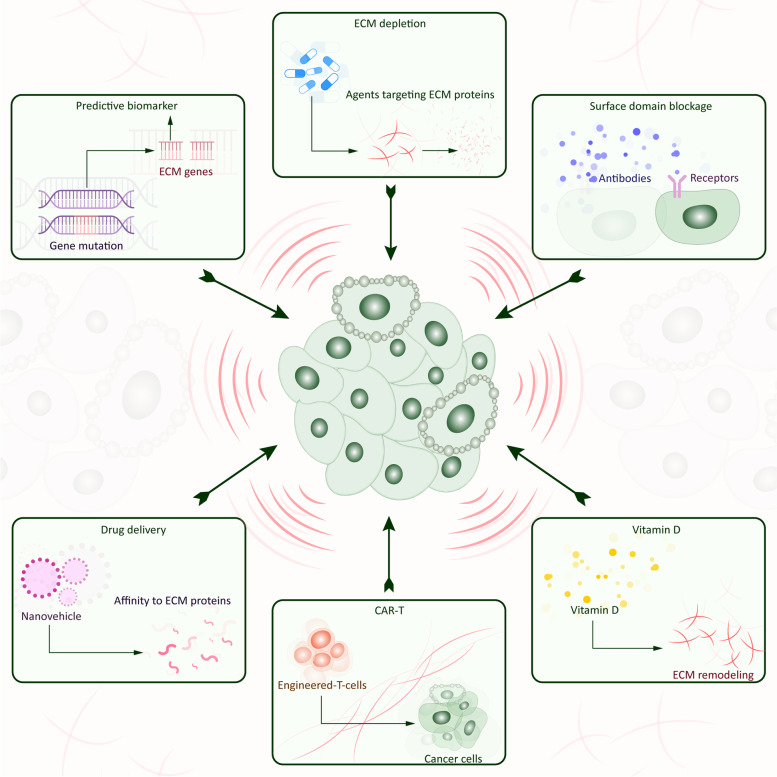
The malignant tumor is a multi-etiological, systemic and complex disease characterized by uncontrolled cell proliferation and distant metastasis. Anticancer treatments including adjuvant therapies and targeted therapies are effective in eliminating cancer cells but in a limited number of patients. Increasing evidence suggests that the extracellular matrix (ECM) plays an important role in tumor development through changes in macromolecule components, degradation enzymes and stiffness. These variations are under the control of cellular components in tumor tissue via the aberrant activation of signaling pathways, the interaction of the ECM components to multiple surface receptors, and mechanical impact. Additionally, the ECM shaped by cancer regulates immune cells which results in an immune suppressive microenvironment and hinders the efficacy of immunotherapies. Thus, the ECM acts as a barrier to protect cancer from treatments and supports tumor progression. Nevertheless, the profound regulatory network of the ECM remodeling hampers the design of individualized antitumor treatment. Here, we elaborate on the composition of the malignant ECM, and discuss the specific mechanisms of the ECM remodeling. Precisely, we highlight the impact of the ECM remodeling on tumor development, including proliferation, anoikis, metastasis, angiogenesis, lymphangiogenesis, and immune escape. Finally, we emphasize ECM "normalization" as a potential strategy for anti-malignant treatment.
Overview
The claims and statistics of this paper haven’t been checked yet.
Free: it reads the open-access text and checks the first 5 claims that cite a source we can check. Create a free account to check every claim.
Integrity signals
Registry
Cites
Statistics
Figures
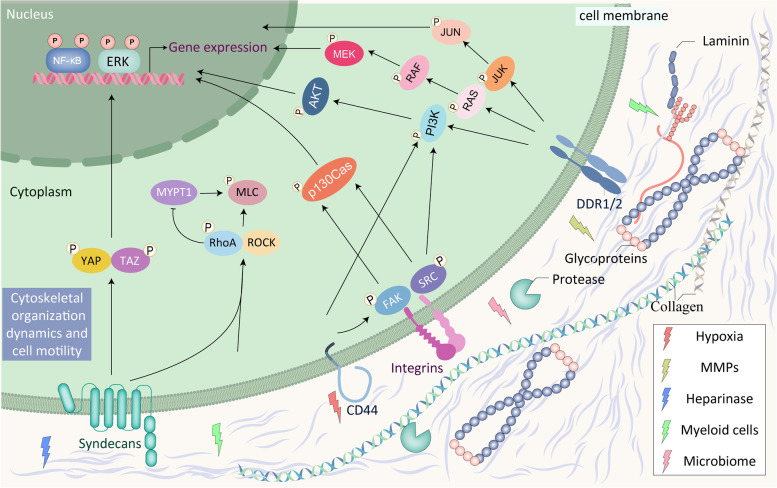
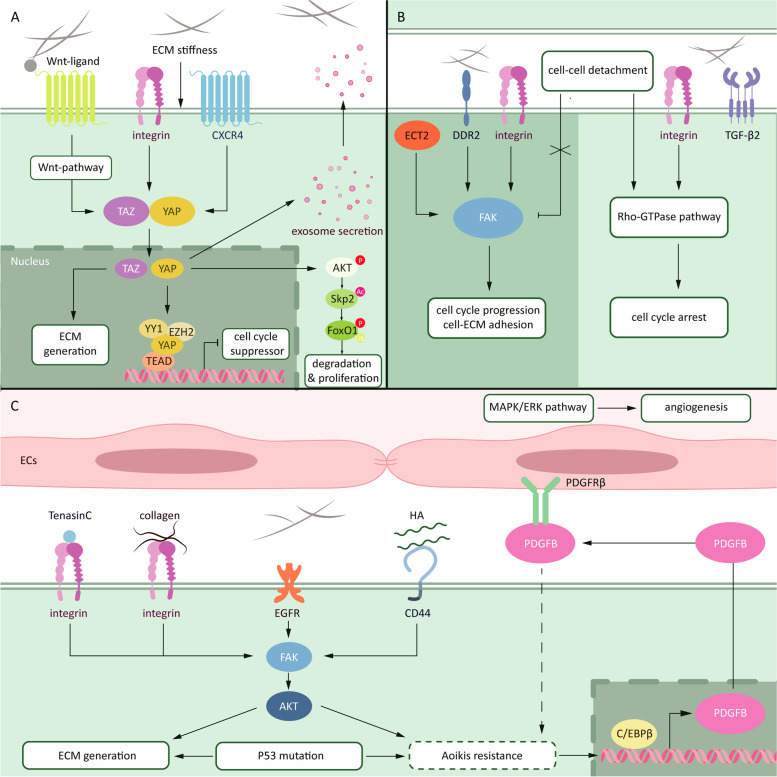
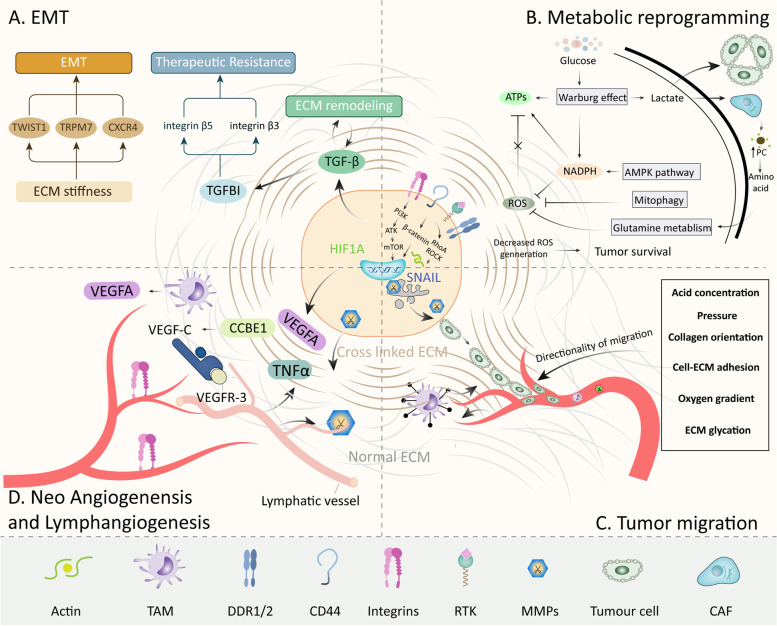
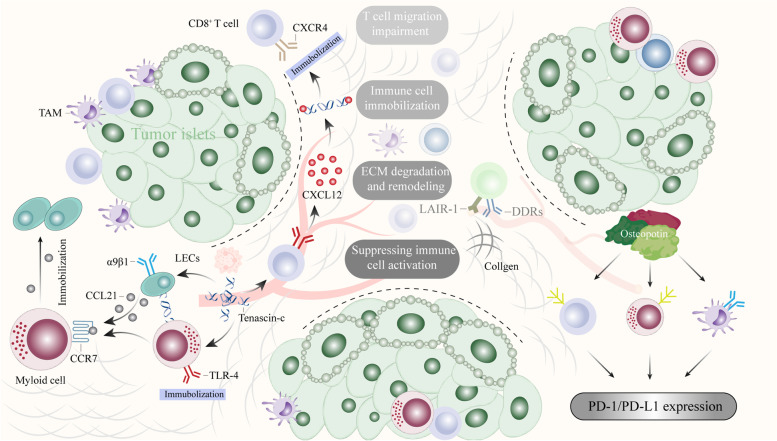
Verification
Claims the paper makes
The claims and statistics of this paper haven’t been checked yet.
Free: it reads the open-access text and checks the first 5 claims that cite a source we can check. Create a free account to check every claim.
Claims other papers make about this one
Each is checked against this paper’s own text: does it say what the citing paper says it does?
The cited source says what the claim attributes to it.
In the citing paper
“inhibiting lysyl oxidase (LOX) family enzymes, which are involved in the crosslinking of ECM proteins collagen and elastin, can reduce matrix stiffness and improve drug delivery to tumor cells [219].”
From Mechanisms and Strategies to Overcome Drug Resistance in Colorectal Cancer (2025) · cites this paper as [219]
Self-check
Percentages, sums and reported differences re-computed from the paper’s own numbers.
The self-check needs the paper’s full text.
Citations
Cites
2 retracted
NK cell heparanase controls tumor invasion and immune surveillance
Putz, E. M., Mayfosh, A. J., Kos, K., Barkauskas, D. S., Nakamura, K., Town, L., Goodall, K. J., Yee, D. Y., Poon, I. K. H., Baschuk, N., et al. (2017) · Journal of Clinical Investigation · doi:10.1172/jci92958 · Cited by 105
RetractedAndreuzzi, E., Colladel, R., Pellicani, R., Tarticchio, G., Cannizzaro, R., Spessotto, P., Bussolati, B., Brossa, A., Paoli, P. D., Canzonieri, V., et al. (2017) · Matrix Biology · doi:10.1016/j.matbio.2017.04.002 · Cited by 84 · cited 1×
“mediates MMRN2 degradation and enhances tumor angiogenesis [431].”
BackgroundRetractedSung, H., Ferlay, J., Siegel, R. L., Laversanne, M., Soerjomataram, I., Jemal, A., & Bray, F. (2021) · CA: A Cancer Journal for Clinicians · doi:10.3322/caac.21660 · Cited by 108,699 · cited 1×
“Anti‐cancer therapy targeting ECM Raising morbidity of cancer worldwide demonstrates the emergency of precise treatment strategy design and the discovery of novel therapeutic targets [541].”
BackgroundRole of YAP/TAZ in mechanotransduction
Dupont, S., Morsut, L., Aragona, M., Enzo, E., Giulitti, S., Cordenonsi, M., Zanconato, F., Le Digabel, J., Forcato, M., Bicciato, S., et al. (2011) · Nature · doi:10.1038/nature10137 · Cited by 5,979 · cited 1×
“Abnormal activation of Hippo core factors Yes1 associated transcriptional regulator (YAP) and WW domain containing transcription regulator (TAZ, or WWTR1) sustain cell proliferation and is prevalently detected in various cancers, implying the success adaption of cancer to crowed environment [137, 138].”
BackgroundMatrix Metalloproteinases: Regulators of the Tumor Microenvironment
Kessenbrock, K., Plaks, V., & Werb, Z. (2010) · Cell · doi:10.1016/j.cell.2010.03.015 · Cited by 5,151 · cited 1×
“Some enzymes process matrix components, such as collagen, resulting in the production and release of bioactive fragments [9, 10].”
BackgroundReactive oxygen species (ROS) homeostasis and redox regulation in cellular signaling
Ray, P. D., Huang, B.-W., & Tsuji, Y. (2012) · Cellular Signalling · doi:10.1016/j.cellsig.2012.01.008 · Cited by 4,373 · cited 1×
“When cancer cells are detached from ECM, increasing production of ROS is lethal for tumor cell survival [293].”
BackgroundHow Matrix Metalloproteinases Regulate Cell Behavior
Sternlicht, M. D., & Werb, Z. (2001) · Annual Review of Cell and Developmental Biology · doi:10.1146/annurev.cellbio.17.1.463 · Cited by 3,959 · cited 1×
“A big family contains more than 30 kinds of MMP have been identified since the MMPs’ role as collagen hydrolase was unveiled [42, 43].”
BackgroundThe extracellular matrix: A dynamic niche in cancer progression
Lu, P., Weaver, V. M., & Werb, Z. (2012) · Journal of Cell Biology · doi:10.1083/jcb.201102147 · Cited by 3,024 · cited 1×
“Meanwhile, cell-to-cell activity residing in the TME is constantly reshaping ECM, and these cells are affected by the signals provide by ECM itself [13].”
BackgroundEMT Transition States during Tumor Progression and Metastasis
Pastushenko, I., & Blanpain, C. (2019) · Trends in Cell Biology · doi:10.1016/j.tcb.2018.12.001 · Cited by 2,876 · cited 1×
“ECM‐induced EMT: ready for invasion For epithelial cells, EMT is a critical process for tumor progression and metastasis [237].”
BackgroundDistinct populations of inflammatory fibroblasts and myofibroblasts in pancreatic cancer
Öhlund, D., Handly-Santana, A., Biffi, G., Elyada, E., Almeida, A. S., Ponz-Sarvise, M., Corbo, V., Oni, T. E., Hearn, S. A., Lee, E. J., et al. (2017) · Journal of Experimental Medicine · doi:10.1084/jem.20162024 · Cited by 2,590
Cited by
Items 801–900 of 1,000
Ma, C., Yang, C., Peng, A., Sun, T., Ji, X., Mi, J., Wei, L., Shen, S., & Feng, Q. (2024) · Figshare · doi:10.6084/m9.figshare.26626636
Ma, C., Yang, C., Peng, A., Sun, T., Ji, X., Mi, J., Wei, L., Shen, S., & Feng, Q. (2024) · Figshare · doi:10.6084/m9.figshare.26626594
Ma, C., Yang, C., Peng, A., Sun, T., Ji, X., Mi, J., Wei, L., Shen, S., & Feng, Q. (2024) · Figshare · doi:10.6084/m9.figshare.26626630
Ma, C., Yang, C., Peng, A., Sun, T., Ji, X., Mi, J., Wei, L., Shen, S., & Feng, Q. (2024) · Figshare · doi:10.6084/m9.figshare.26626618
Ma, C., Yang, C., Peng, A., Sun, T., Ji, X., Mi, J., Wei, L., Shen, S., & Feng, Q. (2024) · Figshare · doi:10.6084/m9.figshare.26626576
Ma, C., Yang, C., Peng, A., Sun, T., Ji, X., Mi, J., Wei, L., Shen, S., & Feng, Q. (2024) · Figshare · doi:10.6084/m9.figshare.26626657
Ma, C., Yang, C., Peng, A., Sun, T., Ji, X., Mi, J., Wei, L., Shen, S., & Feng, Q. (2024) · Figshare · doi:10.6084/m9.figshare.26626627
Ma, C., Yang, C., Peng, A., Sun, T., Ji, X., Mi, J., Wei, L., Shen, S., & Feng, Q. (2024) · Figshare · doi:10.6084/m9.figshare.26626654
Ma, C., Yang, C., Peng, A., Sun, T., Ji, X., Mi, J., Wei, L., Shen, S., & Feng, Q. (2024) · Figshare · doi:10.6084/m9.figshare.26626609
Ma, C., Yang, C., Peng, A., Sun, T., Ji, X., Mi, J., Wei, L., Shen, S., & Feng, Q. (2024) · Figshare · doi:10.6084/m9.figshare.26626573
Ma, C., Yang, C., Peng, A., Sun, T., Ji, X., Mi, J., Wei, L., Shen, S., & Feng, Q. (2024) · Figshare · doi:10.6084/m9.figshare.26626588
Ma, C., Yang, C., Peng, A., Sun, T., Ji, X., Mi, J., Wei, L., Shen, S., & Feng, Q. (2024) · Figshare · doi:10.6084/m9.figshare.26626612
Ma, C., Yang, C., Peng, A., Sun, T., Ji, X., Mi, J., Wei, L., Shen, S., & Feng, Q. (2024) · Figshare · doi:10.6084/m9.figshare.26626624
Ma, C., Yang, C., Peng, A., Sun, T., Ji, X., Mi, J., Wei, L., Shen, S., & Feng, Q. (2024) · Figshare · doi:10.6084/m9.figshare.26626648
Ma, C., Yang, C., Peng, A., Sun, T., Ji, X., Mi, J., Wei, L., Shen, S., & Feng, Q. (2024) · Figshare · doi:10.6084/m9.figshare.26626651
Ma, C., Yang, C., Peng, A., Sun, T., Ji, X., Mi, J., Wei, L., Shen, S., & Feng, Q. (2024) · Figshare · doi:10.6084/m9.figshare.26626621
Ma, C., Yang, C., Peng, A., Sun, T., Ji, X., Mi, J., Wei, L., Shen, S., & Feng, Q. (2024) · Figshare · doi:10.6084/m9.figshare.26626585
Ma, C., Yang, C., Peng, A., Sun, T., Ji, X., Mi, J., Wei, L., Shen, S., & Feng, Q. (2024) · Figshare · doi:10.6084/m9.figshare.26626633
Ma, C., Yang, C., Peng, A., Sun, T., Ji, X., Mi, J., Wei, L., Shen, S., & Feng, Q. (2024) · Figshare · doi:10.6084/m9.figshare.26626582
Cardiovascular safety liabilities of VEGFR-2 inhibitors
Pannucci, P. (2024)
HMGB Proteins, lncRNAs, and their Interaction in Rpithelial Ovarian Cancer
Salamini-Montemurri, M. (2023) · RUC (Universidade Da Coruña)
Srivastava, S., Powers, J. J., Mehta, J. H., Marzban, S., Nozaki, R., Karanam, L. S., Torrez, J., Bharambe, H. S., Faraji, F., Chaudhary, R., et al. (2025) · bioRxiv (Cold Spring Harbor Laboratory) · doi:10.64898/2025.12.19.695209
Xie, L., Zhou, Y., Hu, Z., Zhang, S., Fan, M., Huang, X., Zhang, W., & Liu, Z. (2025) · International Journal of General Medicine · doi:10.2147/ijgm.s543310
“6 Importantly, LRPs interact with specific mRNAs that mediate downstream oncogenic processes, including extracellular matrix remodeling and immune evasion.”
Self-citationZheng, T., Li, S., Xia, H., Ni, Z., & Xie, K. (2025) · BMC Cancer · doi:10.1186/s12885-025-15485-y
“Anoikis, a form of programmed cell death triggered when cells lose attachment to the extracellular matrix (ECM) or neighboring cells, plays a critical role in maintaining tissue homeostasis [5].”
Zhu, C. N., Chen, X. N., & Ding, S. N. (2025) · Clinical and Experimental Obstetrics & Gynecology · doi:10.31083/ceog45044
Helmueller, S., Vafaeinik, F., Song, X., Lee, S., Kim, D., Gangi, A., & Lee, Y. S. (2026) · Biomaterials Research · doi:10.34133/bmr.0311
“Microfluidics-based 3D tumoroid-on-a-chip platforms, which incorporate ECM, immune cells, and vascular architecture, can help study these biothermal and mechanical dynamics [ 20 , 23 , 36 , 37 ].”
Zhao, M., Xiao, Y., & Wang, Q. (2026) · Korean Journal of Physiology and Pharmacology · doi:10.4196/kjpp.25.293
A review on vascularized breast reconstruction
Tawil, B. J., & Jigisha, H. (2025) · Journal of Stem Cell Research & Therapeutics · doi:10.15406/jsrt.2025.10.00207
Xu, S., Zhang, X., Sun, J., Qin, M., Du, H., & Luo, B. (2026) · ImmunoTargets and Therapy · doi:10.2147/itt.s565624
“33,34 Collectively, these features indicate that the brown module is more consistent with an M2-like, immunoregulatory TAM phenotype, supporting the presence of a tumor-enriched macrophage subset that may actively contribute to thyroid cancer progression.”
Liu, Y., Yang, Z., Pu, J. J., Zhong, J., Khoo, U., Su, Y.-X., & Zhang, G. (2024) · bioRxiv (Cold Spring Harbor Laboratory) · doi:10.1101/2024.09.12.612653
Pignataro, A. M., Schwarz, C. C., Wiecheć, E., Cordiale, A., Sasikumar, S., Jenssen, A. N., Ariyaberg, T., Khare, L. P., Apu, E. H., Roberg, K. B., et al. (2026) · Proceedings of the National Academy of Sciences · doi:10.64898/2026.01.16.699893 · Cited by 1
“Each of these elements is increasingly recognized as a driver of tumor progression, therapeutic response, and patient well-being ( 19 , 51 , 52 ).”
Devarajan, Y., Prakash, K. S., & Pitchaimani, A. (2026) · In vitro models · doi:10.1007/s44164-025-00102-w
Bessière, C., Babin, L., Dailhau, S., Gaulard, P., Pyronnet, S., Meggetto, F., & Lamant, L. (2026) · bioRxiv (Cold Spring Harbor Laboratory) · doi:10.64898/2026.01.20.700117
Targeting mechanosensitive EphA2 phase separation to alleviate arterial stiffening
Liu, J.-Y., Shen, G., Lin, Y., Chen, J., Chen, Q.-Y., & Lin, M. (2026) · Bioactive Materials · doi:10.1016/j.bioactmat.2026.01.020 · Cited by 2
“Inspired by recent reports identifying EphA2 as a phase separation protein involved in ferroptosis and immune infiltration in colorectal cancer [27], we hypothesized that a similar LLPS mechanism might occur in VSMCs. Live-cell imaging of HASMCs expressing EGFP-EphA2 confirmed the dynamic behavior…”
Lv, Q., Wang, T., Jiang, L., Chen, Q., Peng, J., Zhou, J., Min, Q., Pu, Y., Zhou, J., & HUANG, Q. (2026) · bioRxiv (Cold Spring Harbor Laboratory) · doi:10.64898/2026.01.23.701236
Relationship between mast cell density and various histological features in melanocytic lesions
Lazarova, B., Petrushevska, G., Jasar, D., & Stojanovska, Z. (2025) · Scripta Medica · doi:10.5937/scriptamed56-61302
Kumari, A., Meher, N., Dey, A., Awasthi, S., Saraf, S. A., & Srivastava, N. (2026) · Biochemical Pharmacology · doi:10.1016/j.bcp.2026.117754
Ahmed, A. Y. A., & Akçay, S. (2026) · Genes · doi:10.3390/genes17020150
Ardah, M. T., Abdulsahib, W. K., Naji, H. A., Jyothi, S. R., Sahoo, S., Janney, J. B., Sharma, V., Sinha, A., & Kholiyeva, M. (2026) · Discover Oncology · doi:10.1007/s12672-026-04469-4 · Cited by 2
“The collective actions of these secreted factors and ECM remodeling enable tumor cells to invade the TME, establish interactions with other cells, and promote proliferation, invasion, metastasis, angiogenesis, immunosuppression, and drug resistance [7, 38, 39].”
Bayraktar, O., Eroğlu, S., Bharadwaj, S., Farooqi, A. A., Gözüaçık, D., & Kutlu, Ö. (2026) · Chemical Biology & Drug Design · doi:10.1111/cbdd.70257
“Given that NF-κB signaling and ECM remodeling are of crucial importance in osteosarcoma (Yuan et al. 2023; Shi et al. 2025), these findings suggest that Pg may similarly regulate tumor growth, invasion, and the tumor microenvironment in osteosarcoma cells (Zeng et al. 2023).”
Tenascin-XB plays a role in the infiltration of immune cells in tumor microenvironment
Gong, A., Iida, Y., KAWAKAMI, K., YAMADA, K., SAITO, Y., & MATSUMOTO, K.-I. (2026) · Biomedical Research · doi:10.2220/biomedres.47.11
Ahmed, E. I., Mall, R., Raynaud, C. M., Saadeh, H., Sherif, S., Alanany, R., Hajj, N. E., Bedognetti, D., Roelands, J. P., & Hendrickx, W. (2026) · bioRxiv (Cold Spring Harbor Laboratory) · doi:10.64898/2026.02.03.703457
Grimolizzi, F. (2025) · Regenerative Medicine · doi:10.1080/17460751.2026.2626080
Understanding Musculoskeletal Metastases
Kuthiala, R. S., Gonzalez, M. R., Méndez-Guerra, C., & Pretell-Mazzini, J. A. (2026) · Springer eBooks · doi:10.1007/978-3-032-09498-8_2
Bozyiğit, C., Altintas, R., Çeçen, E., Beyaz, S., Çetkin, T., Koçyiğit, F. B., Arkalı, G., Varolgüneş, G. V. Y., & Ekinci, İ. (2026) · Akademisyen Kitabevi eBooks · doi:10.37609/akya.3997
Tannic acid fortifies extracellular matrix against dicarbonyl stressPreprint
Inbasekar, C., Varghese, C. N., Ashokkumar, P., Uppaluri, S., Sekhar, A., & Bhat, R. (2026) · bioRxiv (Cold Spring Harbor Laboratory) · doi:10.64898/2026.02.12.705672
“MGO accumulation drives extensive remodeling of the ECM, particularly under metabolic stress, thereby altering the cellular microenvironment by disrupting normal cell-matrix interactions 14,15 .”
Sengupta, S., Khan, A., Dutta, T., Bhattacharya, A., Jaiswal, S., Yadav, S., Lakhera, R., Bansal, S., Biswas, S., Gupta, R., et al. (2026) · Research Square · doi:10.21203/rs.3.rs-8727350/v1
Yin, Y., Zhang, H., Li, S., Gu, R., Wang, J., Zhang, Z., & Sun, J. (2026) · PeerJ · doi:10.7717/peerj.20838
“However, the formation of an immunosuppressive microenvironment in tumor tissues restricts the anti-tumor function of CTL, resulting from the dysregulation of various immunosuppressive cells, immune regulatory factors, and metabolites ( Kim et al., 2019 ; Yuan et al., 2023 ; Zhang et al., 2023 ).”
Self-citationDaniel, M. M., & Andwey, G. H. (2026) · Discover Oncology · doi:10.1007/s12672-026-04617-w
Yu, J., Pan, K., Wang, N., & Xia, H. (2026) · Research Square · doi:10.21203/rs.3.rs-8592709/v1
Wu, H., Zhang, J., Yu, Y., Wang, W., Huang, J., Lin, Z., Huang, H., Lin, Y., Pan, X., & Lin, X. (2026) · Cancer Letters · doi:10.1016/j.canlet.2026.218357
Rodríguez, M., Derakhshesh, S., Jayaseelan, M. M., Rosgaard, J., Poh, A., Longobardo, G., DePalma, T. J., & Skardal, A. (2026) · Biofabrication · doi:10.1088/1758-5090/ae49fd
“Cancer cells influence the remodeling of the extracellular matrix towards a dense collagen rich composition, promoting tumor growth [3].”
Ye, Z., Zhang, W., Qiu, H., Luo, F., Liao, C., Lei, K., & Zhou, Q. (2026) · Biomedicines · doi:10.3390/biomedicines14030563
“ECM not only provides physical support for tumor cells but also regulates cell behavior through integrin signaling [52].”
Shu, H., Sia, C. S., Tiang, S. S. L., Goh, B.-H., Low, Y. J., Tey, B. T., & Low, L. E. (2026) · Journal of Drug Delivery Science and Technology · doi:10.1016/j.jddst.2026.108211
Autophagy in cancer-associated fibroblasts: its role in gastrointestinal cancers
Kuppala, V., Chintapudi, H., Gopalaiah, K., Nagaraju, G. P., & El‐Rayes, B. F. (2026) · Molecular Cancer · doi:10.1186/s12943-026-02626-5 · Cited by 1
“…CAFs exhibit marked heterogeneity revealed by scRNA seq, subsets as cytokine- secreting-iCAFs; contractile α-SMA + , myCAFs apCAFs [45]; MHC-II plus immune modulators; ECM remodeler eCAFs and CAF-S clusters therapy-resistant, with each inhabiting separate spatial niches and functional states [46].”
LIFUS-driven engineered bacteria reprogram immunosuppressive niches via mechano-NOTCH signaling
Lin, L., Li, X., Guo, W., Xie, J., Li, X., Guan, X., Zhao, C., Yin, H., & Xu, H. (2026) · Cell Reports Medicine · doi:10.1016/j.xcrm.2026.102658
“34,35 Pathway-level analysis further supported these findings.”
Selective Laser Ablation of Malignant Solid Tumors Tuned to the Resonant Wavelength of Collagen
Huang, X., Zhang, D., Xia, N., Guo, J., Deng, A., Yang, X., Wu, H., Tian, B., Xiong, J., & Liang, H. (2026) · Journal of Biophotonics · doi:10.1002/jbio.70250
Review Article: The Extracellular Matrix as a Barrier for CAR-T Cell Therapy in Solid Tumors
Revach, O. (2026) · Critical Reviews™ in Oncogenesis · doi:10.1615/critrevoncog.2026063896
Qi, N., Wen, L., Li, S., & Feng, C. (2026) · Cell Communication and Signaling · doi:10.1186/s12964-026-02813-3
“Similarly, the presence of specific ECM degradation products or regulatory components, such as active MMPs or Fibronectin on the vesicle surface, within exosomes directly reflects the active TME remodeling process and can serve as indicators of disease aggression [15, 34].”
Park, K., Seo, J., Lee, S., Kang, H., Kim, J., Lee, E., Shin, J., Hong, S.-O., Kim, S., & Kim, S. J. (2026) · Molecular Therapy Oncology · doi:10.1016/j.omton.2026.201182
Guo, Q., Chang, Y., Cai, Y., Yang, S., Liang, J., & Zhou, Z. (2026) · Diagnostic Pathology · doi:10.1186/s13000-026-01776-w
Self-citationβ1,4-galactosyltransferase III drives retinoblastoma invasion via activation of integrin-FAK axis
Tang, J., Li, J., Wang, M., Liu, Y., Sun, H., Zhang, Z., Gao, Y., Cheng, C., Chen, S. Q., Zhang, P., et al. (2026) · Cell Death and Disease · doi:10.1038/s41419-026-08620-5
“Metabolic reprogramming induces spatiotemporal heterogeneity in tumor cells and confers invasive potential, enabling secretion of enzymes/cytokines that remodel the extracellular matrix (ECM) to promote local invasion [6 – 8].”
Self-citationAlSugair, G. S., & Althakfi, W. (2026) · Oxford Medical Case Reports · doi:10.1093/omcr/omag020
“Recent molecular studies have emphasized the importance of extracellular matrix remodeling in NET progression, including mucin-associated pathways such as MUC1/MUC2 dysregulation and TGF-β –mediated stromal activation [9, 10].”
Comparative omics reveals conserved extracellular matrix signatures during mammary tumor progression
de Almeida, B. S., Rocha, G. V., Nunes, S., Zanette, D. L., Batista, M., Estrela-Lima, A., Regis-Silva, C. G., & Damasceno, K. A. (2026) · Frontiers in Oncology · doi:10.3389/fonc.2026.1788746
“The extracellular matrix (ECM) plays a central role in the dynamics of malignant progression (8, 9) once the ECM is continuously remodeled during tumorigenesis, directly in fl uencing processes such as adhesion, proliferation, migration, angiogenesis, immune evasion, and therapy resistance (10, 11).”
Extracellular matrix proteins mediating carcinoma cell adhesion and their role in metastasis
Zavyalova, M. V., Litvyakov, N. V., Ваизова, О. Е., Serebryakova, V. A., Golovina, E. L., Удут, Е. В., Khlebnikov, А. I., Васильевич, З. А., Сергеевич, П. Д., & Михайлович, П. В. (2026) · Yakut Medical Journal · doi:10.25789/ymj.2026.93.21
The Role of Multifunctional Theranostics as Nanomedical Materials in Cancer
Sharma, V. K., Singh, S., Saxena, P., & Shrivastav, D. (2026) · Springer eBooks · doi:10.1007/978-981-95-5589-5_7
Zhou, J., Zeng, T., Ye, M., Li, M., Wen, L., Liu, X., Zhang, Z., & Meng, Y. (2026) · Translational Oncology · doi:10.1016/j.tranon.2026.102748
“Dynamic ECM remodeling correlates with disease progression and poor outcomes [54] and contributes to immunosuppressive microenvironments, potentially limiting the efficacy of therapy [55].”
Self-citationChen, Y., Fu, M., & Yu, S. (2026) · Psycho-Oncologie · doi:10.18282/po4112
Aortic carboxypeptidase-like protein potentiates β1 integrin signaling in mesenchymal progenitors
Frosti, C. L., Yeritsyan, D., & Layne, M. D. (2026) · Life Science Alliance · doi:10.26508/lsa.202503600
“Disruption of ECM homeostasis is a common feature of pathological remodeling across diverse diseases, including fibrosis, cancer, cardiovascular disease, and heritable connective tissue disorders (Dzobo & Dandara, 2023; Yuan et al, 2023; Di Nubila et al, 2024; Salles Rosa Neto et al, 2024).”
Delebosse, F. L. A. (2023) · theses.fr (ABES) · doi:10.70675/b7e19954z5c9ez45eczafb3z3c95a21a3c07
[Advances in Lactate Metabolic Reprogramming in Non-small Cell Lung Cancer].
Zhou, J., Ge, L., & Jiang, J. (2026) · PubMed Central · doi:10.3779/j.issn.1009-3419.2026.106.03
Zou, X., Song, P., Song, S., Zhang, G., Wang, X., Yang, T., Zhou, L., & Lin, Y. (2026) · Biomedicines · doi:10.3390/biomedicines14040892 · Cited by 1
“A chronic inflammatory microenvironment can drive malignant progression by activating pathways like IL-6/JAK/STAT, inducing EMT, and promoting cancer-associated fibroblasts (CAFs)-mediated immunosuppressive stromal remodeling [37].”
Andrade, L. J. D. O., de Oliveira, G. C. M., Bittencourt, A. M. V., Salles, O. J. D. M., & de Oliveira, L. M. (2026) · Research Square · doi:10.21203/rs.3.rs-9409171/v1
Revisiting Colon Cancer Progression: A Containment-Based Conceptual Framework
Negruț, R. L., Coțe, A., & Maghiar, A. M. (2026) · Life · doi:10.3390/life16040679
“Microbial and immune gradients within the tumor microenvironment may accentuate local vulnerability, acting as modifiers of containment strength rather than independent determinants of invasion direction [22].”
Su, J., Wan, T., Tian, S., & Dai, B. (2026) · Naunyn-Schmiedeberg s Archives of Pharmacology · doi:10.1007/s00210-026-05332-7
“A critical aspect of EMT involves extracellular matrix (ECM) remodeling, where tumor cells enhance production and activation of ECM-degrading enzymes including MMP2 and MMP9 (Chen et al. 2021; Yuan et al. 2023).”
Radiogenomic landscape of the hallmarks of cancer
Zhang, G., Guo, Y., Yang, Y., Li, T., Gong, B., Lou, J., Li, Y., Peng, S., Liu, C., Yuan, X., et al. (2026) · Biomarker Research · doi:10.1186/s40364-026-00920-4
Self-citationBergamaschi, L., Percio, S., Zhu, Y., Tinè, G., Miceli, R., Fiore, M., Palassini, E., Collini, P., Perrone, F., Rini, F., et al. (2026) · bioRxiv (Cold Spring Harbor Laboratory) · doi:10.64898/2026.04.16.718860
Liang, Z., Zhong, B., Jiao, M., Wang, Y., & Liu, S. (2026) · Nature Communications · doi:10.1038/s41467-026-71759-4 · Cited by 1
“The most stromal-dominated niche, C14 ( ~76% stromal cells), exhibited the highest activation in EMT (0.62), TGF-β signaling (0.26), hypoxia (0.24), and glycolysis (0.13), indicative of a dense fi brotic barrier microenvironment 54 .”
InfluentialA navigating nanoplatform enables precision siRNA delivery for potent glioblastoma therapy
Wei, M., Wang, G., Ouyang, Y., Zhang, X., Li, R. H., Han, J., Wang, H., Yin, Q., He, J. F., & Li, Y. (2026) · Nano Today · doi:10.1016/j.nantod.2026.103153
Self-citationJin, Z., Chen, S., Jin, C., Ma, Y. X., Liang, Y., Guo, J., Chen, L., Liu, Y., Lin, X. S., Huang, C., et al. (2026) · Research Square · doi:10.21203/rs.3.rs-9303146/v1
Smit, T., Anderson, R., Steel, H. C., Rossouw, T. M., & Rapoport, B. L. (2026) · Diseases · doi:10.3390/diseases14050153
“…of various types of immune suppressive cells, including regulatory T-cells, myeloid-derived suppressor cells (MDSCs), and cancer-associated fibroblasts (CAFs), but also promotes angiogenesis and extracellular matrix remodeling, making the environment favorable for tumor growth and metastasis [6].”
Jiang, M., Chen, G., Yang, J., Chen, J. P., Shi, Z., Chen, H., Lin, H., & Fan, X. (2026) · Discover Oncology · doi:10.1007/s12672-026-05102-0
“Research on mechanical forces within the tumor microenvironment has mainly concentrated on the ECM, which initially acts as a channel for these forces and converts them into biological signals [26].”
Biofabricated Alginate Hydrogels to Study Prostate Tumoral Microenvironments In Vitro
Al-Husaini, K., Spessot, E., Baena, E., Domingos, M. A. N., & Tirella, A. (2026) · ACS Omega · doi:10.1021/acsomega.5c13436
Kaya, M. M. (2026) · Cumhuriyet Science Journal · doi:10.17776/csj.1856795
Janoštiak, R., & Csergeová, L. (2026) · Cancers · doi:10.3390/cancers18091449
“Additionally, thicker layers of ECM provide shielding from environmental factors and, in the context of cancer biology, they protect quiescent cells from therapy and immune cell attacks [79,80].”
Decoding the Role of MDSCs in Bone Metastasis: Multicellular Interactions and Clinical Implications
Alotab, S., Zainab, M., Khamies, L. L., Alissa, R., & Mohammad, K. S. (2026) · Pharmaceuticals · doi:10.3390/ph19050723 · Cited by 1
A physiologically relevant in vitro 3D melanoma skin model for targeted therapy assessment
Rimal, R., Urbanczyk, M., Elbs‐Glatz, Y., & Rottmar, M. (2026) · Biofabrication · doi:10.1088/1758-5090/ae6bf5
Extracellular Matrix–Tumor Crosstalk and Its Influence on Tumor Dormancy
Gawarguru, R., Shinde, S., & Dey, T. (2026) · Biology of extracellular matrix · doi:10.1007/978-3-032-22618-1_1
Fang, Y., Liu, T., Yuan, L., Qiu, Y., Huang, S., Zhang, L., Bai, W., Zhang, C., Peng, X., Yang, Y., et al. (2026) · Journal of Inflammation Research · doi:10.2147/jir.s575317
“45,46 The negative feedback effect of MMP9 is crucial for inhibiting IL-6 production and preventing excessive inflammation.”
Single cell mechanodeformation signatures as early biomarkers for hematological malignancies
Sani, A., Yang, Y., Khan, M. I., Li, Y., Liu, Y., & Liu, Y. (2026) · Critical Reviews in Clinical Laboratory Sciences · doi:10.1080/10408363.2026.2665294
Self-citationBeheshti, A. A., & Bossaghzadeh, V. (2026) · Research Square · doi:10.21203/rs.3.rs-9693642/v1
Tumor-Associated Fibroblast-Derived Matrix Containing EDA-FN Alters Macrophage Behavior
Bashiri, G., Bakare, E., Longstreth, J. H., Padilla, M. S., & Wang, K. (2026) · Cellular and Molecular Bioengineering · doi:10.64898/2026.05.14.725237
“The tumor microenvironment (TME) is a highly complex system comprising multiple cell types, including cancer cells, stromal cells, and immune cells, as well as acellular components, such as extracellular matrix (ECM) and signaling molecules [6–9].”
Suhag, D. (2026) · Biomedical materials for multi-functional applications · doi:10.1007/978-981-95-7900-6_4
Eldahshoury, M. K., Moss, E., Gillet‐Woodley, J. G., Hindle, M. S., Ilett, M., Collins, M. O., & Boyne, J. R. (2026) · bioRxiv (Cold Spring Harbor Laboratory) · doi:10.64898/2026.05.22.727064
Mushii, O., Burda, T. S., Shevchuk, A. O., Kokoilo, M. V., Levenets, A. Y., & Zadvornyi, T. (2026) · Oncology · doi:10.15407/oncology.2026.02.097
“Along with ECM degradation processes, mechanisms of collagen matrix stabilization and compaction, mediated by cross-linking enzymes, play a crucial role in tumour progression [7].”
InfluentialDecoding Multicellular Communication Motifs from Spatial Transcriptomics with ALARMISTPreprint
Fan, J., Hood, J. C., Strong, J., Quinn, J. F., Dai, Y., Teamlab, D. S., Schein, A., Yu, K. K. H., & Tansey, W. (2026) · bioRxiv (Cold Spring Harbor Laboratory) · doi:10.64898/2026.05.21.726986
Metadata
- Authors
- Yuan, Z., Li, Y., Zhang, S., Wang, X., Dou, H., Yu, X., Zhang, Z., Yang, S., & Xiao, M.
- Affiliations
- Harbin Medical University (CN)
- Central South University (CN)
- Corresponding author
- Yang, Shanshan
- Xiao, Min
- Venue
- Molecular Cancer
- Published
- 2023-03-11
- Volume
- 22
- Issue
- 1
- Pages
- 48-48
- ISSN
- 1476-4598 (ISSN-L)
- PMC
- PMC10007858
- OpenAlex
- W4323971780
- Semantic Scholar
- c8a593008da53cc37814dab070956b1fd456d86e
- Cited by
- 977
- References
- 625
- Citations by year
- 2026: 304 · 2025: 385 · 2024: 242 · 2023: 45
- FWCI
- 32.03
- Type
- journal article
- Language
- en
- Open access
- gold
- doi.org
- Licence
- cc-by
- creativecommons.org/licenses/by/4.0 (tdm)
- creativecommons.org/licenses/by/4.0 (vor)
- Locations
- Molecular Cancer (publishedVersion, cc-by)
- PubMed Central (publishedVersion, cc-by)
- PubMed (publishedVersion)
- DOAJ (DOAJ: Directory of Open Access Journals) (submittedVersion, cc-by-sa)
- Funders
- Natural Science Foundation of Heilongjiang Province, China (LH2021H076)
- National Natural Science Foundation of China, China (81872460, 81872145)
- Topics
- Life Sciences › Biochemistry, Genetics and Molecular Biology › Cell Biology › Cellular Mechanics and Interactions
- Life Sciences › Biochemistry, Genetics and Molecular Biology › Cancer Research › Protease and Inhibitor Mechanisms
- Life Sciences › Biochemistry, Genetics and Molecular Biology › Molecular Biology › TGF-β signaling in diseases
- Keywords
- extracellular matrix remodeling, tumor progression, immune evasion, tumor microenvironment, extracellular matrix stiffness, anoikis, metastasis, angiogenesis, lymphangiogenesis, immunosuppression, immunotherapy resistance, cancer therapy
- MeSH terms
- Extracellular Matrix, Humans, Immunotherapy, Neoplasms, Tumor Microenvironment
About these checks
Registry, retraction, Cites and statistics results are computed, not judged, with one exception: a printed reference that no index lists is read once by a model before it counts as a citation error. Claims are extracted by a model and kept only when their quote appears verbatim in the text; each cited source is then checked, with a model’s help, for whether it says what the claim relies on. Those verdicts can be wrong — read the claim’s quote and the cited source before relying on one.
Statistics and arithmetic are recomputed, not judged.
Confidence bands are shown only for fields calibrated on our annotated test set. None is calibrated yet, so no band is shown.
What counts as a claim ›How we measure confidence ›How we check this ›
Are you an author, or do you see a problem with this page? Request a review
Data sources
Bibliographic data: Semantic Scholar, OpenAlex, Crossref.
Contains information from the Semantic Scholar Academic Graph Datasets, made available under the ODC Attribution License (ODC-BY 1.0).
Semantic Scholar’s data is described in: Kinney, R., et al. (2023). The Semantic Scholar Open Data Platform. arXiv:2301.10140.
