

Extracellular matrix remodeling in tumor progression and immune escape: from mechanisms to treatments
Open accessThe DOI matches its Crossref record; 626 of the 626 references it cites were found in a registry or an index.
Abstract
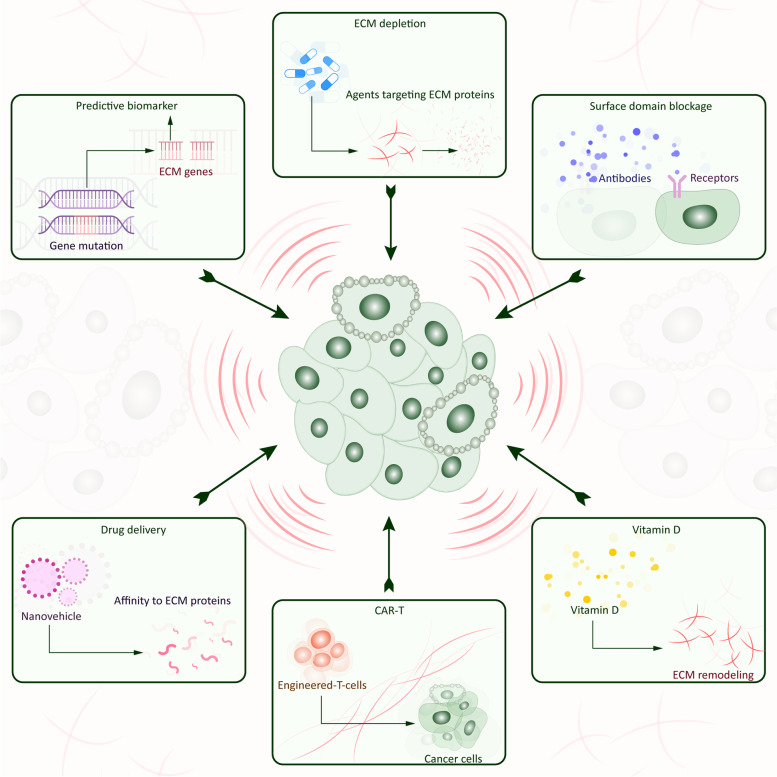
The malignant tumor is a multi-etiological, systemic and complex disease characterized by uncontrolled cell proliferation and distant metastasis. Anticancer treatments including adjuvant therapies and targeted therapies are effective in eliminating cancer cells but in a limited number of patients. Increasing evidence suggests that the extracellular matrix (ECM) plays an important role in tumor development through changes in macromolecule components, degradation enzymes and stiffness. These variations are under the control of cellular components in tumor tissue via the aberrant activation of signaling pathways, the interaction of the ECM components to multiple surface receptors, and mechanical impact. Additionally, the ECM shaped by cancer regulates immune cells which results in an immune suppressive microenvironment and hinders the efficacy of immunotherapies. Thus, the ECM acts as a barrier to protect cancer from treatments and supports tumor progression. Nevertheless, the profound regulatory network of the ECM remodeling hampers the design of individualized antitumor treatment. Here, we elaborate on the composition of the malignant ECM, and discuss the specific mechanisms of the ECM remodeling. Precisely, we highlight the impact of the ECM remodeling on tumor development, including proliferation, anoikis, metastasis, angiogenesis, lymphangiogenesis, and immune escape. Finally, we emphasize ECM "normalization" as a potential strategy for anti-malignant treatment.
Overview
The claims and statistics of this paper haven’t been checked yet.
Free: it reads the open-access text and checks the first 5 claims that cite a source we can check. Create a free account to check every claim.
Integrity signals
Registry
Cites
Statistics
Figures
Verification
Claims the paper makes
The claims and statistics of this paper haven’t been checked yet.
Free: it reads the open-access text and checks the first 5 claims that cite a source we can check. Create a free account to check every claim.
Claims other papers make about this one
Each is checked against this paper’s own text: does it say what the citing paper says it does?
The cited source says what the claim attributes to it.
In the citing paper
“inhibiting lysyl oxidase (LOX) family enzymes, which are involved in the crosslinking of ECM proteins collagen and elastin, can reduce matrix stiffness and improve drug delivery to tumor cells [219].”
From Mechanisms and Strategies to Overcome Drug Resistance in Colorectal Cancer (2025) · cites this paper as [219]
Self-check
Percentages, sums and reported differences re-computed from the paper’s own numbers.
The self-check needs the paper’s full text.
Citations
Cites
2 retracted
NK cell heparanase controls tumor invasion and immune surveillance
Putz, E. M., Mayfosh, A. J., Kos, K., Barkauskas, D. S., Nakamura, K., Town, L., Goodall, K. J., Yee, D. Y., Poon, I. K. H., Baschuk, N., et al. (2017) · Journal of Clinical Investigation · doi:10.1172/jci92958 · Cited by 105
RetractedAndreuzzi, E., Colladel, R., Pellicani, R., Tarticchio, G., Cannizzaro, R., Spessotto, P., Bussolati, B., Brossa, A., Paoli, P. D., Canzonieri, V., et al. (2017) · Matrix Biology · doi:10.1016/j.matbio.2017.04.002 · Cited by 84 · cited 1×
“mediates MMRN2 degradation and enhances tumor angiogenesis [431].”
BackgroundRetractedSung, H., Ferlay, J., Siegel, R. L., Laversanne, M., Soerjomataram, I., Jemal, A., & Bray, F. (2021) · CA: A Cancer Journal for Clinicians · doi:10.3322/caac.21660 · Cited by 108,699 · cited 1×
“Anti‐cancer therapy targeting ECM Raising morbidity of cancer worldwide demonstrates the emergency of precise treatment strategy design and the discovery of novel therapeutic targets [541].”
BackgroundRole of YAP/TAZ in mechanotransduction
Dupont, S., Morsut, L., Aragona, M., Enzo, E., Giulitti, S., Cordenonsi, M., Zanconato, F., Le Digabel, J., Forcato, M., Bicciato, S., et al. (2011) · Nature · doi:10.1038/nature10137 · Cited by 5,979 · cited 1×
“Abnormal activation of Hippo core factors Yes1 associated transcriptional regulator (YAP) and WW domain containing transcription regulator (TAZ, or WWTR1) sustain cell proliferation and is prevalently detected in various cancers, implying the success adaption of cancer to crowed environment [137, 138].”
BackgroundMatrix Metalloproteinases: Regulators of the Tumor Microenvironment
Kessenbrock, K., Plaks, V., & Werb, Z. (2010) · Cell · doi:10.1016/j.cell.2010.03.015 · Cited by 5,151 · cited 1×
“Some enzymes process matrix components, such as collagen, resulting in the production and release of bioactive fragments [9, 10].”
BackgroundReactive oxygen species (ROS) homeostasis and redox regulation in cellular signaling
Ray, P. D., Huang, B.-W., & Tsuji, Y. (2012) · Cellular Signalling · doi:10.1016/j.cellsig.2012.01.008 · Cited by 4,373 · cited 1×
“When cancer cells are detached from ECM, increasing production of ROS is lethal for tumor cell survival [293].”
BackgroundHow Matrix Metalloproteinases Regulate Cell Behavior
Sternlicht, M. D., & Werb, Z. (2001) · Annual Review of Cell and Developmental Biology · doi:10.1146/annurev.cellbio.17.1.463 · Cited by 3,959 · cited 1×
“A big family contains more than 30 kinds of MMP have been identified since the MMPs’ role as collagen hydrolase was unveiled [42, 43].”
BackgroundThe extracellular matrix: A dynamic niche in cancer progression
Lu, P., Weaver, V. M., & Werb, Z. (2012) · Journal of Cell Biology · doi:10.1083/jcb.201102147 · Cited by 3,024 · cited 1×
“Meanwhile, cell-to-cell activity residing in the TME is constantly reshaping ECM, and these cells are affected by the signals provide by ECM itself [13].”
BackgroundEMT Transition States during Tumor Progression and Metastasis
Pastushenko, I., & Blanpain, C. (2019) · Trends in Cell Biology · doi:10.1016/j.tcb.2018.12.001 · Cited by 2,876 · cited 1×
“ECM‐induced EMT: ready for invasion For epithelial cells, EMT is a critical process for tumor progression and metastasis [237].”
BackgroundDistinct populations of inflammatory fibroblasts and myofibroblasts in pancreatic cancer
Öhlund, D., Handly-Santana, A., Biffi, G., Elyada, E., Almeida, A. S., Ponz-Sarvise, M., Corbo, V., Oni, T. E., Hearn, S. A., Lee, E. J., et al. (2017) · Journal of Experimental Medicine · doi:10.1084/jem.20162024 · Cited by 2,590
Cited by
Items 401–500 of 1,000
Emerging frontiers in adoptive cell therapies: innovations, challenges, and future perspectives
Dogra, A., Yadav, R. K., Singh, H., & Datt, V. (2025) · Medical Oncology · doi:10.1007/s12032-025-02808-z · Cited by 6
Ma, B., Ma, C., Long, X., & Jiang, L. (2025) · International Immunopharmacology · doi:10.1016/j.intimp.2025.115204 · Cited by 5
Moorthy, T., Yalamandala, B. N., Huynh, T. M. H., Lien, H., Pan, W.-C., Iao, H. M., Chang, Y., & Hu, S. (2025) · Drug Delivery and Translational Research · doi:10.1007/s13346-025-01935-4 · Cited by 5
“The lung cancer’s stroma is complex and characterized by an active network of cells, constantly secreting cytokines and simultaneously remodelling the extracellular matrix (ECM), facilitating proliferation, drug resistance, and metastasis [102–104].”
Xie, S.-A., Li, X., Yin, M., Du, F., Zhang, S., & Zhu, S. (2025) · Experimental Hematology and Oncology · doi:10.1186/s40164-025-00704-w · Cited by 5
“ECM stiffness is an essential solid tumor microenvironment for tumor progression and metastasis [4], it plays an essential role in facilitating tumor development.”
Self-citationDai, Y., Huang, X., Sun, M., Zhang, S., Yu, W., Hu, K., Wu, Q., & Wu, Q. (2025) · Frontiers in Genetics · doi:10.3389/fgene.2025.1615259 · Cited by 6
Self-citationHistolytics: A panoptic spatial analysis framework for interpretable histopathology
Lehtonen, O., Nordlund, N. K., Salloum, S., Kalliala, I. E. J., Virtanen, A., & Hautaniemi, S. (2025) · Computational and Structural Biotechnology Journal · doi:10.1016/j.csbj.2025.11.022 · Cited by 6
“In cancer, for example, the interplay between tumor cells and immune cells, as well as the influence of stromal cells like cancer-associated fibroblasts (CAFs) have been shown to impact therapeutic response through immune evasion [41].”
Li, G., Wan, Y., Cui, G., Jiang, K., Su, J., Duan, S., & Chang, S. (2025) · Cancer Letters · doi:10.1016/j.canlet.2025.218155 · Cited by 8
From Fibrosis to Malignancy: Mechanistic Intersections Driving Lung Cancer Progression
Chen, B., Hamdy, H., Zhang, X., Cao, P., Fu, Y., & Shen, J. (2025) · Cancers · doi:10.3390/cancers17233861 · Cited by 6
“ECM also modulates the behavior of immune cells by creating an immunosuppressive microenvironment, thus reducing the effectiveness of immunotherapy [69,70].”
He, J., Zhang, C., Liang, C., Xue, W., Li, Y., Dai, L., Liu, C., Zhuang, W., Ma, X., Cheng, R., et al. (2025) · Cell Reports Medicine · doi:10.1016/j.xcrm.2025.102510 · Cited by 7
Self-citationA, S. T., Gupta, S., Kiyawat, P., Darshan, Y., Sambhav, K., & Shamshadali, S. S. (2025) · Cureus · doi:10.7759/cureus.100320 · Cited by 10
Giurini, E. F., Pappas, S. G., & Gupta, K. H. (2026) · Cells · doi:10.3390/cells15030233 · Cited by 6
“These linkages impart a negative charge and support dissemination through the bloodstream [23].”
Pan, J., Chen, S., Jin, L., Chen, K., Ye, Z., & Li, B. (2026) · Biochimica et Biophysica Acta (BBA) - Reviews on Cancer · doi:10.1016/j.bbcan.2026.189544 · Cited by 8
Cho, H. J., Kwon, M., & Varner, J. A. (2026) · Clinical Cancer Research · doi:10.1158/1078-0432.ccr-25-2944 · Cited by 11
Obstacles and improvement strategies for CAR-T cell therapy in solid tumors
Luo, Z., Hu, Q., Ren, M., Wang, L., Zou, Q., Wen, X., Chen, S., Liu, Q., Luo, D., & Guo, Z. (2026) · Discover Oncology · doi:10.1007/s12672-026-04473-8 · Cited by 7
“Myeloid cells, including macrophages, churn out matrix metalloproteinases like MMP2 that break down the existing ECM basement membrane and stromal elements, setting the stage for ECM remodeling and giving tumor cells a free pass to invade and spread to other parts of the body [85].”
Ji, F., Li, H., Wang, Q., Wang, X., Zhang, J., Xiao, Y., Li, H., Liu, H., Long, T., Wu, B., et al. (2026) · iMeta · doi:10.1002/imt2.70117 · Cited by 8
“The altered composition and architecture of the ECM driven by mCAFs polarization not only provide structural support for tumor cells growth, but also act as a physical barrier to hinder anti ‐ tumor immune cell infiltration into the tumor [56].”
Self-citationOvercoming intratumoral transport barriers: Advances in local immunotherapy delivery platforms
Deeson, M. A., Chua, C. Y. X., & Grattoni, A. (2026) · Advanced Drug Delivery Reviews · doi:10.1016/j.addr.2026.115888 · Cited by 7
Hassan, N., Greve, B., & Götte, M. (2026) · Cellular & Molecular Biology Letters · doi:10.1186/s11658-026-00905-z · Cited by 5
“Carbohydrate-degrading enzymes, including heparanase and hyaluronidases, represent another important class of proteases involved in ECM remodelling and mechanotransduction [184].”
Lustenberger, S., Jaramillo, C. A. C., Bärtschi, L. A., Williams, R. D., Schibli, R., Mu, L., & Krämer, S. D. (2024) · Nuclear Medicine and Biology · doi:10.1016/j.nucmedbio.2024.108951 · Cited by 5
Zhu, Z., Zeng, Z., Song, B., Chen, H., & Zeng, H. (2024) · Journal of Cellular and Molecular Medicine · doi:10.1111/jcmm.70107 · Cited by 5
“29 Significant enrichment in hemopoiesis underscores the role of bone marrow cells in normal and disease physiology, potentially affecting immune and inflammatory responses.”
Guo, M., Sun, Y., Wang, X., Wang, Z., Yuan, X., Chen, X., Yuan, X., & Wang, L. (2024) · International Journal of Molecular Sciences · doi:10.3390/ijms251910486 · Cited by 6
“In addition, CAFs, as producers of MMPs, are important contributors to structural and functional remodeling of the tumor extracellular matrix, but hypoxia can inhibit tumor ECM remodeling induced by CAFs through PHD-2 regulation [36,37].”
BackgroundSelf-citationChen, S., Bigdon, S. F., Riether, C., Ma, X., Niu, X., Häckel, S., Li, Z., & Gantenbein, B. (2024) · International Journal of Molecular Sciences · doi:10.3390/ijms252111803 · Cited by 5
“Studies [44,45] have shown that ECM integrity is critical for supporting cell proliferation and colony formation.”
BackgroundThe role of mesenchymal cells in cholangiocarcinoma
Sueca-Comes, M., Rusu, E. C., Ashworth, J. C., Collier, P., Probert, C., Ritchie, A., Meakin, M. L., Mongan, N. P., Egbuniwe, I. U., Andersen, J. B., et al. (2024) · Disease Models & Mechanisms · doi:10.1242/dmm.050716 · Cited by 5
“The increased compactness of spheroids and the presence of prominent ductal structures suggest changes in cell adhesion, cell-cell interactions and ECM deposition (Cuiffo and Karnoub, 2012; Yuan et al., 2023; Ghosh et al., 2020).”
Understanding and measuring mechanical signals in the tumor stroma
Ortiz, F. D. L. J., Cimmino, C., Ventre, M., & Cambi, A. (2024) · FEBS Open Bio · doi:10.1002/2211-5463.13923 · Cited by 6
“For instance, matrix stiffness promotes upregulation of the YAP/TAZ pathway, which stimulates DAB expression in macrophages and leads to ECM remodeling and integrin-dependent migration [58].”
Wang, X., Ye, J., Wu, Y., Zhang, H., Li, C., Liu, B., Guan, X., Tian, X., Jia, W., Liu, Q., et al. (2024) · Cancer Cell International · doi:10.1186/s12935-024-03585-x · Cited by 5
“A previous study showed that a changed ECM in adipose tissue is crucial for tumor development, by changing macromolecular components, degradation enzymes, and stiffness [34, 35].”
Self-citationDong, W., Li, S., Tang, W., Sun, Q., Zhu, P., Wang, M., & Xu, B. (2025) · Scientific Reports · doi:10.1038/s41598-025-89521-z · Cited by 5
Polysaccharides as therapeutic vehicles in pancreatic cancer
Kumari, S., Peela, S., Nagaraju, G. P., & Srilatha, M. (2025) · Drug Discovery Today · doi:10.1016/j.drudis.2025.104320 · Cited by 5
Lou, B., Hong, W., Gao, Y., Yang, Q., Li, H., & Yang, G. (2025) · Journal of Drug Delivery Science and Technology · doi:10.1016/j.jddst.2025.106983 · Cited by 5
Quercetin Inhibits Gastric Cancer Progression via FAM198B/MAPK Pathway Modulation
Deng, H., Xiao, Q., Xu, X., Zhang, L., & Zhang, Y. (2025) · Pharmacogenomics and Personalized Medicine · doi:10.2147/pgpm.s511324 · Cited by 7
“30 Adherence to the ECM enables tumor cells to resist anoikis during migration.”
InfluentialYang, Q., Ma, H., Yang, L., Jiang, M., Liu, X., & Bai, Z. (2025) · Science Signaling · doi:10.1126/scisignal.adt1936 · Cited by 6
Galectins as Master Regulators of Gastric Cancer Progression
Stojanović, B., Jovanović, I., Stojanovic, M. D., Milošević, B., Spasić, M., Stojanović, B., Jakovljević, S., Zornić, N., Jovanović, D., Nešić, J., et al. (2025) · Cells · doi:10.3390/cells14141090 · Cited by 5
“A crucial early step in metastatic progression is the remodeling of the ECM, which provides both structural support and biochemical signals to cancer cells [87].”
Mini-review: the distinct roles of STING signaling in tumor immunity—recent progress
Wang, S., Li, T., Sun, H., Chen, D., Xu, H., & Hao, J. (2023) · Journal of Leukocyte Biology · doi:10.1093/jleuko/qiad051 · Cited by 5
Emerging paradigms in cancer cell plasticity
Huh, H. D., & Park, H. W. (2024) · BMB Reports · doi:10.5483/bmbrep.2024-0018 · Cited by 5
“Analyses of patient blood suggest that MMPs production by CTCs could serve as a functional marker for cells possessing metastasis-enabling properties (31, 32).”
BackgroundOlaranont, N., Wei, C., Lowengrub, J. S., & Wu, M. (2025) · Journal of Mathematical Biology · doi:10.1007/s00285-025-02257-2 · Cited by 4
Tian, B., Yu, Z., Qiu, X., Chen, L., Zhuang, Y.-L., Chen, Q., Gu, Y., Hou, M.-J., & Gu, Y.-F. (2025) · Frontiers in Medicine · doi:10.3389/fmed.2025.1548726 · Cited by 6
“Cancer is characterized by uncontrolled tumor cell proliferation, aberrant cell cycle progression, and abnormal infiltration of immune cells (49).”
Shi, W., Tang, H., Tan, S., Wang, L., Yu, Z., Gao, S., & Zhou, J. (2025) · Cell Death and Disease · doi:10.1038/s41419-025-07751-5 · Cited by 4
Wu, Y.-Y., Zhang, K.-Y., Huang, J., Nie, J., & Cheng, H. B. (2025) · Acta Pharmacologica Sinica · doi:10.1038/s41401-025-01583-x · Cited by 5
Song, C., Xue, J., Song, W., Yue, X., Xia, Y., & Han, P. (2025) · Cell Biology and Toxicology · doi:10.1007/s10565-025-10053-3 · Cited by 7
“ECM is shaped by immune cells, which contribute to an immune suppressive microenvironment and hinder the efficacy of immunotherapies, making the ECM a barrier to protect cancer against treatments and supporting tumor progression (Yuan et al. 2023).”
Zhang, X., Nie, W., Shao, W., & Guo, Q. (2025) · Frontiers in Oncology · doi:10.3389/fonc.2025.1620501 · Cited by 7
Luo, T., Zhang, M., Xu, J., Yuan, D., Yin, B., Zhu, Y., Yan, S., Pan, M., Mo, D., Li, X., et al. (2025) · Bioactive Materials · doi:10.1016/j.bioactmat.2025.08.021 · Cited by 9
“The tumor microenvironment (TME) further complicates drug delivery due to its distinct pathological features, including a dense extracellular matrix (ECM), abnormal collagen deposition, elevated interstitial fluid pressure, and hypoxia [5, 7 – 9].”
Zhang, X., Duan, X., Xie, X., Zhang, D., Chen, Y., Yu, R., Zhou, Y., Chu, Y., Shen, J., Cai, Y., et al. (2025) · Advanced Healthcare Materials · doi:10.1002/adhm.202501916 · Cited by 7
Activity-Based Nanoprobes for Multiscale Functional Analysis of Proteases in Medulloblastomas
Yu, Y., Wang, Y., Peng, Y., Liu, Y., Li, M., Chen, R., Zhang, C., & Zhang, K. (2025) · ACS Sensors · doi:10.1021/acssensors.5c02028 · Cited by 4
Liu, C., Xu, Y., Wang, N., Liu, H., Yang, X., Zhou, S., Huang, D., Li, Y., You, Y., Wu, Q., et al. (2025) · Acta Pharmaceutica Sinica B · doi:10.1016/j.apsb.2025.09.004 · Cited by 5
“While directly disrupting or loosening the extracellular matrix may inadvertently disrupt tumor integrity, thereby promoting tumor infiltration and metastasis 31 — 34 .”
Self-citationLiu, H., Zhang, Y., Lv, X., Ding, X., Liao, W., Sun, W., Zhang, Y., Song, C., & Tang, Y. (2025) · Frontiers in Pharmacology · doi:10.3389/fphar.2025.1668083 · Cited by 7
Chen, H., Huang, Y., Yin, S., Li, C., & Zhang, F. (2025) · Biochimica et Biophysica Acta (BBA) - Reviews on Cancer · doi:10.1016/j.bbcan.2025.189463 · Cited by 5
Huang, Z., Tsun, Y. M., Liang, C., Wu, Z., Aurich, T., Liu, L., Kan, C., Sugimura, R., & Lee, S. J. (2025) · Advanced Composites and Hybrid Materials · doi:10.1007/s42114-025-01429-4 · Cited by 5
Wu, Z., Zeng, B., Seah, D. H., Ng, I. Z. R., Ding, R. H., Zhang, T., Kalaichelvan, M., You, R., & Fong, E. L. S. (2025) · Advanced Materials · doi:10.1002/adma.202512252 · Cited by 5
Pu, X., Chen, K., Dong, L., Yi, J., Wang, M., Wei, X., Zhao, M., Zhao, M., Wang, X., Ding, L., et al. (2025) · Cell Death Discovery · doi:10.1038/s41420-025-02757-6 · Cited by 4
Self-citationBehind the scenes: how the EMILIN /Multimerin family shapes the cancer landscape
Poletto, E., Casagrande, N., Siena, E. D., Carobolante, G., Camicia, L., Schinello, G., Muzzin, S., Timis, E., Spessotto, P., & Mongiat, M. (2025) · FEBS Journal · doi:10.1111/febs.70306 · Cited by 5
“Moreover, the ECM can also contribute to the establishment of an immunosuppressive environment, and its targeting has emerged as a promising strategy to overcome immune evasion and improve immunotherapy efficacy [14].”
Genetic engineering frontiers in cell manipulation-based tissue engineering: A comprehensive review
Mohammadi, A., Heydari, M. A., & Jamalpoor, Z. (2025) · Bioimpacts · doi:10.34172/bi.30973 · Cited by 6
“59 Additionally, manipulation of matrix metalloproteinases (MMPs) and their inhibitors can help regulate ECM remodeling in engineered tissues.”
Locatelli, C., Ferrario, N., Fortunato, O., Ghidotti, P., & Crescitelli, R. (2025) · Frontiers in Immunology · doi:10.3389/fimmu.2025.1703974 · Cited by 5
Lin, F., Luo, Z., Wu, Q., Lv, L., Chen, Z., He, Y., Yuan, H., Zhao, Y., & Nie, S. (2025) · European Journal of Medicinal Chemistry · doi:10.1016/j.ejmech.2025.118464 · Cited by 5
Otálora-Otálora, B. A., Payán‐Gómez, C., Rivera, J. J. L., Patiño-Unibio, L. F., Arboleda-Mojica, S. L., Aristizábal-Guzmán, C., Isaza-Ruget, M. A., & Álvarez, C. (2025) · Epigenomes · doi:10.3390/epigenomes9040052 · Cited by 5
“…in cancer, which is a major factor driving tumor invasion and metastasis, as they change ECM physical properties and tumor cell mechanics, which facilitates tissue invasion and cell migration, as the tumor cell needs to actively degrade and remodel the surrounding matrix to move [138].”
Oyster cellular architecture and innate immune programs resolved by single-cell RNA sequencing
Chen, Y., & Wang, W. (2026) · Fish & Shellfish Immunology · doi:10.1016/j.fsi.2026.111128 · Cited by 5
Hydrogels in head and neck cancer: Innovations and translational advances in research and therapy
Wu, Z., Wu, Y., Alam, J., Viet, C. T., Dharmaraj, N., Molina, A. H., Sunga, G. M., Young, S., Amit, M., Li, X., et al. (2026) · Biomaterials · doi:10.1016/j.biomaterials.2026.124049 · Cited by 4
MAPK Signaling and the Tumor Microenvironment: Drivers of Cancer Development and Resistance
Owida, H. A., Mohammad, S. I., Patel, P. N., Roopashree, R., Vasudevan, A., Arora, V., Nayak, P. P., Shukla, S. K., Hjazi, A. M., & Hsu, C.-Y. (2026) · DNA and Cell Biology · doi:10.1177/10445498261417426 · Cited by 9
“ECM remodeling — that is, structural rearrangement, biochemical reorganization, and mechanical stiffness changes — creates a permissive micro-environment for tumor growth and therapeutic resistance (Yuan et al., 2023; Girigoswami, Saini, and Girigoswami, 2021).”
Ji, K., Callaghan, J. F., Ridella, T., & Mattingly, R. R. (2026) · Cells · doi:10.3390/cells15050434 · Cited by 5
“In many solid tumors, tumor cell–mediated ECM degradation is a prerequisite for tissue infiltration and tumor progression, as it allows cells to locally modify and traverse their surrounding matrix environment [30–32].”
Choi, S. R., Mellican, S., Roberts, T. J., Kang, S., Elzey, B. D., Kong, H., Davis, C. S., Fishel, M. L., Flick, M. J., Wolberg, A. S., et al. (2026) · Acta Biomaterialia · doi:10.1016/j.actbio.2026.03.023 · Cited by 4
Exosomes serve as natural nanocarriers targeting cancer stem cells to advance precision oncology
AlRamadneh, T. N., Aditya, F. A., Abdulsahib, W. K., Jasim, I. K., Malathi, H., Nayak, P. P., Anand, D. A., Mukherjee, G., Sinha, A., & Hayitova, M. (2026) · Discover Oncology · doi:10.1007/s12672-026-04748-0 · Cited by 5
Next generation approaches in cancer immunotherapy targeting mechanisms beyond PD1 and PDL1
El-Tanani, M., Satyam, S. M., Rabbani, S. A., Rangraze, I. R., Matalka, I. I., Muhana, F., El‐Tanani, Y., Aljabali, A. A. A., Khan, M. A., Parvez, S., et al. (2026) · Discover Oncology · doi:10.1007/s12672-026-04852-1 · Cited by 7
“Comprising malignant cells, stromal components, blood vessels, extracellular matrix (ECM), and infiltrating immune cells, the TME supports tumor progression and mediates immune evasion through a multitude of mechanisms [155].”
Programmed cell death in lung cancer: mechanisms, immune responses, and therapeutics
Liu, Y., Chen, Q., Xu, J., & Chi, H. (2026) · APOPTOSIS · doi:10.1007/s10495-026-02298-y · Cited by 5
Li, E., Wang, C., Pang, C., Yu, B., & Zhang, J. (2026) · Chemical Communications · doi:10.1039/d6cc00388e · Cited by 4
Zhao, R., Lu, Y., Wan, Z., Qiao, P., Yang, L., Zhang, Y., Huang, S., & Chen, X. (2024) · Aging · doi:10.18632/aging.205766 · Cited by 7
Cao, Y., Zhou, Z., He, S., & Liu, W. (2024) · Archives of Oral Biology · doi:10.1016/j.archoralbio.2024.106028 · Cited by 5
Zhu, H., Lu, H., Li, T., & Chen, J. (2024) · Heliyon · doi:10.1016/j.heliyon.2024.e33305 · Cited by 4
“In addition, ECM remodeling regulated immune cells and resulted in immune escape in tumor progression [27].”
BackgroundLiu, D., Tong, H., Guo, Y., Liu, B., Ye, C., Yang, N., & Wu, Y. (2024) · BMC Medical Genomics · doi:10.1186/s12920-024-02031-1 · Cited by 5
“If the tissue adhesion is severe or long-lasting, collagen deposition exceeds collagen degradation and finally leads to fibrosis [41, 42].”
BackgroundEvaluating stiffness of gastric wall using laser resonance frequency analysis for gastric cancer
Furube, T., Nakashima, D., Matsuda, S., Mikami, K., Hatakeyama, T., Takeuchi, M., Fukuda, K., Ueno, A., Okita, H., Kawakubo, H., et al. (2024) · Cancer Science · doi:10.1111/cas.16383 · Cited by 4
Fisher, M., Duhon, B. H., Nguyen, H. T. N., Tonniges, J. R., Wu, K. C., & Ren, Y. (2024) · Otolaryngology · doi:10.1002/ohn.1018 · Cited by 4
“5,6 5 ‐ 7 The increase in deposition and degradation of collagen fi bers is regulated by diverse biomechanical 8 and cytokine signaling pathways, 9,10 leading to both an increased amount of collagen and more misaligned collagen fi bers as the tumor grows.”
Lu, W. M., Li, Y., Zhang, X., Wang, N., Chen, D., Zhao, Y., Li, G., Shi, X., Ma, X., Su, X., et al. (2024) · Journal of Nanobiotechnology · doi:10.1186/s12951-024-02945-z · Cited by 4
Self-citationWu, M., Chen, G., Li, X., Ma, W., Chen, Y., Gong, Y., Zheng, H., Gu, G., Ding, Y., Dong, P., et al. (2025) · Cellular Signalling · doi:10.1016/j.cellsig.2025.111622 · Cited by 4
Extracellular Vesicle‐Based Antitumor Nanomedicines
Li, M., Liu, Y., Liu, F., Chen, Q., Xu, L., Cheng, Z., Tan, Y., & Liu, Z. (2025) · Advanced Healthcare Materials · doi:10.1002/adhm.202403903 · Cited by 7
A comprehensive prognostic and immunological implications of Gremlin 1 in lung adenocarcinoma
Li, H., Zhou, Y., Xiao, J., & Liu, F. (2025) · Frontiers in Immunology · doi:10.3389/fimmu.2025.1529195 · Cited by 5
Wang, J., Wang, Y., Zhou, H., Yu, G., Xu, H., Gao, D., Li, M., Wang, Y. Z., & Xu, B. (2025) · Translational Oncology · doi:10.1016/j.tranon.2025.102320 · Cited by 8
dia-PASEF Proteomics of Tumor and Stroma LMD Enriched from Archived HNSCC Samples
Panigrahi, A., Hunt, A. L., Assis, D. M., Willetts, M., Kallakury, B., Davidson, B. J., Ahn, J., Conrads, T. P., & Goldman, R. (2025) · ACS Omega · doi:10.1021/acsomega.4c11051 · Cited by 4
Fikry, E., Orfali, R. S., Perveen, S., Ghaffar, S., El-Shafae, A. M., El-Domiaty, M. M., & Tawfeek, N. (2025) · Pharmaceuticals · doi:10.3390/ph18060771 · Cited by 4
Wu, J., He, R., Xu, Z., Yang, H., Guan, Y., Sun, L., Lv, W., Huang, J., & Wang, J. (2025) · Molecular Human Reproduction · doi:10.1093/molehr/gaaf017 · Cited by 4
“Colocalization analysis was performed using Image J software (NIH, Bethesda, MD, USA) (Zhang et al. , 2023).”
Role of Yin Yang 1 (YY1) on microenvironment, signaling pathways, and epigenetics in lung cancer
Kumari, S., Ponamgi, S. P. D., Chelikani, P., Srilatha, M., Nagaraju, G. P., & Peela, S. (2025) · Biochimica et Biophysica Acta (BBA) - Reviews on Cancer · doi:10.1016/j.bbcan.2025.189359 · Cited by 5
Cyclooxygenase-2 as a potential therapeutic target in the treatment of chemoresistant glioblastomas
Skossyrskiy, V. S., Kurdina, N. A., Kuzovkova, V. S., Boot, M. S., Zelenchenkova, P. I., Popova, E. O., Sevyan, N. V., Mitrofanov, A. A., Прозоренко, Е. В., Sekacheva, M. I., et al. (2025) · Medical Oncology · doi:10.1007/s12032-025-03000-z · Cited by 4
Nappi, F. (2025) · International Journal of Molecular Sciences · doi:10.3390/ijms262210825 · Cited by 4
“It has been demonstrated that HA can interact with these receptors, which can subsequently lead to the binding of other ECM molecules and the activation of function-targeted signal cascades [44,45].”
Song, J., Kim, D., Jung, J., Choi, E. Y., Lee, Y., Jeong, Y., Lee, B., Lee, S., Shim, Y., Won, Y., et al. (2024) · Scientific Reports · doi:10.1038/s41598-024-56078-2 · Cited by 6
“Conforming with the previous studies, this results collectively implied that the overactivated ECM remodeling and malfunctioning immune cells are the crucial component in the progression toward the CRC stage 17,18 .”
Nam, Y., Cha, E., Kwak, S. M., Seo, S. J., Rim, J. H., & Jin, Y. (2024) · Journal of Microbiology and Biotechnology · doi:10.4014/jmb.2405.05036 · Cited by 5
“This is particularly critical in colorectal cancer, where the ECM is extensively remodeled and disorganized, playing a pivotal role in influencing key cancer hallmarks such as differentiation, proliferation, angiogenesis, invasion, and metastasis [17-19].”
BackgroundWang, P., Guo, Y., Sang, X., Guo, T., Yu, L., Li, T., Deng, Y., Yu, D., & Bai, L. (2024) · Aquaculture · doi:10.1016/j.aquaculture.2024.741458 · Cited by 4
Ashok, G., Alasmari, A. F., Alasmari, F. F., Livingstone, P. G., Anbarasu, A., & Ramaiah, S. (2024) · Discover Oncology · doi:10.1007/s12672-024-01531-x · Cited by 4
Liu, H., Sun, X., Dong, B., Zhang, J., Zhang, J., Gu, Y., Chen, L., Pang, X., Ye, J., Wang, X., et al. (2025) · Journal of Cellular and Molecular Medicine · doi:10.1111/jcmm.70536 · Cited by 6
Self-citationCheng, X., Tang, C., Dong, K., You, Y., Zhao, X., Duan, B., Chen, S., Chuai, G., Zhang, Z., & Liu, Q. (2025) · Cell Genomics · doi:10.1016/j.xgen.2025.100893 · Cited by 5
Self-citationTargeting prostate tumour and its stroma by nanoparticles
Liao, D., Tian, P., & Tian, P. (2025) · Journal of drug targeting · doi:10.1080/1061186x.2025.2522868 · Cited by 6
“…tumour, which can lead to treatment resistance. this is particularly relevant in Pca, where the stroma is often dense and may hinder drug delivery [112]. the rigid stroma can also increase metabolic remodelling in cAFs and cancer cells. this can augment the release of lactate and the accumulation…”
Lee, W., Shin, J., Jang, S.-Y., Chung, K., Kim, S.-D., Cho, C., Hong, H., Rhee, Y. K., & Lee, K. (2024) · Polymers · doi:10.3390/polym16091275 · Cited by 4
“To facilitate metastasis, cancer cells must invade the ECM through the complex roles of matrix metalloproteinase (MMP)-2/9 and tissue inhibitors of metalloproteinase-1 (TIMP-1) [4].”
BackgroundMechanical cues of extracellular matrix determine tumor innervationPreprint
Jiang, S., Zhang, S., Cai, Z., Yu, M., Li, H., Jiang, L., Cai, S., Zhu, Y., Wang, H., Huo, R., et al. (2024) · bioRxiv (Cold Spring Harbor Laboratory) · doi:10.1101/2024.03.25.586535 · Cited by 7
Self-citationMetabolic permissiveness: how tissue context shapes cancer
Moschandrea, C., & Frezza, C. (2026) · Genes & Development · doi:10.1101/gad.353516.125 · Cited by 4
“Dense collagen-rich ECMs, such as those found in the pancreas or desmoplastic breast tumors, impair diffusion of glucose and oxygen, generating metabolic gradients that tumor cells must adapt to (Winkler et al. 2020; Yuan et al. 2023).”
Discoidin domain receptor 1 (DDR1): An emerged novel mechanosensor
Liu, J., Chien, S., & Zhou, J. (2024) · Fundamental Research · doi:10.1016/j.fmre.2024.01.021 · Cited by 3
“…DDR1 and DDR2, are a subgroup of transmembrane RTKs. DDR1, recently recognized as a pivotal stiffness-sensing protein [20 , 22 , 25 , 32] , plays a significant role in a variety of pathological processes, including cancer progression [36] , fibrosis [37 , 38] , and vascular disorders [20 , 22 , 25] .”
Yi, L., Wen, Y., Xiao, M., Yuan, J., Ke, X., Zhang, X., Khan, L. A., Song, Q., & Yao, Y. (2024) · Histopathology · doi:10.1111/his.15202 · Cited by 4
“42 Tumours with a higher stromal percentage often have fewer stromal TILs.”
Self-citationHua, M., Chen, Y., Jia, M., Lv, W., Xu, Y., & Zhang, Y. (2024) · Heliyon · doi:10.1016/j.heliyon.2024.e33201 · Cited by 3
“Elucidating the factors driving ECM organization and remodeling could yield promising therapeutic strategies for the prevention and eradication of tumor metastasis [38].”
BackgroundThe role of ceRNAs in breast cancer microenvironmental regulation and therapeutic implications
Yılmaz, A., & Yuka, S. A. (2024) · Journal of Molecular Medicine · doi:10.1007/s00109-024-02503-y · Cited by 6
“In the microenvironment of solid tumors, immune regulation, hypoxia, and angiogenesis resulting from interactions between cancer and healthy tissue cells, immune cells, vascular components, and extracellular matrix are corner-stones of the phenomenon of extracellular matrix remodeling [41].”
Acuña, F., Gualdoni, G. S., Rivollier, F., Barril, C., Portiansky, E. L., Barbeito, C. G., & Cebral, E. (2025) · Animals · doi:10.3390/ani15040542 · Cited by 3
Gao, M., Ye, P., Zhang, Y., Guo, Y., & Xu, J. (2025) · Carcinogenesis · doi:10.1093/carcin/bgaf019 · Cited by 4
“Moreover, the deposition of collagen and HA in ECM mediates the formation of lymphatic vessels in tumor tissue, providing a pathway for tumor cell metastasis (15).”
Zhou, M., Wu, W., Wang, Y., Zhang, B., Zhao, X., Zhou, H., Cao, Y., Wu, P., Wang, M., & Wang, J. (2025) · Journal of Neuro-Oncology · doi:10.1007/s11060-025-05036-7 · Cited by 3
Thomas, D., Bharadwa, P. R., Lee, T. T., & Ilkow, C. S. (2025) · Seminars in Immunology · doi:10.1016/j.smim.2025.101977 · Cited by 4
Tumor Immune Engineering: Developing In Vitro Assays to Understand the Tumor–Immune Crosstalk
Iyer, R. N., Vartak, M., & Dey, T. (2025) · Advanced Biology · doi:10.1002/adbi.202400735 · Cited by 4
Golestanifar, A., Zakeri, M., Gohari-Lasaki, S., Khedri, H., & Saberiyan, M. (2025) · Clinical and Experimental Medicine · doi:10.1007/s10238-025-01815-8 · Cited by 3
“This suggests a possible link between ECM remodeling and the recruitment of innate immune components in the tumor microenvironment [40].”
InfluentialWu, D., Guan, X., Yang, T., Yan, J., Zhu, B., Zhou, J., Guo, Y., & Lu, Y. (2025) · Materials Today Bio · doi:10.1016/j.mtbio.2025.102176 · Cited by 7
“Signaling transduction is mostly dependent on the ECM, besides intercellular contact in TME [14], which influences cellular behavior through both biochemical and biomechanical cues [15].”
Deng, H., Liu, Q., Tian, Z., Liu, G., Wang, S., Liang, D., Wang, Y., Han, Y., & Xie, S. (2025) · Frontiers in Immunology · doi:10.3389/fimmu.2025.1620886 · Cited by 4
Metadata
- Authors
- Yuan, Z., Li, Y., Zhang, S., Wang, X., Dou, H., Yu, X., Zhang, Z., Yang, S., & Xiao, M.
- Affiliations
- Harbin Medical University (CN)
- Central South University (CN)
- Corresponding author
- Yang, Shanshan
- Xiao, Min
- Venue
- Molecular Cancer
- Published
- 2023-03-11
- Volume
- 22
- Issue
- 1
- Pages
- 48-48
- ISSN
- 1476-4598 (ISSN-L)
- PMC
- PMC10007858
- OpenAlex
- W4323971780
- Semantic Scholar
- c8a593008da53cc37814dab070956b1fd456d86e
- Cited by
- 977
- References
- 625
- Citations by year
- 2026: 304 · 2025: 385 · 2024: 242 · 2023: 45
- FWCI
- 32.03
- Type
- journal article
- Language
- en
- Open access
- gold
- doi.org
- Licence
- cc-by
- creativecommons.org/licenses/by/4.0 (tdm)
- creativecommons.org/licenses/by/4.0 (vor)
- Locations
- Molecular Cancer (publishedVersion, cc-by)
- PubMed Central (publishedVersion, cc-by)
- PubMed (publishedVersion)
- DOAJ (DOAJ: Directory of Open Access Journals) (submittedVersion, cc-by-sa)
- Funders
- Natural Science Foundation of Heilongjiang Province, China (LH2021H076)
- National Natural Science Foundation of China, China (81872460, 81872145)
- Topics
- Life Sciences › Biochemistry, Genetics and Molecular Biology › Cell Biology › Cellular Mechanics and Interactions
- Life Sciences › Biochemistry, Genetics and Molecular Biology › Cancer Research › Protease and Inhibitor Mechanisms
- Life Sciences › Biochemistry, Genetics and Molecular Biology › Molecular Biology › TGF-β signaling in diseases
- Keywords
- extracellular matrix remodeling, tumor progression, immune evasion, tumor microenvironment, extracellular matrix stiffness, anoikis, metastasis, angiogenesis, lymphangiogenesis, immunosuppression, immunotherapy resistance, cancer therapy
- MeSH terms
- Extracellular Matrix, Humans, Immunotherapy, Neoplasms, Tumor Microenvironment
About these checks
Registry, retraction, Cites and statistics results are computed, not judged, with one exception: a printed reference that no index lists is read once by a model before it counts as a citation error. Claims are extracted by a model and kept only when their quote appears verbatim in the text; each cited source is then checked, with a model’s help, for whether it says what the claim relies on. Those verdicts can be wrong — read the claim’s quote and the cited source before relying on one.
Statistics and arithmetic are recomputed, not judged.
Confidence bands are shown only for fields calibrated on our annotated test set. None is calibrated yet, so no band is shown.
What counts as a claim ›How we measure confidence ›How we check this ›
Are you an author, or do you see a problem with this page? Request a review
Data sources
Bibliographic data: Semantic Scholar, OpenAlex, Crossref.
Contains information from the Semantic Scholar Academic Graph Datasets, made available under the ODC Attribution License (ODC-BY 1.0).
Semantic Scholar’s data is described in: Kinney, R., et al. (2023). The Semantic Scholar Open Data Platform. arXiv:2301.10140.
