

Extracellular matrix remodeling in tumor progression and immune escape: from mechanisms to treatments
Open accessThe DOI matches its Crossref record; 626 of the 626 references it cites were found in a registry or an index.
Abstract
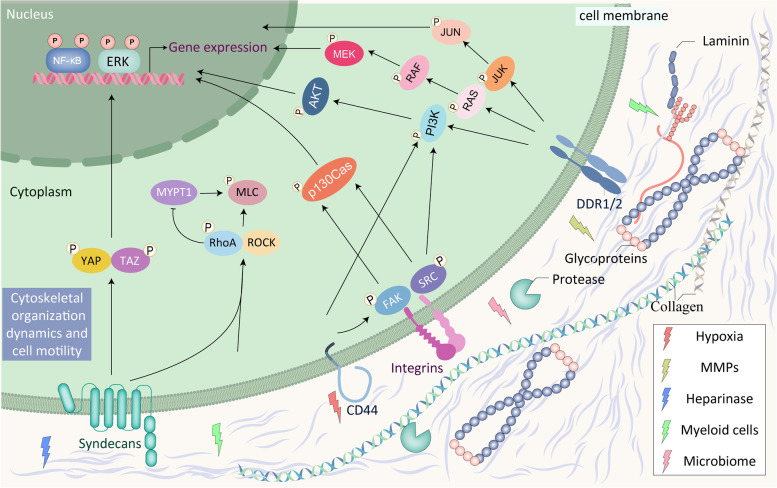
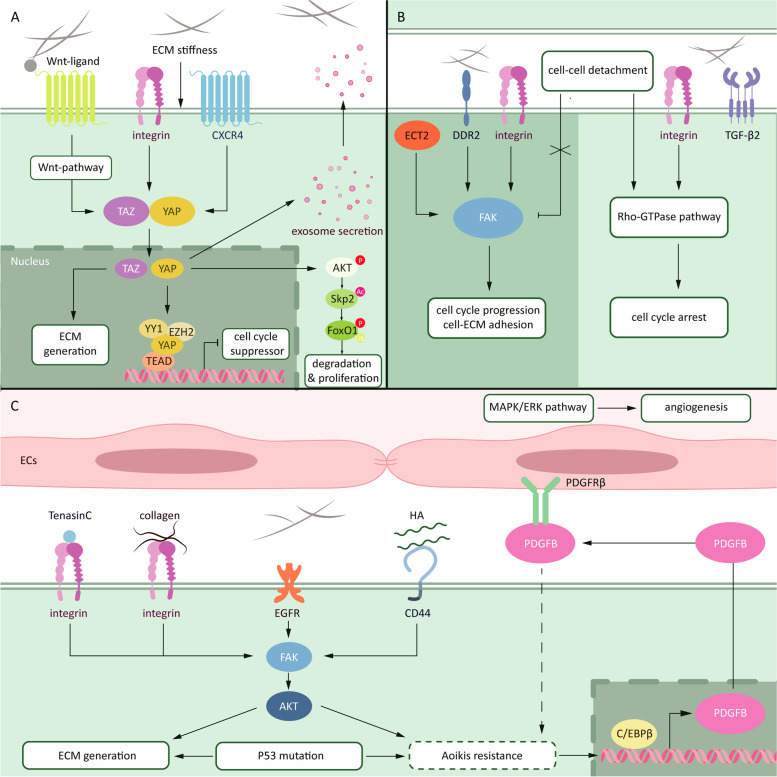
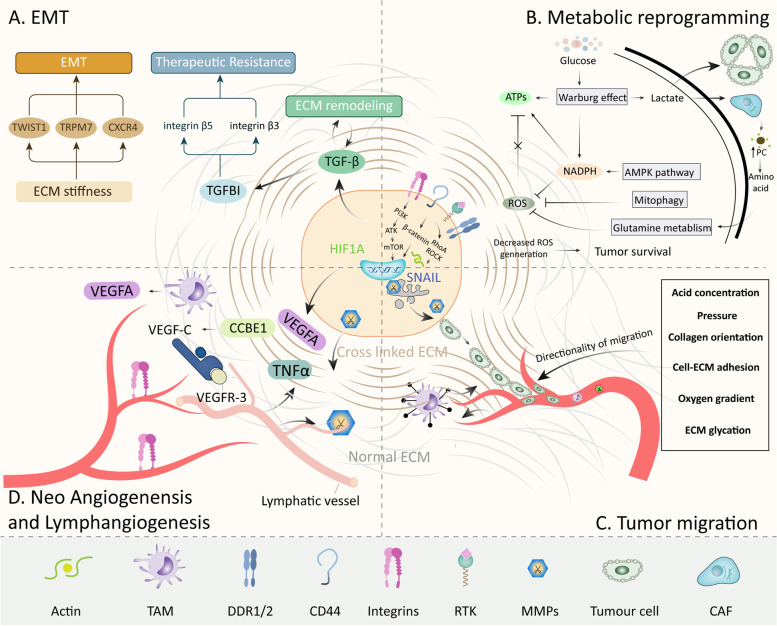
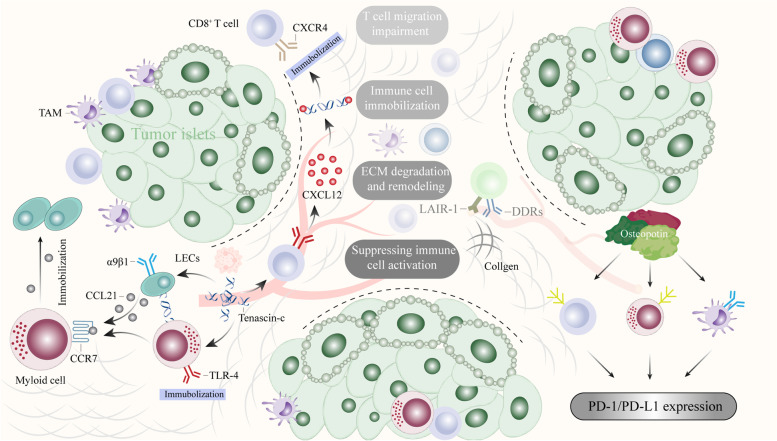
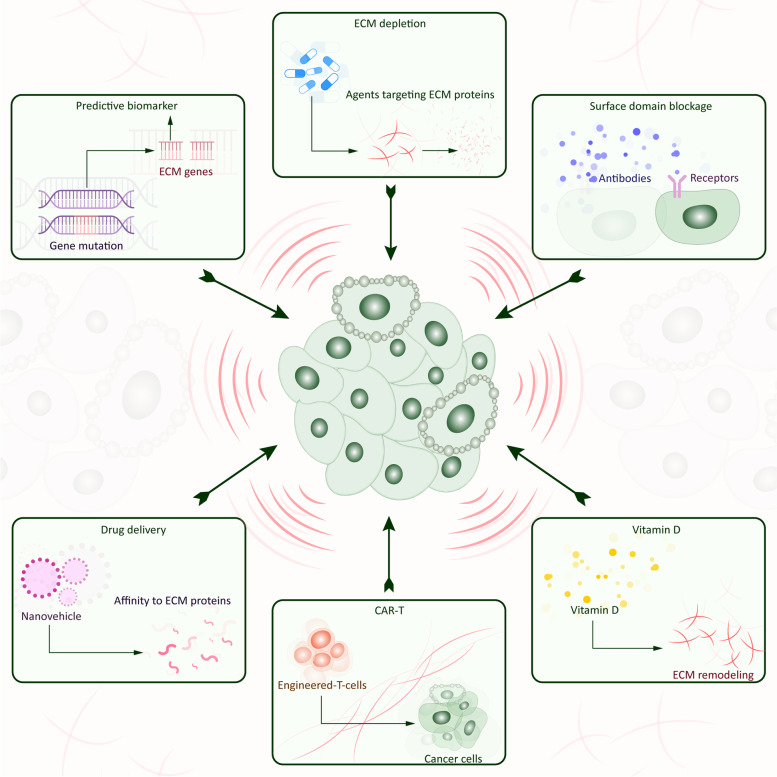
The malignant tumor is a multi-etiological, systemic and complex disease characterized by uncontrolled cell proliferation and distant metastasis. Anticancer treatments including adjuvant therapies and targeted therapies are effective in eliminating cancer cells but in a limited number of patients. Increasing evidence suggests that the extracellular matrix (ECM) plays an important role in tumor development through changes in macromolecule components, degradation enzymes and stiffness. These variations are under the control of cellular components in tumor tissue via the aberrant activation of signaling pathways, the interaction of the ECM components to multiple surface receptors, and mechanical impact. Additionally, the ECM shaped by cancer regulates immune cells which results in an immune suppressive microenvironment and hinders the efficacy of immunotherapies. Thus, the ECM acts as a barrier to protect cancer from treatments and supports tumor progression. Nevertheless, the profound regulatory network of the ECM remodeling hampers the design of individualized antitumor treatment. Here, we elaborate on the composition of the malignant ECM, and discuss the specific mechanisms of the ECM remodeling. Precisely, we highlight the impact of the ECM remodeling on tumor development, including proliferation, anoikis, metastasis, angiogenesis, lymphangiogenesis, and immune escape. Finally, we emphasize ECM "normalization" as a potential strategy for anti-malignant treatment.
Overview
The claims and statistics of this paper haven’t been checked yet.
Free: it reads the open-access text and checks the first 5 claims that cite a source we can check. Create a free account to check every claim.
Integrity signals
Registry
Cites
Statistics
Figures
Verification
Claims the paper makes
The claims and statistics of this paper haven’t been checked yet.
Free: it reads the open-access text and checks the first 5 claims that cite a source we can check. Create a free account to check every claim.
Claims other papers make about this one
Each is checked against this paper’s own text: does it say what the citing paper says it does?
The cited source says what the claim attributes to it.
In the citing paper
“inhibiting lysyl oxidase (LOX) family enzymes, which are involved in the crosslinking of ECM proteins collagen and elastin, can reduce matrix stiffness and improve drug delivery to tumor cells [219].”
From Mechanisms and Strategies to Overcome Drug Resistance in Colorectal Cancer (2025) · cites this paper as [219]
Self-check
Percentages, sums and reported differences re-computed from the paper’s own numbers.
The self-check needs the paper’s full text.
Citations
Cites
2 retracted
NK cell heparanase controls tumor invasion and immune surveillance
Putz, E. M., Mayfosh, A. J., Kos, K., Barkauskas, D. S., Nakamura, K., Town, L., Goodall, K. J., Yee, D. Y., Poon, I. K. H., Baschuk, N., et al. (2017) · Journal of Clinical Investigation · doi:10.1172/jci92958 · Cited by 105
RetractedAndreuzzi, E., Colladel, R., Pellicani, R., Tarticchio, G., Cannizzaro, R., Spessotto, P., Bussolati, B., Brossa, A., Paoli, P. D., Canzonieri, V., et al. (2017) · Matrix Biology · doi:10.1016/j.matbio.2017.04.002 · Cited by 84 · cited 1×
“mediates MMRN2 degradation and enhances tumor angiogenesis [431].”
BackgroundRetractedSung, H., Ferlay, J., Siegel, R. L., Laversanne, M., Soerjomataram, I., Jemal, A., & Bray, F. (2021) · CA: A Cancer Journal for Clinicians · doi:10.3322/caac.21660 · Cited by 108,699 · cited 1×
“Anti‐cancer therapy targeting ECM Raising morbidity of cancer worldwide demonstrates the emergency of precise treatment strategy design and the discovery of novel therapeutic targets [541].”
BackgroundRole of YAP/TAZ in mechanotransduction
Dupont, S., Morsut, L., Aragona, M., Enzo, E., Giulitti, S., Cordenonsi, M., Zanconato, F., Le Digabel, J., Forcato, M., Bicciato, S., et al. (2011) · Nature · doi:10.1038/nature10137 · Cited by 5,979 · cited 1×
“Abnormal activation of Hippo core factors Yes1 associated transcriptional regulator (YAP) and WW domain containing transcription regulator (TAZ, or WWTR1) sustain cell proliferation and is prevalently detected in various cancers, implying the success adaption of cancer to crowed environment [137, 138].”
BackgroundMatrix Metalloproteinases: Regulators of the Tumor Microenvironment
Kessenbrock, K., Plaks, V., & Werb, Z. (2010) · Cell · doi:10.1016/j.cell.2010.03.015 · Cited by 5,151 · cited 1×
“Some enzymes process matrix components, such as collagen, resulting in the production and release of bioactive fragments [9, 10].”
BackgroundReactive oxygen species (ROS) homeostasis and redox regulation in cellular signaling
Ray, P. D., Huang, B.-W., & Tsuji, Y. (2012) · Cellular Signalling · doi:10.1016/j.cellsig.2012.01.008 · Cited by 4,373 · cited 1×
“When cancer cells are detached from ECM, increasing production of ROS is lethal for tumor cell survival [293].”
BackgroundHow Matrix Metalloproteinases Regulate Cell Behavior
Sternlicht, M. D., & Werb, Z. (2001) · Annual Review of Cell and Developmental Biology · doi:10.1146/annurev.cellbio.17.1.463 · Cited by 3,959 · cited 1×
“A big family contains more than 30 kinds of MMP have been identified since the MMPs’ role as collagen hydrolase was unveiled [42, 43].”
BackgroundThe extracellular matrix: A dynamic niche in cancer progression
Lu, P., Weaver, V. M., & Werb, Z. (2012) · Journal of Cell Biology · doi:10.1083/jcb.201102147 · Cited by 3,024 · cited 1×
“Meanwhile, cell-to-cell activity residing in the TME is constantly reshaping ECM, and these cells are affected by the signals provide by ECM itself [13].”
BackgroundEMT Transition States during Tumor Progression and Metastasis
Pastushenko, I., & Blanpain, C. (2019) · Trends in Cell Biology · doi:10.1016/j.tcb.2018.12.001 · Cited by 2,876 · cited 1×
“ECM‐induced EMT: ready for invasion For epithelial cells, EMT is a critical process for tumor progression and metastasis [237].”
BackgroundDistinct populations of inflammatory fibroblasts and myofibroblasts in pancreatic cancer
Öhlund, D., Handly-Santana, A., Biffi, G., Elyada, E., Almeida, A. S., Ponz-Sarvise, M., Corbo, V., Oni, T. E., Hearn, S. A., Lee, E. J., et al. (2017) · Journal of Experimental Medicine · doi:10.1084/jem.20162024 · Cited by 2,590
Cited by
Items 201–300 of 1,000
Xu, J., Zou, J., Zhang, D., Zhang, K., Qi, Y., Yan, C., Lee, E., Jia, Q., Ma, C., & Jiang, H. B. (2025) · Progress in Materials Science · doi:10.1016/j.pmatsci.2025.101541 · Cited by 16
Heterocellular crosstalk and architecture of the pancreatic tumour microenvironment
Arnold, F., Vecchio, A. D., Hussain, Z., & Sherman, M. H. (2026) · Nature reviews. Cancer · doi:10.1038/s41568-025-00905-9 · Cited by 17
Vinogradov, A. E., & Anatskaya, O. V. (2023) · International Journal of Molecular Sciences · doi:10.3390/ijms24076196 · Cited by 15
“The extracellular matrix “normalization” can also be proposed as a potential strategy for anti-malignant treatment [104].”
BackgroundSamaržija, I. (2023) · Biomedicines · doi:10.3390/biomedicines12010079 · Cited by 18
“…cancer cells and tissues [23], including proliferation, survival, motility, migration, invasion, epithelial-to-mesenchymal transition (EMT) [24,25], metastasis formation [26], gene expression, response to therapies [2,27–30], metabolism [31,32], angiogenesis [33,34], and immune system escape [35].”
BackgroundInfluence of tumor microenvironment on the different breast cancer subtypes and applied therapies
Almeida, C. F., Correia‐da‐Silva, G., Teixeira, N. A. A., & Amaral, C. (2024) · Biochemical Pharmacology · doi:10.1016/j.bcp.2024.116178 · Cited by 18
Seyfoori, A., Liu, K., Caruncho, H. J., Walter, P. B., & Akbari, M. (2024) · Advanced Healthcare Materials · doi:10.1002/adhm.202402060 · Cited by 17
Soltanmohammadi, F., Gharehbaba, A. M., Alizadeh, E., & Javadzadeh, Y. (2024) · International Journal of Biological Macromolecules · doi:10.1016/j.ijbiomac.2024.138893 · Cited by 15
Microenvironment-based immunotherapy in oral cancer: a comprehensive review
Mivehchi, H., Eskandari-Yaghbastlo, A., Ghazanfarpour, M., Ziaei, S., Mesgari, H., Faghihinia, F., Ashtiani, N. Z., & Nabi‐Afjadi, M. (2025) · Medical Oncology · doi:10.1007/s12032-025-02694-5 · Cited by 15
“Cellular mechanisms underlying these effects involve active ECM remodeling by cancer-associated fibroblasts (CAF) and tumor cells, dysregulated integrin signaling, and activation of hypoxia-inducible factors [34, 49, 50].”
Fernández-Pérez, A. G., Herrera-González, A., Lopez-Naranjo, E. J., Martínez-Álvarez, I. A., Uribe-Rodríguez, D., Ramírez‐Arreola, D. E., Sánchez-Peña, M. J., & Navarro‐Partida, J. (2025) · International Journal of Molecular Sciences · doi:10.3390/ijms26073393 · Cited by 18
Feng, Y., Jiang, Y., Yang, L., Lu, D., Li, N., Zhang, Q., Yang, H., Qin, H., Zhang, J., Gou, X., et al. (2025) · Bioorganic Chemistry · doi:10.1016/j.bioorg.2025.108586 · Cited by 16
Metabolic Adaptations in Cancer Progression: Optimization Strategies and Therapeutic Targets
Dominiak, A., Chełstowska, B., & Nowicka, G. (2025) · Cancers · doi:10.3390/cancers17142341 · Cited by 17
“Cell Migration and Invasion: Lactate influences the expression of matrix metalloproteinases (MMPs) and hyaluronan production, remodeling the extracellular matrix and facilitating cancer cell migration and invasion [15].”
The role of matrix metalloproteinases in liver function and disease
Mitropoulou, G., Kompoura, V., Saffioti, F., & Mavroeidis, V. K. (2025) · Frontiers in Bioscience-Landmark · doi:10.31083/fbl27127 · Cited by 14
Tsai, C., Hsu, Y., Chu, T.-Y., Hsu, P.-C., & Kuo, C. (2025) · Cancers · doi:10.3390/cancers17152590 · Cited by 19
“These changes promote a pro-tumorigenic environment by influencing cancer cell behavior, facilitating immune evasion, and enhancing angiogenesis [101].”
Tan, Z., Sheng, B., Chen, L., Dong, H., Deng, Y., Li, Y., Liu, C., Wang, H., Yang, Z., Xie, T., et al. (2025) · Frontiers in Immunology · doi:10.3389/fimmu.2025.1689114 · Cited by 17
Self-citationRole of exosomes in metastasis and therapeutic resistance in esophageal cancer
Ning, X.-Y., Ma, J., He, W., & Ma, J. (2023) · World Journal of Gastroenterology · doi:10.3748/wjg.v29.i42.5699 · Cited by 14
“Extracellular matrix (ECM) modeling can influence drug delivery, promote immune escape, and mediate signal transduction, consequently diminishing the therapeutic effects of antitumor agents[51].”
Li, X., Li, W., Wang, J., Wang, Q., Liang, M., Chen, S., Ba, W., & Jin, F. (2024) · Microchimica Acta · doi:10.1007/s00604-024-06362-9 · Cited by 16
“Malignant tumors are multi-etio-logical, systemic, and complex diseases characterized by uncontrolled cell proliferation and distant metastasis [22].”
Production and Functional Analysis of Collagen Hexapeptide Repeat Sequences in Pichia pastoris
Guo, X., Wang, P., Yuwen, W., Zhu, C., Fu, R., Ma, P., Duan, Z., & Fan, D. (2024) · Journal of Agricultural and Food Chemistry · doi:10.1021/acs.jafc.4c00582 · Cited by 14
The tumor-associated fibrotic reactions in microenvironment aggravate glioma chemoresistance
Xu, J., Zhang, J., Chen, W., & Ni, X. (2024) · Frontiers in Oncology · doi:10.3389/fonc.2024.1388700 · Cited by 17
Zhao, Y., Tang, X., Lei, T., Fu, D., & Zhang, H. (2024) · Frontiers in Oncology · doi:10.3389/fonc.2024.1448089 · Cited by 16
Kumar, R., Iden, M., Tsaih, S., Schmidt, R., Ojesina, A. I., & Rader, J. S. (2024) · Frontiers in Cell and Developmental Biology · doi:10.3389/fcell.2024.1413882 · Cited by 14
Fang, H., Zhang, L., Wu, Y., Chen, L., Deng, Z., Zheng, Z., Wang, Y., Yang, Y., & Chen, Q. (2024) · Chemical Engineering Journal · doi:10.1016/j.cej.2024.155781 · Cited by 15
Biomaterials Mimicking Mechanobiology: A Specific Design for a Specific Biological Application
Donati, L., Valicenti, M. L., Giannoni, S., Morena, F., & Martino, S. (2024) · International Journal of Molecular Sciences · doi:10.3390/ijms251910386 · Cited by 16
Nicotinamide riboside supplementation ameliorates ovarian dysfunction in a PCOS mouse model
Zhu, Z., Lei, M., Guo, R., Xu, Y., Zhao, Y., Wei, C., Yang, Q., & Sun, Y. (2025) · Journal of Ovarian Research · doi:10.1186/s13048-025-01596-4 · Cited by 14
Wawrzak-Pienkowska, K., Pienkowski, T., Tankiewicz‐Kwedlo, A., Ciborowski, M., Kurek, K., & Pawlak, D. (2025) · European Journal of Pharmacology · doi:10.1016/j.ejphar.2025.177309 · Cited by 17
Konstantaraki, M., Berdiaki, A., Neagu, M. T., Zurac, S., Krasagakis, K., & Nikitovic, D. (2025) · Cancers · doi:10.3390/cancers17071212 · Cited by 16
“Increased MMP activity in MCC can enhance tumor invasiveness by degrading ECM components and releasing bioactive molecules that promote angiogenesis and metastasis [43].”
InfluentialZhou, Y., Chen, T., Pan, Y., & Liu, J. (2025) · Molecular Medicine Reports · doi:10.3892/mmr.2025.13525 · Cited by 16
“In general, the role of FN‑EDB in the TME is multi‑dimensional, which not only directly promotes the malignant behavior of tumor cells, but also indirectly supports the tumor progression and metastasis of by affecting the tumor angiogenesis, immune escape and stem cell properties (31).”
Chen, T., Li, X., Zhang, Y., Kang, X.-J., Zhang, S., Zhang, T., Sangmao, D., Zhu, Y., & Zhang, D. (2025) · Frontiers in Immunology · doi:10.3389/fimmu.2025.1614228 · Cited by 25
Self-citationRijns, L., Duijs, H., Lafleur, R. P. M., Cardinaels, R., Palmans, A. R. A., Dankers, P. Y. W., & Su, L. (2024) · Biomacromolecules · doi:10.1021/acs.biomac.3c01357 · Cited by 14
Thamizhchelvan, A. M., Wells, K., Pham, J., Galhena, A., & Kim, W. (2026) · Nanomaterials · doi:10.3390/nano16030172 · Cited by 17
Hamar, P. (2024) · International Journal of Molecular Sciences · doi:10.3390/ijms25063435 · Cited by 14
“The ECM acts as a barrier to protect cancer from treatments and supports tumor progression [52].”
BackgroundTumor microenvironment: A playground for cells from multiple diverse origins
Bharadwaj, D., & Mandal, M. (2024) · Biochimica et Biophysica Acta (BBA) - Reviews on Cancer · doi:10.1016/j.bbcan.2024.189158 · Cited by 16
Lin, L., Nayak, B., Osmulski, P. A., Wang, E., Wang, C.-P., Valente, P. T., Wang, C., Tan, X., Santanam, N., Wang, T., et al. (2024) · Cell Reports · doi:10.1016/j.celrep.2024.114527 · Cited by 16
Substrate O‐glycosylation actively regulates extracellular proteolysis
Madzharova, E., Sabino, F., Kalogeropoulos, K., Francavilla, C., & Keller, U. A. D. (2024) · Protein Science · doi:10.1002/pro.5128 · Cited by 16
“…conventional function by mediating cellular behaviours, including proliferation, differentiation, migration, adhesion, and signal transduction, emphasizing the ECM's contribution to tissue homeostasis and physiological regulation (Dzobo & Dandara, 2023; Karamanos et al., 2021; Yuan et al., 2023).”
BackgroundFu, M., Lin, Y., Yang, J., Cheng, J., Lin, L., Wang, G., Long, C., Xu, S., Lu, J., Li, G., et al. (2024) · Gastric Cancer · doi:10.1007/s10120-024-01551-0 · Cited by 15
“Collagen orientation in the tumor microenvironment provides a contact guidance to typically induce initiation, progression, and directional migration of cancer cells [16, 17].”
Padrez, Y., Golubewa, L., Timoshchenko, I. A., Enache, A., Eftimie, L. G., Hristu, R., & Rutkauskas, D. (2024) · Computerized Medical Imaging and Graphics · doi:10.1016/j.compmedimag.2024.102440 · Cited by 14
Basso, J., Matos, A. M., Ghavami, S., Fortuna, A. C., Vitorino, R. M. P., & Vitorino, C. (2024) · European Journal of Pharmacology · doi:10.1016/j.ejphar.2024.177087 · Cited by 14
Karnachoriti, M., Kouri, M. A., Spyratou, E., Danias, N., Arkadopoulos, N., EFSTATHOPOULOS, E. P., Seimenis, I., Raptis, Y. S., & Kontos, A. G. (2025) · Talanta · doi:10.1016/j.talanta.2025.127787 · Cited by 13
Liu, Y., Yang, Z., Pu, J. J., Zhong, J., Khoo, U., Su, Y., & Zhang, G. (2025) · Clinical and Translational Medicine · doi:10.1002/ctm2.70261 · Cited by 16
“87 Consistent with the aforementioned findings, we proposed to explore more biological characteristics from a proteome-wide perspective to investigate potential biomarkers of the dynamic alterations in pLN + OSCC.”
Aquino, A., & Franzese, O. (2025) · Cancers · doi:10.3390/cancers17091547 · Cited by 13
ADAMTS2: More than a procollagen N-proteinase
Vanlerberghe, R., Colige, A., Malfait, A., Syx, D., & Malfait, F. (2025) · Genes & Diseases · doi:10.1016/j.gendis.2025.101686 · Cited by 17
“118,119 Similarly, its postulated anti-inflammatory role may be involved in tumor progression, as tumors are known to employ a wide array of immune escape mechanisms to stop the immune system from being activated by tumor antigens.”
Targeting glycosylation to enhance tumor immunotherapy
Zhu, Q., Chen, X., Duan, X., Sun, J., & Yi, W. (2025) · Trends in Pharmacological Sciences · doi:10.1016/j.tips.2025.07.013 · Cited by 19
Huo, X., Jiang, S., Wu, S., Lian, Q., & Chen, H. (2025) · Liver Research · doi:10.1016/j.livres.2025.01.002 · Cited by 12
“35 High ECM stiffness not only impairs immune signaling in tumor cells but also inhibits T-cell in fi ltra-tion.”
Gao, J., Tan, W., Yuan, L., Wang, H., Wen, J., Sun, K., Chen, X., Wang, S., & Deng, W. (2024) · Heliyon · doi:10.1016/j.heliyon.2024.e27220 · Cited by 14
Zhu, J., Zhao, W., 赵苏鸣, Yang, J., Liu, C., Wang, Y., & Zhao, H. (2024) · Anti-Cancer Drugs · doi:10.1097/cad.0000000000001589 · Cited by 13
“In the case of cancer, the ECM derived from tumors can affect immune cells and result in ineffective immunotherapy and tumor immunosuppression [13].”
BackgroundA comprehensive prognostic and immunological implications of PFKP in pan-cancer
Ling, X., Zhang, L., Fang, C., Liang, H., & Ma, J. (2024) · Cancer Cell International · doi:10.1186/s12935-024-03497-w · Cited by 12
“Competing interests Not applicable.”
Wang, G., Peng, T., Chen, L., Xiong, K., Ju, L., Qian, K., Zhang, Y., Xiao, Y., & Wang, X. (2024) · Communications Biology · doi:10.1038/s42003-024-07067-8 · Cited by 12
“During tumor metastasis, tumor cells can interact with the ECM and mediate its remodeling, thus creating a micro-environment conducive to tumor metastasis 59,60 .”
Self-citationArdalan, A. A., Khalili‐Tanha, G., & Shoari, A. (2024) · International Journal of Translational Medicine · doi:10.3390/ijtm4040046 · Cited by 20
“This remodeling also modifies the biochemical signals within the TME, including the release and activation of growth factors, cytokines, and chemokines, creating a more permissive environment for tumor progression [54].”
Chan, H., Kuo, D., Shueng, P., & Chuang, H. (2024) · Pharmaceuticals · doi:10.3390/ph17121663 · Cited by 14
Emerging roles of angiopoietin‑like 4 in human tumors (Review)
Liu, R., Fu, M., Chen, P., Liu, Y., Huang, W., Sun, X., Zhu, P., Wen, Z., & Cheng, Y. (2024) · International Journal of Oncology · doi:10.3892/ijo.2024.5715 · Cited by 16
“Anoikis resistance facilitates immune evasion, alters the TME, and ultimately contributes to the invasion and metas‑ tasis (85,86).”
Chimeric Antigen Receptor Cell Therapy: Empowering Treatment Strategies for Solid Tumors
Jaing, T., Hsiao, Y.-W., & Wang, Y.-L. (2025) · Current Issues in Molecular Biology · doi:10.3390/cimb47020090 · Cited by 12
“The obstacles consist of poorly regulated tumor blood vessels and a thick fibrogenic extracellular matrix, which collectively hinder the effective infiltration and migration of CAR-T cells into the tumor tissue [15].”
Deng, C., Xie, C., Li, Z., Mei, J., & Wang, K. (2025) · npj Precision Oncology · doi:10.1038/s41698-025-00895-9 · Cited by 14
“High ECM1 expression correlates with progression in gastrointestinal cancers, making it a promising target 65 .”
Radiotherapy-induced alterations in tumor microenvironment: metabolism and immunity
Chen, J., Wang, S., Ding, Y., Duo, X., & Zheng, S. (2025) · Frontiers in Cell and Developmental Biology · doi:10.3389/fcell.2025.1568634 · Cited by 23
Phospholipid-Drug Conjugates in Cancer Therapy: Emerging Paradigms and Future Directions
Dudhat, K. R., Pirojiya, H., Bhalala, K., Mori, D., & Prajapati, B. G. (2025) · AAPS PharmSciTech · doi:10.1208/s12249-025-03175-8 · Cited by 14
“By targeting both the ECM and cancer cells, PDCs provide a comprehensive approach to overcoming the physical and biological barriers posed by the TME [63, 64].”
SynOmics: integrating multi-omics data through feature interaction networks
Alif, M. N., & Zhang, W. (2025) · Briefings in Bioinformatics · doi:10.1093/bib/bbaf595 · Cited by 14
“…in epithelial/lineage programs among the down-with-stage signals (e.g. a representative factor shows Extracellular Matrix Organization, NES ≈ 1.87, FDR ≈ 0.036,with leading-edge genes COL11A1,ADAM12,MFAP5 [47–49]; others highlight stress/stimulus responses with EGLN3, SLC7A11, IGFBP1 [50–52]).”
InfluentialCollagenase-Functionalized Liposomes Overcome Stromal Barriers in Pancreatic Cancer
Hwang, J.-E., Jeon, M., Yim, H., Park, J., Kim, H., Lee, S., Park, H., Lee, J. K., & Im, H. (2026) · ACS Nano · doi:10.1021/acsnano.5c20618 · Cited by 14
Glycan diversity in ovarian cancer: Unraveling the immune interplay and therapeutic prospects
Wolters‐Eisfeld, G., & Oliveira‐Ferrer, L. (2024) · Seminars in Immunopathology · doi:10.1007/s00281-024-01025-6 · Cited by 13
Lopes, C. D. H., Xavier, C. B., Torrado, C., Veneziani, A. C., & Megid, T. B. C. (2024) · Journal of Immunotherapy and Precision Oncology · doi:10.36401/jipo-24-23 · Cited by 13
“89–91]”
BackgroundEmon, B., Joy, M. S. H., Drennan, W. C., & Saif, M. T. A. (2025) · Nature Protocols · doi:10.1038/s41596-024-01106-8 · Cited by 12
“23.”
Yang, H., Lei, M. M. L., Xie, L., Shou, Y., & Lee, T. K. (2025) · Clinical and Molecular Hepatology · doi:10.3350/cmh.2024.1068 · Cited by 12
Hu, Y., Yang, R., Ni, S., & Song, Z. (2025) · Frontiers in Immunology · doi:10.3389/fimmu.2024.1485053 · Cited by 11
Advanced Therapeutic Approaches for Metastatic Ovarian Cancer
Choe, S., Jeon, M., & Yoon, H. (2025) · Cancers · doi:10.3390/cancers17050788 · Cited by 11
“Stimulated TGF-β /SMAD signaling enhances peritoneal invasion through the secretion of matrix metalloproteinases (MMPs), which degrade the ECM and enable cancer cells to invade surrounding tissues [45].”
CTHRC1: a key player in colorectal cancer progression and immune evasion
Chen, Q., Wang, H., Liu, Q., & Luo, C. (2025) · Frontiers in Immunology · doi:10.3389/fimmu.2025.1579661 · Cited by 16
Sultan, M. H., Zhang, Q., Wang, Y., Xia, Y., & Jia, X. (2025) · International Journal of Molecular Medicine · doi:10.3892/ijmm.2025.5545 · Cited by 11
Malignant melanoma fractional-order mathematical model with stabilized fuzzy sliding mode control
Amilo, D., Sadri, K., & Hınçal, E. (2025) · Computer Methods and Programs in Biomedicine · doi:10.1016/j.cmpb.2025.108912 · Cited by 11
Mohammadzadeh, V., Arabi, L., Hosseinikhah, S. M., Mashreghi, M., Kalalinia, F., Mostajeran, N., Zirak, M. R., Hadizadeh, F., Nejabat, M., Kamali, H., et al. (2025) · Drug Delivery · doi:10.1080/10717544.2025.2536802 · Cited by 13
“…exacerbate this issue by remodeling the ecM, secreting growth factors, and encasing blood vessels, further limiting NP access (Miao l et al. 2017; Yuan et al. 2023). these tumors exhibit compacted vasculature, hypoxia, high iFP, and a stromal network that promotes cancer progression (Buruiană et…”
Mechanical regulation of extracellular vesicle activity during tumour progression
Parihar, K., Liu, D.-A., Hassan, G., Issadore, D., Janmey, P. A., Weaver, V. M., Guo, W., & Radhakrishnan, R. (2025) · Nature Biomedical Engineering · doi:10.1038/s41551-025-01446-0 · Cited by 14
“TAMs contribute to immunosuppression and ECM remodelling both directly, via matricellular protein production and matrix degradation, and indirectly, by stimulating fibroblasts to promote fibrosis 142–145 .”
Interstitial fluid transport dynamics predict glioblastoma invasion and progression
Esparza, C., Stine, C. A., Atay, N., Kingsmore, K. M., Wang, M., Woodall, R. T., Rockne, R. C., Cunningham, J. J., & Munson, J. M. (2025) · npj Biomedical Innovations. · doi:10.1038/s44385-025-00033-x · Cited by 14
Unveiling the potential of natural TLR modulators in cancer immunotherapy
Zheng, W., Chen, J., Liu, J., Han, X., Zhang, S., Yang, C., Yu, H., Tan, W., & Zhong, Z. (2025) · Pharmacological Research · doi:10.1016/j.phrs.2025.107969 · Cited by 12
Self-citationCancer and Environmental Xenobiotics: Mechanisms, Controversies, and Innovations
Mafe, A. N., & Büsselberg, D. (2025) · Journal of Xenobiotics · doi:10.3390/jox16010002 · Cited by 13
“These agents stimulate matrix metalloproteinases (MMPs) and fibronectin deposition, weakening cell–cell adhesion and promoting tumor invasion [110].”
Breast cancer pathogenesis, diagnosis and treatment: a comprehensive review
Pasi, D., Aswathy, B., Das, M., & Agrawal, P. (2026) · Frontiers in Oncology · doi:10.3389/fonc.2026.1773232 · Cited by 13
Astrocytes in neuroinflammation and brain cancer
Sun, W., Chen, P., Xu, X., Zhang, J.-Q., & Jin, W. (2026) · Molecular Biomedicine · doi:10.1186/s43556-026-00439-y · Cited by 12
Ji, J., Bi, F., Zhang, X., Zhang, Z., Xie, Y., & Yang, Q. (2024) · BMC Cancer · doi:10.1186/s12885-024-12688-7 · Cited by 12
“MMPs facilitate the progression of tumors by ECM proteins and enable the release of cell surface-bound cytokines, growth factors, and their receptors, which in turn promote tumor growth, invasion, metastasis, and angiogenesis [41, 44, 45].”
BackgroundSelf-citationDecoding the MMP14 integrin link: Key player in the secretome landscape
Niland, S., & Eble, J. A. (2025) · Matrix Biology · doi:10.1016/j.matbio.2025.01.004 · Cited by 12
Research advances of nanoparticles for CAR-T therapy in solid tumors
Chen, B., Gong, L., Feng, J. Q., Jin, M., Chen, L., Gao, Z., & Huang, W. (2023) · Chinese Chemical Letters · doi:10.1016/j.cclet.2023.109432 · Cited by 11
Shuai, Q., Xu, X., Liang, Y., Halbiyat, Z., Lu, X., Hu, Z., Peng, Z., An, J., Feng, Z., Huang, T., et al. (2024) · Bioengineering & Translational Medicine · doi:10.1002/btm2.10648 · Cited by 10
Shared biomarkers and mechanisms in idiopathic pulmonary fibrosis and non-small cell lung cancer
Ding, X., Liu, H., Xu, Q., Ji, T., Chen, R., Liu, Z., & Dai, J. (2024) · International Immunopharmacology · doi:10.1016/j.intimp.2024.112162 · Cited by 12
A comprehensive pan-cancer analysis of RNF187 in human tumors
Zhang, X., Zhang, X., Liu, T., & Sha, K. (2025) · Discover Oncology · doi:10.1007/s12672-025-01795-x · Cited by 10
“CAFs influence processes such as angiogenesis, immune response, and extracellular matrix remodeling [16].”
Chaulagain, R. P., Padder, A. M., Shrestha, H., Gupta, R., Bhandari, R., Shrestha, Y., Moqbel, A. Q., Gautam, S., Lal, N., & Jin, S. (2025) · Cureus · doi:10.7759/cureus.82171 · Cited by 19
Quantitative proteomics analysis of triple-negative breast cancers
Mariano, N. C., Marotti, J. D., Chen, Y., Karakyriakou, B., Salgado, R., Christensen, B. C., Miller, T. W., & Kettenbach, A. N. (2025) · npj Precision Oncology · doi:10.1038/s41698-025-00907-8 · Cited by 15
“Thus, the various stromal constituents receiving these signals will remodel the TME to support new vascular growth 97 .”
Mechanotransduction as a therapeutic target for brain tumours
Gomes, L., Pardo-Pastor, C., Rosenblatt, J., & Pouliopoulos, A. N. (2025) · EBioMedicine · doi:10.1016/j.ebiom.2025.105808 · Cited by 12
Zhang, R., Yan, W., Yuan, J., Ma, Y., Ren, Z., Chen, X., Lv, J., Wu, M., Yu, J., & Chen, D. (2025) · Cell Reports · doi:10.1016/j.celrep.2025.116018 · Cited by 16
Wei, Y., Chen, D., Zhang, Q., You, F., Fu, Y., Zheng, L., Zhang, L., Zhang, N., Liang, G., Yang, J., et al. (2025) · npj Precision Oncology · doi:10.1038/s41698-025-01100-7 · Cited by 10
Rizzo, M. G., Fazio, E., Pasquale, C. D., Sciuto, E. L., Cannatà, G., Multisanti, C. R., Impellitteri, F., D’Agostino, F. G., Guglielmino, S. P. P., Faggio, C., et al. (2025) · Cancers · doi:10.3390/cancers17183082 · Cited by 11
“Specifically, SPARC encodes a cysteine-rich acidic matrix-associated protein, belonging to the extracellular matrix protein family, and contributes to ECM organization and tumor invasion [56].”
In vivo CRISPR screening in head and neck cancer reveals Uchl5 as an immunotherapy target
Fu, C., Saddawi‐Konefka, R., Chinai, J. M., Kim, S. Y., Kammula, A. V., Perera, J., Jiang, A., Tiwari, P., Kistler, E. N., Tang, S., et al. (2025) · Nature Communications · doi:10.1038/s41467-025-63592-y · Cited by 14
“Collagens represent a predominant component within the extra-cellular matrix of tumor tissue, playing pivotal roles in tumor development and progression 51,52 .”
Abedi, S., Mohajeri, A., Benisi, S. Z., Pezeshki‐Modaress, M., & Shabestari, S. M. (2025) · Scientific Reports · doi:10.1038/s41598-025-20814-z · Cited by 13
Exploring How Reactive Oxygen Species Contribute to Cancer via Oxidative Stress
Tavakolpournegari, A., Moosavi, S. S., Matinahmadi, A., Zayani, Z., & Bidooki, S. H. (2025) · Stresses · doi:10.3390/stresses5040069 · Cited by 13
“This fibrotic environment not only supports tumor cell adhesion and migration but also provides a physical barrier that protects tumor cells from immune surveillance and therapeutic agents [126].”
He, Z., Chen, Y., Li, G., Wang, J., Wang, Y., Tu, P., Huang, Y., Zhao, L., Pan, X., Liu, H., et al. (2025) · Cancers · doi:10.3390/cancers18010089 · Cited by 11
Ye, L., Zhao, G., Ma, J., Gan, Q., Luo, N., Pan, D., Chen, C., Chen, X., & Ning, S. (2026) · Signal Transduction and Targeted Therapy · doi:10.1038/s41392-026-02769-3 · Cited by 10
“195,196 These interconnected mechanisms create a self-reinforcing ecosystem that resists vaccine-mediated immune surveillance.”
Dell’Anno, F., Giugliano, R., Listorti, V., & Razzuoli, E. (2024) · Veterinary Sciences · doi:10.3390/vetsci11080362 · Cited by 15
“As highlighted by Yuan and collaborators, the ECM exerts a profound influence on tumor development, affecting macromolecule components, degradation enzymes, and tissue stiffness [46].”
BackgroundThe role of tumor-derived exosomal LncRNA in tumor metastasis
Yu, Z., Fu, J., Mantareva, V. N., Blažević, I., Wu, Y., Wen, D., Battulga, T., Wang, Y.-Q., & Zhang, J. (2025) · Cancer Gene Therapy · doi:10.1038/s41417-024-00852-x · Cited by 11
Hydrogel‐Mediated Preservation of Live Tumor Explants for Drug Development in Peritoneal Metastases
Wu, Z., Ding, R. H., Zhao, Z., Chong, C. Y. L., You, R., Zhou, H., Seah, D. H., Leow, W. Q., Lim, H. K., Shyamasundar, S., et al. (2025) · Advanced Materials · doi:10.1002/adma.202418647 · Cited by 13
Ding, M., Chen, H., Guimarães, C. F., Reis, R. L., Wu, L., Zhang, F., Lv, Y., Wang, T., Zhou, Q., Shi, J., et al. (2024) · Advanced Functional Materials · doi:10.1002/adfm.202315551 · Cited by 10
Kader, A., Snellings, J., Adams, L. C., Gottheil, P., Mangarova, D. B., Heyl, J. L., Kaufmann, J. O., Möckel, J., Brangsch, J., Auer, T. A., et al. (2024) · Biomaterials Advances · doi:10.1016/j.bioadv.2024.213884 · Cited by 9
Advances in tumor stroma-based targeted delivery
Wu, C., Zhai, Y., Ji, J., Yang, X., Ye, L., Lu, G., Shi, X., & Zhai, G. (2024) · International Journal of Pharmaceutics · doi:10.1016/j.ijpharm.2024.124580 · Cited by 11
Wang, H., Zhu, Y.-N., Zhang, S., Liu, K., Huang, R., Li, Z., Lan, M., & Li, Y. (2025) · Molecular Medicine · doi:10.1186/s10020-025-01237-y · Cited by 10
Self-citationMurillo, L. L., Green, M., Mahon, N., Saiani, A., & Tsigkou, O. (2025) · Cancers · doi:10.3390/cancers17101675 · Cited by 10
“This causes the ECM to remodel and stimulate ECs to organise new vascular networks that aid tumour growth and, in later stages, metastasis [182,183].”
Jing, R., Si, S., Zhu, S., Tang, X., & Jiang, Z. (2025) · Biomaterials Science · doi:10.1039/d5bm01193k · Cited by 9
Sensi, F., Spagnol, G., Repetto, O., D'Angelo, E., Biccari, A., Marangio, A., Guerriero, A., Castillo, A. A. M., Vogliardi, A., Zanrè, E., et al. (2025) · Translational Oncology · doi:10.1016/j.tranon.2025.102523 · Cited by 11
“…be related to the alteration/accumulation of biomolecules (i.e., collagen and proteases MMP-3, MMP-7, MMP-9, and MMP-14) promoting the epithelial-mesenchymal transition (EMT) and tissue stiffness, which in turn modifies the expression levels of genes related to multidrug resistance process [11,12].”
Reetz, L., Ghanam, J., Chetty, V. K., Barthel, L., Tippelt, S., Fleischhack, G., Böckmann, M., Reinhardt, K., & Thakur, B. K. (2025) · International Journal of Molecular Sciences · doi:10.3390/ijms26199279 · Cited by 10
“It is now recognized as being shaped by cancer and, in turn, acting as a key regulator of cancer development and progression, the tumor microenvironment (TME), and the formation of pre-metastatic niches [39,40].”
Yang, G., Yoon, S., Lee, J., Leem, S., & Choi, Y. H. (2025) · Genes & Genomics · doi:10.1007/s13258-025-01710-2 · Cited by 14
“ECM degradation (e.g., via hyaluronidase) reduces physical barriers, facilitating immune cell infil - tration and enhancing drug delivery (Yuan et al. 2023).”
Metadata
- Authors
- Yuan, Z., Li, Y., Zhang, S., Wang, X., Dou, H., Yu, X., Zhang, Z., Yang, S., & Xiao, M.
- Affiliations
- Harbin Medical University (CN)
- Central South University (CN)
- Corresponding author
- Yang, Shanshan
- Xiao, Min
- Venue
- Molecular Cancer
- Published
- 2023-03-11
- Volume
- 22
- Issue
- 1
- Pages
- 48-48
- ISSN
- 1476-4598 (ISSN-L)
- PMC
- PMC10007858
- OpenAlex
- W4323971780
- Semantic Scholar
- c8a593008da53cc37814dab070956b1fd456d86e
- Cited by
- 977
- References
- 625
- Citations by year
- 2026: 304 · 2025: 385 · 2024: 242 · 2023: 45
- FWCI
- 32.03
- Type
- journal article
- Language
- en
- Open access
- gold
- doi.org
- Licence
- cc-by
- creativecommons.org/licenses/by/4.0 (tdm)
- creativecommons.org/licenses/by/4.0 (vor)
- Locations
- Molecular Cancer (publishedVersion, cc-by)
- PubMed Central (publishedVersion, cc-by)
- PubMed (publishedVersion)
- DOAJ (DOAJ: Directory of Open Access Journals) (submittedVersion, cc-by-sa)
- Funders
- Natural Science Foundation of Heilongjiang Province, China (LH2021H076)
- National Natural Science Foundation of China, China (81872460, 81872145)
- Topics
- Life Sciences › Biochemistry, Genetics and Molecular Biology › Cell Biology › Cellular Mechanics and Interactions
- Life Sciences › Biochemistry, Genetics and Molecular Biology › Cancer Research › Protease and Inhibitor Mechanisms
- Life Sciences › Biochemistry, Genetics and Molecular Biology › Molecular Biology › TGF-β signaling in diseases
- Keywords
- extracellular matrix remodeling, tumor progression, immune evasion, tumor microenvironment, extracellular matrix stiffness, anoikis, metastasis, angiogenesis, lymphangiogenesis, immunosuppression, immunotherapy resistance, cancer therapy
- MeSH terms
- Extracellular Matrix, Humans, Immunotherapy, Neoplasms, Tumor Microenvironment
About these checks
Registry, retraction, Cites and statistics results are computed, not judged, with one exception: a printed reference that no index lists is read once by a model before it counts as a citation error. Claims are extracted by a model and kept only when their quote appears verbatim in the text; each cited source is then checked, with a model’s help, for whether it says what the claim relies on. Those verdicts can be wrong — read the claim’s quote and the cited source before relying on one.
Statistics and arithmetic are recomputed, not judged.
Confidence bands are shown only for fields calibrated on our annotated test set. None is calibrated yet, so no band is shown.
What counts as a claim ›How we measure confidence ›How we check this ›
Are you an author, or do you see a problem with this page? Request a review
Data sources
Bibliographic data: Semantic Scholar, OpenAlex, Crossref.
Contains information from the Semantic Scholar Academic Graph Datasets, made available under the ODC Attribution License (ODC-BY 1.0).
Semantic Scholar’s data is described in: Kinney, R., et al. (2023). The Semantic Scholar Open Data Platform. arXiv:2301.10140.
