

Extracellular matrix remodeling in tumor progression and immune escape: from mechanisms to treatments
Open accessThe DOI matches its Crossref record; 626 of the 626 references it cites were found in a registry or an index.
Abstract
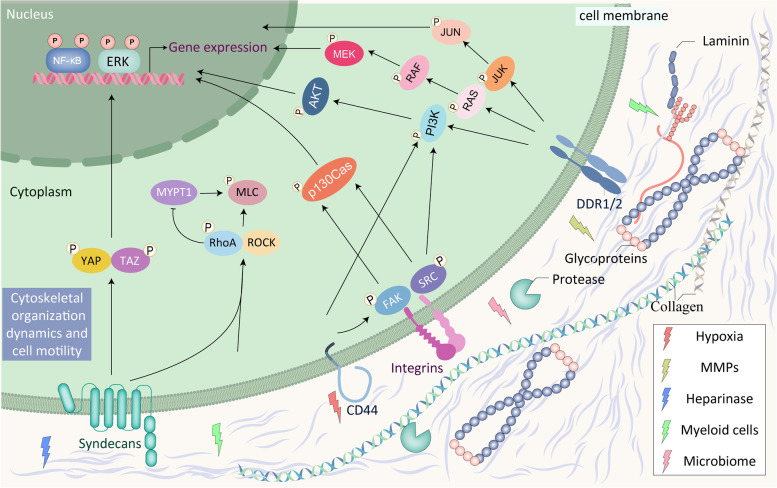
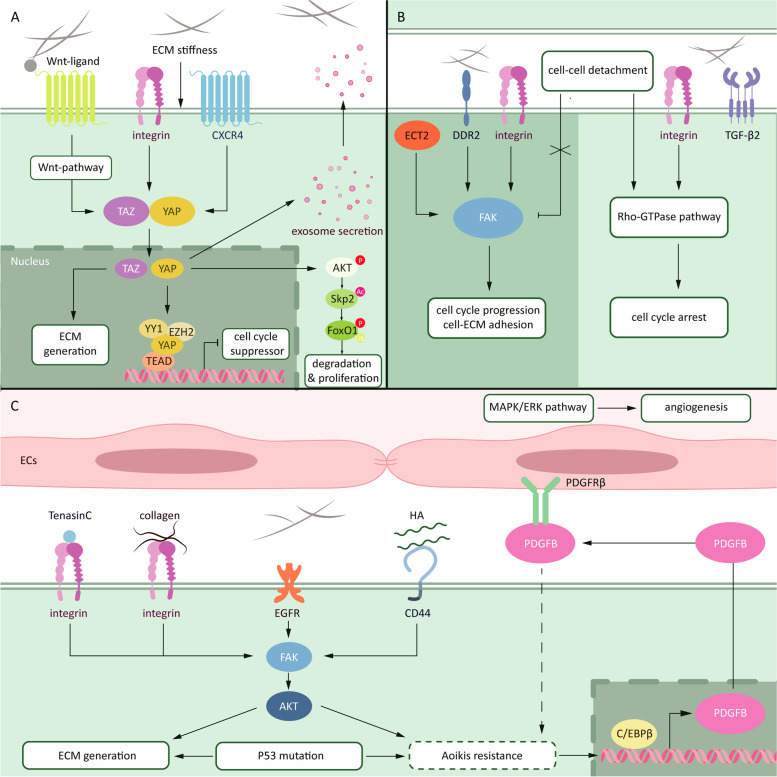
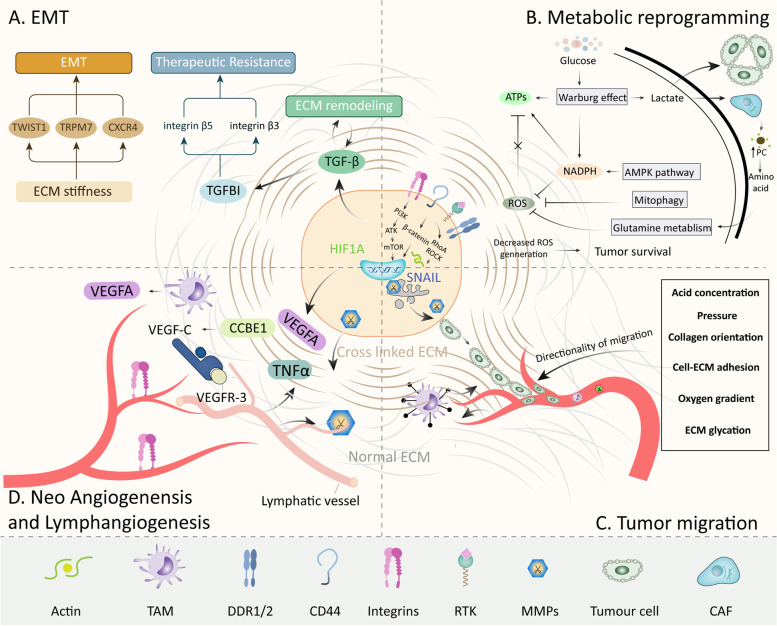
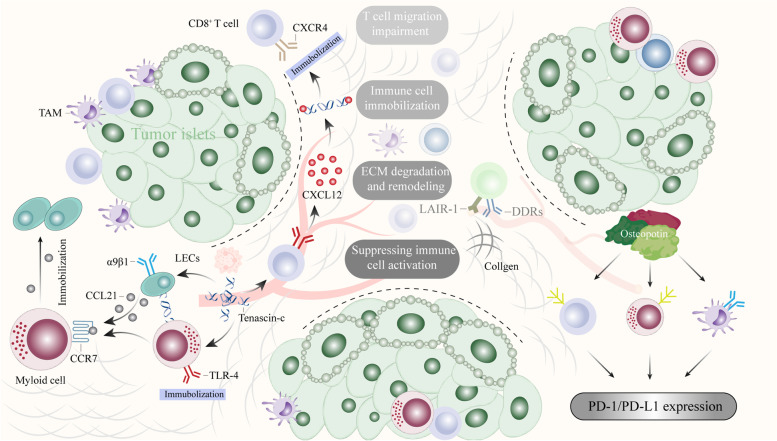
The malignant tumor is a multi-etiological, systemic and complex disease characterized by uncontrolled cell proliferation and distant metastasis. Anticancer treatments including adjuvant therapies and targeted therapies are effective in eliminating cancer cells but in a limited number of patients. Increasing evidence suggests that the extracellular matrix (ECM) plays an important role in tumor development through changes in macromolecule components, degradation enzymes and stiffness. These variations are under the control of cellular components in tumor tissue via the aberrant activation of signaling pathways, the interaction of the ECM components to multiple surface receptors, and mechanical impact. Additionally, the ECM shaped by cancer regulates immune cells which results in an immune suppressive microenvironment and hinders the efficacy of immunotherapies. Thus, the ECM acts as a barrier to protect cancer from treatments and supports tumor progression. Nevertheless, the profound regulatory network of the ECM remodeling hampers the design of individualized antitumor treatment. Here, we elaborate on the composition of the malignant ECM, and discuss the specific mechanisms of the ECM remodeling. Precisely, we highlight the impact of the ECM remodeling on tumor development, including proliferation, anoikis, metastasis, angiogenesis, lymphangiogenesis, and immune escape. Finally, we emphasize ECM "normalization" as a potential strategy for anti-malignant treatment.
Overview
The claims and statistics of this paper haven’t been checked yet.
Free: it reads the open-access text and checks the first 5 claims that cite a source we can check. Create a free account to check every claim.
Integrity signals
Registry
Cites
Statistics
Figures
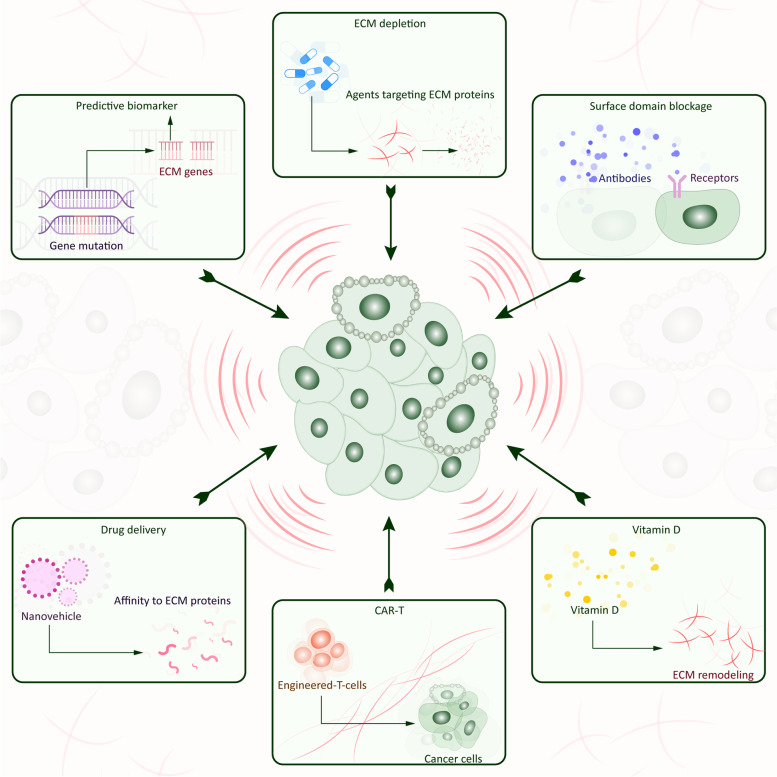
Verification
Claims the paper makes
The claims and statistics of this paper haven’t been checked yet.
Free: it reads the open-access text and checks the first 5 claims that cite a source we can check. Create a free account to check every claim.
Claims other papers make about this one
Each is checked against this paper’s own text: does it say what the citing paper says it does?
The cited source says what the claim attributes to it.
In the citing paper
“inhibiting lysyl oxidase (LOX) family enzymes, which are involved in the crosslinking of ECM proteins collagen and elastin, can reduce matrix stiffness and improve drug delivery to tumor cells [219].”
From Mechanisms and Strategies to Overcome Drug Resistance in Colorectal Cancer (2025) · cites this paper as [219]
Self-check
Percentages, sums and reported differences re-computed from the paper’s own numbers.
The self-check needs the paper’s full text.
Citations
Cites
2 retracted
NK cell heparanase controls tumor invasion and immune surveillance
Putz, E. M., Mayfosh, A. J., Kos, K., Barkauskas, D. S., Nakamura, K., Town, L., Goodall, K. J., Yee, D. Y., Poon, I. K. H., Baschuk, N., et al. (2017) · Journal of Clinical Investigation · doi:10.1172/jci92958 · Cited by 105
RetractedAndreuzzi, E., Colladel, R., Pellicani, R., Tarticchio, G., Cannizzaro, R., Spessotto, P., Bussolati, B., Brossa, A., Paoli, P. D., Canzonieri, V., et al. (2017) · Matrix Biology · doi:10.1016/j.matbio.2017.04.002 · Cited by 84 · cited 1×
“mediates MMRN2 degradation and enhances tumor angiogenesis [431].”
BackgroundRetractedSung, H., Ferlay, J., Siegel, R. L., Laversanne, M., Soerjomataram, I., Jemal, A., & Bray, F. (2021) · CA: A Cancer Journal for Clinicians · doi:10.3322/caac.21660 · Cited by 108,699 · cited 1×
“Anti‐cancer therapy targeting ECM Raising morbidity of cancer worldwide demonstrates the emergency of precise treatment strategy design and the discovery of novel therapeutic targets [541].”
BackgroundRole of YAP/TAZ in mechanotransduction
Dupont, S., Morsut, L., Aragona, M., Enzo, E., Giulitti, S., Cordenonsi, M., Zanconato, F., Le Digabel, J., Forcato, M., Bicciato, S., et al. (2011) · Nature · doi:10.1038/nature10137 · Cited by 5,979 · cited 1×
“Abnormal activation of Hippo core factors Yes1 associated transcriptional regulator (YAP) and WW domain containing transcription regulator (TAZ, or WWTR1) sustain cell proliferation and is prevalently detected in various cancers, implying the success adaption of cancer to crowed environment [137, 138].”
BackgroundMatrix Metalloproteinases: Regulators of the Tumor Microenvironment
Kessenbrock, K., Plaks, V., & Werb, Z. (2010) · Cell · doi:10.1016/j.cell.2010.03.015 · Cited by 5,151 · cited 1×
“Some enzymes process matrix components, such as collagen, resulting in the production and release of bioactive fragments [9, 10].”
BackgroundReactive oxygen species (ROS) homeostasis and redox regulation in cellular signaling
Ray, P. D., Huang, B.-W., & Tsuji, Y. (2012) · Cellular Signalling · doi:10.1016/j.cellsig.2012.01.008 · Cited by 4,373 · cited 1×
“When cancer cells are detached from ECM, increasing production of ROS is lethal for tumor cell survival [293].”
BackgroundHow Matrix Metalloproteinases Regulate Cell Behavior
Sternlicht, M. D., & Werb, Z. (2001) · Annual Review of Cell and Developmental Biology · doi:10.1146/annurev.cellbio.17.1.463 · Cited by 3,959 · cited 1×
“A big family contains more than 30 kinds of MMP have been identified since the MMPs’ role as collagen hydrolase was unveiled [42, 43].”
BackgroundThe extracellular matrix: A dynamic niche in cancer progression
Lu, P., Weaver, V. M., & Werb, Z. (2012) · Journal of Cell Biology · doi:10.1083/jcb.201102147 · Cited by 3,024 · cited 1×
“Meanwhile, cell-to-cell activity residing in the TME is constantly reshaping ECM, and these cells are affected by the signals provide by ECM itself [13].”
BackgroundEMT Transition States during Tumor Progression and Metastasis
Pastushenko, I., & Blanpain, C. (2019) · Trends in Cell Biology · doi:10.1016/j.tcb.2018.12.001 · Cited by 2,876 · cited 1×
“ECM‐induced EMT: ready for invasion For epithelial cells, EMT is a critical process for tumor progression and metastasis [237].”
BackgroundDistinct populations of inflammatory fibroblasts and myofibroblasts in pancreatic cancer
Öhlund, D., Handly-Santana, A., Biffi, G., Elyada, E., Almeida, A. S., Ponz-Sarvise, M., Corbo, V., Oni, T. E., Hearn, S. A., Lee, E. J., et al. (2017) · Journal of Experimental Medicine · doi:10.1084/jem.20162024 · Cited by 2,590
Cited by
Items 301–400 of 1,000
Bartusik‐Aebisher, D., Wilk, I., & Aebisher, D. (2025) · Cancers · doi:10.3390/cancers18010086 · Cited by 13
“This includes increased collagen deposition, hyaluronic acid accumulation and activation of cancer-associated fibroblasts [19].”
Lupsa, N., Héninger, E., Ding, A. B., Sánchez‐de‐Diego, C., Vietor, K. J., Reese, S. R., LeBeau, A. M., Kosoff, D., Beebe, D. J., Kerr, S. C., et al. (2026) · International Journal of Molecular Sciences · doi:10.3390/ijms27031585 · Cited by 12
“Additionally, immune evasion is exacerbated by CAF-driven immune exclusion enforced by ECM deposits that raise a physical barrier around the tumor nest and limit tumor-specific T cell trafficking [129,130].”
Engineered Bacterial Biomaterials for Augmenting Adoptive Immune Cell Therapy Against Solid Tumors
Zhu, C., Sun, Z., Wu, Q., Wang, F., Zhang, L. L., Wang, W., Ding, Y., & Li, H. (2026) · Advanced Materials · doi:10.1002/adma.202522140 · Cited by 11
“Furthermore, bacterial enzymes such as hyaluronidases and matrix metalloproteinases (MMPs) can degrade components of the tumor ECM, such as collagen and hyaluronic acid, thereby reducing matrix stiffness and alleviating physical barriers to immune cell migration [55].”
Zhou, J., Luo, J., Gan, R.-Z., Zhi, L., Zhou, H., Lv, M.-X., Huang, Y., & Liang, G. (2024) · Recent Patents on Anti-Cancer Drug Discovery · doi:10.2174/0115748928283132240103073039 · Cited by 9
Pu, Y., Yang, G., Zhou, Y., Pan, X., Guo, T., & Chai, X. (2024) · International Immunopharmacology · doi:10.1016/j.intimp.2024.112198 · Cited by 9
Karunasagara, S., Taghizadeh, A. A., Kim, S., Kim, S. J., Kim, Y., Taghizadeh, M., Kim, M., Oh, K., Lee, J., Kim, H. S., et al. (2024) · Advanced Science · doi:10.1002/advs.202400063 · Cited by 13
Paolis, V. D., Troisi, V., Bordin, A., Pagano, F., Caputo, V., & Parisi, C. (2024) · Life Sciences · doi:10.1016/j.lfs.2024.123059 · Cited by 9
Single-cell RNA sequencing in ovarian cancer: Current progress and future prospects
Chong, Z. X. (2025) · Progress in Biophysics and Molecular Biology · doi:10.1016/j.pbiomolbio.2025.01.002 · Cited by 9
Small Fish, Big Answers: Zebrafish and the Molecular Drivers of Metastasis
Martínez-López, M. F., & López‐Gil, J. F. (2025) · International Journal of Molecular Sciences · doi:10.3390/ijms26030871 · Cited by 11
Matsuzaka, Y., & Yashiro, R. (2025) · Biologics · doi:10.3390/biologics5010007 · Cited by 11
“When miR-624-3p is suppressed, it allows for increased VEGF-C production, which in turn stimulates the formation of new lymphatic vessels around the tumor [134,147].”
Shtrauchler, O., Nativ‐Roth, E., Sanchez, D. S., Zaiden, M., & Vidavsky, N. (2024) · Acta Biomaterialia · doi:10.1016/j.actbio.2024.02.031 · Cited by 13
Mastrogiovanni, M., Donnadieu, E., Pathak, R., & Bartolo, V. D. (2024) · Biology · doi:10.3390/biology13110860 · Cited by 10
“This is the case for the tumor suppressor and cell polarity regulator adenomatous polyposis coli, or Apc, which is mutated in virtually all cases of sporadic colorectal cancers and in an inherited form of malignant polyposis (familial adenomatous polyposis, FAP) [331].”
Chen, L., Yang, H., Wei, X., Liu, J., Han, X., Zhang, C., Liu, Y., Zhang, Y., Xu, Y., Li, Y., et al. (2025) · Frontiers in Immunology · doi:10.3389/fimmu.2024.1487372 · Cited by 11
Self-citationTang, R., & Liu, X. (2025) · Interdisciplinary medicine · doi:10.1002/inmd.20240083 · Cited by 11
Yu, Z.-H., Xu, H., Wang, S., Li, Y., Wang, G., Tian, Y., Chen, Z., Song, W., He, L., Wang, X., et al. (2025) · Cancer Cell International · doi:10.1186/s12935-025-03705-1 · Cited by 12
“…enrichment scores of extracellular matrix organization, cell adhesion as well as collagen fibril organization, which had been confirmed to be associated with immune suppressive microenvironment [29], were presented significantly higher enriched in COL1A2(+) MMP1(-) CAFs and COL1A2(+) MMP1(+) CAFs.”
Self-citationPeng, L., Zhao, A., Li, R., Liu, Y., Tang, D., Deng, D., Zhuang, Q., Liang, R., Zhang, S., & Song, W. C. (2025) · Advanced Science · doi:10.1002/advs.202502750 · Cited by 16
Self-citationPan, X., Zhang, H., Deng, H., Wang, H., Li, L., Liu, Z., Wang, L., An, Y., Lu, C. Y., Liu, Z., et al. (2025) · Engineering Applications of Artificial Intelligence · doi:10.1016/j.engappai.2025.111100 · Cited by 9
Sun, L., Wang, H., Li, H., Yang, R., Dong, D., Dong, D., Fan, Y., Li, E., Wang, H., Wu, Y., et al. (2025) · Biology Direct · doi:10.1186/s13062-025-00683-2 · Cited by 8
“…that the deposition of a large number of collagens and other extracellular matrix components around the cancer cells is correlated with the increase of tumor tissue stiffness [29, 30], thus we conducted HE and Masson staining to visualize tissue structure and collagen deposition, respectively.”
Sofi, S., Jan, A., Masoodi, G., Mir, A. A., & Mir, M. A. (2025) · Journal of drug targeting · doi:10.1080/1061186x.2025.2550589 · Cited by 8
“Although targeting ecM normalisation appears to be a potential technique to improve anti-cancer treatment results, this intricate regulatory network poses hurdles for personalised therapy [83].”
Neutrophils in Myocarditis: A Focus on the Secretory and Phagocytotic Functions
Jia, L., Shen, Y., Feng, W., Mai, R., & Wang, X. (2025) · Reviews in Cardiovascular Medicine · doi:10.31083/rcm39207 · Cited by 9
“Alterations in the extracellular matrix can activate local inflammatory signaling pathways, such as the NF-κ B and MAPK pathways, which can further promote the activation and degranulation of neutrophils [69].”
Self-citationIchikawa, T., Kono, Y., Kudo, M., Shimi, T., Miyashita, N., Maesaka, T., Ishibashi, K., Sivashanmugan, K., Yoshida, T., Miyazawa, K., et al. (2025) · ACS Applied Nano Materials · doi:10.1021/acsanm.5c03044 · Cited by 9
The hypoxic ECM and neutrophils in MIBC immunotherapy resistance
Child, F., Lunj, S., Gough, J. E., Humphries, M. J., Biolatti, L. V., Hoskin, P., Choudhury, A., & Quiles, C. G. (2025) · Nature Reviews Urology · doi:10.1038/s41585-025-01092-w · Cited by 9
Renal cell carcinoma organoids for precision medicine: bridging the gap between models and patients
Gao, J., Luo, H., Wang, S., Zhou, C., Li, Z., Kimhoy, C., Liang, G., & Chen, S. (2025) · Journal of Translational Medicine · doi:10.1186/s12967-025-06949-7 · Cited by 8
“…entails a shift in cellular metabolism characterized by elevated lactate production, concurrent activation of key immunosuppressive mediators such as TGF-β and IL-6, and extensive remodeling of the extracellular matrix through matrix metalloproteinases, particularly MMP-2 and MMP-9 [137–139].”
Biophysical Properties of the Extracellular Matrix in Cancer: Insights Into Immunotherapy
Zheng, X., Ke, F., Yao, M., Yang, H., Luo, Y., Liu, X., Chen, C., Zhang, J., Guo, X., Song, C., et al. (2025) · Frontiers in Bioscience-Landmark · doi:10.31083/fbl44127 · Cited by 9
Alshahrani, A., Alsubait, A., Asiri, Z. A., Alghamdi, S. S., Saqyah, S. B., Alqahtani, T., Fitaihi, R. A., Altuwaijri, N., & Jamous, Y. F. (2025) · Frontiers in Oncology · doi:10.3389/fonc.2025.1684896 · Cited by 12
Li, X., Zhao, Y., Gu, P., Zhao, C., Fan, Y., Zhang, X., Zhao, C., Ma, P. X., Feng, G., & Sun, Y. (2026) · Science Advances · doi:10.1126/sciadv.adx2768 · Cited by 11
Extracellular Redox Balance as a Determinant of Immune Regulation and Tissue Inflammation
Seitz, R., Müller, M. A., & Gülow, K. (2026) · Antioxidants · doi:10.3390/antiox15030280 · Cited by 9
Different contractility modes control cell escape from multicellular spheroids and tumor explants
Blauth, E., Grosser, S., Sauer, F., Merkel, M., Kubitschke, H., Warmt, E., Morawetz, E. W., Friedrich, P., Wolf, B., Briest, S., et al. (2024) · APL Bioengineering · doi:10.1063/5.0188186 · Cited by 9
“22,24,62 In this context, desmoplasia and collagen biomarkers have been linked to relapse and death in cancer patients.”
BackgroundDecoding the complex web: cellular and molecular interactions in the lung tumour microenvironment
Issa, B. S., Adhab, A. H., Mahdi, M. S., Kyada, A., Ganesan, S., Bhanot, D., Naidu, K. S., Kaur, S., Mansoor, A. S., Radi, U. K., et al. (2024) · Journal of drug targeting · doi:10.1080/1061186x.2024.2445772 · Cited by 9
“…of normal fibroblasts [22]. cAfs can promote tumour growth in multiple ways. they secrete growth factors and extracellular matrix (ecM) proteins. these create a supportive niche for tumour cells and contribute to drug resistance by creating physical barriers to drug and cell penetration [23].”
Epigenetic Symphony in Diffuse Large B-Cell Lymphoma: Orchestrating the Tumor Microenvironment
Gheorghe, A. D., Cristian, M., Calin, E., Pricop, A.-R., Mociu, S.-I., Seicaru, L., Deacu, S., Ciufu, N., Suceveanu, A., Suceveanu, A., et al. (2025) · Biomedicines · doi:10.3390/biomedicines13040853 · Cited by 12
“Looking at ECM, epigenetic modification alters stiffness and fibrosis, which results in ECM accumulation, promoting a rigid tumor-supportive stroma, and histone deacetylation in stromal cells reduces ECM turnover, making the microenvironment more fibrotic and resistant to therapy [123,140].”
Stimuli-responsive smart nanomaterials for theranostics of urological cancers
Xu, Y., Moradialvand, M., Sala, F. D., Zare, E. N., Hushmandi, K., Rahimmanesh, I., Borzacchiello, A., Iravani, S., Zare, I., Shin, J., et al. (2025) · Coordination Chemistry Reviews · doi:10.1016/j.ccr.2025.216745 · Cited by 8
Cheng, B., Yang, J., Huang, W., Luo, T., Li, L., Wu, J., Zhou, Q., Zhuang, R., Wang, Q., Xu, K., et al. (2025) · International Journal of Surgery · doi:10.1097/js9.0000000000002895 · Cited by 11
“Extensive research has elucidated the profound influence of the tumor microenvironment (TME) on the pathological mechanisms and prognostic outcomes of various types of tumors [ 1-3 ] .”
Decellularized diseased tissues: current state‐of‐the‐art and future directions
Li, X., Shan, J., Chen, X., Cui, H., Wen, G., & Yu, Y. (2023) · MedComm · doi:10.1002/mco2.399 · Cited by 8
“42,44 Collagen is an essential component to maintain the structural integrity of ECM.”
BackgroundTargets in the Tumour Matrisome to Promote Cancer Therapy Response
Jalil, S. M. A., Henry, J. C., & Cameron, A. J. M. (2024) · Cancers · doi:10.3390/cancers16101847 · Cited by 10
“The intimate link between the matrisome and immune content implies that the direct targeting of specific ma-trisome components may provide benefit to augment immunotherapy and chemotherapy response [6].”
BackgroundHuang, Y. T., Chu, C., Mai, Y., Zhao, Y., Cao, L., Ji, S.-Y., Zhu, B., & Shen, Q. (2024) · Frontiers in Pharmacology · doi:10.3389/fphar.2024.1347234 · Cited by 8
Yan, W., Hu, W., Song, Y., Liu, X., Zhou, Z., Li, W., Cao, Z., Pei, W., Zhou, G., & Hu, G. (2024) · Molecular Therapy — Nucleic Acids · doi:10.1016/j.omtn.2024.102260 · Cited by 9
Cholesterol: The driving force behind the remodeling of tumor microenvironment in colorectal cancer
Wang, K., Zhang, Y., Si, C., Cao, Y., Shao, P., Zhang, P., Wang, N., Su, G., Qian, J., & Liu, Y. (2024) · Heliyon · doi:10.1016/j.heliyon.2024.e39425 · Cited by 9
Dartora, V. F. C., Carney, R. P., Wang, A., Qiu, P., & Panitch, A. (2025) · Acta Biomaterialia · doi:10.1016/j.actbio.2025.02.028 · Cited by 8
Characterizing macrophage diversity in colorectal malignancies through single-cell genomics
Zhao, T., Luo, Y., Sun, Y., & Wei, Z. (2025) · Frontiers in Immunology · doi:10.3389/fimmu.2025.1526668 · Cited by 13
The Crucial Nexus: Unveiling the Role of Collagen in Cancer Progression
Reeva, H., Mahesh, G., Manjunath, U., Selvamurugan, N., & Mohankumar, D. (2025) · Seminars in Oncology · doi:10.1016/j.seminoncol.2025.152346 · Cited by 7
Discoidin Domain Receptors in Tumor Biology and Immunology: Progression and Challenge
Zhang, H., Chen, W., Zhu, H., & Tsai, H. (2025) · Biomolecules · doi:10.3390/biom15060832 · Cited by 9
“Increased ECM stiffness in certain tumors hinders T-cell infiltration while concomitantly enhancing macrophage activation and M2-like polarization, thereby supporting tumor progression [5].”
Deng, S., Wang, Q., Li, Y., Zhang, R., Li, J., Zhang, Y., Cai, Y., Sun, W., Chang, J., Zhang, N., et al. (2025) · Cancer Immunology Immunotherapy · doi:10.1007/s00262-025-04099-9 · Cited by 8
“Notably, fibroblast-related gene upregulation was predominantly observed in non-responders, implying that fibro-blast-mediated ECM remodeling may hinder immune cell infiltration, a phenomenon previously reported in pancreatic cancer models [35].”
Self-citationMa, C., Hu, H., Li, H., Han, B., Lv, C., & Tian, Y. (2025) · Frontiers in Immunology · doi:10.3389/fimmu.2025.1637300 · Cited by 9
“ECM remodeling mediated by stroma cells, especially cancer-associated fi broblasts (CAFs), also plays an important role in tumorigenesis (6).”
Synovial matrix turnover controls immune cell spatial patterning in inflammation resolution
Richard, J.-B., Hoyle, A., Bower, M. A., Wu, S., Worthington, L. A., Davidson, S., Varyova, Z., Morrell, C., Pohin, M., Schonfeldova, B., et al. (2025) · Molecular Systems Biology · doi:10.1038/s44320-025-00149-7 · Cited by 8
“…canonical musculoskeletal (MSK) conditions such as Osteogenesis Imperfecta (Marini et al, 2017), to fi brosis, where it is a core de fi ning feature (Henderson et al, 2020), or the modulation of tumour growth and treatment responses in certain types of cancer (Henke et al, 2020; Yuan et al, 2023).”
Qian, Z., Bai, W., Li, J., Rao, X., Huang, G., Zhang, X., Wu, W., Liu, J., & Wei, W. (2025) · Frontiers in Cellular and Infection Microbiology · doi:10.3389/fcimb.2025.1585881 · Cited by 7
Safa, A., Vruzhaj, I., Gambirasi, M., & Toffoli, G. (2025) · Cancers · doi:10.3390/cancers17213506 · Cited by 7
Chen, Z., Zhenxing, L., Cai, T., Yang, X. X., Jie, H., Xiao, W. L., Zheng, X., Liu, H., Huang, L., Xiong, L., et al. (2025) · Cancer Letters · doi:10.1016/j.canlet.2025.218150 · Cited by 10
Mechano-regulation of cancer cell memory in tumor progression and therapy
Qu, Y., Cui, J., Wu, Z., He, P., Wei, F., Guo, T., Huang, Y., Yu, X., Tsoy, M., Liu, K., et al. (2025) · Mechanobiology in Medicine · doi:10.1016/j.mbm.2025.100165 · Cited by 12
“6,7 The tumor ECM main components are collagen, proteoglycans, elastin, fibronectin.”
Self-citationLv, Y., Duan, T., Song, J., Liu, S., Zhou, Z., Ba, Y., Weng, S., Zuo, A., Xu, H., Luo, P., et al. (2026) · 癌症:英文版 · doi:10.34133/cancomm.0002 · Cited by 8
“Stiff ECMs subsequently affect cellular signaling pathways, ultimately exacerbating tumor progression [ 84 ].”
Trojan Horse Strategy: How Biomimetic Nanomedicine Remodels the Tumor Microenvironment
Wang, W., Mu, S., Zhang, J., Shan, G., Li, X., Wang, R., Guo, T., & He, X. (2026) · Advanced Science · doi:10.1002/advs.202519213 · Cited by 9
“Consequently, disrupting and remodeling the tumor ECM has become a hot topic in cancer therapy [ 191 ].”
Li, W., Lv, L., Jin, Y., & Yuan, X. Y. (2026) · Oncology Reports · doi:10.3892/or.2026.9050 · Cited by 11
“Recognizing these TME‑centric escape mechanisms is essential to explain why even aggressive multimodal therapy fails in a substantial subset of patients (10,11).”
The Heterogeneity and Function of Stromal Cells in the Tumor Microenvironment
Wang, X., Li, S., Xue, Y., Liang, X., Ma, X., Zhang, K., & Wang, Y. (2026) · Research · doi:10.34133/research.1183 · Cited by 10
“Spatially, collagen and hyaluronan accumulate in heterogeneous patterns, with dense peritumoral rims and perivascular niches that correlate with immune exclusion and impaired delivery [ 140 ].”
Self-citationMatrix‐based molecular mechanisms, targeting and diagnostics in oral squamous cell carcinoma
MASTRONIKOLIS, N. S., Kyrodimos, E., Piperigkou, Z., Spyropoulou, D., Delides, A., Giotakis, E. I., Alexopoulou, M. M., Bakalis, N., & Karamanos, N. K. (2024) · IUBMB Life · doi:10.1002/iub.2803 · Cited by 8
“…that marks the beginning of the metastatic cascade, so it is possible to better understand how cancer cells acquire the invasive phenotype by observing how they interact with the BM. 15,22 Several substances within the ECM, such as laminins and fibro-nectins, also contribute to tumor development.”
BackgroundInfluentialCao, L., Zhang, S., Peng, H., Lin, Y., Xi, Z., Lin, W., Guo, J., Wu, G., Yu, F., Zhang, H., et al. (2024) · Aging · doi:10.18632/aging.205439 · Cited by 9
“Emerging evidence suggests that cancer cells shape the ECM, creating an immune-suppressive microenvironment that reduces the efficacy of immuno-therapies [9, 10].”
Self-citationPerspectives on label-free microscopy of heterogeneous and dynamic biological systems
Pham, D. L., Gillette, A. A., Riendeau, J. M., Wiech, K. J., Guzman, E. C., Datta, R., & Skala, M. C. (2024) · Journal of Biomedical Optics · doi:10.1117/1.jbo.29.s2.s22702 · Cited by 11
“6 Dynamic interactions among these cellular and noncellular components within the TME directly affect immune functions, ECM remodeling, and drug sensitivity, ultimately determining patient outcomes.”
BackgroundEfficacy tumor therapeutic applications of stimuli-responsive block copolymer-based nano-assemblies
Zhou, J., Yang, R., Chen, Y., & Chen, D. (2024) · Heliyon · doi:10.1016/j.heliyon.2024.e28166 · Cited by 7
“Moreover, the vascular leakage, poor lymphatic drainage, and the remodeling of extracellular matrix such as fibrosis and hardening, seriously hinder the movement and diffusion of nano-assemblies, leading to insufficient penetration within the tumor and greatly compromising treatment efficacy [8].”
BackgroundFang, H., Chen, X., Zhong, Y., Wu, S., Ke, Q., Huang, Q., Wang, L., & Zhang, K. (2024) · Frontiers in Immunology · doi:10.3389/fimmu.2024.1446961 · Cited by 8
Lajevardi, M. S., Ashrafpour, M., Mubarak, S. M. H., Rafieyan, B., Kiani, A., Noori, E., Ardakany, M. R., Montazeri, M., Esfahani, N. K., Asadimanesh, N., et al. (2024) · Medical Oncology · doi:10.1007/s12032-024-02547-7 · Cited by 10
Sahoo, A., Tsukidate, T., Lin, B., Kotzbauer, E., Houser, J., Patel, M., Li, X., & Madabhushi, S. R. (2025) · Biotechnology Journal · doi:10.1002/biot.202400567 · Cited by 9
Uddin, M. N., Wang, J., Bhuiyan, M. H. R., Rashid, M. M., Mamun, M. Z. U. A., Syed, A., & Roney, M. (2025) · Computational Biology and Chemistry · doi:10.1016/j.compbiolchem.2025.108590 · Cited by 7
Antitumor Properties of Matrikines of Different Origins: Prospects and Problems of Their Application
Popov, A., Kozlovskaya, E. P., Rutckova, T. A., Styshova, O. N., Vakhrushev, A. I., Купера, Е. В., & Tekutyeva, L. (2023) · International Journal of Molecular Sciences · doi:10.3390/ijms24119502 · Cited by 7
“Moreover, the deep regulatory network of ECM remodeling hinders effective antitumor therapy [30].”
BackgroundResearch progress and application of single-cell sequencing in head and neck malignant tumors
Qu, S., Gong, M., Deng, Y., Xiang, Y., & Ye, D. (2023) · Cancer Gene Therapy · doi:10.1038/s41417-023-00691-2 · Cited by 10
“…in the content, activity, and cross-linking of these proteins trigger changes in signal transduction, resulting in cytotoxic immune cells that primarily undergo immune elimination being in fl uenced by the signals provided by ECM itself, and unable to kill tumor cells in the reshaped ECM [36, 37].”
BackgroundCausal associations of MICB, CTSA, and MMP9 proteins with oral cancer: Mendelian randomization study
Dong, B., Hua, J., Ma, S., Wang, L., Xiao, H., Qiao, X., Zhao, R. Z., & Liu, Y. (2024) · Scientific Reports · doi:10.1038/s41598-024-77042-0 · Cited by 7
“First, MMP9 is a zinc-dependent matrix metalloproteinase to remodel the extracellular matrix (ECM) shaped by cancer and determine the immune cells localization and function 42 .”
BackgroundLi, P., Dong, Z., Jiang, Q., Yu, C., Liu, Y., Yuan, R., Qiu, Y., Meng, T., Hu, F., & Yuan, H. (2026) · Journal of Controlled Release · doi:10.1016/j.jconrel.2025.114406 · Cited by 6
Osama, A., Karam, A., ATEF, A., Arafat, M., Afifi, R. W., Mokhtar, M., Abdelmoneim, T. K., Ramzy, A., Nadi, E. E., Salama, A., et al. (2025) · Cells · doi:10.3390/cells14141115 · Cited by 6
“These processes are well-established hallmarks of cancer progression and therapeutic response [71,72].”
Crestani, M., Gerber, I., Miéville, A., Frauenknecht, K. B. M., Maragkou, T., Hortobágyi, T., & Vogel, V. (2025) · Advanced Science · doi:10.1002/advs.202416526 · Cited by 7
Impact of senescent fibroblasts secretome in ovarian cancer dissemination
Pèrié, L., Landras, A., Bignard, M., Theuret, M., Briand, M., Carreiras, F., & Picot, C. R. (2025) · Experimental Gerontology · doi:10.1016/j.exger.2025.112909 · Cited by 6
Soil and Seed: Tumor Microenvironment Nurtures Immunotherapy Resistance and Renewal
Li, Y., Feng, Q., Xia, Y., Liao, L., & Xie, S. (2025) · International Journal of Molecular Sciences · doi:10.3390/ijms262110547 · Cited by 6
“High stiffness ECM activates CAFs, promotes secretion of collagen, fibronectin, and glycosaminoglycans, and leads to matrix accumulation and fibrosis through down-regulation of MMP-9 and upregulation of the tissue inhibitor of metalloproteinase-1 [110].”
Self-citationCai, S., Chen, Z., Yang, B., Zhang, J., Zhong, X., Xu, D., Li, Y., Li, Y., & Yin, S. (2025) · Materials Today Bio · doi:10.1016/j.mtbio.2025.102497 · Cited by 13
Self-citationExtracellular vesicles as modulators of cancer metabolism and microenvironment
Feltri, V., Sanfilippo, A., Tasso, R., & Ciferri, M. C. (2026) · Extracellular Vesicles and Circulating Nucleic Acids · doi:10.20517/evcna.2025.151 · Cited by 6
Bhalotia, A., Hutchinson, D. W., Kosmides, T., Nittayacharn, P., Mehta, M., Iyer, A., Cheplyansky, A., Takizawa, K., Nidhiry, A., Dever, A. M., et al. (2026) · ACS Nano · doi:10.1021/acsnano.5c21787 · Cited by 9
Liu, J., Si, L., Li, S., Liu, Y., Zhang, X., Liu, Y., Jiang, S., Xu, X., Wang, Y., Wang, Y., et al. (2026) · Materials Today Bio · doi:10.1016/j.mtbio.2026.102950 · Cited by 6
“…the remodeled ECM can actively transmit inhibitory biochemical signals, induce functional exhaustion of immune cells, and promote the activation of immuno-suppressive cells including regulatory T cells (Tregs), ultimately collectively fostering a highly immunosuppressive TME [10,12 – 14].”
Mechanobiological engineering strategies for oral and maxillofacial tissue regeneration
Park, J. H., Sagar, V., Leong, K. W., Kim, H., & Kim, H. S. (2026) · Biomaterials · doi:10.1016/j.biomaterials.2026.124158 · Cited by 6
Basem, Y., Ata, A., Sherif, A., Abdel-Ghany, S. E., Arneth, B. M., & Sabit, H. (2026) · Pharmaceuticals · doi:10.3390/ph19040541 · Cited by 6
“ECM remodeling shows increased collagen I and fibronectin deposition, heightened integrin signaling, and the deposition of matricellular proteins that sequester growth factors, creating a sieve against large therapeutics and a reservoir of pro-survival signals [84].”
Nanomedicine for colorectal cancer therapy by remodeling the immune microenvironment
Wu, Y., Su, Y., Wei, Y., Shui, M., Li, W., Yang, L., & Luo, K. (2026) · Journal of Controlled Release · doi:10.1016/j.jconrel.2026.114915 · Cited by 6
Peng, R., Ma, X., Jiang, Z., Duan, Y., Lv, S., & Wei, J. (2024) · Heliyon · doi:10.1016/j.heliyon.2024.e34029 · Cited by 9
“However, once tumor cells detach from the ECM, a specific form of programmed cell death known as Anoikis is triggered [10,11].”
BackgroundBu, Z., Jiang, N., Li, K., Lu, Z.-L., Zhang, N., Yan, S.-S., Chen, Z., Hao, Y., Zhang, Y., Xu, R.-B., et al. (2024) · Medicine · doi:10.1097/md.0000000000038747 · Cited by 8
“[1] They are among the most lethal diseases globally because of their covertness, aggressiveness, and the absence of reliable diagnostic markers.”
BackgroundDevelopment of a Bladder Cancer-on-a-Chip Model to Assess Bladder Cancer Cell Invasiveness
Ewell, D. J., Vue, N., Moinuddin, S. M., Sarkar, T., Ahsan, F., & Vinall, R. L. (2024) · Cancers · doi:10.3390/cancers16152657 · Cited by 6
Wang, Q., Liu, X., Zhang, X., Huo, Z.-X., Chen, C., Chen, S., Liu, S., Zhu, J., Liu, S., & Lu, B. (2024) · Advances in Medical Sciences · doi:10.1016/j.advms.2024.09.007 · Cited by 7
Unraveling the role of cancer-associated fibroblasts in B cell lymphoma
Mukherjee, P., Ansell, S. M., & Mondello, P. (2024) · Frontiers in Immunology · doi:10.3389/fimmu.2024.1451791 · Cited by 7
Targeting collagen in “armored and cold” tumors: Overcoming barriers to cancer therapy
Wang, S., Li, J., & Zhao, Y. (2024) · Cancer Pathogenesis and Therapy · doi:10.1016/j.cpt.2024.11.001 · Cited by 7
“10,11 However, the mechanisms by which collagen regulates im-munecellswithintheTMEremainlargelyunexplored.”
Harnessing nanoparticles for reshaping tumor immune microenvironment of hepatocellular carcinoma
Li, J., Zhang, G., Li, G., Zhang, J., Yang, Z., Yang, L., Jiang, S., & Wang, J. (2025) · Discover Oncology · doi:10.1007/s12672-025-01897-6 · Cited by 7
Naglah, A. M., Almehizia, A. A., Al-Omar, M. A., Al‐Wasidi, A. S., Mohamed, M. H., Al-Sobeai, S. M., Hassan, A. S., & Aboulthana, W. M. (2025) · Pharmaceutics · doi:10.3390/pharmaceutics17040446 · Cited by 9
“Cancer is a disease characterized by uncontrolled cell growth and division [13].”
Zhong, W., Li, J., Xie, J., Zhang, Z., Gong, Z., Yan, Z., & Cao, Q. (2025) · BMC Cancer · doi:10.1186/s12885-025-14452-x · Cited by 7
“It has been reported that cancer cells can modulate immune cells, leading to the formation of an immunosuppressive microenvironment in the extracellular matrix, which can weaken inflammatory responses, facilitate immune evasion, and hinder the efficacy of immunotherapy [22].”
Self-citationD'Angelo, E., Marangio, A., Sensi, F., Zanrè, E., Steffan, A., Repetto, O., Rampado, R., Giomo, M., Fassan, M., Spolverato, G., et al. (2025) · Biomaterials Advances · doi:10.1016/j.bioadv.2025.214438 · Cited by 7
Zhao, L., Zhang, Y., Yang, X., Chen, T., Liu, J., & Guo, Z. (2025) · Cancer Immunology Immunotherapy · doi:10.1007/s00262-025-04167-0 · Cited by 8
Mendonce, K. C., Palani, N., Monisha, P., Surya, P., & Rajadesingu, S. (2025) · Cells and Development · doi:10.1016/j.cdev.2025.204053 · Cited by 6
Hałas‐Wiśniewska, M., Zawadka, P., Arendt, W., & Izdebska, M. (2025) · Cells · doi:10.3390/cells14201640 · Cited by 9
“This directly links adhesion with the invasive and metastatic phenotype [10].”
Ma, Y., Sheng, J., Yan, F., Wei, W., Li, L., Liu, L., & Sun, J. (2023) · Arabian Journal of Chemistry · doi:10.1016/j.arabjc.2023.105071 · Cited by 6
Liu, H., Shi, H., & Sun, Y. (2024) · BMC Medical Genomics · doi:10.1186/s12920-023-01781-8 · Cited by 6
“The lymphatic system is essential for the collection and cycling of tissue-extravasated fluids, macromolecules, and immune cells into the bloodstream, especially mediates tumor metastasis and provides more chances for immunocytes to migrate through lymphatic vessels [16–18].”
BackgroundOnyeisi, J. O. S., Nader, H. B., & Lopes, C. C. (2024) · Cell Biology International · doi:10.1002/cbin.12158 · Cited by 8
Liu, S., Li, X. J., Zhang, Y., Deng, Y., Li, Z., Zhu, Y., Li, X., Shang, Y., Yang, G., Zhan, X., et al. (2024) · Heliyon · doi:10.1016/j.heliyon.2024.e33219 · Cited by 6
Self-citationMMP11 as a prognostic biomarker correlated with immune infiltrates in pancreatic adenocarcinoma
Fang, Z., Xu, X., Tao, L., Lino-Silva, L. S., & Lü, Y. (2024) · Journal of Gastrointestinal Oncology · doi:10.21037/jgo-24-425 · Cited by 6
“Numerous studies have shown that the tumor-related ECM is involved in stimulating tumor cell growth, invasion, metastasis, and angiogenesis, and counteracted cell death and drug diffusion (22,23).”
Epigenetic regulation of the tumor microenvironment: A leading force driving pancreatic cancer
Vera, R. E., Lamberti, M. J., González, A. L., & Fernández-Zapico, M. E. (2024) · Pancreatology · doi:10.1016/j.pan.2024.07.005 · Cited by 6
Kang, Y. Y., Kang, Y., Zhang, D., & Yao, J. (2024) · Frontiers in Immunology · doi:10.3389/fimmu.2024.1460533 · Cited by 7
Mast cell proteases and metastasis
Ribatti, D. (2024) · Pathology - Research and Practice · doi:10.1016/j.prp.2024.155801 · Cited by 6
Ke, T., Chang, S., Yeh, C., Lin, S., & Yeh, K. (2025) · Scientific Reports · doi:10.1038/s41598-025-90025-z · Cited by 6
Unlocking the Microbial Symphony: The Interplay of Human Microbiota in Cancer Immunotherapy Response
Chacon, J. A., Faizuddin, F., McKee, J. C., Sheikh, A., Vasquez, V. M., Gadad, S. S., Mayer, G., Siby, S., McCabe, M. M., & Dhandayuthapani, S. (2025) · Cancers · doi:10.3390/cancers17050813 · Cited by 8
“The ECM is particularly influential in malignant transformation by undergoing remodeling involving alterations proteins, glycoproteins, and proteoglycans as well as modulating extracellular pathways [56].”
Kumari, M., Alam, K., Bhattacharya, A., Roy, N. S., Madhasu, V., Guchhait, B., Dan, S., Sett, S., Chakrabarti, J., Mandal, C., et al. (2025) · Frontiers in Immunology · doi:10.3389/fimmu.2025.1594405 · Cited by 8
Hong, S., Balwe, S. G., Samson, A. A. S., & Song, J. M. (2024) · Nano Today · doi:10.1016/j.nantod.2024.102441 · Cited by 7
Metadata
- Authors
- Yuan, Z., Li, Y., Zhang, S., Wang, X., Dou, H., Yu, X., Zhang, Z., Yang, S., & Xiao, M.
- Affiliations
- Harbin Medical University (CN)
- Central South University (CN)
- Corresponding author
- Yang, Shanshan
- Xiao, Min
- Venue
- Molecular Cancer
- Published
- 2023-03-11
- Volume
- 22
- Issue
- 1
- Pages
- 48-48
- ISSN
- 1476-4598 (ISSN-L)
- PMC
- PMC10007858
- OpenAlex
- W4323971780
- Semantic Scholar
- c8a593008da53cc37814dab070956b1fd456d86e
- Cited by
- 977
- References
- 625
- Citations by year
- 2026: 304 · 2025: 385 · 2024: 242 · 2023: 45
- FWCI
- 32.03
- Type
- journal article
- Language
- en
- Open access
- gold
- doi.org
- Licence
- cc-by
- creativecommons.org/licenses/by/4.0 (tdm)
- creativecommons.org/licenses/by/4.0 (vor)
- Locations
- Molecular Cancer (publishedVersion, cc-by)
- PubMed Central (publishedVersion, cc-by)
- PubMed (publishedVersion)
- DOAJ (DOAJ: Directory of Open Access Journals) (submittedVersion, cc-by-sa)
- Funders
- Natural Science Foundation of Heilongjiang Province, China (LH2021H076)
- National Natural Science Foundation of China, China (81872460, 81872145)
- Topics
- Life Sciences › Biochemistry, Genetics and Molecular Biology › Cell Biology › Cellular Mechanics and Interactions
- Life Sciences › Biochemistry, Genetics and Molecular Biology › Cancer Research › Protease and Inhibitor Mechanisms
- Life Sciences › Biochemistry, Genetics and Molecular Biology › Molecular Biology › TGF-β signaling in diseases
- Keywords
- extracellular matrix remodeling, tumor progression, immune evasion, tumor microenvironment, extracellular matrix stiffness, anoikis, metastasis, angiogenesis, lymphangiogenesis, immunosuppression, immunotherapy resistance, cancer therapy
- MeSH terms
- Extracellular Matrix, Humans, Immunotherapy, Neoplasms, Tumor Microenvironment
About these checks
Registry, retraction, Cites and statistics results are computed, not judged, with one exception: a printed reference that no index lists is read once by a model before it counts as a citation error. Claims are extracted by a model and kept only when their quote appears verbatim in the text; each cited source is then checked, with a model’s help, for whether it says what the claim relies on. Those verdicts can be wrong — read the claim’s quote and the cited source before relying on one.
Statistics and arithmetic are recomputed, not judged.
Confidence bands are shown only for fields calibrated on our annotated test set. None is calibrated yet, so no band is shown.
What counts as a claim ›How we measure confidence ›How we check this ›
Are you an author, or do you see a problem with this page? Request a review
Data sources
Bibliographic data: Semantic Scholar, OpenAlex, Crossref.
Contains information from the Semantic Scholar Academic Graph Datasets, made available under the ODC Attribution License (ODC-BY 1.0).
Semantic Scholar’s data is described in: Kinney, R., et al. (2023). The Semantic Scholar Open Data Platform. arXiv:2301.10140.
