

Extracellular matrix remodeling in tumor progression and immune escape: from mechanisms to treatments
Open accessThe DOI matches its Crossref record; 626 of the 626 references it cites were found in a registry or an index.
Abstract
The malignant tumor is a multi-etiological, systemic and complex disease characterized by uncontrolled cell proliferation and distant metastasis. Anticancer treatments including adjuvant therapies and targeted therapies are effective in eliminating cancer cells but in a limited number of patients. Increasing evidence suggests that the extracellular matrix (ECM) plays an important role in tumor development through changes in macromolecule components, degradation enzymes and stiffness. These variations are under the control of cellular components in tumor tissue via the aberrant activation of signaling pathways, the interaction of the ECM components to multiple surface receptors, and mechanical impact. Additionally, the ECM shaped by cancer regulates immune cells which results in an immune suppressive microenvironment and hinders the efficacy of immunotherapies. Thus, the ECM acts as a barrier to protect cancer from treatments and supports tumor progression. Nevertheless, the profound regulatory network of the ECM remodeling hampers the design of individualized antitumor treatment. Here, we elaborate on the composition of the malignant ECM, and discuss the specific mechanisms of the ECM remodeling. Precisely, we highlight the impact of the ECM remodeling on tumor development, including proliferation, anoikis, metastasis, angiogenesis, lymphangiogenesis, and immune escape. Finally, we emphasize ECM "normalization" as a potential strategy for anti-malignant treatment.
Overview
The claims and statistics of this paper haven’t been checked yet.
Free: it reads the open-access text and checks the first 5 claims that cite a source we can check. Create a free account to check every claim.
Integrity signals
Registry
Cites
Statistics
Figures
Verification
Claims the paper makes
The claims and statistics of this paper haven’t been checked yet.
Free: it reads the open-access text and checks the first 5 claims that cite a source we can check. Create a free account to check every claim.
Claims other papers make about this one
Each is checked against this paper’s own text: does it say what the citing paper says it does?
The cited source says what the claim attributes to it.
In the citing paper
“inhibiting lysyl oxidase (LOX) family enzymes, which are involved in the crosslinking of ECM proteins collagen and elastin, can reduce matrix stiffness and improve drug delivery to tumor cells [219].”
From Mechanisms and Strategies to Overcome Drug Resistance in Colorectal Cancer (2025) · cites this paper as [219]
Self-check
Percentages, sums and reported differences re-computed from the paper’s own numbers.
The self-check needs the paper’s full text.
Citations
Cites
2 retracted
NK cell heparanase controls tumor invasion and immune surveillance
Putz, E. M., Mayfosh, A. J., Kos, K., Barkauskas, D. S., Nakamura, K., Town, L., Goodall, K. J., Yee, D. Y., Poon, I. K. H., Baschuk, N., et al. (2017) · Journal of Clinical Investigation · doi:10.1172/jci92958 · Cited by 105
RetractedAndreuzzi, E., Colladel, R., Pellicani, R., Tarticchio, G., Cannizzaro, R., Spessotto, P., Bussolati, B., Brossa, A., Paoli, P. D., Canzonieri, V., et al. (2017) · Matrix Biology · doi:10.1016/j.matbio.2017.04.002 · Cited by 84 · cited 1×
“mediates MMRN2 degradation and enhances tumor angiogenesis [431].”
BackgroundRetractedSung, H., Ferlay, J., Siegel, R. L., Laversanne, M., Soerjomataram, I., Jemal, A., & Bray, F. (2021) · CA: A Cancer Journal for Clinicians · doi:10.3322/caac.21660 · Cited by 108,699 · cited 1×
“Anti‐cancer therapy targeting ECM Raising morbidity of cancer worldwide demonstrates the emergency of precise treatment strategy design and the discovery of novel therapeutic targets [541].”
BackgroundRole of YAP/TAZ in mechanotransduction
Dupont, S., Morsut, L., Aragona, M., Enzo, E., Giulitti, S., Cordenonsi, M., Zanconato, F., Le Digabel, J., Forcato, M., Bicciato, S., et al. (2011) · Nature · doi:10.1038/nature10137 · Cited by 5,979 · cited 1×
“Abnormal activation of Hippo core factors Yes1 associated transcriptional regulator (YAP) and WW domain containing transcription regulator (TAZ, or WWTR1) sustain cell proliferation and is prevalently detected in various cancers, implying the success adaption of cancer to crowed environment [137, 138].”
BackgroundMatrix Metalloproteinases: Regulators of the Tumor Microenvironment
Kessenbrock, K., Plaks, V., & Werb, Z. (2010) · Cell · doi:10.1016/j.cell.2010.03.015 · Cited by 5,151 · cited 1×
“Some enzymes process matrix components, such as collagen, resulting in the production and release of bioactive fragments [9, 10].”
BackgroundReactive oxygen species (ROS) homeostasis and redox regulation in cellular signaling
Ray, P. D., Huang, B.-W., & Tsuji, Y. (2012) · Cellular Signalling · doi:10.1016/j.cellsig.2012.01.008 · Cited by 4,373 · cited 1×
“When cancer cells are detached from ECM, increasing production of ROS is lethal for tumor cell survival [293].”
BackgroundHow Matrix Metalloproteinases Regulate Cell Behavior
Sternlicht, M. D., & Werb, Z. (2001) · Annual Review of Cell and Developmental Biology · doi:10.1146/annurev.cellbio.17.1.463 · Cited by 3,959 · cited 1×
“A big family contains more than 30 kinds of MMP have been identified since the MMPs’ role as collagen hydrolase was unveiled [42, 43].”
BackgroundThe extracellular matrix: A dynamic niche in cancer progression
Lu, P., Weaver, V. M., & Werb, Z. (2012) · Journal of Cell Biology · doi:10.1083/jcb.201102147 · Cited by 3,024 · cited 1×
“Meanwhile, cell-to-cell activity residing in the TME is constantly reshaping ECM, and these cells are affected by the signals provide by ECM itself [13].”
BackgroundEMT Transition States during Tumor Progression and Metastasis
Pastushenko, I., & Blanpain, C. (2019) · Trends in Cell Biology · doi:10.1016/j.tcb.2018.12.001 · Cited by 2,876 · cited 1×
“ECM‐induced EMT: ready for invasion For epithelial cells, EMT is a critical process for tumor progression and metastasis [237].”
BackgroundDistinct populations of inflammatory fibroblasts and myofibroblasts in pancreatic cancer
Öhlund, D., Handly-Santana, A., Biffi, G., Elyada, E., Almeida, A. S., Ponz-Sarvise, M., Corbo, V., Oni, T. E., Hearn, S. A., Lee, E. J., et al. (2017) · Journal of Experimental Medicine · doi:10.1084/jem.20162024 · Cited by 2,590
Cited by
Items 701–800 of 1,000
Zhan, X., Huang, M., Zhang, Y., Liu, Z., Liu, C., Guo, Y., Liu, Y., Zhou, W., Yan, Y., Zeng, H., et al. (2026) · Nature Communications · doi:10.1038/s41467-026-75405-x · Cited by 1
Self-citationMaimaitinijiati, Y., Long, T., Meng, Y., Chen, X., Xing, X., Lu, Z., Zhang, Y., Wang, Q., & Liu, J. (2026) · Cell Communication and Signaling · doi:10.1186/s12964-026-03134-1 · Cited by 1
Li, G., Huang, J., Hu, C., Dong, C., Chen, T., Gao, C., Ma, X., & Wu, A. (2026) · Polymer science & technology. · doi:10.1021/polymscitech.6c00080 · Cited by 1
The electrical tumor microenvironment: abnormalities and opportunities
Burchett, A. A., Lay, F., & Datta, M. (2026) · Frontiers in Oncology · doi:10.3389/fonc.2026.1870705 · Cited by 1
“Solid tumors feature drastic remodeling of the extracellular matrix, as reviewed elsewhere (89, 90).”
Hoang, T. A., Lee, E., Hwang, D., Cho, H. J., & Park, S. (2026) · Journal of Controlled Release · doi:10.1016/j.jconrel.2026.115345 · Cited by 1
Recent advances in targeted therapies and immunotherapies for triple-negative breast cancer
Rashid, G., Elsori, D. H., Naqvi, Z., Zehra, T., Zeliha, S., Sadiya, M. R., Abbas, A. M., Mohideen, A. P., Hafez, W., & Babker, A. M. A. (2026) · Frontiers in Oncology · doi:10.3389/fonc.2026.1804620 · Cited by 2
Waqar, M. A., Malik, A., & Mubarak, N. (2026) · Immunologic Research · doi:10.1007/s12026-026-09850-7 · Cited by 1
Ćwilichowska-Puślecka, N., Malek-Chudzik, N., Gorzeń, O., Puślecki, T., Mlost, J., Nguyen, J., Dołęga-Kozierowski, B., Kasprzak, P., Sopel, M., Groborz, K. M., et al. (2026) · Breast Cancer Research · doi:10.1186/s13058-026-02397-3 · Cited by 1
Sun, M., Bai, J., Wang, H., Li, M., Zhou, L., & Li, S. (2024) · Heliyon · doi:10.1016/j.heliyon.2024.e35306 · Cited by 1
“Anoikis is a programmed cell death mechanism that occurs as a loss of correct cell-extracellular matrix (ECM) arises, a structural network promoting cell function and tissue integrity [2 – 4].”
BackgroundChekhun, V. F., Naleskina, L. A., Kunska, L. M., & Lukianova, N. Y. (2024) · Oncology · doi:10.15407/oncology.2024.03.157 · Cited by 1
Zhao, J., Chen, J., Zhang, J., Pan, X., Xu, B., Miao, J., Wang, W., & Jin, G. (2024) · Frontiers in Genetics · doi:10.3389/fgene.2024.1468424 · Cited by 1
Penile Cancer: Innovations in Ultrastructural and Vibrational Markers
Filho, J. F. S. D., Silva, A. C. M., Júnior, A. A. L. T., Sousa, B. L. N., Santos‐Oliveira, R., Silva, G. E. B., dos Santos, C. C., & Alencar, L. M. R. (2025) · ACS Omega · doi:10.1021/acsomega.4c07293 · Cited by 1
Liu, R., Liu, Y., Huang, W., Chen, P., & Cheng, Y. (2025) · Frontiers in Immunology · doi:10.3389/fimmu.2025.1477913 · Cited by 1
Qian, W., Xu, C., Wei, H., Li, Z., & Xu, D. (2025) · World Journal of Gastrointestinal Oncology · doi:10.4251/wjgo.v17.i3.97673 · Cited by 1
Hücre Dışı Matris ve Mekanotransdüksiyonun Kanser Üzerindeki Etkileri
Topal, T., & Tosun, İ. (2025) · Gazi Üniversitesi Fen Fakültesi Dergisi · doi:10.63716/guffd.1594101 · Cited by 2
Dey, A., Jain, S. M., Nambidi, S., Marotta, F., Sharma, N. R., Pathak, S., Thakkar, N., & Banerjee, A. (2025) · Regenerative Engineering and Translational Medicine · doi:10.1007/s40883-025-00437-6 · Cited by 1
Barbosa, B. M., Fabro, A. T., Gomes, R. D. S., & Rainho, C. A. (2025) · Epigenomes · doi:10.3390/epigenomes9030034 · Cited by 1
Wang, J.-H., Guo, T.-Y., Pai, Y.-M., Hou, P.-L., Kumari, H., & Chan, M. W. Y. (2025) · Journal of Bioinformatics and Computational Biology · doi:10.1142/s0219720025500155 · Cited by 1
Intratumoral Manipulation of the Immune Microenvironment of Solid Tumors
Mao, L., Xu, K., Jin, T., Yan, W., & Fang, R. H. (2025) · ACS Nano Medicine · doi:10.1021/acsnanomed.5c00063 · Cited by 1
Filter-aided expansion proteomicsPreprint
Dong, Z., Zhu, Y., Zhang, F., Wu, C., Chen, T., Chen, J., Jiang, W., Xiao, Q., Zheng, S. S., Piatkevich, K. D., et al. (2023) · bioRxiv (Cold Spring Harbor Laboratory) · doi:10.1101/2023.11.29.569242 · Cited by 1
“For instance, samples rich in extracellular matrix, such as CRC tissues 30,31 , require more rigorous homogenization conditions involving higher SDS concentration, elevated homogenization temperature, and longer processing time.”
BackgroundZhuang, P., Gao, S., Scott, B., Jia, Y., Meng, W.-M., Yin, R., Nie, X., Tamhankar, S., Palecek, S. P., Gaiaschi, L., et al. (2024) · bioRxiv (Cold Spring Harbor Laboratory) · doi:10.1101/2024.11.11.622979 · Cited by 2
“3f ), in line with GBM’s aberrant ECM rich in fibronectin, tenascin-C, hyaluronan 84,85 and fibrillar collagen 86 .”
Cuesta, C., Pérez, M. A., Cota, R. R., Coadour, S., Zheng, J., Procel, N., Galparsoro, D. F., Rosell, A., Loa-Mesón, D., Martínez-Castedo, B., et al. (2025) · bioRxiv (Cold Spring Harbor Laboratory) · doi:10.1101/2025.01.20.633776 · Cited by 2
Nadour, M., Leatis, R. I. V. R., Frébault, N., Fontaine, V., Rivollet, L., & Bénard, C. Y. (2025) · bioRxiv (Cold Spring Harbor Laboratory) · doi:10.1101/2025.05.08.652809 · Cited by 1
“More broadly, the ECM is subject to continuous remodeling, marked by dynamic changes in protein content, activity, and modifications such as crosslinking [11, 12].”
Yadav, S. K., Nandakumar, U. P., Vinay, B. C., Dikkatar, M. S., & Rawal, K. B. (2025) · Preprints.org · doi:10.20944/preprints202507.0081.v1 · Cited by 2
Lee, W. E., Cook, S. L., Purvis, G. S. D., Henry, A., Schnitzler, K., Genetzakis, E., Besnier, M., Chandrakanthan, M., Tran, A., Strbenac, D., et al. (2025) · bioRxiv (Cold Spring Harbor Laboratory) · doi:10.1101/2025.08.18.670989 · Cited by 1
“Although CCBE1 has not been linked previously to CAD, its emerging roles in extracellular matrix remodelling 32 , suggest a novel causal link to endothelial dysfunction in atherosclerosis and CAD.”
Wanderley, C. W. S., Michaud, D. E., Shimada, K., Nelson, A., Fu, J., Schnitt, S. J., Tolaney, S. M., Mittendorf, E. A., Barroso‐Sousa, R., Waks, A. G., et al. (2025) · bioRxiv (Cold Spring Harbor Laboratory) · doi:10.1101/2025.09.04.674072 · Cited by 1
Vo, T., Cui, C. S., Benedicto, A., Chen, Y., Causer, A., Tan, X., Kim, E. J., Vu, H., Xiong, A., Hodson, M. P., et al. (2026) · bioRxiv (Cold Spring Harbor Laboratory) · doi:10.64898/2026.01.25.701559 · Cited by 3
Introduction to I Have Been to Hiroshima Mon Amour
Harries, M. (2010) · TheatreForum
Saha, S. S., Gentles, L., Howarth, R., Rundle, S., Ralte, A. M., O'Donnell, R. L., Curtin, N. J., & Drew, Y. (2023) · Research Square · doi:10.21203/rs.3.rs-2840508/v1
MiRNAs as Promising Therapeutic Targets for Breast Cancer
Fakhry, M., Abdel-Hamed, A. R., Mesbah, N. M., Abo–Elmatty, D. M., Sayed‐Ahmed, M. M., Osman, A. M., & Ahmed, O. S. (2024) · OBM Genetics · doi:10.21926/obm.genet.2401215
Mechanoregulation of angiopoietin-like 4 in epithelial-mesenchymal transition and cancer metastasis
Liao, Z. (2023) · DR-NTU (Nanyang Technological University) · doi:10.32657/10356/173585
Basement membrane-related lncRNA signature for the prognosis of hepatocellular carcinoma
Xun, S., Li, X., Zhuang, Q., Zhu, Y., & Qu, L. (2024) · Heliyon · doi:10.1016/j.heliyon.2024.e30439
“Therefore, ECM dysregulation is a key factor in tumor development, and BM proteins in particular are potential biomarkers of cancer progression [12,13].”
BackgroundMicrobial influences in oral cancer: Tumor microenvironment dynamics
Patil, S. R. (2024) · Oral Oncology Reports · doi:10.1016/j.oor.2024.100498
Bacteria-Based Approach to Cancer Therapy
Bình, T. D., Bokorová, R., & Yamada, T. (2024) · Interdisciplinary cancer research · doi:10.1007/16833_2024_337 · Cited by 1
Anoikis-Related Genes Impact Prognosis and Tumor Microenvironment in Bladder Cancer
Zhang, T., Chen, S., Qu, S., & Wang, L. L. (2024) · Molecular Biotechnology · doi:10.1007/s12033-024-01255-x · Cited by 1
“Anoikis is a specific form of programmed cell death induced upon loose or improper adherence to the extracellular matrix (ECM) and is crucial for body development, disease incidence, and tumor metastasis [9, 10].”
Liao, Y., Huang, Q., Shen, G., Muhanmode, Y., Luo, X., Li, F., Wen, M., Liu, J., & Huang, H. (2024) · Discover Oncology · doi:10.1007/s12672-024-01265-w
GFPrint™: A machine learning tool for transforming genetic data into clinical insights
Sanz-Martín, G., Migliore, D., del Campo, P. G., del Castillo-Izquierdo, J., & Domínguez, J. M. (2024) · PLoS ONE · doi:10.1371/journal.pone.0311370
“Again, experimental work should be done to demonstrate the validity of these hypothesis.”
Zhang, M., Cen, T., Huang, S., Wang, C., Wu, X., Zhao, X., Zhiwei, X., & Zhang, X. (2024) · Critical Reviews in Eukaryotic Gene Expression · doi:10.1615/critreveukaryotgeneexpr.v34.i1.50
Implication du collagène dans la dégradation, la migration et l'invasion tumorale
Normand, L. (2023) · theses.fr (ABES) · doi:10.70675/cf80f02az4b5dz4255z8c1dz109ffdd4d48e
Proteomics for Biomarker Discovery in Gynecological Cancers: A Systematic Review
Huang, D., Li, Y.-Z., Xu, H.-L., Liu, F., Li, X.-Y., Xiao, Q., Chen, X., Liu, K., Wang, D., Men, Y.-X., et al. (2024) · Journal of Proteome Research · doi:10.1021/acs.jproteome.4c00675
Self-citationSorzabal-Bellido, I., Morales, X., Cortés‐Domínguez, I., Esparza, M., Grande, L., Castillo, P., Narayanan, S., Ponz‐Sarvisé, M., Vicent, S., & Ortíz-de-Solórzano, C. (2025) · bioRxiv (Cold Spring Harbor Laboratory) · doi:10.1101/2024.12.31.630904
Mardham, S., & Dakshinamurthy, S. (2025) · Elsevier eBooks · doi:10.1016/b978-0-443-24742-2.00005-8
The role of monoclonal antibodies in the treatment of pancreatic and colon cancers
Dakshinamurthy, S. (2025) · Elsevier eBooks · doi:10.1016/b978-0-443-24742-2.00011-3
Research Progress of Mitochondrial microRNAs in Tumorigenesi
龙, 胜. (2025) · Advances in Clinical Medicine · doi:10.12677/acm.2025.151190
Metzker-Pinto, T., Tran, T. H. Y., Leite, I. B., Lok, L., Sampar, J. F., Carvalho, H. F., del Monte‐Nieto, G., & Alvares, L. E. (2025) · Developmental Biology · doi:10.1016/j.ydbio.2025.02.008
Chen, Y. (2025) · American Journal of Translational Research · doi:10.62347/suvc1606
Brain cancer: Current and new drug delivery systems
Naik, G. A. R. R., Roy, A. A., Dhas, N. L., Mutalik, S., Tıwarı, R., Tiwari, G., & Kudarha, R. R. (2025) · Elsevier eBooks · doi:10.1016/b978-0-443-29168-5.00021-0 · Cited by 2
Li, S., Wang, H., Xu, X., Li, W.-M., You, H., Jia, J., He, Y.-W., & Kong, Y. (2025) · BMC Cancer · doi:10.1186/s12885-025-14099-8
Yang, J., & Han, J. (2025) · Genes & Genomics · doi:10.1007/s13258-025-01646-7
“During tumorigenesis, cancer cells often interact with the TME, leading to increased ECM stiffness, which causes abnormal mechanical signaling and promotes malignant transformation [49, 50].”
Lukach, E. V., Kyiv, U., Sambur, M. B., & Serezhko, Y. O. (2023) · OTORHINOLARYNGOLOGY · doi:10.37219/2528-8253-2023-3-54
Jeon, Y., Bae, H., Woo, S.-W., Kim, J., & Yu, D. (2025) · PLoS ONE · doi:10.1371/journal.pone.0307792
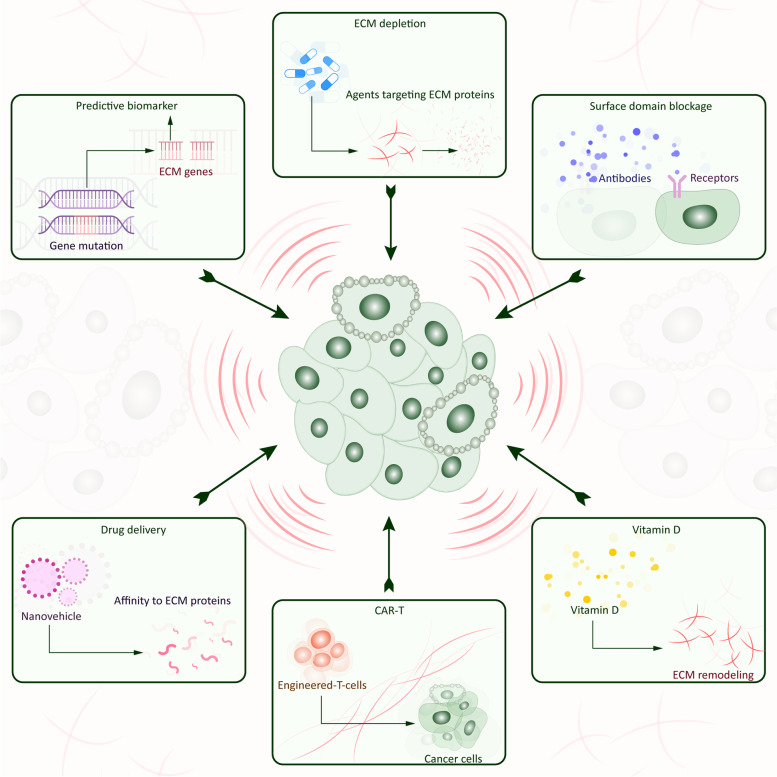
“Lastly, ongoing studies and clinical trials targeting the ECM are actively underway, including antibodies targeting ECM-associated receptors on the membranes of cancer cells and reengineered CAR-T cells that can degrade ECM components and increase T-cell infiltration [66,86].”
Exploring GIPC2 as a key prognostic marker in colorectal cancer linked to enhanced immune response
Gu, J., Qi, X., Yu, B., Wang, Y., Zhang, L., Li, S., & Yu, X. (2025) · Immunobiology · doi:10.1016/j.imbio.2025.153090
Self-citationZhuang, S. (2025) · Highlights in Science Engineering and Technology · doi:10.54097/dvc2g030
Lian, M., Wang, X., Huang, Z., Wang, Y., & Huang, Z. (2025) · Journal of Holistic Integrative Pharmacy · doi:10.1016/j.jhip.2025.06.006
Self-citationHuang, J., Chen, X., Luo, T., & Zhang, S. (2025) · SSRN Electronic Journal · doi:10.2139/ssrn.5349668
Self-citationOrigin of cancer stem cells concerning hypoxia
Duttaroy, A. K., & Jena, A. B. (2025) · Elsevier eBooks · doi:10.1016/b978-0-443-43884-4.00013-1
Zhong, H., Wang, D., Chen, Y., Zhan, D., Wang, C., Lin, R., Li, W., Sun, Q., Wang, R., & He, M. (2025) · Discover Oncology · doi:10.1007/s12672-025-03245-0
“In addition, CBX2 and PLOD2, associated respectively with tumor proliferation and extracellular matrix remodeling, may represent promising molecular targets warranting further investigation [84, 85].”
Introduction to Senescence-Associated Secretory Phenotype (SASP)
Afzal, M., Zeyadi, M., Hosawi, S. B. I., Kazmi, I. A., & Gupta, G. (2025) · Springer eBooks · doi:10.1007/978-981-96-8873-9_3
Qing, H., Jiang, X., Ma, Y., Xing, Z., Wu, Y., Wang, K., Cao, H., Jiao, Z., & Yu, Z. (2025) · Molecular Carcinogenesis · doi:10.1002/mc.70030
Wu, X., Qu, C., Ouyang, Y., Yang, L., & Jiang, W. (2025) · Oncology Reports · doi:10.3892/or.2025.8977
“The tumor immune microenvironment is widely recog‑ nized as the key regulator of tumor progression and clinical response to therapy (9,10).”
Mondal, M., Rai, D., Chhetri, P., Rai, P., Baglari, A., & Sarkar, P. (2025) · International Journal of experimental research and review · doi:10.52756/ijerr.2025.v48.001
Jin, J. (2025) · American journal of clinical and experimental immunology. · doi:10.62347/bthg8733
ARHGEF6 downregulation as a key mediator of tumor cell apoptosis in breast cancer
Zhang, Y., Zhou, D., Shen, X., Song, Q., Yang, L., Li, W., Zhao, X., Fang, W., Liu, B., Xing, C., et al. (2025) · Oncology Letters · doi:10.3892/ol.2025.15268
“The primary element of the ECM, collagen, is essential for preserving tissue integrity (25).”
Shi, Y., Baral, S., Zhang, Y., Jiang, Y., Li, R., Zhang, Y., Wang, W., & Wang, D. (2025) · Acta Biochimica et Biophysica Sinica · doi:10.3724/abbs.2025181 · Cited by 1
Pan‐cancer analysis reveals molecular signatures for predicting matrix stiffness in solid tumors
Tang, G., Liu, X., Li, Y., Ta, Y., Cho, M., Li, H., & Wang, X. (2025) · International Journal of Cancer · doi:10.1002/ijc.70175 · Cited by 2
“39 On the other hand, we did not observe significant changes in B cell activation or antigen presentation (as represented by BCR signaling and MHC I pathways, respectively).”
Self-citationUterine immune dysregulation after asynchronous transfer induced embryonic apoptosis in micePreprint
Yang, N., Zhao, H., Sun, S., Zhang, J., Li, M., Li, X., & Wu, X. (2025) · bioRxiv (Cold Spring Harbor Laboratory) · doi:10.1101/2025.09.24.677934
Lazarova, B., Petrushevska, G., Stojanovska, Z., & Mullins, S. (2025) · Diagnostics · doi:10.3390/diagnostics15192499
Yan, J., & Tu, S. (2025) · Current Molecular Medicine · doi:10.2174/0115665240388282250903221303
Lu, C., Wu, H., & Wang, H. (2025) · European journal of medical research · doi:10.1186/s40001-025-03164-4
“i d In 2022, approximately 4.8 million new cancer cases and 2.6 million cancer-related deaths occurred in China, accounting for 25.1% and 30.2% of global cases, respectively [3–5]. s Consequently, malignant tumors represent a leading cause of Human mortality, with both morbidity and mortality rates…”
InfluentialAlpha 5 integrin as a prognostic biomarker for survival in carcinomas: a systematic review
Fernandes, N. A. R., de Carvalho, M. M., Soares, L. F. F., Wahbi, W., Salo, T. A., Al‐Samadi, A., & Rossa, C. (2025) · Discover Oncology · doi:10.1007/s12672-025-03530-y
“Additionally, differences in extracellular matrix composition and variations in the relative prevalence of α5-expressing cells may directly or indirectly affect tumor progression and treatment response [11, 43–45].”
Comprehensive analysis of immune escape-related prognostic signature in high-grade glioma
Ren, C., Cai, J., Liu, Y., Guo, Z., & Hong, X. (2025) · Discover Oncology · doi:10.1007/s12672-025-03572-2
Evelyn, M. K. (2025) · NEWPORT INTERNATIONAL JOURNAL OF PUBLIC HEALTH AND PHARMACY · doi:10.59298/nijpp/2025/631623
Han, X. M., Wang, B., Xiang, W., Lin, F. Y., Sun, B., Yang, B., Ruan, Z., Liu, S., Li, S., Liu, H., et al. (2025) · bioRxiv (Cold Spring Harbor Laboratory) · doi:10.1101/2025.10.14.682233
“[27 –30].”
Zhao, N., Cai, W., Guo, Y., Liu, W. X., Jiang, Y., Zhang, G., Yang, L., Zhu, M., Xue, H., Chen, G., et al. (2025) · Research Square · doi:10.21203/rs.3.rs-7748094/v1
Zhao, X., Zhang, Y., Cheng, H., & Deng, G. (2025) · Archives of Medical Science · doi:10.5114/aoms/209585
“Additionally, cancer cell-derived ECM components can induce an immunosuppressive microenvironment, thereby enhancing immune evasion and promoting cancer cell survival [32, 33].”
Application of catalytic hairpin assembly reaction in liquid biopsy
Yao, Z., Wang, M., Pan, J., Huang, X., Zhang, J., & Luo, S. (2025) · Talanta Open · doi:10.1016/j.talo.2025.100591
Therapeutic advances: Modulating gut microbiota, ROS, and SCF pathways in cancer treatment
Giri, S., Irfan, Z., & Firdous, S. M. (2025) · Elsevier eBooks · doi:10.1016/b978-0-443-33459-7.00010-7
Naleskina, L. A., Lukianova, N. Y., Zadvornyi, T., Kunska, L. M., & Chekhun, V. F. (2025) · Morphologia · doi:10.26641/1997-9665.2025.2.37-46
The Tumor Microenvironment: Immunological Interactions and Therapeutic Targeting
Zgura, A. F., Anghel, R. M., & Chipuc, S. (2025) · IntechOpen eBooks · doi:10.5772/intechopen.1011106
Towards understanding mare endometrosis: ex vivo study on the role of relaxin
Profaska, M., Zarzycka, M., Dubniewicz, K., Witkowski, M., Wieczorek, J., Gil, D., Wafula, S. W., Lanh, D. K., & Kotula‐Balak, M. (2025) · Reproduction Fertility and Development · doi:10.1071/rd25166
Lyu, M., & Qiu, M. Z. (2025) · Korean Journal of Physiology and Pharmacology · doi:10.4196/kjpp.25.266
“…and complement activation might facilitate tumor cell dissemination and immune evasion [43,44], while extracellular matrix remodeling and glycosaminoglycan metabolism alterations could provide structural support for tumor growth and influence cell - cell and cell - matrix interactions [45,46].”
Mechanisms, impacts and therapeutic strategies of glucose metabolic reprogramming in tumours
Ma, L., Wu, M., Tian, C., Shi, H., & Song, D. (2025) · Clinical and Translational Discovery · doi:10.1002/ctd2.70100 · Cited by 1
Sparavelli, R., Giannini, R., Boldrini, L., Fuochi, B., Proietti, A., Signorini, F., Torregrossa, L., Materazzi, G., & Ugolini, C. (2025) · Biomolecules · doi:10.3390/biom15121666
“Changes in the ECM—including its protein composition, activity, and cross-linking—lead to altered cell signaling [6].”
Shu, C., Tang, X., Zheng, K., Zhang, R., Zhou, Y., Li, M., Du, W., Bai, Y., Shen, Y., Liu, Y., et al. (2025) · npj Precision Oncology · doi:10.1038/s41698-025-01203-1
“4C),whichsuggestthattheymayplayanessentialroleinthedevelopmentof PTBTsbymodulatingtheTME 33 .”
Almeida, S. F. F., Santos, L., Sampaio-Ribeiro, G., Ferreira, H. R. S., Lima, N. R., Caetano, R., Abreu, M., Zuzarte, M., Ribeiro, A. S., Paiva, A., et al. (2023) · Figshare · doi:10.6084/m9.figshare.24669831
Ma, C., Yang, C., Peng, A., Sun, T., Ji, X., Mi, J., Wei, L., Shen, S., & Feng, Q. (2024) · Figshare · doi:10.6084/m9.figshare.26626570
Ma, C., Yang, C., Peng, A., Sun, T., Ji, X., Mi, J., Wei, L., Shen, S., & Feng, Q. (2024) · Figshare · doi:10.6084/m9.figshare.26626591
Azeze, G. G., Wu, L., Alemu, B. K., Lee, W. F., Fung, L. W. Y., Cheung, E. C. W., Zhang, T., & Wang, C. C. (2024) · Figshare · doi:10.6084/m9.figshare.26384695
Ma, C., Yang, C., Peng, A., Sun, T., Ji, X., Mi, J., Wei, L., Shen, S., & Feng, Q. (2024) · Figshare · doi:10.6084/m9.figshare.26626639
Ma, C., Yang, C., Peng, A., Sun, T., Ji, X., Mi, J., Wei, L., Shen, S., & Feng, Q. (2024) · Figshare · doi:10.6084/m9.figshare.26626603
Ma, C., Yang, C., Peng, A., Sun, T., Ji, X., Mi, J., Wei, L., Shen, S., & Feng, Q. (2024) · Figshare · doi:10.6084/m9.figshare.26626645
Ma, C., Yang, C., Peng, A., Sun, T., Ji, X., Mi, J., Wei, L., Shen, S., & Feng, Q. (2024) · Figshare · doi:10.6084/m9.figshare.26626597
Ma, C., Yang, C., Peng, A., Sun, T., Ji, X., Mi, J., Wei, L., Shen, S., & Feng, Q. (2024) · Figshare · doi:10.6084/m9.figshare.26626606
Ma, C., Yang, C., Peng, A., Sun, T., Ji, X., Mi, J., Wei, L., Shen, S., & Feng, Q. (2024) · Figshare · doi:10.6084/m9.figshare.26626579
Azeze, G. G., Wu, L., Alemu, B. K., Lee, W. F., Fung, L. W. Y., Cheung, E. C. W., Zhang, T., & Wang, C. C. (2024) · Figshare · doi:10.6084/m9.figshare.26384573
Ma, C., Yang, C., Peng, A., Sun, T., Ji, X., Mi, J., Wei, L., Shen, S., & Feng, Q. (2024) · Figshare · doi:10.6084/m9.figshare.26626615
Ma, C., Yang, C., Peng, A., Sun, T., Ji, X., Mi, J., Wei, L., Shen, S., & Feng, Q. (2024) · Figshare · doi:10.6084/m9.figshare.26626600
Ma, C., Yang, C., Peng, A., Sun, T., Ji, X., Mi, J., Wei, L., Shen, S., & Feng, Q. (2024) · Figshare · doi:10.6084/m9.figshare.26626663
Ma, C., Yang, C., Peng, A., Sun, T., Ji, X., Mi, J., Wei, L., Shen, S., & Feng, Q. (2024) · Figshare · doi:10.6084/m9.figshare.26626642
Metadata
- Authors
- Yuan, Z., Li, Y., Zhang, S., Wang, X., Dou, H., Yu, X., Zhang, Z., Yang, S., & Xiao, M.
- Affiliations
- Harbin Medical University (CN)
- Central South University (CN)
- Corresponding author
- Yang, Shanshan
- Xiao, Min
- Venue
- Molecular Cancer
- Published
- 2023-03-11
- Volume
- 22
- Issue
- 1
- Pages
- 48-48
- ISSN
- 1476-4598 (ISSN-L)
- PMC
- PMC10007858
- OpenAlex
- W4323971780
- Semantic Scholar
- c8a593008da53cc37814dab070956b1fd456d86e
- Cited by
- 977
- References
- 625
- Citations by year
- 2026: 304 · 2025: 385 · 2024: 242 · 2023: 45
- FWCI
- 32.03
- Type
- journal article
- Language
- en
- Open access
- gold
- doi.org
- Licence
- cc-by
- creativecommons.org/licenses/by/4.0 (tdm)
- creativecommons.org/licenses/by/4.0 (vor)
- Locations
- Molecular Cancer (publishedVersion, cc-by)
- PubMed Central (publishedVersion, cc-by)
- PubMed (publishedVersion)
- DOAJ (DOAJ: Directory of Open Access Journals) (submittedVersion, cc-by-sa)
- Funders
- Natural Science Foundation of Heilongjiang Province, China (LH2021H076)
- National Natural Science Foundation of China, China (81872460, 81872145)
- Topics
- Life Sciences › Biochemistry, Genetics and Molecular Biology › Cell Biology › Cellular Mechanics and Interactions
- Life Sciences › Biochemistry, Genetics and Molecular Biology › Cancer Research › Protease and Inhibitor Mechanisms
- Life Sciences › Biochemistry, Genetics and Molecular Biology › Molecular Biology › TGF-β signaling in diseases
- Keywords
- extracellular matrix remodeling, tumor progression, immune evasion, tumor microenvironment, extracellular matrix stiffness, anoikis, metastasis, angiogenesis, lymphangiogenesis, immunosuppression, immunotherapy resistance, cancer therapy
- MeSH terms
- Extracellular Matrix, Humans, Immunotherapy, Neoplasms, Tumor Microenvironment
About these checks
Registry, retraction, Cites and statistics results are computed, not judged, with one exception: a printed reference that no index lists is read once by a model before it counts as a citation error. Claims are extracted by a model and kept only when their quote appears verbatim in the text; each cited source is then checked, with a model’s help, for whether it says what the claim relies on. Those verdicts can be wrong — read the claim’s quote and the cited source before relying on one.
Statistics and arithmetic are recomputed, not judged.
Confidence bands are shown only for fields calibrated on our annotated test set. None is calibrated yet, so no band is shown.
What counts as a claim ›How we measure confidence ›How we check this ›
Are you an author, or do you see a problem with this page? Request a review
Data sources
Bibliographic data: Semantic Scholar, OpenAlex, Crossref.
Contains information from the Semantic Scholar Academic Graph Datasets, made available under the ODC Attribution License (ODC-BY 1.0).
Semantic Scholar’s data is described in: Kinney, R., et al. (2023). The Semantic Scholar Open Data Platform. arXiv:2301.10140.
