

Extracellular matrix remodeling in tumor progression and immune escape: from mechanisms to treatments
Open accessThe DOI matches its Crossref record; 626 of the 626 references it cites were found in a registry or an index.
Abstract
The malignant tumor is a multi-etiological, systemic and complex disease characterized by uncontrolled cell proliferation and distant metastasis. Anticancer treatments including adjuvant therapies and targeted therapies are effective in eliminating cancer cells but in a limited number of patients. Increasing evidence suggests that the extracellular matrix (ECM) plays an important role in tumor development through changes in macromolecule components, degradation enzymes and stiffness. These variations are under the control of cellular components in tumor tissue via the aberrant activation of signaling pathways, the interaction of the ECM components to multiple surface receptors, and mechanical impact. Additionally, the ECM shaped by cancer regulates immune cells which results in an immune suppressive microenvironment and hinders the efficacy of immunotherapies. Thus, the ECM acts as a barrier to protect cancer from treatments and supports tumor progression. Nevertheless, the profound regulatory network of the ECM remodeling hampers the design of individualized antitumor treatment. Here, we elaborate on the composition of the malignant ECM, and discuss the specific mechanisms of the ECM remodeling. Precisely, we highlight the impact of the ECM remodeling on tumor development, including proliferation, anoikis, metastasis, angiogenesis, lymphangiogenesis, and immune escape. Finally, we emphasize ECM "normalization" as a potential strategy for anti-malignant treatment.
Overview
The claims and statistics of this paper haven’t been checked yet.
Free: it reads the open-access text and checks the first 5 claims that cite a source we can check. Create a free account to check every claim.
Integrity signals
Registry
Cites
Statistics
Figures
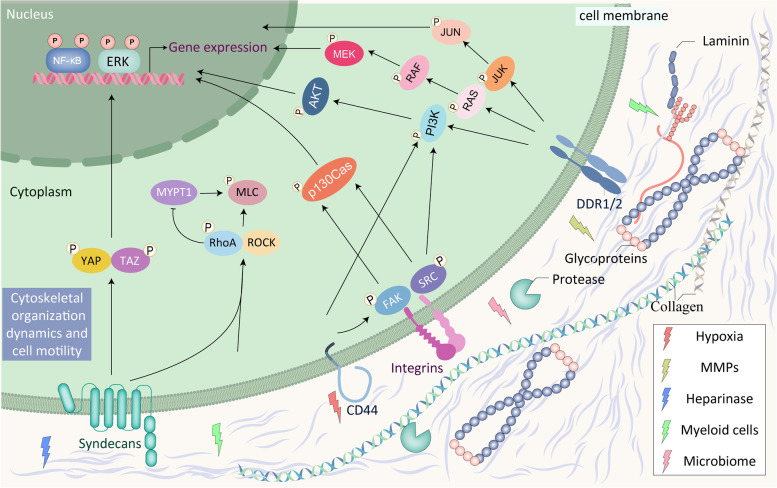
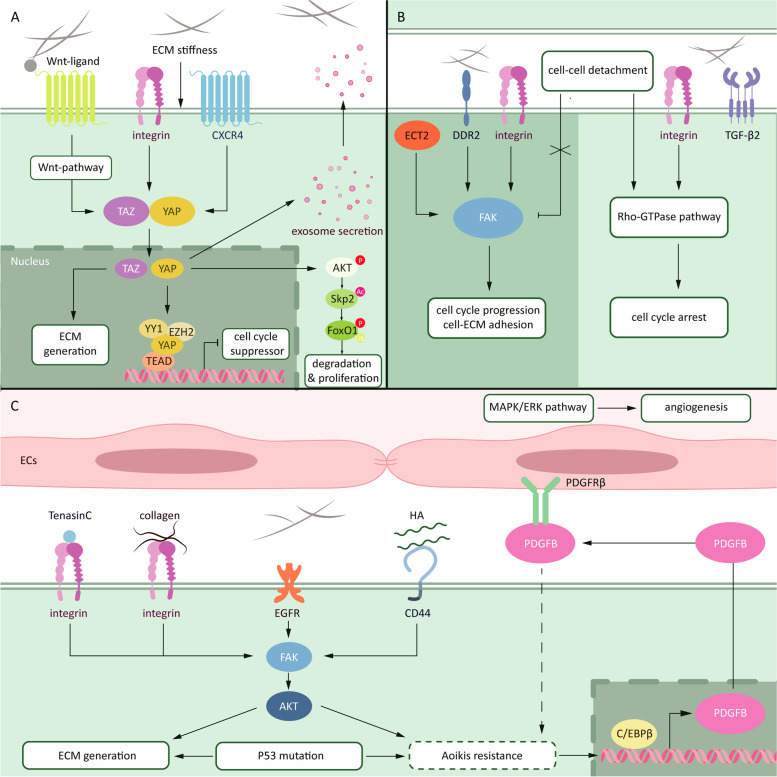
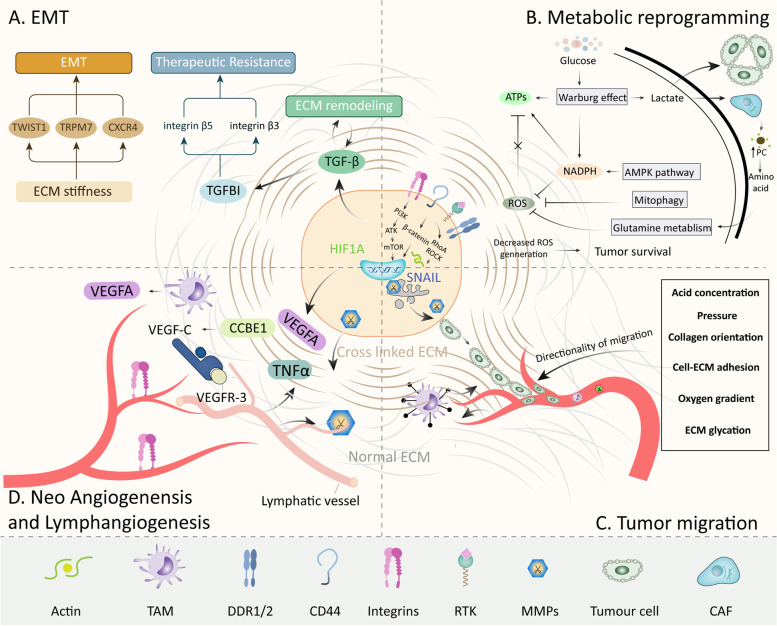
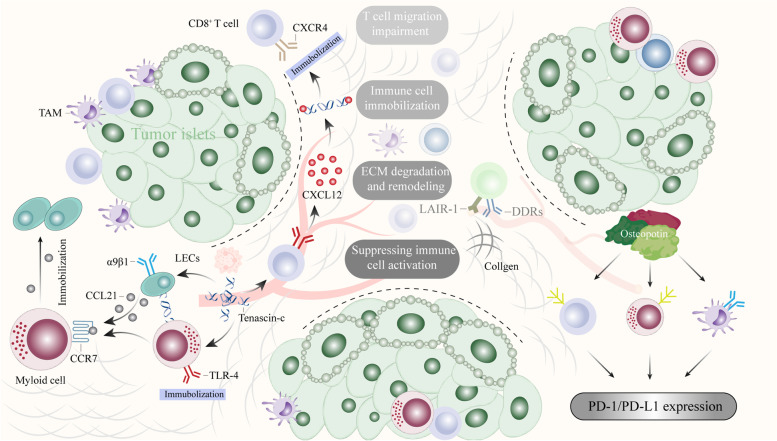
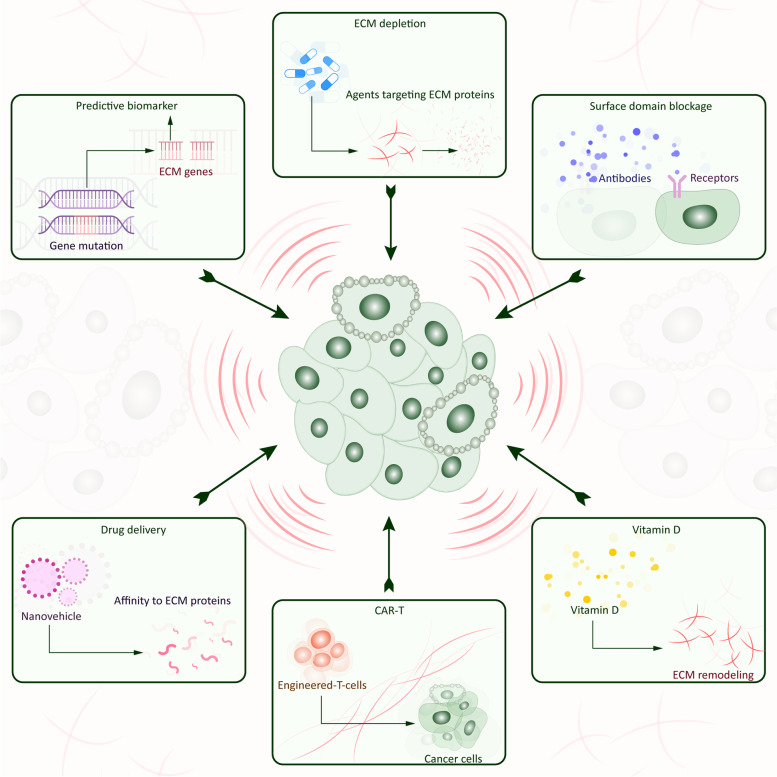
Verification
Claims the paper makes
The claims and statistics of this paper haven’t been checked yet.
Free: it reads the open-access text and checks the first 5 claims that cite a source we can check. Create a free account to check every claim.
Claims other papers make about this one
Each is checked against this paper’s own text: does it say what the citing paper says it does?
The cited source says what the claim attributes to it.
In the citing paper
“inhibiting lysyl oxidase (LOX) family enzymes, which are involved in the crosslinking of ECM proteins collagen and elastin, can reduce matrix stiffness and improve drug delivery to tumor cells [219].”
From Mechanisms and Strategies to Overcome Drug Resistance in Colorectal Cancer (2025) · cites this paper as [219]
Self-check
Percentages, sums and reported differences re-computed from the paper’s own numbers.
The self-check needs the paper’s full text.
Citations
Cites
2 retracted
NK cell heparanase controls tumor invasion and immune surveillance
Putz, E. M., Mayfosh, A. J., Kos, K., Barkauskas, D. S., Nakamura, K., Town, L., Goodall, K. J., Yee, D. Y., Poon, I. K. H., Baschuk, N., et al. (2017) · Journal of Clinical Investigation · doi:10.1172/jci92958 · Cited by 105
RetractedAndreuzzi, E., Colladel, R., Pellicani, R., Tarticchio, G., Cannizzaro, R., Spessotto, P., Bussolati, B., Brossa, A., Paoli, P. D., Canzonieri, V., et al. (2017) · Matrix Biology · doi:10.1016/j.matbio.2017.04.002 · Cited by 84 · cited 1×
“mediates MMRN2 degradation and enhances tumor angiogenesis [431].”
BackgroundRetractedSung, H., Ferlay, J., Siegel, R. L., Laversanne, M., Soerjomataram, I., Jemal, A., & Bray, F. (2021) · CA: A Cancer Journal for Clinicians · doi:10.3322/caac.21660 · Cited by 108,699 · cited 1×
“Anti‐cancer therapy targeting ECM Raising morbidity of cancer worldwide demonstrates the emergency of precise treatment strategy design and the discovery of novel therapeutic targets [541].”
BackgroundRole of YAP/TAZ in mechanotransduction
Dupont, S., Morsut, L., Aragona, M., Enzo, E., Giulitti, S., Cordenonsi, M., Zanconato, F., Le Digabel, J., Forcato, M., Bicciato, S., et al. (2011) · Nature · doi:10.1038/nature10137 · Cited by 5,979 · cited 1×
“Abnormal activation of Hippo core factors Yes1 associated transcriptional regulator (YAP) and WW domain containing transcription regulator (TAZ, or WWTR1) sustain cell proliferation and is prevalently detected in various cancers, implying the success adaption of cancer to crowed environment [137, 138].”
BackgroundMatrix Metalloproteinases: Regulators of the Tumor Microenvironment
Kessenbrock, K., Plaks, V., & Werb, Z. (2010) · Cell · doi:10.1016/j.cell.2010.03.015 · Cited by 5,151 · cited 1×
“Some enzymes process matrix components, such as collagen, resulting in the production and release of bioactive fragments [9, 10].”
BackgroundReactive oxygen species (ROS) homeostasis and redox regulation in cellular signaling
Ray, P. D., Huang, B.-W., & Tsuji, Y. (2012) · Cellular Signalling · doi:10.1016/j.cellsig.2012.01.008 · Cited by 4,373 · cited 1×
“When cancer cells are detached from ECM, increasing production of ROS is lethal for tumor cell survival [293].”
BackgroundHow Matrix Metalloproteinases Regulate Cell Behavior
Sternlicht, M. D., & Werb, Z. (2001) · Annual Review of Cell and Developmental Biology · doi:10.1146/annurev.cellbio.17.1.463 · Cited by 3,959 · cited 1×
“A big family contains more than 30 kinds of MMP have been identified since the MMPs’ role as collagen hydrolase was unveiled [42, 43].”
BackgroundThe extracellular matrix: A dynamic niche in cancer progression
Lu, P., Weaver, V. M., & Werb, Z. (2012) · Journal of Cell Biology · doi:10.1083/jcb.201102147 · Cited by 3,024 · cited 1×
“Meanwhile, cell-to-cell activity residing in the TME is constantly reshaping ECM, and these cells are affected by the signals provide by ECM itself [13].”
BackgroundEMT Transition States during Tumor Progression and Metastasis
Pastushenko, I., & Blanpain, C. (2019) · Trends in Cell Biology · doi:10.1016/j.tcb.2018.12.001 · Cited by 2,876 · cited 1×
“ECM‐induced EMT: ready for invasion For epithelial cells, EMT is a critical process for tumor progression and metastasis [237].”
BackgroundDistinct populations of inflammatory fibroblasts and myofibroblasts in pancreatic cancer
Öhlund, D., Handly-Santana, A., Biffi, G., Elyada, E., Almeida, A. S., Ponz-Sarvise, M., Corbo, V., Oni, T. E., Hearn, S. A., Lee, E. J., et al. (2017) · Journal of Experimental Medicine · doi:10.1084/jem.20162024 · Cited by 2,590
Cited by
Items 901–1,000 of 1,000
Çalışkan, T., Gündoğdu, A. A., Tunçkale, T., Engin, T., Torunoglu, A., Yılmaz, A., & Güzel, S. (2026) · Research Square · doi:10.21203/rs.3.rs-9751539/v1
Tumor-confined delivery via syringeable hydrogels for reinforced immunomodulatory intervention
Ji, S., Liu, X., Liu, T., Zhang, Y., Zhou, M., Yang, Y., Yu, H., & Wang, W. (2026) · Biomaterials Science · doi:10.1039/d6bm00275g · Cited by 1
Giorgio, C. D., Biagioli, M., Marchianò, S., Massa, C., Lachi, G., Urbani, G., Bordoni, M., Bellini, R., Cari, L., Sensini, B., et al. (2026) · Biochemistry and Biophysics Reports · doi:10.1016/j.bbrep.2026.102653
“Through immune-deconvolution analysis, we observed a direct correlation be-tween FXR expression and the frequency of Tregs and alternatively activated, M2 macrophages, both of which contribute to the development of an immunosuppressive TME [38].”
Zheng, H., Lin, J., Li, H., Hao, S., & Cheng, M. (2026) · Journal of Developmental Biology · doi:10.3390/jdb14020025
Xiong, Z.-K., Jiang, Y.-Z., Lin, Y.-H., Cao, J.-D., Deng, T.-Y., & Zheng, Y. (2026) · World Journal of Gastroenterology · doi:10.3748/wjg.119356
Advances in molecular mechanism of gastric cancer peritoneal metastasis
Yan, H.-Q., Lai, Q., Huang, M., Wang, T., Wu, L., & Qin, Y. (2026) · World Journal of Gastrointestinal Oncology · doi:10.4251/wjgo.v18.i8.121799
Tumor stroma and its role in therapy resistance: mechanisms and therapeutic opportunities
Luong, D., Shah, S. H. R., Sivasoorian, S. S., & Iyer, A. K. (2026) · Expert Opinion on Drug Delivery · doi:10.1080/17425247.2026.2651211 · Cited by 1
“CAFs contribute to cancer development, growth, and spread by interacting with tumor cells, modulating the ECM, and influencing the infiltration and behavior of immune cells [141–146].”
Liu, S. Y., Xu, C., Jiang, J., He, L., Zhou, Y., Li, Z., Li, Y., Zhang, K., Yang, F., Lu, T., et al. (2026) · Advanced Science · doi:10.1002/advs.75977 · Cited by 1
“…in cell behaviors through diverse mechanosensitive receptors, ranging from surface sensors like integrins and discoidin domain receptor 1 (DDR1) to lipid-gated ion channels like Piezo1 and TRPV4 [ 36, 37 ], our transcriptomic profiling identifies the UPR effector XBP1 as a central mediator PCa.”
Self-citationWang, S., Ding, N., Chen, A., Cardin, D. L., Xu, Y., Grimley, K., Russell, W. K., Xu, J., Kurie, J. M., Xiao, G.-Y., et al. (2026) · JCI Insight · doi:10.1172/jci.insight.203262 · Cited by 1
“A central feature of tumor progression is the dynamic remodeling of the TME through the secretion of cytokines, growth factors, extracellular matrix (ECM) components, and enzymes from cancer cells that regulate tumor cell adhesion, migration, and immune evasion (6–8).”
The impact of stress on cancer immunotherapy: from mechanistic insights to intervention strategies
Wang, Z., Yao, J., Zhang, Y., & Ding, J. (2026) · Journal of Advanced Research · doi:10.1016/j.jare.2026.06.004 · Cited by 1
Microbiota and metabolites modulation of cancer stem cells and chemotherapy sensitivity
Fang, F., Lau, H. C.-H., & Yu, J. Q. (2026) · Gut · doi:10.1136/gutjnl-2026-338801
Hayn, A., Matz‐Soja, M., Berg, T., & van Bömmel, F. (2026) · Cellular Oncology · doi:10.1007/s13402-026-01235-0
Rodrigues, R. C., Sousa, C., & Vale, N. (2026) · Cancers · doi:10.3390/cancers18121920
“In cancer biology, ECM remodeling and altered adhesion signaling are key features of tumor microenvironments that influence invasion, immune cell trafficking, and therapeutic resistance [60–63].”
Emameh, R. Z. (2026) · Journal of drug targeting · doi:10.1080/1061186x.2026.2689072
Shirvani, A. H., Mohammadian, S., Jamshidi, S., Khodabandehloo, M. H., Zangoie, S., Moghadam, R. S., Amoozade, A., Aram, C., Rahimi, M., Kamali, M. J., et al. (2026) · APOPTOSIS · doi:10.1007/s10495-026-02375-2
Biomaterial-based Platforms for Modeling the Pre-metastatic Niche
Halim, M. S. A., Nadernezhad, A., Kopecky, C., Hauser, S., Kilian, K. A., & Loessner, D. (2026) · Elsevier eBooks · doi:10.1016/b978-0-443-30151-3.00005-x
Lai, C., Liu, L., Zhu, M., Deng, X., Zhang, N., Zhang, Y., Huang, J. Y., Zhang, P. C., Jiang, B., Zeng, W., et al. (2026) · Current Eye Research · doi:10.1080/02713683.2026.2667323
“Because ECM remodeling 43 and myofibroblast activation 44, 45 facilitate cell migration, we next examined the impact of SLT on DEX-driven motility using scratch and transwell assays.”
Liu, Q., Dong, Y., Qiao, L., Wang, N., Fan, W., Wei, T., Tian, Z., Ma, X., & Xie, X. (2026) · Naunyn-Schmiedeberg s Archives of Pharmacology · doi:10.1007/s00210-026-05591-4
“…is 2.2-fold higher in CRC tissues than in matched normal tissues and is associated with tumor size, tumor location, and certain clinicopathological features (You et al. 2026); across a broader range of cancers, high BACE2 expression has also been linked to poorer prognosis (Yuan et al. 2023).”
InfluentialMatrix Stiffness Directs Stemness Signatures in Breast Cancer
Kopecky, C., Pandžić, E., Porazinski, S. R., Gooding, J. J., & Kilian, K. A. (2026) · Advanced Healthcare Materials · doi:10.1002/adhm.71371
CRISPR approaches: Modeling tumor-stroma interactions and their role in cancer progression
Raninga, B., & Gupta, P. S. (2026) · Gene Reports · doi:10.1016/j.genrep.2026.102569
Rabi, L. T., Peres, K. C., Teixeira, E. D. S., Tincani, Á. J., Búfalo, N. E., & Ward, L. S. (2026) · Frontiers in Molecular Biosciences · doi:10.3389/fmolb.2026.1814666
“Matrix metalloproteinases (MMPs), particularly MMP-9, degrade ECM components and are associated with aggressive features of thyroid cancer, including extrathyroidal extension and lymph node metastasis (Yuan et al., 2023; Winkler et al., 2020).”
Song, Y., Zeng, Y., Wen, L., Lan, X.-B., Wang, S., An, Q.-F., Zhou, Y.-X., Wang, J., Yang, J.-B., Tang, S.-S., et al. (2026) · International Journal of Biological Macromolecules · doi:10.1016/j.ijbiomac.2026.153136
Nanomedicine targeting ECM stiffness: restoring mechanical homeostasis for cancer immunotherapy
Yang, M., Jia, H., Zhang, Y., Shen, X., Zhang, Y., Liu, Y., Jia, X., Yu, C., & Liu, Z. (2026) · Materials Today Bio · doi:10.1016/j.mtbio.2026.103390 · Cited by 1
“Through a multi-dimensional pathological cascade — encompassing physical immune exclusion, mechanotransduction-driven immune reprogramming, and a self-reinforcing fibrotic-immunosuppressive loop — a stiffened ECM systematically establishes a localized network of immune tolerance [8,16].”
The emerging roles of alternative splicing in modulating tumor immune responses and immunotherapies
He, X., Zhao, D., Zhou, Y., Jiang, Y., Dong, Z., & Liu, K. (2026) · Cell Death and Differentiation · doi:10.1038/s41418-026-01792-9
Lima, I. F. P. (2026) · Lume (Universidade Federal do Rio Grande do Sul)
Wang, J., Huang, H., & Liu, D. (2026) · Science Progress · doi:10.1177/00368504261464856
“28,29 Therefore, DRGs may be linked to an immune-and stromal-related microenvironment that supports tumor growth and progression.”
Wang, Y., Ali, A., Zhu, J., Geng, Y., & Ma, C. (2026) · Cancer Letters · doi:10.1016/j.canlet.2026.218698
Cell–cell junction gene signatures as subtype-specific prognostic biomarkers in breast cancer
ISHII, H., Nishiyama, K., NAKAHARA, A., Tamori, S., Ohno, S., Sasaki, K., & Akimoto, K. (2026) · PLoS ONE · doi:10.1371/journal.pone.0352254 · Cited by 1
“Together, the functional enrichment and single-cell analyses support a model in which CCJ-associated pathways link epithelial junctional signaling with stromal interactions, thereby contributing to subtype-specific tumor progression and potentially affecting therapeutic response [58,59].”
Buthelezi, S. G., Elebo, N., Naicker, P., Mokoena, R., Dubazana, S., Govender, I. S., Mamputha, S., Ellero, A. A., Stoychev, S., Mazibuko, J., et al. (2026) · Journal of Proteome Research · doi:10.1021/acs.jproteome.6c00172
Wu, Y., Yang, G., Li, Y., Ruan, Y., & Yang, Q. (2026) · Current Issues in Molecular Biology · doi:10.3390/cimb48070672
“…conditions, GLI1 -mediated ECM remodeling may alter immune cell recruitment, retention, and activation signals—particularly for memory T cells—whereas LGALS9 , as a key mediator of intercellular communication, may further regulate interactions between NK cells and other immune populations [52].”
Self-citationWang, H., Li, Z., Xia, J., Zhao, L., Wen, X., Xiong, J., Zhao, N., & Huang, R. (2026) · Current Medicinal Chemistry · doi:10.2174/0109298673484384260615064610
MCT4 drives HCC progression by activating MMPs and polarizing M2 macrophages
Zhang, K., Ni, X., Wang, C., Guo, J., Fan, W., Sun, T., Jiang, T., & Zhang, G. (2026) · Frontiers in Immunology · doi:10.3389/fimmu.2026.1777015
Mathew, D. M., Ankit Kumar Bharti, S., Mukherjee, A. G., Gopalakrishnan, A. V., Gajendran, B., & Nishu, S. (2026) · Pathology - Research and Practice · doi:10.1016/j.prp.2026.156611
Limanówka, P., Kot, A., Wagner, W., Ochman, B., Mielcarska, S., Kula, A., Dawidowicz, M., Hudy, D., Szrot, M., Piecuch, J., et al. (2026) · International Journal of Molecular Sciences · doi:10.3390/ijms27136032
“Far from being only structural scaffolding, the ECM actively drives tumor progression through compositional changes, proteolytic degradation, and altered mechanical stiffness in tumor cells [5].”
Yu, Z., Lu, X. L., Pi, R., Zhang, X., Jian, H., Lin, X., Wang, W., & Bai, X. (2026) · Frontiers in Bioscience-Landmark · doi:10.31083/fbl49071
Dong, Y., Zhang, J., Zhao, Y., Zhao, J., & Xu, F. (2026) · Discover Oncology · doi:10.1007/s12672-026-05426-x
“This increase in ECM stiffness not only facilitates the malignant transformation of normal cells [13] but may also upregulate PD-L1 expression on the cell surface, thereby promoting immune escape [14, 15].”
Nimbalkar, V. P., Snijesh, V. P., Dash, A., Jothikumar, M., Pandey, A. J., Hari, P. S., Korlimarla, A., Radhakrishanan, S., & Prabhu, J. S. (2026) · Breast Cancer Research · doi:10.1186/s13058-026-02341-5
“Therapeutic strategies aimed at disrupting ECM-dependent tumor promotion include inhibitors of LOX, which mediates collagen cross-linking and tissue stiffening, and small-molecule or antibody-based inhibitors of MMPs, which further remodel the ECM to favor metastasis [123].”
Nath, A. D., Leclerc, E., & Vetter, S. W. (2026) · bioRxiv (Cold Spring Harbor Laboratory) · doi:10.64898/2026.07.09.737564
Kong, T., Xu, X., Zhang, X., Wu, C., Qiu, Z., Hu, B., Qi, Z., Tian, Q., Yang, Y., Dong, H., et al. (2026) · Advanced Science · doi:10.1002/advs.76478
Boalot, A., Younes, A., Woodward, C.-J., Alelaimi, A., Arabaci, F., Lee, D., Ozber, C. H., Heger, M., & Khaled, Y. S. (2026) · Current Issues in Molecular Biology · doi:10.3390/cimb48070717
“It plays a role in extracellular matrix adhesion, tumour motility, and inhibition of apoptosis [48,49].”
Liu, X., Chen, W., Wang, L., Zhou, Y., 葛贤秀, Dai, L., Fu, C., Shen, Y., He, L., Cheng, X., et al. (2026) · iScience · doi:10.1016/j.isci.2026.116738
“23 Notably, we observed differential expression of COMP in the other two pairwise comparisons, revealing a progressive decrease in COMP expression along the adenoma-CRC sequence.”
Wu, S., Cai, M., Cai, J., & Chen, Y. (2026) · Discover Oncology · doi:10.1007/s12672-026-05584-y
“…in gastric cancer and many other tumor types [48] not only excludes cytotoxic immune cells from the tumor parenchyma by redirecting them to the stromal compartment [49], but also may facilitate the recruitment of tumor-associated macrophages (TAMs) through the collagen–CD44 signaling axis.”
Kader, A., Mangarova, D. B., Gödde, H., Ranner-Hafferl, M.-L. H. H., Brangsch, J., Heyl, J. L., Möckel, J., Reuter, F. C., Marchand, J., Mein, J., et al. (2026) · Investigative Radiology · doi:10.1097/rli.0000000000001302
Palazzo, G., Tinnirello, V., Bivona, G., Ghersi, G., & Campora, S. (2026) · Biology · doi:10.3390/biology15141167
“This effect is mediated by the activation of surface integrins that are sensitive to mechanical stress [30,34].”
Choi, G., & Oh, M. (2026) · BMC Genomics · doi:10.1186/s12864-026-13179-8
“We noted that the malignant cells in the red-boxed region appeared to exhibit a potential gradual transcriptional state shift, showing possible regions of contact with CAF and endothelial cell populations, both of which are involved in extracellular matrix (ECM) remodeling [42].”
Han, Y., Wu, P., Song, H. M., Yu, R., Liu, R., Du, Z., Liu, Z., & Gu, J. (2026) · Frontiers in Immunology · doi:10.3389/fimmu.2026.1798938
Song, D., Li, X., Xiao, Q., Tie, H., Wu, Q., Shi, Y., Ye, G., Sun, J., Liu, J., Chen, M., et al. (2026) · Science Advances · doi:10.1126/sciadv.aee5738
“These cells drive extracellular matrix remodeling through excessive collagen deposition, generating physical barriers that impede CD8 + T cell infiltration while fostering immune evasion ( 7 , 8 ).”
Pal, E., Chakraborty, S., & Guha, A. (2026) · Frontiers in Oncology · doi:10.3389/fonc.2026.1861308
Parra-Medina, R., Vargas, E., Morales, D. R., Ramírez-Clavijo, S. R., Zabaleta, J., & Payán‐Gómez, C. (2026) · International Journal of Molecular Sciences · doi:10.3390/ijms27156637
“This control involves the remodeling of the extracellular matrix, the presence of fibrosis, the modification of the wound response pathway, and increase in the local epithelial–mesenchymal transition (EMT) [10].”
Markova, I. V., Pominova, D. V., Savelieva, T. A., Romanishkin, I. D., Skobel’tsin, A. S., & Ryabova, A. V. (2026) · International Conference Laser Optics (ICLO) · doi:10.1109/iclo69056.2026.11625137
“Of particular interest are solid tumors, which are characterized by high extracellular matrix (ECM) stiffness and tumor cell heterogeneity [1].”
Gong, X., Li, Z., Lei, Y., Chen, Z., Xing, D., Yang, L., Wang, L., He, J., Yu, J., Niu, Y., et al. (2026) · bioRxiv (Cold Spring Harbor Laboratory) · doi:10.64898/2026.07.30.741725
“Beyond the well-documented dependence of HemECs on VEGF [10], HemECs exhibit robust hyperactivation of processes classically linked to cancer progression during the proliferation phase, including the PI3K-AKT pathway [11, 12], GTPase activity [13], and ECM remodeling [14].”
Yu, D., Jin, K., Sun, S., Chen, M., Yi, X., & Chen, L. (2026) · BMC Cancer · doi:10.1186/s12885-026-16648-1
“The extracellular matrix (ECM), a key constituent of the tumor microenvironment (TME), experiences intense remodeling during tumor progression, resulting in a tumor-specific ECM with greater collagen density and hardness [5, 6].”
Turning Cold Tumors Into Hot Tumors: Implications for Cancer Therapy
Ge, X., Han, D., Wang, J., Dai, X., Ma, C., & Chen, F. (2026) · MedComm · doi:10.1002/mco2.70882
“Extracellular matrix remodeling, mediated in part by matrix metalloproteinases and DDR1 signaling, reinforces this physical barrier [ 21, 99 ].”
Beyond Structure: The Dynamic Role of the Extracellular Matrix Components in Immune Evasion
Maqbool, M., Surendranath, A., Baba, S. K., Jawwad, T., Elfaki, I., Mir, R., Kumar, R., Shahab Uddin, M. S., Haris, M., Macha, M. A., et al. (2026) · 癌症:英文版 · doi:10.34133/cancomm.0045
Tumor Progression, Parallel Mechanisms and Therapeutic Targets
Håkansson, L., Dunér, P., & Håkansson, A. (2026) · Cancers · doi:10.3390/cancers18152518
Irradiation-based development of tumor vaccines: Mechanistic insights and translational exploration
Tian, J., Feng, X., Yu, B., Zhang, J., Jing, J., & Jin, X. (2026) · Critical Reviews in Oncology/Hematology · doi:10.1016/j.critrevonc.2026.105516
Li, L., Zhu, H., Gao, G., & Chen, H. (2026) · Cancer Informatics · doi:10.1177/11769351261475376
Latif, R., & Nawaz, T. (2026) · Critical Reviews in Oncology/Hematology · doi:10.1016/j.critrevonc.2026.105529
Koushki, M., Farahani, M., Dashatan, N. A., Fateminasab, F., Fadaei, R., Chiti, H., Chahkandi, S., & Perseh, L. (2026) · Journal of Genetic Engineering and Biotechnology · doi:10.1016/j.jgeb.2026.100791
“33 Our results reinforce this paradigm, suggesting that targeting ECM-related signaling could be a viable therapeutic strategy.”
Averbukh, M., Wang, T., Garcia, G., & Higuchi‐Sanabria, R. (2026) · Journal of Cell Science · doi:10.1242/jcs.264775
Liang, W., Lyu, D., Fan, K., Liu, C., Ren, Q., Gao, H., & Zhang, Y. (2026) · Biochimica et Biophysica Acta (BBA) - Reviews on Cancer · doi:10.1016/j.bbcan.2026.189682
Yin, S., Zhu, W., Weng, B., Shi, J., Zhou, C., Peng, J., Ye, J., Li, M., & Zhao, J. (2026) · Colloids and Surfaces B Biointerfaces · doi:10.1016/j.colsurfb.2026.116078
Vu, L. T., Vu, L. T., Vu, L. T. K., Pho, H. T. T., Nguyen, Q. H., Nguyen, L., Nguyen, Y. T. H., Hùng, N. Đ., & Mậu, C. H. (2026) · PLoS ONE · doi:10.1371/journal.pone.0355672
“Matrix metalloproteinases such as MMP2 and MMP9 are repeatedly implicated in invasion and metastatic dissemination, and systematic evidence supports an association between elevated tumoral MMP2, MMP9 and poorer patient outcomes [11–13].”
Kemper, M., Reitnauer, L. E., Leonetti, A., Garitaonaindía, Y., Janning, M., Aldea, M. D., Pircher, A., Bleckmann, A., & Hendriks, L. E. L. (2026) · Cancer Biome and Targeted Therapy · doi:10.66505/cbtt.v1i3.52
Ijad, N., Waller, K. L., Yamazawa, E., Nayyar, N., Burgenske, D. M., Torrini, C., Carlson, B. L., Summers, E., Migliarese, C., Marion, B. M., et al. (2026) · Neuro-Oncology Advances · doi:10.1093/noajnl/vdag210
Sachdeva, K., Yolmo, P., Abdulhamed, A., Conseil, G., Rahimi, S., Berman, D. M., Tyryshkin, K., Li, R., Siemens, D. R., & Koti, M. (2026) · bioRxiv (Cold Spring Harbor Laboratory) · doi:10.64898/2026.08.10.743535
“In parallel, the tumor microenvironment promotes ECM remodeling through upregulation of collagen synthesis and matrix-modifying enzymes such as matrix metalloproteinases and lysyl oxidase family members, altering stromal architecture and tissue stiffness[31].”
Zheng, K., Jiang, H., Wen, Y., Xiang, J., Wang, W., Wang, J., Liu, Z., Tang, Y., Chen, Y., Dai, L., et al. (2026) · Frontiers in Cell and Developmental Biology · doi:10.3389/fcell.2026.1908145
“Therefore, increased immune infiltration should not necessarily be interpreted as enhanced anti-tumor immunity but may instead indicate a functionally suppressed immune state in high-RILPS tumors (Yuan et al., 2023; Hu et al., 2025).”
Copper homeostasis and cuproptosis in tumor biology: mechanistic insights and clinical perspectives
Wang, Z. D., Xie, J., Han, Y., Zhang, X., Song, J., Xing, Y., Hou, B., Han, C., & Sui, Y. (2026) · Frontiers in Immunology · doi:10.3389/fimmu.2026.1908734 · Cited by 1
Zong, Y., Wang, L., Li, X., Cheng, X., Li, J., Sun, Z., Tang, H., Zhou, C., Cao, Y., Luo, H., et al. (2026) · European Radiology · doi:10.1007/s00330-026-12764-5
Wei, C., Sun, H., Long, J., Liu, X., Li, Q., & Cao, B. (2026) · International Immunopharmacology · doi:10.1016/j.intimp.2026.117308 · Cited by 1
Symbiotic cancer cell–stroma crosstalk in the acidic tumour microenvironment
Downey, E., Pinto, A. F., Booth, A., Brown, J., Rejniak, K. A., & Damaghi, M. (2026) · Journal of Evolutionary Biology · doi:10.1093/jeb/voag072
An AI-driven, de novo designed all-in-one nanoplatform for cold tumor therapy
Lu, T., Jia, R., Wu, Y., Wang, Y., Zhang, J., Chen, Q., Li, R., Wang, Y., & Wang, Y. (2026) · Chemical Engineering Journal · doi:10.1016/j.cej.2026.180900
A Composite Histopathologic Invasion Score Predicts Lymph Node Metastasis in Gastric Cancer
Karcı, E., Youshanlui, M. A., Özden, F., Açıkgöz, Ö., Ölmez, Ö. F., Yildiz, O., Uzun, H., & Bilici, A. E. (2026) · Journal of Clinical Medicine · doi:10.3390/jcm15176509
“Yuan et al. reviewed how ECM remodeling contributes to tumor progression, metastasis, angiogenesis, lymphangiogenesis, and immune escape [5].”
Wolf, K. M. P., Angelidakis, E., Künzli, D., Lauer, D., Brunner, M., Cambria, A., Vats, D., Maurer, B., Vogel, V., & Chabria, M. (2026) · Matrix Biology Plus · doi:10.1016/j.mbplus.2026.100204
“Increased tissue stiffness and myofibroblast contractility, driven by excessive ECM deposition and assembly of the intracellular α -SMA machinery, respectively, are generally thought to place ECM fibers under greater tension [73,74].”
Shi, N., & Chen, T. (2026) · International Journal of Molecular Sciences · doi:10.3390/ijms27177632
“Cancer development is accompanied by coordinated remodeling of gene-expression programs that regulate epithelial proliferation and differentiation, inflammatory and immune signaling, oxidative-stress adaptation, metabolic reprogramming, and extracellular matrix remodeling [24–28].”
Mendoza, R., Cruz, I., & Lopez, C. (2026) · Interdisciplinary Research in Medical Sciences Specialty · doi:10.51847/yxm9sqygaq
Fang, Y., Sun, J., Yang, Y., Li, P., & Ni, W. (2026) · npj Systems Biology and Applications · doi:10.1038/s41540-026-00820-1
Advances in understanding the tumor microenvironment of neuroendocrine prostate cancer
Yao, N., Yang, Q., Chang, P., Wang, Y., Li, H., Wu, R., Zheng, J., & Fu, W. (2026) · Frontiers in Oncology · doi:10.3389/fonc.2026.1928713
Costa, G., Ribeiro, L., Alves, R., & Lopes, M. (2026) · Interdisciplinary Research in Medical Sciences Specialty · doi:10.51847/vzjvoetnnd
Nordlund, V., Sharma, A., Mjelle, R., & Davies, C. D. L. (2026) · Scientific Reports · doi:10.1038/s41598-026-68589-1
Chen, W., Li, P., Zhang, H., Sheng, Y., Yang, G., Hu, J., & Yu, B. (2026) · Frontiers in Immunology · doi:10.3389/fimmu.2026.1903250
Akl, M. M., & Ahmed, A. K. K. (2026) · Сибирский научный медицинский журнал · doi:10.18699/ssmj20260401
An Instrumental Optimization of a Label-Free Proteomic Method for Trace Protein Input
Shin, D., Lee, S., Yang, S., Hong, J., Lee, D., Jeon, Y. J., Lee, A. C., Kim, Y., Ryu, H. S., & Park, J. (2026) · Analytical Chemistry · doi:10.1021/acs.analchem.6c02686
Self-citationScheffel, T. B. (2025) · Directory of Open access Books (OAPEN Foundation)
From epigenetics to metastasis: Multifaceted roles of lncRNAs in gastric cancer
Saadh, M. J., Bishoyi, A. K., Roopashree, R., Naidu, K. S., Verma, L., Doshi, O. P., Pathak, P. K., Saini, S., & Sead, F. F. (2026) · Biochemistry and Biophysics Reports · doi:10.1016/j.bbrep.2026.102761
“In gastric cancer, EMT represents a critical driver of tumor evolution and metastatic progression by regulating cell adhesion, extracellular matrix remodeling, and activation of multiple oncogenic signaling pathways [53,54].”
Tanna, H., & Shah, S. (2026) · Expert Opinion on Drug Discovery · doi:10.1080/17460441.2026.2726313
“The extracellular matrix (ECM) provides structural and biochemical cues, while stromal cells, endothelial components, and immune populations collectively regulate processes such as proliferation, invasion, and immune modulation [29–31].”
Lazcano-Ornelas, A., & Tillu, N. (2026) · Lymphatics · doi:10.3390/lymphatics4030046
“Dense collagen and fibronectin deposition by ECM-CAF compresses and disorganizes both blood and lymphatic vasculature, impairing interstitial fluid drainage and antigen/chemokine transport out of the tumor bed [175,176].”
Myeloid-derived suppressor cells in cancer: biology, regulatory networks and theranostic prospects
Deng, R., Bai, X., Yang, J., Ye, W., Liu, Q., Xing, Y., Yao, Y., He, X., Lü, A., & Liu, Y. (2026) · Signal Transduction and Targeted Therapy · doi:10.1038/s41392-026-02998-6
“225,256,257 Immune shielding and physical protection afforded to circulating tumor cells (CTCs) The process of hematogenous metastasis is dangerous for CTCs, which must survive hemodynamic shear forces and escape destruction by immune cells, especially NK cells.”
Guo, K., Jiang, Y., Yang, Z., Wu, Y., Chen, Y., Wei, C., Zhang, P., Dong, J., & Lin, T. (2026) · Magnetic Resonance Imaging · doi:10.1016/j.mri.2026.110798
Effect of HSF1 inhibitor, DTHIB, on HSF2 protein expression
Elahi, U. (2026) · Doria (University of Helsinki)
Bülbül, M. V., & Demircan, T. (2026) · Organoids · doi:10.3390/organoids5030030
Wu, C., Qiu, X., Wang, C., Bai, J., & Zhou, X. (2026) · Oncology Reviews · doi:10.3389/or.2026.1820639
“Within bone metastatic lesions, CAFs secrete abundant ECM remodeling molecules, including chitinase 3-like protein 1 (CHI3L1) and the matrix metalloproteinase MMP2, which restructure the local matrix architecture, promote tumor invasion, and exacerbate osteolytic responses (96, 97).”
Gu, X., Zhu, Y., Xu, L., Xu, X., Jin, K., Cho, W. C. S., & Fang, Q. (2026) · Science Advances · doi:10.1126/sciadv.aef1694
“Effector lymphocytes tasked with tumor eradication become functionally compromised amid this restructured matrix, which cultivates immunosuppression and erects a formidable barrier safeguarding neoplastic viability and dissemination ( 19 ).”
Ouardi, M. E., Vieco-Martí, I., Granados-Aparici, S., Noguera, I., Navarro, S., & Noguera, R. (2026) · Translational Oncology · doi:10.1016/j.tranon.2026.103030
“Within this context, the extracellular matrix (ECM) emerges as a central regulator of tumor biology, influencing proliferation, differentiation, invasion, and metastatic dissemination [7,8].”
Sarikaya, I., & Kiliç, R. (2026) · Genes · doi:10.3390/genes17091105
“Because pterygial cells exhibit aggressive, tumor-like behaviors—such as EMT, ECM remodeling, and profound resistance to classical apoptosis—pterygium is frequently described as a benign neoplastic lesion [6].”
Nanomaterials boost tumor blockade therapy
Shang, T., Wang, Y., Zhu, W., & Lei, Q. (2026) · Cell Reports Physical Science · doi:10.1016/j.xcrp.2026.103542
SERPINE1 promotes CRC cell invasion and metastasis through resistance to anoikis
Zhu, Y., Liu, D., Ren, Z., Yuan, H., Lai, L., & Guo, C. (2026) · Molecular and Cellular Biochemistry · doi:10.1007/s11010-026-05739-z
“It plays an essential role in maintaining tissue homeostasis and normal development, whereas resistance to anoikis is a critical prerequisite for cancer dissemination and metastatic colonization [22].”
Li, J., Yao, Y., Li, H., Shao, B., & Linghu, E. (2026) · Biomolecules · doi:10.3390/biom16091367
“Malignant progression of ESCA is jointly shaped not only by tumor-intrinsic alterations but also by extracellular matrix remodeling, inflammatory responses, and the TME [13–15].”
Metadata
- Authors
- Yuan, Z., Li, Y., Zhang, S., Wang, X., Dou, H., Yu, X., Zhang, Z., Yang, S., & Xiao, M.
- Affiliations
- Harbin Medical University (CN)
- Central South University (CN)
- Corresponding author
- Yang, Shanshan
- Xiao, Min
- Venue
- Molecular Cancer
- Published
- 2023-03-11
- Volume
- 22
- Issue
- 1
- Pages
- 48-48
- ISSN
- 1476-4598 (ISSN-L)
- PMC
- PMC10007858
- OpenAlex
- W4323971780
- Semantic Scholar
- c8a593008da53cc37814dab070956b1fd456d86e
- Cited by
- 977
- References
- 625
- Citations by year
- 2026: 304 · 2025: 385 · 2024: 242 · 2023: 45
- FWCI
- 32.03
- Type
- journal article
- Language
- en
- Open access
- gold
- doi.org
- Licence
- cc-by
- creativecommons.org/licenses/by/4.0 (tdm)
- creativecommons.org/licenses/by/4.0 (vor)
- Locations
- Molecular Cancer (publishedVersion, cc-by)
- PubMed Central (publishedVersion, cc-by)
- PubMed (publishedVersion)
- DOAJ (DOAJ: Directory of Open Access Journals) (submittedVersion, cc-by-sa)
- Funders
- Natural Science Foundation of Heilongjiang Province, China (LH2021H076)
- National Natural Science Foundation of China, China (81872460, 81872145)
- Topics
- Life Sciences › Biochemistry, Genetics and Molecular Biology › Cell Biology › Cellular Mechanics and Interactions
- Life Sciences › Biochemistry, Genetics and Molecular Biology › Cancer Research › Protease and Inhibitor Mechanisms
- Life Sciences › Biochemistry, Genetics and Molecular Biology › Molecular Biology › TGF-β signaling in diseases
- Keywords
- extracellular matrix remodeling, tumor progression, immune evasion, tumor microenvironment, extracellular matrix stiffness, anoikis, metastasis, angiogenesis, lymphangiogenesis, immunosuppression, immunotherapy resistance, cancer therapy
- MeSH terms
- Extracellular Matrix, Humans, Immunotherapy, Neoplasms, Tumor Microenvironment
About these checks
Registry, retraction, Cites and statistics results are computed, not judged, with one exception: a printed reference that no index lists is read once by a model before it counts as a citation error. Claims are extracted by a model and kept only when their quote appears verbatim in the text; each cited source is then checked, with a model’s help, for whether it says what the claim relies on. Those verdicts can be wrong — read the claim’s quote and the cited source before relying on one.
Statistics and arithmetic are recomputed, not judged.
Confidence bands are shown only for fields calibrated on our annotated test set. None is calibrated yet, so no band is shown.
What counts as a claim ›How we measure confidence ›How we check this ›
Are you an author, or do you see a problem with this page? Request a review
Data sources
Bibliographic data: Semantic Scholar, OpenAlex, Crossref.
Contains information from the Semantic Scholar Academic Graph Datasets, made available under the ODC Attribution License (ODC-BY 1.0).
Semantic Scholar’s data is described in: Kinney, R., et al. (2023). The Semantic Scholar Open Data Platform. arXiv:2301.10140.
