

Pea proteins oral supplementation promotes muscle thickness gains during resistance training: a double-blind, randomized, Placebo-controlled clinical trial vs. Whey protein
Open accessThe DOI matches its Crossref record; 42 of the 44 references it cites were found in a registry or an index.
Abstract
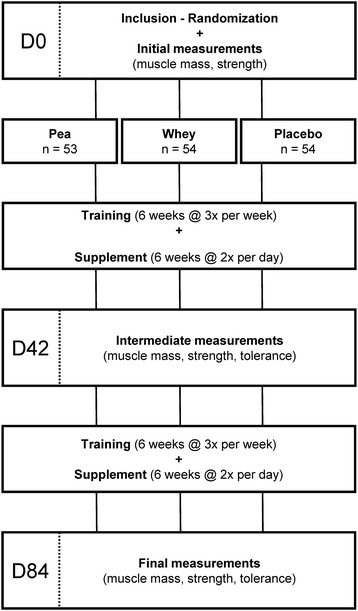
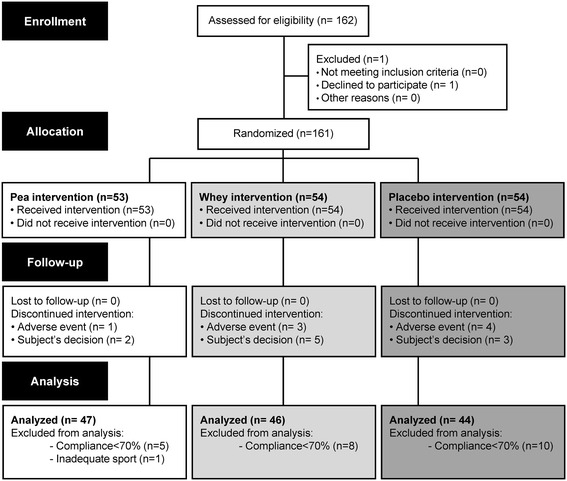
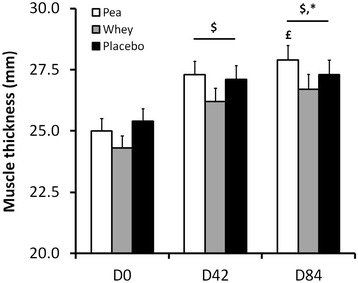
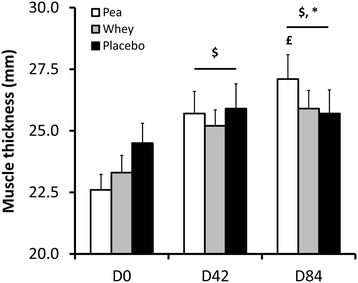
BACKGROUND: The effects of protein supplementation on muscle thickness and strength seem largely dependent on its composition. The current study aimed at comparing the impact of an oral supplementation with vegetable Pea protein (NUTRALYS®) vs. Whey protein and Placebo on biceps brachii muscle thickness and strength after a 12-week resistance training program. METHODS: One hundred and sixty one males, aged 18 to 35 years were enrolled in the study and underwent 12 weeks of resistance training on upper limb muscles. According to randomization, they were included in the Pea protein (n = 53), Whey protein (n = 54) or Placebo (n = 54) group. All had to take 25 g of the proteins or placebo twice a day during the 12-week training period. Tests were performed on biceps muscles at inclusion (D0), mid (D42) and post training (D84). Muscle thickness was evaluated using ultrasonography, and strength was measured on an isokinetic dynamometer. RESULTS: Results showed a significant time effect for biceps brachii muscle thickness (P < 0.0001). Thickness increased from 24.9 ± 3.8 mm to 26.9 ± 4.1 mm and 27.3 ± 4.4 mm at D0, D42 and D84, respectively, with only a trend toward significant differences between groups (P = 0.09). Performing a sensitivity study on the weakest participants (with regards to strength at inclusion), thickness increases were significantly different between groups (+20.2 ± 12.3%, +15.6 ± 13.5% and +8.6 ± 7.3% for Pea, Whey and Placebo, respectively; P < 0.05). Increases in thickness were significantly greater in the Pea group as compared to Placebo whereas there was no difference between Whey and the two other conditions. Muscle strength also increased with time with no statistical difference between groups. CONCLUSIONS: In addition to an appropriate training, the supplementation with pea protein promoted a greater increase of muscle thickness as compared to Placebo and especially for people starting or returning to a muscular strengthening. Since no difference was obtained between the two protein groups, vegetable pea proteins could be used as an alternative to Whey-based dietary products. TRIAL REGISTRATION: The present trial has been registered at ClinicalTrials.gov (NCT02128516).
Overview
The claims and statistics of this paper haven’t been checked yet.
Free: it reads the open-access text and checks the first 5 claims that cite a source we can check. Create a free account to check every claim.
Integrity signals
Registry
Cites
Statistics
Figures
Verification
Claims the paper makes
The claims and statistics of this paper haven’t been checked yet.
Free: it reads the open-access text and checks the first 5 claims that cite a source we can check. Create a free account to check every claim.
Claims other papers make about this one
Each is checked against this paper’s own text: does it say what the citing paper says it does?
The cited source doesn’t support the claim as written.
In the citing paper
“The average RET-induced increase, with all measures of 1RM included, was 27 kg (mean±SD; 27±22 kg22 32).”
From A systematic review, meta-analysis and meta-regression of the effect of protein supplementation on resistance training-induced gains in muscle mass and strength in healthy adults (2018) · cites this paper as [22]
Checked by a reasoning model — may be wrong.
Experimental — accuracy not yet measuredThe source backs part of the claim, not all of it — or backs it for a different population, condition or comparison.
In the citing paper
“Preliminary findings suggest that rice [98] and pea protein [103] may be able to stimulate similar changes in fat-free mass and strength as whey protein, although the reader should understand that many other factors (dose provided, training status of participants, duration of training and supplementation, etc.) will ultimately impact these outcomes and consequently more research is needed.”
From ISSN exercise & sports nutrition review update: research & recommendations (2018) · cites this paper as [103]
Experimental — accuracy not yet measuredIn the citing paper
“pea protein supplementation (25 g twice/day) was shown during 12 weeks of resistance training to increase biceps muscle thickness to the same degree as an equivalent amount of whey protein [123].”
From Plant Proteins: Assessing Their Nutritional Quality and Effects on Health and Physical Function (2020) · cites this paper as [123]
In the citing paper
“it has been shown that participants adhering to resistance training increased muscle mass comparably when supplemented with pea or whey protein [20], with rice or whey protein [58], when consuming a lacto-ovo-vegetarian or beef-containing diet [59], or when consuming a habitual omnivorous and vegan diet [21].”
From Vegan and omnivorous high protein diets support comparable daily myofibrillar protein synthesis rates and skeletal muscle hypertrophy in young adults (2023) · cites this paper as [20]
In the citing paper
“Although minimal MPS/MyoPS data are available for other non–animal-derived protein sources, pea protein isolate supplementation has been reported to facilitate comparable resistance training adaptation to that of whey protein supplementation in subjects consuming a high protein omnivorous diet [20].”
From Vegan and omnivorous high protein diets support comparable daily myofibrillar protein synthesis rates and skeletal muscle hypertrophy in young adults (2023) · cites this paper as [20]
Self-check
Percentages, sums and reported differences re-computed from the paper’s own numbers.
The self-check needs the paper’s full text.
Citations
Cites
Slow and fast dietary proteins differently modulate postprandial protein accretion
Boirie, Y., Dangin, M., Gachon, P., Vasson, M.-P., Maubois, J.-L., & Beaufrère, B. (1997) · Proceedings of the National Academy of Sciences · doi:10.1073/pnas.94.26.14930 · Cited by 1,453 · cited 2×
“Whey protein has a fast kinetic of digestion, bringing rapidly high concentration of amino-acids in plasma after ingestion, but this effect is transient and returns to resting levels within 2-3 h [7].”
BackgroundMixed muscle protein synthesis and breakdown after resistance exercise in humans
Phillips, S. M., Tipton, K. D., Aarsland, A., Wolf, S. E., & Wolfe, R. R. (1997) · American Journal of Physiology-Endocrinology and Metabolism · doi:10.1152/ajpendo.1997.273.1.e99 · Cited by 1,132 · cited 2×
“The best stimulus for protein synthesis appeared to be with protein feeding in close proximity to training sessions [31,32], with feeding recommended within the first two hours post-exercise [2,33,34].”
BackgroundTang, J. E., Moore, D. R., Kujbida, G. W., Tarnopolsky, M. A., & Phillips, S. M. (2009) · Journal of Applied Physiology · doi:10.1152/japplphysiol.00076.2009 · Cited by 998
Cermak, N. M., Res, P. T., de Groot, L. C., Saris, W. H., & van Loon, L. J. (2012) · The American Journal of Clinical Nutrition · doi:10.3945/ajcn.112.037556 · Cited by 827 · cited 1×
“In addition to increases in muscle mass, functional adaptations, such as strength or fatigue, are also obtained after EAA supplementation [8,9].”
BackgroundBiolo, G., Maggi, S. P., Williams, B. D., Tipton, K. D., & Wolfe, R. R. (1995) · American Journal of Physiology-Endocrinology and Metabolism · doi:10.1152/ajpendo.1995.268.3.e514 · Cited by 713 · cited 1×
“, muscle hypertrophy) is observed immediately after resistance exercises [2-4] as a result of a positive protein net balance; the difference between muscle fiber catabolism and anabolism.”
Background(2008) · Nutrition & Food Science · doi:10.1108/nfs.2008.01738aab.008 · Cited by 611
The Protein Digestibility–Corrected Amino Acid Score
Schaafsma, G. (2000) · The Journal of Nutrition · doi:10.1093/jn/130.7.1865s · Cited by 537 · cited 1×
“8% out of a maximum 100% [24] corresponding to the values of Whey or casein, while fruit proteins have a mean value of 76% and cereal proteins 59% [25].”
BackgroundBurd, N. A., West, D. W. D., Staples, A. W., Atherton, P. J., Baker, J. M., Moore, D. R., Holwerda, A. M., Parise, G., Rennie, M. J., Baker, S. K., et al. (2010) · PLoS ONE · doi:10.1371/journal.pone.0012033 · Cited by 531 · cited 1×
“Training volume [42] concomitant with the load used in terms of 1-RM’s percentage [43] are possible parameters.”
MethodTipton, K. D., Rasmussen, B. B., Miller, S. L., Wolf, S. E., Owens-Stovall, S. K., Petrini, B. E., & Wolfe, R. R. (2001) · American Journal of Physiology-Endocrinology and Metabolism · doi:10.1152/ajpendo.2001.281.2.e197 · Cited by 526 · cited 1×
“The best stimulus for protein synthesis appeared to be with protein feeding in close proximity to training sessions [31,32], with feeding recommended within the first two hours post-exercise [2,33,34].”
BackgroundRasmussen, B. B., Tipton, K. D., Miller, S. L., Wolf, S. E., & Wolfe, R. R. (2000) · Journal of Applied Physiology · doi:10.1152/jappl.2000.88.2.386 · Cited by 523 · cited 1×
“The best stimulus for protein synthesis appeared to be with protein feeding in close proximity to training sessions [31,32], with feeding recommended within the first two hours post-exercise [2,33,34].”
Background
Cited by
Morton, R. W., Murphy, K. T., McKellar, S. R., Schoenfeld, B. J., Henselmans, M., Helms, E., Aragon, A. A., Devries, M. C., Banfield, L., Krieger, J. W., et al. (2018) · British Journal of Sports Medicine · doi:10.1136/bjsports-2017-097608 · Cited by 1,269
ISSN exercise & sports nutrition review update: research & recommendations
Kerksick, C. M., Wilborn, C. D., Roberts, M. D., Smith-Ryan, A., Kleiner, S. M., Jäger, R., Collins, R., Cooke, M., Davis, J. N., Galvan, E., et al. (2018) · Journal of the International Society of Sports Nutrition · doi:10.1186/s12970-018-0242-y · Cited by 945
“Preliminary findings suggest that rice [98] and pea protein [103] may be able to stimulate similar changes in fat-free mass and strength as whey protein, although the reader should understand that many other factors (dose provided, training status of participants, duration of training and supplementation, etc.”
BackgroundPlant Proteins: Assessing Their Nutritional Quality and Effects on Health and Physical Function
Hertzler, S. R., Lieblein-Boff, J. C., Weiler, M., & Allgeier, C. (2020) · Nutrients · doi:10.3390/nu12123704 · Cited by 594
Composition, physicochemical properties of pea protein and its application in functional foods
Lu, Z. X., He, J. F., Zhang, Y. C., & Bing, D. J. (2020) · Critical Reviews in Food Science and Nutrition · doi:10.1080/10408398.2019.1651248 · Cited by 529
“Babault et al. (2015) investigated the impacts of an oral supplementation with pea protein vs. Whey protein and placebo on muscle thickness and strength after a 12-week resistance training program.”
BackgroundBerrazaga, I., Micard, V., Gueugneau, M., & Walrand, S. (2019) · Nutrients · doi:10.3390/nu11081825 · Cited by 477
Pulses and food security: Dietary protein, digestibility, bioactive and functional properties
Bessada, S. M. F., Barreira, J. C. M., & Oliveira, M. B. P. P. (2019) · Trends in Food Science & Technology · doi:10.1016/j.tifs.2019.08.022 · Cited by 410
The Current Situation of Pea Protein and Its Application in the Food Industry
Shanthakumar, P., Klepacka, J., Bains, A., Chawla, P., Dhull, S. B., & Najda, A. (2022) · Molecules · doi:10.3390/molecules27165354 · Cited by 381
Pea protein ingredients: A mainstream ingredient to (re)formulate innovative foods and beverages.
Boukid, F., Rosell, C. M., & Castellari, M. (2021) · Trends in Food Science & Technology · doi:10.1016/j.tifs.2021.02.040 · Cited by 329
Plant-based meat analogue (PBMA) as a sustainable food: a concise review
Singh, M., Trivedi, N., Enamala, M. K., Kuppam, C., Parikh, P., Nikolova, M. P., & Chavali, M. (2021) · European Food Research and Technology · doi:10.1007/s00217-021-03810-1 · Cited by 253
“Pea protein isolates are available in powder form, rich in the essential BCAAs leucine, isoleucine, and valine, which gives instant energy to the human body [8].”
BackgroundThe impact of protein quality on the promotion of resistance exercise-induced changes in muscle mass
Phillips, S. M. (2016) · Nutrition & Metabolism · doi:10.1186/s12986-016-0124-8 · Cited by 168
Boukid, F., Rosell, C. M., Rosene, S., Bover‐Cid, S., & Castellari, M. (2021) · Critical Reviews in Food Science and Nutrition · doi:10.1080/10408398.2021.1901649 · Cited by 150
“Since no difference was obtained between the two protein groups, the authors suggested that vegetable pea protein could be used as an alternative to whey-based dietary products (Babault et al. 2015).”
BackgroundProtein Considerations for Optimising Skeletal Muscle Mass in Healthy Young and Older Adults
Witard, O., Wardle, S., Macnaughton, L., Hodgson, A., & Tipton, K. (2016) · Nutrients · doi:10.3390/nu8040181 · Cited by 132
“A recent study reported a similar increase in SMM with the post-exercise ingestion of pea protein compared with whey protein [32].”
ResultReidy, P. T., & Rasmussen, B. B. (2016) · The Journal of Nutrition · doi:10.3945/jn.114.203208 · Cited by 128
“They used a sensitivity analysis to show that protein supplementation was most effective in enhancing biceps muscle thickness (compared with placebo) in a subset of those who had lower starting strength values (190).”
BackgroundMethodResultInfluentialJäger, R., Zaragoza, J., Purpura, M., Iametti, S., Marengo, M., Tinsley, G. M., Anzalone, A. J., Oliver, J. M., Fiore, W., Biffi, A., et al. (2020) · Probiotics and Antimicrobial Proteins · doi:10.1007/s12602-020-09656-5 · Cited by 126
Banaszek, A., Townsend, J. R., Bender, D., Vantrease, W. C., Marshall, A. C., & Johnson, K. D. (2019) · Sports · doi:10.3390/sports7010012 · Cited by 113
“, [21] reported that pea protein supplementation produced similar increases in muscular size and strength in comparison to a whey supplement following elbow flexor and extensor resistance training.”
BackgroundMobley, C., Haun, C., Roberson, P., Mumford, P., Romero, M., Kephart, W., Anderson, R., Vann, C., Osburn, S., Pledge, C., et al. (2017) · Nutrients · doi:10.3390/nu9090972 · Cited by 103
Meyer, N., & Reguant-Closa, A. (2017) · Nutrients · doi:10.3390/nu9040412 · Cited by 92
“In addition, plant-protein alternatives, such as pea (pisum sativum) protein powder, may also present a carbon-friendly source for athletes [118].”
BackgroundArora, S., Kataria, P., Nautiyal, M., Tuteja, I., Sharma, V., Ahmad, F., Haque, S., Shahwan, M. J., Çapanoğlu, E., Vashishth, R., et al. (2023) · ACS Omega · doi:10.1021/acsomega.3c01373 · Cited by 103
Physicochemical Properties and Consumer Acceptance of Bread Enriched with Alternative Proteins
García‐Segovia, P., Igual, M., & Martínez-Monzó, J. (2020) · Foods · doi:10.3390/foods9070933 · Cited by 106
Protein Source and Muscle Health in Older Adults: A Literature Review
Putra, C., Konow, N., Gage, M. J., York, C., & Mangano, K. M. (2021) · Nutrients · doi:10.3390/nu13030743 · Cited by 104
Plant-Based Diet: Is It as Good as an Animal-Based Diet When It Comes to Protein?
Ewy, M. W., Patel, A., Abdelmagid, M. G., Elfadil, O. M., Bonnes, S. L. R., Salonen, B. R., Hurt, R. T., & Mundi, M. S. (2022) · Current Nutrition Reports · doi:10.1007/s13668-022-00401-8 · Cited by 104
Nutrition recommendations for bodybuilders in the off-season: a narrative review
Iraki, J., Fitschen, P., Espinar, S., & Helms, E. (2019) · Sports · doi:10.3390/sports7070154 · Cited by 67
“In a 12-week study, a group consuming 50 g of pea protein isolate daily had greater increases in resistance-training induced muscle thickness compared to placebo, which were not significantly different from a group consuming 50 g of whey [39].”
Monteyne, A. J., Coelho, M. O. C., Murton, A. J., Abdelrahman, D. R., Blackwell, J. R., Koscien, C. P., Knapp, K. M., Fulford, J., Finnigan, T. J. A., Dirks, M. L., et al. (2023) · The Journal of Nutrition · doi:10.1016/j.tjnut.2023.02.023 · Cited by 64
Hajj, S. E., Irankunda, R., Echavarría, J. A. C., Arnoux, P., Paris, C., Stefan, L., Gaucher, C., Boschi‐Müller, S., & Canabady‐Rochelle, L. (2022) · Food Chemistry · doi:10.1016/j.foodchem.2022.134788 · Cited by 62
Nichele, S., Phillips, S. M., & Boaventura, B. C. B. (2022) · Applied Physiology, Nutrition, and Metabolism · doi:10.1139/apnm-2021-0806 · Cited by 61
Wen, C., Liu, G., Ren, J., Deng, Q., Xu, X., & Zhang, J. (2022) · Journal of Agricultural and Food Chemistry · doi:10.1021/acs.jafc.1c07576 · Cited by 64
PINCKAERS, P. J. M., HENDRIKS, F. K., HERMANS, W. J. H., GOESSENS, J. P. B., SENDEN, J. M., VAN KRANENBURG, J. M. X., WODZIG, W. K. H. W., SNIJDERS, T., & VAN LOON, L. J. C. (2022) · Medicine & Science in Sports & Exercise · doi:10.1249/mss.0000000000002937 · Cited by 58
Nieman, D. C., Zwetsloot, K. A., Simonson, A. J., Hoyle, A. T., Wang, X., Nelson, H. K., Lefranc‐Millot, C., & Guérin‐Deremaux, L. (2020) · Nutrients · doi:10.3390/nu12082382 · Cited by 71
“One study showed that 50 g/day doses of pea or whey protein during a 12-week resistance training period resulted in similar increases in muscle thickness relative to the placebo [35].”
Self-citationZha, F., Gao, K., Rao, J., & Chen, B. (2021) · Trends in Food Science & Technology · doi:10.1016/j.tifs.2021.06.029 · Cited by 55
Lonnie, M., Laurie, I., Myers, M., Horgan, G., Russell, W., & Johnstone, A. (2020) · Nutrients · doi:10.3390/nu12082291 · Cited by 53
“[44], the sample included men (n = 8) and women (n = 7), with the average age of 39 years in both groups.”
BackgroundMethodResultInfluentialZare, R., Devrim-Lanpir, A., Guazzotti, S., Redha, A. A., Prokopidis, K., Spadaccini, D., Cannataro, R., Cione, E., Henselmans, M., & Aragon, A. A. (2023) · Sports Medicine · doi:10.1007/s40279-023-01899-w · Cited by 68
“Considering the high use of plant-based protein sources in athletes in recent years [14, 15], several studies have investigated the composition and efficacy of the most common plant-based proteins, including soy, wheat, pea, rice and potato protein [16–20].”
BackgroundNutritional and Functional Properties of Novel Protein Sources
Karaça, A. C., Nickerson, M. T., Caggia, C., Randazzo, C. L., Balange, A. K., Carrillo, C., Gallego, M., Sharifi‐Rad, J., Kamiloğlu, S., & Çapanoğlu, E. (2022) · Food Reviews International · doi:10.1080/87559129.2022.2067174 · Cited by 57
Alternative dietary protein sources to support healthy and active skeletal muscle aging
van der Heijden, I., Monteyne, A. J., Stephens, F. B., & Wall, B. T. (2023) · Nutrition Reviews · doi:10.1093/nutrit/nuac049 · Cited by 45
Animal, Plant, Collagen and Blended Dietary Proteins: Effects on Musculoskeletal Outcomes
Deane, C., Bass, J., Crossland, H., Phillips, B., & Atherton, P. (2020) · Nutrients · doi:10.3390/nu12092670 · Cited by 43
Nutritional Considerations for the Vegan Athlete
West, S., Monteyne, A. J., van der Heijden, I., Stephens, F. B., & Wall, B. T. (2023) · Advances in Nutrition · doi:10.1016/j.advnut.2023.04.012 · Cited by 42
Plant Proteins and Exercise: What Role Can Plant Proteins Have in Promoting Adaptations to Exercise?
Kerksick, C. M., Jagim, A., Hagele, A., & Jäger, R. (2021) · Nutrients · doi:10.3390/nu13061962 · Cited by 41
“[56] 161 males (18–25 years) RCT (3 groups) Control (n = 54) Whey (n = 53) Pea (n = 53) 12 weeks 50 g pea/day (two 25 g doses) RT 3×/week Muscle thickness Strength ↑ Bicep thickness ↑ 1-RM Strength”
BackgroundJiménez‐Munoz, L., Nielsen, M. T., Román, L., & Corredig, M. (2022) · Food Chemistry · doi:10.1016/j.foodchem.2022.134178 · Cited by 47
Protein Supplementation Does Not Affect Myogenic Adaptations to Resistance Training
REIDY, P. T., FRY, C. S., IGBINIGIE, S., DEER, R. R., JENNINGS, K., COPE, M. B., MUKHERJEA, R., VOLPI, E., & RASMUSSEN, B. B. (2017) · Medicine & Science in Sports & Exercise · doi:10.1249/mss.0000000000001224 · Cited by 39
“In addition, studies using magnetic resonance imaging of the biceps (10) or latissimus dorsi (33) and ultrasound (3,4,22,23,48) of the thigh muscles have clearly shown the same pattern: no effect of protein supplementation (whey) to enhance vastus lateralis muscle hypertrophy.”
Protecting Skeletal Muscle with Protein and Amino Acid during Periods of Disuse
Galvan, E., Arentson-Lantz, E., Lamon, S., & Paddon-Jones, D. (2016) · Nutrients · doi:10.3390/nu8070404 · Cited by 38
Sustainable Diets for Athletes
Meyer, N. L., Reguant-Closa, A., & Nemecek, T. (2020) · Current Nutrition Reports · doi:10.1007/s13668-020-00318-0 · Cited by 49
Olaniyan, E. T., O’Halloran, F., & McCarthy, A. L. (2020) · Nutrition Research Reviews · doi:10.1017/s0954422420000219 · Cited by 48
“In agreement, Babault et al.(65) reported that 25 g pea protein resulted in a comparable increase in SMM compared with 25 g whey protein, in a 12-week study involving 137 youngmales.”
ResultProtein Supplementation in Sport: Source, Timing, and Intended Benefits
Huecker, M., Sarav, M., Pearlman, M., & Laster, J. (2019) · Current Nutrition Reports · doi:10.1007/s13668-019-00293-1 · Cited by 37
Recent Trends in the Utilization of Pulse Protein in Food and Industrial Applications
Nadeeshani, H., Senevirathne, N., Somaratne, G., & Bandara, N. (2022) · ACS Food Science & Technology · doi:10.1021/acsfoodscitech.1c00448 · Cited by 52
Reid-McCann, R., Brennan, S., Ward, N. A., Logan, D., McKinley, M. C., & McEvoy, C. T. (2025) · Nutrition Reviews · doi:10.1093/nutrit/nuae200 · Cited by 52
Joanisse, S., McKendry, J., Lim, C., Nunes, E. A., Stokes, T., Mcleod, J. C., & Phillips, S. M. (2021) · Clinical Nutrition Open Science · doi:10.1016/j.nutos.2021.01.005 · Cited by 46
“1 g leucine per dose) in young subjects in combination with RT for 12 weeks resulted in similar increases in biceps brachii thickness [95].”
BackgroundChima, B., Mathews, P., Morgan, S., Johnson, S. A., & Buiten, C. B. V. (2022) · Foods · doi:10.3390/foods11182846 · Cited by 40
“Characterization of the amino acid profiles for each protein source reveals that hemp protein features a greater relative proportion of charged amino acids than pea protein, which features a greater relative proportion of charged amino acids than whey protein [70,71].”
BackgroundKrentz, A., García‐Cano, I., Ortega‐Anaya, J., & Jiménez‐Flores, R. (2021) · Journal of Dairy Science · doi:10.3168/jds.2021-20902 · Cited by 35
Durkalec‐Michalski, K., Domagalski, A., Główka, N., Kamińska, J., Szymczak, D., & Podgórski, T. (2022) · Nutrients · doi:10.3390/nu14040894 · Cited by 45
dos Santos Quaresma, M. V. L., Guazzelli Marques, C., & Nakamoto, F. P. (2021) · Nutrition · doi:10.1016/j.nut.2020.110994 · Cited by 30
Shevkani, K., Singh, N., Patil, C., Awasthi, A., & Paul, M. (2022) · International Journal of Food Science & Technology · doi:10.1111/ijfs.15666 · Cited by 34
West, S., Monteyne, A. J., Whelehan, G., van der Heijden, I., Abdelrahman, D. R., Murton, A. J., Finnigan, T. J. A., Stephens, F. B., & Wall, B. T. (2023) · American Journal of Physiology-Endocrinology and Metabolism · doi:10.1152/ajpendo.00166.2023 · Cited by 31
Interactions between pea protein and gellan gum for the development of plant-based structures
Silva, F. G., Passerini, A., Ozorio, L., Picone, C. S. F., & Perrechil, F. D. A. (2023) · International Journal of Biological Macromolecules · doi:10.1016/j.ijbiomac.2023.128113 · Cited by 28
Antonio, J., Evans, C., Ferrando, A. A., Stout, J. R., Antonio, B., Cintineo, H. P., Harty, P., Arent, S. M., Candow, D. G., Forbes, S. C., et al. (2024) · Journal of the International Society of Sports Nutrition · doi:10.1080/15502783.2024.2341903 · Cited by 27
“Evidence indicates that plant-based diets, with supplemental plant protein sources, can increase MPS and augment exercise training adaptions [98,118–128].”
BackgroundInfluentialGökşen, G., Altaf, Q. S., Farooq, S., Bashir, I., Capozzi, V., Guruk, M., Bavaro, S. L., & Sarangi, P. K. (2023) · Food Research International · doi:10.1016/j.foodres.2023.113344 · Cited by 31
Validation of the Athlete’s Plate Nutrition Educational Tool: Phase I
Reguant-Closa, A., Harris, M. M., Lohman, T. G., & Meyer, N. L. (2019) · International Journal of Sport Nutrition and Exercise Metabolism · doi:10.1123/ijsnem.2018-0346 · Cited by 25
Moon, J. M., Ratliff, K. M., Blumkaitis, J. C., Harty, P. S., Zabriskie, H. A., Stecker, R. A., Currier, B. S., Jagim, A. R., Jäger, R., Purpura, M., et al. (2020) · Journal of the International Society of Sports Nutrition · doi:10.1186/s12970-020-00394-1 · Cited by 33
“[26] who randomized 161 males between the ages of 18–35 years in a double-blind fashion to consume two daily 25-g doses (50 g total) of pea protein, whey protein, or placebo in conjunction a 12-week resistance-training program.”
MethodSalles, J., Guillet, C., Bacquer, O. L., Malnero-Fernandez, C., Giraudet, C., Patrac, V., Berry, A., Denis, P., Pouyet, C., Gueugneau, M., et al. (2021) · Nutrients · doi:10.3390/nu13124234 · Cited by 31
“Whey and pea proteins promote comparable muscle strength, physical performance, and body composition following resistance training [6], especially in beginners or people returning to weight training [7].”
InfluentialAllahdad, Z., Manus, J., Aguilar‐Uscanga, B. R., Salmieri, S., Millette, M., & Lacroix, M. (2022) · Plant Foods for Human Nutrition · doi:10.1007/s11130-021-00944-1 · Cited by 27
“Moreover, pea and rice proteins are comparable to whey concerning their beneficial effect on muscle strength and thickness [7, 8].”
BackgroundTeixeira, F. J., Matias, C. N., Faleiro, J., Giro, R., Pires, J., Figueiredo, H., Carvalhinho, R., Monteiro, C. P., Reis, J. F., Valamatos, M. J., et al. (2022) · Frontiers in Nutrition · doi:10.3389/fnut.2022.934438 · Cited by 28
Whey protein supplementation and muscle mass: current perspectives
Naclerio, F., & Seijo, M. (2019) · Nutrition and Dietary Supplements · doi:10.2147/nds.s166195 · Cited by 32
Giura, L., Urtasun, L., Ansorena, D., & Astiasarán, I. (2022) · LWT · doi:10.1016/j.lwt.2022.114029 · Cited by 20
Napiórkowska, A., Szpicer, A., Górska‐Horczyczak, E., & Kurek, M. A. (2024) · Molecules · doi:10.3390/molecules29092019 · Cited by 21
“…intensities were identified: 1394.02 cm − 1 , 1236.99 cm − 1 , and 1043.14 cm − 1 , corresponding to bend vibrations of N-H and -NH 2 , and 513.95 cm − 1 and 410.01 cm − 1 , corresponding to stretching vibrations of S-S derived from sulfur amino acids involved in disulfide bridge formation [46–48].”
BackgroundInfluentialEvaluation of Immunoreactivity of Pea ( Pisum sativum ) Albumins in BALB/c and C57BL/6 Mice
Chudzik‐Kozłowska, J., Wasilewska, E. M., & Złotkowska, D. (2020) · Journal of Agricultural and Food Chemistry · doi:10.1021/acs.jafc.0c00297 · Cited by 19
The Environmental Impact of the Athlete’s Plate Nutrition Education Tool
Reguant-Closa, A., Roesch, A., Lansche, J., Nemecek, T., Lohman, T. G., & Meyer, N. L. (2020) · Nutrients · doi:10.3390/nu12082484 · Cited by 22
“While still insufficient, studies are appearing on plant-based protein powders and combinations of plant-based protein foods and their effects on muscle recovery [41,42].”
BackgroundProtein from Vegetable Sources: A Focus on Pea Protein
Lefranc‐Millot, C., & Teichman‐Dubois, V. (2018) · Wiley eBooks · doi:10.1002/9781119385332.ch10 · Cited by 22
Self-citationJacinto, J. L., Nunes, J. P., Gorissen, S. H. M., Capel, D. M. G., Bernardes, A. G., Ribeiro, A. S., Cyrino, E. S., Phillips, S. M., & Aguiar, A. F. (2022) · International Journal of Sport Nutrition and Exercise Metabolism · doi:10.1123/ijsnem.2021-0265 · Cited by 23
Update on vegetarian and vegan athletes: a review
Vitale, K., & Hueglin, S. (2021) · The Journal of Physical Fitness and Sports Medicine · doi:10.7600/jpfsm.10.1 · Cited by 24
Krentz, A., García‐Cano, I., & Jiménez‐Flores, R. (2022) · JDS Communications · doi:10.3168/jdsc.2021-0157 · Cited by 17
Liu, N., Song, Z., Jin, W., Yang, Y., Sun, S., Zhang, Y., Zhang, S., Liu, S., Ren, F., & Wang, P. (2022) · Journal of Functional Foods · doi:10.1016/j.jff.2022.105234 · Cited by 19
Zhao, S., Xu, Y., Liu, J., & Ning, Z. (2024) · Nutrients · doi:10.3390/nu16162748 · Cited by 23
“On the one hand, some studies included in our meta-analysis concluded that there was no difference in improving athletic performance between plant-based protein and animal protein [2–6, 26, 40, 52].”
ResultSingh, R. G., Guérin‐Deremaux, L., Lefranc‐Millot, C., Perreau, C., Crowley, D. C., Lewis, E. D., Evans, M., & Moulin, M. (2024) · Nutrients · doi:10.3390/nu16132017 · Cited by 17
“The improvements in their composite WBMS may have been partly attributed to the recruitment of an exercise-naïve population, as other studies have found a greater effect on the muscle mass in participants with lower muscle force at the baseline [19].”
BackgroundResultSelf-citationSpoelder, M., Koopmans, L., Hartman, Y., Bongers, C. C. W. G., Schoofs, M. C. A., Eijsvogels, T. M. H., & Hopman, M. T. E. (2023) · Nutrients · doi:10.3390/nu15020342 · Cited by 13
You, K., Murray, B. S., Connell, S. D., & Sarkar, A. (2023) · Nano Select · doi:10.1002/nano.202300160 · Cited by 14
Teo, M., Khoo, L. W., & Chew, W. (2024) · Journal of Food Composition and Analysis · doi:10.1016/j.jfca.2024.106571 · Cited by 14
Roeseler, D. A., McGraw, N., Butteiger, D. N., Shah, N. K., Hall-Porter, J. M., Mukherjea, R., & Krul, E. S. (2017) · Journal of Agricultural and Food Chemistry · doi:10.1021/acs.jafc.6b05460 · Cited by 13
Jia, S., Wu, Q., Wang, S., Kan, J., Zhang, Z., Zhang, X., Zhang, X., Li, J., Xu, W., Du, J., et al. (2022) · Frontiers in Nutrition · doi:10.3389/fnut.2022.878229 · Cited by 12
Pettersson, S., Edin, F., Hjelte, C., Scheinost, D., Wagner, S., Ekblom, B. T., Jessen, N., Madsen, K., & Andersson-Hall, U. K. (2021) · Frontiers in Nutrition · doi:10.3389/fnut.2021.617344 · Cited by 13
“(27) reported similar gains in upper limb muscle thickness and strength following daily supplementation of a pea protein isolate or a whey protein concentrate in young healthy males performing a 12-week resistance training protocol.”
BackgroundHealth Benefits of Pea Protein Isolate: A Comparative Review
Stilling, K. (2020) · SURG Journal · doi:10.21083/surg.v12i1.6111 · Cited by 17
Nutritional Supplements for Muscle Hypertrophy: Mechanisms and Morphology—Focused Evidence
Mănescu, A. M., Hangu, S. Ș., & Mănescu, D. C. (2025) · Nutrients · doi:10.3390/nu17223603 · Cited by 18
Paulussen, K. J. M., Askow, A. T., Deutz, M. T., McKenna, C. F., Garvey, S. M., Guice, J. L., Kesler, R. M., Barnes, T. M., Tinker, K. M., Paluska, S. A., et al. (2024) · Journal of Nutrition · doi:10.1016/j.tjnut.2024.03.009 · Cited by 13
The internalization mechanisms and trafficking of the pea albumin in Caco-2 cells
Zhang, W., Zhang, S., Chen, C., Liu, N., Dong, Y., Wang, P., & Ren, F. (2022) · International Journal of Biological Macromolecules · doi:10.1016/j.ijbiomac.2022.06.149 · Cited by 11
Lee, M., Chiu, C., Liao, Y.-C., Cheng, Y.-C., Lee, C., Ho, C.-S., Hsu, Y.-J., Chang, H.-Y., Lin, J., & Huang, C. (2024) · Current Research in Food Science · doi:10.1016/j.crfs.2024.100917 · Cited by 10
“…resistance training with supplementation of placebo, whey protein, and pea protein, the pea protein supplementation group showed a significant increase in muscle thickness, even higher than the whey protein group, though this difference did not reach statistical significance (Babault et al., 2015).”
Kowalczyk, D., & Kazimierczak, W. (2024) · Coatings · doi:10.3390/coatings14091116 · Cited by 8
Loureiro, L. L., Ferreira, T. J., Cahuê, F. L. C., Bittencourt, V. Z., Valente, A. P., & Pierucci, A. P. T. R. (2023) · Frontiers in Nutrition · doi:10.3389/fnut.2023.1210215 · Cited by 12
Gunyaphan, S., On‐Nom, N., Suttisansanee, U., Nana, A., Chamchan, R., Khemthong, C., & Chupeerach, C. (2020) · Food Research · doi:10.26656/fr.2017.4(s4).008 · Cited by 9
Ibrahim, R. M. (2022) · Food and Nutrition Sciences · doi:10.4236/fns.2022.133023 · Cited by 16
Amatori, S., Callarelli, C., Gobbi, E., Bertuccioli, A., Zeppa, S. D., Sisti, D., Rocchi, M., & Perroni, F. (2023) · International Journal of Environmental Research and Public Health · doi:10.3390/ijerph20065187 · Cited by 8
Yılmaz, F. M., Görgüç, A., Castellví, S. D. L., & Barringer, S. A. (2025) · International Journal of Biological Macromolecules · doi:10.1016/j.ijbiomac.2025.146607 · Cited by 5
Prospects of Application of Diet Supplements Based on Amaranth in the Practice of Training Athletes
Гунина, Л. М., Dmitriev, A. B., Шустов, Е. Б., Kholodkov, A. B., & Golovashchenko, R. B. (2018) · Ukraïnsʹkij žurnal medicini bìologìï ta sportu · doi:10.26693/jmbs03.07.267 · Cited by 5
Plocina, L., & Beitāne, I. (2024) · Rural Sustainability Research · doi:10.2478/plua-2024-0009 · Cited by 5
Souza, R. P., Libânio, J. A., Branco, R. R. D. O. C., dos Santos, A. B., Pereira, L. C. A., Matos, R. P. D. S., Rodrigues, H. S., de Melo, D. S., & Sales, S. C. D. S. (2020) · Research Society and Development · doi:10.33448/rsd-v9i8.5398 · Cited by 3
Alternative protein sources in sustainable sports nutrition
Turnagöl, H. H., Aktitiz, S., Baltürk, Ş. İ., Yakışıklı, İ., & Erbaş, Z. (2022) · Turkish Journal of Sports Medicine · doi:10.47447/tjsm.0694 · Cited by 7
Hansen, L. (2020) · University of Minnesota Digital Conservancy (University of Minnesota) · Cited by 11
Plocina, L., & Beitāne, I. (2025) · Foods · doi:10.3390/foods14172991 · Cited by 3
“Pea protein is also well tolerated, does not contain lactose or gluten, and is therefore suitable for a wide range of patients, including those with dietary restrictions or gastrointestinal sensitivities [20,21].”
Barenie, M. J., Escalera, A., Carter, S. J., Grange, H. E., Paris, H. L. R., Krinsky, D., Sogard, A. S., Schlader, Z. J., Fly, A. D., & Mickleborough, T. D. (2023) · Journal of Dietary Supplements · doi:10.1080/19390211.2023.2282470 · Cited by 4
“Lastly, the appropriate placebo was utilized herein, maltodextrin, which is extensively used in muscle damage studies examining whey protein supplementation versus placebo (Candow et al. 2006; Babault et al. 2015; Sharp et al. 2015; Hilkens et al. 2021).”
MethodUnderstanding emulsifier influence on complex coacervation: Essential oils encapsulation perspective
Napiórkowska, A., Szpicer, A., Górska‐Horczyczak, E., & Kurek, M. A. (2024) · Journal of Food Science · doi:10.1111/1750-3841.17220 · Cited by 4
Aldisi, D. A., Sabico, S., Almiman, A., Alfarraj, A., Basaaed, T. A., Wani, K., Hussain, S. D., Ansari, M. G. A., McTernan, P. G., & Al‐Daghri, N. M. (2024) · Frontiers in Nutrition · doi:10.3389/fnut.2024.1370677 · Cited by 4
Particularidades da abordagem nutricional no atleta vegetariano
Monteiro, M. I., Trigueiro, H., & Gonçalves, M. R. (2020) · Acta Portuguesa de Nutrição · doi:10.21011/apn.2020.2006 · Cited by 9
Ergogenic Aids and the Female Athlete
Jordan, S. L., Naclerio, F., & Morales, J. B. (2023) · Springer eBooks · doi:10.1007/978-3-031-15485-0_23 · Cited by 2
Earthworm farming for enhanced protein upcycling from spent mushroom substrate
Sonntag, E., Vidal, A., Aulrich, K., Grimm, D., Rahmann, G., van Groenigen, J. W., van Zanten, H. H. E., & Parodi, A. (2025) · Journal of Environmental Management · doi:10.1016/j.jenvman.2025.125325 · Cited by 2
Metadata
- Authors
- Babault, N., Païzis, C., Deley, G., Guérin-Deremaux, L., Saniez, M.-H., Lefranc-Millot, C., & Allaert, F. A.
- Affiliations
- Inserm (FR)
- Roquette Lestrem France
- Roquette Frères (France) (FR)
- ESC Dijon Bourgogne, École supérieure de commerce de Dijon-Bourgogne (FR)
- Corresponding author
- Babault, Nicolas
- Venue
- Journal of the International Society of Sports Nutrition
- Publisher
- Informa UK Limited
- Published
- 2015-10-20
- Volume
- 12
- Issue
- 1
- Pages
- 3-3
- ISSN
- 1550-2783 (ISSN-L)
- PMC
- PMC4307635
- OpenAlex
- W2129668538
- Cited by
- 151
- References
- 44
- Citations by year
- 2026: 16 · 2025: 16 · 2024: 16 · 2023: 18 · 2022: 27 · 2021: 15 · 2020: 19 · 2019: 11 · 2018: 3 · 2017: 6 · 2016: 4
- FWCI
- 2.31
- Type
- journal article
- Language
- en
- Open access
- gold
- doi.org
- Licence
- Locations
- Journal of the International Society of Sports Nutrition (publishedVersion, other-oa)
- Europe PMC (PubMed Central) (publishedVersion, cc-by)
- PubMed Central (publishedVersion, cc-by)
- PubMed (publishedVersion)
- HAL (submittedVersion, cc-by)
- Topics
- Health Sciences › Nursing › Nutrition and Dietetics › Muscle metabolism and nutrition
- Health Sciences › Medicine › Orthopedics and Sports Medicine › Sports Performance and Training
- Life Sciences › Biochemistry, Genetics and Molecular Biology › Molecular Biology › Muscle Physiology and Disorders
- Keywords
- pea protein, whey protein, protein supplementation, resistance training, muscle thickness, biceps brachii, muscle strength, isokinetic strength, muscle hypertrophy, plant proteins, upper limb training
About these checks
Registry, retraction, Cites and statistics results are computed, not judged, with one exception: a printed reference that no index lists is read once by a model before it counts as a citation error. Claims are extracted by a model and kept only when their quote appears verbatim in the text; each cited source is then checked, with a model’s help, for whether it says what the claim relies on. Those verdicts can be wrong — read the claim’s quote and the cited source before relying on one.
Statistics and arithmetic are recomputed, not judged.
Confidence bands are shown only for fields calibrated on our annotated test set. None is calibrated yet, so no band is shown.
What counts as a claim ›How we measure confidence ›How we check this ›
Are you an author, or do you see a problem with this page? Request a review
Data sources
Bibliographic data: Semantic Scholar, OpenAlex, Crossref.
Contains information from the Semantic Scholar Academic Graph Datasets, made available under the ODC Attribution License (ODC-BY 1.0).
Semantic Scholar’s data is described in: Kinney, R., et al. (2023). The Semantic Scholar Open Data Platform. arXiv:2301.10140.
