

The DOI matches its Crossref record; 129 of the 129 references it cites were found in a registry or an index.
TREM2 ectodomain and its soluble form in Alzheimer’s disease
Open accessAbstract
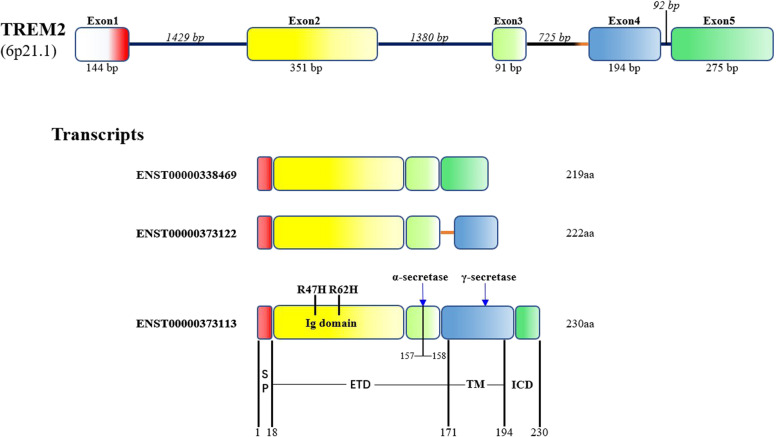
Triggering receptor expressed on myeloid cells 2 (TREM2) is a receptor mainly expressed on the surface of microglia. It mediates multiple pathophysiological processes in various diseases. Recently, TREM2 has been found to play a role in the development of Alzheimer's disease (AD). TREM2 is a transmembrane protein that is specifically expressed on microglia in the brain. It contains a long ectodomain that directly interacts with the extracellular environment to regulate microglial function. The ectodomain of TREM2 is processed by a disintegrin and metalloprotease, resulting in the release of a soluble form of TREM2 (sTREM2). Recent studies have demonstrated that sTREM2 is a bioactive molecule capable of binding ligands, activating microglia, and regulating immune responses during the AD continuum. Clinical studies revealed that sTREM2 level is elevated in cerebrospinal fluid (CSF) of AD patients, and the sTREM2 level is positively correlated with the levels of classical CSF biomarkers, namely t-tau and p-tau, indicating that it is a reliable predictor of the early stages of AD. Herein, we summarize the key results on the generation, structure, and function of sTREM2 to provide new insights into TREM2-related mechanisms underlying AD pathogenesis and to promote the development of TREM2-based therapeutic strategy.
Overview
The claims and statistics of this paper haven’t been checked yet.
Run the check — free, no account needed. It reads the open-access text and checks the sources it cites.
Integrity signals
Registry
Cites
Statistics
Figures
Verification
Claims the paper makes
The claims and statistics of this paper haven’t been checked yet.
Run the check — free, no account needed. It reads the open-access text and checks the sources it cites.
Claims other papers make about this one
Each is checked against this paper’s own text: does it say what the citing paper says it does?
The source backs part of the claim, not all of it — or backs it for a different population, condition or comparison.
In the citing paper
“In the healthy aging human brain, amyloid-β plaques have the ability to cause persistent inflammation in microglia, which are the brain’s resident immune cells.”
From Recent Advances in Therapeutics for the Treatment of Alzheimer’s Disease (2024) · cites this paper as [202]
Experimental — accuracy not yet measuredIn the citing paper
“TREM2 receptor interaction plays a key role in identifying microglia for the build-up of debris and damage during the regulation of microglial activation.”
From Recent Advances in Therapeutics for the Treatment of Alzheimer’s Disease (2024) · cites this paper as [202]
In the citing paper
“TREM2 agonists are being investigated as potential therapeutic agents since they reduce inflammation and encourage amyloid-beta microglial phagocytosis [202,203,204,205].”
From Recent Advances in Therapeutics for the Treatment of Alzheimer’s Disease (2024) · cites this paper as [202]
In the citing paper
“Inflammation, or neuroinflammation, is a crucial factor in the mechanisms behind AD.”
From Recent Advances in Therapeutics for the Treatment of Alzheimer’s Disease (2024) · cites this paper as [202]
Self-check
Percentages, sums and reported differences re-computed from the paper’s own numbers.
The self-check needs the paper’s full text.
Citations
Cites
Neuroinflammation in Alzheimer's disease
Heneka, M. T., Carson, M. J., Khoury, J. E., Landreth, G. E., Brosseron, F., Feinstein, D. L., Jacobs, A. H., Wyss-Coray, T., Vitorica, J., Ransohoff, R. M., et al. (2015) · The Lancet Neurology · doi:10.1016/s1474-4422(15)70016-5 · Cited by 6,226
2016 Alzheimer's disease facts and figures
Alzheimer's Association (2016) · Alzheimer's & Dementia · doi:10.1016/j.jalz.2016.03.001 · Cited by 5,069
Microglia Sculpt Postnatal Neural Circuits in an Activity and Complement-Dependent Manner
Schafer, D. P., Lehrman, E. K., Kautzman, A. G., Koyama, R., Mardinly, A. R., Yamasaki, R., Ransohoff, R. M., Greenberg, M. E., Barres, B. A., & Stevens, B. (2012) · Neuron · doi:10.1016/j.neuron.2012.03.026 · Cited by 4,089 · cited 1×
“Moreover, TREM2 combined with complement proteins, in particular C1q and C3 [93], promoting synaptic elimination of inappropriate connections during mature neural circuit refinement [94].”
BackgroundTREM2 Variants in Alzheimer's Disease
Guerreiro, R., Wojtas, A., Bras, J., Carrasquillo, M., Rogaeva, E., Majounie, E., Cruchaga, C., Sassi, C., Kauwe, J. S. K., Younkin, S., et al. (2013) · New England Journal of Medicine · doi:10.1056/nejmoa1211851 · Cited by 3,020
Krasemann, S., Madore, C., Cialic, R., Baufeld, C., Calcagno, N., El Fatimy, R., Beckers, L., O’Loughlin, E., Xu, Y., Fanek, Z., et al. (2017) · Immunity · doi:10.1016/j.immuni.2017.08.008 · Cited by 2,979
Lane, C. A., Hardy, J., & Schott, J. M. (2018) · European Journal of Neurology · doi:10.1111/ene.13439 · Cited by 2,616
Variant of TREM2 Associated with the Risk of Alzheimer's Disease
Jonsson, T., Stefansson, H., Steinberg, S., Jonsdottir, I., Jonsson, P. V., Snaedal, J., Bjornsson, S., Huttenlocher, J., Levey, A. I., Lah, J. J., et al. (2013) · New England Journal of Medicine · doi:10.1056/nejmoa1211103 · Cited by 2,558
Bloom (2014) · doi:10.1001/jamaneurol.2013.5847 · Cited by 2,194
Immune attack: the role of inflammation in Alzheimer disease
Heppner, F. L., Ransohoff, R. M., & Becher, B. (2015) · Nature Reviews Neuroscience · doi:10.1038/nrn3880 · Cited by 2,134
TREM2 Lipid Sensing Sustains the Microglial Response in an Alzheimer’s Disease Model
Wang, Y., Cella, M., Mallinson, K., Ulrich, J. D., Young, K. L., Robinette, M. L., Gilfillan, S., Krishnan, G. M., Sudhakar, S., Zinselmeyer, B. H., et al. (2015) · Cell · doi:10.1016/j.cell.2015.01.049 · Cited by 1,736
Alzheimer’s Disease Risk Genes and Mechanisms of Disease Pathogenesis
Karch, C. M., & Goate, A. M. (2015) · Biological Psychiatry · doi:10.1016/j.biopsych.2014.05.006 · Cited by 1,357
Takahashi, K., Rochford, C. D. P., & Neumann, H. (2005) · The Journal of Experimental Medicine · doi:10.1084/jem.20041611 · Cited by 1,124
The Complement System: An Unexpected Role in Synaptic Pruning During Development and Disease
Stephan, A. H., Barres, B. A., & Stevens, B. (2012) · Annual Review of Neuroscience · doi:10.1146/annurev-neuro-061010-113810 · Cited by 1,113
ARUK Consortium, Sims, R., GERAD/PERADES, C., van der Lee, S. J., Naj, A. C., Bellenguez, C., Badarinarayan, N., Jakobsdottir, J., Kunkle, B. W., Boland, A., et al. (2017) · Nature Genetics · doi:10.1038/ng.3916 · Cited by 1,012
Yeh, F. L., Wang, Y., Tom, I., Gonzalez, L. C., & Sheng, M. (2016) · Neuron · doi:10.1016/j.neuron.2016.06.015 · Cited by 943
TREM2-mediated early microglial response limits diffusion and toxicity of amyloid plaques
Wang, Y., Ulland, T. K., Ulrich, J. D., Song, W., Tzaferis, J. A., Hole, J. T., Yuan, P., Mahan, T. E., Shi, Y., Gilfillan, S., et al. (2016) · Journal of Experimental Medicine · doi:10.1084/jem.20151948 · Cited by 840
Yuan, P., Condello, C., Keene, C. D., Wang, Y., Bird, T. D., Paul, S. M., Luo, W., Colonna, M., Baddeley, D., & Grutzendler, J. (2016) · Neuron · doi:10.1016/j.neuron.2016.05.003 · Cited by 817
TREM2 mutations implicated in neurodegeneration impair cell surface transport and phagocytosis
Kleinberger, G., Yamanishi, Y., Suárez-Calvet, M., Czirr, E., Lohmann, E., Cuyvers, E., Struyfs, H., Pettkus, N., Wenninger-Weinzierl, A., Mazaheri, F., et al. (2014) · Science Translational Medicine · doi:10.1126/scitranslmed.3009093 · Cited by 798
TREM2 Is a Receptor for β-Amyloid that Mediates Microglial Function
Zhao, Y., Wu, X., Li, X., Jiang, L.-L., Gui, X., Liu, Y., Sun, Y., Zhu, B., Piña-Crespo, J. C., Zhang, M., et al. (2018) · Neuron · doi:10.1016/j.neuron.2018.01.031 · Cited by 763
TREM2 regulates microglial cholesterol metabolism upon chronic phagocytic challenge
Nugent, A. A., Lin, K., van Lengerich, B., Lianoglou, S., Przybyla, L., Davis, S. S., Llapashtica, C., Wang, J., Kim, D. J., Xia, D., et al. (2020) · Neuron · doi:10.1016/j.neuron.2019.12.007 · Cited by 745
Microglia constitute a barrier that prevents neurotoxic protofibrillar Aβ42 hotspots around plaques
Condello, C., Yuan, P., Schain, A., & Grutzendler, J. (2015) · Nature Communications · doi:10.1038/ncomms7176 · Cited by 718
Common neurodegenerative pathways in obesity, diabetes, and Alzheimer's disease
Pugazhenthi, S., Qin, L., & Reddy, P. H. (2017) · Biochimica et Biophysica Acta (BBA) - Molecular Basis of Disease · doi:10.1016/j.bbadis.2016.04.017 · Cited by 697
Filipello, F., Morini, R., Corradini, I., Zerbi, V., Canzi, A., Michalski, B., Erreni, M., Markicevic, M., Starvaggi-Cucuzza, C., Otero, K., et al. (2018) · Immunity · doi:10.1016/j.immuni.2018.04.016 · Cited by 695
Apolipoprotein E Is a Ligand for Triggering Receptor Expressed on Myeloid Cells 2 (TREM2)
Atagi, Y., Liu, C.-C., Painter, M. M., Chen, X.-F., Verbeeck, C., Zheng, H., Li, X., Rademakers, R., Kang, S. S., Xu, H., et al. (2015) · Journal of Biological Chemistry · doi:10.1074/jbc.m115.679043 · Cited by 587
Suárez‐Calvet, M., Kleinberger, G., Araque Caballero, M. Á., Brendel, M., Rominger, A., Alcolea, D., Fortea, J., Lleó, A., Blesa, R., Gispert, J. D., et al. (2016) · EMBO Molecular Medicine · doi:10.15252/emmm.201506123 · Cited by 522
Current state of Alzheimer’s fluid biomarkers
Molinuevo, J. L., Ayton, S., Batrla, R., Bednar, M. M., Bittner, T., Cummings, J., Fagan, A. M., Hampel, H., Mielke, M. M., Mikulskis, A., et al. (2018) · Acta Neuropathologica · doi:10.1007/s00401-018-1932-x · Cited by 518
Leyns, C. E. G., Ulrich, J. D., Finn, M. B., Stewart, F. R., Koscal, L. J., Remolina Serrano, J., Robinson, G. O., Anderson, E., Colonna, M., & Holtzman, D. M. (2017) · Proceedings of the National Academy of Sciences · doi:10.1073/pnas.1710311114 · Cited by 517
A role for TREM2 ligands in the phagocytosis of apoptotic neuronal cells by microglia
Hsieh, C. L., Koike, M., Spusta, S. C., Niemi, E. C., Yenari, M., Nakamura, M. C., & Seaman, W. E. (2009) · Journal of Neurochemistry · doi:10.1111/j.1471-4159.2009.06042.x · Cited by 475
Disease Progression-Dependent Effects of TREM2 Deficiency in a Mouse Model of Alzheimer's Disease
Jay, T. R., Hirsch, A. M., Broihier, M. L., Miller, C. M., Neilson, L. E., Ransohoff, R. M., Lamb, B. T., & Landreth, G. E. (2017) · The Journal of Neuroscience · doi:10.1523/jneurosci.2110-16.2016 · Cited by 457
TREM2, microglia, and neurodegenerative diseases
Yeh, F. L., Hansen, D. V., & Sheng, M. (2017) · Trends in Molecular Medicine · doi:10.1016/j.molmed.2017.03.008 · Cited by 440 · cited 8×
“Most studies suggest that TREM2 is a protective factor that can enhance the phagocytic ability of microglia and maintain the homeostasis in the CNS [95].”
BackgroundInfluentialTREM and TREM-like receptors in inflammation and disease
Ford, J. W., & McVicar, D. W. (2009) · Current Opinion in Immunology · doi:10.1016/j.coi.2009.01.009 · Cited by 434
TREM2 in Neurodegenerative Diseases
Jay, T. R., von Saucken, V. E., & Landreth, G. E. (2017) · Molecular Neurodegeneration · doi:10.1186/s13024-017-0197-5 · Cited by 427
TREM2 variants: new keys to decipher Alzheimer disease pathogenesis
Colonna, M., & Wang, Y. (2016) · Nature Reviews Neuroscience · doi:10.1038/nrn.2016.7 · Cited by 418
Lee, C. Y. D., Daggett, A., Gu, X., Jiang, L.-L., Langfelder, P., Li, X., Wang, N., Zhao, Y., Park, C. S., Cooper, Y., et al. (2018) · Neuron · doi:10.1016/j.neuron.2018.02.002 · Cited by 396
GWAS of Cerebrospinal Fluid Tau Levels Identifies Risk Variants for Alzheimer’s Disease
Cruchaga, C., Kauwe, J. S. K., Harari, O., Jin, S. C., Cai, Y., Karch, C. M., Benitez, B. A., Jeng, A. T., Skorupa, T., Carrell, D., et al. (2013) · Neuron · doi:10.1016/j.neuron.2013.02.026 · Cited by 383
Soluble TREM2 induces inflammatory responses and enhances microglial survival
Zhong, L., Chen, X., Wang, T., Wang, Z., Liao, C., Wang, Z., Huang, R., Wang, D., Li, X., Wu, L., et al. (2017) · The Journal of Experimental Medicine · doi:10.1084/jem.20160844 · Cited by 372
Zhong, L., Xu, Y., Zhuo, R., Wang, T., Wang, K., Huang, R., Wang, D., Gao, Y., Zhu, Y., Sheng, X., et al. (2019) · Nature Communications · doi:10.1038/s41467-019-09118-9 · Cited by 371
TREM2 deficiency impairs chemotaxis and microglial responses to neuronal injury
Mazaheri, F., Snaidero, N., Kleinberger, G., Madore, C., Daria, A., Werner, G., Krasemann, S., Capell, A., Trümbach, D., Wurst, W., et al. (2017) · The EMBO Reports · doi:10.15252/embr.201743922 · Cited by 351
Initiative, F. T. A. D. N., Suárez-Calvet, M., Morenas-Rodríguez, E., Kleinberger, G., Schlepckow, K., Araque Caballero, M. Á., Franzmeier, N., Capell, A., Fellerer, K., Nuscher, B., et al. (2019) · Molecular Neurodegeneration · doi:10.1186/s13024-018-0301-5 · Cited by 347
Cerebrospinal fluid soluble TREM2 is higher in Alzheimer disease and associated with mutation status
Piccio, L., Deming, Y., Del-Águila, J. L., Ghezzi, L., Holtzman, D. M., Fagan, A. M., Fenoglio, C., Galimberti, D., Borroni, B., & Cruchaga, C. (2016) · Acta Neuropathologica · doi:10.1007/s00401-016-1533-5 · Cited by 337
Ewers, M., Franzmeier, N., Suárez-Calvet, M., Morenas-Rodriguez, E., Caballero, M. A. A., Kleinberger, G., Piccio, L., Cruchaga, C., Deming, Y., Dichgans, M., et al. (2019) · Science Translational Medicine · doi:10.1126/scitranslmed.aav6221 · Cited by 327
Elucidating the Role of TREM2 in Alzheimer’s Disease
Ulrich, J. D., Ulland, T. K., Colonna, M., & Holtzman, D. M. (2017) · Neuron · doi:10.1016/j.neuron.2017.02.042 · Cited by 325
Enhancing protective microglial activities with a dual function TREM2 antibody to the stalk region
Schlepckow, K., Monroe, K. M., Kleinberger, G., Cantuti‐Castelvetri, L., Parhizkar, S., Xia, D., Willem, M., Werner, G., Pettkus, N., Brunner, B., et al. (2020) · EMBO Molecular Medicine · doi:10.15252/emmm.201911227 · Cited by 324
Lichtenthaler, S. F., Lemberg, M. K., & Fluhrer, R. (2018) · The EMBO Journal · doi:10.15252/embj.201899456 · Cited by 323
Innate Immunity and Neurodegeneration
Labzin, L. I., Heneka, M. T., & Latz, E. (2018) · Annual Review of Medicine · doi:10.1146/annurev-med-050715-104343 · Cited by 319
Coding variants in TREM2 increase risk for Alzheimer's disease
Jin, S. C., Benitez, B. A., Karch, C. M., Cooper, B., Skorupa, T., Carrell, D., Norton, J. B., Hsu, S., Harari, O., Cai, Y., et al. (2014) · Human Molecular Genetics · doi:10.1093/hmg/ddu277 · Cited by 314
Piccio, L. M., Buonsanti, C., Cella, M., Tassi, I., Schmidt, R. E., Fenoglio, C., Rinker, J. R., Naismith, R. T., Panina‐Bordignon, P., Passini, N., et al. (2008) · Brain · doi:10.1093/brain/awn217 · Cited by 311
Humanized TREM2 mice reveal microglia-intrinsic and -extrinsic effects of R47H polymorphism
Song, W. M., Joshita, S., Zhou, Y., Ulland, T. K., Gilfillan, S., & Colonna, M. (2018) · Journal of Experimental Medicine · doi:10.1084/jem.20171529 · Cited by 305
The Triggering Receptor Expressed on Myeloid Cells 2 Binds Apolipoprotein E
Bailey, C. C., DeVaux, L. B., & Farzan, M. (2015) · Journal of Biological Chemistry · doi:10.1074/jbc.m115.677286 · Cited by 303
Increased cerebrospinal fluid soluble TREM2 concentration in Alzheimer’s disease
Heslegrave, A., Heywood, W., Paterson, R., Magdalinou, N., Svensson, J., Johansson, P., Öhrfelt, A., Blennow, K., Hardy, J., Schott, J., et al. (2016) · Molecular Neurodegeneration · doi:10.1186/s13024-016-0071-x · Cited by 303
Microglial TREM2/DAP12 signaling: a double-edged sword in neural diseases
Konishi, H., & Kiyama, H. (2018) · Frontiers in Cellular Neuroscience · doi:10.3389/fncel.2018.00206 · Cited by 300
Song, W., Hooli, B., Mullin, K., Jin, S. C., Cella, M., Ulland, T. K., Wang, Y., Tanzi, R. E., & Colonna, M. (2017) · Alzheimer's & Dementia · doi:10.1016/j.jalz.2016.07.004 · Cited by 297
Wunderlich, P., Glebov, K., Kemmerling, N., Tien, N. T., Neumann, H., & Walter, J. (2013) · Journal of Biological Chemistry · doi:10.1074/jbc.m113.517540 · Cited by 296
Pattern Recognition by TREM-2: Binding of Anionic Ligands
Daws, M. R., Sullam, P. M., Niemi, E. C., Chen, T. T., Tchao, N. K., & Seaman, W. E. (2003) · The Journal of Immunology · doi:10.4049/jimmunol.171.2.594 · Cited by 291
TREM2-Ligand Interactions in Health and Disease
Kober, D. L., & Brett, T. J. (2017) · Journal of Molecular Biology · doi:10.1016/j.jmb.2017.04.004 · Cited by 284 · cited 2×
“Functions of TREM2 ectodomain and its soluble form in AD pathology The shedding of the TREM2 ectodomain, which is triggered by different ligands, is a fundamental process during TREM2-induced cell signaling [32].”
BackgroundGlial activation and inflammation along the Alzheimer’s disease continuum
Nordengen, K., Kirsebom, B.-E., Henjum, K., Selnes, P., Gísladóttir, B., Wettergreen, M., Torsetnes, S. B., Grøntvedt, G. R., Waterloo, K. K., Aarsland, D., et al. (2019) · Journal of Neuroinflammation · doi:10.1186/s12974-019-1399-2 · Cited by 274
Suárez-Calvet, M., Araque Caballero, M. Á., Kleinberger, G., Bateman, R. J., Fagan, A. M., Morris, J. C., Levin, J., Danek, A., Ewers, M., Haass, C., et al. (2016) · Science Translational Medicine · doi:10.1126/scitranslmed.aag1767 · Cited by 272
Microglial genes regulating neuroinflammation in the progression of Alzheimer's disease
Villegas-Llerena, C., Phillips, A., Garcia-Reitboeck, P., Hardy, J., & Pocock, J. M. (2016) · Current Opinion in Neurobiology · doi:10.1016/j.conb.2015.10.004 · Cited by 270
Schlepckow, K., Kleinberger, G., Fukumori, A., Feederle, R., Lichtenthaler, S. F., Steiner, H., & Haass, C. (2017) · EMBO Molecular Medicine · doi:10.15252/emmm.201707672 · Cited by 266
Neuroinflammation – An Early Event in Both the History and Pathogenesis of Alzheimer’s Disease
Eikelenboom, P., van Exel, E. R., Hoozemans, J. J. M., Veerhuis, R., Rozemüller, A. J. M., & van Gool, W. A. (2010) · Neurodegenerative Diseases · doi:10.1159/000283480 · Cited by 259
The Trem2 R47H variant confers loss-of-function-like phenotypes in Alzheimer's disease
Cheng-Hathaway, P. J., Reed-Geaghan, E. G., Jay, T. R., Casali, B. T., Bemiller, S. M., Puntambekar, S. S., von Saucken, V. E., Williams, R. Y., Karlo, J. C., Moutinho, M., et al. (2018) · Molecular Neurodegeneration · doi:10.1186/s13024-018-0262-8 · Cited by 252
Neumann, H., & Takahashi, K. (2007) · Journal of Neuroimmunology · doi:10.1016/j.jneuroim.2006.11.032 · Cited by 249
Kleinberger, G., Brendel, M., Mracsko, E. Z., Wefers, B., Groeneweg, L., Xiang, X., Focke, C., Deußing, M., Suárez‐Calvet, M., Mazaheri, F., et al. (2017) · The EMBO Journal · doi:10.15252/embj.201796516 · Cited by 249
Kober, D. L., Alexander-Brett, J. M., Karch, C. M., Cruchaga, C., Colonna, M., Holtzman, M. J., & Brett, T. J. (2016) · eLife · doi:10.7554/elife.20391 · Cited by 238
Sayed, F. A., Telpoukhovskaia, M., Kodama, L., Li, Y., Zhou, Y., Le, D., Hauduc, A., Ludwig, C., Gao, F., Clelland, C., et al. (2018) · Proceedings of the National Academy of Sciences · doi:10.1073/pnas.1811411115 · Cited by 229 · cited 1×
“TREM2 deletion protected against atrophy and reduced inflammatory responses in P301S mice [99].”
BackgroundThe role of the immune system in Alzheimer disease: Etiology and treatment
Jevtic, S. D., Sengar, A. S., Salter, M. W., & McLaurin, J. (2017) · Ageing Research Reviews · doi:10.1016/j.arr.2017.08.005 · Cited by 224
Zhong, L., Wang, Z., Wang, D., Wang, Z., Martens, Y. A., Wu, L., Xu, Y., Wang, K., Li, J., Huang, R., et al. (2018) · Molecular Neurodegeneration · doi:10.1186/s13024-018-0247-7 · Cited by 222
Microglia in Brain Development, Homeostasis, and Neurodegeneration
Bohlen, C. J., Friedman, B. A., Dejanovic, B., & Sheng, M. (2019) · Annual Review of Genetics · doi:10.1146/annurev-genet-112618-043515 · Cited by 212
Macrophage Clearance of Apoptotic Cells: A Critical Assessment
Gordon, S., & Plüddemann, A. (2018) · Frontiers in Immunology · doi:10.3389/fimmu.2018.00127 · Cited by 201
The Role of APOE and TREM2 in Alzheimer′s Disease—Current Understanding and Perspectives
Wolfe, C. M., Fitz, N. F., Nam, K. N., Lefterov, I. M., & Koldamova, R. P. (2018) · International Journal of Molecular Sciences · doi:10.3390/ijms20010081 · Cited by 201
Thornton, P., Sevalle, J., Deery, M. J., Fraser, G., Zhou, Y., Ståhl, S., Franssen, E. H., Dodd, R. B., Qamar, S., Gomez Perez‐Nievas, B., et al. (2017) · EMBO Molecular Medicine · doi:10.15252/emmm.201707673 · Cited by 200
Intersection of pathological tau and microglia at the synapse
Vogels, T., Murgoci, A.-N., & Hromádka, T. (2019) · Acta Neuropathologica Communications · doi:10.1186/s40478-019-0754-y · Cited by 197
Targeting microglia for the treatment of Alzheimer’s Disease
Wes, P. D., Sayed, F. A., Bard, F., & Gan, L. (2016) · Glia · doi:10.1002/glia.22988 · Cited by 185
Feuerbach, D., Schindler, P. A., Barske, C., Joller, S., Beng-Louka, E., Worringer, K. A., Kommineni, S., Kaykas, A., Ho, D. J., Ye, C., et al. (2017) · Neuroscience Letters · doi:10.1016/j.neulet.2017.09.034 · Cited by 179
TREM2 modifies microglial phenotype and provides neuroprotection in P301S tau transgenic mice
Jiang, T., Zhang, Y.-D., Chen, Q., Gao, Q., Zhu, X.-C., Zhou, J.-S., Shi, J.-Q., Lu, H., Tan, L., & Yu, J.-T. (2016) · Neuropharmacology · doi:10.1016/j.neuropharm.2016.01.028 · Cited by 176
Genetics ignite focus on microglial inflammation in Alzheimer’s disease
Malik, M., Parikh, I., Vasquez, J. B., Smith, C., Tai, L., Bu, G., LaDu, M. J., Fardo, D. W., Rebeck, G. W., & Estus, S. (2015) · Molecular Neurodegeneration · doi:10.1186/s13024-015-0048-1 · Cited by 161
High‐affinity interactions and signal transduction between Aβ oligomers and TREM2
Lessard, C. B., Malnik, S. L., Zhou, Y., Ladd, T. B., Cruz, P. E., Ran, Y., Chakrabaty, P., Mahan, T. E., Holtzman, D. M., Ulrich, J. D., et al. (2018) · EMBO Molecular Medicine · doi:10.15252/emmm.201809027 · Cited by 156
The surface‐exposed chaperone, Hsp60, is an agonist of the microglial TREM2 receptor
Stefano, L., Racchetti, G., Bianco, F., Passini, N., Gupta, R. S., Panina‐Bordignon, P., & Meldolesi, J. (2009) · Journal of Neurochemistry · doi:10.1111/j.1471-4159.2009.06130.x · Cited by 150
Sudom, A., Talreja, S., Danao, J., Bragg, E., Kegel, R., Min, X., Richardson, J., Zhang, Z., Sharkov, N., Marcora, E., et al. (2018) · Journal of Biological Chemistry · doi:10.1074/jbc.ra118.002352 · Cited by 149
Self-citationCerebrospinal fluid soluble TREM2 in aging and Alzheimer’s disease
Henjum, K., Almdahl, I. S., Årskog, V., Minthon, L., Hansson, O., Fladby, T., & Nilsson, L. N. G. (2016) · Alzheimer s Research & Therapy · doi:10.1186/s13195-016-0182-1 · Cited by 145
TREM2 promotes Aβ phagocytosis by upregulating C/EBPα-dependent CD36 expression in microglia
Kim, S.-M., Mun, B.-R., Lee, S.-J., Joh, Y., Lee, H.-Y., Ji, K.-Y., Choi, H.-R., Lee, E.-H., Kim, E.-M., Jang, J.-H., et al. (2017) · Scientific Reports · doi:10.1038/s41598-017-11634-x · Cited by 143
Korvatska, O., Leverenz, J. B., Jayadev, S., McMillan, P., Kurtz, I., Guo, X., Rumbaugh, M., Matsushita, M., Girirajan, S., Dorschner, M. O., et al. (2015) · JAMA Neurology · doi:10.1001/jamaneurol.2015.0979 · Cited by 137
Cheng, Q., Danao, J., Talreja, S., Wen, P. H., Yin, J., Sun, N., Li, C.-M., Chui, D., Tran, D. T., Koirala, S., et al. (2018) · Journal of Biological Chemistry · doi:10.1074/jbc.ra118.001848 · Cited by 129
Nutrients in the Prevention of Alzheimer’s Disease
Cremonini, A. L., Caffa, I., Cea, M., Nencioni, A., Odetti, P. R., & Monacelli, F. (2019) · Oxidative Medicine and Cellular Longevity · doi:10.1155/2019/9874159 · Cited by 121
Gispert, J. D., Suárez‐Calvet, M., Monté, G. C., Tucholka, A., Falcón, C., Rojas, S., Rami, L., Sánchez‐Valle, R., Lladó, A., Kleinberger, G., et al. (2016) · Alzheimer s & Dementia · doi:10.1016/j.jalz.2016.06.005 · Cited by 116
Aminophospholipids are signal-transducing TREM2 ligands on apoptotic cells
Shirotani, K., Hori, Y., Yoshizaki, R., Higuchi, E., Colonna, M., Saito, T., Hashimoto, S., Saito, T., Saido, T. C., & Iwata, N. (2019) · Scientific Reports · doi:10.1038/s41598-019-43535-6 · Cited by 116
A rare coding variant in TREM2 increases risk for Alzheimer's disease in Han Chinese
Jiang, T., Tan, L., Chen, Q., Tan, M.-S., Zhou, J.-S., Zhu, X.-C., Lu, H., Wang, H.-F., Zhang, Y.-D., & Yu, J.-T. (2016) · Neurobiology of Aging · doi:10.1016/j.neurobiolaging.2016.02.023 · Cited by 110
Zheng, H., Liu, C.-C., Atagi, Y., Chen, X.-F., Jia, L., Yang, L., He, W., Zhang, X., Kang, S. S., Rosenberry, T. L., et al. (2016) · Neurobiology of Aging · doi:10.1016/j.neurobiolaging.2016.03.004 · Cited by 110
Increased Expression of TREM2 in Peripheral Blood of Alzheimer's Disease Patients
Hu, N., Tan, M., Yu, J., Sun, L., Tan, L., Wang, Y.-L., Jiang, T., & Tan, L. (2013) · Journal of Alzheimer s Disease · doi:10.3233/jad-130854 · Cited by 108
TREM2 brain transcript-specific studies in AD and TREM2 mutation carriers
Del‐Aguila, J. L., Benítez, B. A., Li, Z., Dube, U., Mihindukulasuriya, K. A., Budde, J., Farias, F., Fernández, M. V., Ibáñez, L., Jiang, S., et al. (2019) · Molecular Neurodegeneration · doi:10.1186/s13024-019-0319-3 · Cited by 106
Soluble TREM2 and biomarkers of central and peripheral inflammation in neurodegenerative disease
Bekris, L. M., Khrestian, M., Dyne, E. D., Shao, Y. Y., Pillai, J. A., Rao, S. M., Bemiller, S. M., Lamb, B. T., Fernandez, H. H., & Leverenz, J. B. (2018) · Journal of Neuroimmunology · doi:10.1016/j.jneuroim.2018.03.003 · Cited by 101
TREM2 is required for microglial instruction of astrocytic synaptic engulfment in neurodevelopment
Jay, T. R., von Saucken, V. E., Muñoz, B., Codocedo, J. F., Atwood, B. K., Lamb, B. T., & Landreth, G. E. (2019) · Glia · doi:10.1002/glia.23664 · Cited by 97
Jendresen, C., Årskog, V., Daws, M. R., & Nilsson, L. N. G. (2017) · Journal of Neuroinflammation · doi:10.1186/s12974-017-0835-4 · Cited by 94
Soluble TREM2 changes during the clinical course of Alzheimer’s disease: A meta-analysis
Liu, D., Cao, B., Zhao, Y., Huang, H., McIntyre, R. S., Rosenblat, J. D., & Zhou, H. (2018) · Neuroscience Letters · doi:10.1016/j.neulet.2018.08.038 · Cited by 88
Sheng, L., Chen, M., Cai, K., Song, Y., Yu, D., Zhang, H., & Xu, G. (2019) · The FASEB Journal · doi:10.1096/fj.201900527r · Cited by 82
A data-driven approach links microglia to pathology and prognosis in amyotrophic lateral sclerosis
Cooper-Knock, J., Green, C., Altschuler, G., Wei, W., Bury, J. J., Heath, P. R., Wyles, M., Gelsthorpe, C., Highley, J. R., Lorente-Pons, A., et al. (2017) · Acta Neuropathologica Communications · doi:10.1186/s40478-017-0424-x · Cited by 80
TREM2 regulates innate immunity in Alzheimer’s disease
Li, J.-T., & Zhang, Y. (2018) · Journal of Neuroinflammation · doi:10.1186/s12974-018-1148-y · Cited by 76
TREM2 expression in the human brain: a marker of monocyte recruitment?
Fahrenhold, M., Rakić, S., Classey, J. D., Brayne, C., Ince, P. G., Nicoll, J. A. R., Boche, D., & MRC‐CFAS (2017) · Brain Pathology · doi:10.1111/bpa.12564 · Cited by 74
CSF soluble TREM2 as a measure of immune response along the Alzheimer's disease continuum
Rauchmann, B., Schneider-Axmann, T., Alexopoulos, P., & Perneczky, R. (2018) · Neurobiology of Aging · doi:10.1016/j.neurobiolaging.2018.10.022 · Cited by 74
Ma, L., Allen, M., Sakae, N., Ertekin-Taner, N., Graff-Radford, N. R., Dickson, D. W., Younkin, S. G., & Sevlever, D. (2016) · Molecular Neurodegeneration · doi:10.1186/s13024-016-0137-9 · Cited by 70
TREM2 Variants and Neurodegenerative Diseases: A Systematic Review and Meta-Analysis
Zhou, S.-L., Tan, C., Hou, X., Cao, X., Tan, L., & Yu, J. (2019) · Journal of Alzheimer s Disease · doi:10.3233/jad-181038 · Cited by 68
TREM2 Ameliorates Neuronal Tau Pathology Through Suppression of Microglial Inflammatory Response
Jiang, T., Zhang, Y., Gao, Q., Ou, Z., Gong, P., Shi, J., Wu, L., & Zhou, J. (2018) · Inflammation · doi:10.1007/s10753-018-0735-5 · Cited by 66
Casati, M., Ferri, E., Gussago, C., Mazzola, P., Abbate, C., Bellelli, G., Mari, D., Cesari, M., & Arosio, B. (2018) · European Journal of Neurology · doi:10.1111/ene.13583 · Cited by 65
Lue, L.-F., Schmitz, C., & Walker, D. G. (2015) · Neuroscience · doi:10.1016/j.neuroscience.2014.09.050 · Cited by 63
Assessment of the Genetic Architecture of Alzheimer’s Disease Risk in Rate of Memory Decline
Del-Aguila, J. L., Fernández, M. V., Schindler, S., Ibanez, L., Deming, Y., Ma, S., Saef, B., Black, K., Budde, J., Norton, J., et al. (2018) · Journal of Alzheimer’s Disease · doi:10.3233/jad-170834 · Cited by 60
Raha‐Chowdhury, R., Henderson, J. W., Raha, A. A., Vuono, R., Bickerton, A., Jones, E. A., Fincham, R., Allinson, K. S. J., Holland, A. J., & Zaman, S. H. (2019) · Journal of Alzheimer s Disease · doi:10.3233/jad-181179 · Cited by 57
CSF sTREM2 in delirium—relation to Alzheimer’s disease CSF biomarkers Aβ42, t-tau and p-tau
Henjum, K., Quist‐Paulsen, E., Zetterberg, H., Blennow, K., Nilsson, L. N. G., & Watne, L. O. (2018) · Journal of Neuroinflammation · doi:10.1186/s12974-018-1331-1 · Cited by 56
Tan, Y. J., Ng, A. S., Vipin, A., Lim, J. K. W., Chander, R. J., Ji, F., Qiu, Y., Ting, S. K. S., Hameed, S., Lee, T.-S. W., et al. (2017) · Journal of Alzheimer s Disease · doi:10.3233/jad-161277 · Cited by 52
A Tale of Two Genes: Microglial Apoe and Trem2
Pimenova, A. A., Marcora, E. M., & Goate, A. (2017) · Immunity · doi:10.1016/j.immuni.2017.08.015 · Cited by 52
Soluble TREM2 and Inflammatory Proteins in Alzheimer’s Disease Cerebrospinal Fluid
Rauchmann, B., Sadlon, A., Perneczky, R., & Initiative, A. D. N. (2020) · Journal of Alzheimer s Disease · doi:10.3233/jad-191120 · Cited by 50
Park, J., Ji, I. J., Kim, D., An, H. J., & Yoon, S. (2017) · Frontiers in Neuroscience · doi:10.3389/fnins.2016.00618 · Cited by 48
Zhang, L., Wang, H., Abel, G. M., Storm, D. R., & Xia, Z. (2019) · Toxicological Sciences · doi:10.1093/toxsci/kfz218 · Cited by 48
Frontobasal gray matter loss is associated with the TREM2 p.R47H variant
Luis, E. O., Ortega-Cubero, S., Lamet, I., Razquin, C., Cruchaga, C., Benitez, B. A., Lorenzo, E., Irigoyen, J., Pastor, M. A., & Pastor, P. (2014) · Neurobiology of Aging · doi:10.1016/j.neurobiolaging.2014.06.007 · Cited by 47
Tolerization against atherosclerosis using heat shock protein 60
Wick, C. (2015) · Cell Stress and Chaperones · doi:10.1007/s12192-015-0659-z · Cited by 46
TREM2 analysis and increased risk of Alzheimer's disease
Finelli, D., Rollinson, S. J., Harris, J., Jones, M. S., Richardson, A. M. T., Gerhard, A., Snowden, J. S., Mann, D. M. A., & Pickering-Brown, S. M. (2014) · Neurobiology of Aging · doi:10.1016/j.neurobiolaging.2014.08.001 · Cited by 45
Glebov, K., Wunderlich, P., Karaca, I., & Walter, J. (2016) · Journal of Neuroinflammation · doi:10.1186/s12974-016-0479-9 · Cited by 44
The role of TREM2 in Alzheimer's disease; evidence from transgenic mouse models
Karanfilian, L., Tosto, M. G., & Malki, K. (2019) · Neurobiology of Aging · doi:10.1016/j.neurobiolaging.2019.09.004 · Cited by 40
Alzheimer's disease risk alleles in TREM2 illuminate innate immunity in Alzheimer's disease
Golde, T. E., Streit, W. J., & Chakrabarty, P. (2013) · Alzheimer s Research & Therapy · doi:10.1186/alzrt178 · Cited by 39
Kajiwara, Y., McKenzie, A. T., Dorr, N. P., Sosa, M. A. G., Elder, G. A., Schmeidler, J., Dickstein, D. L., Bozdagi, O., Zhang, B., & Buxbaum, J. D. (2016) · Human Molecular Genetics · doi:10.1093/hmg/ddw265 · Cited by 39
Variable expression of microglial DAP12 and TREM2 genes in Nasu-Hakola disease
Sasaki, A., Kakita, A., Yoshida, K., Konno, T., Ikeuchi, T., Hayashi, S., Matsuo, H., & Shioda, K. (2015) · Neurogenetics · doi:10.1007/s10048-015-0451-3 · Cited by 36
Modulatory effects of curcumin on heat shock proteins in cancer: A promising therapeutic approach
Forouzanfar, F., Barreto, G. E., Majeed, M. A., & Sahebkar, A. (2019) · BioFactors · doi:10.1002/biof.1522 · Cited by 36
Analysis of genetics and risk factors of Alzheimer’s Disease
Ateş, M. P., Karaman, Y., Güntekin, S., & Ergün, M. A. (2016) · Neuroscience · doi:10.1016/j.neuroscience.2016.03.051 · Cited by 34
Tanaka, M., Yamakage, H., Masuda, S., Inoue, T., Ohue‐Kitano, R., Araki, R., Matoba, Y., Saito, M. H., Nagaoka, T., Yonezawa, K., et al. (2017) · Diabetes & Metabolism · doi:10.1016/j.diabet.2017.06.006 · Cited by 33
Intracellular trafficking of TREM2 is regulated by presenilin 1
Zhao, Y., Li, X., Huang, T. Y., Jiang, L.-L., Tan, Z., Zhang, M., Cheng, I. H.-J., Wang, X., Bu, G., Zhang, Y., et al. (2017) · Experimental & Molecular Medicine · doi:10.1038/emm.2017.200 · Cited by 26
The first report of Alzheimer's disease
Drouin, E., & Drouin, G. (2017) · The Lancet Neurology · doi:10.1016/s1474-4422(17)30258-2 · Cited by 23
Adaptive Immunity in Neurodegenerative and Neuropsychological Disorders
Mosley, R. L. (2015) · Journal of Neuroimmune Pharmacology · doi:10.1007/s11481-015-9640-y · Cited by 13
Preclinical Alzheimer disease — the new frontier
Knopman, D. S. (2016) · Nature Reviews Neurology · doi:10.1038/nrneurol.2016.153 · Cited by 7
Karsak, M., Glebov, K., Scheffold, M., Bajaj, T., Kawalia, A., Karaca, I., Rading, S., Kornhuber, J., Peters, O., Díez-Fairén, M., et al. (2019) · Human Mutation · doi:10.1002/humu.23904 · Cited by 6
Emura, I., Chou, T., Imai, Y., Kakihar, T., Ishiguro, T., Naito, M., Yoshizawa, H., & Arakawa, M. (2000) · Leukemia · doi:10.1038/sj.leu.2401857 · Cited by 5
Cited by
Sorted by citations
Glial Cell-Mediated Neuroinflammation in Alzheimer’s Disease
Al-Ghraiybah, N. F., Wang, J., Alkhalifa, A. E., Roberts, A. B., Raj, R., Yang, E., & Kaddoumi, A. (2022) · International Journal of Molecular Sciences · doi:10.3390/ijms231810572 · Cited by 217
Haure-Mirande, J.-V., Audrain, M., Ehrlich, M. E., & Gandy, S. (2022) · Molecular Neurodegeneration · doi:10.1186/s13024-022-00552-w · Cited by 159
Zhang, S., Zhu, L., Peng, Y., Zhang, L., Chao, F., Jiang, L. H., Xiao, Q., Liang, X., Tang, J., Yang, H., et al. (2022) · Journal of Neuroinflammation · doi:10.1186/s12974-022-02401-5 · Cited by 143
Soluble TREM2: Innocent bystander or active player in neurological diseases?
Filipello, F., Goldsbury, C., You, S. F., Locca, A., Karch, C. M., & Piccio, L. (2022) · Neurobiology of Disease · doi:10.1016/j.nbd.2022.105630 · Cited by 134
Gong, S., Zhai, M., Shi, J., Yu, G., Lei, Z., Shi, Y., Zeng, Y., Ju, P., Yang, N., Zhang, Z., et al. (2024) · Cell Death and Differentiation · doi:10.1038/s41418-023-01252-8 · Cited by 129
Metadata
- Authors
- Yang, J., Fu, Z., Zhang, X., Xiong, M., Meng, L., & Zhang, Z.
- Affiliations
- Renmin Hospital of Wuhan University (CN)
- Corresponding author
- Zhang, Zhentao
- Venue
- Journal of Neuroinflammation
- Published
- 2020-07-07
- Volume
- 17
- Issue
- 1
- Pages
- 204-204
- ISSN
- 1742-2094 (ISSN-L)
- PMC
- PMC7341574
- OpenAlex
- W3039674883
- Cited by
- 113
- References
- 129
- Citations by year
- 2026: 12 · 2025: 11 · 2024: 32 · 2023: 23 · 2022: 19 · 2021: 16
- FWCI
- 1.44
- Type
- journal article
- Language
- en
- Open access
- gold
- doi.org
- Locations
- Journal of Neuroinflammation (publishedVersion, cc-by)
- PubMed Central (publishedVersion, cc-by)
- PubMed (publishedVersion)
- DOAJ (DOAJ: Directory of Open Access Journals) (submittedVersion, cc-by-sa)
- Funders
- National Natural Science Foundation of China (No.81822016,81771382, and 81571249)
- Topics
- Life Sciences › Neuroscience › Neurology › Neuroinflammation and Neurodegeneration Mechanisms
- Life Sciences › Neuroscience › Cellular and Molecular Neuroscience › Alzheimer's disease research and treatments
- Health Sciences › Medicine › Psychiatry and Mental health › Dementia and Cognitive Impairment Research
- Keywords
- TREM2, soluble TREM2, Alzheimer's disease, microglia, extracellular domain, cerebrospinal fluid biomarkers, tau protein, early diagnosis, neuroinflammation
- MeSH terms
- Alzheimer Disease, Animals, Humans, Membrane Glycoproteins, Receptors, Immunologic, Solubility, Biomarkers, tau Proteins, Microglia, Protein Isoforms
About these checks
Registry, retraction, Cites and statistics results are computed, not judged, with one exception: a printed reference that no index lists is read once by a model before it counts as a citation error. Claims are extracted by a model and kept only when their quote appears verbatim in the text; each cited source is then checked, with a model’s help, for whether it says what the claim relies on. Those verdicts can be wrong — read the claim’s quote and the cited source before relying on one.
Statistics and arithmetic are recomputed, not judged.
Confidence bands are shown only for fields calibrated on our annotated test set. None is calibrated yet, so no band is shown.
What counts as a claim ›How we measure confidence ›How we check this ›
Are you an author, or do you see a problem with this page? Request a review
