

TREM2 is associated with increased risk for Alzheimer’s disease in African Americans
Open accessThe DOI matches its Crossref record; 28 of the 28 references it cites were found in a registry or an index.
Abstract
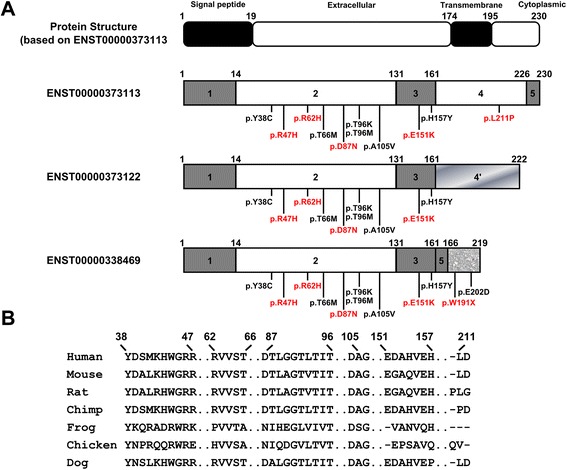
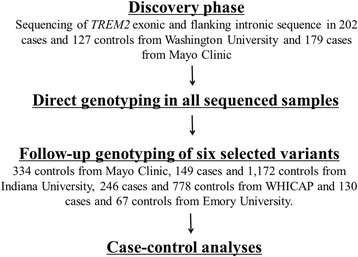
BACKGROUND: TREM2 encodes for triggering receptor expressed on myeloid cells 2 and has rare, coding variants that associate with risk for late-onset Alzheimer's disease (LOAD) in Caucasians of European and North-American origin. This study evaluated the role of TREM2 in LOAD risk in African-American (AA) subjects. We performed exonic sequencing and validation in two independent cohorts of >800 subjects. We selected six coding variants (p.R47H, p.R62H, p.D87N, p.E151K, p.W191X, and p.L211P) for case-control analyses in a total of 906 LOAD cases vs. 2,487 controls. RESULTS: We identified significant LOAD risk association with p.L211P (p=0.01, OR=1.27, 95%CI=1.05-1.54) and suggestive association with p.W191X (p=0.08, OR=1.35, 95%CI=0.97-1.87). Conditional analysis suggests that p.L211P, which is in linkage disequilibrium with p.W191X, may be the stronger variant of the two, but does not rule out independent contribution of the latter. TREM2 p.L211P resides within the cytoplasmic domain and p.W191X is a stop-gain mutation within the shorter TREM-2V transcript. The coding variants within the extracellular domain of TREM2 previously shown to confer LOAD risk in Caucasians were extremely rare in our AA cohort and did not associate with LOAD risk. CONCLUSIONS: Our findings suggest that TREM2 coding variants also confer LOAD risk in AA, but implicate variants within different regions of the gene than those identified for Caucasian subjects. These results underscore the importance of investigating different ethnic populations for disease risk variant discovery, which may uncover allelic heterogeneity with potentially diverse mechanisms of action.
Overview
The claims and statistics of this paper haven’t been checked yet.
Free: it reads the open-access text and checks the first 5 claims that cite a source we can check. Create a free account to check every claim.
Integrity signals
Registry
Cites
Statistics
Figures
Verification
Claims the paper makes
The claims and statistics of this paper haven’t been checked yet.
Free: it reads the open-access text and checks the first 5 claims that cite a source we can check. Create a free account to check every claim.
Claims other papers make about this one
Each is checked against this paper’s own text: does it say what the citing paper says it does?
The cited source says what the claim attributes to it.
In the citing paper
“Given that TREM2 mutations are associated with increased risk of AD in humans126,176,177, a protective role for this receptor appears to be the predominant biologic effect.”
From Microglial signatures and their role in health and disease (2018) · cites this paper as [177]
The cited source says what the claim attributes to it.
In the citing paper
“Since the identification of R47H, additional rare variants in TREM2 have been associated with AD risk [138–140]”
From Genetic architecture of Alzheimer's disease (2020) · cites this paper as [140]
Self-check
Percentages, sums and reported differences re-computed from the paper’s own numbers.
The self-check needs the paper’s full text.
Citations
Cites
The Amyloid Hypothesis of Alzheimer’s Disease: Progress and Problems on the Road to Therapeutics
Hardy, J., & Selkoe, D. J. (2002) · Science · doi:10.1126/science.1072994 · Cited by 13,864 · cited 1×
“…of which was shown to undergo proteolytic processing via an ADAM or MMP protein family member [23] and in a more recent report, by ADAM10 [24], followed by intramembranous cleavage of its C-terminal fragment (CTF) by γ -secretase, which also cleaves amyloid precursor protein (APP) (reviewed [25]).”
BackgroundAmyloid oligomers exacerbate tau pathology in a mouse model of tauopathy
Selenica, M.-L. B., Brownlow, M., Jimenez, J. P., Lee, D. C., Pena, G., Dickey, C. A., Gordon, M. N., & Morgan, D. (2013) · Neurodegenerative Diseases · doi:10.1159/000337230 · Cited by 10,359
TREM2 Variants in Alzheimer's Disease
Guerreiro, R., Wojtas, A., Bras, J., Carrasquillo, M., Rogaeva, E., Majounie, E., Cruchaga, C., Sassi, C., Kauwe, J. S. K., Younkin, S., et al. (2013) · New England Journal of Medicine · doi:10.1056/nejmoa1211851 · Cited by 3,020 · cited 9×
“heterozygous state in a different Caucasian AD subject [6].”
BackgroundResultInfluentialSelf-citationVariant of TREM2 Associated with the Risk of Alzheimer's Disease
Jonsson, T., Stefansson, H., Steinberg, S., Jonsdottir, I., Jonsson, P. V., Snaedal, J., Bjornsson, S., Huttenlocher, J., Levey, A. I., Lah, J. J., et al. (2013) · New England Journal of Medicine · doi:10.1056/nejmoa1211103 · Cited by 2,558 · cited 3×
“D87N [6,7].”
Self-citationBouchon, A., Dietrich, J., & Colonna, M. (2000) · The Journal of Immunology · doi:10.4049/jimmunol.164.10.4991 · Cited by 1,284 · cited 1×
“Background TREM2 is a transmembrane receptor expressed on microglia, macrophages, monocyte-derived dendritic cells, and osteoclasts [1,2].”
BackgroundTREM2 mutations implicated in neurodegeneration impair cell surface transport and phagocytosis
Kleinberger, G., Yamanishi, Y., Suárez-Calvet, M., Czirr, E., Lohmann, E., Cuyvers, E., Struyfs, H., Pettkus, N., Wenninger-Weinzierl, A., Mazaheri, F., et al. (2014) · Science Translational Medicine · doi:10.1126/scitranslmed.3009093 · Cited by 798 · cited 4×
“TREM2 is a type-I transmembrane protein, the extra-cellular domain of which was shown to undergo proteolytic processing via an ADAM or MMP protein family member [23] and in a more recent report, by ADAM10 [24], followed by intramembranous cleavage of its C-terminal fragment (CTF) by γ -secretase, which also cleaves am…”
BackgroundInfluentialPaloneva, J., Manninen, T., Christman, G., Hovanes, K., Mandelin, J., Adolfsson, R., Bianchin, M., Bird, T., Miranda, R., Salmaggi, A., et al. (2002) · The American Journal of Human Genetics · doi:10.1086/342259 · Cited by 683 · cited 1×
“called Nasu-Hakola disease) characterized by progressive early-onset dementia and bone lesions leading to fractures [3-5].”
BackgroundBouchon, A., Hernández-Munain, C., Cella, M., & Colonna, M. (2001) · The Journal of Experimental Medicine · doi:10.1084/jem.194.8.1111 · Cited by 460 · cited 1×
“Background TREM2 is a transmembrane receptor expressed on microglia, macrophages, monocyte-derived dendritic cells, and osteoclasts [1,2].”
BackgroundReitz, C., Jun, G., Naj, A., Rajbhandary, R., Vardarajan, B. N., Wang, L.-S., Valladares, O., Lin, C.-F., Larson, E. B., Graff-Radford, N. R., et al. (2013) · JAMA · doi:10.1001/jama.2013.2973 · Cited by 431
Self-citationRayaprolu, S., Mullen, B., Baker, M., Lynch, T., Finger, E., Seeley, W. W., Hatanpaa, K. J., Lomen-Hoerth, C., Kertesz, A., Bigio, E. H., et al. (2013) · Molecular Neurodegeneration · doi:10.1186/1750-1326-8-19 · Cited by 404
Self-citation
Cited by
Inflammation as a central mechanism in Alzheimer's disease
Kinney, J. W., Bemiller, S. M., Murtishaw, A. S., Leisgang, A. M., Salazar, A. M., & Lamb, B. T. (2018) · Alzheimer's & Dementia: Translational Research & Clinical Interventions · doi:10.1016/j.trci.2018.06.014 · Cited by 2,253
“[135] Jin SC, Carrasquillo MM, Benitez BA, Skorupa T, Carrell D, Patel D, et al.”
BackgroundMicroglial signatures and their role in health and disease
Butovsky, O., & Weiner, H. L. (2018) · Nature Reviews Neuroscience · doi:10.1038/s41583-018-0057-5 · Cited by 1,046
TREM2 — a key player in microglial biology and Alzheimer disease
Ulland, T. K., & Colonna, M. (2018) · Nature Reviews Neurology · doi:10.1038/s41582-018-0072-1 · Cited by 735
Apolipoprotein E Is a Ligand for Triggering Receptor Expressed on Myeloid Cells 2 (TREM2)
Atagi, Y., Liu, C.-C., Painter, M. M., Chen, X.-F., Verbeeck, C., Zheng, H., Li, X., Rademakers, R., Kang, S. S., Xu, H., et al. (2015) · Journal of Biological Chemistry · doi:10.1074/jbc.m115.679043 · Cited by 587
New insights into the role of TREM2 in Alzheimer’s disease
Gratuze, M., Leyns, C. E. G., & Holtzman, D. M. (2018) · Molecular Neurodegeneration · doi:10.1186/s13024-018-0298-9 · Cited by 489
The role of astrocytes in amyloid production and Alzheimer's disease
Frost, G. R., & Li, Y.-M. (2017) · Open Biology · doi:10.1098/rsob.170228 · Cited by 435
TREM2 in Neurodegenerative Diseases
Jay, T. R., von Saucken, V. E., & Landreth, G. E. (2017) · Molecular Neurodegeneration · doi:10.1186/s13024-017-0197-5 · Cited by 427
“Similarly, the MAF of the R47H and R62H variants are much lower in African Americans compared to European American populations [83, 84].”
BackgroundAssessment of Racial Disparities in Biomarkers for Alzheimer Disease
Morris, J. C., Schindler, S. E., McCue, L. M., Moulder, K. L., Benzinger, T. L. S., Cruchaga, C., Fagan, A. M., Grant, E., Gordon, B. A., Holtzman, D. M., et al. (2019) · JAMA Neurology · doi:10.1001/jamaneurol.2018.4249 · Cited by 370
Self-citationSoluble TREM2 induces inflammatory responses and enhances microglial survival
Zhong, L., Chen, X.-F., Wang, T., Wang, Z., Liao, C., Wang, Z., Huang, R., Wang, D., Li, X., Wu, L., et al. (2017) · Journal of Experimental Medicine · doi:10.1084/jem.20160844 · Cited by 362
“The R62H mutation has also been identified to significantly increase the risk of AD (Jin et al., 2014, 2015), whereas the T66M andY38C mutations of TREM2 have been linked to frontotemporal dementia–like syndrome without bone pathology (Guerreiro et al., 2013b).”
McQuade, A., Kang, Y. J., Hasselmann, J., Jairaman, A., Sotelo, A., Coburn, M., Shabestari, S. K., Chadarevian, J. P., Fote, G., Tu, C. H., et al. (2020) · Nature Communications · doi:10.1038/s41467-020-19227-5 · Cited by 361
Initiative, F. T. A. D. N., Suárez-Calvet, M., Morenas-Rodríguez, E., Kleinberger, G., Schlepckow, K., Araque Caballero, M. Á., Franzmeier, N., Capell, A., Fellerer, K., Nuscher, B., et al. (2019) · Molecular Neurodegeneration · doi:10.1186/s13024-018-0301-5 · Cited by 347
Self-citationCerebrospinal fluid soluble TREM2 is higher in Alzheimer disease and associated with mutation status
Piccio, L., Deming, Y., Del-Águila, J. L., Ghezzi, L., Holtzman, D. M., Fagan, A. M., Fenoglio, C., Galimberti, D., Borroni, B., & Cruchaga, C. (2016) · Acta Neuropathologica · doi:10.1007/s00401-016-1533-5 · Cited by 337
“Blood was collected at the time of LP and serum or plasma was obtained by centrifugation and stored at −80 °C. Apolipoprotein E (APOE) genotypes were determined by the Knight ADRC Genetics Core and CSF samples were analyzed by immunoassay for β-amyloid 1–42 (Aβ42), total tau, and tau phosphorylated at threonine 181 (p…”
BackgroundInfluentialSelf-citationNeuroinflammation in Neurodegenerative Disorders-a Review
Schain, M., & Kreisl, W. C. (2017) · Current Neurology and Neuroscience Reports · doi:10.1007/s11910-017-0733-2 · Cited by 301
Song, W., Hooli, B., Mullin, K., Jin, S. C., Cella, M., Ulland, T. K., Wang, Y., Tanzi, R. E., & Colonna, M. (2017) · Alzheimer's & Dementia · doi:10.1016/j.jalz.2016.07.004 · Cited by 297
“In addition, the L211P variant was previously found to be significant for risk in African Americans [21].”
BackgroundSelf-citationTREM2-Ligand Interactions in Health and Disease
Kober, D. L., & Brett, T. J. (2017) · Journal of Molecular Biology · doi:10.1016/j.jmb.2017.04.004 · Cited by 284
The MS4A gene cluster is a key modulator of soluble TREM2 and Alzheimer’s disease risk
Deming, Y., Filipello, F., Cignarella, F., Cantoni, C., Hsu, S., Mikesell, R., Li, Z., Del-Aguila, J. L., Dube, U., Farias, F. G., et al. (2019) · Science Translational Medicine · doi:10.1126/scitranslmed.aau2291 · Cited by 271
Self-citationKunkle, B. W., Schmidt, M., Klein, H.-U., Naj, A. C., Hamilton-Nelson, K. L., Larson, E. B., Evans, D. A., De Jager, P. L., Crane, P. K., Buxbaum, J. D., et al. (2021) · JAMA Neurology · doi:10.1001/jamaneurol.2020.3536 · Cited by 257
Self-citationThe role of TREM2 in Alzheimer's disease and other neurodegenerative disorders
Carmona, S., Zahs, K., Wu, E., Dakin, K., Bras, J., & Guerreiro, R. (2018) · The Lancet Neurology · doi:10.1016/s1474-4422(18)30232-1 · Cited by 244
TREM2, microglia, and Alzheimer’s disease.
Qin, Q., Teng, Z., Liu, C., Li, Q., Yin, Y., & Tang, Y. (2021) · Mechanisms of Ageing and Development · doi:10.1016/j.mad.2021.111438 · Cited by 219
Zhong, L., Wang, Z., Wang, D., Wang, Z., Martens, Y. A., Wu, L., Xu, Y., Wang, K., Li, J., Huang, R., et al. (2018) · Molecular Neurodegeneration · doi:10.1186/s13024-018-0247-7 · Cited by 217
“The R62H, D87N and T96 K mutations in TREM2 were also linked to AD after extensive analyses of TREM2 polymorphisms [8, 10, 20].”
BackgroundHowell, J. C., Watts, K. D., Parker, M. W., Wu, J., Kollhoff, A., Wingo, T. S., Dorbin, C. D., Qiu, D., & Hu, W. T. (2017) · Alzheimer's Research & Therapy · doi:10.1186/s13195-017-0315-1 · Cited by 198
“DNA was extracted from buffy coat as previously described [34].”
MethodSelf-citationThe Role of APOE and TREM2 in Alzheimer′s Disease—Current Understanding and Perspectives
Wolfe, C. M., Fitz, N. F., Nam, K. N., Lefterov, I., & Koldamova, R. (2018) · International Journal of Molecular Sciences · doi:10.3390/ijms20010081 · Cited by 187
“TREM2 pW191X and pL211P variants were recently identified associated with LOAD in African American cohort but the variants shown to confer AD risk in Caucasians were extremely rare [107].”
BackgroundTREM2 in CNS homeostasis and neurodegenerative disease
Painter, M. M., Atagi, Y., Liu, C.-C., Rademakers, R., Xu, H., Fryer, J. D., & Bu, G. (2015) · Molecular Neurodegeneration · doi:10.1186/s13024-015-0040-9 · Cited by 169
“been shown to increase the risk of developing neurological diseases [10–25, 1, 5–7].”
BackgroundResultInfluentialHigh‐affinity interactions and signal transduction between Aβ oligomers and TREM 2
Lessard, C. B., Malnik, S. L., Zhou, Y., Ladd, T. B., Cruz, P. E., Ran, Y., Mahan, T. E., Chakrabaty, P., Holtzman, D. M., Ulrich, J. D., et al. (2018) · EMBO Molecular Medicine · doi:10.15252/emmm.201809027 · Cited by 154
“…R62H, which are reproducibly associated with increased risk for developing AD, are being intensively studied as these variants were the first coding variants in an innate immune gene that have been reproducibly shown to alter risk for AD (Cruchaga et al, 2013; Jin et al, 2015; Lill et al, 2015).”
BackgroundTREM2 Function in Alzheimer’s Disease and Neurodegeneration
Ulrich, J. D., & Holtzman, D. M. (2016) · ACS Chemical Neuroscience · doi:10.1021/acschemneuro.5b00313 · Cited by 154
LRP1 modulates the microglial immune response via regulation of JNK and NF‐ΚB signaling pathways
Yang, L., Liu, C.-C., Zheng, H., Kanekiyo, T., Atagi, Y., Jia, L., Wang, D., N’songo, A., Can, D., Xu, H., et al. (2016) · Journal of Neuroinflammation · doi:10.1186/s12974-016-0772-7 · Cited by 129
“The important role of neuroinflammation in AD is also supported by the identification of AD risk genes including TREM2 and CD33 that predominantly expressed in microglia [10, 11, 46].”
BackgroundCruchaga, C., Del‐Aguila, J. L., Saef, B., Black, K., Fernandez, M. V., Budde, J., Ibanez, L., Deming, Y., Kapoor, M., Tosto, G., et al. (2018) · Alzheimer's & Dementia · doi:10.1016/j.jalz.2017.08.013 · Cited by 138
“This is also supported by the identification of low-frequency coding variant associated with AD risk in TREM2, which is clearly involved on immune response and inflammation [49,55,56].”
BackgroundSelf-citationMicroglia-Mediated Neuroprotection, TREM2, and Alzheimer’s Disease: Evidence From Optical Imaging
Condello, C., Yuan, P., & Grutzendler, J. (2018) · Biological Psychiatry · doi:10.1016/j.biopsych.2017.10.007 · Cited by 131
Genetic architecture of Alzheimer's disease
Neuner, S. M., TCW, J., & Goate, A. M. (2020) · Neurobiology of Disease · doi:10.1016/j.nbd.2020.104976 · Cited by 126
“Since the identification of R47H, additional rare variants in TREM2 have been associated with AD risk (Benitez et al., 2013; Jin et al., 2014; Jin et al., 2015), highlighting the critical role of this protein in the etiology of AD.”
BackgroundSelf-citationAlosco, M. L., Tripodis, Y., Fritts, N. G., Heslegrave, A., Baugh, C. M., Conneely, S., Mariani, M., Martin, B. M., Frank, S., Mez, J., et al. (2018) · Alzheimer's & Dementia · doi:10.1016/j.jalz.2018.05.004 · Cited by 121
“There appears to be different TREM2 coding variants that confer risk for AD in African-Americans versus Caucasians [66].”
Conway, O. J., Carrasquillo, M. M., Wang, X., Bredenberg, J. M., Reddy, J. S., Strickland, S. L., Younkin, C. S., Burgess, J. D., Allen, M., Lincoln, S. J., et al. (2018) · Molecular Neurodegeneration · doi:10.1186/s13024-018-0289-x · Cited by 112
“We have identified TREM2 coding variants that confer AD risk in African-Americans [54], but these were different than the AD risk variants identified in Caucasian subjects [55, 56].”
ResultInfluentialSelf-citationAlzheimer’s Disease: Biomarkers in the Genome, Blood, and Cerebrospinal Fluid
Huynh, R. A., & Mohan, C. (2017) · Frontiers in Neurology · doi:10.3389/fneur.2017.00102 · Cited by 108
“83, suggesting that the diagnostic value of this genetic variant may be ethnicity dependent (46).”
BackgroundHoogmartens, J., Cacace, R., & Van Broeckhoven, C. (2021) · Alzheimer's & Dementia: Diagnosis, Assessment & Disease Monitoring · doi:10.1002/dad2.12155 · Cited by 104
Neuropathologic differences by race from the National Alzheimer's Coordinating Center
Graff‐Radford, N. R., Besser, L. M., Crook, J. E., Kukull, W. A., & Dickson, D. W. (2016) · Alzheimer's & Dementia · doi:10.1016/j.jalz.2016.03.004 · Cited by 100
Self-citationmicroRNA-Based Biomarkers in Alzheimer’s Disease (AD)
Zhao, Y., Jaber, V., Alexandrov, P. N., Vergallo, A., Lista, S., Hampel, H., & Lukiw, W. J. (2020) · Frontiers in Neuroscience · doi:10.3389/fnins.2020.585432 · Cited by 100
“…2008; Lukiw, 2013a,b; Praticò, 2013; Hampel and Lista, 2013; Kim et al., 2014; Sherva et al., 2014; Canobbio et al., 2015; De Marco and Venneri, 2015; Jin et al., 2015; Verhülsdonk et al., 2015; Wang et al., 2015; Zhao et al., 2015; Blennow and Zetterberg, 2018; Hampel et al., 2018a,b,c;…”
Genomics of Alzheimer’s disease implicates the innate and adaptive immune systems
Li, Y., Laws, S. M., Miles, L. A., Wiley, J. S., Huang, X., Masters, C. L., & Gu, B. J. (2021) · Cellular and Molecular Life Sciences · doi:10.1007/s00018-021-03986-5 · Cited by 111
Functional Roles of the Interaction of APP and Lipoprotein Receptors
Pohlkamp, T., Wasser, C. R., & Herz, J. (2017) · Frontiers in Molecular Neuroscience · doi:10.3389/fnmol.2017.00054 · Cited by 92
“In addition to ApoE, a variety of SNPs in ApoJ/Clusterin from several populations are associated with LOAD (Harold et al., 2009; Bagyinszky et al., 2014).”
BackgroundInfluentialLista, S., Imbimbo, B. P., Grasso, M., Fidilio, A., Emanuele, E., Minoretti, P., López-Ortiz, S., Martín-Hernández, J., Gabelle, A., Caruso, G., et al. (2024) · Journal of Neuroinflammation · doi:10.1186/s12974-024-03163-y · Cited by 81
“However, this variant is extremely rare or undetectable in African-American [57] and Asian populations [58, 59].”
BackgroundAnwar, S., & Rivest, S. (2020) · Expert Opinion on Therapeutic Targets · doi:10.1080/14728222.2020.1738391 · Cited by 77
“In addition to the R47H variant, the R62H TREM2mutation has been associated with an increased risk of LOAD [73].”
BackgroundRemembering your A, B, C's: Alzheimer's disease and ABCA1
Lewandowski, C. T., Laham, M. S., & Thatcher, G. R. J. (2022) · Acta Pharmaceutica Sinica B · doi:10.1016/j.apsb.2022.01.011 · Cited by 76
TREM2 regulates innate immunity in Alzheimer’s disease
Li, J.-T., & Zhang, Y. (2018) · Journal of Neuroinflammation · doi:10.1186/s12974-018-1148-y · Cited by 76
“Research on TREM2 missense mutations in European populations revealed that variants, such as L211P [24], H157Y [25], R136Q [26], T96K [26], D87N”
BackgroundBenitez, B. A., Davis, A. A., Jin, S. C., Ibanez, L., Ortega-Cubero, S., Pastor, P., Choi, J., Cooper, B., Perlmutter, J. S., & Cruchaga, C. (2016) · Molecular Neurodegeneration · doi:10.1186/s13024-016-0097-0 · Cited by 75
“All rare missense or splice site variants identified by SPLINTER were validated by directly genotyping all sequenced individuals using Sequenom iPLEX or KASPar genotyping systems as described previously [42–44].”
MethodSelf-citationGenomics and Functional Genomics of Alzheimer's Disease
Kamboh, M. I. (2022) · Neurotherapeutics · doi:10.1007/s13311-021-01152-0 · Cited by 73
Lewandowski, C. T., Maldonado Weng, J., & LaDu, M. J. (2020) · Neurobiology of Disease · doi:10.1016/j.nbd.2020.104811 · Cited by 72
TREM2 and sTREM2 in Alzheimer’s disease: from mechanisms to therapies
Zhang, L., Xiang, X., Li, Y., Bu, G., & Chen, X. (2025) · Molecular Neurodegeneration · doi:10.1186/s13024-025-00834-z · Cited by 98
“For instance, the R62H variant (rs143332484) serves as a significant AD risk modifier in Caucasian populations [34, 35], but it is not associated with AD risk in African-Americans, likely due to its low frequency in this population [37].”
Ma, L., Allen, M., Sakae, N., Ertekin-Taner, N., Graff-Radford, N. R., Dickson, D. W., Younkin, S. G., & Sevlever, D. (2016) · Molecular Neurodegeneration · doi:10.1186/s13024-016-0137-9 · Cited by 70
“Regardless of the mechanism, the potential relevance of sTREM2 as biomarker to monitor AD progression is highlighted by its elevation in the CSF of AD patients [15, 16].”
Self-citationTREM2 Variants and Neurodegenerative Diseases: A Systematic Review and Meta-Analysis
Zhou, S.-L., Tan, C.-C., Hou, X.-H., Cao, X.-P., Tan, L., & Yu, J.-T. (2019) · Journal of Alzheimer's Disease · doi:10.3233/jad-181038 · Cited by 70
Cellular and Molecular Mediators of Neuroinflammation in Alzheimer Disease
Yang, S.-H. (2019) · International Neurourology Journal · doi:10.5213/inj.1938184.092 · Cited by 68
“A rare mutation in TREM2 results in substantially increased AD risk [33-35] .”
BackgroundAfrican ancestry GWAS of dementia in a large military cohort identifies significant risk loci
Sherva, R., Zhang, R., Sahelijo, N., Jun, G., Anglin, T., Chanfreau, C., Cho, K., Fonda, J. R., Gaziano, J. M., Harrington, K. M., et al. (2023) · Molecular Psychiatry · doi:10.1038/s41380-022-01890-3 · Cited by 68
Belsare, K. D., Wu, H., Mondal, D., Bond, A., Castillo, E., Jin, J., Jo, H., Roush, A. E., Pilla, K. B., Sali, A., et al. (2022) · Proceedings of the National Academy of Sciences · doi:10.1073/pnas.2114486119 · Cited by 68
Analysis of 50 Neurodegenerative Genes in Clinically Diagnosed Early-Onset Alzheimer’s Disease
Giau, V. V., Senanarong, V., Bagyinszky, E., An, S. S. A., & Kim, S. (2019) · International Journal of Molecular Sciences · doi:10.3390/ijms20061514 · Cited by 68
“A recent study demonstrated that TREM2 p.L211P is strongly associated with an increased risk for AD in African Americans [36].”
BackgroundRAB10: an Alzheimer’s disease resilience locus and potential drug target
Tavana, J., Rosene, M., Jensen, N., Ridge, P. G., Kauwe, J. S. K., & Karch, C. M. (2018) · Clinical Interventions in Aging · doi:10.2147/cia.s159148 · Cited by 62
Assessment of the Genetic Architecture of Alzheimer’s Disease Risk in Rate of Memory Decline
Del-Aguila, J. L., Fernández, M. V., Schindler, S., Ibanez, L., Deming, Y., Ma, S., Saef, B., Black, K., Budde, J., Norton, J., et al. (2018) · Journal of Alzheimer’s Disease · doi:10.3233/jad-170834 · Cited by 60
Self-citationWang, L., Nykänen, N.-P., Western, D., Gorijala, P., Timsina, J., Li, F., Wang, Z., Ali, M., Yang, C., Marquié, M., et al. (2023) · doi:10.1101/2023.06.14.23291409 · Cited by 59
Self-citationWang, L., Nykänen, N.-P., Western, D., Gorijala, P., Timsina, J., Li, F., Wang, Z., Ali, M., Yang, C., Liu, M., et al. (2024) · Molecular Neurodegeneration · doi:10.1186/s13024-023-00687-4 · Cited by 58
“…rare variants in TREM2 including p.R62H, p.T96K, p.D87N, p.H157Y, p.R98W, p.T66M, p.Y38C and p.Q33X were subsequently identified to be associated with AD [3–6] In addition, recent genome-wide association studies (GWAS) including low-frequency variants identified the TREM2 locus for AD [7, 8].”
BackgroundSelf-citationFrom Common to Rare Variants: The Genetic Component of Alzheimer Disease
Nicolas, G., Charbonnier, C., & Campion, D. (2016) · Human Heredity · doi:10.1159/000452256 · Cited by 51
Dalmasso, M. C., Brusco, L. I., Olivar, N., Muchnik, C., Hanses, C., Milz, E., Becker, J., Heilmann-Heimbach, S., Hoffmann, P., Prestia, F. A., et al. (2019) · Translational Psychiatry · doi:10.1038/s41398-019-0394-9 · Cited by 51
African Americans Have Differences in CSF Soluble TREM2 and Associated Genetic Variants
Schindler, S. E., Cruchaga, C., Joseph, A., McCue, L., Farias, F. H. G., Wilkins, C. H., Deming, Y., Henson, R. L., Mikesell, R. J., Piccio, L., et al. (2021) · Neurology Genetics · doi:10.1212/nxg.0000000000000571 · Cited by 49
“Adequate representation of racial minorities in research studies is a challenge nationally due in part to historical abuses by researchers resulting in the mistrust of medical research by racial minority communities.46 Furthermore, deeply flawed andmalignant suppositions about genetic differences between races have be…”
BackgroundInfluentialSelf-citationDeming, Y., Li, Z., Benitez, B. A., & Cruchaga, C. (2018) · Expert Opinion on Therapeutic Targets · doi:10.1080/14728222.2018.1486823 · Cited by 48
Self-citationMa, Y., Hu, X., Karako, K., Song, P., Tang, W., & Xia, Y. (2025) · Frontiers in Aging Neuroscience · doi:10.3389/fnagi.2025.1576020 · Cited by 55
Logsdon, B. A., Perumal, T. M., Swarup, V., Wang, M., Funk, C., Gaiteri, C., Allen, M., Wang, X., Dammer, E., Srivastava, G., et al. (2019) · bioRxiv (Cold Spring Harbor Laboratory) · doi:10.1101/510420 · Cited by 44
“…et al., 2017; Zhang et al., 2013a) and also from genetic studies (Carrasquillo et al., 2017; Efthymiou and Goate, 2017; Guerreiro et al., 2013; Jin et al., 2015; Jonsson et al., 2013; Raj et al., 2014; Sims et al., 2017), supporting a major focus on this pathway for therapeutic development as…”
Self-citationMcMillan, I. O., Li, J., & Wang, L. (2023) · American Journal of Physiology-Cell Physiology · doi:10.1152/ajpcell.00247.2022 · Cited by 52
Dean, H. B., Roberson, E. D., & Song, Y. (2019) · Frontiers in Neurology · doi:10.3389/fneur.2019.01252 · Cited by 42
“Patients carrying T96K have been found in some studies to be at risk for FTD, particularly in African American cohorts (14); however, T96K is in linkage disequilibrium with the L211P and W191X variants (15) and it is not known whether the T96K variant drives the increased risk of FTD.”
BackgroundAlzheimer’s disease: rare variants with large effect sizes
Del-Aguila, J. L., Koboldt, D. C., Black, K., Chasse, R., Norton, J., Wilson, R. K., & Cruchaga, C. (2015) · Current Opinion in Genetics & Development · doi:10.1016/j.gde.2015.07.008 · Cited by 41
Self-citationA neurodegenerative disease landscape of rare mutations in Colombia due to founder effects
Acosta-Uribe, J., Aguillón, D., Cochran, J. N., Giraldo, M., Madrigal, L., Killingsworth, B. W., Singhal, R., Labib, S., Alzate, D., Velilla, L., et al. (2022) · Genome Medicine · doi:10.1186/s13073-022-01035-9 · Cited by 37
Li, R., Wang, X., & He, P. (2021) · Experimental and Therapeutic Medicine · doi:10.3892/etm.2021.9778 · Cited by 39
Imaging Translocator Protein as a Biomarker of Neuroinflammation in Dementia
Kreisl, W. C., Henter, I. D., & Innis, R. B. (2018) · Advances in Pharmacology · doi:10.1016/bs.apha.2017.08.004 · Cited by 38
“Neuroimmune response is a key pathological contributor to AD (Baik, Kang, Son, & MookJung, 2016; Jin et al., 2015; Lee, McGeer, & McGeer, 2015; McGeer & McGeer, 2013; Raha et al., 2017).”
BackgroundNext Generation Sequencing Analysis in Early Onset Dementia Patients
Bonvicini, C., Initiative, A. D. N., Scassellati, C., Benussi, L., Maria, E. D., Maj, C., Ciani, M., Fostinelli, S., Mega, A., Bocchetta, M., et al. (2018) · Journal of Alzheimer s Disease · doi:10.3233/jad-180482 · Cited by 39
“microglial receptor, can lead to aberrant innate immune cell signalling, contributing to the initiation and propagation of several neurodegenerative phenotypes [72-83], including LBD.”
BackgroundAfrican American exome sequencing identifies potential risk variants at Alzheimer disease loci
N'Songo, A., Carrasquillo, M. M., Wang, X., Burgess, J. D., Nguyen, T., Asmann, Y. W., Serie, D. J., Younkin, S. G., Allen, M., Pedraza, O., et al. (2017) · Neurology Genetics · doi:10.1212/nxg.0000000000000141 · Cited by 36
Self-citationmicroRNA-Based Biomarkers and the Diagnosis of Alzheimer’s Disease
Zhao, Y., Bhattacharjee, S., Dua, P., Alexandrov, P. N., & Lukiw, W. J. (2015) · Frontiers in Neurology · doi:10.3389/fneur.2015.00162 · Cited by 35
“Additionally, recent studies have discovered other genes that might be peripherally involved in AD, including clusterin (CLU), complement receptor 1 (CR1), phosphatidylinositol binding clathrin assembly protein (PICALM), sortilin-related receptor (SORL1), complement factor H (CFH), the triggering receptor expressed on…”
BackgroundMisiura, M. B., Butts, B., Hammerschlag, B. L., Munkombwe, C., Bird, A., Fyffe, M., Hemphill, A., Dotson, V. M., & Wharton, W. (2023) · Neurotherapeutics · doi:10.1007/s13311-023-01408-x · Cited by 37
“For example, there are genetic differences in levels of triggering receptor expressed on myeloid cells 2 (TREM2), a microglia mediator protein that handles the inflammatory immune response to Aβ42, that differ across ethno-racial groups [205, 206].”
BackgroundChuang, S. T., Cruz, S., & Narayanaswami, V. (2020) · Nanomaterials · doi:10.3390/nano10050906 · Cited by 35
Variant TREM2 Signaling in Alzheimer's Disease
Olufunmilayo, E. O., & Holsinger, R. M. D. (2022) · Journal of Molecular Biology · doi:10.1016/j.jmb.2022.167470 · Cited by 34
Olive, C., Ibanez, L., Farias, F. H. G., Wang, F., Budde, J. P., Norton, J. B., Gentsch, J., Morris, J. C., Li, Z., Dube, U., et al. (2020) · Journal of Alzheimer’s Disease · doi:10.3233/jad-200019 · Cited by 32
“Back in 2013, rare variants in TREM2 (p.R47H, p.R62H among others) were associated with LOAD [14, 15] not only in European Americans but also in African Americans [16].”
InfluentialSelf-citationRoles of TREM2 in Alzheimer’s disease
Qi, X., Zhu, K., Ke, W., Wang, J., Mao, S., & Chen, G. (2025) · Translational Neurodegeneration · doi:10.1186/s40035-025-00515-3 · Cited by 42
Genetics of Alzheimer’s Disease in the African American Population
Logue, M. W., Dasgupta, S., & Farrer, L. A. (2023) · Journal of Clinical Medicine · doi:10.3390/jcm12165189 · Cited by 31
“American cohorts and the R47H variant associated with AD in European ancestry cohorts [35,69,75].”
BackgroundInfluentialReddy, J. S., Heath, L., Linden, A. V., Allen, M., Lopes, K. D. P., Seifar, F., Wang, E., Ma, Y., Poehlman, W. L., Quicksall, Z. S., et al. (2024) · Alzheimer's & Dementia · doi:10.1002/alz.14208 · Cited by 29
“Despite these limitations, genetic studies in BA populations identified novel AD risk loci 13–15 and demonstrated allelic heterogeneity for AD risk genes initially discovered in NHW populations, including TREM2 14,16 and ABCA7 .”
Self-citationTREMs in Alzheimer's disease: Genetic and clinical investigations
Cheng, J. R., Guo, X., Zhang, T., Zhong, L., Bu, G., & Chen, X. (2016) · Clinica Chimica Acta · doi:10.1016/j.cca.2016.10.022 · Cited by 32
Microglia show differential transcriptomic response to Aβ peptide aggregates ex vivo and in vivo
McFarland, K. N., Ceballos, C., Rosario, A. M., Ladd, T. B., Moore, B. D., Golde, G., Wang, X., Allen, M., Ertekin‐Taner, N., Funk, C. C., et al. (2021) · Life Science Alliance · doi:10.26508/lsa.202101108 · Cited by 35
Self-citationThe Microglial Response to Neurodegenerative Disease
Song, W. M., & Colonna, M. (2018) · Advances in immunology · doi:10.1016/bs.ai.2018.04.002 · Cited by 30
Peng, G., Qiu, J., Liu, H., Zhou, M., Huang, S., Guo, W., Lin, Y., Chen, X. '., Li, Z., Li, G., et al. (2019) · Journal of Molecular Neuroscience · doi:10.1007/s12031-019-01424-7 · Cited by 31
Pleiotropic Effects of Variants in Dementia Genes in Parkinson Disease
Ibáñez, L., Dube, U., Davis, A. A., Fernández, M. V., Budde, J., Cooper, B., Díez-Fairén, M., Ortega‐Cubero, S., Pástor, P., Perlmutter, J. S., et al. (2018) · Frontiers in Neuroscience · doi:10.3389/fnins.2018.00230 · Cited by 28
“In previous studies, we used gene-based analysis of the GBA gene in PD and TREM2 in AD to identify additional variants associated with risk (Jin et al., 2015; Benitez et al., 2016).”
MethodSelf-citationRubin, L., Ingram, L. A., Resciniti, N. V., Ashford‐Carroll, B., Leith, K. H., Rose, A., Ureña, S., McCollum, Q., & Friedman, D. B. (2021) · Frontiers in Public Health · doi:10.3389/fpubh.2021.784958 · Cited by 30
“(66) Prospective Cohort study African Americans, Hispanic Americans WHICAP 1,686* Alzheimer’s Disease ESR1”
BackgroundRay, N. R., Kunkle, B. W., Hamilton‐Nelson, K. L., Kurup, J. T., Rajabli, F., Qiao, M., Vardarajan, B. N., Coşacak, M. İ., Kızıl, Ç., Jean‐Francois, M. N., et al. (2024) · Alzheimer s & Dementia · doi:10.1002/alz.13880 · Cited by 25
“10,11 Gene-based results for all previously reported genes in NHW 1,3 and African ancestry 37–42 are reported in Supplementary Tables 7 and 8.”
Self-citationIntracellular trafficking of TREM2 is regulated by presenilin 1
Zhao, Y., Li, X., Huang, T., Jiang, L.-L., Tan, Z., Zhang, M., Cheng, I. H.-J., Wang, X., Bu, G., Zhang, Y.-W., et al. (2017) · Experimental & Molecular Medicine · doi:10.1038/emm.2017.200 · Cited by 26
Gauging the role and impact of drug interactions and repurposing in neurodegenerative disorders
Khatri, D. K., Kadbhane, A., Patel, M., Nene, S., Atmakuri, S., Srivastava, S., & Singh, S. B. (2021) · Current Research in Pharmacology and Drug Discovery · doi:10.1016/j.crphar.2021.100022 · Cited by 26
Kwiatkowski, D., Czarny, P. L., Toma, M. M., Imiela, A., Sowinska, K., Gałecki, P., Bachurska, A., Bielecka-Kowalska, A., Szemraj, J., Maes, M. H. J., et al. (2016) · Neuropsychobiology · doi:10.1159/000444643 · Cited by 26
APOE ε 4 and resting‐state functional connectivity in racially/ethnically diverse older adults
Turney, I. C., Chesebro, A. G., Rentería, M. A., Lao, P. J., Beato, J. M., Schupf, N., Mayeux, R. P., Manly, J. J., & Brickman, A. M. (2020) · Alzheimer s & Dementia Diagnosis Assessment & Disease Monitoring · doi:10.1002/dad2.12094 · Cited by 33
Self-citationHow understudied populations have contributed to our understanding of Alzheimer’s disease genetics
Dehghani, N., Brás, J., & Guerreiro, R. J. (2021) · Brain · doi:10.1093/brain/awab028 · Cited by 25
TREM2 in Neurodegenerative Disorders: Mutation Spectrum, Pathophysiology, and Therapeutic Targeting
Yang, H.-W., Kim, D., Yang, Y., Bagyinszky, E., & An, S. S. A. (2025) · International Journal of Molecular Sciences · doi:10.3390/ijms26157057 · Cited by 28
Current understanding on TREM-2 molecular biology and physiopathological functions
Bharadwaj, S., Groza, Y., Mierzwicka, J. M., & Malý, P. (2024) · International Immunopharmacology · doi:10.1016/j.intimp.2024.112042 · Cited by 25
Zhang, B., Li, R. Q., Zhang, Y., & Gao, X. (2020) · Medicine · doi:10.1097/md.0000000000018921 · Cited by 22
“Although a recent study comprehensively analyzed the association between R47H and AD, with the cohort from Africa pooled into the Caucasian cohort,([50]) we initially conducted a meta-analysis that included 2 studies on the association between R47H and AD in African people,([33,34]) but this variant did not affect the…”
ResultAllogenic microglia replacement: A novel therapeutic strategy for neurological disorders
Rao, Y., & Peng, B. (2023) · Fundamental Research · doi:10.1016/j.fmre.2023.02.025 · Cited by 20
“Currently, it is widely accepted that Caucasian and African-American individuals, but not East Asian individuals, carrying the R47H variant have an odds ratio (over 25% or less) for the development of AD [ 49 , 50 ].”
BackgroundTREM2 in Neurodegenerative Diseases: Mechanisms and Therapeutic Potential
Li, L., Zheng, X., Ma, H., Zhu, M., Li, X., Sun, X., & Feng, X. (2025) · Cells · doi:10.3390/cells14171387 · Cited by 25
TREM2 variants that cause early dementia and increase Alzheimer’s disease risk affect gene splicing
Kiianitsa, K., Lukes, M. E., Hayes, B. J., Brutman, J. N., Valdmanis, P. N., Bird, T. D., Raskind, W. H., & Korvatska, O. (2024) · Brain · doi:10.1093/brain/awae014 · Cited by 21
Jayadev, S. (2022) · CONTINUUM Lifelong Learning in Neurology · doi:10.1212/con.0000000000001125 · Cited by 22
Increased inflammation in BA21 brain tissue from African Americans with Alzheimer’s disease
Ferguson, S. A., Varma, V., Sloper, D. T., Panos, J., & Sarkar, S. (2019) · Metabolic Brain Disease · doi:10.1007/s11011-019-00512-2 · Cited by 19
“…differences in micro RNAs (Lukiw 2013), SNPs and genetic variants determined from GWAS and exonic sequencing ((Desai et al. 2003; Reitz et al. 2013; Jin et al. 2015; Akomolafe et al. 2006; Logue et al. 2011) and reviewed in (Reitz and Mayeux 2014)) as well as polymorphisms in ESR genes (Janicki et…”
BackgroundLi, T., Initiative, A. D. N., Lyu, D., & Liu, F. (2022) · Journal of Alzheimer s Disease · doi:10.3233/jad-220598 · Cited by 19
Defective Lysosomal Lipid Catabolism as a Common Pathogenic Mechanism for Dementia
Lee, J. Y., Marian, O. C., & Don, A. S. (2021) · NeuroMolecular Medicine · doi:10.1007/s12017-021-08644-4 · Cited by 20
Association of MS4A6A, CD33, and TREM2 gene polymorphisms with the late-onset Alzheimer’s disease
Mehdizadeh, E., Khalaj‐Kondori, M., Shaghaghi-Tarakdari, Z., Sadigh‐Eteghad, S., Talebi, M., & Andalib, S. (2019) · Bioimpacts · doi:10.15171/bi.2019.27 · Cited by 16
Metadata
- Authors
- Jin, S. C., Carrasquillo, M. M., Benitez, B. A., Skorupa, T., Carrell, D., Patel, D., Lincoln, S., Krishnan, S., Kachadoorian, M., Reitz, C., Mayeux, R., Wingo, T. S., Lah, J. J., Levey, A. I., Murrell, J., Hendrie, H., Foroud, T., Graff-Radford, N. R., Goate, A. M., Cruchaga, C., & Ertekin-Taner, N.
- Affiliations
- Washington University in St. Louis (US)
- Mayo Clinic (US)
- Columbia University Irving Medical Center (US)
- Emory University (US)
- Indiana University Indianapolis (US)
- Regenstrief Institute (US)
- Corresponding author
- Cruchaga, Carlos
- ORCID
- Venue
- Molecular Neurodegeneration
- Published
- 2015-04-10
- Volume
- 10
- Issue
- 1
- Pages
- 19-19
- ISSN
- 1750-1326 (ISSN-L)
- PMC
- PMC4426167
- OpenAlex
- W2167516157
- Cited by
- 153
- References
- 28
- Citations by year
- 2026: 2 · 2025: 17 · 2024: 13 · 2023: 7 · 2022: 11 · 2021: 17 · 2020: 13 · 2019: 16 · 2018: 21 · 2017: 18 · 2016: 12 · 2015: 6
- FWCI
- 14.00
- Type
- journal article
- Language
- en
- Open access
- gold
- doi.org
- Locations
- Molecular Neurodegeneration (publishedVersion, cc-by)
- Europe PMC (PubMed Central) (publishedVersion, cc-by)
- PubMed Central (publishedVersion, cc-by)
- PubMed (publishedVersion)
- Research Explorer (The University of Manchester) (publishedVersion, other-oa)
- Digital Commons@Becker (Washington University School of Medicine) (submittedVersion)
- eScholarship (California Digital Library) (submittedVersion, cc-by)
- IUScholarWorks (Indiana University) (submittedVersion, cc-by)
- Purdue University Indianapolis (Indiana University) (submittedVersion, cc-by)
- Funders
- U.S. Department of Veterans Affairs (IK2 BX001820)
- Alzheimer's Association (R01-AG044546, P50 AG025688, AG05681, NIRG-11-200110, R01 AG035083)
- American Federation for Aging Research
- Emory University (P50AG025688, AG025688)
- Alvin J. Siteman Cancer Center (CA91842, #P30 CA91842)
- GHR Foundation
- Georgia Clinical and Translational Science Alliance (UL1TR000448)
- National Institutes of Health (1rc2hl103010-01, NIH P50, UL1TR000448, 5p30ns069329-02, AG05681, AG046139, AG025688, AG 03991, AG026276, CA91842, NS069329)
- Alzheimer's Disease Research Center, Emory University (P50 AG025688, AG025688)
- National Institute on Aging (AG 10133, P50 AG0016574, P30AG010133, AG03991, R01AG037212, AG09956, AG046139, AG 025688, K23AG034550, RF1AG015473, AG 05681, R01AG035083, U24 AG21886, P 50 AG05681, R01AG041797, R01AG044546, AG026276, P50AG005681, R01AG032990, P01 AG0 3991, P01AG003991, AG035083, U24AG026395, U01AG046139, P50AG025688, P30 AG-10133, P01AG026276, U24AG021886, P50AG016574, R01AG009956)
- National Heart, Lung, and Blood Institute (HL 102923, RC2HL102925, HL-102924, HL-102925, RC2HL102926, RC2HL102923, UC2HL102924, RC2HL-103010, UC2HL102925, HL 103010, UC2HL102923, UC2HL103010, RC2HL102924, UC2HL102926, HL-102926)
- National Cancer Institute (P30 CA 91842, CA91842, P30CA091842)
- National Institute of Neurological Disorders and Stroke (P30-NS069329, R01NS080820)
- National Center for Research Resources (P30 CA91842)
- National Center for Advancing Translational Sciences
- Topics
- Life Sciences › Neuroscience › Cellular and Molecular Neuroscience › Alzheimer's disease research and treatments
- Health Sciences › Medicine › Psychiatry and Mental health › Dementia and Cognitive Impairment Research
- Life Sciences › Neuroscience › Neurology › Neuroinflammation and Neurodegeneration Mechanisms
- Keywords
- TREM2, Alzheimer's disease, late-onset Alzheimer's disease, African Americans, genetic risk variants, allelic heterogeneity, ethnic differences in genetic risk, myeloid cells, conditional analysis, linkage disequilibrium
- MeSH terms
- Alzheimer Disease, Black or African American, Humans, Membrane Glycoproteins, Mutation, Receptors, Immunologic, Risk Factors, Age of Onset, Genetic Predisposition to Disease
About these checks
Registry, retraction, Cites and statistics results are computed, not judged, with one exception: a printed reference that no index lists is read once by a model before it counts as a citation error. Claims are extracted by a model and kept only when their quote appears verbatim in the text; each cited source is then checked, with a model’s help, for whether it says what the claim relies on. Those verdicts can be wrong — read the claim’s quote and the cited source before relying on one.
Statistics and arithmetic are recomputed, not judged.
Confidence bands are shown only for fields calibrated on our annotated test set. None is calibrated yet, so no band is shown.
What counts as a claim ›How we measure confidence ›How we check this ›
Are you an author, or do you see a problem with this page? Request a review
Data sources
Bibliographic data: Semantic Scholar, OpenAlex, Crossref.
Contains information from the Semantic Scholar Academic Graph Datasets, made available under the ODC Attribution License (ODC-BY 1.0).
Semantic Scholar’s data is described in: Kinney, R., et al. (2023). The Semantic Scholar Open Data Platform. arXiv:2301.10140.
