

Tumor-associated macrophages in tumor metastasis: biological roles and clinical therapeutic applications
Open accessThe DOI matches its Crossref record; 178 of the 179 references it cites were found in a registry or an index.
Abstract
Tumor metastasis is a major contributor to the death of cancer patients. It is driven not only by the intrinsic alterations in tumor cells, but also by the implicated cross-talk between cancer cells and their altered microenvironment components. Tumor-associated macrophages (TAMs) are the key cells that create an immunosuppressive tumor microenvironment (TME) by producing cytokines, chemokines, growth factors, and triggering the inhibitory immune checkpoint proteins release in T cells. In doing so, TAMs exhibit important functions in facilitating a metastatic cascade of cancer cells and, meanwhile, provide multiple targets of certain checkpoint blockade immunotherapies for opposing tumor progression. In this article, we summarize the regulating networks of TAM polarization and the mechanisms underlying TAM-facilitated metastasis. Based on the overview of current experimental evidence dissecting the critical roles of TAMs in tumor metastasis, we discuss and prospect the potential applications of TAM-focused therapeutic strategies in clinical cancer treatment at present and in the future.
Overview
The claims and statistics of this paper haven’t been checked yet.
Free: it reads the open-access text and checks the first 5 claims that cite a source we can check. Create a free account to check every claim.
Integrity signals
Registry
Cites
Statistics
Figures
Verification
Claims the paper makes
The claims and statistics of this paper haven’t been checked yet.
Free: it reads the open-access text and checks the first 5 claims that cite a source we can check. Create a free account to check every claim.
Claims other papers make about this one
Each is checked against this paper’s own text: does it say what the citing paper says it does?
The cited source says what the claim attributes to it.
In the citing paper
“Clinical studies and experimental animal models suggest that TAM commonly plays a pro-tumoral role in various ways [89, 96, 97].”
From Tumor microenvironment complexity and therapeutic implications at a glance (2020) · cites this paper as [96]
The cited source says what the claim attributes to it.
In the citing paper
“Accordingly, TAM-based therapeutic strategies are being developed that aim at TAM targeting, TAM re-education, and TAM depletion [88, 96, 101, 102].”
From Tumor microenvironment complexity and therapeutic implications at a glance (2020) · cites this paper as [96]
Self-check
Percentages, sums and reported differences re-computed from the paper’s own numbers.
The self-check needs the paper’s full text.
Citations
Cites
Molecular mechanisms of epithelial–mesenchymal transition
Lamouille, S., Xu, J., & Derynck, R. (2014) · Nature Reviews Molecular Cell Biology · doi:10.1038/nrm3758 · Cited by 8,091
Self-citationMicroenvironmental regulation of tumor progression and metastasis
Quail, D. F., & Joyce, J. A. (2013) · Nature Medicine · doi:10.1038/nm.3394 · Cited by 7,994 · cited 3×
“most of the current paradigms are designed to eliminate or interdict tumor cells themselves while the successful outgrowth of metastases is largely influenced by nonmalignant cells of the tumor microenvironment (TME) [5, 6, 82].”
BackgroundMolecular Mechanisms of Stress-Responsive Changes in Collagen and Elastin Networks in Skin
Aziz, J., Shezali, H., Radzi, Z., Yahya, N. A., Abu Kassim, N. H., Czernuszka, J., & Rahman, M. T. (2016) · Skin Pharmacology and Physiology · doi:10.1159/000447017 · Cited by 7,323
MANTOVANI, A., SOZZANI, S., LOCATI, M., ALLAVENA, P., & SICA, A. (2002) · Trends in Immunology · doi:10.1016/s1471-4906(02)02302-5 · Cited by 5,528 · cited 1×
“The conversion between M1 (anti-tumorigenesis) and M2 (pro-tumorigenesis) is a biological process named “macrophage polarization” in response to microenvironmental signals [26].”
BackgroundInvolvement of chemokine receptors in breast cancer metastasis
Müller, A., Homey, B., Soto, H., Ge, N., Catron, D., Buchanan, M. E., McClanahan, T., Murphy, E., Yuan, W., Wagner, S. N., et al. (2001) · Nature · doi:10.1038/35065016 · Cited by 5,340
The distribution of secondary growths in cancer of the breast.
Paget, S. (1889) · The Lancet · doi:10.1016/s0140-6736(00)49915-0 · Cited by 5,277 · cited 1×
“In addition to the alterations of the intrinsic properties in tumor cells, the “seed and soil” concept, firstly proposed by Stephen Paget in 1889, has been widely accepted as a critical theory to do with metastasis [4].”
BackgroundMonocyte and macrophage heterogeneity
Gordon, S., & Taylor, P. R. (2005) · Nature Reviews Immunology · doi:10.1038/nri1733 · Cited by 5,190 · cited 1×
“However, both trabectedin and lurbinectedin cannot avoid the side effects arisen by unselectively macrophage consumption since macrophages closely participated in host defense and homeostatic regulation [140].”
BackgroundMacrophage Diversity Enhances Tumor Progression and Metastasis
Qian, B.-Z., & Pollard, J. W. (2010) · Cell · doi:10.1016/j.cell.2010.03.014 · Cited by 5,188 · cited 3×
“In addition, tumor graft models showed that CSF-1 depletion led to greatly reduced macrophage density, delayed tumor progression, and severely inhibited metastasis [22, 24, 42, 43].”
BackgroundMatrix Metalloproteinases: Regulators of the Tumor Microenvironment
Kessenbrock, K., Plaks, V., & Werb, Z. (2010) · Cell · doi:10.1016/j.cell.2010.03.015 · Cited by 5,151
Macrophage biology in development, homeostasis and disease
Wynn, T. A., Chawla, A., & Pollard, J. W. (2013) · Nature · doi:10.1038/nature12034 · Cited by 4,684 · cited 1×
“Macrophages are a type of versatile immunocytes, executing a broad spectrum of functions that range from modulating tissue homeostasis, defensing against pathogens, and facilitating wound healing [11].”
Background
Research works printed but not linked: 1
- Torres-Collado SPJSZSJBA Targeting distinct tumor-infiltrating myeloid cells by inhibiting CSF-1 receptor: combating tumor evasion of antiangiogenic therapy Blood 2010 115 7 1461 10.1182/blood-2009-08-237412 20008303 PMC2826767 · DOI · Paper page
Cited by
Items 301–400 of 1,000
CCR2-targeted micelles for anti-cancer peptide delivery and immune stimulation
Trac, N. T., Chen, L., Zhang, A., Liao, C., Poon, C. J., Wang, J., Ando, Y., Joo, J., Garri, C., Shen, K., et al. (2020) · Journal of Controlled Release · doi:10.1016/j.jconrel.2020.09.054 · Cited by 48
Singla, R. K., Chandragiri, S. S., Chopra, H., Behzad, S., Bansal, H., Goyal, R., Gautam, R. K., Tsagkaris, C., Joon, S., Singla, S., et al. (2021) · Frontiers in Cell and Developmental Biology · doi:10.3389/fcell.2021.745177 · Cited by 52
Zhang, J., Fu, L., Yasuda‐Yoshihara, N., Yonemura, A., Wei, F., Bu, L., Hu, X., Akiyama, T., Kitamura, F., Yasuda, T., et al. (2022) · Gastric Cancer · doi:10.1007/s10120-022-01352-3 · Cited by 47
3D Bioprinting: An Important Tool for Tumor Microenvironment Research
Li, Y., Liu, J., Xu, S. Q., & Wang, J. (2023) · International Journal of Nanomedicine · doi:10.2147/ijn.s435845 · Cited by 48
Lymph node metastasis in cancer: Clearing the clouds to see the dawn
Li, Z., Zhou, K., Wu, Q., Liu, B., & Bu, L. (2024) · Critical Reviews in Oncology/Hematology · doi:10.1016/j.critrevonc.2024.104536 · Cited by 45
Boaru, D. L., León-Oliva, D. D., Castro-Martinez, P. D., Montero, C. G., Fraile‐Μartinez, O., García-González, B., Pérez-González, I., Alhaddadin, M. N. M., Barrena-Blázquez, S., López-González, L., et al. (2025) · International Journal of Biological Sciences · doi:10.7150/ijbs.119301 · Cited by 48
Oncolytic Hairpin DNA Pair: Selective Cytotoxic Inducer through MicroRNA-Triggered DNA Self-Assembly
Morihiro, K., Osumi, H., Morita, S., Hattori, T., Baba, M., Harada, N., Ohashi, R., & Okamoto, A. (2022) · Journal of the American Chemical Society · doi:10.1021/jacs.2c08974 · Cited by 43
Insights into the tumor microenvironment of B cell lymphoma
Ng, W. L., Ansell, S. M., & Mondello, P. (2022) · Journal of Experimental & Clinical Cancer Research · doi:10.1186/s13046-022-02579-9 · Cited by 48
“TAMs also serve as prominent metastasis promoters in the TME [75].”
BackgroundVillalobos-Ayala, K., Ortiz-Rivera, I., Alvarez, C., Husain, K. M., DeLoach, D., Krystal, G., Hibbs, M. L., Jiang, K., & Ghansah, T. (2020) · Cancers · doi:10.3390/cancers12123631 · Cited by 46
“However, the pancreatic TME strongly favors M-MDSC polarization into M2 TAM, which facilitates tumor progression, metastasis and chemoresistance [8,15].”
BackgroundInfluentialThe role of cytokines in the evolution of cancer: IFN-γ paradigm
Todorović‐Raković, N. (2021) · Cytokine · doi:10.1016/j.cyto.2021.155442 · Cited by 49
Shi, D., Mu, S., Pu, F., Liu, J., Zhong, B., Hu, B., Ni, N., Wang, H., Luu, H. H., Haydon, R. C., et al. (2022) · Molecular Oncology · doi:10.1002/1878-0261.13160 · Cited by 48
Palombo, R., Passacantilli, I., Terracciano, F., Capone, A., Matteocci, A., Tournier, S., Alberdi, A., Chiurchiù, V., Volpe, E., & Paronetto, M. P. (2022) · Cancer Letters · doi:10.1016/j.canlet.2022.216042 · Cited by 43
CircRNAs in tumor immunity and immunotherapy: Perspectives from innate and adaptive immunity
Yu, L., Xiao, Q., Yu, B., Lv, Q., Liu, Z., & Yin, J. (2023) · Cancer Letters · doi:10.1016/j.canlet.2023.216219 · Cited by 43
Teng, Y., Xu, L., Li, W., Liu, P., Tian, L., & Liu, M. (2023) · Frontiers in Immunology · doi:10.3389/fimmu.2023.1224443 · Cited by 46
Lee, H., Park, S., Yun, J. H., Seo, C., Ahn, J. M., Cha, H., Shin, Y. S., Park, H. R., Lee, D., Roh, J., et al. (2024) · Journal of Medical Virology · doi:10.1002/jmv.29386 · Cited by 44
Dantas, P. H. D. S., Matos, A. D. O., Filho, E. D. S., Silva‐Sales, M., & Sales‐Campos, H. (2020) · International Reviews of Immunology · doi:10.1080/08830185.2020.1762597 · Cited by 43
“ectly influenced by mTREM-1 signalization [108,109].”
Systemic Interleukins’ Profile in Early and Advanced Colorectal Cancer
Czajka‐Francuz, P., Cisoń-Jurek, S., Czajka, A., Kozaczka, M., Wojnar, J., Chudek, J. T., & Francuz, T. (2021) · International Journal of Molecular Sciences · doi:10.3390/ijms23010124 · Cited by 42
Neutrophils, Cancer and Thrombosis: The New Bermuda Triangle in Cancer Research
Langiu, M., Palacios-Acedo, A.-L., Crescence, L., Mège, D., Dubois, C., & Panicot‐Dubois, L. (2022) · International Journal of Molecular Sciences · doi:10.3390/ijms23031257 · Cited by 46
“Tumors are known to recruit macrophages and platelets to their microenvironment [14,84,85].”
BackgroundSong, C., Kim, N., Nam, R. H., Choi, S. I., Jang, J. Y., Kim, J. W., Na, H. Y., & Lee, H. (2022) · Cancer Letters · doi:10.1016/j.canlet.2022.215780 · Cited by 44
The Interplay between T Cells and Cancer: The Basis of Immunotherapy
Chen, C., Liu, X., Chang, C., Wang, H. Y., & Wang, R. (2023) · Genes · doi:10.3390/genes14051008 · Cited by 46
“growth factors and by upregulating immune checkpoints on T cells [307].”
BackgroundWnt Signaling in the Phenotype and Function of Tumor-Associated Macrophages
Tigue, M. L., Loberg, M. A., Goettel, J. A., Weiss, W. A., Lee, E. N., & Weiss, V. L. (2022) · Cancer Research · doi:10.1158/0008-5472.can-22-1403 · Cited by 42
Kawaguchi, Y., Ohshio, Y., Watanabe, A., Shiratori, T., Okamoto, K., Ueda, K., Kataoka, Y., Suzuki, T., & Hanaoka, J. (2022) · Cancer Science · doi:10.1111/cas.15671 · Cited by 43
Schepisi, G., Gianni, C., Palleschi, M., Bleve, S., Casadei, C., Lolli, C., Ridolfi, L., Martinelli, G., & Giorgi, U. D. (2023) · Cancers · doi:10.3390/cancers15051597 · Cited by 43
Combining High-Z Sensitized Radiotherapy with CD73 Blockade to Boost Tumor Immunotherapy
Chen, Q., Chen, J., Zhang, Q., Yang, P., Gu, R., Ren, H., Dai, Y., Huang, S., Wu, J., Wu, X., et al. (2023) · ACS Nano · doi:10.1021/acsnano.2c11403 · Cited by 41
Ma, X., Niu, M., Ni, H., & Ding, W. (2026) · Hepatology · doi:10.1097/hep.0000000000000910 · Cited by 47
Circulating Tumor Microenvironment in Metastasis
Tang, R., Luo, S., Liu, H., Sun, Y., Liu, M., Li, L., Ren, H., Angele, M. K., Börner, N., Yu, K., et al. (2025) · Cancer Research · doi:10.1158/0008-5472.can-24-1241 · Cited by 47
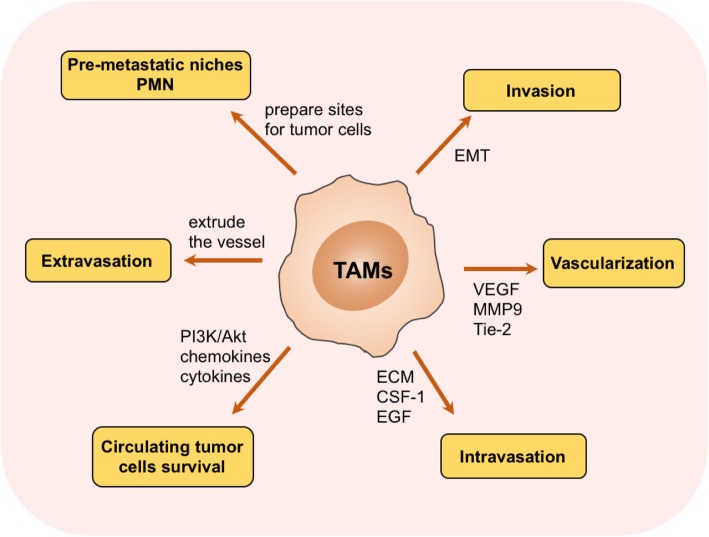
“TAMs participate in almost every step of tumor progression, including intravasation, extravasation, and supporting CTC survival (87).”
Tumor-associated macrophages in cancer: from mechanisms to application
Tang, W., Wang, X., Han, B., Jiang, S.-H., & Cao, H. (2025) · Molecular Biomedicine · doi:10.1186/s43556-025-00396-y · Cited by 48
“2), thereby contributing to unfavorable patient outcomes [62].”
Baradaran, A., Asadzadeh, Z., Hemmat, N., Baghbanzadeh, A., Shadbad, M. A., Khosravi, N., Derakhshani, A., Alemohammad, H., Nour, M. A., Safarpour, H., et al. (2021) · Biomedicine & Pharmacotherapy · doi:10.1016/j.biopha.2021.112588 · Cited by 42
RetractedYang, D., Yang, L., Cai, J., Li, H., Zheng, X., & Hou, Y. (2022) · Molecular and Cellular Biochemistry · doi:10.1007/s11010-022-04461-w · Cited by 40
Ruger, L. N., Yang, E., Gannon, J., Sheppard, H., Coutermarsh‐Ott, S. L., Ziemlewicz, T. J., Dervisis, N. G., Allen, I. C., Daniel, G. B., Tuohy, J. L., et al. (2022) · IEEE Transactions on Biomedical Engineering · doi:10.1109/tbme.2022.3201709 · Cited by 45
“However, tumor-associated macrophages of the M2 phenotype induced by IL-4 and IL-13 also promote angiogenesis, immune suppression, fibroblast proliferation, and stromal tissue remodeling, which are commonly observed in tumor progression and may promote all steps of the metastatic cascade [48], [49], [50].”
BackgroundThe Force is Strong with This Epigenome: Chromatin Structure and Mechanobiology
Hsia, C.-R., Melters, D. P., & Dalal, Y. (2023) · Journal of Molecular Biology · doi:10.1016/j.jmb.2023.168019 · Cited by 42
Promising Colorectal Cancer Biomarkers for Precision Prevention and Therapy
Turano, M., Delrio, P., Rega, D., Cammarota, F., Polverino, A., Duraturo, F., Izzo, P., & Rosa, M. D. (2019) · Cancers · doi:10.3390/cancers11121932 · Cited by 46
Zhao, X., Wang, X., You, Y., Wen, D., Feng, Z., Zhou, Y., Que, K., Gong, J., & Liu, Z. (2020) · Experimental Cell Research · doi:10.1016/j.yexcr.2020.111979 · Cited by 41
Nengroo, M. A., Verma, A., & Datta, D. B. (2022) · Cytokine · doi:10.1016/j.cyto.2022.155916 · Cited by 42
Roles of exosomal circRNAs in tumour immunity and cancer progression
Tuo, B., Chen, Z., Dang, Q., Chen, C., Zhang, H., Hu, S., & Sun, Z. (2022) · Cell Death and Disease · doi:10.1038/s41419-022-04949-9 · Cited by 42
“Existing studies have shown that M2 macrophages tend to act as immunosuppressive agents, removing debris and promoting angiogenesis, tissue repair, and tumour progression [98].”
BackgroundProgress of tumor-associated macrophages in the epithelial-mesenchymal transition of tumor
Li, X., Chen, L., Peng, X., & Zhan, X. (2022) · Frontiers in Oncology · doi:10.3389/fonc.2022.911410 · Cited by 43
Cancer Resistance to Immunotherapy: Molecular Mechanisms and Tackling Strategies
Vu, S. H., Vetrivel, P., Kim, J., & Lee, M. (2022) · International Journal of Molecular Sciences · doi:10.3390/ijms231810906 · Cited by 45
“Recruitment of TAMs to tumor sites is mediated by tumor-derived effector proteins such as CSF-1, VEGF, and chemokines [76].”
BackgroundOn the origin of the functional versatility of macrophages
Bajgar, A., & Krejčová, G. (2023) · Frontiers in Physiology · doi:10.3389/fphys.2023.1128984 · Cited by 43
“However, excessive adoption of M2 macrophage polarization may become detrimental as it induces tissue fibrosis, leading to chronic infections and promotion of tumor cell growth (Lin et al., 2019).”
BackgroundThe tumor immune microenvironment in gastroenteropancreatic neuroendocrine neoplasms
Zhang, W.-H., Wang, W., Gao, H.-L., Yu, X., & Liu, L. (2019) · Biochimica et Biophysica Acta (BBA) - Reviews on Cancer · doi:10.1016/j.bbcan.2019.188311 · Cited by 42
Cell Trafficking at the Intersection of the Tumor–Immune Compartments
Du, W., Nair, P. R., Johnston, A. C., Wu, P., & Wirtz, D. (2022) · Annual Review of Biomedical Engineering · doi:10.1146/annurev-bioeng-110320-110749 · Cited by 41
“Tumor-associated macrophages (TAMs) play a key role in tumor-associated immunosuppression (77).”
BackgroundInfluentialLai, X., Zhong, J., Zhang, B., Zhu, T., & Liao, R. (2023) · Biomolecules · doi:10.3390/biom13030536 · Cited by 39
Pectin a multifaceted biopolymer in the management of cancer: A review
Picot-Allain, M. C. N., & Neergheen, V. S. (2023) · Heliyon · doi:10.1016/j.heliyon.2023.e22236 · Cited by 39
Inflammation as a driver of hematological malignancies
Saluja, S., Bansal, I., Bhardwaj, R., Beg, M. S., & Palanichamy, J. K. (2024) · Frontiers in Oncology · doi:10.3389/fonc.2024.1347402 · Cited by 41
“Tumor-associated macrophages (TAMs) are the resident macrophages in the tumor microenvironment, which promote tumorigenesis and angiogenesis, provide an immunosuppressive environment, and contribute to the poor prognosis of the disease (109).”
BackgroundMir, R., Baba, S. K., Elfaki, I., Algehainy, N. A., Alanazi, M. A., Altemani, F. H., Tayeb, F. J., Barnawi, J., Husain, E., Bedaiwi, R. I., et al. (2024) · Journal of Cancer · doi:10.7150/jca.98426 · Cited by 40
“In the TME, tumor-associated macrophages (TAMs) primarily exhibit a tumor-promoting M2-like phenotype characterized by immunosuppression and the facilitation of tumor growth and advancement [143].”
BackgroundMuciño-Olmos, E. A., Vázquez-Jiménez, A., de León, U. A.-P., Matadamas-Guzman, M. L., Maldonado, V., López-Santaella, T., Hernández‐Hernández, A., & Reséndis-Antonio, O. (2020) · Scientific Reports · doi:10.1038/s41598-020-69026-7 · Cited by 39
Crosstalk Between Mesenchymal Stromal Cells and Tumor-Associated Macrophages in Gastric Cancer
Zheng, P., & Li, W. (2020) · Frontiers in Oncology · doi:10.3389/fonc.2020.571516 · Cited by 45
“Among the cells in gastric cancer TME, mesenchymal stromal cells (MSCs) and tumor-associated macrophages (TAMs) are two predominant elements, and their cross talk has been shown to immensely contribute to the development and progression of tumor growth and metastasis (9, 10).”
BackgroundAldawsari, M. F., Alalaiwe, A. S., Khafagy, E., Saqr, A. A., Alshahrani, S. M., Alsulays, B. B., Alshehri, S., Lila, A. S. A., Rizvi, S. M. D., & Hegazy, W. A. H. (2021) · International Journal of Molecular Sciences · doi:10.3390/ijms22136833 · Cited by 40
“Tumor-associated macrophages (TAMs), existing in the cancer microenvironment, are the key cells that affect the formation, growth, and metastasis of cancers by interacting with cancer cells [15].”
BackgroundMonocyte Infiltration and Differentiation in 3D Multicellular Spheroid Cancer Models
Madsen, N. H., Nielsen, B. S., Nhat, S. L., Skov, S., Gad, M., & Larsen, J. (2021) · Pathogens · doi:10.3390/pathogens10080969 · Cited by 41
“The main function of macrophages in the TME is tightly related to their interaction with cancer cells, resulting in the secretion of soluble factors that shape the cytokine profile of the TME [8].”
BackgroundBond, K., Chiba, T., Wynne, K. J., Vary, C., Sims‐Lucas, S., Coburn, J. M., & Oxburgh, L. H. (2021) · Cancers · doi:10.3390/cancers13235873 · Cited by 40
Immunomodulatory Properties of Immune Checkpoint Inhibitors—More than Boosting T-Cell Responses?
Kuske, M., Haist, M., Jung, T., Grabbe, S., & Bros, M. (2022) · Cancers · doi:10.3390/cancers14071710 · Cited by 39
“In accordance, Gordon and coworkers showed in a murine colon cancer model that PD-1 blockade enhanced the phagocytotic activity of TAMs and reduced tumor burden [182].”
BackgroundInfluentialYan, T., Wang, K., Li, J., Hu, H., He, Y., Cai, M., Liu, R., Li, H., Wang, N., Shi, Y. K., et al. (2022) · Cell Death Discovery · doi:10.1038/s41420-022-00973-y · Cited by 39
“Recent studies shown that TAMs are closely related to the tumor immunosuppressive microenvironment [7], an increasing number of immunotherapeutic approaches have been aimed at targeting macrophages to treat tumors.”
BackgroundMito, I., Takahashi, H., Kawabata‐Iwakawa, R., Horikawa, M., Ida, S., Tada, H., Matsuyama, T., Misawa, K., Takeda, S., & Chikamatsu, K. (2022) · Oral Oncology · doi:10.1016/j.oraloncology.2022.106270 · Cited by 42
Казакова, А., Sudarskikh, T., Kovalev, O. I., Kzhyshkowska, J. G., & Larionova, I. (2023) · International Journal of Oncology · doi:10.3892/ijo.2023.5480 · Cited by 38
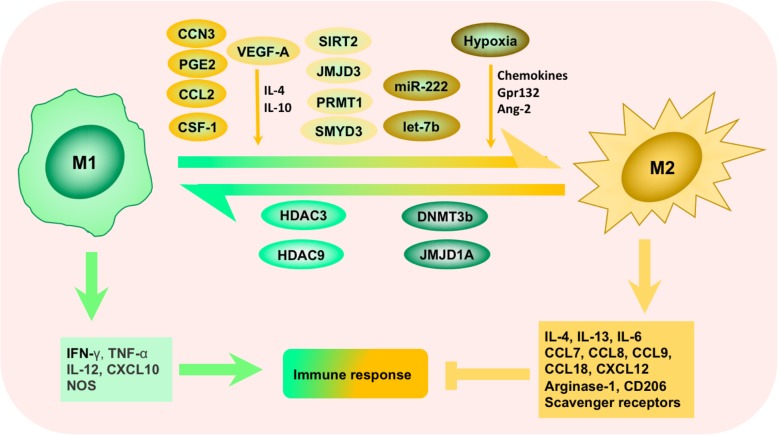
“M1 TAMs secrete pro‐inflammatory cytokines IL‐12, TNFα, C‐X‐C motif chemokine ligand (CXCL)‐10 and IFN‐γ, and produce high levels of nitric oxide synthase (NOS), while M2 TAMs secrete anti‐inflammatory cytokines IL‐10, IL‐4 and IL‐13, and express scavenger receptors, including CD163, CD206, CD204, macrophage receptor…”
BackgroundMultiple influence of immune cells in the bone metastatic cancer microenvironment on tumors
Chen, S., Lei, J., Mou, H., Zhang, W., Jin, L., Lu, S., Yinwang, E., Xue, Y., Shao, Z., Chen, T., et al. (2024) · Frontiers in Immunology · doi:10.3389/fimmu.2024.1335366 · Cited by 42
“There is growing evidence that these macrophages play an important role in the immune microenvironment of bone metastatic cancer and play a key regulatory role in tumor progression, angiogenesis, invasion, and metastasis (65 – 67).”
BackgroundUllah, A., Jiao, W., & Shen, B. (2024) · Cellular & Molecular Biology Letters · doi:10.1186/s11658-024-00591-9 · Cited by 40
“Malignant cells spatiotemporally release cytokines and CXC chemokines, and leukocyte subtypes undergo cell trafficking toward the TME [7].”
BackgroundHarnessing myeloid cells in cancer
Park, S., Pylaeva, E., Bhuria, V., Gambardella, A. R., Schiavoni, G., Mougiakakos, D., Kim, S.-H., & Jabłońska, J. (2025) · Molecular Cancer · doi:10.1186/s12943-025-02249-2 · Cited by 40
“Hence, blockade of CD47/SIRPα signaling was regarded to increase phagocytosis by TAMs in solid tumors and hematological malignancies [216, 217].”
Sulaieva, O., Selezniov, O., Shapochka, D., Belemets, N. I., Nechay, O. P., Васильевна, Ч. Е., Tsomartova, D. A., & Ivanova, M. Y. (2020) · Heliyon · doi:10.1016/j.heliyon.2019.e03077 · Cited by 41
Hassan, G., & Seno, M. (2020) · Cells · doi:10.3390/cells9051293 · Cited by 43
“Macrophages, lymphocytes, and myeloid-derived suppressor cells (MDSCs) are abundant in most types of cancers [7,31,32].”
BackgroundThe Role of Noncoding RNAs in the Regulation of Anoikis and Anchorage-Independent Growth in Cancer
Lee, H. Y., Son, S. W., Moeng, S., Choi, S. Y., & Park, J. K. (2021) · International Journal of Molecular Sciences · doi:10.3390/ijms22020627 · Cited by 39
Differences in Tumor Immune Microenvironment in Metastatic Sites of Breast Cancer
Lee, H., Na, K. J., & Choi, H. (2021) · Frontiers in Oncology · doi:10.3389/fonc.2021.649004 · Cited by 43
Shek, D., Akhuba, L. G., Carlino, M. S., Nagrial, A. M., Moujaber, T., Read, S. A., Gao, B., & Ahlenstiel, G. (2021) · Cancers · doi:10.3390/cancers13174345 · Cited by 42
“established that regorafenib is capable of inducing the p38MAPK/Creb1/Klf4 signaling pathway responsible for the activation of tumor-associated macrophages [44], and subsequent production of pro-inflammatory cytokines (IL-10, IL-12 and IL-23) responsible for activation of cytotoxic T cells [45].”
BackgroundMutant P53 in the formation and progression of the tumor microenvironment: Friend or foe
Asl, E. R., Rostamzadeh, D., Duijf, P. H. G., Mafi, S., Mansoori, B., Barati, S., Cho, W. C. S., & Mansoori, B. (2023) · Life Sciences · doi:10.1016/j.lfs.2022.121361 · Cited by 40
HOXA5: A crucial transcriptional factor in cancer and a potential therapeutic target
Fan, F., Mo, H., Zhang, H., Dai, Z., Wang, Z., Qu, C., Liu, F., Zhang, L., Luo, P., Zhang, J., et al. (2022) · Biomedicine & Pharmacotherapy · doi:10.1016/j.biopha.2022.113800 · Cited by 37
Autophagy inhibition signals through senescence to promote tumor suppression
Peng, N., Kang, H. H., Feng, Y., Minikes, A. M., & Jiang, X. (2022) · Autophagy · doi:10.1080/15548627.2022.2155794 · Cited by 39
“Macrophages are divided into two subclasses: “classically activated” M1 macrophages that mediate inflammation in response to pathogens and tumor cells, and “alternatively activated” M2 macrophages that exert immune suppressive phenotype by promoting angiogenesis and tissue remodeling [31].”
BackgroundTumour-associated macrophages: versatile players in the tumour microenvironment
Ji, Z. Z., Chan, M. K., Chan, A. S. W., Leung, K. T., Jiang, X., To, K., Wu, Y., & Tang, P. M. (2023) · Frontiers in Cell and Developmental Biology · doi:10.3389/fcell.2023.1261749 · Cited by 41
Song, J., Liu, Q., Han, L., Song, T., Huang, S., Zhang, X., He, Q., Liang, C., Zhu, S., & Xiong, B. (2023) · Journal of Experimental & Clinical Cancer Research · doi:10.1186/s13046-023-02887-8 · Cited by 38
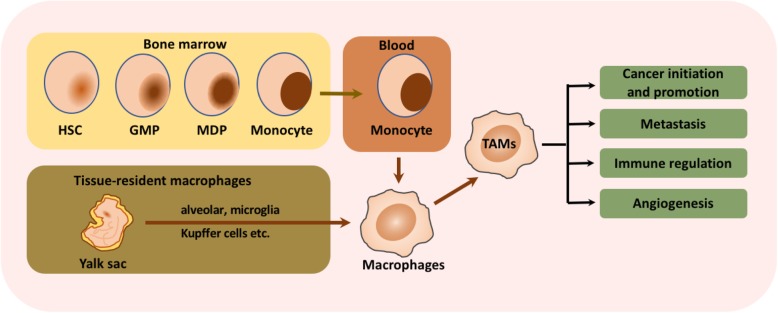
“TAMs derive from circulating monocytes and are directed into the tumor by chemokines such as CCL5, CCL2, and CCL17 [6, 7].”
BackgroundEffects of super-enhancers in cancer metastasis: mechanisms and therapeutic targets
Liu, S., Dai, W., Jin, B., Jiang, F., Huang, H., Hou, W., Lan, J., Jin, Y., Peng, W., & Pan, J. (2024) · Molecular Cancer · doi:10.1186/s12943-024-02033-8 · Cited by 41
“…cells extravasate into distant organs and tissues; and (5) upon reaching a new site, the cells adapt to the local tumor microenvironment, initiate colonization, promote angiogenesis, and finally, outgrow at the metastatic sites, including but not limited to the liver, lung, brain, and bone [5, 6].”
BackgroundZhen, M., Xu, Y. M., Wang, C., & Bai, C. (2024) · Advanced Functional Materials · doi:10.1002/adfm.202409319 · Cited by 37
Wu, N., Li, J., Li, L., Yang, L., Dong, L., Shen, C., Sha, S., Fu, Y., Dong, E., Zheng, F., et al. (2024) · Science Advances · doi:10.1126/sciadv.ado8366 · Cited by 40
“TAMs are a major and heterogeneous distinct immune cell sub-population in the immunosuppressive TME and play an essential role in enhancing tumor malignancy and suppressing antitumor immunity ( 9 , 10 ).”
BackgroundHarnessing chimeric antigen receptor macrophages against solid tumors
Wang, M., Qin, Z., Bian, X., & Shi, Y. (2025) · 癌症:英文版 · doi:10.1002/cac2.70053 · Cited by 38
“Despite preclinical success, corresponding Phase I/II trials of these regimens frequently terminated due to suboptimal efficacy and toxicity [16].”
Deng, R., Lü, J., Liu, X., Peng, X., Wang, J., & Li, X. (2020) · Cancer Management and Research · doi:10.2147/cmar.s274913 · Cited by 39
Peptide-Modified Biopolymers for Biomedical Applications
Hersh, J., Broyles, D. B., Capcha, J. M. C., Dikici, E., Shehadeh, L. A., Daunert, S., & Deo, S. K. (2020) · ACS Applied Bio Materials · doi:10.1021/acsabm.0c01145 · Cited by 40
Recent progress in cancer immunotherapy approaches based on nanoparticle delivery devices
Gupta, B., & Kim, J. O. (2021) · Journal of Pharmaceutical Investigation · doi:10.1007/s40005-021-00527-x · Cited by 37
Gandhi, S., Oshi, M., Murthy, V., Repasky, E. A., & Takabe, K. (2021) · Cancers · doi:10.3390/cancers13112559 · Cited by 40
“M2 macrophages, which exert an immunosuppressive phenotype by t e secretion of anti-inflammatory cytokines (i.e., IL-4, IL-10, and IL-13) [81], were the only pro-cancer immune cells that were higher in high-thermogenesis TNBC. High-thermogenesis TNBC was associated with lower cytolytic activity (CYT, p 0.05), which re…”
BackgroundInfluentialShueng, P., Yu, L.-Y., Chiu, H., Chang, H.-C., Chiu, Y., Kuo, T.-Y., Yen, Y.-W., & Lo, C.-L. (2021) · Biomaterials · doi:10.1016/j.biomaterials.2021.121012 · Cited by 37
Use of Nanoformulation to Target Macrophages for Disease Treatment
Liu, X., Xie, X., Jiang, J., Lin, M. J., Zheng, E., Qiu, W., Yeung, I., Zhu, M., Li, Q., Xia, T., et al. (2021) · Advanced Functional Materials · doi:10.1002/adfm.202104487 · Cited by 38
An Ex Vivo 3D Tumor Microenvironment-Mimicry Culture to Study TAM Modulation of Cancer Immunotherapy
Li, Y.-R., Yu, Y., Kramer, A. B., Hon, R., Wilson, M., Brown, J., & Yang, L. (2022) · Cells · doi:10.3390/cells11091583 · Cited by 40
“Notably, phenelzine significantly inhibited IL-4/IL-13-induced immunosuppressive polarization of MDMs, evidenced by their down-regulated immunosuppressive markers (i.e., CD206) and immune checkpoint receptor-ligands (i.e., PD-L1 and PD-L2; Figure 2G).”
BackgroundInfluentialLi, L., Yang, L., Yang, S., Wang, R., Gao, H., Lin, Z., Zhao, Y., Tang, W., Han, R. F., Wang, W., et al. (2022) · Phytotherapy Research · doi:10.1002/ptr.7578 · Cited by 37
“Previous studies found that Mφ and M2 could enhance cancer cell metastasis (Lin et al., 2019).”
ResultEnzyme‐Activatable Chemokine Conjugates for In Vivo Targeting of Tumor‐Associated Macrophages
Barth, N. D., van Dalen, F. J., Karmakar, U., Bertolini, M., Mendive‐Tapia, L., Kitamura, T., Verdoes, M., & Vendrell, M. (2022) · Angewandte Chemie International Edition · doi:10.1002/anie.202207508 · Cited by 37
Engineered drug delivery nanosystems for tumor microenvironment normalization therapy
Yang, B., Meng, F., Zhang, J., Chen, K., Meng, S., Cai, K., Zhao, Y., & Dai, L. (2023) · Nano Today · doi:10.1016/j.nantod.2023.101766 · Cited by 38
Drug co-administration in the tumor immune microenvironment of Hepatocellular carcinoma
Shao, Y., Su, R., Wang, Y., Yin, S., Pu, W., Koo, S., & Yu, H. (2023) · Acupuncture and Herbal Medicine · doi:10.1097/hm9.0000000000000074 · Cited by 38
The Role of Macrophages in Sarcoma Tumor Microenvironment and Treatment
Zając, A. E., Czarnecka, A. M., & Rutkowski, P. L. (2023) · Cancers · doi:10.3390/cancers15215294 · Cited by 38
“…the M1 or M2 group, because they share the characteristics of both M1 and M2 groups, and they present another subpopulation of macrophages [3–5] play a particular role in the regulation of the TME, leading to immunosuppression, tumor growth, and migration in many tumors, including sarcomas [2,6].”
BackgroundShaik, B., Zafar, T., Balasubramanian, K., & Gupta, S. P. (2020) · Current Topics in Medicinal Chemistry · doi:10.2174/1568026620999201111155426 · Cited by 38
Wang, X., Xu, Y., Sun, Q., Zhou, X., Ma, W., Wu, J., Zhuang, J., & Sun, C. (2022) · Biomedicine & Pharmacotherapy · doi:10.1016/j.biopha.2022.113343 · Cited by 36
Kariagina, A., & Doseff, A. I. (2022) · International Journal of Molecular Sciences · doi:10.3390/ijms232415753 · Cited by 39
“Therapies to decrease TAM, decrease their recruitment to the tumor, or reprogram TAM from M2 to M1 are currently underway in clinical trials [99,100].”
BackgroundTumor-associated macrophages: Prognostic and therapeutic targets for cancer in humans and dogs
Brady, R. V., & Thamm, D. H. (2023) · Frontiers in Immunology · doi:10.3389/fimmu.2023.1176807 · Cited by 35
Xiong, K., Sun, W., He, Y., & Fan, L. (2021) · Translational Lung Cancer Research · doi:10.21037/tlcr-21-465 · Cited by 35
Strategies to overcome myeloid cell induced immune suppression in the tumor microenvironment
Cao, J. H., Chow, L., & DOW, S. W. (2023) · Frontiers in Oncology · doi:10.3389/fonc.2023.1116016 · Cited by 36
Qiu, Y., Lu, G., Li, N., Hu, Y., Tan, H., & Jiang, C. (2024) · Frontiers in Immunology · doi:10.3389/fimmu.2024.1327281 · Cited by 36
Chen, C., Wang, Z., Lin, Q., Li, M., Xu, L., Fu, Y. S., Zhao, X., Ma, Z., Xu, J., Zhou, S., et al. (2025) · Advanced Science · doi:10.1002/advs.202410263 · Cited by 42
Self-citationRole of Regular Physical Exercise in Tumor Vasculature: Favorable Modulator of Tumor Milieu
Esteves, M., Monteiro, M. P., & Duarte, J. A. (2020) · International Journal of Sports Medicine · doi:10.1055/a-1308-3476 · Cited by 39
“A critical player of the metabolic reprogramming in the TME is hypoxia, and cells of both innate and adaptive immunity are very sensitive to these conditions, because it was shown that hypoxia can regulate aggregation, invasion, and motility of macrophages and neutrophils, favoring local inflammation and immunosuppres…”
BackgroundHuang, Q., Liu, J., Wu, S., Zhang, X., Xiao, Z., Liu, Z., & Du, W. (2021) · Frontiers in Oncology · doi:10.3389/fonc.2021.659131 · Cited by 38
“Tumor-associated macrophages (TAMs) are a major component of the immunosuppressive TME and are derived from circulating monocytes (5).”
BackgroundAhmad, A. (2021) · Seminars in Cell and Developmental Biology · doi:10.1016/j.semcdb.2021.09.001 · Cited by 35
Immune cell-derived small extracellular vesicles in cancer treatment
Choi, S.-J., Cho, H., Yea, K., & Baek, M. (2022) · BMB Reports · doi:10.5483/bmbrep.2022.55.1.133 · Cited by 38
“tumor growth and suppress antitumor immune responses by releasing angiogenic factors and anti-inflammatory cytokines (66).”
Background“Two birds with one stone” strategy for the lung cancer therapy with bioinspired AIE aggregates
Lin, Y., Yi, M., Guan, X., Chen, E., Yang, L., Li, S., Li, Y., & Zhang, L. (2023) · Journal of Nanobiotechnology · doi:10.1186/s12951-023-01799-1 · Cited by 36
“The majority of macrophages in the tumors were M2-like TAMs (also named M2 TAMs), which showed M2 macrophages characteristics, such as tumor-promoting properties, and promoted tumor growth, proliferation, angiogenesis, invasiveness, and metastasis [6, 7].”
Self-citationGe, W., & Wu, W. (2023) · PubMed Central · doi:10.3779/j.issn.1009-3419.2023.106.07 · Cited by 39
“…供和营养来帮助肿瘤生长和播散 [34-36] 。另外,在肿瘤转 移方面, M2 极化状态的巨噬细胞可以分泌大量包括基质 金属蛋白酶( matrix metalloproteinases, MMPs )和组织蛋 白酶在内的多种可以降解细胞外基质、基底膜的酶,以 此来协助肿瘤远处转移 [37-39] 。由此可见, M2 型 TAMs 与癌 2 慢性炎症,进而使癌细胞中基因组更加不稳定,促进肿 瘤进展 [40] 。随着癌症恶化, TAMs 的表型会在 TME 的影 响下由杀伤肿瘤的 M1 表型转化为促进肿瘤进展的 M2 表 型, M2 表型的 TAMs…”
Conod, A., Silvano, M., & Altaba, A. R. I. (2022) · Cell Reports · doi:10.1016/j.celrep.2022.110490 · Cited by 37
Nano-baicalein facilitates chemotherapy in breast cancer by targeting tumor microenvironment
Zheng, F., Luo, Y., Liu, Y., Gao, Y., Chen, W., & Wei, K. (2023) · International Journal of Pharmaceutics · doi:10.1016/j.ijpharm.2023.122778 · Cited by 34
Malik, S., Sureka, N., Ahuja, S., Aden, D., Zaheer, S., & Zaheer, S. (2024) · Cell Biology International · doi:10.1002/cbin.12226 · Cited by 36
“Even within a specific tumor, macrophages are unevenly distributed both qualitatively and quantitatively, and there is variability in macrophage plasticity across different tumor types (Lin et al., 2019; van Dalen et al., 2018).”
Advances in the interrelated nature of vaginal microecology, HPV infection, and cervical lesions
Cui, M., Wu, Y., Liu, Z., Liu, Y., & Fan, L. (2025) · Frontiers in Cellular and Infection Microbiology · doi:10.3389/fcimb.2025.1608195 · Cited by 35
Metadata
- Authors
- Lin, Y., Xu, J., & Lan, H.
- Affiliations
- University of Michigan (US)
- Corresponding author
- Xu, Jianxin
- Lan, Huiyin
- Venue
- Journal of Hematology & Oncology
- Published
- 2019-07-12
- Volume
- 12
- Issue
- 1
- Pages
- 76-76
- ISSN
- 1756-8722 (ISSN-L)
- PMC
- PMC6626377
- OpenAlex
- W2960078024
- Cited by
- 1,398
- References
- 179
- Citations by year
- 2026: 83 · 2025: 191 · 2024: 234 · 2023: 274 · 2022: 280 · 2021: 209 · 2020: 114 · 2019: 12
- FWCI
- 13.31
- Type
- journal article
- Language
- en
- Open access
- gold
- doi.org
- Licence
- cc-by
- creativecommons.org/licenses/by/4.0/ (tdm)
- creativecommons.org/licenses/by/4.0/ (vor)
- Locations
- Journal of Hematology & Oncology (publishedVersion, cc-by)
- PubMed Central (publishedVersion, cc-by)
- PubMed (publishedVersion)
- Deep Blue (University of Michigan) (submittedVersion)
- DOAJ (DOAJ: Directory of Open Access Journals) (submittedVersion, cc-by-sa)
- Topics
- Life Sciences › Immunology and Microbiology › Immunology › Immune cells in cancer
- Health Sciences › Medicine › Oncology › Cancer Immunotherapy and Biomarkers
- Health Sciences › Medicine › Oncology › Cancer Cells and Metastasis
- Keywords
- tumor-associated macrophages, metastasis, tumor microenvironment, immunosuppression, TAM polarization, immune checkpoint blockade, TAM-targeted therapy, cancer immunotherapy
- MeSH terms
- Animals, Antineoplastic Agents, Humans, Macrophages, Neoplasm Invasiveness, Neoplasm Metastasis, Neoplasms, Cytokines, Tumor Microenvironment
About these checks
Registry, retraction, Cites and statistics results are computed, not judged, with one exception: a printed reference that no index lists is read once by a model before it counts as a citation error. Claims are extracted by a model and kept only when their quote appears verbatim in the text; each cited source is then checked, with a model’s help, for whether it says what the claim relies on. Those verdicts can be wrong — read the claim’s quote and the cited source before relying on one.
Statistics and arithmetic are recomputed, not judged.
Confidence bands are shown only for fields calibrated on our annotated test set. None is calibrated yet, so no band is shown.
What counts as a claim ›How we measure confidence ›How we check this ›
Are you an author, or do you see a problem with this page? Request a review
Data sources
Bibliographic data: Semantic Scholar, OpenAlex, Crossref.
Contains information from the Semantic Scholar Academic Graph Datasets, made available under the ODC Attribution License (ODC-BY 1.0).
Semantic Scholar’s data is described in: Kinney, R., et al. (2023). The Semantic Scholar Open Data Platform. arXiv:2301.10140.
