

Tumor-associated macrophages in tumor metastasis: biological roles and clinical therapeutic applications
Open accessThe DOI matches its Crossref record; 178 of the 179 references it cites were found in a registry or an index.
Abstract
Tumor metastasis is a major contributor to the death of cancer patients. It is driven not only by the intrinsic alterations in tumor cells, but also by the implicated cross-talk between cancer cells and their altered microenvironment components. Tumor-associated macrophages (TAMs) are the key cells that create an immunosuppressive tumor microenvironment (TME) by producing cytokines, chemokines, growth factors, and triggering the inhibitory immune checkpoint proteins release in T cells. In doing so, TAMs exhibit important functions in facilitating a metastatic cascade of cancer cells and, meanwhile, provide multiple targets of certain checkpoint blockade immunotherapies for opposing tumor progression. In this article, we summarize the regulating networks of TAM polarization and the mechanisms underlying TAM-facilitated metastasis. Based on the overview of current experimental evidence dissecting the critical roles of TAMs in tumor metastasis, we discuss and prospect the potential applications of TAM-focused therapeutic strategies in clinical cancer treatment at present and in the future.
Overview
The claims and statistics of this paper haven’t been checked yet.
Free: it reads the open-access text and checks the first 5 claims that cite a source we can check. Create a free account to check every claim.
Integrity signals
Registry
Cites
Statistics
Figures
Verification
Claims the paper makes
The claims and statistics of this paper haven’t been checked yet.
Free: it reads the open-access text and checks the first 5 claims that cite a source we can check. Create a free account to check every claim.
Claims other papers make about this one
Each is checked against this paper’s own text: does it say what the citing paper says it does?
The cited source says what the claim attributes to it.
In the citing paper
“Clinical studies and experimental animal models suggest that TAM commonly plays a pro-tumoral role in various ways [89, 96, 97].”
From Tumor microenvironment complexity and therapeutic implications at a glance (2020) · cites this paper as [96]
The cited source says what the claim attributes to it.
In the citing paper
“Accordingly, TAM-based therapeutic strategies are being developed that aim at TAM targeting, TAM re-education, and TAM depletion [88, 96, 101, 102].”
From Tumor microenvironment complexity and therapeutic implications at a glance (2020) · cites this paper as [96]
Self-check
Percentages, sums and reported differences re-computed from the paper’s own numbers.
The self-check needs the paper’s full text.
Citations
Cites
Molecular mechanisms of epithelial–mesenchymal transition
Lamouille, S., Xu, J., & Derynck, R. (2014) · Nature Reviews Molecular Cell Biology · doi:10.1038/nrm3758 · Cited by 8,091
Self-citationMicroenvironmental regulation of tumor progression and metastasis
Quail, D. F., & Joyce, J. A. (2013) · Nature Medicine · doi:10.1038/nm.3394 · Cited by 7,994 · cited 3×
“most of the current paradigms are designed to eliminate or interdict tumor cells themselves while the successful outgrowth of metastases is largely influenced by nonmalignant cells of the tumor microenvironment (TME) [5, 6, 82].”
BackgroundMolecular Mechanisms of Stress-Responsive Changes in Collagen and Elastin Networks in Skin
Aziz, J., Shezali, H., Radzi, Z., Yahya, N. A., Abu Kassim, N. H., Czernuszka, J., & Rahman, M. T. (2016) · Skin Pharmacology and Physiology · doi:10.1159/000447017 · Cited by 7,323
MANTOVANI, A., SOZZANI, S., LOCATI, M., ALLAVENA, P., & SICA, A. (2002) · Trends in Immunology · doi:10.1016/s1471-4906(02)02302-5 · Cited by 5,528 · cited 1×
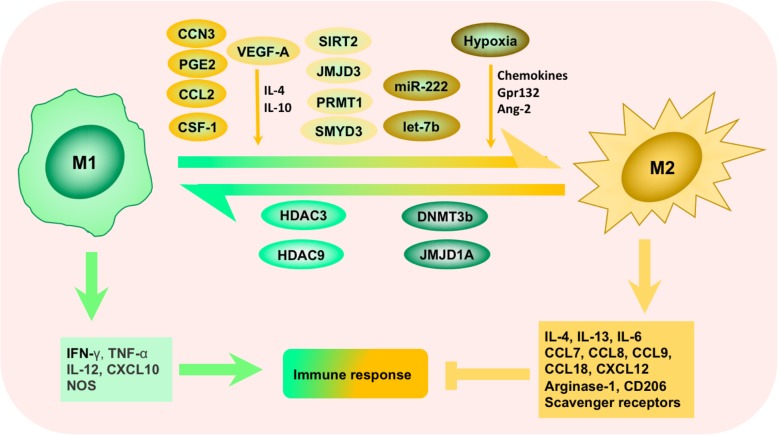
“The conversion between M1 (anti-tumorigenesis) and M2 (pro-tumorigenesis) is a biological process named “macrophage polarization” in response to microenvironmental signals [26].”
BackgroundInvolvement of chemokine receptors in breast cancer metastasis
Müller, A., Homey, B., Soto, H., Ge, N., Catron, D., Buchanan, M. E., McClanahan, T., Murphy, E., Yuan, W., Wagner, S. N., et al. (2001) · Nature · doi:10.1038/35065016 · Cited by 5,340
The distribution of secondary growths in cancer of the breast.
Paget, S. (1889) · The Lancet · doi:10.1016/s0140-6736(00)49915-0 · Cited by 5,277 · cited 1×
“In addition to the alterations of the intrinsic properties in tumor cells, the “seed and soil” concept, firstly proposed by Stephen Paget in 1889, has been widely accepted as a critical theory to do with metastasis [4].”
BackgroundMonocyte and macrophage heterogeneity
Gordon, S., & Taylor, P. R. (2005) · Nature Reviews Immunology · doi:10.1038/nri1733 · Cited by 5,190 · cited 1×
“However, both trabectedin and lurbinectedin cannot avoid the side effects arisen by unselectively macrophage consumption since macrophages closely participated in host defense and homeostatic regulation [140].”
BackgroundMacrophage Diversity Enhances Tumor Progression and Metastasis
Qian, B.-Z., & Pollard, J. W. (2010) · Cell · doi:10.1016/j.cell.2010.03.014 · Cited by 5,188 · cited 3×
“In addition, tumor graft models showed that CSF-1 depletion led to greatly reduced macrophage density, delayed tumor progression, and severely inhibited metastasis [22, 24, 42, 43].”
BackgroundMatrix Metalloproteinases: Regulators of the Tumor Microenvironment
Kessenbrock, K., Plaks, V., & Werb, Z. (2010) · Cell · doi:10.1016/j.cell.2010.03.015 · Cited by 5,151
Macrophage biology in development, homeostasis and disease
Wynn, T. A., Chawla, A., & Pollard, J. W. (2013) · Nature · doi:10.1038/nature12034 · Cited by 4,684 · cited 1×
“Macrophages are a type of versatile immunocytes, executing a broad spectrum of functions that range from modulating tissue homeostasis, defensing against pathogens, and facilitating wound healing [11].”
Background
Research works printed but not linked: 1
- Torres-Collado SPJSZSJBA Targeting distinct tumor-infiltrating myeloid cells by inhibiting CSF-1 receptor: combating tumor evasion of antiangiogenic therapy Blood 2010 115 7 1461 10.1182/blood-2009-08-237412 20008303 PMC2826767 · DOI · Paper page
Cited by
Macrophages in immunoregulation and therapeutics
Chen, S., Saeed, A. F. U. H., Liu, Q., Jiang, Q., Xu, H., Xiao, G. G., Rao, L., & Duo, Y. (2023) · Signal Transduction and Targeted Therapy · doi:10.1038/s41392-023-01452-1 · Cited by 2,229
Tumor microenvironment complexity and therapeutic implications at a glance
Baghban, R., Roshangar, L., Jahanban-Esfahlan, R., Seidi, K., Ebrahimi-Kalan, A., Jaymand, M., Kolahian, S., Javaheri, T., & Zare, P. (2020) · Cell Communication and Signaling · doi:10.1186/s12964-020-0530-4 · Cited by 1,784
“Accordingly, TAM-based therapeutic strategies are being developed that aim at TAM targeting, TAM reeducation, and TAM depletion [88, 96, 101, 102] .”
BackgroundEngineering Macrophages for Cancer Immunotherapy and Drug Delivery
Xia, Y., Rao, L., Yao, H., Wang, Z., Ning, P., & Chen, X. (2020) · Advanced Materials · doi:10.1002/adma.202002054 · Cited by 949
M1/M2 macrophages and their overlaps – myth or reality?
Strizova, Z., Benesova, I., Bartolini, R., Novysedlak, R., Cecrdlova, E., Foley, L. K., & Striz, I. (2023) · Clinical Science · doi:10.1042/cs20220531 · Cited by 612
Wang, S., Wang, J., Chen, Z., Luo, J., Guo, W., Sun, L., & Lin, L. (2024) · npj Precision Oncology · doi:10.1038/s41698-024-00522-z · Cited by 569
“The colony-stimulating factors are named based on their range of action as G-CSF, M-CSF, GM-CSF; (3) There are approximately 7 different forms of IFNs: IFN-α , IFN-β , IFN-γ , IFN-λ , IFN-ε , IFN-κ , and IFN-ω .”
Jayasingam, S. D., Citartan, M., Thang, T. H., Mat Zin, A. A., Ang, K. C., & Ch'ng, E. S. (2020) · Frontiers in Oncology · doi:10.3389/fonc.2019.01512 · Cited by 635
“In recent years, researchers have been investigating TAMs as a therapeutic strategy to curb tumor progression and metastasis (9).”
BackgroundCombination strategies to maximize the benefits of cancer immunotherapy
Zhu, S., Zhang, T., Zheng, L., Liu, H., Song, W., Liu, D., Li, Z., & Pan, C.-X. (2021) · Journal of Hematology & Oncology · doi:10.1186/s13045-021-01164-5 · Cited by 654
“For macrophages, TGF-β induces macrophage differentiation to the M2 phenotype that is immunosuppressive in the TME [153, 169].”
BackgroundErin, N., Grahovac, J., Brozovic, A., & Efferth, T. (2020) · Drug Resistance Updates · doi:10.1016/j.drup.2020.100715 · Cited by 527
Neophytou, C. M., Panagi, M., Stylianopoulos, T., & Papageorgis, P. (2021) · Cancers · doi:10.3390/cancers13092053 · Cited by 456
Immune evasion in cancer: mechanisms and cutting-edge therapeutic approaches
Tufail, M., Jiang, C.-H., & Li, N. (2025) · Signal Transduction and Targeted Therapy · doi:10.1038/s41392-025-02280-1 · Cited by 363
Unsupervised spatially embedded deep representation of spatial transcriptomics
Xu, H., Fu, H., Long, Y., Ang, K. S., Sethi, R., Chong, K., Li, M., Uddamvathanak, R., Lee, H. K., Ling, J., et al. (2024) · Genome Medicine · doi:10.1186/s13073-024-01283-x · Cited by 391
Macrophages at the interface of the co-evolving cancer ecosystem
Kloosterman, D. J., & Akkari, L. (2023) · Cell · doi:10.1016/j.cell.2023.02.020 · Cited by 427
Three-Dimensional Spheroids as In Vitro Preclinical Models for Cancer Research
Pinto, B., Henriques, A. C., Silva, P. M. A., & Bousbaa, H. (2020) · Pharmaceutics · doi:10.3390/pharmaceutics12121186 · Cited by 440
“The TME, mainly through hypoxia and secreted cytokines, promotes the M2 phenotype which favors, amongst others, tissue repair and tumor invasion and progression [19,20].”
BackgroundThe roles of tumor-associated macrophages in tumor angiogenesis and metastasis
Fu, L.-Q., Du, W.-L., Cai, M.-H., Yao, J.-Y., Zhao, Y.-Y., & Mou, X.-Z. (2020) · Cellular Immunology · doi:10.1016/j.cellimm.2020.104119 · Cited by 415
Breast cancer heterogeneity and its implication in personalized precision therapy
Guo, L., Kong, D., Liu, J., Zhan, L., Luo, L., Zheng, W., Zheng, Q., Chen, C., & Sun, S. (2023) · Experimental Hematology & Oncology · doi:10.1186/s40164-022-00363-1 · Cited by 327
Role of the CCL2‐CCR2 signalling axis in cancer: Mechanisms and therapeutic targeting
Xu, M., Wang, Y., Xia, R., Wei, Y., & Wei, X. (2021) · Cell Proliferation · doi:10.1111/cpr.13115 · Cited by 382
Tumor-associated macrophages: potential therapeutic strategies and future prospects in cancer
Li, C., Xu, X., Wei, S., Jiang, P., Xue, L., & Wang, J. (2021) · Journal for ImmunoTherapy of Cancer · doi:10.1136/jitc-2020-001341 · Cited by 360
Sex disparities matter in cancer development and therapy
Haupt, S., Caramia, F., Klein, S. L., Rubin, J. B., & Haupt, Y. (2021) · Nature Reviews Cancer · doi:10.1038/s41568-021-00348-y · Cited by 331
Casasanta, M. A., Yoo, C. C., Udayasuryan, B., Sanders, B. E., Umaña, A., Zhang, Y., Peng, H., Duncan, A. J., Wang, Y., Li, L., et al. (2020) · Science Signaling · doi:10.1126/scisignal.aba9157 · Cited by 327
“To address these potential scenarios, a priority should be placed on investigating the potential for this bacterium to induce the formation of additional pro-oncogenic cell types including cancer-associated fibroblasts (59), tumor-associated macrophages (60), and TANs (55).”
BackgroundThe Role of Macrophages in Cancer Development and Therapy
Cendrowicz, E., Sas, Z., Bremer, E., & Rygiel, T. P. (2021) · Cancers · doi:10.3390/cancers13081946 · Cited by 332
“In the later stages, TGFβ induces epithelial-mesenchymal transition (EMT), which enhances tumor invasion and metastasis.”
BackgroundInfluentialTumor-Associated Macrophages Regulate PD-1/PD-L1 Immunosuppression
Pu, Y., & Ji, Q. (2022) · Frontiers in Immunology · doi:10.3389/fimmu.2022.874589 · Cited by 297
Metabolic reprogramming and therapeutic resistance in primary and metastatic breast cancer
Liu, S., Zhang, X., Wang, W., Li, X., Sun, X., Zhao, Y., Wang, Q., Li, Y., Hu, F., & Ren, H. (2024) · Molecular Cancer · doi:10.1186/s12943-024-02165-x · Cited by 246
C-Reactive Protein and Cancer—Diagnostic and Therapeutic Insights
Hart, P. C., Rajab, I. M., Alebraheem, M., & Potempa, L. A. (2020) · Frontiers in Immunology · doi:10.3389/fimmu.2020.595835 · Cited by 275
Yu, Y., He, Z., Ouyang, J., Tan, Y., Chen, Y., Gu, Y., Mao, L., Ren, W., Wang, J., Lin, L., et al. (2021) · eBioMedicine · doi:10.1016/j.ebiom.2021.103460 · Cited by 280
Circulating tumor cell isolation for cancer diagnosis and prognosis
Deng, Z., Wu, S., Wang, Y., & Shi, D. (2022) · eBioMedicine · doi:10.1016/j.ebiom.2022.104237 · Cited by 284
Haist, M., Stege, H., Grabbe, S., & Bros, M. (2021) · Cancers · doi:10.3390/cancers13020210 · Cited by 295
Hua, H., Kong, Q., Yin, J., Zhang, J., & Jiang, Y. (2020) · Journal of Hematology & Oncology · doi:10.1186/s13045-020-00904-3 · Cited by 273
GM-CSF: A Double-Edged Sword in Cancer Immunotherapy
Kumar, A., Taghi Khani, A., Sanchez Ortiz, A., & Swaminathan, S. (2022) · Frontiers in Immunology · doi:10.3389/fimmu.2022.901277 · Cited by 265
“Polarization of TAMs into the tumorpromoting M2 phenotype is controlled by factors secreted by the tumor and surrounding cells (118), such as C-Cmotif chemokine ligand 2 (CCL2) (119).”
BackgroundN6-methyladenosine methyltransferases: functions, regulation, and clinical potential
Huang, W., Chen, T.-Q., Fang, K., Zeng, Z.-C., Ye, H., & Chen, Y.-Q. (2021) · Journal of Hematology & Oncology · doi:10.1186/s13045-021-01129-8 · Cited by 275
“In particular, tumor-associated macrophages (TAMs) constitute a major component of the tumor microenvironment and are often associated with poor prognosis and immunotherapy resistance in patients [113].”
BackgroundEffects of Dietary n–3 and n–6 Polyunsaturated Fatty Acids in Inflammation and Cancerogenesis
Liput, K. P., Lepczyński, A., Ogłuszka, M., Nawrocka, A., Poławska, E., Grzesiak, A., Ślaska, B., Pareek, C. S., Czarnik, U., & Pierzchała, M. (2021) · International Journal of Molecular Sciences · doi:10.3390/ijms22136965 · Cited by 256
Mechanism of interaction between autophagy and apoptosis in cancer
Das, S., Shukla, N., Singh, S. S., Kushwaha, S., & Shrivastava, R. (2021) · Apoptosis · doi:10.1007/s10495-021-01687-9 · Cited by 255
Zhao, Y., Guo, S., Deng, J., Shen, J., Du, F., Wu, X., Chen, Y., Li, M., Chen, M., Li, X., et al. (2022) · International Journal of Biological Sciences · doi:10.7150/ijbs.70958 · Cited by 246
“Moreover, M2 macrophages can also release VEGFA, VEGFC, and other growth factors, which may in turn promote cancer progression [70, 73] (Figure 2C).”
BackgroundThe Impact of the Tumor Microenvironment on Macrophage Polarization in Cancer Metastatic Progression
Wang, H., Yung, M. M. H., Ngan, H. Y. S., Chan, K. K. L., & Chan, D. W. (2021) · International Journal of Molecular Sciences · doi:10.3390/ijms22126560 · Cited by 254
“Inevitably, TAMs mainly manifest as alternatively activated M2 macrophages in the tumor mass, where they generally exhibit protumor effects by facilitating tumor survival, proliferation, angiogenesis, and dissemination [20].”
BackgroundToledo, B., Zhu Chen, L., Paniagua-Sancho, M., Marchal, J. A., Perán, M., & Giovannetti, E. (2024) · Journal of Hematology & Oncology · doi:10.1186/s13045-024-01559-0 · Cited by 226
“These processes have been linked to the development of therapeutic resistance to chemotherapy and radiotherapy in colorectal, pancreatic, or ovarian cancers [4, 52, 89–92].”
BackgroundBhat, A. A., Nisar, S., Singh, M., Ashraf, B., Masoodi, T., Prasad, C. P., Sharma, A., Maacha, S., Karedath, T., Hashem, S., et al. (2022) · Cancer Communications · doi:10.1002/cac2.12295 · Cited by 229
“However, TAMs exhibit invasive behaviours and EMT in CRC cells [89, 90], and high TAM density is generally associated with a worse prognosis except for CRC, where it is associated with improved survival [91–93], possibly due to increased chemotherapeutic response.”
BackgroundExploiting innate immunity for cancer immunotherapy
Yi, M., Li, T., Niu, M., Mei, Q., Zhao, B., Chu, Q., Dai, Z., & Wu, K. (2023) · Molecular Cancer · doi:10.1186/s12943-023-01885-w · Cited by 225
Refining colorectal cancer classification and clinical stratification through a single-cell atlas
Khaliq, A. M., Erdogan, C., Kurt, Z., Turgut, S. S., Grunvald, M. W., Rand, T., Khare, S., Borgia, J. A., Hayden, D. M., Pappas, S. G., et al. (2022) · Genome Biology · doi:10.1186/s13059-022-02677-z · Cited by 214
Nanomaterials for bone metastasis
Hao, X., Jiang, B., Wu, J., Xiang, D., Xiong, Z., Li, C., Li, Z., He, S., Tu, C., & Li, Z. (2024) · Journal of Controlled Release · doi:10.1016/j.jconrel.2024.07.067 · Cited by 227
Vangijzegem, T., Lecomte, V., Ternad, I., Van Leuven, L., Muller, R. N., Stanicki, D., & Laurent, S. (2023) · Pharmaceutics · doi:10.3390/pharmaceutics15010236 · Cited by 226
Yang, Y., Li, S., To, K. K. W., Zhu, S., Wang, F., & Fu, L. (2025) · Journal of Experimental & Clinical Cancer Research · doi:10.1186/s13046-025-03377-9 · Cited by 184
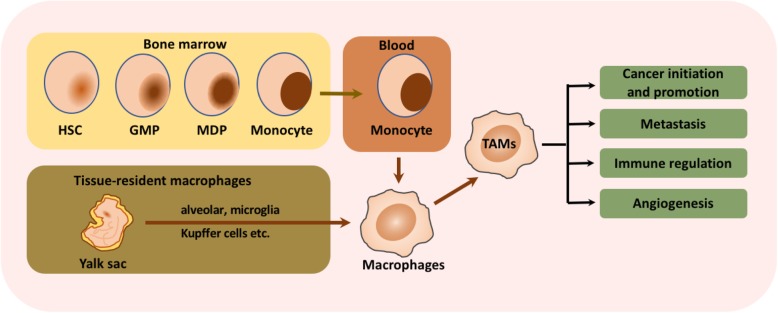
“Macrophages are present in nearly all tissues, primarily derived from circulating monocytes differentiated from hematopoietic stem cells, and partially stem from yolk sac and fetal liver progenitors [18].”
Cancer, metastasis, and the epigenome
Kiri, S., & Ryba, T. (2024) · Molecular Cancer · doi:10.1186/s12943-024-02069-w · Cited by 204
“…through many mechanisms: immunosuppression through secretion of anti-inflammatory cytokines (e.g., IL-10) by tumor-associated macrophages [231, 232], promoting migratory phenotypes through activation of pathways such as Wnt and EGFR [233, 234], induction of hypoxia and secretion of…”
BackgroundMulti-stage mechanisms of tumor metastasis and therapeutic strategies
Liu, Z., Chen, J., Ren, Y., Liu, S., Ba, Y., Zuo, A., Luo, P., Cheng, Q., Xu, H., & Han, X. (2024) · Signal Transduction and Targeted Therapy · doi:10.1038/s41392-024-01955-5 · Cited by 184
Attalla, S., Taifour, T., Bui, T., & Muller, W. (2021) · Oncogene · doi:10.1038/s41388-020-01560-0 · Cited by 219
“Further analysis revealed that IL-4 released by CD4+ T cells was capable of polarizing macrophages into more M2-like state while suppressing the M1-like phenotype and promoting macrophage expression of EGF, which establishes the paracrine loop between tumor cells and macrophages [10, 10, 87, 89].”
BackgroundTargeting the CCL2/CCR2 Axis in Cancer Immunotherapy: One Stone, Three Birds?
Fei, L., Ren, X., Yu, H., & Zhan, Y. (2021) · Frontiers in Immunology · doi:10.3389/fimmu.2021.771210 · Cited by 219
“Consequently, functional programs of TAMs can also be versatile, ranging from cancer initiation, angiogenesis, immune suppression to tumor metastasis (86).”
BackgroundThe role of tumor-associated macrophages in tumor immune evasion
Huang, R., Kang, T., & Chen, S. (2024) · Journal of Cancer Research and Clinical Oncology · doi:10.1007/s00432-024-05777-4 · Cited by 230
“This under-pins the reciprocal relationship between T cell functionality and PD-L1 expression modulated by TAMs, driving the immunosuppressive nature of the TME (Lin et al. 2019).”
BackgroundMacrophage targeting in cancer
Lopez‐Yrigoyen, M., Cassetta, L., & Pollard, J. W. (2021) · Annals of the New York Academy of Sciences · doi:10.1111/nyas.14377 · Cited by 221
Adaptive Mechanisms of Tumor Therapy Resistance Driven by Tumor Microenvironment
Wu, P., Gao, W., Su, M., Nice, E. C., Zhang, W., Lin, J., & Xie, N. (2021) · Frontiers in Cell and Developmental Biology · doi:10.3389/fcell.2021.641469 · Cited by 209
Hayes, C., Donohoe, C. L., Davern, M., & Donlon, N. E. (2021) · Cancer Letters · doi:10.1016/j.canlet.2020.12.021 · Cited by 213
The role of cancer-derived microRNAs in cancer immune escape
Yi, M., Xu, L., Jiao, Y., Luo, S., Li, A., & Wu, K. (2020) · Journal of Hematology & Oncology · doi:10.1186/s13045-020-00848-8 · Cited by 221
He, Z., Wang, J., Zhu, C., Xu, J., Chen, P., Jiang, X., Chen, Y., Jiang, J., & Sun, C. (2022) · Cancer Letters · doi:10.1016/j.canlet.2022.215751 · Cited by 196
Self-citationNallasamy, P., Nimmakayala, R. K., Parte, S., Are, A. C., Batra, S. K., & Ponnusamy, M. P. (2022) · Molecular Cancer · doi:10.1186/s12943-022-01682-x · Cited by 193
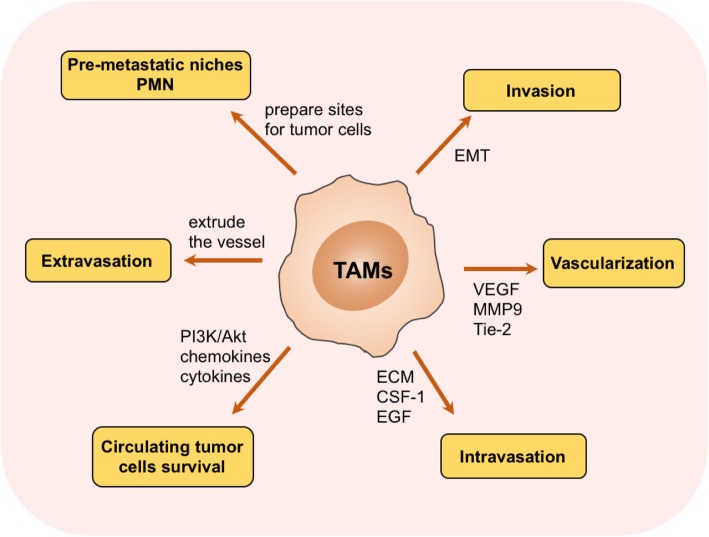
“TAMs were important metastasis promoters in the TME, producing growth factors, proteolytic enzymes, and immunological checkpoint proteins in T cells and regulating invasion, vascularization, intravasation, survival, and extravasation in the metastatic cascade events [203].”
BackgroundXu, J., Shen, L., Bai, C., Wang, W., Li, J., Yu, X., Li, Z., Li, E., Yuan, X., Chi, Y., et al. (2020) · The Lancet Oncology · doi:10.1016/s1470-2045(20)30493-9 · Cited by 197
Self-citationChen, J., Lin, Z., Liu, L., Zhang, R., Geng, Y., Fan, M., Zhu, W., Lu, M., Lu, L., Jia, H., et al. (2021) · Signal Transduction and Targeted Therapy · doi:10.1038/s41392-021-00784-0 · Cited by 195
Targeting of TAMs: can we be more clever than cancer cells?
Kzhyshkowska, J. G., Shen, J., & Larionova, I. (2024) · Cellular and Molecular Immunology · doi:10.1038/s41423-024-01232-z · Cited by 201
“To initiate ECM degradation, TAMs secrete several proteolytic enzymes, including cathepsins, matrix metalloproteinases (MMPs, such as MMP7, MMP2, and MMP9), and serine proteases [46, 143, 188].”
Influentialc-MYC mediates the crosstalk between breast cancer cells and tumor microenvironment
Gao, F.-Y., Li, X.-T., Xu, K., Wang, R.-T., & Guan, X.-X. (2023) · Cell Communication and Signaling · doi:10.1186/s12964-023-01043-1 · Cited by 167
“c‐MYC regulates the immune response in TME Immune cells in TME mainly contains TAMs, dendritic cells, MDSCs, T cells, B cells, natural killer (NK) cells, neutrophils and others, which are tightly associated with the immune response [17, 54, 55].”
BackgroundCurrent Advances of Nitric Oxide in Cancer and Anticancer Therapeutics
Mintz, J., Vedenko, A., Rosete, O., Shah, K., Goldstein, G., Hare, J. M., Ramasamy, R., & Arora, H. (2021) · Vaccines · doi:10.3390/vaccines9020094 · Cited by 180
Pathological angiogenesis and inflammation in tissues
Jeong, J.-H., Ojha, U., & Lee, Y. M. (2021) · Archives of Pharmacal Research · doi:10.1007/s12272-020-01287-2 · Cited by 174
Targeting macrophages in hematological malignancies: recent advances and future directions
Li, W., Wang, F., Guo, R., Bian, Z., & Song, Y. (2022) · Journal of Hematology & Oncology · doi:10.1186/s13045-022-01328-x · Cited by 167
“TAMs, a specific macrophage subpopulation, constitute the most abundant part of immune cells in almost all TME [169, 170].”
BackgroundInfluentialRoles of tumor-associated macrophages in tumor progression: implications on therapeutic strategies
Zhu, S., Yi, M., Wu, Y., Dong, B., & Wu, K. (2021) · Experimental Hematology & Oncology · doi:10.1186/s40164-021-00252-z · Cited by 178
Tumor Associated Macrophages: Origin, Recruitment, Phenotypic Diversity, and Targeting
Hourani, T., Holden, J. A., Li, W., Lenzo, J. C., Hadjigol, S., & O’Brien-Simpson, N. M. (2021) · Frontiers in Oncology · doi:10.3389/fonc.2021.788365 · Cited by 168
Current Understanding of Hydrogel for Drug Release and Tissue Engineering
Lei, L., Bai, Y., Qin, X., Liu, J., Huang, W., & Lv, Q. (2022) · Gels · doi:10.3390/gels8050301 · Cited by 172
“In severe cases, they can follow the body’s lymphatic system, via which they can be transferred to other body parts and cause serious harm [144].”
BackgroundPadinharayil, H., Varghese, J., John, M. C., Rajanikant, G. K., Wilson, C. M., Al-Yozbaki, M., Renu, K., Dewanjee, S., Sanyal, R., Dey, A., et al. (2023) · Genes & Diseases · doi:10.1016/j.gendis.2022.07.023 · Cited by 159
Glaviano, A., Lau, H., Carter, L. M., Lee, E. H. C., Lam, H. Y., Okina, E., Tan, D. J. J., Tan, W., Ang, H. L., Carbone, D., et al. (2025) · Journal of Hematology & Oncology · doi:10.1186/s13045-024-01634-6 · Cited by 183
Chen, X., Yang, M., Yin, J., Li, P., Zeng, S., Zheng, G., He, Z., Liu, H., Wang, Q., Zhang, F., et al. (2022) · Cell Communication and Signaling · doi:10.1186/s12964-022-00888-2 · Cited by 161
“In particular, cytokines and chemokines secreted by macrophages induce phenotypic and functional changes in both cell types and influence cancer development, including tumor growth, invasion, metastasis, and immune evasion [16].”
BackgroundImmunosenescence and inflammaging: Mechanisms and role in diseases
Ajoolabady, A., Praticò, D., Tang, D., Zhou, S., Franceschi, C., & Ren, J. T. (2024) · Ageing Research Reviews · doi:10.1016/j.arr.2024.102540 · Cited by 199
Development of NIR-II Photoacoustic Probes Tailored for Deep-Tissue Sensing of Nitric Oxide
Lucero, M. Y., East, A. K., Reinhardt, C. J., Sedgwick, A. C., Su, S., Lee, M. C., & Chan, J. (2021) · Journal of the American Chemical Society · doi:10.1021/jacs.1c03004 · Cited by 171
Li, Y.-R., Fang, Y., Lyu, Z., Zhu, Y., & Yang, L. (2023) · Journal of Translational Medicine · doi:10.1186/s12967-023-04575-9 · Cited by 180
Zhang, Z., Li, B., Xie, L., Sang, W., Tian, H., Li, J., Wang, G., & Dai, Y. (2021) · ACS Nano · doi:10.1021/acsnano.1c08026 · Cited by 168
Lu, J.-C., Zhang, P.-F., Huang, X.-Y., Guo, X.-J., Gao, C., Zeng, H.-Y., Zheng, Y.-M., Wang, S.-W., Cai, J.-B., Sun, Q.-M., et al. (2021) · Journal of Hematology & Oncology · doi:10.1186/s13045-021-01207-x · Cited by 162
“tumor-associated macrophages (TAMs) also creates an immunosuppressive TME and facilitates immune escape [8].”
BackgroundRihawi, K., Ricci, A. D., Rizzo, A., Brocchi, S., Marasco, G., Pastore, L. V., Llimpe, F. L. R., Golfieri, R., & Renzulli, M. (2021) · International Journal of Molecular Sciences · doi:10.3390/ijms22083805 · Cited by 166
“, CCL2, CSF-1, VEGF, PLGF, TNF-α, TGF-β), tissue inhibitor of metallopeptidase (TIMP)-1, and exosomes [37,39,40].”
BackgroundTheranostic polymeric nanoparticles as a new approach in cancer therapy and diagnosis: a review
Hosseini, S. M., Mohammadnejad, J., Salamat, S., Zadeh, Z. B., Tanhaei, M., & Ramakrishna, S. (2023) · Materials Today Chemistry · doi:10.1016/j.mtchem.2023.101400 · Cited by 198
Lin, S., Liao, Y.-C., Chen, P., Yang, Y., Wang, Y., Tung, S.-L., Chuang, C.-M., Sung, Y.-W., Jang, T., Chuang, S., et al. (2022) · Journal of Biomedical Science · doi:10.1186/s12929-022-00888-x · Cited by 167
Decoding leader cells in collective cancer invasion
Mercedes, S. A. V., Bocci, F., Levine, H., Onuchic, J. N., Jolly, M. K., & Wong, P. K. (2021) · Nature reviews. Cancer · doi:10.1038/s41568-021-00376-8 · Cited by 177
Regulation and signaling pathways in cancer stem cells: implications for targeted therapy for cancer
Zeng, Z., Fu, M., Hu, Y., Wei, Y., Wei, X., & Luo, M. (2023) · Molecular Cancer · doi:10.1186/s12943-023-01877-w · Cited by 172
“Generally, tumor-infiltrating immune cells include neutrophils, lymphocytes, monocytes, macrophages and their immature precursors [220].”
BackgroundCathepsin S (CTSS) activity in health and disease - A treasure trove of untapped clinical potential
Smyth, P., Sasiwachirangkul, J., Williams, R. D., & Scott, C. J. (2022) · Molecular Aspects of Medicine · doi:10.1016/j.mam.2022.101106 · Cited by 171
Zheng, H., Liu, H., Li, H., Dou, W., Wang, J., Zhang, J., Liu, T., Wu, Y., Liu, Y., & Wang, X. (2022) · Stem Cell Research & Therapy · doi:10.1186/s13287-022-02913-0 · Cited by 160
“Tumor-associated macrophages (TAMs) are the principal source of these pro-inflammatory cytokines, which in turn drive macrophages into M2-polarized subtype [66] that interactively contribute to the EMT and CSCs transition [67–69] as well as immunosuppression and therapy resistance [70].”
BackgroundBhat, A. A., Nisar, S., Maacha, S., Carneiro-Lobo, T., Akhtar, S., Siveen, K. S., Wani, N. A., Rizwan, A., Bagga, P., Singh, M. K., et al. (2021) · Molecular Cancer · doi:10.1186/s12943-020-01294-3 · Cited by 158
Progression of Metastasis through Lymphatic System
Zhou, H., Lei, P., & Padera, T. P. (2021) · Cells · doi:10.3390/cells10030627 · Cited by 150
“For instance, macrophages can be reprogrammed t an M2-like (a tiinflammatory) phenotype, which promote tumor progression [96].”
BackgroundTargeting the tumor microenvironment in B-cell lymphoma: challenges and opportunities
Liu, Y., Zhou, X., & Wang, X. (2021) · Journal of Hematology & Oncology · doi:10.1186/s13045-021-01134-x · Cited by 151
“The classification and identification of TAMs are related to their immunomodulatory functions [27].”
BackgroundTumor-Associated Macrophages: A Potential Target for Cancer Therapy
Tan, Y., Wang, M., Zhang, Y., Ge, S., Zhong, F., Xia, G., & Sun, C. (2021) · Frontiers in Oncology · doi:10.3389/fonc.2021.693517 · Cited by 165
Kolb, D., Kolishetti, N., Surnar, B., Sarkar, S., Guin, S., Shah, A. S., & Dhar, S. (2020) · ACS Nano · doi:10.1021/acsnano.9b10037 · Cited by 142
Adoptive cellular immunotherapy for solid neoplasms beyond CAR-T
Liu, Q., Li, J., Zheng, H., Yang, S., Hua, Y., Huang, N., Kleeff, J. H., Liao, Q., & Wu, W. (2023) · Molecular Cancer · doi:10.1186/s12943-023-01735-9 · Cited by 144
CAFs orchestrates tumor immune microenvironment—A new target in cancer therapy?
Zhang, C., Fei, Y., Wang, H., Hu, S., Liu, C., Hu, R., & Du, Q. (2023) · Frontiers in Pharmacology · doi:10.3389/fphar.2023.1113378 · Cited by 127
“T cells), and the ratio of these two populations play an important role in tumor progression (Lin et al., 2019; Woan and Miller, 2019).”
BackgroundThe CAR macrophage cells, a novel generation of chimeric antigen-based approach against solid tumors
Hadiloo, K., Taremi, S., Heidari, M., & Esmaeilzadeh, A. (2023) · Biomarker Research · doi:10.1186/s40364-023-00537-x · Cited by 143
“Also, the direct interaction between macrophages and tumor cells before entering them into vessels improves the extravasation mechanism [68].”
BackgroundTumor metastasis: Mechanistic insights and therapeutic interventions
Liu, M., Yang, J., Xu, B.-S., & Zhang, X. (2021) · MedComm · doi:10.1002/mco2.100 · Cited by 136
Valdeolivas, A., Amberg, B., Giroud, N., Richardson, M., Gálvez, E. J. C., Badillo, S., Julien-Laferrière, A., Túrós, D., Voith von Voithenberg, L., Wells, I., et al. (2024) · npj Precision Oncology · doi:10.1038/s41698-023-00488-4 · Cited by 130
“S12g), may contribute to an immunosuppressive TME 26 , in line with its lower activities in immune response-associated pathways such as NF κ B and TNF α .”
Cancer metastasis: Molecular mechanisms and clinical perspectives
Khan, S. U., Fatima, K., Malik, F. A., Kalkavan, H., & Wani, A. (2023) · Pharmacology & Therapeutics · doi:10.1016/j.pharmthera.2023.108522 · Cited by 132
Interplay between tumor microenvironment and partial EMT as the driver of tumor progression
Aggarwal, V., Montoya, C. A., Donnenberg, V. S., & Sant, S. (2021) · iScience · doi:10.1016/j.isci.2021.102113 · Cited by 135
Immune-checkpoint inhibitor resistance in cancer treatment: Current progress and future directions
Zhang, C., Zhang, C., & Wang, H. (2023) · Cancer Letters · doi:10.1016/j.canlet.2023.216182 · Cited by 128
Combinatorial therapy in tumor microenvironment: Where do we stand?
Kumari, S., Advani, D., Sharma, S., Ambasta, R. K., & Kumar, P. (2021) · Biochimica et Biophysica Acta (BBA) - Reviews on Cancer · doi:10.1016/j.bbcan.2021.188585 · Cited by 130
Reprogramming tumor-associated macrophages as a unique approach to target tumor immunotherapy
Khan, S. U., Khan, M. U., Din, M. A. U., Khan, I. M., Khan, M. I., BUNGAU, S. G., & Hassan, S. S. U. (2023) · Frontiers in Immunology · doi:10.3389/fimmu.2023.1166487 · Cited by 129
“Tumor-associated micro environmental interferon (IFN) interacts to the interferon receptor expressed on TAM, triggering the JAK-STAT signaling cascade and leading to the production of several pro-inflammatory cytokines (IL-1, IL-6, and NOS2) (50).”
BackgroundReshaping the tumor immune microenvironment to improve CAR-T cell-based cancer immunotherapy
Xia, X., Yang, Z., Lu, Q., Liu, Z., Wang, L., Du, J., Li, Y., Yang, D., & Wu, S. (2024) · Molecular Cancer · doi:10.1186/s12943-024-02079-8 · Cited by 128
“In particular, targeting TAMs, MDSCs, and Tregs may yield good benefits [142–144].”
BackgroundChronic Inflammation’s Transformation to Cancer: A Nanotherapeutic Paradigm
Sohrab, S. S., Raj, R., Nagar, A., Hawthorne, S. J., Paiva‐Santos, A. C., Kamal, M. A., El-Daly, M. M., Azhar, E. I., & Sharma, A. (2023) · Molecules · doi:10.3390/molecules28114413 · Cited by 124
Targeting pyroptosis for cancer immunotherapy: mechanistic insights and clinical perspectives
Huang, C. L., Li, J., Wu, R., Li, Y., & Zhang, C. (2025) · Molecular Cancer · doi:10.1186/s12943-025-02344-4 · Cited by 127
“However, the inflammatory mediators released during macrophage pyroptosis, including metalloproteases and growth factors like TGF-β and VEGF, can promote tumor progression [109–111].”
Lin, X., Zhou, L., Liu, C., Zeng, F., Yuan, Y., Zhou, Q., Li, S., Wu, Y., Wang, J., Wu, D., et al. (2021) · EMBO Reports · doi:10.15252/embr.202052124 · Cited by 123
“M1 macrophages promote an inflammatory response against tumor cells, while M2 macrophages function as tumor-promoting cells by enhancing tumor immunosuppression (Lin et al , 2019).”
Cannabinoids in the landscape of cancer
Mangal, N., Erridge, S., Habib, N., Sadanandam, A., Reebye, V., & Sodergren, M. H. (2021) · Journal of Cancer Research and Clinical Oncology · doi:10.1007/s00432-021-03710-7 · Cited by 133
Jiang, M., Li, X., Zhang, J., Lu, Y., Shi, Y., Zhu, C., Liu, Y., Qin, B., Luo, Z., Du, Y., et al. (2021) · ACS Nano · doi:10.1021/acsnano.1c04068 · Cited by 122
Versatile function of NF-ĸB in inflammation and cancer
Ma, Q., Hao, S., Hong, W., Tergaonkar, V., Sethi, G., Tian, Y., & Duan, C. (2024) · Experimental Hematology and Oncology · doi:10.1186/s40164-024-00529-z · Cited by 125
“The hallmarks of cancer, including proliferation, angiogenesis, invasion, drug resistance, and immune reactions, are regulated by TAMs [59–61].”
BackgroundThe role of tumor-associated macrophages in osteosarcoma progression – therapeutic implications
Huang, Q., Liang, X., Ren, T., Huang, Y., Zhang, H., Yu, Y., Chen, C., Wang, W., Niu, J., Lou, J., et al. (2021) · Cellular Oncology · doi:10.1007/s13402-021-00598-w · Cited by 118
“ments are defined as tumor-associated macrophages (TAMs) [29], including monocyte-derived macrophages (MDMs) and”
BackgroundZhang, F., Liu, H., Duan, M., Wang, G., Zhang, Z., Wang, Y., Qian, Y., Yang, Z., & Jiang, X. (2022) · Journal of Hematology & Oncology · doi:10.1186/s13045-022-01304-5 · Cited by 127
Metadata
- Authors
- Lin, Y., Xu, J., & Lan, H.
- Affiliations
- University of Michigan (US)
- Corresponding author
- Xu, Jianxin
- Lan, Huiyin
- Venue
- Journal of Hematology & Oncology
- Published
- 2019-07-12
- Volume
- 12
- Issue
- 1
- Pages
- 76-76
- ISSN
- 1756-8722 (ISSN-L)
- PMC
- PMC6626377
- OpenAlex
- W2960078024
- Cited by
- 1,398
- References
- 179
- Citations by year
- 2026: 83 · 2025: 191 · 2024: 234 · 2023: 274 · 2022: 280 · 2021: 209 · 2020: 114 · 2019: 12
- FWCI
- 13.31
- Type
- journal article
- Language
- en
- Open access
- gold
- doi.org
- Licence
- cc-by
- creativecommons.org/licenses/by/4.0/ (tdm)
- creativecommons.org/licenses/by/4.0/ (vor)
- Locations
- Journal of Hematology & Oncology (publishedVersion, cc-by)
- PubMed Central (publishedVersion, cc-by)
- PubMed (publishedVersion)
- Deep Blue (University of Michigan) (submittedVersion)
- DOAJ (DOAJ: Directory of Open Access Journals) (submittedVersion, cc-by-sa)
- Topics
- Life Sciences › Immunology and Microbiology › Immunology › Immune cells in cancer
- Health Sciences › Medicine › Oncology › Cancer Immunotherapy and Biomarkers
- Health Sciences › Medicine › Oncology › Cancer Cells and Metastasis
- Keywords
- tumor-associated macrophages, metastasis, tumor microenvironment, immunosuppression, TAM polarization, immune checkpoint blockade, TAM-targeted therapy, cancer immunotherapy
- MeSH terms
- Animals, Antineoplastic Agents, Humans, Macrophages, Neoplasm Invasiveness, Neoplasm Metastasis, Neoplasms, Cytokines, Tumor Microenvironment
About these checks
Registry, retraction, Cites and statistics results are computed, not judged, with one exception: a printed reference that no index lists is read once by a model before it counts as a citation error. Claims are extracted by a model and kept only when their quote appears verbatim in the text; each cited source is then checked, with a model’s help, for whether it says what the claim relies on. Those verdicts can be wrong — read the claim’s quote and the cited source before relying on one.
Statistics and arithmetic are recomputed, not judged.
Confidence bands are shown only for fields calibrated on our annotated test set. None is calibrated yet, so no band is shown.
What counts as a claim ›How we measure confidence ›How we check this ›
Are you an author, or do you see a problem with this page? Request a review
Data sources
Bibliographic data: Semantic Scholar, OpenAlex, Crossref.
Contains information from the Semantic Scholar Academic Graph Datasets, made available under the ODC Attribution License (ODC-BY 1.0).
Semantic Scholar’s data is described in: Kinney, R., et al. (2023). The Semantic Scholar Open Data Platform. arXiv:2301.10140.
