

Tumor-associated macrophages in tumor metastasis: biological roles and clinical therapeutic applications
Open accessThe DOI matches its Crossref record; 178 of the 179 references it cites were found in a registry or an index.
Abstract
Tumor metastasis is a major contributor to the death of cancer patients. It is driven not only by the intrinsic alterations in tumor cells, but also by the implicated cross-talk between cancer cells and their altered microenvironment components. Tumor-associated macrophages (TAMs) are the key cells that create an immunosuppressive tumor microenvironment (TME) by producing cytokines, chemokines, growth factors, and triggering the inhibitory immune checkpoint proteins release in T cells. In doing so, TAMs exhibit important functions in facilitating a metastatic cascade of cancer cells and, meanwhile, provide multiple targets of certain checkpoint blockade immunotherapies for opposing tumor progression. In this article, we summarize the regulating networks of TAM polarization and the mechanisms underlying TAM-facilitated metastasis. Based on the overview of current experimental evidence dissecting the critical roles of TAMs in tumor metastasis, we discuss and prospect the potential applications of TAM-focused therapeutic strategies in clinical cancer treatment at present and in the future.
Overview
The claims and statistics of this paper haven’t been checked yet.
Free: it reads the open-access text and checks the first 5 claims that cite a source we can check. Create a free account to check every claim.
Integrity signals
Registry
Cites
Statistics
Figures
Verification
Claims the paper makes
The claims and statistics of this paper haven’t been checked yet.
Free: it reads the open-access text and checks the first 5 claims that cite a source we can check. Create a free account to check every claim.
Claims other papers make about this one
Each is checked against this paper’s own text: does it say what the citing paper says it does?
The cited source says what the claim attributes to it.
In the citing paper
“Clinical studies and experimental animal models suggest that TAM commonly plays a pro-tumoral role in various ways [89, 96, 97].”
From Tumor microenvironment complexity and therapeutic implications at a glance (2020) · cites this paper as [96]
The cited source says what the claim attributes to it.
In the citing paper
“Accordingly, TAM-based therapeutic strategies are being developed that aim at TAM targeting, TAM re-education, and TAM depletion [88, 96, 101, 102].”
From Tumor microenvironment complexity and therapeutic implications at a glance (2020) · cites this paper as [96]
Self-check
Percentages, sums and reported differences re-computed from the paper’s own numbers.
The self-check needs the paper’s full text.
Citations
Cites
Molecular mechanisms of epithelial–mesenchymal transition
Lamouille, S., Xu, J., & Derynck, R. (2014) · Nature Reviews Molecular Cell Biology · doi:10.1038/nrm3758 · Cited by 8,091
Self-citationMicroenvironmental regulation of tumor progression and metastasis
Quail, D. F., & Joyce, J. A. (2013) · Nature Medicine · doi:10.1038/nm.3394 · Cited by 7,994 · cited 3×
“most of the current paradigms are designed to eliminate or interdict tumor cells themselves while the successful outgrowth of metastases is largely influenced by nonmalignant cells of the tumor microenvironment (TME) [5, 6, 82].”
BackgroundMolecular Mechanisms of Stress-Responsive Changes in Collagen and Elastin Networks in Skin
Aziz, J., Shezali, H., Radzi, Z., Yahya, N. A., Abu Kassim, N. H., Czernuszka, J., & Rahman, M. T. (2016) · Skin Pharmacology and Physiology · doi:10.1159/000447017 · Cited by 7,323
MANTOVANI, A., SOZZANI, S., LOCATI, M., ALLAVENA, P., & SICA, A. (2002) · Trends in Immunology · doi:10.1016/s1471-4906(02)02302-5 · Cited by 5,528 · cited 1×
“The conversion between M1 (anti-tumorigenesis) and M2 (pro-tumorigenesis) is a biological process named “macrophage polarization” in response to microenvironmental signals [26].”
BackgroundInvolvement of chemokine receptors in breast cancer metastasis
Müller, A., Homey, B., Soto, H., Ge, N., Catron, D., Buchanan, M. E., McClanahan, T., Murphy, E., Yuan, W., Wagner, S. N., et al. (2001) · Nature · doi:10.1038/35065016 · Cited by 5,340
The distribution of secondary growths in cancer of the breast.
Paget, S. (1889) · The Lancet · doi:10.1016/s0140-6736(00)49915-0 · Cited by 5,277 · cited 1×
“In addition to the alterations of the intrinsic properties in tumor cells, the “seed and soil” concept, firstly proposed by Stephen Paget in 1889, has been widely accepted as a critical theory to do with metastasis [4].”
BackgroundMonocyte and macrophage heterogeneity
Gordon, S., & Taylor, P. R. (2005) · Nature Reviews Immunology · doi:10.1038/nri1733 · Cited by 5,190 · cited 1×
“However, both trabectedin and lurbinectedin cannot avoid the side effects arisen by unselectively macrophage consumption since macrophages closely participated in host defense and homeostatic regulation [140].”
BackgroundMacrophage Diversity Enhances Tumor Progression and Metastasis
Qian, B.-Z., & Pollard, J. W. (2010) · Cell · doi:10.1016/j.cell.2010.03.014 · Cited by 5,188 · cited 3×
“In addition, tumor graft models showed that CSF-1 depletion led to greatly reduced macrophage density, delayed tumor progression, and severely inhibited metastasis [22, 24, 42, 43].”
BackgroundMatrix Metalloproteinases: Regulators of the Tumor Microenvironment
Kessenbrock, K., Plaks, V., & Werb, Z. (2010) · Cell · doi:10.1016/j.cell.2010.03.015 · Cited by 5,151
Macrophage biology in development, homeostasis and disease
Wynn, T. A., Chawla, A., & Pollard, J. W. (2013) · Nature · doi:10.1038/nature12034 · Cited by 4,684 · cited 1×
“Macrophages are a type of versatile immunocytes, executing a broad spectrum of functions that range from modulating tissue homeostasis, defensing against pathogens, and facilitating wound healing [11].”
Background
Research works printed but not linked: 1
- Torres-Collado SPJSZSJBA Targeting distinct tumor-infiltrating myeloid cells by inhibiting CSF-1 receptor: combating tumor evasion of antiangiogenic therapy Blood 2010 115 7 1461 10.1182/blood-2009-08-237412 20008303 PMC2826767 · DOI · Paper page
Cited by
Items 601–700 of 1,000
A novel insight into cancer therapy: Lipid metabolism in tumor-associated macrophages
Ren, Y., Wang, M., Yuan, H., Wang, Z., & Yu, L. (2024) · International Immunopharmacology · doi:10.1016/j.intimp.2024.112319 · Cited by 24
Li, Y., Wu, J., Jiang, J., Dong, S., Chen, Y., He, H., Liu, C., & Zhao, J. (2019) · Journal of Materials Chemistry B · doi:10.1039/c9tb01984g · Cited by 22
Immunotherapy for prostate cancer: Requirements for a successful regime transfer
Jeong, S., & Kwak, C. H. (2022) · Korean journal of urology · doi:10.4111/icu.20210369 · Cited by 21
“Additionally, TAM clusters construct a pre-metastatic niche to mediate cancer cells to readily settle in hostile distant microenvironments [58,59].”
BackgroundChiou, Y., Lan, Y., Lee, P., Lin, Q., Nagabhushanam, K., Ho, C., & Pan, M. (2022) · Molecular Nutrition & Food Research · doi:10.1002/mnfr.202200248 · Cited by 22
Skowron, M. A., Eul, K., Stephan, A., Ludwig, G. F., Wakileh, G. A., Bister, A., Söhngen, C., Raba, K., Petzsch, P., Poschmann, G., et al. (2022) · Molecular Oncology · doi:10.1002/1878-0261.13282 · Cited by 20
Dalpati, N., Rai, S. K., Sharma, P., & Sarangi, P. P. (2024) · Matrix Biology · doi:10.1016/j.matbio.2024.12.003 · Cited by 21
Crizotinib: A Novel Strategy to Reverse Immunosuppression in Melanoma by Targeting Lactate Transport
Zhou, Z., Zhang, X., Zhu, S., Liu, W., Guo, Y., Xiong, S., Peng, C., & Chen, X. (2025) · MedComm · doi:10.1002/mco2.70286 · Cited by 195
Han, S., Wei, Z., Guo, T., Zou, J., & Li, F. (2020) · Journal of Experimental & Clinical Cancer Research · doi:10.1186/s13046-020-01730-8 · Cited by 20
RetractedPhysiological Roles of Apoptotic Cell Clearance: Beyond Immune Functions
Han, M., Ryu, G., Shin, S.-A., An, J., Kim, H., Park, D., Lee, D.-H., & Lee, C. S. (2021) · Life · doi:10.3390/life11111141 · Cited by 20
“Inhibiting TAM activity is a potential therapeutic target for cancer prevention [121].”
BackgroundObesity as a Risk Factor for Breast Cancer—The Role of miRNA
Hanusek, K., Karczmarski, J., Litwiniuk, A., Urbańska, K., Ambrożkiewicz, F., Kwiatkowski, A., Martyńska, L., Domańska, A., Bik, W., & Paziewska, A. (2022) · International Journal of Molecular Sciences · doi:10.3390/ijms232415683 · Cited by 20
Jeong, C., Kim, J., Han, I., Kim, S., Choi, I., Kim, H.-S., Jeong, J.-H., & Bae, H. (2023) · Frontiers in Immunology · doi:10.3389/fimmu.2023.1178776 · Cited by 22
“Numerous studies have reported that a subset of TAMs suppresses the anti-tumor responses of tumor-infiltrating lymphocytes and is associated with poor outcomes in patients with cancer (54, 55).”
BackgroundLi, J., Bao, Y., Peng, S., Jiang, C., Zhu, L., Zou, S., Xu, J., & Li, Y. (2023) · Current Issues in Molecular Biology · doi:10.3390/cimb45060314 · Cited by 20
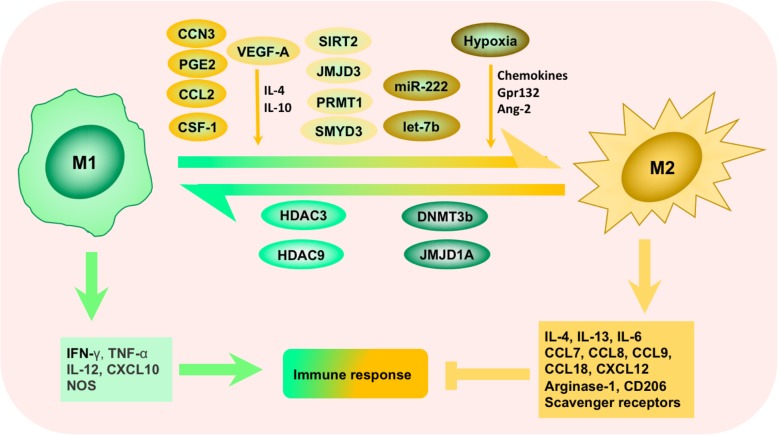
“Two central polarization states of the macrophage phenotype have been described: M1 macrophages and M2 macrophages [5].”
BackgroundSelf-citationZhu, Z., Li, X., Liu, D., & Li, Z. (2023) · Frontiers in Oncology · doi:10.3389/fonc.2023.1140891 · Cited by 20
Insight into Cancer Immunity: MHCs, Immune Cells and Commensal Microbiota
Wen, M., Li, Y., Qin, X., Qin, B., & Wang, Q. A. (2023) · Cells · doi:10.3390/cells12141882 · Cited by 21
“Those molecules are able to polarize macrophages towards a pro-tumor M2 state and repolarize them to an anti-tumor M1 state [189].”
BackgroundYu, Y., Hao, J., Wang, L., Zheng, X., Xie, C., Liu, H., Wu, J., Qiao, S., & Shi, J. (2023) · Pathology - Research and Practice · doi:10.1016/j.prp.2023.154766 · Cited by 20
Sinkarevs, S., Štrumfs, B., Volkova, S., & Štrumfa, I. (2024) · Cells · doi:10.3390/cells13121057 · Cited by 22
“Potential targeting of CCL2 with are 30].”
BackgroundInfluentialZinc dampens antitumor immunity by promoting Foxp3+ regulatory T cells
Sugandha, N., Narayan, S., Dalal, R., & Rizvi, Z. A. (2024) · Frontiers in Immunology · doi:10.3389/fimmu.2024.1389387 · Cited by 22
MYH9 suppresses melanoma tumorigenesis, metastasis and regulates tumor microenvironment
Singh, S. K., Sinha, S., Padhan, J., Jangde, N., Ray, R., & Rai, V. (2020) · Medical Oncology · doi:10.1007/s12032-020-01413-6 · Cited by 20
Peng, H. C., Wang, J., Guo, F., Zhu, F.-F., Wen, Z.-J., Zhong, H., & Liang, D.-S. (2020) · Colloids and Surfaces B Biointerfaces · doi:10.1016/j.colsurfb.2020.111442 · Cited by 20
Guo, N., Zhou, Y., Wang, T., Lin, M., Chen, J., Zhang, Z., Zhong, X., Lu, Y., Yang, Q., Xu, D., et al. (2020) · ACS Applied Materials & Interfaces · doi:10.1021/acsami.0c19301 · Cited by 20
Macrophage polarization by phytotherapy in the tumor microenvironment
Saeedifar, A. M., Mosayebi, G., Ghazavi, A., Bushehri, R. H., & Ganji, A. (2021) · Phytotherapy Research · doi:10.1002/ptr.7058 · Cited by 25
p53 Signaling on Microenvironment and Its Contribution to Tissue Chemoresistance
Souza, L. C. D. M. E., Faletti, A., Veríssimo, C. P., Stelling, M. P., & Borges, H. L. (2022) · Membranes · doi:10.3390/membranes12020202 · Cited by 21
“Their respective subpopulations change throughout therapy both in profile and quantity, thus shaping the inflammatory microenvironment that will promote chemoresistance across the tumor [6,7].”
BackgroundIn vitro 2D and 3D cancer models to evaluate compounds that modulate macrophage polarization
Madsen, N. H., Nielsen, B. S., Larsen, J., & Gad, M. (2022) · Cellular Immunology · doi:10.1016/j.cellimm.2022.104574 · Cited by 21
Kim, T. W., Johnston, J. M., Castillo‐Lluva, S., Cimas, F. J., Hamby, S. E., González‐Moreno, S., Villarejo‐Campos, P., Goodall, A. H., Velasco, G., Ocaña, A., et al. (2022) · Theranostics · doi:10.7150/thno.72192 · Cited by 22
“Most TAMs are polarized to have a M2-like phenotype after infiltration and produce antiinflammatory cytokines (such as IL-4) and growth factors to inhibit immune response and promote proliferation [14].”
BackgroundRecent progress in leptin signaling from a structural perspective and its implications for diseases
Fan, X., Yuan, W., Huang, W., & Lin, Z. (2023) · Biochimie · doi:10.1016/j.biochi.2023.04.011 · Cited by 20
Cao, C., Yin, H., Yang, B., Yue, Q., Wu, G., Gu, M., Zhang, Y., Yang, F., Dong, X., Wang, T., et al. (2023) · Advanced Science · doi:10.1002/advs.202304020 · Cited by 20
Suresh, M., & Menne, S. (2021) · World Journal of Gastrointestinal Oncology · doi:10.4251/wjgo.v13.i6.509 · Cited by 20
Li, H., Gong, Y., Yan, P., Xu, Y. J., Qin, G., Wen, W., & Teng, F. (2024) · Frontiers in Immunology · doi:10.3389/fimmu.2024.1453753 · Cited by 23
Gao, Q., Wu, H., Duan, L., Lv, G., & Quan, D. (2025) · Frontiers in Immunology · doi:10.3389/fimmu.2025.1648987 · Cited by 20
“…tumor cells and surrounding supportive cells adjust metabolic pathways to meet the demands of rapid proliferation and adaptation to hostile conditions, while simultaneously shaping an immunosuppressive environment that facilitates sustained tumor growth and immune evasion (3, 111, 112).”
Mechanobiological Implications of Cancer Progression in Space
Kim, H., Shin, Y. J., & Kim, D. (2021) · Frontiers in Cell and Developmental Biology · doi:10.3389/fcell.2021.740009 · Cited by 21
“CTGF expression can be induced by mechanical stimulation, such as hypertension, and plays an essential role in tissue remodeling and fibrosis by activating myofibroblast activation (Lipson et al., 2012).”
BackgroundDotse, E., Lim, K. H., Wang, M., Wijanarko, K. J., & Chow, K. T. (2022) · Life · doi:10.3390/life12020323 · Cited by 20
“Tumor cells release colony stimulating factor 1 (CSF1) that recruits macrophages and polarizes them towards tissue repair-promoting M2 TAMs, which, in turn, produce growth factors like epidermal growth factor (EGF) that further stimulates tumor cells to produce CSF-1, thus, forming a positive feedback loop [87,88].”
BackgroundOvercoming Immune Resistance With Radiation Therapy in Prostate Cancer
Mulvey, A., Muggeo-Bertin, E., Berthold, D., & Herrera, F. G. (2022) · Frontiers in Immunology · doi:10.3389/fimmu.2022.859785 · Cited by 19
“Hypoxia-induced lactate, a product of tumoral anaerobic metabolism, is a key inducer of the M2-like phenotype (66).”
Extracellular vesicles as a novel approach for breast cancer therapeutics
Lee, Y., Graham, P., & Li, Y. (2022) · Cancer Letters · doi:10.1016/j.canlet.2022.216036 · Cited by 19
Circulating tumour cells in gastrointestinal cancers: food for thought?
Asawa, S., Nüesch, M., Gvozdenovic, A., & Aceto, N. (2023) · British Journal of Cancer · doi:10.1038/s41416-023-02228-8 · Cited by 21
“Tumour-associated macrophages are another immune cell type extensively studied for their contribution at each step of the metastatic cascade [91].”
BackgroundSTING Protein‐Based In Situ Vaccine Synergizes CD4+ T, CD8+ T, and NK Cells for Tumor Eradication
He, Y., Hong, C., Huang, S., Kaskow, J. A., Covarrubias, G., Pires, I. S., Sacane, J. C., Hammond, P. T., & Belcher, A. M. (2023) · Advanced Healthcare Materials · doi:10.1002/adhm.202300688 · Cited by 22
Reshaping immunometabolism in the tumour microenvironment to improve cancer immunotherapy
Chen, S., Duan, H., & Sun, G. (2023) · Biomedicine & Pharmacotherapy · doi:10.1016/j.biopha.2023.114963 · Cited by 19
Rodriguez‐Perdigon, M., Haeni, L., Rothen‐Rutishauser, B., & Rüegg, C. (2023) · Frontiers in Bioengineering and Biotechnology · doi:10.3389/fbioe.2023.1159819 · Cited by 19
“Upon recruitment, monocytes differentiate into macrophages, which in turn differentiate toward a so-called tumor-associated macrophages (TAMs) phenotype facilitating metastatic cascade of cancer cells (Lin et al., 2019).”
BackgroundZhang, C., Wang, M., & Wu, Y. (2023) · Frontiers in Oncology · doi:10.3389/fonc.2023.1278863 · Cited by 22
“NK cells are activated by various cytokines and have cell-killing functions (37).”
BackgroundCai, X., Ruan, L., Wang, D., Zhang, J., Tang, J., Guo, C., Dou, R., Zhou, M., Hu, Y., & Chen, J. (2023) · Colloids and Surfaces B Biointerfaces · doi:10.1016/j.colsurfb.2023.113664 · Cited by 19
Polarization of M2 Tumor-Associated Macrophages (TAMs) in Cancer Immunotherapy
Bui, I., & Bonavida, B. (2024) · Critical Reviews™ in Oncogenesis · doi:10.1615/critrevoncog.2024053830 · Cited by 20
Engineering macrophages and their derivatives: A new hope for antitumor therapy
Fang, W., Liu, H., Wang, Y., Li, Y., & Han, S. (2024) · Biomedicine & Pharmacotherapy · doi:10.1016/j.biopha.2024.116925 · Cited by 19
Koumpis, E., Papoudou‐Bai, A., Papathanasiou, K., Kolettas, E., Kanavaros, P., & Hatzimichael, E. C. (2024) · Current Issues in Molecular Biology · doi:10.3390/cimb46070420 · Cited by 20
“…role via secreting proinflammatory cytokines (IL-1 β , IL-6, IL-12, TNF-α , etc.), and the M2 phenotype (CD68/CD163), which is characterized by its pro-tumorigenic role via secreting anti-inflammatory cytokines (IL-10, IL-13, IL-4, matrix metalloproteinases, etc.) [21,76,77] (Figure 2).”
BackgroundLiu, P., Gao, X., Yu, Z., Liu, Y., Liu, Y., Lin, J., Cao, Y., Zhai, S., Li, J., Huang, Y., et al. (2024) · Cancer Letters · doi:10.1016/j.canlet.2024.217389 · Cited by 24
Samanta, R., Haldar, N., Pamecha, A., & Gajbhiye, V. (2025) · International Journal of Pharmaceutics · doi:10.1016/j.ijpharm.2025.125336 · Cited by 20
Shen, Y., Yu, N., Zhao, W., Niu, S., Qiu, P., Zeng, H., Chen, Z., Men, W., & Xie, D. (2025) · Biomaterials · doi:10.1016/j.biomaterials.2025.123287 · Cited by 20
Vanan, A. G., Nami, M. T., Ghorbaninezhad, F., Eini, P., Bagheri, K., Mohammadlou, M., Mohammadi, F., Tahmasebi, S., & Safarzadeh, E. (2025) · Clinical and Experimental Medicine · doi:10.1007/s10238-025-01711-1 · Cited by 21
“TAMs are also known to generate matrix metalloproteinases (MMPs) and other enzymes that break down the extracellular matrix, facilitating the invasion and metastasis of tumor cells into neighboring tissues and organs [87, 88].”
Yu, Y., Wang, L., Cao, S., Gao, S., Wang, W., Mulvihill, L., Machtay, M. X., Fu, P., Yu, J., & Kong, F. (2020) · Translational Lung Cancer Research · doi:10.21037/tlcr-20-666 · Cited by 19
“Tumor associated macrophages (TAM) derived from circulating monocytes could promote tumor progression, angiogenesis, and lymphangion genesis (23).”
Cao, J., Zhang, C., Jiang, G., Jin, S., Wang, Q., Wang, A., & Bai, D. (2020) · Bioengineered · doi:10.1080/21655979.2020.1868119 · Cited by 19
“(e–h) The expression of CDC42 was significantly correlated with M2 macrophage markers (CD163, MMP2, MMP9, and STAT3) in the ICGC database.”
BackgroundInfluentialVinaiphat, A., Low, J. K., Yeoh, K. W., Chng, W. J., & Sze, S. K. (2021) · Frontiers in Oncology · doi:10.3389/fonc.2021.559822 · Cited by 20
Kuo, C., Yang, T.-H., Tsai, P.-F., & Yu, C.-H. (2021) · Medicina · doi:10.3390/medicina57080778 · Cited by 22
“Their presence is associated with poor prognosis and survival of patients with several types of cancer [8].”
BackgroundOhya, S., Matsui, M., Kajikuri, J., Kito, H., & Endo, K. (2022) · International Journal of Molecular Sciences · doi:10.3390/ijms23158603 · Cited by 19
“In the TME, tumor-infiltrating, M2differentiated TAMs promote escape from cancer immune surveillance, thereby enhancing invasive and metastatic potentials and angiogenesis in cancer [1,2].”
BackgroundTari, H., Kessler, K., Trahearn, N., Werner, B., Vinci, M., Jones, C., & Sottoriva, A. (2022) · Cell Reports · doi:10.1016/j.celrep.2022.111283 · Cited by 21
Learning tissue representation by identification of persistent local patterns in spatial omics data
Tanevski, J., Vulliard, L., Ibarra-Arellano, M. A., Schapiro, D., Hartmann, F. J., & Sáez-Rodríguez, J. (2025) · Nature Communications · doi:10.1038/s41467-025-59448-0 · Cited by 21
“The difference in patterns between the clusters is the presence of a positive relationship between the tumor and macrophages (M1> M2) in cluster 4 that have been shown to be associated with favorable outcome due to their anti-tumorigenesisrole 36 .”
Chemokines: humble yet mighty players in the tumour microenvironment
Xavier, H., Moly, A. G. G., Thomas, J. A., Suboj, P., Suresh, A., Biju, E., Baby, A., Dominic, R. T., & Babykutty, S. (2025) · Frontiers in Immunology · doi:10.3389/fimmu.2025.1601756 · Cited by 19
“Tumour cells alone are feeble for the development of metastasis; rather, it is executed by multiple components of the tumour niche as well as complicated cross talks between stromal and tumour cells, which further release certain chemokines and cytokines (40).”
Zheng, B., Yang, M.-L., Huang, W., Zheng, B., Zhang, T., Li, J., Lv, G., Yan, Y., & Zou, M. (2021) · Journal of Inflammation Research · doi:10.2147/jir.s308707 · Cited by 19
Zeng, Z., Liu, Y., Wen, Q., Li, Y., Yu, J., Xu, Q., Wan, W., He, Y., Ma, C., Huang, Y., et al. (2021) · Drug Delivery · doi:10.1080/10717544.2021.1921076 · Cited by 19
“For example, it promotes the formation of neoangiogenesis, inhibits the activation of T-cells, and enhances the invasive ability of tumor (Galdiero et al., 2013; Leifler et al., 2013; Klingen et al., 2017; van Dalen et al., 2018; Lin et al., 2019).”
BackgroundImpact of NSCLC metabolic remodeling on immunotherapy effectiveness
Lv, L., Huang, R. H., Li, J., Xu, J., & Gao, W. (2022) · Biomarker Research · doi:10.1186/s40364-022-00412-1 · Cited by 19
“Several experiments and clinical trials demonstrate that TAMs are primarily of the M2 phenotype, which drive tumor progression and metastasis [90, 91] as well as suppression of antitumor immune responses [92].”
BackgroundSelf-citationHuang, Z., Efthymiadou, A., Liang, N., Fan, R., & Treuter, E. (2023) · Nucleic Acids Research · doi:10.1093/nar/gkac1230 · Cited by 19
“In contrast, in tumor-associated macrophages, IL4 creates an inflammation inhibitory microenvironment which in turn drives tumor growth and metastasis (9,10).”
BackgroundTAMs PD-L1(+) in the reprogramming of germ cell tumors of the testis
Melotti, S., Ambrosi, F., Franceschini, T., Giunchi, F., Filippo, G. D., Franchini, E., Massari, F., Mollica, V., Tateo, V., Bianchi, F. M., et al. (2023) · Pathology - Research and Practice · doi:10.1016/j.prp.2023.154540 · Cited by 19
Yan, J., Zhu, J., Li, X., Yang, R., Xiao, W., Huang, C., & Zheng, C. (2023) · Phytomedicine · doi:10.1016/j.phymed.2023.154968 · Cited by 21
Kumari, A., Syeda, S., Rawat, K., Kumari, R., & Shrivastava, A. (2023) · Naunyn-Schmiedeberg s Archives of Pharmacology · doi:10.1007/s00210-023-02676-2 · Cited by 18
“Emerging reports suggest that TAMs play an integral role in directing stimuli for supporting tumor cell survival, migration, and invasion (Yang and Zhang 2017; Lin et al. 2019).”
Immune Evasion of G-CSF and GM-CSF in Lung Cancer
Park, Y., & Chung, C. (2023) · Tuberculosis & respiratory diseases · doi:10.4046/trd.2023.0037 · Cited by 18
Chan, S., Kuo, W., & Wang, L. (2023) · Journal of Biomedical Science · doi:10.1186/s12929-023-00986-4 · Cited by 18
“On the other hand, proinflammatory CD68 + M1 macrophages are known to have antitumor effects, producing pro-inflammatory cytokines such as TNF-α to induce cancer cell apoptosis [28, 37].”
BackgroundM1 macrophage-derived exosomal microRNA-29c-3p suppresses aggressiveness of melanoma cells via ENPP2
An, B., Shin, C.-H., Kwon, J. W., Tran, N. L., Kim, A. H., Jeong, H., Kim, S., Park, K., & Oh, S. J. (2024) · Cancer Cell International · doi:10.1186/s12935-024-03512-0 · Cited by 19
“Especially, macrophages, the most abundant immune filtrating cells in solid tumor, act differently depending on their polarization status: M1 macrophages exhibit anti-tumor effects, while M2 macrophages have pro-tumoral effect [7].”
BackgroundInfluentialChen, Z., Huang, H., Wang, Y., Zhan, F., & Quan, Z. (2020) · Frontiers in Molecular Biosciences · doi:10.3389/fmolb.2020.576298 · Cited by 20
ALBRT: Cellular Composition Prediction in Routine Histology Images
Dawood, M., Branson, K., Rajpoot, N., & Minhas, F. (2021) · IEEE International Conference on Computer Vision Workshops · doi:10.1109/iccvw54120.2021.00080 · Cited by 18
“Cellular composition can give insights into cellular diversity in the tumor microenvironment (TME) [9] as well as tissue organization in the whole slide image (WSI) which can be helpful in therapeutic decision making [23].”
BackgroundWei, X., Zhang, X., Wang, S., Wang, Y., Ji, C., Yao, L., & Song, N. (2022) · PubMed Central · Cited by 23
González‐Callejo, P., Guo, Z., Ziglari, T., Claudio, N., Nguyen, K. H., Oshimori, N., Seras-Franzoso, J., & Pucci, F. (2023) · PLoS ONE · doi:10.1371/journal.pone.0279400 · Cited by 19
Zhou, P., Zhang, W., Liao, Y., Zhai, Z., Lu, S., Jiang, S., Hu, W., & Gong, W. (2025) · International Journal of Surgery · doi:10.1097/js9.0000000000002573 · Cited by 18
Gao, J., Zhao, Z., Zhang, H., Huang, S., Xu, M., & Pan, H. (2022) · Cancer Immunology Immunotherapy · doi:10.1007/s00262-022-03316-z · Cited by 18
“Notably, M2 macrophage exerts an immunosuppressive phenotype by producing immunosuppressive factors and triggering the release of multiple inhibitory checkpoints in immune cells [20], leading to the poor prognosis of multiple malignancies with higher density of M2 macrophage within the TIME [42].”
BackgroundAdvanced development of biomarkers for immunotherapy in hepatocellular carcinoma
Peng, X., Gong, C., Zhang, W., & Zhou, A. (2023) · Frontiers in Oncology · doi:10.3389/fonc.2022.1091088 · Cited by 18
In situ hydrogel enhances non-efferocytic phagocytosis for post-surgical tumor treatment
Lyu, J., Liu, H., Chen, L., Liu, C., Tao, J., Yao, Y., Li, L., Huang, Y., & Zhou, Z. (2023) · Journal of Controlled Release · doi:10.1016/j.jconrel.2023.09.041 · Cited by 18
Luo, W., Wang, J., Chen, H., Qiu, J., Wang, R., Liu, Y., Su, D., Tao, J., Weng, G., Ma, H., et al. (2023) · Cancer Letters · doi:10.1016/j.canlet.2023.216423 · Cited by 17
Gulia, S., Chandra, P., & Das, A. (2023) · Cell Biochemistry and Biophysics · doi:10.1007/s12013-023-01179-4 · Cited by 17
“Additionally, it has been demonstrated that the chemokines/cytokines derived from TAMs, such as TNF-α ,TGF-β , IL-6 and IL-10, increase the stemness of cancer cells by encouraging EMT [298].”
BackgroundChaurasia, R. K., Sapra, B. K., & Aswal, D. K. (2024) · The Science of The Total Environment · doi:10.1016/j.scitotenv.2024.170178 · Cited by 18
Han, B. S., Ko, S., Park, M. S., Lee, Y. J., Kim, S. E., Lee, P., Cho, Y. J., Go, H. G., Kwak, S., Park, E., et al. (2024) · International Immunopharmacology · doi:10.1016/j.intimp.2024.113207 · Cited by 20
Ge, Y., Jiang, L., Yang, C., Dong, Q., Tang, C., Xu, Y., & Zhong, X. (2024) · Frontiers in Oncology · doi:10.3389/fonc.2024.1449696 · Cited by 17
“Clinical studies have demonstrated that RG7155 signi fi cantly reduced the number of CSF-1R-positive TAMs in tumor biopsies during treatment (214, 215).”
Zhang, Y., Gao, Y., Wang, J., Tan, X., Liang, Y., Yu, W., Deng, Z., Zhou, J., Ye, Z., & Luo, G. (2024) · Journal of Cellular and Molecular Medicine · doi:10.1111/jcmm.70211 · Cited by 17
“Differentiation of TAMs into M1-macrophages increases the surveillance of tumours by CD8 + T cells and enhances the sensitivity of tumours to PD-1 inhibitors [15].”
The Role of Macrophages in Hepatocellular Carcinoma and Their Therapeutic Potential
Bannister, M. E., Chatterjee, D. A., Shetty, S., & Patten, D. A. (2024) · International Journal of Molecular Sciences · doi:10.3390/ijms252313167 · Cited by 17
Abdessalem, M. A., & Adham, S. A. (2025) · Oncology Research Featuring Preclinical and Clinical Cancer Therapeutics · doi:10.32604/or.2024.056955 · Cited by 19
Liang, C., Wang, S., Wu, C., Wang, J., Xu, L., Wan, S., Zhang, X., Hou, Y., Xia, Y., Xu, L., et al. (2025) · Medicine · doi:10.1097/md.0000000000041379 · Cited by 17
“[72,73] TAMs are important components of the TME, and blood monocyte-derived macrophages are recruited to the TME and polarized into classically activated (M1) and alternatively activated (M2) types, 2 phenotypes with distinct functional roles.”
Recent advances in the mechanisms of PD-L1 expression in gastric cancer: a review
Chen, P., Chen, Z., Sui, W., & Han, W. (2025) · Biological Research · doi:10.1186/s40659-025-00597-3 · Cited by 20
“Macrophages are a versatile immune cell with diverse functions, including regulation of tissue homeostasis, defense against pathogens, and promotion of wound healing [83].”
Raschdorf, A., Sünderhauf, A., Skibbe, K., Ghebrehiwet, B., Peerschke, E. I. B., Sina, C., & Derer, S. (2021) · Frontiers in Oncology · doi:10.3389/fonc.2020.631592 · Cited by 17
“Products of the complement cascade have turned out to be major determinants of myeloid-derived suppressor cell recruitment into the tumor microenvironment, which promote tumor growth and create an immunosuppressive environment (38, 39).”
BackgroundEl-Guindy, D. M., Elgarhy, L. H., Elkholy, R. A., Ali, D. A., & Helal, D. S. (2021) · Journal of Cutaneous Pathology · doi:10.1111/cup.14155 · Cited by 18
“macrophages, which have antagonistic impacts on tumorigenesis.(3) Activated M1 macrophages elaborate pro-inflammatory cytokines and stimulate type 1 T-cell response, which can eliminate tumor cells; on”
BackgroundDifferential Macrophage Responses to Gold Nanostars and Their Implication for Cancer Immunotherapy
Kenry, K., Eschle, B. K., Andreiuk, B., Gokhale, P. C., & Mitragotri, S. (2022) · Advanced Therapeutics · doi:10.1002/adtp.202100198 · Cited by 18
Non-Coding RNAs in the Crosstalk between Breast Cancer Cells and Tumor-Associated Macrophages
Benedetti, A., Turco, C., Fontemaggi, G., & Fazi, F. (2022) · Non-Coding RNA · doi:10.3390/ncrna8010016 · Cited by 19
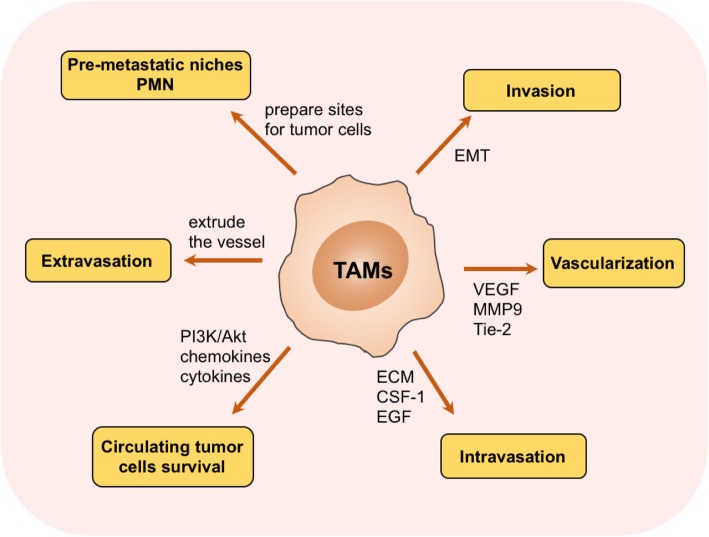
“Moreover, TAMs favor metastasis formation by inducing angiogenesis and tissue remodeling, and contribute to the generation of an immunosuppressive environment that protects cancer cells from being killed by other immune cells [7,13].”
BackgroundShi, Z., Wang, X., Luo, J., Zeng, Y., Wen, Q., Hong, Y., Zhang, T., & Huang, P. (2023) · Nano Research · doi:10.1007/s12274-022-5340-0 · Cited by 17
Horta, B., Freitas‐Silva, J., Silva, J., Dias, F., Teixeira, A. L., Medeiros, R., Cidade, H. M., Pinto, M. M. M., & Cerqueira, F. (2023) · Molecules · doi:10.3390/molecules28052159 · Cited by 20
Liu, J., Wu, P., Lai, S., Wang, J., Hou, H., & Zhang, Y. (2023) · BMC Cancer · doi:10.1186/s12885-023-11058-z · Cited by 18
“TAMs play an essential role in tumor metastasis, involving almost every step of tumor cell metastasis, such as invasion, vascularization, establishing pre-metastatic niches, and so on[47].”
BackgroundStrategies to sensitize cancer cells to immunotherapy
George, A., Şahin, İ., Carneiro, B. A., Dizon, D. S., Safran, H. P., & El‐Deiry, W. S. (2021) · Human Vaccines & Immunotherapeutics · doi:10.1080/21645515.2021.1891817 · Cited by 17
Piezo-catalytic immunotherapy: mechanisms and feasibility in cancer treatment
Chen, Z., Sang, L., Bian, D., Liu, Y., & Bai, Z. (2025) · Theranostics · doi:10.7150/thno.114676 · Cited by 16
“Consequently, current TIM-targeted therapies primarily concentrate on inducing TAM depletion, inhibiting TAM recruitment, and polarizing M2 macrophages towards the M1 phenotype (Figure 1B) [38,39] .”
Golesworthy, B., Wang, Y., Tanti, A., Pacis, A., Romero, J. M., Cuggia, A., Domecq, C., Bourdel, G., Denroche, R. E., Jang, G. H., et al. (2022) · Frontiers in Oncology · doi:10.3389/fonc.2022.860767 · Cited by 17
“We also evaluated the tumor microenvironment topography of FOXP3+ Tregs and CD68+ TAMs, since their immunosuppressive properties counterpoise the anti-tumor effect of cytotoxic CD8+ Tlymphocytes (38, 39).”
BackgroundMethodThe portrayal of macrophages as tools and targets: A paradigm shift in cancer management
Jain, N., Srinivasarao, D. A., Famta, P., Shah, S., Vambhurkar, G. B., Shahrukh, S., Singh, S. B., & Srivastava, S. (2023) · Life Sciences · doi:10.1016/j.lfs.2023.121399 · Cited by 17
Sun, B., Ji, W., Wang, W., Chen, L., Ma, J., Tang, E., Lin, M., & Zhang, X. (2023) · Frontiers in Genetics · doi:10.3389/fgene.2023.1265866 · Cited by 16
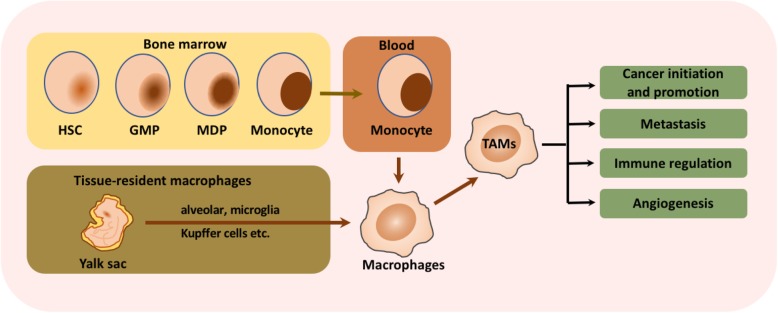
“Macrophages in the tumor microenvironment (TME), usually termed to as TAMs, are one of the most abundant types of cells, and exhibit multiple phenotypes and functions in response to variable biological signals derived from tumor and stromal cells (Lin et al., 2019).”
BackgroundLiu, M., Hu, W., Meng, X., & Wang, B. (2023) · Biochimica et Biophysica Acta (BBA) - Reviews on Cancer · doi:10.1016/j.bbcan.2023.189050 · Cited by 16
Exploring the potential of Toxoplasma gondii in drug development and as a delivery system
Yoon, C., Ham, Y. S., Gil, W. J., & Yang, C. (2024) · Experimental & Molecular Medicine · doi:10.1038/s12276-024-01165-7 · Cited by 19
“M2 macrophages secrete anti-in fl ammatory cytokines, such as IL-10 and IL-1ra, which inhibit the host immune response to T. gondii infection 81, 132 .”
BackgroundInfluentialIntegrating model systems and genomic insights to decipher mechanisms of cancer metastasis
Leung, M. M., Swanton, C., & McGranahan, N. (2025) · Nature Reviews Genetics · doi:10.1038/s41576-025-00825-2 · Cited by 18
“They were previously thought to have a polarized, pro-tumorigenic and immuno-suppressive phenotype (referred to as M2-like on the basis of in vitro studies) 122,123 .”
Positron Emission Tomography Imaging of Macrophages in Cancer
Parker, C. C., & Lapi, S. E. (2021) · Cancers · doi:10.3390/cancers13081921 · Cited by 16
“They have been shown to influence chemoresistance, immune regulation, tumor initiation, and tumor growth [10].”
BackgroundConstruction of Biomimetic-Responsive Nanocarriers and their Applications in Tumor Targeting
Shi, A., Wu, J., & Tian, X. (2022) · Anti-Cancer Agents in Medicinal Chemistry · doi:10.2174/1871520622666220106105315 · Cited by 16
Orwick, A., Sears, S. M., Sharp, C. N., Doll, M. A., Shah, P. P., Beverly, L. J., & Siskind, L. J. (2023) · American Journal of Physiology-Renal Physiology · doi:10.1152/ajprenal.00317.2022 · Cited by 16
Metadata
- Authors
- Lin, Y., Xu, J., & Lan, H.
- Affiliations
- University of Michigan (US)
- Corresponding author
- Xu, Jianxin
- Lan, Huiyin
- Venue
- Journal of Hematology & Oncology
- Published
- 2019-07-12
- Volume
- 12
- Issue
- 1
- Pages
- 76-76
- ISSN
- 1756-8722 (ISSN-L)
- PMC
- PMC6626377
- OpenAlex
- W2960078024
- Cited by
- 1,398
- References
- 179
- Citations by year
- 2026: 83 · 2025: 191 · 2024: 234 · 2023: 274 · 2022: 280 · 2021: 209 · 2020: 114 · 2019: 12
- FWCI
- 13.31
- Type
- journal article
- Language
- en
- Open access
- gold
- doi.org
- Licence
- cc-by
- creativecommons.org/licenses/by/4.0/ (tdm)
- creativecommons.org/licenses/by/4.0/ (vor)
- Locations
- Journal of Hematology & Oncology (publishedVersion, cc-by)
- PubMed Central (publishedVersion, cc-by)
- PubMed (publishedVersion)
- Deep Blue (University of Michigan) (submittedVersion)
- DOAJ (DOAJ: Directory of Open Access Journals) (submittedVersion, cc-by-sa)
- Topics
- Life Sciences › Immunology and Microbiology › Immunology › Immune cells in cancer
- Health Sciences › Medicine › Oncology › Cancer Immunotherapy and Biomarkers
- Health Sciences › Medicine › Oncology › Cancer Cells and Metastasis
- Keywords
- tumor-associated macrophages, metastasis, tumor microenvironment, immunosuppression, TAM polarization, immune checkpoint blockade, TAM-targeted therapy, cancer immunotherapy
- MeSH terms
- Animals, Antineoplastic Agents, Humans, Macrophages, Neoplasm Invasiveness, Neoplasm Metastasis, Neoplasms, Cytokines, Tumor Microenvironment
About these checks
Registry, retraction, Cites and statistics results are computed, not judged, with one exception: a printed reference that no index lists is read once by a model before it counts as a citation error. Claims are extracted by a model and kept only when their quote appears verbatim in the text; each cited source is then checked, with a model’s help, for whether it says what the claim relies on. Those verdicts can be wrong — read the claim’s quote and the cited source before relying on one.
Statistics and arithmetic are recomputed, not judged.
Confidence bands are shown only for fields calibrated on our annotated test set. None is calibrated yet, so no band is shown.
What counts as a claim ›How we measure confidence ›How we check this ›
Are you an author, or do you see a problem with this page? Request a review
Data sources
Bibliographic data: Semantic Scholar, OpenAlex, Crossref.
Contains information from the Semantic Scholar Academic Graph Datasets, made available under the ODC Attribution License (ODC-BY 1.0).
Semantic Scholar’s data is described in: Kinney, R., et al. (2023). The Semantic Scholar Open Data Platform. arXiv:2301.10140.
