

A benchmark of batch-effect correction methods for single-cell RNA sequencing data
Open accessThe DOI matches its Crossref record; 45 of the 45 references it cites were found in a registry or an index.
Abstract
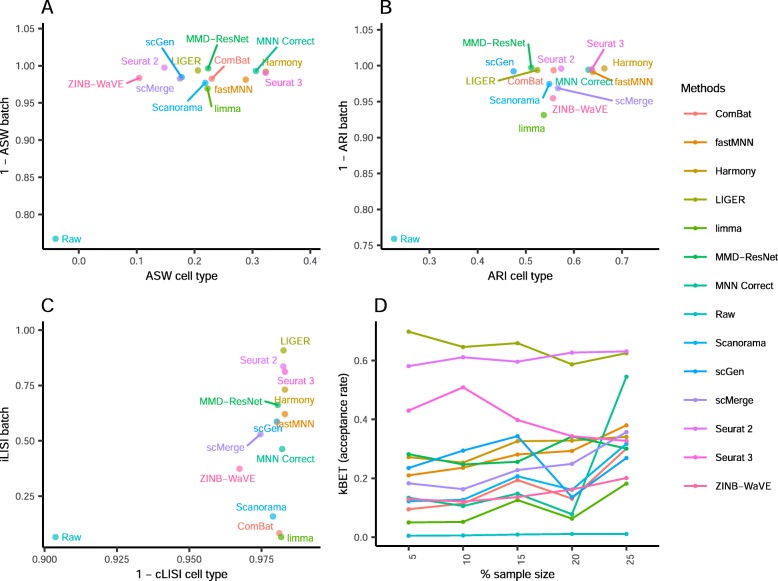
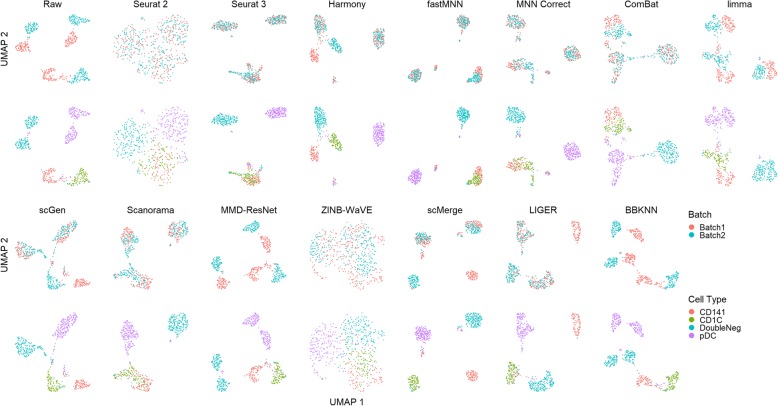
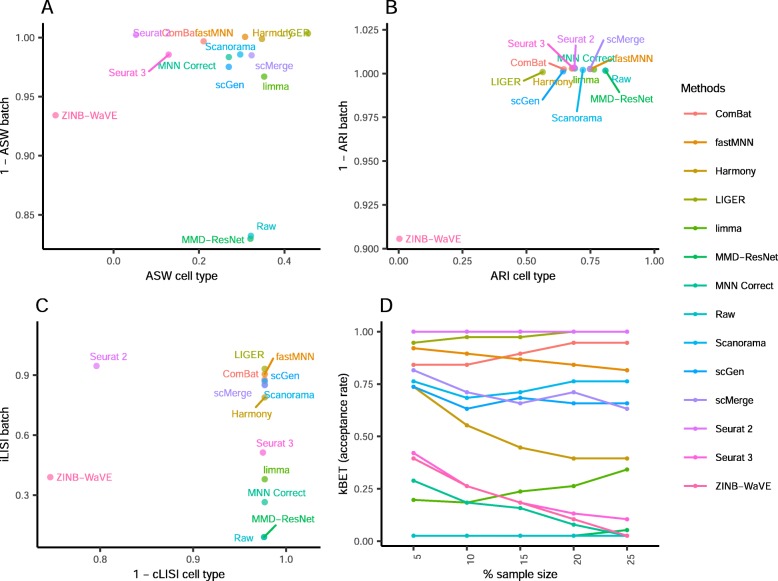
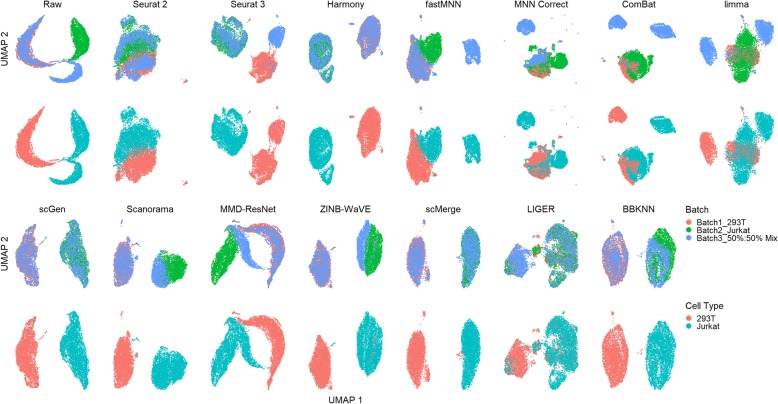
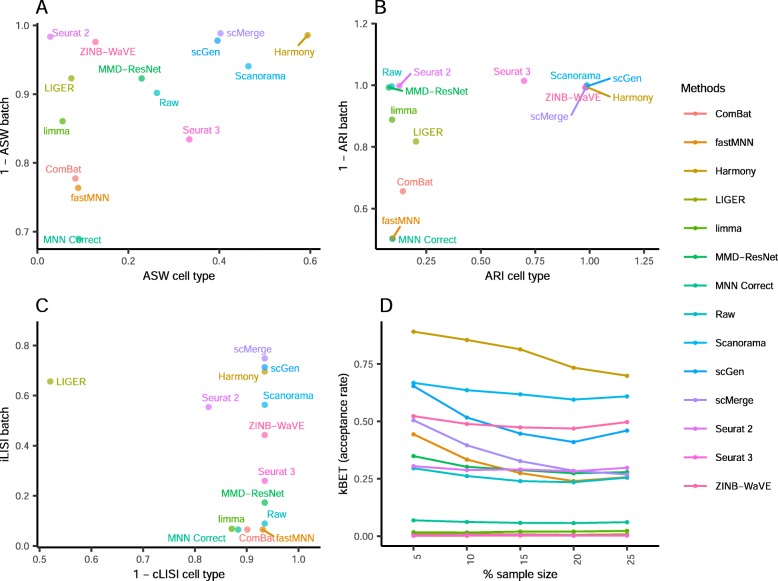
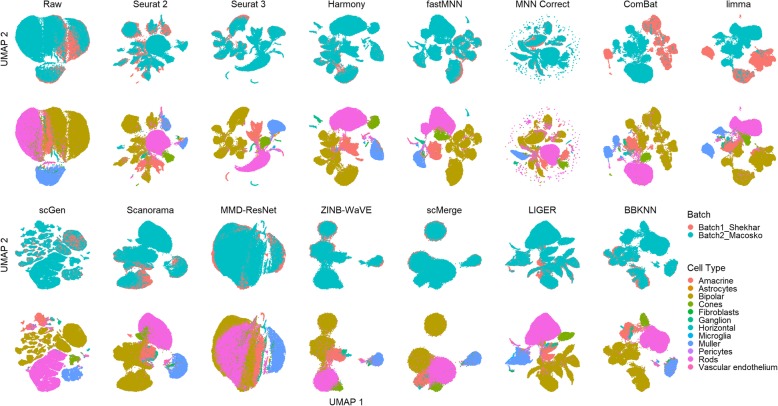
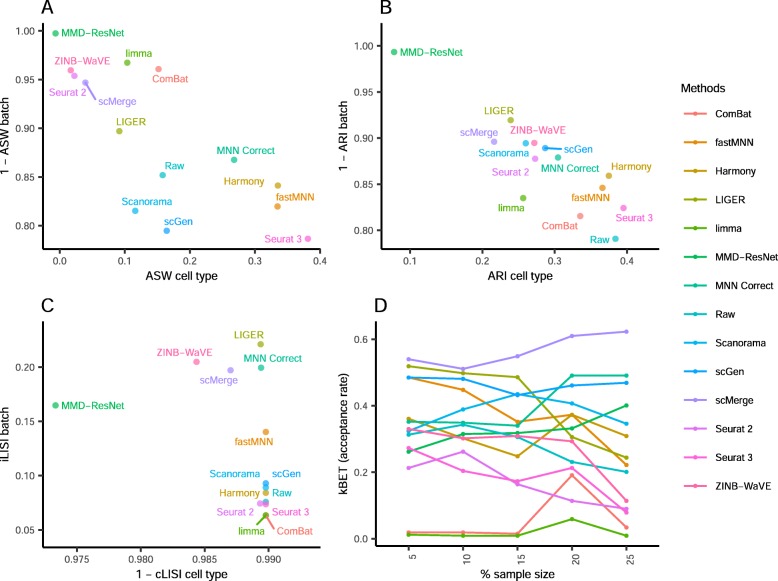
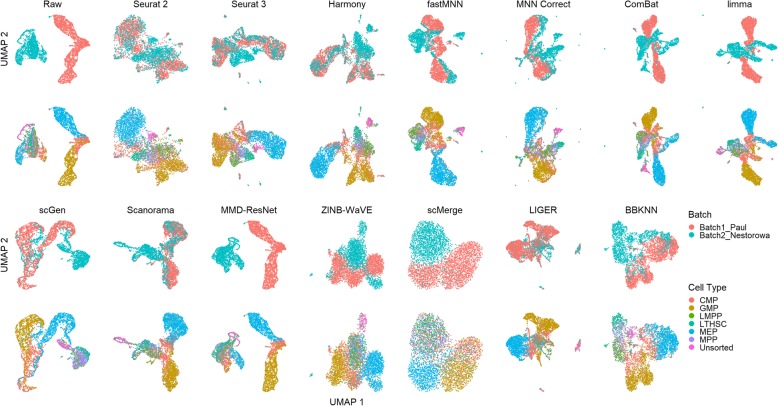
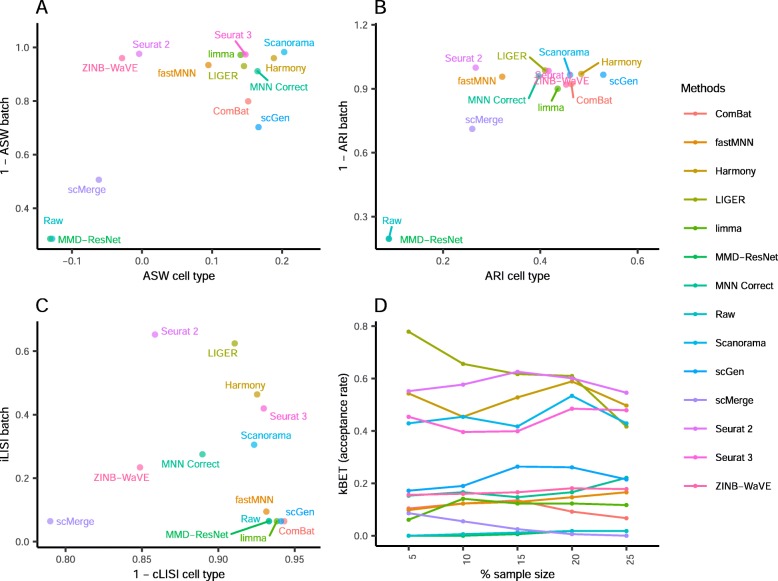
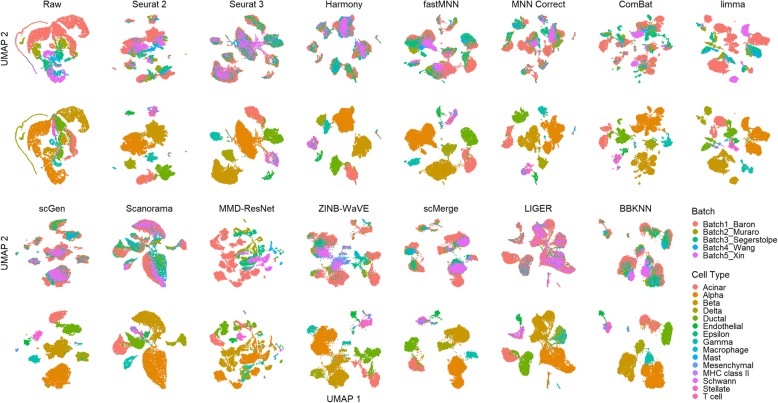
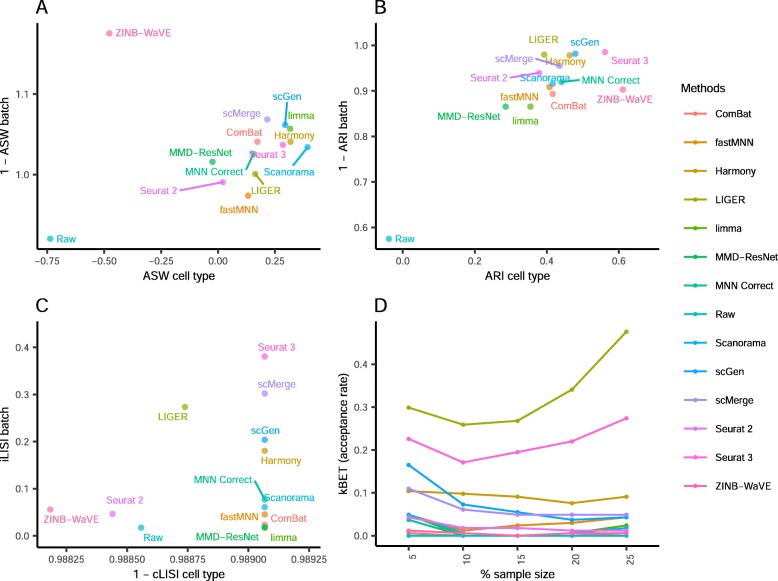
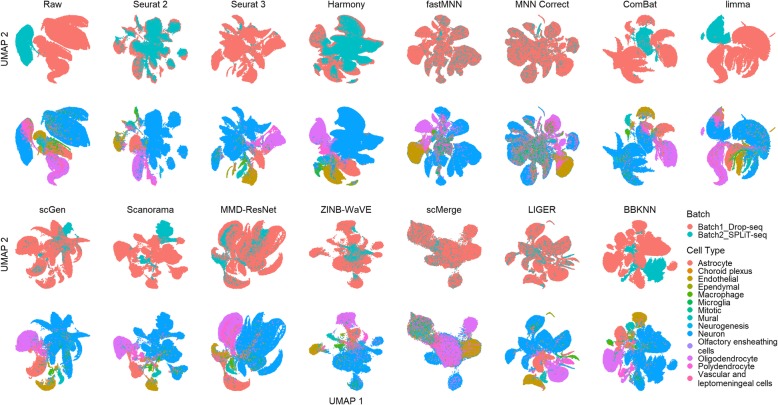
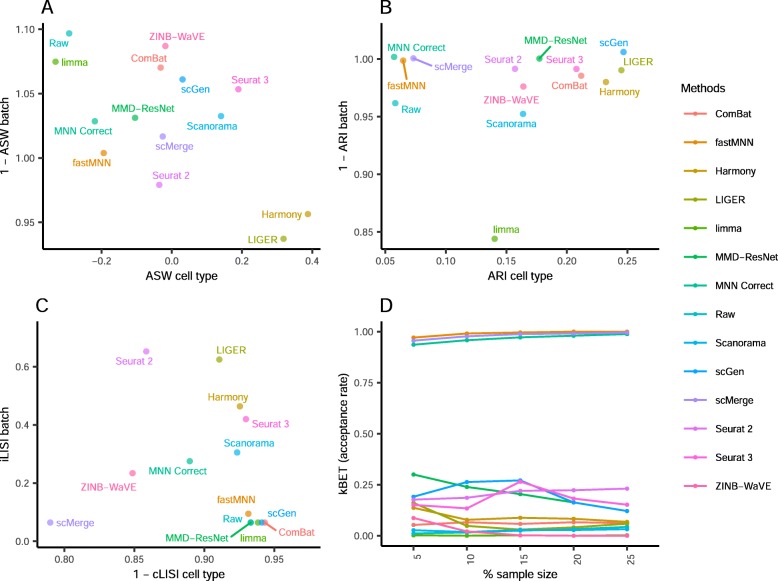
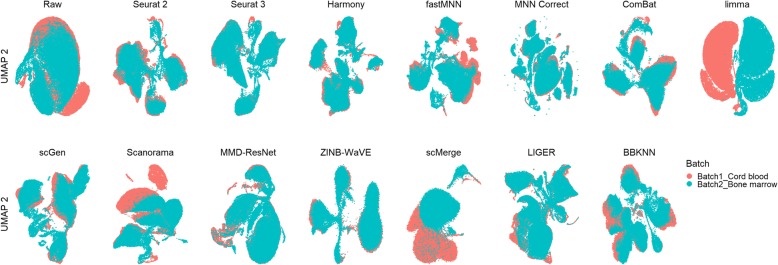
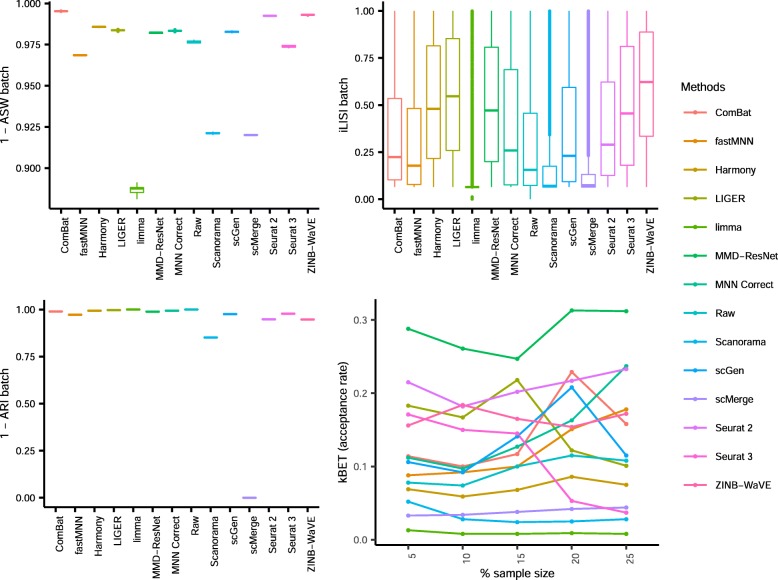
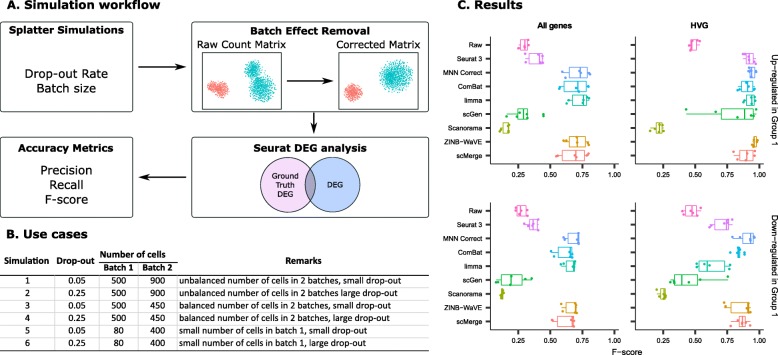
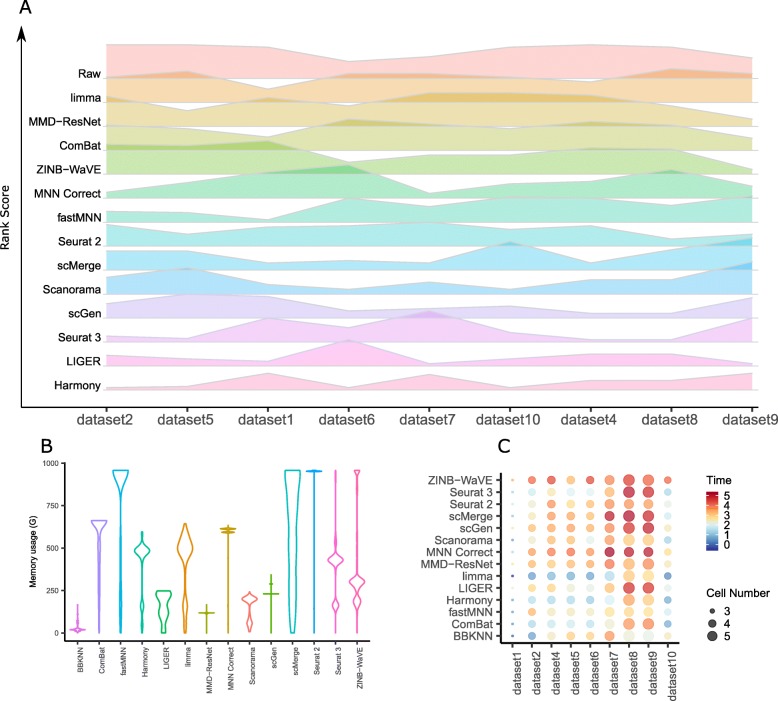
Background: Large-scale single-cell transcriptomic datasets generated using different technologies contain batch-specific systematic variations that present a challenge to batch-effect removal and data integration. With continued growth expected in scRNA-seq data, achieving effective batch integration with available computational resources is crucial. Here, we perform an in-depth benchmark study on available batch correction methods to determine the most suitable method for batch-effect removal. Results: We compare 14 methods in terms of computational runtime, the ability to handle large datasets, and batch-effect correction efficacy while preserving cell type purity. Five scenarios are designed for the study: identical cell types with different technologies, non-identical cell types, multiple batches, big data, and simulated data. Performance is evaluated using four benchmarking metrics including kBET, LISI, ASW, and ARI. We also investigate the use of batch-corrected data to study differential gene expression. Conclusion: Based on our results, Harmony, LIGER, and Seurat 3 are the recommended methods for batch integration. Due to its significantly shorter runtime, Harmony is recommended as the first method to try, with the other methods as viable alternatives.
Overview
The claims and statistics of this paper haven’t been checked yet.
Free: it reads the open-access text and checks the first 5 claims that cite a source we can check. Create a free account to check every claim.
Integrity signals
Registry
Cites
Statistics
Figures
Verification
Claims the paper makes
The claims and statistics of this paper haven’t been checked yet.
Free: it reads the open-access text and checks the first 5 claims that cite a source we can check. Create a free account to check every claim.
Claims other papers make about this one
Each is checked against this paper’s own text: does it say what the citing paper says it does?
The cited source doesn’t support the claim as written.
In the citing paper
“Recent benchmark studies indicate that for simpler integration problems with relatively low biological complexity and relatively small batch effects in scRNA-Seq datasets, linear methods outperform nonlinear, more complex methods136,137, while for complicated integration tasks with large biological complexity and bigger batch effects, nonlinear methods such as scVI/scanVI outperform others138.”
From A high-resolution transcriptomic and spatial atlas of cell types in the whole mouse brain (2023) · cites this paper as [137]
Checked by a reasoning model — may be wrong.
Experimental — accuracy not yet measuredIn the citing paper
“Although SCING GRN based batch correction was not as optimized as the dedicated batch correction methods, many typical batch correction methods do not provide a batch corrected gene expression matrix for downstream analysis.44”
From SCING: Inference of robust, interpretable gene regulatory networks from single cell and spatial transcriptomics (2023) · cites this paper as [44]
In the citing paper
“Linear-embedding models such as canonical correlation analysis36 and Harmony37 were shown to perform well for batch correction on simpler integration tasks with distinct batch structures38,39.”
From Best practices for single-cell analysis across modalities (2023) · cites this paper as [38]
Self-check
Percentages, sums and reported differences re-computed from the paper’s own numbers.
The self-check needs the paper’s full text.
Citations
Cites
(2008) · Journal of Machine Learning Research · Cited by 33,051
Silhouettes: A graphical aid to the interpretation and validation of cluster analysis
Rousseeuw, P. J. (1987) · Journal of Computational and Applied Mathematics · doi:10.1016/0377-0427(87)90125-7 · Cited by 21,392 · cited 2×
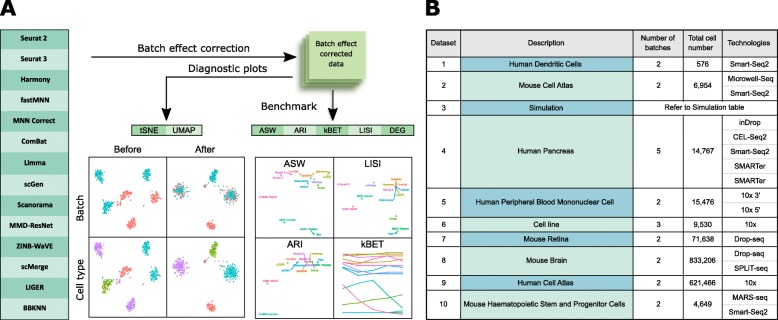
“…and Uniform Manifold Approximation and Projection (UMAP) [21] visualizations in conjunction with the k - nearest neighbor batch-effect test (kBET) [22], local inverse Simpson ’ s index (LISI) [13, 23], average silhouette width (ASW) [24], and adjusted rand index (ARI) benchmarking metrics [25].”
MethodGAN(Generative Adversarial Nets)
(2017) · Journal of Japan Society for Fuzzy Theory and Intelligent Informatics · doi:10.3156/jsoft.29.5_177_2 · Cited by 19,270
Comprehensive Integration of Single-Cell Data
Stuart, T., Butler, A., Hoffman, P., Hafemeister, C., Papalexi, E., Mauck, W. M., Hao, Y., Stoeckius, M., Smibert, P., & Satija, R. (2019) · Cell · doi:10.1016/j.cell.2019.05.031 · Cited by 15,453
Integrating single-cell transcriptomic data across different conditions, technologies, and species
Butler, A., Hoffman, P., Smibert, P., Papalexi, E., & Satija, R. (2018) · Nature Biotechnology · doi:10.1038/nbt.4096 · Cited by 13,174 · cited 6×
“Seurat alignment CCA, multiCCA (Seurat 2) Seurat multiCCA uses canonical correlation analysis (CCA) to first compute the linear combinations of genes with maximum correlation between batches [4].”
BackgroundMethodInfluentialFast, sensitive and accurate integration of single-cell data with Harmony
Korsunsky, I., Millard, N., Fan, J., Slowikowski, K., Zhang, F., Wei, K., Baglaenko, Y., Brenner, M., Loh, P.-R., & Raychaudhuri, S. (2019) · Nature Methods · doi:10.1038/s41592-019-0619-0 · Cited by 10,488 · cited 5×
“Another local level metric is the LISI proposed by Kor-sunsky et al. [13, 22], which can be used to assesses batch and cell type mixing.”
MethodInfluentialSCANPY: large-scale single-cell gene expression data analysis
Wolf, F. A., Angerer, P., & Theis, F. J. (2018) · Genome Biology · doi:10.1186/s13059-017-1382-0 · Cited by 8,881 · cited 1×
“The batch correction by Scanorama was performed in conjunction with the Scanpy workflow [29].”
MethodAdjusting batch effects in microarray expression data using empirical Bayes methods
Johnson, W. E., Li, C., & Rabinovic, A. (2007) · Biostatistics · doi:10.1093/biostatistics/kxj037 · Cited by 8,658 · cited 3×
“ComBat was originally developed for microarray gene expression data [1], but had been successfully employed”
MethodHubert, L., & Arabie, P. (1985) · Journal of Classification · doi:10.1007/bf01908075 · Cited by 8,219
Massively parallel digital transcriptional profiling of single cells
Zheng, G. X. Y., Terry, J. M., Belgrader, P., Ryvkin, P., Bent, Z. W., Wilson, R., Ziraldo, S. B., Wheeler, T. D., McDermott, G. P., Zhu, J., et al. (2017) · Nature Communications · doi:10.1038/ncomms14049 · Cited by 7,353
Research works printed but not linked: 5
- Lun A Further MNN algorithm development 2019
- Goodfellow I, Pouget-Abadie J, Mirza M, Xu B, Warde-Farley D, Ozair S, et al. Generative adversarial nets. In: Ghahramani Z, Welling M, Cortes C, Lawrence ND, Weinberger KQ, editors. Adv Neural Inf Process Syst 27: Curran Associates, Inc; 2014. p. 2672–80. Available from: http://papers.nips.cc/paper/5423-generative-adversarial-nets.pdf. Accessed 11 Mar 2019.
- Korsunsky I LISI 2019
- Deng Y, Bao F, Dai Q, Wu LF, Altschuler SJ. Massive single-cell RNA-seq analysis and imputation via deep learning. bioRxiv. 2018:315556 Available from: http://biorxiv.org/content/early/2018/11/27/315556.abstract. Accessed 5 July 2019.
- Tran HTN, Ang KS, Chevrier M, Zhang X, Lee NYS, Goh M, Chen J. A benchmark of batch-effect correction methods for single-cell RNA sequencing data. Simulations. Github Repository. https://github.com/JinmiaoChenLab/Batch-effect-removal-benchmarking. 2019. PMC6964114 31948481
Cited by
Items 901–1,000 of 1,005
Deep Learning Methods for Single-Cell Omics Data
Wang, J., & Chen, T. (2022) · Springer handbooks of computational statistics · doi:10.1007/978-3-662-65902-1_6
Tokura, M., Nakayama, J., Prieto‐Vila, M., Shiino, S., Yoshida, M., Yamamoto, T., Watanabe, N., Takayama, S., Suzuki, Y., Okamoto, K., et al. (2023) · doi:10.1158/0008-5472.c.6514133.v1
Data from Meta-Analysis of Human Cancer Single-Cell RNA-Seq Datasets Using the IMMUcan Database
Camps, J., Noël, F., Liechti, R., Massenet-Regad, L., Rigade, S., Götz, L., Hoffmann, C., Amblard, E., Saichi, M., Ibrahim, M. M., et al. (2023) · doi:10.1158/0008-5472.c.6514194
Li, J., Smalley, I., Chen, Z., Wu, J.-Y., Phadke, M. S., Teer, J. K., Nguyen, T., Karreth, F. A., Koomen, J. M., Sarnaik, A. A., et al. (2023) · doi:10.1158/1078-0432.22486727
Jeong, H. Y., Ham, I., Lee, S. H., Ryu, D., Son, S., Han, S., Kim, T., & Hur, H. (2023) · doi:10.1158/1078-0432.c.6530973
Li, J., Smalley, I., Chen, Z., Wu, J.-Y., Phadke, M. S., Teer, J. K., Nguyen, T., Karreth, F. A., Koomen, J. M., Sarnaik, A. A., et al. (2023) · doi:10.1158/1078-0432.c.6532379.v1
Jeong, H. Y., Ham, I., Lee, S. H., Ryu, D., Son, S., Han, S., Kim, T., & Hur, H. (2023) · doi:10.1158/1078-0432.c.6530973.v1
Hao, D., Han, G., Sinjab, A. F., Gomez-Bolanos, L. I., Lazcano, R., Serrano, A. G., Hernandez, S. D., Dai, E., Cao, X., Hu, J., et al. (2023) · doi:10.1158/2159-8290.22541784
Belov, V. (2023) · eDiss (Georg-August-Universität Göttingen) · doi:10.53846/goediss-9834 · Cited by 1
Yan, D., Sun, Z., Fang, J., Cao, S., Wang, W., Chang, X., Badirli, S., Fu, H., & Liu, Y. (2023) · Journal of Biopharmaceutical Statistics · doi:10.1080/10543406.2023.2208671
Baglaenko, Y., Wagner, C. A., Bhoj, V. G., et al. (2023) · Cambridge Prisms Precision Medicine · doi:10.1017/pcm.2023.14.pr8
Baglaenko, Y., Wagner, C. A., Bhoj, V. G., et al. (2023) · Cambridge Prisms Precision Medicine · doi:10.1017/pcm.2023.14.pr9
Baglaenko, Y., Wagner, C. A., Bhoj, V. G., et al. (2023) · Cambridge Prisms Precision Medicine · doi:10.1017/pcm.2023.14.pr4
Baglaenko, Y., Wagner, C. A., Bhoj, V. G., et al. (2023) · Cambridge Prisms Precision Medicine · doi:10.1017/pcm.2023.14.pr2
Baglaenko, Y., Wagner, C. A., Bhoj, V. G., et al. (2023) · Cambridge Prisms Precision Medicine · doi:10.1017/pcm.2023.14.pr5
Baglaenko, Y., Wagner, C. A., Bhoj, V. G., et al. (2023) · Cambridge Prisms Precision Medicine · doi:10.1017/pcm.2023.14.pr3
Sirota, M. (2023) · Cambridge Prisms Precision Medicine · doi:10.1017/pcm.2023.14.pr1
Sirota, M. (2023) · Cambridge Prisms Precision Medicine · doi:10.1017/pcm.2023.14.pr6
Baglaenko, Y., Wagner, C. A., Bhoj, V. G., et al. (2023) · Cambridge Prisms Precision Medicine · doi:10.1017/pcm.2023.14.pr7
Singh, M., Zhao, Y., Gastaldi, V. D., Wojcik, S. M., Curto, Y., Kawaguchi, R., Merino, R. M., Garcia-Agudo, L. F., Taschenberger, H., Brose, N., et al. (2023) · bioRxiv (Cold Spring Harbor Laboratory) · doi:10.1101/2023.02.04.527116
Experimental repertoire to elucidate the functional landscape of host–pathogen interactome
Chattopadhyay, P., Mehta, P., Maurya, R., Mishra, P., Kumari, M., Devi, P., Khare, K., Yadav, A., Srivastava, M., Shamim, U., et al. (2023) · Elsevier eBooks · doi:10.1016/b978-0-443-18769-8.00003-9
Zhao, K., Bhandari, S., Whitener, N. P., Grayson, J. M., & Khuri, N. (2023) · ACM International Conference on Bioinformatics, Computational Biology, and Health Informatics (ACM-BCB) · doi:10.1145/3584371.3613072
“In one of the earliest benchmarking studies [33], 10 datasets were integrated using 5 different scenarios, such as the integration of non-identical cell types, large datasets and simulated datasets.”
BackgroundMethodInfluentialDeciphering the Cluster-Specific Marker Genes via Integration of Single Cell RNA Sequencing Datasets
Rinch, W. A., Söğünmez, N., Altaf, A., Alsan, H. F., & Arsan, T. (2023) · Innovations in Intelligent Systems and Applications Conference (ASYU) · doi:10.1109/asyu58738.2023.10296679
“Moreover, we used three metrics (kBET, ARI, Silhouette score) [10] to assess the integration techniques' capacity to eliminate batch effects while preserving the biological diversity in the datasets.”
MethodComparing Python Code Parallelization Techniques for Spatial Transcriptomics Data
Smiljković, L., Radonjić, M. M., Mišić, M. J., & Tomašević, M. V. (2023) · Telecommunications Forum (TELFOR) · doi:10.1109/telfor59449.2023.10372599
“Numerous algorithms for batch effects removal exist for single cell RNA data with a good overview of existing methods given in [8].”
MethodData Analysis Pipeline for scRNA-seq Experiments to Study Early Oogenesis
Ge, W., Zhang, T., Zhou, Y., & Shen, W. (2024) · Methods in molecular biology · doi:10.1007/978-1-0716-3698-5_15
Cortal, A. (2020) · theses.fr (ABES) · doi:10.70675/4fdd96f5z20bbz4412za122z172e9faa9dba · Cited by 2
Studying the Role of Astrocytes at Synapses Using Single-Cell Transcriptomics
Pestana, F., Belgard, T. G., Voet, T., & Holt, M. G. (2024) · Neuromethods · doi:10.1007/978-1-0716-3742-5_9
Additional file 3 of scRNASequest: an ecosystem of scRNA-seq analysis, visualization, and publishing
Li, K., Sun, Y. H., Ouyang, Z., Negi, S., Gao, Z., Zhu, J. F., Wang, W., Chen, Y., Piya, S., Hu, W., et al. (2023) · Figshare · doi:10.6084/m9.figshare.22735494
Self-citationSonrel, A., Luetge, A., Soneson, C., Mallona, I., Germain, P., Knyazev, S., Gilis, J., Gerber, R., Seurinck, R., Paul, D., et al. (2023) · Figshare · doi:10.6084/m9.figshare.22914583
Johnson, T. S., Yu, C. Y., Huang, Z., Xu, S., Wang, T., Dong, C., Shao, W., Zaid, M. I. A., Huang, X., Wang, Y., et al. (2022) · Figshare · doi:10.6084/m9.figshare.19106233
Zhang, F., Mears, J., Shakib, L., Beynor, J. I., Shanaj, S., Korsunsky, I., Nathan, A., Donlin, L. T., & Raychaudhuri, S. (2021) · Figshare · doi:10.6084/m9.figshare.14456994
Additional file 1 of scRNASequest: an ecosystem of scRNA-seq analysis, visualization, and publishing
Li, K., Sun, Y. H., Ouyang, Z., Negi, S., Gao, Z., Zhu, J. F., Wang, W., Chen, Y., Piya, S., Hu, W., et al. (2023) · Figshare · doi:10.6084/m9.figshare.22735488
Self-citationZhang, F., Mears, J., Shakib, L., Beynor, J. I., Shanaj, S., Korsunsky, I., Nathan, A., Donlin, L. T., & Raychaudhuri, S. (2021) · Figshare · doi:10.6084/m9.figshare.14456997
Additional file 2 of scRNASequest: an ecosystem of scRNA-seq analysis, visualization, and publishing
Li, K., Sun, Y. H., Ouyang, Z., Negi, S., Gao, Z., Zhu, J., Wang, W., Chen, Y., Piya, S., Hu, W., et al. (2023) · Figshare · doi:10.6084/m9.figshare.22735491
Self-citationZhang, F., Mears, J., Shakib, L., Beynor, J. I., Shanaj, S., Korsunsky, I., Nathan, A., Donlin, L. T., & Raychaudhuri, S. (2021) · Figshare · doi:10.6084/m9.figshare.14456985
Additional file 3 of Bi-order multimodal integration of single-cell data
Dou, J., Liang, S., Mohanty, V., Miao, Q., Huang, Y., Liang, Q., Cheng, X., Kim, S., Choi, J., Li, Y., et al. (2022) · Figshare · doi:10.6084/m9.figshare.19738259
Wang, C. X., Zhang, L., & Wang, B. (2022) · Figshare · doi:10.6084/m9.figshare.19625411
Johnson, T. S., Yu, C. Y., Huang, Z., Xu, S., Wang, T., Dong, C., Shao, W., Zaid, M. I. A., Huang, X., Wang, Y., et al. (2022) · Figshare · doi:10.6084/m9.figshare.19106227
Gustafsson, J., Robinson, J. L., Nielsen, J., & Pachter, L. S. (2021) · Figshare · doi:10.6084/m9.figshare.14752256
Sonrel, A., Luetge, A., Soneson, C., Mallona, I., Germain, P., Knyazev, S., Gilis, J., Gerber, R., Seurinck, R., Paul, D., et al. (2023) · Figshare · doi:10.6084/m9.figshare.22914589
Johnson, T. S., Yu, C. Y., Huang, Z., Xu, S., Wang, T., Dong, C., Shao, W., Zaid, M. I. A., Huang, X., Wang, Y., et al. (2022) · Figshare · doi:10.6084/m9.figshare.19106236
Zhang, F., Mears, J., Shakib, L., Beynor, J. I., Shanaj, S., Korsunsky, I., Nathan, A., Donlin, L. T., & Raychaudhuri, S. (2021) · Figshare · doi:10.6084/m9.figshare.14456991
Zhang, F., Mears, J., Shakib, L., Beynor, J. I., Shanaj, S., Korsunsky, I., Nathan, A., Donlin, L. T., & Raychaudhuri, S. (2021) · Figshare · doi:10.6084/m9.figshare.14457003
Johnson, T. S., Yu, C. Y., Huang, Z., Xu, S., Wang, T., Dong, C., Shao, W., Zaid, M. I. A., Huang, X., Wang, Y., et al. (2022) · Figshare · doi:10.6084/m9.figshare.19106239
Johnson, T. S., Yu, C. Y., Huang, Z., Xu, S., Wang, T., Dong, C., Shao, W., Zaid, M. I. A., Huang, X., Wang, Y., et al. (2022) · Figshare · doi:10.6084/m9.figshare.19106230
Sonrel, A., Luetge, A., Soneson, C., Mallona, I., Germain, P., Knyazev, S., Gilis, J., Gerber, R., Seurinck, R., Paul, D., et al. (2023) · Figshare · doi:10.6084/m9.figshare.22914586
Zhang, F., Mears, J., Shakib, L., Beynor, J. I., Shanaj, S., Korsunsky, I., Nathan, A., Donlin, L. T., & Raychaudhuri, S. (2021) · Figshare · doi:10.6084/m9.figshare.14457000
Using single-cell analysis to investigate disease severity in elderly patients with COVID-19
Abouhashem, A. S., Saber, S., Elbaz, A. A., Kaçar, S., Singh, K., Sen, C. K., & Azzazy, H. M. E.-S. (2024) · Elsevier eBooks · doi:10.1016/b978-0-323-95648-2.00034-4
Scuiller, Y. (2023) · theses.fr (ABES) · doi:10.70675/03e36b97z734ez4618z99e9zd56bfa75cf48
Lin, X., Jiang, Y., & Guan, J. (2024) · Lecture notes in computer science · doi:10.1007/978-981-97-5692-6_18
Muto, Y., Li, H., & Humphreys, B. D. (2024) · Springer eBooks · doi:10.1007/978-3-031-65236-3_5
Automated Cell Type Annotation with Reference Cluster MappingPreprint
Galanti, V., Shi, L., Azizi, E., Liu, Y., & Blumberg, A. J. (2024) · bioRxiv (Cold Spring Harbor Laboratory) · doi:10.1101/2024.11.30.626130 · Cited by 1
“However, these methods often struggle with biological and technical variations between reference and query data, particularly when annotating cells across different experimental conditions, tissues, or species [21, 33].”
Fast-scBatch: Batch Effect Correction Using Neural Network-Driven Distance Matrix Adjustment
Chen, F., Tian, L., Fei, T., & Yu, T. (2024) · ACM International Conference on Bioinformatics, Computational Biology, and Health Informatics (ACM-BCB) · doi:10.1145/3698587.3701383 · Cited by 1
“These experiments can introduce batch-specific systematic variations, known as "batch effects" [1].”
BackgroundLiu, Y., Wei, Z., Wang, J., Zhu, X., Liu, R., Wang, X., Wang, S., & Lai, X. (2024) · IEEE International Conference on Bioinformatics and Biomedicine (BIBM) · doi:10.1109/bibm62325.2024.10822371
Improving Genetic Perturbation Response Prediction with an Enhanced Biological Knowledge Graph
Li, Y., Chen, R., Tan, Y., Zhong, X. Y., Li, B., & Yin, Z. (2024) · IEEE International Conference on Bioinformatics and Biomedicine (BIBM) · doi:10.1109/bibm62325.2024.10822049
“In addition, even with some powerful batch correction methods, batch effects induced by the heterogeneity of library protocols, experimental designs, and other factors still largely constrain the integration between different screens [7], [8], [9].”
Hu, H., Guo, Y., Ge, F., Yin, H. R., Zhang, H., Zhou, Z., Yan, F., Ye, Q., Wu, J., Cao, J., et al. (2025) · Advanced Science · doi:10.1002/advs.202410790
Huang, R., Kee, L., Gont, A., Meens, J., Ferens, F. G., Irwin, M. S., Ailles, L., Yuzwa, S. A., Robinson, C. M., & Ohh, M. (2025) · FEBS Open Bio · doi:10.1002/2211-5463.70022
“The variation in protocols can also introduce batch effects when comparing samples [76].”
iSHARC: Integrating scMultiome data for heterogeneity and regulatory analysis in cancerPreprint
Zeng, Y., Bahl, S., Xi, X., Ci, X., Keshavarzian, T., Yang, L., Lee, H. S., Kossinna, P., Gaiti, F., Schwartz, G. W., et al. (2025) · bioRxiv (Cold Spring Harbor Laboratory) · doi:10.1101/2025.04.28.651068
scFocus: Detecting branching probabilities in single-cell data with SAC
Chen, C., Fu, Z., Yang, J., Chen, H., Huang, J., Qin, S., Wang, C., & Hu, X. (2025) · Computational and Structural Biotechnology Journal · doi:10.1016/j.csbj.2025.04.036
Jogani, S., Pol, A. S., Prajapati, M., Samal, A., Bhatia, K., Parmar, J., Patel, U., Shah, F., Vyas, N., & Gupta, S. K. (2025) · Briefings in Bioinformatics · doi:10.1093/bib/bbaf243
“Tools such as cellMeSH [17], CellAssign [18], scCATCH [19], SCINA [20], SCSA [21], scSorter [22], and scType [23] performclusteringfirstandthenassignacelltypeidentitytoeach cluster.”
Wu, K., Sun, C., Geng, J., Wang, P., Dai, Q., Wei, L., & Su, R. (2025) · Briefings in Bioinformatics · doi:10.1093/bib/bbaf288
Bai, J., Gao, Y., Zhou, F., He, Y., Chen, L., Huang, X., & Wang, Y. (2025) · BMC Biology · doi:10.1186/s12915-025-02337-1
CYCLONE: recycle contrastive learning for integrating single-cell gene expression data
Ji, H., He, X., & Li, H. (2025) · BMC Bioinformatics · doi:10.1186/s12859-025-06214-0
“Batch effects may trigger downstream analyses to be hampered and lead to incorrect results because they can be mistaken for true biological differences [4].”
scCMA: A Contrastive Masked Autoencoder for Single-Cell RNA-Seq Embedding
Chen, X., He, W., Yu, J., & Fang, Z. (2025) · Lecture notes in computer science · doi:10.1007/978-981-95-0695-8_23
Wu, J., Wang, Z., Li, F., Bu, S., Sun, L., Chen, Z., Bai, Z., Yang, L., Gong, F., Chen, J., et al. (2025) · Clinical and Translational Medicine · doi:10.1002/ctm2.70449
Self-citationYe, P., Kong, W., & Wang, S. (2025) · Current Bioinformatics · doi:10.2174/0115748936367139250801163310 · Cited by 1
Guo, H., Cui, Q., Zhang, X., Chen, C., Zheng, W., Cai, C., Wang, X., & Wang, S. (2026) · Genome biology · doi:10.1186/s13059-026-04193-w
Self-citationChatterjee, B., Gorga, K., Blair, C., Ohta, Y., Radov, M. H., Hill, E. M., Boughter, C. T., Meier‐Schellersheim, M., & Singh, N. J. (2026) · Genome Research · doi:10.1101/gr.281624.125
“For integration methods, benchmarks are unclear (Tran et al. 2020; Chazarra-Gil et al. 2021; Luecken et al. 2022), but we use harmony (Korsunsky et al. 2019), CCA (Stuart et al. 2019), and RPCA (Hao et al. 2024) “ anchor ” integrations.”
Lu, Y., Li, X., Chao, T., Xiong, H., & Yao, W. (2025) · Clinical and Experimental Medicine · doi:10.1007/s10238-025-01889-4
Rajendran, A., Haldipur, P., Arora, S., Grama, K., Subramanian, S. S., Galan, L. M., Johnson, D., Aldinger, K. A., Shendure, J., Millen, K. J., et al. (2025) · bioRxiv (Cold Spring Harbor Laboratory) · doi:10.1101/2025.11.12.687706
Reid, K. A., Stein-O’Brien, G., & Guven, E. (2025) · bioRxiv (Cold Spring Harbor Laboratory) · doi:10.1101/2025.11.12.688061
“The problem of experimental integration in gene expression data is one of the most pressing problems in computational biology (Luecken et al., 2025), giving rise to a suite of solutions tailored to different use cases (Tran et al., 2020).”
Abouzekry, S., & Abdellatif, A. (2025) · Neuroscience · doi:10.1016/j.neuroscience.2025.11.020
Prokop, J. W., Bilinovich, S. M., Tokarski, E., Vishweswaraiah, S., Vanderweele, S., Das, A. S., Chhetri, S. B., Dao, A., Arora, S., Goodyke, A., et al. (2025) · Function · doi:10.1152/function.019.2025 · Cited by 1
“For humans, Illumina datasets available for public download as the FASTQ fi le and paired-end, there are over one million sequencing runs from 27,397 projects (known as BioProjects within NCBI) at the end of 2024 (Fig.”
CellMentor: cell-type aware dimensionality reduction for single-cell RNA-sequencing data
Hevdeli, O., Petrenko, E., & Aran, D. (2025) · Nature Communications · doi:10.1038/s41467-025-67088-7
Pattern Learning and Knowledge Distillation for Single-Cell Data Annotation
Zhang, M., Ren, B., & Li, X. (2025) · Biology · doi:10.3390/biology15010002
“According to benchmark studies [22,23], in terms of running time, Harmony [24] can be used as the first attempt.”
Wang, D., Hou, S., Zhang, L., Wang, X., Liu, B., & Zhang, Z. (2021) · Figshare · doi:10.6084/m9.figshare.14059473
Sun, T., Song, D., Li, W. V., & Li, J. J. (2021) · Figshare · doi:10.6084/m9.figshare.14677034
Additional file 1 of splatPop: simulating population scale single-cell RNA sequencing data
Azodi, C. B. D., Zappia, L., Oshlack, A., & McCarthy, D. J. (2021) · Figshare · doi:10.6084/m9.figshare.17210481
Wang, D., Hou, S., Zhang, L., Wang, X., Liu, B., & Zhang, Z. (2021) · Figshare · doi:10.6084/m9.figshare.14059470
Wang, C. X., Zhang, L., & Wang, B. (2022) · Figshare · doi:10.6084/m9.figshare.19625414
Zhu, J., Shang, L., & Zhou, X. (2024) · Figshare · doi:10.6084/m9.figshare.26572636
Additional file 2 of SuperCellCyto: enabling efficient analysis of large scale cytometry datasets
Putri, G. H., Howitt, G., Marsh‐Wakefield, F., Ashhurst, T. M., & Phipson, B. (2024) · Figshare · doi:10.6084/m9.figshare.26703709
Additional file 1 of Analysis of single-cell RNA sequencing data based on autoencoders
Tangherloni, A., Ricciuti, F., Besozzi, D., Lió, P., & Cvejic, A. (2021) · Figshare · doi:10.6084/m9.figshare.14752027
Additional file 4 of Bi-order multimodal integration of single-cell data
Dou, J., Liang, S., Mohanty, V., Miao, Q., Huang, Y., Liang, Q., Cheng, X., Kim, S., Choi, J., Li, Y., et al. (2022) · Figshare · doi:10.6084/m9.figshare.19738262
Additional file 3 of SRT-Server: powering the analysis of spatial transcriptomic data
Yang, S., & Zhou, X. (2024) · Figshare · doi:10.6084/m9.figshare.26673429
Zhang, L., & Nie, Q. (2021) · Figshare · doi:10.6084/m9.figshare.13520746
Yang, S.-T., & Zhang, X.-F. (2024) · Figshare · doi:10.6084/m9.figshare.26657191
Self-citationFang, C., Selega, A., & Campbell, K. R. (2024) · Figshare · doi:10.6084/m9.figshare.26735316
Shahir, J. A., Stanley, N., & Purvis, J. E. (2024) · Figshare · doi:10.6084/m9.figshare.26667673
Benchmarking Self-Supervised Learning for Single-Cell DataPreprint
Toma, P., Ovcharenko, O., Daunhawer, I., Vogt, J. E., Barkmann, F., & Boeva, V. (2024) · bioRxiv (Cold Spring Harbor Laboratory) · doi:10.1101/2024.11.04.620867 · Cited by 1
Unraveling T-cell and endothelial cell interactions through computational analyses
Umesh, K. (2023) · Library, Museums and Press - UDSpace (University of Delaware) · doi:10.58088/c1zm-re23
Sonrel, A., Luetge, A., Soneson, C., Mallona, I., Germain, P., Knyazev, S., Gilis, J., Gerber, R., Seurinck, R., Paul, D., et al. (2023) · Figshare · doi:10.6084/m9.figshare.22914595
Additional file 1 of Over 1000 tools reveal trends in the single-cell RNA-seq analysis landscape
Zappia, L., & Theis, F. J. (2021) · Figshare · doi:10.6084/m9.figshare.16907369
Cao, D., Chan, R., Ng, E. H. Y., Gemzell-Danielsson, K., & Yeung, W. S. B. (2021) · Figshare · doi:10.6084/m9.figshare.14702472
Additional file 4 of scRNASequest: an ecosystem of scRNA-seq analysis, visualization, and publishing
Li, K., Sun, Y. H., Ouyang, Z., Negi, S., Gao, Z., Zhu, J., Wang, W., Chen, Y., Piya, S., Hu, W., et al. (2023) · Figshare · doi:10.6084/m9.figshare.22735497
Self-citationAdditional file 3 of The shaky foundations of simulating single-cell RNA sequencing data
Crowell, H. L., Leonardo, S. X. M., Soneson, C., & Robinson, M. D. (2023) · Figshare · doi:10.6084/m9.figshare.22622810
Metadata
- Authors
- Tran, H. T. N., Ang, K. S., Chevrier, M., Zhang, X., Lee, N. Y. S., Goh, M., & Chen, J.
- Affiliations
- Agency for Science, Technology and Research (SG)
- Corresponding author
- Chen, Jinmiao
- Venue
- Genome Biology
- Published
- 2020-01-16
- Volume
- 21
- Issue
- 1
- Pages
- 12-12
- ISSN
- 1465-6906 (ISSN-L)
- 1474-760X
- PMC
- PMC6964114
- OpenAlex
- W3002417351
- Cited by
- 1,113
- References
- 45
- Citations by year
- 2026: 145 · 2025: 170 · 2024: 188 · 2023: 187 · 2022: 180 · 2021: 178 · 2020: 62
- FWCI
- 50.62
- Type
- journal article
- Language
- en
- Open access
- gold
- doi.org
- Licence
- cc-by
- creativecommons.org/licenses/by/4.0/ (tdm)
- creativecommons.org/licenses/by/4.0/ (vor)
- Locations
- Genome biology (publishedVersion, cc-by)
- PubMed Central (publishedVersion, cc-by)
- PubMed (publishedVersion)
- DOAJ (DOAJ: Directory of Open Access Journals) (submittedVersion, cc-by-sa)
- Funders
- Singapore Immunology Network (NA)
- Topics
- Life Sciences › Biochemistry, Genetics and Molecular Biology › Molecular Biology › Single-cell and spatial transcriptomics
- Life Sciences › Biochemistry, Genetics and Molecular Biology › Molecular Biology › Gene expression and cancer classification
- Life Sciences › Biochemistry, Genetics and Molecular Biology › Molecular Biology › Bioinformatics and Genomic Networks
- Keywords
- batch effect correction, single-cell RNA sequencing, benchmarking, data integration, harmony, LIGER, Seurat, LiSi, adjusted Rand index, differential gene expression, computational time
- MeSH terms
- Big Data, RNA-Seq, Algorithms, Animals, Humans, Benchmarking, Mice, Single-Cell Analysis
About these checks
Registry, retraction, Cites and statistics results are computed, not judged, with one exception: a printed reference that no index lists is read once by a model before it counts as a citation error. Claims are extracted by a model and kept only when their quote appears verbatim in the text; each cited source is then checked, with a model’s help, for whether it says what the claim relies on. Those verdicts can be wrong — read the claim’s quote and the cited source before relying on one.
Statistics and arithmetic are recomputed, not judged.
Confidence bands are shown only for fields calibrated on our annotated test set. None is calibrated yet, so no band is shown.
What counts as a claim ›How we measure confidence ›How we check this ›
Are you an author, or do you see a problem with this page? Request a review
Data sources
Bibliographic data: Semantic Scholar, OpenAlex, Crossref.
Contains information from the Semantic Scholar Academic Graph Datasets, made available under the ODC Attribution License (ODC-BY 1.0).
Semantic Scholar’s data is described in: Kinney, R., et al. (2023). The Semantic Scholar Open Data Platform. arXiv:2301.10140.
