

A benchmark of batch-effect correction methods for single-cell RNA sequencing data
Open accessThe DOI matches its Crossref record; 45 of the 45 references it cites were found in a registry or an index.
Abstract
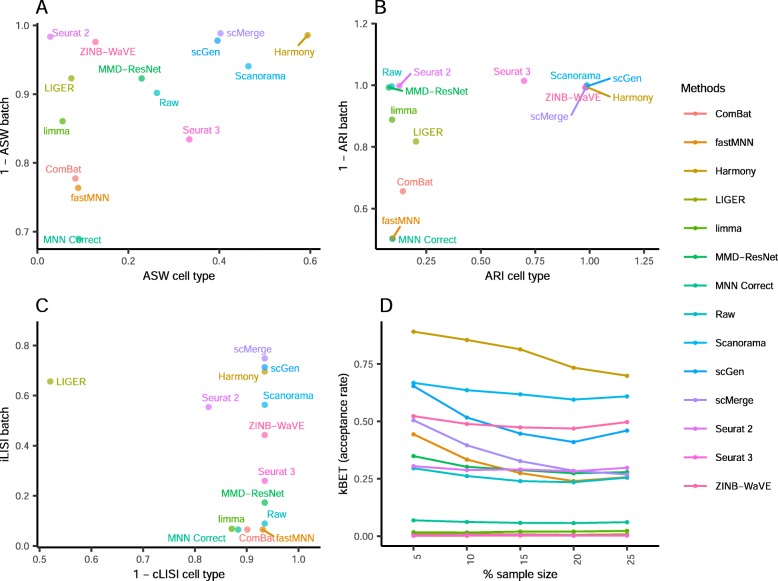
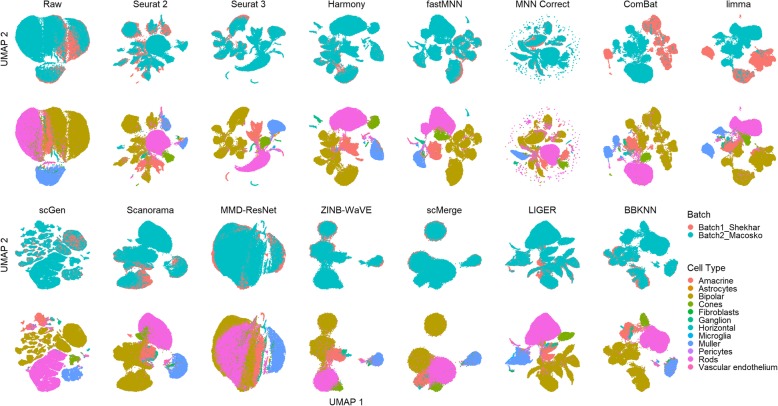
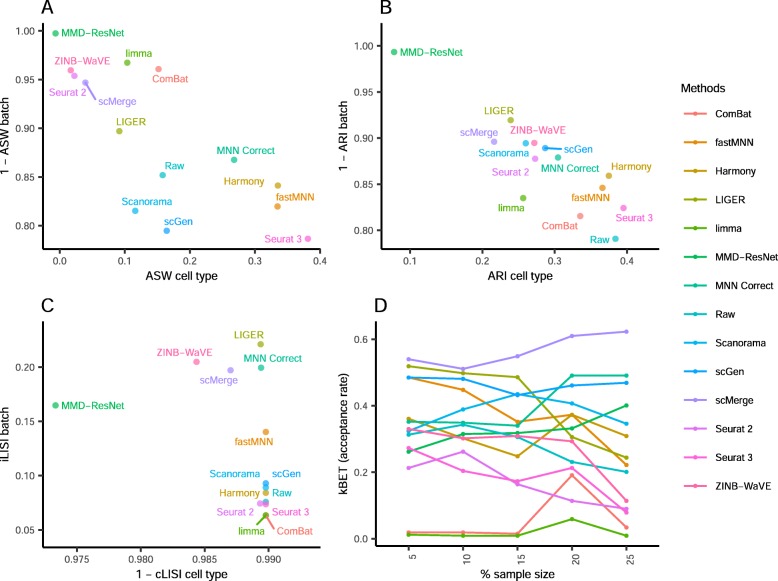
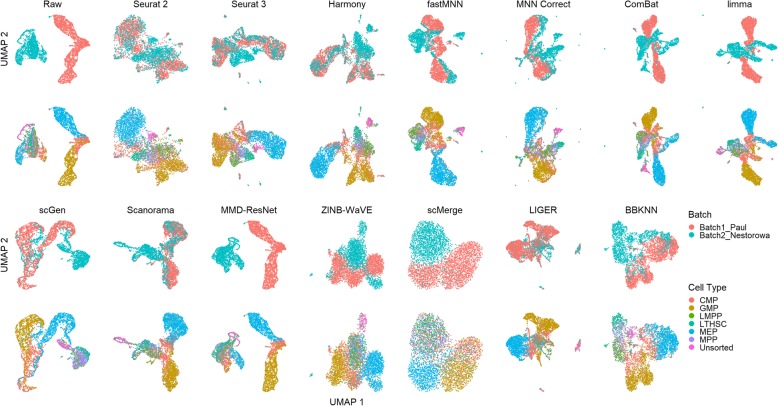
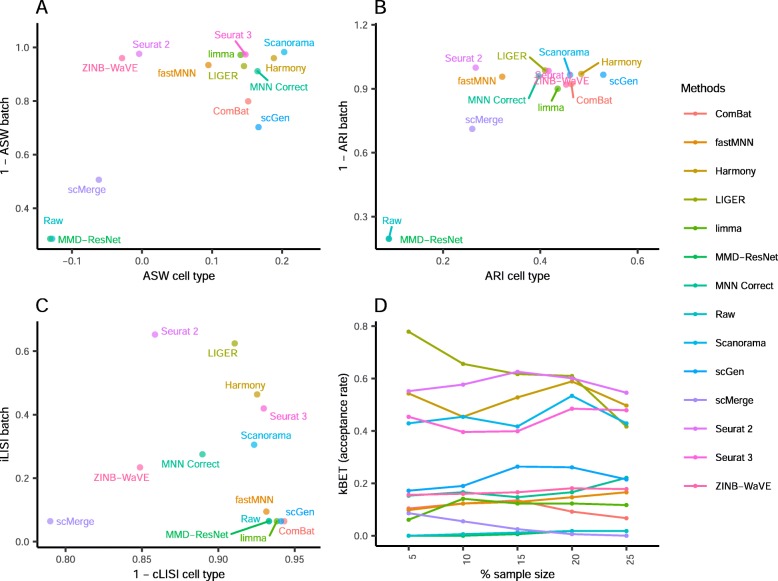
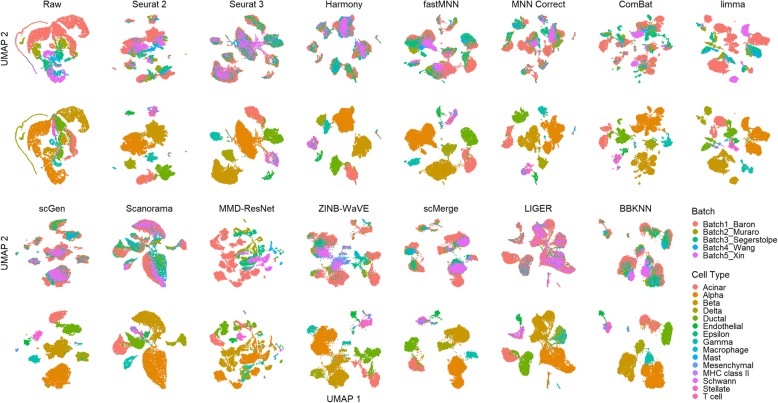
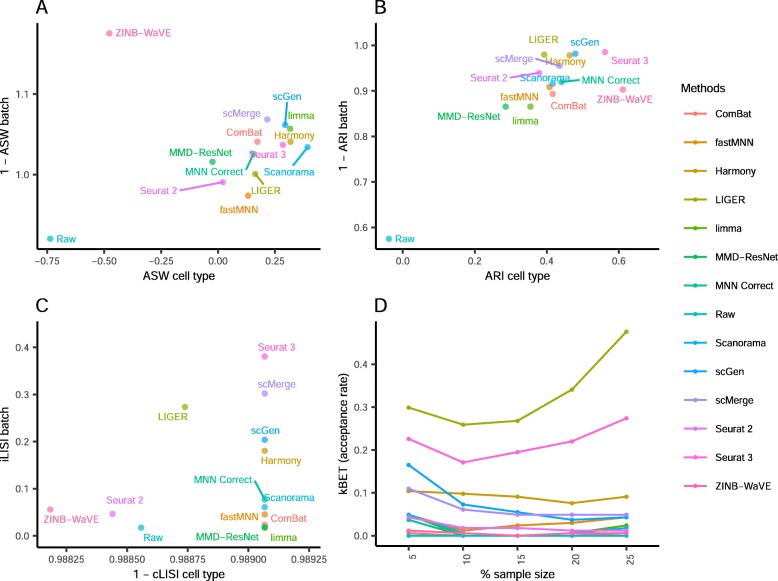
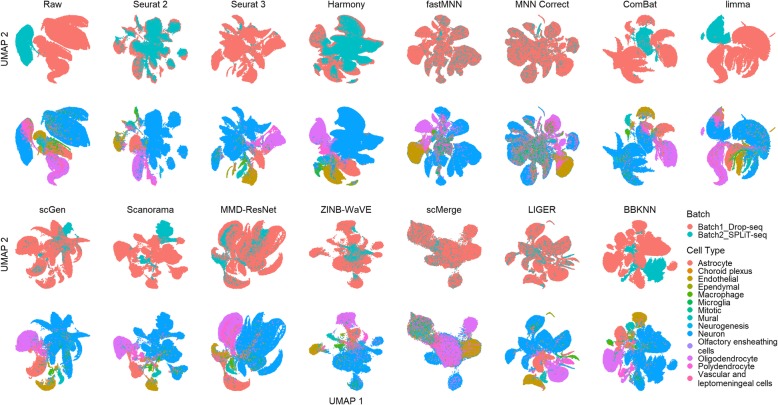
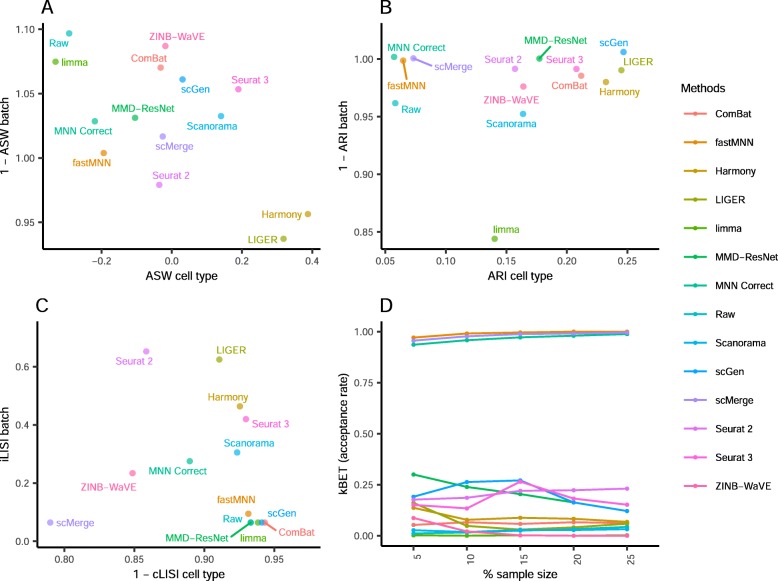
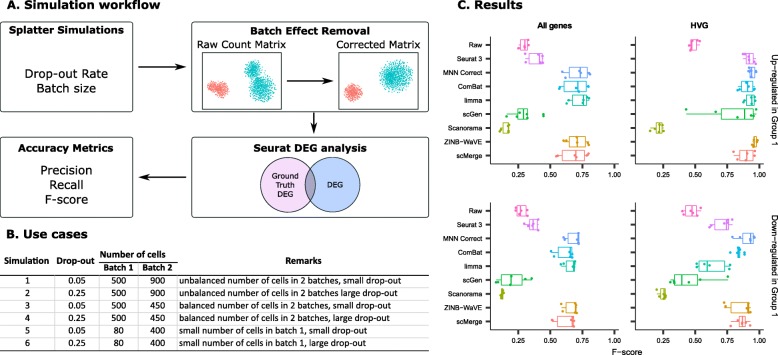
Background: Large-scale single-cell transcriptomic datasets generated using different technologies contain batch-specific systematic variations that present a challenge to batch-effect removal and data integration. With continued growth expected in scRNA-seq data, achieving effective batch integration with available computational resources is crucial. Here, we perform an in-depth benchmark study on available batch correction methods to determine the most suitable method for batch-effect removal. Results: We compare 14 methods in terms of computational runtime, the ability to handle large datasets, and batch-effect correction efficacy while preserving cell type purity. Five scenarios are designed for the study: identical cell types with different technologies, non-identical cell types, multiple batches, big data, and simulated data. Performance is evaluated using four benchmarking metrics including kBET, LISI, ASW, and ARI. We also investigate the use of batch-corrected data to study differential gene expression. Conclusion: Based on our results, Harmony, LIGER, and Seurat 3 are the recommended methods for batch integration. Due to its significantly shorter runtime, Harmony is recommended as the first method to try, with the other methods as viable alternatives.
Overview
The claims and statistics of this paper haven’t been checked yet.
Free: it reads the open-access text and checks the first 5 claims that cite a source we can check. Create a free account to check every claim.
Integrity signals
Registry
Cites
Statistics
Figures
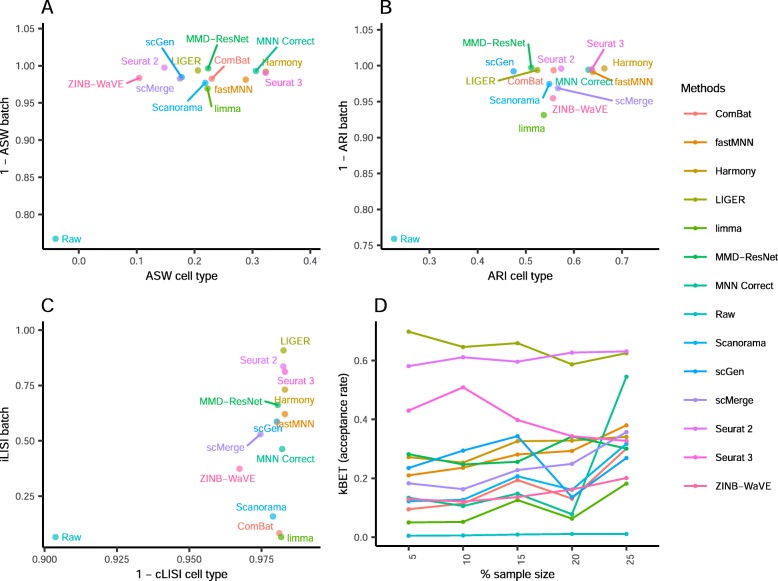
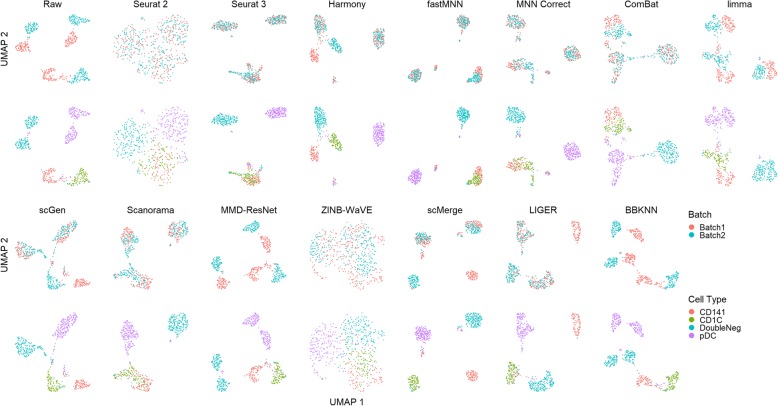
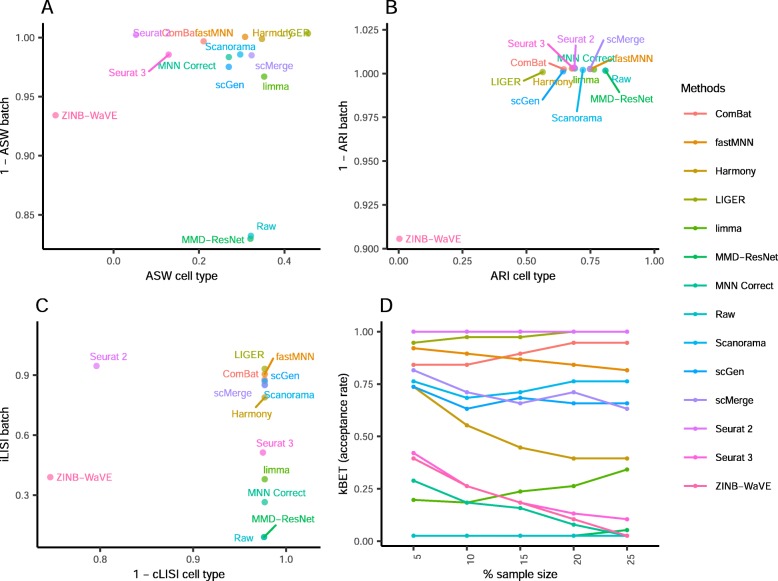
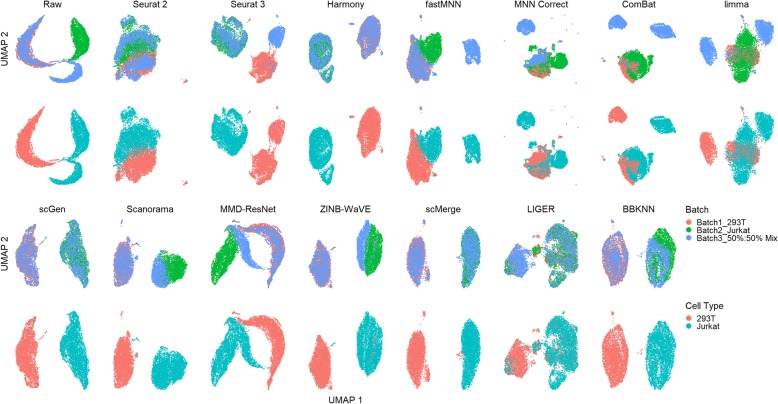
Verification
Claims the paper makes
The claims and statistics of this paper haven’t been checked yet.
Free: it reads the open-access text and checks the first 5 claims that cite a source we can check. Create a free account to check every claim.
Claims other papers make about this one
Each is checked against this paper’s own text: does it say what the citing paper says it does?
The cited source doesn’t support the claim as written.
In the citing paper
“Recent benchmark studies indicate that for simpler integration problems with relatively low biological complexity and relatively small batch effects in scRNA-Seq datasets, linear methods outperform nonlinear, more complex methods136,137, while for complicated integration tasks with large biological complexity and bigger batch effects, nonlinear methods such as scVI/scanVI outperform others138.”
From A high-resolution transcriptomic and spatial atlas of cell types in the whole mouse brain (2023) · cites this paper as [137]
Checked by a reasoning model — may be wrong.
Experimental — accuracy not yet measuredIn the citing paper
“Although SCING GRN based batch correction was not as optimized as the dedicated batch correction methods, many typical batch correction methods do not provide a batch corrected gene expression matrix for downstream analysis.44”
From SCING: Inference of robust, interpretable gene regulatory networks from single cell and spatial transcriptomics (2023) · cites this paper as [44]
In the citing paper
“Linear-embedding models such as canonical correlation analysis36 and Harmony37 were shown to perform well for batch correction on simpler integration tasks with distinct batch structures38,39.”
From Best practices for single-cell analysis across modalities (2023) · cites this paper as [38]
Self-check
Percentages, sums and reported differences re-computed from the paper’s own numbers.
The self-check needs the paper’s full text.
Citations
Cites
(2008) · Journal of Machine Learning Research · Cited by 33,051
Silhouettes: A graphical aid to the interpretation and validation of cluster analysis
Rousseeuw, P. J. (1987) · Journal of Computational and Applied Mathematics · doi:10.1016/0377-0427(87)90125-7 · Cited by 21,392 · cited 2×
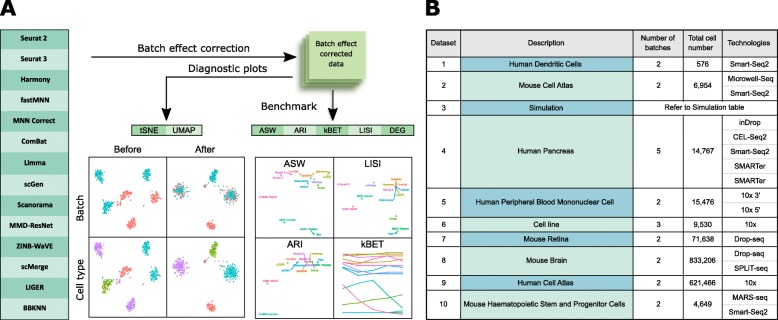
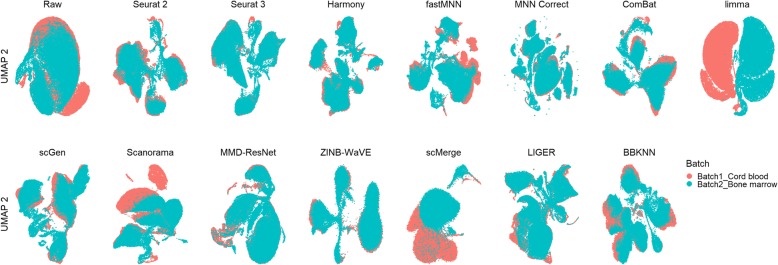
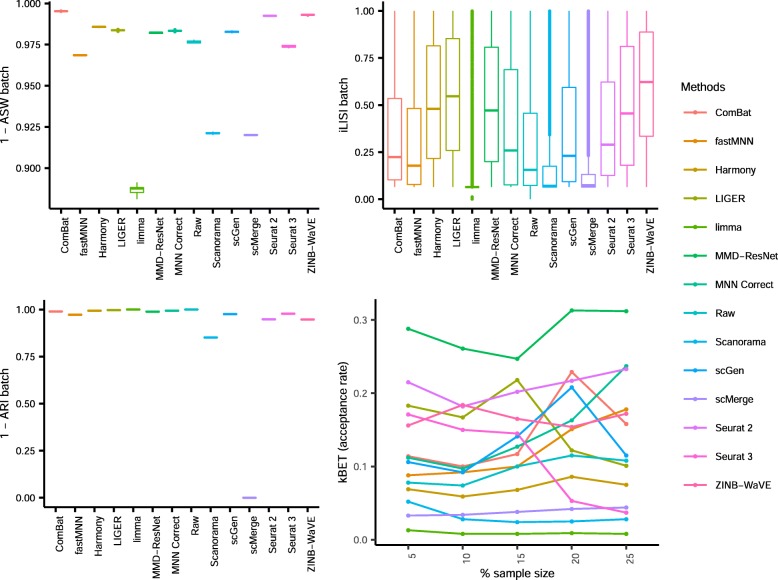
“…and Uniform Manifold Approximation and Projection (UMAP) [21] visualizations in conjunction with the k - nearest neighbor batch-effect test (kBET) [22], local inverse Simpson ’ s index (LISI) [13, 23], average silhouette width (ASW) [24], and adjusted rand index (ARI) benchmarking metrics [25].”
MethodGAN(Generative Adversarial Nets)
(2017) · Journal of Japan Society for Fuzzy Theory and Intelligent Informatics · doi:10.3156/jsoft.29.5_177_2 · Cited by 19,270
Comprehensive Integration of Single-Cell Data
Stuart, T., Butler, A., Hoffman, P., Hafemeister, C., Papalexi, E., Mauck, W. M., Hao, Y., Stoeckius, M., Smibert, P., & Satija, R. (2019) · Cell · doi:10.1016/j.cell.2019.05.031 · Cited by 15,453
Integrating single-cell transcriptomic data across different conditions, technologies, and species
Butler, A., Hoffman, P., Smibert, P., Papalexi, E., & Satija, R. (2018) · Nature Biotechnology · doi:10.1038/nbt.4096 · Cited by 13,174 · cited 6×
“Seurat alignment CCA, multiCCA (Seurat 2) Seurat multiCCA uses canonical correlation analysis (CCA) to first compute the linear combinations of genes with maximum correlation between batches [4].”
BackgroundMethodInfluentialFast, sensitive and accurate integration of single-cell data with Harmony
Korsunsky, I., Millard, N., Fan, J., Slowikowski, K., Zhang, F., Wei, K., Baglaenko, Y., Brenner, M., Loh, P.-R., & Raychaudhuri, S. (2019) · Nature Methods · doi:10.1038/s41592-019-0619-0 · Cited by 10,488 · cited 5×
“Another local level metric is the LISI proposed by Kor-sunsky et al. [13, 22], which can be used to assesses batch and cell type mixing.”
MethodInfluentialSCANPY: large-scale single-cell gene expression data analysis
Wolf, F. A., Angerer, P., & Theis, F. J. (2018) · Genome Biology · doi:10.1186/s13059-017-1382-0 · Cited by 8,881 · cited 1×
“The batch correction by Scanorama was performed in conjunction with the Scanpy workflow [29].”
MethodAdjusting batch effects in microarray expression data using empirical Bayes methods
Johnson, W. E., Li, C., & Rabinovic, A. (2007) · Biostatistics · doi:10.1093/biostatistics/kxj037 · Cited by 8,658 · cited 3×
“ComBat was originally developed for microarray gene expression data [1], but had been successfully employed”
MethodHubert, L., & Arabie, P. (1985) · Journal of Classification · doi:10.1007/bf01908075 · Cited by 8,219
Massively parallel digital transcriptional profiling of single cells
Zheng, G. X. Y., Terry, J. M., Belgrader, P., Ryvkin, P., Bent, Z. W., Wilson, R., Ziraldo, S. B., Wheeler, T. D., McDermott, G. P., Zhu, J., et al. (2017) · Nature Communications · doi:10.1038/ncomms14049 · Cited by 7,353
Research works printed but not linked: 5
- Lun A Further MNN algorithm development 2019
- Goodfellow I, Pouget-Abadie J, Mirza M, Xu B, Warde-Farley D, Ozair S, et al. Generative adversarial nets. In: Ghahramani Z, Welling M, Cortes C, Lawrence ND, Weinberger KQ, editors. Adv Neural Inf Process Syst 27: Curran Associates, Inc; 2014. p. 2672–80. Available from: http://papers.nips.cc/paper/5423-generative-adversarial-nets.pdf. Accessed 11 Mar 2019.
- Korsunsky I LISI 2019
- Deng Y, Bao F, Dai Q, Wu LF, Altschuler SJ. Massive single-cell RNA-seq analysis and imputation via deep learning. bioRxiv. 2018:315556 Available from: http://biorxiv.org/content/early/2018/11/27/315556.abstract. Accessed 5 July 2019.
- Tran HTN, Ang KS, Chevrier M, Zhang X, Lee NYS, Goh M, Chen J. A benchmark of batch-effect correction methods for single-cell RNA sequencing data. Simulations. Github Repository. https://github.com/JinmiaoChenLab/Batch-effect-removal-benchmarking. 2019. PMC6964114 31948481
Cited by
Items 801–900 of 1,005
Sousa, A. G. G., Smolander, J., Junttila, S., & Elo, L. L. (2025) · Nucleic Acids Research · doi:10.1093/nar/gkaf1128 · Cited by 2
Kawamura, Y., Johnson, C. W., DeLong, J. H., Camillo, L. P. D. L., Velazquez, S. E., Takahashi, M., Beatty, H. E., Hebert, R., Cord, B. J., Matouk, C. C., et al. (2026) · Journal of Cerebral Blood Flow & Metabolism · doi:10.1177/0271678x261471282 · Cited by 2
Mapping regulators of cell fate determination: Approaches and challenges
Kumar, A., & Mali, P. (2020) · APL Bioengineering · doi:10.1063/5.0004611 · Cited by 2
Lu, H., Zhang, J., Chen, Y. E., & Garcia-Barrio, M. T. (2021) · Cardiovascular Drugs and Therapy · doi:10.1007/s10557-021-07175-1 · Cited by 3
“A recent benchmark publication comparing these methods shows that none is clearly superior under all scenarios and that researchers need to choose the method on a case-by-case fashion [40].”
BackgroundSingle-Cell RNA Sequencing Technologies
Gupta, M. K., Gouda, G., Donde, R., Sabarinathan, S., Goswami, P., Dash, G. K., Rajesh, N., Pati, P., Rathode, S. K., Vadde, R., et al. (2021) · Springer eBooks · doi:10.1007/978-981-16-3993-7_25 · Cited by 2
Analyzing single cell transcriptome data from severe COVID-19 patients
Nassir, N., Tambi, R., Bankapur, A., Karuvantevida, N. S., Khansaheb, H. H., Zehra, B., Begum, G., Hameid, R. A., Ahmed, A., Deesi, Z., et al. (2022) · STAR Protocols · doi:10.1016/j.xpro.2022.101379 · Cited by 2
Single Cell Multiomic Approaches to Disentangle T Cell Heterogeneity
Abondio, P., Intinis, C. D., Júnior, J. L. D. S. G. V., & Pace, L. (2022) · Immunology Letters · doi:10.1016/j.imlet.2022.04.008 · Cited by 2
Lobo, D., Linheiro, R. S., Godinho, R., & Archer, J. P. (2022) · PLoS ONE · doi:10.1371/journal.pone.0274591 · Cited by 2
“Secondly, although DESeq2 provides an internalized method for accommodating batch effects that we applied (~batch + condition), the results obtained at an intra-study level, with well defined batches, between alternative methods of testing are variable [52].”
MethodA Meta-learning based Graph-Hierarchical Clustering Method for Single Cell RNA-Seq Data
Pan, Z., Lin, Y., Zhang, H., Zeng, Y., Yu, W., & Yang, Y. (2022) · IEEE International Conference on Bioinformatics and Biomedicine (BIBM) · doi:10.1109/bibm55620.2022.9995640 · Cited by 2
“At the same time, High dimension brought in challenges in dealing with batch effect and other differences between sequencing techniques, considering sometimes multi-source datasets are brought in for reference[10].”
BackgroundJMnorm: a novel joint multi-feature normalization method for integrative and comparative epigenomics
Xiang, G., Guo, Y., Bumcrot, D. A., & Sigova, A. A. (2023) · Nucleic Acids Research · doi:10.1093/nar/gkad1146 · Cited by 1
“We then measured the ASW score, which ranges from 0 to 1 and a lower score indicates better sharing of combinatorial patterns between cell types ( 40 ).”
MethodTrustworthy Computing for Biomedical Challenges
Wang, H. (2023) · IEEE International Conference on Healthcare Informatics (ICHI) · doi:10.1109/ichi57859.2023.00096 · Cited by 2
NDMNN: A novel deep residual network based MNN method to remove batch effects from scRNA-seq data
Ma, Y., & Pei, Y. (2024) · Journal of Bioinformatics and Computational Biology · doi:10.1142/s021972002450015x · Cited by 2
Wilkinson, D., Tallman, E., Ashraf, M., Romer, T. G., Lee, J., Burnett, B. J., & Bushel, P. R. (2024) · Bioinformatics and Biology Insights · doi:10.1177/11779322241280866 · Cited by 2
Unbiased integration of single cell transcriptome replicatesPreprint
Loza, M., Teraguchi, S., Standley, D. M., & Díez, D. (2021) · bioRxiv (Cold Spring Harbor Laboratory) · doi:10.1101/2021.05.05.442380 · Cited by 2
Zhang, B., Ji, Z., & Ji, H. (2021) · bioRxiv (Cold Spring Harbor Laboratory) · doi:10.1101/2021.10.27.466024 · Cited by 2
Zhang, S., Hu, H., Wang, X., Chengjie, X., Asmann, Y. W., & Ren, Y. (2025) · bioRxiv (Cold Spring Harbor Laboratory) · doi:10.1101/2025.03.14.643349 · Cited by 2
Benchmarking large-scale single-cell RNA-seq analysisPreprint
Billato, I., Pagès, H., Carey, V. J., Waldron, L., Sales, G., Romualdi, C., & Risso, D. (2025) · bioRxiv (Cold Spring Harbor Laboratory) · doi:10.1101/2025.10.28.681564 · Cited by 3
Statistics or biology: the zero-inflation controversy about scRNA-seq data
Jiang, R., Tianyi, S., Dongyuan, S., & Jessica Jingyi, L. (2020) · Zenodo (CERN European Organization for Nuclear Research) · doi:10.5281/zenodo.4393040 · Cited by 2
Pang, J., Qiu, P. S., He, Y., Deng, Y., Tang, W., Huang, Z., Yan, J., Li, B., Lin, A., Cao, L., et al. (2025) · bioRxiv (Cold Spring Harbor Laboratory) · doi:10.64898/2025.12.29.696804 · Cited by 3
Zhai, Z., Wang, C., Jiang, C. H., Rong, Z., & Li, J. J. (2026) · bioRxiv (Cold Spring Harbor Laboratory) · doi:10.64898/2026.05.14.725078 · Cited by 2
“…method benchmarking to dataset-specific optimization: although benchmarking studies provide valuable overall rankings of integration methods [17, 18, 35], they typically use fixed parameter settings across datasets and therefore may not reflect each method’s best achievable performance on any…”
Zhang, V. (2022) · International Conference on Computational Biology and Bioinformatics (ICCBB) · doi:10.1145/3589437.3589441 · Cited by 1
“Batch correction [11] was implemented using Harmony [10] to strengthen the unbiased analysis.”
MethodSTADS: Spatial Transcriptomics to Aid Drug-reposition Recommendation
Karaaslanli, A., Guo, Y., Liang, H., Huang, Z. N., & Garmire, L. X. (2023) · IEEE International Conference on Bioinformatics and Biomedicine (BIBM) · doi:10.1109/bibm58861.2023.10385738 · Cited by 1
“For this purpose we utilize Harmony [11], as it is shown to be one of the most effective approach [12].”
MethodDimitrakopoulos, G. Ν., Lazaros, K., Krokidis, M. G., Exarchos, T., Vrahatis, A. G., & Vlamos, P. (2023) · IEEE International Conference on Big Data (BigData) · doi:10.1109/bigdata59044.2023.10386766 · Cited by 1
“Of note, with the increasing number of publicly available data, the concept of integration arises, however it is required to first tackle the technical differences between the different experiments in order to combine them into a single, cohesive dataset [7].”
BackgroundImbalanced single-cell data integration leads to loss of biological information
(2024) · Nature Biotechnology · doi:10.1038/s41587-023-02114-x · Cited by 1
Systematic benchmarking of omics computational tools
Kumar, S., Singh, M., Sharma, R. K., & Gupta, M. (2024) · Elsevier eBooks · doi:10.1016/b978-0-443-16092-9.00004-7 · Cited by 1
Zhu, Q., Li, A., Zhang, Z., Zheng, C., Zhao, J., Liu, J., Zhang, D., & Shao, W. (2024) · IEEE Transactions on Computational Biology and Bioinformatics · doi:10.1109/tcbb.2024.3487574 · Cited by 2
Artificial intelligence and deep learning in single-cell omics data analysis: A case study
Anjum, Z., Khalid, W., Takkar, G., Chhetri, P., & Raza, K. (2024) · Elsevier eBooks · doi:10.1016/b978-0-443-27523-4.00007-x · Cited by 1
Protocol for using scCURE to construct an immunotherapy outcome prediction model
Liu, Y., Zou, X., Tong, H. H. Y., Ji, Y., Tan, L., & Hao, J. (2024) · STAR Protocols · doi:10.1016/j.xpro.2024.103476 · Cited by 1
High resolution tissue and cell type identification via single cell transcriptomic profiling
Liu, M., Zheng, S., Li, H., Budowle, B., Wang, L., Lou, Z., & Ge, J. (2025) · PLoS ONE · doi:10.1371/journal.pone.0318151 · Cited by 1
scVDM: A Diffusion Model Integrated With Conditional VAE for Generative Single-Cell Tasks
Peng, D., Xie, L., Yang, H. T., & Zhang, Y. (2025) · IEEE Journal of Biomedical and Health Informatics · doi:10.1109/jbhi.2025.3585960 · Cited by 1
“Tran et al. [34] selected 11 cell types that were present in both datasets, ensuring that the selected cell types were represented in both batches.”
SANNO: A Graph-Transformer Enhanced Optimal Transport Tool for Spatial Transcriptomic Annotation
Zeng, Y., Chen, Y., Shangguan, N., Li, W., Cai, X., Zhang, H., Wang, Z., & Zhao, H. (2025) · Interdisciplinary Sciences Computational Life Sciences · doi:10.1007/s12539-025-00752-0 · Cited by 1
Turgut, S. S., Aydın, N., & Kurt, Z. (2025) · PLoS Computational Biology · doi:10.1371/journal.pcbi.1013525 · Cited by 1
Pan, X., Wang, J., Liu, F., Du, C., Li, Y., & Wei, X.-D. (2025) · Computer Methods in Biomechanics & Biomedical Engineering · doi:10.1080/10255842.2025.2570515 · Cited by 1
Chen, J., Schmidt, F., & Henao, R. (2026) · PLoS Computational Biology · doi:10.1371/journal.pcbi.1013701 · Cited by 1
Self-citationPaniagua, K., Huang, Y., Gao, S., Chen, Y., Jin, Y.-F., & Flores, M. A. (2025) · STAR Protocols · doi:10.1016/j.xpro.2025.104206 · Cited by 1
Integration of unpaired and heterogeneous clinical flow cytometry data
Phuycharoen, M., Kästele, V., Williams, T., Lin, L., Hussell, T., Grainger, J. R., & Rattray, M. (2026) · iScience · doi:10.1016/j.isci.2026.114937 · Cited by 2
“Methods for batch effect correction 1 and unpaired data integration 2 have been developed to address these issues.”
Chen, D., & Hou, X. (2026) · Discover Oncology · doi:10.1007/s12672-026-04665-2 · Cited by 1
“Temporal analysis of keyword clusters reveals delayed emergence of “data integration” concepts by 3–4 years following the adoption of single-cell technologies, highlighting persistent bottlenecks in raw data curation and batch-effect mitigation [25].”
Singh, M., Hafeez, A., Kumar, S., & Gupta, M. K. (2026) · In Silico Research in Biomedicine · doi:10.1016/j.insi.2026.100279 · Cited by 1
A benchmark of semi-supervised scRNA-seq integration methods in real-world scenarios
Shen, X., He, C., & Guan, L. (2026) · PLoS Computational Biology · doi:10.1371/journal.pcbi.1014008 · Cited by 1
Aydin, V. K. (2026) · Russian Journal of Genetics · doi:10.1134/s1022795425701698 · Cited by 1
Indirubin and Retinoic Acid Show Binding Affinity to Monocyte Biomarker CSF3R in Parkinson's Disease
Bao, Z., Zhi, S., & Jie, M. (2026) · Journal of Clinical Laboratory Analysis · doi:10.1002/jcla.70197 · Cited by 1
“Then, the SCTransform function was employed to standardize data, after principal component analysis (PCA) for dimensionality reduction, the R package harmony was applied to remove batch effects between different samples [28].”
Zhang, Y., Yang, B., Yu, Y., Wang, X., Niu, C., Zhang, Y., Liu, Y., Li, J. G., Zhang, C., Yang, J., et al. (2026) · Nature Communications · doi:10.1038/s41467-026-70582-1 · Cited by 1
Zhang, Y., Mamtili, I., Chen, Y., Ji, G., & Liang, C. (2026) · Oncology Research Featuring Preclinical and Clinical Cancer Therapeutics · doi:10.32604/or.2026.079316 · Cited by 1
Lin, H., Cheng, X., Ren, Y., Zhang, Y., Chen, W., Lu, Q., & Tian, Y. (2026) · International Journal of Molecular Medicine · doi:10.3892/ijmm.2026.5871 · Cited by 1
Quantitative benchmarking of batch effects correction methods for single-cell metabolomics
Wu, F., Hao, X., Chen, A., & Wen, L. (2026) · Microchemical Journal · doi:10.1016/j.microc.2026.118654 · Cited by 1
Corneal Innervation Research at a Crossroads: A Tool-Driven Roadmap for the Future
Matynia, A., Meng, I. D., Davis, B. M., Pflugfelder, S. C., Galor, A., Perez, V., Felix, E. R., Hamrah, P., Rompolas, P., Ruiz‐Lozano, R. E., et al. (2026) · Investigative Ophthalmology & Visual Science · doi:10.1167/iovs.67.6.25 · Cited by 1
“87 In contrast, other studies focused on the integration of single-cell RNA sequencing (scRNA-seq)/single-nucleus RNA sequencing (snRNA-seq) data across species 88 and found that scVI, scANVI, and Seurat 4 most effectively clustered transcriptomically similar cells within the mammalian phylogeny.”
Liang, T., Xu, W., Hu, F., Fu, L., Deng, D., Li, C., Liu, L., Tang, D., Yang, H., Liu, F., et al. (2026) · iMetaOmics. · doi:10.1002/imo2.70102 · Cited by 1
He, Y., Wei, Y., Zhi, J., Huang, C. J., Han, L., Liu, S., & Wang, L. (2026) · GigaScience · doi:10.1093/gigascience/giag075 · Cited by 1
“Single-cell and spatial transcriptomic data exhibit substantial technical batch effects [ 234 , 235 ], rendering data generated across different platforms and laboratories difficult to compare directly [ 236 ].”
Spatial and Multiple Omics in Horticultural Plants: Advances and Prospects
Mohanty, G. R., Mohanty, S. R., Debnath, S., Chakraborty, N. R., Kole, A., Paikray, S., Das, S. K., Mohanty, S. K., & Deb, P. (2026) · CABI biotechnology series. · doi:10.1079/9781836994572.0011 · Cited by 1
Wu, E., Yin, X., Chen, Y., Hu, J., Qiu, C., Yang, C., Chen, Q. W., Wang, P., Zhang, M., Si, M., et al. (2026) · Inflammation · doi:10.1007/s10753-026-02559-7 · Cited by 2
“Harmony is specifically designed for the integration of multiple single-cell datasets and efficiently corrects dataset-specific batch effects while preserving biological variation across cell populations [16, 17].”
Urabe, F., Yoshihara, K., Nakayama, J., Hirano, Y., Watanabe, N., Suzuki, H., Umemori, M., Ito, K., Igarashi, T., Sato, S., et al. (2026) · iScience · doi:10.1016/j.isci.2026.116725 · Cited by 1
Zhao, M., Ma, X., Shi, W., & Sun, Y. (2026) · Life Sciences · doi:10.1016/j.lfs.2026.124600 · Cited by 1
Trivedi, M. R., Shah, J., Su, Y., Reiman, E. M., Wu, T., & Wang, Q. (2026) · AI in neuroscience. · doi:10.1177/2997979x261472562 · Cited by 1
Yang, J., Wu, S., Pu, A., Xie, S., & Hu, M. (2026) · Translational Oncology · doi:10.1016/j.tranon.2026.103034 · Cited by 1
“Benchmarking studies further show that batch-correction method choice can materially influence the balance between removing technical variation and preserving biological structure [23].”
iPscDB: a comprehensive platform for plant single-cell transcriptomic data integration and analysis
Lü, P., Jin, J., Tao, J., Cao, L., Yu, S., Wang, S., Su, H., Wang, Q., Cui, W., Hou, R., et al. (2026) · Nucleic Acids Research · doi:10.1093/nar/gkag909 · Cited by 1
Cell Village Captures Populational Heterogeneity of Sunitinib Cardiotoxicity
Kojic, A., Liu, Y., Belbachir, N., Tu, C., Shen, M., Caudal, A., Meharwade, T., Belbachir, M., Ford, K. A., Sallam, K., et al. (2026) · Circulation Research · doi:10.1161/circresaha.126.328704 · Cited by 1
Williams, E. C., Chazarra-Gil, R., Shahsavari, A., & Mohorianu, I. I. (2022) · Genes · doi:10.3390/genes13122265 · Cited by 1
[A review on integration methods for single-cell data].
Pan, D., Li, H., Liu, H., & Sun, X. S. (2021) · PubMed Central · doi:10.7507/1001-5515.202104073 · Cited by 2
Zhou, Z., Wei, J., Yang, Z., Bao, Y., Jiang, W., Lu, B. F., Wang, W., & Luo, L. (2022) · Scientific Reports · doi:10.1038/s41598-022-05686-x · Cited by 1
scAEQN: A Batch Correction Joint Dimension Reduction Method on scRNA-seq Data
Song, S.-N., Liu, D., Wang, H., Zhao, J., Zheng, C.-H., & Su, Y. (2023) · International Conference on Bioinformatics and Intelligent Computing (BIC) · doi:10.1145/3592686.3592748 · Cited by 1
“As While it is simple to evaluate the level of batch integration of small datasets by visualization approach, the evaluation might become subjective when the comparison is conducted on huge complex datasets [33].”
BackgroundDynamics of alternative polyadenylation in single root cells of Arabidopsis thaliana
Bi, X., Zhu, S. Z., Liu, F., & Wu, X. (2024) · Frontiers in Plant Science · doi:10.3389/fpls.2024.1437118 · Cited by 1
Single-cell multiomics to advance cell therapy
Goss, K. L., & Horwitz, E. M. (2024) · Cytotherapy · doi:10.1016/j.jcyt.2024.10.009 · Cited by 1
Schilling, K. (2025) · The Cerebellum · doi:10.1007/s12311-025-01809-y · Cited by 1
Reconstructing signaling histories of single cells via perturbation screens and transfer learning
Hutchins, N. T., Meziane, M., Lu, C., Mitalipova, M. M., Fischer, D. S., & Li, P. (2026) · Nature Methods · doi:10.1038/s41592-026-03213-8 · Cited by 5
“In particular, algorithms based on conditional variational autoencoders (CVAEs), such as scANVI and trVAE, can remove the highly nonlinear batch effects more comprehensively and embed cells with similar gene expression patterns together more robustly than comparatively simpler models 26–28 .”
InfluentialLiu, Y., Li, C., Shen, L.-C., Yan, H., Wei, G., Gasser, R. B., Hu, X. T., Song, J., & Yu, D. (2025) · Computers in Biology and Medicine · doi:10.1016/j.compbiomed.2025.110068 · Cited by 1
Tu, W., & Zhang, L. (2025) · PLoS Computational Biology · doi:10.1371/journal.pcbi.1012948 · Cited by 2
“Many data integration methods for single cell transcriptomics data have been proposed [9] (i.g., Seurat [10], Harmony [11] and scMC [12]), while they cannot be applied spatial transcriptomics data as the spatial coordinates are not considered.”
Twelve Tips for Reproducible Analysis of Single-Cell Transcriptomics Data
Onfroy, A., Topilko, P., Hüe, S., & Thieffry, D. (2025) · ACM Conference on Reproducibility and Replicability (ACM REP) · doi:10.1145/3736731.3746138 · Cited by 1
Xu, Y., & Strick, A. J. (2021) · arXiv (Cornell University) · doi:10.48550/arxiv.2104.12320 · Cited by 1
“We next compared our methods with Harmony and Seurat, which are two SOTA methods for integration of single-cell sequencing data[21].”
MethodscMARK an ‘MNIST’ like benchmark to evaluate and optimize models for unifying scRNA dataPreprint
Swechha, Mendonca, D., Focsa, O., Díaz-Mejía, J. J., & Cooper, S. (2021) · bioRxiv (Cold Spring Harbor Laboratory) · doi:10.1101/2021.12.08.471773 · Cited by 2
“Comparisons therefore often rely on statistical performance metrics [10, 11] or cell-type labels given by an alternate experimental method, e.g., CITEseq, themselves subject to bias [12].”
MethodMourragui, S. M. C., Siefert, J. C., Reinders, M. J. T., Loog, M., & Wessels, L. F. A. (2022) · bioRxiv (Cold Spring Harbor Laboratory) · doi:10.1101/2022.03.08.483431 · Cited by 1
“To assess this cell-type drift and evaluate the ability of existing batch-effect correction tools to correct it, we employed three state-of-the-art approaches 33,34 1 C), referred to as the Kinker dataset .”
MethodWei, H., Kong, W., & Wang, S. (2022) · Research Square · doi:10.21203/rs.3.rs-1411661/v1 · Cited by 1
Cell type specific transcriptomic characterization of myelin abnormalities
Sun, T. (2022) · eDiss (Georg-August-Universität Göttingen) · doi:10.53846/goediss-9413 · Cited by 1
Hun, M., Wen, H., Wen, M., Tian, Q., Wang, Z., Han, P., Vun, T., Som, T., Preap, B., Zhao, M., et al. (2023) · Authorea · doi:10.22541/au.168620819.99240467/v1 · Cited by 1
Allen, D., Weaver, M., Prokopchuk, S. V., Lekschas, F., Jiang, M., Finak, G., Greene, E., & McDavid, A. (2024) · bioRxiv (Cold Spring Harbor Laboratory) · doi:10.1101/2024.03.14.584720 · Cited by 1
“This kind of batching potentially introduces unwanted variability in antibody staining and scRNA-seq sequencing results, and various algorithms have been proposed to correct for such batch effects 26 .”
BackgroundMachine Learning-based Approaches to Integrate Heterogeneous Data for Biological Knowledge Transfer
Park, Y. (2024) · eDiss (Georg-August-Universität Göttingen) · doi:10.53846/goediss-10534 · Cited by 3
Robust, credible, and interpretable AI-based histopathological prostate cancer gradingPreprint
Westhaeusser, F., Fuhlert, P., Dietrich, E., Lennartz, M., Khatri, R., Kaiser, N., Röbeck, P., Bülow, R. D., von Stillfried, S. F., Witte, A., et al. (2024) · medRxiv · doi:10.1101/2024.07.09.24310082 · Cited by 2
“Even when stabilized algorithmically and trained on large datasets, a model might still encounter probes that are difficult for it to grade.”
BackgroundSingle-cell spatial transcriptome reveals pathological features of human hippocampus with sclerosisPreprint
Wang, L., Li, X., Liu, Y., Jin, B., Wei, Y., He, Y., Ma, Y., Wu, Z.-H., Gong, X., An, Y., et al. (2025) · bioRxiv (Cold Spring Harbor Laboratory) · doi:10.1101/2025.01.21.633854 · Cited by 1
BioBatchNet: A Dual-Encoder Framework for Robust Batch Effect Correction in Imaging Mass CytometryPreprint
Liu, H., Zhang, S.-J., Mao, S., Zhao, Q., Zhou, Y., Gilmore, A. P., Álvarez, M. A., & Zhou, H. (2025) · bioRxiv (Cold Spring Harbor Laboratory) · doi:10.1101/2025.03.15.643447 · Cited by 1
“These systematic biases arise from technical or procedural inconsistencies (e.g., variations in experimental protocols, patient cohorts, etc.) during sample processing (Hunter et al., 2024; Tran et al., 2020; Shree et al., 2023).”
Bica, M., Serre, K., & Barbosa‐Morais, N. L. (2025) · bioRxiv (Cold Spring Harbor Laboratory) · doi:10.1101/2025.04.17.649161 · Cited by 1
Church, S. J., Kriebel, A. R., Welch, J. D., & Buttitta, L. (2025) · bioRxiv (Cold Spring Harbor Laboratory) · doi:10.1101/2025.06.05.658085 · Cited by 1
“LIGER, Harmony, and Seurat are prominent examples of such tools, each with its own approach and strengths (Chazarra-Gil et al. 2021; Luecken et al. 2022; Tran et al. 2020).”
Yin, D., Zhang, Z., Liu, X., Ni, K., Su, H., Li, N. L., Dong, H., Zhao, Q., Lin, X., Tian, L., et al. (2025) · bioRxiv (Cold Spring Harbor Laboratory) · doi:10.1101/2025.07.15.663271 · Cited by 1
Wang, H., Zhang, X., Fang, S., Li, R., Deng, Z., Zhang, Y., Li, Y., & li, S. (2026) · bioRxiv (Cold Spring Harbor Laboratory) · doi:10.64898/2026.01.09.698573 · Cited by 1
Self-citationXiong, R., Patel, J., Sztanka-Toth, T. R., Senel, E., Calara-Nielsen, K., Rajpurohit, Y. R., Altenburg, T., Greshock, J., Smirnov, D. A., & Javidi, A. (2026) · bioRxiv (Cold Spring Harbor Laboratory) · doi:10.64898/2026.01.16.699571 · Cited by 1
Iich, E. (2026) · bioRxiv (Cold Spring Harbor Laboratory) · doi:10.64898/2026.01.27.701674 · Cited by 1
A hyperparameter benchmark of VAE-based methods for scRNA-seq batch integrationPreprint
Kassab, M., Maniero, L. H. D. S., & Beltrame, E. D. V. (2026) · bioRxiv (Cold Spring Harbor Laboratory) · doi:10.64898/2026.02.10.705093 · Cited by 1
“…of scRNA-seq chemistries and plat-forms—varying capture efficiency, read coverage, through-put, and workflows—introduces batch effects that can obscure biological signal [12–14] and drive clustering by run, chemistry, or laboratory without careful design and integra-Hyperparameter tion [15].”
McClintock, J., Zhang, J., Ge, X., Fan, H., Leng, Y., Silverstein, M. R., Conrad, R. D., Li, Z., Holmes, E., Joseph, S., et al. (2026) · bioRxiv (Cold Spring Harbor Laboratory) · doi:10.64898/2026.02.12.705115 · Cited by 1
“…raw, uncorrected datasets with different correction methods to determine which method provides the best l value. kBET 13 is a published method that has been previously used in existing batch effect comparisons 32 , but to our knowledge, has not been implemented in other batch correction tools.”
MEDAL: Manifold Embedding Distillation via Autoencoder LearningPreprint
Chang, I., Zikry, T. M., & Allen, G. I. (2026) · arXiv (Cornell University) · doi:10.48550/arxiv.2605.24244 · Cited by 1
Liu, T., Feng, T., Pan, X., Chen, Y., Ren, L., Ye, X., Lin, H. Y., & Zhang, Y. (2026) · bioRxiv (Cold Spring Harbor Laboratory) · doi:10.64898/2026.06.18.733285 · Cited by 1
Denvis, O. (2026) · Research Square · doi:10.21203/rs.3.rs-10434123/v1 · Cited by 1
Semi-metric optimal transport enables robust spatial multi-omics integrationPreprint
Wang, J., Wang, S., Bai, Y., Ferreira, R. M., Tran, H., Du, H., Zhang, X., Cheng, Y., Sabo, A. R., Jain, S., et al. (2026) · Research Square · doi:10.21203/rs.3.rs-10505162/v1 · Cited by 1
Self-citationByzanz: Das zweite Rom. Ralph-Johannes Lilie
Whittow, M. (2005) · Speculum · doi:10.1017/s0038713400001925
OmicPioneer-sc: an integrated, interactive visualization environment for single-cell sequencing dataPreprint
Weinstein, J. N., Rohrdanz, M. A., Stucky, M., Melott, J. M., Ma, J., Mohanty, V., Manyam, G. C., Wakefield, C., Chen, K., Navin, N. E., et al. (2020) · bioRxiv (Cold Spring Harbor Laboratory) · doi:10.1101/2020.10.31.363580
Cell states along oligodendrocyte development and disease
van Bruggen, D. (2020) · Figshare
Kim, K. D., Chua, S. C., & Ling, M. H. (2021) · Acta Scientifci Nutritional Health · doi:10.31080/asnh.2020.05.0824 · Cited by 1
Wong, T., & Barahona, M. (2021) · bioRxiv (Cold Spring Harbor Laboratory) · doi:10.1101/2021.07.08.451664
The scINSIGHT Package for Integrating Single-Cell RNA-Seq Data from Different Biological Conditions
Qian, K., Fu, S., Li, H., & Li, W. V. (2022) · Journal of Computational Biology · doi:10.1089/cmb.2022.0244
“Although multiple methods have been developed for batch-effect removal or integrative analysis of multiple scRNA-seq samples (Tran et al., 2020), they do not effectively account for the information of biological conditions when single-cell samples come from multiple biological conditions, such as…”
Wei, J., Xie, Q., Qu, Y., Huang, G., Chen, Z., & Du, H. (2022) · Computational and Structural Biotechnology Journal · doi:10.1016/j.csbj.2022.08.028
“Both Harmony and Seurat are the methods to remove batch effects, in which Harmony performs well on datasets with common cell types and different techniques and the comparatively shorter runtime of Harmony also makes it suitable for initial data exploration of large datasets [20].”
MethodSun, T., Grassam-Rowe, A., Pu, Z., Ren, H., An, Y., Guo, X., Hu, W., Liu, Y., Li, Y., Liu, Z., et al. (2022) · bioRxiv (Cold Spring Harbor Laboratory) · doi:10.1101/2022.11.04.515095
Laczik, M., Erdős, E., Ozgyin, L., Hevessy, Z., Csősz, É., Kalló, G., Nagy, T., Barta, E., Póliska, S., Szatmári, I., et al. (2022) · Scientific Data · doi:10.1038/s41597-022-01871-9
AI in Translational Bioinformatics and Precision Medicine
Nguyen, T. M., & Chen, J. Y. (2022) · Cognitive informatics in biomedicine and healthcare · doi:10.1007/978-3-031-09108-7_14
Self-citation
Metadata
- Authors
- Tran, H. T. N., Ang, K. S., Chevrier, M., Zhang, X., Lee, N. Y. S., Goh, M., & Chen, J.
- Affiliations
- Agency for Science, Technology and Research (SG)
- Corresponding author
- Chen, Jinmiao
- Venue
- Genome Biology
- Published
- 2020-01-16
- Volume
- 21
- Issue
- 1
- Pages
- 12-12
- ISSN
- 1465-6906 (ISSN-L)
- 1474-760X
- PMC
- PMC6964114
- OpenAlex
- W3002417351
- Cited by
- 1,113
- References
- 45
- Citations by year
- 2026: 145 · 2025: 170 · 2024: 188 · 2023: 187 · 2022: 180 · 2021: 178 · 2020: 62
- FWCI
- 50.62
- Type
- journal article
- Language
- en
- Open access
- gold
- doi.org
- Licence
- cc-by
- creativecommons.org/licenses/by/4.0/ (tdm)
- creativecommons.org/licenses/by/4.0/ (vor)
- Locations
- Genome biology (publishedVersion, cc-by)
- PubMed Central (publishedVersion, cc-by)
- PubMed (publishedVersion)
- DOAJ (DOAJ: Directory of Open Access Journals) (submittedVersion, cc-by-sa)
- Funders
- Singapore Immunology Network (NA)
- Topics
- Life Sciences › Biochemistry, Genetics and Molecular Biology › Molecular Biology › Single-cell and spatial transcriptomics
- Life Sciences › Biochemistry, Genetics and Molecular Biology › Molecular Biology › Gene expression and cancer classification
- Life Sciences › Biochemistry, Genetics and Molecular Biology › Molecular Biology › Bioinformatics and Genomic Networks
- Keywords
- batch effect correction, single-cell RNA sequencing, benchmarking, data integration, harmony, LIGER, Seurat, LiSi, adjusted Rand index, differential gene expression, computational time
- MeSH terms
- Big Data, RNA-Seq, Algorithms, Animals, Humans, Benchmarking, Mice, Single-Cell Analysis
About these checks
Registry, retraction, Cites and statistics results are computed, not judged, with one exception: a printed reference that no index lists is read once by a model before it counts as a citation error. Claims are extracted by a model and kept only when their quote appears verbatim in the text; each cited source is then checked, with a model’s help, for whether it says what the claim relies on. Those verdicts can be wrong — read the claim’s quote and the cited source before relying on one.
Statistics and arithmetic are recomputed, not judged.
Confidence bands are shown only for fields calibrated on our annotated test set. None is calibrated yet, so no band is shown.
What counts as a claim ›How we measure confidence ›How we check this ›
Are you an author, or do you see a problem with this page? Request a review
Data sources
Bibliographic data: Semantic Scholar, OpenAlex, Crossref.
Contains information from the Semantic Scholar Academic Graph Datasets, made available under the ODC Attribution License (ODC-BY 1.0).
Semantic Scholar’s data is described in: Kinney, R., et al. (2023). The Semantic Scholar Open Data Platform. arXiv:2301.10140.
