

A benchmark of batch-effect correction methods for single-cell RNA sequencing data
Open accessThe DOI matches its Crossref record; 45 of the 45 references it cites were found in a registry or an index.
Abstract
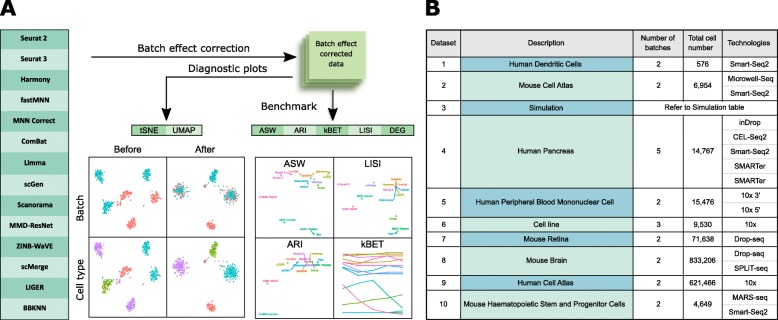
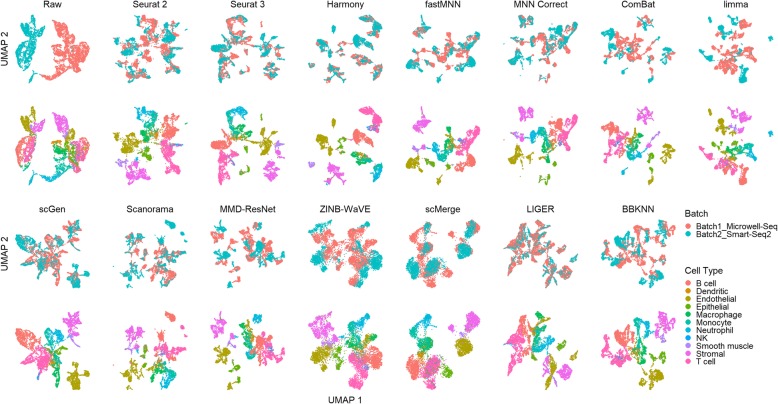
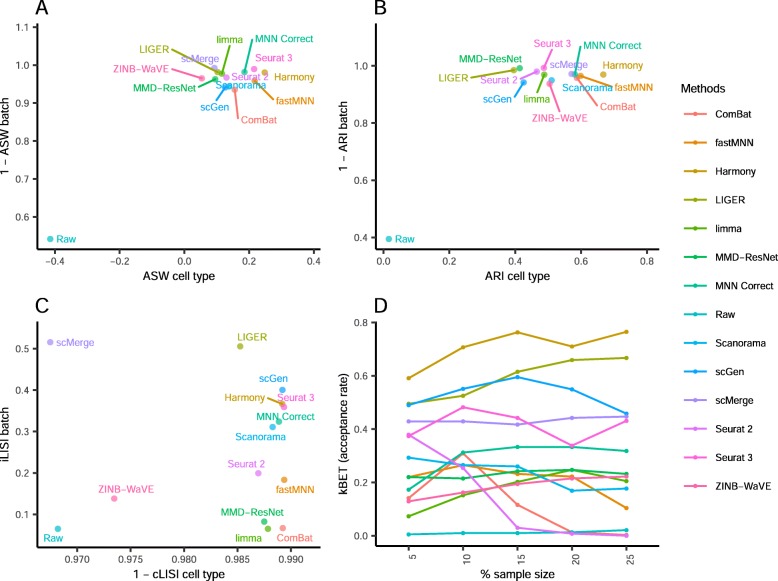
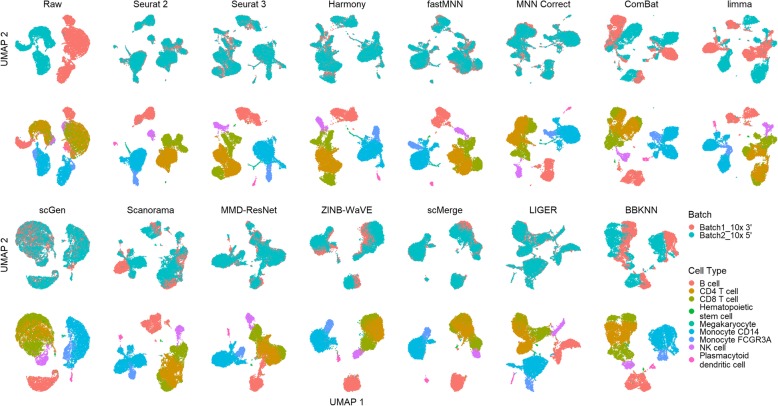
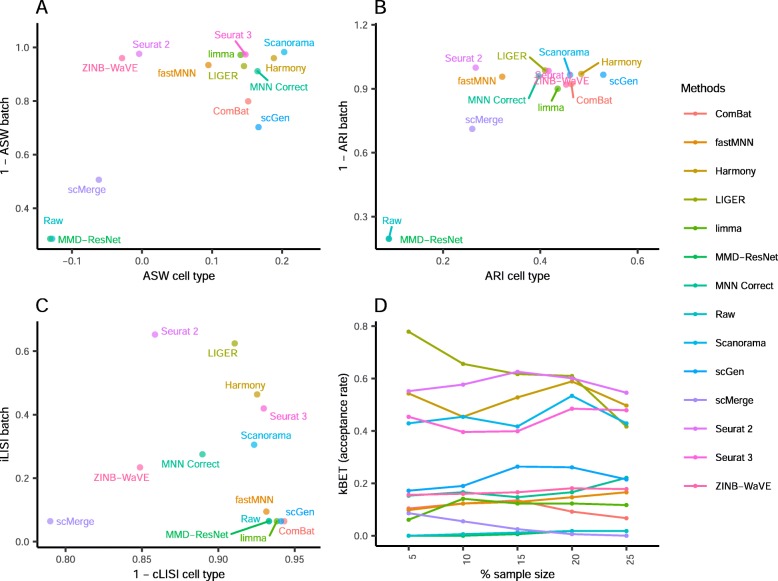
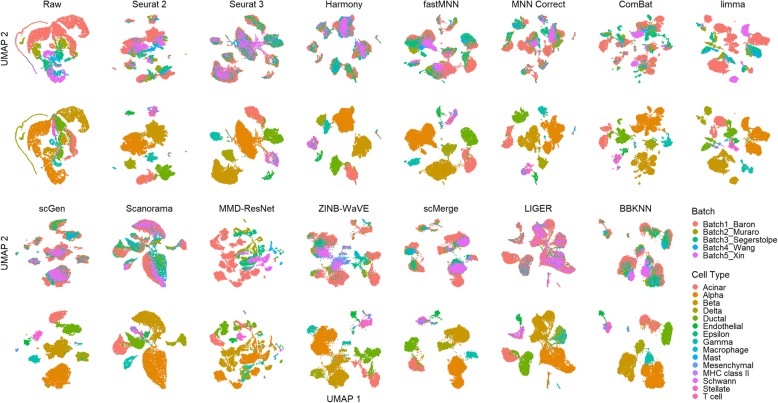
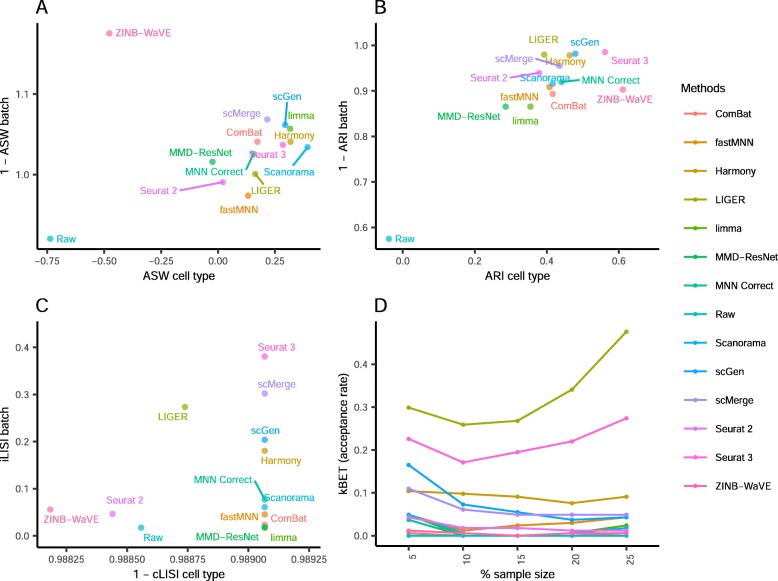
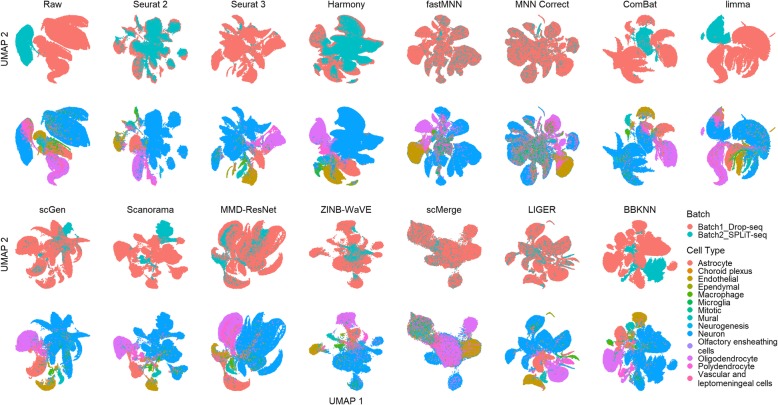
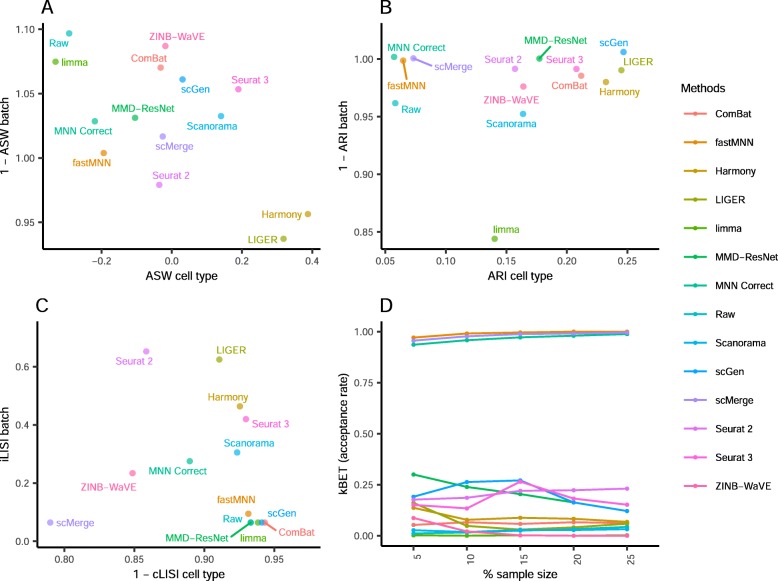
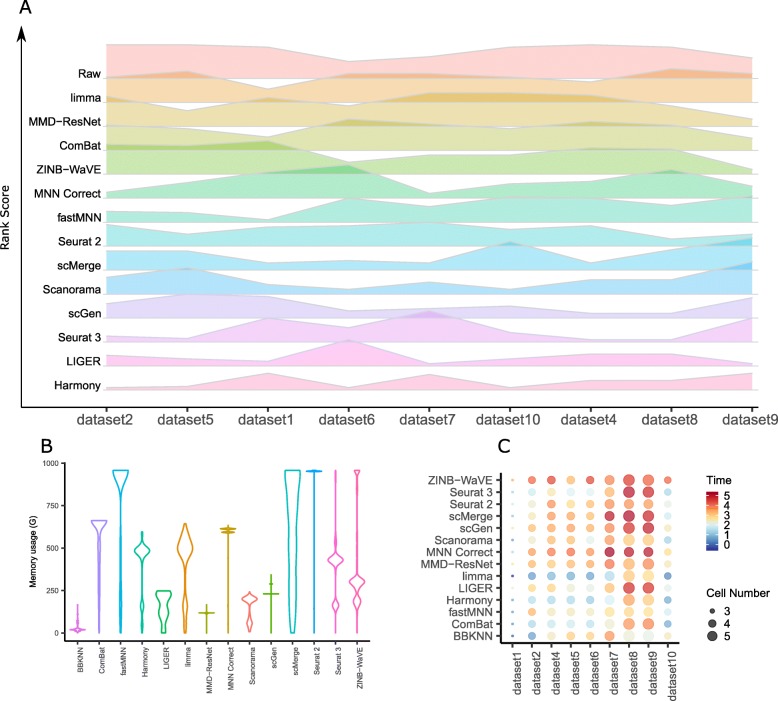
Background: Large-scale single-cell transcriptomic datasets generated using different technologies contain batch-specific systematic variations that present a challenge to batch-effect removal and data integration. With continued growth expected in scRNA-seq data, achieving effective batch integration with available computational resources is crucial. Here, we perform an in-depth benchmark study on available batch correction methods to determine the most suitable method for batch-effect removal. Results: We compare 14 methods in terms of computational runtime, the ability to handle large datasets, and batch-effect correction efficacy while preserving cell type purity. Five scenarios are designed for the study: identical cell types with different technologies, non-identical cell types, multiple batches, big data, and simulated data. Performance is evaluated using four benchmarking metrics including kBET, LISI, ASW, and ARI. We also investigate the use of batch-corrected data to study differential gene expression. Conclusion: Based on our results, Harmony, LIGER, and Seurat 3 are the recommended methods for batch integration. Due to its significantly shorter runtime, Harmony is recommended as the first method to try, with the other methods as viable alternatives.
Overview
The claims and statistics of this paper haven’t been checked yet.
Free: it reads the open-access text and checks the first 5 claims that cite a source we can check. Create a free account to check every claim.
Integrity signals
Registry
Cites
Statistics
Figures
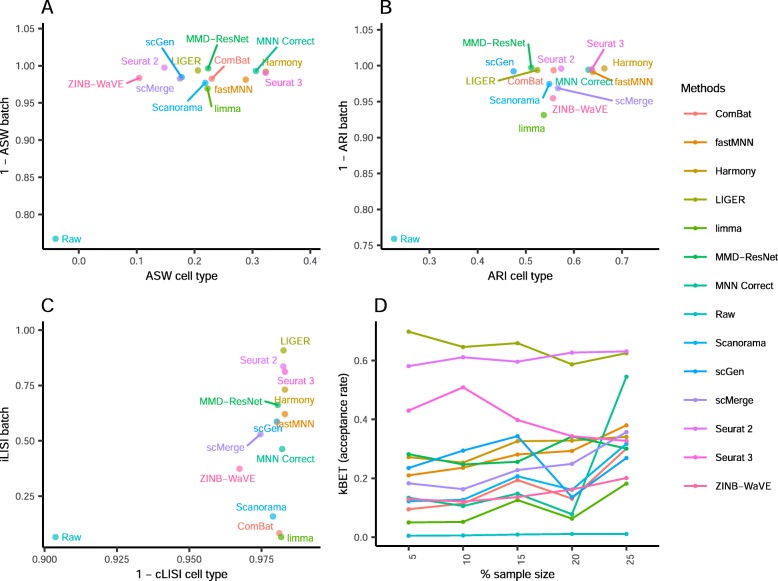
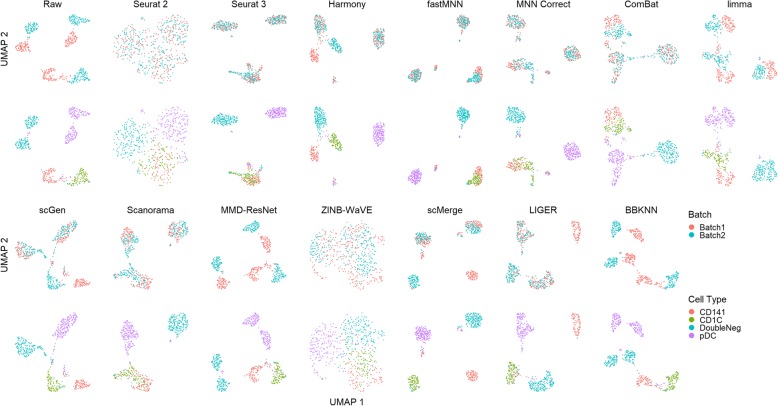
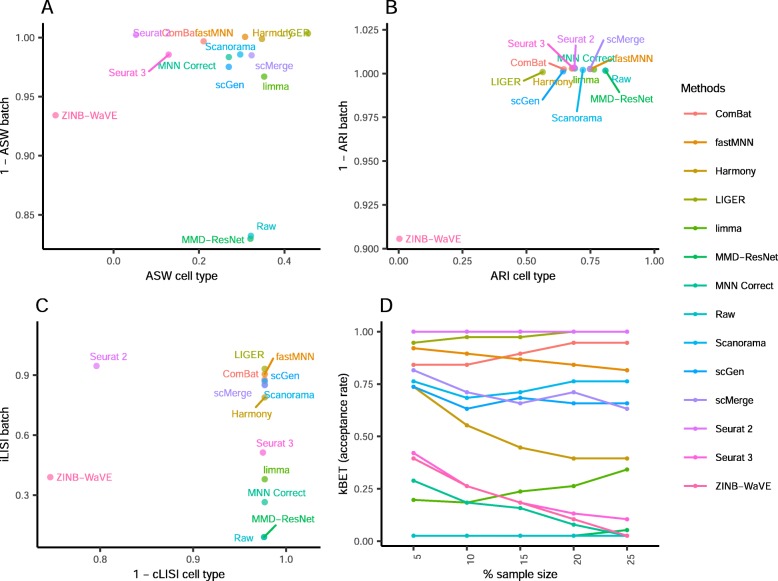
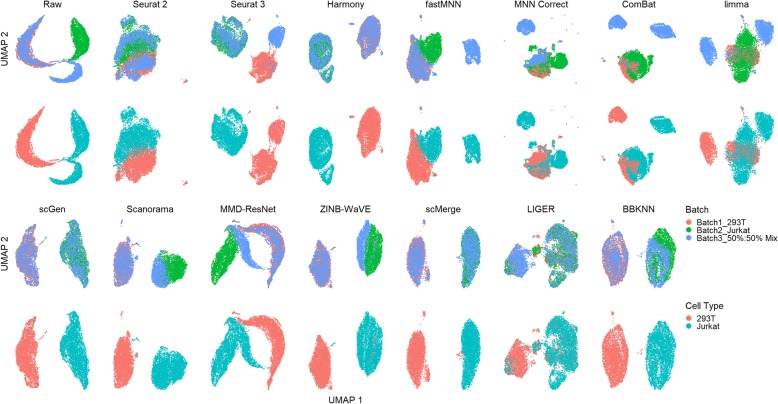
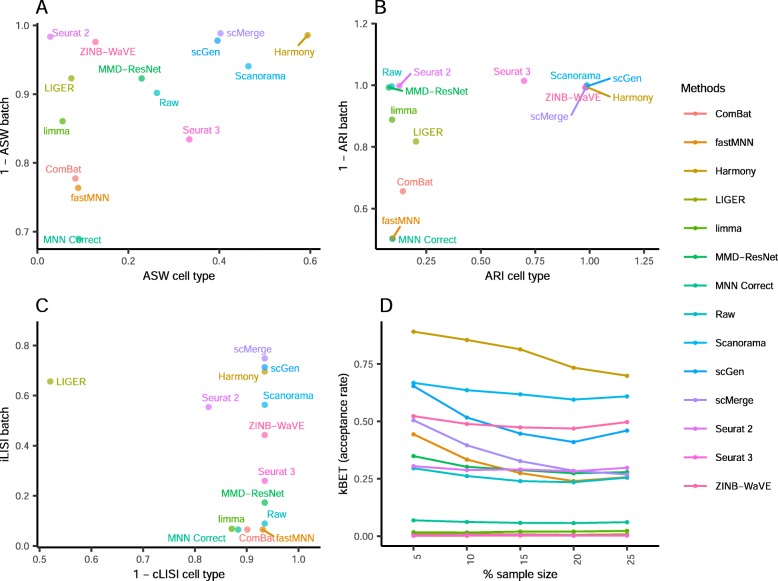
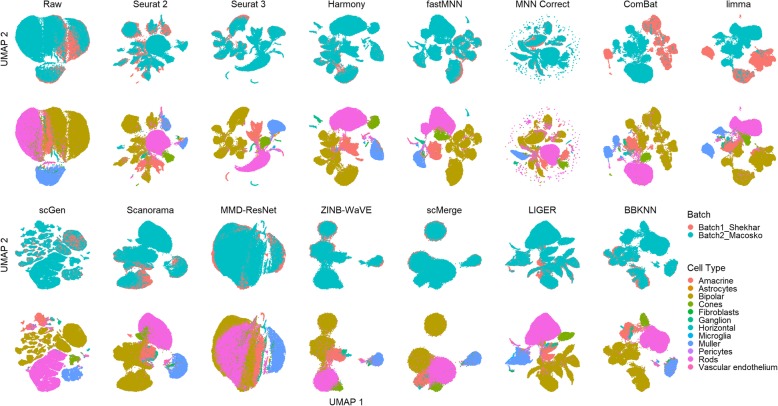
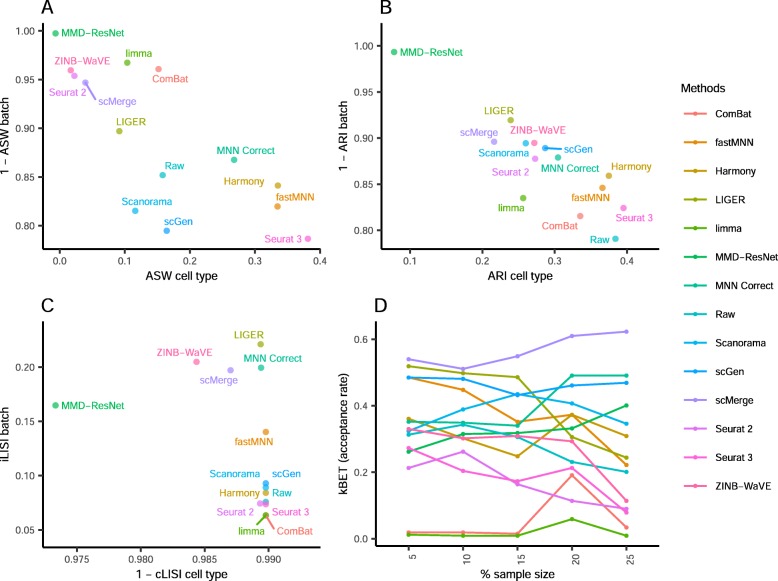
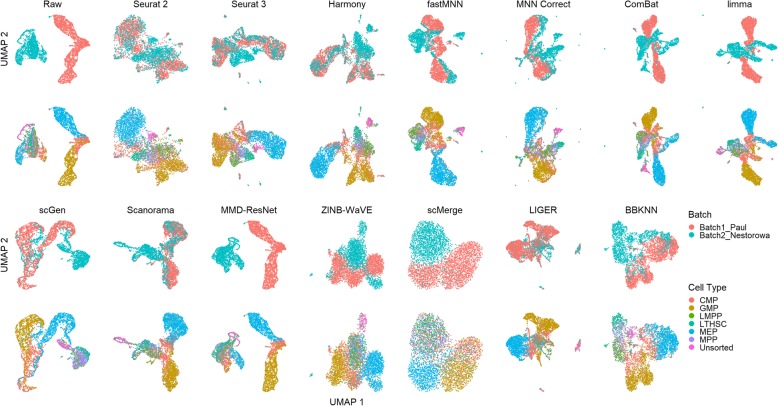
Verification
Claims the paper makes
The claims and statistics of this paper haven’t been checked yet.
Free: it reads the open-access text and checks the first 5 claims that cite a source we can check. Create a free account to check every claim.
Claims other papers make about this one
Each is checked against this paper’s own text: does it say what the citing paper says it does?
The cited source doesn’t support the claim as written.
In the citing paper
“Recent benchmark studies indicate that for simpler integration problems with relatively low biological complexity and relatively small batch effects in scRNA-Seq datasets, linear methods outperform nonlinear, more complex methods136,137, while for complicated integration tasks with large biological complexity and bigger batch effects, nonlinear methods such as scVI/scanVI outperform others138.”
From A high-resolution transcriptomic and spatial atlas of cell types in the whole mouse brain (2023) · cites this paper as [137]
Checked by a reasoning model — may be wrong.
Experimental — accuracy not yet measuredIn the citing paper
“Although SCING GRN based batch correction was not as optimized as the dedicated batch correction methods, many typical batch correction methods do not provide a batch corrected gene expression matrix for downstream analysis.44”
From SCING: Inference of robust, interpretable gene regulatory networks from single cell and spatial transcriptomics (2023) · cites this paper as [44]
In the citing paper
“Linear-embedding models such as canonical correlation analysis36 and Harmony37 were shown to perform well for batch correction on simpler integration tasks with distinct batch structures38,39.”
From Best practices for single-cell analysis across modalities (2023) · cites this paper as [38]
Self-check
Percentages, sums and reported differences re-computed from the paper’s own numbers.
The self-check needs the paper’s full text.
Citations
Cites
(2008) · Journal of Machine Learning Research · Cited by 33,051
Silhouettes: A graphical aid to the interpretation and validation of cluster analysis
Rousseeuw, P. J. (1987) · Journal of Computational and Applied Mathematics · doi:10.1016/0377-0427(87)90125-7 · Cited by 21,392 · cited 2×
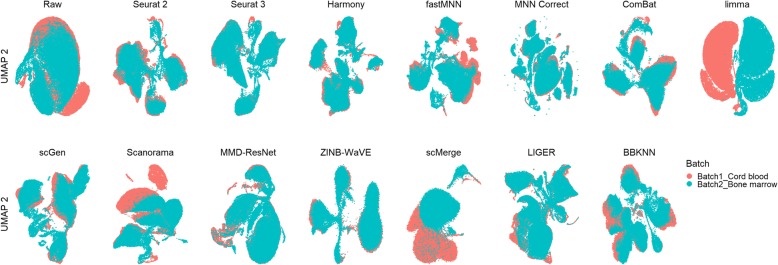
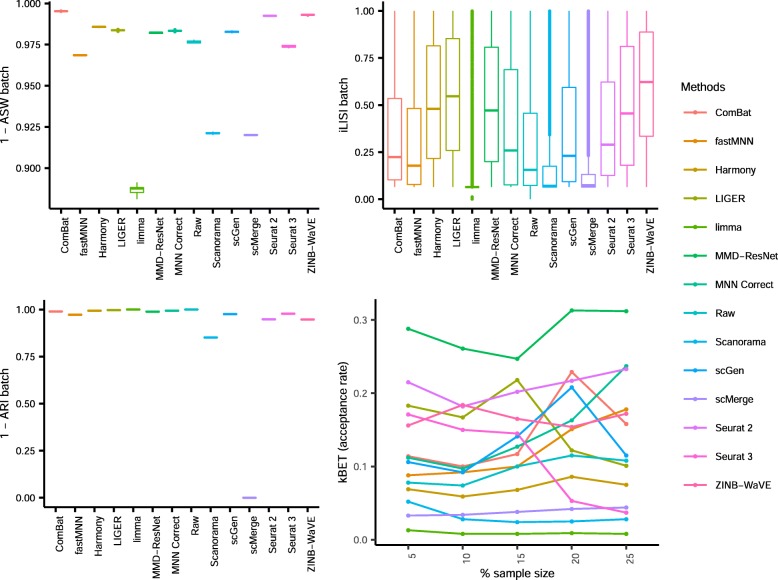
“…and Uniform Manifold Approximation and Projection (UMAP) [21] visualizations in conjunction with the k - nearest neighbor batch-effect test (kBET) [22], local inverse Simpson ’ s index (LISI) [13, 23], average silhouette width (ASW) [24], and adjusted rand index (ARI) benchmarking metrics [25].”
MethodGAN(Generative Adversarial Nets)
(2017) · Journal of Japan Society for Fuzzy Theory and Intelligent Informatics · doi:10.3156/jsoft.29.5_177_2 · Cited by 19,270
Comprehensive Integration of Single-Cell Data
Stuart, T., Butler, A., Hoffman, P., Hafemeister, C., Papalexi, E., Mauck, W. M., Hao, Y., Stoeckius, M., Smibert, P., & Satija, R. (2019) · Cell · doi:10.1016/j.cell.2019.05.031 · Cited by 15,453
Integrating single-cell transcriptomic data across different conditions, technologies, and species
Butler, A., Hoffman, P., Smibert, P., Papalexi, E., & Satija, R. (2018) · Nature Biotechnology · doi:10.1038/nbt.4096 · Cited by 13,174 · cited 6×
“Seurat alignment CCA, multiCCA (Seurat 2) Seurat multiCCA uses canonical correlation analysis (CCA) to first compute the linear combinations of genes with maximum correlation between batches [4].”
BackgroundMethodInfluentialFast, sensitive and accurate integration of single-cell data with Harmony
Korsunsky, I., Millard, N., Fan, J., Slowikowski, K., Zhang, F., Wei, K., Baglaenko, Y., Brenner, M., Loh, P.-R., & Raychaudhuri, S. (2019) · Nature Methods · doi:10.1038/s41592-019-0619-0 · Cited by 10,488 · cited 5×
“Another local level metric is the LISI proposed by Kor-sunsky et al. [13, 22], which can be used to assesses batch and cell type mixing.”
MethodInfluentialSCANPY: large-scale single-cell gene expression data analysis
Wolf, F. A., Angerer, P., & Theis, F. J. (2018) · Genome Biology · doi:10.1186/s13059-017-1382-0 · Cited by 8,881 · cited 1×
“The batch correction by Scanorama was performed in conjunction with the Scanpy workflow [29].”
MethodAdjusting batch effects in microarray expression data using empirical Bayes methods
Johnson, W. E., Li, C., & Rabinovic, A. (2007) · Biostatistics · doi:10.1093/biostatistics/kxj037 · Cited by 8,658 · cited 3×
“ComBat was originally developed for microarray gene expression data [1], but had been successfully employed”
MethodHubert, L., & Arabie, P. (1985) · Journal of Classification · doi:10.1007/bf01908075 · Cited by 8,219
Massively parallel digital transcriptional profiling of single cells
Zheng, G. X. Y., Terry, J. M., Belgrader, P., Ryvkin, P., Bent, Z. W., Wilson, R., Ziraldo, S. B., Wheeler, T. D., McDermott, G. P., Zhu, J., et al. (2017) · Nature Communications · doi:10.1038/ncomms14049 · Cited by 7,353
Research works printed but not linked: 5
- Lun A Further MNN algorithm development 2019
- Goodfellow I, Pouget-Abadie J, Mirza M, Xu B, Warde-Farley D, Ozair S, et al. Generative adversarial nets. In: Ghahramani Z, Welling M, Cortes C, Lawrence ND, Weinberger KQ, editors. Adv Neural Inf Process Syst 27: Curran Associates, Inc; 2014. p. 2672–80. Available from: http://papers.nips.cc/paper/5423-generative-adversarial-nets.pdf. Accessed 11 Mar 2019.
- Korsunsky I LISI 2019
- Deng Y, Bao F, Dai Q, Wu LF, Altschuler SJ. Massive single-cell RNA-seq analysis and imputation via deep learning. bioRxiv. 2018:315556 Available from: http://biorxiv.org/content/early/2018/11/27/315556.abstract. Accessed 5 July 2019.
- Tran HTN, Ang KS, Chevrier M, Zhang X, Lee NYS, Goh M, Chen J. A benchmark of batch-effect correction methods for single-cell RNA sequencing data. Simulations. Github Repository. https://github.com/JinmiaoChenLab/Batch-effect-removal-benchmarking. 2019. PMC6964114 31948481
Cited by
Items 501–600 of 1,005
Alchahin, A. M., Τσέα, Ι., & Baryawno, N. (2023) · Cancers · doi:10.3390/cancers15194734 · Cited by 12
“Another challenge in scRNA-seq is dealing with variation between different datasets [92].”
BackgroundENGEP: advancing spatial transcriptomics with accurate unmeasured gene expression prediction
Yang, S.-T., & Zhang, X.-F. (2023) · Genome biology · doi:10.1186/s13059-023-03139-w · Cited by 11
“However, in practice, determining the optimal combination of batch effect correction methods [13], similarity measures [14], and number of selected neighbors remains an open problem.”
BackgroundSelf-citationLiu, R., Qian, K., He, X., & Li, H. (2024) · BMC Bioinformatics · doi:10.1186/s12859-024-05706-9 · Cited by 11
“The analysis of such heterogeneous datasets necessitates the integration of multiple scRNA-seq datasets to mitigate the influence of batch effects, which can introduce expression biases and confound biological variation [6, 7], thereby giving rise to erroneous inferences in subsequent analyses.”
BackgroundMethodIterative Refinement of Cellular Identity from Single-Cell Data Using Online Learning
Gao, C., Preißl, S., Luo, C., Castanon, R., Sandoval, J., Rivkin, A., Nery, J. R., Behrens, M. M., Ecker, J. R., Ren, B., et al. (2020) · Lecture notes in computer science · doi:10.1007/978-3-030-45257-5_24 · Cited by 12
Tai, A., Tseng, G. C., & Hsieh, W. (2021) · The Annals of Applied Statistics · doi:10.1214/20-aoas1376 · Cited by 13
“Additionally, one systematic review has tested 14 popular batch correction algorithms designed for single RNA-seq data, and they concluded that every batch-effect removal algorithm has its advantages and limitations with no superior method (Tran et al. (2020)).”
BackgroundSingle-Cell Analysis for Whole-Organism Datasets
Pisco, A. O., Tojo, B. M., & McGeever, A. (2021) · Annual Review of Biomedical Data Science · doi:10.1146/annurev-biodatasci-092820-031008 · Cited by 11
Zandavi, S. M., Koch, F. C., Vijayan, A., Zanini, F., Valdés‐Mora, F., Gallego‐Ortega, D., & Vafaee, F. (2022) · Nucleic Acids Research · doi:10.1093/nar/gkac436 · Cited by 12
“To assess this presumption, we employed four combined datasets (detailed in Supplementary Table S5) representing different batch-effect scenarios as suggested previously (44).”
BackgroundMethodThe Value of Single-cell Technologies in Solid Organ Transplantation Studies
Peereboom, E. T. M., Matern, B. M., Spierings, E., & Geneugelijk, K. (2022) · Transplantation · doi:10.1097/tp.0000000000004237 · Cited by 12
Arts, J. A., Laberthonnìère, C., Cunha, D. L., & Zhou, H. (2023) · Cells · doi:10.3390/cells12131808 · Cited by 11
Single‐Cell RNA Sequencing for Precision Oncology: Current State-of-Art
Seow, J. J. W., Wong, R. M. M., Pai, R., & Sharma, A. (2020) · Journal of the Indian Institute of Science · doi:10.1007/s41745-020-00178-1 · Cited by 12
Neuronal Cell-type Engineering by Transcriptional Activation
Liu, S., Striebel, J., Pasquini, G., Ng, A. H. M., Khoshakhlagh, P., Church, G. M., & Busskamp, V. (2021) · Frontiers in Genome Editing · doi:10.3389/fgeed.2021.715697 · Cited by 12
“Due to the advent of tools employing various computational techniques for comparing single cell datasets (Abdelaal et al., 2019; Tran et al., 2020; Pasquini et al., 2021), researchers can now map the identity of novel induced-cells to a much more detailed reference.”
BackgroundPervasive 3′-UTR Isoform Switches During Mouse Oocyte Maturation
He, Y., Chen, Q., Zhang, J., Yu, J. Q., Xia, M., & Wang, X. (2021) · Frontiers in Molecular Biosciences · doi:10.3389/fmolb.2021.727614 · Cited by 11
“, 2007) performed the best with respect to oocyte clustering results (see below), which is consistent with previous reports (Chen et al., 2020; Tran et al., 2020).”
ResultA comparison of data integration methods for single-cell RNA sequencing of cancer samplesPreprint
Richards, L. M., Riverin, M., Mohanraj, S., Ayyadhury, S., Croucher, D. C., Díaz-Mejía, J. J., Coutinho, F. J., Dirks, P. B., & Pugh, T. J. (2021) · bioRxiv (Cold Spring Harbor Laboratory) · doi:10.1101/2021.08.04.453579 · Cited by 12
“Comparing median cell type LISI scores of all normal cell types, Harmony had the highest batch mixing across all datasets (Figure S4B), in concordance with results on normal tissues 4 .”
BackgroundMethodResultRemoving Inter-Experimental Variability from Functional Data in Systems NeurosciencePreprint
Gonschorek, D., Höfling, L., Szatko, K. P., Franke, K., Schubert, T., Dunn, B. A., Berens, P., Klindt, D. A., & Euler, T. (2021) · bioRxiv (Cold Spring Harbor Laboratory) · doi:10.1101/2021.10.29.466492 · Cited by 16
“[28] to assess the quality of dataset-mixing in genomics.”
BackgroundMethodNeff, S. L., Hampton, T. H., Puerner, C. T. S., Cengher, L., Doing, G., Lee, A. J., Koeppen, K., Cheung, A. L., Hogan, D. A., Cramer, R. A., et al. (2022) · Scientific Data · doi:10.1038/s41597-022-01431-1 · Cited by 11
“Meta-analysis should be conducted carefully with the application of appropriate statistical meth-ods for batch effect correction 64,65 .”
MethodscCorrector: a robust method for integrating multi-study single-cell data
Guo, Z., Wang, Y., Wang, S., Zhang, Q., & Huang, D.-S. (2024) · Briefings in Bioinformatics · doi:10.1093/bib/bbad525 · Cited by 10
A review of single-cell transcriptomics and epigenomics studies in maternal and child health
Shu, C., Street, K., Breton, C. V., Bastain, T. M., & Wilson, M. L. (2024) · Epigenomics · doi:10.1080/17501911.2024.2343276 · Cited by 10
Cheng, C., Wang, G., Zhu, Y., Wu, H., Zhang, L., Liu, Z., Huang, Y., & Zhang, J. (2024) · Nature Communications · doi:10.1038/s41467-024-48282-5 · Cited by 11
Batch-effect correction in single-cell RNA sequencing data using JIVE
Hastings, J., Lee, D., & O’Connell, M. J. (2024) · Bioinformatics Advances · doi:10.1093/bioadv/vbae134 · Cited by 13
From sampling to simulating: Single-cell multiomics in systems pathophysiological modeling
Manchel, A., Gee, M. M., & Vadigepalli, R. (2024) · iScience · doi:10.1016/j.isci.2024.111322 · Cited by 10
“134 Therefore, the patient-specific variation can be preserved for parameterization and structuring of computational models.”
Zhang, X., Mallick, H., & Rahnavard, A. (2026) · Communications Medicine · doi:10.1038/s43856-026-01612-8 · Cited by 10
“By comparing R 2 values before and after correction, we assessed improvements in data quality and the reduction of batch-associated biases 27,28 .”
Self-citationIdentifying similar populations across independent single cell studies without data integration
González-Velasco, Ó., Simon, M., Yilmaz, R., Parlato, R., Weishaupt, J. H., Imbusch, C. D., & Brors, B. (2025) · NAR Genomics and Bioinformatics · doi:10.1093/nargab/lqaf042 · Cited by 10
Wang, B., Zhang, Z., Ouyang, Q., Zhang, M., Duan, M., Hu, H., Zhang, Q., Jin, X., Zhang, J., Luo, Q., et al. (2025) · EBioMedicine · doi:10.1016/j.ebiom.2025.105922 · Cited by 12
Wang, Y., Fan, Y., Wang, X., Yu, T., Zong, Y., Liu, X., Zhong, G., Liu, M., Li, Q., Lee, K. H., et al. (2026) · Nature Communications · doi:10.1038/s41467-026-72570-x · Cited by 12
Yao, Z., Li, M., & Lv, G. (2023) · Frontiers in Immunology · doi:10.3389/fimmu.2023.1058296 · Cited by 10
scJVAE: A novel method for integrative analysis of multimodal single-cell data
Wani, S. A., Khan, S. A., & Quadri, S. M. K. (2023) · Computers in Biology and Medicine · doi:10.1016/j.compbiomed.2023.106865 · Cited by 10
BEENE: deep learning-based nonlinear embedding improves batch effect estimation
Rahman, M. A., Tutul, A. A., Sharmin, M., & Bayzid, M. S. (2023) · Bioinformatics · doi:10.1093/bioinformatics/btad479 · Cited by 11
“Batch effects, on the other hand, are complex in nature and can be highly nonlinear (Tran et al. 2020), making it difficult for the embeddings generated by linear dimensionality reduction methods like PCA to correctly detect and assess the degree of batch effects present in the data.”
Brummer, T., Schillner, M., Steffen, F., Kneilmann, F., Wasser, B., Uphaus, T., Zipp, F., & Bittner, S. (2023) · Journal of Neuroinflammation · doi:10.1186/s12974-023-02947-y · Cited by 10
Unraveling the secrets of γδ T cells with single-cell biology
Sagar (2023) · Journal of Leukocyte Biology · doi:10.1093/jleuko/qiad131 · Cited by 11
Liang, X., Cao, L., Chen, H., Wang, L., Wang, Y., Fu, L., Tan, X., Chen, E., Ding, Y., & Tang, J. (2023) · Briefings in Bioinformatics · doi:10.1093/bib/bbad497 · Cited by 12
“This may be attributed to the following: batch effects cannot be effectively removed [16]; scRNA-seq data are sparse (due to low RNA capture rate) [17]; clustering algorithm resolution depends on subjective judgment [18] and the increasing number of cells which may reach thousands to millions [19].”
BackgroundInfluentialSRT-Server: powering the analysis of spatial transcriptomic data
Yang, S., & Zhou, X. (2024) · Genome Medicine · doi:10.1186/s13073-024-01288-6 · Cited by 11
Single-Cell RNA-seq reveals transcriptomic modulation of Alzheimer’s disease by activated protein C
Fatmi, M. K., Wang, H., Slotabec, L. A., Wen, C., Seale, B. C., Zhao, B., & Li, J. (2024) · Aging · doi:10.18632/aging.205624 · Cited by 12
“The various tools provided by Seurat are recommended to correct for batch effects in scRNA-seq data [69].”
MethodSingle-cell sequencing insights into the transcriptional landscape of Parkinson's disease
Su, Y., Zheng, H., Cui, X., Zhang, S., Zhang, S., Hu, Z., Hao, X., Li, M., Guo, G., Xia, Z., et al. (2024) · Ageing Research Reviews · doi:10.1016/j.arr.2024.102553 · Cited by 10
Predicting potential residues associated with lung cancer using deep neural network
Pandey, M., & Gromiha, M. M. (2020) · Mutation research. Fundamental and molecular mechanisms of mutagenesis · doi:10.1016/j.mrfmmm.2020.111737 · Cited by 11
Patterns of T‐Cell Phenotypes in Rheumatic Diseases From Single‐Cell Studies of Tissue
Gao, Y., Dunlap, G. S., Elahee, M., & Rao, D. A. (2021) · ACR Open Rheumatology · doi:10.1002/acr2.11296 · Cited by 10
Computational tools for analyzing single-cell data in pluripotent cell differentiation studies
Ding, J., Alavi, A., Ebrahimkhani, M. R., & Bar‐Joseph, Z. (2021) · Cell Reports Methods · doi:10.1016/j.crmeth.2021.100087 · Cited by 10
“Available in many statistical packages n/a (Tran et al., 2020)”
MethodZhang, X., Wang, Z., Zhang, C., Li, Y., Lu, S., Steffens, S., Mohanta, S. K., Weber, C., Habenicht, A. J. R., & Yin, C. (2022) · Methods in molecular biology · doi:10.1007/978-1-0716-1924-7_43 · Cited by 10
Self-citationJIND: joint integration and discrimination for automated single-cell annotation
Goyal, M., Serrano, G., Argemí, J., Shomorony, I., Hernáez, M., & Ochoa, I. (2022) · Bioinformatics · doi:10.1093/bioinformatics/btac140 · Cited by 11
Deep Learning Approaches for the Protein Scaffold Filling Problem
Sturtz, J., Zhu, B., Liu, X., Fu, X., Yuan, X., & Qingge, L. (2022) · IEEE International Conference on Tools with Artificial Intelligence (ICTAI) · doi:10.1109/ictai56018.2022.00161 · Cited by 10
“An increasing number of computational algorithms and tools have been developed for single-cell analysis, such as Seurat [20], MAGIC [21], SAVER [22], scImpute [23] for imputation, Seurat CCA [24] and ZINB-WaVE [25] for batch effect removal.”
MethodDing, J., Lin, J., Jiang, S., Wang, Y., Miao, Z., Fang, Z., Tang, J., Li, M., & Qiu, X. (2025) · bioRxiv (Cold Spring Harbor Laboratory) · doi:10.1101/2025.01.06.631427 · Cited by 13
Zhang, Y., Yang, K., Bai, J., Chen, J., Ou, Q. Z., Zhou, W., Li, X., & Hu, C. (2025) · iScience · doi:10.1016/j.isci.2025.111843 · Cited by 12
“8,13,63 We present comprehensive single-cell landscape of primary and metastatic GC, revealing multiple immune cell clusters were enriched in liver metastasis and lymph node metastasis, which has previously been reported.”
Self-citationSchumann, Y., Schlumbohm, S., Neumann, J. E., & Neumann, P. (2025) · Nature Communications · doi:10.1038/s41467-025-62237-4 · Cited by 9
“The ASW score was demonstrated to exhibit broad consensus with other metrics (iLSI, kBET, ARI), and is particularly useful for global data characterization 16 .”
Luo, X., Deng, J., Jiang, X., Mi, J., Bai, Y., Zhang, H., Li, Y., Liu, M., Cai, C., Li, P., et al. (2025) · Clinical and Translational Medicine · doi:10.1002/ctm2.70452 · Cited by 9
Toward universal immunofluorescence normalization for multiplex tissue imaging with UniFORM
Wang, K., Ait-Ahmad, K., Kupp, S., Sims, Z., Cramer, E. M., Sayar, Z., Yu, J. X., Wong, M. H., Mills, G. B., Eksi, S. E., et al. (2025) · Cell Reports Methods · doi:10.1016/j.crmeth.2025.101172 · Cited by 12
Luan, W.-Y., Zhao, Q., Zhang, Z., Xu, Z.-X., Lin, S.-X., & Miao, Y. (2025) · World Journal of Gastrointestinal Oncology · doi:10.4251/wjgo.v17.i10.110661 · Cited by 9
Wei, Y., Hong, F., Xie, S., Luo, X., Li, X., Dao, F., Deng, K., Lin, H., & Lv, H. (2025) · International Journal of Molecular Sciences · doi:10.3390/ijms262211005 · Cited by 9
“For example, in scRNA-seq, differences in cell capture efficiency, library preparation protocols, or sequencing depth across batches can significantly affect the distribution of the gene expression matrix [54].”
Hegarty, L. M., Jones, G., Biram, A., Adams, C. E., Gentek, R., Ho, G., Emmerson, E., & Bain, C. C. (2025) · Mucosal Immunology · doi:10.1016/j.mucimm.2025.11.007 · Cited by 10
“54 When merging samples the Harmony package 55 was used to correct for batch effects.”
Benchmarking deep learning methods for biologically conserved single-cell integration
Yi, C., Cheng, J., Chen, J., Liu, W., Liu, J., & Li, Y. (2025) · Genome biology · doi:10.1186/s13059-025-03869-z · Cited by 11
“While these methods are effective in aligning and integrating scRNA-seq data, they often encounter difficulties with large-scale datasets, particularly those exhibiting high cell-type heterogeneity across datasets [15].”
Self-citationCheng, Y. H., Su, Y., Fan, Y., Yang, Y., Chen, X., Fuzhou, W. A. N. G., Wong, K., & Li, X. (2026) · Genome Medicine · doi:10.1186/s13073-025-01586-7 · Cited by 12
“Scores close to 1 suggest that the clusters are primarily composed of a single cell type, indicating effective separation of cell types despite batch integration [28].”
Single-cell and spatial profiling in cancer biology and clinical oncology
Frangieh, C. J., Fan, J. L., Melms, J. C., Shah, P., Azizi, E., & Izar, B. (2026) · Nature Cancer · doi:10.1038/s43018-026-01142-1 · Cited by 11
AI-Driven Chemometrics for Multi-omics Data Integration: Advances, Challenges, and Future Directions
Polu, P. R. (2026) · Critical Reviews in Analytical Chemistry · doi:10.1080/10408347.2026.2657553 · Cited by 14
Single-cell biology to decode the immune cellular composition of kidney inflammation
Zhao, Y., Panzer, U., Bonn, S., & Krebs, C. F. (2021) · Cell and Tissue Research · doi:10.1007/s00441-021-03483-y · Cited by 9
Wang, L., Nie, R., Zhang, J., & Cai, J. (2022) · BMC Bioinformatics · doi:10.1186/s12859-022-05098-8 · Cited by 9
Shahir, J. A., Stanley, N., & Purvis, J. E. (2024) · BMC Bioinformatics · doi:10.1186/s12859-024-05641-9 · Cited by 11
Small data methods in omics: the power of one
Johnston, K. G., Grieco, S. F., Nie, Q. H., Theis, F. J., & Xu, X. (2024) · Nature Methods · doi:10.1038/s41592-024-02390-8 · Cited by 9
“Since query data and reference data are often generated in different labs and by different scientists using different protocols, batch effects can dominate the quality of the joint embedding, leading to spurious results 17 .”
Automated single-cell omics end-to-end framework with data-driven batch inference
Wang, Y., Thistlethwaite, W., Tadych, A., Ruf-Zamojski, F. M., Bernard, D. J., Cappuccio, A., Zaslavsky, E., Chen, X., Sealfon, S. C., & Troyanskaya, O. G. (2024) · Cell Systems · doi:10.1016/j.cels.2024.09.003 · Cited by 10
BayeSMART: Bayesian clustering of multi-sample spatially resolved transcriptomics data
Guo, Y., Zhu, B., Tang, C., Rong, R., Ma, Y., Xiao, G., Xu, L., & Li, Q. (2024) · Briefings in Bioinformatics · doi:10.1093/bib/bbae524 · Cited by 9
“With the low dimensional representation matrix Y , we finally perform the batch effect correction and alignment with Harmony [44] per recommendation [25, 45] and obtain the final form of the multi-sample molecular profile Y .”
MethodCosGeneGate selects multi-functional and credible biomarkers for single-cell analysis
Liu, T., Long, W., Cao, Z., Wang, Y., He, C. H., Zhang, L., Strittmatter, S. M., & Zhao, H. (2024) · Briefings in Bioinformatics · doi:10.1093/bib/bbae626 · Cited by 8
Kujawa, T., Marczyk, M., & Polańska, J. (2022) · Frontiers in Genetics · doi:10.3389/fgene.2022.1009316 · Cited by 10
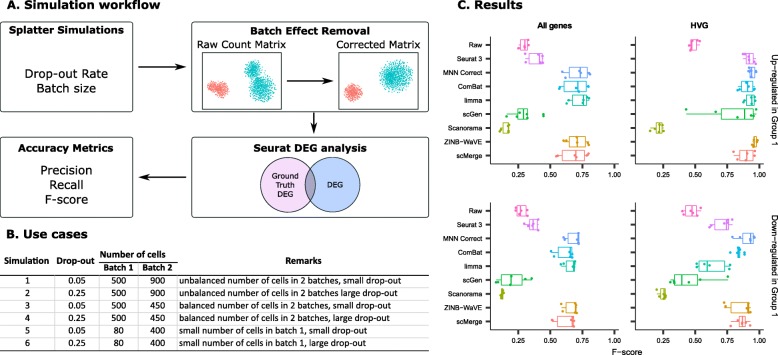
“In another evaluation of scRNAseq data integration methods (Tran et al., 2020), they examined in different simulation scenarios (balanced/unbalanced batches, different dropout rates) the impact of data integration on differential gene expression analysis (DGE analysis), particularly whether it…”
MethodQuantitative analysis of high‐throughput biological data
Juan, H., & Huang, H. (2023) · Wiley Interdisciplinary Reviews Computational Molecular Science · doi:10.1002/wcms.1658 · Cited by 10
“Although the existing batch-effect-removal tools such as ComBat(120) and limma(117) were developed for microarray or bulk RNA-seq, these tools have also been used on scRNA-seq data.(112) Their application to scRNA-seq data assumes that the cell composition in each batch is identical, whereas the population composition…”
BackgroundMethodHuang, Y., Zheng, Y., Yin, J., Lu, T., Li, M., Liang, J., Hu, Z., Bi, G., Zhan, C., Xue, L., et al. (2020) · Frontiers in Genetics · doi:10.3389/fgene.2020.573429 · Cited by 9
“R package harmony focuses on scalable integration of scRNA-seq data for batch correction and metaanalysis (Tran et al., 2020) (version 1.”
MethodOsteomodulin is a Potential Genetic Target for Hypertrophic Cardiomyopathy
Guo, W., Feng, W., Fan, X., Huang, J., Ou, C., & Chen, M. (2021) · Biochemical Genetics · doi:10.1007/s10528-021-10050-1 · Cited by 9
Zhang, W., Xu, X., Fu, Z., Chen, J., Chen, S., & Tan, Y. (2022) · Frontiers of Medicine · doi:10.1007/s11684-021-0915-9 · Cited by 9
“Since the heterogeneity among clinical samples is always very large, the robust and time-ef fi cient batch effect removing method Harmony [16,17] is included in the scIntegrate function.”
MethodSelf-citationPropensity score matching enables batch-effect-corrected imputation in single-cell RNA-seq analysis
Xu, X., Yu, X., Hu, G., Wang, K., Zhang, J., & Li, X. (2022) · Briefings in Bioinformatics · doi:10.1093/bib/bbac275 · Cited by 10
Multi-omic analysis along the gut-brain axis points to a functional architecture of autismPreprint
Morton, J. T., Jin, D.-M., Mills, R. H., Shao, Y., Rahman, G., McDonald, D. T., Berding, K., Needham, B. D., Zurita, M. F., David, M. M., et al. (2022) · bioRxiv (Cold Spring Harbor Laboratory) · doi:10.1101/2022.02.25.482050 · Cited by 10
Astrocyte Regional Specialization is Shaped by Postnatal DevelopmentPreprint
Schroeder, M. E., McCormack, D. M., Metzner, L. R., Kang, J., Li, K. X., Yu, E., Melamed, L., Levandowski, K. M., Zaniewski, H., Zhang, Q., et al. (2024) · SSRN Electronic Journal · doi:10.1101/2024.10.11.617802 · Cited by 10
“A unified study, with data generated from a single lab using highly consistent methodology, has the advantage of reduced technical variation compared to datasets integrated across research groups, nuclei isolation protocols, and sequencing platforms, which is difficult to remove in silico 33,34 .”
Chen, L., Tong, X., Wu, Y., Liu, C., Tang, C., Xu, Q., Kong, F., Li, M., Jin, L. G., & Zeng, B. (2025) · BMC Genomic Data · doi:10.1186/s12863-025-01308-3 · Cited by 8
刘运畅, Y. L., 曾利平, L. Z., 蔡琦, Q. C., 曾云飞, Y. Z., 郑硕, S. Z., 龚雪, X. G., 周栌, L. Z., Tian, M., Chen, L., Wu, G., et al. (2025) · Journal of Advanced Research · doi:10.1016/j.jare.2025.05.065 · Cited by 8
SeuratIntegrate: an R package to facilitate the use of integration methods with Seurat
Specque, F., Barré, A., Nikolski, M., & Chalopin, D. (2025) · Bioinformatics · doi:10.1093/bioinformatics/btaf358 · Cited by 9
Triple-effect correction for Cell Painting data with contrastive and domain-adversarial learning
Yan, C., Zhang, Y., Feng, J., Hua, H., Ruan, Z., Li, Z., Li, S., Yan, C., Li, P., Liu, J., et al. (2025) · Nature Communications · doi:10.1038/s41467-025-62193-z · Cited by 12
Morizet, D., Foucher, I., Mignerey, I., Alunni, A., & Bally‐Cuif, L. (2025) · Science Advances · doi:10.1126/sciadv.adu3189 · Cited by 8
“Liger compares favorably to other integration methods ( 80 ), produces interpretable results thanks to the use of non-negative matrix factorization, and relies on few parameters, facilitating grid search.”
Liu, X., Bin, C., Gao, Q., Li, M., Xue, L., Zhou, Z., Liu, M., Ji, X., & Wei, S. (2026) · Biomarker Research · doi:10.1186/s40364-026-00914-2 · Cited by 10
Big data analytics in single‐cell transcriptomics: Five grand opportunities
Bhattacharya, N., Nelson, C. C., Ahuja, G., & Sengupta, D. (2021) · Wiley Interdisciplinary Reviews Data Mining and Knowledge Discovery · doi:10.1002/widm.1414 · Cited by 8
“Batch correction methods are absolutely critical to enable integrative analysis of single-cell data (Haghverdi, Lun, Morgan, & Marioni, 2018; Tran et al., 2020).”
MethodIntegrating single-cell genomics pipelines to discover mechanisms of stem cell differentiation
Shen, S., Sun, Y., Matsumoto, M., Shim, W. J., Sinniah, E., Wilson, S. B., Werner, T., Wu, Z., Bradford, S. T., Hudson, J. E., et al. (2021) · Trends in Molecular Medicine · doi:10.1016/j.molmed.2021.09.006 · Cited by 9
Zhou, X., Shi, Z., Wu, Y., Zhao, J., & Wu, H. (2022) · IEEE International Conference on Bioinformatics and Biomedicine (BIBM) · doi:10.1109/bibm55620.2022.9995134 · Cited by 8
“…[8], [23]) based on the sparse single-cell Hi-C data [6], in which we use the Adjusted Rand Index (ARI), Adjusted Mutual Information (AMI) [19], [24]–[26], homogeneity (HM) score and Fowlkes Mallows (FM) score [27] as evaluation indices to assess the performance of the five clustering frameworks.”
MethodNakayama, J., & Yamamoto, Y. (2023) · Cancer Research Communications · doi:10.1158/2767-9764.crc-23-0195 · Cited by 8
“To remove the batch effect between cohort studies, Harmony version 0.1.1. algorithms (RRID:SCR_022206) were applied to the integrated atlas (28, 29) following the instructions in the Quick start vignettes (https://portals.broadinstitute.org/harmony/articles/quickstart. html). cLISI score and iLISI…”
InfluentialAnalysis and Visualization of Single-Cell Sequencing Data with Scanpy and MetaCell: A Tutorial
Li, Y., Sun, C., Romanova, D. Y., Wu, D. O., Fang, R., & Moroz, L. L. (2024) · Methods in molecular biology · doi:10.1007/978-1-0716-3642-8_17 · Cited by 10
A unified model for interpretable latent embedding of multi-sample, multi-condition single-cell data
Madrigal, A., Lu, T., Soto, L. M., & Najafabadi, H. S. (2024) · Nature Communications · doi:10.1038/s41467-024-50963-0 · Cited by 9
“To quantitatively measure the ability of GEDI to separate intra-sample and inter-sample sources of variability, we compared it against a panel of existing single-cell integration methods using previously established metrics 16,17 and three benchmarking references: the PBMC dataset described above,…”
FedscGen: privacy-preserving federated batch effect correction of single-cell RNA sequencing data
Bakhtiari, M., Bonn, S., Theis, F. J., Zolotareva, O. I., & Baumbach, J. (2025) · Genome biology · doi:10.1186/s13059-025-03684-6 · Cited by 10
ProjectSVR: mapping single-cell RNA-seq data to reference atlases by supported vector regression
Gao, J., Fang, J., Zhu, Q., Li, G., Bi, Z., Hu, Y., Hong, B., Zhang, Y., Guo, S., & Wang, H. (2025) · Briefings in Bioinformatics · doi:10.1093/bib/bbaf586 · Cited by 8
Gustafsson, J., Robinson, J. L., Nielsen, J., & Pachter, L. S. (2021) · Genome biology · doi:10.1186/s13059-021-02386-z · Cited by 9
Single-Cell Transcriptome Analysis as a Promising Tool to Study Pluripotent Stem Cell Reprogramming
Kim, H. K., Ha, T. W., & Lee, M. R. (2021) · International Journal of Molecular Sciences · doi:10.3390/ijms22115988 · Cited by 8
“A classic method to apply to these linkages is the k-nearest neighbor, in order to simplify a complex shape with a set of cell points and lines generated by the connection of points [49].”
MethodIntegrative Single-Cell Transcriptomic Analysis of Human Fetal Thymocyte Development
Li, Y., Zeng, W., Li, T., Guo, Y., Zheng, G., He, X., Bai, L., Ding, G., Li, J., & Liu, X. (2021) · Frontiers in Genetics · doi:10.3389/fgene.2021.679616 · Cited by 10
“However, data integration can sometimes incorrectly eliminate the biological variations due to developmental stages; thus its implementation in studies on fetal development remains controversial (Behjati et al., 2018; Hie et al., 2019; Tran et al., 2020).”
BackgroundLi, J., Wang, Q., An, Y., Chen, X., Xing, Y., Deng, Q., Li, Z., Wang, S., Dai, X., Liang, N., et al. (2022) · Frontiers in Cell and Developmental Biology · doi:10.3389/fcell.2022.836887 · Cited by 8
scRNASequest: an ecosystem of scRNA-seq analysis, visualization, and publishing
Li, K., Sun, Y. H., Ouyang, Z., Negi, S., Gao, Z., Zhu, J., Wang, W., Chen, Y., Piya, S., Hu, W., et al. (2023) · BMC Genomics · doi:10.1186/s12864-023-09332-2 · Cited by 9
“The scRNASequest pipeline takes filtered UMI count matrices from different samples or batches to create an integrated data object through predefined state-of-the-art methods [52, 53], including Seurat [32], Seurat RPCA [33], Harmony [35], and LIGER [36].”
MethodSelf-citationRobustCCC: a robustness evaluation tool for cell-cell communication methods
Zhang, C., Gao, L., Hu, Y., & Huang, Z. (2023) · Frontiers in Genetics · doi:10.3389/fgene.2023.1236956 · Cited by 10
“In fact, CCC methods are susceptible to various factors, including replicated data (Tran et al., 2020), transcriptomic data noise (Altschuler and Wu, 2010; Lähnemann et al.”
BackgroundCollora, J. A., Liu, R., Albrecht, K., & Ho, Y. (2020) · Current Opinion in HIV and AIDS · doi:10.1097/coh.0000000000000655 · Cited by 10
Lukassen, S., Ten, F. W., Adam, L., Eils, R., & Conrad, C. (2020) · Nature Machine Intelligence · doi:10.1038/s42256-020-00269-9 · Cited by 11
MAT2: manifold alignment of single-cell transcriptomes with cell triplets
Zhang, J., Zhang, X., Wang, Y., Zeng, F., & Zhao, X. (2021) · Bioinformatics · doi:10.1093/bioinformatics/btab250 · Cited by 10
Self-citationZhu, L., Wang, W., Ren, C., Wang, Y., Zhang, G., Liu, J., & Wang, W. (2022) · Biomedicines · doi:10.3390/biomedicines10020402 · Cited by 11
“The Harmony algorithm was used to eliminate batch effects [13].”
MethodEDClust: an EM–MM hybrid method for cell clustering in multiple-subject single-cell RNA sequencing
Wei, X., Li, Z., Ji, H., & Wu, H. (2022) · Bioinformatics · doi:10.1093/bioinformatics/btac168 · Cited by 10
The application of single-cell sequencing in pancreatic neoplasm: analysis, diagnosis and treatment
Lv, G., Zhang, L., Gao, L., Cui, J., Liu, Z., Sun, B., Wang, G., & Tang, Q. (2022) · British Journal of Cancer · doi:10.1038/s41416-022-02023-x · Cited by 9
“Therefore, bioinformatics techniques including Harmony [26], seurat3 [27], BBKNN [28] are used for post-sequencing remediation.”
MethodKhan, S. A., Lehmann, R., Martinez‐de‐Morentin, X., Ruiz, A. M., Lagani, V., Kiani, N. A., Gómez-Cabrero, D., & Tegner, J. N. (2023) · PLoS ONE · doi:10.1371/journal.pone.0281315 · Cited by 10
“Methods such as scAlign (Johansen & Quon, 2019), Harmony (Korsunsky et al., 2019), and Seurat3 target scRNA-seq datasets originating from different experiments that used the same platform (Tran et al., 2020).”
MethodReading the heart at single-cell resolution
Zhou, B., & Wang, L. (2020) · Journal of Molecular and Cellular Cardiology · doi:10.1016/j.yjmcc.2020.08.010 · Cited by 9
Benchmark of Data Integration in Single-Cell Proteomics
Gong, Y., Dai, Y., Wu, Q., Guo, L., Yao, X., & Yang, Q. (2025) · Analytical Chemistry · doi:10.1021/acs.analchem.4c04933 · Cited by 7
On metrics for subpopulation detection in single-cell and spatial omics data
Luo, S., Germain, P., von Meyenn, F., & Robinson, M. D. (2025) · Nucleic Acids Research · doi:10.1093/nar/gkaf921 · Cited by 7
Fuhlert, P., Westhaeusser, F., Dietrich, E., Lennartz, M., Khatri, R., Kaiser, N., Röbeck, P., Bülow, R. D., von Stillfried, S. F., Witte, A., et al. (2025) · Medical Image Analysis · doi:10.1016/j.media.2025.103884 · Cited by 8
Multi-species integration, alignment and annotation of single-cell RNA-seq data with CAMEX
Guo, Z.-H., Huang, D.-S., & Zhang, S. (2026) · Nature Communications · doi:10.1038/s41467-026-69696-3 · Cited by 9
Multisource Single-Cell Data Integration by MAW Barycenter for Gaussian Mixture Models
Lin, L., Shi, W., Ye, J., & Li, J. (2022) · Biometrics · doi:10.1111/biom.13630 · Cited by 12
“The PBMCs data is available from Tran et al. (2020) at https://github.com/JinmiaoChenLab/Batch-effect-removal-benchmarking/tree/master/Data/dataset5.”
MethodIBRAP: integrated benchmarking single-cell RNA-sequencing analytical pipeline
Knight, C. H., Khan, F., Patel, A. A., Gill, U. S., Okosun, J., & Wang, J. (2023) · Briefings in Bioinformatics · doi:10.1093/bib/bbad061 · Cited by 7
Metadata
- Authors
- Tran, H. T. N., Ang, K. S., Chevrier, M., Zhang, X., Lee, N. Y. S., Goh, M., & Chen, J.
- Affiliations
- Agency for Science, Technology and Research (SG)
- Corresponding author
- Chen, Jinmiao
- Venue
- Genome Biology
- Published
- 2020-01-16
- Volume
- 21
- Issue
- 1
- Pages
- 12-12
- ISSN
- 1465-6906 (ISSN-L)
- 1474-760X
- PMC
- PMC6964114
- OpenAlex
- W3002417351
- Cited by
- 1,113
- References
- 45
- Citations by year
- 2026: 145 · 2025: 170 · 2024: 188 · 2023: 187 · 2022: 180 · 2021: 178 · 2020: 62
- FWCI
- 50.62
- Type
- journal article
- Language
- en
- Open access
- gold
- doi.org
- Licence
- cc-by
- creativecommons.org/licenses/by/4.0/ (tdm)
- creativecommons.org/licenses/by/4.0/ (vor)
- Locations
- Genome biology (publishedVersion, cc-by)
- PubMed Central (publishedVersion, cc-by)
- PubMed (publishedVersion)
- DOAJ (DOAJ: Directory of Open Access Journals) (submittedVersion, cc-by-sa)
- Funders
- Singapore Immunology Network (NA)
- Topics
- Life Sciences › Biochemistry, Genetics and Molecular Biology › Molecular Biology › Single-cell and spatial transcriptomics
- Life Sciences › Biochemistry, Genetics and Molecular Biology › Molecular Biology › Gene expression and cancer classification
- Life Sciences › Biochemistry, Genetics and Molecular Biology › Molecular Biology › Bioinformatics and Genomic Networks
- Keywords
- batch effect correction, single-cell RNA sequencing, benchmarking, data integration, harmony, LIGER, Seurat, LiSi, adjusted Rand index, differential gene expression, computational time
- MeSH terms
- Big Data, RNA-Seq, Algorithms, Animals, Humans, Benchmarking, Mice, Single-Cell Analysis
About these checks
Registry, retraction, Cites and statistics results are computed, not judged, with one exception: a printed reference that no index lists is read once by a model before it counts as a citation error. Claims are extracted by a model and kept only when their quote appears verbatim in the text; each cited source is then checked, with a model’s help, for whether it says what the claim relies on. Those verdicts can be wrong — read the claim’s quote and the cited source before relying on one.
Statistics and arithmetic are recomputed, not judged.
Confidence bands are shown only for fields calibrated on our annotated test set. None is calibrated yet, so no band is shown.
What counts as a claim ›How we measure confidence ›How we check this ›
Are you an author, or do you see a problem with this page? Request a review
Data sources
Bibliographic data: Semantic Scholar, OpenAlex, Crossref.
Contains information from the Semantic Scholar Academic Graph Datasets, made available under the ODC Attribution License (ODC-BY 1.0).
Semantic Scholar’s data is described in: Kinney, R., et al. (2023). The Semantic Scholar Open Data Platform. arXiv:2301.10140.
