

A benchmark of batch-effect correction methods for single-cell RNA sequencing data
Open accessThe DOI matches its Crossref record; 45 of the 45 references it cites were found in a registry or an index.
Abstract
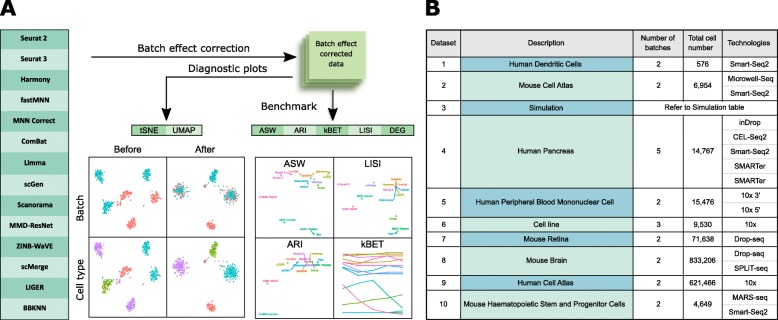
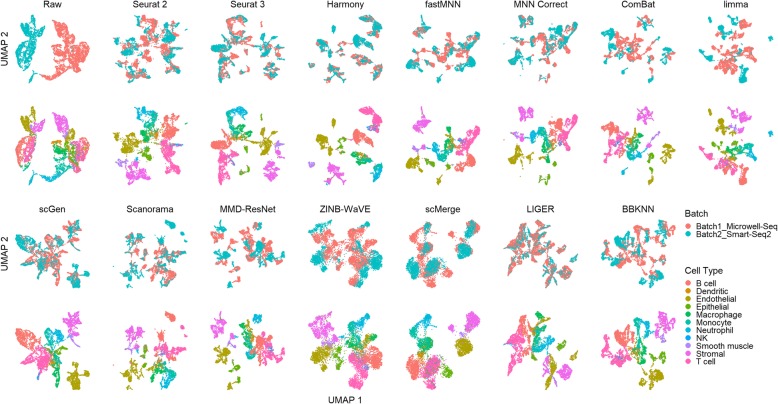
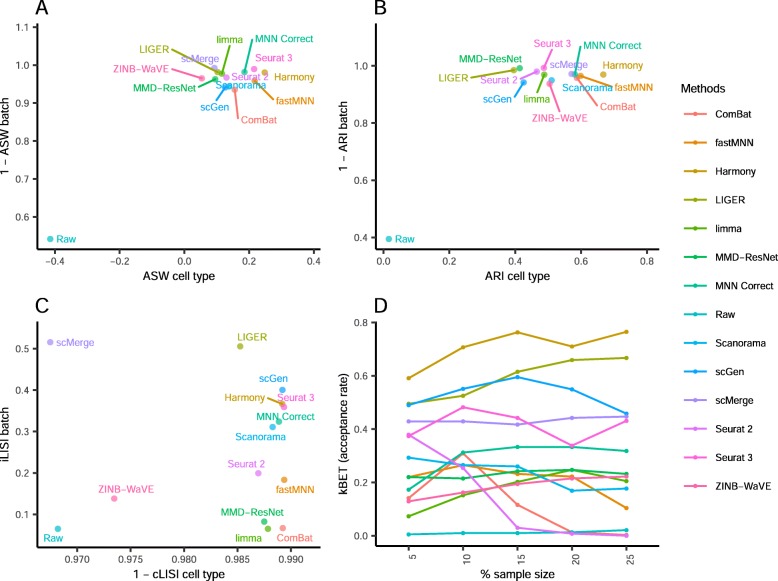
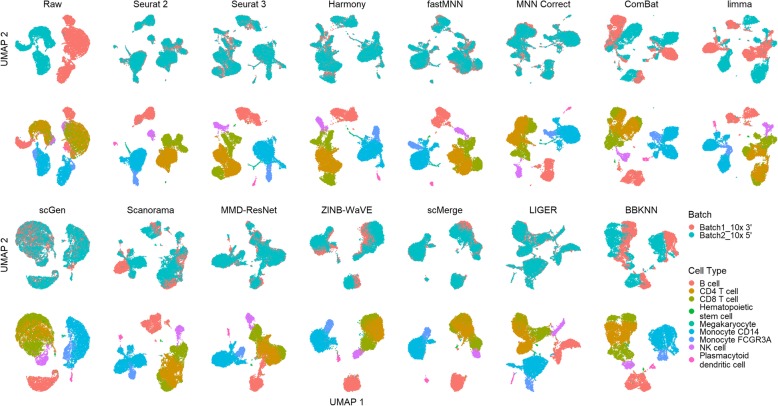
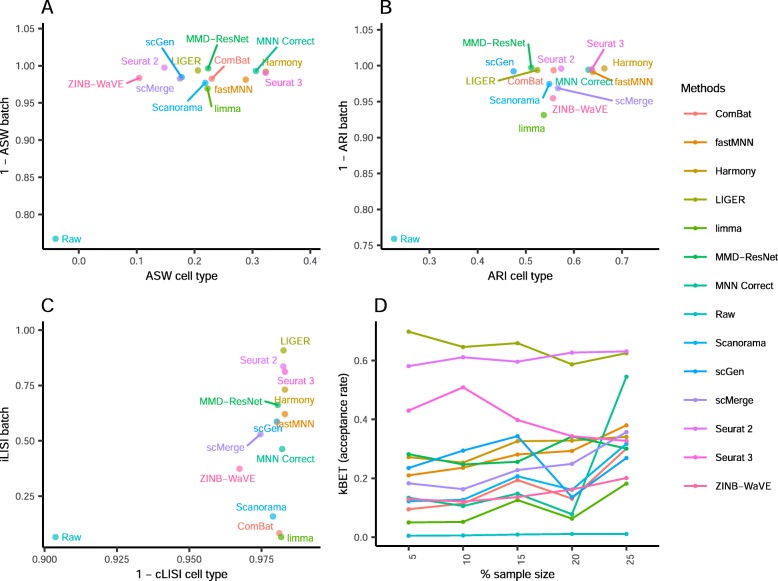
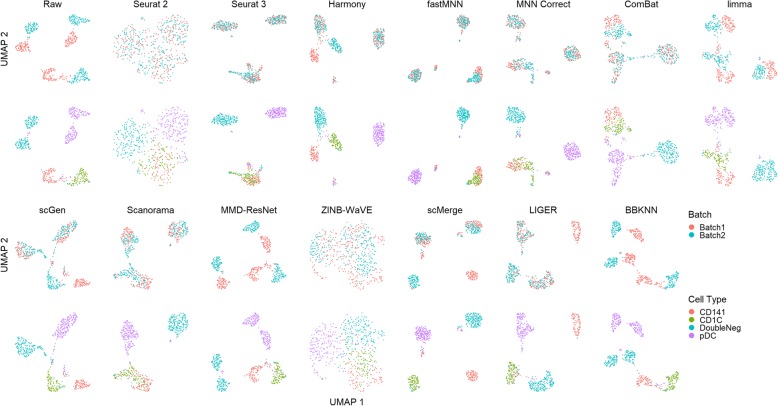
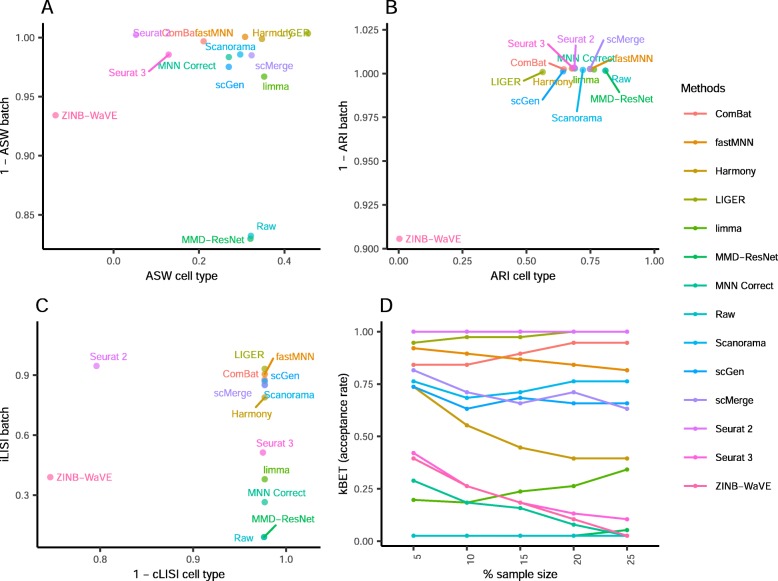
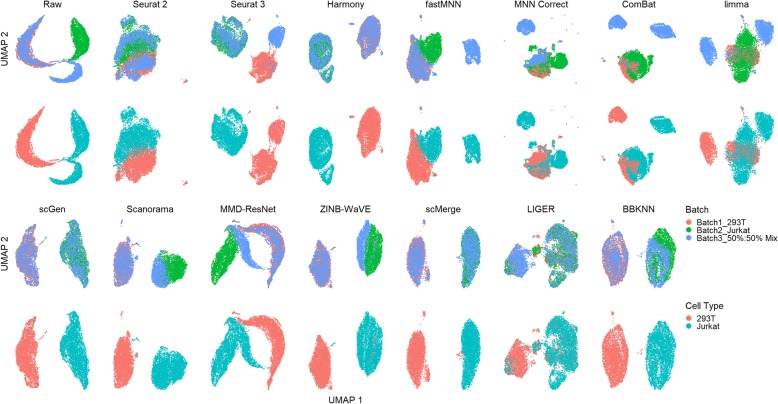
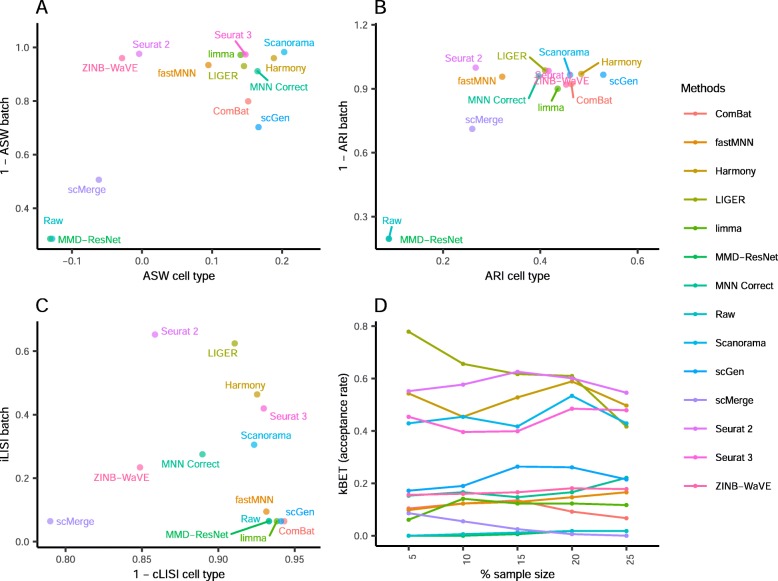
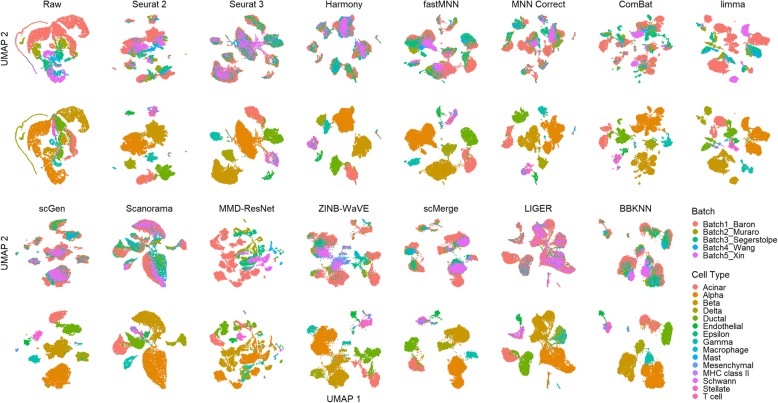
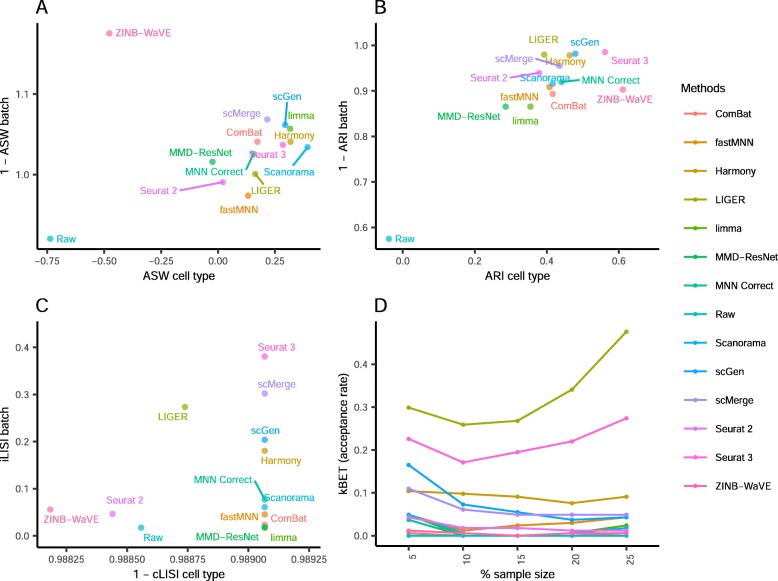
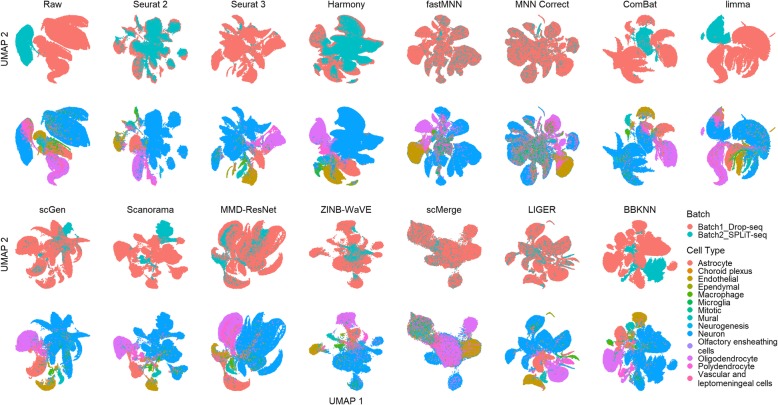
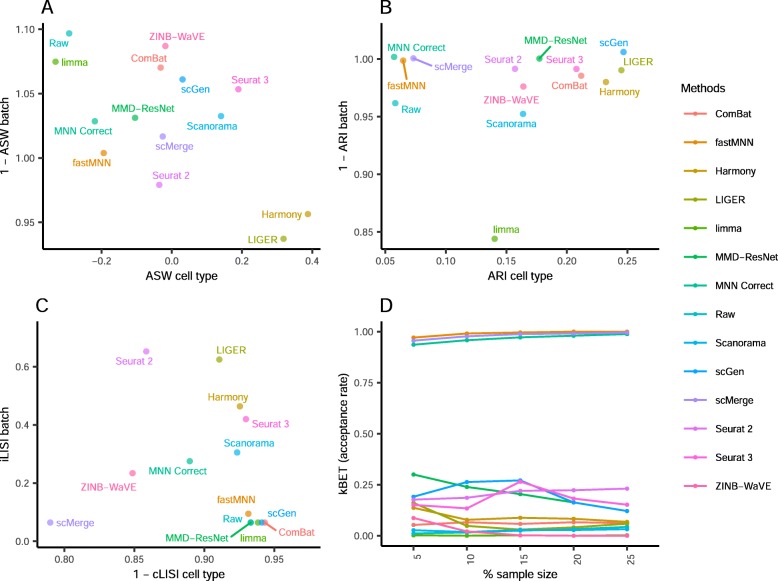
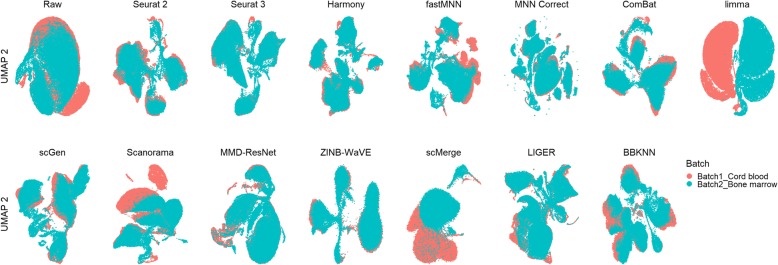
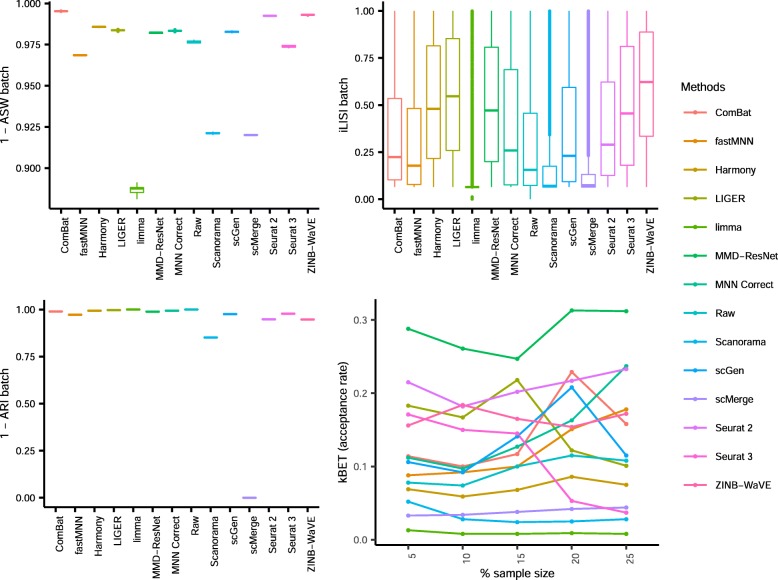
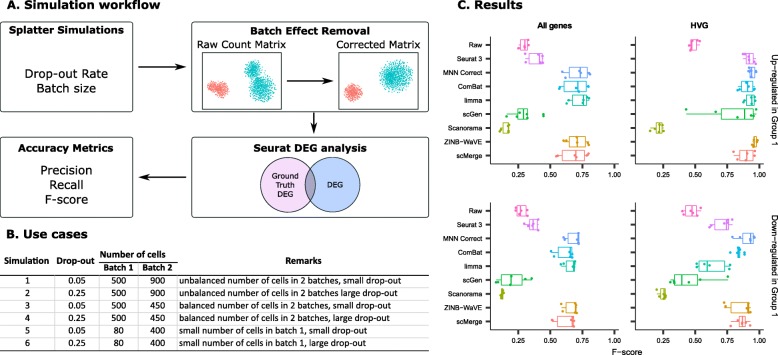
Background: Large-scale single-cell transcriptomic datasets generated using different technologies contain batch-specific systematic variations that present a challenge to batch-effect removal and data integration. With continued growth expected in scRNA-seq data, achieving effective batch integration with available computational resources is crucial. Here, we perform an in-depth benchmark study on available batch correction methods to determine the most suitable method for batch-effect removal. Results: We compare 14 methods in terms of computational runtime, the ability to handle large datasets, and batch-effect correction efficacy while preserving cell type purity. Five scenarios are designed for the study: identical cell types with different technologies, non-identical cell types, multiple batches, big data, and simulated data. Performance is evaluated using four benchmarking metrics including kBET, LISI, ASW, and ARI. We also investigate the use of batch-corrected data to study differential gene expression. Conclusion: Based on our results, Harmony, LIGER, and Seurat 3 are the recommended methods for batch integration. Due to its significantly shorter runtime, Harmony is recommended as the first method to try, with the other methods as viable alternatives.
Overview
The claims and statistics of this paper haven’t been checked yet.
Free: it reads the open-access text and checks the first 5 claims that cite a source we can check. Create a free account to check every claim.
Integrity signals
Registry
Cites
Statistics
Figures
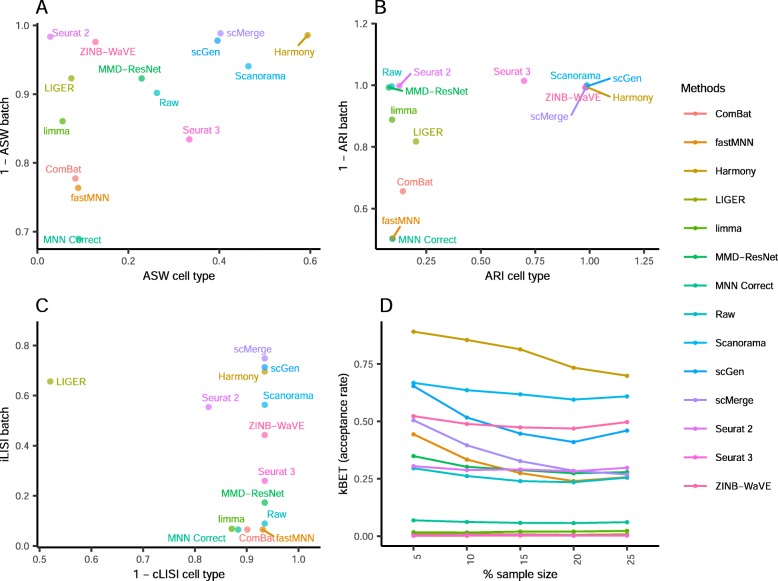
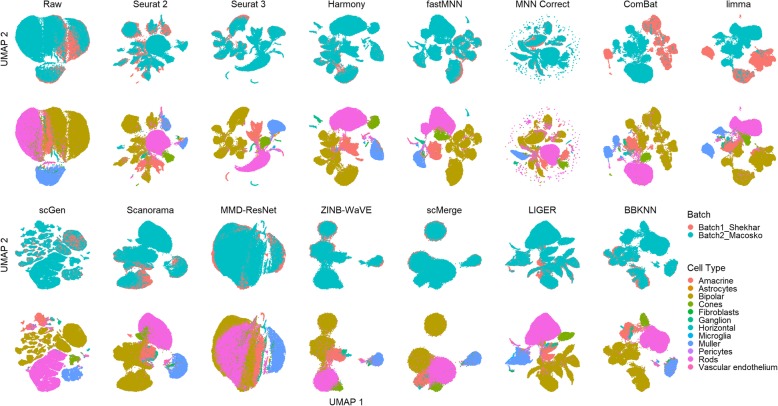
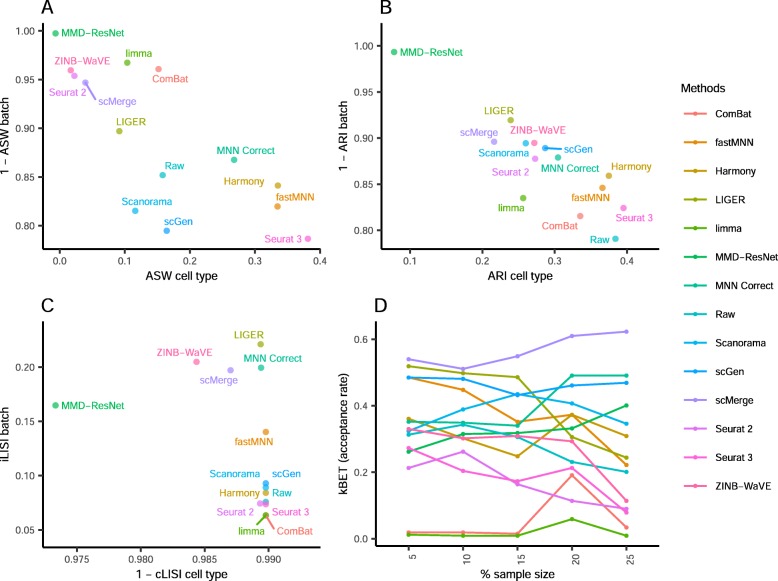
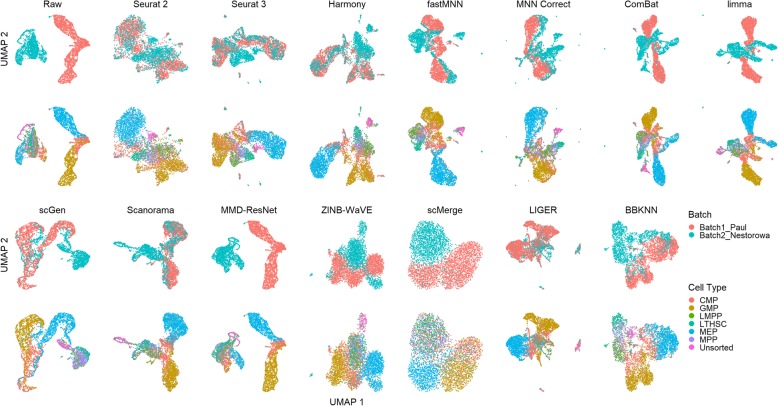
Verification
Claims the paper makes
The claims and statistics of this paper haven’t been checked yet.
Free: it reads the open-access text and checks the first 5 claims that cite a source we can check. Create a free account to check every claim.
Claims other papers make about this one
Each is checked against this paper’s own text: does it say what the citing paper says it does?
The cited source doesn’t support the claim as written.
In the citing paper
“Recent benchmark studies indicate that for simpler integration problems with relatively low biological complexity and relatively small batch effects in scRNA-Seq datasets, linear methods outperform nonlinear, more complex methods136,137, while for complicated integration tasks with large biological complexity and bigger batch effects, nonlinear methods such as scVI/scanVI outperform others138.”
From A high-resolution transcriptomic and spatial atlas of cell types in the whole mouse brain (2023) · cites this paper as [137]
Checked by a reasoning model — may be wrong.
Experimental — accuracy not yet measuredIn the citing paper
“Although SCING GRN based batch correction was not as optimized as the dedicated batch correction methods, many typical batch correction methods do not provide a batch corrected gene expression matrix for downstream analysis.44”
From SCING: Inference of robust, interpretable gene regulatory networks from single cell and spatial transcriptomics (2023) · cites this paper as [44]
In the citing paper
“Linear-embedding models such as canonical correlation analysis36 and Harmony37 were shown to perform well for batch correction on simpler integration tasks with distinct batch structures38,39.”
From Best practices for single-cell analysis across modalities (2023) · cites this paper as [38]
Self-check
Percentages, sums and reported differences re-computed from the paper’s own numbers.
The self-check needs the paper’s full text.
Citations
Cites
(2008) · Journal of Machine Learning Research · Cited by 33,051
Silhouettes: A graphical aid to the interpretation and validation of cluster analysis
Rousseeuw, P. J. (1987) · Journal of Computational and Applied Mathematics · doi:10.1016/0377-0427(87)90125-7 · Cited by 21,392 · cited 2×
“…and Uniform Manifold Approximation and Projection (UMAP) [21] visualizations in conjunction with the k - nearest neighbor batch-effect test (kBET) [22], local inverse Simpson ’ s index (LISI) [13, 23], average silhouette width (ASW) [24], and adjusted rand index (ARI) benchmarking metrics [25].”
MethodGAN(Generative Adversarial Nets)
(2017) · Journal of Japan Society for Fuzzy Theory and Intelligent Informatics · doi:10.3156/jsoft.29.5_177_2 · Cited by 19,270
Comprehensive Integration of Single-Cell Data
Stuart, T., Butler, A., Hoffman, P., Hafemeister, C., Papalexi, E., Mauck, W. M., Hao, Y., Stoeckius, M., Smibert, P., & Satija, R. (2019) · Cell · doi:10.1016/j.cell.2019.05.031 · Cited by 15,453
Integrating single-cell transcriptomic data across different conditions, technologies, and species
Butler, A., Hoffman, P., Smibert, P., Papalexi, E., & Satija, R. (2018) · Nature Biotechnology · doi:10.1038/nbt.4096 · Cited by 13,174 · cited 6×
“Seurat alignment CCA, multiCCA (Seurat 2) Seurat multiCCA uses canonical correlation analysis (CCA) to first compute the linear combinations of genes with maximum correlation between batches [4].”
BackgroundMethodInfluentialFast, sensitive and accurate integration of single-cell data with Harmony
Korsunsky, I., Millard, N., Fan, J., Slowikowski, K., Zhang, F., Wei, K., Baglaenko, Y., Brenner, M., Loh, P.-R., & Raychaudhuri, S. (2019) · Nature Methods · doi:10.1038/s41592-019-0619-0 · Cited by 10,488 · cited 5×
“Another local level metric is the LISI proposed by Kor-sunsky et al. [13, 22], which can be used to assesses batch and cell type mixing.”
MethodInfluentialSCANPY: large-scale single-cell gene expression data analysis
Wolf, F. A., Angerer, P., & Theis, F. J. (2018) · Genome Biology · doi:10.1186/s13059-017-1382-0 · Cited by 8,881 · cited 1×
“The batch correction by Scanorama was performed in conjunction with the Scanpy workflow [29].”
MethodAdjusting batch effects in microarray expression data using empirical Bayes methods
Johnson, W. E., Li, C., & Rabinovic, A. (2007) · Biostatistics · doi:10.1093/biostatistics/kxj037 · Cited by 8,658 · cited 3×
“ComBat was originally developed for microarray gene expression data [1], but had been successfully employed”
MethodHubert, L., & Arabie, P. (1985) · Journal of Classification · doi:10.1007/bf01908075 · Cited by 8,219
Massively parallel digital transcriptional profiling of single cells
Zheng, G. X. Y., Terry, J. M., Belgrader, P., Ryvkin, P., Bent, Z. W., Wilson, R., Ziraldo, S. B., Wheeler, T. D., McDermott, G. P., Zhu, J., et al. (2017) · Nature Communications · doi:10.1038/ncomms14049 · Cited by 7,353
Research works printed but not linked: 5
- Lun A Further MNN algorithm development 2019
- Goodfellow I, Pouget-Abadie J, Mirza M, Xu B, Warde-Farley D, Ozair S, et al. Generative adversarial nets. In: Ghahramani Z, Welling M, Cortes C, Lawrence ND, Weinberger KQ, editors. Adv Neural Inf Process Syst 27: Curran Associates, Inc; 2014. p. 2672–80. Available from: http://papers.nips.cc/paper/5423-generative-adversarial-nets.pdf. Accessed 11 Mar 2019.
- Korsunsky I LISI 2019
- Deng Y, Bao F, Dai Q, Wu LF, Altschuler SJ. Massive single-cell RNA-seq analysis and imputation via deep learning. bioRxiv. 2018:315556 Available from: http://biorxiv.org/content/early/2018/11/27/315556.abstract. Accessed 5 July 2019.
- Tran HTN, Ang KS, Chevrier M, Zhang X, Lee NYS, Goh M, Chen J. A benchmark of batch-effect correction methods for single-cell RNA sequencing data. Simulations. Github Repository. https://github.com/JinmiaoChenLab/Batch-effect-removal-benchmarking. 2019. PMC6964114 31948481
Cited by
Items 301–400 of 1,005
Devesa-Peiró, A., Sebastián-León, P., Pellicer, A., & Díaz-Gimeno, P. (2021) · Molecular Human Reproduction · doi:10.1093/molehr/gaab011 · Cited by 30
“Although the correction method proposed in this study was previously applied to single-cell studies (Tran et al. , 2020), other methodologies have recently arisen to specifically correct known effects in this type of gene expression data (Haghverdi et al. , 2018; Tran et al. , 2020).”
Triku: a feature selection method based on nearest neighbors for single-cell data
Ascensión, A. M., Ibáñez-Solé, O., Inza, I., Izeta, A., & Araúzo-Bravo, M. J. (2022) · GigaScience · doi:10.1093/gigascience/giac017 · Cited by 30
“The rest of the FS meth-ods mainly selected genes that were related to general cell functions such as RNA processing, protein processing, and cell-cycle regulation.”
scINSIGHT for interpreting single-cell gene expression from biologically heterogeneous data
Qian, K., Fu, S., Li, H., & Li, W. V. (2022) · Genome biology · doi:10.1186/s13059-022-02649-3 · Cited by 28
“com/repository/ docker/jinmiaochenlab/batch-effect-removal-benchmarking) [30].”
BackgroundMethodInfluentialZheng, M., Zhou, W., Huang, C., Hu, Z. Q., Zhang, B., Lu, Q., & Zhao, M. (2023) · Journal of Autoimmunity · doi:10.1016/j.jaut.2022.102989 · Cited by 32
Liu, S., Fan, S., Wang, Y., Chen, R., Wang, Z., Zhang, Y., Jiang, W., Chen, Y., Xu, X., Yu, Y., et al. (2023) · BMC Cancer · doi:10.1186/s12885-023-10903-5 · Cited by 29
“Harmony R package was applied for batch integration [19, 20].”
MethodCarbonetto, P. S., Luo, K., Sarkar, A., Hung, A., Tayeb, K., Pott, S., & Stephens, M. (2023) · Genome biology · doi:10.1186/s13059-023-03067-9 · Cited by 30
Rediscovering publicly available single-cell data with the DISCO platform
Li, M., Ang, K. S., Teo, B. K. H., Uddamvathanak, R., Nguyen, M. N., Maurer‐Stroh, S., & Chen, J. (2024) · Nucleic Acids Research · doi:10.1093/nar/gkae1108 · Cited by 31
Self-citationSynthetic single cell RNA sequencing data from small pilot studies using deep generative models
Treppner, M., Salas-Bastos, A., Hess, M., Lenz, S., Vogel, T., & Binder, H. (2021) · Scientific Reports · doi:10.1038/s41598-021-88875-4 · Cited by 33
Hasan, M. Z., Islam, S., Matsumoto, K., & Kawai, T. (2021) · Computers in Biology and Medicine · doi:10.1016/j.compbiomed.2021.104792 · Cited by 32
scDIOR: single cell RNA-seq data IO software
Feng, H., Lin, L., & Chen, J. (2022) · BMC Bioinformatics · doi:10.1186/s12859-021-04528-3 · Cited by 30
“Seurat v3 is the recommended method for batch integration [11]; Scran is widely known for normalization of the non-full-length dataset [12]; Monocle is expert at the reconstruction of the cell fate trajectory [3, 9]; Scanpy is scalable in dealing with large datasets of more than one million cells and flexible with str…”
MethodSelf-citationPanpipes: a pipeline for multiomic single-cell and spatial transcriptomic data analysis
Curion, F., Rich‐Griffin, C., Agarwal, D., Ouologuem, S., Rue-Albrecht, K., May, L., Garcia, G. E. L., Heumos, L., Thomas, T. R., Lason, W., et al. (2024) · Genome biology · doi:10.1186/s13059-024-03322-7 · Cited by 30
“This is critical as although benchmarking studies provide important guidance for algorithm or tool selection [19–24], no single method will necessarily generate the best results for all datasets, and benchmarking studies can also reach different conclusions [19, 20].”
MethodWang, W., Tan, H., Sun, M., Han, Y., Chen, W., Qiu, S., Zheng, K., Wei, G., & Ni, T. (2021) · Nucleic Acids Research · doi:10.1093/nar/gkab089 · Cited by 30
“However, it is still challenging to discover and characterize novel cell types in complex tissues owing to stochastic gene expression variation from various sources, such as transcriptional bursting (4), dropout during sequencing library construction (5), batch effect (6) and other technical sources.”
BackgroundMethodYin, H., Guo, R., Zhang, H., Liu, S., Gong, Y., & Yuan, Y. (2021) · Frontiers in Immunology · doi:10.3389/fimmu.2021.728169 · Cited by 32
Comorbidity and social phobia: clinical and epidemiological issues
Lépine, J., & Pélissolo, A. (1996) · International Clinical Psychopharmacology · doi:10.1097/00004850-199606003-00007 · Cited by 35
A multi-center cross-platform single-cell RNA sequencing reference dataset
Chen, X., Yang, Z., Chen, W., Zhao, Y., Farmer, A. A., Tran, B. Q., Furtak, V. A., Moos, M. C., Xiao, W., & Wang, C. (2021) · Scientific Data · doi:10.1038/s41597-021-00809-x · Cited by 32
Zhao, M., Li, J., Liu, X., Ma, K., Tang, J., & Guo, F. (2024) · Genome Research · doi:10.1101/gr.278439.123 · Cited by 28
Wang, G., Zhao, J., Lin, Y., Liu, T., Zhao, Y., & Zhao, H. (2024) · doi:10.1101/2024.10.01.616142 · Cited by 28
reComBat: batch-effect removal in large-scale multi-source gene-expression data integration
Adamer, M. F., Brüningk, S. C., Tejada-Arranz, A., Estermann, F., Basler, M., & Borgwardt, K. (2022) · Bioinformatics Advances · doi:10.1093/bioadv/vbac071 · Cited by 27
Effective and scalable single-cell data alignment with non-linear canonical correlation analysis
Hu, J., Chen, M., & Zhou, X. (2021) · Nucleic Acids Research · doi:10.1093/nar/gkab1147 · Cited by 29
“All these metrics are computed based on the aligned low dimensional space following standard practice in the field (17,34).”
Single-Cell Analysis of the Transcriptome and Epigenome
Mazan-Mamczarz, K., Ha, J., De, S., & Sen, P. (2022) · Methods in molecular biology · doi:10.1007/978-1-0716-1831-8_3 · Cited by 29
Machine learning alternative to systems biology should not solely depend on data
Yeo, H. C., & Selvarajoo, K. (2022) · Briefings in Bioinformatics · doi:10.1093/bib/bbac436 · Cited by 29
“In addition, the computational intractability of correcting massive datasets will become more of a hindrance to an AI/ML method that is solely dependent on data [36].”
BackgroundreComBat: batch-effect removal in large-scale multi-source gene-expression data integration
(2021) · doi:10.1101/2021.11.22.469488 · Cited by 27
Murphy, A. E., Fancy, N. N., & Skene, N. (2023) · eLife · doi:10.7554/elife.90214 · Cited by 29
“LIGER was recently found to be one of the top performing methods for batch-effect correction ( Tran et al., 2020 ).”
BackgroundMethodSingle-cell transcriptomics in tissue engineering and regenerative medicine
Ruta, A., Krishnan, K., & Elisseeff, J. H. (2023) · Nature Reviews Bioengineering · doi:10.1038/s44222-023-00132-7 · Cited by 29
“Run time, cell identity and purity, among other factors, can be used to identify a suitable computational method for a given data set 27,28 .”
Adameyko, I. I., Bakken, T. E., Bhaduri, A., Chhatbar, C., Filbin, M. G., Gate, D., Hochgerner, H., Kim, C. N., Krull, J. E., Manno, G. L., et al. (2024) · Nature Neuroscience · doi:10.1038/s41593-024-01827-9 · Cited by 27
“Benchmarking studies on batch correction and other analyses are critical 77,78 and should include impartial computational metrics and thorough biological validation.”
Liu, Y., Carbonetto, P. S., Willwerscheid, J., Oakes, S. A., Macleod, K. F., & Stephens, M. (2025) · Nature Genetics · doi:10.1038/s41588-024-01997-z · Cited by 29
“While such methods can successfully harmonize datasets from nondiseased tissues 28 , they work best when cell types and states are present in comparable proportions across individual samples, and this is often not the case for tumor data 6 .”
Liu, S., Li, L., Zhang, F., García-Corral, M., Meyer, K., Fortuna, P. R. J., van Sambeek, B., Appleton, E., Ng, A. H. M., Khoshakhlagh, P., et al. (2025) · Nature Communications · doi:10.1038/s41467-025-59596-3 · Cited by 27
Assessing deep learning methods in cis -regulatory motif finding based on genomic sequencing data
Wang, Y., Zhang, S., Ma, A., Wang, C., Wu, Z., Xu, D., & Ma, Q. (2021) · Briefings in Bioinformatics · doi:10.1093/bib/bbab374 · Cited by 30
“Without a clear assessment, researchers in this field will struggle to choose the most appropriate tool for their specific studies related to gene regulation [26].”
BackgroundIntegration of Computational Analysis and Spatial Transcriptomics in Single-Cell Studies
Wang, R., Peng, G., Tam, P., & Jing, N. (2022) · Genomics Proteomics & Bioinformatics · doi:10.1016/j.gpb.2022.06.006 · Cited by 28
“In contrast to bulk RNA-seq, scRNA-seq generates complex datasets of high cell numbers and high-dimensional expression data [17], which require stringent quality control tests [18,19] (Figure 1A, i).”
BackgroundNail-associated mesenchymal cells contribute to and are essential for dorsal digit tip regeneration
Mahmud, N., Eisner, C., Purushothaman, S., Storer, M. A., Kaplan, D. R., & Miller, F. D. (2022) · Cell Reports · doi:10.1016/j.celrep.2022.111853 · Cited by 27
Kim, H. J., O’Hara-Wright, M., Kim, D., Loi, T. H., Lim, B. Y., Jamieson, R. V., Gonzalez-Cordero, A., & Yang, P. (2023) · Stem Cell Reports · doi:10.1016/j.stemcr.2022.12.002 · Cited by 26
Maimaiti, Y., Abulitifu, M., Ajimu, Z., Su, T., Zhang, Z., Yu, Z., & Xu, H. (2025) · Cellular and Molecular Life Sciences · doi:10.1007/s00018-025-05592-1 · Cited by 26
RCA2: a scalable supervised clustering algorithm that reduces batch effects in scRNA-seq data
Schmidt, F., Ranjan, B., Lin, Q. X. X., Krishnan, V., Joanito, I., Honardoost, M. A., Nawaz, Z., Venkatesh, P. N., Tan, J. H. J., Rayan, N. A., et al. (2021) · Nucleic Acids Research · doi:10.1093/nar/gkab632 · Cited by 26
“Hence, when batch and biology are confounded, there is a risk of erroneously suppressing biological variation (49).”
Evaluating microglial phenotypes using single-cell technologies
Sankowski, R., Monaco, G., & Prinz, M. (2021) · Trends in Neurosciences · doi:10.1016/j.tins.2021.11.001 · Cited by 26
ResPAN: a powerful batch correction model for scRNA-seq data through residual adversarial networks
Wang, Y., Liu, T., & Zhao, H. (2022) · Bioinformatics · doi:10.1093/bioinformatics/btac427 · Cited by 30
K-nearest-neighbors induced topological PCA for single cell RNA-sequence data analysis
Cottrell, S., Hozumi, Y., & Wei, G. (2024) · Computers in Biology and Medicine · doi:10.1016/j.compbiomed.2024.108497 · Cited by 30
Cross‐Modal Graph Contrastive Learning with Cellular Images
Zheng, S., Rao, J., Zhang, J., Zhou, L., Xie, J., Cohen, E., Lu, W., Li, C., & Yang, Y. (2024) · Advanced Science · doi:10.1002/advs.202404845 · Cited by 31
“ground-truth that reflects the molecular perturbation equally well (or better) because of the batch effect [46].”
BackgroundPang, L., Xiang, F., Yang, H. M., Shen, X., Fang, M., Li, R., Long, Y., Li, J., Yu, Y., & Pang, B. (2024) · Scientific Data · doi:10.1038/s41597-024-03127-0 · Cited by 26
Mall, R., Saad, M., Roelands, J. P., Rinchai, D., Kunji, K. B., Almeer, H., Hendrickx, W., Marincola, F. M., Ceccarelli, M., & Bedognetti, D. (2021) · Briefings in Bioinformatics · doi:10.1093/bib/bbab168 · Cited by 27
Cao, D., Chan, R., Ng, E. H. Y., Gemzell‐Danielsson, K., & Yeung, W. S. B. (2021) · Stem Cell Research & Therapy · doi:10.1186/s13287-021-02354-1 · Cited by 24
Sparsely Connected Autoencoders: A Multi-Purpose Tool for Single Cell omics Analysis
Alessandrì, L., Ratto, M. L., Contaldo, S. G., Beccuti, M., Cordero, F., Arigoni, M., & Calogero, R. (2021) · International Journal of Molecular Sciences · doi:10.3390/ijms222312755 · Cited by 26
“Other methods use batch-effect correction [22] to aggregate independent single-cell experiments.”
MethodApplying causal discovery to single-cell analyses using CausalCell
Wen, Y., Huang, J., Zhang, H., Guo, S., Elyahu, Y., Monsonego, A., Ding, Y., & Zhu, H. (2023) · eLife · doi:10.7554/elife.81464 · Cited by 27
Fan, Y., Li, L., & Sun, S. (2024) · Genome biology · doi:10.1186/s13059-024-03237-3 · Cited by 24
“We used the LISI metric to measure cell batch distribution (iLISI) [56].”
MethodInfluentialA systematic overview of single-cell transcriptomics databases, their use cases, and limitations
Gondal, M. N., Shah, S. U. R., Chinnaiyan, A. M., & Cieslik, M. P. (2024) · Frontiers in Bioinformatics · doi:10.3389/fbinf.2024.1417428 · Cited by 43
Leveraging Single-Cell Sequencing for Chimeric Antigen Receptor T Cell Therapies
Castellanos-Rueda, R., Roberto, R. B. D., Schlatter, F. S., & Reddy, S. T. (2021) · Trends in biotechnology · doi:10.1016/j.tibtech.2021.03.005 · Cited by 24
A novel strategy to dissect multifaceted macrophage function in human diseases
Karlinsey, K., Qu, L., Matz, A. J., & Zhou, B. (2022) · Journal of Leukocyte Biology · doi:10.1002/jlb.6mr0522-685r · Cited by 23
Unveiling the power of high-dimensional cytometry data with cyCONDOR
Kröger, C., Müller, S. M., Leidner, J., Kröber, T., Warnat‐Herresthal, S., Spintge, J. B., Zajac, T., Neubauer, A., Frolov, A., Carraro, C., et al. (2024) · Nature Communications · doi:10.1038/s41467-024-55179-w · Cited by 23
Progress and new challenges in image-based profiling
Serrano, E., Peters, J., Wagner, J., Graham, R. E., Chen, Z.-H., Feng, B. Y., Miranda, G., Kalinin, A. A., Vulliard, L., Tomkinson, J., et al. (2026) · Molecular Systems Biology · doi:10.1038/s44320-026-00197-7 · Cited by 7
Foxm1 regulates neural progenitor fate during spinal cord regeneration
Pelzer, D., Phipps, L. S., Thuret, R., Gallardo-Dodd, C. J., Baker, S. M., & Dorey, K. (2021) · EMBO Reports · doi:10.15252/embr.202050932 · Cited by 23
Wen, Z., Wang, L., Ma, H., Li, L., Wan, L., Shi, L., Li, H., Chen, H., Hao, W., Song, S., et al. (2024) · Journal of Infection · doi:10.1016/j.jinf.2024.106158 · Cited by 24
Sethi, R., Ang, K. S., Li, M., Long, Y., Ling, J., & Chen, J. (2024) · Nature Communications · doi:10.1038/s41467-024-48188-2 · Cited by 23
“4), which were identi fi ed in previous benchmarking studies 27,34 .”
Self-citationRaimondi, D., Passemiers, A., Fariselli, P., & Moreau, Y. (2021) · BMC Biology · doi:10.1186/s12915-020-00930-0 · Cited by 26
Single-cell transcriptomics: a novel precision medicine technique in nephrology
Kim, J., & Park, J. (2020) · The Korean Journal of Internal Medicine · doi:10.3904/kjim.2020.415 · Cited by 15
“Also, the batch effect may result from use of different protocols, sample handling, and platforms [37,38].”
BackgroundsplatPop: simulating population scale single-cell RNA sequencing data
Azodi, C. B. D., Zappia, L., Oshlack, A., & McCarthy, D. J. (2021) · Genome biology · doi:10.1186/s13059-021-02546-1 · Cited by 24
Sun, X., Lu, Y., Wu, J., Wen, Q., Li, Z., Tang, Y., Shi, Y., He, T., Liu, L., Huang, W., et al. (2023) · Arteriosclerosis Thrombosis and Vascular Biology · doi:10.1161/atvbaha.123.318762 · Cited by 22
Li, W., Yao, C., Guo, H., Ni, X., Zhu, R., Wang, Y., Yu, B., Feng, X., Gu, Z., & Da, Z. (2024) · Cell Death and Disease · doi:10.1038/s41419-024-06708-4 · Cited by 22
“Based on the subgroup information and sample information to which the cells belonged, Seurat software was used to analyze the differences between groups of cells.”
MethodPredicting single-cell gene expression profiles of imaging flow cytometry data with machine learning
Chlis, N., Rausch, L., Brocker, T., Kranich, J., & Theis, F. J. (2020) · Nucleic Acids Research · doi:10.1093/nar/gkaa926 · Cited by 24
“Additionally, IFC-seq is sensitive to batch effects related to intra-modality variability across independent ex-periment replicates (58), as well as inter-modality variability of the surface markers across the SCT and IFC modalities.”
scPretrain: multi-task self-supervised learning for cell-type classification
Zhang, R., Luo, Y., Ma, J., Zhang, M., & Wang, S. (2022) · Bioinformatics · doi:10.1093/bioinformatics/btac007 · Cited by 22
Predictive modeling of single-cell DNA methylome data enhances integration with transcriptome data
Uzun, Y., Wu, H., & Tan, K. (2020) · Genome Research · doi:10.1101/gr.267047.120 · Cited by 22
“In terms of data integration, several computational methods have been developed for integrating different types of single-cell data (Korsunsky et al. 2019; Stuart et al. 2019; Welch et al. 2019; Tran et al. 2020).”
MethodEvaluation of genetic demultiplexing of single-cell sequencing data from model species
Cardiello, J. F., Joven Araus, A., Giatrellis, S., Helsens, C., Simon, A., & Leigh, N. D. (2023) · Life Science Alliance · doi:10.26508/lsa.202301979 · Cited by 21
“Although a variety of batch correction algorithms are available for single-cell studies (Tran et al, 2020), these cannot be used if there are no metadata distinguishing replicates.”
BackgroundPu, H., Gao, C., Zou, Y., Zhao, L., Li, G., Liu, C., Zhao, L., Zheng, M., Sheng, G., Sun, X., et al. (2024) · International Immunopharmacology · doi:10.1016/j.intimp.2024.111888 · Cited by 22
Navigating single-cell RNA-sequencing: protocols, tools, databases, and applications
Arya, A., Tripathi, P., Dubey, N., Aier, I., & Varadwaj, P. K. (2025) · Genomics & Informatics · doi:10.1186/s44342-025-00044-5 · Cited by 23
“Systematic technical biases, like unequal PCR amplification, cell lysis discrepancies, variable reverse transcriptase enzyme efficiency, and stochastic molecular sampling during sequencing, are unavoidable sources of variation [124] (Table 4).”
Gene regulatory networks: from correlative models to causal explanations
Maizels, R. J., & Briscoe, J. (2026) · Nature Reviews Genetics · doi:10.1038/s41576-026-00939-1 · Cited by 32
New horizons in the stormy sea of multimodal single-cell data integration
Jackson, C. A., & Vogel, C. (2022) · Molecular Cell · doi:10.1016/j.molcel.2021.12.012 · Cited by 26
Polyphony: an Interactive Transfer Learning Framework for Single-Cell Data Analysis
Cheng, F., Keller, M. S., Qu, H., Gehlenborg, N., & Wang, Q. (2022) · IEEE Transactions on Visualization and Computer Graphics · doi:10.1109/tvcg.2022.3209408 · Cited by 24
“Based on related surveys and benchmarks [2, 39, 63], existing computational methods can be categorized into three main groups: anchor-based, linear mixed model (LMM)-based, and conditional variational autoencoder (CVAE)-based.”
BackgroundMeningeal immunity and neurological diseases: new approaches, new insights
Su, Y., Zheng, H., Shi, C., Li, X., Zhang, S., Guo, G., Yu, W.-K., Zhang, S., Hu, Z., Yang, J., et al. (2023) · Journal of Neuroinflammation · doi:10.1186/s12974-023-02803-z · Cited by 21
Exploring the advances of single-cell RNA sequencing in thyroid cancer: a narrative review
Tan, J. K., Awuah, W. A., Roy, S., Ferreira, T., Ahluwalia, A., Guggilapu, S., Javed, M., Asyura, M. M. A. Z., Adebusoye, F. T., Ramamoorthy, K., et al. (2023) · Medical Oncology · doi:10.1007/s12032-023-02260-x · Cited by 21
“Consequently, scRNA-seq could evolve into a cost-effective and powerful tool for the diagnosis, prognosis, and personalised treatment of thyroid cancer.”
BackgroundMethodInfluentialThe use of single-cell RNA-seq to study heterogeneity at varying levels of virus–host interactions
Swaminath, S., & Russell, A. B. (2024) · PLoS Pathogens · doi:10.1371/journal.ppat.1011898 · Cited by 22
“Inclusion of multiple replicates of different treatment conditions, and use of a regression analysis to identify genes that tend to vary based on replicate rather than experimental treatment, can partially address these issues with scRNA-seq [75–78].”
MethodBurdett, N. L., Willis, M. O., Pandey, A., Twomey, L., Alaei, S., Australian Ovarian Cancer Study Group, Management Group, Bowtell, D. D. L., Chenevix‐Trench, G., Green, A. C., et al. (2024) · Nature Communications · doi:10.1038/s41467-024-50137-y · Cited by 24
“1.0 67,68 .”
InfluentialSelf-citationscDEA: differential expression analysis in single-cell RNA-sequencing data via ensemble learning
Li, H.-S., Ou-Yang, L., Zhu, Y., Yan, H., & Zhang, X.-F. (2021) · Briefings in Bioinformatics · doi:10.1093/bib/bbab402 · Cited by 22
Self-citationZhong, L., Yang, T., Li, P., Shi, L., Lai, J., & Gu, L. (2022) · Frontiers in Materials · doi:10.3389/fmats.2022.841503 · Cited by 21
“In the FT-IR result shown in Figure 1, at 1,584 cm, an absorption peak of C=N stretching vibrations in ZIF-8 (Figure 1A) was obtained (Tran et al., 2020).”
MethodPita-Juarez, Y., Karagkouni, D., Kalavros, N., Melms, J. C., Niezen, S., Delorey, T. M., Essene, A. L., Brook, O. R., Pant, D., Skelton-Badlani, D., et al. (2025) · Genome Biology · doi:10.1186/s13059-025-03499-5 · Cited by 21
“Following ambient RNA removal, quality control (QC), and preprocessing (Methods), we implemented a batch correction pipeline to generate corrected unique molecular identifier (UMI) counts per cell [17–19], which facilitated marker detection and cell type identification (Methods).”
Erasure of Biologically Meaningful Signal by Unsupervised scRNAseq Batch-correction MethodsPreprint
Tyler, S. R., Guccione, E., & Schadt, E. E. (2021) · bioRxiv (Cold Spring Harbor Laboratory) · doi:10.1101/2021.11.15.468733 · Cited by 22
Debiased personalized gene coexpression networks for population-scale scRNA-seq data
Lu, S., & Keleş, S. (2023) · Genome Research · doi:10.1101/gr.277363.122 · Cited by 22
“Although this can cause systematic differences in expression between batches and requires correction (Tran et al. 2020) before the data can be analyzed jointly, it further provides an opportunity to evaluate the impact of sequencing depth on estimated network features as the underlying coexpression…”
BackgroundSpatial Transcriptomics Brings New Challenges and Opportunities for Trajectory Inference
Heitz, M., Ma, Y., Kubal, S., & Schiebinger, G. R. (2024) · Annual Review of Biomedical Data Science · doi:10.1146/annurev-biodatasci-040324-030052 · Cited by 26
Application of spatial and single-cell omics in tumor immunotherapy biomarkers
Zhang, C., Feng, H.-R., Zhu, J., & Hong, W. (2025) · LabMed discovery. · doi:10.1016/j.lmd.2025.100076 · Cited by 22
Lieberman, B., Kusi, M., Hung, C., Chou, C., Ning, H., Ho, Y., Taverna, J. A., Huang, T. H. ‐., & Chen, C. (2020) · Journal of Translational Genetics and Genomics · doi:10.20517/jtgg.2020.51 · Cited by 20
“Single-cell RNA isolation at different time points or in different laboratories can induce systemic variations and batch effects which may compromise biologically meaningful interpretation of signals([110,111]).”
BackgroundscMAGIC: accurately annotating single cells using two rounds of reference-based classification
Zhang, Y., Zhang, F., Wang, Z., Wu, S., & Tian, W. (2022) · Nucleic Acids Research · doi:10.1093/nar/gkab1275 · Cited by 21
Considerations for reproducible omics in aging research
Singh, P. P., & Benayoun, B. A. (2023) · Nature Aging · doi:10.1038/s43587-023-00448-4 · Cited by 20
Zeng, P., & Lin, Z. (2021) · PLoS Computational Biology · doi:10.1371/journal.pcbi.1009064 · Cited by 21
“The data were generated from the Smart-Seq2 platform and they were used in a recent benchmark study (Tran et al., 2020).”
MethodCytoPy: An autonomous cytometry analysis framework
Burton, R. J., Ahmed, R., Cuff, S. M., Baker, S., Artemiou, A., & Eberl, M. (2021) · PLoS Computational Biology · doi:10.1371/journal.pcbi.1009071 · Cited by 21
“There have been several methods proposed with this objective [30], most prominently applied to single cell RNA sequencing data, although some examples such as SAUCIE [31] demonstrate application to cytometry data.”
MethodSilva-Sousa, T., Usuda, J. N., Al-Arawe, N., Hinterseher, I., Catar, R. A., Luecht, C., Vallecillo-García, P., Riesner, K., Hackel, A. M., Schimke, L. F., et al. (2025) · Stem Cells Translational Medicine · doi:10.1093/stcltm/szaf037 · Cited by 19
Zhang, H., Zhang, C., & Zhang, S. (2023) · Advanced Biology · doi:10.1002/adbi.202300110 · Cited by 19
Intra-tumoral T cells in pediatric brain tumors display clonal expansion and effector properties
Upadhye, A., Landeros, K. E. M., Ramírez-Suástegui, C., Schmiedel, B. J., Woo, E. B. C., Chee, S., Malicki, D. M., Coufal, N. G., Gonda, D. D., Levy, M. L., et al. (2024) · Nature Cancer · doi:10.1038/s43018-023-00706-9 · Cited by 20
“Per recommendations of the comprehensive study to benchmark batch-effect correction methods for scRNA-seq datasets 64 , we used Harmony 65 to correct potential batch effects.”
APOE–NOTCH axis governs elastogenesis during human cardiac valve remodeling
Liu, Z., Liu, Y., Yu, Z., Tan, C., Pek, N. M. Q., O’Donnell, A., Wu, A., Glass, I. A., Winlaw, D. S., Guo, M., et al. (2024) · Nature Cardiovascular Research · doi:10.1038/s44161-024-00510-3 · Cited by 19
“According to a benchmark comparison study conducted by Tran and colleagues 94 , Seurat 3 CCA was identified as one of the top three preferred batch integration techniques for this type of data.”
Simon, F., & Konstantinides, N. (2021) · Developmental Biology · doi:10.1016/j.ydbio.2021.08.001 · Cited by 19
Ascensión, A. M., Araúzo-Bravo, M. J., & Izeta, A. (2022) · Life · doi:10.3390/life12010067 · Cited by 20
Integration of scATAC-Seq with scRNA-Seq Data
Berest, I., & Tangherloni, A. (2022) · Methods in molecular biology · doi:10.1007/978-1-0716-2756-3_15 · Cited by 21
Wang, L., Izadmehr, S., Sfakianos, J. P., Tran, M. A., Beaumont, K. G., Brody, R., Cordon‐Cardo, C., Horowitz, A., Sebra, R., Oh, W. K., et al. (2024) · iScience · doi:10.1016/j.isci.2024.109928 · Cited by 19
Park, C.-S., Baek, K. I., Hung, R.-C., Choi, L., Jeong, K., Kim, P., Jahng, A. K., Kim, J., Kim, Y., Meselhe, M., et al. (2025) · Cardiovascular Research · doi:10.1093/cvr/cvaf233 · Cited by 20
Why “Where” Matters as Much as “How Much”: Single-Cell and Spatial Transcriptomics in Plants
Moskal, K., Puchta-Jasińska, M., Bolc, P., Motor, A., Frankowski, R., Pietrusińska, A., Rucińska, A., Tomiczak, K., & Boczkowska, M. (2025) · International Journal of Molecular Sciences · doi:10.3390/ijms262411819 · Cited by 19
“Scvi-hub now distributes pretrained models for major plant atlases, lowering the barrier to robust batch correction and enabling reproducible, multi-experiment meta-analyses in plant single-cell transcriptomics [46,47].”
InfluentialSingle Cell Technologies: Beyond Microfluidics
Li, H., & Humphreys, B. D. (2021) · Kidney360 · doi:10.34067/kid.0001822021 · Cited by 18
“Batch effects represent a major challenge to the in integration of single-cell data from multiple experiments using standard workflows (35).”
Quatredeniers, M., Serafin, A. S., Benmerah, A., Rausell, A., Saunier, S., & Viau, A. (2023) · Scientific Data · doi:10.1038/s41597-023-02209-9 · Cited by 21
Dissection of intratumor microbiome–host interactions at the single-cell level in lung cancer
Ma, Y.-J., Sun, Y., Wang, L., Xu, W., Fan, X., Ding, J., Heeschen, C., Wu, W., Zheng, X., & Liu, N. (2024) · hLife · doi:10.1016/j.hlife.2024.09.001 · Cited by 20
Schindler, M., Feregrino, C., Aldrovandi, S., Lo, B.-W., Monaco, A. A., Ringel, A. R., Morales, A. E., Zehnder, T., Behncke, R. Y., Glaser, J., et al. (2025) · Nature Ecology & Evolution · doi:10.1038/s41559-025-02780-x · Cited by 19
“2t).”
Single-cell genomic analysis of human cerebral organoids
Kanton, S., Treutlein, B., & Camp, J. G. (2020) · Methods in cell biology · doi:10.1016/bs.mcb.2020.03.013 · Cited by 19
Ge, W., Yan, Z., Wang, L., Tan, S., Liu, J., Reiter, R. J., Luo, S., Sun, Q., & Shen, W. (2021) · Journal of Pineal Research · doi:10.1111/jpi.12742 · Cited by 20
Hu, Z., Ahmed, A. A., & Yau, C. (2021) · Genome biology · doi:10.1186/s13059-021-02561-2 · Cited by 19
“The data were downloaded from the curated set [15] and contain three cell populations, named CMP, GMP, and MEP, sequenced by two platforms (MARS-seq and Smart-seq).”
BackgroundMethodInfluentialCytofIn enables integrated analysis of public mass cytometry datasets using generalized anchors
Lo, Y., Keyes, T., Jager, A., Sarno, J., Domizi, P., Majeti, R., Sakamoto, K. M., Lacayo, N. J., Mullighan, C. G., Waters, J., et al. (2022) · Nature Communications · doi:10.1038/s41467-022-28484-5 · Cited by 18
“6A, 7A and Methods) 30 – 32 .”
Xu, C., Yang, J., Kosters, A., Babcock, B. R., Qiu, P., & Ghosn, E. (2022) · iScience · doi:10.1016/j.isci.2022.105123 · Cited by 20
Metadata
- Authors
- Tran, H. T. N., Ang, K. S., Chevrier, M., Zhang, X., Lee, N. Y. S., Goh, M., & Chen, J.
- Affiliations
- Agency for Science, Technology and Research (SG)
- Corresponding author
- Chen, Jinmiao
- Venue
- Genome Biology
- Published
- 2020-01-16
- Volume
- 21
- Issue
- 1
- Pages
- 12-12
- ISSN
- 1465-6906 (ISSN-L)
- 1474-760X
- PMC
- PMC6964114
- OpenAlex
- W3002417351
- Cited by
- 1,113
- References
- 45
- Citations by year
- 2026: 145 · 2025: 170 · 2024: 188 · 2023: 187 · 2022: 180 · 2021: 178 · 2020: 62
- FWCI
- 50.62
- Type
- journal article
- Language
- en
- Open access
- gold
- doi.org
- Licence
- cc-by
- creativecommons.org/licenses/by/4.0/ (tdm)
- creativecommons.org/licenses/by/4.0/ (vor)
- Locations
- Genome biology (publishedVersion, cc-by)
- PubMed Central (publishedVersion, cc-by)
- PubMed (publishedVersion)
- DOAJ (DOAJ: Directory of Open Access Journals) (submittedVersion, cc-by-sa)
- Funders
- Singapore Immunology Network (NA)
- Topics
- Life Sciences › Biochemistry, Genetics and Molecular Biology › Molecular Biology › Single-cell and spatial transcriptomics
- Life Sciences › Biochemistry, Genetics and Molecular Biology › Molecular Biology › Gene expression and cancer classification
- Life Sciences › Biochemistry, Genetics and Molecular Biology › Molecular Biology › Bioinformatics and Genomic Networks
- Keywords
- batch effect correction, single-cell RNA sequencing, benchmarking, data integration, harmony, LIGER, Seurat, LiSi, adjusted Rand index, differential gene expression, computational time
- MeSH terms
- Big Data, RNA-Seq, Algorithms, Animals, Humans, Benchmarking, Mice, Single-Cell Analysis
About these checks
Registry, retraction, Cites and statistics results are computed, not judged, with one exception: a printed reference that no index lists is read once by a model before it counts as a citation error. Claims are extracted by a model and kept only when their quote appears verbatim in the text; each cited source is then checked, with a model’s help, for whether it says what the claim relies on. Those verdicts can be wrong — read the claim’s quote and the cited source before relying on one.
Statistics and arithmetic are recomputed, not judged.
Confidence bands are shown only for fields calibrated on our annotated test set. None is calibrated yet, so no band is shown.
What counts as a claim ›How we measure confidence ›How we check this ›
Are you an author, or do you see a problem with this page? Request a review
Data sources
Bibliographic data: Semantic Scholar, OpenAlex, Crossref.
Contains information from the Semantic Scholar Academic Graph Datasets, made available under the ODC Attribution License (ODC-BY 1.0).
Semantic Scholar’s data is described in: Kinney, R., et al. (2023). The Semantic Scholar Open Data Platform. arXiv:2301.10140.
