

A benchmark of batch-effect correction methods for single-cell RNA sequencing data
Open accessThe DOI matches its Crossref record; 45 of the 45 references it cites were found in a registry or an index.
Abstract
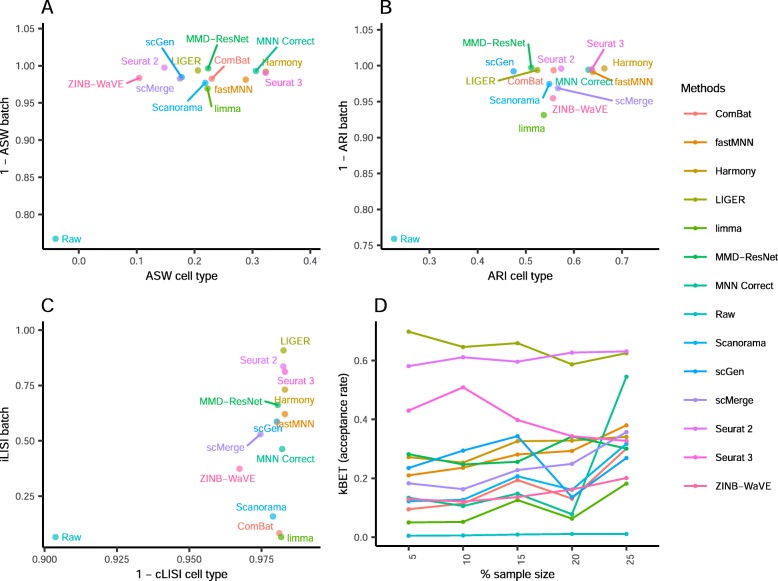
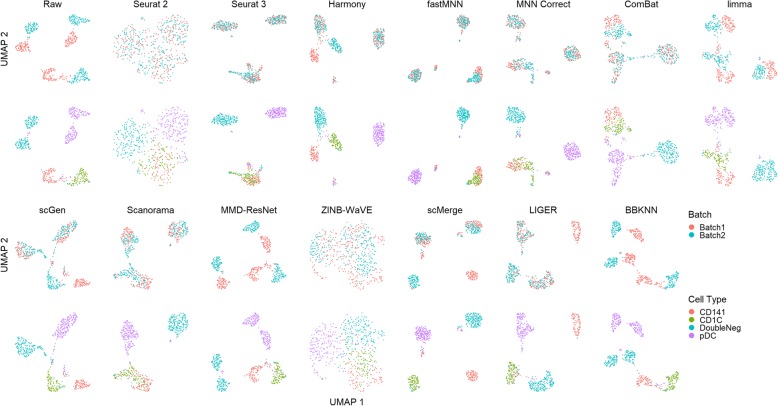
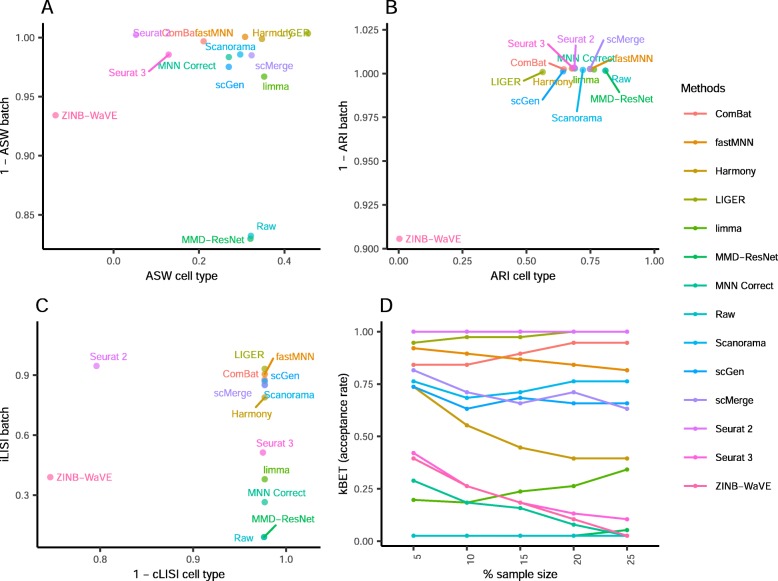
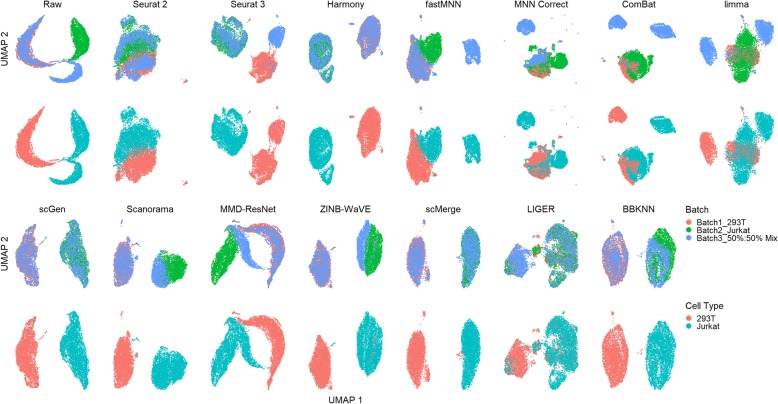
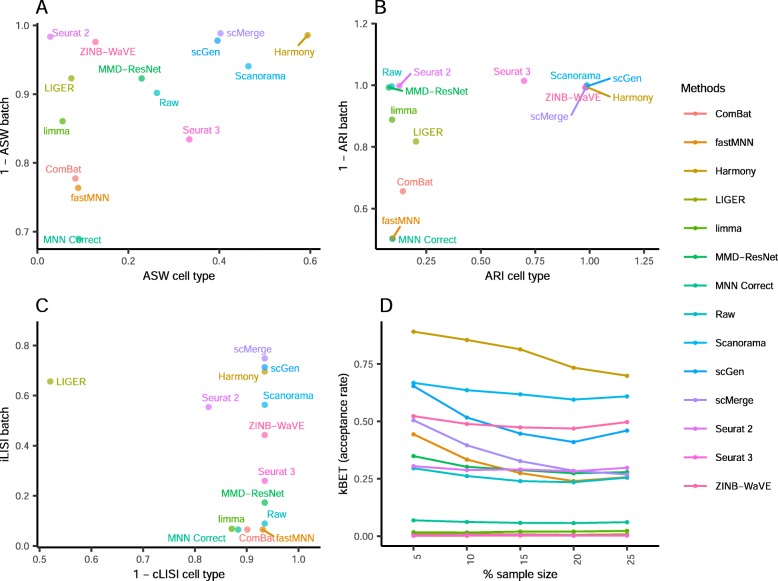
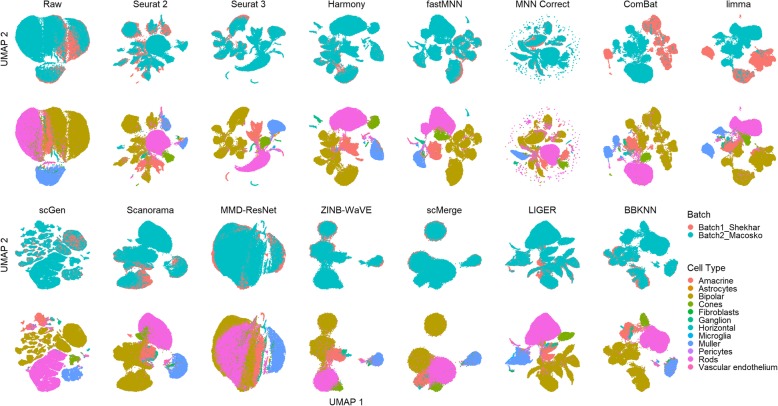
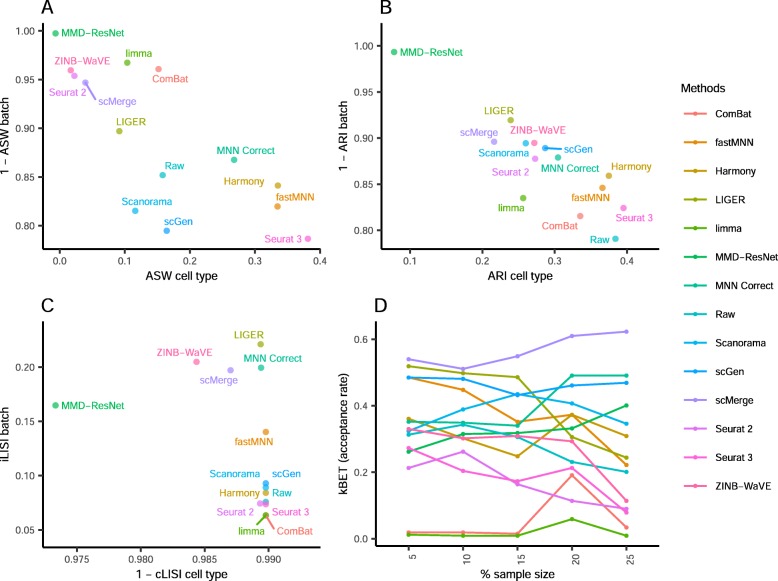
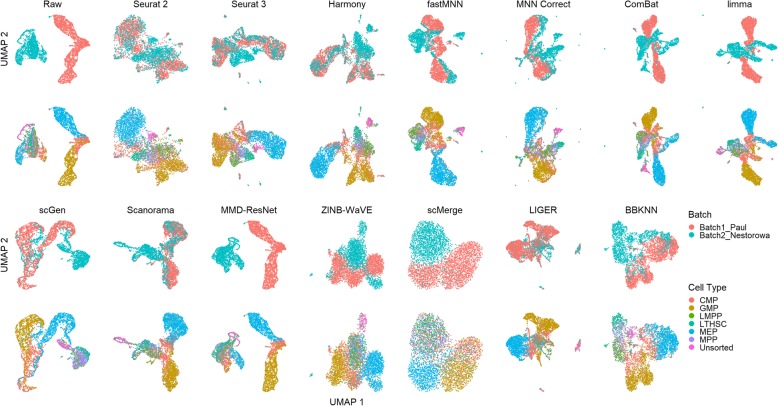
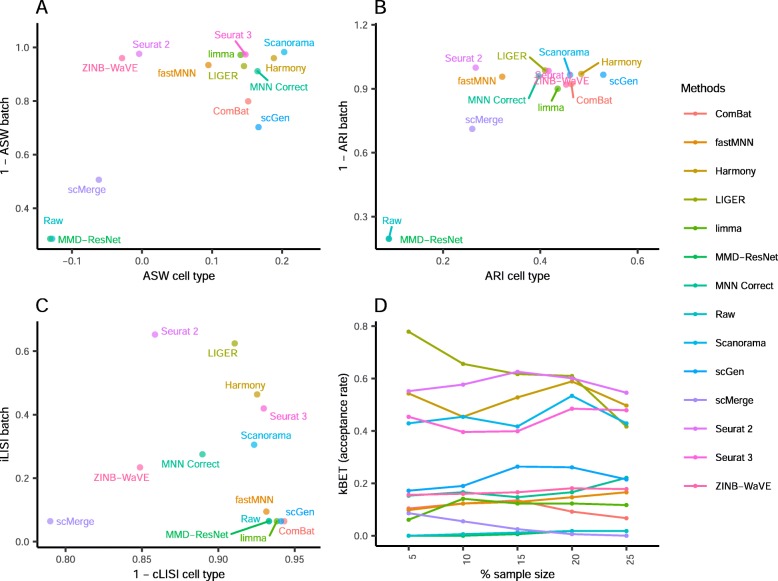
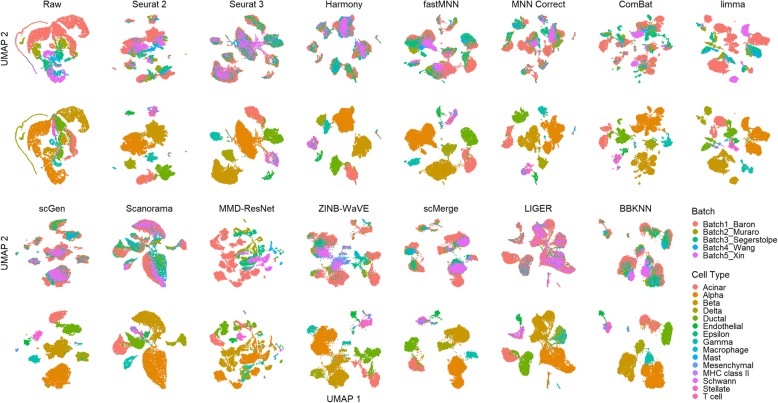
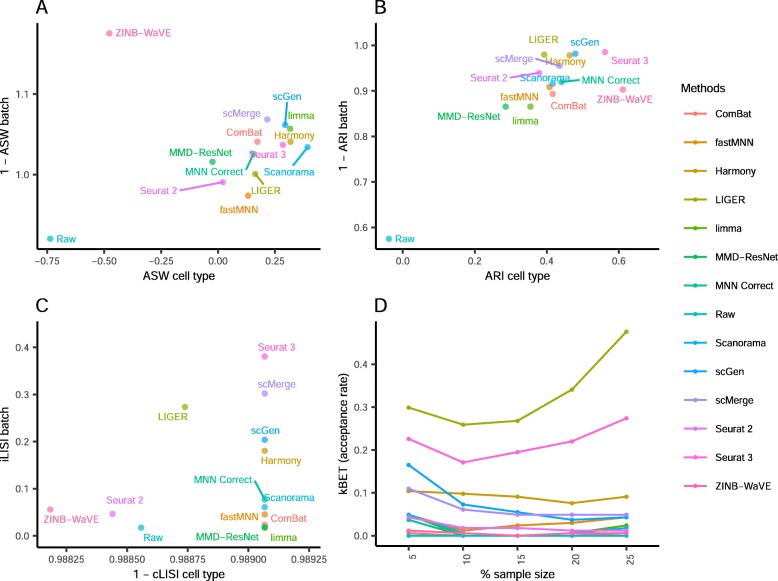
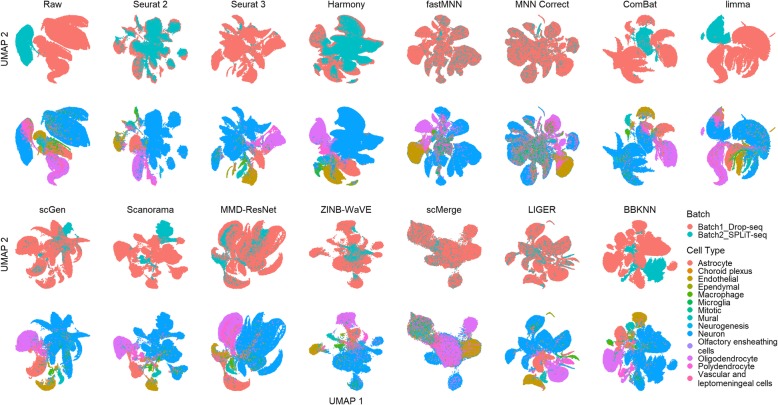
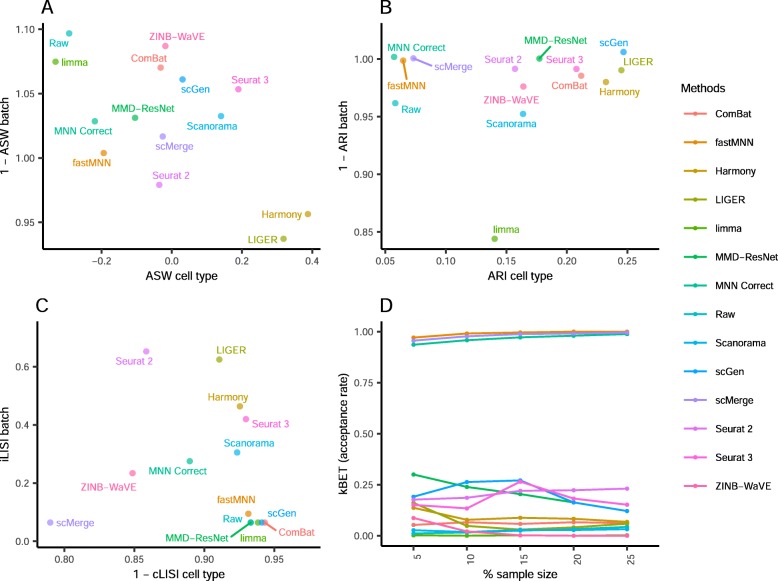
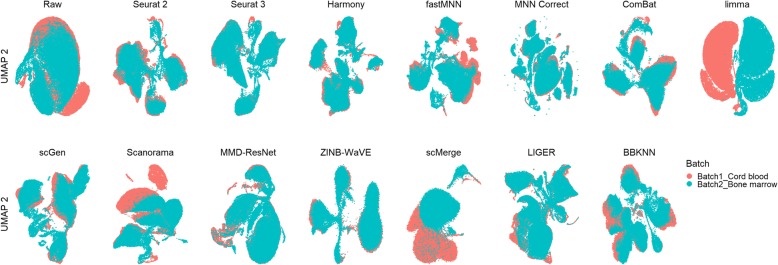
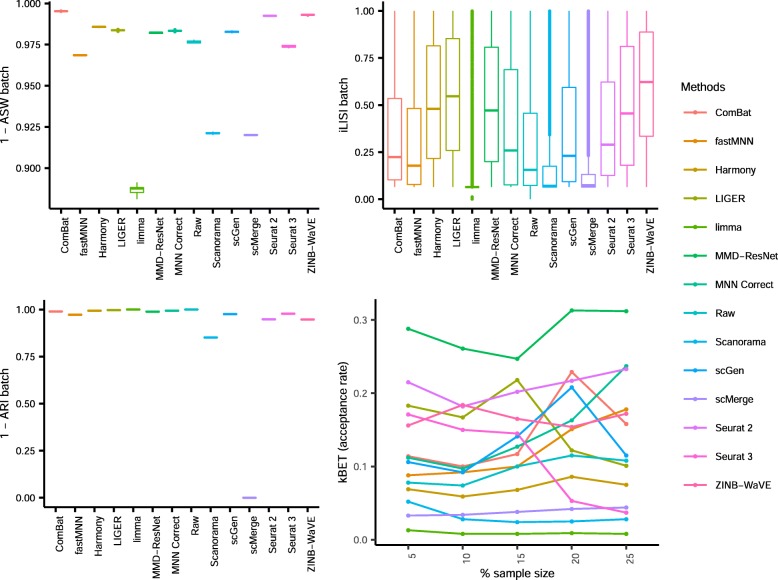
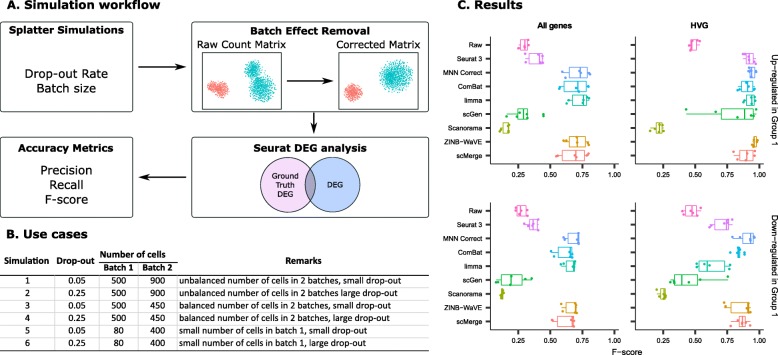
Background: Large-scale single-cell transcriptomic datasets generated using different technologies contain batch-specific systematic variations that present a challenge to batch-effect removal and data integration. With continued growth expected in scRNA-seq data, achieving effective batch integration with available computational resources is crucial. Here, we perform an in-depth benchmark study on available batch correction methods to determine the most suitable method for batch-effect removal. Results: We compare 14 methods in terms of computational runtime, the ability to handle large datasets, and batch-effect correction efficacy while preserving cell type purity. Five scenarios are designed for the study: identical cell types with different technologies, non-identical cell types, multiple batches, big data, and simulated data. Performance is evaluated using four benchmarking metrics including kBET, LISI, ASW, and ARI. We also investigate the use of batch-corrected data to study differential gene expression. Conclusion: Based on our results, Harmony, LIGER, and Seurat 3 are the recommended methods for batch integration. Due to its significantly shorter runtime, Harmony is recommended as the first method to try, with the other methods as viable alternatives.
Overview
The claims and statistics of this paper haven’t been checked yet.
Free: it reads the open-access text and checks the first 5 claims that cite a source we can check. Create a free account to check every claim.
Integrity signals
Registry
Cites
Statistics
Figures
Verification
Claims the paper makes
The claims and statistics of this paper haven’t been checked yet.
Free: it reads the open-access text and checks the first 5 claims that cite a source we can check. Create a free account to check every claim.
Claims other papers make about this one
Each is checked against this paper’s own text: does it say what the citing paper says it does?
The cited source doesn’t support the claim as written.
In the citing paper
“Recent benchmark studies indicate that for simpler integration problems with relatively low biological complexity and relatively small batch effects in scRNA-Seq datasets, linear methods outperform nonlinear, more complex methods136,137, while for complicated integration tasks with large biological complexity and bigger batch effects, nonlinear methods such as scVI/scanVI outperform others138.”
From A high-resolution transcriptomic and spatial atlas of cell types in the whole mouse brain (2023) · cites this paper as [137]
Checked by a reasoning model — may be wrong.
Experimental — accuracy not yet measuredIn the citing paper
“Although SCING GRN based batch correction was not as optimized as the dedicated batch correction methods, many typical batch correction methods do not provide a batch corrected gene expression matrix for downstream analysis.44”
From SCING: Inference of robust, interpretable gene regulatory networks from single cell and spatial transcriptomics (2023) · cites this paper as [44]
In the citing paper
“Linear-embedding models such as canonical correlation analysis36 and Harmony37 were shown to perform well for batch correction on simpler integration tasks with distinct batch structures38,39.”
From Best practices for single-cell analysis across modalities (2023) · cites this paper as [38]
Self-check
Percentages, sums and reported differences re-computed from the paper’s own numbers.
The self-check needs the paper’s full text.
Citations
Cites
(2008) · Journal of Machine Learning Research · Cited by 33,051
Silhouettes: A graphical aid to the interpretation and validation of cluster analysis
Rousseeuw, P. J. (1987) · Journal of Computational and Applied Mathematics · doi:10.1016/0377-0427(87)90125-7 · Cited by 21,392 · cited 2×
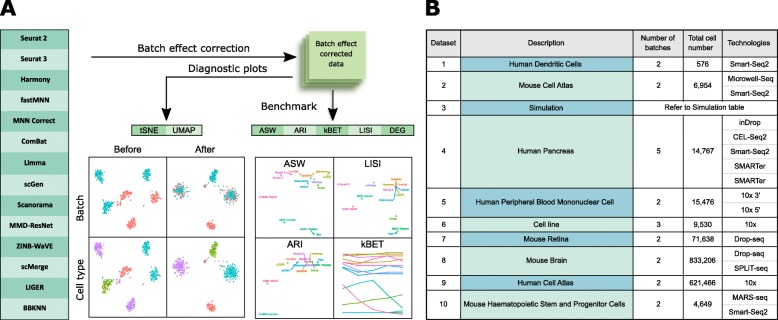
“…and Uniform Manifold Approximation and Projection (UMAP) [21] visualizations in conjunction with the k - nearest neighbor batch-effect test (kBET) [22], local inverse Simpson ’ s index (LISI) [13, 23], average silhouette width (ASW) [24], and adjusted rand index (ARI) benchmarking metrics [25].”
MethodGAN(Generative Adversarial Nets)
(2017) · Journal of Japan Society for Fuzzy Theory and Intelligent Informatics · doi:10.3156/jsoft.29.5_177_2 · Cited by 19,270
Comprehensive Integration of Single-Cell Data
Stuart, T., Butler, A., Hoffman, P., Hafemeister, C., Papalexi, E., Mauck, W. M., Hao, Y., Stoeckius, M., Smibert, P., & Satija, R. (2019) · Cell · doi:10.1016/j.cell.2019.05.031 · Cited by 15,453
Integrating single-cell transcriptomic data across different conditions, technologies, and species
Butler, A., Hoffman, P., Smibert, P., Papalexi, E., & Satija, R. (2018) · Nature Biotechnology · doi:10.1038/nbt.4096 · Cited by 13,174 · cited 6×
“Seurat alignment CCA, multiCCA (Seurat 2) Seurat multiCCA uses canonical correlation analysis (CCA) to first compute the linear combinations of genes with maximum correlation between batches [4].”
BackgroundMethodInfluentialFast, sensitive and accurate integration of single-cell data with Harmony
Korsunsky, I., Millard, N., Fan, J., Slowikowski, K., Zhang, F., Wei, K., Baglaenko, Y., Brenner, M., Loh, P.-R., & Raychaudhuri, S. (2019) · Nature Methods · doi:10.1038/s41592-019-0619-0 · Cited by 10,488 · cited 5×
“Another local level metric is the LISI proposed by Kor-sunsky et al. [13, 22], which can be used to assesses batch and cell type mixing.”
MethodInfluentialSCANPY: large-scale single-cell gene expression data analysis
Wolf, F. A., Angerer, P., & Theis, F. J. (2018) · Genome Biology · doi:10.1186/s13059-017-1382-0 · Cited by 8,881 · cited 1×
“The batch correction by Scanorama was performed in conjunction with the Scanpy workflow [29].”
MethodAdjusting batch effects in microarray expression data using empirical Bayes methods
Johnson, W. E., Li, C., & Rabinovic, A. (2007) · Biostatistics · doi:10.1093/biostatistics/kxj037 · Cited by 8,658 · cited 3×
“ComBat was originally developed for microarray gene expression data [1], but had been successfully employed”
MethodHubert, L., & Arabie, P. (1985) · Journal of Classification · doi:10.1007/bf01908075 · Cited by 8,219
Massively parallel digital transcriptional profiling of single cells
Zheng, G. X. Y., Terry, J. M., Belgrader, P., Ryvkin, P., Bent, Z. W., Wilson, R., Ziraldo, S. B., Wheeler, T. D., McDermott, G. P., Zhu, J., et al. (2017) · Nature Communications · doi:10.1038/ncomms14049 · Cited by 7,353
Research works printed but not linked: 5
- Lun A Further MNN algorithm development 2019
- Goodfellow I, Pouget-Abadie J, Mirza M, Xu B, Warde-Farley D, Ozair S, et al. Generative adversarial nets. In: Ghahramani Z, Welling M, Cortes C, Lawrence ND, Weinberger KQ, editors. Adv Neural Inf Process Syst 27: Curran Associates, Inc; 2014. p. 2672–80. Available from: http://papers.nips.cc/paper/5423-generative-adversarial-nets.pdf. Accessed 11 Mar 2019.
- Korsunsky I LISI 2019
- Deng Y, Bao F, Dai Q, Wu LF, Altschuler SJ. Massive single-cell RNA-seq analysis and imputation via deep learning. bioRxiv. 2018:315556 Available from: http://biorxiv.org/content/early/2018/11/27/315556.abstract. Accessed 5 July 2019.
- Tran HTN, Ang KS, Chevrier M, Zhang X, Lee NYS, Goh M, Chen J. A benchmark of batch-effect correction methods for single-cell RNA sequencing data. Simulations. Github Repository. https://github.com/JinmiaoChenLab/Batch-effect-removal-benchmarking. 2019. PMC6964114 31948481
Cited by
scGPT: Towards Building a Foundation Model for Single-Cell Multi-omics Using Generative AI
Cui, H., Wang, C., Maan, H., Pang, K., Luo, F., & Wang, B. (2023) · doi:10.1101/2023.04.30.538439 · Cited by 1,694
Benchmarking atlas-level data integration in single-cell genomics
Luecken, M. D., Büttner, M., Chaichoompu, K., Danese, A., Interlandi, M., Mueller, M. F., Strobl, D. C., Zappia, L., Dugas, M., Colomé-Tatché, M., et al. (2022) · Nature Methods · doi:10.1038/s41592-021-01336-8 · Cited by 1,438
Single‐cell RNA sequencing technologies and applications: A brief overview
Jovic, D., Liang, X., Zeng, H., Lin, L., Xu, F., & Luo, Y. (2022) · Clinical and Translational Medicine · doi:10.1002/ctm2.694 · Cited by 1,271
A high-resolution transcriptomic and spatial atlas of cell types in the whole mouse brain
Yao, Z., van Velthoven, C. T. J., Kunst, M., Zhang, M., McMillen, D., Lee, C., Jung, W., Goldy, J., Abdelhak, A., Aitken, M., et al. (2023) · Nature · doi:10.1038/s41586-023-06812-z · Cited by 1,203
Cross-tissue organization of the fibroblast lineage
Buechler, M. B., Pradhan, R. N., Krishnamurty, A. T., Cox, C., Calviello, A. K., Wang, A. W., Yang, Y. A., Tam, L., Caothien, R., Roose-Girma, M., et al. (2021) · Nature · doi:10.1038/s41586-021-03549-5 · Cited by 1,087
Integrating single-cell and spatial transcriptomics to elucidate intercellular tissue dynamics
Longo, S. K., Guo, M. G., Ji, A. L., & Khavari, P. A. (2021) · Nature Reviews Genetics · doi:10.1038/s41576-021-00370-8 · Cited by 1,059
Best practices for single-cell analysis across modalities
Heumos, L., Schaar, A. C., Lance, C., Litinetskaya, A., Drost, F., Zappia, L., Lücken, M. D., Strobl, D. C., Henao, J., Curion, F., et al. (2023) · Nature Reviews Genetics · doi:10.1038/s41576-023-00586-w · Cited by 1,051
“…such as canonical correlation analysis 36 and Harmony 37 were shown to perform well for batch correction on simpler integration tasks with distinct batch structures 38,39 . scANVI 40 can incorporate the cell-type labels, which is favourable as it can help to conserve biological variation 35 .”
MethodDifferential abundance testing on single-cell data using k-nearest neighbor graphs
Dann, E., Henderson, N. C., Teichmann, S. A., Morgan, M. D., & Marioni, J. C. (2022) · Nature Biotechnology · doi:10.1038/s41587-021-01033-z · Cited by 938
scMC learns biological variation through the alignment of multiple single-cell genomics datasets
Zhang, L., & Nie, Q. (2021) · Genome Biology · doi:10.1186/s13059-020-02238-2 · Cited by 845
A Python library for probabilistic analysis of single-cell omics data
Gayoso, A., Lopez, R., Xing, G., Boyeau, P., Valiollah Pour Amiri, V., Hong, J., Wu, K., Jayasuriya, M., Mehlman, E., Langevin, M., et al. (2022) · Nature Biotechnology · doi:10.1038/s41587-021-01206-w · Cited by 789
Chen, Z., Zhou, L., Liu, L., Hou, Y., Xiong, M., Yang, Y., Hu, J., & Chen, K. (2020) · Nature Communications · doi:10.1038/s41467-020-18916-5 · Cited by 694
Zhang, H., Kang, Z., Gong, H., Xu, D., Wang, J., Li, Z., Cui, X., Xiao, J., Meng, T., Zhou, W., et al. (2020) · doi:10.1101/2020.01.30.927806 · Cited by 658
Yang, F., Wang, W., Wang, F., Fang, Y., Tang, D., Huang, J., Lu, H., & Yao, J. (2021) · doi:10.1101/2021.12.05.471261 · Cited by 617
Multi-omics single-cell data integration and regulatory inference with graph-linked embedding
Cao, Z.-J., & Gao, G. (2022) · Nature Biotechnology · doi:10.1038/s41587-022-01284-4 · Cited by 616
“Unpaired multi-omics integration shares some conceptual similarities with batch effect correction 50 , but the former is substantially more challenging because of the distinct, omics-specific feature spaces.”
BackgroundZhang, H., Kang, Z., Gong, H., Xu, D., Wang, J., Li, Z., Li, Z., Cui, X., Xiao, J., Zhan, J., et al. (2020) · Gut · doi:10.1136/gutjnl-2020-320953 · Cited by 498
Pan-cancer T cell atlas links a cellular stress response state to immunotherapy resistance
Chu, Y., Dai, E., Li, Y., Han, G., Pei, G., Ingram, D. R., Thakkar, K., Qin, J.-J., Dang, M., Le, X., et al. (2023) · Nature Medicine · doi:10.1038/s41591-023-02371-y · Cited by 478
Applications of single-cell RNA sequencing in drug discovery and development
Van de Sande, B., Lee, J. S., Mutasa-Gottgens, E., Naughton, B., Bacon, W., Manning, J., Wang, Y., Pollard, J., Mendez, M., Hill, J., et al. (2023) · Nature Reviews Drug Discovery · doi:10.1038/s41573-023-00688-4 · Cited by 437
Bender, A., & Cortés-Ciriano, I. (2021) · Drug Discovery Today · doi:10.1016/j.drudis.2020.12.009 · Cited by 405
Unsupervised spatially embedded deep representation of spatial transcriptomics
Xu, H., Fu, H., Long, Y., Ang, K. S., Sethi, R., Chong, K., Li, M., Uddamvathanak, R., Lee, H. K., Ling, J., et al. (2024) · Genome Medicine · doi:10.1186/s13073-024-01283-x · Cited by 391
“We first applied Harmony to remove the batch effects due to its superior 192 performance in scRNA-seq data integration.(34) Harmony was able to mix batches while 193 keeping different layers apart.”
MethodSelf-citationAlignment and integration of spatial transcriptomics data
Zeira, R., Land, M., Strzalkowski, A., & Raphael, B. J. (2022) · Nature Methods · doi:10.1038/s41592-022-01459-6 · Cited by 298
“Specifically, we evaluated the list of marker genes from Maynard et al. 12 that were previously annotated to be differentially expressed in subsets of layers (Methods).”
MethodResultInfluentialProfiling cell identity and tissue architecture with single-cell and spatial transcriptomics
Gulati, G. S., D’Silva, J. P., Liu, Y., Wang, L., & Newman, A. M. (2025) · Nature Reviews Molecular Cell Biology · doi:10.1038/s41580-024-00768-2 · Cited by 293
“Many computational methods have been developed to correct batch-specific variation while aiming to preserve true biological signal 29 (Table 1).”
Single-Cell Transcriptome Analysis in Plants: Advances and Challenges
Shaw, R., Tian, X., & Xu, J. (2021) · Molecular Plant · doi:10.1016/j.molp.2020.10.012 · Cited by 288
Applying high-dimensional single-cell technologies to the analysis of cancer immunotherapy
Gohil, S. H., Iorgulescu, J. B., Braun, D. A., Keskin, D. B., & Livak, K. J. (2021) · Nature Reviews Clinical Oncology · doi:10.1038/s41571-020-00449-x · Cited by 282
Navigating the pitfalls of applying machine learning in genomics
Whalen, S., Schreiber, J., Noble, W. S., & Pollard, K. S. (2022) · Nature Reviews Genetics · doi:10.1038/s41576-021-00434-9 · Cited by 271
“These batch effects are extremely common in genomics, includ ing single cell experiments 13 , and can bias both the mean and the variability of measurements.”
BackgroundSingle-Cell RNA Sequencing Analysis: A Step-by-Step Overview
Slovin, S., Carissimo, A., Panariello, F., Grimaldi, A., Bouché, V., Gambardella, G., & Cacchiarelli, D. (2021) · Methods in Molecular Biology · doi:10.1007/978-1-0716-1307-8_19 · Cited by 252
Accelerating Medicines Partnership Rheumatoid Arthritis and Systemic Lupus Erythematosus (AMP RA/SLE) Consortium, Zhang, F., Mears, J. R., Shakib, L., Beynor, J. I., Shanaj, S., Korsunsky, I., Nathan, A., Donlin, L. T., & Raychaudhuri, S. (2021) · Genome Medicine · doi:10.1186/s13073-021-00881-3 · Cited by 249
“An increased iLISI (integration LISI) score after batch correction compared to before batch correction indicates a better mixing of batches after correction (Fig.”
MethodInfluentialKorsunsky, I., Wei, K., Pohin, M., Kim, E. Y., Barone, F., Major, T., Taylor, E., Ravindran, R., Kemble, S., Watts, G. F. M., et al. (2022) · Med · doi:10.1016/j.medj.2022.05.002 · Cited by 247
Harmonized cross-species cell atlases of trigeminal and dorsal root ganglia
Bhuiyan, S. A., Xu, M., Yang, L., Semizoglou, E., Bhatia, P., Pantaleo, K. I., Tochitsky, I., Jain, A., Erdogan, B., Blair, S., et al. (2024) · Science Advances · doi:10.1126/sciadv.adj9173 · Cited by 235
Efficient and precise single-cell reference atlas mapping with Symphony
Kang, J. B., Nathan, A., Weinand, K., Zhang, F., Millard, N., Rumker, L., Moody, D. B., Korsunsky, I., & Raychaudhuri, S. (2021) · Nature Communications · doi:10.1038/s41467-021-25957-x · Cited by 231
Rojahn, T. B., Vorstandlechner, V., Krausgruber, T., Bauer, W. M., Alkon, N., Bangert, C., Thaler, F. M., Sadeghyar, F., Fortelny, N., Gernedl, V., et al. (2020) · Journal of Allergy and Clinical Immunology · doi:10.1016/j.jaci.2020.03.041 · Cited by 230
Clarke, Z. A., Andrews, T. S., Atif, J., Pouyabahar, D., Innes, B. T., MacParland, S. A., & Bader, G. D. (2021) · Nature Protocols · doi:10.1038/s41596-021-00534-0 · Cited by 226
“LIGER is recommended when speci fi c cell types appear to be present in some of the data sets and missing in others 117 .”
BackgroundMethodA Review of Single-Cell RNA-Seq Annotation, Integration, and Cell–Cell Communication
Cheng, C., Chen, W., Jin, H., & Chen, X. (2023) · Cells · doi:10.3390/cells12151970 · Cited by 224
“Chen et al. [161] evaluated many batch correction methods under this setting for DE (differential expression) analysis and found that MNN/fastMNN, a method recommended from Tran et al.’s evaluation ([152]), can lead to an inflated false discovery rate (FDR) in DE analysis.”
MethodLi, H., Dixon, E. E., Wu, H., & Humphreys, B. D. (2022) · Cell Metabolism · doi:10.1016/j.cmet.2022.09.026 · Cited by 210
McKellar, D. W., Walter, L. D., Song, L. T., Mantri, M., Wang, M. F. Z., De Vlaminck, I., & Cosgrove, B. D. (2021) · Communications Biology · doi:10.1038/s42003-021-02810-x · Cited by 210
Single-cell and spatial transcriptomics analysis of non-small cell lung cancer
De Zuani, M., Xue, H., Park, J. S., Dentro, S. C., Seferbekova, Z., Tessier, J., Curras-Alonso, S., Hadjipanayis, A., Athanasiadis, E. I., Gerstung, M., et al. (2024) · Nature Communications · doi:10.1038/s41467-024-48700-8 · Cited by 209
Cellular and transcriptional dynamics of human neutrophils at steady state and upon stress
Montaldo, E., Lusito, E., Bianchessi, V., Caronni, N., Scala, S., Basso-Ricci, L., Cantaffa, C., Masserdotti, A., Barilaro, M., Barresi, S., et al. (2022) · Nature Immunology · doi:10.1038/s41590-022-01311-1 · Cited by 209
Xu, L., Zou, C., Zhang, S., Chu, T. S. M., Zhang, Y., Chen, W., Zhao, C., Yang, L., Xu, Z., Dong, S., et al. (2022) · Journal of Hematology & Oncology · doi:10.1186/s13045-022-01307-2 · Cited by 209
SpaGE: Spatial Gene Enhancement using scRNA-seq
Abdelaal, T., Mourragui, S., Mahfouz, A., & Reinders, M. J. T. (2020) · Nucleic Acids Research · doi:10.1093/nar/gkaa740 · Cited by 207
“Despite recent benchmarking efforts (19), a comprehensive evaluation of these methods for the task of spatial gene prediction from dissociated cells is currently lacking.”
BackgroundDISCO: A database of Deeply Integrated human Single-Cell Omics data
Li, M., Zhang, X., Ang, K. S., Ling, J., Sethi, R., Lee, N. Y. S., Ginhoux, F., & Chen, J. (2022) · Nucleic Acids Research · doi:10.1093/nar/gkab1020 · Cited by 205
“In our previous benchmark study, we found Seurat and Harmony to be among the best performing data integration algorithms (19).”
Self-citationAssessing and mitigating batch effects in large-scale omics studies
Yu, Y., Mai, Y., Zheng, Y., & Shi, L. (2024) · Genome Biology · doi:10.1186/s13059-024-03401-9 · Cited by 202
“Nevertheless, it brings more complex batch effects to arise [14, 15].”
BackgroundMethodJointly defining cell types from multiple single-cell datasets using LIGER
Liu, J., Gao, C., Sodicoff, J., Kozareva, V., Macosko, E. Z., & Welch, J. D. (2020) · Nature Protocols · doi:10.1038/s41596-020-0391-8 · Cited by 201
“Next, to pull out mitochondrial gene sets from the Gene Ontology cellular components subcategory and pass to runGSEA, type in: m_set <- msigdbr(species = "Homo sapiens", category = "C5", subcategory = "CC") m_set <- m_set[grepl("MITOCHON", m_set$gs_name),] m_set <- split(m_set$entrez_gene, f = m_set$gs_name) gsea_outp…”
MethodSingle-cell analyses of aging, inflammation and senescence
Uyar, B., Palmer, D., Kowald, A., Murua Escobar, H., Barrantes, I., Möller, S., Akalin, A., & Fuellen, G. (2020) · Ageing Research Reviews · doi:10.1016/j.arr.2020.101156 · Cited by 200
“5 batch correction (Tran et al., 2020) –, clustering (Duo et al.”
Zhang, K., Erkan, E. P., Jamalzadeh, S., Dai, J., Andersson, N., Kaipio, K., Lamminen, T., Mansuri, N., Huhtinen, K., Carpén, O., et al. (2022) · Science Advances · doi:10.1126/sciadv.abm1831 · Cited by 197
Temporal modelling using single-cell transcriptomics
Ding, J., Sharon, N., & Bar-Joseph, Z. (2022) · Nature Reviews Genetics · doi:10.1038/s41576-021-00444-7 · Cited by 195
“A recent benchmarking study of single-cell batch effect correction methods 82 partition-based graph abstraction (PAGA) 36 , reconstructs the trajectory using a different strategy: PAGA partitions, prunes and connects the clusters based on a statistical connectivity among the clusters in a general…”
MethodAn integrated single cell and spatial transcriptomic map of human white adipose tissue
Massier, L., Jalkanen, J., Elmastas, M., Zhong, J., Wang, T., Nono Nankam, P. A., Frendo-Cumbo, S., Bäckdahl, J., Subramanian, N., Sekine, T., et al. (2023) · Nature Communications · doi:10.1038/s41467-023-36983-2 · Cited by 195
Understanding tumour endothelial cell heterogeneity and function from single-cell omics
Zeng, Q., Mousa, M., Nadukkandy, A. S., Franssens, L., Alnaqbi, H., Alshamsi, F. Y., Safar, H. A., & Carmeliet, P. (2023) · Nature Reviews Cancer · doi:10.1038/s41568-023-00591-5 · Cited by 194
Single-cell transcriptomics in cancer: computational challenges and opportunities
Fan, J., Slowikowski, K., & Zhang, F. (2020) · Experimental & Molecular Medicine · doi:10.1038/s12276-020-0422-0 · Cited by 191
“While the reliability of many uni fi ed single-cell transcriptomic analysis methods has been tested by integrating datasets from many non-diseased tissues 34 , their application to datasets from patients with cancer raises additional concerns.”
BackgroundStatistical and machine learning methods for spatially resolved transcriptomics data analysis
Zeng, Z., Li, Y., Li, Y., & Luo, Y. (2022) · Genome Biology · doi:10.1186/s13059-022-02653-7 · Cited by 186
Bagley, S. J., Binder, Z. A., Lamrani, L., Marinari, E., Desai, A. S., Nasrallah, M. P., Maloney, E., Brem, S., Lustig, R. A., Kurtz, G., et al. (2024) · Nature Cancer · doi:10.1038/s43018-023-00709-6 · Cited by 183
“All cells in the merged Seurat object were then integrated using Harmony 39,40 and then clustered via Seurat’s ‘FindNeighbors’ and ‘FindClusters’ functions.”
MethodAn atlas of cells in the human tonsil
Massoni-Badosa, R., Aguilar-Fernández, S., Nieto, J. C., Soler-Vila, P., Elosua-Bayes, M., Marchese, D., Kulis, M., Vilas-Zornoza, A., Bühler, M. M., Rashmi, S., et al. (2024) · Immunity · doi:10.1016/j.immuni.2024.01.006 · Cited by 183
“Harmony scales well to atlas-level dataset and ranks among the best-performing tools for both scRNA-seq and scATAC-seq (Chazarra-Gil et al., 2021; Luecken et al., 2022; Tran et al., 2020).”
MethodDigital microfluidic isolation of single cells for -Omics
Lamanna, J., Scott, E. Y., Edwards, H. S., Chamberlain, M. D., Dryden, M. D. M., Peng, J., Mair, B., Lee, A., Chan, C., Sklavounos, A. A., et al. (2020) · Nature Communications · doi:10.1038/s41467-020-19394-5 · Cited by 181
Bandyopadhyay, A., Kancharla, N., Javalkote, V. S., Dasgupta, S., & Brutnell, T. P. (2020) · Frontiers in Plant Science · doi:10.3389/fpls.2020.584151 · Cited by 176
Li, Z., & Zhou, X. (2022) · Genome Biology · doi:10.1186/s13059-022-02734-7 · Cited by 176
“With the extracted low-dimensional expression features, we perform data alignment and batch effect adjustment to align expression data from different tissue sections using Harmony [65] per recommendation of [66].”
MethodOver 1000 tools reveal trends in the single-cell RNA-seq analysis landscape
Zappia, L., & Theis, F. J. (2021) · Genome Biology · doi:10.1186/s13059-021-02519-4 · Cited by 174
Deep learning applications in single-cell genomics and transcriptomics data analysis
Erfanian, N., Heydari, A. A., Feriz, A. M., Iañez, P., Derakhshani, A., Ghasemigol, M., Farahpour, M., Razavi, S. M., Nasseri, S., Safarpour, H., et al. (2023) · Biomedicine & Pharmacotherapy · doi:10.1016/j.biopha.2023.115077 · Cited by 140
“ScDeepCluster does not pre-select informative genes as input data, making the model more computationally efficient, but decreasing the clustering accuracy [157].”
InfluentialFan, Y., Bian, X., Meng, X., Li, L., Fu, L., Zhang, Y., Wang, L., Zhang, Y., Gao, D., Guo, X., et al. (2024) · Annals of the Rheumatic Diseases · doi:10.1136/ard-2023-224420 · Cited by 169
Single-cell atlases: shared and tissue-specific cell types across human organs
Elmentaite, R., Domínguez Conde, C., Yang, L., & Teichmann, S. A. (2022) · Nature Reviews Genetics · doi:10.1038/s41576-022-00449-w · Cited by 169
Integration, exploration, and analysis of high‐dimensional single‐cell cytometry data using Spectre
Ashhurst, T. M., Marsh‐Wakefield, F., Putri, G. H., Spiteri, A. G., Shinko, D., Read, M. N., Smith, A. L., & King, N. J. C. (2022) · Cytometry Part A · doi:10.1002/cyto.a.24350 · Cited by 168
“In particular, many scRNAseq specific tools, while suited to 77 processing datasets with a large number of features (markers), do not necessarily scale well to dataset 78 volumes that include tens to hundreds of millions of cells, as the volume of data may exceed the memory 79 capacity of the computer being used for a…”
MethodHu, F., Chen, A. A., Horng, H., Bashyam, V., Davatzikos, C. A., Alexander‐Bloch, A. F., Li, M., Shou, H., Satterthwaite, T. D., Yu, M., et al. (2023) · NeuroImage · doi:10.1016/j.neuroimage.2023.120125 · Cited by 186
Jeong, H. Y., Ham, I.-H., Lee, S. H., Ryu, D., Son, S.-Y., Han, S.-U., Kim, T.-M., & Hur, H. (2021) · Clinical Cancer Research · doi:10.1158/1078-0432.ccr-21-0792 · Cited by 176
Indole-3-Propionic Acid Protects Against Heart Failure With Preserved Ejection Fraction
Wang, Y.-C., Koay, Y. C., Pan, C., Zhou, Z., Tang, W. H. W., Wilcox, J. D., Li, X. S., Zagouras, A. A., Marques, F. Z., Allayee, H., et al. (2024) · Circulation Research · doi:10.1161/circresaha.123.322381 · Cited by 165
Zhou, X., Dong, K., & Zhang, S. (2023) · Nature Computational Science · doi:10.1038/s43588-023-00528-w · Cited by 160
High-throughput single-сell sequencing in cancer research
Jia, Q., Chu, H., Jin, Z., Long, H., & Zhu, B. (2022) · Signal Transduction and Targeted Therapy · doi:10.1038/s41392-022-00990-4 · Cited by 178
Germain, P.-L., Sonrel, A., & Robinson, M. D. (2020) · Genome Biology · doi:10.1186/s13059-020-02136-7 · Cited by 147
“For these aspects of scRNAseq processing that are critical in 396 some experimental designs, we refer the reader to previous evaluations [13,43].”
BackgroundMethodZheng, Y., Liu, Y., Yang, J., Dong, L., Zhang, R., Tian, S., Yu, Y., Ren, L., Hou, W., Zhu, F., et al. (2023) · Nature Biotechnology · doi:10.1038/s41587-023-01934-1 · Cited by 178
“Currently, various horizontal integration methods are available for bulk and single-cell omics data 37–39 .”
Single-cell ATAC sequencing analysis: From data preprocessing to hypothesis generation
Baek, S., & Lee, I. (2020) · Computational and Structural Biotechnology Journal · doi:10.1016/j.csbj.2020.06.012 · Cited by 151
“These methods assume that all batches share at least one cell type with another and differences between batches are smaller than those between cell types [40].”
BackgroundMethodLi, P., Kong, X., He, Y., Liu, Y., Peng, X., Li, Z., Xu, H. Y., Luo, H., & Park, J. (2022) · Military Medical Research · doi:10.1186/s40779-022-00414-y · Cited by 164
Multi-omics strategies for biomarker discovery and application in personalized oncology
Jiang, Z., Zhang, H., Gao, Y., & Sun, Y. (2025) · Molecular Biomedicine · doi:10.1186/s43556-025-00340-0 · Cited by 151
Acquisition of epithelial plasticity in human chronic liver disease
Gribben, C., Galanakis, V., Calderwood, A., Williams, E. C., Chazarra-Gil, R., Larraz, M., Frau, C., Puengel, T., Guillot, A., Rouhani, F. J., et al. (2024) · Nature · doi:10.1038/s41586-024-07465-2 · Cited by 142
“Notably, cell-type-specific clusters mostly overlap independently of the disease stage, except for hepatocytes, which display clear transcriptional changes following disease progression, even after a batch correction of technical effects using Harmony 40 (Fig.”
MethodSystematic single-cell pathway analysis to characterize early T cell activation
Bibby, J. A., Agarwal, D., Freiwald, T., Kunz, N., Merle, N. S., West, E. E., Singh, P., Larochelle, A., Chinian, F., Mukherjee, S., et al. (2022) · Cell Reports · doi:10.1016/j.celrep.2022.111697 · Cited by 134
scBasset: Sequence-based modeling of single cell ATAC-seq using convolutional neural networks
Yuan, H., & Kelley, D. R. (2021) · doi:10.1101/2021.09.08.459495 · Cited by 138
scBasset: sequence-based modeling of single-cell ATAC-seq using convolutional neural networks
Yuan, H., & Kelley, D. R. (2022) · Nature Methods · doi:10.1038/s41592-022-01562-8 · Cited by 147
Advancing CAR T cell therapy through the use of multidimensional omics data
Yang, J., Chen, Y., Jing, Y., Green, M. R., & Han, L. (2023) · Nature Reviews Clinical Oncology · doi:10.1038/s41571-023-00729-2 · Cited by 136
Single-cell omics in ageing: a young and growing field
He, X., Memczak, S., Qu, J. T., Belmonte, J. C. I., & Liu, G. (2020) · Nature Metabolism · doi:10.1038/s42255-020-0196-7 · Cited by 144
The mutational signatures of formalin fixation on the human genome
Guo, Q., Lakatos, E., Bakir, I. A., Curtius, K., Graham, T. A., & Mustonen, V. (2022) · Nature Communications · doi:10.1038/s41467-022-32041-5 · Cited by 147
Integration of spatial and single-cell data across modalities with weakly linked features
Chen, S., Zhu, B., Huang, S., Hickey, J. W., Lin, K., Snyder, M. P., Greenleaf, W. J., Nolan, G. P., Zhang, N. R., & Ma, Z. (2023) · Nature Biotechnology · doi:10.1038/s41587-023-01943-0 · Cited by 137
From bench to bedside: Single-cell analysis for cancer immunotherapy
Davis-Marcisak, E. F., Deshpande, A. M., Stein-O’Brien, G., Ho, W. J., Laheru, D. A., Jaffee, E. M., Fertig, E. J., & Kagohara, L. T. (2021) · Cancer Cell · doi:10.1016/j.ccell.2021.07.004 · Cited by 133
Data analysis guidelines for single-cell RNA-seq in biomedical studies and clinical applications
Su, M., Pan, T., Chen, Q.-Z., Zhou, W., Gong, Y., Xu, G., Yan, H.-Y., Li, S., Shi, Q.-Z., Zhang, Y., et al. (2022) · Military Medical Research · doi:10.1186/s40779-022-00434-8 · Cited by 144
Yu, Y., Zhang, N., Mai, Y., Ren, L., Chen, Q., Cao, Z., Chen, Q., Liu, Y., Hou, W., Yang, J., et al. (2023) · Genome Biology · doi:10.1186/s13059-023-03047-z · Cited by 109
“Recently, Harmony, a method based on dimensionality reduction by principal component analysis (PCA), has shown to perform well in batch-group balanced and confounded scenarios in single-cell RNAseq data [37, 38].”
BackgroundMethodTools for the analysis of high-dimensional single-cell RNA sequencing data
Wu, Y., & Zhang, K. (2020) · Nature Reviews Nephrology · doi:10.1038/s41581-020-0262-0 · Cited by 139
“However, this type of analysis is often challenging owing to batch effects — technical differ ences in gene expression can mask relevant biological phenomena 29,45–48 .”
BackgroundscGCN is a graph convolutional networks algorithm for knowledge transfer in single cell omics
Song, Q., Su, J., & Zhang, W. (2021) · Nature Communications · doi:10.1038/s41467-021-24172-y · Cited by 118
Chari, T., Weissbourd, B., Gehring, J., Ferraioli, A., Leclère, L., Herl, M., Gao, F., Chevalier, S., Copley, R. R., Houliston, E., et al. (2021) · Science Advances · doi:10.1126/sciadv.abh1683 · Cited by 131
Dhodapkar, K. M., Cohen, A. D., Kaushal, A., Garfall, A. L., Manalo, R. J., Carr, A. R., McCachren, S. S., Stadtmauer, E. A., Lacey, S. F., Melenhorst, J. J., et al. (2022) · Blood Cancer Discovery · doi:10.1158/2643-3230.bcd-22-0018 · Cited by 115
Mosquera, J. V., Auguste, G., Wong, D., Turner, A. W., Hodonsky, C. J., Alvarez-Yela, A. C., Song, Y., Cheng, Q., Lino Cardenas, C. L., Theofilatos, K., et al. (2023) · Cell Reports · doi:10.1016/j.celrep.2023.113380 · Cited by 123
Sun, T., Song, D., Li, W. V., & Li, J. J. (2021) · Genome Biology · doi:10.1186/s13059-021-02367-2 · Cited by 109
“Third, scDesign2 has the potential to improve the alignment of cells from multiple single-cell datasets [108].”
BackgroundstPlus: a reference-based method for the accurate enhancement of spatial transcriptomics
Shengquan, C., Boheng, Z., Xiaoyang, C., Xuegong, Z., & Rui, J. (2021) · Bioinformatics · doi:10.1093/bioinformatics/btab298 · Cited by 113
Le, J., Dian, Y., Zhao, D., Guo, Z., Luo, Z., Chen, X., Zeng, F., & Deng, G. (2025) · Molecular Cancer · doi:10.1186/s12943-025-02426-3 · Cited by 130
“For example, in colon cancer, scBS-seq data showed that certain partially methylated domains exhibit substantial epigenetic heterogeneity among cells within the same tumor, reflecting how the TME shapes intratumoral DNA methylation patterns [179].”
Semisupervised adversarial neural networks for single-cell classification
Kimmel, J. C., & Kelley, D. R. (2021) · Genome Research · doi:10.1101/gr.268581.120 · Cited by 113
“We also compared scNym to state-of-the-art unsupervised data harmonizationmethods (Korsunsky et al. 2019; Stuart et al. 2019; Tran et al. 2020; Xu et al. 2021) followed by supervised classification with a support vector machine, for a total of 10 baseline approaches (Methods). scNym produced…”
Single-cell transcriptomics for the assessment of cardiac disease
Miranda, A. M. A., Janbandhu, V., Maatz, H., Kanemaru, K., Cranley, J., Teichmann, S. A., Hübner, N., Schneider, M. D., Harvey, R. P., & Noseda, M. (2023) · Nature Reviews Cardiology · doi:10.1038/s41569-022-00805-7 · Cited by 117
A multicenter study benchmarking single-cell RNA sequencing technologies using reference samples
Chen, W., Zhao, Y., Chen, X., Yang, Z., Xu, X., Bi, Y., Chen, V., Li, J., Choi, H., Ernest, B., et al. (2021) · Nature Biotechnology · doi:10.1038/s41587-020-00748-9 · Cited by 114
Lu, Y.-A., Liao, C., Raybould, R., Talabani, B., Grigorieva, I., Szomolay, B., Bowen, T., Andrews, R., Taylor, P. R., & Fraser, D. J. (2021) · Journal of the American Society of Nephrology · doi:10.1681/asn.2020081143 · Cited by 119
Li, J., Smalley, I., Chen, Z., Wu, J.-Y., Phadke, M. S., Teer, J. K., Nguyen, T., Karreth, F. A., Koomen, J. M., Sarnaik, A. A., et al. (2022) · Clinical Cancer Research · doi:10.1158/1078-0432.ccr-21-3145 · Cited by 101
AutoGeneS: Automatic gene selection using multi-objective optimization for RNA-seq deconvolution
Aliee, H., & Theis, F. J. (2021) · Cell Systems · doi:10.1016/j.cels.2021.05.006 · Cited by 105
Mapping the cardiac vascular niche in heart failure
Peisker, F., Halder, M., Nagai, J., Ziegler, S., Kaesler, N., Hoeft, K., Li, R., Bindels, E. M. J., Kuppe, C., Moellmann, J., et al. (2022) · Nature Communications · doi:10.1038/s41467-022-30682-0 · Cited by 102
Transcriptional and anatomical diversity of medium spiny neurons in the primate striatum
He, J., Kleyman, M., Chen, J., Alikaya, A., Rothenhoefer, K. M., Öztürk, B. E., Wirthlin, M. E., Bostan, A. C., Fish, K. N., Byrne, L. C., et al. (2021) · Current Biology · doi:10.1016/j.cub.2021.10.015 · Cited by 109
Self-citationSpatial-linked alignment tool (SLAT) for aligning heterogenous slices
Xia, C., Cao, Z., Tu, X., & Gao, G. (2023) · Nature Communications · doi:10.1038/s41467-023-43105-5 · Cited by 111
Evaluating batch correction methods for image-based cell profiling
Arevalo, J., Su, E., Ewald, J. D., van Dijk, R., Carpenter, A. E., & Singh, S. (2024) · Nature Communications · doi:10.1038/s41467-024-50613-5 · Cited by 86
An AI system to help scientists write expert-level empirical software
Aygün, E., Belyaeva, A., Comanici, G., Coram, M., Cui, H., Garrison, J., Kast, R. J. A., Kast, A., McLean, C. Y., Norgaard, P., et al. (2026) · Nature · doi:10.1038/s41586-026-10658-6 · Cited by 144
Cellular plasticity balances the metabolic and proliferation dynamics of a regenerating liver
Chembazhi, U. V., Bangru, S., Hernaez, M., & Kalsotra, A. (2021) · Genome Research · doi:10.1101/gr.267013.120 · Cited by 102
Schmiedel, B. J., González-Colín, C., Fajardo, V., Rocha, J., Madrigal, A., Ramírez-Suástegui, C., Bhattacharyya, S., Simon, H. A., Greenbaum, J., Peters, B., et al. (2022) · Science Immunology · doi:10.1126/sciimmunol.abm2508 · Cited by 111
Metadata
- Authors
- Tran, H. T. N., Ang, K. S., Chevrier, M., Zhang, X., Lee, N. Y. S., Goh, M., & Chen, J.
- Affiliations
- Agency for Science, Technology and Research (SG)
- Corresponding author
- Chen, Jinmiao
- Venue
- Genome Biology
- Published
- 2020-01-16
- Volume
- 21
- Issue
- 1
- Pages
- 12-12
- ISSN
- 1465-6906 (ISSN-L)
- 1474-760X
- PMC
- PMC6964114
- OpenAlex
- W3002417351
- Cited by
- 1,113
- References
- 45
- Citations by year
- 2026: 145 · 2025: 170 · 2024: 188 · 2023: 187 · 2022: 180 · 2021: 178 · 2020: 62
- FWCI
- 50.62
- Type
- journal article
- Language
- en
- Open access
- gold
- doi.org
- Licence
- cc-by
- creativecommons.org/licenses/by/4.0/ (tdm)
- creativecommons.org/licenses/by/4.0/ (vor)
- Locations
- Genome biology (publishedVersion, cc-by)
- PubMed Central (publishedVersion, cc-by)
- PubMed (publishedVersion)
- DOAJ (DOAJ: Directory of Open Access Journals) (submittedVersion, cc-by-sa)
- Funders
- Singapore Immunology Network (NA)
- Topics
- Life Sciences › Biochemistry, Genetics and Molecular Biology › Molecular Biology › Single-cell and spatial transcriptomics
- Life Sciences › Biochemistry, Genetics and Molecular Biology › Molecular Biology › Gene expression and cancer classification
- Life Sciences › Biochemistry, Genetics and Molecular Biology › Molecular Biology › Bioinformatics and Genomic Networks
- Keywords
- batch effect correction, single-cell RNA sequencing, benchmarking, data integration, harmony, LIGER, Seurat, LiSi, adjusted Rand index, differential gene expression, computational time
- MeSH terms
- Big Data, RNA-Seq, Algorithms, Animals, Humans, Benchmarking, Mice, Single-Cell Analysis
About these checks
Registry, retraction, Cites and statistics results are computed, not judged, with one exception: a printed reference that no index lists is read once by a model before it counts as a citation error. Claims are extracted by a model and kept only when their quote appears verbatim in the text; each cited source is then checked, with a model’s help, for whether it says what the claim relies on. Those verdicts can be wrong — read the claim’s quote and the cited source before relying on one.
Statistics and arithmetic are recomputed, not judged.
Confidence bands are shown only for fields calibrated on our annotated test set. None is calibrated yet, so no band is shown.
What counts as a claim ›How we measure confidence ›How we check this ›
Are you an author, or do you see a problem with this page? Request a review
Data sources
Bibliographic data: Semantic Scholar, OpenAlex, Crossref.
Contains information from the Semantic Scholar Academic Graph Datasets, made available under the ODC Attribution License (ODC-BY 1.0).
Semantic Scholar’s data is described in: Kinney, R., et al. (2023). The Semantic Scholar Open Data Platform. arXiv:2301.10140.
