

A benchmark of batch-effect correction methods for single-cell RNA sequencing data
Open accessThe DOI matches its Crossref record; 45 of the 45 references it cites were found in a registry or an index.
Abstract
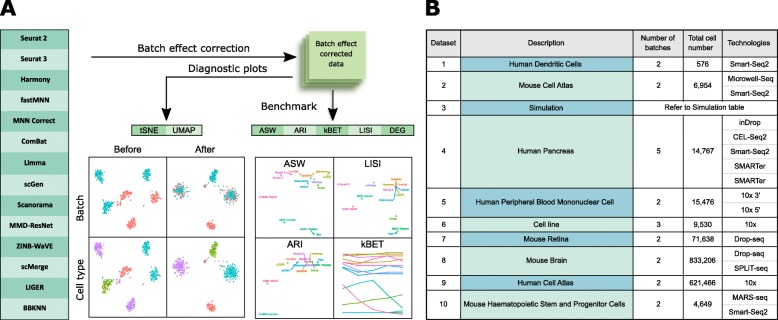
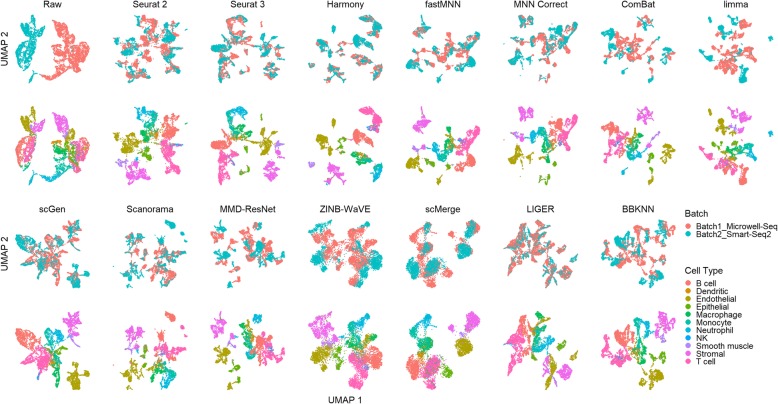
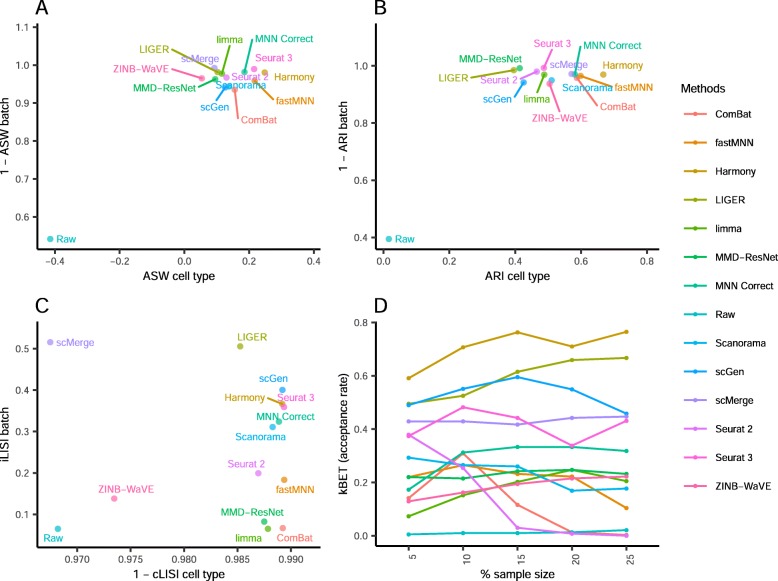
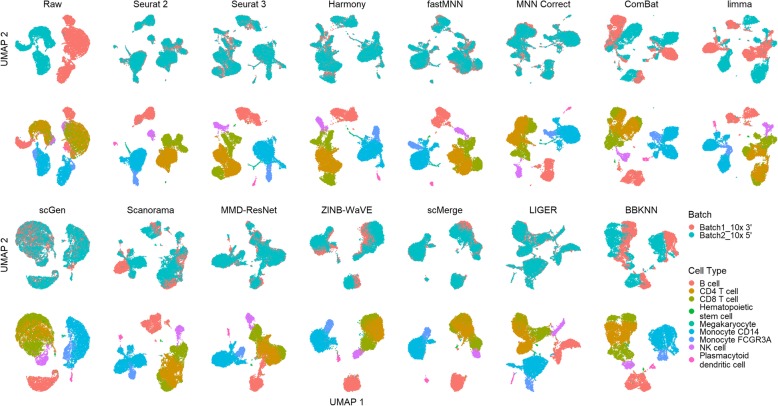
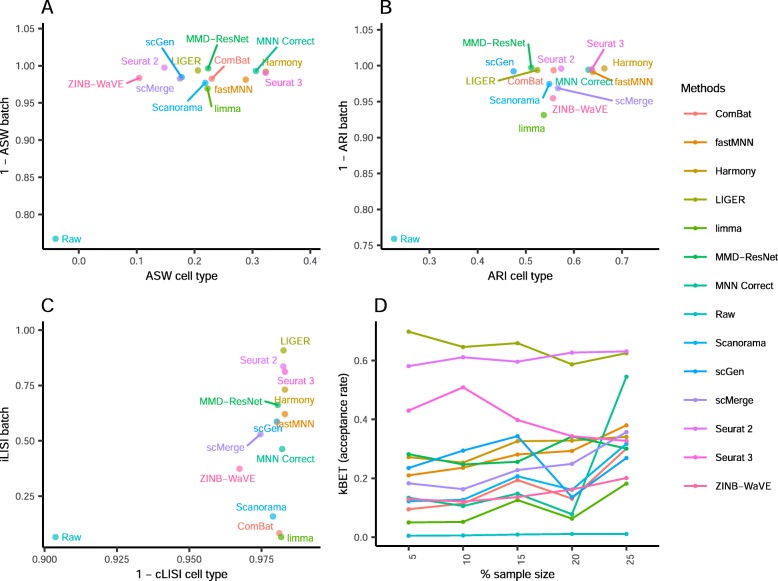
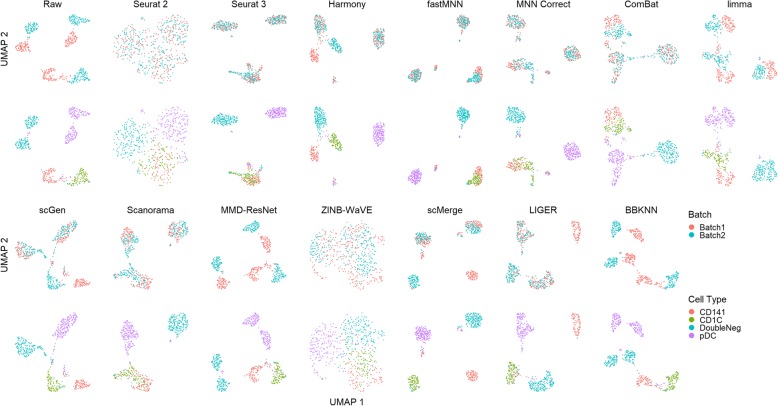
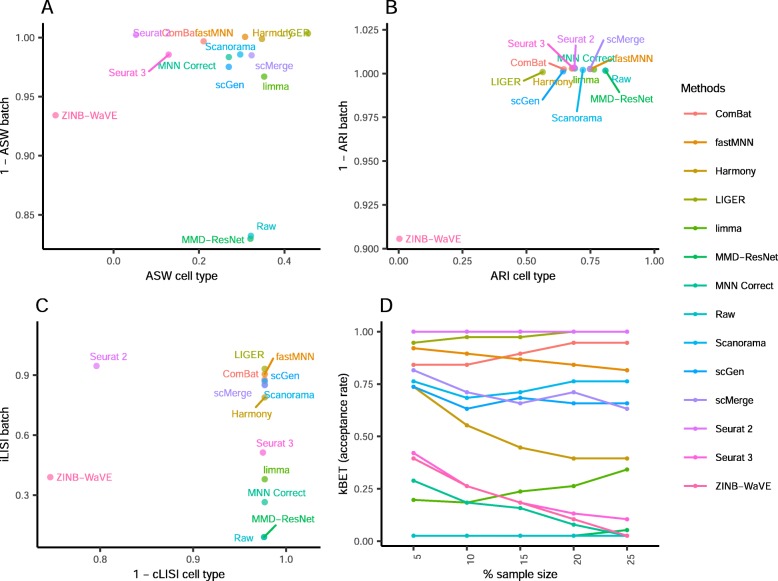
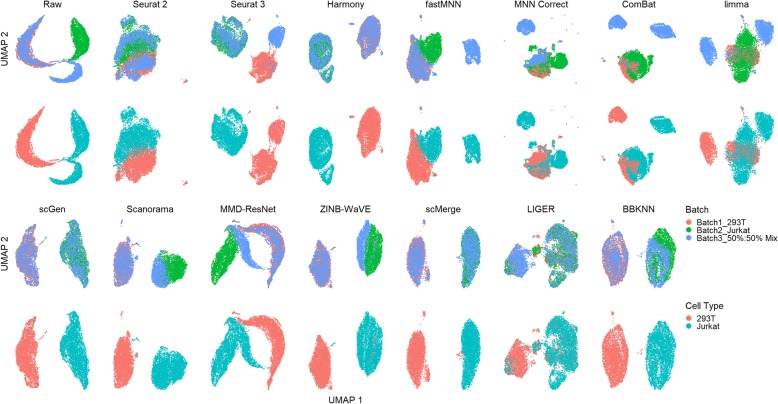
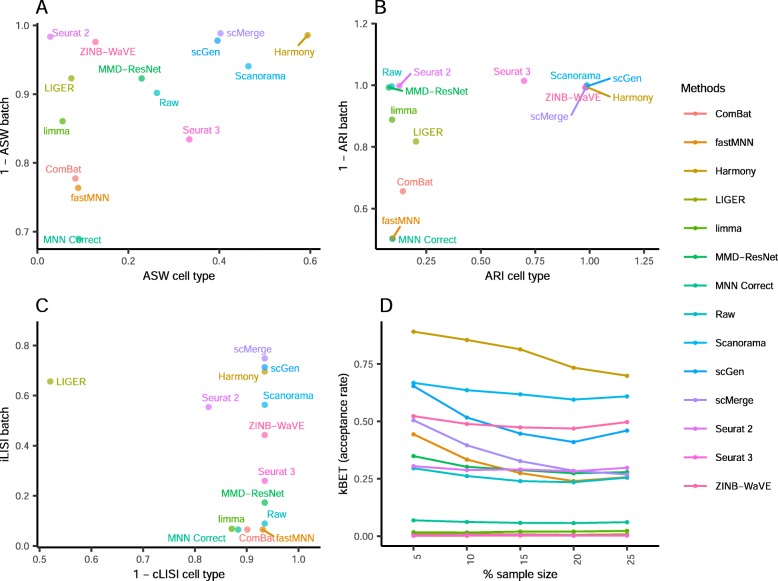
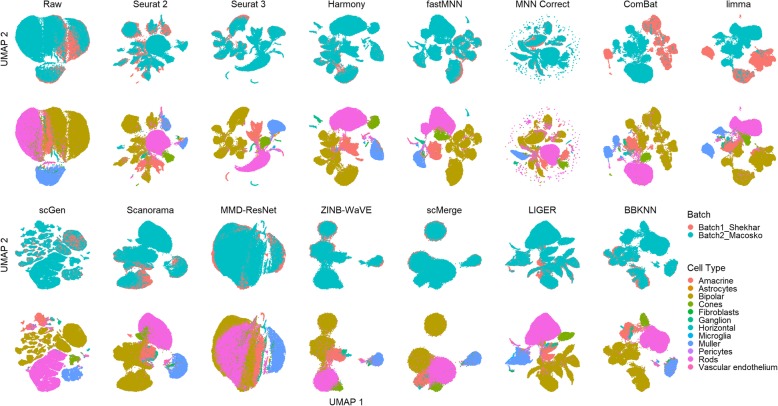
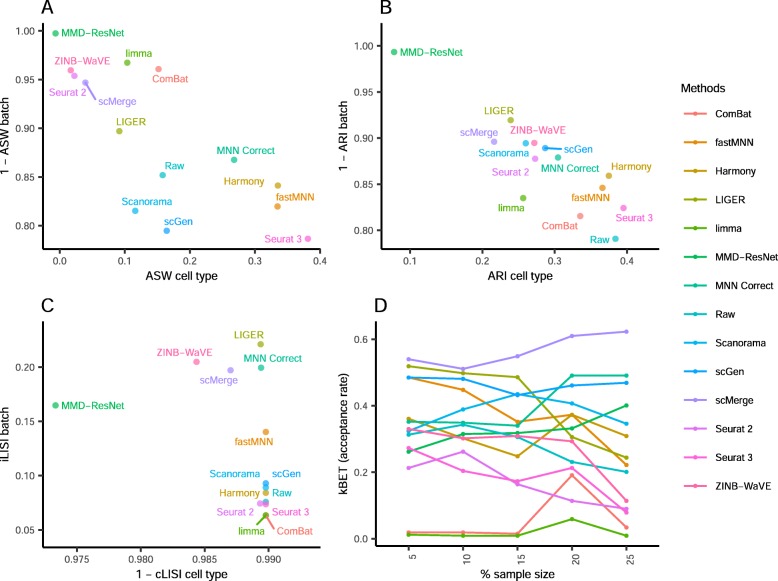
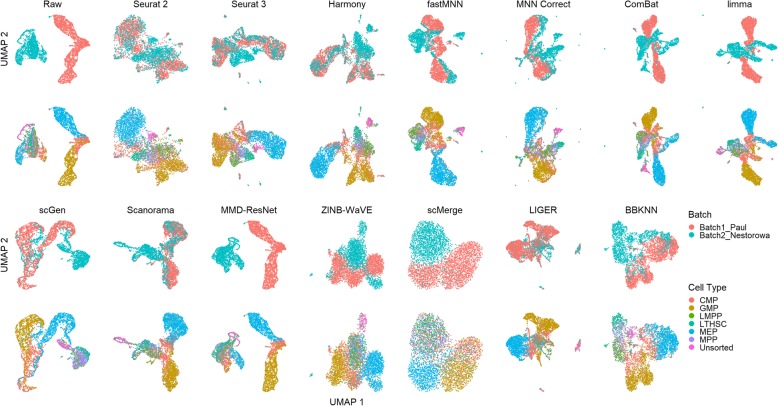
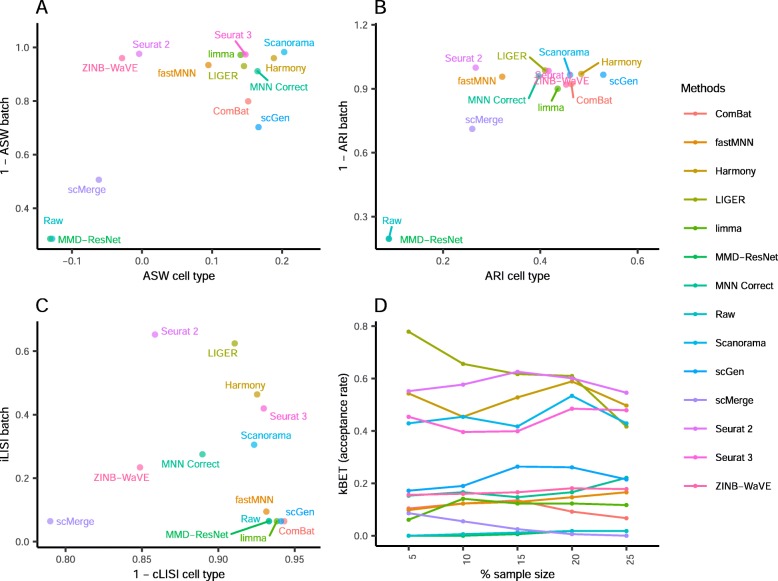
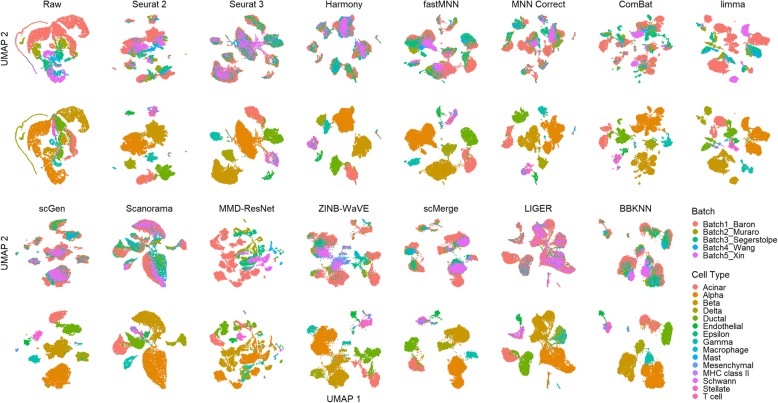
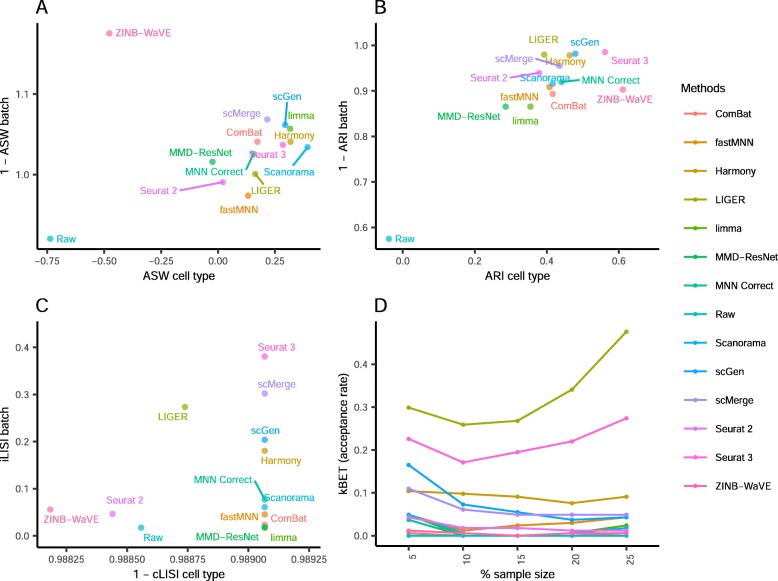
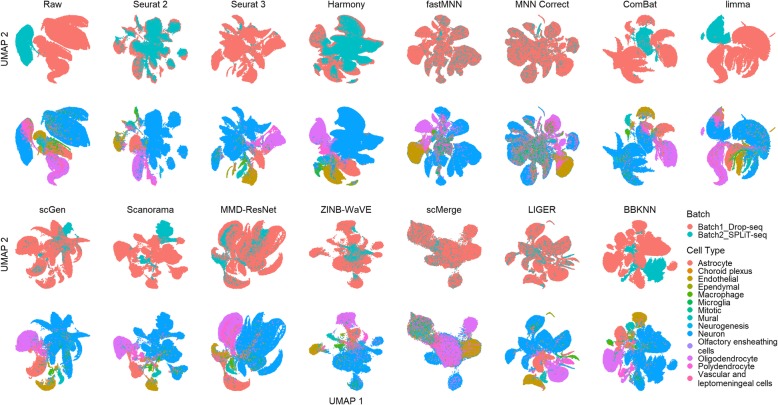
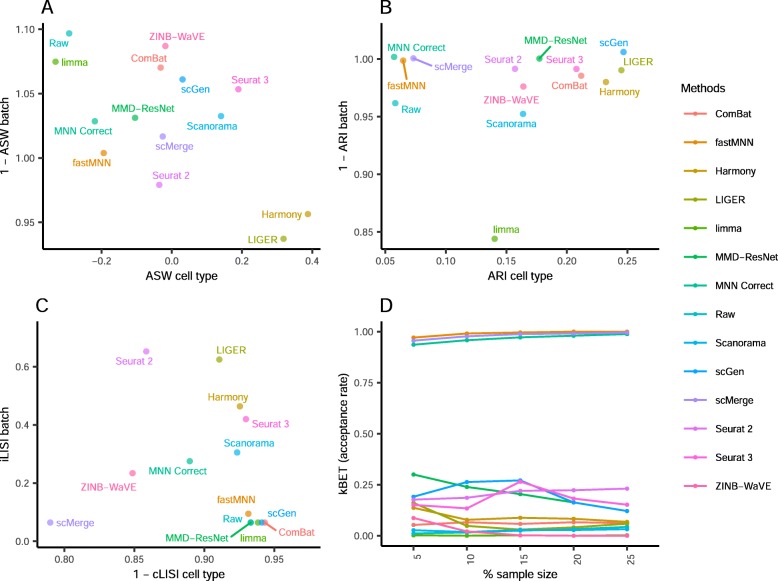
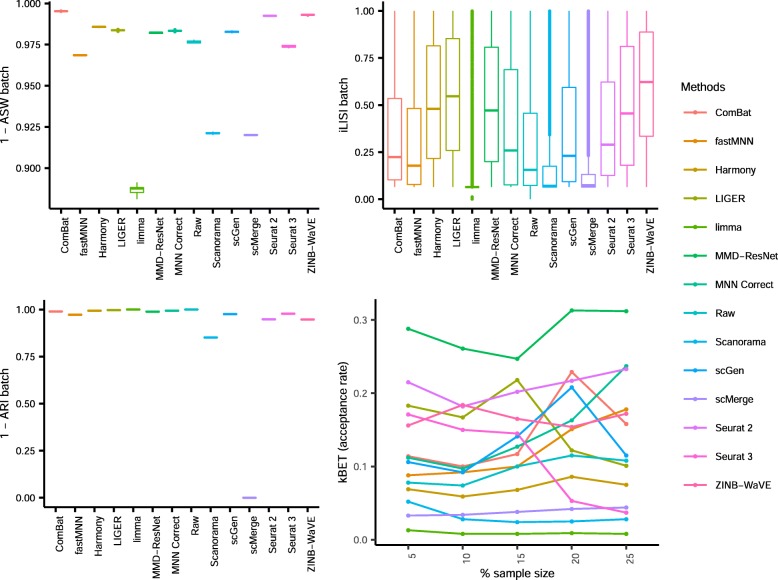
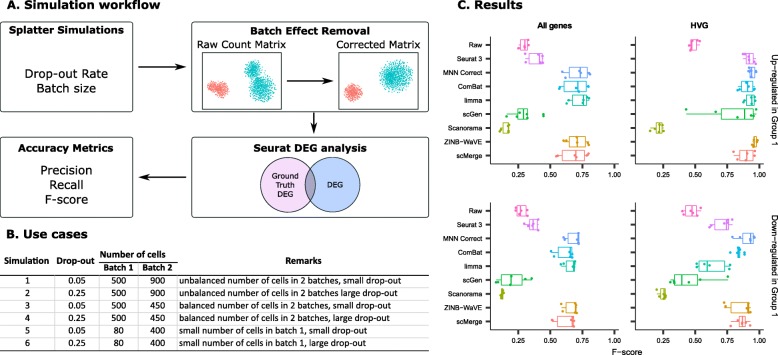
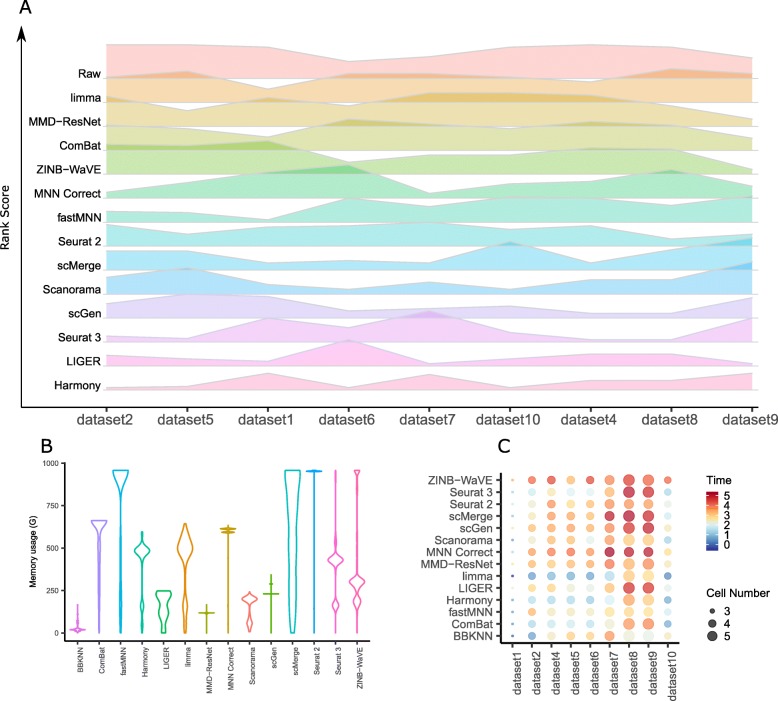
Background: Large-scale single-cell transcriptomic datasets generated using different technologies contain batch-specific systematic variations that present a challenge to batch-effect removal and data integration. With continued growth expected in scRNA-seq data, achieving effective batch integration with available computational resources is crucial. Here, we perform an in-depth benchmark study on available batch correction methods to determine the most suitable method for batch-effect removal. Results: We compare 14 methods in terms of computational runtime, the ability to handle large datasets, and batch-effect correction efficacy while preserving cell type purity. Five scenarios are designed for the study: identical cell types with different technologies, non-identical cell types, multiple batches, big data, and simulated data. Performance is evaluated using four benchmarking metrics including kBET, LISI, ASW, and ARI. We also investigate the use of batch-corrected data to study differential gene expression. Conclusion: Based on our results, Harmony, LIGER, and Seurat 3 are the recommended methods for batch integration. Due to its significantly shorter runtime, Harmony is recommended as the first method to try, with the other methods as viable alternatives.
Overview
The claims and statistics of this paper haven’t been checked yet.
Free: it reads the open-access text and checks the first 5 claims that cite a source we can check. Create a free account to check every claim.
Integrity signals
Registry
Cites
Statistics
Figures
Verification
Claims the paper makes
The claims and statistics of this paper haven’t been checked yet.
Free: it reads the open-access text and checks the first 5 claims that cite a source we can check. Create a free account to check every claim.
Claims other papers make about this one
Each is checked against this paper’s own text: does it say what the citing paper says it does?
The cited source doesn’t support the claim as written.
In the citing paper
“Recent benchmark studies indicate that for simpler integration problems with relatively low biological complexity and relatively small batch effects in scRNA-Seq datasets, linear methods outperform nonlinear, more complex methods136,137, while for complicated integration tasks with large biological complexity and bigger batch effects, nonlinear methods such as scVI/scanVI outperform others138.”
From A high-resolution transcriptomic and spatial atlas of cell types in the whole mouse brain (2023) · cites this paper as [137]
Checked by a reasoning model — may be wrong.
Experimental — accuracy not yet measuredIn the citing paper
“Although SCING GRN based batch correction was not as optimized as the dedicated batch correction methods, many typical batch correction methods do not provide a batch corrected gene expression matrix for downstream analysis.44”
From SCING: Inference of robust, interpretable gene regulatory networks from single cell and spatial transcriptomics (2023) · cites this paper as [44]
In the citing paper
“Linear-embedding models such as canonical correlation analysis36 and Harmony37 were shown to perform well for batch correction on simpler integration tasks with distinct batch structures38,39.”
From Best practices for single-cell analysis across modalities (2023) · cites this paper as [38]
Self-check
Percentages, sums and reported differences re-computed from the paper’s own numbers.
The self-check needs the paper’s full text.
Citations
Cites
(2008) · Journal of Machine Learning Research · Cited by 33,051
Silhouettes: A graphical aid to the interpretation and validation of cluster analysis
Rousseeuw, P. J. (1987) · Journal of Computational and Applied Mathematics · doi:10.1016/0377-0427(87)90125-7 · Cited by 21,392 · cited 2×
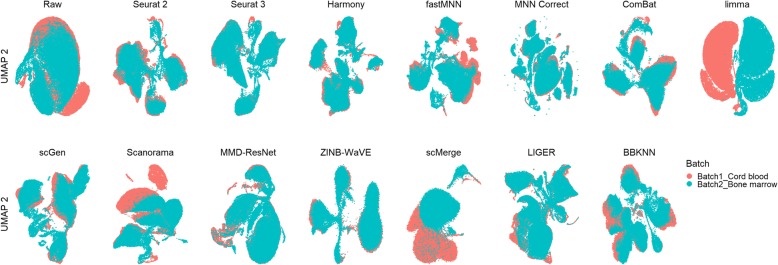
“…and Uniform Manifold Approximation and Projection (UMAP) [21] visualizations in conjunction with the k - nearest neighbor batch-effect test (kBET) [22], local inverse Simpson ’ s index (LISI) [13, 23], average silhouette width (ASW) [24], and adjusted rand index (ARI) benchmarking metrics [25].”
MethodGAN(Generative Adversarial Nets)
(2017) · Journal of Japan Society for Fuzzy Theory and Intelligent Informatics · doi:10.3156/jsoft.29.5_177_2 · Cited by 19,270
Comprehensive Integration of Single-Cell Data
Stuart, T., Butler, A., Hoffman, P., Hafemeister, C., Papalexi, E., Mauck, W. M., Hao, Y., Stoeckius, M., Smibert, P., & Satija, R. (2019) · Cell · doi:10.1016/j.cell.2019.05.031 · Cited by 15,453
Integrating single-cell transcriptomic data across different conditions, technologies, and species
Butler, A., Hoffman, P., Smibert, P., Papalexi, E., & Satija, R. (2018) · Nature Biotechnology · doi:10.1038/nbt.4096 · Cited by 13,174 · cited 6×
“Seurat alignment CCA, multiCCA (Seurat 2) Seurat multiCCA uses canonical correlation analysis (CCA) to first compute the linear combinations of genes with maximum correlation between batches [4].”
BackgroundMethodInfluentialFast, sensitive and accurate integration of single-cell data with Harmony
Korsunsky, I., Millard, N., Fan, J., Slowikowski, K., Zhang, F., Wei, K., Baglaenko, Y., Brenner, M., Loh, P.-R., & Raychaudhuri, S. (2019) · Nature Methods · doi:10.1038/s41592-019-0619-0 · Cited by 10,488 · cited 5×
“Another local level metric is the LISI proposed by Kor-sunsky et al. [13, 22], which can be used to assesses batch and cell type mixing.”
MethodInfluentialSCANPY: large-scale single-cell gene expression data analysis
Wolf, F. A., Angerer, P., & Theis, F. J. (2018) · Genome Biology · doi:10.1186/s13059-017-1382-0 · Cited by 8,881 · cited 1×
“The batch correction by Scanorama was performed in conjunction with the Scanpy workflow [29].”
MethodAdjusting batch effects in microarray expression data using empirical Bayes methods
Johnson, W. E., Li, C., & Rabinovic, A. (2007) · Biostatistics · doi:10.1093/biostatistics/kxj037 · Cited by 8,658 · cited 3×
“ComBat was originally developed for microarray gene expression data [1], but had been successfully employed”
MethodHubert, L., & Arabie, P. (1985) · Journal of Classification · doi:10.1007/bf01908075 · Cited by 8,219
Massively parallel digital transcriptional profiling of single cells
Zheng, G. X. Y., Terry, J. M., Belgrader, P., Ryvkin, P., Bent, Z. W., Wilson, R., Ziraldo, S. B., Wheeler, T. D., McDermott, G. P., Zhu, J., et al. (2017) · Nature Communications · doi:10.1038/ncomms14049 · Cited by 7,353
Research works printed but not linked: 5
- Lun A Further MNN algorithm development 2019
- Goodfellow I, Pouget-Abadie J, Mirza M, Xu B, Warde-Farley D, Ozair S, et al. Generative adversarial nets. In: Ghahramani Z, Welling M, Cortes C, Lawrence ND, Weinberger KQ, editors. Adv Neural Inf Process Syst 27: Curran Associates, Inc; 2014. p. 2672–80. Available from: http://papers.nips.cc/paper/5423-generative-adversarial-nets.pdf. Accessed 11 Mar 2019.
- Korsunsky I LISI 2019
- Deng Y, Bao F, Dai Q, Wu LF, Altschuler SJ. Massive single-cell RNA-seq analysis and imputation via deep learning. bioRxiv. 2018:315556 Available from: http://biorxiv.org/content/early/2018/11/27/315556.abstract. Accessed 5 July 2019.
- Tran HTN, Ang KS, Chevrier M, Zhang X, Lee NYS, Goh M, Chen J. A benchmark of batch-effect correction methods for single-cell RNA sequencing data. Simulations. Github Repository. https://github.com/JinmiaoChenLab/Batch-effect-removal-benchmarking. 2019. PMC6964114 31948481
Cited by
Items 201–300 of 1,005
Gu, S., Olszewski, R. T., Taukulis, I., Wei, Z., Martín, D., Morell, R. J., & Hoa, M. (2020) · Scientific Reports · doi:10.1038/s41598-020-75238-8 · Cited by 55
Zeng, L., Yang, K., Zhang, T., Zhu, X., Hao, W., Chen, H., & Ge, J. (2022) · Journal of Autoimmunity · doi:10.1016/j.jaut.2022.102919 · Cited by 50
Meta-Analysis of Human Cancer Single-Cell RNA-Seq Datasets Using the IMMUcan Database
Camps, J., Noël, F., Liechti, R., Massenet-Regad, L., Rigade, S., Götz, L., Hoffmann, C., Amblard, E., Saichi, M., Ibrahim, M. M., et al. (2022) · Cancer Research · doi:10.1158/0008-5472.can-22-0074 · Cited by 50
A single cell atlas of sexual development in Plasmodium falciparum
Dogga, S. K., Rop, J., Cudini, J., Farr, E., Dara, A., Ouologuem, D., DJIMDÉ, A. A., Talman, A. M., & Lawniczak, M. (2024) · Science · doi:10.1126/science.adj4088 · Cited by 53
Integrating single-cell RNA-seq datasets with substantial batch effects
Hrovatin, K., Moinfar, A. A., Zappia, L., Parikh, S., Tejada-Lapuerta, A., Lengerich, B. J., Kellis, M., & Theis, F. J. (2025) · BMC Genomics · doi:10.1186/s12864-025-12126-3 · Cited by 52
Intricacies of single-cell multi-omics data integration
Rautenstrauch, P., Vlot, A. H. C., Saran, S., & Ohler, U. (2021) · Trends in Genetics · doi:10.1016/j.tig.2021.08.012 · Cited by 51
The mouse brain after foot shock in four dimensions: Temporal dynamics at a single-cell resolution
Bonapersona, V., Schuler, H., Damsteegt, R., Adolfs, Y., Pasterkamp, R. J., van den Heuvel, M. P., Joëls, M., & Sarabdjitsingh, R. A. (2022) · Proceedings of the National Academy of Sciences · doi:10.1073/pnas.2114002119 · Cited by 51
“12–14 ).”
Flynn, E., Almonte-Loya, A., & Fragiadakis, G. K. (2023) · Annual Review of Biomedical Data Science · doi:10.1146/annurev-biodatasci-020422-050645 · Cited by 54
Advances and challenges in single-cell RNA sequencing data analysis: a comprehensive review
Nesari, A. M., MotieGhader, H., & Ghorbian, . (2026) · Briefings in Bioinformatics · doi:10.1093/bib/bbaf723 · Cited by 58
“These include the sparsity and high dimensionality of single-cell data [11], batch effects [12], interoperability issues between analysis frameworks [13], and ethical concerns associated with patient-derived data [14].”
The impact of package selection and versioning on single-cell RNA-seq analysis
Rich, J. M., Moses, L., Einarsson, P. H., Jackson, K. C., Luebbert, L., Booeshaghi, A. S., Antonsson, S. E., Sullivan, D. K., Bray, N., Melsted, P., et al. (2026) · Cell Systems · doi:10.1016/j.cels.2026.101560 · Cited by 48
Machine learning applications for therapeutic tasks with genomics data
Huang, K., Xiao, C., Glass, L. M., Critchlow, C. W., Gibson, G. C., & Sun, J. (2021) · Patterns · doi:10.1016/j.patter.2021.100328 · Cited by 52
McKendrick, J. G., Jones, G., Elder, S. S., Watson, E. E., T’Jonck, W., Mercer, E., Pinto, M. M., Rocchi, C., Hegarty, L. M., Johnson, A. L., et al. (2023) · Science Immunology · doi:10.1126/sciimmunol.add4374 · Cited by 47
“Batch effect correction was assessed using the Harmony package (94).”
Belov, V., Erwin-Grabner, T., Aghajani, M., Aleman, A., Amod, A. R., Başgöze, Z., Benedetti, F., Besteher, B., Bülow, R., Ching, C. R. K., et al. (2024) · Scientific Reports · doi:10.1038/s41598-023-47934-8 · Cited by 54
“Hence, encouraging such evaluations in large data sets as well as implementing new methods to be tested 39,40 on both the group and the single subject prediction level could be of great benefit for the imaging community.”
BackgroundZhang, Z., Zhao, X., Bindra, M., Qiu, P., & Zhang, X. (2024) · Nature Communications · doi:10.1038/s41467-024-45227-w · Cited by 54
Self-citationMachine learning for single-cell genomics data analysis
Raimundo, F., Meng-Papaxanthos, L., Vallot, C., & Vert, J. (2021) · Current Opinion in Systems Biology · doi:10.1016/j.coisb.2021.04.006 · Cited by 51
Kumegawa, K., Takahashi, Y., Saeki, S., Yang, L., Nakadai, T., Osako, T., Mori, S., Noda, T., Ohno, S., Ueno, T., et al. (2022) · npj Breast Cancer · doi:10.1038/s41523-022-00438-6 · Cited by 45
Adversarial domain translation networks for integrating large-scale atlas-level single-cell datasets
Zhao, J., Wang, G., Ming, J., Lin, Z., Wang, Y., Agarwal, S., Agrawal, A., Al‐Moujahed, A., Alam, A. A., Albertelli, M. A., et al. (2022) · Nature Computational Science · doi:10.1038/s43588-022-00251-y · Cited by 47
“6, 8 and 10).”
Tokura, M., Nakayama, J., Prieto‐Vila, M., Shiino, S., Yoshida, M., Yamamoto, T., Watanabe, N., Takayama, S., Suzuki, Y., Okamoto, K., et al. (2022) · Cancer Research · doi:10.1158/0008-5472.can-22-0090 · Cited by 50
Toseef, M., Petinrin, O. O., Wang, F., Rahaman, S., Liu, Z., Li, X., & Wong, K. (2023) · Briefings in Bioinformatics · doi:10.1093/bib/bbad254 · Cited by 47
Resolving sensitivity, specificity and signal contamination in Xenium spatial transcriptomics
Bilous, M., Buszta, D., Bac, J., Kang, S., Dong, Y., Tissot, S., André, S., Gaveta, M. A., Voize, C., Peters, S., et al. (2026) · Nature Methods · doi:10.1038/s41592-026-03089-8 · Cited by 47
“The discrepancy between the two metrics reflects their differing sensitivi-ties—iLISI captures local neighborhood mixing and is more sensitive, whereas Silhouette Batch evaluates global separation—an expected and previously reported phenomenon 27 .”
Building the mega single-cell transcriptome ocular meta-atlas
Swamy, V. S., Fufa, T., Hufnagel, R. B., & McGaughey, D. M. (2021) · GigaScience · doi:10.1093/gigascience/giab061 · Cited by 48
Chen, W., Zhang, S., Williams, J., Ju, B., Shaner, B., Easton, J., Wu, G., & Chen, X. (2020) · Computational and Structural Biotechnology Journal · doi:10.1016/j.csbj.2020.03.026 · Cited by 44
“Although several methods (ComBat [13], MNNCorrect [14], zinbwave [15], and scMerge [16]) achieved relative good performance in a limited comparison with others [7], their performance in DE analysis has not been systematically evaluated.”
BackgroundMethodGlutamine Metabolism Is Required for Alveolar Regeneration during Lung Injury
Wang, S., Li, X., Ma, Q., Wang, Q., Wu, J., Yu, H., Li, K., Li, Y., Wang, J., Zhang, Q., et al. (2022) · Biomolecules · doi:10.3390/biom12050728 · Cited by 46
“Further, to reduce batch effects on the clustering and perform differentially expressed gene analysis, we established an algorithm using the harmony package [38,39].”
MethodSingle-cell RNA and protein profiling of immune cells from the mouse brain and its border tissues
Scheyltjens, I., Hove, H. V., Vlaminck, K. D., Kancheva, D., Bastos, J., Vara‐Pérez, M., Antunes, A. R. P., Martens, L., Scott, C. L., Ginderachter, J. A. V., et al. (2022) · Nature Protocols · doi:10.1038/s41596-022-00716-4 · Cited by 45
Sharma, D., Worssam, M. D., Pedroza, A. J., Dalal, A. R., Alemany, H., Kim, H.-J., Kundu, R. K., Fischbein, M. P., Cheng, P. P., Wirka, R. C., et al. (2023) · Arteriosclerosis Thrombosis and Vascular Biology · doi:10.1161/atvbaha.123.320030 · Cited by 46
“39 Luecken et al 40 compared 68 different combinations of methods and processing and found that Seurat integration method was able to integrate differences among sample locations and technique differences as some tools confuse it as biological variations.”
Shortcomings of silhouette in single-cell integration benchmarking
Rautenstrauch, P., & Ohler, U. (2025) · Nature Biotechnology · doi:10.1038/s41587-025-02743-4 · Cited by 54
“Silhouette-based metrics for both bio-conservation and batch removal have been widely adopted across the field, as evidenced by their application in multiple large-scale benchmarks 10–12 .”
Replication of single-cell proteomics data reveals important computational challenges
Vanderaa, C., & Gatto, L. (2021) · Expert Review of Proteomics · doi:10.1080/14789450.2021.1988571 · Cited by 53
Scaling up reproducible research for single-cell transcriptomics using MetaNeighbor
Fischer, S., Crow, M., Harris, B. D., & Gillis, J. (2021) · Nature Protocols · doi:10.1038/s41596-021-00575-5 · Cited by 43
“Popular metrics 21,22 include batch-mixing metrics, such as the k-nearest-neighbor batch-effect test (kBET) 25 and the local inverse Simpson ’ s index (LISI) 11 , and cell-type conservation metrics, such as the average silhouette width (ASW) and the adjusted Rand index (ARI).”
MethodYou, R., Shen, Q., Lin, C., Dong, K., Liu, X., Xu, H., Hu, W., Xie, Y., Xie, R.-Q., Song, X., et al. (2025) · Nature Genetics · doi:10.1038/s41588-025-02253-8 · Cited by 47
Robust integration of multiple single-cell RNA sequencing datasets using a single reference space
Liu, Y., Wang, T., Zhou, B., & Zheng, D. (2021) · Nature Biotechnology · doi:10.1038/s41587-021-00859-x · Cited by 44
Perspectives for better batch effect correction in mass-spectrometry-based proteomics
Phua, S.-X., Lim, K.-P., & Goh, W. W.-B. (2022) · Computational and Structural Biotechnology Journal · doi:10.1016/j.csbj.2022.08.022 · Cited by 42
“These are mostly limited to bulk sequencing [14] and single-cell sequencing data [15] but some work has also been performed on proteomics datasets [3].”
BackgroundCharytonowicz, D., Brody, R., & Sebra, R. (2023) · Nature Communications · doi:10.1038/s41467-023-36961-8 · Cited by 45
Slysz, J., Sinha, A., DeBerge, M., Singh, S., Avgousti, H., Lee, I., Glinton, K. E., Nagasaka, R., Dalal, P., Alexandria, S. J., et al. (2023) · JCI Insight · doi:10.1172/jci.insight.171359 · Cited by 45
“Korsunsky I, et al. Fast, sensitive and accurate integration of single-cell data with Harmony.”
MethodInfluentialHua-wen, Z., Han, W., Gómez-Cabrero, D., Tegner, J. N., Gao, X., Cui, G., & Aranda, M. (2025) · Nucleic Acids Research · doi:10.1093/nar/gkae1316 · Cited by 45
A robust and scalable graph neural network for accurate single-cell classification
Zeng, Y., Wei, Z., Pan, Z., Lu, Y., & Yang, Y. (2022) · Briefings in Bioinformatics · doi:10.1093/bib/bbab570 · Cited by 43
scAnnotate: an automated cell-type annotation tool for single-cell RNA-sequencing data
Ji, X., Tsao, D., Bai, K., Tsao, M., Xing, L., & Zhang, X. (2023) · Bioinformatics Advances · doi:10.1093/bioadv/vbad030 · Cited by 44
“Since the Elastic Net model’s result is a linear combination of PC scores, and the PC scores are linear combinations of qij scores, the final results are linear combinations of qij scores.”
MethodInfluentialSelf-citationTang, L., Xu, N., Huang, M., Yi, W., Sang, X., Shao, M., Li, Y., Hao, Z.-Z., Liu, R., Shen, Y., et al. (2023) · Nature Communications · doi:10.1038/s41467-023-43213-2 · Cited by 42
Kubinski, R., Djamen-Kepaou, J.-Y., Zhanabaev, T., Hernández-García, Á., Bauer, S., Hildebrand, F., Korcsmáros, T., Karam, S., Jantchou, P., Kafi, K., et al. (2022) · Frontiers in Genetics · doi:10.3389/fgene.2022.784397 · Cited by 45
Multiple parallel cell lineages in the developing mammalian cerebral cortex
Del-Valle-Anton, L., Amin, S., Cimino, D., Neuhaus, F., Dvoretskova, E., Fernández, V., Babal, Y. K., García-Frigola, C., Prieto‐Colomina, A., Murcia‐Ramón, R., et al. (2024) · Science Advances · doi:10.1126/sciadv.adn9998 · Cited by 42
“…thresholds) were followed by analysis with Seurat-3 [with proven integration performance compared to other single-cell analytical meth-ods ( 21 , 22 )] and careful selection criteria for cluster resolution (evaluation of six potential resolutions from three different groups of progenitor cells;…”
MethodComprehensive evaluation of noise reduction methods for single-cell RNA sequencing data
Chu, S., Zhao, S., Shyr, Y., & Liu, Q. (2022) · Briefings in Bioinformatics · doi:10.1093/bib/bbab565 · Cited by 44
“Different ranges between corrected and original gene expression in Scanorama was also reported in a recent benchmark study [23].”
InfluentialBatch correction methods used in single-cell RNA sequencing analyses are often poorly calibrated
Antonsson, S. E., & Melsted, P. (2025) · Genome Research · doi:10.1101/gr.279886.124 · Cited by 41
“Early work (Tran et al. 2020) compared 14 different batch correction methods based on run time and classical metrics from cluster comparison.”
SIRV: spatial inference of RNA velocity at the single-cell resolution
Abdelaal, T., Grossouw, L. M., Pasterkamp, R. J., Lelieveldt, B. P. F., Reinders, M. J. T., & Mahfouz, A. E. (2024) · NAR Genomics and Bioinformatics · doi:10.1093/nargab/lqae100 · Cited by 46
“Next, we evaluated the accuracy of the integration step of SIRV, for that we benchmarked against Harmony ( 49 ) and Seurat ( 22 ), top performing methods for integration of single-cell transcriptomics data ( 50 ).”
MethodCell Atlas technologies and insights into tissue architecture
Wilbrey-Clark, A., Roberts, K., & Teichmann, S. A. (2020) · Biochemical Journal · doi:10.1042/bcj20190341 · Cited by 42
Durán, R. C., Wei, H., & Wu, J. (2024) · BMC Genomics · doi:10.1186/s12864-024-10364-5 · Cited by 43
Fang, D., & Min, W. (2025) · Communications Biology · doi:10.1038/s42003-025-08810-5 · Cited by 39
“The F1LISI index (range: 0 – 1) integrates batch-grouped LISI (LISI batch ) and domain-grouped LISI (LISI domain ) through a tunable weighting coef fi cient α (as detailed in the Methods section), with higher values indicating superior technical noise elimination while preserving biological variance.”
InfluentialEffects of Cryopreservation and Thawing on Single-Cell Transcriptomes of Human T Cells
Lee, J. S., Yi, K., Ju, Y. S., & Shin, E. (2020) · Immune Network · doi:10.4110/in.2020.20.e34 · Cited by 40
“However, current single-cell sequencing using a water-in-oil microdroplet platform also has a significant batch effect among different sets of experiments, and it has been attempted to correct the batch effect by a bioinformatics approach (13).”
Application of single-cell RNA sequencing on human testicular samples: a comprehensive review
Dong, F., Ping, P., Ma, Y., & Chen, X. (2023) · International Journal of Biological Sciences · doi:10.7150/ijbs.82191 · Cited by 39
Integration of millions of transcriptomes using batch-aware triplet neural networks
Simon, L. M., Wang, Y., & Zhao, Z. (2021) · Nature Machine Intelligence · doi:10.1038/s42256-021-00361-8 · Cited by 38
Borrett, M. J., Innes, B. T., Tahmasian, N., Bader, G. D., Kaplan, D. R., & Miller, F. D. (2022) · eNeuro · doi:10.1523/eneuro.0271-21.2021 · Cited by 38
“…Hnrnpc Hadhb Rnaseh2c Nr1d1 Txn1 Baalc Rnf187 Psd2 Psme1 Aldh1l1 Ngfrap1 Hist1 h1c Fam32a Itga6 Nop10 Cyp2d22 Pbx1 Aldoa Eif3h Laptm4b Gltscr2 Cnp Tmpo Kifc3 Efnb3 (Continued) January/February 2022, 9(1) ENEURO.0271-21.2021 eNeuro.org dimensional data (Korsunsky et al., 2019; Tran et al., 2020).”
InfluentialA single-cell atlas of the rat amygdala reveals molecular signatures of cocaine addiction
Zhou, J., de Guglielmo, G., Ho, A. J., Kallupi, M., Pokhrel, N. P., Li, H.-R., Chitre, A. S., Munro, D. B., Mohammadi, P., Carrette, L. L. G., et al. (2023) · Nature Neuroscience · doi:10.1038/s41593-023-01454-w · Cited by 39
Nadalin, F., Marzi, M. J., Piscazzi, M. P., Fuentes-Bravo, P., Procaccia, S., Climent, M., Bonetti, P., Rubolino, C., Giuliani, B., Papatheodorou, I., et al. (2024) · Nature Communications · doi:10.1038/s41467-024-51424-4 · Cited by 38
Computational Methods for Data Integration and Imputation of Missing Values in Omics Datasets
Schumann, Y., Gocke, A., & Neumann, J. E. (2024) · PROTEOMICS · doi:10.1002/pmic.202400100 · Cited by 39
Single-Cell Multi-Omics: Insights into Therapeutic Innovations to Advance Treatment in Cancer
Guan, A., & Quek, C. Y. J. (2025) · International Journal of Molecular Sciences · doi:10.3390/ijms26062447 · Cited by 42
“A similar architecture was used to develop MultiVI for integrating scRNA-seq with scATAC-seq data, with potential expansion to include protein as a third modality [65].”
Artificial Intelligence in Bulk and Single-Cell RNA-Sequencing Data to Foster Precision Oncology
Giudice, M. D., Peirone, S., Perrone, S., Priante, F., Varese, F., Tirtei, E., Fagioli, F., & Cereda, M. (2021) · International Journal of Molecular Sciences · doi:10.3390/ijms22094563 · Cited by 39
“This “batch‐specific” heterogeneity confounds the real biological signal of large‐scale datasets [79].”
BackgroundThe use of single-cell multi-omics in immuno-oncology
Ma, A., Xin, G., & Ma, Q. (2022) · Nature Communications · doi:10.1038/s41467-022-30549-4 · Cited by 37
Single-Cell Analysis in Immuno-Oncology
Christodoulou, M., & Zaravinos, A. (2023) · International Journal of Molecular Sciences · doi:10.3390/ijms24098422 · Cited by 38
“Various tools can correct these batch effects [48], but they should be carefully applied in order to not mask the true biological differences.”
BackgroundLittman, R., Cheng, M., Wang, N., Peng, C., & Yang, X. (2023) · iScience · doi:10.1016/j.isci.2023.107124 · Cited by 35
“We benchmarked and optimized these hyperparameters to balance computational efficiency, network properties, and robustness of the GRN based on target gene expression prediction (STAR Methods) and provide a description of the benchmark framework and justification for our selection in the Methods.”
MethodInfluentialLimitations of cell embedding metrics assessed using drifting islands
Wang, H., Leskovec, J., & Regev, A. (2025) · Nature Biotechnology · doi:10.1038/s41587-025-02702-z · Cited by 36
“This alignment greatly boosts the biological variance conservation metrics, leading to top-tier overall performance by these evaluation criteria (Supplementary Tables 3–12).”
Algorithmic advances in machine learning for single-cell expression analysis
Moreno, S. O., Kloiber, K., Machart, P., & Bonn, S. (2021) · Current Opinion in Systems Biology · doi:10.1016/j.coisb.2021.02.002 · Cited by 38
Selecting gene features for unsupervised analysis of single-cell gene expression data
Sheng, J., & Li, W. V. (2021) · Briefings in Bioinformatics · doi:10.1093/bib/bbab295 · Cited by 36
Hu, J., Zhong, Y., & Shang, X. (2021) · Briefings in Bioinformatics · doi:10.1093/bib/bbab400 · Cited by 38
Biomarker selection and a prospective metabolite-based machine learning diagnostic for lyme disease
Kehoe, E. R., Fitzgerald, B. L., Graham, B., Islam, M. N., Sharma, K., Wormser, G. P., Belisle, J. T., & Kirby, M. J. L. (2022) · Scientific Reports · doi:10.1038/s41598-022-05451-0 · Cited by 35
Xu, Y., Begoli, E., & McCord, R. P. (2022) · npj Systems Biology and Applications · doi:10.1038/s41540-022-00245-6 · Cited by 37
“To demonstrate the performance of sciCAN in the task of data integration, we fi rst selected 3 methods for comparison that have been extensively tested in integrating single-cell RNA-seq data 23 , including LIGER 14 , Harmony 15 , and Seurat 24 .”
MethodA Roadmap for a Consensus Human Skin Cell Atlas and Single-Cell Data Standardization
Almet, A. A., Yuan, H., Annusver, K., Ramos, R., Liu, Y., Wiedemann, J., Sorkin, D. H., Xu, N., Sonkoly, E., Haniffa, M. A., et al. (2023) · Journal of Investigative Dermatology · doi:10.1016/j.jid.2023.03.1679 · Cited by 34
Private information leakage from single-cell count matrices
Walker, C. R., Li, X., Chakravarthy, M., Lounsbery-Scaife, W., Choi, Y. A., Singh, R., & Gürsoy, G. (2024) · Cell · doi:10.1016/j.cell.2024.09.012 · Cited by 35
“32 Count matrices also remain sparse, with many cells not expressing a large number of genes.”
BackgroundA versatile information retrieval framework for evaluating profile strength and similarity
Kalinin, A. A., Arévalo, J., Serrano, E., Vulliard, L., Tsang, H., Bornholdt, M., Muñoz, A. F., Sivagurunathan, S., Rajwa, B. P., Carpenter, A. E., et al. (2025) · Nature Communications · doi:10.1038/s41467-025-60306-2 · Cited by 42
“These applications demonstrate mAP ’ s robustness in quantifying the strength and similarity of image, protein, and mRNA pro fi les, af fi rming its broad utility across diverse pro fi ling assays.”
Wu, H., Wu, Y., Jiang, Y., Zhou, B., Zhou, H., Chen, Z., Xiong, Y., Liu, Q., & Zhang, H. (2021) · Briefings in Bioinformatics · doi:10.1093/bib/bbab396 · Cited by 34
LACE: Inference of cancer evolution models from longitudinal single-cell sequencing data
Ramazzotti, D., Angaroni, F., Maspero, D., Ascolani, G., Castiglioni, I., Piazza, R., Antoniotti, M., & Graudenzi, A. (2021) · Journal of Computational Science · doi:10.1016/j.jocs.2021.101523 · Cited by 34
Heming, M., Börsch, A., Wiendl, H., & zu Hörste, G. M. (2022) · Genome Medicine · doi:10.1186/s13073-022-01097-9 · Cited by 36
HTCA: a database with an in-depth characterization of the single-cell human transcriptome
Pan, L., Shan, S., Tremmel, R., Li, W., Liao, Z., Shi, H., Chen, Q., Zhang, X., & Li, X. (2022) · Nucleic Acids Research · doi:10.1093/nar/gkac791 · Cited by 36
“nologies as well as its low time complexity (53).”
BackgroundMethodSelf-citationJia, P., Hu, R., Yan, F., Dai, Y., & Zhao, Z. (2022) · Genome biology · doi:10.1186/s13059-022-02785-w · Cited by 38
“It is worth noting the presence of batch effect among these datasets, as discussed before and in benchmarking analysis [62].”
BackgroundWang, Y.-C., Cao, Y., Pan, C., Zhou, Z., Yang, L., & Lusis, A. J. (2023) · The Journal of Experimental Medicine · doi:10.1084/jem.20221437 · Cited by 34
Integration and transfer learning of single-cell transcriptomes via cFIT
Peng, M., Li, Y., Wamsley, B., Wei, Y., & Roeder, K. (2021) · Proceedings of the National Academy of Sciences · doi:10.1073/pnas.2024383118 · Cited by 37
“We compared with two widely used single-cell integration methods Seurat v3 (10) and MNNcorrect (12), which performed well in a benchmarking study (24).”
MethodAdvancing skeletal health and disease research with single-cell RNA sequencing
Lin, P., Gan, Y., He, J., Lin, S., Xu, J., Chang, L., Zhao, L., Zhu, J. J., Zhang, L., Huang, S., et al. (2024) · Military Medical Research · doi:10.1186/s40779-024-00538-3 · Cited by 34
Recovery of biological signals lost in single-cell batch integration with CellANOVA
Zhang, Z., Mathew, D., Lim, T., Mason, K., Martinez, C. M., Huang, S., Wherry, E. J., Suszták, K., Minn, A. J., Ma, Z., et al. (2024) · Nature Biotechnology · doi:10.1038/s41587-024-02463-1 · Cited by 41
Defining hypoxia in cancer: A landmark evaluation of hypoxia gene expression signatures
Giovannantonio, M. D., Hartley, F., Elshenawy, B., Barberis, A., Hudson, D., Shafique, H. S., Allott, V. E. S., Harris, D. A., Lord, S., Haider, S., et al. (2025) · Cell Genomics · doi:10.1016/j.xgen.2025.100764 · Cited by 38
“162 In the present study, integration methods were avoided due to their tendency to eliminate all biological variability in the data, a well-known limitation of such approaches.”
Inamo, J., Takeshita, M., Suzuki, K., Tsunoda, K., Usuda, S., Kuramoto, J., Moody, J., Hon, C.-C., Ando, Y., Sasaki, T., et al. (2025) · Nature Communications · doi:10.1038/s41467-025-63935-9 · Cited by 35
A transcriptomic atlas of astrocyte heterogeneity across space and time in mouse and marmoset
Schroeder, M. E., McCormack, D. M., Metzner, L. R., Kang, J., Li, K. X., Yu, E., Melamed, L., Levandowski, K. M., Zaniewski, H., Zhang, Q., et al. (2025) · Neuron · doi:10.1016/j.neuron.2025.09.011 · Cited by 33
The Role of Single-Cell Technology in the Study and Control of Infectious Diseases
Lin, W. N., Tay, M. Z., Lu, R., Liu, Y., Chen, C., & Cheow, L. F. (2020) · Cells · doi:10.3390/cells9061440 · Cited by 37
Unsupervised Spatially Embedded Deep Representation of Spatial TranscriptomicsPreprint
Chen, J., Fu, H., Xu, H., Chong, K., Li, M., Ang, K. S., Lee, H. K., Ling, J., Chen, A., Shao, L., et al. (2021) · Research Square · doi:10.21203/rs.3.rs-665505/v1 · Cited by 34
Self-citationFeature selection methods affect the performance of scRNA-seq data integration and querying
Zappia, L., Richter, S., Ramírez-Suástegui, C., Kfuri‐Rubens, R., Vornholz, L., Wang, W., Dietrich, O., Frishberg, A., Luecken, M. D., & Theis, F. J. (2025) · Nature Methods · doi:10.1038/s41592-025-02624-3 · Cited by 38
Efficient dynamic variation graphs
Eizenga, J. M., Novak, A. M., Kobayashi, E., Villani, F., Cisar, C., Heumos, S., Hickey, G., Colonna, V., Paten, B., & Garrison, E. (2021) · Bioinformatics · doi:10.1093/bioinformatics/btaa640 · Cited by 31
A distinct microglial subset at the tumor–stroma interface of glioma
Caponegro, M. D., Oh, K., Madeira, M. M., Radin, D. P., Sterge, N., Tayyab, M., Moffitt, R. A., & Tsirka, S. E. (2021) · Glia · doi:10.1002/glia.23991 · Cited by 33
Zhou, X., Chai, H., Zeng, Y., Zhao, H., Luo, C.-H., & Yang, Y. (2021) · Briefings in Bioinformatics · doi:10.1093/bib/bbab281 · Cited by 33
Novel insights into Hodgkin lymphoma biology by single-cell analysis
Aoki, T., & Steidl, C. (2022) · Blood · doi:10.1182/blood.2022017147 · Cited by 33
Principled and interpretable alignability testing and integration of single-cell data
Ma, R., Sun, E., Donoho, D. L., & Zou, J. (2024) · Proceedings of the National Academy of Sciences · doi:10.1073/pnas.2313719121 · Cited by 38
“On the other hand, the widely observed technical and biological variations across datasets also impose unique challenges to many downstream analyses [49, 82, 59].”
Deciphering cell types by integrating scATAC-seq data with genome sequences
Zeng, Y., Luo, M., Shangguan, N., Shi, P., Feng, J., Xu, J., Chen, K., Lu, Y., Yu, W., & Yang, Y. (2024) · Nature Computational Science · doi:10.1038/s43588-024-00622-7 · Cited by 33
“Since some of the competing methods did not consider a batch effect, we applied two recommended methods (Harmony and LIGER) 22 to remove batch effects of the datasets.”
Thinking points for effective batch correction on biomedical data
Hui, H. W. H., Kong, W., & Goh, W. W. B. (2024) · Briefings in Bioinformatics · doi:10.1093/bib/bbae515 · Cited by 31
A clinical road map for single-cell omics
Skinnider, M. A., Courtine, G., Bloch, J., & Squair, J. W. (2025) · Cell · doi:10.1016/j.cell.2025.06.009 · Cited by 33
Sinoatrial node pacemaker cells share dominant biological properties with glutamatergic neurons
Liang, D., Xue, Z., Xue, J., Xie, D., Xiong, K., Zhou, H., Zhang, F., Su, X., Wang, G., Zou, Q., et al. (2021) · Protein & Cell · doi:10.1007/s13238-020-00820-9 · Cited by 32
Zou, B., Zhang, T., Zhou, R., Jiang, X., Yang, H., Jin, X., & Bai, Y. (2021) · Frontiers in Genetics · doi:10.3389/fgene.2021.708981 · Cited by 32
“Two review papers (Tran et al., 2020; Chazarra-Gil et al., 2021) reported that Harmony and Seurat were the best batch correction methods in most scenarios, which, in turn, suggested the high efficiency of deepMNN to correct batch effect.”
BackgroundMethodInfluentialQuantum gene regulatory networks
Roman-Vicharra, C., & Cai, J. J. (2023) · npj Quantum Information · doi:10.1038/s41534-023-00740-6 · Cited by 33
Liu, L., Ba, Y., Yang, S., Zuo, A., Liu, S., Zhang, Y., Xu, S., Weng, S., Liu, B., Luo, P., et al. (2025) · Theranostics · doi:10.7150/thno.111625 · Cited by 32
“4) Batch effects were corrected among samples using Harmony algorithm [17].”
Analysis of single-cell RNA sequencing data based on autoencoders
Tangherloni, A., Ricciuti, F., Besozzi, D., Lió, P., & Cvejic, A. (2021) · BMC Bioinformatics · doi:10.1186/s12859-021-04150-3 · Cited by 31
Comparative transcriptional analysis of satellite glial cell injury response
Jager, S. E., Pallesen, L. T., Lin, L., Izzi, F., Pinheiro, A. M., Villa‐Hernández, S., Cesare, P., Vægter, C. B., & Denk, F. (2022) · Wellcome Open Research · doi:10.12688/wellcomeopenres.17885.1 · Cited by 33
LSH-GAN enables in-silico generation of cells for small sample high dimensional scRNA-seq data
Lall, S., Ray, S., & Bandyopadhyay, S. (2022) · Communications Biology · doi:10.1038/s42003-022-03473-y · Cited by 33
“We fi rst download the processed datasets from a github repository (https://github. com/JinmiaoChenLab/Batch-effect-removal-benchmarking) of Tran et al. 36 .”
MethodHsu, L. L., & Culhane, A. C. (2023) · Scientific Reports · doi:10.1038/s41598-022-26434-1 · Cited by 32
Wang, G., Zhao, J., Lin, Y., Liu, T., Zhao, Y., & Zhao, H. (2025) · Nature Communications · doi:10.1038/s41467-025-60333-z · Cited by 29
“Through comprehensive real data experiments, we demonstrate scMODAL ’ s performance in preserving biological variation across modalities and fi nding correct correspondences among them, using scRNA-seq, single-cell proteomics and scATAC-seq datasets.”
Niu, J., Fang, D., Chen, J., Xiong, Y., Liu, J., & Min, W. (2025) · Advanced Science · doi:10.1002/advs.202509090 · Cited by 32
Self-citationA pre-trained large generative model for translating single-cell transcriptomes to proteomes
Liu, L., Li, W., Wang, F., Li, Y., Huang, L.-K., Wong, K., Yang, F., & Yao, J. (2025) · Nature Biomedical Engineering · doi:10.1038/s41551-025-01528-z · Cited by 35
“59,60, we conducted K -means clustering within each cell type, using batch labels as ground truth, and evaluated batch mixing performance using 1-metric.”
Metadata
- Authors
- Tran, H. T. N., Ang, K. S., Chevrier, M., Zhang, X., Lee, N. Y. S., Goh, M., & Chen, J.
- Affiliations
- Agency for Science, Technology and Research (SG)
- Corresponding author
- Chen, Jinmiao
- Venue
- Genome Biology
- Published
- 2020-01-16
- Volume
- 21
- Issue
- 1
- Pages
- 12-12
- ISSN
- 1465-6906 (ISSN-L)
- 1474-760X
- PMC
- PMC6964114
- OpenAlex
- W3002417351
- Cited by
- 1,113
- References
- 45
- Citations by year
- 2026: 145 · 2025: 170 · 2024: 188 · 2023: 187 · 2022: 180 · 2021: 178 · 2020: 62
- FWCI
- 50.62
- Type
- journal article
- Language
- en
- Open access
- gold
- doi.org
- Licence
- cc-by
- creativecommons.org/licenses/by/4.0/ (tdm)
- creativecommons.org/licenses/by/4.0/ (vor)
- Locations
- Genome biology (publishedVersion, cc-by)
- PubMed Central (publishedVersion, cc-by)
- PubMed (publishedVersion)
- DOAJ (DOAJ: Directory of Open Access Journals) (submittedVersion, cc-by-sa)
- Funders
- Singapore Immunology Network (NA)
- Topics
- Life Sciences › Biochemistry, Genetics and Molecular Biology › Molecular Biology › Single-cell and spatial transcriptomics
- Life Sciences › Biochemistry, Genetics and Molecular Biology › Molecular Biology › Gene expression and cancer classification
- Life Sciences › Biochemistry, Genetics and Molecular Biology › Molecular Biology › Bioinformatics and Genomic Networks
- Keywords
- batch effect correction, single-cell RNA sequencing, benchmarking, data integration, harmony, LIGER, Seurat, LiSi, adjusted Rand index, differential gene expression, computational time
- MeSH terms
- Big Data, RNA-Seq, Algorithms, Animals, Humans, Benchmarking, Mice, Single-Cell Analysis
About these checks
Registry, retraction, Cites and statistics results are computed, not judged, with one exception: a printed reference that no index lists is read once by a model before it counts as a citation error. Claims are extracted by a model and kept only when their quote appears verbatim in the text; each cited source is then checked, with a model’s help, for whether it says what the claim relies on. Those verdicts can be wrong — read the claim’s quote and the cited source before relying on one.
Statistics and arithmetic are recomputed, not judged.
Confidence bands are shown only for fields calibrated on our annotated test set. None is calibrated yet, so no band is shown.
What counts as a claim ›How we measure confidence ›How we check this ›
Are you an author, or do you see a problem with this page? Request a review
Data sources
Bibliographic data: Semantic Scholar, OpenAlex, Crossref.
Contains information from the Semantic Scholar Academic Graph Datasets, made available under the ODC Attribution License (ODC-BY 1.0).
Semantic Scholar’s data is described in: Kinney, R., et al. (2023). The Semantic Scholar Open Data Platform. arXiv:2301.10140.
