

Assessment of computational methods for the analysis of single-cell ATAC-seq data
Open accessPublished version of a preprint
The DOI matches its Crossref record; 47 of the 47 references it cites were found in a registry or an index.
Abstract
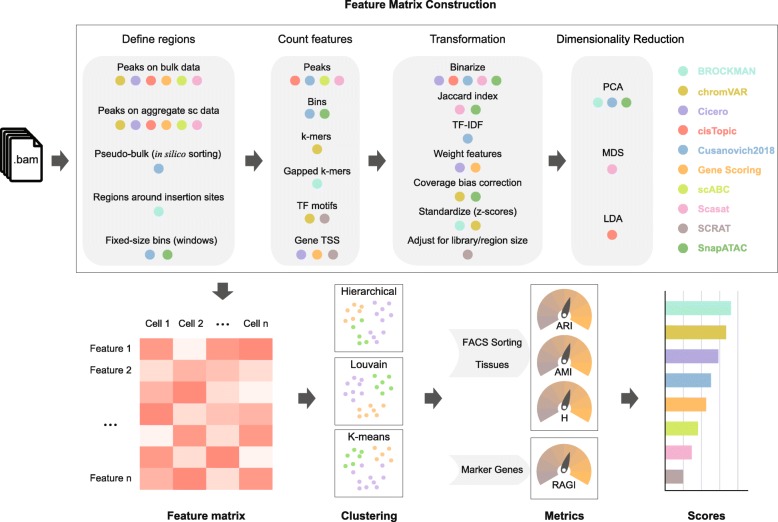
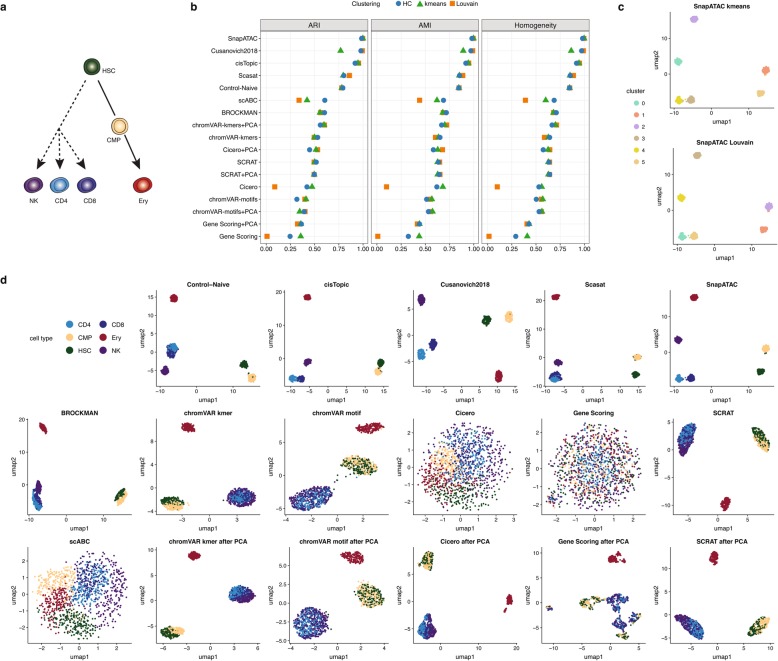
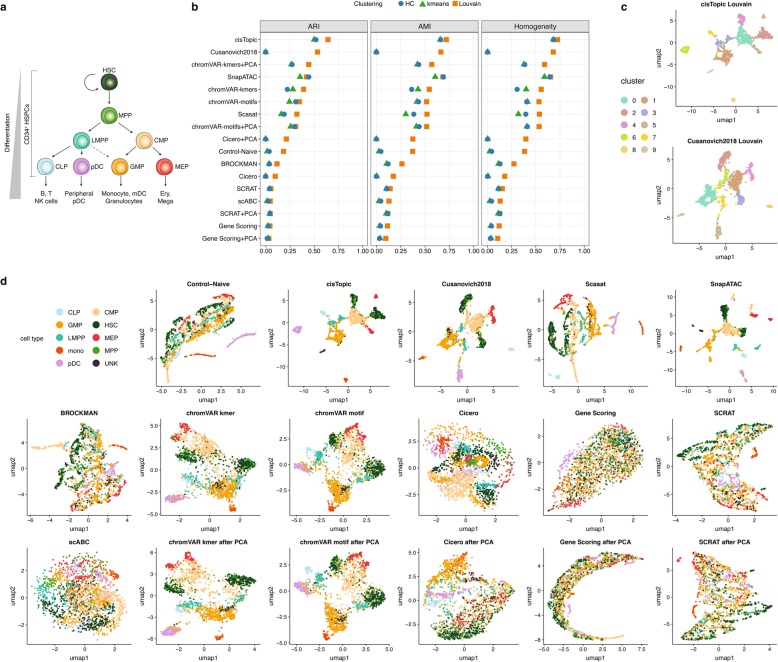
Background: Recent innovations in single-cell Assay for Transposase Accessible Chromatin using sequencing (scATAC-seq) enable profiling of the epigenetic landscape of thousands of individual cells. scATAC-seq data analysis presents unique methodological challenges. scATAC-seq experiments sample DNA, which, due to low copy numbers (diploid in humans), lead to inherent data sparsity (1–10% of peaks detected per cell) compared to transcriptomic (scRNA-seq) data (10–45% of expressed genes detected per cell). Such challenges in data generation emphasize the need for informative features to assess cell heterogeneity at the chromatin level. Results: We present a benchmarking framework that is applied to 10 computational methods for scATAC-seq on 13 synthetic and real datasets from different assays, profiling cell types from diverse tissues and organisms. Methods for processing and featurizing scATAC-seq data were compared by their ability to discriminate cell types when combined with common unsupervised clustering approaches. We rank evaluated methods and discuss computational challenges associated with scATAC-seq analysis including inherently sparse data, determination of features, peak calling, the effects of sequencing coverage and noise, and clustering performance. Running times and memory requirements are also discussed. Conclusions: This reference summary of scATAC-seq methods offers recommendations for best practices with consideration for both the non-expert user and the methods developer. Despite variation across methods and datasets, SnapATAC, Cusanovich2018 , and cisTopic outperform other methods in separating cell populations of different coverages and noise levels in both synthetic and real datasets. Notably, SnapATAC is the only method able to analyze a large dataset (> 80,000 cells).
Overview
The claims and statistics of this paper haven’t been checked yet.
Free: it reads the open-access text and checks the first 5 claims that cite a source we can check. Create a free account to check every claim.
Integrity signals
Registry
Cites
Statistics
Figures
Verification
Claims the paper makes
The claims and statistics of this paper haven’t been checked yet.
Free: it reads the open-access text and checks the first 5 claims that cite a source we can check. Create a free account to check every claim.
Claims other papers make about this one
Each is checked against this paper’s own text: does it say what the citing paper says it does?
In the citing paper
“In particular, for scATAC feature assignments specific to CRISPR perturbations, known loci of action could be used to improve feature calls40.”
From scPerturb: harmonized single-cell perturbation data (2024) · cites this paper as [40]
In the citing paper
“Most workflows use a cell-by-peak or cell-by-bin matrix as a basis for analysis, which performs better than matrices of gene or TF motif features135”
From Best practices for single-cell analysis across modalities (2023) · cites this paper as [135]
In the citing paper
“Dimensionality reduction methods based on latent semantic indexing (ArchR140 and Signac143), latent Dirichlet allocation (cisTopic141) and spectral embedding (snapATAC136) were shown to perform best for downstream clustering and cell annotation135.”
From Best practices for single-cell analysis across modalities (2023) · cites this paper as [135]
In the citing paper
“Notably, the cell-by-peak matrix is even more sparse than scRNA-seq data, with only 1–10% of peaks called in each cell owing to the presence of only two copies of assayable chromatin in cells of a diploid organism135.”
From Best practices for single-cell analysis across modalities (2023) · cites this paper as [135]
In the citing paper
“Initial approaches that map multimodal data into a common feature space based on prior knowledge — such as assay for transposase-accessible chromatin (ATAC) regions to nearby transcripts — with subsequent application of single-cell data integration methods have been shown to result in information loss135.”
From Best practices for single-cell analysis across modalities (2023) · cites this paper as [135]
Self-check
Percentages, sums and reported differences re-computed from the paper’s own numbers.
The self-check needs the paper’s full text.
Citations
Cites
Scikit-learn: Machine Learning in Python
Pedregosa, F., Varoquaux, G., Gramfort, A., Michel, V., Thirion, B., Grisel, O., Blondel, M., Müller, A., Nothman, J., Louppe, G., et al. (2012) · arXiv · doi:10.48550/arxiv.1201.0490 · Cited by 71,016 · cited 1×
“For this study, we used three commonly used clustering methods: k-means, hierarchical clustering (with default ward linkage) as implemented in the scikit-learn library [32], and Louvain clustering (a community detection-based method) [33, 34] as implemented in Scanpy [35].”
MethodBEDTools: a flexible suite of utilities for comparing genomic features
Quinlan, A. R., & Hall, I. M. (2010) · Bioinformatics · doi:10.1093/bioinformatics/btq033 · Cited by 27,437
Fast unfolding of communities in large networks
Blondel, V. D., Guillaume, J.-L., Lambiotte, R., & Lefebvre, E. (2008) · Journal of Statistical Mechanics: Theory and Experiment · doi:10.1088/1742-5468/2008/10/p10008 · Cited by 21,424
An integrated encyclopedia of DNA elements in the human genome
The ENCODE Project Consortium (2012) · Nature · doi:10.1038/nature11247 · Cited by 18,072 · cited 9×
“Feature sets of informative peaks for scATAC analyses may be computed from bulk 790 samples available through large scale consortia such as ENCODE[20] and 791 ROADMAP[21] or more precise tissue-specific cell types as in the 792 murine ImmGen Project[22].”
MethodInfluentialUMAP: Uniform Manifold Approximation and Projection
McInnes, L., Healy, J., Saul, N., & Großberger, L. (2018) · Journal of Open Source Software · doi:10.21105/joss.00861 · Cited by 9,826
SCANPY: large-scale single-cell gene expression data analysis
Wolf, F. A., Angerer, P., & Theis, F. J. (2018) · Genome Biology · doi:10.1186/s13059-017-1382-0 · Cited by 8,881
UMAP: Uniform Manifold Approximation and Projection for Dimension Reduction
McInnes, L., Healy, J., & Melville, J. (2018) · arXiv · doi:10.48550/arxiv.1802.03426 · Cited by 7,101
Reversed graph embedding resolves complex single-cell trajectories
Qiu, X., Mao, Q., Tang, Y., Wang, L., Chawla, R., Pliner, H. A., & Trapnell, C. (2017) · Nature Methods · doi:10.1038/nmeth.4402 · Cited by 5,070 · cited 1×
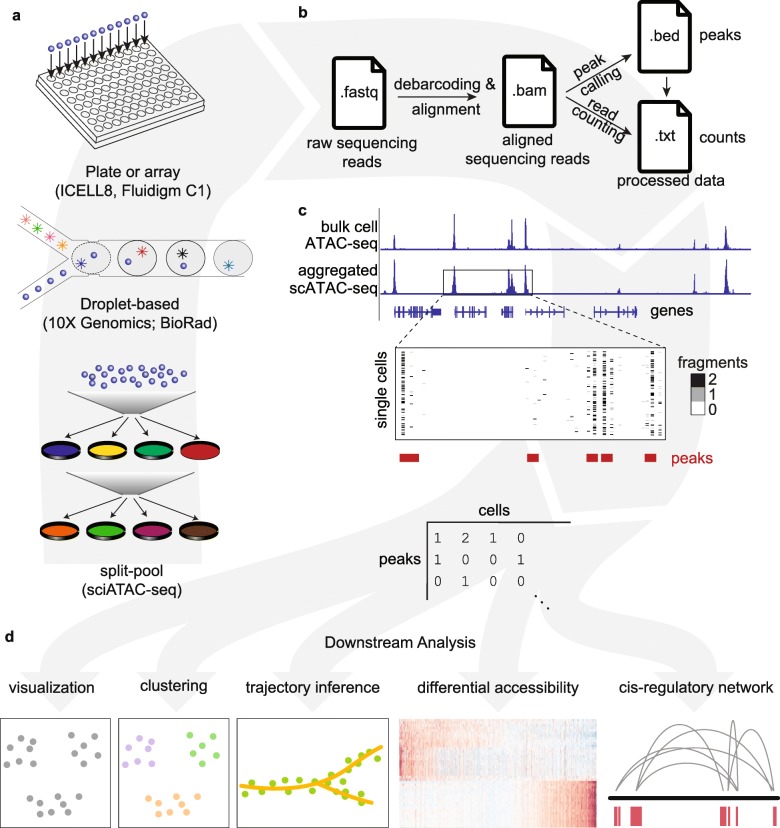
“However, the sparsity of scATAC-seq datasets provides unique challenges that must be addressed in order to perform essential analyses such as cluster identification, visualization, and trajectory inference [29, 30].”
MethodClustering by fast search and find of density peaks
Rodriguez, A., & Laio, A. (2014) · Science · doi:10.1126/science.1242072 · Cited by 4,942
Software for Computing and Annotating Genomic Ranges
Lawrence, M., Huber, W., Pagès, H., Aboyoun, P., Carlson, M., Gentleman, R., Morgan, M. T., & Carey, V. J. (2013) · PLoS Computational Biology · doi:10.1371/journal.pcbi.1003118 · Cited by 4,398
Research works printed but not linked: 2
- Fang R, et al. Fast and accurate clustering of single cell epigenomes reveals cis-regulatory elements in rare cell types. BioRxiv:615179v2. 2019.
- Stark R Brown G DiffBind: differential binding analysis of ChIP-Seq peak data R Package Version 2011 100 4 3
Cited by
Single-cell chromatin state analysis with Signac
Stuart, T., Srivastava, A., Madad, S., Lareau, C. A., & Satija, R. (2021) · Nature Methods · doi:10.1038/s41592-021-01282-5 · Cited by 1,769
“To test how these results generalize to other datasets, we repeated a similar analysis using a series of synthetic scATAC-seq human bone marrow cell datasets generated in a recent benchmarking study 52 , with similar results (Supplementary Fig.”
MethodResultSelf-citationArchR is a scalable software package for integrative single-cell chromatin accessibility analysis
Granja, J. M., Corces, M. R., Pierce, S. E., Bagdatli, S. T., Choudhry, H., Chang, H. Y., & Greenleaf, W. J. (2021) · Nature Genetics · doi:10.1038/s41588-021-00790-6 · Cited by 1,392
Best practices for single-cell analysis across modalities
Heumos, L., Schaar, A. C., Lance, C., Litinetskaya, A., Drost, F., Zappia, L., Lücken, M. D., Strobl, D. C., Henao, J., Curion, F., et al. (2023) · Nature Reviews Genetics · doi:10.1038/s41576-023-00586-w · Cited by 1,051
“Libraries with zero counts for all or most of the antibody panel should be removed; however, removing cells with a low total ADT count may remove cell types that do not express a specific set of proteins or express only a few 2 .”
BackgroundscMC learns biological variation through the alignment of multiple single-cell genomics datasets
Zhang, L., & Nie, Q. (2021) · Genome Biology · doi:10.1186/s13059-020-02238-2 · Cited by 845
SCENIC+: single-cell multiomic inference of enhancers and gene regulatory networks
González-Blas, C. B., De Winter, S., Hulselmans, G., Hecker, N., Matetovici, I., Christiaens, V., Poovathingal, S., Wouters, J., Aibar, S., & Aerts, S. (2022) · doi:10.1101/2022.08.19.504505 · Cited by 778
SCENIC+: single-cell multiomic inference of enhancers and gene regulatory networks
Bravo González-Blas, C., De Winter, S., Hulselmans, G., Hecker, N., Matetovici, I., Christiaens, V., Poovathingal, S., Wouters, J., Aibar, S., & Aerts, S. (2023) · Nature Methods · doi:10.1038/s41592-023-01938-4 · Cited by 778
Multi-omics single-cell data integration and regulatory inference with graph-linked embedding
Cao, Z.-J., & Gao, G. (2022) · Nature Biotechnology · doi:10.1038/s41587-022-01284-4 · Cited by 616
“While feature conversion may seem to be a straightforward solution, the inevitable information loss 19 can be detrimental.”
BackgroundSingle-cell multiomics: technologies and data analysis methods
Lee, J., Hyeon, D. Y., & Hwang, D. (2020) · Experimental & Molecular Medicine · doi:10.1038/s12276-020-0420-2 · Cited by 524
A single-cell atlas of chromatin accessibility in the human genome
Zhang, K., Hocker, J. D., Miller, M., Hou, X., Chiou, J., Poirion, O. B., Qiu, Y., Li, Y. E., Gaulton, K. J., Wang, A., et al. (2021) · Cell · doi:10.1016/j.cell.2021.10.024 · Cited by 502
From reads to insight: a hitchhiker’s guide to ATAC-seq data analysis
Yan, F., Powell, D. R., Curtis, D. J., & Wong, N. C. (2020) · Genome Biology · doi:10.1186/s13059-020-1929-3 · Cited by 473
Comprehensive analysis of single cell ATAC-seq data with SnapATAC
Fang, R., Preissl, S., Li, Y., Hou, X., Lucero, J., Wang, X., Motamedi, A., Shiau, A. K., Zhou, X., Xie, F., et al. (2021) · Nature Communications · doi:10.1038/s41467-021-21583-9 · Cited by 455
A human cell atlas of fetal chromatin accessibility
Domcke, S., Hill, A. J., Daza, R. M., Cao, J., O’Day, D. R., Pliner, H. A., Aldinger, K. A., Pokholok, D., Zhang, F., Milbank, J. H., et al. (2020) · Science · doi:10.1126/science.aba7612 · Cited by 400
“We subjected high-quality cells to latent semantic indexing (19, 20), linear correction (21), and Louvain clustering, initially obtaining 172 clusters across all tissues.”
MethodAutomatic cell-type harmonization and integration across Human Cell Atlas datasets
Xu, C., Prete, M., Webb, S., Jardine, L., Stewart, B. J., Hoo, R., He, P., Meyer, K. B., & Teichmann, S. A. (2023) · Cell · doi:10.1016/j.cell.2023.11.026 · Cited by 284
Miyachi, K., & Mackey, T. K. (2021) · Information Processing & Management · doi:10.1016/j.ipm.2021.102535 · Cited by 234
Efficient and precise single-cell reference atlas mapping with Symphony
Kang, J. B., Nathan, A., Weinand, K., Zhang, F., Millard, N., Rumker, L., Moody, D. B., Korsunsky, I., & Raychaudhuri, S. (2021) · Nature Communications · doi:10.1038/s41467-021-25957-x · Cited by 231
Single-Cell Sequencing of Brain Cell Transcriptomes and Epigenomes
Armand, E. J., Li, J., Xie, F., Luo, C., & Mukamel, E. A. (2021) · Neuron · doi:10.1016/j.neuron.2020.12.010 · Cited by 241
Miao, Z., Balzer, M. S., Ma, Z., Liu, H., Wu, J., Shrestha, R., Aranyi, T., Kwan, A., Kondo, A., Pontoglio, M., et al. (2021) · Nature Communications · doi:10.1038/s41467-021-22266-1 · Cited by 208
Chromatin accessibility profiling methods
Minnoye, L., Marinov, G. K., Krausgruber, T., Pan, L., Marand, A. P., Secchia, S., Greenleaf, W. J., Furlong, E. E. M., Zhao, K., Schmitz, R. J., et al. (2021) · Nature Reviews Methods Primers · doi:10.1038/s43586-020-00008-9 · Cited by 206
Spatially resolved epigenomic profiling of single cells in complex tissues
Lu, T., Ang, C. E., & Zhuang, X. (2022) · Cell · doi:10.1016/j.cell.2022.09.035 · Cited by 197
scPerturb: harmonized single-cell perturbation data
Peidli, S., Green, T. D., Shen, C., Gross, T., Min, J., Garda, S., Yuan, B., Schumacher, L. J., Taylor-King, J. P., Marks, D. S., et al. (2024) · Nature Methods · doi:10.1038/s41592-023-02144-y · Cited by 194
“In particular, for scATAC feature assignments specific to CRISPR perturbations, known loci of action could be used to improve feature calls 40 .”
Integrative analyses of single-cell transcriptome and regulome using MAESTRO
Wang, C., Sun, D., Huang, X., Wan, C., Li, Z., Han, Y., Qin, Q., Fan, J., Qiu, X., Xie, Y., et al. (2020) · Genome Biology · doi:10.1186/s13059-020-02116-x · Cited by 187
Undisclosed, unmet and neglected challenges in multi-omics studies
Tarazona, S., Arzalluz-Luque, A., & Conesa, A. (2021) · Nature Computational Science · doi:10.1038/s43588-021-00086-z · Cited by 176
A fast, scalable and versatile tool for analysis of single-cell omics data
Zhang, K., Zemke, N. R., Armand, E. J., & Ren, B. (2024) · Nature Methods · doi:10.1038/s41592-023-02139-9 · Cited by 185
“…reduction, we applied graph-based clustering using the Leiden algorithm 34 and assessed the clustering quality with the adjusted Rand index (ARI), which measures the similarity between two data clusterings and has been routinely used to assess the performance of clustering algorithms 22,35 .”
InfluentialCobolt: integrative analysis of multimodal single-cell sequencing data
Gong, B., Zhou, Y., & Purdom, E. (2021) · Genome Biology · doi:10.1186/s13059-021-02556-z · Cited by 168
Single-cell ATAC sequencing analysis: From data preprocessing to hypothesis generation
Baek, S., & Lee, I. (2020) · Computational and Structural Biotechnology Journal · doi:10.1016/j.csbj.2020.06.012 · Cited by 151
“The generation of cell-byfeature matrix is critical for scATAC-seq data analysis and this is facilitated by the various options available for defining genomic features [5].”
BackgroundMethodResultInfluentialEpiScanpy: integrated single-cell epigenomic analysis
Danese, A., Richter, M. L., Chaichoompu, K., Fischer, D. S., Theis, F. J., & Colomé-Tatché, M. (2021) · Nature Communications · doi:10.1038/s41467-021-25131-3 · Cited by 142
Cardiac cell type–specific gene regulatory programs and disease risk association
Hocker, J. D., Poirion, O. B., Zhu, F., Buchanan, J., Zhang, K., Chiou, J., Wang, T.-M., Zhang, Q., Hou, X., Li, Y. E., et al. (2021) · Science Advances · doi:10.1126/sciadv.abf1444 · Cited by 138
scBasset: Sequence-based modeling of single cell ATAC-seq using convolutional neural networks
Yuan, H., & Kelley, D. R. (2021) · doi:10.1101/2021.09.08.459495 · Cited by 138
scBasset: sequence-based modeling of single-cell ATAC-seq using convolutional neural networks
Yuan, H., & Kelley, D. R. (2022) · Nature Methods · doi:10.1038/s41592-022-01562-8 · Cited by 148
“While chromVAR directly associates peaks to TFs, emphasizing interpretability, it tends to perform worse at learning cell representations, potentially due to the loss of information from its simple implicit model relating sequence to accessibility through position weight matrices 6 .”
BackgroundMethodInfluentialZuo, C., & Chen, L. (2021) · Briefings in Bioinformatics · doi:10.1093/bib/bbaa287 · Cited by 134
“Integration of single-cell multiomics data is still a great challenge due to the inherent highly sparse, great heterogeneity because of assaying noise, the great dimensional difference between scATAC-seq and scRNA-seq data, about 10–20 times [19], and increasingly large-scale datasets [20].”
BackgroundChromatin-accessibility estimation from single-cell ATAC-seq data with scOpen
Li, Z., Kuppe, C., Ziegler, S., Cheng, M., Kabgani, N., Menzel, S., Zenke, M., Kramann, R., & Costa, I. G. (2021) · Nature Communications · doi:10.1038/s41467-021-26530-2 · Cited by 123
Zhang, S., Pyne, S., Pietrzak, S., Halberg, S., McCalla, S. G., Siahpirani, A. F., Sridharan, R., & Roy, S. (2023) · Nature Communications · doi:10.1038/s41467-023-38637-9 · Cited by 133
“[72] Huidong Chen, Caleb Lareau, Tommaso Andreani, Michael E Vinyard, Sara P Garcia, Kendell 1330 Clement, Miguel A Andrade-Navarro, Jason D Buenrostro, and Luca Pinello.”
BackgroundstPlus: a reference-based method for the accurate enhancement of spatial transcriptomics
Shengquan, C., Boheng, Z., Xiaoyang, C., Xuegong, Z., & Rui, J. (2021) · Bioinformatics · doi:10.1093/bioinformatics/btab298 · Cited by 113
PeakVI: A deep generative model for single-cell chromatin accessibility analysis
Ashuach, T., Reidenbach, D. A., Gayoso, A., & Yosef, N. (2022) · Cell Reports Methods · doi:10.1016/j.crmeth.2022.100182 · Cited by 106
“The first two methods, LSA and cisTopic, were chosen since a recent benchmark 42 of computational analysis methods for scATAC-seq methods[12] found them to be the best performing 43 methods.”
BackgroundMethodInfluentialGeneralized and scalable trajectory inference in single-cell omics data with VIA
Stassen, S. V., Yip, G. G. K., Wong, K. K. Y., Ho, J. W. K., & Tsia, K. K. (2021) · Nature Communications · doi:10.1038/s41467-021-25773-3 · Cited by 106
Yang, X., Mann, K. K., Wu, H., & Ding, J. (2024) · Genome biology · doi:10.1186/s13059-024-03338-z · Cited by 118
“Many of these techniques face issues ranging from information loss [30] to noise susceptibility.”
BackgroundWang, M., Song, W., Chen, M., Wang, Q., Zhou, X., Xu, P., Krek, A., Yoon, Y., Ho, L., Orr, M. E., et al. (2022) · Molecular Neurodegeneration · doi:10.1186/s13024-022-00517-z · Cited by 110
Simultaneous deep generative modelling and clustering of single-cell genomic data
Liu, Q., Chen, S., Jiang, R., & Wong, W. H. (2021) · Nature Machine Intelligence · doi:10.1038/s42256-021-00333-y · Cited by 109
“dimensionality (hundreds of thousands possible peaks) and high data sparsity (only 1–10% peaks are detected per cell) 6 .”
BackgroundMethodCell type annotation of single-cell chromatin accessibility data via supervised Bayesian embedding
Chen, X., Chen, S., Song, S., Gao, Z., Hou, L., Zhang, X., Lv, H., & Jiang, R. (2022) · Nature Machine Intelligence · doi:10.1038/s42256-021-00432-w · Cited by 98
“A range of computational methods and pipelines have been developed for scCAS data analyses 9 , calling for synthetic and reproducible datasets for guiding experimental design and benchmarking robustness 12 .”
MethodSingle-cell omics: experimental workflow, data analyses and applications
Sun, F., Li, H., Sun, D., Fu, S., Gu, L., Shao, X., Wang, Q., Dong, X., Duan, B., Xing, F., et al. (2024) · Science China Life Sciences · doi:10.1007/s11427-023-2561-0 · Cited by 102
Deep cross-omics cycle attention model for joint analysis of single-cell multi-omics data
Zuo, C., Dai, H., & Chen, L. (2021) · Bioinformatics · doi:10.1093/bioinformatics/btab403 · Cited by 88
Multi-Omics Approaches in Immunological Research
Chu, X., Zhang, B., Koeken, V. A. C. M., Gupta, M. K., & Li, Y. (2021) · Frontiers in Immunology · doi:10.3389/fimmu.2021.668045 · Cited by 102
“A standard “bulk” ATAC-seq measurement detects genome-wide open chromatin within a pooled sample or tissue, while in order to capture cellular heterogeneity, single-cell ATAC-seq measures chromatin accessibility in thousands of individual cells, which can generate genome-wide profiles from 10k to 100k cells per experi…”
BackgroundFeature selection revisited in the single-cell era
Yang, P., Huang, H., & Liu, C. (2021) · Genome Biology · doi:10.1186/s13059-021-02544-3 · Cited by 83
“ing differential accessible chromatin regions or one can summarise scATAC-seq data to the gene level using tools such as those reviewed in [81] and then feature selection be performed for selecting ‘differentially accessible genes’ (DAGs) using such summarised data.”
MethodBravo González‐Blas, C., Quan, X., Duran‐Romaña, R., Taskiran, I. I., Koldere, D., Davie, K., Christiaens, V., Makhzami, S., Hulselmans, G., de Waegeneer, M., et al. (2020) · Molecular Systems Biology · doi:10.15252/msb.20209438 · Cited by 88
“Since this tissue comprises differentiating continuous rather than discrete populations, we used cisTopic (Bravo Gonza´lez-Blas et al , 2019), currently the best performing clustering method on dynamic populations (Chen et al , 2019a).”
InfluentialKriebel, A. R., & Welch, J. D. (2022) · Nature Communications · doi:10.1038/s41467-022-28431-4 · Cited by 83
“For this cross-species analysis, we integrated scRNA data (4187 cells) from the pallium of the bearded dragon lizard ( Pogona vitticeps) 37 with scRNA data from the mouse frontal cortex (71,639 cells) 29 .”
MethodInfluentialSIMBA: single-cell embedding along with features
Chen, H., Ryu, J., Vinyard, M. E., Lerer, A., & Pinello, L. (2024) · Nature Methods · doi:10.1038/s41592-023-01899-8 · Cited by 84
Self-citationRanjan, B., Sun, W., Park, J., Mishra, K., Schmidt, F., Xie, R., Alipour, F., Singhal, V., Joanito, I., Honardoost, M. A., et al. (2021) · Nature Communications · doi:10.1038/s41467-021-26085-2 · Cited by 82
“Algorithmic pipelines for single-cell epigenomic data, for example scATAC-seq, typically do not incorporate a formal feature selection step 26,29 .”
MethodVariant to function mapping at single-cell resolution through network propagation
Yu, F., Cato, L. D., Weng, C., Liggett, L. A., Jeon, S., Xu, K., Chiang, C. W. K., Wiemels, J. L., Weissman, J. S., de Smith, A. J., et al. (2022) · Nature Biotechnology · doi:10.1038/s41587-022-01341-y · Cited by 75
“Nonetheless, the global high-dimensional features of individual single cells are sufficient to represent the underlying cell identities or states, which enables the relationships among such cells to be readily inferred 15 .”
BackgroundMethodInfluentialCao, Y., Zhao, X., Tang, S., Jiang, Q., Li, S., Li, S., & Chen, S. (2024) · Nature Communications · doi:10.1038/s41467-024-47418-x · Cited by 87
“…with defaultresolution ofone 63 based on the dimensionality reduction results, and fi nally assessed the clustering results by four widely-used metrics 24 – 26 , including adjusted Rand index (ARI), adjusted mutual information (AMI), normalized mutual information (NMI), and homogeneity (HOM).”
BackgroundMethodA plate-based single-cell ATAC-seq workflow for fast and robust profiling of chromatin accessibility
Xu, W., Wen, Y., Liang, Y., Xu, Q., Wang, X., Jin, W., & Chen, X. (2021) · Nature Protocols · doi:10.1038/s41596-021-00583-5 · Cited by 67
CUT&RUNTools 2.0: a pipeline for single-cell and bulk-level CUT&RUN and CUT&Tag data analysis
Yu, F., Sankaran, V. G., & Yuan, G. (2021) · Bioinformatics · doi:10.1093/bioinformatics/btab507 · Cited by 74
Tissue-specific enhancer–gene maps from multimodal single-cell data identify causal disease alleles
Sakaue, S., Weinand, K., Isaac, S., Dey, K. K., Jagadeesh, K. A., Kanai, M., Watts, G. F. M., Zhu, Z., Accelerating Medicines Partnership® RA/SLE Program and Network, Albrecht, J., et al. (2024) · Nature Genetics · doi:10.1038/s41588-024-01682-1 · Cited by 69
Prioritization of cell types responsive to biological perturbations in single-cell data with Augur
Squair, J. W., Skinnider, M. A., Gautier, M., Foster, L. J., & Courtine, G. (2021) · Nature Protocols · doi:10.1038/s41596-021-00561-x · Cited by 61
scATAC-pro: a comprehensive workbench for single-cell chromatin accessibility sequencing data
Yu, W., Uzun, Y., Zhu, Q., Chen, C., & Tan, K. (2020) · Genome Biology · doi:10.1186/s13059-020-02008-0 · Cited by 60
Breast cancer heterogeneity through the lens of single-cell analysis and spatial pathologies
Zhao, N., & Rosen, J. M. (2021) · Seminars in Cancer Biology · doi:10.1016/j.semcancer.2021.07.010 · Cited by 62
Zhang, B., Upadhyay, R., Hao, Y., Samanovic, M. I., Herati, R. S., Blair, J. D., Axelrad, J., Mulligan, M. J., Littman, D. R., & Satija, R. (2023) · Nature Immunology · doi:10.1038/s41590-023-01608-9 · Cited by 57
Deep learning-based cell-specific gene regulatory networks inferred from single-cell multiome data
Xu, J., Lu, C., Jin, S., Meng, Y., Fu, X., Zeng, X., Nussinov, R., & Cheng, F. (2025) · Nucleic Acids Research · doi:10.1093/nar/gkaf138 · Cited by 61
Cellcano: supervised cell type identification for single cell ATAC-seq data
Ma, W., Lu, J., & Wu, H. (2023) · Nature Communications · doi:10.1038/s41467-023-37439-3 · Cited by 59
The case for AI-driven cancer clinical trials – The efficacy arm in silico
Kolla, L., Gruber, F. K., Khalid, O. M., Hill, C., & Parikh, R. B. (2021) · Biochimica et Biophysica Acta (BBA) - Reviews on Cancer · doi:10.1016/j.bbcan.2021.188572 · Cited by 53
Predicting transcription factor binding in single cells through deep learning
Fu, L., Zhang, L., Dollinger, E., Peng, Q., Nie, Q. H., & Xie, X. S. (2020) · Science Advances · doi:10.1126/sciadv.aba9031 · Cited by 53
“…namely, hematopoietic stem cells (HSCs), multipotent progenitors (MPPs), LMPPs, common myeloid progenitors, granulocyte-macrophage progenitors (GMPs), megakaryocyte-erythrocyte progenitors, common lymphoid progenitors, plasmacytoid dendritic cells, monocytes, and other uncharacterized cells ( 26 ).”
BackgroundRA3 is a reference-guided approach for epigenetic characterization of single cells
Chen, S., Yan, G., Zhang, W., Li, J., Jiang, R., & Lin, Z. (2021) · Nature Communications · doi:10.1038/s41467-021-22495-4 · Cited by 54
“To evaluate the clustering performance, we implemented Louvain clustering on the low-dimensional representation provided by each method as suggested by Chen et al. 6 , and we assessed the clustering performance by adjusted mutual information (AMI), adjusted Rand index (ARI), homogeneity score (homogeneity), and normal…”
BackgroundMethodResultInfluentialSingle-cell ATAC-seq signal extraction and enhancement with SCATE
Ji, Z., Zhou, W., Hou, W., & Ji, H. (2020) · Genome biology · doi:10.1186/s13059-020-02075-3 · Cited by 54
“Since different implementations of a method may lead to variable method performance [30], we also displayed the signals obtained using these existing methods except for PRISM for which we were not able to modify its code to export the binary accessibility matrix (PRISM does not report binary accessibility as it is onl…”
MethodProfiling Chromatin Accessibility at Single-Cell Resolution
Sinha, S., Satpathy, A. T., Zhou, W., Ji, H., Stratton, J. A., Jaffer, A., Bahlis, N. J., Morrissy, A. S., & Biernaskie, J. A. (2021) · Genomics Proteomics & Bioinformatics · doi:10.1016/j.gpb.2020.06.010 · Cited by 50
“A recent assessment comparing ten scATAC tools on a standardized benchmarking platform revealed that, while cisTopic was slightly more sensitive to noise, along with SnapATAC [100] and Cusanovich2018 [38], it outperformed other methods used for separating cell types/states [101].”
BackgroundMethodMachine learning for single-cell genomics data analysis
Raimundo, F., Meng-Papaxanthos, L., Vallot, C., & Vert, J. (2021) · Current Opinion in Systems Biology · doi:10.1016/j.coisb.2021.04.006 · Cited by 51
Computational Methods for Single-Cell Imaging and Omics Data Integration
Watson, E. R., Fard, A. T., & Mar, J. C. (2022) · Frontiers in Molecular Biosciences · doi:10.3389/fmolb.2021.768106 · Cited by 50
“For an extensive review on these and other methods on multi-omics data analysis, we refer readers to (Hu et al., 2018b; Hwang et al., 2018; Chen H. et al., 2019; Saelens et al., 2019; Lee et al., 2020; Pratapa et al., 2020; Wu and Zhang, 2020).”
MethodKumegawa, K., Takahashi, Y., Saeki, S., Yang, L., Nakadai, T., Osako, T., Mori, S., Noda, T., Ohno, S., Ueno, T., et al. (2022) · npj Breast Cancer · doi:10.1038/s41523-022-00438-6 · Cited by 45
Iqbal, F., Lupieri, A., Aikawa, M., & Aïkawa, E. (2020) · Arteriosclerosis Thrombosis and Vascular Biology · doi:10.1161/atvbaha.120.314776 · Cited by 46
JSNMF enables effective and accurate integrative analysis of single-cell multiomics data
Ma, Y., Sun, Z., Zeng, P., Zhang, W., & Lin, Z. (2022) · Briefings in Bioinformatics · doi:10.1093/bib/bbac105 · Cited by 43
Chen, Z., Liu, A., Zhang, X., Cao, X., Ding, Z., Sha, Q., Shen, H., Deng, H., & Zhou, W. (2024) · Computers in Biology and Medicine · doi:10.1016/j.compbiomed.2024.108058 · Cited by 43
Loers, J. U., & Vermeirssen, V. (2024) · Briefings in Bioinformatics · doi:10.1093/bib/bbae382 · Cited by 45
“Reads are first pseudobulked either on all cells or preferentially per annotated cell type, and subsequent peak calling returns a set of regions serving as set of potential REs [9,35,76].”
BackgroundMethodA universal framework for single-cell multi-omics data integration with graph convolutional networks
Gao, H., Zhang, B., Liu, L., Li, S., Gao, X., & Yu, B. (2023) · Briefings in Bioinformatics · doi:10.1093/bib/bbad081 · Cited by 37
simATAC: a single-cell ATAC-seq simulation framework
Navidi, Z., Zhang, L., & Wang, B. (2021) · Genome biology · doi:10.1186/s13059-021-02270-w · Cited by 41
High-parameter spatial multi-omics through histology-anchored integration
Liu, Y., Wang, C., Wang, Z., Chen, L., Li, Z., Song, J., Zou, Q., Gao, R., Qian, B., Feng, X., et al. (2025) · Nature Methods · doi:10.1038/s41592-025-02926-6 · Cited by 42
“https://doi.org/10.1038/s41592-025-02926-6”
InfluentialSelecting gene features for unsupervised analysis of single-cell gene expression data
Sheng, J., & Li, W. V. (2021) · Briefings in Bioinformatics · doi:10.1093/bib/bbab295 · Cited by 36
Missarova, A., Rosen, L. U., Dann, E., Satija, R., & Marioni, J. C. (2024) · Genome biology · doi:10.1186/s13059-024-03334-3 · Cited by 33
“In most of the cases below, stating the purpose and then the details (instead of the other way around) would likely be a sufficient solution or consider moving some details to the Methods section. a.”
BackgroundInfluentialEpigenetic regulation of vascular smooth muscle cell phenotypes in atherosclerosis
Lambert, J., & Jørgensen, H. F. (2024) · Atherosclerosis · doi:10.1016/j.atherosclerosis.2024.119085 · Cited by 34
Scarf enables a highly memory-efficient analysis of large-scale single-cell genomics data
Dhapola, P., Rodhe, J., Olofzon, R., Bonald, T., Erlandsson, E., Soneji, S., & Karlsson, G. (2022) · Nature Communications · doi:10.1038/s41467-022-32097-3 · Cited by 34
“Larger datasets with more than 100,000 cells obligate the use of specialised hardware with larger primary memory capacity (random access memory, RAM) in the order of several hundreds of gigabytes 3 .”
Tuning parameters of dimensionality reduction methods for single-cell RNA-seq analysis
Raimundo, F., Vallot, C., & Vert, J. (2020) · Genome biology · doi:10.1186/s13059-020-02128-7 · Cited by 35
“Note that since we had to automatically run Louvain on all embeddings, as done in [23], we could not properly tune the resolution nor the size of the neighborhood and thus Louvain could either overcluster or undercluster.”
BackgroundMethodResultInteractive analysis of single-cell epigenomic landscapes with ChromSCape
Prompsy, P., Kirchmeier, P., Marsolier, J., Deloger, M., Servant, N., & Vallot, C. (2020) · Nature Communications · doi:10.1038/s41467-020-19542-x · Cited by 33
“Three methods dedicated to the analysis of scATAC-seq with the best performance according to Chen et al., 2019 9 , were tested on a mixture of H3K27me3 scChIP-seq datasets (see Datasets below), namely “ SnapATAC ” , “ CisTopic ” , and “ Cusanovich2018 ” .”
MethodMammary gland development from a single cell ‘omics view
Twigger, A., & Khaled, W. T. (2021) · Seminars in Cell and Developmental Biology · doi:10.1016/j.semcdb.2021.03.013 · Cited by 32
Epigenetic loss of heterogeneity from low to high grade localized prostate tumours
Eksi, S. E., Chitsazan, A., Sayar, Z., THOMAS, G. V., Fields, A. J., Kopp, R. P., Spellman, P. T., & Adey, A. (2021) · Nature Communications · doi:10.1038/s41467-021-27615-8 · Cited by 36
Exploring long non-coding RNA networks from single cell omics data
Zhao, X. F., Lan, Y., & Chen, D. (2022) · Computational and Structural Biotechnology Journal · doi:10.1016/j.csbj.2022.08.003 · Cited by 33
“Single cell genome sequencing [46] Transcriptome scRNA-seq [22] TFs binding scChIP-seq [47], scChIC-seq [48] Chromatin accessibility scATAC-seq [49], scDNase-seq [50] Multi single cell omics Genome and transcriptome G& T -seq [51], DR-seq [52], SCTG [53], TARGET-Seq [54], SIDR [55] Epigenome and…”
MethodDeciphering cell types by integrating scATAC-seq data with genome sequences
Zeng, Y., Luo, M., Shangguan, N., Shi, P., Feng, J., Xu, J., Chen, K., Lu, Y., Yu, W., & Yang, Y. (2024) · Nature Computational Science · doi:10.1038/s43588-024-00622-7 · Cited by 33
“5 and 6).”
Ranjan, B., Schmidt, F., Sun, W., Park, J., Honardoost, M. A., Tan, J. H. J., Rayan, N. A., & Prabhakar, S. (2021) · BMC Bioinformatics · doi:10.1186/s12859-021-04028-4 · Cited by 33
Kopp, W., Akalin, A., & Ohler, U. (2022) · Nature Machine Intelligence · doi:10.1038/s42256-022-00443-1 · Cited by 31
SINFONIA: Scalable Identification of Spatially Variable Genes for Deciphering Spatial Domains
Jiang, R., Li, Z., Jia, Y., Li, S., & Chen, S. (2023) · Cells · doi:10.3390/cells12040604 · Cited by 33
“The scenario is often adopted in benchmarking studies [15,29–32].”
BackgroundCui, X., Chen, X., Li, Z., Gao, Z., Chen, S., & Jiang, R. (2024) · Nature Computational Science · doi:10.1038/s43588-024-00625-4 · Cited by 32
“Nonetheless, the intrinsic challenges posed by the high dimensionality, intense sparsity and nearly binary nature of scCAS data present formidable obstacles in the realm of data analysis 4,5 .”
Genome architecture and diverged selection shaping pattern of genomic differentiation in wild barley
Zhang, W., Tan, C., Hu, H., Pan, R., Xiao, Y., Ouyang, K., Zhou, G., Jia, Y., Zhang, X., Hill, C. B., et al. (2022) · Plant Biotechnology Journal · doi:10.1111/pbi.13917 · Cited by 31
Carbonetto, P. S., Luo, K., Sarkar, A., Hung, A., Tayeb, K., Pott, S., & Stephens, M. (2023) · Genome biology · doi:10.1186/s13059-023-03067-9 · Cited by 30
“The list of 2,034 cells considered “high quality” was obtained from file metadata.tsv included in the online benchmarking repository [126].”
InfluentialOpenAnnotate: a web server to annotate the chromatin accessibility of genomic regions
Chen, S., Liu, Q., Cui, X., Feng, Z., Li, C., Wang, X., Zhang, X., Wang, Y., & Jiang, R. (2021) · Nucleic Acids Research · doi:10.1093/nar/gkab337 · Cited by 27
“Besides, cisTopic has presented advantages for the analysis of scCAS data (38,44), indicating that reference-based topic models that directly model foreground read count data can be developed to further promote single-cell data analyses.”
Deciphering Organoids: High-Dimensional Analysis of Biomimetic Cultures
Qin, X., & Tape, C. J. (2020) · Trends in biotechnology · doi:10.1016/j.tibtech.2020.10.013 · Cited by 29
Tang, S., Cui, X., Wang, R., Li, S., Li, S., Huang, X., & Chen, S. (2024) · Nature Communications · doi:10.1038/s41467-024-46045-w · Cited by 27
“…tailored for scCAS data enhancement, we performed principal component analysis (PCA) to reduce the dimensionality of the enhanced data to 50 dimensions 10 and then performed Louvain clustering with binary search strategy to ensure the number of clusters equals to the number of cell types 7,26,27 .”
Embeddings of genomic region sets capture rich biological associations in lower dimensions
Gharavi, E., Gu, A., Zheng, G., Smith, J. P., Cho, H. J., Zhang, A., Brown, D. E., & Sheffield, N. C. (2021) · Bioinformatics · doi:10.1093/bioinformatics/btab439 · Cited by 26
Przytycki, P. F., & Pollard, K. S. (2021) · Genome biology · doi:10.1186/s13059-021-02279-1 · Cited by 26
Miyamoto, A. T., Shimagami, H., Kumanogoh, A., & Nishide, M. (2025) · Inflammation and Regeneration · doi:10.1186/s41232-025-00369-2 · Cited by 26
“…on the diversity of fibroblast-like synoviocytes (FLSs), four types of FLSs were detected using scRNA/assay for transposase-acces - sible chromatin (ATAC)-seq [60]: activated lining fibroblasts, resting lining fibroblasts, activated sublining fibroblasts, and resting sublining fibroblasts [61].”
scDALI: modeling allelic heterogeneity in single cells reveals context-specific genetic regulation
Heinen, T., Secchia, S., Reddington, J. P., Zhao, B., Furlong, E. E. M., & Stegle, O. (2022) · Genome biology · doi:10.1186/s13059-021-02593-8 · Cited by 27
“…single-cell ATAC-sequencing, and a range of other epigenetic assays. scDALI first uses total counts, quantified at individual features, to define a manifold of cell types and cell states, similar to established workflows for the inference of state clusters [18] or pseudo-temporal orderings [19].”
MethodMcGarvey, A. C., Kopp, W., Vučićević, D., Mattonet, K., Kempfer, R., Hirsekorn, A., Bilić, I., Gil, M., Trinks, A., Merks, A. M., et al. (2022) · Cell Genomics · doi:10.1016/j.xgen.2021.100083 · Cited by 24
“However, single-cell assay for transposase-accessible chromatin with high-throughput sequencing (scATAC-seq) data present several distinct analysis challenges from single-cell RNA-sequencing (scRNA-seq) measurements, such as higher sparsity and feature dimensionality, as well as typically unknown input regions.(18) Th…”
MethodZeng, P., Wangwu, J., & Lin, Z. (2020) · Briefings in Bioinformatics · doi:10.1093/bib/bbaa347 · Cited by 25
Optimal distance metrics for single-cell RNA-seq populations
Ji, Y., Green, T. D., Peidli, S., Bahrami, M., Liu, M., Zappia, L., Hrovatin, K., Sander, C., & Theis, F. J. (2023) · bioRxiv (Cold Spring Harbor Laboratory) · doi:10.1101/2023.12.26.572833 · Cited by 18
“Non-distributional distances were computed between the centroids of the two conditions, in accordance with conventional pipelines for single-cell omic data 20,21”
MethodBenchmarking computational methods for single-cell chromatin data analysis
Luo, S., Germain, P., Robinson, M. D., & von Meyenn, F. (2024) · Genome biology · doi:10.1186/s13059-024-03356-x · Cited by 22
“Besides, while aggregating regions based on biologically meaningful features such as motifs has tended to have poor performance [4], ad hoc feature clustering and summing into meta-features was shown to be a viable strategy for doublet detection [24].”
BackgroundMethodInfluential
Metadata
- Authors
- Chen, H., Lareau, C., Andreani, T., Vinyard, M. E., Garcia, S. P., Clement, K., Andrade-Navarro, M. A., Buenrostro, J. D., & Pinello, L.
- Affiliations
- Broad Institute (US)
- Harvard University (US)
- Massachusetts General Hospital (US)
- Johannes Gutenberg University Mainz (DE)
- Corresponding author
- Pinello, Luca
- ORCID
- Venue
- Genome Biology
- Published
- 2019-11-18
- Volume
- 20
- Issue
- 1
- Pages
- 241-241
- ISSN
- 1465-6906 (ISSN-L)
- 1474-760X
- PMC
- PMC6859644
- OpenAlex
- W2989061519
- Semantic Scholar
- dc9f0e12340139dbc18638c43fafd9441c2ad40e
- Cited by
- 332
- References
- 47
- Citations by year
- 2026: 24 · 2025: 40 · 2024: 72 · 2023: 45 · 2022: 49 · 2021: 67 · 2020: 33 · 2019: 2
- FWCI
- 12.98
- Type
- journal article
- Language
- en
- Open access
- gold
- doi.org
- Licence
- cc-by
- creativecommons.org/licenses/by/4.0/ (tdm)
- creativecommons.org/licenses/by/4.0/ (vor)
- Locations
- Genome biology (publishedVersion, cc-by)
- bioRxiv (Cold Spring Harbor Laboratory) (acceptedVersion, cc-by)
- PubMed Central (publishedVersion, cc-by)
- PubMed (publishedVersion)
- DOAJ (DOAJ: Directory of Open Access Journals) (submittedVersion, cc-by-sa)
- Funders
- Chan Zuckerberg Initiative DAF (2018- 182734)
- National Human Genome Research Institute (R00HG008399, R35HG010717)
- Topics
- Life Sciences › Biochemistry, Genetics and Molecular Biology › Molecular Biology › Single-cell and spatial transcriptomics
- Life Sciences › Biochemistry, Genetics and Molecular Biology › Molecular Biology › Genomics and Chromatin Dynamics
- Life Sciences › Biochemistry, Genetics and Molecular Biology › Molecular Biology › Epigenetics and DNA Methylation
- Keywords
- single-cell ATAC-seq, chromatin accessibility, cell type discrimination, unsupervised clustering, peak calling, data sparsity, sequencing depth, noise, computational performance, epigenetic heterogeneity
- MeSH terms
- Animals, Humans, Sequence Analysis, DNA, Computational Biology, Benchmarking, Mice, Epigenomics, Single-Cell Analysis
About these checks
Registry, retraction, Cites and statistics results are computed, not judged, with one exception: a printed reference that no index lists is read once by a model before it counts as a citation error. Claims are extracted by a model and kept only when their quote appears verbatim in the text; each cited source is then checked, with a model’s help, for whether it says what the claim relies on. Those verdicts can be wrong — read the claim’s quote and the cited source before relying on one.
Statistics and arithmetic are recomputed, not judged.
Confidence bands are shown only for fields calibrated on our annotated test set. None is calibrated yet, so no band is shown.
What counts as a claim ›How we measure confidence ›How we check this ›
Are you an author, or do you see a problem with this page? Request a review
Data sources
Bibliographic data: Semantic Scholar, OpenAlex, Crossref.
Contains information from the Semantic Scholar Academic Graph Datasets, made available under the ODC Attribution License (ODC-BY 1.0).
Semantic Scholar’s data is described in: Kinney, R., et al. (2023). The Semantic Scholar Open Data Platform. arXiv:2301.10140.
