

Signatures of early frailty in the gut microbiota
Open accessThe DOI matches its Crossref record; 86 of the 86 references it cites were found in a registry or an index.
Abstract
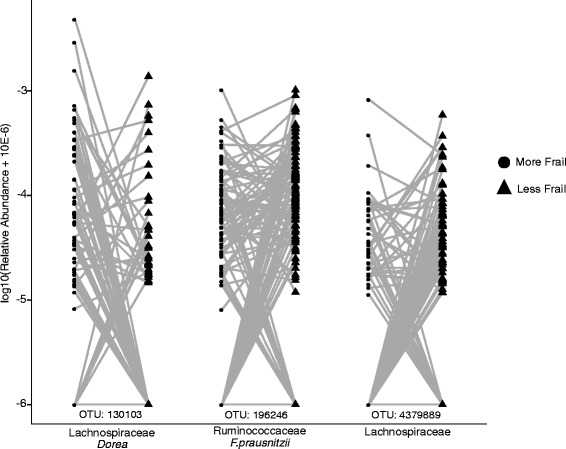
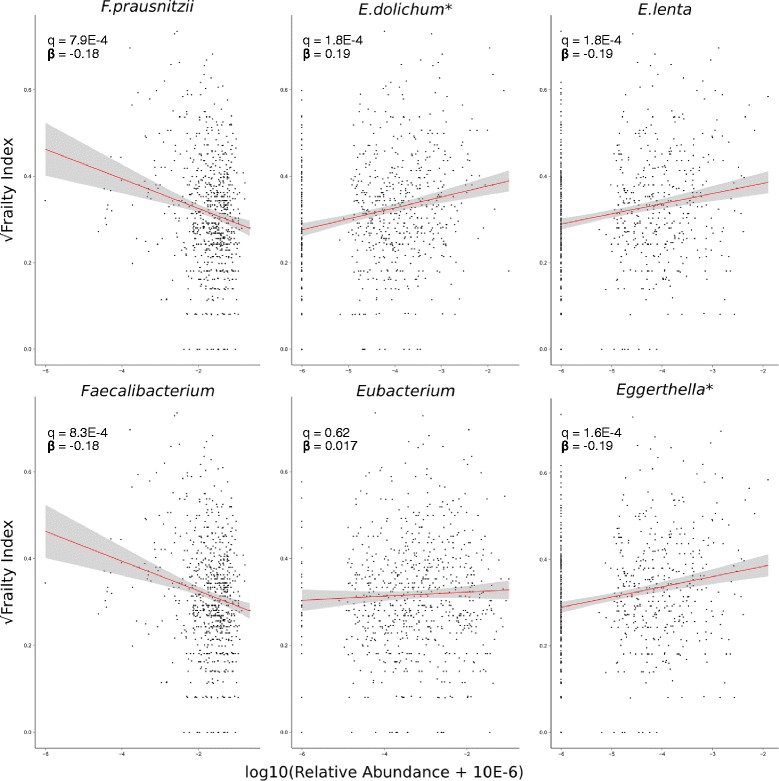
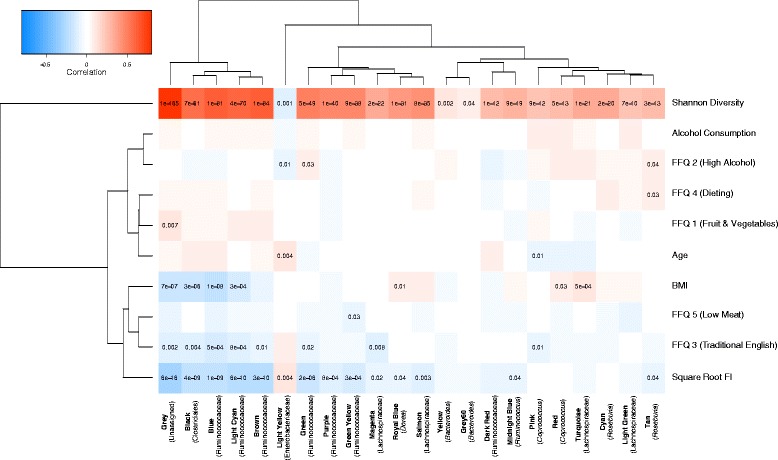
BACKGROUND: Frailty is arguably the biggest problem associated with population ageing, and associates with gut microbiome composition in elderly and care-dependent individuals. Here we characterize frailty associations with the gut microbiota in a younger community dwelling population, to identify targets for intervention to encourage healthy ageing. METHOD: We analysed 16S rRNA gene sequence data derived from faecal samples obtained from 728 female twins. Frailty was quantified using a frailty index (FI). Mixed effects models were used to identify associations with diversity, operational taxonomic units (OTUs) and taxa. OTU associations were replicated in the Eldermet cohort. Phenotypes were correlated with modules of OTUs collapsed by co-occurrence. RESULTS: Frailty negatively associated with alpha diversity of the gut microbiota. Models considering a number of covariates identified 637 OTUs associated with FI. Twenty-two OTU associations were significant independent of alpha diversity. Species more abundant with frailty included Eubacterium dolichum and Eggerthella lenta. A Faecalibacterium prausnitzii OTU was less abundant in frailer individuals, and retained significance in discordant twin analysis. Sixty OTU associations were replicated in the Eldermet cohort. OTU co-occurrence modules had mutually exclusive associations between frailty and alpha diversity. CONCLUSIONS: There was a striking negative association between frailty and gut microbiota diversity, underpinned by specific taxonomic associations. Whether these relationships are causal or consequential is unknown. Nevertheless, they represent targets for diagnostic surveillance, or for intervention studies to improve vitality in ageing.
Overview
The claims and statistics of this paper haven’t been checked yet.
Free: it reads the open-access text and checks the first 5 claims that cite a source we can check. Create a free account to check every claim.
Integrity signals
Registry
Cites
Statistics
Figures
Verification
Claims the paper makes
The claims and statistics of this paper haven’t been checked yet.
Free: it reads the open-access text and checks the first 5 claims that cite a source we can check. Create a free account to check every claim.
Claims other papers make about this one
Each is checked against this paper’s own text: does it say what the citing paper says it does?
The cited source says what the claim attributes to it.
In the citing paper
“Namely, frailty was associated with reduced microbiota biodiversity, and lower representation of butyrate-producing bacteria.”
From Gut Microbiota, Muscle Mass and Function in Aging: A Focus on Physical Frailty and Sarcopenia (2019) · cites this paper as [115]
In the citing paper
“Frailty was also associated with reduced abundance of bacteria known for their anti-inflammatory properties, such as Faecalibacterium prausnitzii, and overexpression of other species, including Eubacterium, Eggerthella, Ruminococcus and Coprobacillus [115,116].”
From Gut Microbiota, Muscle Mass and Function in Aging: A Focus on Physical Frailty and Sarcopenia (2019) · cites this paper as [115]
In the citing paper
“In large population studies conducted on both fit community-dwellers and frail nursing home residents, frailty was associated with reduced biodiversity of the fecal microbiota, that was partly dependent on different dietary patterns [114,115].”
From Gut Microbiota, Muscle Mass and Function in Aging: A Focus on Physical Frailty and Sarcopenia (2019) · cites this paper as [115]
Self-check
Percentages, sums and reported differences re-computed from the paper’s own numbers.
The self-check needs the paper’s full text.
Citations
Cites
Moderated estimation of fold change and dispersion for RNA-seq data with DESeq2
Love, M. I., Huber, W., & Anders, S. (2014) · Genome Biology · doi:10.1186/s13059-014-0550-8 · Cited by 95,106
Fitting Linear Mixed-Effects Models Using lme4
Bates, D., Mächler, M., Bolker, B., & Walker, S. (2015) · Journal of Statistical Software · doi:10.18637/jss.v067.i01 · Cited by 86,835
QIIME allows analysis of high-throughput community sequencing data
Caporaso, J. G., Kuczynski, J., Stombaugh, J., Bittinger, K., Bushman, F. D., Costello, E. K., Fierer, N., Peña, A. G., Goodrich, J. K., Gordon, J. I., et al. (2010) · Nature Methods · doi:10.1038/nmeth.f.303 · Cited by 34,887 · cited 1×
“Quality filtering and phylogenetic analysis was performed using QIIME 1.7.0 [20].”
InfluentialSelf-citationWGCNA: an R package for weighted correlation network analysis
Langfelder, P., & Horvath, S. (2008) · BMC Bioinformatics · doi:10.1186/1471-2105-9-559 · Cited by 27,252
Frailty in Older Adults: Evidence for a Phenotype
Fried, L. P., Tangen, C. M., Walston, J., Newman, A. B., Hirsch, C., Gottdiener, J., Seeman, T., Tracy, R., Kop, W. J., Burke, G., et al. (2001) · The Journals of Gerontology Series A: Biological Sciences and Medical Sciences · doi:10.1093/gerona/56.3.m146 · Cited by 24,907
Welch, P. (1967) · IEEE Transactions on Audio and Electroacoustics · doi:10.1109/tau.1967.1161901 · Cited by 12,277
Structure, function and diversity of the healthy human microbiome
The Human Microbiome Project Consortium (2012) · Nature · doi:10.1038/nature11234 · Cited by 11,726 · cited 1×
“It is highly variable between individuals [6], with substantial heritable elements [7], and relatively stable within a healthy adult over time [8].”
Diet rapidly and reproducibly alters the human gut microbiome
David, L. A., Maurice, C. F., Carmody, R. N., Gootenberg, D. B., Button, J. E., Wolfe, B. E., Ling, A. V., Devlin, A. S., Varma, Y., Fischbach, M. A., et al. (2014) · Nature · doi:10.1038/nature12820 · Cited by 10,100 · cited 1×
“This could be achieved through lifestyle interventions to alter factors known to influence diversity, such as diet [32, 33].”
A global clinical measure of fitness and frailty in elderly people
Rockwood, K. (2005) · Canadian Medical Association Journal · doi:10.1503/cmaj.050051 · Cited by 8,968 · cited 1×
“The FI followed the expected gamma distribution (Additional file 2: Figure S2) [18], had a mean of 0.116, with 103 pre-frail individuals (FI >0.20) [27].”
InfluentialA core gut microbiome in obese and lean twins
Turnbaugh, P. J., Hamady, M., Yatsunenko, T., Cantarel, B. L., Duncan, A., Ley, R. E., Sogin, M. L., Jones, W. J., Roe, B. A., Affourtit, J. P., et al. (2009) · Nature · doi:10.1038/nature07540 · Cited by 7,823
Self-citation
Cited by
Cryan, J. F., O'Riordan, K. J., Cowan, C. S. M., Sandhu, K. V., Bastiaanssen, T. F. S., Boehme, M., Codagnone, M. G., Cussotto, S., Fulling, C., Golubeva, A. V., et al. (2019) · Physiological Reviews · doi:10.1152/physrev.00018.2018 · Cited by 5,286
Ghosh, T. S., Rampelli, S., Jeffery, I. B., Santoro, A., Neto, M., Capri, M., Giampieri, E., Jennings, A., Candela, M., Turroni, S., et al. (2020) · Gut · doi:10.1136/gutjnl-2019-319654 · Cited by 991
Self-citationThe gut microbiome: Relationships with disease and opportunities for therapy
Durack, J., & Lynch, S. V. (2019) · Journal of Experimental Medicine · doi:10.1084/jem.20180448 · Cited by 943
The gut microbiome as a modulator of healthy ageing
Ghosh, T. S., Shanahan, F., & O’Toole, P. W. (2022) · Nature Reviews Gastroenterology & Hepatology · doi:10.1038/s41575-022-00605-x · Cited by 817
“Frailty Jackson et al.(47) (728) United Kingdom 16S Pathobionts increased; SCFA producer Faecalibacterium prausnitzii decreased”
BackgroundSelf-citationGut microbiome pattern reflects healthy ageing and predicts survival in humans
Wilmanski, T., Diener, C., Rappaport, N., Patwardhan, S., Wiedrick, J., Lapidus, J., Earls, J. C., Zimmer, A., Glusman, G., Robinson, M., et al. (2021) · Nature Metabolism · doi:10.1038/s42255-021-00348-0 · Cited by 675
Gut microbiome and aging: physiological and mechanistic insights
Nagpal, R., Mainali, R., Ahmadi, S., Wang, S., Singh, R., Kavanagh, K., Kitzman, D. W., Kushugulova, A., Marotta, F., & Yadav, H. (2018) · Nutrition and Healthy Aging · doi:10.3233/nha-170030 · Cited by 670
“1093/gerona/glx042 [74] Jackson MA, Jeffery IB, Beaumont M, Bell JT, Clark AG, Ley RE, O’Toole PW, Spector TD, Steves CJ.”
BackgroundImmunomodulatory potential of gut microbiome-derived short-chain fatty acids (SCFAs)
Ratajczak, W., Rył, A., Mizerski, A., Walczakiewicz, K., Sipak, O., & Laszczyńska, M. (2019) · Acta Biochimica Polonica · doi:10.18388/abp.2018_2648 · Cited by 514
Gut microbiota: A player in aging and a target for anti-aging intervention
Vaiserman, A. M., Koliada, A. K., & Marotta, F. (2017) · Ageing Research Reviews · doi:10.1016/j.arr.2017.01.001 · Cited by 465
The gut microbiota and healthy aging: A mini-review
Kim, S., & Jazwinski, S. M. (2018) · Gerontology · doi:10.1159/000490615 · Cited by 427
“Also, gut microbial diversity inversely correlates with biological age, but not with chronological age [16,17].”
Gut Microbiota, Muscle Mass and Function in Aging: A Focus on Physical Frailty and Sarcopenia
Ticinesi, A., Nouvenne, A., Cerundolo, N., Catania, P., Prati, B., Tana, C., & Meschi, T. (2019) · Nutrients · doi:10.3390/nu11071633 · Cited by 418
Signalling cognition: The gut microbiota and hypothalamic-pituitary-adrenal axis
Rusch, J. A., Layden, B. T., & Dugas, L. R. (2023) · Frontiers in Endocrinology · doi:10.3389/fendo.2023.1130689 · Cited by 415
“These alterations may contribute to age-related inflammation, oxidative stress, and neurodegeneration, and have been associated with age-related health issues such as frailty and cognitive decline (92, 100, 101).”
BackgroundHaran, J. P., Bhattarai, S. K., Foley, S. E., Dutta, P., Ward, D. V., Bucci, V., & McCormick, B. A. (2019) · mBio · doi:10.1128/mbio.00632-19 · Cited by 412
“This has been previously validated in demonstrating signatures of frailty in the gut microbiota (19, 56, 57).”
(Dis)Trust your gut: the gut microbiome in age-related inflammation, health, and disease
Buford, T. W. (2017) · Microbiome · doi:10.1186/s40168-017-0296-0 · Cited by 409
“…associated with greater temporal instability Long-term care stays and antibiotic use associated with increased alterations in microbial composition and diversity Jackson et al. (2016) [41] 1008 British Irish 42–102 years N/A N/A Robust associations between frailty and gut microbiota F.…”
InfluentialSarcopenia and frailty in decompensated cirrhosis
Tandon, P., Montano-Loza, A. J., Lai, J. C., Dasarathy, S., & Merli, M. (2021) · Journal of Hepatology · doi:10.1016/j.jhep.2021.01.025 · Cited by 408
Ticinesi, A., Lauretani, F., Milani, C., Nouvenne, A., Tana, C., Del Rio, D., Maggio, M., Ventura, M., & Meschi, T. (2017) · Nutrients · doi:10.3390/nu9121303 · Cited by 401
“[75] found an inverse correlation between the Rockwood Frailty Index and gut microbiome alpha diversity, which is an expression of the number of bacterial species detected in each fecal sample by metagenomic analyses.”
BackgroundPrecision Nutrition and the Microbiome, Part I: Current State of the Science
Mills, S., Stanton, C., Lane, J., Smith, G., & Ross, R. (2019) · Nutrients · doi:10.3390/nu11040923 · Cited by 399
Gut microbiota as the key controllers of 'healthy' aging of elderly people
Ragonnaud, E., & Biragyn, A. (2021) · Immunity & Ageing · doi:10.1186/s12979-020-00213-w · Cited by 383
The Gut Microbiota and Unhealthy Aging: Disentangling Cause from Consequence
DeJong, E. N., Surette, M. G., & Bowdish, D. M. E. (2020) · Cell Host & Microbe · doi:10.1016/j.chom.2020.07.013 · Cited by 370
Gut microbiota signatures of longevity
Kong, F., Hua, Y., Zeng, B., Ning, R., Li, Y., & Zhao, J. (2016) · Current Biology · doi:10.1016/j.cub.2016.08.015 · Cited by 370
Thomas, S., Izard, J., Walsh, E., Batich, K., Chongsathidkiet, P., Clarke, G., Sela, D. A., Muller, A. J., Mullin, J. M., Albert, K., et al. (2017) · Cancer Research · doi:10.1158/0008-5472.can-16-2929 · Cited by 367
Ling, Z., Liu, X., Cheng, Y., Yan, X., & Wu, S. (2022) · Critical Reviews in Food Science and Nutrition · doi:10.1080/10408398.2020.1867054 · Cited by 352
Gut microbiome diversity and high-fibre intake are related to lower long-term weight gain
Menni, C., Jackson, M. A., Pallister, T., Steves, C. J., Spector, T. D., & Valdes, A. M. (2017) · International Journal of Obesity · doi:10.1038/ijo.2017.66 · Cited by 347
Self-citationDzutsev, A., Badger, J. H., Perez-Chanona, E., Roy, S., Salcedo, R., Smith, C. K., & Trinchieri, G. (2017) · Annual Review of Immunology · doi:10.1146/annurev-immunol-051116-052133 · Cited by 302
Aging and Alzheimer's disease: comparison and associations from molecular to system level
Xia, X., Jiang, Q., McDermott, J., & Han, J. J. (2018) · Aging Cell · doi:10.1111/acel.12802 · Cited by 301
Nutrition and the gut microbiome in the elderly
Salazar, N., Valdés-Varela, L., González, S., Gueimonde, M., & de los Reyes-Gavilán, C. G. (2017) · Gut Microbes · doi:10.1080/19490976.2016.1256525 · Cited by 282
“Loss of the community-associated microbiota, defined as the group of microorganisms shared by the individuals from a given social group, has been correlated with increased frailty.(19,31,84) The reduced microbial diversity, low levels of butyrate producing bacteria, decreased levels and imbalanced proportions of SCFA,…”
BackgroundProbiotic Supplementation in Patients with Alzheimer’s Dementia - An Explorative Intervention Study
Leblhuber, F., Steiner, K., Schuetz, B., Fuchs, D., & Gostner, J. M. (2018) · Current Alzheimer Research · doi:10.2174/1389200219666180813144834 · Cited by 269
“Supplementation of both were postulated to provide synergistic effects especially important in preventing dementia, as there is an age-related decrease in the diversity of gut microbiota [13].”
Gut microbiota changes in the extreme decades of human life: a focus on centenarians
Santoro, A., Ostan, R., Candela, M., Biagi, E., Brigidi, P., Capri, M., & Franceschi, C. (2018) · Cellular and Molecular Life Sciences · doi:10.1007/s00018-017-2674-y · Cited by 250
“Frailty has been negatively associated with GM diversity [48] and Eubacterium dolichum and Eggerthella lenta have been found to be more abundant among frail individuals, while Faecalibacterium prausnitzii was less abundant, thus identifying a GM signature of frailty [48].”
BackgroundThe role of nutrition in inflammaging
Di Giosia, P., Stamerra, C. A., Giorgini, P., Jamialahamdi, T., Butler, A. E., & Sahebkar, A. (2022) · Ageing Research Reviews · doi:10.1016/j.arr.2022.101596 · Cited by 247
Biological aging and the human gut microbiota
Maffei, V. J., Kim, S., Blanchard, E., Luo, M., Jazwinski, S. M., Taylor, C. M., & Welsh, D. A. (2017) · The Journals of Gerontology Series A · doi:10.1093/gerona/glx042 · Cited by 219
Aging, Frailty, and the Microbiome—How Dysbiosis Influences Human Aging and Disease
Haran, J. P., & McCormick, B. A. (2021) · Gastroenterology · doi:10.1053/j.gastro.2020.09.060 · Cited by 216
Gut microbiota, cognitive frailty and dementia in older individuals: A systematic review
Ticinesi, A., Tana, C., Nouvenne, A., Prati, B., Lauretani, F., & Meschi, T. (2018) · Clinical Interventions in Aging · doi:10.2147/cia.s139163 · Cited by 215
Gut microbiota composition is associated with polypharmacy in elderly hospitalized patients
Ticinesi, A., Milani, C., Lauretani, F., Nouvenne, A., Mancabelli, L., Lugli, G. A., Turroni, F., Duranti, S., Mangifesta, M., Viappiani, A., et al. (2017) · Scientific Reports · doi:10.1038/s41598-017-10734-y · Cited by 211
Age-dependent changes in GI physiology and microbiota: time to reconsider?
An, R., Wilms, E., Masclee, A. A. M., Smidt, H., Zoetendal, E. G., & Jonkers, D. (2018) · Gut · doi:10.1136/gutjnl-2017-315542 · Cited by 209
Bana, B., & Cabreiro, F. (2019) · Annual Review of Genetics · doi:10.1146/annurev-genet-112618-043650 · Cited by 203
Revisiting Metchnikoff: Age-related alterations in microbiota-gut-brain axis in the mouse
Scott, K. A., Ida, M., Peterson, V. L., Prenderville, J. A., Moloney, G. M., Izumo, T., Murphy, K., Murphy, A., Ross, R. P., Stanton, C., et al. (2017) · Brain, Behavior, and Immunity · doi:10.1016/j.bbi.2017.02.004 · Cited by 202
“The reasons for increased diversity in aged mice is unclear; however, decreases in diversity are often reflective of unhealthy ageing and frailty, which we did not subjectively observe in this study (Claesson et al. 2012, Jackson et al. 2016).”
BackgroundLinks between the microbiome and bone
Hernandez, C. J., Guss, J. D., Luna, M., & Goldring, S. R. (2016) · Journal of Bone and Mineral Research · doi:10.1002/jbmr.2887 · Cited by 200
Gut microbes and muscle function: can probiotics make our muscles stronger?
Giron, M., Thomas, M., Dardevet, D., Chassard, C., & Savary‐Auzeloux, I. (2022) · Journal of Cachexia, Sarcopenia and Muscle · doi:10.1002/jcsm.12964 · Cited by 193
Ageing of the gut microbiome: Potential influences on immune senescence and inflammageing
Conway, J., & A Duggal, N. (2021) · Ageing Research Reviews · doi:10.1016/j.arr.2021.101323 · Cited by 188
The Gut Microbiota of Healthy Aged Chinese Is Similar to That of the Healthy Young
Bian, G., Gloor, G. B., Gong, A., Jia, C., Zhang, W., Hu, J., Zhang, H., Zhang, Y., Zhou, Z., Zhang, J., et al. (2017) · mSphere · doi:10.1128/msphere.00327-17 · Cited by 185
The gut microbiota as a novel regulator of cardiovascular function and disease
Battson, M. L., Lee, D. M., Weir, T. L., & Gentile, C. L. (2018) · The Journal of Nutritional Biochemistry · doi:10.1016/j.jnutbio.2017.12.010 · Cited by 183
Kang, L., Li, P., Wang, D., Wang, T., Hao, D., & Qu, X. (2021) · Scientific Reports · doi:10.1038/s41598-021-84031-0 · Cited by 182
Strasser, B., Wolters, M., Weyh, C., Krüger, K., & Ticinesi, A. (2021) · Nutrients · doi:10.3390/nu13062045 · Cited by 176
The human gut microbiome and aging
Bradley, E., & Haran, J. (2024) · Gut Microbes · doi:10.1080/19490976.2024.2359677 · Cited by 173
TwinsUK: The UK Adult Twin Registry Update
Verdi, S., Abbasian, G., Bowyer, R. C. E., Lachance, G., Yarand, D., Christofidou, P., Mangino, M., Menni, C., Bell, J. T., Falchi, M., et al. (2019) · Twin Research and Human Genetics · doi:10.1017/thg.2019.65 · Cited by 173
Self-citationPicca, A., Ponziani, F. R., Calvani, R., Marini, F., Biancolillo, A., Coelho-Júnior, H. J., Gervasoni, J., Primiano, A., Putignani, L., Del Chierico, F., et al. (2019) · Nutrients · doi:10.3390/nu12010065 · Cited by 172
Aging Microbiota-Gut-Brain Axis in Stroke Risk and Outcome
Honarpisheh, P., Bryan, R. M., & McCullough, L. D. (2022) · Circulation Research · doi:10.1161/circresaha.122.319983 · Cited by 171
Fernandes, R., Viana, S. D., Nunes, S., & Reis, F. (2019) · Biochimica et Biophysica Acta (BBA) - Molecular Basis of Disease · doi:10.1016/j.bbadis.2018.09.032 · Cited by 168
Dysbiosis, malnutrition and enhanced gut-lung axis contribute to age-related respiratory diseases
Saint‐Criq, V., Lugo‐Villarino, G., & Thomas, M. (2020) · Ageing Research Reviews · doi:10.1016/j.arr.2020.101235 · Cited by 166
Intestinal Permeability Biomarker Zonulin is Elevated in Healthy Aging
Qi, Y., Goel, R., Kim, S., Richards, E. M., Carter, C. S., Pepine, C. J., Raizada, M. K., & Buford, T. W. (2017) · Journal of the American Medical Directors Association · doi:10.1016/j.jamda.2017.05.018 · Cited by 165
Fielding, R. A., Reeves, A. R., Jasuja, R., Liu, C., Barrett, B. B., & Lustgarten, M. S. (2019) · Experimental Gerontology · doi:10.1016/j.exger.2019.110722 · Cited by 163
Ticinesi, A., Mancabelli, L., Tagliaferri, S., Nouvenne, A., Milani, C., Rio, D. D., Lauretani, F., Maggio, M. G., Ventura, M., & Meschi, T. (2020) · International Journal of Molecular Sciences · doi:10.3390/ijms21238946 · Cited by 163
Jafarnejad, S., Djafarian, K., Fazeli, M. R., Yekaninejad, M. S., Rostamian, A., & Keshavarz, S. A. (2017) · Journal of the American College of Nutrition · doi:10.1080/07315724.2017.1318724 · Cited by 161
Gutted! Unraveling the Role of the Microbiome in Major Depressive Disorder
Bastiaanssen, T. F. S., Cussotto, S., Claesson, M. J., Clarke, G., Dinan, T. G., & Cryan, J. F. (2020) · Harvard Review of Psychiatry · doi:10.1097/hrp.0000000000000243 · Cited by 159
“In humans, aging and age-related impairments such as frailty have been linked to a decrease in microbiota diversity.(8,98) Conversely, aged (24-month-old) mice exhibit increased microbial diversity than their younger counterparts.”
BackgroundSocioeconomic Status and the Gut Microbiome: A TwinsUK Cohort Study
Bowyer, R. C. E., Jackson, M. A., Le Roy, C. I., Ni Lochlainn, M., Spector, T. D., Dowd, J. B., & Steves, C. J. (2019) · Microorganisms · doi:10.3390/microorganisms7010017 · Cited by 150
“The measure has been previously associated with microbiota composition in this cohort [3], and this approach reduces multiple testing of individual health deficits.”
BackgroundMethodSelf-citationThe microbiome: An emerging key player in aging and longevity
Kim, M., & Benayoun, B. A. (2020) · Translational Medicine of Aging · doi:10.1016/j.tma.2020.07.004 · Cited by 143
Age-related changes in intestinal immunity and the microbiome
Walrath, T., Dyamenahalli, K. U., Hulsebus, H. J., McCullough, R. L., Idrovo, J., Boe, D. M., McMahan, R. H., & Kovacs, E. J. (2020) · Journal of Leukocyte Biology · doi:10.1002/jlb.3ri0620-405rr · Cited by 141
Diet for the prevention and management of sarcopenia
Calvani, R., Picca, A., Coelho-Júnior, H. J., Tosato, M., Marzetti, E., & Landi, F. (2023) · Metabolism · doi:10.1016/j.metabol.2023.155637 · Cited by 141
Use of dietary indices to control for diet in human gut microbiota studies
Bowyer, R. C. E., Jackson, M. A., Pallister, T., Skinner, J., Spector, T. D., Welch, A. A., & Steves, C. J. (2018) · Microbiome · doi:10.1186/s40168-018-0455-y · Cited by 140
“observed to positively associate with frailty [29] and with a dietary score based on visceral fat mass within this cohort”
BackgroundSelf-citationDietary Protein and Muscle in Aging People: The Potential Role of the Gut Microbiome
Ni Lochlainn, M., Bowyer, R. C. E., & Steves, C. J. (2018) · doi:10.20944/preprints201806.0152.v1 · Cited by 138
Self-citationRisk Factors of Severe COVID-19: A Review of Host, Viral and Environmental Factors
Zsichla, L., & Müller, V. (2023) · Viruses · doi:10.3390/v15010175 · Cited by 140
Dietary Protein and Muscle in Aging People: The Potential Role of the Gut Microbiome
Ni Lochlainn, M., Bowyer, R. C. E., & Steves, C. J. (2018) · Nutrients · doi:10.3390/nu10070929 · Cited by 138
Self-citationEffects of short‐term endurance exercise on gut microbiota in elderly men
Taniguchi, H., Tanisawa, K., Sun, X., Kubo, T., Hoshino, Y., Hosokawa, M., Takeyama, H., & Higuchi, M. (2018) · Physiological Reports · doi:10.14814/phy2.13935 · Cited by 137
Frailty in advanced liver disease
Laube, R., Wang, H., Park, L., Heyman, J. K., Vidot, H., Majumdar, A., Strasser, S. I., McCaughan, G. W., & Liu, K. (2018) · Liver International · doi:10.1111/liv.13917 · Cited by 132
Daily, J. W., & Park, S. (2022) · Cells · doi:10.3390/cells11030338 · Cited by 126
Kong, F., Deng, F., Li, Y., & Zhao, J. (2019) · Gut Microbes · doi:10.1080/19490976.2018.1494102 · Cited by 124
Steves, C. J., Bird, S., Williams, F. M., & Spector, T. D. (2016) · Journal of Bone and Mineral Research · doi:10.1002/jbmr.2765 · Cited by 119
Self-citationComposition and immunological significance of the upper respiratory tract microbiota
Schenck, L. P., Surette, M. G., & Bowdish, D. M. E. (2016) · FEBS Letters · doi:10.1002/1873-3468.12455 · Cited by 118
Microbiome-health interactions in older people
O’Toole, P. W., & Jeffery, I. B. (2018) · Cellular and Molecular Life Sciences · doi:10.1007/s00018-017-2673-z · Cited by 117
Self-citationMicrobiota and Aging. A Review and Commentary
García‐Peña, C., Álvarez‐Cisneros, T., Quiroz‐Baez, R., & Friedland, R. P. (2017) · Archives of Medical Research · doi:10.1016/j.arcmed.2017.11.005 · Cited by 116
Interventions on Gut Microbiota for Healthy Aging
Zeppa, S. D., Agostini, D., Ferrini, F., Gervasi, M., Barbieri, E., Bartolacci, A., Piccoli, G., Saltarelli, R., Sestili, P., & Stocchi, V. (2022) · Cells · doi:10.3390/cells12010034 · Cited by 115
Simanenkov, V. I., Maev, I. V., Ткачева, О. Н., Alekseenko, S. A., Андреев, Д. Н., Bordin, D. S., Vlasov, T. D., Vorobyeva, N. M., Grinevich, V. B., Владимировна, Г. И., et al. (2020) · CARDIOVASCULAR THERAPY AND PREVENTION · doi:10.15829/1728-8800-2021-2758 · Cited by 115
Role of gut microbiota in aging-related health decline: insights from invertebrate models
Clark, R. I., & Walker, D. W. (2018) · Cellular and Molecular Life Sciences · doi:10.1007/s00018-017-2671-1 · Cited by 111
Rashidah, N. H., Lim, S. M., Neoh, C. F., Majeed, A. B. A., Tan, M. P., Khor, H. M., Tan, A. H., Rehiman, S. H., & Ramasamy, K. (2022) · Ageing Research Reviews · doi:10.1016/j.arr.2022.101744 · Cited by 108
Characterization of the gut‐liver‐muscle axis in cirrhotic patients with sarcopenia
Ponziani, F. R., Picca, A., Marzetti, E., Calvani, R., Conta, G., CHIERICO, F. D., Capuani, G., Faccia, M., Fianchi, F., Funaro, B., et al. (2021) · Liver International · doi:10.1111/liv.14876 · Cited by 105
Tuikhar, N., Keisam, S., Labala, R. K., Imrat, Ramakrishnan, P., Arunkumar, M. C., Ahmed, G., Biagi, E., & Jeyaram, K. (2019) · Mechanisms of Ageing and Development · doi:10.1016/j.mad.2019.02.001 · Cited by 103
Gut Microbiota Interaction with the Central Nervous System throughout Life
Ojeda, J., Ávila, A., & Vidal, P. M. (2021) · Journal of Clinical Medicine · doi:10.3390/jcm10061299 · Cited by 103
How Microbiomes Affect Skin Aging: The Updated Evidence and Current Perspectives
Ratanapokasatit, Y., Laisuan, W., Rattananukrom, T., Petchlorlian, A., Thaipisuttikul, I., & Sompornrattanaphan, M. (2022) · Life · doi:10.3390/life12070936 · Cited by 105
Chua, L. L., Rajasuriar, R., Azanan, M. S., Abdullah, N. K., Tang, M. S., Lee, S. C., Woo, Y. L., Lim, Y. A. L., Ariffin, H., & Loke, P. (2017) · Microbiome · doi:10.1186/s40168-017-0250-1 · Cited by 101
Interaction between the microbiota and the skin barrier in aging skin: a comprehensive review
Woo, Y. R., & Kim, H. S. (2024) · Frontiers in Physiology · doi:10.3389/fphys.2024.1322205 · Cited by 102
Hohman, L. S., & Osborne, L. C. (2022) · Aging Cell · doi:10.1111/acel.13700 · Cited by 101
Haran, J. P., Bucci, V., Dutta, P., Ward, D., & McCormick, B. (2018) · Journal of Medical Microbiology · doi:10.1099/jmm.0.000640 · Cited by 97
Retracted: Gut Microbiome Signatures of Risk and Prodromal Markers of Parkinson Disease
Heinzel, S., Aho, V. T. E., Suenkel, U., von Thaler, A., Schulte, C., Deuschle, C., Paulin, L., Hantunen, S., Brockmann, K., Eschweiler, G. W., et al. (2020) · Annals of Neurology · doi:10.1002/ana.25788 · Cited by 95
RetractedAltered Fecal Microbiota Composition in Older Adults With Frailty
Xu, Y., Wang, Y., Li, H., Dai, Y., Chen, D., Wang, M., Jiang, X., Huang, Z., Yu, H., Huang, J., et al. (2021) · Frontiers in Cellular and Infection Microbiology · doi:10.3389/fcimb.2021.696186 · Cited by 95
An association between chronic widespread pain and the gut microbiome
Freidin, M. B., Stalteri, M. A., Wells, P. M., Lachance, G., Baleanu, A.-F., Bowyer, R. C. E., Kurilshikov, A., Zhernakova, A., Steves, C. J., & Williams, F. M. K. (2020) · Rheumatology · doi:10.1093/rheumatology/keaa847 · Cited by 95
Self-citationGut-muscle crosstalk. A perspective on influence of microbes on muscle function
Chew, W., Lim, Y. P., Lim, W. S., Chambers, E. S., Frost, G. S., Wong, S. H., & Ali, Y. (2023) · Frontiers in Medicine · doi:10.3389/fmed.2022.1065365 · Cited by 94
Of microbes and minds: A narrative review on the second brain aging
Calvani, R., Picca, A., Lo Monaco, M. R., Landi, F., Bernabei, R., & Marzetti, E. (2018) · Frontiers in Medicine · doi:10.3389/fmed.2018.00053 · Cited by 92
“org March 2018 | Volume 5 | Article 53 of health status and frailty (89, 103).”
BackgroundSong, X., Dou, X., Chang, J., Zeng, X., Xu, Q., & Xu, C. (2024) · Gut Microbes · doi:10.1080/19490976.2024.2414805 · Cited by 90
Emerging Targets and Treatments for Sarcopenia: A Narrative Review
Cacciatore, S., Calvani, R., Esposito, I., Massaro, C., Gava, G., Picca, A., Tosato, M., Marzetti, E., & Landi, F. (2024) · Nutrients · doi:10.3390/nu16193271 · Cited by 89
Kotlyarov, S. N. (2022) · International Journal of Molecular Sciences · doi:10.3390/ijms23094768 · Cited by 88
Composition of salivary microbiota in elderly subjects
Ogawa, T., Hirose, Y., Honda-Ogawa, M., Sugimoto, M., Sasaki, S., Kibi, M., Kawabata, S., Ikebe, K., & Maeda, Y. (2018) · Scientific Reports · doi:10.1038/s41598-017-18677-0 · Cited by 83
Advances in Plant Polysaccharides as Antiaging Agents: Effects and Signaling Mechanisms
Deng, R., Wang, F., Wang, L., Xiong, L., Shen, X., & Song, H. (2023) · Journal of Agricultural and Food Chemistry · doi:10.1021/acs.jafc.3c00493 · Cited by 83
An investigation into physical frailty as a link between the gut microbiome and cognitive health
Verdi, S., Jackson, M. A., Beaumont, M., Bowyer, R. C. E., Bell, J. T., Spector, T. D., & Steves, C. J. (2018) · Frontiers in Aging Neuroscience · doi:10.3389/fnagi.2018.00398 · Cited by 82
Self-citationPrimate microbiomes over time: Longitudinal answers to standing questions in microbiome research
Björk, J. R., Dasari, M. R., Grieneisen, L., & Archie, E. A. (2019) · American Journal of Primatology · doi:10.1002/ajp.22970 · Cited by 82
Microbiome: Effects of Ageing and Diet
Salazar, N., González, S., Nogacka, A. M., Ríos-Covián, D., Arboleya, S., Gueimonde, M., & Reyes‐Gavilán, C. G. D. L. (2019) · Current Issues in Molecular Biology · doi:10.21775/cimb.036.033 · Cited by 82
Antunes, K. H., Stein, R. T., Franceschina, C. M., da Silva, E. F., de Freitas, D. N., Silveira, J. S., Mocellin, M., Leitão, L. A. D. A., Fachi, J. L., Pral, L. P., et al. (2022) · EBioMedicine · doi:10.1016/j.ebiom.2022.103891 · Cited by 80
Yu, D., Nguyen, S. M., Yang, Y., Xu, W., Cai, H., Wu, J., Cai, Q., Long, J., Zheng, W., & Shu, X. (2020) · American Journal of Clinical Nutrition · doi:10.1093/ajcn/nqaa350 · Cited by 79
Azzopardi, R. V., Vermeiren, S., Gorus, E., Habbig, A.-K., Petrović, M., Noortgate, N. J. V. D., VRIENDT, P. D., Bautmans, I., Beyer, I., Bautmans, I., et al. (2016) · Journal of the American Medical Directors Association · doi:10.1016/j.jamda.2016.07.023 · Cited by 82
Gut microbiota composition and frailty in elderly patients with Chronic Kidney Disease
Margiotta, E., Miragoli, F., Callegari, M. L., Vettoretti, S., Caldiroli, L., Meneghini, M., Zanoni, F., & Messa, P. (2020) · PLoS ONE · doi:10.1371/journal.pone.0228530 · Cited by 79
Microbiota-Gut-Brain Axis Regulation of Adult Hippocampal Neurogenesis
Guzzetta, K. E., Cryan, J. F., & O’Leary, O. F. (2022) · Brain Plasticity · doi:10.3233/bpl-220141 · Cited by 81
Wilms, E., An, R., Smolinska, A., Stevens, Y., Weseler, A. R., Elizalde, M., Drittij-Reijnders, M.-J., Ioannou, A., van Schooten, F., Smidt, H., et al. (2021) · Clinical Nutrition · doi:10.1016/j.clnu.2020.12.034 · Cited by 78
Metadata
- Authors
- Jackson, M. A., Jeffery, I. B., Beaumont, M., Bell, J. T., Clark, A. G., Ley, R. E., O’Toole, P. W., Spector, T. D., & Steves, C. J.
- Affiliations
- St Thomas' Hospital (GB)
- University College Cork (IE)
- Cornell University (US)
- Corresponding author
- Steves, Claire J.
- ORCID
- Venue
- Genome Medicine
- Published
- 2016-01-29
- Volume
- 8
- Issue
- 1
- Pages
- 8-8
- ISSN
- 1756-994X (ISSN-L)
- PMC
- PMC4731918
- OpenAlex
- W2263333073
- Cited by
- 436
- References
- 47
- Citations by year
- 2026: 27 · 2025: 28 · 2024: 47 · 2023: 54 · 2022: 53 · 2021: 61 · 2020: 38 · 2019: 42 · 2018: 41 · 2017: 33 · 2016: 11
- FWCI
- 21.99
- Type
- journal article
- Language
- en
- Update notices
- correction (2016-02-17)
- Open access
- gold
- doi.org
- Licence
- cc-by
- creativecommons.org/licenses/by/4.0/ (tdm)
- creativecommons.org/licenses/by/4.0/ (vor)
- Locations
- Genome Medicine (publishedVersion, cc-by)
- PubMed Central (publishedVersion, cc-by)
- PubMed (publishedVersion)
- Cork Open Research Archive (University College Cork, Ireland) (acceptedVersion, cc-by)
- Arrow@dit (Dublin Institute of Technology) (submittedVersion, cc-by)
- Cork Open Research Archive (University College Cork, Ireland) (submittedVersion, cc-by)
- Research Portal (King's College London) (submittedVersion, cc-by)
- Funders
- National Institutes of Health (RO1 DK093595 DP2 OD007444)
- Wellcome Trust
- Seventh Framework Programme
- National Institute for Health Research
- Science Foundation Ireland
- Topics
- Life Sciences › Biochemistry, Genetics and Molecular Biology › Molecular Biology › Gut microbiota and health
- Health Sciences › Medicine › Geriatrics and Gerontology › Frailty in Older Adults
- Health Sciences › Dentistry › Periodontics › Oral microbiology and periodontitis research
- Keywords
- frailty, gut microbiota, frailty index, alpha diversity, operational taxonomic units, Eggerthella lenta, Faecalibacterium prausnitzii, healthy aging, community-dwelling older adults, fecal microbiota
- MeSH terms
- Gastrointestinal Microbiome, Adult, Aged, Aged, 80 and over, Aging, Bacteria, Feces, Female, Humans, Middle Aged, Phylogeny, Risk Factors, RNA, Ribosomal, 16S, Twins, Frail Elderly, Sequence Analysis, RNA
About these checks
Registry, retraction, Cites and statistics results are computed, not judged, with one exception: a printed reference that no index lists is read once by a model before it counts as a citation error. Claims are extracted by a model and kept only when their quote appears verbatim in the text; each cited source is then checked, with a model’s help, for whether it says what the claim relies on. Those verdicts can be wrong — read the claim’s quote and the cited source before relying on one.
Statistics and arithmetic are recomputed, not judged.
Confidence bands are shown only for fields calibrated on our annotated test set. None is calibrated yet, so no band is shown.
What counts as a claim ›How we measure confidence ›How we check this ›
Are you an author, or do you see a problem with this page? Request a review
Data sources
Bibliographic data: Semantic Scholar, OpenAlex, Crossref.
Contains information from the Semantic Scholar Academic Graph Datasets, made available under the ODC Attribution License (ODC-BY 1.0).
Semantic Scholar’s data is described in: Kinney, R., et al. (2023). The Semantic Scholar Open Data Platform. arXiv:2301.10140.
