

Frequent mutations in acetylation and ubiquitination sites suggest novel driver mechanisms of cancer
Open accessThe DOI matches its Crossref record; 80 of the 80 references it cites were found in a registry or an index.
Abstract
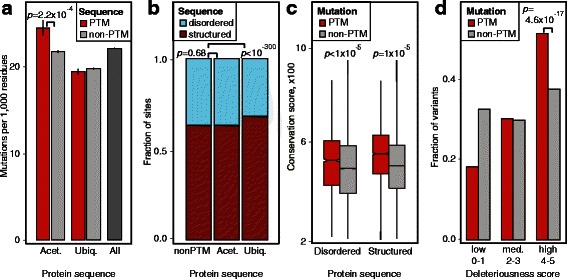
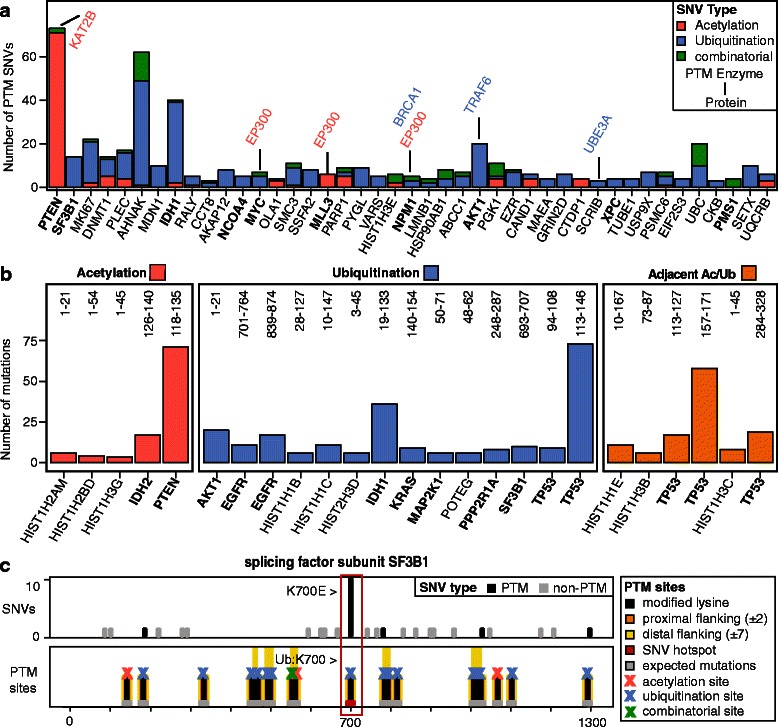
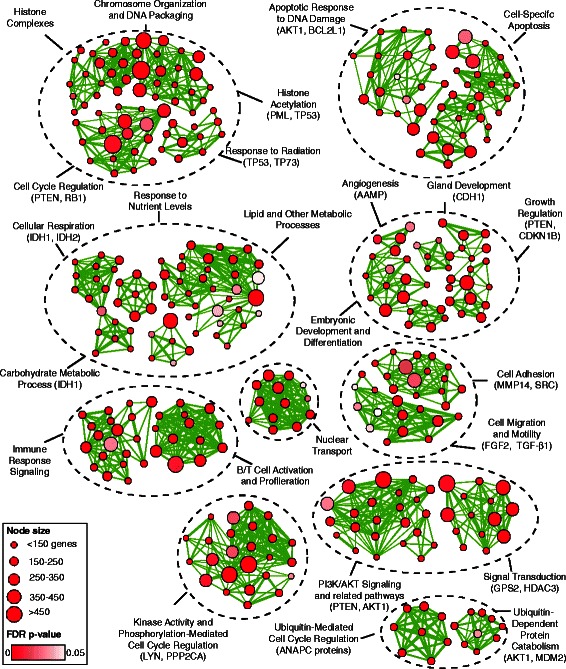
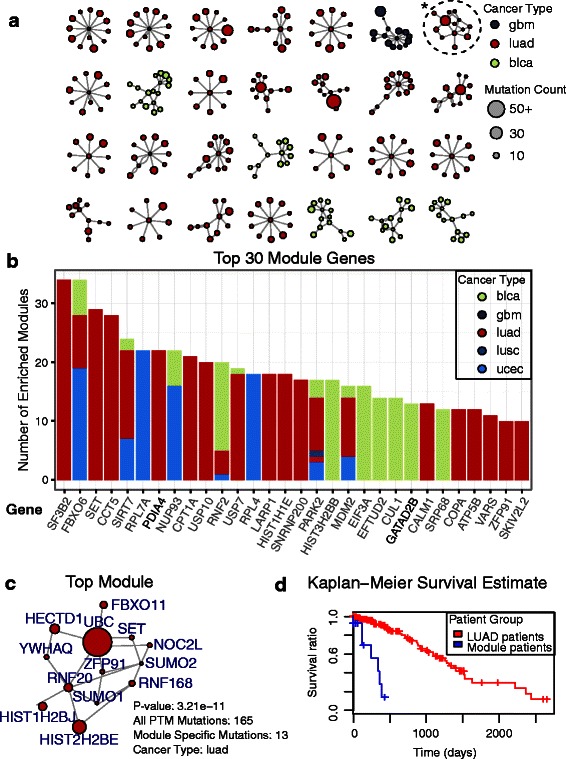
BACKGROUND: Discovery of cancer drivers is a major goal of cancer research. Driver genes and pathways are often predicted using mutation frequency, assuming that statistically significant recurrence of specific somatic mutations across independent samples indicates their importance in cancer. However, many mutations, including known cancer drivers, are not observed at high frequency. Fortunately, abundant information is available about functional "active sites" in proteins that can be integrated with mutations to predict cancer driver genes, even based on low frequency mutations. Further, considering active site information predicts detailed biochemical mechanisms impacted by the mutations. Post-translational modifications (PTMs) are active sites that are regulatory switches in proteins and pathways. We analyzed acetylation and ubiquitination, two important PTM types often involved in chromatin organization and protein degradation, to find proteins that are significantly affected by tumor somatic mutations. METHODS: We performed computational analyses of acetylation and ubiquitination sites in a pan-cancer dataset of 3200 tumor samples from The Cancer Genome Atlas (TCGA). These analyses were targeted at different levels of biological organization including individual genes, pathway annotated gene sets, and protein-protein interaction networks. RESULTS: Acetylation and ubiquitination site mutations are enriched in cancer with significantly stronger evolutionary conservation and accumulation in protein domains. Gene-focused analysis with the ActiveDriver method reveals significant co-occurrences of acetylation and ubiquitination PTMs and mutation hotspots in known oncoproteins (TP53, AKT1, IDH1) and highlights candidate cancer driver genes with PTM-related mechanisms (e.g. several histone proteins and the splicing factor SF3B1). Pathway analysis shows that PTM mutations in acetylation and ubiquitination sites accumulate in cancer-related processes such as cell cycle, apoptosis, chromatin regulation, and metabolism. Integrated mutation analysis of clinical information and protein interaction networks suggests that many PTM-specific mutations associate with decreased patient survival. CONCLUSIONS: Mutation analysis of acetylation and ubiquitination PTM sites reveals their importance in cancer. As PTM networks are increasingly mapped and related enzymes are often druggable, deeper investigation of specific associated mutations may lead to the discovery of treatment-relevant cellular mechanisms.
Overview
The claims and statistics of this paper haven’t been checked yet.
Free: it reads the open-access text and checks the first 5 claims that cite a source we can check. Create a free account to check every claim.
Integrity signals
Registry
Cites
Statistics
Figures
Verification
Claims the paper makes
The claims and statistics of this paper haven’t been checked yet.
Free: it reads the open-access text and checks the first 5 claims that cite a source we can check. Create a free account to check every claim.
Claims other papers make about this one
Each is checked against this paper’s own text: does it say what the citing paper says it does?
The source backs part of the claim, not all of it — or backs it for a different population, condition or comparison.
In the citing paper
“mutations at acetylation sites are commonly found in tumor tissues within key cellular pathways, such as the cell cycle, metabolism, and apoptosis [14].”
From Acetylation: a new target for protein degradation in cancer (2025) · cites this paper as [14]
Experimental — accuracy not yet measured
Self-check
Percentages, sums and reported differences re-computed from the paper’s own numbers.
The self-check needs the paper’s full text.
Citations
Cites
Hallmarks of Cancer: The Next Generation
Hanahan, D., & Weinberg, R. A. (2011) · Cell · doi:10.1016/j.cell.2011.02.013 · Cited by 66,590 · cited 2×
“These cancer driver events modify cellular pathways and provide cells with selective advantages such as uncontrolled growth, suppressed apoptosis, replicative immortality, and mobility [1].”
BackgroundCytoscape: A software Environment for integrated models of biomolecular interaction networks
Shannon, P., Markiel, A., Ozier, O., Baliga, N. S., Wang, J. T., Ramage, D., Amin, N., Schwikowski, B., & Ideker, T. (2003) · Genome Research · doi:10.1101/gr.1239303 · Cited by 51,888
Gene Ontology: tool for the unification of biology
Ashburner, M., Ball, C. A., Blake, J. A., Botstein, D., Butler, H., Cherry, J. M., Davis, A. P., Dolinski, K., Dwight, S. S., Eppig, J. T., et al. (2000) · Nature Genetics · doi:10.1038/75556 · Cited by 43,206 · cited 6×
“We studied biological processes from Gene Ontology [43], pathways from Reactome [44], and protein complexes from CORUM [45].”
MethodInfluentialANNOVAR: functional annotation of genetic variants from high-throughput sequencing data
Wang, K., Li, M., & Hakonarson, H. (2010) · Nucleic Acids Research · doi:10.1093/nar/gkq603 · Cited by 14,621 · cited 2×
“Chromosomal coordinates of mutations were converted to protein-level substitutions using the Annovar software [36] and filtered for the longest isoforms defined above.”
MethodThe Pfam Protein Families Database
Bateman, A. (2002) · Nucleic Acids Research · doi:10.1093/nar/30.1.276 · Cited by 14,000
A method and server for predicting damaging missense mutations.
Adzhubei, I. A., Schmidt, S., Peshkin, L., Ramensky, V. E., Gerasimova, A., Bork, P., Kondrashov, A. S., & Sunyaev, S. R. (2010) · Nature Methods · doi:10.1038/nmeth0410-248 · Cited by 13,194 · cited 1×
“We also scored PTM-related mutations by integrating results from five predictors of variant function (SIFT [56], PolyPhen2 [57], LRT [58], PhyloP [59], MutationTaster [60]), as collected by the Annovar software [36].”
MethodJenuwein, T., & Allis, C. D. (2001) · Science · doi:10.1126/science.1063127 · Cited by 9,756
Signatures of mutational processes in human cancer
Initiative, A. P. C. G., Alexandrov, L. B., ICGC Breast Cancer Consortium, ICGC MMML-Seq Consortium, PedBrain, I., Nik-Zainal, S., Wedge, D. C., Aparicio, S. A. J. R., Behjati, S., Biankin, A. V., et al. (2013) · Nature · doi:10.1038/nature12477 · Cited by 9,660 · cited 1×
“Such approaches are complicated by mutational heterogeneity, as mutation rates vary across genes, and nucleotide signatures [8, 10, 11], and are influenced by factors such as gene expression intensity [12], DNA replication timing [13], and chromatin organization [14].”
BackgroundThe cancer genome atlas pan-cancer analysis project
The Cancer Genome Atlas Research Network, Weinstein, J. N., Collisson, E. A., Mills, G. B., Shaw, K. R. M., Ozenberger, B. A., Ellrott, K., Shmulevich, I., Sander, C., & Stuart, J. M. (2013) · Nature Genetics · doi:10.1038/ng.2764 · Cited by 9,092 · cited 5×
“We retrieved the pre-processed pan-cancer dataset of somatic mutations in 3185 tumor samples curated by the TCGA for 12 different cancer types [5, 35] from the Synapse repository (ID syn1729383).”
BackgroundMethodInfluentialVogelstein, B., Papadopoulos, N., Velculescu, V. E., Zhou, S., Diaz, L. A., & Kinzler, K. W. (2013) · Science · doi:10.1126/science.1235122 · Cited by 7,863
Kumar, P., Henikoff, S., & Ng, P. C. (2009) · Nature Protocols · doi:10.1038/nprot.2009.86 · Cited by 6,521
Chen, X., Xiu, M., Xing, J., Yu, S., Min, D., & Guo, F. (2017) · Cellular Physiology and Biochemistry · doi:10.1159/000479439 · Cited by 5,742
Mutational heterogeneity in cancer and the search for new cancer-associated genes
Lawrence, M. S., Stojanov, P., Polak, P., Kryukov, G. V., Cibulskis, K., Sivachenko, A., Carter, S. L., Stewart, C., Mermel, C. H., Roberts, S. A., et al. (2013) · Nature · doi:10.1038/nature12213 · Cited by 5,461
Jones, P. A., & Baylin, S. B. (2007) · Cell · doi:10.1016/j.cell.2007.01.029 · Cited by 4,515 · cited 1×
“Different classes of driver modifications are recognized, including chromosomal copy number alterations [2], epigenetic modifications in DNA methylation [3] and chromatin state [4], and DNA mutations such as short insertions-deletions and single nucleotide variants (SNVs).”
BackgroundMutational landscape and significance across 12 major cancer types
Kandoth, C., McLellan, M. D., Vandin, F., Ye, K., Niu, B., Lu, C., Xie, M., Zhang, Q., McMichael, J. F., Wyczalkowski, M. A., et al. (2013) · Nature · doi:10.1038/nature12634 · Cited by 4,419
Evolutionarily conserved elements in vertebrate, insect, worm, and yeast genomes
Siepel, A., Bejerano, G., Pedersen, J. S., Hinrichs, A. S., Hou, M., Rosenbloom, K., Clawson, H., Spieth, J., Hillier, L. W., Richards, S., et al. (2005) · Genome Research · doi:10.1101/gr.3715005 · Cited by 3,971 · cited 1×
“Protein sequence conservation corresponds to phastCons 46-way scores [40] derived from the Annovar software.”
MethodThe Pfam protein families database
Punta, M., Coggill, P. C., Eberhardt, R. Y., Mistry, J., Tate, J., Boursnell, C., Pang, N., Forslund, K., Ceric, G., Clements, J., et al. (2012) · Nucleic Acids Research · doi:10.1093/nar/gkr1065 · Cited by 3,719
Gene Silencing in Cancer in Association with Promoter Hypermethylation
Herman, J. G., & Baylin, S. B. (2003) · New England Journal of Medicine · doi:10.1056/nejmra023075 · Cited by 3,422 · cited 1×
“Different classes of driver modifications are recognized, including chromosomal copy number alterations [2], epigenetic modifications in DNA methylation [3] and chromatin state [4], and DNA mutations such as short insertions-deletions and single nucleotide variants (SNVs).”
BackgroundA census of human cancer genes
Futreal, P. A., Coin, L., Marshall, M., Down, T., Hubbard, T., Wooster, R., Rahman, N., & Stratton, M. R. (2004) · Nature Reviews Cancer · doi:10.1038/nrc1299 · Cited by 3,184 · cited 2×
“For example, the metabolic enzyme IDH1 carries 36 mutations in residue R132 of the catalytic domain causing altered enzymatic activity and histone demethylation [62, 63].”
BackgroundMutationTaster evaluates disease-causing potential of sequence alterations
Schwarz, J. M., Rödelsperger, C., Schuelke, M., & Seelow, D. (2010) · Nature Methods · doi:10.1038/nmeth0810-575 · Cited by 2,975 · cited 2×
“Schwarz JM, Rödelsperger C, Schuelke M, Seelow D. MutationTaster evaluates disease-causing potential of sequence alterations.”
MethodProtein modules and signalling networks
Pawson, T. (1995) · Nature · doi:10.1038/373573a0 · Cited by 2,420
Detection of nonneutral substitution rates on mammalian phylogenies
Pollard, K. S., Hubisz, M. J., Rosenbloom, K. R., & Siepel, A. (2010) · Genome Research · doi:10.1101/gr.097857.109 · Cited by 2,353 · cited 1×
“We also scored PTM-related mutations by integrating results from five predictors of variant function (SIFT [56], PolyPhen2 [57], LRT [58], PhyloP [59], MutationTaster [60]), as collected by the Annovar software [36].”
MethodInternational network of cancer genome projects
The International Cancer Genome Consortium (2010) · Nature · doi:10.1038/nature08987 · Cited by 2,299 · cited 1×
“We retrieved the pre-processed pan-cancer dataset of somatic mutations in 3185 tumor samples curated by the TCGA for 12 different cancer types [5, 35] from the Synapse repository (ID syn1729383).”
MethodCOSMIC: exploring the world's knowledge of somatic mutations in human cancer
Forbes, S. A., Beare, D., Gunasekaran, P., Leung, K., Bindal, N., Boutselakis, H., Ding, M., Bamford, S., Cole, C., Ward, S., et al. (2015) · Nucleic Acids Research · doi:10.1093/nar/gku1075 · Cited by 2,283 · cited 1×
“We estimated an empirical p value from 10 million permutations relative to the number of cancer genes detected in ActiveDriver results according to the Cancer Gene Census database [42].”
MethodEnrichment Map: A Network-Based Method for Gene-Set Enrichment Visualization and Interpretation
Merico, D., Isserlin, R., Stueker, O., Emili, A., & Bader, G. D. (2010) · PLoS ONE · doi:10.1371/journal.pone.0013984 · Cited by 2,235 · cited 4×
“We visualized these results as an Enrichment Map [47] and highlighted major functional themes with the most frequently mutated genes (Fig.”
MethodInfluentialSelf-citationWard, P. S., Patel, J., Wise, D. R., Abdel-Wahab, O., Bennett, B. D., Coller, H. A., Cross, J. R., Fantin, V. R., Hedvat, C. V., Perl, A. E., et al. (2010) · Cancer Cell · doi:10.1016/j.ccr.2010.01.020 · Cited by 2,020
St. Jude Children's Research Hospital–Washington University Pediatric Cancer Genome Project (2012) · Nature Genetics · doi:10.1038/ng.1102 · Cited by 1,724
SMART 7: recent updates to the protein domain annotation resource
Letunic, I., Doerks, T., & Bork, P. (2012) · Nucleic Acids Research · doi:10.1093/nar/gkr931 · Cited by 1,721 · cited 2×
“Protein domain information for the CCDS sequences was retrieved from the databases Pfam [37] and SMART [38].”
MethodHornbeck, P. V., Kornhauser, J. M., Tkachev, S., Zhang, B., Skrzypek, E., Murray, B., Latham, V., & Sullivan, M. (2012) · Nucleic Acids Research · doi:10.1093/nar/gkr1122 · Cited by 1,646 · cited 2×
“Acetylation and ubiquitination sites for human proteins were retrieved from the PhosphoSitePlus database (retrieved 2013-05-23) [22] and filtered to only keep data from peer-reviewed publications.”
MethodAcetylation and deacetylation of non-histone proteins
Glozak, M. A., Sengupta, N., Zhang, X., & Seto, E. (2005) · Gene · doi:10.1016/j.gene.2005.09.010 · Cited by 1,584 · cited 1×
“Growing evidence indicates that nonhistone proteins, in particular transcription factors, are subject to acetylation [28].”
BackgroundCORUM: the comprehensive resource of mammalian protein complexes—2009
Ruepp, A., Waegele, B., Lechner, M., Brauner, B., Dunger-Kaltenbach, I., Fobo, G., Frishman, G., Montrone, C., & Mewes, H.-W. (2010) · Nucleic Acids Research · doi:10.1093/nar/gkp914 · Cited by 1,310 · cited 4×
“Ruepp A, Waegele B, Lechner M, Brauner B, Dunger-Kaltenbach I, Fobo G, et al. CORUM: the comprehensive resource of mammalian protein complexes–2009.”
MethodInfluentialGuidelines for investigating causality of sequence variants in human disease
MacArthur, D. G., Manolio, T. A., Dimmock, D. P., Rehm, H. L., Shendure, J., Abecasis, G. R., Adams, D. R., Altman, R. B., Antonarakis, S. E., Ashley, E. A., et al. (2014) · Nature · doi:10.1038/nature13127 · Cited by 1,224
Somatic SF3B1 Mutation in Myelodysplasia with Ring Sideroblasts
Papaemmanuil, E., Cazzola, M., Boultwood, J., Malcovati, L., Vyas, P., Bowen, D., Pellagatti, A., Wainscoat, J. S., Hellstrom-Lindberg, E., Gambacorti-Passerini, C., et al. (2011) · New England Journal of Medicine · doi:10.1056/nejmoa1103283 · Cited by 1,222 · cited 2×
“While the function of SF3B1 in cancer is not well established, its mutations are frequently observed in myelodysplastic syndromes [71].”
BackgroundIdentification of deleterious mutations within three human genomes
Chun, S., & Fay, J. C. (2009) · Genome Research · doi:10.1101/gr.092619.109 · Cited by 1,049
Crystal Structure of the PTEN Tumor Suppressor
Lee, J.-O., Yang, H., Georgescu, M.-M., Di Cristofano, A., Maehama, T., Shi, Y., Dixon, J. E., Pandolfi, P., & Pavletich, N. P. (1999) · Cell · doi:10.1016/s0092-8674(00)81663-3 · Cited by 1,014 · cited 1×
“The gene with the most significant p value in the list is the phosphatase PTEN, where a mutation hotspot at R130 disrupts the active pocket of the phosphatase and the arginine required for catalytic activity [64].”
BackgroundThe Age of Crosstalk: Phosphorylation, Ubiquitination, and Beyond
Hunter, T. (2007) · Molecular Cell · doi:10.1016/j.molcel.2007.11.019 · Cited by 942 · cited 1×
“Acetylation and ubiquitination involve distinct electro-chemical mechanisms and biological roles, and their co-occurrence on lysines leads to cross-talk and combinatorial switches of PTMs [23].”
BackgroundSubgroup-specific structural variation across 1,000 medulloblastoma genomes
Northcott, P. A., Shih, D. J. H., Peacock, J., Garzia, L., Sorana Morrissy, A., Zichner, T., Stütz, A. M., Korshunov, A., Reimand, J., Schumacher, S. E., et al. (2012) · Nature · doi:10.1038/nature11327 · Cited by 899 · cited 1×
“Different classes of driver modifications are recognized, including chromosomal copy number alterations [2], epigenetic modifications in DNA methylation [3] and chromatin state [4], and DNA mutations such as short insertions-deletions and single nucleotide variants (SNVs).”
BackgroundSelf-citationThe BioGRID interaction database: 2015 update
Chatr-aryamontri, A., Breitkreutz, B.-J., Oughtred, R., Boucher, L., Heinicke, S., Chen, D., Stark, C., Breitkreutz, A., Kolas, N., O'Donnell, L., et al. (2015) · Nucleic Acids Research · doi:10.1093/nar/gku1204 · Cited by 890 · cited 2×
“To analyze patient survival information associated with PTM mutations, we constructed a PTM-specific interaction network of human proteins from the BioGRID database [49].”
MethodUbiquitin and ubiquitin-like proteins as multifunctional signals
Welchman, R. L., Gordon, C., & Mayer, R. J. (2005) · Nature Reviews Molecular Cell Biology · doi:10.1038/nrm1700 · Cited by 828 · cited 1×
“This PTM is canonically the signal of proteasomal degradation, although other roles are known [30, 31].”
BackgroundAtypical ubiquitin chains: new molecular signals
Ikeda, F., & Dikic, I. (2008) · EMBO reports · doi:10.1038/embor.2008.93 · Cited by 825
Bender, S., Tang, Y., Lindroth, A. M., Hovestadt, V., Jones, D. T. W., Kool, M., Zapatka, M., Northcott, P. A., Sturm, D., Wang, W., et al. (2013) · Cancer Cell · doi:10.1016/j.ccr.2013.10.006 · Cited by 818
The DISOPRED server for the prediction of protein disorder
Ward, J. J., McGuffin, L. J., Bryson, K., Buxton, B. F., & Jones, D. T. (2004) · Bioinformatics · doi:10.1093/bioinformatics/bth195 · Cited by 688 · cited 2×
“Disordered sequence regions of proteins were predicted with the DISOPRED2 software [39] using default parameters (Additional file 1).”
BackgroundMethodMuSiC: Identifying mutational significance in cancer genomes
Dees, N. D., Zhang, Q., Kandoth, C., Wendl, M. C., Schierding, W., Koboldt, D. C., Mooney, T. B., Callaway, M. B., Dooling, D., Mardis, E. R., et al. (2012) · Genome Research · doi:10.1101/gr.134635.111 · Cited by 677 · cited 1×
“Tools such as MutSig and MuSic predict genes where observed mutations significantly exceed expected genome-wide mutation rates [8, 9].”
MethodThe E3 Ligase TRAF6 Regulates Akt Ubiquitination and Activation
Yang, W.-L., Wang, J., Chan, C.-H., Lee, S.-W., Campos, A. D., Lamothe, B., Hur, L., Grabiner, B. C., Lin, X., Darnay, B. G., et al. (2009) · Science · doi:10.1126/science.1175065 · Cited by 674 · cited 1×
“This site has been found to be readily ubiquitinated, promoting membrane localization and over-activation of the oncoprotein AKT1 [67, 68].”
BackgroundChromatin organization is a major influence on regional mutation rates in human cancer cells
Schuster-Böckler, B., & Lehner, B. (2012) · Nature · doi:10.1038/nature11273 · Cited by 657 · cited 1×
“Such approaches are complicated by mutational heterogeneity, as mutation rates vary across genes, and nucleotide signatures [8, 10, 11], and are influenced by factors such as gene expression intensity [12], DNA replication timing [13], and chromatin organization [14].”
BackgroundEpigenomic alterations define lethal CIMP-positive ependymomas of infancy
Mack, S. C., Witt, H., Piro, R. M., Gu, L., Zuyderduyn, S., Stütz, A. M., Wang, X., Gallo, M., Garzia, L., Zayne, K., et al. (2014) · Nature · doi:10.1038/nature13108 · Cited by 607
Self-citationTargeting the ubiquitin system in cancer therapy
Hoeller, D., & Dikic, I. (2009) · Nature · doi:10.1038/nature07960 · Cited by 599 · cited 1×
“It is implicated in tumor development and the ubiquitin pathway is an emerging drug target [32].”
BackgroundLiu, X., Jian, X., & Boerwinkle, E. (2013) · Human Mutation · doi:10.1002/humu.22376 · Cited by 587
g:Profiler—a web server for functional interpretation of gene lists (2011 update)
Reimand, J., Arak, T., & Vilo, J. (2011) · Nucleic Acids Research · doi:10.1093/nar/gkr378 · Cited by 504 · cited 2×
“Pathway analysis with g:Profiler [46] shows significant enrichment of several processes, including DNA binding (p = 5.”
Self-citationOncodriveCLUST: exploiting the positional clustering of somatic mutations to identify cancer genes
Tamborero, D., Gonzalez-Perez, A., & Lopez-Bigas, N. (2013) · Bioinformatics · doi:10.1093/bioinformatics/btt395 · Cited by 490 · cited 3×
“To investigate if our analyses could be due simply to mutation clustering, we analyzed clustering of mutations across all genes using OncoDriveClust [41], and found that three of 43 genes from ActiveDriver analysis exhibited statistically significant mutation clustering (IDH1 p = 1.2 × 10⁻⁸, PTEN p = 6.0 × 10⁻⁴, and A…”
MethodInfluentialFousteri, M., & Mullenders, L. H. (2008) · Cell Research · doi:10.1038/cr.2008.6 · Cited by 487 · cited 2×
“may be also explained by transcription-coupled DNA repair [12].”
BackgroundComprehensive identification of mutational cancer driver genes across 12 tumor types
Tamborero, D., Gonzalez-Perez, A., Perez-Llamas, C., Deu-Pons, J., Kandoth, C., Reimand, J., Lawrence, M. S., Getz, G., Bader, G. D., Ding, L., et al. (2013) · Scientific Reports · doi:10.1038/srep02650 · Cited by 484
Self-citationPlass, C., Pfister, S. M., Lindroth, A. M., Bogatyrova, O., Claus, R., & Lichter, P. (2013) · Nature Reviews Genetics · doi:10.1038/nrg3554 · Cited by 453 · cited 1×
“Specific histone modifications and cancer mutations are associated with silencing of tumor suppressor genes and cancer progression [26, 27].”
BackgroundLinear Motif Atlas for Phosphorylation-Dependent Signaling
Miller, M. L., Jensen, L. J., Diella, F., Jørgensen, C., Tinti, M., Li, L., Hsiung, M., Parker, S. A., Bordeaux, J., Sicheritz-Ponten, T., et al. (2008) · Science Signaling · doi:10.1126/scisignal.1159433 · Cited by 442
Novel histone deacetylase inhibitors in clinical trials as anti-cancer agents
Tan, J., Cang, S., Ma, Y., Petrillo, R. L., & Liu, D. (2010) · Journal of Hematology & Oncology · doi:10.1186/1756-8722-3-5 · Cited by 425
Human mutation rate associated with DNA replication timing
Stamatoyannopoulos, J. A., Adzhubei, I., Thurman, R. E., Kryukov, G. V., Mirkin, S. M., & Sunyaev, S. R. (2009) · Nature Genetics · doi:10.1038/ng.363 · Cited by 407 · cited 1×
“Such approaches are complicated by mutational heterogeneity, as mutation rates vary across genes, and nucleotide signatures [8, 10, 11], and are influenced by factors such as gene expression intensity [12], DNA replication timing [13], and chromatin organization [14].”
BackgroundFüllgrabe, J., Kavanagh, E., & Joseph, B. (2011) · Oncogene · doi:10.1038/onc.2011.121 · Cited by 304
Shema, E., Tirosh, I., Aylon, Y., Huang, J., Ye, C., Moskovits, N., Raver-Shapira, N., Minsky, N., Pirngruber, J., Tarcic, G., et al. (2008) · Genes & Development · doi:10.1101/gad.1703008 · Cited by 287 · cited 2×
“Furthermore, RNF20 depletion is associated with transcriptional regulation of cell migration and tumorigenesis [76].”
BackgroundSystematic analysis of somatic mutations in phosphorylation signaling predicts novel cancer drivers
Reimand, J., & Bader, G. D. (2013) · Molecular Systems Biology · doi:10.1038/msb.2012.68 · Cited by 275
Self-citationMutational Heterogeneity in Human Cancers: Origin and Consequences
Salk, J. J., Fox, E. J., & Loeb, L. A. (2010) · Annual Review of Pathology: Mechanisms of Disease · doi:10.1146/annurev-pathol-121808-102113 · Cited by 249 · cited 1×
“Such approaches are complicated by mutational heterogeneity, as mutation rates vary across genes, and nucleotide signatures [8, 10, 11], and are influenced by factors such as gene expression intensity [12], DNA replication timing [13], and chromatin organization [14].”
BackgroundOkumura, K., Mendoza, M., Bachoo, R. M., DePinho, R. A., Cavenee, W. K., & Furnari, F. B. (2006) · Journal of Biological Chemistry · doi:10.1074/jbc.m605391200 · Cited by 224 · cited 1×
“ActiveDriver highlights this mutation due to acetylation sites K125 and K128 targeted by the acetyltransferase PCAF (KAT2B); acetylation at these sites are associated with decreased PTEN activity [65].”
BackgroundSong, E. J., Werner, S. L., Neubauer, J., Stegmeier, F., Aspden, J., Rio, D., Harper, J. W., Elledge, S. J., Kirschner, M. W., & Rape, M. (2010) · Genes & Development · doi:10.1101/gad.1925010 · Cited by 216 · cited 1×
“Ubiquitination mediates protein-protein interactions of snRNP complexes [72], and replacement of wild-type ubiquitin with a nonfunctional mutant ubiquitin disrupts spliceosome assembly and leads to decreased mRNA splicing [73].”
BackgroundSF3B1 mutations constitute a novel therapeutic target in breast cancer
Maguire, S. L., Leonidou, A., Wai, P., Marchiò, C., Ng, C. K., Sapino, A., Salomon, A., Reis‐Filho, J. S., Weigelt, B., & Natrajan, R. C. (2015) · The Journal of Pathology · doi:10.1002/path.4483 · Cited by 175 · cited 1×
“recently showed that K700E mutations likely affect splicing in breast tumors [74].”
BackgroundComputational approaches to identify functional genetic variants in cancer genomes
the International Cancer Genome Consortium Mutation Pathways and Consequences Subgroup of the Bioinformatics Analyses Working Group (2013) · Nature Methods · doi:10.1038/nmeth.2562 · Cited by 171 · cited 2×
“The Cancer Genome Atlas (TCGA) and the International Cancer Genome Consortium (ICGC) compile comprehensive molecular profiles of cancer genomes, transcriptomes, and epigenomes for many tumor types [5, 6].”
BackgroundSelf-citationRegulation of Akt signaling activation by ubiquitination
Yang, W.-L., Wu, C.-Y., Wu, J., & Lin, H.-K. (2010) · Cell Cycle · doi:10.4161/cc.9.3.10508 · Cited by 166 · cited 1×
“This site has been found to be readily ubiquitinated, promoting membrane localization and over-activation of the oncoprotein AKT1 [67, 68].”
BackgroundZeng, L., Zhang, Q., Gerona‐Navarro, G., Moshkina, N., & Zhou, M. (2008) · Structure · doi:10.1016/j.str.2008.01.010 · Cited by 166 · cited 3×
“Some PTM sites are also substrates of cancer-related epigenetic enzymes such as EP300 and KAT2B.”
BackgroundInfluentialThe mutational landscape of phosphorylation signaling in cancer
Reimand, J., Wagih, O., & Bader, G. D. (2013) · Scientific Reports · doi:10.1038/srep02651 · Cited by 162 · cited 1×
“In contrast, phosphorylation sites are primarily found in disordered regions [18].”
BackgroundSelf-citationA role for ubiquitin in the spliceosome assembly pathway
Bellare, P., Small, E. C., Huang, X., Wohlschlegel, J. A., Staley, J. P., & Sontheimer, E. J. (2008) · Nature Structural & Molecular Biology · doi:10.1038/nsmb.1401 · Cited by 154 · cited 1×
“Ubiquitination mediates protein-protein interactions of snRNP complexes [72], and replacement of wild-type ubiquitin with a nonfunctional mutant ubiquitin disrupts spliceosome assembly and leads to decreased mRNA splicing [73].”
BackgroundWäsch, R., & Engelbert, D. (2005) · Oncogene · doi:10.1038/sj.onc.1208017 · Cited by 152 · cited 1×
“APC/C functions as a ubiquitin ligase that blocks mitosis by marking cell cycle proteins for degradation and its deregulation is linked to genomic instability in cancer cells [75].”
BackgroundUUCD: a family-based database of ubiquitin and ubiquitin-like conjugation
Gao, T., Liu, Z., Wang, Y., Cheng, H., Yang, Q., Guo, A., Ren, J. M., & Xue, Y. (2012) · Nucleic Acids Research · doi:10.1093/nar/gks1103 · Cited by 128 · cited 1×
“These are the bestcharacterized PTMs after phosphorylation and abundant experimental data are available for human proteins [20–22].”
BackgroundThe mutational landscape of chromatin regulatory factors across 4,623 tumor samples
Gonzalez-Perez, A., Jene-Sanz, A., & Lopez-Bigas, N. (2013) · Genome Biology · doi:10.1186/gb-2013-14-9-r106 · Cited by 125 · cited 1×
“Two recent studies surveyed the pan-cancer mutational landscape of epigenetic regulators [33, 34]; however, no comprehensive analysis of cancer mutations affecting acetylation and ubiquitination sites is available.”
BackgroundProteome-wide prediction of acetylation substrates
Basu, A., Rose, K. L., Zhang, J., Beavis, R. C., Ueberheide, B., Garcia, B. A., Chait, B., Zhao, Y., Hunt, D. F., Segal, E., et al. (2009) · Proceedings of the National Academy of Sciences · doi:10.1073/pnas.0906801106 · Cited by 114 · cited 1×
“Flanking sequence affects interactions of substrates and PTM enzymes in phosphorylation [53] and acetylation [54]; however, less is known about the specificity of ubiquitination enzymes.”
BackgroundCPLA 1.0: an integrated database of protein lysine acetylation
Liu, Z., Cao, J., Gao, X., Zhou, Y., Wen, L., Yang, X., Yao, X., Ren, J., & Xue, Y. (2011) · Nucleic Acids Research · doi:10.1093/nar/gkq939 · Cited by 75 · cited 3×
“Liu Z, Cao J, Gao X, Zhou Y, Wen L, Yang X, et al. CPLA 1.0: an integrated database of protein lysine acetylation.”
MethodInfluentialA global assessment of cancer genomic alterations in epigenetic mechanisms
Shah, M. A., Denton, E., Arrowsmith, C. H., Lupien, M., & Schapira, M. (2014) · Epigenetics & Chromatin · doi:10.1186/1756-8935-7-29 · Cited by 75 · cited 1×
“Two recent studies surveyed the pan-cancer mutational landscape of epigenetic regulators [33, 34]; however, no comprehensive analysis of cancer mutations affecting acetylation and ubiquitination sites is available.”
BackgroundReimand, J., Wagih, O., & Bader, G. D. (2015) · PLOS Genetics · doi:10.1371/journal.pgen.1004919 · Cited by 65
Self-citationDomain‐mediated protein interaction prediction: From genome to network
Reimand, J., Hui, S., Jain, S., Law, B., & Bader, G. D. (2012) · FEBS Letters · doi:10.1016/j.febslet.2012.04.027 · Cited by 56 · cited 1×
“We hypothesize that many functional cancer mutations alter protein-protein interaction networks and associated biochemical mechanisms [15].”
BackgroundSelf-citationBuilding Models Using Reactome Pathways as Templates
Croft, D. W. (2013) · Methods in molecular biology · doi:10.1007/978-1-62703-450-0_14 · Cited by 44
Chang, J. J., Davis‐Dusenbery, B. N., Kashima, R., Jiang, X., Marathe, N., Sessa, R., Louie, J., Gu, W. J., Lagna, G., & Hata, A. (2013) · The EMBO Journal · doi:10.1038/emboj.2013.242 · Cited by 39 · cited 1×
“Disruption of this PTM through KAT8 knockout or K120 mutagenesis leads to loss of TP53 mediated apoptosis [66].”
BackgroundhUbiquitome: a database of experimentally verified ubiquitination cascades in humans
Du, Y., Xu, N., Lü, M., & Li, T. (2011) · Database · doi:10.1093/database/bar055 · Cited by 36 · cited 1×
“PTM enzymes were curated from three resources: the Gene Ontology [43], the hUbiquitome database [50], and the Compendium of Protein Lysine Acetylation (CPLA) [20].”
MethodLeung, A., Bader, G. D., & Reimand, J. (2014) · Bioinformatics · doi:10.1093/bioinformatics/btu172 · Cited by 31 · cited 2×
“Thus, we performed a network module survival analysis using the HyperModules algorithm [52] to cluster infrequently mutated proteins into connected network modules with higher mutation frequency and significant survival associations.”
MethodSelf-citation
Cited by
Mutations in Disordered Regions Can Cause Disease by Creating Dileucine Motifs
Meyer, K., Kirchner, M., Uyar, B., Cheng, J.-Y., Russo, G., Hernandez-Miranda, L. R., Szymborska, A., Zauber, H., Rudolph, I.-M., Willnow, T. E., et al. (2018) · Cell · doi:10.1016/j.cell.2018.08.019 · Cited by 132
“For each of these classes, the number of disease-causing variants and the number of polymorphisms that lead to a gain of SLiMs was counted and a two-sided Fisher’s Exact Test was applied to see if there is a statistically significant difference for the likelihood of a given class of SLiMs to be gained via disease-caus…”
InfluentialBioinformatics in translational drug discovery
Wooller, S. K., Benstead-Hume, G., Chen, X., Ali, Y., & Pearl, F. M. G. (2017) · Bioscience Reports · doi:10.1042/bsr20160180 · Cited by 149
Mutations in disordered regions cause disease by creating endocytosis motifs
(2017) · doi:10.1101/141622 · Cited by 132
Krassowski, M., Paczkowska, M., Cullion, K., Huang, T., Dzneladze, I., Ouellette, B. F. F., Yamada, J. T., Fradet-Turcotte, A., & Reimand, J. (2018) · Nucleic Acids Research · doi:10.1093/nar/gkx973 · Cited by 95
“To address this limitation, we developed the ActiveDriverDB database, a proteo-genomics resource for interpreting human genome variation using information on post-translational modification sites in proteins (24-27).”
BackgroundMethodSelf-citationModeling the process of human tumorigenesis
Balani, S., Nguyen, L. V., & Eaves, C. J. (2017) · Nature Communications · doi:10.1038/ncomms15422 · Cited by 86
Metadata
- Authors
- Narayan, S., Bader, G. D., & Reimand, J.
- Affiliations
- University of Toronto (CA)
- Ontario Institute for Cancer Research (CA)
- Corresponding author
- Bader, Gary D.
- Reimand, Jüri
- Venue
- Genome Medicine
- Published
- 2016-05-12
- Volume
- 8
- Issue
- 1
- Pages
- 55-55
- ISSN
- 1756-994X (ISSN-L)
- PMC
- PMC4864925
- OpenAlex
- W2352710988
- Cited by
- 54
- References
- 80
- Citations by year
- 2026: 2 · 2025: 7 · 2024: 6 · 2023: 3 · 2022: 6 · 2021: 5 · 2020: 3 · 2019: 5 · 2018: 6 · 2017: 10 · 2016: 1
- FWCI
- 3.05
- Type
- journal article
- Language
- en
- Open access
- gold
- doi.org
- Licence
- cc-by
- Locations
- Genome Medicine (publishedVersion, cc-by)
- PubMed Central (publishedVersion, cc-by)
- PubMed (publishedVersion)
- TSpace (University of Toronto) (submittedVersion)
- Funders
- Canadian Institutes of Health Research (MOP-84324)
- Topics
- Life Sciences › Biochemistry, Genetics and Molecular Biology › Cancer Research › Cancer Genomics and Diagnostics
- Life Sciences › Biochemistry, Genetics and Molecular Biology › Molecular Biology › Chromatin Remodeling and Cancer
- Life Sciences › Biochemistry, Genetics and Molecular Biology › Genetics › Genomics and Rare Diseases
- Keywords
- cancer driver genes, somatic mutations, acetylation sites, ubiquitination sites, post-translational modification, mutational hotspots, histone acetylation, SF3B1, TP53, AKT1, IDH1, chromatin regulation, protein-protein interaction network, patient survival, pan-cancer analysis
- MeSH terms
- Acetylation, Humans, Mutation, Neoplasm Proteins, Neoplasms, Protein Processing, Post-Translational, Survival Analysis, Computational Biology, Genetic Predisposition to Disease, Databases, Genetic, Gene Regulatory Networks, Ubiquitination, Mutation Rate, Protein Interaction Maps
About these checks
Registry, retraction, Cites and statistics results are computed, not judged, with one exception: a printed reference that no index lists is read once by a model before it counts as a citation error. Claims are extracted by a model and kept only when their quote appears verbatim in the text; each cited source is then checked, with a model’s help, for whether it says what the claim relies on. Those verdicts can be wrong — read the claim’s quote and the cited source before relying on one.
Statistics and arithmetic are recomputed, not judged.
Confidence bands are shown only for fields calibrated on our annotated test set. None is calibrated yet, so no band is shown.
What counts as a claim ›How we measure confidence ›How we check this ›
Are you an author, or do you see a problem with this page? Request a review
Data sources
Bibliographic data: Semantic Scholar, OpenAlex, Crossref.
Contains information from the Semantic Scholar Academic Graph Datasets, made available under the ODC Attribution License (ODC-BY 1.0).
Semantic Scholar’s data is described in: Kinney, R., et al. (2023). The Semantic Scholar Open Data Platform. arXiv:2301.10140.
