

Analysis of 100,000 human cancer genomes reveals the landscape of tumor mutational burden
Open accessThe DOI matches its Crossref record; 78 of the 78 references it cites were found in a registry or an index.
Abstract
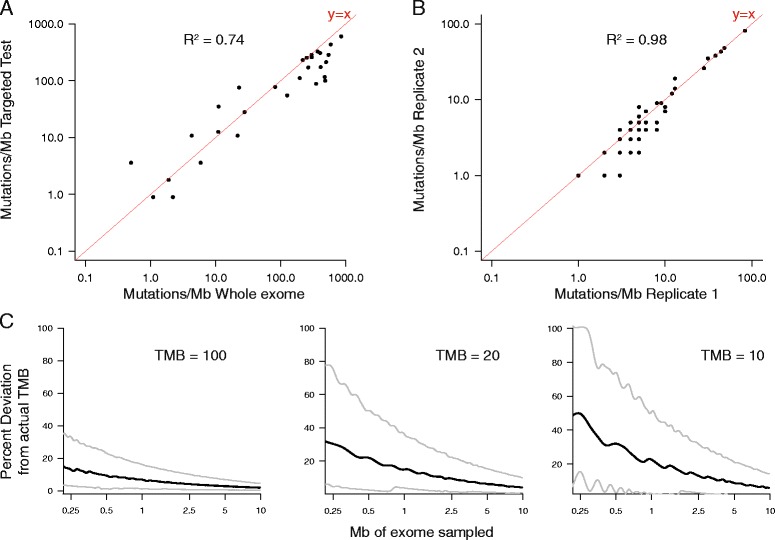
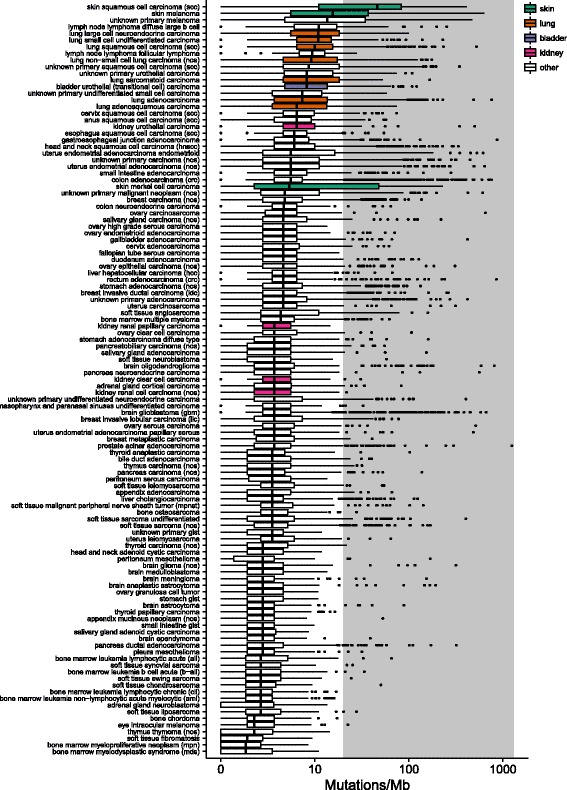
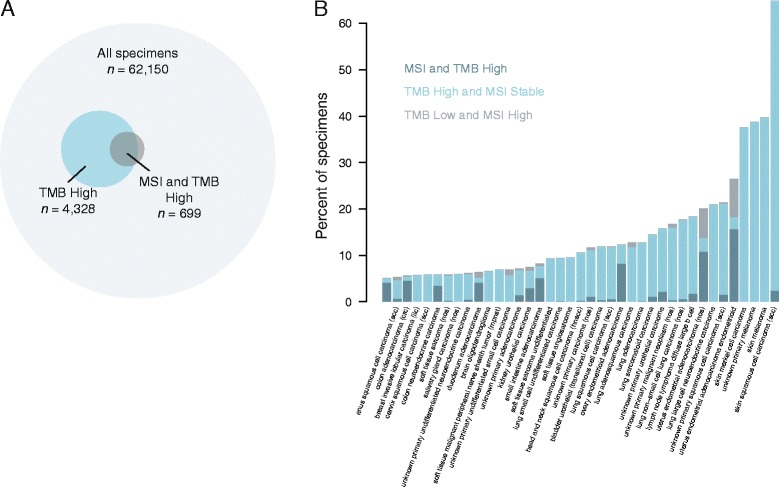
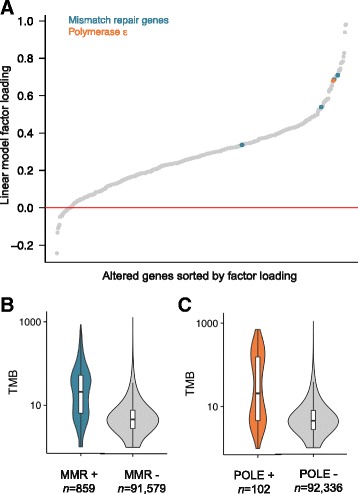
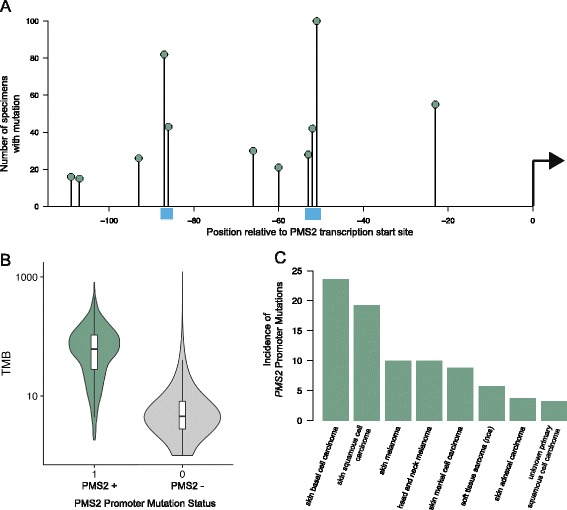
BACKGROUND: High tumor mutational burden (TMB) is an emerging biomarker of sensitivity to immune checkpoint inhibitors and has been shown to be more significantly associated with response to PD-1 and PD-L1 blockade immunotherapy than PD-1 or PD-L1 expression, as measured by immunohistochemistry (IHC). The distribution of TMB and the subset of patients with high TMB has not been well characterized in the majority of cancer types. METHODS: In this study, we compare TMB measured by a targeted comprehensive genomic profiling (CGP) assay to TMB measured by exome sequencing and simulate the expected variance in TMB when sequencing less than the whole exome. We then describe the distribution of TMB across a diverse cohort of 100,000 cancer cases and test for association between somatic alterations and TMB in over 100 tumor types. RESULTS: We demonstrate that measurements of TMB from comprehensive genomic profiling are strongly reflective of measurements from whole exome sequencing and model that below 0.5 Mb the variance in measurement increases significantly. We find that a subset of patients exhibits high TMB across almost all types of cancer, including many rare tumor types, and characterize the relationship between high TMB and microsatellite instability status. We find that TMB increases significantly with age, showing a 2.4-fold difference between age 10 and age 90 years. Finally, we investigate the molecular basis of TMB and identify genes and mutations associated with TMB level. We identify a cluster of somatic mutations in the promoter of the gene PMS2, which occur in 10% of skin cancers and are highly associated with increased TMB. CONCLUSIONS: These results show that a CGP assay targeting ~1.1 Mb of coding genome can accurately assess TMB compared with sequencing the whole exome. Using this method, we find that many disease types have a substantial portion of patients with high TMB who might benefit from immunotherapy. Finally, we identify novel, recurrent promoter mutations in PMS2, which may be another example of regulatory mutations contributing to tumorigenesis.
Overview
The claims and statistics of this paper haven’t been checked yet.
Free: it reads the open-access text and checks the first 5 claims that cite a source we can check. Create a free account to check every claim.
Integrity signals
Registry
Cites
Statistics
Figures
Verification
Claims the paper makes
The claims and statistics of this paper haven’t been checked yet.
Free: it reads the open-access text and checks the first 5 claims that cite a source we can check. Create a free account to check every claim.
Claims other papers make about this one
Each is checked against this paper’s own text: does it say what the citing paper says it does?
The source backs part of the claim, not all of it — or backs it for a different population, condition or comparison.
In the citing paper
“This is at least in part due to activation of the nuclear factor κB (NF-κB) pathway driven by p53 loss, as well as increased tolerance of a higher mutational burden that may ostensibly result in enhanced immunogenicity due to increased neoantigen load143, 144, 145, 146.”
From Co-occurring genomic alterations in non-small-cell lung cancer biology and therapy (2019) · cites this paper as [145]
Experimental — accuracy not yet measuredThe source backs part of the claim, not all of it — or backs it for a different population, condition or comparison.
In the citing paper
“Childhood tumors are considered immunologically ‘cold tumors’ with few infiltrating immune cells and low neoantigen burden precluding robust response to immune checkpoint therapies 39,40.”
From A Phase I/II Trial of Nivolumab plus Ipilimumab in Children and Young Adults with Relapsed/Refractory Solid Tumors: A Children's Oncology Group Study ADVL1412 (2022) · cites this paper as [40]
Experimental — accuracy not yet measuredThe source backs part of the claim, not all of it — or backs it for a different population, condition or comparison.
In the citing paper
“Second, distinct subsets of CRC are characterized by chromosomal instability (CIN) or microsatellite instability (MSI) and are among cancers that exhibit a moderately high tumor mutation burden (TMB) suggesting an extensive degree of genetic heterogeneity [28].”
From Anti-tumor efficacy of a potent and selective non-covalent KRASG12D inhibitor (2022) · cites this paper as [28]
Experimental — accuracy not yet measuredIn the citing paper
“TP53 co-mutations are associated with an inflamed tumor immune microenvironment and increased tumor cell PD-L1 expression in KRAS-mutant NSCLC and GEMMs.”
From Co-occurring genomic alterations in non-small-cell lung cancer biology and therapy (2019) · cites this paper as [145]
In the citing paper
“TMB measured by comprehensive genomic profiling is comparable to measurements by whole exome sequencing and is typically higher in smoking associated lung cancer due to tobacco carcinogenesis”
From Diverse EGFR Exon 20 Insertions and Co-Occurring Molecular Alterations Identified by Comprehensive Genomic Profiling of NSCLC (2018) · cites this paper as [14]
Self-check
Percentages, sums and reported differences re-computed from the paper’s own numbers.
The self-check needs the paper’s full text.
Citations
Cites
Fast and accurate short read alignment with Burrows-Wheeler transform
Li, H., & Durbin, R. (2009) · Bioinformatics · doi:10.1093/bioinformatics/btp324 · Cited by 58,607
PD-1 and PD-L1 Immune Checkpoint Blockade to Treat Breast Cancer
Hartkopf, A. D., Taran, F.-A., Wallwiener, M., Walter, C. B., Krämer, B., Grischke, E.-M., & Brucker, S. Y. (2016) · Breast Care · doi:10.1159/000453569 · Cited by 30,845
The Genome Analysis Toolkit: A MapReduce framework for analyzing next-generation DNA sequencing data
McKenna, A., Hanna, M., Banks, E., Sivachenko, A., Cibulskis, K., Kernytsky, A., Garimella, K., Altshuler, D., Gabriel, S., Daly, M., et al. (2010) · Genome Research · doi:10.1101/gr.107524.110 · Cited by 27,895
The blockade of immune checkpoints in cancer immunotherapy
Pardoll, D. M. (2012) · Nature Reviews Cancer · doi:10.1038/nrc3239 · Cited by 13,838 · cited 1×
“These agents modulate the pathways that control when and where immune responses are mounted, increasing antitumor activity through immune checkpoint blockade [7].”
BackgroundSafety, activity, and immune correlates of anti–PD-1 antibody in cancer
Topalian, S. L., Hodi, F. S., Brahmer, J. R., Gettinger, S. N., Smith, D. C., McDermott, D. F., Powderly, J. D., Carvajal, R. D., Sosman, J. A., Atkins, M. B., et al. (2012) · New England Journal of Medicine · doi:10.1056/nejmoa1200690 · Cited by 12,628 · cited 1×
“Inhibitors of cytotoxic T lymphocyte-associated antigen 4 (CTLA-4) [8, 9] and of programmed cell death protein 1 (PD-1) receptor [10] were the first drugs of this type, which promote T-cell activation [2].”
BackgroundStatistical significance for genomewide studies
Storey, J. D., & Tibshirani, R. (2003) · Proceedings of the National Academy of Sciences · doi:10.1073/pnas.1530509100 · Cited by 9,692 · cited 2×
“For both tests, we corrected for multiple testing using the false discovery rate (FDR) method [66].”
MethodSignatures of mutational processes in human cancer
Initiative, A. P. C. G., Alexandrov, L. B., ICGC Breast Cancer Consortium, ICGC MMML-Seq Consortium, PedBrain, I., Nik-Zainal, S., Wedge, D. C., Aparicio, S. A. J. R., Behjati, S., Biankin, A. V., et al. (2013) · Nature · doi:10.1038/nature12477 · Cited by 9,660 · cited 5×
“Mutations in a number of other genes have also been linked to increased TMB [28, 51], but their function is less well understood.”
BackgroundResultInfluentialAnalysis of protein-coding genetic variation in 60,706 humans
Exome Aggregation Consortium, Lek, M., Karczewski, K. J., Minikel, E. V., Samocha, K. E., Banks, E., Fennell, T., O’Donnell-Luria, A. H., Ware, J. S., Hill, A. J., et al. (2016) · Nature · doi:10.1038/nature19057 · Cited by 9,587 · cited 1×
“Germline alterations occurring with two or more counts in the ExAC database were not counted [65].”
BackgroundPD-1 Blockade in Tumors with Mismatch-Repair Deficiency
Le, D. T., Uram, J. N., Wang, H., Bartlett, B. R., Kemberling, H., Eyring, A. D., Skora, A. D., Luber, B. S., Azad, N. S., Laheru, D., et al. (2015) · New England Journal of Medicine · doi:10.1056/nejmoa1500596 · Cited by 9,377
The cancer genome atlas pan-cancer analysis project
The Cancer Genome Atlas Research Network, Weinstein, J. N., Collisson, E. A., Mills, G. B., Shaw, K. R. M., Ozenberger, B. A., Ellrott, K., Shmulevich, I., Sander, C., & Stuart, J. M. (2013) · Nature Genetics · doi:10.1038/ng.2764 · Cited by 9,092 · cited 3×
“across cancer types and found a wide distribution of TMB across ~20–30 cancer types [28, 51, 54].”
BackgroundMethod
Cited by
Items 201–300 of 1,001
Zhang, B., Tang, B., Gao, J., Li, J., Kong, L., & Qin, L. (2020) · Journal of Translational Medicine · doi:10.1186/s12967-020-02492-9 · Cited by 161
“Clinical data demonstrated that patients with high TMB were more likely to benefit from immunocheckpoint inhibitor therapy [17, 18], which suggesting that TMB should be an appropriate biomarker for assessing the effect of immune treatment.”
BackgroundCao, D., Xu, H., Xu, X., Guo, T., & Ge, W. (2019) · OncoImmunology · doi:10.1080/2162402x.2019.1629258 · Cited by 155
“Nine studies evaluated the correlation between different TMB detection methods.(9,11,12,15,18,22,24,27,39) As shown in Supplemental Table 4, the correlation between WES and targeted NGS ranged from 0.”
BackgroundXiao, J., Li, W., Huang, Y. Y., Huang, M., Li, S., Zhai, X., Zhao, J., Gao, C., Xie, W., Qin, H., et al. (2021) · BMC Cancer · doi:10.1186/s12885-021-07942-1 · Cited by 145
“Since POLE-mutated tumors tended to have higher TMB levels than their wild-type counterparts [22], they were removed from their original subgroups and analyzed separately.”
Lawlor, R. T., Mattiolo, P., Mafficini, A., Hong, S., Piredda, M. L., Taormina, S. V., Malleo, G., Marchegiani, G., Pea, A., Salvia, R., et al. (2021) · Cancers · doi:10.3390/cancers13133119 · Cited by 149
“It represents an index indicating the number of mutations per megabase (muts/Mb) harbored by tumor cells in a given neoplasm [3].”
BackgroundInfluentialSingle-Cell Transcriptomics: Current Methods and Challenges in Data Acquisition and Analysis
Adil, A., Kumar, V., Jan, A. T., & Asger, M. (2021) · Frontiers in Neuroscience · doi:10.3389/fnins.2021.591122 · Cited by 132
Epigenetics of malignant melanoma
Moran, B., Silva, R., Perry, A. S., & Gallagher, W. M. (2017) · Seminars in Cancer Biology · doi:10.1016/j.semcancer.2017.10.006 · Cited by 142
Cancer-mutation network and the number and specificity of driver mutations
Iranzo, J., Martincorena, I., & Koonin, E. V. (2018) · Proceedings of the National Academy of Sciences · doi:10.1073/pnas.1803155115 · Cited by 155
“Nonetheless, the detection of significant modules for bladder cancer and melanoma, which both have high mutational loads (3, 55), implies that a high mutation burden does not critically affect the performance of the module detection algorithm.”
BackgroundSpontaneous mutations in the single TTN gene represent high tumor mutation burden
Oh, J., Jang, S. J., Kim, J., Sohn, I., Lee, J., Cho, E. J., Chun, S., & Sung, C. O. (2020) · npj Genomic Medicine · doi:10.1038/s41525-019-0107-6 · Cited by 160
FGFR3 Destabilizes PD-L1 via NEDD4 to Control T-cell–Mediated Bladder Cancer Immune Surveillance
Jing, W., Wang, G., Cui, Z., Xiong, G., Jiang, X., Li, Y., Li, W., Han, B., Chen, S., & Shi, B. (2021) · Cancer Research · doi:10.1158/0008-5472.can-21-2362 · Cited by 144
“The tumormutation burden of each sample was calculated according to a published and widely used method described by Chalmers and colleagues (20).”
MethodFederico, L., McGrail, D. J., Bentebibel, S.-E., Haymaker, C., Ravelli, A., Forget, M., Karpinets, T. V., Jiang, P., Reuben, A., Negrao, M. V., et al. (2021) · Annals of Oncology · doi:10.1016/j.annonc.2021.09.021 · Cited by 148
Song, P., Li, W., Guo, L., Ying, J., Gao, S., & He, J. (2022) · Frontiers in Immunology · doi:10.3389/fimmu.2022.850745 · Cited by 154
“TMB was determined as the number of somatic indels and base substitutions per million bases in the coding region of the genome detected, and was calculated as previously described (46).”
MethodCancer Resistance to Immunotherapy: Comprehensive Insights with Future Perspectives
Said, S. S., & Ibrahim, W. N. (2023) · Pharmaceutics · doi:10.3390/pharmaceutics15041143 · Cited by 146
ALKFusions in a Wide Variety of Tumor Types Respond to Anti-ALK Targeted Therapy
Ross, J. S., Ali, S. M., Fasan, O. O., Block, J. G., Pal, S. K., Elvin, J. A., Schrock, A. B., Suh, J. H., Nozad, S., Kim, S., et al. (2017) · The Oncologist · doi:10.1634/theoncologist.2016-0488 · Cited by 143
“org), or those predicted by a somatic-germline zygosity algorithm to be germline in the specimen being assessed [32].”
BackgroundSelf-citationNussinov, R., Jang, H., Tsai, C.-J., & Cheng, F. (2019) · PLOS Computational Biology · doi:10.1371/journal.pcbi.1006658 · Cited by 130
Childhood Cancer: Occurrence, Treatment and Risk of Second Primary Malignancies
Zahnreich, S., & Schmidberger, H. (2021) · Cancers · doi:10.3390/cancers13112607 · Cited by 160
Zou, Y., Zou, X., Zheng, S., Tang, H., Zhang, L., Liu, P., & Xie, X. (2020) · Therapeutic Advances in Medical Oncology · doi:10.1177/1758835920940928 · Cited by 149
Clinical utility of custom-designed NGS panel testing in pediatric tumors
Surrey, L. F., MacFarland, S. P., Chang, F., Cao, K., Rathi, K. S., Akgumus, G. T., Gallo, D., Lin, F., Gleason, A., Raman, P., et al. (2019) · Genome Medicine · doi:10.1186/s13073-019-0644-8 · Cited by 133
Tumor mutational and indel burden: a systematic pan-cancer evaluation as prognostic biomarkers
Wu, H., Wang, Z., Zhao, Q., Chen, D., He, M.-M., Yang, L.-P., Wang, Y., Jin, Y., Ren, C., Luo, H., et al. (2019) · Annals of Translational Medicine · doi:10.21037/atm.2019.10.116 · Cited by 142
“We used 38 Mb as the estimate of the exome size (18).”
MethodMpakali, A., & Stratikos, E. (2021) · Cancers · doi:10.3390/cancers13010134 · Cited by 138
Bomze, D., Hasan Ali, O., Bate, A., & Flatz, L. (2019) · JAMA Oncology · doi:10.1001/jamaoncol.2019.3221 · Cited by 129
An integrative analysis of the age-associated multi-omic landscape across cancers
Chatsirisupachai, K., Lesluyes, T., Paraoan, L., Van Loo, P., & de Magalhães, J. P. (2021) · Nature Communications · doi:10.1038/s41467-021-22560-y · Cited by 122
Significance of Tumor Mutation Burden in Immune Infiltration and Prognosis in Cutaneous Melanoma
Kang, K., Xie, F., Mao, J., Bai, Y., & Wang, X. (2020) · Frontiers in Oncology · doi:10.3389/fonc.2020.573141 · Cited by 165
“4-fold difference between age 90 and age 10 years (63).”
BackgroundGarmezy, B., Gheeya, J., Lin, H. Y., Huang, Y., Kim, T., Jiang, X., Thein, K. Z., Pilie, P. G., Zeineddine, F., Wang, W., et al. (2022) · JCO Precision Oncology · doi:10.1200/po.21.00267 · Cited by 139
“METHODS A retrospective electronic database search of Clinical Laboratory Improvement Amendments–certified nextgeneration sequencing data was conducted to identify MDACC patient tumors with POLE mutations and cooccurring mutations, as this previously has been shown to be a surrogate for TMB.(17,18) Clinical data throu…”
MethodBergerot, P., Lamb, P., Wang, E., & Pal, S. K. (2019) · Molecular Cancer Therapeutics · doi:10.1158/1535-7163.mct-18-1399 · Cited by 124
“UC is characterized by a relatively high tumor mutation burden (TMB) compared with other solid tumors (34), and subgroup analyses of the CheckMate 275 and IMvigor 210 studies suggest that high TMB may predict response to checkpoint inhibitors (35, 36).”
ResultWang, P., Chen, Y., & Wang, C. (2021) · Frontiers in Oncology · doi:10.3389/fonc.2021.672677 · Cited by 156
“A higher number of DNA mutations are associated with higher number of candidate peptides, and results in an increased probability of successfully presented neoantigens (8).”
BackgroundGenomic landscape of pleural and peritoneal mesothelioma tumours
Hiltbrunner, S., Fleischmann, Z., Sokol, E. S., Zoche, M., Felley‐Bosco, E., & Fontecedro, A. C. (2022) · British Journal of Cancer · doi:10.1038/s41416-022-01979-0 · Cited by 137
Chae, Y. K., Davis, A. A., Raparia, K., Agte, S., Pan, A. P., Mohindra, N. A., Villaflor, V. M., & Giles, F. J. (2018) · Clinical Lung Cancer · doi:10.1016/j.cllc.2018.09.008 · Cited by 138
Neoantigens and genome instability: impact on immunogenomic phenotypes and immunotherapy response
Mardis, E. R. (2019) · Genome Medicine · doi:10.1186/s13073-019-0684-0 · Cited by 123
Wu, D., Li, Y., Xu, P., Fang, Q., Cao, F., Lin, H., Li, Y., Su, Y., Lu, L., Chen, L., et al. (2024) · Nature Communications · doi:10.1038/s41467-024-46444-z · Cited by 141
Self-citationPerspectives on Treatment of Metastatic Colorectal Cancer with Immune Checkpoint Inhibitor Therapy
Morse, M. A., Höchster, H. S., & Benson, A. B. (2019) · The Oncologist · doi:10.1634/theoncologist.2019-0176 · Cited by 140
Petrelli, F., Ghidini, M., Ghidini, A., & Tomasello, G. (2020) · JAMA Oncology · doi:10.1001/jamaoncol.2020.1046 · Cited by 135
Tumor mutational burden as a predictor of immunotherapy response in breast cancer
O’Meara, T. A., & Tolaney, S. M. (2021) · Oncotarget · doi:10.18632/oncotarget.27877 · Cited by 141
“Although the initial reports showing correlation between TMB and immunotherapy response were performed using whole-exome sequencing (WES), many studies have proven the feasibility of predicting TMB on lower-cost, targeted gene panels [16, 50].”
BackgroundMechanisms of resistance to immune checkpoint inhibitors in melanoma: What we have to overcome?
Ziogas, D. C., Theocharopoulos, C., Koutouratsas, T., Haanen, J. B. A. G., & Gogas, H. J. (2022) · Cancer Treatment Reviews · doi:10.1016/j.ctrv.2022.102499 · Cited by 130
Nassar, A. H., Adib, E., Abou Alaiwi, S., El Zarif, T., Groha, S., Akl, E. W., Nuzzo, P. V., Mouhieddine, T. H., Perea-Chamblee, T., Taraszka, K., et al. (2022) · Cancer Cell · doi:10.1016/j.ccell.2022.08.022 · Cited by 121
Immunotherapy for Triple-Negative Breast Cancer: Combination Strategies to Improve Outcome
Li, L., Zhang, F., Liu, Z., & Fan, Z. (2023) · Cancers · doi:10.3390/cancers15010321 · Cited by 135
PD-L1 testing by immunohistochemistry in immuno-oncology
Vranić, S., & Gatalica, Z. (2023) · Biomolecules and Biomedicine · doi:10.17305/bjbms.2022.7953 · Cited by 143
“Excluding cancers with mutations in MMR or polymerase genes, the highest TMB is observed in malignant melanoma, squamous cell carcinomas of the skin, and NSCLC [30, 31].”
BackgroundChae, Y. K., Davis, A. A., Agte, S., Pan, A. P., Simon, N. I., Iams, W. T., Cruz, M. R. D. S., Tamragouri, K., Rhee, K., Mohindra, N. A., et al. (2019) · The Oncologist · doi:10.1634/theoncologist.2018-0433 · Cited by 133
Predictive biomarkers for response to immune checkpoint inhibition
Shum, B., Larkin, J., & Turajlic, S. (2021) · Seminars in Cancer Biology · doi:10.1016/j.semcancer.2021.03.036 · Cited by 134
Yang, S. Y. C., Lien, S. C., Wang, B. X., Clouthier, D., Hanna, Y., Cirlan, I., Zhu, K., Bruce, J. P., Ghamrasni, S. E., Iafolla, M. A. J., et al. (2021) · Nature Communications · doi:10.1038/s41467-021-25432-7 · Cited by 126
Federico, A. D., Mosca, M., Pagani, R., Carloni, R., Frega, G., Giglio, A. D., Rizzo, A., Ricci, D., Tavolari, S., Marco, M. D., et al. (2022) · Cancers · doi:10.3390/cancers14102429 · Cited by 128
“The presence of a high tumor mutational burden (TMB) is correlated with a high tumor neoantigen load and is considered as a gross indicator of enhanced immunotherapy efficacy [59].”
BackgroundMicrosatellite instability in prostate cancer by PCR or next-generation sequencing
Hempelmann, J. A., Lockwood, C. M., Konnick, E. Q., Schweizer, M. T., Antonarakis, E. S., Lotan, T. L., Montgomery, B., Nelson, P. S., Klemfuss, N. M., Salipante, S. J., et al. (2018) · Journal for ImmunoTherapy of Cancer · doi:10.1186/s40425-018-0341-y · Cited by 123
Xu, F., Lin, H., He, P., He, L., Chen, J., Lin, L., & Chen, Y. (2020) · OncoImmunology · doi:10.1080/2162402x.2020.1731943 · Cited by 136
“The TMB score of each patient with LUSC was calculated as previously described.(34)”
MethodStenzinger, A., Endris, V., Budczies, J., Merkelbach‐Bruse, S., Kazdal, D. N., Dietmaier, W., Pfarr, N., Siebolts, U., Hummel, M., Herold, S., et al. (2020) · Journal of Thoracic Oncology · doi:10.1016/j.jtho.2020.01.023 · Cited by 119
“Here, the median exon coverage that could be analyzed was signi fi cantly higher ( p 0.01) in laboratory 1 using 80 ng as DNA input compared with 40 ng that was used for the other TSO500 approaches (laboratories 2, 7, 11, and Illumina).”
InfluentialCapper, D., Reifenberger, G., French, P. J., Schweizer, L., Weller, M., Touat, M., Niclou, S. P., Euskirchen, P., Haberler, C., Hegi, M. E., et al. (2023) · Neuro-Oncology · doi:10.1093/neuonc/noad008 · Cited by 131
Tumor Mutation Burden—From Hopes to Doubts
Addeo, A., Banna, G. L., & Weiss, G. J. (2019) · JAMA Oncology · doi:10.1001/jamaoncol.2019.0626 · Cited by 123
Saerens, M., Brusselaers, N., Rottey, S., Decruyenaere, A., Creytens, D., & Lapeire, L. (2021) · European Journal of Cancer · doi:10.1016/j.ejca.2021.04.034 · Cited by 131
Cai, H., Jing, C., Chang, X., Ding, D., Han, T., Yang, J., Lu, Z., Hu, X., Liu, Z., Wang, J., et al. (2019) · Journal of Translational Medicine · doi:10.1186/s12967-019-1941-0 · Cited by 119
Huang, R. S. P., Haberberger, J., Severson, E. A., Duncan, D. L., Hemmerich, A. C., Edgerly, C. I., Ferguson, N. L., Williams, E. A., Elvin, J. A., Vergilio, J., et al. (2020) · Modern Pathology · doi:10.1038/s41379-020-00664-y · Cited by 123
Self-citationSi, H., Kuziora, M., Quinn, K. J., Helman, E., Ye, J., Liu, F., Scheuring, U., Peters, S., Rizvi, N. A., Brohawn, P. Z., et al. (2021) · Clinical Cancer Research · doi:10.1158/1078-0432.ccr-20-3771 · Cited by 114
“In many of the previous studies, TMBwas determined using wholeexome sequencing (WES) or targeted panel-based sequencing from tumor tissue samples (18, 20).”
MethodResultIntegrated proteogenomic characterization of urothelial carcinoma of the bladder
Xu, N., Yao, Z., Shang, G., Ye, D., Wang, H., Zhang, H., Qu, Y., Xu, F., Wang, Y., Qin, Z., et al. (2022) · Journal of Hematology & Oncology · doi:10.1186/s13045-022-01291-7 · Cited by 109
“Synonymous alterations were also counted [78].”
The gut microbiome and response to immune checkpoint inhibitors: preclinical and clinical strategies
Gong, J., Chehrazi‐Raffle, A., Placencio‐Hickok, V., Guan, M., Hendifar, A., & Salgia, R. (2019) · Clinical and Translational Medicine · doi:10.1186/s40169-019-0225-x · Cited by 113
“Tumors harboring mutations in DNA mismatch repair genes resulting in microsatellite instability (MSI) or DNA polymerases (POLE) represent other phenotypes with high mutational load that can predict response to checkpoint blockade [4].”
BackgroundVokes, N. I., Liu, D., Ricciuti, B., Jimenez-Aguilar, E., Rizvi, H., Dietlein, F., He, M. X., Margolis, C. A., Elmarakeby, H. A., Girshman, J., et al. (2019) · JCO Precision Oncology · doi:10.1200/po.19.00171 · Cited by 114
Osipov, A., Lim, S. J., Popović, A., Azad, N. S., Laheru, D. A., Zheng, L., Jaffee, E. M., Wang, H., & Yarchoan, M. M. (2020) · Clinical Cancer Research · doi:10.1158/1078-0432.ccr-20-0458 · Cited by 125
“Strengths of our investigation included the comprehensive nature of our analysis including trials, the use of only published toxicity and response data reported by providers on closely monitored clinical trials, and the use of TMB data from a single validated assay representing a large volume of clinical data points (…”
MethodChida, K., Kawazoe, A., Kawazu, M., Suzuki, T., Nakamura, Y., Nakatsura, T., Kuwata, T., Ueno, T., Kuboki, Y., Kotani, D., et al. (2021) · Clinical Cancer Research · doi:10.1158/1078-0432.ccr-21-0401 · Cited by 110
“Moreover, previous reports demonstrated almost all MSI-H tumors show a highmutation load regardless of primary cancer sites (20, 21), whereas some reports about patients with various cancer types demonstrated that a few MSI-H patients did not show TMBH (22, 23).”
Alterations in DNA Damage Repair Genes in Primary Liver Cancer
Lin, J., Shi, J., Guo, H., Yang, X., Jiang, Y., Long, J., Bai, Y., Wang, D., Yang, X., Wan, X., et al. (2019) · Clinical Cancer Research · doi:10.1158/1078-0432.ccr-19-0127 · Cited by 117
“TMB was estimated following the methods of Chalmers and colleagues (20).”
MethodMHC-I genotype and tumor mutational burden predict response to immunotherapy
Goodman, A. M., Castro, A., Pyke, R. M., Okamura, R., Kato, S., Riviere, P., Frampton, G., Sokol, E., Zhang, X., Ball, E. D., et al. (2020) · Genome Medicine · doi:10.1186/s13073-020-00743-4 · Cited by 109
Self-citationZhang, J., Zhou, N., Lin, A., Luo, P., Chen, X., Deng, H., Kang, S., Guo, L., Zhu, W., & Zhang, J. (2020) · Cancer Immunology Immunotherapy · doi:10.1007/s00262-020-02668-8 · Cited by 135
“In addition, we used 38 Mb as the estimate of the exome size [23].”
MethodHitting the Target: How T Cells Detect and Eliminate Tumors
Zamora, A. E., Crawford, J. C., & Thomas, P. G. (2018) · The Journal of Immunology · doi:10.4049/jimmunol.1701413 · Cited by 124
“8 to over 47 coding mutations per megabase (estimated median), with some tumor mutation burdens projected at over 1200 per megabase (29).”
BackgroundGenetic and epigenetic determinants of diffuse large B-cell lymphoma
Bakhshi, T. J., & Georgel, P. T. (2020) · Blood Cancer Journal · doi:10.1038/s41408-020-00389-w · Cited by 121
Suwala, A. K., Stichel, D., Schrimpf, D., Kloor, M., Wefers, A. K., Reinhardt, A., Maas, S. L. N., Kratz, C. P., Schweizer, L., Hasselblatt, M., et al. (2020) · Acta Neuropathologica · doi:10.1007/s00401-020-02243-6 · Cited by 113
Self-citationTang, B., Zhu, J., Zhao, Z., Lu, C., Liu, S., Fang, S., Zheng, L., Zhang, N., Chen, M., Xu, M., et al. (2021) · Journal of Advanced Research · doi:10.1016/j.jare.2021.01.018 · Cited by 117
“TMB is interpreted as the total number of nonsynonymous mutations occurring in each coding region in the tumor genome [13].”
BackgroundKok, V. C. (2020) · Frontiers in Oncology · doi:10.3389/fonc.2020.00268 · Cited by 113
Huyghe, N. D., Baldin, P., & den Eynde, M. V. (2019) · Gastroenterology report · doi:10.1093/gastro/goz061 · Cited by 117
“In CRC, 12.8% of tumours simultaneously present TMB-high, dMMR-MSI-H, and PD-L1 expression [50].”
BackgroundInfluentialDeep learning-based cancer survival prognosis from RNA-seq data: approaches and evaluations
Huang, Z., Johnson, T. S., Han, Z., Helm, B., Cao, S., Zhang, C., Salama, P., Rizkalla, M., Yu, C. Y., Cheng, J., et al. (2020) · BMC Medical Genomics · doi:10.1186/s12920-020-0686-1 · Cited by 97
Cao, R., Yuan, L., Ma, B., Wang, G., Qiu, W., & Tian, Y. (2019) · Cancer Immunology Immunotherapy · doi:10.1007/s00262-020-02649-x · Cited by 121
Comprehensive Genomic Profiling of Upper-tract and Bladder Urothelial Carcinoma
Necchi, A., Madison, R. W., Pal, S. K., Ross, J. S., Agarwal, N., Sonpavde, G., Joshi, M., Yin, M., Miller, V. A., Grivas, P. D., et al. (2020) · European Urology Focus · doi:10.1016/j.euf.2020.08.001 · Cited by 112
Self-citationMurayama, T., Nakayama, J., Jiang, X., Miyata, K., Morris, A. D., Cai, K. Q., Prasad, R. M., Ma, X., Efimov, A., Belani, N., et al. (2024) · Cancer Discovery · doi:10.1158/2159-8290.cd-23-0486 · Cited by 124
“16–18 ).”
Aggarwal, R., Starzinski, S., de Kouchkovsky, I., Koshkin, V., Bose, R., Chou, J., Desai, A., Kwon, D., Kaushal, S., Trihy, L., et al. (2023) · The Lancet Oncology · doi:10.1016/s1470-2045(23)00451-5 · Cited by 104
Genetic and genomic basis of the mismatch repair system involved in Lynch syndrome
Tamura, K., Kaneda, M., Futagawa, M., Takeshita, M., Kim, S., Nakama, M., Kawashita, N., & Tatsumi‐Miyajima, J. (2019) · International Journal of Clinical Oncology · doi:10.1007/s10147-019-01494-y · Cited by 118
Friedman, C. F., Hainsworth, J. D., Kurzrock, R., Spigel, D. R., Burris, H. A., Sweeney, C. J., Meric‐Bernstam, F., Wang, Y., Levy, J., Grindheim, J. M., et al. (2021) · Cancer Discovery · doi:10.1158/2159-8290.cd-21-0450 · Cited by 112
“Prior studies have indicated that the FoundationOne comprehensive genomic profiling assay provides an accurate assessment of whole-exome TMB (5).”
Predicting tumour mutational burden from histopathological images using multiscale deep learning
Jain, M. S., & Massoud, T. F. (2020) · Nature Machine Intelligence · doi:10.1038/s42256-020-0190-5 · Cited by 103
“However, major hurdles for the use of panel sequencing for TMB prediction include inadequate sampling due to the small fraction of the exome sequenced, and the targeting of genes that are recurrently mutated in cancer, which introduces bias into the normalized TMB estimate 10 .”
BackgroundMethodInfluentialAgarwal, N., Pal, S. K., Hahn, A. W., Nussenzveig, R. H., Pond, G. R., Gupta, S. V., Wang, J., Bilen, M. A., Naik, G., Ghatalia, P., et al. (2018) · Cancer · doi:10.1002/cncr.31314 · Cited by 112
“UC has one of the highest tumor mutation burdens across all malignancies, and many genes are thought to contribute to tumor progression, including tumor protein p53 (TP53), retinoblastoma transcriptional corepressor 1 (RB1), and phosphatidylinositol-4,5-bisphosphate 3-kinase catalytic subunit alpha (PIK3CA).(10) Despi…”
BackgroundHeeke, S., & Hofman, P. M. (2018) · Translational Lung Cancer Research · doi:10.21037/tlcr.2018.08.04 · Cited by 111
Ahadova, A., Seppälä, T. T., Engel, C., Gallon, R., Burn, J., Holinski‐Feder, E., Steinke‐Lange, V., Möslein, G., Nielsen, M., ten Broeke, S. W., et al. (2020) · International Journal of Cancer · doi:10.1002/ijc.33224 · Cited by 108
“As a consequence of MMR deficiency, mismatch mutations can accumulate resulting in hypermutated tumors with >10point mutations per megabase.(9) MMR”
BackgroundImmunotherapy in endometrial cancer: rationale, practice and perspectives
Cao, W., Ma, X., Fischer, J. V., Sun, C., Kong, B., & Zhang, Q. H. (2021) · Biomarker Research · doi:10.1186/s40364-021-00301-z · Cited by 112
“Abbreviations ICIs: Immune checkpoint inhibitors; ACT: Adoptive cell transfer; EC: Endometrial cancer; MetS: Metabolic syndrome; ICBs: Immune checkpoint blockades; RT: Radiotherapy; POLE: Polymerase-ε; MSI-H: Microsatellite instability hypermutated; MMR: Mismatch repair; MSS: Microsatellite stability; HGSOC: High-grad…”
BackgroundMethodInfluentialDeng, H., Zhao, Y., Cai, X., Chen, H., Cheng, B., Zhong, R., Li, F., Xiong, S., Li, J., Liu, J., et al. (2022) · Critical Reviews in Oncology/Hematology · doi:10.1016/j.critrevonc.2022.103582 · Cited by 110
Stratigos, A., Garbe, C., Dessinioti, C., Lebbé, C., Akkooi, A., Bataille, V. A., Bastholt, L., Dréno, B., Dummer, R., Fargnoli, M. C., et al. (2023) · European Journal of Cancer · doi:10.1016/j.ejca.2023.113251 · Cited by 124
Dewdney, B., Jenkins, M. R., Best, S. A., Freytag, S., Prasad, K., Holst, J., Endersby, R., & Johns, T. G. (2023) · Signal Transduction and Targeted Therapy · doi:10.1038/s41392-023-01637-8 · Cited by 123
“405 Although the most effective immunotherapies identi fi ed against cancer to date utilise the actions of T cells, brain cancers are inherently immunosuppressive and, as mentioned previously, have a low TMB. 299 The latter point is especially signi fi cant given the FDA approval of the PD-1 immune-checkpoint inhibitor,…”
BackgroundInfluentialGogas, H., Dréno, B., Larkin, J., Demidov, L., Stroyakovskiy, D., Eroglu, Z., Francesco Ferrucci, P., Pigozzo, J., Rutkowski, P., Mackiewicz, J., et al. (2021) · Annals of Oncology · doi:10.1016/j.annonc.2020.12.004 · Cited by 102
Truong, L.-H., & Pauklin, S. (2021) · Cancers · doi:10.3390/cancers13195028 · Cited by 102
Targeting the Immune Microenvironment in the Treatment of Head and Neck Squamous Cell Carcinoma
Wang, H.-C., Chan, L.-P., & Cho, S.-F. (2019) · Frontiers in Oncology · doi:10.3389/fonc.2019.01084 · Cited by 99
Xie, C., Duffy, A. G., Brar, G. S., Fioravanti, S., Mabry‐Hrones, D., Walker, M., Bonilla, C. M., Wood, B. J., Citrin, D. E., Ramirez, E. M. G., et al. (2020) · Clinical Cancer Research · doi:10.1158/1078-0432.ccr-19-3624 · Cited by 107
“Radiation therapy 0 (0) 0 (0) 8 (42) 1 (6)”
BackgroundImpact of high tumor mutational burden in solid tumors and challenges for biomarker application
McNamara, M. G., Jacobs, T., Lamarca, Á., Hubner, R. A., Valle, J. W., & Amir, E. (2020) · Cancer Treatment Reviews · doi:10.1016/j.ctrv.2020.102084 · Cited by 120
Phase 1/2 Trial of Pembrolizumab and Concurrent Chemoradiation Therapy for Limited-Stage SCLC
Welsh, J. W., Heymach, J. V., Guo, C., Menon, H., Klein, K., Cushman, T. R., Verma, V., Hess, K. R., Shroff, G., Tang, C., et al. (2020) · Journal of Thoracic Oncology · doi:10.1016/j.jtho.2020.08.022 · Cited by 101
Cyprian, F. S., Akhtar, S., Gatalica, Z., & Vranic, S. (2019) · Bosnian Journal of Basic Medical Sciences · doi:10.17305/bjbms.2019.4204 · Cited by 98
“High tumor mutational load (burden) [58,59] Melanoma NSCLC Bladder Merkel cell carcinoma Hepatocellular carcinoma Predominantly low”
BackgroundPooled ctDNA analysis of MONALEESA phase III advanced breast cancer trials
André, F., Su, F., Solovieff, N., Hortobágyi, G. N., Chia, S., Neven, P., Bardia, A., Tripathy, D., Lu, Y.-S., Lteif, A., et al. (2023) · Annals of Oncology · doi:10.1016/j.annonc.2023.08.011 · Cited by 122
Sokol, E. S., Feng, Y. X., Jin, D. X., Basudan, A., Lee, A. V., Atkinson, J. M., Chen, J., Stephens, P. J., Frampton, G. M., Gupta, P. B., et al. (2019) · Annals of Oncology · doi:10.1093/annonc/mdy497 · Cited by 93
Self-citationLuo, D., Chen, K., Li, J., Fang, Z., Pang, H., Yin, Y., Rong, X., & Guo, J. (2019) · Biomedicine & Pharmacotherapy · doi:10.1016/j.biopha.2019.109550 · Cited by 108
Chen, Y., Liu, Q., Chen, Z., Wang, Y., Yang, W., Hu, Y., Han, W., Zeng, H., Ma, H., Dai, J., et al. (2019) · Journal of Experimental & Clinical Cancer Research · doi:10.1186/s13046-019-1192-1 · Cited by 107
Zhuo, M., Guan, Y., Yang, X., Hong, L., Wang, Y., Li, Z., Chen, R., Abbas, H. A., Chang, L., Gong, Y., et al. (2020) · Clinical Cancer Research · doi:10.1158/1078-0432.ccr-19-0556 · Cited by 105
“One sample, MDA24, was tested for FoundationOne that covered 315 cancer genes (24).”
BackgroundUveal melanoma pathobiology: Metastasis to the liver
Bustamante, P., Piquet, L., Landreville, S., & Burnier, J. V. (2020) · Seminars in Cancer Biology · doi:10.1016/j.semcancer.2020.05.003 · Cited by 118
From Tissue-Agnostic to N-of-One Therapies: (R)Evolution of the Precision Paradigm
Adashek, J. J., Subbiah, V., & Kurzrock, R. (2020) · Trends in cancer · doi:10.1016/j.trecan.2020.08.009 · Cited by 103
The Role of Immune Checkpoint Inhibitors in Cancer Therapy
Basudan, A. (2022) · Clinics and Practice · doi:10.3390/clinpract13010003 · Cited by 110
“The number of mutations (muts) per megabase (Mb) in cancer cells is known as tumor mutational burden (TMB) [96].”
BackgroundDugage, M. R., Nassif, E. F., Italiano, A., & Bahleda, R. (2021) · Frontiers in Immunology · doi:10.3389/fimmu.2021.775761 · Cited by 106
“Immune Microenvironment of UPS Looking at tumor genome, UPS have amongst the highest TMB in sarcomas, with angiosarcomas (51, 225).”
BackgroundInfluentialDNA repair defects and implications for immunotherapy
Bever, K. M., & Le, D. T. (2018) · Journal of Clinical Investigation · doi:10.1172/jci122010 · Cited by 101
“5% of high-TMB tumors in a recent large-scale analysis (35).”
Qin, A., Johnson, A., Ross, J. S., Miller, V. A., Ali, S. M., Schrock, A. B., & Gadgeel, S. M. (2018) · Journal of Thoracic Oncology · doi:10.1016/j.jtho.2018.09.014 · Cited by 96
Self-citationHendriks, L. E. L., Rouleau, É., & Besse, B. (2018) · Translational Lung Cancer Research · doi:10.21037/tlcr.2018.09.22 · Cited by 104
“, prognostic scores such as LIPI and dNLR, TILs, T-effector/IFN-γ signature, general immune fitness, soluble inhibitors, tumor metabolism, microbiome), and as such it would be interesting to combine several parameters (16,52,66,68,72).”
BackgroundMethodInfluentialImmune checkpoint inhibitors to treat cutaneous malignancies
M.S, D. M. B., Do, M. H., Phillips, G. S., Postow, M. A., Akaike, T., Nghiem, P., & Lacouture, M. E. (2020) · Journal of the American Academy of Dermatology · doi:10.1016/j.jaad.2020.03.131 · Cited by 104
Molecular profile of BRCA-mutated biliary tract cancers
Spizzo, G., Puccini, A., Xiu, J., Goldberg, R. M., Grothey, A. F., Shields, A. F., Arora, S. P., Khushman, M. M., Salem, M. E., Battaglin, F., et al. (2020) · ESMO Open · doi:10.1136/esmoopen-2020-000682 · Cited by 99
“23 27 In line with these data, we observed that TMB was significantly higher in patients with BRCA Spizzo G, et al .”
Riviere, P. J., Goodman, A. M., Okamura, R., Barkauskas, D. A., Whitchurch, T. J., Lee, S., Khalid, N. K., Collier, R., Mareboina, M., Frampton, G. M., et al. (2020) · Molecular Cancer Therapeutics · doi:10.1158/1535-7163.mct-20-0161 · Cited by 109
“Prior work (6) has demonstrated that wholeexome TMB (defined as any base substitution or indel mutation in a coding region) can be estimated very accurately and reliably (R21⁄4 0.”
BackgroundMethodResultSelf-citation
Metadata
- Authors
- Chalmers, Z. R., Connelly, C. F., Fabrizio, D., Gay, L., Ali, S. M., Ennis, R., Schrock, A., Campbell, B., Shlien, A., Chmielecki, J., Huang, F., He, Y., Sun, J., Tabori, U., Kennedy, M., Lieber, D. S., Roels, S., White, J., Otto, G. A., Ross, J. S., Garraway, L., Miller, V. A., Stephens, P. J., & Frampton, G. M.
- Affiliations
- Foundation Medicine (United States) (US)
- Hospital for Sick Children (CA)
- Harvard University (US)
- Broad Institute (US)
- Corresponding author
- Frampton, Garrett M.
- ORCID
- Venue
- Genome Medicine
- Published
- 2017-04-19
- Volume
- 9
- Issue
- 1
- Pages
- 34-34
- ISSN
- 1756-994X (ISSN-L)
- PMC
- PMC5395719
- OpenAlex
- W2606495925
- Cited by
- 3,519
- References
- 78
- Citations by year
- 2026: 200 · 2025: 268 · 2024: 365 · 2023: 499 · 2022: 553 · 2021: 565 · 2020: 498 · 2019: 330 · 2018: 195 · 2017: 43
- FWCI
- 131.26
- Type
- journal article
- Language
- en
- Open access
- gold
- doi.org
- Licence
- cc-by
- creativecommons.org/licenses/by/4.0/ (tdm)
- creativecommons.org/licenses/by/4.0/ (vor)
- Locations
- Genome Medicine (publishedVersion, cc-by)
- PubMed Central (publishedVersion, cc-by)
- PubMed (publishedVersion)
- Digital Access to Scholarship at Harvard (DASH) (Harvard University) (submittedVersion, cc-by)
- DOAJ (DOAJ: Directory of Open Access Journals) (submittedVersion, cc-by-sa)
- Funders
- Prostate Cancer Foundation (Young Investigator Award)
- U.S. Department of Defense (Prostate Cancer Research Program)
- Topics
- Health Sciences › Medicine › Oncology › Cancer Immunotherapy and Biomarkers
- Life Sciences › Biochemistry, Genetics and Molecular Biology › Cancer Research › Cancer Genomics and Diagnostics
- Health Sciences › Medicine › Pathology and Forensic Medicine › Genetic factors in colorectal cancer
- Keywords
- tumor mutational burden, comprehensive genomic profiling, targeted sequencing, microsatellite instability, regulatory mutations, somatic mutations, immunotherapy biomarkers, immune checkpoint inhibitors, PD-1/PD-L1 blockade, tumor age, rare tumor, cancer genomics
- MeSH terms
- Mismatch Repair Endonuclease PMS2, Adolescent, Adult, Age Factors, Aged, Aged, 80 and over, Cell Transformation, Neoplastic, Child, DNA Mutational Analysis, DNA, Neoplasm, Humans, Middle Aged, Mutation, Neoplasms, Genome, Human, Young Adult, Exome
About these checks
Registry, retraction, Cites and statistics results are computed, not judged, with one exception: a printed reference that no index lists is read once by a model before it counts as a citation error. Claims are extracted by a model and kept only when their quote appears verbatim in the text; each cited source is then checked, with a model’s help, for whether it says what the claim relies on. Those verdicts can be wrong — read the claim’s quote and the cited source before relying on one.
Statistics and arithmetic are recomputed, not judged.
Confidence bands are shown only for fields calibrated on our annotated test set. None is calibrated yet, so no band is shown.
What counts as a claim ›How we measure confidence ›How we check this ›
Are you an author, or do you see a problem with this page? Request a review
Data sources
Bibliographic data: Semantic Scholar, OpenAlex, Crossref.
Contains information from the Semantic Scholar Academic Graph Datasets, made available under the ODC Attribution License (ODC-BY 1.0).
Semantic Scholar’s data is described in: Kinney, R., et al. (2023). The Semantic Scholar Open Data Platform. arXiv:2301.10140.
