

Analysis of 100,000 human cancer genomes reveals the landscape of tumor mutational burden
Open accessThe DOI matches its Crossref record; 78 of the 78 references it cites were found in a registry or an index.
Abstract
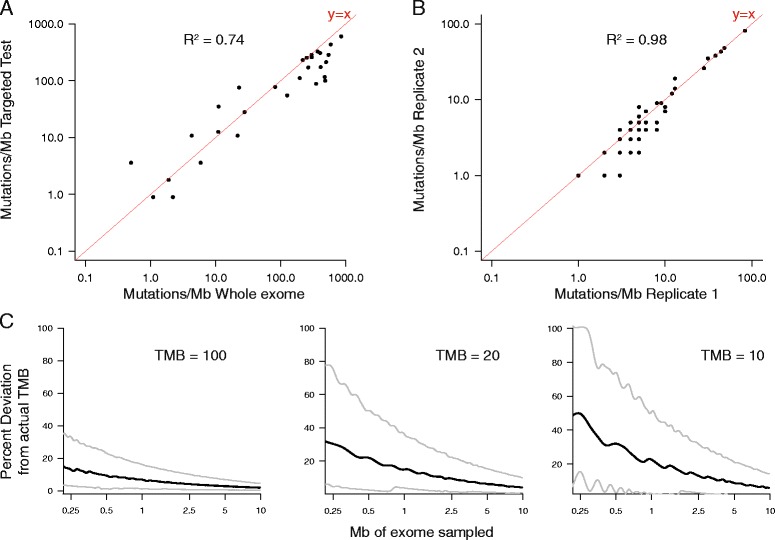
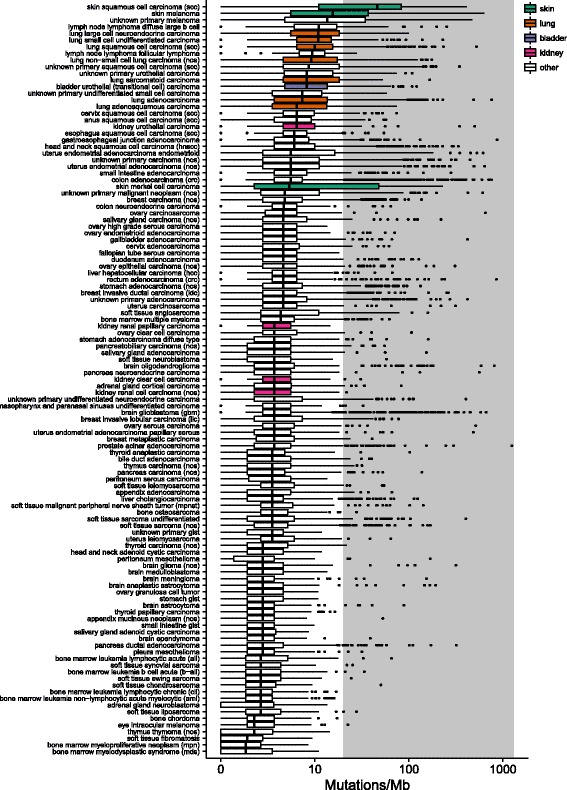
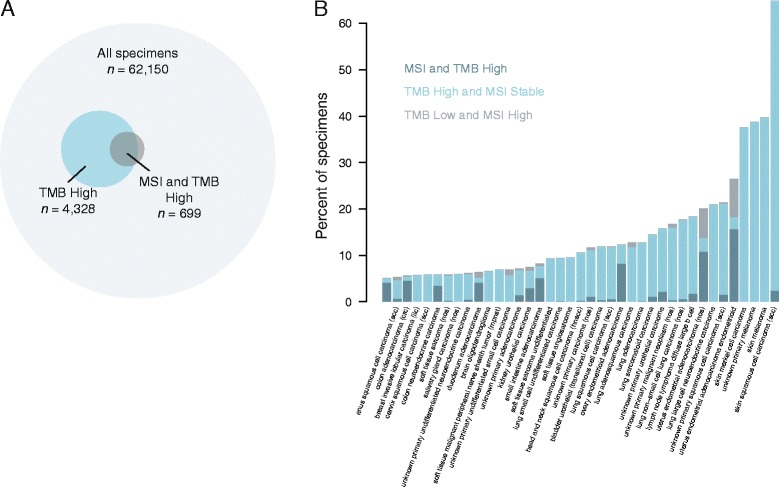
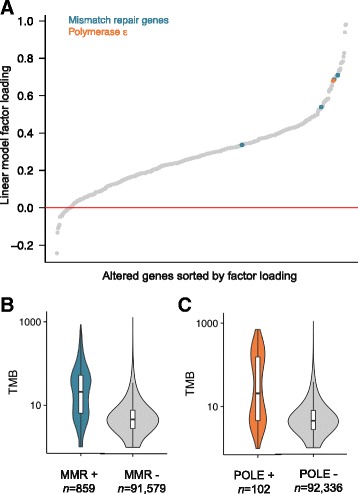
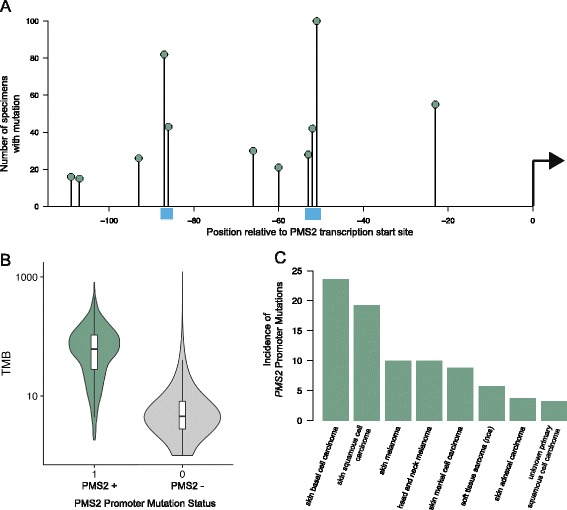
BACKGROUND: High tumor mutational burden (TMB) is an emerging biomarker of sensitivity to immune checkpoint inhibitors and has been shown to be more significantly associated with response to PD-1 and PD-L1 blockade immunotherapy than PD-1 or PD-L1 expression, as measured by immunohistochemistry (IHC). The distribution of TMB and the subset of patients with high TMB has not been well characterized in the majority of cancer types. METHODS: In this study, we compare TMB measured by a targeted comprehensive genomic profiling (CGP) assay to TMB measured by exome sequencing and simulate the expected variance in TMB when sequencing less than the whole exome. We then describe the distribution of TMB across a diverse cohort of 100,000 cancer cases and test for association between somatic alterations and TMB in over 100 tumor types. RESULTS: We demonstrate that measurements of TMB from comprehensive genomic profiling are strongly reflective of measurements from whole exome sequencing and model that below 0.5 Mb the variance in measurement increases significantly. We find that a subset of patients exhibits high TMB across almost all types of cancer, including many rare tumor types, and characterize the relationship between high TMB and microsatellite instability status. We find that TMB increases significantly with age, showing a 2.4-fold difference between age 10 and age 90 years. Finally, we investigate the molecular basis of TMB and identify genes and mutations associated with TMB level. We identify a cluster of somatic mutations in the promoter of the gene PMS2, which occur in 10% of skin cancers and are highly associated with increased TMB. CONCLUSIONS: These results show that a CGP assay targeting ~1.1 Mb of coding genome can accurately assess TMB compared with sequencing the whole exome. Using this method, we find that many disease types have a substantial portion of patients with high TMB who might benefit from immunotherapy. Finally, we identify novel, recurrent promoter mutations in PMS2, which may be another example of regulatory mutations contributing to tumorigenesis.
Overview
The claims and statistics of this paper haven’t been checked yet.
Free: it reads the open-access text and checks the first 5 claims that cite a source we can check. Create a free account to check every claim.
Integrity signals
Registry
Cites
Statistics
Figures
Verification
Claims the paper makes
The claims and statistics of this paper haven’t been checked yet.
Free: it reads the open-access text and checks the first 5 claims that cite a source we can check. Create a free account to check every claim.
Claims other papers make about this one
Each is checked against this paper’s own text: does it say what the citing paper says it does?
The source backs part of the claim, not all of it — or backs it for a different population, condition or comparison.
In the citing paper
“This is at least in part due to activation of the nuclear factor κB (NF-κB) pathway driven by p53 loss, as well as increased tolerance of a higher mutational burden that may ostensibly result in enhanced immunogenicity due to increased neoantigen load143, 144, 145, 146.”
From Co-occurring genomic alterations in non-small-cell lung cancer biology and therapy (2019) · cites this paper as [145]
Experimental — accuracy not yet measuredThe source backs part of the claim, not all of it — or backs it for a different population, condition or comparison.
In the citing paper
“Childhood tumors are considered immunologically ‘cold tumors’ with few infiltrating immune cells and low neoantigen burden precluding robust response to immune checkpoint therapies 39,40.”
From A Phase I/II Trial of Nivolumab plus Ipilimumab in Children and Young Adults with Relapsed/Refractory Solid Tumors: A Children's Oncology Group Study ADVL1412 (2022) · cites this paper as [40]
Experimental — accuracy not yet measuredThe source backs part of the claim, not all of it — or backs it for a different population, condition or comparison.
In the citing paper
“Second, distinct subsets of CRC are characterized by chromosomal instability (CIN) or microsatellite instability (MSI) and are among cancers that exhibit a moderately high tumor mutation burden (TMB) suggesting an extensive degree of genetic heterogeneity [28].”
From Anti-tumor efficacy of a potent and selective non-covalent KRASG12D inhibitor (2022) · cites this paper as [28]
Experimental — accuracy not yet measuredIn the citing paper
“TP53 co-mutations are associated with an inflamed tumor immune microenvironment and increased tumor cell PD-L1 expression in KRAS-mutant NSCLC and GEMMs.”
From Co-occurring genomic alterations in non-small-cell lung cancer biology and therapy (2019) · cites this paper as [145]
In the citing paper
“TMB measured by comprehensive genomic profiling is comparable to measurements by whole exome sequencing and is typically higher in smoking associated lung cancer due to tobacco carcinogenesis”
From Diverse EGFR Exon 20 Insertions and Co-Occurring Molecular Alterations Identified by Comprehensive Genomic Profiling of NSCLC (2018) · cites this paper as [14]
Self-check
Percentages, sums and reported differences re-computed from the paper’s own numbers.
The self-check needs the paper’s full text.
Citations
Cites
Fast and accurate short read alignment with Burrows-Wheeler transform
Li, H., & Durbin, R. (2009) · Bioinformatics · doi:10.1093/bioinformatics/btp324 · Cited by 58,607
PD-1 and PD-L1 Immune Checkpoint Blockade to Treat Breast Cancer
Hartkopf, A. D., Taran, F.-A., Wallwiener, M., Walter, C. B., Krämer, B., Grischke, E.-M., & Brucker, S. Y. (2016) · Breast Care · doi:10.1159/000453569 · Cited by 30,845
The Genome Analysis Toolkit: A MapReduce framework for analyzing next-generation DNA sequencing data
McKenna, A., Hanna, M., Banks, E., Sivachenko, A., Cibulskis, K., Kernytsky, A., Garimella, K., Altshuler, D., Gabriel, S., Daly, M., et al. (2010) · Genome Research · doi:10.1101/gr.107524.110 · Cited by 27,895
The blockade of immune checkpoints in cancer immunotherapy
Pardoll, D. M. (2012) · Nature Reviews Cancer · doi:10.1038/nrc3239 · Cited by 13,838 · cited 1×
“These agents modulate the pathways that control when and where immune responses are mounted, increasing antitumor activity through immune checkpoint blockade [7].”
BackgroundSafety, activity, and immune correlates of anti–PD-1 antibody in cancer
Topalian, S. L., Hodi, F. S., Brahmer, J. R., Gettinger, S. N., Smith, D. C., McDermott, D. F., Powderly, J. D., Carvajal, R. D., Sosman, J. A., Atkins, M. B., et al. (2012) · New England Journal of Medicine · doi:10.1056/nejmoa1200690 · Cited by 12,628 · cited 1×
“Inhibitors of cytotoxic T lymphocyte-associated antigen 4 (CTLA-4) [8, 9] and of programmed cell death protein 1 (PD-1) receptor [10] were the first drugs of this type, which promote T-cell activation [2].”
BackgroundStatistical significance for genomewide studies
Storey, J. D., & Tibshirani, R. (2003) · Proceedings of the National Academy of Sciences · doi:10.1073/pnas.1530509100 · Cited by 9,692 · cited 2×
“For both tests, we corrected for multiple testing using the false discovery rate (FDR) method [66].”
MethodSignatures of mutational processes in human cancer
Initiative, A. P. C. G., Alexandrov, L. B., ICGC Breast Cancer Consortium, ICGC MMML-Seq Consortium, PedBrain, I., Nik-Zainal, S., Wedge, D. C., Aparicio, S. A. J. R., Behjati, S., Biankin, A. V., et al. (2013) · Nature · doi:10.1038/nature12477 · Cited by 9,660 · cited 5×
“Mutations in a number of other genes have also been linked to increased TMB [28, 51], but their function is less well understood.”
BackgroundResultInfluentialAnalysis of protein-coding genetic variation in 60,706 humans
Exome Aggregation Consortium, Lek, M., Karczewski, K. J., Minikel, E. V., Samocha, K. E., Banks, E., Fennell, T., O’Donnell-Luria, A. H., Ware, J. S., Hill, A. J., et al. (2016) · Nature · doi:10.1038/nature19057 · Cited by 9,587 · cited 1×
“Germline alterations occurring with two or more counts in the ExAC database were not counted [65].”
BackgroundPD-1 Blockade in Tumors with Mismatch-Repair Deficiency
Le, D. T., Uram, J. N., Wang, H., Bartlett, B. R., Kemberling, H., Eyring, A. D., Skora, A. D., Luber, B. S., Azad, N. S., Laheru, D., et al. (2015) · New England Journal of Medicine · doi:10.1056/nejmoa1500596 · Cited by 9,377
The cancer genome atlas pan-cancer analysis project
The Cancer Genome Atlas Research Network, Weinstein, J. N., Collisson, E. A., Mills, G. B., Shaw, K. R. M., Ozenberger, B. A., Ellrott, K., Shmulevich, I., Sander, C., & Stuart, J. M. (2013) · Nature Genetics · doi:10.1038/ng.2764 · Cited by 9,092 · cited 3×
“across cancer types and found a wide distribution of TMB across ~20–30 cancer types [28, 51, 54].”
BackgroundMethod
Cited by
Items 701–800 of 1,001
RNA-based therapeutics to treat human fungal infections
Bruch, A., Kelani, A. A., & Blango, M. G. (2022) · Trends in Microbiology · doi:10.1016/j.tim.2021.09.007 · Cited by 39
Tumor Infiltrating Lymphocyte Expression of PD-1 Predicts Response to Anti-PD-1/PD-L1 Immunotherapy
Bevins, N., Okamura, R., Montesion, M., Adashek, J. J., Goodman, A. M., & Kurzrock, R. (2022) · Journal of Immunotherapy and Precision Oncology · doi:10.36401/jipo-22-9 · Cited by 45
“number of non-coding somatic mutations per megabase of genome sequenced.([25])”
BackgroundJiagge, E. M., Jin, D. X., Newberg, J. Y., Perea-Chamblee, T. E., Pekala, K. R., Fong, C. J., Waters, M., Ma, D., Dei‐Adomakoh, Y., Erb, G., et al. (2023) · Cancer Cell · doi:10.1016/j.ccell.2023.10.003 · Cited by 41
Self-citationPtashkin, R. N., Ewalt, M. D., Jayakumaran, G., Kiecka, I. J., Bowman, A. S., Yao, J., Casanova, J., Lin, Y.-T. D., Petrova‐Drus, K., Mohanty, A. S., et al. (2023) · Nature Communications · doi:10.1038/s41467-023-42585-9 · Cited by 48
Liquid Biopsy and Therapeutic Targets: Present and Future Issues in Thoracic Oncology
Hofman, P. M. (2017) · Cancers · doi:10.3390/cancers9110154 · Cited by 41
Abdallah, N. H., Nagasaka, M., Abdulfatah, E., Shi, D., Wozniak, A., & Sukari, A. W. (2018) · Lung Cancer Targets and Therapy · doi:10.2147/lctt.s173724 · Cited by 44
“Together, these factors may decrease the probability of response to single-agent check-point inhibitor use in SCLC. 34 Several clinical trials are currently ongoing, and results are awaited to elucidate whether there is a place for checkpoint inhibitors in SCLC treatment.”
InfluentialOlcina, M. M., Balanis, N. G., Kim, R. K., Aksoy, B. A., Kodysh, J., Thompson, M. J., Hammerbacher, J., Graeber, T. G., & Giaccia, A. J. (2018) · Cell Reports · doi:10.1016/j.celrep.2018.11.093 · Cited by 40
“An additional covariate of mutational load which is the sum of all non-silent mutations in a cancer sample was used (variable: corrected.for.load.wal.pval; Tables S2C, S2E, S2G, S2I, S2K, and S2M) to control for genomic instability and as a proxy for MSI (Chalmers et al., 2017).”
Fernandez, E. M., Eng, K., Beg, S., Beltran, H., Faltas, B. M., Mosquera, J. M., Nanus, D. M., Pisapia, D. J., Rao, R. A., Robinson, B. D., et al. (2019) · JCO Precision Oncology · doi:10.1200/po.18.00400 · Cited by 42
“In the current study, we compared two TMB thresholds: the Chalmers et al threshold and our Weill Cornell Medicine (WCM) threshold.(4) The Chalmers et al threshold is a static cutoff of 20 mutations/Mb applied pan-cancer; it was selected because it was developed using a large data set composed of targeted panel and WES…”
BackgroundMethodJin, R., Zhao, J., Xia, L., Li, Q., Li, W., Peng, L., & Xia, Y. (2020) · Therapeutic Advances in Medical Oncology · doi:10.1177/1758835920930333 · Cited by 42
Lyskjær, I., Lindsay, D., Tirabosco, R., Steele, C. D., Lombard, P., Strobl, A., Rocha, A. M., Davies, C., Ye, H., Bekers, E. M., et al. (2020) · The Journal of Pathology · doi:10.1002/path.5507 · Cited by 42
Johansson, J., Siarov, J., Kiffin, R., Mölne, J., Mattsson, J., Naredi, P. L. J., Bagge, R. O., Martner, A., & Lindnér, P. (2020) · OncoImmunology · doi:10.1080/2162402x.2020.1854519 · Cited by 42
“Tumors with a high mutational load are more likely to contain neoantigens that T cells may recognize, and the mutational burden is known to be much higher in cutaneous melanoma than in uveal melanoma.(20) In addition to a low mutational burden, the low immunogenicity and failed response to immunotherapy might have sev…”
BackgroundMangray, S., Kelly, D. R., Guellec, S. L., Fridman, E., Aggarwal, S., Shago, M., Matoso, A., Madison, R. W., Pramanik, S., Zhong, S., et al. (2018) · The American Journal of Surgical Pathology · doi:10.1097/pas.0000000000001098 · Cited by 39
Self-citationKumar, P. A., Graziano, S. L., Danziger, N. A., Pavlick, D. C., Severson, E. A., Ramkissoon, S. H., Huang, R. S. P., Decker, B. J., & Ross, J. S. (2022) · Cancer Medicine · doi:10.1002/cam4.4971 · Cited by 42
Self-citationFAT4 Mutation is Related to Tumor Mutation Burden and Favorable Prognosis in Gastric Cancer
Li, Q., Chu, Y., Yao, Y., & Song, Q. (2024) · Current Genomics · doi:10.2174/0113892029300694240612081006 · Cited by 41
Distinct genomic traits of acral and mucosal melanomas revealed by targeted mutational profiling
Zou, Z., Ou, Q., Ren, Y., Lv, Q., Qin, L., Zhao, L., Su, S., Wu, X., Bao, H., Wang, A., et al. (2020) · Pigment Cell & Melanoma Research · doi:10.1111/pcmr.12865 · Cited by 42
“Although prior studies have reported that mucosal melanoma tended to have lower TMB than cutaneous melanoma (Chalmers et al., 2017; Hayward et al., 2017; Johnson et al., 2017), our observation may be attributed to the small cohort size of the cutaneous subgroup of the current study and a majority…”
ResultThe recent progress and therapy in endometriosis-associated ovarian cancer
Su, K., Wang, P., Yu, M.-H., Chang, C.-M., & Chang, C. (2020) · Journal of the Chinese Medical Association · doi:10.1097/jcma.0000000000000262 · Cited by 43
“…used for assessing susceptibility to immunotherapy, EOCs or EAOC appeared to have an adequate response because of the moderate level of TMB. 64,65 Another novel approach is the use of antiangiogenic drug, bevacizumab, a monoclonal antibody targeting vascular endothelial growth factor (VEGF)-”
He, M., Abro, B., Kaushal, M., Chen, L., Chen, T. Y., Gondim, M. D. B. D., Yan, W., Neidich, J., Dehner, L. P., & Pfeifer, J. D. (2020) · Human Pathology · doi:10.1016/j.humpath.2020.04.007 · Cited by 42
Nanomedicine and Onco-Immunotherapy: From the Bench to Bedside to Biomarkers
Acebes-Fernández, V., Landeira‐Viñuela, A., Juanes‐Velasco, P., Hernández, Á., Otazo‐Pérez, A., Manzano-Román, R., Góngora, R., & Fuentes, M. (2020) · Nanomaterials · doi:10.3390/nano10071274 · Cited by 43
“STM is a quantifiable measure of the number of mutations in a tumour, which is an advantage over neoantigens, since not all mutations result in immunogenic neoantigens and it is difficult to determine which mutations may induce these neoantigens, thus new techniques and strategies are required to discover new TAAs as…”
BackgroundDiscovery through clinical sequencing in oncology
Donoghue, M. T. A., Schram, A. M., Hyman, D. M., & Taylor, B. S. (2020) · Nature Cancer · doi:10.1038/s43018-020-0100-0 · Cited by 42
Re, M. D., Cucchiara, F., Rofi, E., Fontanelli, L., Petrini, I., Gri, N., Pasquini, G., Rizzo, M., Gabelloni, M., Belluomini, L., et al. (2020) · Cancer Immunology Immunotherapy · doi:10.1007/s00262-020-02810-6 · Cited by 40
Benchmarking HLA genotyping and clarifying HLA impact on survival in tumor immunotherapy
Li, X., Zhou, C., Chen, K., Huang, B., Liu, Q., & Ye, H. (2021) · Molecular Oncology · doi:10.1002/1878-0261.12895 · Cited by 42
Kim, K. B., Soroceanu, L., de Semir, D., Millis, S. Z., Ross, J. S., Vosoughi, E., Dar, A. A., Nosrati, M., Desprez, P., Ice, R. J., et al. (2021) · Journal of Investigative Dermatology · doi:10.1016/j.jid.2021.01.024 · Cited by 39
Self-citationImmunosuppressive Cell Subsets and Factors in Myeloid Leukemias
Swatler, J., Turos-Korgul, L., Kozłowska, E., & Piwocka, K. (2021) · Cancers · doi:10.3390/cancers13061203 · Cited by 45
Gong, B., Li, D., Kusko, R. L., Novoradovskaya, N., Zhang, Y., Wang, S., Pabón-Peña, C., Zhang, Z., Lai, K., Cai, W., et al. (2021) · Genome biology · doi:10.1186/s13059-021-02315-0 · Cited by 42
“mutational burden (TMB), an emerging indicator for immune checkpoint inhibitors in certain tumor types [12, 13].”
BackgroundHan, S., Wang, P., Cai, H., Wan, J., Li, S., Lin, Z.-H., Yu, C., & Yan, C. (2021) · Aging · doi:10.18632/aging.203102 · Cited by 41
“We counted the TMB as the number of mutations/35 [35].”
MethodDai, J., Jiang, M., He, K., Wang, H., Chen, P., Guo, H., Zhao, W., Lu, H. J., He, Y., & Zhou, C. (2021) · Frontiers in Oncology · doi:10.3389/fonc.2021.708294 · Cited by 42
“Recently, higher TMB was reported frequently in tumors with altered double-strand break pathways of DDR and MMR deficiencies (41, 44, 45).”
BackgroundSelf-citationLTF Regulates the Immune Microenvironment of Prostate Cancer Through JAK/STAT3 Pathway
Zhao, Q., Cheng, Y., & Xiong, Y. (2021) · Frontiers in Oncology · doi:10.3389/fonc.2021.692117 · Cited by 43
“Analysis of Tumor Mutation Load in Somatic Mutation Samples It is reported that highly mutated tumors are more likely to carry new antigens, making them targets for activating immune cells (13).”
BackgroundPan-tumor landscape of fibroblast growth factor receptor 1-4 genomic alterations
Murugesan, K., Necchi, A., Burn, T. C., Gjoerup, O. V., Greenstein, R., Krook, M. A., López, J. A., Montesion, M., Nimeiri, H. S., Parikh, A. R., et al. (2022) · ESMO Open · doi:10.1016/j.esmoop.2022.100641 · Cited by 38
“In conclusion, we comprehensively surveyed the pan-tumor landscape of FGFR1-4 genomic alterations in this study and identified a number of co-occurring and mutually exclusive alterations in other genes, as well as associations with the genomic signature TMB.”
MethodInfluentialMETTL7B is a novel prognostic biomarker of lower-grade glioma based on pan-cancer analysis
Jiang, Z., Yin, W., Zhu, H., Tan, J., Guo, Y., Xin, Z., Zhou, Q., Cao, Y., Wu, Z., Kuang, Y., et al. (2021) · Cancer Cell International · doi:10.1186/s12935-021-02087-4 · Cited by 38
Immune landscape and immunotherapy for penile cancer
Tang, Y., Hu, X., Wu, K., & Li, X. (2022) · Frontiers in Immunology · doi:10.3389/fimmu.2022.1055235 · Cited by 40
“Therefore, patients with TMB-H and MSI-H are expected to benefit more from ICI therapy, which has been demonstrated in multiple tumors, such as urothelial cancer (24), colorectal cancer (55), non-small cell frontiersin.org lung cancer (NSCLC) (56), melanoma (57) and gastric cancer (58).”
BackgroundJie, C., Li, R., Cheng, Y., Wang, Z., Wu, Q., & Xie, C. (2023) · Frontiers in Immunology · doi:10.3389/fimmu.2023.1122352 · Cited by 40
“Mechanistically, increased TMB might boost the expression of tumor antigens and improve the efficacy of immunotherapy (71).”
BackgroundAging-related biomarker discovery in the era of immune checkpoint inhibitors for cancer patients
Al-Danakh, A., Safi, M., Jian, Y., Yang, L., Zhu, X., Chen, Q., Yang, K., Wang, S., Zhang, J., & Yang, D. (2024) · Frontiers in Immunology · doi:10.3389/fimmu.2024.1348189 · Cited by 39
Clinical Next-Generation Sequencing for Precision Oncology in Rare Cancers
Groisberg, R., Hong, D. S., Roszik, J., Jankú, F., Tsimberidou, A. M., Javle, M. M., Meric‐Bernstam, F., & Subbiah, V. (2018) · Molecular Cancer Therapeutics · doi:10.1158/1535-7163.mct-17-1107 · Cited by 40
“This did not significantly differ from published reports on tumor mutational burden.(12) The spectrum of tumor mutation burden in GENIE ranged from very low (<1 mutation per megabase) to 20 or more, with occasional outliers having hundreds of mutations (Figure 2).”
ResultAddressing the Adult Soft Tissue Sarcoma Microenvironment with Intratumoral Immunotherapy
Raj, S. K., Miller, L. D., & Triozzi, P. L. (2018) · Sarcoma · doi:10.1155/2018/9305294 · Cited by 40
“Differential gene expression was found in the Cancer Genome Atlas Research Network analysis of the coinhibitory ligand B7-H3 and the coinhibitor receptor TIM3, with expression highest in dedifferentiated liposarcoma, undifferentiated pleomorphic sarcoma, and myxofibrosarcoma [8].”
InfluentialMultiple Immune-Suppressive Mechanisms in Fibrolamellar Carcinoma
Kim, A. K., Gani, F., Layman, A. J., Besharati, S., Zhu, Q., Succaria, F., Engle, E. L., Bhaijee, F., Goggins, M. B., Llosa, N. J., et al. (2019) · Cancer Immunology Research · doi:10.1158/2326-6066.cir-18-0499 · Cited by 39
Jiang, D., Fyles, A., Nguyen, L. T., Neel, B. G., Sacher, A. G., Rottapel, R. K., Wang, B. X., Ohashi, P. S., & Sridhar, S. S. (2019) · Oncotarget · doi:10.18632/oncotarget.26893 · Cited by 40
“We now know that the tumor mutational load might correlate with ICI response [59–62], and unselected MBC typically displays lower numbers of somatic mutations, and less engagement with T cells [63].”
Complete and Prolonged Response to Immune Checkpoint Blockade in POLE-Mutated Colorectal Cancer
Silberman, R., Steiner, D. F., Lo, A. A., Gomez, A. J., Zehnder, J. L., Chu, G., & Suarez, C. J. (2019) · JCO Precision Oncology · doi:10.1200/po.18.00214 · Cited by 40
Clinical Applications of Next-Generation Sequencing in Precision Oncology
Karlovich, C., & Williams, P. M. (2019) · The Cancer Journal · doi:10.1097/ppo.0000000000000385 · Cited by 41
KRAS-Driven Lung Adenocarcinoma and B Cell Infiltration: Novel Insights for Immunotherapy
Rosamaria, P., Petriella, D., Lacalamita, R., Montrone, M., Catino, A., Pizzutilo, P., Antonietta, B. M., Zito, A. F., Bene, G. D., Zonno, A., et al. (2019) · Cancers · doi:10.3390/cancers11081145 · Cited by 42
“If our panel is considered as a surrogate of TMB, thus our result confirmed previous findings highlighting the lower mutational burden of LUAD with respect to squamous cell carcinoma [18,19].”
ResultA Pan-Cancer Approach to Predict Responsiveness to Immune Checkpoint Inhibitors by Machine Learning
Polano, M., Chierici, M., Bo, M. D., Gentilini, D., Cintio, F. D., Baboçi, L., Gibbs, D. L., Furlanello, C., & Toffoli, G. (2019) · Cancers · doi:10.3390/cancers11101562 · Cited by 39
Nie, W., Qian, J., Xu, M., Gu, K., Qian, F., Hu, M., Lü, J., Gan, L., Zhang, X., Cao, S., et al. (2020) · OncoImmunology · doi:10.1080/2162402x.2020.1731072 · Cited by 38
“The median TMB ranged widely across cancer types.(22) In addition, there is a lack of standardization for TMB calculation and different platforms may report different TMB scores.”
BackgroundPrimary CNS lymphoma commonly expresses immune response biomarkers
Ou, A. C., Sumrall, A. L., Phuphanich, S., Spetzler, D. B., Gatalica, Z., Xiu, J., Michelhaugh, S. K., Brenner, A. J., Pandey, M. K., Kesari, S., et al. (2020) · Neuro-Oncology Advances · doi:10.1093/noajnl/vdaa018 · Cited by 42
Muyas, F., Zapata, L., Guigó, R., & Ossowski, S. (2020) · Genome Medicine · doi:10.1186/s13073-020-00746-1 · Cited by 41
“Here, we excluded tissues previously shown to be affected by clonal expansion of mutated cells such as the esophagus-mucosa, sun-exposed skin [34, 37 – 40, 48 ], and LEMMs are indistinguishable from mutations in clonal expansions acquired after birth [37, 38, 40, 48], and the rate of LEMMs is…”
InfluentialWang, J., Li, R., He, Y., Yi, Y., Wu, H., & Liang, Z. (2020) · Modern Pathology · doi:10.1038/s41379-020-0612-2 · Cited by 42
Self-citationZheng, Q., Capell, B. C., Parekh, V., O'Day, C., Atillasoy, C., Bashir, H. M., Yeh, C. J., Shim, E., Prouty, S. M., Dentchev, T., et al. (2020) · Journal of Investigative Dermatology · doi:10.1016/j.jid.2020.05.116 · Cited by 39
Beisang, D. J., Smith, K. A., Yang, L., Benyumov, A. O., Gilbertsen, A. J., Herrera, J., Lock, E. F., Racila, E. V., Forster, C. L., Sandri, B. J., et al. (2020) · Scientific Reports · doi:10.1038/s41598-020-66630-5 · Cited by 38
Sadeghirad, H., Bazaz, S. R., Monkman, J. H., Warkiani, M. E., Rezaei, N., O'Byrne, K. J., & Kulasinghe, A. (2020) · Clinical & Translational Immunology · doi:10.1002/cti2.1215 · Cited by 40
“These inclusions for the TMB measurement have led to an improved assay sensitivity by increasing the number of qualifying variants into the calculation.(38) For this, there are currently two FDA-approved NGS panels for calculating TMB: the FoundationOne CDx and MSK-IMPACT (Memorial Sloan KetteringIntegrated Mutation P…”
BackgroundMethodFind the Flame: Predictive Biomarkers for Immunotherapy in Melanoma
Garutti, M., Bonin, S., Buriolla, S., Bertoli, E., Pizzichetta, M. A., Zalaudek, I., & Puglisi, F. (2021) · Cancers · doi:10.3390/cancers13081819 · Cited by 39
“Among NGS methods, two tests have recently received approval from the FDA: FoundationOne CDx [88] (Cambridge, USA) and MSK-IMPACT [89] (Memorial Sloan Kettering, USA).”
Beyond the Driver Mutation: Immunotherapies in Gastrointestinal Stromal Tumors
Dugage, M. R., Jones, R. L., Trent, J. C., Champiat, S., & Dumont, S. (2021) · Frontiers in Immunology · doi:10.3389/fimmu.2021.715727 · Cited by 40
“Despite an oncogenesis based on a single pathway alteration and a low tumor mutational burden (23) suggesting a poor immunogenicity, GIST commonly harbors a rich immune infiltrate, suggesting a recognition of tumor cells by the immune system.”
BackgroundGraf, R. P., Fisher, V. A., Mateo, J., Gjoerup, O. V., Madison, R. W., Raskina, K., Tukachinsky, H., Creeden, J., Cunningham, R., Huang, R. S. P., et al. (2021) · European Urology · doi:10.1016/j.eururo.2021.09.030 · Cited by 41
Self-citationSatgunaseelan, L., Porazinski, S. R., Strbenac, D., Istadi, A., Willet, C. E., Chew, T., Sadsad, R., Palme, C. E., Lee, J., Boyer, M. J., et al. (2021) · Frontiers in Oncology · doi:10.3389/fonc.2021.750852 · Cited by 42
Chan, D. L. H., Rodríguez-Freixinós, V., Doherty, M. K., Wasson, K., Iscoe, N. A., Raskin, W., Hallet, J. I., Myrehaug, S. D., Law, C. H. L., Thawer, A., et al. (2022) · European Journal of Cancer · doi:10.1016/j.ejca.2022.03.029 · Cited by 39
Delisle, M. E., Gyorki, D. E., Bonvalot, S., & Nessim, C. (2022) · Annals of Surgical Oncology · doi:10.1245/s10434-022-12517-w · Cited by 38
Zhang, Y., Xu, H., Jiang, L., Liu, Z., Lian, C., Ding, X., Wan, C., Liu, N., Wang, Y., Yu, Z., et al. (2022) · ACS Nano · doi:10.1021/acsnano.2c09708 · Cited by 37
Cheng, Y., Bu, D., Zhang, Q., Sun, R., Lyle, S. R., Zhao, G., Dong, L., Li, H., Zhao, Y. C., Yu, J., et al. (2022) · Journal of Advanced Research · doi:10.1016/j.jare.2022.10.019 · Cited by 39
“These results were consistent with previous studies, which indicated that, in addition to DNA mismatch repair genes, genetic alterations leading to defects in the DNA replication process also caused higher TMB scores [52].”
ResultMatsushima, S., Ajiro, M., Iida, K., Chamoto, K., Honjo, T., & Hagiwara, M. (2022) · Science Translational Medicine · doi:10.1126/scitranslmed.abn6056 · Cited by 42
Huang, R. S. P., Carbone, D. P., Li, G., Schrock, A. B., Graf, R. P., Zhang, L., Murugesan, K., Ross, J. S., Tolba, K. A., Sands, J. M., et al. (2023) · Journal for ImmunoTherapy of Cancer · doi:10.1136/jitc-2022-005801 · Cited by 39
Self-citationWeber, L. M., Hippen, A. A., Hickey, P. F., Berrett, K. C., Gertz, J., Doherty, J. A., Greene, C. S., & Hicks, S. C. (2021) · GigaScience · doi:10.1093/gigascience/giab062 · Cited by 37
Immune Checkpoint Inhibitors in pMMR/MSS Colorectal Cancer
Hajj, J. E., Reddy, S., Verma, N., Huang, E. H., & Kazmi, S. M. A. (2023) · Journal of Gastrointestinal Cancer · doi:10.1007/s12029-023-00927-2 · Cited by 40
“In colorectal cancer, microsatellite instability and TMB are highly correlated [24], and tumors with lower mutational burden express lower levels of neoantigens [25, 26].”
Dakal, T. C., George, N., Xu, C., Suravajhala, P., & Kumar, A. (2024) · Cancers · doi:10.3390/cancers16091626 · Cited by 46
Antigen reactivity defines tissue-resident memory and exhausted T cells in tumors
Burn, T. N., Schröder, J., Gandolfo, L. C., Osman, M., Wainwright, E. N., Lam, E. Y. N., McDonald, K. M., Evans, R., Li, S., Rawlinson, D., et al. (2025) · Nature Immunology · doi:10.1038/s41590-025-02347-9 · Cited by 48
“The association of high TMB with increased T EX cell frequency suggests that increased new tumor epitopes enable T EX cell development.”
InfluentialClark, D. P. (2017) · Cancer Cytopathology · doi:10.1002/cncy.21951 · Cited by 37
“Consequently, several assays have emerged to quantitate a tumor’s mutational burden.(33)”
BackgroundShin, S., Kim, Y. J., Lee, D., Cho, D., Ko, Y. H., Cho, J., Park, W., Park, D., Kim, S. J., & Kim, W. S. (2019) · Leukemia & lymphoma/Leukemia and lymphoma · doi:10.1080/10428194.2019.1573998 · Cited by 36
“previous report [18], our data showed that the average number of mutations per sample was significantly higher in DBLCLs (7.”
BackgroundResultZheng, B., Qu, Y., WANG, J., Shi, Y., & Yan, W. (2019) · Cancer Genomics & Proteomics · doi:10.21873/cgp.20127 · Cited by 40
Targeted mutation detection in breast cancer using MammaSeq™
Smith, N. G., Gyanchandani, R., Shah, O. S., Gurda, G. T., Lucas, P. C., Hartmaier, R. J., Brufsky, A., Puhalla, S., Bahreini, A., Kota, K. J., et al. (2019) · Breast Cancer Research · doi:10.1186/s13058-019-1102-7 · Cited by 37
Buetow, K. H., Meador, L. R., Menon, H., Lu, Y., Brill, J., Cui, H., Roe, D. J., DiCaudo, D. J., & Hastings, K. T. (2019) · The Journal of Immunology · doi:10.4049/jimmunol.1900476 · Cited by 40
Taylor, S. E., Chu, T., Elvin, J. A., Edwards, R. P., & Zorn, K. K. (2019) · Gynecologic Oncology · doi:10.1016/j.ygyno.2019.10.029 · Cited by 36
Massoth, L. R., Hung, Y. P., Dias-Santagata, D. C., Onozato, M. L., Shah, N., Severson, E. A., Duncan, D. L., Gillespie, B. J., Williams, N. F., Ross, J. S., et al. (2020) · JCO Precision Oncology · doi:10.1200/po.19.00288 · Cited by 36
Self-citationImmune Checkpoint Markers in Neuroendocrine Carcinoma of the Digestive System
Xing, J., Ying, H., Ji, L., Gao, Y., Sun, Z., Li, J., Bai, C., Cheng, Y., & Wu, H. (2020) · Frontiers in Oncology · doi:10.3389/fonc.2020.00132 · Cited by 37
Cancer Genomics in Precision Oncology: Applications, Challenges, and Prospects
Pereira, M. A., Kunrath‐Lima, M., Couto, P. G. P., Penna, M. G., Alvim, L. B., Nani, T. F., Freire, M. C. M., & Araujo, L. H. (2020) · Springer eBooks · doi:10.1007/978-981-15-1067-0_21 · Cited by 47
Patel, R. R., Ramkissoon, S. H., Ross, J. S., & Weintraub, L. (2020) · Pediatric Blood & Cancer · doi:10.1002/pbc.28338 · Cited by 38
Self-citationRoerden, M., Nelde, A., Heitmann, J. S., Klein, R., Rammensee, H., Bethge, W. A., & Walz, J. S. (2020) · Cancers · doi:10.3390/cancers12071835 · Cited by 38
Hu, Z., Xin, H., Luo, C., Jia, L., Zhou, Z., Zou, J., & Zhou, S. (2020) · Cancer Immunology Immunotherapy · doi:10.1007/s00262-020-02685-7 · Cited by 37
Identification and validation of an immune prognostic signature in colorectal cancer
Li, M., Wang, H., Li, W., Peng, Y., Xu, F., Shang, J., Dong, S., Bu, L., Wang, H., Wei, W., et al. (2020) · International Immunopharmacology · doi:10.1016/j.intimp.2020.106868 · Cited by 41
CBX3 Promotes Gastric Cancer Progression and Affects Factors Related to Immunotherapeutic Responses
Lin, H., Lian, J., Xia, L., Guan, G., & You, J. (2020) · Cancer Management and Research · doi:10.2147/cmar.s271807 · Cited by 38
“The TMB of each TCGA-STAD cohort patient was calculated according to the number of nonsynonymous somatic cell variations per megabase as previously described.(11) The tumor neoantigens were calculated by NetMHCpan,(12) and highaffinity peptides were defined as all possible 9–10mer mutant peptides with a rank score ≤0.”
MethodPenile cancer: potential target for immunotherapy?
Vanthoor, J., Vos, G., & Albersen, M. (2020) · World Journal of Urology · doi:10.1007/s00345-020-03510-7 · Cited by 36
Shang, Y., Li, X., Liu, W., Shi, X., Yuan, S. H., Huo, R., Fang, G., Han, X., Zhang, J., Wang, K., et al. (2020) · Scientific Reports · doi:10.1038/s41598-020-76791-y · Cited by 43
Zhang, N., Shi, J., Shi, X., Chen, W., & Liu, J. (2020) · OncoTargets and Therapy · doi:10.2147/ott.s275688 · Cited by 41
Cai, L., Chen, Y., Tong, X., Wu, X., Bao, H., Shao, Y. W., Luo, Z., Wang, X., & Cao, Y. (2021) · International Journal of Cancer · doi:10.1002/ijc.33583 · Cited by 41
“Tumor mutation burden (TMB) was counted by summing base substitutions and indels, with the inclusion of synonymous alterations as they follow the background mutation accumulation, and excluding known driver mutations as they are overrepresented in the panel.(17) To investigate the potential clinical yields by fitting…”
BackgroundStrategies to Overcome Failures in T-Cell Immunotherapies by Targeting PI3K-δ and –γ
Chandrasekaran, S., Funk, C. R., Kleber, T. J., Paulos, C. M., Shanmugam, M., & Waller, E. K. (2021) · Frontiers in Immunology · doi:10.3389/fimmu.2021.718621 · Cited by 38
Lu, M., Xu, J., Ye, Y., Wang, Y., Luo, S., & Gong, X. (2021) · Frontiers in Immunology · doi:10.3389/fimmu.2021.723609 · Cited by 41
Rosati, D., & Giordano, A. (2021) · Biochemical Pharmacology · doi:10.1016/j.bcp.2021.114811 · Cited by 39
Immune Checkpoint Inhibition in Non-Melanoma Skin Cancer: A Review of Current Evidence
Stonesifer, C. J., Djavid, A. R., Grimes, J. M., Khaleel, A. E., Soliman, Y. S., Maisel-Campbell, A. L., Garcia-Saleem, T. J., Geskin, L. J., & Carvajal, R. D. (2021) · Frontiers in Oncology · doi:10.3389/fonc.2021.734354 · Cited by 39
“3 median mutations/Mb, respectively (12).”
BackgroundMethodInfluentialImmune Checkpoint Inhibitors in Triple Negative Breast Cancer: The Search for the Optimal Biomarker
Qureshi, S., Chan, N., George, M. A., Ganesan, S., Toppmeyer, D., & Omene, C. O. (2022) · Biomarker Insights · doi:10.1177/11772719221078774 · Cited by 39
Harbin, L. M., Gallion, H. H., Allison, D. B., & Kolesar, J. (2022) · Diagnostics · doi:10.3390/diagnostics12040842 · Cited by 38
“6 mut/Mb; however, this number varies greatly based on the histologic subtype [42].”
BackgroundShah, S., Manzoor, S., Rothman, Y., Hagen, M. C., Pater, L. E., Golnik, K. C., Mahammedi, A., Lin, A. L., Bhabhra, R., Forbes, J. A., et al. (2022) · Neurosurgery · doi:10.1227/neu.0000000000002024 · Cited by 37
Niu, Y., Wang, L., Zhang, X., Yu, H., Yang, C., Bai, H., Huang, K., Ren, C., Tian, G., Yin, S., et al. (2022) · Frontiers in Oncology · doi:10.3389/fonc.2022.927426 · Cited by 39
“At present, clinicians are trying to re-adjust the purpose of targeted sequencing analysis to facilitate the prediction of TMB when using whole-exome sequencing, and use the default technical method to normalize the number of mutant genes found in the sequencing area (10).”
MethodChen, K. Y., Popović, A., Hsiehchen, D., Baretti, M., Griffith, P., Bista, R., Baghdadi, A., Kamel, I. R., Simon, S. M., Migler, R. D., et al. (2022) · Cancers · doi:10.3390/cancers14215347 · Cited by 39
“Consistent with many other pediatric cancer types [17], TMB was low in FLC, with a median TMB of 1.”
ResultHRAS Mutations Define a Distinct Subgroup in Head and Neck Squamous Cell Carcinoma
Coleman, N., Marcelo, K. L., Hopkins, J. F., Khan, N., Du, R. R., Hong, L., Park, E., Balsara, B., Leoni, M., Pickering, C. R., et al. (2023) · JCO Precision Oncology · doi:10.1200/po.22.00211 · Cited by 39
“Tumor mutation burden (TMB) is the number of nondriver somatic coding mutations per megabase (mut/Mb) of genome sequenced.(12) TMBhighwas defined as≥ 10mut/Mb.”
BackgroundProteolytic regulation of CD73 by TRIM21 orchestrates tumor immunogenicity
Fu, Z., Chen, S., Zhu, Y., Zhang, D., Xie, P., Jiao, Q., Chi, J. J., Xu, S., Xue, Y., Lu, X., et al. (2023) · Science Advances · doi:10.1126/sciadv.add6626 · Cited by 37
Genomic characterization of thymic epithelial tumors in a real-world dataset
Kurokawa, K., Shukuya, T., Greenstein, R. A., Kaplan, B. G., Wakelee, H. A., Ross, J. S., Miura, K., Furuta, K., Kato, S., Suh, J. H., et al. (2023) · ESMO Open · doi:10.1016/j.esmoop.2023.101627 · Cited by 42
“18 MSI was determined on 95-114 loci, 19 and the calculation of MSI-high frequency excluded cases in which MSI could not be determined.”
Self-citationPhenotypic and Genomic Determinants of Immunotherapy Response Associated with Squamousness
Goodman, A. M., Kato, S., Chattopadhyay, R., Okamura, R., Saunders, I. M., Montesion, M., Frampton, G. M., Miller, V. A., Daniels, G. A., & Kurzrock, R. (2019) · Cancer Immunology Research · doi:10.1158/2326-6066.cir-18-0716 · Cited by 35
“This study, as well as others, reported cutaneous SCC to have the highest TMB of all SCCmalignancies (15).”
BackgroundMethodInfluentialSelf-citationClinical significance of circulating-tumour DNA analysis by metastatic sites in pancreatic cancer
Umemoto, K., Sunakawa, Y., Ueno, M., Furukawa, M., Mizuno, N., Sudo, K., Kawamoto, Y., Kajiwara, T., Ohtsubo, K., Okano, N., et al. (2023) · British Journal of Cancer · doi:10.1038/s41416-023-02189-y · Cited by 37
“Due to the increasing importance of broad genotyping in PDAC and other tumour types, next-generation sequencing (NGS)-based gene panel tests have been widely implemented, most commonly as tissue-based NGS tests, such as FoundationOne®CDx [4], MSK-IMPACT [5] and the OncoGuideTMNCC Oncopanel system [6].”
MethodAPC mutation correlated with poor response of immunotherapy in colon cancer
Li, B., Zhang, G., & Xu, X. (2023) · BMC Gastroenterology · doi:10.1186/s12876-023-02725-3 · Cited by 39
“TMB can indirectly reflect the ability and degree of neoantigen generation and predict the efficacy of immunotherapy for various tumors [15].”
BackgroundVokes, N. I., Galán‐Cobo, A., Fernandez-Chas, M., Molkentine, D. P., Treviño, S., Druker, V., Qian, Y., Patel, S. A., Schmidt, S., Hong, L., et al. (2023) · Clinical Cancer Research · doi:10.1158/1078-0432.ccr-23-1122 · Cited by 38
“TMB was not calculated for the GEMINI cohort as the available panels are shorter and not validated for TMB inference (38).”
Tumor mutational burden in colorectal cancer: Implications for treatment
Marques, A., Cavaco, P., Torre, C., Sepodes, B. M. N., & Rocha, J. P. (2024) · Critical Reviews in Oncology/Hematology · doi:10.1016/j.critrevonc.2024.104342 · Cited by 38
Stoehr, R., Wendler, O., Giedl, J., Gaisa, N. T., Richter, G., Câmpean, V., Burger, M., Wullich, B., Bertz, S., & Hartmann, A. (2019) · Pathobiology · doi:10.1159/000495251 · Cited by 35
Heeke, S., Benzaquen, J., Long-Mira, É., Audelan, B., Lespinet‐Fabre, V., Bordone, O., Lalvée, S., Zahaf, K., Poudenx, M., Humbert, O., et al. (2019) · Cancers · doi:10.3390/cancers11091271 · Cited by 45
“Initially, TMB was evaluated using whole exome sequencing (WES) [12,18,19], but for implementation in routine clinical practice, specific targeted sequencing panels have been developed [14,20,21].”
MethodCao, C., Lin, S., Zhi, W., Lazare, C., Meng, Y., Wu, P., Gao, P., Wei, J., & Wu, P. (2020) · Frontiers in Oncology · doi:10.3389/fonc.2020.00284 · Cited by 35
“As high TMB is considered to be an emerging biomarker of sensitivity to PD-1 and PD-L1 blockades and immune checkpoint inhibitors (27), LOXL2 clustering may be a new biomarker for screening immunotherapy, accompanied by PD-1 or PD-L1 expression in clinical triage, which needs subsequent research.”
Backgroundde Beça, F. F., Krings, G., Chen, Y., Hosfield, E. M., Vohra, P., Sibley, R. K., Troxell, M. L., West, R. B., Allison, K. H., & Bean, G. R. (2020) · Modern Pathology · doi:10.1038/s41379-020-0511-6 · Cited by 36
Metadata
- Authors
- Chalmers, Z. R., Connelly, C. F., Fabrizio, D., Gay, L., Ali, S. M., Ennis, R., Schrock, A., Campbell, B., Shlien, A., Chmielecki, J., Huang, F., He, Y., Sun, J., Tabori, U., Kennedy, M., Lieber, D. S., Roels, S., White, J., Otto, G. A., Ross, J. S., Garraway, L., Miller, V. A., Stephens, P. J., & Frampton, G. M.
- Affiliations
- Foundation Medicine (United States) (US)
- Hospital for Sick Children (CA)
- Harvard University (US)
- Broad Institute (US)
- Corresponding author
- Frampton, Garrett M.
- ORCID
- Venue
- Genome Medicine
- Published
- 2017-04-19
- Volume
- 9
- Issue
- 1
- Pages
- 34-34
- ISSN
- 1756-994X (ISSN-L)
- PMC
- PMC5395719
- OpenAlex
- W2606495925
- Cited by
- 3,519
- References
- 78
- Citations by year
- 2026: 200 · 2025: 268 · 2024: 365 · 2023: 499 · 2022: 553 · 2021: 565 · 2020: 498 · 2019: 330 · 2018: 195 · 2017: 43
- FWCI
- 131.26
- Type
- journal article
- Language
- en
- Open access
- gold
- doi.org
- Licence
- cc-by
- creativecommons.org/licenses/by/4.0/ (tdm)
- creativecommons.org/licenses/by/4.0/ (vor)
- Locations
- Genome Medicine (publishedVersion, cc-by)
- PubMed Central (publishedVersion, cc-by)
- PubMed (publishedVersion)
- Digital Access to Scholarship at Harvard (DASH) (Harvard University) (submittedVersion, cc-by)
- DOAJ (DOAJ: Directory of Open Access Journals) (submittedVersion, cc-by-sa)
- Funders
- Prostate Cancer Foundation (Young Investigator Award)
- U.S. Department of Defense (Prostate Cancer Research Program)
- Topics
- Health Sciences › Medicine › Oncology › Cancer Immunotherapy and Biomarkers
- Life Sciences › Biochemistry, Genetics and Molecular Biology › Cancer Research › Cancer Genomics and Diagnostics
- Health Sciences › Medicine › Pathology and Forensic Medicine › Genetic factors in colorectal cancer
- Keywords
- tumor mutational burden, comprehensive genomic profiling, targeted sequencing, microsatellite instability, regulatory mutations, somatic mutations, immunotherapy biomarkers, immune checkpoint inhibitors, PD-1/PD-L1 blockade, tumor age, rare tumor, cancer genomics
- MeSH terms
- Mismatch Repair Endonuclease PMS2, Adolescent, Adult, Age Factors, Aged, Aged, 80 and over, Cell Transformation, Neoplastic, Child, DNA Mutational Analysis, DNA, Neoplasm, Humans, Middle Aged, Mutation, Neoplasms, Genome, Human, Young Adult, Exome
About these checks
Registry, retraction, Cites and statistics results are computed, not judged, with one exception: a printed reference that no index lists is read once by a model before it counts as a citation error. Claims are extracted by a model and kept only when their quote appears verbatim in the text; each cited source is then checked, with a model’s help, for whether it says what the claim relies on. Those verdicts can be wrong — read the claim’s quote and the cited source before relying on one.
Statistics and arithmetic are recomputed, not judged.
Confidence bands are shown only for fields calibrated on our annotated test set. None is calibrated yet, so no band is shown.
What counts as a claim ›How we measure confidence ›How we check this ›
Are you an author, or do you see a problem with this page? Request a review
Data sources
Bibliographic data: Semantic Scholar, OpenAlex, Crossref.
Contains information from the Semantic Scholar Academic Graph Datasets, made available under the ODC Attribution License (ODC-BY 1.0).
Semantic Scholar’s data is described in: Kinney, R., et al. (2023). The Semantic Scholar Open Data Platform. arXiv:2301.10140.
