

Analysis of 100,000 human cancer genomes reveals the landscape of tumor mutational burden
Open accessThe DOI matches its Crossref record; 78 of the 78 references it cites were found in a registry or an index.
Abstract
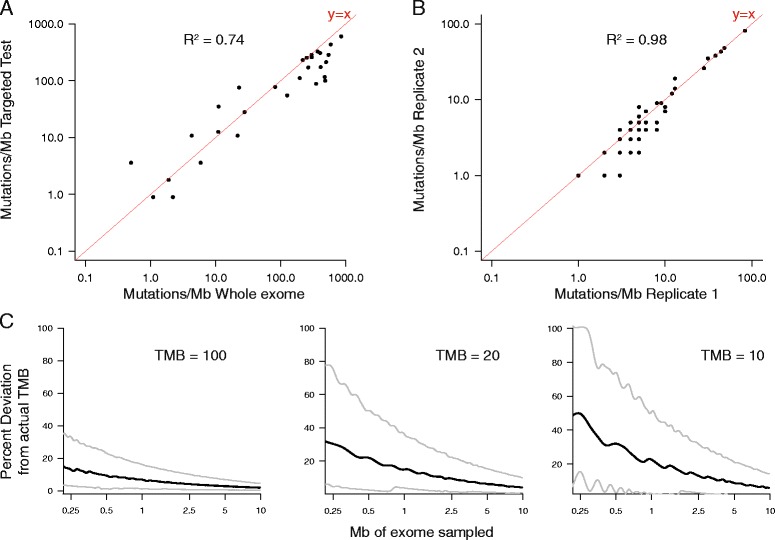
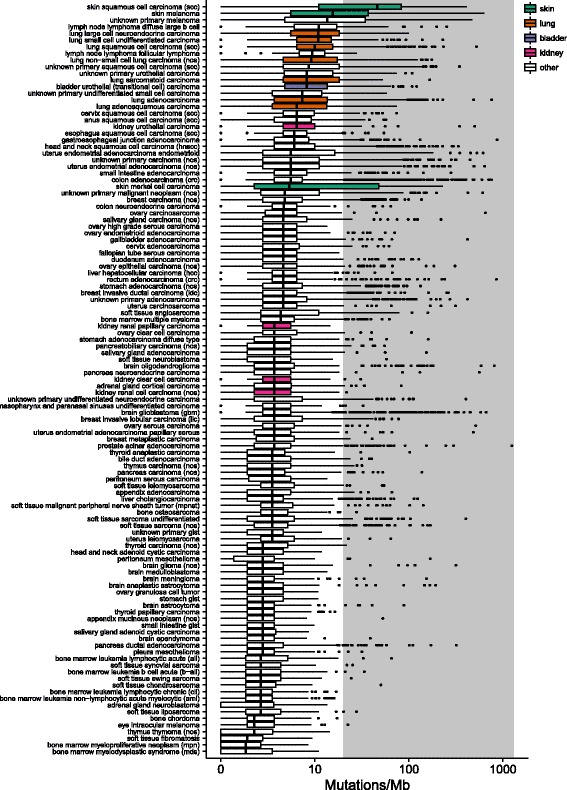
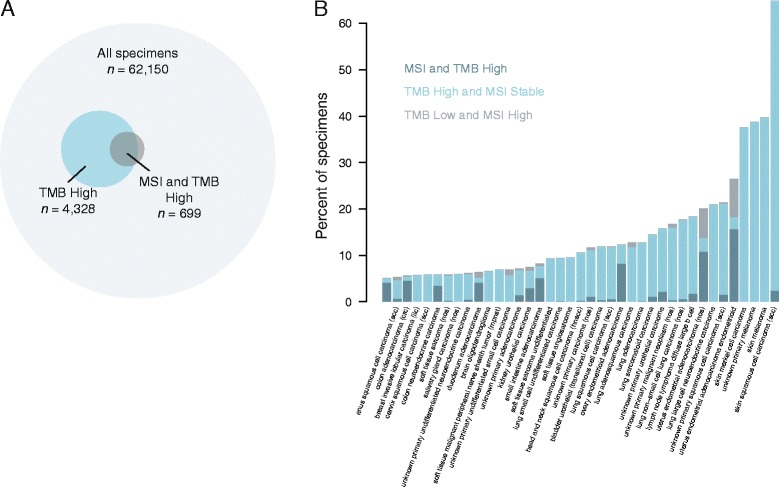
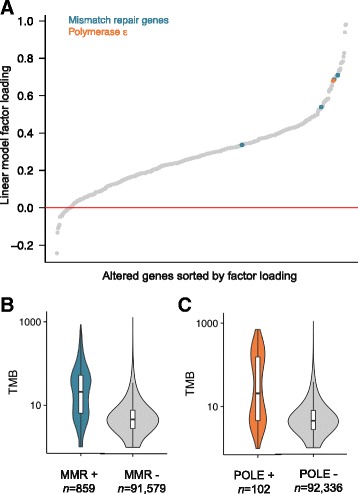
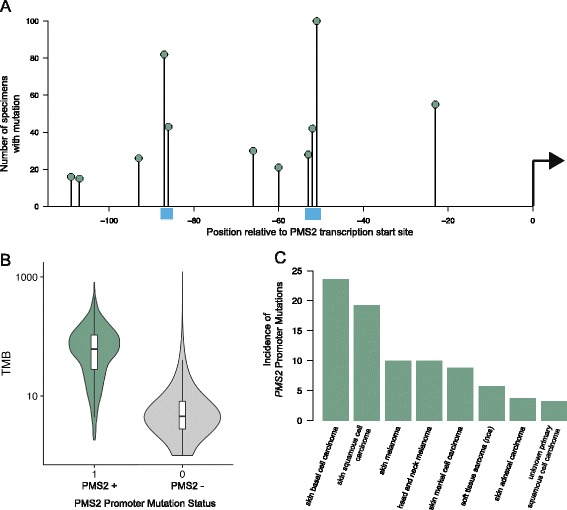
BACKGROUND: High tumor mutational burden (TMB) is an emerging biomarker of sensitivity to immune checkpoint inhibitors and has been shown to be more significantly associated with response to PD-1 and PD-L1 blockade immunotherapy than PD-1 or PD-L1 expression, as measured by immunohistochemistry (IHC). The distribution of TMB and the subset of patients with high TMB has not been well characterized in the majority of cancer types. METHODS: In this study, we compare TMB measured by a targeted comprehensive genomic profiling (CGP) assay to TMB measured by exome sequencing and simulate the expected variance in TMB when sequencing less than the whole exome. We then describe the distribution of TMB across a diverse cohort of 100,000 cancer cases and test for association between somatic alterations and TMB in over 100 tumor types. RESULTS: We demonstrate that measurements of TMB from comprehensive genomic profiling are strongly reflective of measurements from whole exome sequencing and model that below 0.5 Mb the variance in measurement increases significantly. We find that a subset of patients exhibits high TMB across almost all types of cancer, including many rare tumor types, and characterize the relationship between high TMB and microsatellite instability status. We find that TMB increases significantly with age, showing a 2.4-fold difference between age 10 and age 90 years. Finally, we investigate the molecular basis of TMB and identify genes and mutations associated with TMB level. We identify a cluster of somatic mutations in the promoter of the gene PMS2, which occur in 10% of skin cancers and are highly associated with increased TMB. CONCLUSIONS: These results show that a CGP assay targeting ~1.1 Mb of coding genome can accurately assess TMB compared with sequencing the whole exome. Using this method, we find that many disease types have a substantial portion of patients with high TMB who might benefit from immunotherapy. Finally, we identify novel, recurrent promoter mutations in PMS2, which may be another example of regulatory mutations contributing to tumorigenesis.
Overview
The claims and statistics of this paper haven’t been checked yet.
Free: it reads the open-access text and checks the first 5 claims that cite a source we can check. Create a free account to check every claim.
Integrity signals
Registry
Cites
Statistics
Figures
Verification
Claims the paper makes
The claims and statistics of this paper haven’t been checked yet.
Free: it reads the open-access text and checks the first 5 claims that cite a source we can check. Create a free account to check every claim.
Claims other papers make about this one
Each is checked against this paper’s own text: does it say what the citing paper says it does?
The source backs part of the claim, not all of it — or backs it for a different population, condition or comparison.
In the citing paper
“This is at least in part due to activation of the nuclear factor κB (NF-κB) pathway driven by p53 loss, as well as increased tolerance of a higher mutational burden that may ostensibly result in enhanced immunogenicity due to increased neoantigen load143, 144, 145, 146.”
From Co-occurring genomic alterations in non-small-cell lung cancer biology and therapy (2019) · cites this paper as [145]
Experimental — accuracy not yet measuredThe source backs part of the claim, not all of it — or backs it for a different population, condition or comparison.
In the citing paper
“Childhood tumors are considered immunologically ‘cold tumors’ with few infiltrating immune cells and low neoantigen burden precluding robust response to immune checkpoint therapies 39,40.”
From A Phase I/II Trial of Nivolumab plus Ipilimumab in Children and Young Adults with Relapsed/Refractory Solid Tumors: A Children's Oncology Group Study ADVL1412 (2022) · cites this paper as [40]
Experimental — accuracy not yet measuredThe source backs part of the claim, not all of it — or backs it for a different population, condition or comparison.
In the citing paper
“Second, distinct subsets of CRC are characterized by chromosomal instability (CIN) or microsatellite instability (MSI) and are among cancers that exhibit a moderately high tumor mutation burden (TMB) suggesting an extensive degree of genetic heterogeneity [28].”
From Anti-tumor efficacy of a potent and selective non-covalent KRASG12D inhibitor (2022) · cites this paper as [28]
Experimental — accuracy not yet measuredIn the citing paper
“TP53 co-mutations are associated with an inflamed tumor immune microenvironment and increased tumor cell PD-L1 expression in KRAS-mutant NSCLC and GEMMs.”
From Co-occurring genomic alterations in non-small-cell lung cancer biology and therapy (2019) · cites this paper as [145]
In the citing paper
“TMB measured by comprehensive genomic profiling is comparable to measurements by whole exome sequencing and is typically higher in smoking associated lung cancer due to tobacco carcinogenesis”
From Diverse EGFR Exon 20 Insertions and Co-Occurring Molecular Alterations Identified by Comprehensive Genomic Profiling of NSCLC (2018) · cites this paper as [14]
Self-check
Percentages, sums and reported differences re-computed from the paper’s own numbers.
The self-check needs the paper’s full text.
Citations
Cites
Fast and accurate short read alignment with Burrows-Wheeler transform
Li, H., & Durbin, R. (2009) · Bioinformatics · doi:10.1093/bioinformatics/btp324 · Cited by 58,607
PD-1 and PD-L1 Immune Checkpoint Blockade to Treat Breast Cancer
Hartkopf, A. D., Taran, F.-A., Wallwiener, M., Walter, C. B., Krämer, B., Grischke, E.-M., & Brucker, S. Y. (2016) · Breast Care · doi:10.1159/000453569 · Cited by 30,845
The Genome Analysis Toolkit: A MapReduce framework for analyzing next-generation DNA sequencing data
McKenna, A., Hanna, M., Banks, E., Sivachenko, A., Cibulskis, K., Kernytsky, A., Garimella, K., Altshuler, D., Gabriel, S., Daly, M., et al. (2010) · Genome Research · doi:10.1101/gr.107524.110 · Cited by 27,895
The blockade of immune checkpoints in cancer immunotherapy
Pardoll, D. M. (2012) · Nature Reviews Cancer · doi:10.1038/nrc3239 · Cited by 13,838 · cited 1×
“These agents modulate the pathways that control when and where immune responses are mounted, increasing antitumor activity through immune checkpoint blockade [7].”
BackgroundSafety, activity, and immune correlates of anti–PD-1 antibody in cancer
Topalian, S. L., Hodi, F. S., Brahmer, J. R., Gettinger, S. N., Smith, D. C., McDermott, D. F., Powderly, J. D., Carvajal, R. D., Sosman, J. A., Atkins, M. B., et al. (2012) · New England Journal of Medicine · doi:10.1056/nejmoa1200690 · Cited by 12,628 · cited 1×
“Inhibitors of cytotoxic T lymphocyte-associated antigen 4 (CTLA-4) [8, 9] and of programmed cell death protein 1 (PD-1) receptor [10] were the first drugs of this type, which promote T-cell activation [2].”
BackgroundStatistical significance for genomewide studies
Storey, J. D., & Tibshirani, R. (2003) · Proceedings of the National Academy of Sciences · doi:10.1073/pnas.1530509100 · Cited by 9,692 · cited 2×
“For both tests, we corrected for multiple testing using the false discovery rate (FDR) method [66].”
MethodSignatures of mutational processes in human cancer
Initiative, A. P. C. G., Alexandrov, L. B., ICGC Breast Cancer Consortium, ICGC MMML-Seq Consortium, PedBrain, I., Nik-Zainal, S., Wedge, D. C., Aparicio, S. A. J. R., Behjati, S., Biankin, A. V., et al. (2013) · Nature · doi:10.1038/nature12477 · Cited by 9,660 · cited 5×
“Mutations in a number of other genes have also been linked to increased TMB [28, 51], but their function is less well understood.”
BackgroundResultInfluentialAnalysis of protein-coding genetic variation in 60,706 humans
Exome Aggregation Consortium, Lek, M., Karczewski, K. J., Minikel, E. V., Samocha, K. E., Banks, E., Fennell, T., O’Donnell-Luria, A. H., Ware, J. S., Hill, A. J., et al. (2016) · Nature · doi:10.1038/nature19057 · Cited by 9,587 · cited 1×
“Germline alterations occurring with two or more counts in the ExAC database were not counted [65].”
BackgroundPD-1 Blockade in Tumors with Mismatch-Repair Deficiency
Le, D. T., Uram, J. N., Wang, H., Bartlett, B. R., Kemberling, H., Eyring, A. D., Skora, A. D., Luber, B. S., Azad, N. S., Laheru, D., et al. (2015) · New England Journal of Medicine · doi:10.1056/nejmoa1500596 · Cited by 9,377
The cancer genome atlas pan-cancer analysis project
The Cancer Genome Atlas Research Network, Weinstein, J. N., Collisson, E. A., Mills, G. B., Shaw, K. R. M., Ozenberger, B. A., Ellrott, K., Shmulevich, I., Sander, C., & Stuart, J. M. (2013) · Nature Genetics · doi:10.1038/ng.2764 · Cited by 9,092 · cited 3×
“across cancer types and found a wide distribution of TMB across ~20–30 cancer types [28, 51, 54].”
BackgroundMethod
Cited by
Items 101–200 of 1,001
Stenzinger, A., Allen, J. D., Maas, J., Stewart, M. D., Merino, D. M., Wempe, M. M., & Dietel, M. (2019) · Genes, Chromosomes and Cancer · doi:10.1002/gcc.22733 · Cited by 239
“Variants counted in TMB calculation Panels may consider all variant types or only some of them during their TMB calculations.(1,4,33) TMB score will depend on how comprehensive the variant counting rules are”
BackgroundMethodInfluentialOvercoming Immune Evasion in Melanoma
Eddy, K., & Chen, S. (2020) · International Journal of Molecular Sciences · doi:10.3390/ijms21238984 · Cited by 222
Riess, J. W., Gandara, D. R., Frampton, G. M., Madison, R., Peled, N., Bufill, J. A., Dy, G. K., Ou, S.-H. I., Stephens, P. J., McPherson, J. D., et al. (2018) · Journal of Thoracic Oncology · doi:10.1016/j.jtho.2018.06.019 · Cited by 240
“TMB intermediate high (10-20) 3325 (26) 82 (6.”
Self-citationCAR T Cells for Acute Myeloid Leukemia: State of the Art and Future Directions
Mardiana, S., & Gill, S. (2020) · Frontiers in Oncology · doi:10.3389/fonc.2020.00697 · Cited by 236
“This discrepancy is thought to be due to, in part, the fact that AML has among the lowest mutational burdens in human cancer (111), thus presumably fewer neoantigens recognized by T cells.”
BackgroundDevelopment of PARP and immune-checkpoint inhibitor combinations
Stewart, R. A., Pilié, P. G., & Yap, T. A. (2018) · Cancer Research · doi:10.1158/0008-5472.can-18-2652 · Cited by 239
“The improved outcome in these patients is believed to be a result of increased mutational load, which is around 10 times higher in tumors with MMR deficiency (49) and those with POLE mutations (50), and is a known predictor for response to ICB (51–53), leading to greater immunogenicity and immune priming, as evidenced…”
BackgroundYan, X., Duan, H., Ni, Y., Zhou, Y., Wang, X., Qi, H., Gong, L., Liu, H., Tian, F., Lu, Q., et al. (2022) · International Journal of Surgery · doi:10.1016/j.ijsu.2022.106680 · Cited by 232
Self-citationMethods of measurement for tumor mutational burden in tumor tissue
Meléndez, B., Van Campenhout, C., Rorive, S., Remmelink, M., Salmon, I., & D’Haene, N. (2018) · Translational Lung Cancer Research · doi:10.21037/tlcr.2018.08.02 · Cited by 233
“2 mutations/Mb, with approximately 12% of the patients showing more than 20 mutations/ Mb (21).”
BackgroundMethodInfluentialGenomic and Transcriptomic Characterization of Natural Killer T Cell Lymphoma
Xiong, J., Cui, B.-W., Wang, N., Dai, Y.-T., Zhang, H., Wang, C.-F., Zhong, H.-J., Cheng, S., Ou-Yang, B.-S., Hu, Y., et al. (2020) · Cancer Cell · doi:10.1016/j.ccell.2020.02.005 · Cited by 233
Lee, J. S., & Ruppin, E. (2019) · JAMA Oncology · doi:10.1001/jamaoncol.2019.2311 · Cited by 228
Mino-Kenudson, M., Schalper, K., Cooper, W., Dacic, S., Hirsch, F. R., Jain, D., Lopez-Rios, F., Tsao, M. S., Yatabe, Y., Beasley, M. B., et al. (2022) · Journal of Thoracic Oncology · doi:10.1016/j.jtho.2022.09.109 · Cited by 226
Comprehensive Genomic Landscapes in Early and Later Onset Colorectal Cancer
Lieu, C. H., Golemis, E. A., Serebriiskii, I. G., Newberg, J., Hemmerich, A., Connelly, C., Messersmith, W. A., Eng, C., Eckhardt, S. G., Frampton, G., et al. (2019) · Clinical Cancer Research · doi:10.1158/1078-0432.ccr-19-0899 · Cited by 233
“Interestingly, the overall TMB in the MSI-H cohort appears to increase with increasing age, paralleling results seen in other tumor types (38).”
ResultSelf-citationGenomic Profiling of Small-Bowel Adenocarcinoma
Schrock, A. B., Devoe, C. E., McWilliams, R., Sun, J., Aparicio, T., Stephens, P. J., Ross, J. S., Wilson, R., Miller, V. A., Ali, S. M., et al. (2017) · JAMA Oncology · doi:10.1001/jamaoncol.2017.1051 · Cited by 227
Self-citationCirculating Tumor DNA Sequencing Analysis of Gastroesophageal Adenocarcinoma
Maron, S. B., Chase, L. M., Lomnicki, S., Kochanny, S., Moore, K. L., Joshi, S. S., Landron, S., Johnson, J., Kiedrowski, L. A., Nagy, R. J., et al. (2019) · Clinical Cancer Research · doi:10.1158/1078-0432.ccr-19-1704 · Cited by 229
“Tumor mutational burden (TMB) estimation by ctDNA and tissue-NGS was provided by Guardant Health and Foundation Medicine, respectively, according to previously published methodology (26, 27).”
MethodTrabucco, S. E., Gowen, K., Maund, S. L., Sanford, E., Fabrizio, D. A., Hall, M. J., Yakirevich, E., Gregg, J. P., Stephens, P. J., Frampton, G. M., et al. (2019) · The Journal of Molecular Diagnostics · doi:10.1016/j.jmoldx.2019.06.011 · Cited by 222
“In addition to variant detection in these genes, TMB was assessed, as described by Chalmers et al.(24) This study used the previously set cutoffs of <6 mutations/Mb for TMB-low, 6 and <20 mutations/Mb for TMB-intermediate, and 20 mutations/Mb for TMB-high.”
MethodSelf-citationHeterogeneity and treatment landscape of ovarian carcinoma
Veneziani, A. C., Gonzalez-Ochoa, E., Alqaisi, H., Madariaga, A., Bhat, G., Rouzbahman, M., Sneha, S., & Oza, A. M. (2023) · Nature Reviews Clinical Oncology · doi:10.1038/s41571-023-00819-1 · Cited by 210
“At the same time, however, ovarian carcinomas tend to have a highly immunosuppres sive TME and a low mutational burden 164,165 .”
BackgroundFrancescone, R., Barbosa Vendramini-Costa, D., Franco-Barraza, J., Wagner, J., Muir, A., Lau, A. N., Gabitova, L., Pazina, T., Gupta, S., Luong, T., et al. (2021) · Cancer Discovery · doi:10.1158/2159-8290.cd-20-0775 · Cited by 222
Karn, T., Denkert, C., Weber, K. E., Holtrich, U., Hanusch, C., Sinn, B. V., Higgs, B. W., Jank, P., Sinn, H. P., Huober, J., et al. (2020) · Annals of Oncology · doi:10.1016/j.annonc.2020.05.015 · Cited by 224
Wang, Y., Tong, Z., Zhang, W., Zhang, W., Buzdin, A., Mu, X., Yan, Q., Zhao, X., Chang, H.-H., Duhon, M., et al. (2021) · Frontiers in Oncology · doi:10.3389/fonc.2021.683419 · Cited by 224
“The WES-TMB assays typically consider nonsynonymous somatic mutations in the analysis, while NGS panels have generally taken a more comprehensive approach, such as FundationOne CDx, which includes synonymous and non-synonymous single-nucleotide variants (SNVs) for improved assay sensitivity (54), and insertions and de…”
BackgroundCancer immunotherapy: it’s time to better predict patients’ response
Pilard, C., Ancion, M., Delvenne, P., Jerusalem, G., Hubert, P., & Herfs, M. (2021) · British Journal of Cancer · doi:10.1038/s41416-021-01413-x · Cited by 205
Dudnik, E., Peled, N., Nechushtan, H., Wollner, M., Onn, A., Agbarya, A., Moskovitz, M., Keren, S., Popovits-Hadari, N., Urban, D., et al. (2018) · Journal of Thoracic Oncology · doi:10.1016/j.jtho.2018.04.024 · Cited by 215
Genetics of dilated cardiomyopathy: practical implications for heart failure management
Rosenbaum, A. N., Agre, K. E., & Pereira, N. L. (2020) · Nature Reviews Cardiology · doi:10.1038/s41569-019-0284-0 · Cited by 224
TMB or not TMB as a biomarker: That is the question
Addeo, A., Friedlaender, A., Banna, G. L., & Weiss, G. J. (2021) · Critical Reviews in Oncology/Hematology · doi:10.1016/j.critrevonc.2021.103374 · Cited by 217
Salem, M. E., Puccini, A., Grothey, A., Raghavan, D., Goldberg, R. M., Xiu, J., Korn, W. M., Weinberg, B. A., Hwang, J. J., Shields, A. F., et al. (2018) · Molecular Cancer Research · doi:10.1158/1541-7786.mcr-17-0735 · Cited by 217
Precision medicine in non-small cell lung cancer: Current applications and future directions
Yang, S.-R., Schultheis, A. M., Yu, H., Mandelker, D., Ladanyi, M., & Büttner, R. (2022) · Seminars in Cancer Biology · doi:10.1016/j.semcancer.2020.07.009 · Cited by 209
Checkpoint inhibitors in pancreatic cancer
Henriksen, A., Dyhl-Polk, A., Chen, I., & Nielsen, D. (2019) · Cancer Treatment Reviews · doi:10.1016/j.ctrv.2019.06.005 · Cited by 216
Tang, B., Zhu, J., Li, J., Fan, K., Gao, Y., Cheng, S., Kong, C., Zheng, L., Wu, F., Weng, Q., et al. (2020) · Cell Communication and Signaling · doi:10.1186/s12964-020-00663-1 · Cited by 218
Ross, J. S., Fakih, M., Ali, S. M., Elvin, J. A., Schrock, A. B., Suh, J., Vergilio, J., Ramkissoon, S., Severson, E., Daniel, S., et al. (2018) · Cancer · doi:10.1002/cncr.31125 · Cited by 210
“Median age (range), y 56 (8-96) 54 (22-88) 59 (31-79) 57 (29-87) 54 (14-83) 53 (46-80)”
Self-citationClinical genomic profiling in the management of patients with soft tissue and bone sarcoma
Gounder, M. M., Agaram, N. P., Trabucco, S. E., Robinson, V., Ferraro, R. A., Millis, S. Z., Krishnan, A., Lee, J., Attia, S., Abida, W., et al. (2022) · Nature Communications · doi:10.1038/s41467-022-30496-0 · Cited by 204
Self-citationBest, S. A., De Souza, D. P., Kersbergen, A., Policheni, A. N., Dayalan, S., Tull, D., Rathi, V., Gray, D. H., Ritchie, M. E., McConville, M. J., et al. (2018) · Cell Metabolism · doi:10.1016/j.cmet.2018.02.006 · Cited by 217
“Unleashing a patient’s autologous T cells to target tumors has received attention in lung cancer due to the high mutation load and immune infiltration in lung tumors (Chalmers et al., 2017; Rizvi et al., 2015).”
BackgroundNacev, B. A., Jones, K. B., Intlekofer, A. M., Yu, J. S. E., Allis, C. D., Tap, W. D., Ladanyi, M., & Nielsen, T. O. (2020) · Nature Reviews Cancer · doi:10.1038/s41568-020-0288-4 · Cited by 209
Forschner, A., Battke, F., Hadaschik, D., Schulze, M., Weißgraeber, S., Han, C.-T., Kopp, M., Frick, M., Klumpp, B., Tietze, N., et al. (2019) · Journal for ImmunoTherapy of Cancer · doi:10.1186/s40425-019-0659-0 · Cited by 198
Allgäuer, M., Budczies, J., Christopoulos, P., Endris, V., Lier, A., Rempel, E., Volckmar, A.-L., Kirchner, M., von Winterfeld, M., Leichsenring, J., et al. (2018) · Translational Lung Cancer Research · doi:10.21037/tlcr.2018.08.14 · Cited by 212
Genomic context of NTRK1/2/3 fusion-positive tumours from a large real-world population
Westphalen, C. B., Krebs, M. G., Le Tourneau, C., Sokol, E. S., Maund, S. L., Wilson, T. R., Jin, D. X., Newberg, J. Y., Fabrizio, D., Veronese, L., et al. (2021) · npj Precision Oncology · doi:10.1038/s41698-021-00206-y · Cited by 207
Self-citationFang, W., Ma, Y., Yin, J. C., Hong, S., Zhou, H., Wang, A., Wang, F., Bao, H., Wu, X., Yang, Y., et al. (2019) · Clinical Cancer Research · doi:10.1158/1078-0432.ccr-19-0585 · Cited by 207
“Panel TMB was counted by summing all base substitutions and indels in the coding region of targeted genes, including synonymous alterations to reduce sampling noise and excluding known driver mutations as they are over-represented in the panel, as previously described (24).”
MethodGenomic heterogeneity in bladder cancer: challenges and possible solutions to improve outcomes
Meeks, J. J., Al-Ahmadie, H., Faltas, B. M., Taylor, J. A., Flaig, T. W., DeGraff, D. J., Christensen, E., Woolbright, B. L., McConkey, D. J., & Dyrskjøt, L. (2020) · Nature Reviews Urology · doi:10.1038/s41585-020-0304-1 · Cited by 198
Tumor immunotherapy resistance: Revealing the mechanism of PD-1 / PD-L1-mediated tumor immune escape
Cui, J.-W., Li, Y., Yang, Y., Yang, H.-K., Dong, J.-M., Xiao, Z.-H., He, X., Guo, J.-H., Wang, R.-Q., Dai, B., et al. (2024) · Biomedicine & Pharmacotherapy · doi:10.1016/j.biopha.2024.116203 · Cited by 184
KRAS-mutant non-small cell lung cancer: Converging small molecules and immune checkpoint inhibition
Adderley, H., Blackhall, F. H., & Lindsay, C. R. (2019) · EBioMedicine · doi:10.1016/j.ebiom.2019.02.049 · Cited by 195
Existing and Emerging Biomarkers for Immune Checkpoint Immunotherapy in Solid Tumors
Arora, S., Velichinskii, R., Lesh, R. W., Ali, U., Kubiak, M., Bansal, P., Borghaei, H., Edelman, M. J., & Boumber, Y. (2019) · Advances in Therapy · doi:10.1007/s12325-019-01051-z · Cited by 196
Hepatocellular Carcinoma Immunotherapy
Sperandio, R. C., Pestana, R. C., Miyamura, B. V., & Kaseb, A. O. (2022) · Annual Review of Medicine · doi:10.1146/annurev-med-042220-021121 · Cited by 198
Immunotherapy in Renal Cell Carcinoma: The Future Is Now
Deleuze, A., Saout, J., Dugay, F., Peyronnet, B., Mathieu, R., Verhoest, G., Bensalah, K., Crouzet, L., Laguerre, B., Belaud-Rotureau, M.-A., et al. (2020) · International Journal of Molecular Sciences · doi:10.3390/ijms21072532 · Cited by 198
“High mutation burden favors the formation of neo-antigens that enhance the tumour immune response [79].”
BackgroundMelanoma: What do all the mutations mean?
Davis, E. J., Johnson, D. B., Sosman, J. A., & Chandra, S. (2018) · Cancer · doi:10.1002/cncr.31345 · Cited by 180
“It is interesting to note that normal human skin also has been found to have approximately 2 to 6 mutations per MB, similar to many solid tumors.(17,18) On average, the only other cancer subsets more highly mutated than melanoma are those with microsatellite instability or POLE mutations, in which DNA repair is impair…”
BackgroundMulti-omics profiling of younger Asian breast cancers reveals distinctive molecular signatures
Kan, Z., Ding, Y., Kim, J., Jung, H. H., Chung, W., Lal, S., Cho, S., Fernandez-Banet, J., Lee, S. K., Kim, S. W., et al. (2018) · Nature Communications · doi:10.1038/s41467-018-04129-4 · Cited by 202
Clinical potential of circulating tumour DNA in patients receiving anticancer immunotherapy
Cabel, L., Proudhon, C., Romano, E., Girard, N., Lantz, O., Stern, M.-H., Pierga, J.-Y., & Bidard, F.-C. (2018) · Nature Reviews Clinical Oncology · doi:10.1038/s41571-018-0074-3 · Cited by 196
Predictive biomarkers of response for immune checkpoint inhibitors in non–small-cell lung cancer
Prelaj, A., Tay, R., Ferrara, R., Chaput, N., Besse, B., & Califano, R. (2019) · European Journal of Cancer · doi:10.1016/j.ejca.2018.11.002 · Cited by 193
Zhou, K. I., Peterson, B., Serritella, A., Thomas, J., Reizine, N., Moya, S., Tan, C., Wang, Y., & Catenacci, D. V. T. (2020) · Clinical Cancer Research · doi:10.1158/1078-0432.ccr-20-2085 · Cited by 195
“Consistent with previous studies across tumor types (36, 38), we found that TMB-H was significantly associated with MSI-H in GEA.”
ResultBiomarkers of response to PD-1 pathway blockade
Li, H., van der Merwe, P. A., & Sivakumar, S. (2022) · British Journal of Cancer · doi:10.1038/s41416-022-01743-4 · Cited by 183
“5 Mb of genomic space caused the accuracy of targeted gene sequencing to fall significantly [10].”
BackgroundCTLA4 blockade abrogates KEAP1/STK11-related resistance to PD-(L)1 inhibitors
Skoulidis, F., Araujo, H. A., Do, M. T., Qian, Y., Sun, X., Galan-Cobo, A., Le, J. T., Montesion, M., Palmer, R., Jahchan, N., et al. (2024) · Nature · doi:10.1038/s41586-024-07943-7 · Cited by 194
“TMB was measured by Foundation Medicine as described previously 52 .”
A Comprehensive Review on Solitary Fibrous Tumor: New Insights for New Horizons
Martin-Broto, J., Mondaza-Hernandez, J. L., Moura, D. S., & Hindi, N. (2021) · Cancers · doi:10.3390/cancers13122913 · Cited by 184
Vega, D. M., Yee, L. M., McShane, L. M., Williams, P. M., Chen, L., Vilimas, T., Fabrizio, D., Funari, V., Newberg, J., Bruce, L. K., et al. (2021) · Annals of Oncology · doi:10.1016/j.annonc.2021.09.016 · Cited by 179
Self-citationCorrelate tumor mutation burden with immune signatures in human cancers
Wang, X., & Li, M. (2019) · BMC Immunology · doi:10.1186/s12865-018-0285-5 · Cited by 191
Okamura, R., Kato, S., Lee, S., Jimenez, R. E., Sicklick, J. K., & Kurzrock, R. (2020) · Journal for ImmunoTherapy of Cancer · doi:10.1136/jitc-2019-000438 · Cited by 184
Toward best practice in cancer mutation detection with whole-genome and whole-exome sequencing
Xiao, W., Ren, L., Chen, Z., Fang, L. T., Zhao, Y., Lack, J., Guan, M., Zhu, B., Jaeger, E., Kerrigan, L., et al. (2021) · Nature Biotechnology · doi:10.1038/s41587-021-00994-5 · Cited by 190
Glutaminase inhibition impairs CD8 T cell activation in STK11-/Lkb1-deficient lung cancer
Best, S. A., Gubser, P. M., Sethumadhavan, S., Kersbergen, A., Negrón Abril, Y. L., Goldford, J., Sellers, K., Abeysekera, W., Garnham, A. L., McDonald, J. A., et al. (2022) · Cell Metabolism · doi:10.1016/j.cmet.2022.04.003 · Cited by 179
Lee, J. K., Sivakumar, S., Schrock, A. B., Madison, R., Fabrizio, D., Gjoerup, O., Ross, J. S., Frampton, G. M., Napalkov, P., Montesion, M., et al. (2022) · npj Precision Oncology · doi:10.1038/s41698-022-00334-z · Cited by 187
Self-citationImmune Checkpoint Inhibitors in EGFR-Mutated NSCLC: Dusk or Dawn?
Qiao, M., Jiang, T., Liu, X., Mao, S., Zhou, F., Li, X., Zhao, C., Chen, X., Su, C., Ren, S., et al. (2021) · Journal of Thoracic Oncology · doi:10.1016/j.jtho.2021.04.003 · Cited by 186
Barroso-Sousa, R., Keenan, T. E., Pernas, S., Exman, P., Jain, E., Garrido-Castro, A. C., Hughes, M., Bychkovsky, B., Umeton, R., Files, J. L., et al. (2020) · Clinical Cancer Research · doi:10.1158/1078-0432.ccr-19-3507 · Cited by 182
“Possible explanations include that OncoPanel only evaluates tumor without concurrent germline DNA and that high TMB tumors were assessed with OncoPanel versions covering < 1 Mb of exome, which can overestimate TMB versus whole exome sequencing (32, 40).”
MethodTumor heterogeneity: preclinical models, emerging technologies, and future applications
Proietto, M., Crippa, M., Damiani, C., Pasquale, V., Sacco, E., Vanoni, M., & Gilardi, M. (2023) · Frontiers in Oncology · doi:10.3389/fonc.2023.1164535 · Cited by 172
Martin-Broto, J., Hindi, N., Grignani, G., Martinez-Trufero, J., Redondo, A., Valverde, C., Stacchiotti, S., Lopez-Pousa, A., D'Ambrosio, L., Gutierrez, A., et al. (2020) · Journal for ImmunoTherapy of Cancer · doi:10.1136/jitc-2020-001561 · Cited by 183
Rischin, D., Migden, M. R., Lim, A. M., Schmults, C. D., Khushalani, N. I., Hughes, B. G. M., Schadendorf, D., Dunn, L. A., Hernandez-Aya, L., Chang, A. L. S., et al. (2020) · Journal for ImmunoTherapy of Cancer · doi:10.1136/jitc-2020-000775 · Cited by 177
Maubec, E., Boubaya, M., Petrow, P., Beylot-Barry, M., Basset-Seguin, N., Deschamps, L., Grob, J.-J., Dréno, B., Scheer-Senyarich, I., Bloch-Queyrat, C., et al. (2020) · Journal of Clinical Oncology · doi:10.1200/jco.19.03357 · Cited by 177
Tumor mutation burden: from comprehensive mutational screening to the clinic
Galuppini, F., Dal Pozzo, C. A., Deckert, J., Loupakis, F., Fassan, M., & Baffa, R. (2019) · Cancer Cell International · doi:10.1186/s12935-019-0929-4 · Cited by 168
Mismatch repair deficiency is not sufficient to elicit tumor immunogenicity
Westcott, P. M. K., Muyas, F., Hauck, H., Smith, O. C., Sacks, N. J., Ely, Z. A., Jaeger, A. M., Rideout, W. M., Zhang, D., Bhutkar, A., et al. (2023) · Nature Genetics · doi:10.1038/s41588-023-01499-4 · Cited by 165
Kim, Y., Lee, B., Shim, J. H., Lee, S.-H., Park, W.-Y., Choi, Y.-L., Sun, J.-M., Ahn, J. S., Ahn, M.-J., & Park, K. (2019) · Journal of Thoracic Oncology · doi:10.1016/j.jtho.2018.10.150 · Cited by 174
Self-citationKnepper, T. C., Montesion, M., Russell, J. S., Sokol, E. S., Frampton, G. M., Miller, V. A., Albacker, L. A., McLeod, H. L., Eroglu, Z., Khushalani, N. I., et al. (2019) · Clinical Cancer Research · doi:10.1158/1078-0432.ccr-18-4159 · Cited by 168
Self-citationRemon, J., Passiglia, F., Ahn, M.-J., Barlesi, F., Forde, P. M., Garon, E. B., Gettinger, S., Goldberg, S. B., Herbst, R. S., Horn, L., et al. (2020) · Journal of Thoracic Oncology · doi:10.1016/j.jtho.2020.03.006 · Cited by 169
Pleasance, E., Titmuss, E., Williamson, L., Kwan, H., Culibrk, L., Zhao, E. Y., Dixon, K., Fan, K., Bowlby, R., Jones, M. R., et al. (2020) · Nature Cancer · doi:10.1038/s43018-020-0050-6 · Cited by 169
Salem, M. E., Bodor, J. N., Puccini, A., Xiu, J., Goldberg, R. M., Grothey, A., Korn, W. M., Shields, A. F., Worrilow, W. M., Kim, E. S., et al. (2020) · International Journal of Cancer · doi:10.1002/ijc.33115 · Cited by 164
“3% MSI-H tumors overall, with CRC and EC representing over half of this group, and Lynch syndrome spectrum tumors over 90%.(15) Unfortunately, our results lack paired germline data to conduct similar analyses.”
ResultCristescu, R., Aurora-Garg, D., Albright, A., Xu, L., Liu, X. Q., Loboda, A., Lang, L., Jin, F., Rubin, E. H., Snyder, A., et al. (2022) · Journal for ImmunoTherapy of Cancer · doi:10.1136/jitc-2021-003091 · Cited by 164
Experimental Considerations for Single-Cell RNA Sequencing Approaches
Nguyen, Q. H., Pervolarakis, N., Nee, K., & Kessenbrock, K. (2018) · Frontiers in Cell and Developmental Biology · doi:10.3389/fcell.2018.00108 · Cited by 170
Azad, N. S., Gray, R. J., Overman, M. J., Schoenfeld, J. D., Mitchell, E. P., Zwiebel, J. A., Sharon, E., Streicher, H., Li, S., McShane, L. M., et al. (2020) · Journal of Clinical Oncology · doi:10.1200/jco.19.00818 · Cited by 169
“Patients with endometrial cancer and prostate cancer were our most commonly enrolled patients, with usual MSI-high prevalence rates of approximately 30% and 3% reported in large series, respectively.(20,23) Of note, our initial report of this trial with shorter follow-up showed a lower response rate for nivolumab (24%…”
ResultNRAS mutant melanoma: Towards better therapies
Randic, T., Kozar, I., Margue, C., Utikal, J. S., & Kreis, S. (2021) · Cancer Treatment Reviews · doi:10.1016/j.ctrv.2021.102238 · Cited by 191
The molecular characteristics of high-grade gastroenteropancreatic neuroendocrine neoplasms
Venizelos, A., Elvebakken, H., Perren, A., Nikolaienko, O., Deng, W., Lothe, I. M. B., Couvelard, A., Hjortland, G. O., Sundlöv, A., Svensson, J., et al. (2021) · Endocrine Related Cancer · doi:10.1530/erc-21-0152 · Cited by 181
“Although we estimated tumour mutation burden from a targeted panel of 360 genes, such estimates have been shown to strongly reflect the burden detected in larger-scale sequencing (Chalmers et al. 2017).”
Choucair, K., Morand, S., Stanbery, L., Edelman, G., Dworkin, L., & Nemunaitis, J. (2020) · Cancer Gene Therapy · doi:10.1038/s41417-020-0174-y · Cited by 164
“tumor when assessed by WES, or as normalized to mutations per megabase (mut/Mb) by gene panel assays [4, 15, 22, 23].”
BackgroundMethodInfluentialBartley, A. N., Mills, A. M., Konnick, E. Q., Overman, M. J., Ventura, C. B., Souter, L., Colasacco, C., Stadler, Z. K., Kerr, S. E., Howitt, B. E., et al. (2022) · Archives of Pathology & Laboratory Medicine · doi:10.5858/arpa.2021-0632-cp · Cited by 181
Gut microbiota shapes cancer immunotherapy responses
Lei, W., Zhou, K., Lei, Y., Li, Q., & Zhu, H. (2025) · npj Biofilms and Microbiomes · doi:10.1038/s41522-025-00786-8 · Cited by 196
“Conversely,cancerswithlowerTMB,suchasprostateandpancreatic cancer, often exhibit reduced neoantigen formation, resulting in limited immune recognition and decreased ef fi cacy of immunotherapies 43 .”
Ang, C., Klempner, S. J., Ali, S. M., Madison, R., Ross, J. S., Severson, E. A., Fabrizio, D., Goodman, A., Kurzrock, R., Suh, J., et al. (2019) · Oncotarget · doi:10.18632/oncotarget.26998 · Cited by 163
“Furthermore, TMB ranges vary across tumor types [18], suggesting that disease specific TMB definitions should be explored.”
BackgroundSelf-citationLi, Z., Jiang, L., Chew, S. H., Hirayama, T., Sekido, Y., & Toyokuni, S. (2019) · Redox Biology · doi:10.1016/j.redox.2019.101297 · Cited by 163
Chondrosarcoma: biology, genetics, and epigenetics
Chow, W. A. (2018) · F1000Research · doi:10.12688/f1000research.15953.1 · Cited by 185
Titin mutation associated with responsiveness to checkpoint blockades in solid tumors
Jia, Q., Wang, J., He, N., He, J., & Zhu, B. (2019) · JCI Insight · doi:10.1172/jci.insight.127901 · Cited by 158
“obtain a direct measurement method of nonsynonymous somatic mutations (12, 13).”
BackgroundNeoadjuvant immunotherapy for non–small cell lung cancer: State of the art
Kang, J., Zhang, C., & Zhong, W. (2021) · Cancer Communications · doi:10.1002/cac2.12153 · Cited by 160
“Although a high TMB tends to be associated with a better response to immunotherapy [94], there are still pros and cons associated with the clinical utility of TMB.”
BackgroundSize matters: Dissecting key parameters for panel‐based tumor mutational burden analysis
Buchhalter, I., Rempel, E., Endris, V., Allgäuer, M., Neumann, O., Volckmar, A., Kirchner, M., Leichsenring, J., Lier, A., von Winterfeld, M., et al. (2019) · International Journal of Cancer · doi:10.1002/ijc.31878 · Cited by 154
Preclinical murine tumor models: A structural and functional perspective
Guérin, M. V., Finisguerra, V., den Eynde, B. J. V., Bercovici, N., & Trautmann, A. (2020) · eLife · doi:10.7554/elife.50740 · Cited by 167
Multi-omics discovery of exome-derived neoantigens in hepatocellular carcinoma
HEPAVAC Consortium, Löffler, M. W., Mohr, C., Bichmann, L., Freudenmann, L. K., Walzer, M., Schroeder, C. M., Trautwein, N., Hilke, F. J., Zinser, R. S., et al. (2019) · Genome Medicine · doi:10.1186/s13073-019-0636-8 · Cited by 160
Kim, J. Y., Kronbichler, A., Eisenhut, M., Hong, S. H., van der Vliet, H. J., Kang, J., Shin, J. I., & Gamerith, G. (2019) · Cancers · doi:10.3390/cancers11111798 · Cited by 167
Recurrent or primary metastatic cervical cancer: current and future treatments
Gennigens, C., Jérusalem, G., Lapaille, L., Cuypere, M. D., Streel, S., Kridelka, F., & Ray-Coquard, I. (2022) · ESMO Open · doi:10.1016/j.esmoop.2022.100579 · Cited by 166
“Finally, CC has an increased total mutational burden (TMB) rate (around 5-6 mutations per megabase).(46,47)”
BackgroundShao, C., Li, G., Huang, L., Pruitt, S., Castellanos, E., Frampton, G., Carson, K. R., Snow, T., Singal, G., Fabrizio, D., et al. (2020) · JAMA Network Open · doi:10.1001/jamanetworkopen.2020.25109 · Cited by 155
Self-citationSivakumar, S., Moore, J. A., Montesion, M., Sharaf, R., Lin, D. I., Colón, C. I., Fleischmann, Z., Ebot, E. M., Newberg, J. Y., Mills, J. M., et al. (2023) · Cancer Discovery · doi:10.1158/2159-8290.cd-22-0620 · Cited by 175
Self-citationMorganti, S., Tarantino, P., Ferraro, E., D’Amico, P., Viale, G., Trapani, D., Duso, B. A., & Curigliano, G. (2018) · Critical Reviews in Oncology/Hematology · doi:10.1016/j.critrevonc.2018.11.008 · Cited by 166
Santoni, M., Rizzo, A., Kucharz, J., Mollica, V., Rosellini, M., Marchetti, A., Tassinari, E., Monteiro, F. S. M., Soares, A., Molina‐Cerrillo, J., et al. (2023) · Cancer Immunology Immunotherapy · doi:10.1007/s00262-022-03349-4 · Cited by 153
A slipped-CAG DNA-binding small molecule induces trinucleotide-repeat contractions in vivo
Nakamori, M., Panigrahi, G. B., Lanni, S., Gall-Duncan, T., Hayakawa, H., Tanaka, H., Luo, J., Otabe, T., Li, J., Sakata, A., et al. (2020) · Nature Genetics · doi:10.1038/s41588-019-0575-8 · Cited by 147
Self-citationAdvances in cutaneous squamous cell carcinoma
Winge, M. C. G., Kellman, L. N., Guo, K., Tang, J. Y., Swetter, S. M., Aasi, S. Z., Sarin, K. Y., Chang, A. L. S., & Khavari, P. A. (2023) · Nature reviews. Cancer · doi:10.1038/s41568-023-00583-5 · Cited by 166
Zhu, J., Armstrong, A. J., Friedlander, T. W., Kim, W. K., Pal, S. K., George, D. J., & Zhang, T. (2018) · Journal for ImmunoTherapy of Cancer · doi:10.1186/s40425-018-0314-1 · Cited by 168
“defects, such as microsatellite instability (MSI-H) or are mismatch repair deficient (dMMR) [38].”
BackgroundClinical activity and safety of atezolizumab in patients with recurrent glioblastoma
Lukas, R. V., Rodon, J. A., Becker, K. P., Wong, E. T., Shih, K. C., Touat, M., Fassò, M., Osborne, S., Molinero, L. L., O'Hear, C. E., et al. (2018) · Journal of Neuro-Oncology · doi:10.1007/s11060-018-2955-9 · Cited by 161
Integration of immunotherapy into treatment of cervical cancer: Recent data and ongoing trials
Monk, B. J., Enomoto, T., Kast, W. M., McCormack, M. M., Tan, D. S. P., Wu, X., & González-Martín, A. (2022) · Cancer Treatment Reviews · doi:10.1016/j.ctrv.2022.102385 · Cited by 164
“About 4–8% of patients with cervical cancer have MSI-high tumors [72,73], and the TMB rate is approximately 2.5– 5.4 mutations/megabase [74,75].”
BackgroundInfluentialHypermutated tumours in the era of immunotherapy: The paradigm of personalised medicine
Nebot-Bral, L., Brandão, D., Verlingue, L., Rouleau, É., Caron, O., Despras, E., Dakdouki, Y. E., Champiat, S., Aoufouchi, S., Leary, A. F., et al. (2017) · European Journal of Cancer · doi:10.1016/j.ejca.2017.07.026 · Cited by 155
Prasad, V. K., Kaestner, V., & Mailankody, S. (2017) · JAMA Oncology · doi:10.1001/jamaoncol.2017.4182 · Cited by 144
Molecular profiles of small cell lung cancer subtypes: Therapeutic implications
Solta, A., Megyesfalvi, Z., Bárány, N., Valkó, Z., Bugyik, E., Lang, C., Ferencz, B., Paku, S., Lantos, A., Fillinger, J., et al. (2021) · Molecular Therapy — Oncolytics · doi:10.1016/j.omto.2021.02.004 · Cited by 158
“9 mutations/Mb and lack the recurrent driver alterations in EGFR or ALK that correlate with poor response to immunotherapy.(24,77) Third, SCLCs can also”
Yoshino, T., Pentheroudakis, G., Mishima, S., Overman, M. J., Yeh, K., Baba, E., Naito, Y., Calvo, F. M., Saxena, A. K., Chen, L.-T., et al. (2020) · Annals of Oncology · doi:10.1016/j.annonc.2020.03.299 · Cited by 151
Rodriguez, G., Galpin, K., McCloskey, C., & Vanderhyden, B. (2018) · Cancers · doi:10.3390/cancers10080242 · Cited by 140
Wu, Y., Xu, J., Du, C., Wu, Y., Xia, D., Lv, W., & Hu, J. (2019) · Frontiers in Oncology · doi:10.3389/fonc.2019.01161 · Cited by 139
“Firstly, since TMB is not significant in all caners (30), it may have predictive value in particular cancer types.”
Background
Metadata
- Authors
- Chalmers, Z. R., Connelly, C. F., Fabrizio, D., Gay, L., Ali, S. M., Ennis, R., Schrock, A., Campbell, B., Shlien, A., Chmielecki, J., Huang, F., He, Y., Sun, J., Tabori, U., Kennedy, M., Lieber, D. S., Roels, S., White, J., Otto, G. A., Ross, J. S., Garraway, L., Miller, V. A., Stephens, P. J., & Frampton, G. M.
- Affiliations
- Foundation Medicine (United States) (US)
- Hospital for Sick Children (CA)
- Harvard University (US)
- Broad Institute (US)
- Corresponding author
- Frampton, Garrett M.
- ORCID
- Venue
- Genome Medicine
- Published
- 2017-04-19
- Volume
- 9
- Issue
- 1
- Pages
- 34-34
- ISSN
- 1756-994X (ISSN-L)
- PMC
- PMC5395719
- OpenAlex
- W2606495925
- Cited by
- 3,519
- References
- 78
- Citations by year
- 2026: 200 · 2025: 268 · 2024: 365 · 2023: 499 · 2022: 553 · 2021: 565 · 2020: 498 · 2019: 330 · 2018: 195 · 2017: 43
- FWCI
- 131.26
- Type
- journal article
- Language
- en
- Open access
- gold
- doi.org
- Licence
- cc-by
- creativecommons.org/licenses/by/4.0/ (tdm)
- creativecommons.org/licenses/by/4.0/ (vor)
- Locations
- Genome Medicine (publishedVersion, cc-by)
- PubMed Central (publishedVersion, cc-by)
- PubMed (publishedVersion)
- Digital Access to Scholarship at Harvard (DASH) (Harvard University) (submittedVersion, cc-by)
- DOAJ (DOAJ: Directory of Open Access Journals) (submittedVersion, cc-by-sa)
- Funders
- Prostate Cancer Foundation (Young Investigator Award)
- U.S. Department of Defense (Prostate Cancer Research Program)
- Topics
- Health Sciences › Medicine › Oncology › Cancer Immunotherapy and Biomarkers
- Life Sciences › Biochemistry, Genetics and Molecular Biology › Cancer Research › Cancer Genomics and Diagnostics
- Health Sciences › Medicine › Pathology and Forensic Medicine › Genetic factors in colorectal cancer
- Keywords
- tumor mutational burden, comprehensive genomic profiling, targeted sequencing, microsatellite instability, regulatory mutations, somatic mutations, immunotherapy biomarkers, immune checkpoint inhibitors, PD-1/PD-L1 blockade, tumor age, rare tumor, cancer genomics
- MeSH terms
- Mismatch Repair Endonuclease PMS2, Adolescent, Adult, Age Factors, Aged, Aged, 80 and over, Cell Transformation, Neoplastic, Child, DNA Mutational Analysis, DNA, Neoplasm, Humans, Middle Aged, Mutation, Neoplasms, Genome, Human, Young Adult, Exome
About these checks
Registry, retraction, Cites and statistics results are computed, not judged, with one exception: a printed reference that no index lists is read once by a model before it counts as a citation error. Claims are extracted by a model and kept only when their quote appears verbatim in the text; each cited source is then checked, with a model’s help, for whether it says what the claim relies on. Those verdicts can be wrong — read the claim’s quote and the cited source before relying on one.
Statistics and arithmetic are recomputed, not judged.
Confidence bands are shown only for fields calibrated on our annotated test set. None is calibrated yet, so no band is shown.
What counts as a claim ›How we measure confidence ›How we check this ›
Are you an author, or do you see a problem with this page? Request a review
Data sources
Bibliographic data: Semantic Scholar, OpenAlex, Crossref.
Contains information from the Semantic Scholar Academic Graph Datasets, made available under the ODC Attribution License (ODC-BY 1.0).
Semantic Scholar’s data is described in: Kinney, R., et al. (2023). The Semantic Scholar Open Data Platform. arXiv:2301.10140.
