

Analysis of 100,000 human cancer genomes reveals the landscape of tumor mutational burden
Open accessThe DOI matches its Crossref record; 78 of the 78 references it cites were found in a registry or an index.
Abstract
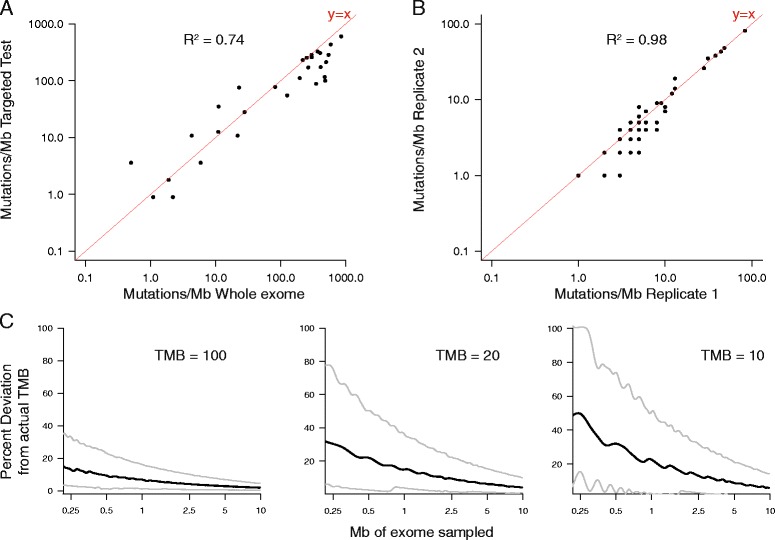
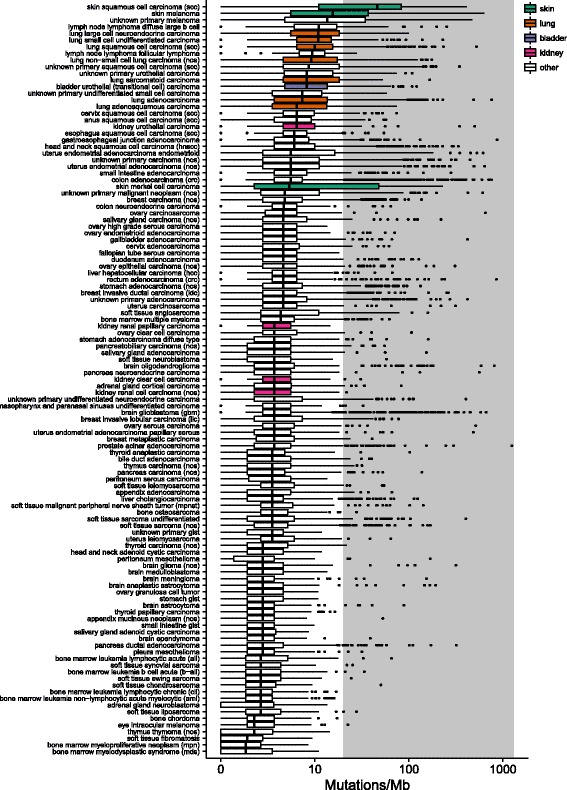
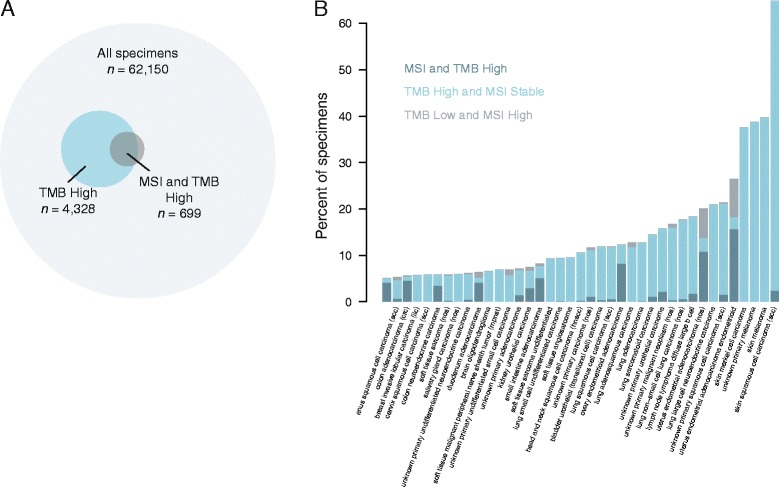
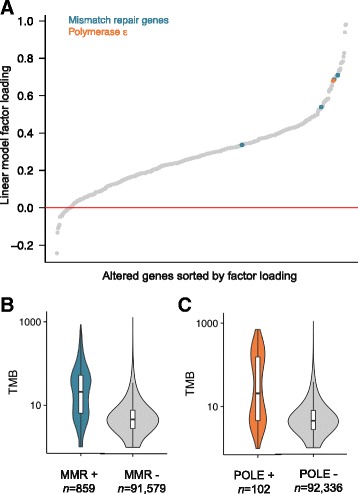
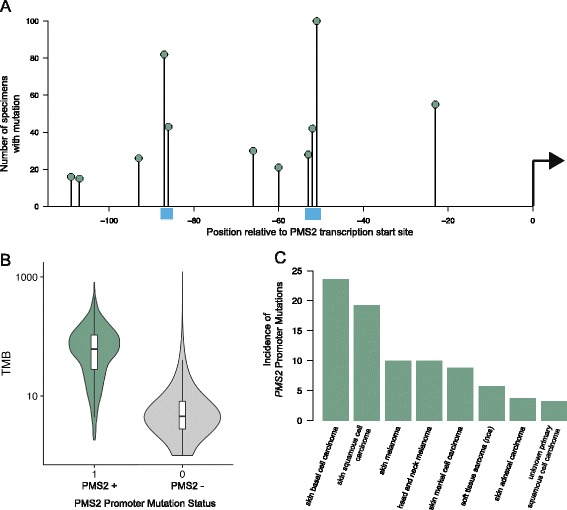
BACKGROUND: High tumor mutational burden (TMB) is an emerging biomarker of sensitivity to immune checkpoint inhibitors and has been shown to be more significantly associated with response to PD-1 and PD-L1 blockade immunotherapy than PD-1 or PD-L1 expression, as measured by immunohistochemistry (IHC). The distribution of TMB and the subset of patients with high TMB has not been well characterized in the majority of cancer types. METHODS: In this study, we compare TMB measured by a targeted comprehensive genomic profiling (CGP) assay to TMB measured by exome sequencing and simulate the expected variance in TMB when sequencing less than the whole exome. We then describe the distribution of TMB across a diverse cohort of 100,000 cancer cases and test for association between somatic alterations and TMB in over 100 tumor types. RESULTS: We demonstrate that measurements of TMB from comprehensive genomic profiling are strongly reflective of measurements from whole exome sequencing and model that below 0.5 Mb the variance in measurement increases significantly. We find that a subset of patients exhibits high TMB across almost all types of cancer, including many rare tumor types, and characterize the relationship between high TMB and microsatellite instability status. We find that TMB increases significantly with age, showing a 2.4-fold difference between age 10 and age 90 years. Finally, we investigate the molecular basis of TMB and identify genes and mutations associated with TMB level. We identify a cluster of somatic mutations in the promoter of the gene PMS2, which occur in 10% of skin cancers and are highly associated with increased TMB. CONCLUSIONS: These results show that a CGP assay targeting ~1.1 Mb of coding genome can accurately assess TMB compared with sequencing the whole exome. Using this method, we find that many disease types have a substantial portion of patients with high TMB who might benefit from immunotherapy. Finally, we identify novel, recurrent promoter mutations in PMS2, which may be another example of regulatory mutations contributing to tumorigenesis.
Overview
The claims and statistics of this paper haven’t been checked yet.
Free: it reads the open-access text and checks the first 5 claims that cite a source we can check. Create a free account to check every claim.
Integrity signals
Registry
Cites
Statistics
Figures
Verification
Claims the paper makes
The claims and statistics of this paper haven’t been checked yet.
Free: it reads the open-access text and checks the first 5 claims that cite a source we can check. Create a free account to check every claim.
Claims other papers make about this one
Each is checked against this paper’s own text: does it say what the citing paper says it does?
The source backs part of the claim, not all of it — or backs it for a different population, condition or comparison.
In the citing paper
“This is at least in part due to activation of the nuclear factor κB (NF-κB) pathway driven by p53 loss, as well as increased tolerance of a higher mutational burden that may ostensibly result in enhanced immunogenicity due to increased neoantigen load143, 144, 145, 146.”
From Co-occurring genomic alterations in non-small-cell lung cancer biology and therapy (2019) · cites this paper as [145]
Experimental — accuracy not yet measuredThe source backs part of the claim, not all of it — or backs it for a different population, condition or comparison.
In the citing paper
“Childhood tumors are considered immunologically ‘cold tumors’ with few infiltrating immune cells and low neoantigen burden precluding robust response to immune checkpoint therapies 39,40.”
From A Phase I/II Trial of Nivolumab plus Ipilimumab in Children and Young Adults with Relapsed/Refractory Solid Tumors: A Children's Oncology Group Study ADVL1412 (2022) · cites this paper as [40]
Experimental — accuracy not yet measuredThe source backs part of the claim, not all of it — or backs it for a different population, condition or comparison.
In the citing paper
“Second, distinct subsets of CRC are characterized by chromosomal instability (CIN) or microsatellite instability (MSI) and are among cancers that exhibit a moderately high tumor mutation burden (TMB) suggesting an extensive degree of genetic heterogeneity [28].”
From Anti-tumor efficacy of a potent and selective non-covalent KRASG12D inhibitor (2022) · cites this paper as [28]
Experimental — accuracy not yet measuredIn the citing paper
“TP53 co-mutations are associated with an inflamed tumor immune microenvironment and increased tumor cell PD-L1 expression in KRAS-mutant NSCLC and GEMMs.”
From Co-occurring genomic alterations in non-small-cell lung cancer biology and therapy (2019) · cites this paper as [145]
In the citing paper
“TMB measured by comprehensive genomic profiling is comparable to measurements by whole exome sequencing and is typically higher in smoking associated lung cancer due to tobacco carcinogenesis”
From Diverse EGFR Exon 20 Insertions and Co-Occurring Molecular Alterations Identified by Comprehensive Genomic Profiling of NSCLC (2018) · cites this paper as [14]
Self-check
Percentages, sums and reported differences re-computed from the paper’s own numbers.
The self-check needs the paper’s full text.
Citations
Cites
Fast and accurate short read alignment with Burrows-Wheeler transform
Li, H., & Durbin, R. (2009) · Bioinformatics · doi:10.1093/bioinformatics/btp324 · Cited by 58,607
PD-1 and PD-L1 Immune Checkpoint Blockade to Treat Breast Cancer
Hartkopf, A. D., Taran, F.-A., Wallwiener, M., Walter, C. B., Krämer, B., Grischke, E.-M., & Brucker, S. Y. (2016) · Breast Care · doi:10.1159/000453569 · Cited by 30,845
The Genome Analysis Toolkit: A MapReduce framework for analyzing next-generation DNA sequencing data
McKenna, A., Hanna, M., Banks, E., Sivachenko, A., Cibulskis, K., Kernytsky, A., Garimella, K., Altshuler, D., Gabriel, S., Daly, M., et al. (2010) · Genome Research · doi:10.1101/gr.107524.110 · Cited by 27,895
The blockade of immune checkpoints in cancer immunotherapy
Pardoll, D. M. (2012) · Nature Reviews Cancer · doi:10.1038/nrc3239 · Cited by 13,838 · cited 1×
“These agents modulate the pathways that control when and where immune responses are mounted, increasing antitumor activity through immune checkpoint blockade [7].”
BackgroundSafety, activity, and immune correlates of anti–PD-1 antibody in cancer
Topalian, S. L., Hodi, F. S., Brahmer, J. R., Gettinger, S. N., Smith, D. C., McDermott, D. F., Powderly, J. D., Carvajal, R. D., Sosman, J. A., Atkins, M. B., et al. (2012) · New England Journal of Medicine · doi:10.1056/nejmoa1200690 · Cited by 12,628 · cited 1×
“Inhibitors of cytotoxic T lymphocyte-associated antigen 4 (CTLA-4) [8, 9] and of programmed cell death protein 1 (PD-1) receptor [10] were the first drugs of this type, which promote T-cell activation [2].”
BackgroundStatistical significance for genomewide studies
Storey, J. D., & Tibshirani, R. (2003) · Proceedings of the National Academy of Sciences · doi:10.1073/pnas.1530509100 · Cited by 9,692 · cited 2×
“For both tests, we corrected for multiple testing using the false discovery rate (FDR) method [66].”
MethodSignatures of mutational processes in human cancer
Initiative, A. P. C. G., Alexandrov, L. B., ICGC Breast Cancer Consortium, ICGC MMML-Seq Consortium, PedBrain, I., Nik-Zainal, S., Wedge, D. C., Aparicio, S. A. J. R., Behjati, S., Biankin, A. V., et al. (2013) · Nature · doi:10.1038/nature12477 · Cited by 9,660 · cited 5×
“Mutations in a number of other genes have also been linked to increased TMB [28, 51], but their function is less well understood.”
BackgroundResultInfluentialAnalysis of protein-coding genetic variation in 60,706 humans
Exome Aggregation Consortium, Lek, M., Karczewski, K. J., Minikel, E. V., Samocha, K. E., Banks, E., Fennell, T., O’Donnell-Luria, A. H., Ware, J. S., Hill, A. J., et al. (2016) · Nature · doi:10.1038/nature19057 · Cited by 9,587 · cited 1×
“Germline alterations occurring with two or more counts in the ExAC database were not counted [65].”
BackgroundPD-1 Blockade in Tumors with Mismatch-Repair Deficiency
Le, D. T., Uram, J. N., Wang, H., Bartlett, B. R., Kemberling, H., Eyring, A. D., Skora, A. D., Luber, B. S., Azad, N. S., Laheru, D., et al. (2015) · New England Journal of Medicine · doi:10.1056/nejmoa1500596 · Cited by 9,377
The cancer genome atlas pan-cancer analysis project
The Cancer Genome Atlas Research Network, Weinstein, J. N., Collisson, E. A., Mills, G. B., Shaw, K. R. M., Ozenberger, B. A., Ellrott, K., Shmulevich, I., Sander, C., & Stuart, J. M. (2013) · Nature Genetics · doi:10.1038/ng.2764 · Cited by 9,092 · cited 3×
“across cancer types and found a wide distribution of TMB across ~20–30 cancer types [28, 51, 54].”
BackgroundMethod
Cited by
Items 401–500 of 1,001
Liquid Biopsy to Identify Actionable Genomic Alterations
Ou, S. I., Nagasaka, M., & Zhu, V. W. (2018) · American Society of Clinical Oncology Educational Book · doi:10.1200/edbk_199765 · Cited by 78
Dudnik, E., Bshara, E., Grubstein, A., Fridel, L., Shochat, T., Roisman, L. C., Ilouze, M., Rozenblum, A. B., Geva, S., Zer, A., et al. (2018) · Lung Cancer · doi:10.1016/j.lungcan.2018.07.044 · Cited by 79
dbPepNeo: a manually curated database for human tumor neoantigen peptides
Tan, X., Li, D., Huang, P., Jian, X., Wan, H., Wang, G., Li, Y., Ouyang, J., Lin, Y., & Xie, L. (2020) · Database · doi:10.1093/database/baaa004 · Cited by 81
“Tumor mutation burden has become a potential biomarker to predict the effectiveness of immunotherapy (27).”
BackgroundPan-cancer analysis reveals molecular patterns associated with age
Shah, Y., Verma, A., Marderstein, A. R., White, J. B., Bhinder, B., Medina, J. S. G., & Elemento, O. (2021) · Cell Reports · doi:10.1016/j.celrep.2021.110100 · Cited by 88
Self-citationDousset, L., Poizeau, F., Robert, C., Mansard, S., Mortier, L., Caumont, C., Routier, É., Dupuy, A., Rouanet, J., Battistella, M., et al. (2021) · JCO Precision Oncology · doi:10.1200/po.21.00084 · Cited by 83
“2 megabases (Mb) of sequenced DNA, according to an algorithm that extrapolated to the genome as a whole (muts/Mb).(9) UV signature is dominated by C .”
BackgroundSelf-citationPaulson, K. G., Lahman, M. C., Chapuis, A. G., & Brownell, I. (2019) · International Immunology · doi:10.1093/intimm/dxz012 · Cited by 75
Ma, C., Luo, H., Cao, J., Zheng, X., Zhang, J., Zhang, Y., & Fu, Z. (2020) · Frontiers in Molecular Biosciences · doi:10.3389/fmolb.2020.571641 · Cited by 80
“However, how P2RX1 affects lung cancer remains unclear (Chen et al., 2014).”
BackgroundShitara, K., Özgüroğlu, M., Bang, Y.-J., Bartolomeo, M. D., Mandalà, M., Ryu, M.-H., Caglevic, C., Chung, H. C., Muro, K., Cutsem, E. V., et al. (2021) · Annals of Oncology · doi:10.1016/j.annonc.2021.05.803 · Cited by 78
CAR-T cell therapy for hematological malignancies: Limitations and optimization strategies
Huang, J., Huang, X., & Huang, J. (2022) · Frontiers in Immunology · doi:10.3389/fimmu.2022.1019115 · Cited by 78
“This is a more pressing concern for hematological malignancies, as their mutation burden is lower, leading to a lower abundance of usable TAAs (13).”
BackgroundNecchi, A., Madison, R. W., Raggi, D., Jacob, J. M., Bratslavsky, G., Shapiro, O., Elvin, J. A., Vergilio, J., Killian, J. K., Ngo, N., et al. (2020) · European Urology · doi:10.1016/j.eururo.2020.01.003 · Cited by 72
Self-citationMeasuring tumor mutation burden in non-small cell lung cancer: Tissue versus liquid biopsy
Fenizia, F., Pasquale, R., Roma, C., Bergantino, F., Iannaccone, A., & Normanno, N. (2018) · Translational Lung Cancer Research · doi:10.21037/tlcr.2018.09.23 · Cited by 69
“Evidence suggest that, more important than the number of genes, is the genomic area covered by the panel, demonstrating that TMB can be correctly inferred targeting at least 1Mb of the genome (44).”
BackgroundWaalkes, A., Smith, N. T., Penewit, K. M., Hempelmann, J. A., Konnick, E. Q., Hause, R. J., Pritchard, C. C., & Salipante, S. J. (2018) · Clinical Chemistry · doi:10.1373/clinchem.2017.285981 · Cited by 77
“Finally, tumor mutational burden is a disparate, and currently unstandardized, NGS analysis that has recently been used to quantify the DNA lesions present in a cancer (36).”
BackgroundBlons, H., Garinet, S., Laurent‐Puig, P., & Oudart, J. (2019) · Journal of Thoracic Disease · doi:10.21037/jtd.2018.12.48 · Cited by 78
Kang, E. J., Ahn, M., Ock, C.-Y., Lee, K., Kwon, J. H., Yang, Y., Choi, Y. H., Kim, M. K., Ji, J. H., Yun, T., et al. (2021) · Clinical Cancer Research · doi:10.1158/1078-0432.ccr-21-1061 · Cited by 69
Luo, L., Li, L., Liu, L., Feng, Z., Zeng, Q., Shu, X., Cao, Y., & Li, Z. (2022) · Frontiers in Genetics · doi:10.3389/fgene.2022.833928 · Cited by 79
“In addition, TMB has been reported to predict the immunotherapy response of tumor patients (Rizvi et al., 2015; Chalmers et al., 2017).”
BackgroundManca, P., Corti, F., Intini, R., Mazzoli, G., Miceli, R., Germani, M. M., Bergamo, F., Ambrosini, M., Cristarella, E., Cerantola, R., et al. (2023) · European Journal of Cancer · doi:10.1016/j.ejca.2023.03.029 · Cited by 73
Dowless, M. S., Lowery, C. D., Shackleford, T. J., Renschler, M., Stephens, J., Flack, R. S., Blosser, W. D., Gupta, S., Stewart, J. A., Webster, Y., et al. (2018) · Clinical Cancer Research · doi:10.1158/1078-0432.ccr-18-1256 · Cited by 71
“Furthermore, ES, like other pediatric tumor types, has a low mutational burden compared with adult cancers (16); however, there are several genetic aberrations frequently reported in ES which contribute to cell-cycle dysregulation.”
BackgroundAlterations of T-cell-mediated immunity in acute myeloid leukemia
Li, Z., Philip, M., & Ferrell, P. B. (2020) · Oncogene · doi:10.1038/s41388-020-1239-y · Cited by 73
MHC Class I Deficiency in Solid Tumors and Therapeutic Strategies to Overcome It
Shklovskaya, E., & Rizos, H. (2021) · International Journal of Molecular Sciences · doi:10.3390/ijms22136741 · Cited by 78
“Neoantigens are produced as a result of non-synonymous mutations, tumors with a greater mutation number (that is, high TMB) have a higher likelihood of producing neoantigens that are presented as pMHC complexes on the surface of tumor cells and trigger T-cell responses that may result in tumor eradication [16,23].”
BackgroundGenomic landscape of 891 RET fusions detected across diverse solid tumor types
Parimi, V., Tolba, K. A., Danziger, N. A., Kuang, Z., Sun, D., Lin, D. I., Hiemenz, M., Schrock, A. B., Ross, J. S., Oxnard, G. R., et al. (2023) · npj Precision Oncology · doi:10.1038/s41698-023-00347-2 · Cited by 80
Self-citationSaba, N. F., Blumenschein, G. R., Guigay, J., Licitra, L. F., Fayette, J., Harrington, K. J., Kiyota, N., Gillison, M. L., Ferris, R. L., Jayaprakash, V., et al. (2019) · Oral Oncology · doi:10.1016/j.oraloncology.2019.06.017 · Cited by 71
“However, tumor mutational burden, which has been shown to increase with age, among other factors, leads to increased neoantigen formation and subsequent increased immune response [29].”
Pedersen, K. S., Foster, N. R., Overman, M. J., Boland, P. M., Kim, S. S., Arrambide, K. A., Jaszewski, B. L., Bekaii‐Saab, T., Graham, R. P., Welch, J., et al. (2021) · Clinical Cancer Research · doi:10.1158/1078-0432.ccr-21-0159 · Cited by 72
“Hepatic Alanine aminotransferase increased 7 (27) 1 (4)”
BackgroundMethodMou, H., Yu, L., Liao, Q., Hou, X., Wu, Y., Cui, Q., Yan, N., Ma, R., Wang, L., Yao, M., et al. (2018) · BMC Cancer · doi:10.1186/s12885-018-5021-2 · Cited by 67
Burden of unique and low prevalence somatic mutations correlates with cancer survival
Klebanov, N., Artomov, M., Goggins, W. B., Daly, E., Daly, M. J., & Tsao, H. (2019) · Scientific Reports · doi:10.1038/s41598-019-41015-5 · Cited by 77
Massoth, L. R., Hung, Y. P., Ferry, J. A., Hasserjian, R. P., Nardi, V., Nielsen, G. P., Sadigh, S., Venkataraman, V., Selig, M. K., Friedmann, A. M., et al. (2021) · The Oncologist · doi:10.1002/onco.13801 · Cited by 67
Self-citationUnderstanding genomics and the immune environment of penile cancer to improve therapy
Aydın, A. M., Chahoud, J., Adashek, J. J., Azizi, M., Magliocco, A. M., Ross, J. S., Necchi, A., & Spiess, P. E. (2020) · Nature Reviews Urology · doi:10.1038/s41585-020-0359-z · Cited by 73
Self-citationCancer of Unknown Primary: Challenges and Progress in Clinical Management
Laprovitera, N., Riefolo, M., Ambrosini, E., Klec, C., Pichler, M., & Ferracin, M. (2021) · Cancers · doi:10.3390/cancers13030451 · Cited by 80
Chida, K., Kawazoe, A., Suzuki, T., Kawazu, M., Ueno, T., Takenouchi, K., Nakamura, Y., Kuboki, Y., Kotani, D., Kojima, T., et al. (2022) · Clinical Cancer Research · doi:10.1158/1078-0432.ccr-22-0041 · Cited by 70
Immune-based therapies in penile cancer
Joshi, V. B., Spiess, P. E., Necchi, A., Pettaway, C. A., & Chahoud, J. (2022) · Nature Reviews Urology · doi:10.1038/s41585-022-00617-x · Cited by 70
Gandara, D. R., Agarwal, N., Gupta, S., Klempner, S. J., Andrews, M. C., Mahipal, A., Subbiah, V., Eskander, R. N., Carbone, D. P., Riess, J. W., et al. (2025) · Journal for ImmunoTherapy of Cancer · doi:10.1136/jitc-2024-010311 · Cited by 78
Self-citationBringing the Next Generation of Immuno-Oncology Biomarkers to the Clinic
Cesano, A., & Warren, S. E. (2018) · Biomedicines · doi:10.3390/biomedicines6010014 · Cited by 73
Intratumoral CD56bright natural killer cells are associated with improved survival in bladder cancer
Mukherjee, N. Z., Ji, N., Hurez, V. J., Curiel, T. J., Montgomery, M. O., Braun, A. J., Nicolas, M. M., Aguilera, M., Kaushik, D., Liu, Q., et al. (2018) · Oncotarget · doi:10.18632/oncotarget.26362 · Cited by 71
“Bladder Cancer (BC) carries one of the highest mutational loads among tumors [1], which correlates with predicted tumor neo-antigen burden and response to immunotherapy [2].”
BackgroundCaparica, R., Lambertini, M., Ponde, N. F., Fumagalli, D., de Azambuja, E., & Piccart, M. J. (2019) · Therapeutic Advances in Medical Oncology · doi:10.1177/1758835919827714 · Cited by 71
Challenges and Prospects of Chimeric Antigen Receptor T-cell Therapy for Metastatic Prostate Cancer
Gorchakov, A. A., Kulemzin, S. V., Kochneva, G. V., & Taranin, A. V. (2019) · European Urology · doi:10.1016/j.eururo.2019.08.014 · Cited by 69
Lin, D. I., Hemmerich, A. C., Edgerly, C. I., Duncan, D. L., Severson, E. A., Huang, R. S. P., Ramkissoon, S. H., Connor, Y., Shea, M., Hecht, J. L., et al. (2020) · Gynecologic Oncology · doi:10.1016/j.ygyno.2020.02.024 · Cited by 67
Self-citationRandrian, V., Evrard, C., & Tougeron, D. (2021) · Cancers · doi:10.3390/cancers13123063 · Cited by 65
“Besides, in the analysis of 100,000 cancer genomes [31,32], 97% of MSI tumors had more than 10 mutations/Megabase (Mb) compared with the median of 4.”
BackgroundKang, H., Pettinga, D., Schubert, A. D., Ladenson, P. W., Ball, D. W., Chung, J., Schrock, A. B., Madison, R. W., Frampton, G. M., Stephens, P. J., et al. (2018) · The Oncologist · doi:10.1634/theoncologist.2018-0334 · Cited by 67
“1 Mb (version 2) of sequenced DNA for each sample based on the number of somatic base substitution or indel alterations per Mb after filtering to remove known functionally oncogenic somatic mutations, as previously described [9].”
MethodSelf-citationZang, Y., Dai, C., Xu, X., Cai, X., Wang, G., Wei, J., Wu, A., Sun, W., Jiao, S., & Xu, Q. (2019) · Cancer Medicine · doi:10.1002/cam4.2381 · Cited by 78
Lü, Z., Chen, H., Li, S., Gong, J., Li, J., Zou, J., Wu, L., Yu, J., Han, W., Sun, H., et al. (2020) · Journal for ImmunoTherapy of Cancer · doi:10.1136/jitc-2019-000374 · Cited by 71
TNFα siRNA delivery by nanoparticles and photochemical internalization for psoriasis topical therapy
Suzuki, I., de Araújo, M. M., Bagnato, V. S., & Bentley, M. V. L. B. (2021) · Journal of Controlled Release · doi:10.1016/j.jconrel.2021.08.039 · Cited by 65
Huyghe, N. D., Benidovskaya, E., Stevens, P., & den Eynde, M. V. (2022) · Cancers · doi:10.3390/cancers14092241 · Cited by 69
Ascierto, P. A., Bifulco, C. B., Palmieri, G., Peters, S., & Sidiropoulos, N. (2019) · Journal of Molecular Diagnostics · doi:10.1016/j.jmoldx.2019.05.004 · Cited by 66
“Although single-biomarker diagnostics contribute to a more individualized approach to cancer treatment, the comprehensive diagnostic potential of NGS is actively revolutionizing clinical practice, providing comprehensive information on the genomic profile of a tumor to thereby inform clinical care.(3,7,14,34,39) It is…”
BackgroundAkumalla, S., Madison, R. W., Lin, D. I., Schrock, A. B., Yakirevich, E., Rosenzweig, M. R., Balar, A. V., Frampton, G. M., Edgerly, C. I., Erlich, R., et al. (2020) · Oncology · doi:10.1159/000510241 · Cited by 66
Self-citationSolinas, C., Marcoux, D., Garaud, S., Vitória, J. R., den Eynden, G. V., de Wind, A., Silva, P. D., Boisson, A., Craciun, L., Larsimont, D., et al. (2019) · Cancer Letters · doi:10.1016/j.canlet.2019.02.027 · Cited by 65
Jia, Q., Chiu, L.-T., Wu, S., Bai, J., Peng, L., Zheng, L., Zang, R., Li, X., Yuan, B., Gao, Y., et al. (2020) · Advanced Science · doi:10.1002/advs.201903410 · Cited by 67
Self-citationHuang, K., Lin, B., Liu, J., Liu, Y., Li, J., Tian, G., & Yang, J. (2022) · Bioinformatics · doi:10.1093/bioinformatics/btac641 · Cited by 67
Targeting the MDM2-p53 pathway in dedifferentiated liposarcoma
Traweek, R. S., Cope, B. M., Roland, C. L., Keung, E. Z.-Y., Nassif, E. F., & Erstad, D. J. (2022) · Frontiers in Oncology · doi:10.3389/fonc.2022.1006959 · Cited by 66
“In this study, undifferentiated soft-tissue sarcomas demonstrated low TMB with a median of 2.5 mutations/Mb, placing them in the bottom 40th percentile among 167 tumor types.”
MethodInfluentialKim, T. J., & Koo, K. C. (2020) · International Journal of Molecular Sciences · doi:10.3390/ijms21155484 · Cited by 73
Epigenetic landscape of small cell lung cancer: small image of a giant recalcitrant disease
Κhan, P., Siddiqui, J. A., Maurya, S. K., Lakshmanan, I., Jain, M., Ganti, A. K., Salgia, R., Batra, S. K., & Nasser, M. W. (2020) · Seminars in Cancer Biology · doi:10.1016/j.semcancer.2020.11.006 · Cited by 69
Sena, L. A., Fountain, J., Velho, P. I., Lim, S. J., Wang, H., Nizialek, E. A., Rathi, N., Nussenzveig, R. H., Maughan, B. L., Vélez, M. G., et al. (2020) · The Oncologist · doi:10.1002/onco.13601 · Cited by 65
Paz-Ares, L. G., Garassino, M. C., Chen, Y., Reinmuth, N., Hotta, K., Poltoratskiy, A., Trukhin, D. V., Hochmair, M. J., Özgüroğlu, M., Ji, J. H., et al. (2023) · Clinical Cancer Research · doi:10.1158/1078-0432.ccr-23-1689 · Cited by 74
Cottrell, T. R., Lotze, M. T., Ali, A., Bifulco, C. B., Capitini, C. M., Chow, L. Q. M., Cillo, A. R., Collyar, D. E., Cope, L., Deutsch, J. S., et al. (2025) · Journal for ImmunoTherapy of Cancer · doi:10.1136/jitc-2024-010928 · Cited by 69
Crumley, S. M., Kurnit, K. C., Hudgens, C. W., Fellman, B. M., Tetzlaff, M. T., & Broaddus, R. R. (2018) · Modern Pathology · doi:10.1038/s41379-018-0148-x · Cited by 79
P5 eHealth: An Agenda for the Health Technologies of the Future
Pravettoni, G., & Triberti, S. (2019) · Springer eBooks · doi:10.1007/978-3-030-27994-3 · Cited by 68
Advances in Small-Cell Lung Cancer (SCLC) Translational Research
Drapkin, B. J., & Rudin, C. M. (2020) · Cold Spring Harbor Perspectives in Medicine · doi:10.1101/cshperspect.a038240 · Cited by 68
“…in patients with heavy tobacco exposure (Pesch et al. 2012), carries a higher median mutational burden (9.9 mutations/Mb vs. 6.3–9 NSCLC) (Chalmers et al. 2017), and lacks the recurrent driver alterations in EGFR or ALK that correlate with poor response to ICIs (Gainor et al. 2016;…”
BackgroundInfluentialLi, M., Lin, A., Luo, P., Shen, W., Xiao, D., Gou, L., Zhang, J., & Guo, L. (2020) · Aging · doi:10.18632/aging.102683 · Cited by 62
Dudnik, E., Moskovitz, M. T., Rottenberg, Y., Lobachov, A., Mandelboim, R., Shochat, T., Urban, D., Wollner, M., Nechushtan, H., Rotem, O., et al. (2021) · OncoImmunology · doi:10.1080/2162402x.2020.1865653 · Cited by 67
Saxena, K., Herbrich, S. M., Pemmaraju, N., Kadia, T. M., Dinardo, C. D., Borthakur, G. M., Pierce, S. A., Jabbour, E. J., Wang, S. A., Bueso-Ramos, C., et al. (2021) · Cancer · doi:10.1002/cncr.33690 · Cited by 65
“The tumor mutational burden of AML is logarithmically lower compared with that of many solid tumor malignancies.(18) However, a critical role for T- cell activity in the control of AML has been leveraged for over 40 years since early demonstrations of a graftversus- leukemia effect with allo- SCT and subsequently with…”
BackgroundInvestigating Tumor Heterogeneity in Mouse Models
Tammela, T., & Sage, J. (2019) · Annual Review of Cancer Biology · doi:10.1146/annurev-cancerbio-030419-033413 · Cited by 72
“…frequency of genetic alterations may be similar to certain human cancers such as pediatric cancers, but it does not recapitulate the high tumor mutation burden (TMB) in human tumors associated with carcinogens such as cigarette smoke or UV light exposure (Chalmers et al. 2017, Grobner et al. 2018).”
BackgroundQuintanilha, J. C. F., Storandt, M. H., Graf, R. P., Li, G., Keller, R. B., Lin, D. I., Ross, J. S., Huang, R. S. P., Schrock, A. B., Oxnard, G. R., et al. (2023) · JCO Precision Oncology · doi:10.1200/po.23.00092 · Cited by 70
“13,14 To determine MSI status via NGS, we used a fraction-based MSI algorithm to categorize a tumor as MSI-H, MSI-low (MSI-L), or MSS.”
MethodSelf-citationImmunotherapy-related biomarkers: Confirmations and uncertainties
Catalano, M., Iannone, L. F., Nesi, G., Nobili, S., Mini, E., & Roviello, G. (2023) · Critical Reviews in Oncology/Hematology · doi:10.1016/j.critrevonc.2023.104135 · Cited by 71
Molecular Profiling of Hard-to-Treat Childhood and Adolescent Cancers
Khater, F., Vairy, S., Langlois, S., Dumoucel, S., Sontag, T., St-Onge, P., Bittencourt, H. N. D. S., Soglio, D. B. D., Champagne, J., Duval, M., et al. (2019) · JAMA Network Open · doi:10.1001/jamanetworkopen.2019.2906 · Cited by 70
Targeting Immune-Related Biological Processes in Solid Tumors: We do Need Biomarkers
Pagni, F., Guerini‐Rocco, E., Schultheis, A. M., Grazia, G., Rijavec, E., Ghidini, M., Lopez, G., Venetis, K., Croci, G. A., Malapelle, U., et al. (2019) · International Journal of Molecular Sciences · doi:10.3390/ijms20215452 · Cited by 64
Current Strategies and Future Perspectives for Precision Medicine in Pancreatic Cancer
Regel, I., Mayerle, J. V., & Mukund, M. U. (2020) · Cancers · doi:10.3390/cancers12041024 · Cited by 68
“The mutational landscape of PDAC is in comparison to other tumor entities quite homogeneous [6].”
BackgroundYi, R., Lin, A., Cao, M., Xu, A., Luo, P., & Zhang, J. (2020) · Frontiers in Genetics · doi:10.3389/fgene.2020.00933 · Cited by 60
Mutation load estimation model as a predictor of the response to cancer immunotherapy
Lyu, G.-Y., Yeh, Y.-H., Yeh, Y., & Wang, Y. (2018) · npj Genomic Medicine · doi:10.1038/s41525-018-0051-x · Cited by 62
“The genes used in our lung adenocarcinoma mutation load estimation model have a total CDS length of 187,188, which is much shorter than that in the commercial or institutional gene panels.(11,25,26) Therefore, this represents an additional advantage of a gene panel developed based on our mutation load estimation model…”
BackgroundResultPD-1/PD-L1 expression in pancreatic cancer and its implication in novel therapies
Mucileanu, A., Chira, R. I., & Mircea, P. A. (2021) · Medicine and Pharmacy Reports · doi:10.15386/mpr-2116 · Cited by 61
“MEDICINE AND PHARMACY REPORTS the evaluation of the status of TMB could bring a benefit in patients with cancer, considering that TMB is a good predictive marker for the response to immune checkpoint blockade and next-generation sequencing is becoming more accessible in clinical practice [79].”
BackgroundTumor Heterogeneity and Consequences for Bladder Cancer Treatment
Lavallée, É., Sfakianos, J. P., & Mulholland, D. J. (2021) · Cancers · doi:10.3390/cancers13215297 · Cited by 63
“ranked 11th in terms of mutational burden when compared with 166 other cancer types [14].”
BackgroundResultBolen, C. R., McCord, R., Huet, S., Frampton, G. M., Bourgon, R., Jardin, F., Dartigues, P., Punnoose, E. A., Szafer‐Glusman, E., Xerri, L., et al. (2017) · Blood Advances · doi:10.1182/bloodadvances.2016000786 · Cited by 67
“Synonymous mutations were counted after filtering to reduce sampling noise and as an attempt to capture mutational processes contributing to neoantigen generation.(20) Noncoding alterations, alterations listed as “known somatic alterations” in the Catalogue of Somatic Mutations in Cancer database, alterations predicte…”
MethodSelf-citationImpact of Patient Age on Molecular Alterations of Left-Sided Colorectal Tumors
Puccini, A., Lenz, H., Marshall, J. L., Arguello, D., Raghavan, D., Korn, W. M., Weinberg, B. A., Poorman, K. A., Heeke, A. L., Philip, P. A., et al. (2018) · The Oncologist · doi:10.1634/theoncologist.2018-0117 · Cited by 63
“Although it is well established that dMMR can be accurately measured by directly enumerating known MSI loci using targeted deep sequencing (MSI-NGS) [31] or by TMB [32], our results warrant some caution, and further validation is needed to elucidate this aspect.”
BackgroundLee, C., Mowery, Y. M., Daniel, A. R., Zhang, D., Sibley, A. B., Delaney, J. R., Wisdom, A. J., Qin, X., Wang, X., Caraballo, I., et al. (2019) · JCI Insight · doi:10.1172/jci.insight.128698 · Cited by 65
Chen, K., Pan, G., Cheng, G., Zhang, F., Xu, Y., Huang, Z., & Fan, Y. (2020) · Thoracic Cancer · doi:10.1111/1759-7714.13748 · Cited by 66
Grivas, P. D., Loriot, Y., Morales‐Barrera, R., Teo, M. Y., Zakharia, Y., Feyerabend, S., Vogelzang, N. J., Grande, E., Adra, N., Alva, A. S., et al. (2021) · BMC Cancer · doi:10.1186/s12885-021-08085-z · Cited by 61
“Similarly, the median TMB and microsatellite instability status of the ATLAS tumors were similar to those reported in other studies despite their inclusion of more heterogeneous samples [32, 33].”
ResultAbbasi, A., & Alexandrov, L. B. (2021) · DNA repair · doi:10.1016/j.dnarep.2021.103200 · Cited by 63
Xie, M., Vuko, M., Rodriguez‐Canales, J., Zimmermann, J., Schick, M., O’Brien, C., Paz-Ares, L. G., Goldman, J. W., Garassino, M. C., Gay, C. M., et al. (2024) · Molecular Cancer · doi:10.1186/s12943-024-02014-x · Cited by 71
“…tissue biopsy samples using the FoundationOne® CDx targeted panel assay (Foundation Medicine, Cambridge, MA) per the previously described algorithm [27]. tTMB was calculated based on the sum of all synonymous and non-synonymous base substitutions and short insertions/deletions in the coding region…”
MethodNejo, T., Yamamichi, A., Almeida, N. D., Goretsky, Y. E., & Okada, H. (2020) · Seminars in Immunology · doi:10.1016/j.smim.2020.101385 · Cited by 64
A pan-cancer analysis revealing the role of TIGIT in tumor microenvironment
Wen, J., Mao, X., Cheng, Q., Liu, Z., & Liu, F. (2021) · Scientific Reports · doi:10.1038/s41598-021-01933-9 · Cited by 64
Chen, Y., Wang, Y., Luo, H., Meng, X., Zhu, W., Wang, D., Zeng, H., & Zhang, H. (2020) · Experimental Hematology and Oncology · doi:10.1186/s40164-020-00173-3 · Cited by 71
Pan, Y., Fu, Y., Zeng, Y., Liu, X., Peng, Y., Hu, C., Deng, C., Qiu, Z., Zou, J. P., Liu, Y., et al. (2022) · Biomarker Research · doi:10.1186/s40364-022-00355-7 · Cited by 60
“Damage response and repair Damage response and repair (DRR) gene alterations in DNA are associated with increased tumor-infiltrating lymphocytes, higher genomic instability, and higher TMB in cancer [30, 31].”
BackgroundCheng, L., Zhang, S., Wang, M., & López-Beltrán, A. (2022) · Human Pathology · doi:10.1016/j.humpath.2022.06.005 · Cited by 62
Demystifying non-coding GWAS variants: an overview of computational tools and methods
Schipper, M., & Posthuma, D. (2022) · Human Molecular Genetics · doi:10.1093/hmg/ddac198 · Cited by 70
“FATHMM and LINSIGHT have proven useful in pinpointing novel functional mutations in PMS2 in cancer genomes (43).”
BackgroundLanden, C. N., Molinero, L. L., Hamidi, H., Sehouli, J., Miller, A., Moore, K. N., Taşkıran, Ç., Bookman, M. A., Lindemann, K. Y., Anderson, C. K., et al. (2023) · Clinical Cancer Research · doi:10.1158/1078-0432.ccr-22-2032 · Cited by 59
PD-1/PD-L1 immune checkpoint blockade in ovarian cancer: Dilemmas and opportunities
Peng, Z., Li, M., Li, H., & Gao, Q. (2023) · Drug Discovery Today · doi:10.1016/j.drudis.2023.103666 · Cited by 68
Federico, A. D., Alden, S. L., Smithy, J. W., Ricciuti, B., Alessi, J. V., Wang, X., Pecci, F., Lamberti, G., Gandhi, M. M., Vaz, V. R., et al. (2024) · Annals of Oncology · doi:10.1016/j.annonc.2024.06.014 · Cited by 66
RNA Transcription and Splicing Errors as a Source of Cancer Frameshift Neoantigens for Vaccines
Shen, L., Zhang, J., Lee, H., Batista, M. T., & Johnston, S. A. (2019) · Scientific Reports · doi:10.1038/s41598-019-50738-4 · Cited by 62
Giannini, E. G., Aglitti, A., Borzio, M., Gambato, M., Guarino, M., Iavarone, M. A., Lai, Q., Sandri, G. B. L., Melandro, F., Morisco, F., et al. (2019) · Cancers · doi:10.3390/cancers11111689 · Cited by 63
Kroeze, L. I., de Voer, R. M., Kamping, E. J., von Rhein, D. T., Jansen, E. A. M., Hermsen, M. J. W., Barberis, M. C. P., Botling, J., Garrido-Martin, E. M., Haller, F., et al. (2020) · Journal of Molecular Diagnostics · doi:10.1016/j.jmoldx.2020.02.009 · Cited by 58
Pham, T. V., Boichard, A., Goodman, A. M., Riviere, P. J., Yeerna, H., Tamayo, P., & Kurzrock, R. (2020) · Molecular Oncology · doi:10.1002/1878-0261.12748 · Cited by 64
Xian, R. R., Xie, Y., Haley, L. M., Yonescu, R., Pallavajjala, A., Pittaluga, S., Jaffe, E. S., Duffield, A. S., McCall, C. M., Gheith, S. M. F., et al. (2020) · Blood Cancer Journal · doi:10.1038/s41408-020-0335-0 · Cited by 57
“sequenced genes per published methods (24).”
EGFR-Mutated Squamous Cell Lung Cancer and Its Association With Outcomes
Jin, R., Peng, L., Shou, J., Wang, J., Jin, Y., Liang, F., Zhao, J., Wu, M., Li, Q., Zhang, B., et al. (2021) · Frontiers in Oncology · doi:10.3389/fonc.2021.680804 · Cited by 62
“Some previous studies (50, 51) found that TMB in SCC was higher than that in adenocarcinoma, however, they did not distinguish between patients with EGFRmutations and those without EGFRmutations.”
ResultMunhoz, R. R., Marta, G. N., de Camargo, V. P., Queiroz, M. M., Cury‐Martins, J., Ricci, H., de Mattos, M. R., de Menezes, T. A. F., Machado, G. U., Bertolli, E., et al. (2022) · Cancer · doi:10.1002/cncr.34463 · Cited by 58
Current State of Immunotherapy and Mechanisms of Immune Evasion in Ewing Sarcoma and Osteosarcoma
Evdokimova, V. E., Gassmann, H., Radvanyi, L. G., & Burdach, S. E. G. (2022) · Cancers · doi:10.3390/cancers15010272 · Cited by 62
“Remarkably, mutation rates among sarcomas are low compared to other tumor entities [142], with pediatric sarcomas exhibiting the lowest numbers of mutations per Mb (EwS 0.”
BackgroundHong, L., Aminu, M., Li, S., Lu, X., Petranović, M., Saad, M. B., Chen, P., Qin, K., Varghese, S., Rinsurongkawong, W., et al. (2023) · Nature Communications · doi:10.1038/s41467-023-36328-z · Cited by 59
Wang, Q., Yu, M., & Zhang, S. (2025) · Frontiers in Immunology · doi:10.3389/fimmu.2024.1440830 · Cited by 68
Wilmott, J. S., Johansson, P. A., Newell, F., Waddell, N., Ferguson, P. M., Quek, C. Y. J., Patch, A., Nones, K., Shang, P., Pritchard, A. L., et al. (2018) · International Journal of Cancer · doi:10.1002/ijc.31791 · Cited by 72
“Additionally, somatic mutations in RAD50 are associated with increased mutation burden across multiple cancers.(48) RAD50 is a critical component in the repair of DNA double strand breaks and repair of UVR induced DNA damage,(49) with defective repair of double strand breaks resulting in a mutation signature that rese…”
BackgroundNivolumab Plus Ipilimumab in Non-Small-Cell Lung Cancer
Reck, M., Borghaei, H., & O'Byrne, K. J. (2019) · Future Oncology · doi:10.2217/fon-2019-0031 · Cited by 58
Eder, T., Hess, A. K., Konschak, R., Stromberger, C., Jöhrens, K., Fleischer, V., Hummel, M., Balermpas, P., von der Grün, J., Linge, A., et al. (2019) · European Journal of Cancer · doi:10.1016/j.ejca.2019.04.015 · Cited by 67
Chang, H., Sasson, A., Srinivasan, S., Golhar, R., Greenawalt, D. M., Geese, W. J., Green, G., Zerba, K., Kirov, S., & Szustakowski, J. (2019) · Molecular Diagnosis & Therapy · doi:10.1007/s40291-019-00408-y · Cited by 54
“The precise calculation of TMB can, however, vary depending on the region of tumor genome sequenced, types of mutations included, and methods of subtracting germline variants [3, 26].”
BackgroundMethodInfluentialLiquid Biopsy Applications in the Clinic
Chen, D., Xu, T., Wang, S., Chang, H., Yu, T., Zhu, Y., & Chen, J. (2020) · Molecular Diagnosis & Therapy · doi:10.1007/s40291-019-00444-8 · Cited by 60
Emerging immunotherapies for malignant glioma: from immunogenomics to cell therapy
Dunn, G. P., Cloughesy, T. F., Maus, M. V., Prins, R. M., Reardon, D. A., & Sonabend, A. M. (2020) · Neuro-Oncology · doi:10.1093/neuonc/noaa154 · Cited by 61
Metadata
- Authors
- Chalmers, Z. R., Connelly, C. F., Fabrizio, D., Gay, L., Ali, S. M., Ennis, R., Schrock, A., Campbell, B., Shlien, A., Chmielecki, J., Huang, F., He, Y., Sun, J., Tabori, U., Kennedy, M., Lieber, D. S., Roels, S., White, J., Otto, G. A., Ross, J. S., Garraway, L., Miller, V. A., Stephens, P. J., & Frampton, G. M.
- Affiliations
- Foundation Medicine (United States) (US)
- Hospital for Sick Children (CA)
- Harvard University (US)
- Broad Institute (US)
- Corresponding author
- Frampton, Garrett M.
- ORCID
- Venue
- Genome Medicine
- Published
- 2017-04-19
- Volume
- 9
- Issue
- 1
- Pages
- 34-34
- ISSN
- 1756-994X (ISSN-L)
- PMC
- PMC5395719
- OpenAlex
- W2606495925
- Cited by
- 3,519
- References
- 78
- Citations by year
- 2026: 200 · 2025: 268 · 2024: 365 · 2023: 499 · 2022: 553 · 2021: 565 · 2020: 498 · 2019: 330 · 2018: 195 · 2017: 43
- FWCI
- 131.26
- Type
- journal article
- Language
- en
- Open access
- gold
- doi.org
- Licence
- cc-by
- creativecommons.org/licenses/by/4.0/ (tdm)
- creativecommons.org/licenses/by/4.0/ (vor)
- Locations
- Genome Medicine (publishedVersion, cc-by)
- PubMed Central (publishedVersion, cc-by)
- PubMed (publishedVersion)
- Digital Access to Scholarship at Harvard (DASH) (Harvard University) (submittedVersion, cc-by)
- DOAJ (DOAJ: Directory of Open Access Journals) (submittedVersion, cc-by-sa)
- Funders
- Prostate Cancer Foundation (Young Investigator Award)
- U.S. Department of Defense (Prostate Cancer Research Program)
- Topics
- Health Sciences › Medicine › Oncology › Cancer Immunotherapy and Biomarkers
- Life Sciences › Biochemistry, Genetics and Molecular Biology › Cancer Research › Cancer Genomics and Diagnostics
- Health Sciences › Medicine › Pathology and Forensic Medicine › Genetic factors in colorectal cancer
- Keywords
- tumor mutational burden, comprehensive genomic profiling, targeted sequencing, microsatellite instability, regulatory mutations, somatic mutations, immunotherapy biomarkers, immune checkpoint inhibitors, PD-1/PD-L1 blockade, tumor age, rare tumor, cancer genomics
- MeSH terms
- Mismatch Repair Endonuclease PMS2, Adolescent, Adult, Age Factors, Aged, Aged, 80 and over, Cell Transformation, Neoplastic, Child, DNA Mutational Analysis, DNA, Neoplasm, Humans, Middle Aged, Mutation, Neoplasms, Genome, Human, Young Adult, Exome
About these checks
Registry, retraction, Cites and statistics results are computed, not judged, with one exception: a printed reference that no index lists is read once by a model before it counts as a citation error. Claims are extracted by a model and kept only when their quote appears verbatim in the text; each cited source is then checked, with a model’s help, for whether it says what the claim relies on. Those verdicts can be wrong — read the claim’s quote and the cited source before relying on one.
Statistics and arithmetic are recomputed, not judged.
Confidence bands are shown only for fields calibrated on our annotated test set. None is calibrated yet, so no band is shown.
What counts as a claim ›How we measure confidence ›How we check this ›
Are you an author, or do you see a problem with this page? Request a review
Data sources
Bibliographic data: Semantic Scholar, OpenAlex, Crossref.
Contains information from the Semantic Scholar Academic Graph Datasets, made available under the ODC Attribution License (ODC-BY 1.0).
Semantic Scholar’s data is described in: Kinney, R., et al. (2023). The Semantic Scholar Open Data Platform. arXiv:2301.10140.
