

Analysis of 100,000 human cancer genomes reveals the landscape of tumor mutational burden
Open accessThe DOI matches its Crossref record; 78 of the 78 references it cites were found in a registry or an index.
Abstract
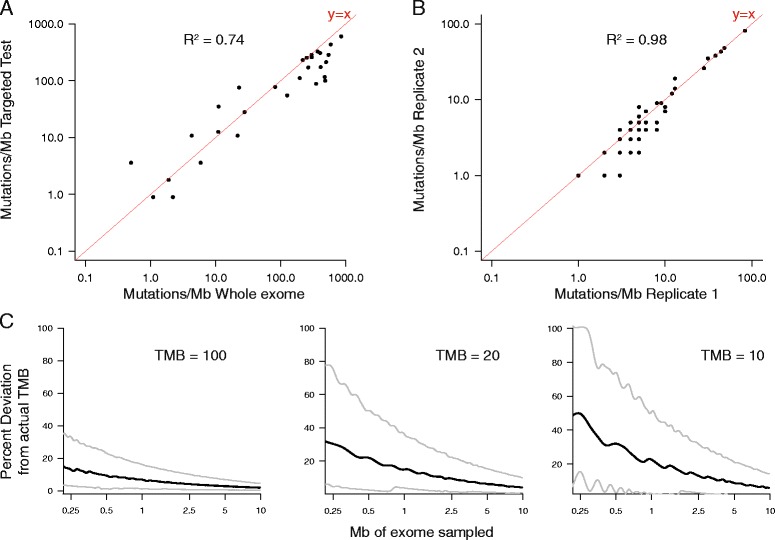
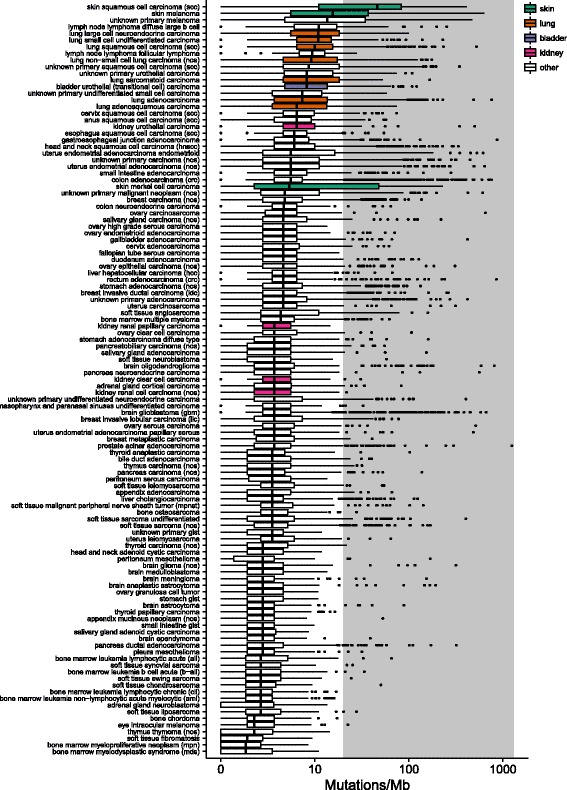
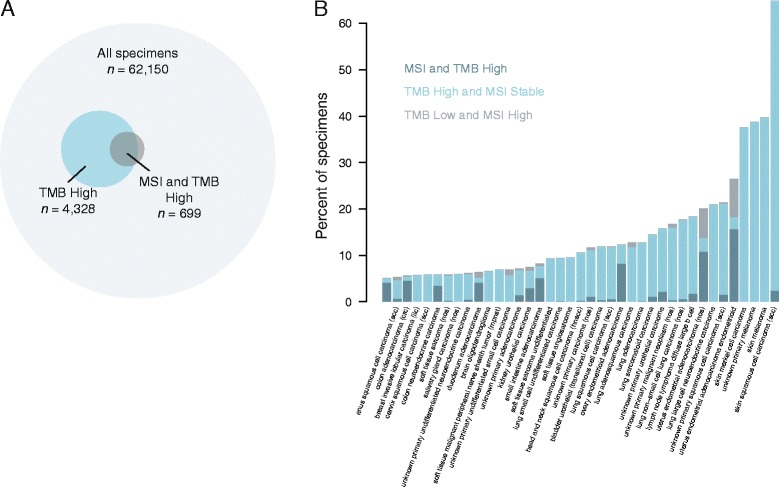
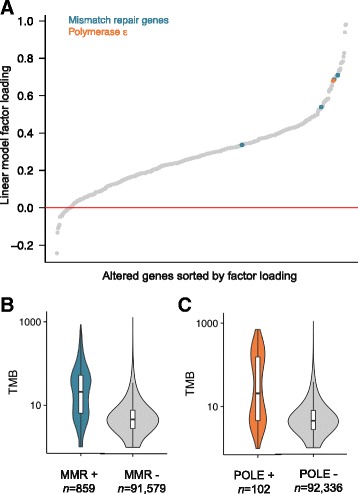
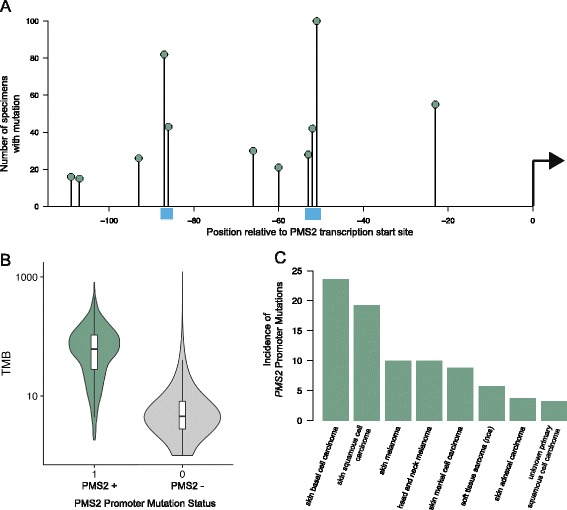
BACKGROUND: High tumor mutational burden (TMB) is an emerging biomarker of sensitivity to immune checkpoint inhibitors and has been shown to be more significantly associated with response to PD-1 and PD-L1 blockade immunotherapy than PD-1 or PD-L1 expression, as measured by immunohistochemistry (IHC). The distribution of TMB and the subset of patients with high TMB has not been well characterized in the majority of cancer types. METHODS: In this study, we compare TMB measured by a targeted comprehensive genomic profiling (CGP) assay to TMB measured by exome sequencing and simulate the expected variance in TMB when sequencing less than the whole exome. We then describe the distribution of TMB across a diverse cohort of 100,000 cancer cases and test for association between somatic alterations and TMB in over 100 tumor types. RESULTS: We demonstrate that measurements of TMB from comprehensive genomic profiling are strongly reflective of measurements from whole exome sequencing and model that below 0.5 Mb the variance in measurement increases significantly. We find that a subset of patients exhibits high TMB across almost all types of cancer, including many rare tumor types, and characterize the relationship between high TMB and microsatellite instability status. We find that TMB increases significantly with age, showing a 2.4-fold difference between age 10 and age 90 years. Finally, we investigate the molecular basis of TMB and identify genes and mutations associated with TMB level. We identify a cluster of somatic mutations in the promoter of the gene PMS2, which occur in 10% of skin cancers and are highly associated with increased TMB. CONCLUSIONS: These results show that a CGP assay targeting ~1.1 Mb of coding genome can accurately assess TMB compared with sequencing the whole exome. Using this method, we find that many disease types have a substantial portion of patients with high TMB who might benefit from immunotherapy. Finally, we identify novel, recurrent promoter mutations in PMS2, which may be another example of regulatory mutations contributing to tumorigenesis.
Overview
The claims and statistics of this paper haven’t been checked yet.
Free: it reads the open-access text and checks the first 5 claims that cite a source we can check. Create a free account to check every claim.
Integrity signals
Registry
Cites
Statistics
Figures
Verification
Claims the paper makes
The claims and statistics of this paper haven’t been checked yet.
Free: it reads the open-access text and checks the first 5 claims that cite a source we can check. Create a free account to check every claim.
Claims other papers make about this one
Each is checked against this paper’s own text: does it say what the citing paper says it does?
The source backs part of the claim, not all of it — or backs it for a different population, condition or comparison.
In the citing paper
“This is at least in part due to activation of the nuclear factor κB (NF-κB) pathway driven by p53 loss, as well as increased tolerance of a higher mutational burden that may ostensibly result in enhanced immunogenicity due to increased neoantigen load143, 144, 145, 146.”
From Co-occurring genomic alterations in non-small-cell lung cancer biology and therapy (2019) · cites this paper as [145]
Experimental — accuracy not yet measuredThe source backs part of the claim, not all of it — or backs it for a different population, condition or comparison.
In the citing paper
“Childhood tumors are considered immunologically ‘cold tumors’ with few infiltrating immune cells and low neoantigen burden precluding robust response to immune checkpoint therapies 39,40.”
From A Phase I/II Trial of Nivolumab plus Ipilimumab in Children and Young Adults with Relapsed/Refractory Solid Tumors: A Children's Oncology Group Study ADVL1412 (2022) · cites this paper as [40]
Experimental — accuracy not yet measuredThe source backs part of the claim, not all of it — or backs it for a different population, condition or comparison.
In the citing paper
“Second, distinct subsets of CRC are characterized by chromosomal instability (CIN) or microsatellite instability (MSI) and are among cancers that exhibit a moderately high tumor mutation burden (TMB) suggesting an extensive degree of genetic heterogeneity [28].”
From Anti-tumor efficacy of a potent and selective non-covalent KRASG12D inhibitor (2022) · cites this paper as [28]
Experimental — accuracy not yet measuredIn the citing paper
“TP53 co-mutations are associated with an inflamed tumor immune microenvironment and increased tumor cell PD-L1 expression in KRAS-mutant NSCLC and GEMMs.”
From Co-occurring genomic alterations in non-small-cell lung cancer biology and therapy (2019) · cites this paper as [145]
In the citing paper
“TMB measured by comprehensive genomic profiling is comparable to measurements by whole exome sequencing and is typically higher in smoking associated lung cancer due to tobacco carcinogenesis”
From Diverse EGFR Exon 20 Insertions and Co-Occurring Molecular Alterations Identified by Comprehensive Genomic Profiling of NSCLC (2018) · cites this paper as [14]
Self-check
Percentages, sums and reported differences re-computed from the paper’s own numbers.
The self-check needs the paper’s full text.
Citations
Cites
Fast and accurate short read alignment with Burrows-Wheeler transform
Li, H., & Durbin, R. (2009) · Bioinformatics · doi:10.1093/bioinformatics/btp324 · Cited by 58,607
PD-1 and PD-L1 Immune Checkpoint Blockade to Treat Breast Cancer
Hartkopf, A. D., Taran, F.-A., Wallwiener, M., Walter, C. B., Krämer, B., Grischke, E.-M., & Brucker, S. Y. (2016) · Breast Care · doi:10.1159/000453569 · Cited by 30,845
The Genome Analysis Toolkit: A MapReduce framework for analyzing next-generation DNA sequencing data
McKenna, A., Hanna, M., Banks, E., Sivachenko, A., Cibulskis, K., Kernytsky, A., Garimella, K., Altshuler, D., Gabriel, S., Daly, M., et al. (2010) · Genome Research · doi:10.1101/gr.107524.110 · Cited by 27,895
The blockade of immune checkpoints in cancer immunotherapy
Pardoll, D. M. (2012) · Nature Reviews Cancer · doi:10.1038/nrc3239 · Cited by 13,838 · cited 1×
“These agents modulate the pathways that control when and where immune responses are mounted, increasing antitumor activity through immune checkpoint blockade [7].”
BackgroundSafety, activity, and immune correlates of anti–PD-1 antibody in cancer
Topalian, S. L., Hodi, F. S., Brahmer, J. R., Gettinger, S. N., Smith, D. C., McDermott, D. F., Powderly, J. D., Carvajal, R. D., Sosman, J. A., Atkins, M. B., et al. (2012) · New England Journal of Medicine · doi:10.1056/nejmoa1200690 · Cited by 12,628 · cited 1×
“Inhibitors of cytotoxic T lymphocyte-associated antigen 4 (CTLA-4) [8, 9] and of programmed cell death protein 1 (PD-1) receptor [10] were the first drugs of this type, which promote T-cell activation [2].”
BackgroundStatistical significance for genomewide studies
Storey, J. D., & Tibshirani, R. (2003) · Proceedings of the National Academy of Sciences · doi:10.1073/pnas.1530509100 · Cited by 9,692 · cited 2×
“For both tests, we corrected for multiple testing using the false discovery rate (FDR) method [66].”
MethodSignatures of mutational processes in human cancer
Initiative, A. P. C. G., Alexandrov, L. B., ICGC Breast Cancer Consortium, ICGC MMML-Seq Consortium, PedBrain, I., Nik-Zainal, S., Wedge, D. C., Aparicio, S. A. J. R., Behjati, S., Biankin, A. V., et al. (2013) · Nature · doi:10.1038/nature12477 · Cited by 9,660 · cited 5×
“Mutations in a number of other genes have also been linked to increased TMB [28, 51], but their function is less well understood.”
BackgroundResultInfluentialAnalysis of protein-coding genetic variation in 60,706 humans
Exome Aggregation Consortium, Lek, M., Karczewski, K. J., Minikel, E. V., Samocha, K. E., Banks, E., Fennell, T., O’Donnell-Luria, A. H., Ware, J. S., Hill, A. J., et al. (2016) · Nature · doi:10.1038/nature19057 · Cited by 9,587 · cited 1×
“Germline alterations occurring with two or more counts in the ExAC database were not counted [65].”
BackgroundPD-1 Blockade in Tumors with Mismatch-Repair Deficiency
Le, D. T., Uram, J. N., Wang, H., Bartlett, B. R., Kemberling, H., Eyring, A. D., Skora, A. D., Luber, B. S., Azad, N. S., Laheru, D., et al. (2015) · New England Journal of Medicine · doi:10.1056/nejmoa1500596 · Cited by 9,377
The cancer genome atlas pan-cancer analysis project
The Cancer Genome Atlas Research Network, Weinstein, J. N., Collisson, E. A., Mills, G. B., Shaw, K. R. M., Ozenberger, B. A., Ellrott, K., Shmulevich, I., Sander, C., & Stuart, J. M. (2013) · Nature Genetics · doi:10.1038/ng.2764 · Cited by 9,092 · cited 3×
“across cancer types and found a wide distribution of TMB across ~20–30 cancer types [28, 51, 54].”
BackgroundMethod
Cited by
Items 601–700 of 1,001
Molecular profiles and tumor mutational burden analysis in Chinese patients with gynecologic cancers
Wang, M., Fan, W., Ye, M., Tian, C., Zhao, L., Wang, J., Han, W., Yang, W., Gu, C., Li, M., et al. (2018) · Scientific Reports · doi:10.1038/s41598-018-25583-6 · Cited by 53
Antibody targeting of B7-H4 enhances the immune response in urothelial carcinoma
Podojil, J. R., Glaser, A. P., Baker, D. S., Courtois, E. T., Fantini, D., Yu, Y., Eaton, V. L., Sivajothi, S. K., Chiang, M., Das, A., et al. (2020) · OncoImmunology · doi:10.1080/2162402x.2020.1744897 · Cited by 48
“11 Discussion Bladder cancer, similar to other solid tumors attributed to carcinogen exposure including lung cancer and melanoma, is driven by a high total mutation burden at approximately 7 mutations/MB (41).”
BackgroundFacts and Hopes in Immunotherapy of Soft-Tissue Sarcomas
Martín‐Broto, J., Moura, D. S., & Tine, B. A. V. (2020) · Clinical Cancer Research · doi:10.1158/1078-0432.ccr-19-3335 · Cited by 50
Kleef, R., Nagy, R., Baierl, A., Bacher, V., Bojar, H., McKee, D. L., Moss, R. W., Thoennissen, N. H., Szász, A. M., & Bakács, T. (2020) · Cancer Immunology Immunotherapy · doi:10.1007/s00262-020-02751-0 · Cited by 51
Abscopal Effects of Local Radiotherapy Are Dependent on Tumor Immunogenicity
Lai, J., Zhu, Y., Liu, Y., Zhou, L., Hu, L., Chen, L., & Zhang, Q. (2021) · Frontiers in Oncology · doi:10.3389/fonc.2021.690188 · Cited by 56
Li, X., Wang, Y., Li, X., Feng, G., Hu, S., & Bai, Y. (2021) · Frontiers in Immunology · doi:10.3389/fimmu.2021.638763 · Cited by 56
“After defining the sample groupings, we estimated the tumor mutational burden (TMB) of each patient based on the reported literature (29).”
MethodSun, J., Shi, R., Zhang, X., Fang, D., Rauch, J., Lu, S., Wang, X., Käsmann, L., Ma, J., Belka, C., et al. (2021) · OncoImmunology · doi:10.1080/2162402x.2021.1964189 · Cited by 51
“Tumor mutational burden (TMB) was calculated with non-synonymous somatic mutations using 38 Mb as the estimate of the exome size.(30)”
MethodSelf-citationLuo, P., Lin, A., Li, K., Wei, T., & Zhang, J. (2019) · Journal of Thoracic Oncology · doi:10.1016/j.jtho.2019.08.2509 · Cited by 46
Liu, X., Wang, W., Liu, X., Zhang, Z., Yu, L., Li, R., Guo, D., Cai, W., Quan, X., Wu, H., et al. (2022) · Clinical and Translational Medicine · doi:10.1002/ctm2.670 · Cited by 64
Tang, Y., Guo, C., Zhao, Y. C., Wang, Y., Zhang, Y., & Wang, D. (2022) · Frontiers in Immunology · doi:10.3389/fimmu.2022.862527 · Cited by 54
“TMB values reflecting total mutation numbers for each HCC patient were calculated with nonsynonymous mutations using 38MB as the estimate of the exome size (44, 45).”
MethodImmune microenvironment infiltration landscape and immune-related subtypes in prostate cancer
Wu, W., Wang, X., Le, W., Lu, C., Li, H., Zhu, Y., Chen, X., An, W., Xu, C., Wu, Q., et al. (2023) · Frontiers in Immunology · doi:10.3389/fimmu.2022.1001297 · Cited by 50
“Previous studies have shown that patients with high tumor mutation produce more novel tumor antigen, which makes the tumors more susceptible to attack by immune cells (5, 57).”
BackgroundQuintanilha, J. C. F., Graf, R. P., Fisher, V. A., Oxnard, G. R., Ellis, H., Panarelli, N. C., Lin, D. I., Li, G., Huang, R. S. P., Ross, J. S., et al. (2023) · JAMA Network Open · doi:10.1001/jamanetworkopen.2022.52244 · Cited by 50
Self-citationSo, W. V., Dejardin, D., Rossmann, E. D., & Charo, J. (2023) · Journal for ImmunoTherapy of Cancer · doi:10.1136/jitc-2022-006464 · Cited by 50
Lewis, K. D., Peris, K., Sekulić, A., Stratigos, A., Dunn, L. A., Eroglu, Z., Chang, A. L. S., Migden, M. R., Yoo, S.-Y., Mohan, K. K., et al. (2023) · Annals of Oncology · doi:10.1016/j.annonc.2023.10.123 · Cited by 45
Necchi, A., Spiess, P. E., de Pádua, T. C., Li, R., Grivas, P. D., Huang, R. S. P., Lin, D. I., Danziger, N. A., Ross, J. S., Jacob, J. M., et al. (2023) · JAMA Network Open · doi:10.1001/jamanetworkopen.2023.48002 · Cited by 49
Self-citationSu, X., Li, J., Xu, X., Ye, Y., Wang, C., Pang, G., Liu, W., Liu, A., Zhao, C., & Hao, X. (2024) · Journal of Translational Medicine · doi:10.1186/s12967-024-05552-6 · Cited by 50
“Low tumor mutation burden means that the tumor expresses fewer tumor-associated neoantigens, which leads to diminished effector T-cell recognition and killing [422–425].”
BackgroundGenomic instability as a driver and suppressor of anti-tumor immunity
Requesens, M., Foijer, F., Nijman, H. W., & de Bruyn, M. (2024) · Frontiers in Immunology · doi:10.3389/fimmu.2024.1462496 · Cited by 51
NCOA3 impairs the efficacy of anti-PD-L1 therapy via HSP90α/EZH2/CXCL9 axis in colon cancer
Liu, J., Su, Y., Zhang, C., Dong, H., Yu, R., Yang, X., Tian, Y., Feng, Y., Zhang, J., Shi, M., et al. (2025) · International Immunopharmacology · doi:10.1016/j.intimp.2025.114579 · Cited by 47
Anderson, R., & Rapoport, B. L. (2018) · Frontiers in Oncology · doi:10.3389/fonc.2018.00080 · Cited by 47
“Augmentation of Tumor immunogenicity Other strategies include measurement of the tumor mutational burden as an independent predictor of both tumor immunogenicity and the response to negative immune checkpoint blockade (2, 35).”
BackgroundLi, J., Ybarra, R., Mak, J., Hérault, A., de Almeida, P. E., Arrazate, A., Ziai, J. M., Tótpál, K., Junttila, M. R., Walsh, K. B., et al. (2018) · Clinical Cancer Research · doi:10.1158/1078-0432.ccr-18-1139 · Cited by 48
“On the basis of the low frequency of mismatch repair deficiency andmedian mutation load detected in breast cancer (11, 20), this indication may not be optimal for checkpoint blockade.”
BackgroundGiannatempo, P., Raggi, D., Marandino, L., Bandini, M., Farè, E., Calareso, G., Colecchia, M., Gallina, A., Ross, J. S., Alessi, A., et al. (2020) · Annals of Oncology · doi:10.1016/j.annonc.2020.09.012 · Cited by 49
Self-citationThe Immune Microenvironment in Penile Cancer and Rationale for Immunotherapy
Ahmed, M. E., Falasiri, S. S. A., Hajiran, A. J., Chahoud, J., & Spiess, P. E. (2020) · Journal of Clinical Medicine · doi:10.3390/jcm9103334 · Cited by 55
“TMB has been described in tumors with mismatch repair defect (MMR), or microsatellite instability (MSI) defect, such as colorectal cancers, or defect in DNA replication [81,82].”
BackgroundHuo, J., Wu, L., & Zang, Y. (2020) · Frontiers in Molecular Biosciences · doi:10.3389/fmolb.2020.581354 · Cited by 52
Next Generation Sequencing in Cytopathology: Focus on Non-Small Cell Lung Cancer
Pisapia, P., Pepe, F., Iaccarino, A., Sgariglia, R., Nacchio, M., Conticelli, F., Salatiello, M., Tufano, R., Russo, G., Gragnano, G., et al. (2021) · Frontiers in Medicine · doi:10.3389/fmed.2021.633923 · Cited by 50
Stelwagen, J., de Vries, E. G. E., & Walenkamp, A. (2021) · JAMA Oncology · doi:10.1001/jamaoncol.2020.8072 · Cited by 46
Clinicopathologic and genomic characterization of PD-L1-positive uterine cervical carcinoma
Huang, R. S. P., Haberberger, J., Murugesan, K., Danziger, N. A., Hiemenz, M., Severson, E. A., Duncan, D. L., Ramkissoon, S. H., Ross, J. S., Elvin, J. A., et al. (2021) · Modern Pathology · doi:10.1038/s41379-021-00780-3 · Cited by 46
Self-citationChibuk, J., Flory, A., Kruglyak, K. M., Leibman, N. F., Nahama, A., Dharajiya, N. G., van den Boom, D., Jensen, T. J., Friedman, J. S., Shen, M. R., et al. (2021) · Frontiers in Veterinary Science · doi:10.3389/fvets.2021.664718 · Cited by 53
“6 mutations/Mb and increasing with patient age (82).”
BackgroundFitzpatrick, M. J., Massoth, L. R., Marcus, C. B., Vergilio, J., Severson, E. A., Duncan, D. L., Ramkissoon, S. H., Hasserjian, R. P., Kim, A. S., Sohani, A. R., et al. (2021) · The American Journal of Surgical Pathology · doi:10.1097/pas.0000000000001708 · Cited by 47
Cattaneo, C. M., Battaglia, T., Urbanus, J. H. M., Moravec, Ž., Voogd, R., de Groot, R., Hartemink, K. J., Haanen, J. B. A. G., Voest, E. E., Schumacher, T. N., et al. (2023) · Nature Biotechnology · doi:10.1038/s41587-022-01547-0 · Cited by 49
Methylthioadenosine Phosphorylase Genomic Loss in Advanced Gastrointestinal Cancers
Ngoi, N. Y. L., Tang, T., Gaspar, C. F., Pavlick, D. C., Buchold, G. M., Scholefield, E. L., Parimi, V., Huang, R. S. P., Janovitz, T., Danziger, N. A., et al. (2024) · The Oncologist · doi:10.1093/oncolo/oyae011 · Cited by 49
“23 Assessment of microsatellite instability (MSI) was performed from DNA sequencing across 114 loci, as previously described.”
MethodSelf-citationYin, X., Song, X., Deng, W., BLAKE, N. W., Luo, X., & Meng, J. (2024) · Frontiers in Oncology · doi:10.3389/fonc.2024.1483454 · Cited by 50
Hatakeyama, K., Nagashima, T., Urakami, K., Ohshima, K., Serizawa, M., Ohnami, S., Shimoda, Y., Ohnami, S., Maruyama, K., Naruoka, A., et al. (2018) · Biomedical Research · doi:10.2220/biomedres.39.159 · Cited by 49
Liquid biopsies for hepatocellular carcinoma
Su, Y., Kim, A. K., & Jain, S. (2018) · Translational research · doi:10.1016/j.trsl.2018.07.001 · Cited by 47
“Recent studies have shown that TMB can be accurately measured in smaller gene panels limited to several hundred genes instead of the whole exome.(153,154) Since a tumor biopsy may not capture tumor heterogeneity, emerging evidence indicates that it may be feasible and more effectively to asses TMB in ctDNA.”
Risk of Rare Cancers Among Solid Organ Transplant Recipients
D’Arcy, M. E., Castenson, D., Lynch, C. F., Kahn, A. R., Morton, L. M., Shiels, M. S., Pfeiffer, R. M., & Engels, E. A. (2020) · JNCI Journal of the National Cancer Institute · doi:10.1093/jnci/djaa078 · Cited by 47
“mutational burden (14), and the excess risk in SOTRs may be a”
BackgroundZhang, L., Chen, J., Cheng, T., Yang, H., Li, H., & Pan, C. (2020) · Journal of Cancer · doi:10.7150/jca.42531 · Cited by 45
“0 Mb, and suggested that many cancer types have a substantial portion of patients with high TMB who might benefit from immunotherapy [39].”
BackgroundPeng, X., Zhu, J., Liu, S., Luo, C. H., Wu, X., Liu, Z., Li, Y., & Yuan, R. (2022) · Frontiers in Immunology · doi:10.3389/fimmu.2022.990790 · Cited by 49
“TMB plays an important role in the immunotherapy of tumors, and the higher the TMB, the better the immunotherapy benefits (22, 23).”
BackgroundImmunotherapy for mucosal melanoma
Yentz, S. E., & Lao, C. D. (2019) · Annals of Translational Medicine · doi:10.21037/atm.2019.05.62 · Cited by 45
Coming in from the cold: overcoming the hostile immune microenvironment of medulloblastoma
Eisemann, T., & Wechsler‐Reya, R. J. (2022) · Genes & Development · doi:10.1101/gad.349538.122 · Cited by 46
“Pediatric tumors, and in particular brain tumors like medulloblastoma, have a relatively low mutation rate (Parsons et al. 2011; Chalmers et al. 2017).”
BackgroundGong, Z., Jia, Q., Chen, J., Diao, X., Gao, J., Wang, X., & Zhu, B. (2019) · Journal of Thoracic Oncology · doi:10.1016/j.jtho.2019.01.024 · Cited by 43
Prognostic role of tumor mutation burden in hepatocellular carcinoma after radical hepatectomy
Cai, H., Zhang, Y., Zhang, H., Cui, C., Li, C., & Lu, S. (2020) · Journal of Surgical Oncology · doi:10.1002/jso.25859 · Cited by 53
Heydt, C., Rehker, J., Pappesch, R., Buhl, T., Ball, M., Siebolts, U., Haak, A., Lohneis, P., Büttner, R., Hillmer, A. M., et al. (2020) · Scientific Reports · doi:10.1038/s41598-020-68394-4 · Cited by 45
Wang, M., Chen, X., Dai, Y., Wu, D., Liu, F., Yang, Z., Song, B., Xie, L., Yang, L., Zhao, W., et al. (2022) · Molecular Diagnosis & Therapy · doi:10.1007/s40291-022-00579-1 · Cited by 47
Sarcoma–The standard-bearer in cancer discovery
Potter, J. W., Jones, K. B., & Barrott, J. J. (2018) · Critical Reviews in Oncology/Hematology · doi:10.1016/j.critrevonc.2018.03.007 · Cited by 43
Riefolo, M., Porcellini, E., Dika, E., Broseghini, E., & Ferracin, M. (2018) · Molecular Oncology · doi:10.1002/1878-0261.12412 · Cited by 47
“Cutaneous melanoma has one of the highest genomic mutational burdens (number of mutations per megabase) among human cancers (Chalmers et al., 2017).”
BackgroundImmune Checkpoint Blockade for Advanced NSCLC: A New Landscape for Elderly Patients
Perrotta, F., Rocco, D., Vitiello, F., Palma, R. D., Guerra, G., Luca, A. D., Navani, N., & Bianco, A. (2019) · International Journal of Molecular Sciences · doi:10.3390/ijms20092258 · Cited by 45
“Conversely, the tumor mutational burden (TMB), defined as the total number of somatic mutations in a defined region of a tumour genome, a potential predictor of response to ICIs, appears to increase with age [56].”
BackgroundWu, Z., Wang, M.-R., Liu, Q., Liu, Y., Zhu, K., Chen, L., Guo, H., Li, Y., & Shi, B. (2020) · International Journal of Medical Sciences · doi:10.7150/ijms.39056 · Cited by 48
Cameselle‐García, S., Abdulkader-Sande, S., Sánchez‐Ares, M., Rodríguez-Carnero, G., García-Gómez, J., Gudé, F., Abdulkader, I., & Cameselle‐Teijeiro, J. (2021) · Oncology Letters · doi:10.3892/ol.2021.12814 · Cited by 47
“There are early driver mutations shared by more than one category of thyroid tumors (31,32) and DTCs have a relatively low level of somatic mutations compared to cancers from other sites (33,34).”
BackgroundInfluentialLin, D. I., Huang, R. S. P., Mata, D. A., Decker, B. J., Danziger, N. A., Lechpammer, M., Hiemenz, M., Ramkissoon, S. H., Ross, J. S., & Elvin, J. A. (2021) · Modern Pathology · doi:10.1038/s41379-021-00873-z · Cited by 44
Self-citationLai, Z., Brosnan, M., Sokol, E. S., Xie, M., Dry, J. R., Harrington, E. A., Barrett, J. C., & Hodgson, D. (2022) · BMC Cancer · doi:10.1186/s12885-021-09082-y · Cited by 49
“Other studies have also assessed the profile of HRR mutations and measurements of DNA repair deficiency across tumour types [21, 39, 40].”
BackgroundPan‐cancer analysis reveals sex‐specific signatures in the tumor microenvironment
Han, J., Yang, Y., Li, X., Wu, J., Sheng, Y., Qiu, J., Wang, Q., Li, J., He, Y., Cheng, L., et al. (2022) · Molecular Oncology · doi:10.1002/1878-0261.13203 · Cited by 47
Self-citationKim, Y., Shim, Y., Seo, J., Choi, Z., Lee, Y. J., Shin, S., Kim, S. W., Kim, S., Choi, J. R., Lee, J., et al. (2023) · Clinical Cancer Research · doi:10.1158/1078-0432.ccr-22-3715 · Cited by 46
Yu, K., Deuitch, N. T., Merguerian, M., Cunningham, L., Davis, J., Bresciani, E., Diemer, J. L., Andrews, E. T., Young, A., Donovan, F. X., et al. (2024) · Blood Advances · doi:10.1182/bloodadvances.2023011165 · Cited by 47
“51 The combined annotation – dependent depletion Phred-score of THOC2 and SMC2 mutations are 32 and 29.2, respectively, both predicting a highly deleterious risk.”
BackgroundInfluentialChen, B., Liu, S., Zhu, Y., Wang, R., Cheng, X., Chen, B., Dragomir, M. P., Zhang, Y., Hu, Y., Liu, M., et al. (2024) · Nature Communications · doi:10.1038/s41467-024-46307-7 · Cited by 46
Chaudhary, R., Quagliata, L., Jermann, P. M., Alborelli, I., Cyanam, D., Mittal, V., Tom, W., Au-Young, J. K., Sadis, S. E., & Hyland, F. C. L. (2018) · Translational Lung Cancer Research · doi:10.21037/tlcr.2018.08.01 · Cited by 46
“To overcome these limitations, a number of methods are being developed to estimate TMB using next-generation DNA sequencing gene panels (29,30).”
BackgroundMethodBlaeschke, F., Paul, M. C., Schuhmann, M. U., Rabsteyn, A., Schroeder, C., Casadei, N., Matthes, J., Mohr, C., Lotfi, R., Wagner, B., et al. (2019) · Cytotherapy · doi:10.1016/j.jcyt.2019.06.009 · Cited by 45
Wu, H., Wang, Z., Zhao, Q., Wang, F., & Xu, R. (2019) · Journal for ImmunoTherapy of Cancer · doi:10.1186/s40425-019-0681-2 · Cited by 42
A Malignant Neoplasm From the Jejunum With a MALAT1-GLI1 Fusion and 26-Year Survival History
Prall, O. W. J., McEvoy, C. R. E., Byrne, D. J., Iravani, A., Browning, J., Choong, D. Y. H., Yellapu, B., O’Haire, S., Smith, K. M., Luen, S. J., et al. (2020) · International Journal of Surgical Pathology · doi:10.1177/1066896919900548 · Cited by 42
Zheng, K., Wan, H., Zhang, J., Shan, G., Chai, N., Li, D., Fang, N., Liu, L., Zhang, J., Du, R., et al. (2020) · Journal of Translational Medicine · doi:10.1186/s12967-020-02373-1 · Cited by 43
Hempel, D., Ebner, F. K., Garg, A., Trepotec, Ž., Both, A., Stein, W., Gaumann, A. K. A., Güttler, L., Janni, W., deGregorio, A., et al. (2020) · Scientific Reports · doi:10.1038/s41598-020-67393-9 · Cited by 44
Eskander, R. N., Elvin, J. A., Gay, L. M., Ross, J. S., Miller, V. A., & Kurzrock, R. (2020) · JCO Precision Oncology · doi:10.1200/po.19.00248 · Cited by 51
Self-citationIntegrating Circulating Biomarkers in the Immune Checkpoint Inhibitor Treatment in Lung Cancer
Duchemann, B., Remón, J., Naigeon, M., Mezquita, L., Ferrara, R., Cassard, L., Jouniaux, J.-M., Boselli, L., Grivel, J., Auclin, É., et al. (2020) · Cancers · doi:10.3390/cancers12123625 · Cited by 44
“Both microsatellite instability (MSI) and mismatch repair deficiency (MMRD) represent hypermutator phenotypes [27].”
BackgroundCurrent Status and Future Targeted Therapy in Adrenocortical Cancer
Alyateem, G., & Nilubol, N. (2021) · Frontiers in Endocrinology · doi:10.3389/fendo.2021.613248 · Cited by 44
“6 mutations per megabase (35), the tumor mutation burden in ACC is considered relatively low.”
BackgroundChen, X., Fang, L., Zhu, Y., Bao, Z., Wang, Q., Liu, R., Sun, W., Du, H., Lin, J., Yu, B., et al. (2021) · Cancer Immunology Immunotherapy · doi:10.1007/s00262-021-02943-2 · Cited by 43
“The current study demonstrated a positive correlation between tTMB obtained from the OncoScreen panel and WES, which is consistent with previous studies [18, 28].”
BackgroundResultZhou, C., Lin, A., Cao, M., Ding, W., Mou, W., Guo, N., Chen, Z., Zhang, J., & Luo, P. (2021) · Frontiers in Immunology · doi:10.3389/fimmu.2021.634741 · Cited by 42
Chung, J., Negm, L., Bianchi, V., Stengs, L. K., Das, A., Liu, Z. A., Sudhaman, S., Aronson, M. D., Brunga, L., Edwards, M., et al. (2022) · Journal of Clinical Oncology · doi:10.1200/jco.21.02873 · Cited by 44
Self-citationKrebs, M., Delord, J., Evans, T. R. J., de Jonge, M. J. A., Kim, S., Meurer, M., Postel-Vinay, S. C., Lee, J.-S., Angell, H. K., Rocher-Ros, V., et al. (2023) · Lung Cancer · doi:10.1016/j.lungcan.2023.107216 · Cited by 43
Wang, C., Li, F., Xie, G., Qiao, S., Shi, X., Deng, J., Liang, H., Lin, C., Zhao, X., Wu, K., et al. (2019) · International Journal of Molecular Sciences · doi:10.3390/ijms20174251 · Cited by 48
Mao, M., Yu, Q., Huang, R., Lu, Y., Wang, Z., & Liao, L. (2020) · Cancer Medicine · doi:10.1002/cam4.2801 · Cited by 48
Malhotra, J. D., Ryan, B. M., Patel, M. M., Chan, N., Guo, Y., Aisner, J., Jabbour, S. K., & Pine, S. R. (2022) · Journal of Thoracic Disease · doi:10.21037/jtd-21-1377 · Cited by 42
“Normalized TMB was calculated as the absolute mutation burden (number of nonsynonymous mutations/sample) divided by the genomic coverage for that sample (12).”
van Dorp, J., & van der Heijden, M. S. (2023) · Frontiers in Immunology · doi:10.3389/fimmu.2023.1235884 · Cited by 47
“Although not as high as melanoma, average TMB in BC is relatively high, similar to NSCLC (57, 58).”
BackgroundChaudhary, N., Chibly, A. M., Collier, A., Martinalbo, J., Perez-Moreno, P., Moore, H. M., Luhn, P., Metcalfe, C., & Hafner, M. A. (2024) · npj Breast Cancer · doi:10.1038/s41523-024-00617-7 · Cited by 43
“Tumor mutational burden (TMB), a measure of the number of somatic mutations identi fi ed per megabase of DNA sequenced, was calculated for most samples 60 .”
Wang, C., Liu, T.-C., Lai, P.-J., Muzakky, H., Wang, Y., Yu, M.-H., Wu, C.-H., & Chao, T. (2024) · Medical Image Analysis · doi:10.1016/j.media.2024.103372 · Cited by 46
Bjerre, M. T., Strand, S. H., Nørgaard, M., Kristensen, H., Rasmussen, A. K., Mortensen, M. M., Fredsøe, J., Mouritzen, P., Ulhøi, B. P., Orntoft, T. F., et al. (2019) · International Journal of Molecular Sciences · doi:10.3390/ijms20051173 · Cited by 47
Immunologic and immunogenomic aspects of tumor progression
Ladányi, A., & Tímár, J. (2019) · Seminars in Cancer Biology · doi:10.1016/j.semcancer.2019.08.011 · Cited by 46
Current and future molecular diagnostics of gastric cancer
Choi, R. S.-Y., Lai, W. Y. X., Lee, L. T. C., Wong, W. L. C., Pei, X. M., Tsang, H. F., Leung, J. J., Cho, W. C. S., Chu, M. K. M., Wong, E. Y. L., et al. (2019) · Expert Review of Molecular Diagnostics · doi:10.1080/14737159.2019.1660645 · Cited by 41
“NGS panel is a reliable technology to analyze TMB, which was well reported by previous studies [94].”
BackgroundResultMelanomas with activating RAF1 fusions: clinical, histopathologic, and molecular profiles
Williams, E. A., Shah, N., Montesion, M., Sharaf, R., Pavlick, D. C., Sokol, E. S., Alexander, B. M., Venstrom, J. M., Elvin, J. A., Ross, J. S., et al. (2020) · Modern Pathology · doi:10.1038/s41379-020-0510-7 · Cited by 43
Self-citationGenomics and Therapeutic Vulnerabilities of Primary Bone Tumors
Scotlandi, K., Hattinger, C. M., Pellegrini, E., Gambarotti, M., & Serra, M. (2020) · Cells · doi:10.3390/cells9040968 · Cited by 45
“frequent in HGOS, its TMB can be defined as low to moderate, with an average of only seven (or little more) neoepitopes per tumor [60,61], a number that, very likely, is not sufficient to efficiently stimulate the immune system and to determine a good response to anti‐PD‐1/PD‐L1 treatments.”
BackgroundMassoth, L. R., Hung, Y. P., Nardi, V., Nielsen, G. P., Hasserjian, R. P., Louissaint, A., Fisch, A. S., Deshpande, V., Zukerberg, L. R., Lennerz, J. K., et al. (2020) · Modern Pathology · doi:10.1038/s41379-020-0582-4 · Cited by 45
Self-citationLi, J., Jiang, W., Wei, J., Zhang, J., Cai, L., Luo, M., Wang, Z., Sun, W., Wang, S., Wang, C., et al. (2020) · Journal of Translational Medicine · doi:10.1186/s12967-020-02449-y · Cited by 43
Genomic Characterization of de novo Metastatic Breast Cancer
Garrido-Castro, A. C., Spurr, L. F., Hughes, M. E., Li, Y. Y., Cherniack, A. D., Kumari, P., Lloyd, M. R., Bychkovsky, B., Barroso‐Sousa, R., Lascio, S. D., et al. (2021) · Clinical Cancer Research · doi:10.1158/1078-0432.ccr-20-1720 · Cited by 45
“Estimation of TMB with targeted gene panels is influenced by the size of the panel and more likely to overestimate TMB compared with WES, particularly in tumors with lower mutational burden (45, 46).”
Lyu, Q., Lin, A., Cao, M., Xu, A., Luo, P., & Zhang, J. (2020) · Cancer Control · doi:10.1177/1073274820976665 · Cited by 40
“The TMB was calculated by dividing the number of nonsynonymous mutations by 38 MB.(41) Visualizing the genetic mutations and clinical characteristics of the top 20 most mutated genes in the immunotherapy cohort and TCGA-BLCA cohort were performed by using the R package ComplexHeatmap,(42) and visualizing the TP53 gene…”
MethodGenetic alterations and their therapeutic implications in epithelial ovarian cancer
Lapke, N., Chen, C., Chang, T., Chao, A., Lu, Y., Lai, C., Tan, K. T., Chen, H., Lu, H., & Chen, S. (2021) · BMC Cancer · doi:10.1186/s12885-021-08233-5 · Cited by 43
“These results are consistent with the literature [85].”
ResultAamdal, E., Inderberg, E. M., Ellingsen, E. B., Rasch, W., Brunsvig, P. F., Aamdal, S., Heintz, K., Vodák, D., Nakken, S., Hovig, E. J., et al. (2021) · Frontiers in Immunology · doi:10.3389/fimmu.2021.663865 · Cited by 46
“The distribution of TMB is representative and consistent with what has previously described in patients with metastatic melanoma (26).”
ResultKasuga, A., Okamoto, T., Udagawa, S., Mori, C., Mie, T., Furukawa, T., Yamada, Y., Takeda, T., Matsuyama, M., Sasaki, T., et al. (2022) · International Journal of Molecular Sciences · doi:10.3390/ijms23031205 · Cited by 43
Expanding Therapeutic Opportunities for Extrapulmonary Neuroendocrine Carcinoma
Frizziero, M., Kilgour, E., Simpson, K., Rothwell, D. G., Moore, D. A., Frese, K. K., Galvin, M., Lamarca, Á., Hubner, R. A., Valle, J. W., et al. (2022) · Clinical Cancer Research · doi:10.1158/1078-0432.ccr-21-3058 · Cited by 44
Jin, K., Yu, Y., Zeng, H., Liu, Z., You, R., Zhang, H., Liu, C., Su, X., Yan, S. R., Chang, Y., et al. (2022) · British Journal of Cancer · doi:10.1038/s41416-022-01725-6 · Cited by 44
“TMB ≥ 10 mut/Mb was defined as TMB group, while TMB < 10 mut/Mb was defined as TMB group [27].”
MethodKim, J. H., Ryu, M., Park, Y. S., Ma, J., Lee, S., Kim, D., & Kang, Y. (2022) · BMC Cancer · doi:10.1186/s12885-022-09488-2 · Cited by 45
Girard, N., Basse, C., Schrock, A. B., Ramkissoon, S. H., Killian, K. J., & Ross, J. S. (2022) · The Oncologist · doi:10.1093/oncolo/oyac115 · Cited by 47
Self-citationCharacterization of novel CTNNB1 mutation in Craniopharyngioma by whole-genome sequencing
He, J., Zeng, Z., Wang, Y., Deng, J., Tang, X., Liu, F., Huang, J., Chen, H., Liang, R., Zan, X., et al. (2021) · Molecular Cancer · doi:10.1186/s12943-021-01468-7 · Cited by 42
“44 by Pearson’s correlation test), consistent with previous reports [22, 23].”
ResultLOXL2 in Cancer: A Two-Decade Perspective
Cano, A., Eraso, P., Mazón, M. J., & Portillo, F. (2023) · International Journal of Molecular Sciences · doi:10.3390/ijms241814405 · Cited by 46
“This finding aligns with the high tumour burden typically associated with melanoma [52].”
BackgroundTherapeutic Approaches for Non-Melanoma Skin Cancer: Standard of Care and Emerging Modalities
Sol, S., Boncimino, F., Todorova, K. A., Waszyn, S., & Mandinova, A. (2024) · International Journal of Molecular Sciences · doi:10.3390/ijms25137056 · Cited by 52
“The median number of mutations per megabase (Mb) is 45.2, 47.3, and 53.9 in cSCC, BCC, and MCC, respectively [25,26].”
BackgroundInfluentialHepatocellular Carcinoma Immunotherapy: Predictors of Response, Issues, and Challenges
Rizzo, A., Brunetti, O., & Brandi, G. (2024) · International Journal of Molecular Sciences · doi:10.3390/ijms252011091 · Cited by 45
“Consequently, CTNNB1 is under evaluation as a potentially useful biomarker to guide the use of ICIs in HCC. Tumor mutational burden (TMB) is a significant independent indicator of the effectiveness of ICIs [62,63].”
BackgroundImplementation of “clinical sequencing” in cancer genome medicine in Japan
Kohno, T. (2017) · Cancer Science · doi:10.1111/cas.13486 · Cited by 43
Genomic testing for pancreatic cancer in clinical practice as real-world evidence
Hayashi, H., Tanishima, S., Fujii, K., Mori, R., Okamura, Y., Yanagita, E., Matsuoka, R., Amano, T., Kinoshita, I., Komatsu, Y., et al. (2018) · Pancreatology · doi:10.1016/j.pan.2018.07.006 · Cited by 43
The tumour immune landscape and its implications in cutaneous melanoma
Attrill, G. H., Ferguson, P. M., Palendira, U., Long, G. V., Wilmott, J. S., & Scolyer, R. A. (2020) · Pigment Cell & Melanoma Research · doi:10.1111/pcmr.12926 · Cited by 46
“Melanoma has the highest prevalence of somatic mutations of any major cancer type (Alexandrov et al., 2013; Chalmers et al., 2017), with a mutational signature closely associated with UV radiation (Hayward et al., 2017).”
BackgroundAllele-specific expression: applications in cancer and technical considerations
Robles‐Espinoza, C. D., Mohammadi, P., Bonilla, X., & Gutiérrez‐Arcelus, M. (2020) · Current Opinion in Genetics & Development · doi:10.1016/j.gde.2020.10.007 · Cited by 43
Chen, C., Liu, S., Jiang, X., Huang, L., Chen, F., Wei, X., Guo, H., Shao, Y. W., Li, Y., & Li, W. (2021) · Experimental Hematology and Oncology · doi:10.1186/s40164-021-00215-4 · Cited by 40
“Tumors with high TMB are more likely to induce neoantigens’ production, making them a target of activated immune cells [11, 12].”
BackgroundBurcher, K. M., Lantz, J. W., Gavrila, E., Abreu, A., Burcher, J. T., Faucheux, A. T., Xie, A., Jackson, C. W., Song, A. H., Hughes, R. T., et al. (2021) · Cancers · doi:10.3390/cancers13225733 · Cited by 42
Predictive biomarkers for immune checkpoint inhibitor response in urothelial cancer
Parent, P., Marcq, G., Adeleke, S. M., Turpin, A., Boussios, S., Rassy, E., & Penel, N. (2023) · Therapeutic Advances in Medical Oncology · doi:10.1177/17588359231192402 · Cited by 44
Prendergast, E. N., Holman, L. L., Liu, A. Y., Lai, T. S., Campos, M. P., Fahey, J. N., Wang, X., Abdelaal, N., Rao, J. Y., Elvin, J. A., et al. (2019) · Gynecologic Oncology · doi:10.1016/j.ygyno.2019.06.016 · Cited by 49
“1megabases (Mb) of sequenced DNA for each case based on the number of somatic base substitution or indel alterations per Mb after filtering to remove known somatic and deleterious mutations, as previously described [10].”
Method
Metadata
- Authors
- Chalmers, Z. R., Connelly, C. F., Fabrizio, D., Gay, L., Ali, S. M., Ennis, R., Schrock, A., Campbell, B., Shlien, A., Chmielecki, J., Huang, F., He, Y., Sun, J., Tabori, U., Kennedy, M., Lieber, D. S., Roels, S., White, J., Otto, G. A., Ross, J. S., Garraway, L., Miller, V. A., Stephens, P. J., & Frampton, G. M.
- Affiliations
- Foundation Medicine (United States) (US)
- Hospital for Sick Children (CA)
- Harvard University (US)
- Broad Institute (US)
- Corresponding author
- Frampton, Garrett M.
- ORCID
- Venue
- Genome Medicine
- Published
- 2017-04-19
- Volume
- 9
- Issue
- 1
- Pages
- 34-34
- ISSN
- 1756-994X (ISSN-L)
- PMC
- PMC5395719
- OpenAlex
- W2606495925
- Cited by
- 3,519
- References
- 78
- Citations by year
- 2026: 200 · 2025: 268 · 2024: 365 · 2023: 499 · 2022: 553 · 2021: 565 · 2020: 498 · 2019: 330 · 2018: 195 · 2017: 43
- FWCI
- 131.26
- Type
- journal article
- Language
- en
- Open access
- gold
- doi.org
- Licence
- cc-by
- creativecommons.org/licenses/by/4.0/ (tdm)
- creativecommons.org/licenses/by/4.0/ (vor)
- Locations
- Genome Medicine (publishedVersion, cc-by)
- PubMed Central (publishedVersion, cc-by)
- PubMed (publishedVersion)
- Digital Access to Scholarship at Harvard (DASH) (Harvard University) (submittedVersion, cc-by)
- DOAJ (DOAJ: Directory of Open Access Journals) (submittedVersion, cc-by-sa)
- Funders
- Prostate Cancer Foundation (Young Investigator Award)
- U.S. Department of Defense (Prostate Cancer Research Program)
- Topics
- Health Sciences › Medicine › Oncology › Cancer Immunotherapy and Biomarkers
- Life Sciences › Biochemistry, Genetics and Molecular Biology › Cancer Research › Cancer Genomics and Diagnostics
- Health Sciences › Medicine › Pathology and Forensic Medicine › Genetic factors in colorectal cancer
- Keywords
- tumor mutational burden, comprehensive genomic profiling, targeted sequencing, microsatellite instability, regulatory mutations, somatic mutations, immunotherapy biomarkers, immune checkpoint inhibitors, PD-1/PD-L1 blockade, tumor age, rare tumor, cancer genomics
- MeSH terms
- Mismatch Repair Endonuclease PMS2, Adolescent, Adult, Age Factors, Aged, Aged, 80 and over, Cell Transformation, Neoplastic, Child, DNA Mutational Analysis, DNA, Neoplasm, Humans, Middle Aged, Mutation, Neoplasms, Genome, Human, Young Adult, Exome
About these checks
Registry, retraction, Cites and statistics results are computed, not judged, with one exception: a printed reference that no index lists is read once by a model before it counts as a citation error. Claims are extracted by a model and kept only when their quote appears verbatim in the text; each cited source is then checked, with a model’s help, for whether it says what the claim relies on. Those verdicts can be wrong — read the claim’s quote and the cited source before relying on one.
Statistics and arithmetic are recomputed, not judged.
Confidence bands are shown only for fields calibrated on our annotated test set. None is calibrated yet, so no band is shown.
What counts as a claim ›How we measure confidence ›How we check this ›
Are you an author, or do you see a problem with this page? Request a review
Data sources
Bibliographic data: Semantic Scholar, OpenAlex, Crossref.
Contains information from the Semantic Scholar Academic Graph Datasets, made available under the ODC Attribution License (ODC-BY 1.0).
Semantic Scholar’s data is described in: Kinney, R., et al. (2023). The Semantic Scholar Open Data Platform. arXiv:2301.10140.
