

Analysis of 100,000 human cancer genomes reveals the landscape of tumor mutational burden
Open accessThe DOI matches its Crossref record; 78 of the 78 references it cites were found in a registry or an index.
Abstract
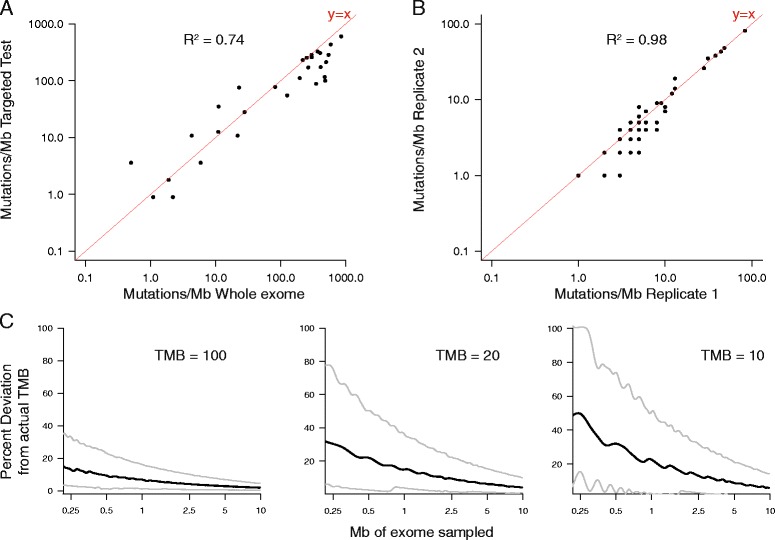
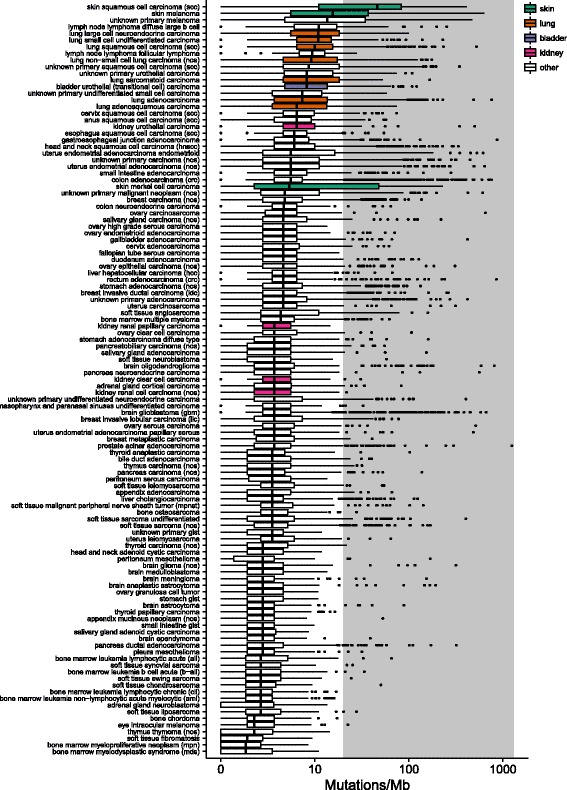
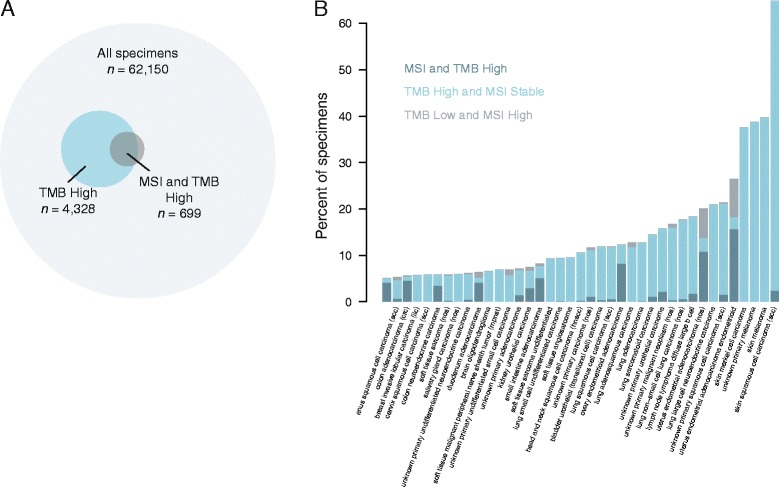
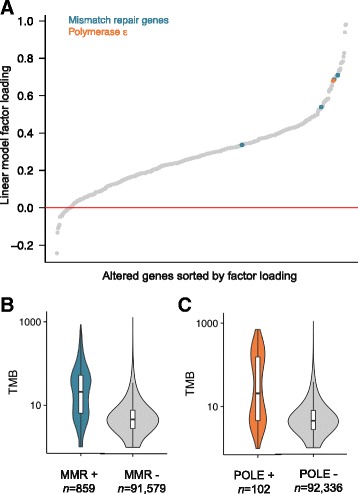
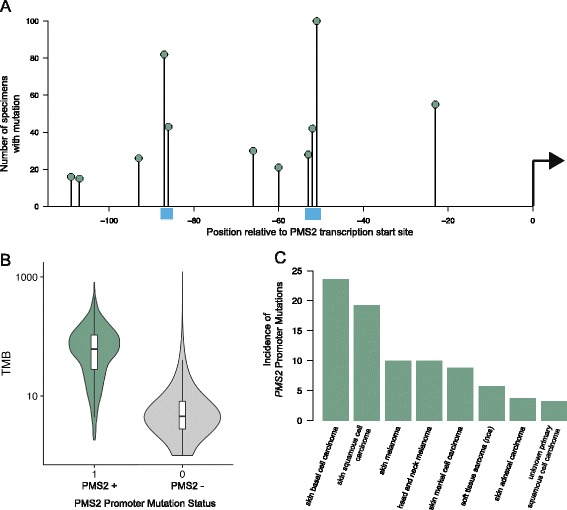
BACKGROUND: High tumor mutational burden (TMB) is an emerging biomarker of sensitivity to immune checkpoint inhibitors and has been shown to be more significantly associated with response to PD-1 and PD-L1 blockade immunotherapy than PD-1 or PD-L1 expression, as measured by immunohistochemistry (IHC). The distribution of TMB and the subset of patients with high TMB has not been well characterized in the majority of cancer types. METHODS: In this study, we compare TMB measured by a targeted comprehensive genomic profiling (CGP) assay to TMB measured by exome sequencing and simulate the expected variance in TMB when sequencing less than the whole exome. We then describe the distribution of TMB across a diverse cohort of 100,000 cancer cases and test for association between somatic alterations and TMB in over 100 tumor types. RESULTS: We demonstrate that measurements of TMB from comprehensive genomic profiling are strongly reflective of measurements from whole exome sequencing and model that below 0.5 Mb the variance in measurement increases significantly. We find that a subset of patients exhibits high TMB across almost all types of cancer, including many rare tumor types, and characterize the relationship between high TMB and microsatellite instability status. We find that TMB increases significantly with age, showing a 2.4-fold difference between age 10 and age 90 years. Finally, we investigate the molecular basis of TMB and identify genes and mutations associated with TMB level. We identify a cluster of somatic mutations in the promoter of the gene PMS2, which occur in 10% of skin cancers and are highly associated with increased TMB. CONCLUSIONS: These results show that a CGP assay targeting ~1.1 Mb of coding genome can accurately assess TMB compared with sequencing the whole exome. Using this method, we find that many disease types have a substantial portion of patients with high TMB who might benefit from immunotherapy. Finally, we identify novel, recurrent promoter mutations in PMS2, which may be another example of regulatory mutations contributing to tumorigenesis.
Overview
The claims and statistics of this paper haven’t been checked yet.
Free: it reads the open-access text and checks the first 5 claims that cite a source we can check. Create a free account to check every claim.
Integrity signals
Registry
Cites
Statistics
Figures
Verification
Claims the paper makes
The claims and statistics of this paper haven’t been checked yet.
Free: it reads the open-access text and checks the first 5 claims that cite a source we can check. Create a free account to check every claim.
Claims other papers make about this one
Each is checked against this paper’s own text: does it say what the citing paper says it does?
The source backs part of the claim, not all of it — or backs it for a different population, condition or comparison.
In the citing paper
“This is at least in part due to activation of the nuclear factor κB (NF-κB) pathway driven by p53 loss, as well as increased tolerance of a higher mutational burden that may ostensibly result in enhanced immunogenicity due to increased neoantigen load143, 144, 145, 146.”
From Co-occurring genomic alterations in non-small-cell lung cancer biology and therapy (2019) · cites this paper as [145]
Experimental — accuracy not yet measuredThe source backs part of the claim, not all of it — or backs it for a different population, condition or comparison.
In the citing paper
“Childhood tumors are considered immunologically ‘cold tumors’ with few infiltrating immune cells and low neoantigen burden precluding robust response to immune checkpoint therapies 39,40.”
From A Phase I/II Trial of Nivolumab plus Ipilimumab in Children and Young Adults with Relapsed/Refractory Solid Tumors: A Children's Oncology Group Study ADVL1412 (2022) · cites this paper as [40]
Experimental — accuracy not yet measuredThe source backs part of the claim, not all of it — or backs it for a different population, condition or comparison.
In the citing paper
“Second, distinct subsets of CRC are characterized by chromosomal instability (CIN) or microsatellite instability (MSI) and are among cancers that exhibit a moderately high tumor mutation burden (TMB) suggesting an extensive degree of genetic heterogeneity [28].”
From Anti-tumor efficacy of a potent and selective non-covalent KRASG12D inhibitor (2022) · cites this paper as [28]
Experimental — accuracy not yet measuredIn the citing paper
“TP53 co-mutations are associated with an inflamed tumor immune microenvironment and increased tumor cell PD-L1 expression in KRAS-mutant NSCLC and GEMMs.”
From Co-occurring genomic alterations in non-small-cell lung cancer biology and therapy (2019) · cites this paper as [145]
In the citing paper
“TMB measured by comprehensive genomic profiling is comparable to measurements by whole exome sequencing and is typically higher in smoking associated lung cancer due to tobacco carcinogenesis”
From Diverse EGFR Exon 20 Insertions and Co-Occurring Molecular Alterations Identified by Comprehensive Genomic Profiling of NSCLC (2018) · cites this paper as [14]
Self-check
Percentages, sums and reported differences re-computed from the paper’s own numbers.
The self-check needs the paper’s full text.
Citations
Cites
Fast and accurate short read alignment with Burrows-Wheeler transform
Li, H., & Durbin, R. (2009) · Bioinformatics · doi:10.1093/bioinformatics/btp324 · Cited by 58,607
PD-1 and PD-L1 Immune Checkpoint Blockade to Treat Breast Cancer
Hartkopf, A. D., Taran, F.-A., Wallwiener, M., Walter, C. B., Krämer, B., Grischke, E.-M., & Brucker, S. Y. (2016) · Breast Care · doi:10.1159/000453569 · Cited by 30,845
The Genome Analysis Toolkit: A MapReduce framework for analyzing next-generation DNA sequencing data
McKenna, A., Hanna, M., Banks, E., Sivachenko, A., Cibulskis, K., Kernytsky, A., Garimella, K., Altshuler, D., Gabriel, S., Daly, M., et al. (2010) · Genome Research · doi:10.1101/gr.107524.110 · Cited by 27,895
The blockade of immune checkpoints in cancer immunotherapy
Pardoll, D. M. (2012) · Nature Reviews Cancer · doi:10.1038/nrc3239 · Cited by 13,838 · cited 1×
“These agents modulate the pathways that control when and where immune responses are mounted, increasing antitumor activity through immune checkpoint blockade [7].”
BackgroundSafety, activity, and immune correlates of anti–PD-1 antibody in cancer
Topalian, S. L., Hodi, F. S., Brahmer, J. R., Gettinger, S. N., Smith, D. C., McDermott, D. F., Powderly, J. D., Carvajal, R. D., Sosman, J. A., Atkins, M. B., et al. (2012) · New England Journal of Medicine · doi:10.1056/nejmoa1200690 · Cited by 12,628 · cited 1×
“Inhibitors of cytotoxic T lymphocyte-associated antigen 4 (CTLA-4) [8, 9] and of programmed cell death protein 1 (PD-1) receptor [10] were the first drugs of this type, which promote T-cell activation [2].”
BackgroundStatistical significance for genomewide studies
Storey, J. D., & Tibshirani, R. (2003) · Proceedings of the National Academy of Sciences · doi:10.1073/pnas.1530509100 · Cited by 9,692 · cited 2×
“For both tests, we corrected for multiple testing using the false discovery rate (FDR) method [66].”
MethodSignatures of mutational processes in human cancer
Initiative, A. P. C. G., Alexandrov, L. B., ICGC Breast Cancer Consortium, ICGC MMML-Seq Consortium, PedBrain, I., Nik-Zainal, S., Wedge, D. C., Aparicio, S. A. J. R., Behjati, S., Biankin, A. V., et al. (2013) · Nature · doi:10.1038/nature12477 · Cited by 9,660 · cited 5×
“Mutations in a number of other genes have also been linked to increased TMB [28, 51], but their function is less well understood.”
BackgroundResultInfluentialAnalysis of protein-coding genetic variation in 60,706 humans
Exome Aggregation Consortium, Lek, M., Karczewski, K. J., Minikel, E. V., Samocha, K. E., Banks, E., Fennell, T., O’Donnell-Luria, A. H., Ware, J. S., Hill, A. J., et al. (2016) · Nature · doi:10.1038/nature19057 · Cited by 9,587 · cited 1×
“Germline alterations occurring with two or more counts in the ExAC database were not counted [65].”
BackgroundPD-1 Blockade in Tumors with Mismatch-Repair Deficiency
Le, D. T., Uram, J. N., Wang, H., Bartlett, B. R., Kemberling, H., Eyring, A. D., Skora, A. D., Luber, B. S., Azad, N. S., Laheru, D., et al. (2015) · New England Journal of Medicine · doi:10.1056/nejmoa1500596 · Cited by 9,377
The cancer genome atlas pan-cancer analysis project
The Cancer Genome Atlas Research Network, Weinstein, J. N., Collisson, E. A., Mills, G. B., Shaw, K. R. M., Ozenberger, B. A., Ellrott, K., Shmulevich, I., Sander, C., & Stuart, J. M. (2013) · Nature Genetics · doi:10.1038/ng.2764 · Cited by 9,092 · cited 3×
“across cancer types and found a wide distribution of TMB across ~20–30 cancer types [28, 51, 54].”
BackgroundMethod
Cited by
Items 501–600 of 1,001
Choosing tumor mutational burden wisely for immunotherapy: A hard road to explore
Li, R., Han, D., Shi, J., Han, Y., Tan, P., Zhang, R., & Li, J. (2020) · Biochimica et Biophysica Acta (BBA) - Reviews on Cancer · doi:10.1016/j.bbcan.2020.188420 · Cited by 67
EPHA7 mutation as a predictive biomarker for immune checkpoint inhibitors in multiple cancers
Zhang, Z., Wu, H., Lin, W., Wang, Z., Yang, L.-P., Zeng, Z.-L., & Luo, H. (2021) · BMC Medicine · doi:10.1186/s12916-020-01899-x · Cited by 63
“For WES data in the discovery cohort and TCGA cohort, 38Mb was adopted as the estimated exome size [34].”
MethodLonardi, S., Prete, A. A., Morano, F., Messina, M., Formica, V., Corsi, D. C., Orciuolo, C., Frassineti, G. L., Zampino, M. G., Casagrande, M., et al. (2021) · Journal for ImmunoTherapy of Cancer · doi:10.1136/jitc-2021-002996 · Cited by 59
Kim, C. W., Chon, H. J., & Kim, C. (2021) · Cancers · doi:10.3390/cancers13194906 · Cited by 58
“In contrast, the average TMB of MSS/pMMR tumors is only four mutations/MB, indicating lower immunogenicity compared to MSI-H tumors [44].”
BackgroundVryza, P., Fischer, T., Mistakidi, E., & Zaravinos, A. (2023) · Translational Oncology · doi:10.1016/j.tranon.2023.101788 · Cited by 62
“Keaping” a lid on lung cancer: the Keap1-Nrf2 pathway
Best, S. A., & Sutherland, K. D. (2018) · Cell Cycle · doi:10.1080/15384101.2018.1496756 · Cited by 54
“Unleashing a patient’s autologous T cells to target tumors has received attention in lung cancer due to a high mutation load and level of immune infiltration [86,87].”
BackgroundThe Multifactorial Role of PARP-1 in Tumor Microenvironment
Martí, J. M., Fernández‐Cortés, M., Serrano-Sáenz, S., Zamudio-Martínez, E., Delgado‐Bellido, D., García-Díaz, Á., & Oliver, F. J. (2020) · Cancers · doi:10.3390/cancers12030739 · Cited by 60
“In spite PARP inhibitors modulate ositively the upr gulation of PDL-1 (favouring tumor cape from immune control) the anti-CTLA4 activates T cells to pr mote an antitumor response.”
BackgroundInfluentialPredictive Biomarkers of Immune Checkpoint Inhibition in Gastroesophageal Cancers
Sundar, R., Smyth, E. C., Peng, S., Yeong, J. P.-S., & Tan, P. B. O. (2020) · Frontiers in Oncology · doi:10.3389/fonc.2020.00763 · Cited by 58
High tumor mutation burden is associated with DNA damage repair gene mutation in breast carcinomas
Mei, P., Freitag, C. E., Wei, L., Zhang, Y., Parwani, A. V., & Li, Z. (2020) · Diagnostic Pathology · doi:10.1186/s13000-020-00971-7 · Cited by 59
Lin, A., Zhang, H., Hu, X., Chen, X., Wu, G., Luo, P., & Zhang, J. (2020) · Pharmacological Research · doi:10.1016/j.phrs.2020.105028 · Cited by 62
Galanina, N., Bejar, R. L., Choi, M. Y., Goodman, A. M., Wieduwilt, M. J., Mulroney, C. M., Kim, L., Yeerna, H., Tamayo, P., Vergilio, J., et al. (2018) · Cancers · doi:10.3390/cancers11010011 · Cited by 55
“2 megabase (Mb) of the genome) are quantified and that value extrapolated to the whole exome using a validated algorithm [60,61].”
MethodSelf-citationBiomarker correlates with response to NY-ESO-1 TCR T cells in patients with synovial sarcoma
Gyurdieva, A. V., Zajic, S. C., Chang, Y.-F., Houseman, E. A., Zhong, S., Kim, J., Nathenson, M. J., Faitg, T. H., Woessner, M. A., Turner, D. C., et al. (2022) · Nature Communications · doi:10.1038/s41467-022-32491-x · Cited by 59
Soulières, D., Licitra, L. F., Mesía, R., Remenár, É., Li, S.-H., Karpenko, A., Chol, M., Wang, Y. A., Solovieff, N., Bourdeau, L., et al. (2018) · Clinical Cancer Research · doi:10.1158/1078-0432.ccr-17-2644 · Cited by 60
Towards quantitative and multiplexed in vivo functional cancer genomics
Winters, I. P., Murray, C. W., & Winslow, M. M. (2018) · Nature Reviews Genetics · doi:10.1038/s41576-018-0053-7 · Cited by 56
Stein, M. K., Pandey, M. K., Xiu, J., Tae, H., Swensen, J. J., Mittal, S., Brenner, A. J., Korn, W. M., Heimberger, A. B., & Martin, M. G. (2019) · JCO Precision Oncology · doi:10.1200/po.18.00376 · Cited by 59
Beyond Tumor PD-L1: Emerging Genomic Biomarkers for Checkpoint Inhibitor Immunotherapy
Lagos, G., Izar, B., & Rizvi, N. A. (2020) · American Society of Clinical Oncology Educational Book · doi:10.1200/edbk_289967 · Cited by 61
Williams, E. A., Werth, A. J., Sharaf, R., Montesion, M., Sokol, E. S., Pavlick, D. C., McLaughlin-Drubin, M., Erlich, R., Toma, H., Williams, K. J., et al. (2020) · JCO Precision Oncology · doi:10.1200/po.19.00406 · Cited by 58
Self-citationHuang, W., Lin, A., Luo, P., Liu, Y., Xu, W., Zhu, W., Wei, T., Lyu, Q., Guo, L., & Zhang, J. (2020) · Cancer Gene Therapy · doi:10.1038/s41417-020-0207-6 · Cited by 62
“dividing by 38Mb [29], while the TMB score was then applied to the ICI-treated LUAD cohort.”
MethodPredictive Biomarkers for Immune Checkpoint Inhibitors in Metastatic Breast Cancer
Sivapiragasam, A., Kumar, P. A., Sokol, E. S., Albacker, L. A., Killian, J. K., Ramkissoon, S. H., Huang, R. S. P., Severson, E. A., Brown, C. A., Danziger, N. A., et al. (2020) · Cancer Medicine · doi:10.1002/cam4.3550 · Cited by 55
Self-citationGu, X., Guan, J., Xu, J. X., Zheng, Q., Chen, C., Yang, Q., Huang, C., Wang, G., Zhou, H., Chen, Z., et al. (2021) · Journal of Translational Medicine · doi:10.1186/s12967-020-02691-4 · Cited by 61
“TMB is an emerging biomarker of sensitivity to immunotherapy [39, 40].”
BackgroundSong, P., Li, W., Wu, X., Qian, Z., Ying, J., Gao, S., & He, J. (2022) · Cancer Immunology Immunotherapy · doi:10.1007/s00262-022-03143-2 · Cited by 63
“Tumor mutational burden (TMB) was defined as the number of somatic, coding, base substitution, and indels per megabase of genome examined, and was calculated as previously described [36].”
MethodPark, S., Joung, J., Min, Y. W., Nam, J., Ryu, D., Oh, D., Park, W., Lee, S. K., Choi, Y., Ahn, J. S., et al. (2019) · Journal for ImmunoTherapy of Cancer · doi:10.1186/s40425-019-0609-x · Cited by 57
Self-citationPrognosis of Lung Adenocarcinoma Patients With NTRK3 Mutations to Immune Checkpoint Inhibitors
Niu, Y., Lin, A., Luo, P., Zhu, W., Wei, T., Tang, R., Guo, L., & Zhang, J. (2020) · Frontiers in Pharmacology · doi:10.3389/fphar.2020.01213 · Cited by 53
“To date, it remains unclear whether the TMB can identify patients who may benefit from ICI treatment (Ferrara et al., 2017; Chalmers et al., 2017).”
BackgroundMethodThe Role of PLIN3 in Prognosis and Tumor-Associated Macrophage Infiltration: A Pan-Cancer Analysis
Yang, S., Liu, H., Zheng, Y., Chu, H., Lu, Z., Yuan, J., & Xu, S. (2025) · Journal of Inflammation Research · doi:10.2147/jir.s509245 · Cited by 57
Nikanjam, M., Cohen, P. R., Kato, S., Sicklick, J. K., & Kurzrock, R. (2018) · Annals of Oncology · doi:10.1093/annonc/mdy412 · Cited by 55
Assessment of tumor mutation burden calculation from gene panel sequencing data
Xu, Z., Dai, J., Wang, D., Lu, H. J., Dai, H., Ye, H., Gu, J., Chen, S., & Huang, B. (2019) · OncoTargets and Therapy · doi:10.2147/ott.s196638 · Cited by 57
“10,11 14 These include tumor mutation burden (TMB) or tumor mutation load, neoantigen burden, DNA mismatch repair de fi ciency, and high microsatellite instability.”
Adoptive Cell Therapy—Harnessing Antigen-Specific T Cells to Target Solid Tumours
Chruściel, E., Urban‐Wójciuk, Z., Arcimowicz, Ł., Kurkowiak, M., Kowalski, J., Gliwiński, M., Marjański, T., Rzyman, W., Biernat, W., Dziadziuszko, R., et al. (2020) · Cancers · doi:10.3390/cancers12030683 · Cited by 57
“Studies that attempted to screen cancer genome defined very few neoantigen-generating mutations, which makes them difficult targets of personalised therapy [69,70].”
BackgroundTranslating recent advances in the pathogenesis of acute myeloid leukemia to the clinic
Bewersdorf, J. P., & Abdel-Wahab, O. I. (2022) · Genes & Development · doi:10.1101/gad.349368.122 · Cited by 57
“Compared with various solidmalignancies,AMLhas a low tumormutational burden, which may be associated with a relatively lower number of candidate neoantigens (Chalmers et al. 2017).”
BackgroundZhou, J., Sun, Y., Zhang, W., Yuan, J., Peng, Z., Wang, W., Gong, J., Yang, L., Cao, Y., Zhao, H., et al. (2022) · Hepatology · doi:10.1002/hep.32548 · Cited by 56
“Known somatic mutations in the Catalog of Somatic Mutations in Cancer and known germline polymorphisms in the US National Center for Biotechnology Information’s Single Nucleotide Polymorphism Database were not counted.[27] The best cutoff value of TMB in this study was obtained from the optimal critical value calculat…”
MethodCD200 ectodomain shedding into the tumor microenvironment leads to NK cell dysfunction and apoptosis
Morgan, H. J., Rees, E., Lanfredini, S., Powell, K. A., Gore, J., Gibbs, A., Lovatt, C., Davies, G. E., Olivero, C., Shorning, B. Y., et al. (2022) · Journal of Clinical Investigation · doi:10.1172/jci150750 · Cited by 55
“A hallmark of skin cancers is their high mutational burden and UV light mutational signature, as recently highlighted by genomic sequencing (4, 5).”
BackgroundKavun, A., Veselovsky, E., Lebedeva, A., Belova, E., Kuznetsova, O. A., Yakushina, V. D., Grigoreva, T. V., Mileyko, V., Fedyanin, M. Y., & Ivanov, M. V. (2023) · Cancers · doi:10.3390/cancers15082288 · Cited by 62
Genomic Characterization of Testicular Germ Cell Tumors Relapsing After Chemotherapy
Necchi, A., Bratslavsky, G., Corona, R. J., Chung, J. H., Millis, S. Z., Elvin, J. A., Vergilio, J.-A., Suh, J., Ramkissoon, S., Severson, E., et al. (2020) · European Urology Focus · doi:10.1016/j.euf.2018.07.013 · Cited by 52
Self-citationIdentification and Utilization of Biomarkers to Predict Response to Immune Checkpoint Inhibitors
Gjoerup, O. V., Brown, C. A., Ross, J. S., Huang, R. S. P., Schrock, A. B., Creeden, J., Fabrizio, D. A., & Tolba, K. A. (2020) · The AAPS Journal · doi:10.1208/s12248-020-00514-4 · Cited by 55
“established potentially broad impact of TMB for prediction of ICPI responses in a range of tumor types by analyzing 100,000 human cancer genomes (66).”
BackgroundInfluentialSelf-citationJohnston, K., Pachnis, P., Tasdogan, A., Faubert, B., Zacharias, L. G., Vu, H., Rodgers-Augustyniak, L. A., Johnson, A., Huang, F., Ricciardo, S., et al. (2021) · Med · doi:10.1016/j.medj.2021.01.002 · Cited by 53
Self-citationChallenges and Advances in Chimeric Antigen Receptor Therapy for Acute Myeloid Leukemia
Marvin‐Peek, J., Savani, B. N., Oluwole, O. O., & Dholaria, B. (2022) · Cancers · doi:10.3390/cancers14030497 · Cited by 52
Biomarkers for Response to Immune Checkpoint Blockade
Ganesan, S., & Mehnert, J. (2020) · Annual Review of Cancer Biology · doi:10.1146/annurev-cancerbio-030419-033604 · Cited by 51
Qiu, P., Poehlein, C. H., Marton, M. J., Laterza, O., & Levitan, D. J. (2019) · Scientific Reports · doi:10.1038/s41598-018-37128-y · Cited by 52
Genomic profiling reveals high frequency of DNA repair genetic aberrations in gallbladder cancer
Abdel‐Wahab, R., Yap, T. A., Madison, R. W., Pant, S., Cooke, M. B., Wang, K., Zhao, H., Bekaii‐Saab, T., Karatas, E., Kwong, L. N., et al. (2020) · Scientific Reports · doi:10.1038/s41598-020-77939-6 · Cited by 53
Zhang, Y., Lin, A., Li, Y., Ding, W., Meng, H., Luo, P., & Zhang, J. (2020) · Frontiers in Cell and Developmental Biology · doi:10.3389/fcell.2020.608969 · Cited by 61
“Nonsynonymous mutations were divided by 38 to quantify TMB in the TCGA and MSKCC cohorts (Chalmers et al., 2017).”
Antitumor effects of iPSC-based cancer vaccine in pancreatic cancer
Ouyang, X., Liu, Y., Zhou, Y., Guo, J., Wei, T.-T., Liu, C., Lee, B., Chen, B., Zhang, A., Casey, K. M., et al. (2021) · Stem Cell Reports · doi:10.1016/j.stemcr.2021.04.004 · Cited by 54
“However, PDAC has a relatively lower somatic mutational burden compared with other immune checkpoint inhibitorresponsive cancers (Chalmers et al., 2017).”
BackgroundIsrael, M. A., Danziger, N. A., McGregor, K., Murugesan, K., Gjoerup, O. V., Sokol, E. S., Tukachinsky, H., Kurzrock, R., Kato, S., Sicklick, J. K., et al. (2021) · The Oncologist · doi:10.1002/onco.13844 · Cited by 54
Self-citationPersonalizing neoadjuvant immune-checkpoint inhibition in patients with melanoma
Lucas, M. W., Versluis, J. M., Rozeman, E. A., & Blank, C. U. (2023) · Nature Reviews Clinical Oncology · doi:10.1038/s41571-023-00760-3 · Cited by 50
Li, Q., Cheng, X., Zhou, C., Tang, Y., Li, F., Zhang, B., Huang, T., Wang, J., & Tu, S. (2022) · Frontiers in Oncology · doi:10.3389/fonc.2022.841977 · Cited by 53
“However, the tumor mutation burden alone cannot fully explain the lack of response of MSS to PD-1 antibodies (10, 11).”
BackgroundThe Efficacy of Tumor Mutation Burden as a Biomarker of Response to Immune Checkpoint Inhibitors
Moeckel, C. M., Bakhl, K., Georgakopoulos‐Soares, I., & Zaravinos, A. (2023) · International Journal of Molecular Sciences · doi:10.3390/ijms24076710 · Cited by 54
Kaviarasan, V., Das, A., Deka, D., Saha, B., Banerjee, A., Sharma, N. R., Duttaroy, A. K., & Pathak, S. (2024) · International Journal of Colorectal Disease · doi:10.1007/s00384-024-04790-w · Cited by 55
Cooke, S. L., Ennis, D. P., Evers, L., Dowson, S., Chan, M. Y., Paul, J., Hirschowitz, L., Glasspool, R. M., Singh, N., Bell, S., et al. (2017) · Clinical Cancer Research · doi:10.1158/1078-0432.ccr-17-1789 · Cited by 53
“Chalmers and colleagues recently compared mutational burden estimates from whole exome sequencing with targeted panels, demonstrating close correlation between the two (10).”
BackgroundImmune checkpoint inhibitors in small cell lung cancer
Pakkala, S., & Owonikoko, T. K. (2018) · Journal of Thoracic Disease · doi:10.21037/jtd.2017.12.51 · Cited by 51
Hazama, S., Tamada, K., Yamaguchi, Y., Kawakami, Y., & Nagano, H. (2018) · Annals of Gastroenterological Surgery · doi:10.1002/ags3.12180 · Cited by 53
“Compared with other solid tumors, esophageal squamous cell carcinoma (ESCC) has a very high somatic mutation rate.(61,62) The high mutation load in esophageal tumors has been associated with the clinical benefit of PD-1 blockade.”
BackgroundModern Aspects of Immunotherapy with Checkpoint Inhibitors in Melanoma
Petrova, V., Arkhypov, I., Weber, R., Groth, C., Altevogt, P., Utikal, J. S., & Umansky, V. (2020) · International Journal of Molecular Sciences · doi:10.3390/ijms21072367 · Cited by 54
Schaefer, T., Steiner, R., & Lengerke, C. (2020) · International Journal of Molecular Sciences · doi:10.3390/ijms21144902 · Cited by 55
Lin, X., Wang, L., Xie, X., Qin, Y., Xie, Z., Ouyang, M., & Zhou, C. (2020) · Frontiers in Molecular Biosciences · doi:10.3389/fmolb.2020.602328 · Cited by 53
“Consistent with other studies (Chalmers et al., 2017), the raw mutation count in TCGA-LUAD was divided by 38 Mb to quantify the TMB.”
MethodShah, M. A., Cunningham, D., Metges, J., Cutsem, E. V., Wainberg, Z. A., Elboudwarej, E., Lin, K.-W., Turner, S., Zavodovskaya, M., Inzunza, H. D., et al. (2021) · Journal for ImmunoTherapy of Cancer · doi:10.1136/jitc-2021-003580 · Cited by 54
Emery, A., Moore, S. E., Turner, J. E., & Campbell, J. P. (2022) · Frontiers in Oncology · doi:10.3389/fonc.2022.788113 · Cited by 54
“TMB – were equally represented in the sampling of ref (2) and ref (77).”
BackgroundMethodInfluentialLi, M., Gao, X., & Wang, X. (2023) · Frontiers in Immunology · doi:10.3389/fimmu.2023.1090838 · Cited by 57
“4%), consistent with previous studies (14, 15).”
BackgroundResultInfluentialGenomic characterization and immunotherapy for microsatellite instability-high in cholangiocarcinoma
Yang, X., Lian, B., Zhang, N., Long, J., Li, Y., Xue, J., Chen, X., Wang, Y., Wang, Y., Xun, Z., et al. (2024) · BMC Medicine · doi:10.1186/s12916-024-03257-7 · Cited by 50
“The tumor mutation burden (TMB) was calculated by counting the total number of coding mutations per megabase as report [27, 33].”
MethodSomatic genetic aberrations in gallbladder cancer: comparison between Chinese and US patients
Yang, P., Javle, M. M., Pang, F., Wei, Z., Abdel‐Wahab, R., Chen, X., Meric‐Bernstam, F., Chen, H., Borad, M. J., Liu, Y., et al. (2019) · HepatoBiliary Surgery and Nutrition · doi:10.21037/hbsn.2019.04.11 · Cited by 49
“For US cohort, all base substitutions and indels in the coding region of targeted gene were counted (12), Alterations listed as known somatic alterations in COSMIC and truncations of tumor suppressor genes, germline mutation were not counted for TMB calculation (13,14).”
BackgroundKather, J. N., Hörner, C., Weis, C., Aung, T., Vokuhl, C., Weiß, C., Scheer, M., Marx, A., & Simon‐Keller, K. (2019) · Scientific Reports · doi:10.1038/s41598-019-45551-y · Cited by 52
CNV Detection from Circulating Tumor DNA in Late Stage Non-Small Cell Lung Cancer Patients
Peng, H., Lŭ, L., Zhou, Z., Liu, J., Zhang, D., Nan, K., Zhao, X., Li, F., Tian, L., Hua, D., et al. (2019) · Genes · doi:10.3390/genes10110926 · Cited by 55
Shen, E., Xiu, J., Lopez, G. Y., Bentley, R. C., Jalali, A., Heimberger, A. B., Bainbridge, M. N., Bondy, M. L., & Walsh, K. M. (2020) · Journal of Medical Genetics · doi:10.1136/jmedgenet-2019-106657 · Cited by 54
Kuo, A. J., Paulson, V., Hempelmann, J. A., Beightol, M., Todhunter, S., Colbert, B. G., Salipante, S. J., Konnick, E. Q., Pritchard, C. C., & Lockwood, C. M. (2020) · Practical Laboratory Medicine · doi:10.1016/j.plabm.2020.e00153 · Cited by 51
Wei, S., Lu, J., Lou, J., Shi, C., Mo, S., Shao, Y., Ni, J., Zhang, W., & Cheng, X. (2020) · Frontiers in Genetics · doi:10.3389/fgene.2020.00663 · Cited by 62
“In this study, 38 Mb was used as the estimated whole exome size (Chalmers et al., 2017).”
MethodLamb, L. S., Sim, H., & McCormack, A. I. (2020) · Frontiers in Endocrinology · doi:10.3389/fendo.2020.576027 · Cited by 49
“The majority of dMMR or MSI-high tumors have a high TMB; however, only a small number (16%) of tumors with high TMB are MSI-high across multiple different cancer types (51).”
BackgroundAdvances in Cutaneous Squamous Cell Carcinoma Management
Burns, C., Kubicki, S. L., Nguyen, Q. D., Aboul‐Fettouh, N., Wilmas, K. M., Chen, O. M., Doan, H. Q., Silapunt, S., & Migden, M. R. (2022) · Cancers · doi:10.3390/cancers14153653 · Cited by 54
“cSCC has a relatively high number of mutations compared to other solid tumors, making it well suited for ICI therapy [69,81,82].”
BackgroundImmune checkpoint inhibitors for esophageal squamous cell carcinoma: a narrative review
Zhang, W., Wang, P., & Pang, Q. (2020) · Annals of Translational Medicine · doi:10.21037/atm-20-4625 · Cited by 64
“EC has an upper middle level of TMB in solid tumors (46,47).”
BackgroundPecci, F., Cantini, L., Bittoni, A., Lenci, E., Lupi, A., Crocetti, S., Giglio, E., Giampieri, R., & Berardi, R. (2021) · Current Treatment Options in Oncology · doi:10.1007/s11864-021-00870-z · Cited by 49
Davis, A. A., Luo, J. R., Zheng, T., Dai, C., Dong, X., Tan, L., Suresh, R., Ademuyiwa, F. O., Rigden, C. E., Rearden, T. P., et al. (2023) · Clinical Cancer Research · doi:10.1158/1078-0432.ccr-22-2177 · Cited by 51
Why is immunotherapy effective (or not) in patients with MSI/MMRD tumors?
Nebot-Bral, L., Coutzac, C., Kannouche, P. L., & Chaput, N. (2018) · Bulletin du Cancer · doi:10.1016/j.bulcan.2018.08.007 · Cited by 52
Juckett, L. T., Lin, D. I., Madison, R. W., Ross, J. S., Schrock, A. B., & Ali, S. M. (2018) · Oncology · doi:10.1159/000493322 · Cited by 48
Self-citationGenomic Features of Metastatic Testicular Sex Cord Stromal Tumors
Necchi, A., Bratslavsky, G., Shapiro, O., Elvin, J. A., Vergilio, J., Killian, J. K., Ngo, N., Ramkissoon, S. H., Severson, E. A., Hemmerich, A. C., et al. (2019) · European Urology Focus · doi:10.1016/j.euf.2019.05.012 · Cited by 48
Self-citationSmall lung tumor biopsy samples are feasible for high quality targeted next generation sequencing
Kage, H., Kohsaka, S., Shinozaki‐Ushiku, A., Hiraishi, Y., Sato, J., Nagayama, K., Ushiku, T., Takai, D., Nakajima, J., Miyagawa, K., et al. (2019) · Cancer Science · doi:10.1111/cas.14112 · Cited by 51
Wang, X., Kong, C., Xu, W., Yang, S., Shi, D., Zhang, J., Du, M., Wang, S., Bai, Y., Zhang, T., et al. (2019) · Thoracic Cancer · doi:10.1111/1759-7714.13163 · Cited by 51
Metagenomic analysis reveals a rich bacterial content in high‐risk prostate tumors from African men
Feng, Y., Jaratlerdsiri, W., Patrick, S. M., Lyons, R. J., Haynes, A., Collins, C. C., Stricker, P. D., Bornman, R. M. S., & Hayes, V. M. (2019) · The Prostate · doi:10.1002/pros.23897 · Cited by 49
“2 mutations/Mb), leading to associated genomic instability and/or DNA damage.(28) PCa with no known mutagenic agent, has a TMB of <1 mutations/Mb across pathologies.”
Yunger, S., El, A. B., Zeltzer, L., Fridman, E., Raviv, G., Laufer, M., Schachter, J., Markel, G., Itzhaki, O., & Besser, M. J. (2019) · OncoImmunology · doi:10.1080/2162402x.2019.1672494 · Cited by 49
Advances of immune checkpoints in colorectal cancer treatment
Jiao, Q., Ren, Y., Gabrie, A. N. A., Wang, Q., Wang, Y., Du, L., Liu, X., Wang, C., & Wang, Y. (2019) · Biomedicine & Pharmacotherapy · doi:10.1016/j.biopha.2019.109745 · Cited by 50
PARP Inhibitors in Endometrial Cancer: Current Status and Perspectives
Musacchio, L., Caruso, G., Pisano, C., Cecere, S. C., Napoli, M. D., Attademo, L., Tambaro, R., Russo, D., Califano, D., Palaia, I., et al. (2020) · Cancer Management and Research · doi:10.2147/cmar.s221001 · Cited by 54
Sun, Y., Yang, Q., Shen, J., Wei, T., Shen, W., Zhang, N., Luo, P., & Zhang, J. (2021) · Frontiers in Cell and Developmental Biology · doi:10.3389/fcell.2021.745859 · Cited by 56
Prognostic Value of Neoantigen Load in Immune Checkpoint Inhibitor Therapy for Cancer
Zou, X.-L., Li, X., Ke, H., Zhang, G., Tang, Q., Yuan, J., Zhou, C.-J., Zhang, J.-L., Zhang, R., & Chen, W.-Y. (2021) · Frontiers in Immunology · doi:10.3389/fimmu.2021.689076 · Cited by 52
The use of immunotherapy in older patients with advanced non-small cell lung cancer
Tagliamento, M., Frélaut, M., Baldini, C., Naigeon, M., Nencioni, A., Chaput, N., & Besse, B. (2022) · Cancer Treatment Reviews · doi:10.1016/j.ctrv.2022.102394 · Cited by 53
Lin, A., Qiu, Z., Zhang, J., & Luo, P. (2021) · Frontiers in Immunology · doi:10.3389/fimmu.2021.630773 · Cited by 45
“Consistent with other literature (20), nonsynonymous mutations in TCGA-BLCA were used as raw mutation counts and divided by 38 Mb to quantify TMB.”
MethodPredator-Prey in Tumor-Immune Interactions: A Wrong Model or Just an Incomplete One?
Kareva, I., Luddy, K. A., O’Farrelly, C., Gatenby, R. A., & Brown, J. S. (2021) · Frontiers in Immunology · doi:10.3389/fimmu.2021.668221 · Cited by 54
Mechanisms of Immunosuppressive Tumor Evasion: Focus on Acute Lymphoblastic Leukemia
Jiménez‐Morales, S., Aranda-Uribe, I. S., Pérez-Amado, C. J., Ramírez‐Bello, J., & Hidalgo‐Miranda, A. (2021) · Frontiers in Immunology · doi:10.3389/fimmu.2021.737340 · Cited by 51
“Although new mutations could drive the expression of tumor-specific antigens that are recognized by CTL cells (52), tumor cell-intrinsic alterations and TME modifications (e.”
BackgroundClinicopathologic and Genomic Landscape of Non-Small Cell Lung Cancer Brain Metastases
Huang, R. S. P., Harries, L., Decker, B. J., Hiemenz, M., Murugesan, K., Creeden, J., Tolba, K. A., Stabile, L. P., Ramkissoon, S. H., Burns, T. F., et al. (2022) · The Oncologist · doi:10.1093/oncolo/oyac094 · Cited by 52
Self-citationSokol, E. S., Jin, D. X., Fine, A. D., Trabucco, S. E., Maund, S. L., Frampton, G. M., Molinero, L. L., & Antonarakis, E. S. (2022) · JCO Precision Oncology · doi:10.1200/po.21.00531 · Cited by 57
“Tumor mutational burden (TMB), gLOH, and MS status were called as previously described.(5,8,9) Gene alteration status was categorized as biallelic (deleterious mutation with loss of heterozygosity [LOH] of the wild-type allele, homozygous deletion, or two or more deleterious variants), monoallelic (heterozygous delete…”
MethodSelf-citationImmunotherapy in Sarcoma: Current Data and Promising Strategies
Wood, G. E., Meyer, C. F., Petitprez, F., & D’Angelo, S. P. (2024) · American Society of Clinical Oncology Educational Book · doi:10.1200/edbk_432234 · Cited by 54
O’Neill, K., Pleasance, E., Fan, J., Akbari, V., Chang, G., Dixon, K., Csizmók, V., MacLennan, S., Porter, V., Galbraith, A., et al. (2024) · Cell Genomics · doi:10.1016/j.xgen.2024.100674 · Cited by 57
Burgers, F. H., van der Mijn, J. C., Seijkens, T. T. P., Jedema, I., Bex, A., & Haanen, J. B. A. G. (2025) · Nature Reviews Nephrology · doi:10.1038/s41581-025-00983-w · Cited by 60
“A high TMB (defined as >20 mut/Mb) is frequently observed in ICI-responsive tumour types, including MSI-high tumours, skin squamous-cell carcinoma, melanoma and NSCLC (>20 mut/Mb in 83%, 67%, 40% and 17% of specimens, respectively) 39 .”
InfluentialBridging genomics and phenomics of gastric carcinoma
Cho, J., Ahn, S., Son, D., Kim, N. K., Lee, K., Kim, S., Lee, J., Park, S. H., Park, J. O., Kang, W. K., et al. (2019) · International Journal of Cancer · doi:10.1002/ijc.32228 · Cited by 51
“We found 37 high TMB GCs and all 19 MSI-H GCs showed high TMB as previously described.(38) In the present study, we first identified that high TMB was associated with high cellular immune responses and earlier disease stages, and was a favorable prognostic factor.”
MethodResultSignorelli, D., Giannatempo, P., Grazia, G., Aiello, M. M., Bertolini, F., Mirabile, A., Buti, S., Vasile, E., Scotti, V., Pisapia, P., et al. (2019) · BioMed Research International · doi:10.1155/2019/9056417 · Cited by 51
Current Status of Immunotherapies for Treating Pancreatic Cancer
Wu, A. A., Jaffee, E. M., & Lee, V. (2019) · Current Oncology Reports · doi:10.1007/s11912-019-0811-5 · Cited by 50
Role of immune checkpoint inhibitors in the treatment of colorectal cancer: focus on nivolumab
Jacome, A. A. D. A., & Eng, C. (2019) · Expert Opinion on Biological Therapy · doi:10.1080/14712598.2019.1680636 · Cited by 48
Resistance Mechanism of PD-1/PD-L1 Blockade in the Cancer-Immunity Cycle
Zhuang, Y., Liu, C. X., Liu, J., & Li, G. (2020) · OncoTargets and Therapy · doi:10.2147/ott.s239398 · Cited by 50
“Mutations of somatic cells can be transcribed or expressed into RNA and protein levels to produce neoantigen, protein fragments, or polypeptide segments, which can be recognized by the immune system as “non-self,” activating T cells and resulting in an immune response.(10,11) Therefore, when the number of gene mutatio…”
BackgroundNeoantigens in Hematologic Malignancies
Biernacki, M. A., & Bleakley, M. (2020) · Frontiers in Immunology · doi:10.3389/fimmu.2020.00121 · Cited by 50
Tumor mutational burden on cytological samples: A pilot study
Pepe, F., Pisapia, P., Gristina, V., Rocco, D., Micheli, M., Micheli, P., Iaccarino, A., Tufano, R., Gragnano, G., Russo, G., et al. (2020) · Cancer Cytopathology · doi:10.1002/cncy.22400 · Cited by 53
“1).(16) The rationale behind the correlation between a high TMB and prediction of response to ICI drugs is that high numbers of tumor neo-antigens increase the likelihood of immune recognitions by the host immune system.”
BackgroundOverview of Immune Checkpoint Inhibitors in Gynecological Cancer Treatment
Pirš, B., Škof, E., Smrkolj, V., & Smrkolj, Š. (2022) · Cancers · doi:10.3390/cancers14030631 · Cited by 52
“Among gynecological cancers, the prevalence of TMB-H is lowest in ovarian cancer (<5%), with a median number of mutations/Mb of 2–3 [26,100].”
BackgroundTherapy sculpts the complex interplay between cancer and the immune system during tumour evolution
Thol, K., Pawlik, P., & McGranahan, N. (2022) · Genome Medicine · doi:10.1186/s13073-022-01138-3 · Cited by 48
“Additionally, the accurate calculation and comparison of TMB depends on the applied sequencing technology [24, 25], source material, and bioinformatics processing pipeline [26].”
MethodFunctional collection programming with semi-ring dictionaries
Shaikhha, A., Huot, M., Smith, J., & Olteanu, D. (2022) · Proceedings of the ACM on Programming Languages · doi:10.1145/3527333 · Cited by 63
“High tumor mutational burden (TMB) has been shown to be a confidence biomarker for cancer therapy response [13, 27].”
BackgroundMass Spectrometry–Based Proteomics of Epithelial Ovarian Cancers: A Clinical Perspective
Qian, L., Sun, R., Xue, Z., & Guo, T. (2023) · Molecular & Cellular Proteomics · doi:10.1016/j.mcpro.2023.100578 · Cited by 54
“HGSOC accounts for approximately 75% of all EOCs.”
BackgroundInfluentialProstate cancer immunotherapy: where are we and where are we going?
Velasco, M. A. D., & Uemura, H. (2017) · Current Opinion in Urology · doi:10.1097/mou.0000000000000462 · Cited by 55
Trafalis, D. T., Alifieris, C. E., Kalantzis, A., Verigos, K. E., Vergadis, C., & Sauvage, S. (2018) · Journal of Immunotherapy · doi:10.1097/cji.0000000000000221 · Cited by 46
Sheikine, Y., Pavlick, D. C., Klempner, S. J., Trabucco, S. E., Chung, J., Rosenzweig, M. R., Wang, K., Velcheti, V., Frampton, G. M., Peled, N., et al. (2018) · JCO Precision Oncology · doi:10.1200/po.17.00172 · Cited by 54
Self-citation
Metadata
- Authors
- Chalmers, Z. R., Connelly, C. F., Fabrizio, D., Gay, L., Ali, S. M., Ennis, R., Schrock, A., Campbell, B., Shlien, A., Chmielecki, J., Huang, F., He, Y., Sun, J., Tabori, U., Kennedy, M., Lieber, D. S., Roels, S., White, J., Otto, G. A., Ross, J. S., Garraway, L., Miller, V. A., Stephens, P. J., & Frampton, G. M.
- Affiliations
- Foundation Medicine (United States) (US)
- Hospital for Sick Children (CA)
- Harvard University (US)
- Broad Institute (US)
- Corresponding author
- Frampton, Garrett M.
- ORCID
- Venue
- Genome Medicine
- Published
- 2017-04-19
- Volume
- 9
- Issue
- 1
- Pages
- 34-34
- ISSN
- 1756-994X (ISSN-L)
- PMC
- PMC5395719
- OpenAlex
- W2606495925
- Cited by
- 3,519
- References
- 78
- Citations by year
- 2026: 200 · 2025: 268 · 2024: 365 · 2023: 499 · 2022: 553 · 2021: 565 · 2020: 498 · 2019: 330 · 2018: 195 · 2017: 43
- FWCI
- 131.26
- Type
- journal article
- Language
- en
- Open access
- gold
- doi.org
- Licence
- cc-by
- creativecommons.org/licenses/by/4.0/ (tdm)
- creativecommons.org/licenses/by/4.0/ (vor)
- Locations
- Genome Medicine (publishedVersion, cc-by)
- PubMed Central (publishedVersion, cc-by)
- PubMed (publishedVersion)
- Digital Access to Scholarship at Harvard (DASH) (Harvard University) (submittedVersion, cc-by)
- DOAJ (DOAJ: Directory of Open Access Journals) (submittedVersion, cc-by-sa)
- Funders
- Prostate Cancer Foundation (Young Investigator Award)
- U.S. Department of Defense (Prostate Cancer Research Program)
- Topics
- Health Sciences › Medicine › Oncology › Cancer Immunotherapy and Biomarkers
- Life Sciences › Biochemistry, Genetics and Molecular Biology › Cancer Research › Cancer Genomics and Diagnostics
- Health Sciences › Medicine › Pathology and Forensic Medicine › Genetic factors in colorectal cancer
- Keywords
- tumor mutational burden, comprehensive genomic profiling, targeted sequencing, microsatellite instability, regulatory mutations, somatic mutations, immunotherapy biomarkers, immune checkpoint inhibitors, PD-1/PD-L1 blockade, tumor age, rare tumor, cancer genomics
- MeSH terms
- Mismatch Repair Endonuclease PMS2, Adolescent, Adult, Age Factors, Aged, Aged, 80 and over, Cell Transformation, Neoplastic, Child, DNA Mutational Analysis, DNA, Neoplasm, Humans, Middle Aged, Mutation, Neoplasms, Genome, Human, Young Adult, Exome
About these checks
Registry, retraction, Cites and statistics results are computed, not judged, with one exception: a printed reference that no index lists is read once by a model before it counts as a citation error. Claims are extracted by a model and kept only when their quote appears verbatim in the text; each cited source is then checked, with a model’s help, for whether it says what the claim relies on. Those verdicts can be wrong — read the claim’s quote and the cited source before relying on one.
Statistics and arithmetic are recomputed, not judged.
Confidence bands are shown only for fields calibrated on our annotated test set. None is calibrated yet, so no band is shown.
What counts as a claim ›How we measure confidence ›How we check this ›
Are you an author, or do you see a problem with this page? Request a review
Data sources
Bibliographic data: Semantic Scholar, OpenAlex, Crossref.
Contains information from the Semantic Scholar Academic Graph Datasets, made available under the ODC Attribution License (ODC-BY 1.0).
Semantic Scholar’s data is described in: Kinney, R., et al. (2023). The Semantic Scholar Open Data Platform. arXiv:2301.10140.
