

Analysis of 100,000 human cancer genomes reveals the landscape of tumor mutational burden
Open accessThe DOI matches its Crossref record; 78 of the 78 references it cites were found in a registry or an index.
Abstract
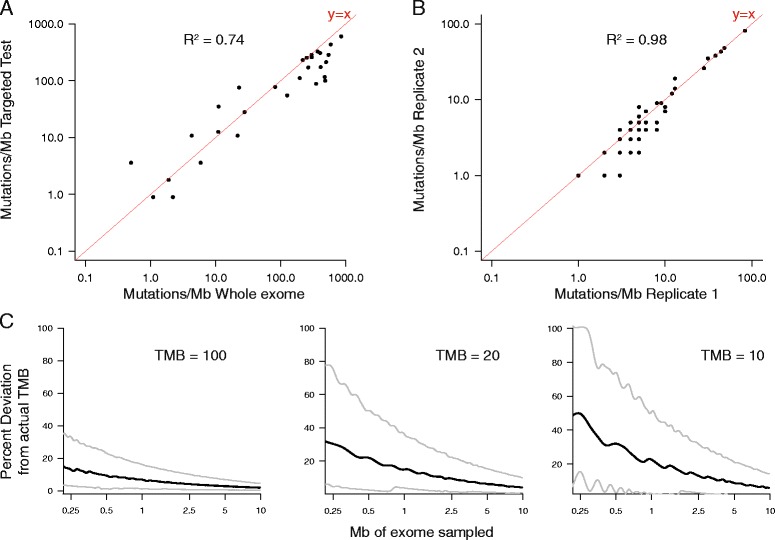
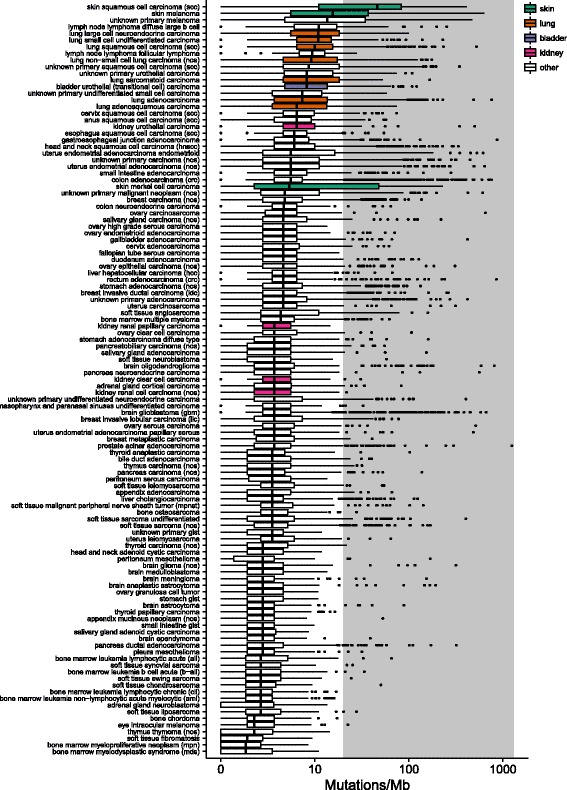
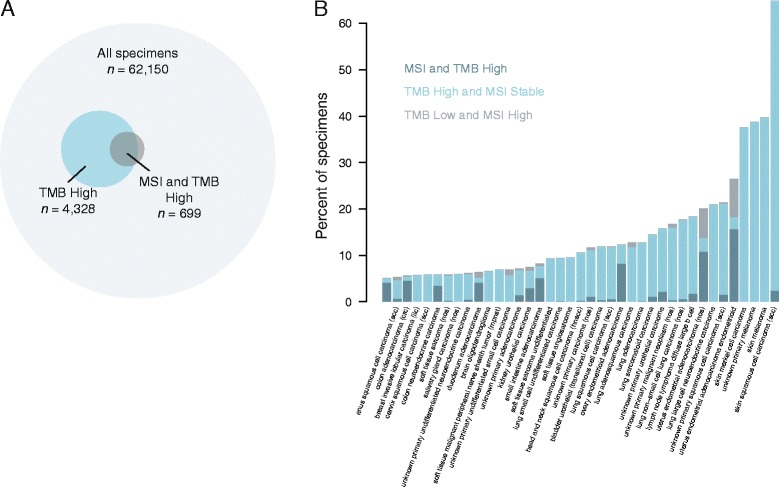
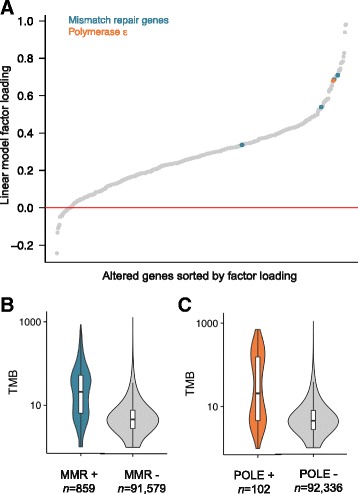
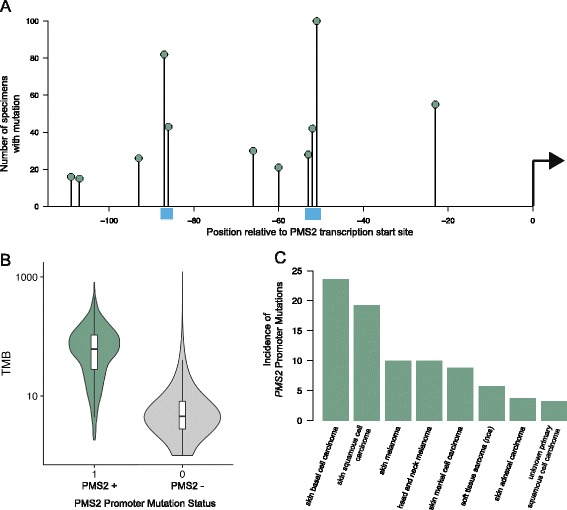
BACKGROUND: High tumor mutational burden (TMB) is an emerging biomarker of sensitivity to immune checkpoint inhibitors and has been shown to be more significantly associated with response to PD-1 and PD-L1 blockade immunotherapy than PD-1 or PD-L1 expression, as measured by immunohistochemistry (IHC). The distribution of TMB and the subset of patients with high TMB has not been well characterized in the majority of cancer types. METHODS: In this study, we compare TMB measured by a targeted comprehensive genomic profiling (CGP) assay to TMB measured by exome sequencing and simulate the expected variance in TMB when sequencing less than the whole exome. We then describe the distribution of TMB across a diverse cohort of 100,000 cancer cases and test for association between somatic alterations and TMB in over 100 tumor types. RESULTS: We demonstrate that measurements of TMB from comprehensive genomic profiling are strongly reflective of measurements from whole exome sequencing and model that below 0.5 Mb the variance in measurement increases significantly. We find that a subset of patients exhibits high TMB across almost all types of cancer, including many rare tumor types, and characterize the relationship between high TMB and microsatellite instability status. We find that TMB increases significantly with age, showing a 2.4-fold difference between age 10 and age 90 years. Finally, we investigate the molecular basis of TMB and identify genes and mutations associated with TMB level. We identify a cluster of somatic mutations in the promoter of the gene PMS2, which occur in 10% of skin cancers and are highly associated with increased TMB. CONCLUSIONS: These results show that a CGP assay targeting ~1.1 Mb of coding genome can accurately assess TMB compared with sequencing the whole exome. Using this method, we find that many disease types have a substantial portion of patients with high TMB who might benefit from immunotherapy. Finally, we identify novel, recurrent promoter mutations in PMS2, which may be another example of regulatory mutations contributing to tumorigenesis.
Overview
The claims and statistics of this paper haven’t been checked yet.
Free: it reads the open-access text and checks the first 5 claims that cite a source we can check. Create a free account to check every claim.
Integrity signals
Registry
Cites
Statistics
Figures
Verification
Claims the paper makes
The claims and statistics of this paper haven’t been checked yet.
Free: it reads the open-access text and checks the first 5 claims that cite a source we can check. Create a free account to check every claim.
Claims other papers make about this one
Each is checked against this paper’s own text: does it say what the citing paper says it does?
The source backs part of the claim, not all of it — or backs it for a different population, condition or comparison.
In the citing paper
“This is at least in part due to activation of the nuclear factor κB (NF-κB) pathway driven by p53 loss, as well as increased tolerance of a higher mutational burden that may ostensibly result in enhanced immunogenicity due to increased neoantigen load143, 144, 145, 146.”
From Co-occurring genomic alterations in non-small-cell lung cancer biology and therapy (2019) · cites this paper as [145]
Experimental — accuracy not yet measuredThe source backs part of the claim, not all of it — or backs it for a different population, condition or comparison.
In the citing paper
“Childhood tumors are considered immunologically ‘cold tumors’ with few infiltrating immune cells and low neoantigen burden precluding robust response to immune checkpoint therapies 39,40.”
From A Phase I/II Trial of Nivolumab plus Ipilimumab in Children and Young Adults with Relapsed/Refractory Solid Tumors: A Children's Oncology Group Study ADVL1412 (2022) · cites this paper as [40]
Experimental — accuracy not yet measuredThe source backs part of the claim, not all of it — or backs it for a different population, condition or comparison.
In the citing paper
“Second, distinct subsets of CRC are characterized by chromosomal instability (CIN) or microsatellite instability (MSI) and are among cancers that exhibit a moderately high tumor mutation burden (TMB) suggesting an extensive degree of genetic heterogeneity [28].”
From Anti-tumor efficacy of a potent and selective non-covalent KRASG12D inhibitor (2022) · cites this paper as [28]
Experimental — accuracy not yet measuredIn the citing paper
“TP53 co-mutations are associated with an inflamed tumor immune microenvironment and increased tumor cell PD-L1 expression in KRAS-mutant NSCLC and GEMMs.”
From Co-occurring genomic alterations in non-small-cell lung cancer biology and therapy (2019) · cites this paper as [145]
In the citing paper
“TMB measured by comprehensive genomic profiling is comparable to measurements by whole exome sequencing and is typically higher in smoking associated lung cancer due to tobacco carcinogenesis”
From Diverse EGFR Exon 20 Insertions and Co-Occurring Molecular Alterations Identified by Comprehensive Genomic Profiling of NSCLC (2018) · cites this paper as [14]
Self-check
Percentages, sums and reported differences re-computed from the paper’s own numbers.
The self-check needs the paper’s full text.
Citations
Cites
Fast and accurate short read alignment with Burrows-Wheeler transform
Li, H., & Durbin, R. (2009) · Bioinformatics · doi:10.1093/bioinformatics/btp324 · Cited by 58,607
PD-1 and PD-L1 Immune Checkpoint Blockade to Treat Breast Cancer
Hartkopf, A. D., Taran, F.-A., Wallwiener, M., Walter, C. B., Krämer, B., Grischke, E.-M., & Brucker, S. Y. (2016) · Breast Care · doi:10.1159/000453569 · Cited by 30,845
The Genome Analysis Toolkit: A MapReduce framework for analyzing next-generation DNA sequencing data
McKenna, A., Hanna, M., Banks, E., Sivachenko, A., Cibulskis, K., Kernytsky, A., Garimella, K., Altshuler, D., Gabriel, S., Daly, M., et al. (2010) · Genome Research · doi:10.1101/gr.107524.110 · Cited by 27,895
The blockade of immune checkpoints in cancer immunotherapy
Pardoll, D. M. (2012) · Nature Reviews Cancer · doi:10.1038/nrc3239 · Cited by 13,838 · cited 1×
“These agents modulate the pathways that control when and where immune responses are mounted, increasing antitumor activity through immune checkpoint blockade [7].”
BackgroundSafety, activity, and immune correlates of anti–PD-1 antibody in cancer
Topalian, S. L., Hodi, F. S., Brahmer, J. R., Gettinger, S. N., Smith, D. C., McDermott, D. F., Powderly, J. D., Carvajal, R. D., Sosman, J. A., Atkins, M. B., et al. (2012) · New England Journal of Medicine · doi:10.1056/nejmoa1200690 · Cited by 12,628 · cited 1×
“Inhibitors of cytotoxic T lymphocyte-associated antigen 4 (CTLA-4) [8, 9] and of programmed cell death protein 1 (PD-1) receptor [10] were the first drugs of this type, which promote T-cell activation [2].”
BackgroundStatistical significance for genomewide studies
Storey, J. D., & Tibshirani, R. (2003) · Proceedings of the National Academy of Sciences · doi:10.1073/pnas.1530509100 · Cited by 9,692 · cited 2×
“For both tests, we corrected for multiple testing using the false discovery rate (FDR) method [66].”
MethodSignatures of mutational processes in human cancer
Initiative, A. P. C. G., Alexandrov, L. B., ICGC Breast Cancer Consortium, ICGC MMML-Seq Consortium, PedBrain, I., Nik-Zainal, S., Wedge, D. C., Aparicio, S. A. J. R., Behjati, S., Biankin, A. V., et al. (2013) · Nature · doi:10.1038/nature12477 · Cited by 9,660 · cited 5×
“Mutations in a number of other genes have also been linked to increased TMB [28, 51], but their function is less well understood.”
BackgroundResultInfluentialAnalysis of protein-coding genetic variation in 60,706 humans
Exome Aggregation Consortium, Lek, M., Karczewski, K. J., Minikel, E. V., Samocha, K. E., Banks, E., Fennell, T., O’Donnell-Luria, A. H., Ware, J. S., Hill, A. J., et al. (2016) · Nature · doi:10.1038/nature19057 · Cited by 9,587 · cited 1×
“Germline alterations occurring with two or more counts in the ExAC database were not counted [65].”
BackgroundPD-1 Blockade in Tumors with Mismatch-Repair Deficiency
Le, D. T., Uram, J. N., Wang, H., Bartlett, B. R., Kemberling, H., Eyring, A. D., Skora, A. D., Luber, B. S., Azad, N. S., Laheru, D., et al. (2015) · New England Journal of Medicine · doi:10.1056/nejmoa1500596 · Cited by 9,377
The cancer genome atlas pan-cancer analysis project
The Cancer Genome Atlas Research Network, Weinstein, J. N., Collisson, E. A., Mills, G. B., Shaw, K. R. M., Ozenberger, B. A., Ellrott, K., Shmulevich, I., Sander, C., & Stuart, J. M. (2013) · Nature Genetics · doi:10.1038/ng.2764 · Cited by 9,092 · cited 3×
“across cancer types and found a wide distribution of TMB across ~20–30 cancer types [28, 51, 54].”
BackgroundMethod
Cited by
Items 801–900 of 1,001
Reliable Analysis of Clinical Tumor-Only Whole-Exome Sequencing Data
Oh, S., Geistlinger, L., Ramos, M., Morgan, M. T., Waldron, L., & Riester, M. (2020) · JCO Clinical Cancer Informatics · doi:10.1200/cci.19.00130 · Cited by 45
Inflammation and immunity in ovarian cancer
Salas‐Benito, D., Vercher, E., Conde, E., Glez‐Vaz, J., Tamayo, I., & Hervás‐Stubbs, S. (2020) · European Journal of Cancer Supplements · doi:10.1016/j.ejcsup.2019.12.002 · Cited by 38
“Only a small percentage of patients had a significant TMB (20 or more mutations per Mb) [12].”
BackgroundInfluentialOttaiano, A., Caraglia, M., Mauro, A. D., Botti, G., Lombardi, A., Galon, J., Luce, A., D’Amore, L., Perri, F., Santorsola, M., et al. (2020) · Cancers · doi:10.3390/cancers12103073 · Cited by 37
Liu, S., Wang, F., Tan, W., Zhang, L., Dai, F., Wang, Y., Fan, Y., Yuan, M., Yang, D., Zheng, Y., et al. (2020) · Cancer Cell International · doi:10.1186/s12935-020-01603-2 · Cited by 39
Ramos‐Paradas, J., Hernández-Prieto, S., Lora, D., Sanchez, E., Rosado, A., Caniego-Casas, T., Carrizo, N., Enguita, A. B., Muñoz-Jimenez, M. T., Rodriguez, B., et al. (2021) · Journal for ImmunoTherapy of Cancer · doi:10.1136/jitc-2020-001904 · Cited by 38
Cotter, K. A., Gallon, J., Uebersax, N., Rubin, P. D., Meyer, K. D., Piscuoglio, S., Jaffrey, S. R., & Rubin, M. A. (2021) · Molecular Cancer Research · doi:10.1158/1541-7786.mcr-21-0014 · Cited by 40
“At the molecular level, prostate cancer is generally characterized by large-scale structural genomic rearrangements (1, 2) and relatively few recurrent genomic alterations (3, 4), which thus far are insufficient to explain the heterogeneity of the disease and suggest the importance of other mechanisms for gene regulat…”
BackgroundAn Overview of RNA-Based Scaffolds for Osteogenesis
Damiati, L. A., & El-Messeiry, S. (2021) · Frontiers in Molecular Biosciences · doi:10.3389/fmolb.2021.682581 · Cited by 36
Patel, A. P., Oshi, M., Yan, L., Matsuyama, R., Endo, I., & Takabe, K. (2021) · Cancers · doi:10.3390/cancers13174443 · Cited by 35
“A high tumor mutational burden has been suggested to increase neoantigen production that can generate an anti-cancer immune cell infiltration in many types of cancers including HCC [36,43].”
BackgroundStanganelli, I., Spagnolo, F., Argenziano, G., Ascierto, P. A., Bassetto, F., Bossi, P., Donato, V., Massi, D., Massone, C., Patuzzo, R., et al. (2022) · Cancers · doi:10.3390/cancers14020377 · Cited by 35
Immunotherapy to Avoid Orbital Exenteration in Patients With Cutaneous Squamous Cell Carcinoma
McLean, L. S., Lim, A. M. L., Webb, A., Cavanagh, K., Thai, A. A., Magarey, M. J. R., Fox, C., Kleid, S. M., & Rischin, D. (2022) · Frontiers in Oncology · doi:10.3389/fonc.2021.796197 · Cited by 35
“The impressive responses are thought to be partly due to the high tumor mutational burden (TMB) of CSCC, which has correlated with improved response rates to immunotherapy in a number of different malignancies (13).”
BackgroundGadd, S., Huff, V., Skol, A. D., Renfro, L. A., Fernandez, C. V., Mullen, E. A., Jones, C. D., Hoadley, K. A., Yap, K. L., Ramirez, N. C., et al. (2022) · Cell Reports Medicine · doi:10.1016/j.xcrm.2022.100644 · Cited by 42
Tung, N., Dougherty, K. C., Gatof, E. S., DeLeonardis, K., Hogan, L., Tukachinsky, H., Gornstein, E. L., Oxnard, G. R., McGregor, K., & Keller, R. B. (2023) · npj Precision Oncology · doi:10.1038/s41698-023-00429-1 · Cited by 51
“…were determined on a minimum of 0.8 Mb of sequenced DNA per case based on the number of somatic base substitution or short insertion/deletion alterations per Mb after fi ltering to remove known and likely deleterious somatic mutations and germline single nucleotide polymorphisms (SNPs) 60,61 .”
MethodInfluentialNecchi, A., Bratslavsky, G., Chung, J., Millis, S. Z., Gay, L. M., Ali, S. M., & Ross, J. S. (2019) · The Oncologist · doi:10.1634/theoncologist.2018-0430 · Cited by 35
“gous deletions), and selected gene fusions or rearrangements, as previously described [2].”
MethodSelf-citationZhao, C., Jiang, T., Ju, J. H., Zhang, S., Tao, J., Fu, Y. S., LoCoco, J. S., Dockter, J., Pawlowski, T. L., & Bilke, S. (2020) · bioRxiv (Cold Spring Harbor Laboratory) · doi:10.1101/2020.10.21.349100 · Cited by 53
“To assess whether this reduction in false positives translated into reliable TMB values concordant with WES sequencing, we re-processed 108 out of 170 of our samples with whole exome sequencing (matched tumor-normal samples) and calculated the nonsynonymous TMB, which is the typically reported TMB value for WES data (…”
MethodImmune Checkpoint Inhibitors for Treating Advanced Cutaneous Squamous Cell Carcinoma
Patel, R., & Chang, A. L. S. (2019) · American Journal of Clinical Dermatology · doi:10.1007/s40257-019-00426-w · Cited by 34
Corti, C., Sajjadi, E., & Fusco, N. (2019) · Advances in Anatomic Pathology · doi:10.1097/pap.0000000000000234 · Cited by 37
Liquid Biopsy in Malignant Pleural Mesothelioma: State of the Art, Pitfalls, and Perspectives
Cavallari, I., Urso, L., Sharova, E., Pasello, G., & Ciminale, V. (2019) · Frontiers in Oncology · doi:10.3389/fonc.2019.00740 · Cited by 37
Bevins, N., Sun, S., Gaieb, Z., Thorson, J., & Murray, S. S. (2020) · Journal for ImmunoTherapy of Cancer · doi:10.1136/jitc-2020-000613 · Cited by 38
“22 25 In contrast, the methods used here for panel TMB estimation used only those genes contained in commonly used panels.”
Immune Checkpoint Blockade for Prostate Cancer: Niche Role or Next Breakthrough?
de Almeida, D. V. P., Fong, L. H., Rettig, M. B., & Autio, K. A. (2020) · American Society of Clinical Oncology Educational Book · doi:10.1200/edbk_278853 · Cited by 42
Talvitie, E., Vilhonen, H., Kurki, S. H., Karlsson, A., Orte, K. J., Almangush, A., Mohamed, H., Liljeroos, L., Singh, Y., Leivo, I. V. V., et al. (2020) · Neoplasia · doi:10.1016/j.neo.2020.05.004 · Cited by 36
“Similarly, TMB was analyzed as previously described [19].”
MethodAkahane, T., Kitazono, I., Yanazume, S., Kamio, M., Togami, S., Sakamoto, I., Nohara, S., Yokoyama, S., Kobayashi, H., Hiraki, T., et al. (2020) · BMC Medical Genomics · doi:10.1186/s12920-020-00753-6 · Cited by 34
Makino, E., Fröhlich, L. M., Sinnberg, T. W., Kosnopfel, C., Sauer, B., Garbe, C., & Schittek, B. (2020) · Cell Death and Disease · doi:10.1038/s41419-020-2702-y · Cited by 34
Targetable BRAF and RAF1 Alterations in Advanced Pediatric Cancers
Rankin, A., Johnson, A., Roos, A., Kannan, G. S., Knipstein, J. A., Britt, N., Rosenzweig, M. R., Haberberger, J., Pavlick, D. C., Severson, E. A., et al. (2020) · The Oncologist · doi:10.1002/onco.13519 · Cited by 37
“1 megabases of sequenced DNA for each case and categorized as low (0–5 mutations per megabase [mut/Mb]), intermediate (6–19 mut/Mb), or high (≥20 mut/Mb) as previously described [65].”
BackgroundSelf-citationImmune Checkpoint Blockade in Gynecologic Cancers: State of Affairs
Drakes, M. L., Czerlanis, C. M., & Stiff, P. J. (2020) · Cancers · doi:10.3390/cancers12113301 · Cited by 36
“Tumor mutational burden (TMB) is the total amount of somatic (acquired) mutations in a tumor [50].”
BackgroundThe infinite possibilities of RNA therapeutics
Lara, E. C. M., Ni, M., Agathos, S. N., & Gonzales-Zubiate, F. A. (2021) · Journal of Industrial Microbiology & Biotechnology · doi:10.1093/jimb/kuab063 · Cited by 36
Ji, H., Ba, Y., Ma, S., Hou, K., Mi, S., Gao, X., Jin, J., Gong, Q., Liu, T., Wang, F., et al. (2021) · Frontiers in Immunology · doi:10.3389/fimmu.2021.729359 · Cited by 40
“TMB is defined as the total number of somatic mutations including common substitutions, insertions, and deletions per megabase, and its calculation has been described before (49).”
BackgroundChen, X., Lu, Y., Yu, H., Du, K., Zhang, Y., Yang, N., & Huang, Q. (2021) · Cell Cycle · doi:10.1080/15384101.2021.1982494 · Cited by 37
“Tumor mutational burden (TMB) and microsatellite instability (MSI) are two tumor mutation mechanisms associated with immunotherapy [29,30].”
BackgroundYang, C., Zhang, Z., Tang, X., Zhang, X., Chen, Y., Hu, T., Zhang, H., Guan, M., Zhang, X., & Wu, Z. (2021) · Human Cell · doi:10.1007/s13577-021-00630-z · Cited by 38
Immunotherapy for Cutaneous Squamous Cell Carcinoma: Results and Perspectives
Alberti, A., & Bossi, P. (2022) · Frontiers in Oncology · doi:10.3389/fonc.2021.727027 · Cited by 40
Pyroptosis correlates with tumor immunity and prognosis
Lou, X., Li, K., Qian, B., Li, Y., Zhang, D., & Cui, W. (2022) · Communications Biology · doi:10.1038/s42003-022-03806-x · Cited by 39
Immunotherapy for Metastatic Non-Small Cell Lung Cancer: Therapeutic Advances and Biomarkers
Russano, M., Cava, G. L., Cortellini, A., Citarella, F., Galletti, A., Fazio, G. R. D., Santo, V., Brunetti, L., Vendittelli, A., Fioroni, I., et al. (2023) · Current Oncology · doi:10.3390/curroncol30020181 · Cited by 36
Ahmed, J., Das, B., Shin, S. J., & Chen, A. P. (2023) · Cancers · doi:10.3390/cancers15245841 · Cited by 44
“Thus, it is frequently noted that MSI-H tumors such as colorectal and endometrial cancers frequently have TMB-high [23].”
BackgroundImmune checkpoint inhibitors for small cell lung cancer: opportunities and challenges
Regzedmaa, O., Zhang, H., Liu, H., & Chen, J. (2019) · OncoTargets and Therapy · doi:10.2147/ott.s204577 · Cited by 37
“Because SCLC has the highest rate of tumor mutational burden (TMB), the tumor should be sensitive to immunebased therapeutic approaches.(20,21) TMB is used as a predictor of immune checkpoint inhibitor efficacy for many cancer types.”
BackgroundWilliams, E. A., Montesion, M., Shah, N., Sharaf, R., Pavlick, D. C., Sokol, E. S., Alexander, B. M., Venstrom, J. M., Elvin, J. A., Ross, J. S., et al. (2020) · Modern Pathology · doi:10.1038/s41379-020-0581-5 · Cited by 35
Self-citationZhu, J., Xiao, J., Wang, M., & Hu, D. (2021) · Frontiers in Oncology · doi:10.3389/fonc.2020.618374 · Cited by 39
“However, not all patients respond well to ICIs therapy.”
BackgroundInfluentialHypoxia, a Targetable Culprit to Counter Pancreatic Cancer Resistance to Therapy
Khouzam, R. A., Lehn, J., Mayr, H., Clavien, P., Wallace, M. B., Ducreux, M. P., Limani, P., & Chouaïb, S. (2023) · Cancers · doi:10.3390/cancers15041235 · Cited by 39
Targeting the Molecular and Immunologic Features of Leiomyosarcoma
Cope, B. M., Traweek, R. S., Lazcano, R., Keung, E. Z.-Y., Lazar, A. J., Roland, C. L., & Nassif, E. F. (2023) · Cancers · doi:10.3390/cancers15072099 · Cited by 37
“61 mutations/Mb [69,70]) and fewer somatic copy number alterations (SCNAs) than other complex genomic sarcomas.”
BackgroundThe Tumor Mutational Burden of Chinese Advanced Cancer Patients Estimated by a 381-cancer-gene Panel
Zhuang, W., Ma, J., Chen, X., Wang, G., Lu, J. N., Chen, Y., Dong, H., Cai, S., Zhang, Y., Zhao, X., et al. (2018) · Journal of Cancer · doi:10.7150/jca.24932 · Cited by 34
Update on systemic therapy for colorectal cancer: biologics take sides
Gbolahan, O. B., & O’Neil, B. H. (2019) · Translational Gastroenterology and Hepatology · doi:10.21037/tgh.2019.01.12 · Cited by 34
Saffo, S., & Taddei, T. H. (2019) · Digestive Diseases and Sciences · doi:10.1007/s10620-019-05582-x · Cited by 34
A subset of diffuse-type gastric cancer is susceptible to mTOR inhibitors and checkpoint inhibitors
Fukamachi, H., Kim, S., Koh, J., Lee, H. S., Sasaki, Y., Yamashita, K., Nishikawaji, T., Shimada, S., Akiyama, Y., Byeon, S., et al. (2019) · Journal of Experimental & Clinical Cancer Research · doi:10.1186/s13046-019-1121-3 · Cited by 35
Hatakeyama, K., Nagashima, T., Ohshima, K., Ohnami, S., Ohnami, S., Shimoda, Y., Serizawa, M., Maruyama, K., Naruoka, A., Akiyama, Y., et al. (2019) · Cancer Science · doi:10.1111/cas.14087 · Cited by 34
The genomics of undifferentiated sarcoma of soft tissue: Progress, challenges and opportunities
Steele, C. D., & Pillay, N. (2019) · Seminars in Cancer Biology · doi:10.1016/j.semcancer.2019.11.009 · Cited by 33
Current and future immunotherapy approaches in ovarian cancer
Demircan, N. C., Boussios, S., Taşçı, T., & Öztürk, M. A. (2020) · Annals of Translational Medicine · doi:10.21037/atm-20-4499 · Cited by 35
“This can be possibly explained by the fact that only a small proportion of OCs have high tumor mutational burden (TMB), which is defined as the total number of mutations in a tumor specimen and emerged as a novel predictive biomarker for immunotherapy (23).”
Current and future biomarkers for outcomes with immunotherapy in non-small cell lung cancer
Duchemann, B., Remón, J., Naigeon, M., Cassard, L., Jouniaux, J.-M., Boselli, L., Grivel, J., Auclin, É., Desnoyer, A., Besse, B., et al. (2021) · Translational Lung Cancer Research · doi:10.21037/tlcr-20-839 · Cited by 36
“These trials have consistently reported a highly favorable RR in several MSI-high (MSI-H) and MMRD tumor types (37,38), leading to the first therapeutic agnostic approvals by the FDA in patients with unresectable or metastatic MSI-H or MMRD solid tumors, independent of the tumor localization.”
BackgroundInfluentialLi, Y., & Luo, Y. (2020) · Quantitative Biology · doi:10.1007/s40484-020-0226-1 · Cited by 36
“In addition, our fi nding of a positive correlation between TMB and prediction accuracy provides cancer type-speci fi c features [35].”
BackgroundZhao, Q., Chen, Y., Du, S., Yang, X., Chen, Y., Ji, Y., & Zeng, Z. (2021) · Cancer Biology & Therapy · doi:10.1080/15384047.2020.1834792 · Cited by 35
Cao, R., Ma, B., Wang, G., Xiong, Y., Tian, Y., & Yuan, L. (2021) · Molecular Therapy — Oncolytics · doi:10.1016/j.omto.2021.06.011 · Cited by 39
“The TMB per megabase of each sample was calculated as the total number of mutations counted in the whole exon territory with 38 Mb according to a previous study.(54) Moreover, the IMvigor210 (mUC) dataset from patients with mUC receiving PD-L1 inhibitor atezolizumab were also enrolled in our study to validate our find…”
MethodComprehensive analysis of tumour mutational burden and its clinical significance in prostate cancer
Wang, L., Pan, S., Zhu, B., Yu, Z., & Wang, W. (2021) · BMC Urology · doi:10.1186/s12894-021-00795-7 · Cited by 35
“The length of exons was estimated to be 38 Mb in previous research [8].”
Zhang, Y., Ding, C., Cai, Y., Chen, X., Zhao, Y., Liu, X., Zhang, J., Sun, S., & Liu, W. (2021) · International Immunopharmacology · doi:10.1016/j.intimp.2021.108035 · Cited by 34
Wen, X., Xu, Z., Jin, Y., Xia, P., Ma, J., Qian, W., Lin, J., & Qian, J. (2021) · Frontiers in Immunology · doi:10.3389/fimmu.2021.717527 · Cited by 38
Ma, L., Diao, B., Huang, Z., Wang, B., Yu, J., & Meng, X. (2021) · 癌症:英文版 · doi:10.1002/cac2.12229 · Cited by 36
Constructing germline research cohorts from the discarded reads of clinical tumor sequences
Gusev, A., Groha, S., Taraszka, K., Semenov, Y. R., & Zaitlen, N. (2021) · Genome Medicine · doi:10.1186/s13073-021-00999-4 · Cited by 38
“Commercial genomic platforms have similarly sequenced hundreds of thousands of patients on targeted, tumor-only panels of limited scope [12].”
BackgroundMiao, H., Ren, Q., Li, H., Zeng, M., Chen, D. S., Xu, C., Chen, Y., & Wen, Z. (2022) · BMC Cancer · doi:10.1186/s12885-022-09314-9 · Cited by 35
“Highly mutated tumors are more likely to carry neoantigens, making them become the targets for activated immune cells [14].”
BackgroundGenomic disparities between cancers in adolescent and young adults and in older adults
Wang, X., Langevin, A., Houghton, P. J., & Zheng, S. (2022) · Nature Communications · doi:10.1038/s41467-022-34959-2 · Cited by 35
Genetic Heterogeneity and Tissue-specific Patterns of Tumors with Multiple PIK3CA Mutations
Sivakumar, S., Jin, D. X., Rathod, R., Ross, J. S., Cantley, L. C., Scaltriti, M., Chen, J. W., Hutchinson, K. E., Wilson, T. R., Sokol, E. S., et al. (2023) · Clinical Cancer Research · doi:10.1158/1078-0432.ccr-22-2270 · Cited by 35
Self-citationComplexity of Delivering Precision Medicine: Opportunities and Challenges
Davis, A. A., McKee, A. E., Kibbe, W. A., & Villaflor, V. M. (2018) · American Society of Clinical Oncology Educational Book · doi:10.1200/edbk_200279 · Cited by 36
Somatic mutations in renal cell carcinomas from Chinese patients revealed by whole exome sequencing
Wang, J., Xi, Z., Xi, J., Zhang, H., Li, J., Xia, Y., & Yi, Y. (2018) · Cancer Cell International · doi:10.1186/s12935-018-0661-5 · Cited by 38
Makimoto, G., Ohashi, K., Tomida, S., Nishii, K., Matsubara, T., Kayatani, H., Higo, H., Ninomiya, K., Satô, A., Watanabe, H., et al. (2019) · Journal of Thoracic Oncology · doi:10.1016/j.jtho.2019.07.017 · Cited by 35
Molinero, L. L., Li, Y., Chang, C., Maund, S. L., Berg, M., Harrison, J., Fassò, M., O'Hear, C. E., Hegde, P. S., & Emens, L. A. (2019) · Journal for ImmunoTherapy of Cancer · doi:10.1186/s40425-019-0740-8 · Cited by 40
Carvajal, R., Sato, T., Shoushtari, A., Sacco, J., Nathan, P., Orloff, M., Corrie, P. G., Steven, N., Evans, J., Infante, J., et al. (2017) · Journal for ImmunoTherapy of Cancer · doi:10.1186/s40425-017-0289-3 · Cited by 34
Kristeleit, R. S., Leary, A. F., Oaknin, A., Redondo, A., George, A. J., Chui, S., Seiller, A., Liste-Hermoso, M., Willis, J., Shemesh, C. S., et al. (2024) · British Journal of Cancer · doi:10.1038/s41416-024-02776-7 · Cited by 35
“TMB and MSI were determined as previously described [38].”
Advances and challenges in the treatment of osteosarcoma
Wang, X., Zhu, K., Hu, J., & Zhang, C. (2025) · Progress in Biophysics and Molecular Biology · doi:10.1016/j.pbiomolbio.2025.07.001 · Cited by 38
Therapeutic landscape of ovarian cancer: recent advances and emerging therapies
Wang, L., Zhang, Q., Wang, X., Dong, Z., Liu, S., Wang, Q., Zhang, Z., & Xing, J. (2025) · Biomarker Research · doi:10.1186/s40364-025-00818-7 · Cited by 43
“TMB: TMB is an established pan-cancer predictor of ICIs benefit, but most OC tumors are TMB-low (median 3.6 mutations/Mb) [121–123].”
InfluentialNiyomnaitham, S., Parinyanitikul, N., Roothumnong, E., Jinda, W., Samarnthai, N., Atikankul, T., Suktitipat, B., Thongnoppakhun, W., Limwongse, C., & Pithukpakorn, M. (2019) · PeerJ · doi:10.7717/peerj.6501 · Cited by 34
“This data showed significantly higher tumor mutation burden than median value (3.6 variants per megabase) found in invasive ductal breast carcinoma cohort (Chalmers et al., 2017).”
InfluentialRANK-RANKL Signaling in Cancer of the Uterine Cervix: A Review
van Dam, P. A., Verhoeven, Y., Jacobs, J., Wouters, A., Tjalma, W. A. A., Lardon, F., WYNGAERT, T. V. D., Dewulf, J., Smits, E., Colpaert, C., et al. (2019) · International Journal of Molecular Sciences · doi:10.3390/ijms20092183 · Cited by 35
“As CC is a chronic inflammatory disease with a high mutational load combining RANKL inhibition with immunotherapy is an attractive therapeutic option which should be further explored [79].”
BackgroundLiang, X., Li, Q., Xu, B., Hu, S., Wang, Q., Li, Y., Zong, Y., Zhang, S., & Li, C. (2019) · International Journal of Clinical Oncology · doi:10.1007/s10147-019-01454-6 · Cited by 37
Song, X., Ji, J., Gleason, K. J., Yang, F., Martignetti, J. A., Chen, L. S., & Wang, P. (2019) · Molecular & Cellular Proteomics · doi:10.1074/mcp.ra118.001220 · Cited by 32
Meng, X., Xiong, Z., Xiao, W., Yuan, C., Wang, C., Huang, Y., Tong, J., Shi, J., Chen, Z., Liu, C., et al. (2020) · Annals of Translational Medicine · doi:10.21037/atm.2020.02.141 · Cited by 32
Genetic trajectory and immune microenvironment of lung-specific oligometastatic colorectal cancer
Ottaiano, A., Circelli, L., Lombardi, A., Scala, S., Martucci, N., Galon, J., Buonanno, M., Scognamiglio, G., Botti, G., Hermitte, F., et al. (2020) · Cell Death and Disease · doi:10.1038/s41419-020-2480-6 · Cited by 34
Halbert, B. T., & Einstein, D. J. (2020) · Urology · doi:10.1016/j.urology.2020.10.030 · Cited by 35
Nicoś, M., Krawczyk, P. A., Crosetto, N., & Milanowski, J. (2020) · Frontiers in Oncology · doi:10.3389/fonc.2020.569202 · Cited by 34
“It was suggested that TS panels covering less than 300 genes or 1 Mb cause unreliable TMB results and should be avoided (54).”
BackgroundZhou, Z., Xie, X., Wang, X., Zhang, X., Li, W., Sun, T., Cai, Y., Wu, J., Dang, C., & Zhang, H. (2021) · Frontiers in Genetics · doi:10.3389/fgene.2021.623424 · Cited by 35
Kim, H., Hong, J. Y., Lee, J., Park, S. H., Park, J. O., Park, Y. S., Lim, H. Y., Kang, W. K., Kim, K., & Kim, S. T. (2021) · Therapeutic Advances in Medical Oncology · doi:10.1177/1758835921992992 · Cited by 34
Spencer, D. S., Shodeinde, A. B., Beckman, D. W., Luu, B. C., Hodges, H. R., & Peppas, N. A. (2021) · Journal of Controlled Release · doi:10.1016/j.jconrel.2021.03.004 · Cited by 33
Clinicopathologic and Genomic Landscape of Breast Carcinoma Brain Metastases
Huang, R. S. P., Haberberger, J., McGregor, K., Mata, D. A., Decker, B. J., Hiemenz, M., Lechpammer, M., Danziger, N. A., Schiavone, K., Creeden, J., et al. (2021) · The Oncologist · doi:10.1002/onco.13855 · Cited by 35
Self-citationSystemic Treatment of Gastroenteropancreatic Neuroendocrine Carcinoma
Mollazadegan, K., Welin, S., & Crona, J. (2021) · Current Treatment Options in Oncology · doi:10.1007/s11864-021-00866-9 · Cited by 32
Ying, J., Yang, L., Yin, J.-N. C., Xia, G.-B., Xing, M., Chen, X.-X., Pang, J., Wu, Y., Bao, H., Wu, X., et al. (2021) · Journal for ImmunoTherapy of Cancer · doi:10.1136/jitc-2021-002336 · Cited by 23
Multiomics analysis of tumor mutational burden across cancer types
Li, L., Bai, L., Lin, H., Dong, L., Zhang, R., Cheng, X., Liu, Z., Ouyang, Y. Q., & Ding, K. (2021) · Computational and Structural Biotechnology Journal · doi:10.1016/j.csbj.2021.10.013 · Cited by 34
The Pathologic and Genetic Characteristics of Extranodal NK/T-Cell Lymphoma
Kim, H., & Ko, Y. H. (2022) · Life · doi:10.3390/life12010073 · Cited by 35
Sturgill, E. G., Misch, A., Jones, C. C., Luckett, D. J., Fu, X., Schlauch, D., Jones, S. F., Burris, H. A., Spigel, D. R., & McKenzie, A. J. (2022) · The Oncologist · doi:10.1093/oncolo/oyab064 · Cited by 34
Rodriguez, G. M., Galpin, K. J. C., Cook, D. P., Yakubovich, E., Maranda, V., Macdonald, E. A., Wilson‐Sanchez, J., Thomas, A. L., Burdette, J. E., & Vanderhyden, B. C. (2022) · Cancer Research Communications · doi:10.1158/2767-9764.crc-22-0017 · Cited by 39
Keysar, S. B., Eagles, J. R., Miller, B., Jackson, B. C., Chowdhury, F. N., Reisinger, J., Chimed, T.-S., Le, P. N., Morton, J. J., Somerset, H., et al. (2018) · Clinical Cancer Research · doi:10.1158/1078-0432.ccr-17-3871 · Cited by 33
“SGCs are hypomutated compared with other neoplasms (35).”
BackgroundDefining the Tumor Microenvironment of Penile Cancer by Means of the Cancer Immunogram
de Vries, H. M., Ottenhof, S. R., Horenblas, S., van der Heijden, M. S., & Jordanova, E. S. (2019) · European Urology Focus · doi:10.1016/j.euf.2019.02.019 · Cited by 32
Tyran, M., Carbuccia, N., Garnier, S., Guillé, A., Adélaïde, J., Finetti, P., Touzlian, J., Viens, P., Tallet, A. R., Gonçalvès, A., et al. (2019) · Cancers · doi:10.3390/cancers11050665 · Cited by 33
“It was calculated by dividing the total number of mutations by the size of the coding region of the targeted genes territory associated with the comprehensive cancer panel (CCP-V8) panel [56].”
MethodSong, Z., Xu, C., He, Y., Li, F., Wang, W., Zhu, Y., Gao, Y., Ji, M., Chen, M., Lai, J., et al. (2019) · Clinical Chemistry · doi:10.1373/clinchem.2019.308833 · Cited by 33
Self-citationUnraveling molecular aberrations and pioneering therapeutic strategies in osteosarcoma
Yan, P., Wang, J., Yue, B., & Wang, X. (2024) · Biochimica et Biophysica Acta (BBA) - Reviews on Cancer · doi:10.1016/j.bbcan.2024.189171 · Cited by 32
Filetti, V., Falzone, L., Rapisarda, V., Caltabiano, R., Graziano, A. C. E., Ledda, C., & Loreto, C. (2020) · Ecotoxicology and Environmental Safety · doi:10.1016/j.ecoenv.2020.110640 · Cited by 33
Challenges of PD-L1 testing in non-small cell lung cancer and beyond
Wang, M., Wang, S., Trapani, J. A., & Neeson, P. J. (2020) · Journal of Thoracic Disease · doi:10.21037/jtd-2019-itm-010 · Cited by 32
“Another critical variation in TMB assessment across studies is bioinformatic analysis pipelines, which are often not publicly reported (50).”
BackgroundObayashi, M., Shibasaki, Y., Koakutsu, T., Hayashi, Y., Shoji, T., Hirayama, K., Yamazaki, M., Takayanagi, Y., Shibata, H., Nakamura, M., et al. (2020) · BMC Gastroenterology · doi:10.1186/s12876-020-01362-4 · Cited by 32
Chen, C., Xu, L., Gao, R., Wang, S., Zhang, Y., Wang, C., Zeng, C., & Li, Y. (2021) · Frontiers in Pharmacology · doi:10.3389/fphar.2020.582955 · Cited by 32
“The TMB of each specimen was calculated as the total number of non-synonymous somatic mutations divided by the size of the exons (38 Mb) (Chalmers et al., 2017).”
MethodAntoniotti, C., Korn, W. M., Marmorino, F., Rossini, D., Lonardi, S., Masi, G., Randon, G., Conca, V., Boccaccino, A., Tomasello, G., et al. (2021) · European Journal of Cancer · doi:10.1016/j.ejca.2021.06.037 · Cited by 37
Li, Z., Jia, Y., Zhu, H., Xing, X., Pang, F., Shan, F., Li, S., Wang, D., Zhao, F., Ma, T., et al. (2021) · Gastric Cancer · doi:10.1007/s10120-021-01207-3 · Cited by 31
“To calculate the TMB, the total number of nonsynonymous mutations (including missense, frame-shift, nonsense, nonstop and splice site) divided by the length of the total genomic target region captured with the exome assay[21, 22].”
MethodPioneer factors in development and cancer
Sunkel, B. D., & Stanton, B. Z. (2021) · iScience · doi:10.1016/j.isci.2021.103132 · Cited by 34
Walsh, R. J., & Tan, D. S. P. (2021) · Journal of Clinical Medicine · doi:10.3390/jcm10194523 · Cited by 36
“7% cases exhibiting TMB > 20 mutations/mb [44].”
Xie, X., Tang, Y., Sheng, J., Shu, P., Zhu, X., Cai, X., Zhao, C., Wang, L., & Huang, X. (2021) · Frontiers in Cell and Developmental Biology · doi:10.3389/fcell.2021.761758 · Cited by 32
Noh, J. J., Kim, M. K., Choi, M. C., Lee, J., Park, H., Jung, S. G., Joo, W. D., Song, S. H., & Lee, C. M. (2021) · Cancer Research and Treatment · doi:10.4143/crt.2021.828 · Cited by 35
“A high tumor mutational burden is another emerging agnostic biomarker with a wider range than MMRd/MSI-H in cancers of any type [28].”
BackgroundInfluence of Helicobacter pylori infection on PD‐1/PD‐L1 blockade therapy needs more attention
Shi, Y., Zheng, H., Wang, M., & Ding, S. (2022) · Helicobacter · doi:10.1111/hel.12878 · Cited by 35
Zhang, Z., Zheng, M., Ding, Q., & Liu, M. (2022) · Frontiers in Cell and Developmental Biology · doi:10.3389/fcell.2022.817965 · Cited by 35
“TMB is the total number of nonsynonymous mutations occurring in each coding region in the tumor genome (Chalmers et al., 2017).”
BackgroundEbot, E. M., Duncan, D. L., Tolba, K. A., Fabrizio, D. A., Frampton, G. M., Comment, L. A., & Albacker, L. A. (2022) · npj Precision Oncology · doi:10.1038/s41698-022-00286-4 · Cited by 38
Self-citation
Metadata
- Authors
- Chalmers, Z. R., Connelly, C. F., Fabrizio, D., Gay, L., Ali, S. M., Ennis, R., Schrock, A., Campbell, B., Shlien, A., Chmielecki, J., Huang, F., He, Y., Sun, J., Tabori, U., Kennedy, M., Lieber, D. S., Roels, S., White, J., Otto, G. A., Ross, J. S., Garraway, L., Miller, V. A., Stephens, P. J., & Frampton, G. M.
- Affiliations
- Foundation Medicine (United States) (US)
- Hospital for Sick Children (CA)
- Harvard University (US)
- Broad Institute (US)
- Corresponding author
- Frampton, Garrett M.
- ORCID
- Venue
- Genome Medicine
- Published
- 2017-04-19
- Volume
- 9
- Issue
- 1
- Pages
- 34-34
- ISSN
- 1756-994X (ISSN-L)
- PMC
- PMC5395719
- OpenAlex
- W2606495925
- Cited by
- 3,519
- References
- 78
- Citations by year
- 2026: 200 · 2025: 268 · 2024: 365 · 2023: 499 · 2022: 553 · 2021: 565 · 2020: 498 · 2019: 330 · 2018: 195 · 2017: 43
- FWCI
- 131.26
- Type
- journal article
- Language
- en
- Open access
- gold
- doi.org
- Licence
- cc-by
- creativecommons.org/licenses/by/4.0/ (tdm)
- creativecommons.org/licenses/by/4.0/ (vor)
- Locations
- Genome Medicine (publishedVersion, cc-by)
- PubMed Central (publishedVersion, cc-by)
- PubMed (publishedVersion)
- Digital Access to Scholarship at Harvard (DASH) (Harvard University) (submittedVersion, cc-by)
- DOAJ (DOAJ: Directory of Open Access Journals) (submittedVersion, cc-by-sa)
- Funders
- Prostate Cancer Foundation (Young Investigator Award)
- U.S. Department of Defense (Prostate Cancer Research Program)
- Topics
- Health Sciences › Medicine › Oncology › Cancer Immunotherapy and Biomarkers
- Life Sciences › Biochemistry, Genetics and Molecular Biology › Cancer Research › Cancer Genomics and Diagnostics
- Health Sciences › Medicine › Pathology and Forensic Medicine › Genetic factors in colorectal cancer
- Keywords
- tumor mutational burden, comprehensive genomic profiling, targeted sequencing, microsatellite instability, regulatory mutations, somatic mutations, immunotherapy biomarkers, immune checkpoint inhibitors, PD-1/PD-L1 blockade, tumor age, rare tumor, cancer genomics
- MeSH terms
- Mismatch Repair Endonuclease PMS2, Adolescent, Adult, Age Factors, Aged, Aged, 80 and over, Cell Transformation, Neoplastic, Child, DNA Mutational Analysis, DNA, Neoplasm, Humans, Middle Aged, Mutation, Neoplasms, Genome, Human, Young Adult, Exome
About these checks
Registry, retraction, Cites and statistics results are computed, not judged, with one exception: a printed reference that no index lists is read once by a model before it counts as a citation error. Claims are extracted by a model and kept only when their quote appears verbatim in the text; each cited source is then checked, with a model’s help, for whether it says what the claim relies on. Those verdicts can be wrong — read the claim’s quote and the cited source before relying on one.
Statistics and arithmetic are recomputed, not judged.
Confidence bands are shown only for fields calibrated on our annotated test set. None is calibrated yet, so no band is shown.
What counts as a claim ›How we measure confidence ›How we check this ›
Are you an author, or do you see a problem with this page? Request a review
Data sources
Bibliographic data: Semantic Scholar, OpenAlex, Crossref.
Contains information from the Semantic Scholar Academic Graph Datasets, made available under the ODC Attribution License (ODC-BY 1.0).
Semantic Scholar’s data is described in: Kinney, R., et al. (2023). The Semantic Scholar Open Data Platform. arXiv:2301.10140.
