

Genome engineering of induced pluripotent stem cells to manufacture natural killer cell therapies
Open accessThe DOI matches its Crossref record; 149 of the 149 references it cites were found in a registry or an index.
Abstract
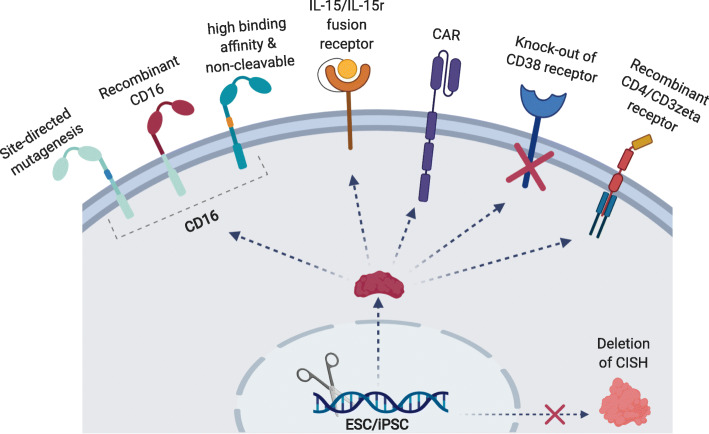
Natural killer (NK) cells play a crucial role in host immunity by detecting cells that downregulate MHC class I presentation and upregulate stress ligands, as commonly seen in cancers. Current NK therapies using primary NK cells are prone to manufacturing issues related to expansion and storage. Alternative cell sources utilizing immortalized NK cell lines require irradiation and are dependent on systemic IL-2 administration, which has been associated with adverse effects. In contrast, NK cells differentiated from induced pluripotent stem cells (iPSC-NK cells) offer an off-the-shelf alternative that may overcome these bottlenecks. The development of a serum-free and feeder-free differentiation protocol allows for the manufacturing of clinically adaptable iPSC-NK cells that are equally as effective as primary NK cells and the NK-92 cell line for many indications. Moreover, genetic modifications targeting NK-mediated antibody-dependent cellular cytotoxicity capabilities, cytotoxicity, and checkpoint inhibitors may increase the therapeutic potential of iPSC-NK products. This review will highlight the current sources for NK therapies and their respective constraints, discuss recent developments in the manufacturing and genetic engineering of iPSC-NK cells, and provide an overview of ongoing clinical trials using NK cells.
Overview
The claims and statistics of this paper haven’t been checked yet.
Free: it reads the open-access text and checks the first 5 claims that cite a source we can check. Create a free account to check every claim.
Integrity signals
Registry
Cites
Statistics
Figures
Verification
Claims the paper makes
The claims and statistics of this paper haven’t been checked yet.
Free: it reads the open-access text and checks the first 5 claims that cite a source we can check. Create a free account to check every claim.
Claims other papers make about this one
Each is checked against this paper’s own text: does it say what the citing paper says it does?
The cited source says what the claim attributes to it.
In the citing paper
“Moreover, antigen priming is not required for NK cells, therefore, it is not necessary to transplant with HLA matched NK cells [85].”
From Utility of iPSC-Derived Cells for Disease Modeling, Drug Development, and Cell Therapy (2022) · cites this paper as [85]
Self-check
Percentages, sums and reported differences re-computed from the paper’s own numbers.
The self-check needs the paper’s full text.
Citations
Cites
Siegel, R. L., Miller, K. D., & Jemal, A. (2019) · CA: A Cancer Journal for Clinicians · doi:10.3322/caac.21551 · Cited by 20,160
Axicabtagene Ciloleucel CAR T-Cell Therapy in Refractory Large B-Cell Lymphoma
Neelapu, S. S., Locke, F. L., Bartlett, N. L., Lekakis, L. J., Miklos, D. B., Jacobson, C. A., Braunschweig, I., Oluwole, O. O., Siddiqi, T., Lin, Y., et al. (2017) · New England Journal of Medicine · doi:10.1056/nejmoa1707447 · Cited by 6,030
Tisagenlecleucel in children and young adults with B-cell lymphoblastic leukemia
Maude, S. L., Laetsch, T. W., Buechner, J., Rives, S., Boyer, M., Bittencourt, H., Bader, P., Verneris, M. R., Stefanski, H. E., Myers, G. D., et al. (2018) · New England Journal of Medicine · doi:10.1056/nejmoa1709866 · Cited by 5,735
Tisagenlecleucel in Adult Relapsed or Refractory Diffuse Large B-Cell Lymphoma
Schuster, S. J., Bishop, M. R., Tam, C. S., Waller, E. K., Borchmann, P., McGuirk, J. P., Jäger, U., Jaglowski, S., Andreadis, C., Westin, J. R., et al. (2019) · New England Journal of Medicine · doi:10.1056/nejmoa1804980 · Cited by 4,112
Effectiveness of donor natural killer cell alloreactivity in mismatched hematopoietic transplants
Ruggeri, L., Capanni, M., Urbani, E., Perruccio, K., Shlomchik, W. D., Tosti, A., Posati, S., Rogaia, D., Frassoni, F., Aversa, F., et al. (2002) · Science · doi:10.1126/science.1068440 · Cited by 3,380
Activation of NK Cells and T Cells by NKG2D, a Receptor for Stress-Inducible MICA
Bauer, S., Groh, V., Wu, J., Steinle, A., Phillips, J. H., Lanier, L. L., & Spies, T. (1999) · Science · doi:10.1126/science.285.5428.727 · Cited by 2,999
Locke, F. L., Ghobadi, A., Jacobson, C. A., Miklos, D. B., Lekakis, L. J., Oluwole, O. O., Lin, Y., Braunschweig, I., Hill, B. T., Timmerman, J. M., et al. (2019) · The Lancet Oncology · doi:10.1016/s1470-2045(18)30864-7 · Cited by 2,286
Use of CAR-Transduced Natural Killer Cells in CD19-Positive Lymphoid Tumors
Liu, E., Marin, D., Banerjee, P., Macapinlac, H. A., Thompson, P., Basar, R., Nassif Kerbauy, L., Overman, B., Thall, P., Kaplan, M., et al. (2020) · New England Journal of Medicine · doi:10.1056/nejmoa1910607 · Cited by 2,217
A more efficient method to generate integration-free human iPS cells
Okita, K., Matsumura, Y., Sato, Y., Okada, A., Morizane, A., Okamoto, S., Hong, H., Nakagawa, M., Tanabe, K., Tezuka, K.-I., et al. (2011) · Nature Methods · doi:10.1038/nmeth.1591 · Cited by 2,061
Miller, J. S., Soignier, Y., Panoskaltsis-Mortari, A., McNearney, S. A., Yun, G. H., Fautsch, S. K., McKenna, D., Le, C., Defor, T. E., Burns, L. J., et al. (2005) · Blood · doi:10.1182/blood-2004-07-2974 · Cited by 1,903
Up on the tightrope: natural killer cell activation and inhibition
Lanier, L. L. (2008) · Nature Immunology · doi:10.1038/ni1581 · Cited by 1,656
The Basic Principles of Chimeric Antigen Receptor Design
Sadelain, M., Brentjens, R., & Rivière, I. (2013) · Cancer Discovery · doi:10.1158/2159-8290.cd-12-0548 · Cited by 1,535
Human natural killer cells: a unique innate immunoregulatory role for the CD56bright subset
Cooper, M. A., Fehniger, T. A., Turner, S. C., Chen, K. S., Ghaheri, B. A., Ghayur, T., Carson, W. E., & Caligiuri, M. A. (2001) · Blood · doi:10.1182/blood.v97.10.3146 · Cited by 1,449
Louis, C. U., Savoldo, B., Dotti, G., Pule, M., Yvon, E., Myers, G. D., Rossig, C., Russell, H. V., Diouf, O., Liu, E., et al. (2011) · Blood · doi:10.1182/blood-2011-05-354449 · Cited by 1,163
NK cells and cancer: you can teach innate cells new tricks
Morvan, M. G., & Lanier, L. L. (2016) · Nature Reviews Cancer · doi:10.1038/nrc.2015.5 · Cited by 1,162
Zhang, Q., Bi, J., Zheng, X., Chen, Y., Wang, H., Wu, W., Wang, Z., Wu, Q., Peng, H., Wei, H., et al. (2018) · Nature Immunology · doi:10.1038/s41590-018-0132-0 · Cited by 1,122
de Weers, M., Tai, Y.-T., van der Veer, M. S., Bakker, J. M., Vink, T., Jacobs, D. C. H., Oomen, L. A., Peipp, M., Valerius, T., Slootstra, J. W., et al. (2011) · The Journal of Immunology · doi:10.4049/jimmunol.1003032 · Cited by 1,037
Broad tumor-associated expression and recognition by tumor-derived γδ T cells of MICA and MICB
Groh, V., Rhinehart, R., Secrist, H., Bauer, S., Grabstein, K. H., & Spies, T. (1999) · Proceedings of the National Academy of Sciences · doi:10.1073/pnas.96.12.6879 · Cited by 1,028
Li, Y., Hermanson, D. L., Moriarity, B. S., & Kaufman, D. S. (2018) · Cell Stem Cell · doi:10.1016/j.stem.2018.06.002 · Cited by 981
Hu, S., Marshall, C., Darby, J., Wei, W., Lyons, A. B., & Körner, H. (2018) · Frontiers in Immunology · doi:10.3389/fimmu.2018.00001 · Cited by 973
Ghiringhelli, F., Ménard, C., Terme, M., Flament, C., Taieb, J., Chaput, N., Puig, P. E., Novault, S., Escudier, B., Vivier, E., et al. (2005) · The Journal of Experimental Medicine · doi:10.1084/jem.20051511 · Cited by 949
Romee, R., Rosario, M., Berrien-Elliott, M. M., Wagner, J. A., Jewell, B. A., Schappe, T., Leong, J. W., Abdel-Latif, S., Schneider, S. E., Willey, S., et al. (2016) · Science Translational Medicine · doi:10.1126/scitranslmed.aaf2341 · Cited by 942
Gong, J.-H., Maki, G., & Klingemann, H.-G. (1994) · PubMed · Cited by 870
Liu, E., Tong, Y., Dotti, G., Shaim, H., Savoldo, B., Mukherjee, M., Orange, J., Wan, X., Lu, X., Reynolds, A., et al. (2018) · Leukemia · doi:10.1038/leu.2017.226 · Cited by 824 · cited 1×
“The Rezvani group reported that the inclusion of an IL-15 domain in an anti-CD19 CAR resulted in detection of cord blood CAR NK cells up to 68 days after infusion [106].”
BackgroundPende, D., Parolini, S., Pessino, A., Sivori, S., Augugliaro, R., Morelli, L., Marcenaro, E., Accame, L., Malaspina, A., Biassoni, R., et al. (1999) · The Journal of Experimental Medicine · doi:10.1084/jem.190.10.1505 · Cited by 798
Natural Killer Cell Signaling Pathways
Vivier, E., Nunès, J. A., & Vély, F. (2004) · Science · doi:10.1126/science.1103478 · Cited by 751
Vitale, M., Bottino, C., Sivori, S., Sanseverino, L., Castriconi, R., Marcenaro, E., Augugliaro, R., Moretta, L., & Moretta, A. (1998) · The Journal of Experimental Medicine · doi:10.1084/jem.187.12.2065 · Cited by 748
Castriconi, R., Cantoni, C., Della Chiesa, M., Vitale, M., Marcenaro, E., Conte, R., Biassoni, R., Bottino, C., Moretta, L., & Moretta, A. (2003) · Proceedings of the National Academy of Sciences · doi:10.1073/pnas.0730640100 · Cited by 726
Imai, C., Iwamoto, S., & Campana, D. (2005) · Blood · doi:10.1182/blood-2004-12-4797 · Cited by 659
Rubnitz, J. E., Inaba, H., Ribeiro, R. C., Pounds, S., Rooney, B., Bell, T., Pui, C.-H., & Leung, W. (2010) · Journal of Clinical Oncology · doi:10.1200/jco.2009.24.4590 · Cited by 649
Clinical manufacturing of CAR T cells: foundation of a promising therapy
Wang, X., & Rivière, I. (2016) · Molecular Therapy - Oncolytics · doi:10.1038/mto.2016.15 · Cited by 637
Unravelling natural killer cell function: triggering and inhibitory human NK receptors
Moretta, L., & Moretta, A. (2004) · The EMBO Journal · doi:10.1038/sj.emboj.7600019 · Cited by 615
Expansion of Highly Cytotoxic Human Natural Killer Cells for Cancer Cell Therapy
Fujisaki, H., Kakuda, H., Shimasaki, N., Imai, C., Ma, J., Lockey, T., Eldridge, P., Leung, W. H., & Campana, D. (2009) · Cancer Research · doi:10.1158/0008-5472.can-08-3712 · Cited by 595
p46, a Novel Natural Killer Cell–specific Surface Molecule That Mediates Cell Activation
Sivori, S., Vitale, M., Morelli, L., Sanseverino, L., Augugliaro, R., Bottino, C., Moretta, L., & Moretta, A. (1997) · The Journal of Experimental Medicine · doi:10.1084/jem.186.7.1129 · Cited by 554
Lee, J.-C., Lee, K.-M., Kim, D.-W., & Heo, D. S. (2004) · The Journal of Immunology · doi:10.4049/jimmunol.172.12.7335 · Cited by 549
Functional expression and release of ligands for the activating immunoreceptor NKG2D in leukemia
Salih, H. R., Antropius, H., Gieseke, F., Lutz, S. Z., Kanz, L., Rammensee, H.-G., & Steinle, A. (2003) · Blood · doi:10.1182/blood-2003-01-0019 · Cited by 541
Tang, X., Yang, L., Li, Z., Nalin, A. P., Dai, H., Xu, T., Yin, J., You, F., Zhu, M., Shen, W., et al. (2018) · Europe PMC (PubMed Central) · Cited by 524
CD56bright cells differ in their KIR repertoire and cytotoxic features from CD56dim NK cells
Jacobs, R., Hintzen, G., Kemper, A., Beul, K., Kempf, S., Behrens, G., Sykora, K.-W., & Schmidt, R. E. (2001) · European Journal of Immunology · doi:10.1002/1521-4141(2001010)31:10<3121::aid-immu3121>3.0.co;2-4 · Cited by 475
Themeli, M., Kloss, C. C., Ciriello, G., Fedorov, V. D., Perna, F., Gonen, M., & Sadelain, M. (2013) · Nature Biotechnology · doi:10.1038/nbt.2678 · Cited by 473
Treatment of patients with advanced cancer with the natural killer cell line NK-92
Tonn, T., Schwabe, D., Klingemann, H. G., Becker, S., Esser, R., Koehl, U., Suttorp, M., Seifried, E., Ottmann, O. G., & Bug, G. (2013) · Cytotherapy · doi:10.1016/j.jcyt.2013.06.017 · Cited by 467
Developmental pathways that generate natural-killer-cell diversity in mice and humans
Huntington, N. D., Vosshenrich, C. A. J., & Di Santo, J. P. (2007) · Nature Reviews Immunology · doi:10.1038/nri2154 · Cited by 461
In vivo evidence for a dependence on interleukin 15 for survival of natural killer cells
Cooper, M. A., Bush, J. E., Fehniger, T. A., VanDeusen, J. B., Waite, R. E., Liu, Y., Aguila, H. L., & Caligiuri, M. A. (2002) · Blood · doi:10.1182/blood-2001-12-0293 · Cited by 455
Chu, J., Deng, Y., Benson, D. M., He, S., Hughes, T., Zhang, J., Peng, Y., Mao, H., Yi, L., Ghoshal, K., et al. (2014) · Leukemia · doi:10.1038/leu.2013.279 · Cited by 439
Bachanova, V., Cooley, S., Defor, T. E., Verneris, M. R., Zhang, B., McKenna, D. H., Curtsinger, J., Panoskaltsis-Mortari, A., Lewis, D., Hippen, K., et al. (2014) · Blood · doi:10.1182/blood-2013-10-532531 · Cited by 435
Melero, I., Rouzaut, A., Motz, G. T., & Coukos, G. (2014) · Cancer Discovery · doi:10.1158/2159-8290.cd-13-0985 · Cited by 435
Arai, S., Meagher, R., Swearingen, M., Myint, H., Rich, E., Martinson, J., & Klingemann, H. (2008) · Cytotherapy · doi:10.1080/14653240802301872 · Cited by 434
Taylor, C. J., Peacock, S., Chaudhry, A. N., Bradley, J. A., & Bolton, E. M. (2012) · Cell stem cell · doi:10.1016/j.stem.2012.07.014 · Cited by 428 · cited 1×
“found that 150 homozygous HLA iPSC lines are required to match 93% of the UK population [91].”
BackgroundKumar, M. P., Du, J., Lagoudas, G., Jiao, Y., Sawyer, A., Drummond, D. C., Lauffenburger, D. A., & Raue, A. (2018) · Cell Reports · doi:10.1016/j.celrep.2018.10.047 · Cited by 421
Knorr, D. A., Ni, Z., Hermanson, D., Hexum, M. K., Bendzick, L., Cooper, L. J. N., Lee, D. A., & Kaufman, D. S. (2013) · Stem Cells Translational Medicine · doi:10.5966/sctm.2012-0084 · Cited by 415
Natural Killer Cells for Immunotherapy – Advantages of the NK-92 Cell Line over Blood NK Cells
Klingemann, H., Boissel, L., & Toneguzzo, F. (2016) · Frontiers in Immunology · doi:10.3389/fimmu.2016.00091 · Cited by 414
Engineered T Cell Therapy for Cancer in the Clinic
Zhao, L., & Cao, Y. J. (2019) · Frontiers in Immunology · doi:10.3389/fimmu.2019.02250 · Cited by 410
Xie, F., Ye, L., Chang, J. C., Beyer, A. I., Wang, J., Muench, M. O., & Kan, Y. W. (2014) · Genome Research · doi:10.1101/gr.173427.114 · Cited by 408
CIS is a potent checkpoint in NK cell–mediated tumor immunity
Delconte, R. B., Kolesnik, T. B., Dagley, L. F., Rautela, J., Shi, W., Putz, E. M., Stannard, K., Zhang, J.-G., Teh, C., Firth, M., et al. (2016) · Nature Immunology · doi:10.1038/ni.3470 · Cited by 384
Anegón, I., Cuturi, M. C., Trinchieri, G., & Perussia, B. (1988) · The Journal of experimental medicine · doi:10.1084/jem.167.2.452 · Cited by 368
Zhu, H., Blum, R. H., Bernareggi, D., Ask, E. H., Wu, Z., Hoel, H. J., Meng, Z., Wu, C., Guan, K.-L., Malmberg, K.-J., et al. (2020) · Cell Stem Cell · doi:10.1016/j.stem.2020.05.008 · Cited by 346
Han, J., Chu, J., Keung Chan, W., Zhang, J., Wang, Y., Cohen, J. B., Victor, A., Meisen, W. H., Kim, S.-H., Grandi, P., et al. (2015) · Scientific Reports · doi:10.1038/srep11483 · Cited by 340
Chang, Y.-H., Connolly, J., Shimasaki, N., Mimura, K., Kono, K., & Campana, D. (2013) · Cancer Research · doi:10.1158/0008-5472.can-12-3558 · Cited by 329
Sambi, M., Bagheri, L., & Szewczuk, M. R. (2019) · Journal of Oncology · doi:10.1155/2019/4508794 · Cited by 313
Regeneration of Human Tumor Antigen-Specific T Cells from iPSCs Derived from Mature CD8 + T Cells
Vizcardo, R., Masuda, K., Yamada, D., Ikawa, T., Shimizu, K., Fujii, S.-I., Koseki, H., & Kawamoto, H. (2013) · Cell Stem Cell · doi:10.1016/j.stem.2012.12.006 · Cited by 309
Friese, M. A., Wischhusen, J., Wick, W., Weiler, M., Eisele, G., Steinle, A., & Weller, M. (2004) · Cancer Research · doi:10.1158/0008-5472.can-04-1627 · Cited by 305
Cursons, J., Souza-Fonseca-Guimaraes, F., Foroutan, M., Anderson, A., Hollande, F., Hediyeh-Zadeh, S., Behren, A., Huntington, N. D., & Davis, M. J. (2019) · Cancer Immunology Research · doi:10.1158/2326-6066.cir-18-0500 · Cited by 296
Koopman, L. A., Corver, W. E., van der Slik, A. R., Giphart, M. J., & Fleuren, G. J. (2000) · The Journal of Experimental Medicine · doi:10.1084/jem.191.6.961 · Cited by 279
Garrido, F., Cabrera, T., & Aptsiauri, N. (2010) · International Journal of Cancer · doi:10.1002/ijc.25270 · Cited by 276 · cited 1×
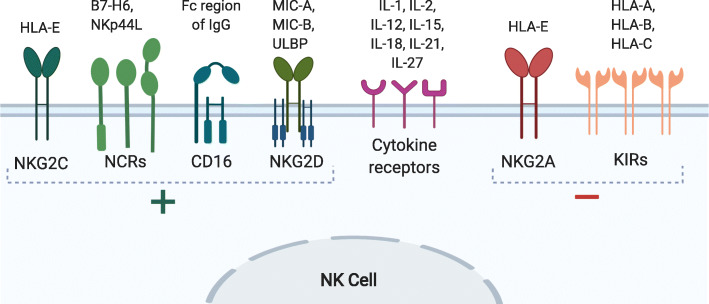
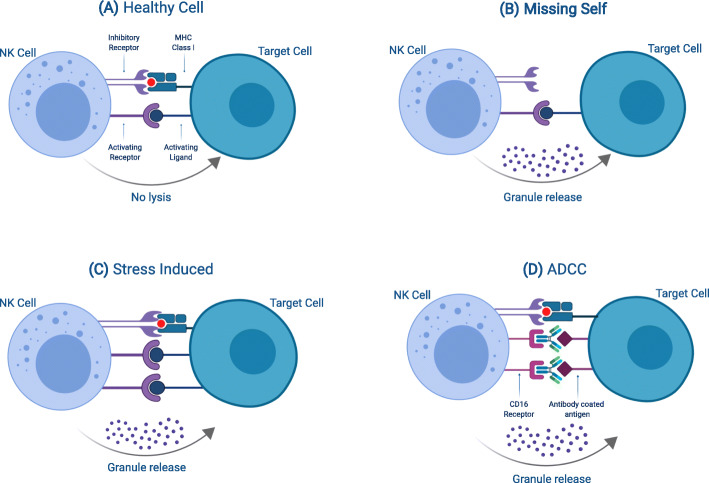
“Malignant tumors have been shown to downregulate MHC molecules [39, 40] and upregulate stress ligands such as MICA and MICB [41–43], rending them susceptible to NK lysis (Fig.”
BackgroundZhu, H., Blum, R. H., Bjordahl, R., Gaidarova, S., Rogers, P., Lee, T. T., Abujarour, R., Bonello, G. B., Wu, J., Tsai, P.-F., et al. (2020) · Blood · doi:10.1182/blood.2019000621 · Cited by 275
Passweg, J. R., Tichelli, A., Meyer-Monard, S., Heim, D., Stern, M., Kühne, T., Favre, G., & Gratwohl, A. (2004) · Leukemia · doi:10.1038/sj.leu.2403524 · Cited by 270
Woll, P. S., Grzywacz, B., Tian, X., Marcus, R. K., Knorr, D. A., Verneris, M. R., & Kaufman, D. S. (2009) · Blood · doi:10.1182/blood-2008-06-165225 · Cited by 268
Factors Regulating the Cytotoxic Activity of the Human Natural Killer Cell Line, NK-92
Maki, G., Klingemann, H.-G., Martinson, J. A., & Tam, Y. K. (2001) · Journal of Hematotherapy & Stem Cell Research · doi:10.1089/152581601750288975 · Cited by 262
Pittet, M. J., Speiser, D. E., Valmori, D., Cerottini, J.-C., & Romero, P. (2000) · The Journal of Immunology · doi:10.4049/jimmunol.164.3.1148 · Cited by 252
Induced Pluripotent Stem Cell-Derived Natural Killer Cells for Treatment of Ovarian Cancer
Hermanson, D. L., Bendzick, L., Pribyl, L., McCullar, V., Vogel, R. I., Miller, J. S., Geller, M. A., & Kaufman, D. S. (2016) · Stem Cells · doi:10.1002/stem.2230 · Cited by 242
Cooley, S., He, F., Bachanova, V., Vercellotti, G. M., DeFor, T. E., Curtsinger, J. M., Robertson, P., Grzywacz, B., Conlon, K. C., Waldmann, T. A., et al. (2019) · Blood Advances · doi:10.1182/bloodadvances.2018028332 · Cited by 236
Human Embryonic Stem Cell-Derived NK Cells Acquire Functional Receptors and Cytolytic Activity
Woll, P. S., Martin, C. H., Miller, J. S., & Kaufman, D. S. (2005) · The Journal of Immunology · doi:10.4049/jimmunol.175.8.5095 · Cited by 233
CD16 is indispensable for antibody-dependent cellular cytotoxicity by human monocytes
Yeap, W. H., Wong, K. L., Shimasaki, N., Teo, E. C. Y., Quek, J. K. S., Yong, H. X., Diong, C. P., Bertoletti, A., Linn, Y. C., & Wong, S. C. (2016) · Scientific Reports · doi:10.1038/srep34310 · Cited by 229 · cited 1×
“NK cells also express the lowaffinity Fcγ receptor CD16 [32, 33] to mediate ADCC”
BackgroundCasneuf, T., Xu, X. S., Adams, H. C., Axel, A. E., Chiu, C., Khan, I., Ahmadi, T., Yan, X., Lonial, S., Plesner, T., et al. (2017) · Blood Advances · doi:10.1182/bloodadvances.2017006866 · Cited by 229
Carrega, P., Bonaccorsi, I., Di Carlo, E., Morandi, B., Paul, P., Rizzello, V., Cipollone, G., Navarra, G., Mingari, M. C., Moretta, L., et al. (2014) · The Journal of Immunology · doi:10.4049/jimmunol.1301889 · Cited by 225
Large-scale ex vivo expansion and characterization of natural killer cells for clinical applications
Lapteva, N., Durett, A. G., Sun, J., Rollins, L. A., Huye, L. L., Fang, J., Dandekar, V., Mei, Z., Jackson, K., Vera, J., et al. (2012) · Cytotherapy · doi:10.3109/14653249.2012.700767 · Cited by 216
Natural killer cell activation in mice and men: different triggers for similar weapons?
Colucci, F., Di Santo, J. P., & Leibson, P. J. (2002) · Nature Immunology · doi:10.1038/ni0902-807 · Cited by 207
Altvater, B., Landmeier, S., Pscherer, S., Temme, J., Schweer, K., Kailayangiri, S., Campana, D., Juergens, H., Pule, M., & Rossig, C. (2009) · Clinical Cancer Research · doi:10.1158/1078-0432.ccr-08-2810 · Cited by 206
Autologous natural killer cell therapy for human recurrent malignant glioma.
Ishikawa, E., Tsuboi, K., Saijo, K., Harada, H., Takano, S., Nose, T., & Ohno, T. (2004) · PubMed · Cited by 201
Engineering antigen-specific primary human NK cells against HER-2 positive carcinomas
Kruschinski, A., Moosmann, A., Poschke, I., Norell, H., Chmielewski, M., Seliger, B., Kiessling, R., Blankenstein, T., Abken, H., & Charo, J. (2008) · Proceedings of the National Academy of Sciences · doi:10.1073/pnas.0804788105 · Cited by 197
Classification of human natural killer cells based on migration behavior and cytotoxic response
Vanherberghen, B., Olofsson, P. E., Forslund, E., Sternberg-Simon, M., Khorshidi, M. A., Pacouret, S., Guldevall, K., Enqvist, M., Malmberg, K.-J., Mehr, R., et al. (2013) · Blood · doi:10.1182/blood-2012-06-439851 · Cited by 196
Pasero, C., Gravis, G., Granjeaud, S., Guerin, M., Thomassin-Piana, J., Rocchi, P., Salem, N., Walz, J., Moretta, A., & Olive, D. (2015) · Oncotarget · doi:10.18632/oncotarget.3965 · Cited by 195
Wennerberg, E., Kremer, V., Childs, R., & Lundqvist, A. (2015) · Cancer Immunology, Immunotherapy · doi:10.1007/s00262-014-1629-5 · Cited by 192 · cited 1×
“CXCR3 has been identified as a crucial receptor for NK chemotaxis in response to cancersecreted ligands, CXCL9, CXCL10, and CXCL11 [146].”
BackgroundSahm, C., Schönfeld, K., & Wels, W. S. (2012) · Cancer Immunology, Immunotherapy · doi:10.1007/s00262-012-1212-x · Cited by 186
Szmania, S., Lapteva, N., Garg, T., Greenway, A., Lingo, J., Nair, B., Stone, K., Woods, E., Khan, J., Stivers, J., et al. (2015) · Journal of Immunotherapy · doi:10.1097/cji.0000000000000059 · Cited by 184
Valamehr, B., Robinson, M., Abujarour, R., Rezner, B., Vranceanu, F., Le, T., Medcalf, A., Lee, T. T., Fitch, M., Robbins, D., et al. (2014) · Stem Cell Reports · doi:10.1016/j.stemcr.2014.01.014 · Cited by 180
Williams, B. A., Law, A. D., Routy, B., denHollander, N., Gupta, V., Wang, X.-H., Chaboureau, A., Viswanathan, S., & Keating, A. (2017) · Oncotarget · doi:10.18632/oncotarget.19204 · Cited by 179
Boyiadzis, M., Agha, M., Redner, R. L., Sehgal, A., Im, A., Hou, J.-Z., Farah, R., Dorritie, K. A., Raptis, A., Lim, S. H., et al. (2017) · Cytotherapy · doi:10.1016/j.jcyt.2017.07.008 · Cited by 178
Luevano, M., Daryouzeh, M., Alnabhan, R., Querol, S., Khakoo, S., Madrigal, A., & Saudemont, A. (2012) · Human Immunology · doi:10.1016/j.humimm.2011.12.015 · Cited by 177
Shimasaki, N., Fujisaki, H., Cho, D., Masselli, M., Lockey, T., Eldridge, P., Leung, W., & Campana, D. (2012) · Cytotherapy · doi:10.3109/14653249.2012.671519 · Cited by 177
Interaction between natural killer cells and regulatory T cells: perspectives for immunotherapy
Pedroza-Pacheco, I., Madrigal, A., & Saudemont, A. (2013) · Cellular & Molecular Immunology · doi:10.1038/cmi.2013.2 · Cited by 176
The prognostic value of natural killer cell infiltration in resected pulmonary adenocarcinoma
Takanami, I., Takeuchi, K., & Giga, M. (2001) · The Journal of Thoracic and Cardiovascular Surgery · doi:10.1067/mtc.2001.113026 · Cited by 174
Expression of Stress-induced MHC Class I Related Chain Molecules on Human Melanoma
Vetter, C. S., Groh, V., Straten, P. T., Spies, T., Bröcker, E.-B., & Becker, J. C. (2002) · Journal of Investigative Dermatology · doi:10.1046/j.1523-1747.2002.01700.x · Cited by 171
Srpan, K., Ambrose, A., Karampatzakis, A., Saeed, M., Cartwright, A. N. R., Guldevall, K., De Matos, G. D. S. C., Önfelt, B., & Davis, D. M. (2018) · Journal of Cell Biology · doi:10.1083/jcb.201712085 · Cited by 169
An Improved Method to Produce Clinical-Scale Natural Killer Cells from Human Pluripotent Stem Cells
Huang, Z., & Kaufman, D. S. (2019) · Methods in molecular biology · doi:10.1007/978-1-4939-9728-2_12 · Cited by 167
Boissel, L., Betancur, M., Wels, W. S., Tuncer, H., & Klingemann, H. (2009) · Leukemia Research · doi:10.1016/j.leukres.2008.11.024 · Cited by 166
Minagawa, A., Yoshikawa, T., Yasukawa, M., Hotta, A., Kunitomo, M., Iriguchi, S., Takiguchi, M., Kassai, Y., Imai, E., Yasui, Y., et al. (2018) · Cell Stem Cell · doi:10.1016/j.stem.2018.10.005 · Cited by 165
Federico, S. M., McCarville, M. B., Shulkin, B. L., Sondel, P. M., Hank, J. A., Hutson, P., Meagher, M., Shafer, A., Ng, C. Y., Leung, W., et al. (2017) · Clinical Cancer Research · doi:10.1158/1078-0432.ccr-17-0379 · Cited by 162
Lee, D. A., Denman, C. J., Rondón, G., Woodworth, G. G., Chen, J. J., Fisher, T. D., Kaur, I., Fernández-Viña, M., Cao, K., Ciurea, S. O., et al. (2016) · Transplantation and Cellular Therapy · doi:10.1016/j.bbmt.2016.04.009 · Cited by 157
Principles of Immunotherapy: Implications for Treatment Strategies in Cancer and Infectious Diseases
Naran, K., Nundalall, T., Chetty, S., & Barth, S. (2018) · Frontiers in Microbiology · doi:10.3389/fmicb.2018.03158 · Cited by 156
Carson, W. E., Parihar, R., Lindemann, M. J., Personeni, N., Dierksheide, J., Meropol, N. J., Baselga, J., & Caligiuri, M. A. (2001) · European Journal of Immunology · doi:10.1002/1521-4141(2001010)31:10<3016::aid-immu3016>3.0.co;2-j · Cited by 155
Shaffer, B. C., Luduec, J.-B. L., Forlenza, C. J., Jakubowski, A. A., Perales, M., Young, J. W., & Hsu, K. C. (2016) · Transplantation and Cellular Therapy · doi:10.1016/j.bbmt.2015.12.028 · Cited by 151
Tarn, Y. K., Martinson, J., Doligosa, K., & Klingernann, H.-G. (2003) · Cytotherapy · doi:10.1080/14653240310001523 · Cited by 149 · cited 6×
“While multidose treatments would circumvent this issue, it would also require systemic administration of IL-2 to support NK growth, which may trigger additional side effects such as vascular leak syndrome and upregulation of regulatory T cells, which suppress NK cells [76–78].”
BackgroundInfluentialZeng, J., Tang, S. Y., Toh, L. L., & Wang, S. (2017) · Stem Cell Reports · doi:10.1016/j.stemcr.2017.10.020 · Cited by 145
Li, L., Liu, L. N., Feller, S., Allen, C., Shivakumar, R., Fratantoni, J., Wolfraim, L. A., Fujisaki, H., Campana, D., Chopas, N., et al. (2010) · Cancer Gene Therapy · doi:10.1038/cgt.2009.61 · Cited by 144
Turro, E., Greene, D., Wijgaerts, A., Thys, C., Lentaigne, C., Bariana, T. K., Westbury, S. K., Kelly, A. M., Selleslag, D., Stephens, J. C., et al. (2016) · Science Translational Medicine · doi:10.1126/scitranslmed.aad7666 · Cited by 144
Jing, Y., Ni, Z., Wu, J., Higgins, L., Markowski, T. W., Kaufman, D. S., & Walcheck, B. (2015) · PLOS ONE · doi:10.1371/journal.pone.0121788 · Cited by 141
Boissel, L., Betancur, M., Lu, W., Wels, W. S., Marino, T., Van Etten, R. A., & Klingemann, H. (2012) · Leukemia & Lymphoma · doi:10.3109/10428194.2011.634048 · Cited by 139
Wilber, A. C., Linehan, J. L., Tian, X., Woll, P. S., Morris, J. K., Belur, L. R., McIvor, R. S., & Kaufman, D. S. (2007) · Stem Cells · doi:10.1634/stemcells.2007-0026 · Cited by 130
Yoon, S. R., Lee, Y. S., Yang, S., Ahn, K. H., Lee, J.-H., Lee, J.-H., Kim, D. Y., Kang, Y., Jeon, M., Seol, M., et al. (2009) · Bone Marrow Transplantation · doi:10.1038/bmt.2009.304 · Cited by 129
Milush, J. M., López-Vergès, S., York, V. A., Deeks, S. G., Martin, J. N., Hecht, F. M., Lanier, L. L., & Nixon, D. F. (2013) · Retrovirology · doi:10.1186/1742-4690-10-158 · Cited by 120 · cited 1×
“NK cells in healthy individuals that undergoes expansion during HIV-1 infection [34], the CD56 cells are abundant in lymphoid and nonlymphoid tissues and exhibit high cytokine secretion [35–37].”
BackgroundCryopreservation impairs 3-D migration and cytotoxicity of natural killer cells
Mark, C., Czerwinski, T., Rößner, S., Mainka, A., Hörsch, F., Heublein, L., Winterl, A., Sanokowski, S., Richter, S., Bauer, N. G., et al. (2020) · Nature Communications · doi:10.1038/s41467-020-19094-0 · Cited by 106
Bachanová, V., Sarhan, D., DeFor, T. E., Cooley, S., Panoskaltsis‐Mortari, A., Blazar, B. R., Curtsinger, J., Burns, L. J., Weisdorf, D. J., & Miller, J. S. (2017) · Cancer Immunology Immunotherapy · doi:10.1007/s00262-017-2100-1 · Cited by 105
Human plasmacytoid dendritic cells are equipped with antigen-presenting and tumoricidal capacities
Tel, J., Smits, E. L., Anguille, S., Joshi, R. N., Figdor, C. G., & de Vries, I. J. M. (2012) · Blood · doi:10.1182/blood-2012-06-435941 · Cited by 104
Natural killer cells: a review of manufacturing and clinical utility
Koepsell, S. A., Miller, J. S., & McKenna, D. H. (2012) · Transfusion · doi:10.1111/j.1537-2995.2012.03724.x · Cited by 103
Wang, Y., Xu, H., Zheng, X., Wei, H., Sun, R., & Tian, Z. (2007) · PubMed · Cited by 102
Graft-versus-host disease after donor leukocyte infusions: presentation and management
Frey, N. V., & Porter, D. (2008) · Best Practice & Research Clinical Haematology · doi:10.1016/j.beha.2008.02.007 · Cited by 101
Ni, Z., Knorr, D. A., Bendzick, L., Allred, J., & Kaufman, D. S. (2014) · Stem Cells · doi:10.1002/stem.1611 · Cited by 97
Ni, Z., Knorr, D. A., Clouser, C. L., Hexum, M. K., Southern, P., Mansky, L. M., Park, I.-H., & Kaufman, D. S. (2011) · Journal of Virology · doi:10.1128/jvi.01774-10 · Cited by 97
Burga, R. A., Yvon, E. S., Chorvinsky, E. A., Fernandes, R., Cruz, C. C., & Bollard, C. M. (2019) · Clinical Cancer Research · doi:10.1158/1078-0432.ccr-18-3183 · Cited by 94 · cited 1×
“It has been suggested that a dominant negative TGF-β receptor that inhibits TGF-β signaling or a chimeric receptor that converts TGF-β to an activation signal may provide potential strategies to overcome NK cell exhaustion [150, 151].”
BackgroundDege, C., Fegan, K. H., Creamer, J. P., Berrien-Elliott, M. M., Luff, S. A., Kim, D., Wagner, J. A., Kingsley, P. D., McGrath, K. E., Fehniger, T. A., et al. (2020) · Developmental Cell · doi:10.1016/j.devcel.2020.02.016 · Cited by 93
Cord Blood as a Source of Natural Killer Cells
Mehta, R. S., Shpall, E. J., & Rezvani, K. (2016) · Frontiers in Medicine · doi:10.3389/fmed.2015.00093 · Cited by 91 · cited 1×
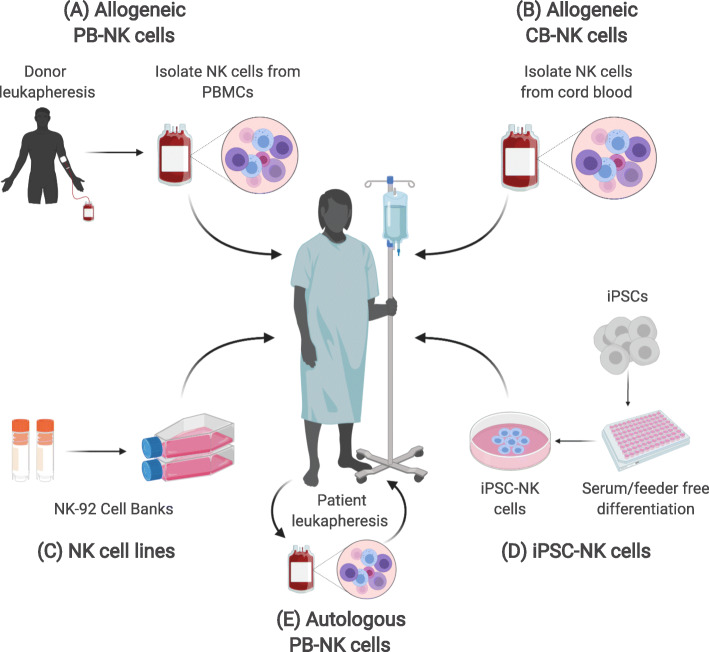
“In contrast, CB-NK cells recover well after cryopreservation and may be a potential candidate for “off-the-shelf” therapy using primary NK cells [61].”
BackgroundModak, S., Le Luduec, J.-B., Cheung, I. Y., Goldman, D. A., Ostrovnaya, I., Doubrovina, E., Basu, E., Kushner, B. H., Kramer, K., Roberts, S. S., et al. (2018) · OncoImmunology · doi:10.1080/2162402x.2018.1461305 · Cited by 91
Rizzieri, D. A., Storms, R. W., Chen, D., Long, G. D., Yang, Y., Nikcevich, D. A., Gasparetto, C., Horwitz, M. E., Chute, J. P., Sullivan, K. M., et al. (2010) · Transplantation and Cellular Therapy · doi:10.1016/j.bbmt.2010.02.018 · Cited by 88
Natural killer cell lines in tumor immunotherapy
Cheng, M., Zhang, J., Jiang, W., Chen, Y., & Tian, Z. (2012) · Frontiers of Medicine · doi:10.1007/s11684-012-0177-7 · Cited by 83
Snyder, K. M., Hullsiek, R., Mishra, H. K., Mendez, D. C., Li, Y., Rogich, A., Kaufman, D. S., Wu, J., & Walcheck, B. (2018) · Frontiers in Immunology · doi:10.3389/fimmu.2018.02873 · Cited by 81
deMagalhaes-Silverman, M., Donnenberg, A., Lembersky, B., Elder, E., Lister, J., Rybka, W., Whiteside, T., & Ball, E. (2000) · Journal of Immunotherapy · doi:10.1097/00002371-200001000-00018 · Cited by 78
van derVliet, H. J. J., Koon, H. B., Yue, S. C., Uzunparmak, B., Seery, V., Gavin, M. A., Rudensky, A. Y., Atkins, M. B., Balk, S. P., & Exley, M. A. (2007) · Clinical Cancer Research · doi:10.1158/1078-0432.ccr-06-1662 · Cited by 76
Maude, S. L., Pulsipher, M. A., Boyer, M. W., Grupp, S. A., Davies, S. M., Phillips, C. L., Verneris, M. R., August, K. J., Schlis, K., Driscoll, T. A., et al. (2016) · Blood · doi:10.1182/blood.v128.22.2801.2801 · Cited by 75
Self-citationEfficient gene transfer into primary human natural killer cells by retroviral transduction
Guvén, H., Konstantinidis, K. V., Alici, E., Aints, A., Abedi‐Valugerdi, M., Christensson, B., Ljunggren, H., & Dilber, M. S. (2005) · Experimental Hematology · doi:10.1016/j.exphem.2005.07.006 · Cited by 65
Escudier, B. J., Farace, F., Angevin, E., Charpentier, F., Nitenberg, G., Triebel, F., & Hercend, T. (1994) · European Journal of Cancer · doi:10.1016/0959-8049(94)90460-x · Cited by 57
High-efficient lentiviral vector-mediated gene transfer into primary human NK cells
Micucci, F., Zingoni, A., Piccoli, M., Frati, L., Santoni, A., & Galandrini, R. (2006) · Experimental Hematology · doi:10.1016/j.exphem.2006.06.001 · Cited by 56
Bock, A. M., Knorr, D. A., & Kaufman, D. S. (2013) · Journal of Visualized Experiments · doi:10.3791/50337 · Cited by 55
Medulloblastoma rendered susceptible to NK-cell attack by TGFβ neutralization
Powell, A. B., Yadavilli, S., Saunders, D., Pelt, S. N. V., Chorvinsky, E. A., Burga, R. A., Albihani, S., Hanley, P. J., Xu, Z., Pei, Y., et al. (2019) · Journal of Translational Medicine · doi:10.1186/s12967-019-2055-4 · Cited by 48
Pasley, S., Zylberberg, C., & Matosevic, S. (2017) · Immunology Letters · doi:10.1016/j.imlet.2017.09.012 · Cited by 46
Permanent silencing of NKG2A expression for cell-based therapeutics
Figueiredo, C., Seltsam, A. W., & Blasczyk, R. (2008) · Journal of Molecular Medicine · doi:10.1007/s00109-008-0417-0 · Cited by 45
Analysis of ex vivo expanded and activated clinical-grade human NK cells after cryopreservation
Damodharan, S. N., Walker, K. L., Forsberg, M. H., McDowell, K. A., Bouchlaka, M. N., Drier, D., Sondel, P. M., DeSantes, K. B., & Capitini, C. M. (2020) · Cytotherapy · doi:10.1016/j.jcyt.2020.05.001 · Cited by 41
Self-citationLieberman, N. A. P., DeGolier, K., Haberthur, K., Chinn, H. K., Moyes, K. W., Bouchlaka, M. N., Walker, K. L., Capitini, C. M., & Crane, C. A. (2018) · Frontiers in Immunology · doi:10.3389/fimmu.2018.00150 · Cited by 38
Self-citationControl of CD56 expression and tumor cell cytotoxicity in human Vγ2Vδ2 T cells
Urban, E., Li, H., Armstrong, C., Focaccetti, C., Cairo, C., & Pauza, C. D. (2009) · BMC Immunology · doi:10.1186/1471-2172-10-50 · Cited by 34
Yang, H. G., Kang, M. C., Kim, T. Y., Hwang, I., Jin, H., Sung, Y. C., Eom, K., & Kim, S. W. (2019) · Journal for ImmunoTherapy of Cancer · doi:10.1186/s40425-019-0612-2 · Cited by 32
Sun, Y., Yao, Z., Zhao, Z., Xiao, H., Mengting, X., Xiaojun, Z., Xuelu, J., & Sun, C. (2018) · Experimental and Therapeutic Medicine · doi:10.3892/etm.2018.6342 · Cited by 30
Cordeau, M., Belounis, A., Lelaidier, M., Cordeiro, P., Sartelet, H., Herblot, S., & Duval, M. (2016) · PLoS ONE · doi:10.1371/journal.pone.0164401 · Cited by 28
Larbi, A., Gombert, J., Auvray, C., L’Homme, B., Magniez, A., Féraud, O., Coulombel, L., Chapel, A., Mitjavila‐Garcia, M. T., Turhan, A. G., et al. (2012) · PLoS ONE · doi:10.1371/journal.pone.0039514 · Cited by 27
Human Pluripotent Stem Cells as a Renewable Source of Natural Killer Cells
Hermanson, D., Ni, Z., & Kaufman, D. S. (2015) · SpringerBriefs in stem cells · doi:10.1007/978-94-017-7312-6_5 · Cited by 20
Programmed cell death protein 1 on natural killer cells: fact or fiction?
Cho, M. M., Quamine, A. E., Olsen, M. R., & Capitini, C. M. (2020) · Journal of Clinical Investigation · doi:10.1172/jci137051 · Cited by 13 · cited 1×
“In addition, groups are also examining the combination of adoptive NK cell infusions with checkpoint blockade antibodies such as anti-PD1, anti-TIM3, and anti-TIGIT to overcome NK exhaustion [139, 140], although there is some debate on whether PD-1 is a relevant checkpoint on NK cells [141].”
BackgroundSelf-citationBaeriswyl, V., Wodnar‐Filipowicz, A., & Kalberer, C. P. (2006) · PubMed · Cited by 11
Modification of Expanded NK Cells with Chimeric Antigen Receptor mRNA for Adoptive Cellular Therapy
Chu, Y., Flower, A. M., & Cairo, M. S. (2016) · Methods in molecular biology · doi:10.1007/978-1-4939-3684-7_18 · Cited by 11
Blum, R., Arumugam, A., Wu, J., Walcheck, B. K., & Kaufman, D. S. (2016) · Blood · doi:10.1182/blood.v128.22.1336.1336 · Cited by 8
Huang, Z., Blum, R., Wu, Z., Meng, Z., Guan, K., & Kaufman, D. S. (2019) · Blood · doi:10.1182/blood-2019-124446 · Cited by 6
Mark, C., Czerwinski, T., Roessner, S., et al. (2019) · bioRxiv (Cold Spring Harbor Laboratory) · doi:10.1101/812172 · Cited by 3
Cited by
Current Perspectives on “Off-The-Shelf” Allogeneic NK and CAR-NK Cell Therapies
Heipertz, E. L., Zynda, E. R., Stav-Noraas, T. E., Hungler, A. D., Boucher, S. E., Kaur, N., & Vemuri, M. C. (2021) · Frontiers in Immunology · doi:10.3389/fimmu.2021.732135 · Cited by 211
“Further, cryopreservation of PB NK cells lowers the cytotoxic ability (35, 37).”
BackgroundAllogeneic CAR Cell Therapy—More Than a Pipe Dream
Caldwell, K. J., Gottschalk, S. M., & Talleur, A. C. (2021) · Frontiers in Immunology · doi:10.3389/fimmu.2020.618427 · Cited by 151
Advances in NK cell production
Fang, F., Xie, S., Chen, M., Li, Y., Yue, J., Ma, J., Shu, X., He, Y., Xiao, W., & Tian, Z. (2022) · Cellular and Molecular Immunology · doi:10.1038/s41423-021-00808-3 · Cited by 140
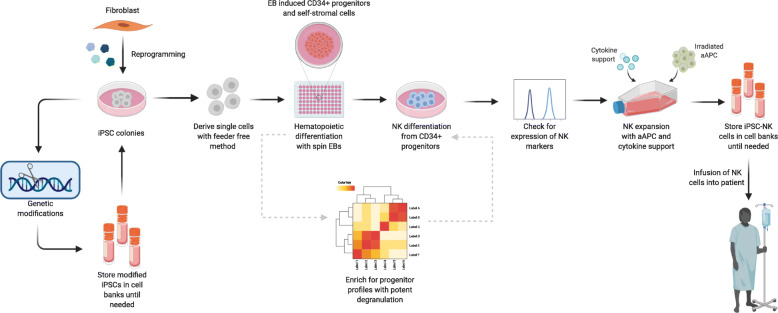
“Studies have shown that PSC-derived NK cells not only have the advantages of primary NK cells and NK cell lines but also lack their problems [176].”
BackgroundNatural killer cell-based immunotherapy for acute myeloid leukemia
Xu, J., & Niu, T. (2020) · Journal of Hematology & Oncology · doi:10.1186/s13045-020-00996-x · Cited by 125
Engineering Anti-Tumor Monoclonal Antibodies and Fc Receptors to Enhance ADCC by Human NK Cells
Dixon, K. J., Wu, J., & Walcheck, B. K. (2021) · Cancers · doi:10.3390/cancers13020312 · Cited by 101
Metadata
- Authors
- Shankar, K., Capitini, C. M., & Saha, K.
- Affiliations
- University of Wisconsin–Madison (US)
- Corresponding author
- Capitini, Christian M.
- Saha, Krishanu
- Venue
- Stem Cell Research & Therapy
- Published
- 2020-06-16
- Volume
- 11
- Issue
- 1
- Pages
- 234-234
- ISSN
- 1757-6512 (ISSN-L)
- PMC
- PMC7298853
- OpenAlex
- W3034215145
- Cited by
- 85
- References
- 147
- Citations by year
- 2026: 13 · 2025: 7 · 2024: 11 · 2023: 12 · 2022: 15 · 2021: 24 · 2020: 3
- FWCI
- 1.32
- Type
- journal article
- Language
- en
- Open access
- gold
- doi.org
- Licence
- cc-by
- creativecommons.org/licenses/by/4.0 (tdm)
- creativecommons.org/licenses/by/4.0 (vor)
- Locations
- Stem Cell Research & Therapy (publishedVersion, cc-by)
- PubMed Central (publishedVersion, cc-by)
- PubMed (publishedVersion)
- DOAJ (DOAJ: Directory of Open Access Journals) (submittedVersion, cc-by-sa)
- Funders
- National Science Foundation (CBET-1645123, AWD-101645-G3 / RJ375-G3)
- National Institutes of Health (1R35GM119644-01)
- National Cancer Institute (R01 CA215461)
- St. Baldrick's Foundation (SU2C-AACR-DT-27-17)
- American Cancer Society (RSG-18-104-01-LIB)
- Topics
- Life Sciences › Immunology and Microbiology › Immunology › Immune Cell Function and Interaction
- Life Sciences › Biochemistry, Genetics and Molecular Biology › Molecular Biology › Pluripotent Stem Cells Research
- Health Sciences › Medicine › Oncology › CAR-T cell therapy research
- Keywords
- natural killer cells, induced pluripotent stem cells, iPSC-derived NK cells, NK cell therapy, genome editing, feeder-free differentiation, NK-92 cells, antibody-dependent cellular cytotoxicity, immune checkpoint inhibitors, off-the-shelf cell therapy, clinical trials
- MeSH terms
- Cell Differentiation, Humans, Killer Cells, Natural, Neoplasms, Immunotherapy, Adoptive, Induced Pluripotent Stem Cells
About these checks
Registry, retraction, Cites and statistics results are computed, not judged, with one exception: a printed reference that no index lists is read once by a model before it counts as a citation error. Claims are extracted by a model and kept only when their quote appears verbatim in the text; each cited source is then checked, with a model’s help, for whether it says what the claim relies on. Those verdicts can be wrong — read the claim’s quote and the cited source before relying on one.
Statistics and arithmetic are recomputed, not judged.
Confidence bands are shown only for fields calibrated on our annotated test set. None is calibrated yet, so no band is shown.
What counts as a claim ›How we measure confidence ›How we check this ›
Are you an author, or do you see a problem with this page? Request a review
Data sources
Bibliographic data: Semantic Scholar, OpenAlex, Crossref.
Contains information from the Semantic Scholar Academic Graph Datasets, made available under the ODC Attribution License (ODC-BY 1.0).
Semantic Scholar’s data is described in: Kinney, R., et al. (2023). The Semantic Scholar Open Data Platform. arXiv:2301.10140.
